
Investment
US Oil Giants Demand Investment Guarantees Before Venezuela Entry as Trump Negotiates Access to World’s Largest Reserves

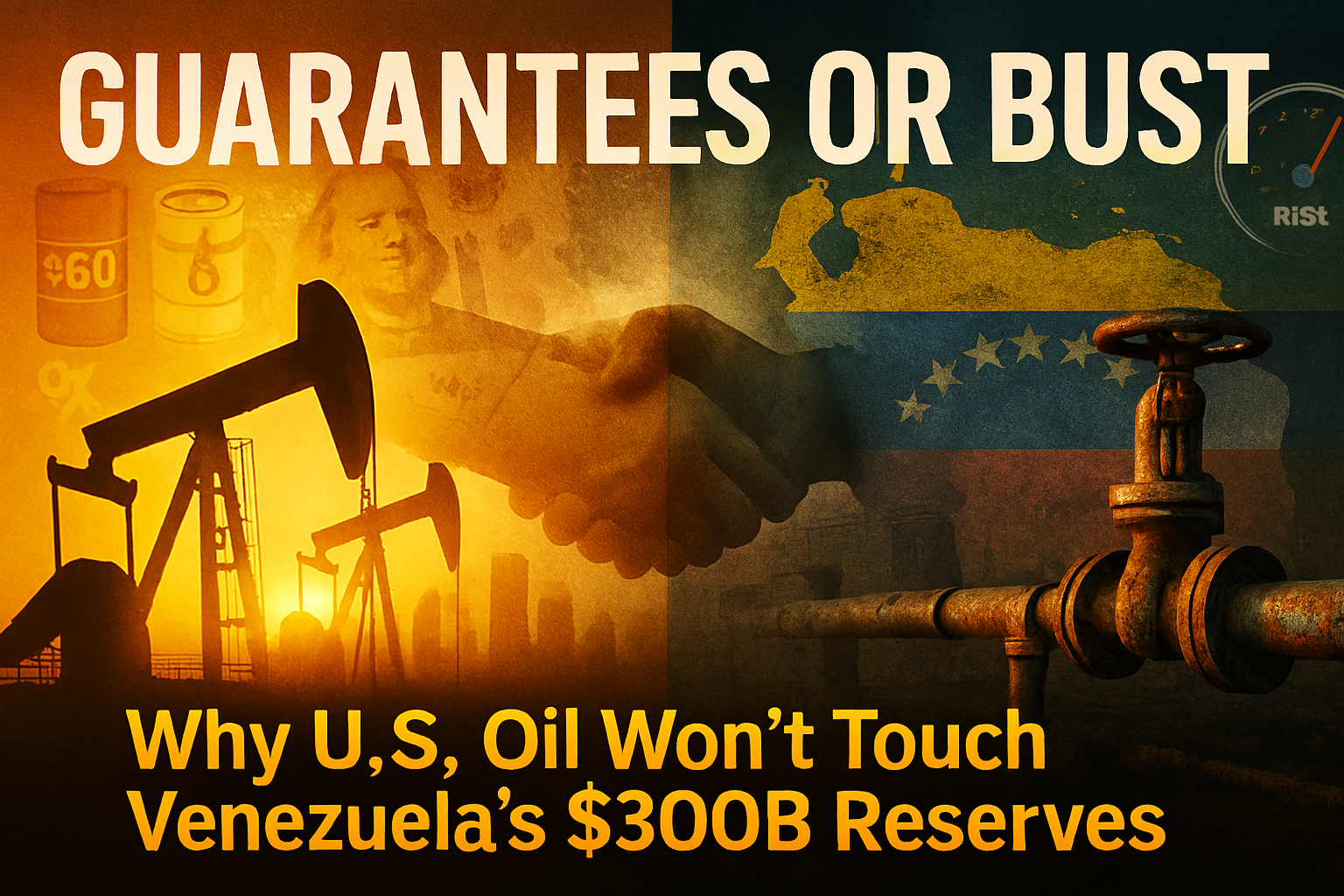
Behind closed doors this week, America’s most powerful oil executives delivered an uncomfortable message to President Donald Trump’s administration: Venezuela’s vast oil reserves—the world’s largest at 303 billion barrels—remain off-limits without unprecedented investment protections.
As Trump seeks to reshape global energy markets following the dramatic U.S. military operation that captured Venezuelan President Nicolás Maduro, industry leaders from ExxonMobil, Chevron, and ConocoPhillips are demanding written guarantees against nationalization, sanctions reversals, and political interference before committing capital to a country that expropriated more than $30 billion in foreign assets just over a decade ago.
The stakes extend far beyond Venezuela’s borders. Trump’s ability to broker a deal could define his administration’s energy dominance strategy and test whether economic incentives can stabilize a failed petrostate 1,200 miles from Florida’s coast. Yet three days after Maduro’s capture, oil companies remain deeply skeptical—and the numbers explain why.
The Reluctant Billionaires: Why Big Oil Is Saying “Not So Fast”
Despite Trump’s public optimism that U.S. oil companies are “ready and willing” to invest, industry sources paint a starkly different picture. Energy Secretary Chris Wright met with oil executives Wednesday at the Goldman Sachs Energy Conference in Miami, followed by a White House meeting Friday with CEOs from ExxonMobil, Chevron, and ConocoPhillips—but no companies have committed to new investments.
“The appetite for jumping into Venezuela right now is pretty low,” a senior energy executive familiar with discussions told CNN, speaking on condition of anonymity. The executive cited three insurmountable obstacles: collapsing oil prices, Venezuela’s nightmarish track record, and complete uncertainty about who actually controls the country.
The Price Problem Nobody’s Talking About
Global oil markets are drowning in oversupply. Brent crude tumbled 20% in 2025, closing the year near $60 per barrel—its worst annual performance since the pandemic. The U.S. Energy Information Administration projects Brent will average just $55 per barrel through 2026, with some analysts warning prices could dip below $50.
These depressed prices fundamentally undermine the investment case for Venezuela. Consulting firm Rystad Energy estimates that maintaining Venezuela’s current production of roughly 1 million barrels per day would require $53 billion through 2040. Returning the country to its 1990s peak of 3.5 million barrels daily demands a staggering $183 billion—nearly impossible to justify when oil hovers around $60.
“Just because there are oil reserves—even the largest in the world—doesn’t mean you’re necessarily going to produce there,” another industry source told CNN. “This isn’t like standing up a food truck operation.”
Francisco Monaldi, director of the Latin America Energy Program at Rice University’s Baker Institute, reinforced this reality: rebuilding Venezuela’s infrastructure to reach 4 million barrels per day would require more than $100 billion and take at least a decade.
What Companies Are Demanding: The Non-Negotiable Investment Protections
Behind the scenes, oil executives have outlined specific conditions they’ll need before risking capital in Venezuela. These demands reflect hard-won lessons from 2007, when President Hugo Chávez nationalized the oil sector and forced foreign companies to accept minority stakes or exit entirely.
Legal Shields Against Nationalization
At the top of every company’s list: ironclad protections against expropriation. When Chávez seized control in 2007, ExxonMobil and ConocoPhillips refused the new terms and walked away from billions in assets. International arbitration courts later ruled in their favor—ConocoPhillips won an $8.7 billion award in 2019, while ExxonMobil secured $1.6 billion—but Venezuela has paid only a fraction of these judgments.
According to CNBC’s reporting, Venezuela currently owes ConocoPhillips approximately $10 billion and ExxonMobil around $2 billion when interest is included. These unpaid debts cast a long shadow over any new investment discussions.
Industry experts say companies now want bilateral investment treaties with teeth—agreements that allow immediate recourse to international arbitration and specify compensation at full market value, not the artificially low “book value” Venezuela offered in 2007.
Sanctions Certainty and Congressional Buy-In
Oil companies fear the “sanctions whiplash” that could occur if a future administration reverses Trump’s policies. Current U.S. sanctions, expanded under both Trump and Biden, have essentially embargoed Venezuelan oil exports. Any Trump-era deal based solely on executive authority could evaporate when he leaves office.
“No one’s going to start investing on the ground in a place where there’s no legal contract and viable permission to operate or if there’s concerns about political stability and violence,” Ryan Kepes, an energy analyst, told NPR.
Companies want legislative backing—either new laws or amendments to existing sanctions frameworks—that would survive beyond Trump’s presidency. Without congressional approval, any investment represents a billion-dollar bet on political continuity that few executives are willing to make.
Operational Autonomy and Profit Repatriation
Venezuela’s state oil company, PDVSA, is effectively bankrupt. The entity that once generated 95% of Venezuela’s export earnings now struggles to maintain basic operations. Yet under current Venezuelan law, PDVSA must hold majority stakes in all oil projects.
Oil executives are demanding unprecedented operational control—the ability to hire international staff, import equipment without bureaucratic delays, and most critically, repatriate profits without Venezuela’s crushing currency controls. The country’s black market exchange rate differs so dramatically from official rates that companies fear losing billions to government-mandated conversions.
Venezuela’s Collapsing Infrastructure: A $100 Billion Problem
The physical reality on the ground makes investment even more daunting. Venezuela’s oil infrastructure has deteriorated dramatically over two decades of underinvestment, mismanagement, and sanctions.
Current production stands at approximately 950,000 barrels per day—down from 3.5 million barrels daily in the late 1990s and a peak of 3.7 million in 1970. PDVSA itself acknowledged that its pipelines haven’t been updated in 50 years, according to CNN reporting.
The technical challenges are immense. Venezuela produces predominantly “extra-heavy” crude from the Orinoco Belt—oil so dense it barely flows and requires specialized processing. This crude contains high sulfur content, making it more expensive to refine and less attractive in an era when many refiners have invested in lighter, sweeter crude infrastructure.
A World Bank analysis published late last year noted that even optimistic scenarios—assuming immediate sanctions relief and political stability—would require 18-24 months before any new production comes online. More realistic projections stretch to 3-5 years for meaningful output increases.
“Venezuela’s oil infrastructure has also been heavily degraded by decades of underinvestment and much of Venezuela’s oil is extremely heavy, making it relatively costly to extract and process,” Neal Shearing, group chief economist at Capital Economics, explained in a report.
The Geopolitical Chess Match: Why Trump Needs This Deal
For the Trump administration, success in Venezuela represents a geopolitical trifecta: undercutting Russian and Chinese influence, providing heavy crude to U.S. Gulf Coast refiners, and demonstrating American power projection in the Western Hemisphere.
The Russia-China Factor
For years, Venezuela has relied on economic lifelines from Moscow and Beijing. Russia’s state oil company Rosneft provided billions in prepayment deals, while China extended over $60 billion in loans-for-oil arrangements. Yet neither country invested the massive capital needed to reverse production declines—they simply extracted value from existing, deteriorating assets.
Trump’s intervention disrupts this model. Energy Secretary Wright emphasized at the Goldman Sachs conference that the administration will control Venezuelan oil sales “indefinitely,” redirecting barrels that previously flowed to China toward U.S. markets instead.
Marco Rubio, Trump’s Secretary of State, has been even more explicit about geopolitical objectives. The administration is pressing Venezuela’s interim government to expel all Chinese, Russian, Cuban, and Iranian intelligence operatives—a demand that reveals how deeply national security concerns drive the oil agenda.
The Refinery Economics Nobody Discusses
There’s a hidden economic logic behind Trump’s Venezuela push that rarely makes headlines: U.S. Gulf Coast refineries desperately need heavy crude.
These refineries—concentrated in Texas and Louisiana—invested billions in complex processing units specifically designed to handle heavy, high-sulfur crude. When Venezuelan supplies disappeared, they turned to Canadian oil sands and occasional Mexican imports. But Venezuela’s Orinoco crude remains uniquely suited to their equipment.
S&P Global Commodity Insights data shows that heavy crude typically trades at a $10-15 discount to lighter grades—a margin that makes these refineries highly profitable when they can source steady supplies. Restoring Venezuelan flows could lower gasoline and diesel prices along the Gulf Coast while boosting refinery margins.
Skip York, a fellow at Rice University’s Center for Energy Studies, noted that if Venezuela achieves political and economic stability, investors could expect returns of 15-20%—competitive with other global opportunities. But that’s a massive “if.”
The Historical Scar Tissue: Why 2007 Still Matters
The shadow of Hugo Chávez’s 2007 nationalization hangs over every conversation about Venezuela today. Understanding what happened then is essential to grasping why companies remain so hesitant now.
The Forced Renegotiation
In early 2007, Chávez ordered all foreign oil companies operating in the strategic Orinoco Belt to convert their projects into joint ventures with PDVSA holding at least 60% control. Companies had a stark choice: accept minority status under worse terms or exit entirely.
Chevron accepted and stayed. ExxonMobil and ConocoPhillips refused and were effectively expelled. CBC News reporting describes this as “the biggest seizure of private property in the country since Chavez took power.”
The Arbitration Marathon
What followed was a decade-long legal battle that still hasn’t concluded. ExxonMobil filed claims under bilateral investment treaties, initially seeking $16.6 billion. In 2014, an ICSID tribunal awarded $1.6 billion—far less than sought but still unpaid. The company continues pursuing additional claims.
ConocoPhillips initially won $2 billion in 2018, but a fuller ICSID decision in 2019 increased the award to $8.7 billion plus interest. Venezuela appealed unsuccessfully, with an annulment committee upholding the entire award in January 2025. Yet ConocoPhillips has collected virtually nothing.
These unpaid judgments create a unique leverage point. Trump has hinted that settling these debts might be prerequisite to new investment, telling reporters the oil companies will “take back the oil that, frankly, we should have taken back a long time ago.”
However, Energy Secretary Wright suggested old debts aren’t an immediate priority. “The huge debts that are owed Conoco and Exxon, those are very real and need to be recompensed in the future,” Wright told CNBC. “But that’s a longer-term issue. That’s not a short-term issue.”
Chevron’s Unique Position: The Only Player on the Ground
While ExxonMobil and ConocoPhillips nurse old wounds, Chevron stands alone as the only U.S. major with current Venezuelan operations—making it the most important company in any restoration scenario.
Chevron accepted Chávez’s 2007 terms and maintained a presence through two decades of sanctions, economic collapse, and political upheaval. The Biden administration granted a limited license in 2022 allowing Chevron’s PDVSA joint venture to export oil, which Trump’s administration later modified.
Kpler data shows Chevron exported approximately 140,000 barrels per day from Venezuela in Q4 2025—modest volumes but critically important for maintaining relationships and operational knowledge.
“Chevron is the best positioned among US oil companies—by far,” Francisco Monaldi, the Rice University energy expert, told CNN. The company has 3,000 employees in Venezuela, existing infrastructure, and relationships with PDVSA that could enable rapid production increases if conditions improve.
Yet even Chevron has been circumspect. In a carefully worded statement, the company said it “remains focused on the safety and well-being of our employees, as well as the integrity of our assets,” while declining to comment on expansion plans. Translation: we’re watching and waiting.
The Market Reality Check: Oversupply Kills Investment Appetite
Perhaps the most fundamental obstacle to Trump’s Venezuela vision is one he cannot control: the global oil glut.
International Energy Agency data shows the oil market has been in surplus since early 2025, with production outpacing consumption by approximately 2.5 million barrels per day in the second half of the year. The IEA projects this oversupply will reach 3.8 million barrels daily in 2026.
OPEC+ production increases, booming U.S. shale output, and rising volumes from Brazil, Guyana, and Canada have flooded markets while demand growth stalls. Chinese economic weakness and accelerating electric vehicle adoption have dampened consumption just as supply surges.
For oil companies, this creates a brutal calculation. At $60 per barrel, many U.S. shale producers remain profitable—barely. But investing tens of billions in a risky foreign venture with a 5-10 year payback period makes no economic sense when prices are falling and domestic opportunities exist.
“The bottom line is that adding Venezuelan oil makes the oversupply worse,” said Bob McNally, president of Washington-based consulting firm Rapidan Energy Group. “Companies are cutting back on drilling in the Permian Basin because of oversupply. Why would they rush to Venezuela?”
Bloomberg analysis noted that ExxonMobil, Chevron, and ConocoPhillips are collectively laying off about 14,000 employees as profits decline. These are not companies eager to embark on massive new capital projects in unstable jurisdictions.
What Happens Next: Three Scenarios for Venezuela’s Oil Future
Industry analysts and policy experts are mapping out possible paths forward, each with dramatically different implications.
Best Case: Phased Sanctions Relief With Investment Guarantees
In this scenario, the Trump administration negotiates a comprehensive framework that includes:
- Legislative sanctions modifications providing long-term certainty
- Bilateral investment treaties with international arbitration rights
- Gradual production targets tied to democratic reforms
- Settlement mechanisms for old expropriation claims
- PDVSA restructuring to allow operational autonomy
Timeline: 18-24 months to first new production; 5-7 years to reach 2 million barrels per day.
Francisco Monaldi suggests even a “trustworthy government” could boost production to 1.5-2 million barrels daily within two years by enabling existing operators like Chevron, Eni, and Repsol to increase spending within current licenses.
Most Likely: Limited Waivers With Slow Capital Deployment
This middle scenario reflects current reality: the administration grants specific licenses to particular companies under strict conditions, but comprehensive protections remain elusive.
Chevron expands modestly, perhaps doubling current output to 300,000 barrels daily over 3-4 years. ConocoPhillips and ExxonMobil secure debt settlements before committing new capital. Independent U.S. producers enter small projects in less complex areas.
Timeline: Gradual increases reaching 1.3-1.5 million barrels daily by 2030; still well below historical peaks.
The Council on Foreign Relations notes this scenario most closely matches how investments typically unfold in post-conflict petrostates—incremental, cautious, and constantly reassessed against political developments.
Worst Case: Talks Collapse, Status Quo Continues
If the Trump administration cannot provide adequate guarantees, or if Venezuela’s political situation deteriorates further, oil companies simply walk away.
Chinese and Russian state entities might deepen partnerships, but without the capital or technology to meaningfully boost production. Venezuela remains trapped producing 800,000-1 million barrels daily, with aging infrastructure continuing to decay.
Timeline: Indefinite stagnation; possible production declines to 500,000-700,000 barrels daily by 2030.
This scenario would represent a complete failure of Trump’s energy diplomacy but seems increasingly plausible given industry skepticism and adverse market conditions.
The Congressional Obstacle Course
Even if Trump convinces companies to invest, he faces a significant political problem: Congress.
Democrats immediately criticized the Venezuela operation as potentially illegal, questioning the military authority to capture a foreign head of state. Progressive members like Rep. Alexandria Ocasio-Cortez and Sen. Bernie Sanders condemned what they called “imperialism” and expressed concerns about repeating Iraq War mistakes.
But Trump’s challenges extend beyond predictable Democratic opposition. Several Republican senators, particularly those from oil-producing states, have raised questions about sanctions policy and whether Venezuela investments might undermine U.S. energy producers.
Secretary of State Marco Rubio faced skeptical lawmakers during classified briefings this week. One senator, speaking anonymously, told CNN: “There are more questions than answers, and I’m not convinced this administration has thought through the second- and third-order effects.”
The Center for Strategic and International Studies, a Washington think tank, published analysis suggesting any lasting Venezuela framework would require bipartisan legislative backing—an increasingly rare commodity in today’s polarized environment.
What Investment Guarantees Actually Mean in Practice
For readers unfamiliar with international oil contracts, understanding what companies are demanding requires explaining some technical structures.
Bilateral Investment Treaties (BITs): These government-to-government agreements establish protections for investors, including the right to international arbitration if a host country violates commitments. The U.S. has BITs with numerous countries, but Venezuela withdrew from many after Chávez’s nationalization.
Production Sharing Agreements (PSAs): Unlike traditional concessions where companies own the oil, PSAs allow governments to retain ownership while contractors receive a share of production as compensation. Iraq, Kurdistan, and other challenging markets use PSAs to attract investment while maintaining resource sovereignty.
Political Risk Insurance: Private insurers and multilateral agencies like MIGA (World Bank) offer coverage against expropriation, currency inconvertibility, and political violence. However, premiums for Venezuela would be extraordinarily high given its track record.
Sovereign Guarantee Agreements: The government issues binding commitments to compensate investors under specific conditions. These guarantees become enforceable debts if triggered—though collecting remains challenging, as ExxonMobil and ConocoPhillips can attest.
Companies want a combination of all four mechanisms, creating multiple layers of protection. Yet even this multilayered approach cannot eliminate political risk entirely, which explains the persistent hesitation.
The Bottom Line: Trump’s Energy Gambit Faces Long Odds
Six days after U.S. forces captured Nicolás Maduro, Donald Trump’s vision of American oil companies rapidly revitalizing Venezuela’s energy sector appears increasingly disconnected from commercial reality.
Oil executives want guarantees the administration cannot easily provide. Market conditions undermine investment economics. Congressional support remains uncertain. Venezuela’s physical infrastructure requires generational investment. And historical experience suggests promises made in crisis can evaporate when political winds shift.
Energy Secretary Wright has been more candid than Trump about these challenges. “We’re not going to be twisting or convincing anyone’s arms,” Wright told reporters. “We need to have that leverage and that control of those oil sales to drive the changes that simply must happen in Venezuela.”
Yet leverage alone won’t convince companies to risk billions. They need legal certainty, operational autonomy, market conditions that justify massive capital deployment, and confidence that any framework will outlast Trump’s presidency.
As of now, none of those conditions exist.
The industry’s message to Trump remains consistent: show us the guarantees, show us the profits, show us the stability—then we’ll talk about billions in investments. Until then, Venezuela’s 303 billion barrels might as well be on Mars.
Key Takeaways
For Investors: Venezuelan oil stocks and related companies will remain speculative until concrete investment frameworks emerge. Chevron has the clearest exposure, but near-term production increases appear limited.
For Energy Markets: Don’t expect Venezuelan supply to materially impact global oil balances before 2027-2028 at earliest. The current oversupply will persist regardless of Venezuela developments.
For Policy Watchers: Trump’s Venezuela strategy represents his administration’s most ambitious test of economic statecraft. Success or failure will influence how allies and adversaries view American power projection.
For Companies: The Friday White House meeting will be telling. If executives emerge with specific commitments, markets will react. More likely, they’ll offer cautious support while awaiting concrete protections.
The world’s largest proven oil reserves remain tantalizingly out of reach—not for lack of geological potential, but because history, economics, and politics create barriers that presidential bravado alone cannot overcome.
Discover more from The Economy
Subscribe to get the latest posts sent to your email.


Key Takeaways
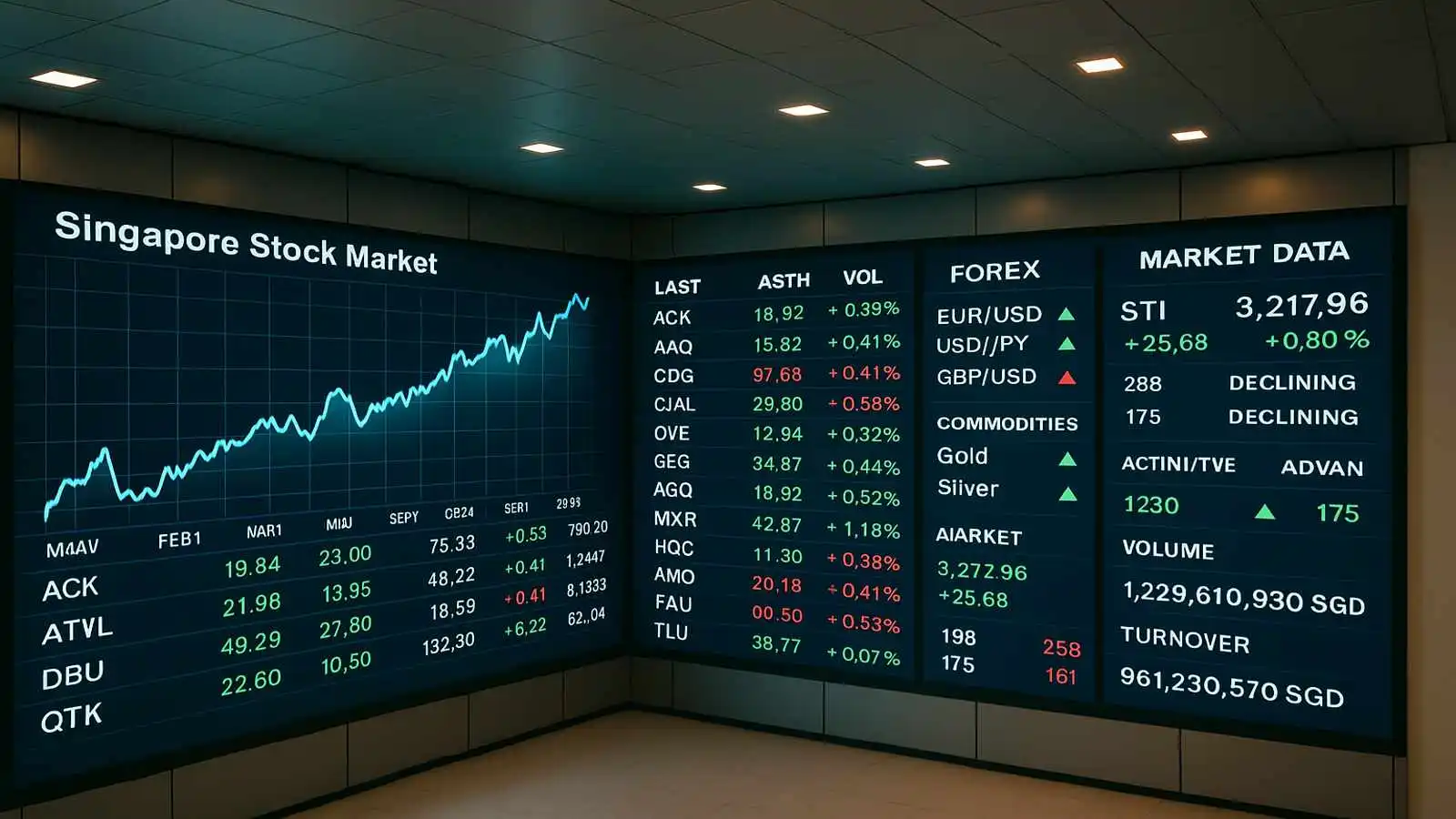
- The Straits Times Index (STI) has set repeated all-time highs through 2026 — from around 4,900 in January to a record 5,801.96 on September 4, 2026, a roughly 35% year-over-year gain.
- Banking heavyweights DBS, OCBC, and UOB have powered most of the rally, with DBS posting record Q2 2026 net profit of S$3.08 billion (up 9% year-over-year) on total income that crossed S$6 billion for the first time in a single quarter.
- SGX’s FY2026 results (July 2025–June 2026) show securities turnover up 35% year-over-year to S$455.7 billion, with retail investors net buyers of Singapore equities for five consecutive months.
- Analysts increasingly describe Singapore equities’ rally as driven by genuine “safe-haven” demand — investors rotating into the market specifically for its perceived stability amid regional and geopolitical uncertainty, not just cheap valuations.
- The risk flagged by several local commentators: a record-high market concentrated heavily in one sector (banks) raises the cost of over-allocating to what’s already led the run.
The STI’s 2026 Climb, Month by Month
| Date | STI Level | Context |
|---|---|---|
| Jan 30, 2026 | 4,934 (record) | Broad economic optimism, 4.8% 2025 GDP growth |
| Apr 9, 2026 | 5,000 (crossed) | First time above the 5,000 mark |
| May 22, 2026 | 5,068.15 | Banking and industrial stocks lead |
| Jun 25, 2026 | 5,218.96 | SGX FY2026 turnover surge |
| Jul 8, 2026 | 5,339.59 (intraday) | Institutional inflows accelerate |
| Jul 15, 2026 | 5,559.72 (record close) | Continued rally |
| Sep 4, 2026 | 5,801.96 (record close) | ~35% gain over trailing year |
Why Singapore Keeps Attracting “Safe Haven” Flows
Unlike a pure valuation story, Singapore’s 2026 rally has been repeatedly described by market commentators as safe-haven driven — investors specifically seeking Singapore’s institutional stability, currency credibility, and banking-sector strength during a year marked by Middle East conflict, tariff shocks, and volatile crypto and U.S. equity markets. The Monetary Authority of Singapore’s S$6.5 billion expansion of its Equity Development Programme (EQDP) has also directly funneled institutional capital into local equities.
The Bank Trio Driving the Rally
- DBS Group — Singapore’s largest bank, with a footprint across 19 markets. Q2 2026 total income crossed S$6 billion for the first time in a single quarter; net profit hit a record S$3.08 billion, up 9% year-over-year, even as net interest income slipped slightly.
- OCBC and UOB — Both have repeatedly led single-session STI gains alongside DBS, reinforcing the narrative that Singapore’s rally is fundamentally a banking-sector story with industrials and REITs participating at the margins.
The Case for Caution at Record Highs
Local commentary has been notably measured rather than euphoric: markets sit at all-time highs roughly a third of the time historically, and forward returns after a new high haven’t been meaningfully worse than at other times. The more practical risk flagged: a sharp rally can quietly shift a portfolio’s asset allocation (e.g., from a 70/30 equity/bond split to 80/20) without any active decision — a case for periodic rebalancing rather than either chasing or avoiding the rally outright.
Why are Singapore stocks considered a safe haven in 2026?
The Straits Times Index has hit repeated record highs in 2026 (reaching 5,801.96 by September), driven largely by record bank earnings from DBS, OCBC, and UOB. Analysts attribute much of the rally to genuine safe-haven demand from investors seeking institutional stability amid global geopolitical and market volatility, rather than valuation alone.
Discover more from The Economy
Subscribe to get the latest posts sent to your email.
Key Takeaways
- The U.S. government holds an approximately 10% passive equity stake in Intel, acquired around $20.47/share in August 2025 as part of a finalized CHIPS Act arrangement — a stake now up tens of billions of dollars on paper.
- Intel shares are reportedly up over 160% year-to-date in 2026, driven by pricing changes, AI partnerships, and manufacturing progress.
- Wall Street’s median 12-month price target sits near $110, though the full analyst range spans roughly $75–$200 — an unusually wide dispersion reflecting genuine disagreement about the foundry bet.
- Intel’s 18A manufacturing node is now in high-volume production, with Panther Lake as the first shipping product and external customers reportedly engaging Intel Foundry for next-generation nodes.
- Intel plans to raise PC CPU prices roughly 10% starting in early October 2026 — a margin-protection move rather than a volume play.
Why the Government Is a Shareholder
Following disruptions to the domestic chip supply chain and the 2022 CHIPS Act, Washington took the unusual step of converting some of Intel’s federal support into direct equity — around a 10% stake — with conditions that Intel keep its foundry business intact for at least five years. The rationale: a viable, U.S.-based advanced-logic manufacturer is treated as a national security asset, not just a commercial one, given how concentrated advanced chip manufacturing has become in Taiwan.
That backing functions as a floor under the stock in a way few other semiconductor names have — Intel effectively carries “national champion” status, with preferential access to defense and classified workloads as part of the arrangement.
The Foundry Turnaround, By the Numbers
| Metric | Status (2026) |
|---|---|
| 18A node | In high-volume production; Panther Lake shipping |
| U.S. government stake | ~10%, acquired ~$20.47/share |
| YTD stock performance | Reportedly +160%+ |
| Analyst price target range | $75–$200 (median ~$110) |
| Planned CPU price increase | ~10%, effective early October 2026 |
Intel’s Foundry division has posted multi-billion-dollar operating losses in recent years as external customer revenue continues to lag internal demand — the central risk in the bull case.
The Bull Case
- Intel is targeting roughly 20% of the world’s most advanced logic manufacturing capacity by late 2026, positioning it as the only credible U.S.-based alternative to Taiwan-concentrated advanced-node production.
- Government backing (CHIPS Act equity, SoftBank investment, NVIDIA partnership signals) de-risks the multi-year capital intensity of the foundry buildout.
- Rising global chip demand — the World Semiconductor Trade Statistics organization has projected sharp growth in overall chip sales, with memory pricing acting as a particular tailwind — supports the broader sector even if Intel-specific execution lags.
The Bear Case
- Foundry losses remain large, and external customer revenue — the metric that would validate the “TSMC-style” foundry model — still lags well behind internal Intel demand.
- Heavy, sustained capital expenditure (north of $20 billion annually) pressures free cash flow regardless of top-line improvement.
- The wide analyst target dispersion ($75–$200) itself signals that Wall Street has not reached consensus on whether the turnaround is durable or a government-subsidized reprieve.
Is Intel stock a buy in 2026?
Analyst opinion is split: Intel’s median 12-month price target is roughly $110, but targets range from $75 to $200, reflecting disagreement over whether its government-backed foundry turnaround (18A node, external customer wins) offsets continued foundry losses and heavy capital spending.
Discover more from The Economy
Subscribe to get the latest posts sent to your email.

Key Takeaways
- The benchmark 10-year US Treasury yield briefly touched 5.014% on Monday, September 14, 2026 — its first move above the psychologically important 5% threshold since October 2023, and only its second time above that level since the 2007-2008 financial crisis.
- The move came just two days before the Federal Reserve’s September policy meeting, with markets now pricing roughly a 90% probability of a rate hike rather than a cut, according to CME Group’s FedWatch tool.
- The catalyst combines several forces at once: Brent crude topping $109/barrel, a hotter-than-expected August CPI report, swelling government and corporate borrowing needs, and a possible unwinding of the Japanese yen carry trade as Japanese rates climb.
- The 30-year Treasury yield reached 5.386%, directly affecting mortgage pricing, while 10-year yields in the UK and Australia have also climbed above 5% — signaling this is a global, not purely American, bond-market phenomenon.
- Veteran market strategist Ed Yardeni notes that neither the yield spike nor the global bond selloff has “broken” the stock market’s bull run so far, crediting continued strength in corporate earnings.
For the first time in nearly three years, the interest rate that anchors global borrowing costs — the US 10-year Treasury yield — has crossed the symbolically important 5% threshold. The move, which arrived just 48 hours before the Federal Reserve’s September policy decision, is rippling through mortgage markets, equity valuations, and central bank calculations from Washington to Tokyo. Here’s what actually happened, why, and what it means for anyone watching the stock market today.
What Happened
The 10-year Treasury yield climbed as high as 5.014% intraday on Monday, September 14, 2026, before paring the move back to around 4.94–4.99% by afternoon trading. It marked the first time the yield had crossed 5% during a trading session since October 23, 2023, and — as several outlets noted — only the second time it has traded this high since July 2007, just before the global financial crisis. A close above 5.02% would represent the highest level since that pre-crisis period.
The move wasn’t isolated to the 10-year note. The 2-year Treasury yield, which is more directly sensitive to near-term Fed policy, climbed to 4.679%, surpassing its previous July 2024 high. The 30-year yield — the benchmark most directly tied to fixed mortgage rates — touched 5.386% before paring some of its gains.
Why Yields Are Spiking: Four Forces Converging
1. Oil-driven inflation fears. Brent crude climbed to a session high past $109 a barrel as fighting between the US and Iran escalated, directly feeding into bond investors’ inflation expectations. Rising energy costs erode the fixed returns bondholders receive, pushing yields higher to compensate.
2. A hotter-than-expected inflation print. Friday’s August CPI report showed inflation running hotter than markets had anticipated. Goldman Sachs’ chief economist David Mericle wrote that while the report didn’t change the bank’s underlying inflation view, it pushed market pricing of a Fed rate hike this week to nearly 90% — a striking reversal from earlier-year expectations of continued rate cuts.
3. Swelling government and corporate borrowing. The yield spike is also being driven by basic supply-and-demand dynamics in the bond market: both the federal government and major corporations are issuing substantial new debt to fund spending, adding to the overall supply of bonds competing for investor capital.
4. A potential yen carry-trade unwind. Yardeni Research has floated a more technical explanation with global implications: as Japanese interest rates rise and the yen strengthens (partly on Japan’s own defense-spending and monetary-policy shifts), the long-popular “carry trade” — in which investors borrow cheaply in yen and invest in higher-yielding assets elsewhere — becomes less attractive. Unwinding those positions could be contributing to selling pressure across global bond markets, not just US Treasuries.
Global Context: This Isn’t Just an American Story
The yield surge isn’t confined to the US. Ten-year yields in both Australia and the UK have also climbed above 5%, reinforcing that this is a broader global bond-market repricing rather than a US-specific event. Yardeni’s assessment captures the moment’s tension well: a global yield spike of this magnitude “would normally be enough to break a global bull market in stocks. Neither has so far” — crediting resilient corporate earnings for equities’ relative calm despite the bond turmoil.
Rate Decision Timing: Why This Matters So Much Right Now
The timing amplifies the significance considerably. The yield spike landed just two days ahead of the Federal Reserve’s September policy meeting, transforming what might otherwise be a notable but contained bond-market move into a live variable in the Fed’s own deliberations. According to CME Group’s FedWatch tool, the probability of a rate hike this week has climbed above 90%, while Polymarket bettors have priced the same outcome at around 80%. Some market watchers are also monitoring rising tension between President Trump and Fed Chair Kevin Warsh as a wildcard factor in how the central bank navigates the decision.
Yield Snapshot
| Maturity | Peak Yield (Sept 14, 2026) | Significance |
|---|---|---|
| 2-year Treasury | 4.679% | Highest since July 2024; most Fed-sensitive |
| 10-year Treasury | 5.014% | First above 5% since October 2023 |
| 20-year Treasury | 5.426% | Sensitive to geopolitical risk |
| 30-year Treasury | 5.386% | Benchmark for mortgage rates |
Why This Matters: Mortgages, Portfolios, and the Fed’s Next Move
For everyday borrowers, the 30-year yield’s climb toward 5.4% translates fairly directly into higher fixed mortgage rates, making home purchases and refinancing meaningfully more expensive than earlier in 2026. For equity investors, the key question is whether corporate earnings can continue outrunning the drag from higher borrowing costs — the dynamic Yardeni credits for the stock market’s calm so far. And for the Fed, Wednesday’s decision now carries outsized weight: a hike would validate the bond market’s current pricing, while a hold could trigger further yield volatility if investors interpret it as the central bank falling behind an inflation trend that oil prices and geopolitical tension are actively worsening.
Frequently Asked Questions
Why did the 10-year Treasury yield cross 5% in September 2026?
The move was driven by a combination of surging oil prices tied to the escalating US-Iran conflict, a hotter-than-expected August CPI report, heavy government and corporate bond issuance, and a possible unwinding of the yen carry trade as Japanese rates rise.
How does a 5% Treasury yield affect mortgage rates?
The 30-year Treasury yield, which climbed to 5.386% alongside the 10-year’s move, is the most direct benchmark for 30-year fixed mortgage rates, meaning this yield spike is likely pushing mortgage borrowing costs higher for US homebuyers.
Will the Federal Reserve raise interest rates this week?
As of the yield spike, markets were pricing roughly a 90% probability of a rate hike at the Fed’s September meeting, according to CME Group’s FedWatch tool — a sharp reversal from earlier expectations of rate cuts.
Discover more from The Economy
Subscribe to get the latest posts sent to your email.

Global Pension Systems Ranked: The World’s Best and Worst Retirement Frameworks

Global Supply Chain Vulnerabilities: From Eurasian Trade Corridors to Food Consumer Recalls

Why 5% U.S. Treasury Yields Signal a Global Market Regime Shift.

Federal Reserve Defies White House Pressure: Inside Trump’s Demand for Sub-1% Interest Rates After Historic 2026 Rate Hike

How Rising Interest Rates Impact Gig Economy Apps: DoorDash, Uber, and Urban Services

GasBuddy Market Insights: How Crude Price Shifts Impact Local Fuel Cost Averages

DoorDash Driver Payouts, Fee Structures, and Market Competition Analysis

OPINION:Breaking the 3.5% Growth Trap: How Pakistan Can Build a High-Productivity Export Economy

Global Equity Market Divergence: US Tech vs. European Dividend Stocks vs. Asian Growth

Asian Markets Analysis: Navigating Volatility in China, Japan, and Singapore Stocks

Stagflation vs. Soft Landing: How Central Bank Rates Are Reshaping European and Asian Economies

IMF & World Bank Global Economic Outlook: Growth Forecasts Across Europe and Asia

Fed Rate Hike Projections vs. Trump’s Interest Rate Policy: What Global Markets Expect Next

Singapore Stocks: The Ultimate Safe Haven for Markets and Finance in 2026?

State Farm’s $5B Dividend 2026: Who Qualifies & Payout Dates

US-China Relations in Q3 2026: Trade Tariffs and Supply Chain Risks

SpaceX Starship Flight 14: First Orbital Attempt & Starlink V3 Launch Explained

Top 30 Stocks for Investment in PSX for Massive ROI in 2026

The 2026 Crypto Regulatory Shift: What It Means for Institutional Investors

AI Chip Stocks 2026: The Best Semiconductor Investments Beyond Marvell

AI-Powered Training: The Next Multi-Billion Dollar Ecosystem in Fitness

Tween Back-to-School Trends 2026: What’s Driving the $85B Season

10-Year Treasury Yield Hits 4.80%: What It Means for Rates & Portfolios

Oil Prices Break $100 in 2026: Middle East Conflict & Energy Markets

Shein Clothes Quality & Safety in 2026: What Lab Tests Show

Fidelity Investments Review 2026: SPAXX Yields & Zero-Fee Funds

MRVL Earnings 2026: Why Marvell Sank Despite Beating Estimates

China’s US$10.8 Billion Trade Shortcut: Why the Pinglu Canal Matters
-

 Markets & Finance9 months ago
Top 15 Stocks for Investment in 2026 in PSX: Your Complete Guide to Pakistan’s Best Investment Opportunities
-

 Analysis7 months ago
Johor’s Investment Boom: The Hidden Costs Behind Malaysia’s Most Ambitious Economic Surge
-

 Analysis7 months ago
Top 10 Stocks for Investment in PSX for Quick Returns in 2026
-

 Analysis7 months ago
Brazil’s Rare Earth Race: US, EU, and China Compete for Critical Minerals as Tensions Rise
-

 Banks8 months ago
Best Investments in Pakistan 2026: Top 10 Low-Price Shares and Long-Term Picks for the PSX
-

 Investment8 months ago
Top 10 Mutual Fund Managers in Pakistan for Investment in 2026: A Comprehensive Guide for Optimal Returns
-

 Global Economy9 months ago
15 Most Lucrative Sectors for Investment in Pakistan: A 2025 Data-Driven Analysis
-

 Global Economy9 months ago
Pakistan’s Export Goldmine: 10 Game-Changing Markets Where Pakistani Businesses Are Winning Big in 2025