
Analysis
Bank of Japan Raises Rates to 1%: The End of Cheap Yen

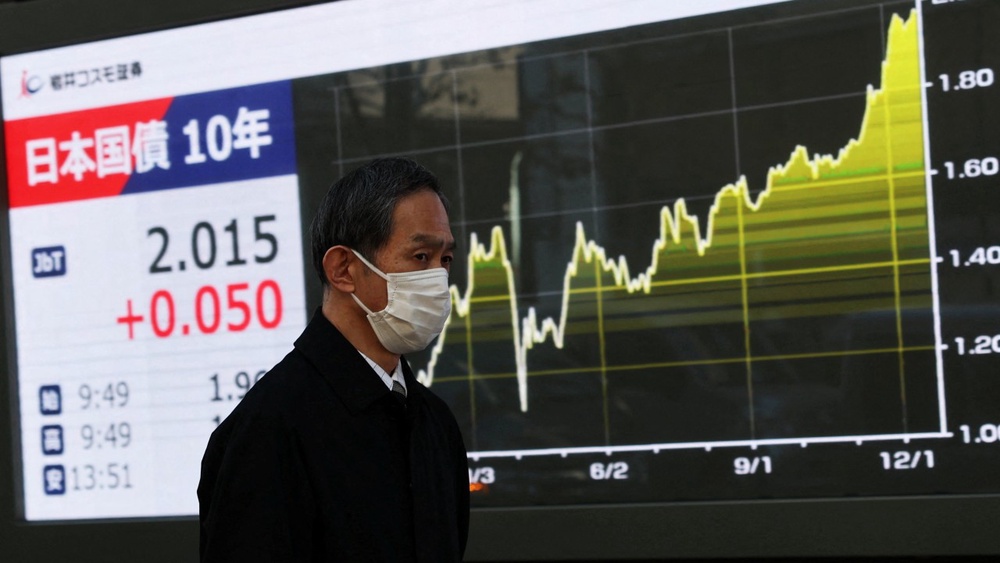
The Bank of Japan has raised its benchmark policy rate to 1%, the highest level since September 1995, in a decision that marks one of the most consequential shifts in global monetary policy in a generation. The move — a 25-basis-point increase from 0.75% — was approved by a 7–1 vote at the conclusion of the central bank’s two-day policy meeting on Tuesday. It was not a surprise. Markets had priced in the hike with near-certainty for weeks. What made it historic was everything surrounding it: a governor absent from his own boardroom, a Middle East energy shock feeding Japan’s worst inflation in years, and the unmistakable signal that the era of essentially free money in the world’s fourth-largest economy is over.
To understand what 1% means for Japan, you have to understand what came before it. For most of the past three decades, the Bank of Japan was fighting a different enemy: deflation. Consumer prices stagnated, wages barely moved, and the central bank responded by holding interest rates at or near zero — and eventually below — for years at a stretch. The BOJ became the last major central bank still practicing the monetary policy of the post-2008 crisis era long after the Federal Reserve, the European Central Bank, and the Bank of England had tightened aggressively.
That era formally ended in March 2024, when the BOJ exited negative interest rates for the first time in eight years. Tuesday’s decision to push rates to 1% is the fifth hike in that normalisation cycle. The Bank of Japan’s policy statement noted that underlying inflation could accelerate above its 2% target amid rising energy costs — a marked change in tone from the cautious, conditional language that had characterised earlier communications.
Japan’s producer prices rose 6.3% year-on-year in May, driven almost entirely by energy costs, according to data cited by Reuters and Bloomberg. That figure — the fastest pace in more than three years — gave the board little room to wait.
The vote was 7–1. Board member Toichiro Asada dissented, arguing that downside risks to production and employment outweighed the upside risks to prices — a minority view that nonetheless reflects a genuine tension within the institution about the pace of tightening.
The decision itself was almost overshadowed by its circumstances. Governor Kazuo Ueda, 74, was hospitalised on June 10 with an infected liver cyst and missed the meeting entirely — the first time in his tenure that he has been absent from a policy decision. Deputy Governor Ryozo Himino chaired the meeting in his place, while Deputy Governor Shinichi Uchida conducted the post-decision press conference. Ueda, working remotely from hospital, expressed his policy stance through a written statement but did not vote.
The symbolism was not lost on markets. The BOJ’s most significant tightening decision in 31 years was delivered without its chief architect in the room. Yet the institutional machinery held: there was no confusion about the outcome, no disorderly communication. Takeshi Minami, chief economist at Norinchukin Research Institute, had said ahead of the meeting that “Ueda’s health issue will not affect monetary policy execution. The rate decision itself is already largely determined.”
He was right. The yen strengthened marginally to 160.22 against the dollar after the announcement. The Nikkei 225 edged up 0.46%. Yields on 10-year Japanese Government Bonds climbed 3 basis points to 2.615%. The reaction was measured — the market had already done its digesting.
Still, the forward guidance question remains open. Mari Iwashita, executive rates strategist at Nomura Securities, told Reuters that the BOJ may avoid sending clear signals on the future rate path given uncertainty around Ueda’s recovery timeline. “It’s also becoming more unclear on whether the BOJ would hike again this year,” she said.
The BOJ confirmed it will continue reducing its monthly bond purchases by ¥200 billion per quarter, with a plan to stabilise purchases at approximately ¥2 trillion per month from April 2027.
Why the BOJ Raised Rates to 1%: The Analytical Layer
What is actually driving Japanese inflation right now?
The short answer is energy, and the mechanism behind it is the yen. Japan imports virtually all of its energy. When the yen is weak — as it has been, trading around 160 to the dollar — import costs rise in yen terms, even if global commodity prices hold steady. The ongoing conflict in the Middle East, and its effect on oil markets via the Strait of Hormuz, has compounded this by pushing energy prices higher in dollar terms as well. The result is a double whammy: higher prices in the currency that Japan pays for goods, and higher prices for the goods themselves.
H3: Why did the Bank of Japan raise rates to 1%?
The Bank of Japan raised rates to 1% in June 2026 to prevent war-driven energy inflation from embedding in broader consumer prices. With producer prices up 6.3% year-on-year in May and the yen weakening past 160 per dollar, policymakers judged that the cost of waiting outweighed the risk of tightening into a fragile recovery.
That 40-word answer captures the mechanism. But the picture is more complicated than a simple inflation-fighting move. The BOJ is simultaneously managing the yen’s structural weakness, running down a bloated balance sheet accumulated through years of bond purchases, and trying not to rattle global financial markets that have borrowed heavily in yen.
A higher policy rate does several things at once: it narrows the interest rate differential that makes yen-funded carry trades attractive; it signals that the BOJ is no longer behind the curve; and it offers some support to yen-denominated household purchasing power at a moment when rising import costs are squeezing consumers.
The board’s own language was pointed. It warned that underlying inflation “could accelerate above 2%” — a phrase that, for an institution historically reluctant to make conditional projections, carries real weight.
What 1% Means for Markets and Households
The most closely watched downstream consequence of this decision is the yen carry trade. For decades, investors borrowed cheaply in yen, converted the proceeds into higher-yielding currencies or assets, and pocketed the difference. The trade became a structural feature of global capital markets — a quiet subsidy to risk appetite funded by Japanese monetary policy.
As rates rise, the arithmetic of that trade deteriorates. In August 2024, a previous BOJ rate hike triggered a partial unwind that sent ripples through global equities and crypto markets. That episode — brief but brutal — is fresh in the memory of institutional risk desks. With yen short positions reportedly at multi-year extremes, another disorderly unwind remains a tail risk.
Yet Tuesday’s reaction suggested markets are managing the transition more smoothly this time. The Nikkei rose rather than fell. The yen strengthened only modestly. That relative calm reflects the degree to which the hike was telegraphed — market-implied probability exceeded 99% ahead of the decision — and the fact that the BOJ has been careful to sequence tightening gradually.
For Japanese households and small businesses, the picture is mixed. Borrowers — particularly those with variable-rate mortgages — will face higher monthly payments. The Japan Times has reported that household energy bill subsidies from the government have so far cushioned consumers from the worst of the energy-driven price rises, but those buffers have limits.
For savers, the direction of travel is welcome, if belated. Japanese depositors have endured decades of near-zero returns. A 1% policy rate won’t transform savings economics overnight, but it marks the beginning of a structural normalisation that, if sustained, eventually flows through to deposit rates.
The bond market deserves close attention. Ten-year JGB yields hit 2.8% in May — the highest since 1996, according to Bloomberg — before easing slightly. The BOJ’s continued tapering of bond purchases means it is gradually withdrawing a buyer that had, at its peak, been absorbing roughly ¥6 trillion per month. As that support fades, yields may continue to drift higher, with consequences for Japan’s government debt servicing costs and the global fixed income landscape.
What the Dissenters Argue
It would be a mistake to read Tuesday’s vote as a moment of institutional unanimity. Toichiro Asada’s dissent was not mere procedural notation — it reflects a serious argument about the risks of tightening into an uncertain global environment.
Japan’s economic recovery remains uneven. Real wages, while recovering, have not kept pace with inflation — meaning that higher interest rates risk squeezing consumption at precisely the moment households are already under pressure from rising import costs. Asada’s position, that downside risks to production and employment are greater than upside inflation risks, echoes a concern shared by some external economists: that the BOJ may be importing a hawkish consensus from Western central banks into an economy that still has distinct vulnerabilities.
There is also the question of what happens if the global picture deteriorates. The US-Iran ceasefire and the Strait of Hormuz reopening have, as of this writing, eased some of the most acute energy market pressures. If geopolitical conditions improve and oil prices fall, Japan’s inflation impetus could soften faster than the BOJ’s current projections suggest — leaving the bank having hiked into a disinflationary turn.
The IMF, in its April 2026 World Economic Outlook, cautioned that central banks should avoid premature tightening in economies where the inflation impulse is primarily supply-side and external. Japan fits that description more closely than most. The argument is not that 1% is wrong, but that the pace of subsequent moves must be calibrated with care.
That said, the counterargument is powerful. Real interest rates in Japan remain deeply negative — which means policy is still, by most measures, highly accommodative. The BOJ is not slamming on the brakes; it is easing off the accelerator.
A Turning Point Thirty Years in the Making
For most of the past three decades, Japan was the world’s monetary anomaly — the country where money was essentially free, where the central bank bought bonds to suppress yields, where the yen served as a global funding currency precisely because borrowing in it cost almost nothing. That structure shaped not just Japanese finance but global capital markets in ways that are difficult to fully map.
Tuesday’s decision will not unwind all of that overnight. A policy rate of 1% still leaves Japan far behind the interest rate levels seen elsewhere, and the normalisation path forward remains genuinely uncertain — shaped by Governor Ueda’s recovery, the trajectory of Middle East tensions, and whether the inflation that has finally arrived in Japan proves as durable as policymakers now appear to believe.
What is clear is that the direction has changed. For the first time since 1995, the Bank of Japan is raising rates above 1%. The architecture of global monetary policy — built on the assumption of Japanese cheapness — is being quietly, persistently, and consequentially dismantled.
Discover more from The Economy
Subscribe to get the latest posts sent to your email.



Navigating Mortgage and Loan Refinancing in a High-Yield Environment
Global public debt crossing critical thresholds has kept central bank policies volatile, resulting in fluctuating US Treasury yields throughout 2026. For homeowners and commercial property holders burdened by previous high-interest borrowing cycles, finding optimal refinance windows has become a high-stakes financial puzzle. Stalled disinflation and stubborn employment numbers mean rate cuts are incremental, requiring borrowers to act with precision.
Timing your mortgage or commercial loan refinance in this environment requires a deep understanding of yield curve movements and lender risk appetites.
Decoding 2026 Refinance Dynamics
The 10-Year Treasury Yield Benchmark
Mortgage rates continue to track closely with the 10-year US Treasury yield. When macroeconomic anxiety spikes debt issuance, yields rise, tightening consumer borrowing capacity. Savvy borrowers monitor weekly Treasury auctions to lock in rates during brief dip windows.
Hybrid ARMs and Alternative Structures
With fixed rates remaining elevated, 7/1 and 10/1 adjustable-rate mortgages (ARMs) have surged in popularity. These products offer lower initial monthly payments, giving borrowers breathing room until central bank easing cycles fully materialize.
| Loan Product | Current Rate Range | Best For | Key Risk Factor |
| 30-Year Fixed Mortgage | 6.2% – 6.8% | Long-term predictability | Higher initial monthly outlay |
| 7/1 Hybrid ARM | 5.5% – 5.9% | Short-term ownership / flipping | Rate reset risk after year 7 |
| Commercial Refinance | 7.0% – 8.2% | Corporate asset restructuring | Strict DSCR lender covenants |
Actionable Steps for Successful Refinancing
To maximize your chances of securing favorable refinance terms in a volatile market, follow a disciplined preparation strategy.
Boost Your Credit Score Immediately: Lenders in 2026 are applying stringent credit tiering; a 20-point increase can drop your APR by a crucial quarter-point.
Shop Regional Credit Unions: Smaller financial institutions often offer portfolio loans with more flexible underwriting than major national banks.
Calculate the Break-Even Point: Ensure your total closing costs are recouped through monthly savings within 24 months of closing.
“Market Strategist View: Refinancing in 2026 is an exercise in opportunistic timing. Borrowers must maintain immaculate financial profiles ready to strike the moment Treasury yields dip.”
Mastering the complexities of today’s debt environment ensures you can successfully lower your debt service costs and protect your long-term financial stability.
Discover more from The Economy
Subscribe to get the latest posts sent to your email.

The days of pulling generic auto insurance quotes based purely on your zip code and age are officially over. In 2026, insurance comparison engines are powered entirely by generative AI and real-time telematics. These platforms digest thousands of live data points—ranging from your driving smoothness via connected vehicle sensors to real-time traffic congestion patterns—to generate hyper-personalized premiums instantly.
For consumers, this evolution represents both a massive opportunity for savings and a hidden trap for penalty pricing. Understanding how AI algorithms evaluate risk is essential for anyone looking to lower their monthly auto insurance premiums.
How AI Comparison Engines Evaluate Your Risk Profile
Behavioral Telematics and Connected Cars
Modern cars stream performance data directly to insurance aggregators. Generative AI models analyze braking sharpness, acceleration curves, cornering G-forces, and phone distraction metrics. Drivers who maintain smooth, defensive habits are rewarded with dynamic rate cuts of up to 40% compared to traditional rating tiers.
Predictive Traffic and Weather Modeling
AI tools now cross-reference your daily commute route with predictive weather and accident probability models. If your standard parking location or driving corridor has a statistically higher incidence of uninsured motorist claims, your quotes will reflect that hyper-local risk assessment.
| Comparison Factor | Traditional Rating Model | 2026 Generative AI Model | Impact on Premium |
| Mileage & Usage | Annual estimated odometer reading | GPS tracking & live trip duration | High (up to 35% savings) |
| Driving Behavior | MVR driving record & accidents | Real-time braking, speed, & G-force | Critical (determines tier) |
| Vehicle Tech | Make, model, and safety rating | ADAS calibration & repair cost data | Moderate |
Strategies to Lower Your AI-Driven Insurance Quote
To outsmart the algorithm and secure the lowest possible premium in 2026, drivers must proactively manage their digital footprint on insurance platforms.
Opt-In for Telematics Trial Periods: Many insurers offer immediate 15% discounts just for installing their driving app; let it track safe habits for 30 days to lock in permanent savings.
Scrub Unverified Public Records: Ensure your motor vehicle report is free of clerical errors that AI risk models misinterpret as reckless behavior.
Compare AI Aggregators: Use platforms that integrate multi-carrier API feeds rather than single-brand comparison sites to find the best risk-adjusted rate.
“Industry Note: AI-driven pricing rewards transparency and precision. Drivers who actively manage their telematics data consistently out-save those relying on legacy quote calculators.”
Embracing AI comparison tools allows savvy policyholders to customize coverage limits precisely to their driving habits, eliminating wasted premium spend while ensuring robust protection.
Discover more from The Economy
Subscribe to get the latest posts sent to your email.

Despite decades of bans and strict handling mandates, asbestos remains a silent killer across legacy manufacturing plants, shipyards, and modern green-energy infrastructure retrofits. In 2026, regulatory changes by the EPA and tightened occupational health standards have triggered a fresh wave of mesothelioma litigation. Manufacturers attempting to fast-track industrial transitions are encountering catastrophic oversight, exposing workers to legacy toxins and opening corporate parent companies to unprecedented liability.
Navigating a mesothelioma claim in 2026 requires understanding how modern industrial supply chains intersect with historical exposure. Trusts established decades ago are being audited under stricter transparency laws, altering payout ratios and accelerating fast-track settlements for terminally ill plaintiffs.
Modern Industrial Exposure Hotspots
Green Retrofitting and Renewable Energy Infrastructure
A primary source of 2026 asbestos exposure occurs during the decommissioning and retrofitting of older industrial facilities for renewable energy production. Workers insulating electrical grids, modernizing HVAC systems, or upgrading manufacturing floors frequently disturb encapsulated asbestos materials that were improperly documented or ignored during facility audits.
Automotive and Aerospace Supply Chains
With advanced manufacturing booming, workers handling specialized friction materials, gaskets, and heat shields face ongoing risks. Supply chain tracing has become more sophisticated, allowing legal teams to pinpoint exact corporate entities responsible for raw material distribution across multinational borders.
| Industry Sector | Primary Exposure Risk | Legal Venue / Trust | Avg. Claim Value Range |
| Green Energy Retrofit | Disturbed insulation, pipe lagging | Federal Tort / Manufacturer Trust | $1.2M – $3.5M |
| Shipbuilding & Marine | Boiler insulation, structural seals | Asbestos Bankruptcy Trusts | $800K – $2.4M |
| Automotive Manufacturing | Brake components, high-heat gaskets | Third-Party Product Liability | $600K – $1.8M |
Securing Maximum Compensation: Steps for Plaintiffs
Time is of the essence in mesothelioma cases. Plaintiffs and their families must act decisively to secure financial recovery before statutes of limitations expire.
Retain Specialized Counsel: Work exclusively with national mesothelioma law firms possessing deep historical databases of asbestos-containing products.
Audit Employment History: Document every job site, supervisor name, and equipment brand encountered throughout your career.
Expedite Medical Filings: Secure a formal pathological diagnosis quickly to qualify for expedited trust fund distribution and priority trial settings.
“Expert Insight: Modern asbestos litigation is no longer just about historical tracking; it is about holding modern corporations accountable for failing to conduct rigorous environmental safety audits before initiating industrial retrofits.”
By combining meticulous work history reconstruction with aggressive multi-trust filings, victims can secure substantial financial relief to cover specialized immunotherapy and family support.
Discover more from The Economy
Subscribe to get the latest posts sent to your email.

10-Year Treasury Yield Tops 5%: What It Means for Mortgages, Stocks, and the Fed

Ceasefire Negotiations in 2026: Predicting the Rebound of European and Asian Economies

Emerging Markets Update: The Impact of World Bank Policies on PSX Stability

Costco Oil Shortage 2026: Will Prices Double for All Synthetic Motor Oils?

Trump’s $5,000 Promise: The Hidden Tax Implications for Retail Investors

Global Economy Outlook 2026: What Ceasefire Talks Mean for the Tech Sector

China Stocks Today: Are Big Economies in Asia Nearing a Market Bottom?

Stock Market Crash 2026? How the Trump $5,000 Dividend Impacts Global Inflation

Tax-to-GDP Ratio Explained: Global Benchmarks, Fiscal Sovereignty & 2026 Insights

Trade Deficit & Terms of Trade Explained: Global Impact, Real-World Examples, and 2026 Insights

Supply vs Demand Shocks Explained: Market Equilibrium, Inflation Risks & Policy Responses in 2026

Microeconomics vs. Macroeconomics Explained: Key Differences, Interdependence & Global Impact

Devaluation vs Depreciation: Clear Differences, Causes, and Economic Impact

Purchasing Power Parity (PPP) Explained: Global Rankings, Living Standards & Why Nominal Exchange Rates Mislead in 2026

State Farm’s $5B Dividend 2026: Who Qualifies & Payout Dates

US-China Relations in Q3 2026: Trade Tariffs and Supply Chain Risks

Gold’s Wild 2026: From a Record $5,600 Peak to a 24% Crash and Back Toward $4,500

Oil Surges as Strait of Hormuz Traffic Collapses Again

Bank of England Set to Hold Rates Through Year-End, Reuters Poll Shows

SpaceX Starship Flight 14: First Orbital Attempt & Starlink V3 Launch Explained

The 2026 Crypto Regulatory Shift: What It Means for Institutional Investors

Top 30 Stocks for Investment in PSX for Massive ROI in 2026

AI Chip Stocks 2026: The Best Semiconductor Investments Beyond Marvell

AI-Powered Training: The Next Multi-Billion Dollar Ecosystem in Fitness

Tween Back-to-School Trends 2026: What’s Driving the $85B Season

Russia’s Black Sea Oil Exports Fall for a Fifth Straight Week

Global Chip Selloff Deepens: What’s Driving the Aug. 19 Semiconductor Rout

Shein Clothes Quality & Safety in 2026: What Lab Tests Show
-

 Markets & Finance8 months ago
Top 15 Stocks for Investment in 2026 in PSX: Your Complete Guide to Pakistan’s Best Investment Opportunities
-

 Analysis7 months ago
Johor’s Investment Boom: The Hidden Costs Behind Malaysia’s Most Ambitious Economic Surge
-

 Analysis7 months ago
Top 10 Stocks for Investment in PSX for Quick Returns in 2026
-

 Analysis7 months ago
Brazil’s Rare Earth Race: US, EU, and China Compete for Critical Minerals as Tensions Rise
-

 Banks8 months ago
Best Investments in Pakistan 2026: Top 10 Low-Price Shares and Long-Term Picks for the PSX
-

 Investment8 months ago
Top 10 Mutual Fund Managers in Pakistan for Investment in 2026: A Comprehensive Guide for Optimal Returns
-

 Global Economy9 months ago
15 Most Lucrative Sectors for Investment in Pakistan: A 2025 Data-Driven Analysis
-

 Global Economy9 months ago
Pakistan’s Export Goldmine: 10 Game-Changing Markets Where Pakistani Businesses Are Winning Big in 2025