
Economics
Purchasing Power Parity (PPP) Explained: Global Rankings, Living Standards & Why Nominal Exchange Rates Mislead in 2026

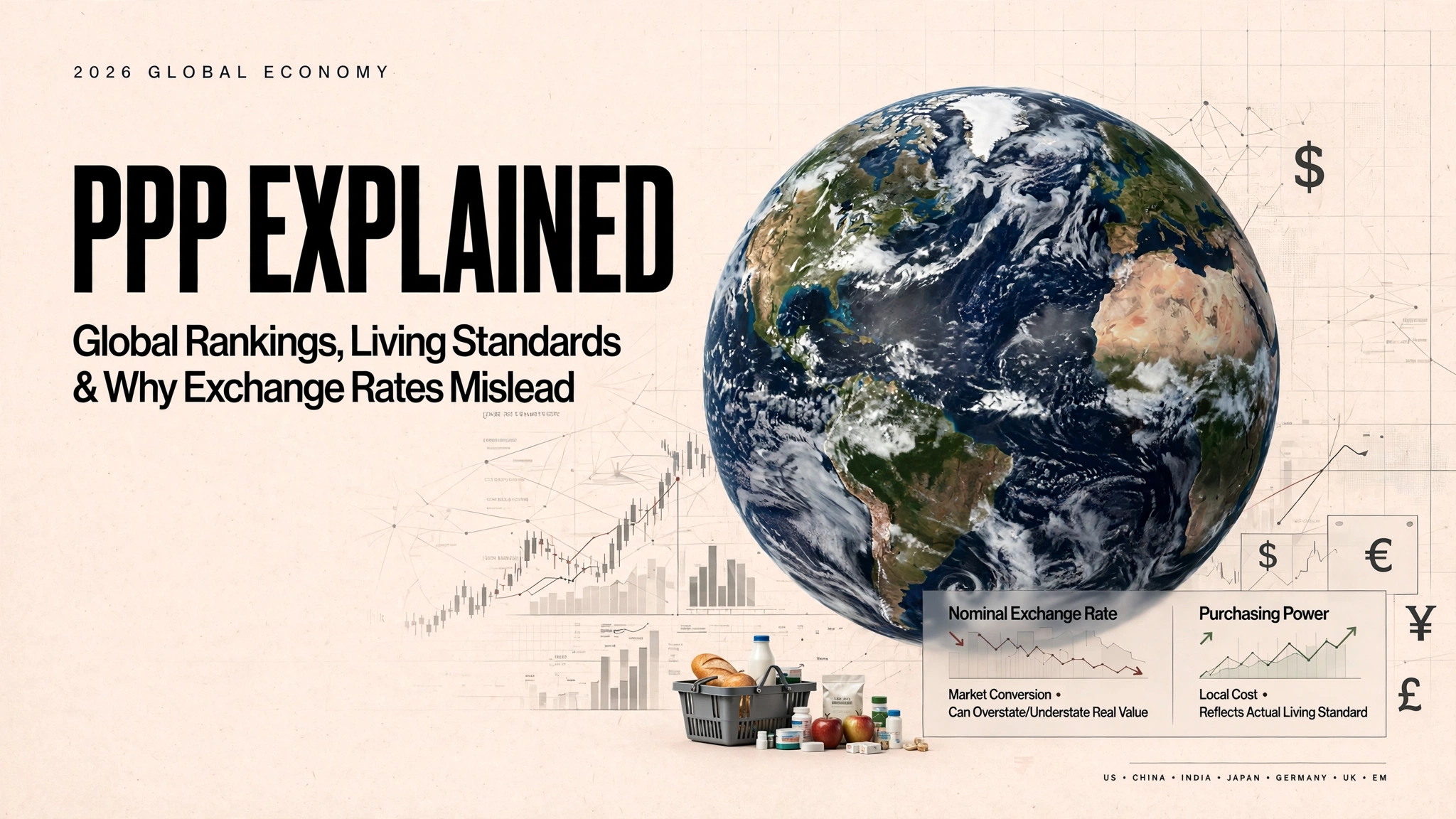
Comparing Global Living Standards Beyond Nominal Exchange Rates
Purchasing Power Parity (PPP) is a foundational economic theory and measurement technique used to compare the economic productivity, price levels, and standards of living between different countries.
If you look strictly at nominal Gross Domestic Product (GDP) converted to US Dollars at prevailing market exchange rates, developing economies often appear drastically smaller than they actually are in real terms. PPP solves this distortion by calculating what an exchange rate should be if a identical basket of goods and services cost the exact same amount in two different countries.
For financial analysts, macroeconomists, and readers of Thefinance.pk and Economy.com.pk, PPP provides the most accurate “apples-to-apples” comparison of global economic power.
The Core Concept: The Law of One Price
The theoretical foundation of PPP is the Law of One Price. This economic principle states that in an efficient, frictionless global market with no transport costs or trade barriers, an identical good must sell for the exact same price everywhere when expressed in a common currency.
To understand how this works in practice, economists use the famous benchmark created by The Economist magazine: The Big Mac Index.
- Suppose a McDonald’s Big Mac costs $5.00 in the United States and Rs. 500 in Pakistan.
- According to PPP theory, the implied exchange rate is $5.00 = Rs. 500, which means $1.00 should equal Rs. 100.
- If the actual market exchange rate is $1.00 = Rs. 280, the Big Mac Index suggests that the Pakistani Rupee is heavily undervalued on a purchasing power basis, meaning local goods and services are remarkably cheap for someone holding US Dollars.
Nominal GDP vs. GDP at PPP
When international financial institutions like the IMF and the World Bank publish global economic rankings, they always provide two distinct lists: Nominal GDP and GDP based on Purchasing Power Parity.
- Nominal GDP (Market Exchange Rates): Converts local economic output into US Dollars using daily Wall Street currency exchange rates. While useful for measuring international trade and global financial transactions, it is heavily flawed for measuring domestic living standards because market exchange rates fluctuate wildly based on speculation, capital flows, and political sentiment.
- GDP (PPP Adjusted): Recalculates total economic output by eliminating the price differences between countries. Because non-traded goods and services (like haircuts, domestic rent, public transport, and locally grown food) are significantly cheaper in developing nations, PPP-adjusted GDP gives a much truer picture of physical output, material well-being, and internal market size.
For example, when ranked by nominal GDP, a developing nation might sit far down the global list. However, when ranked by GDP (PPP), that same nation often leaps into the top tier of the world’s largest economies because its domestic purchasing power is vastly greater than market exchange rates imply.
Limitations and Criticisms of PPP
While PPP is an invaluable analytical tool, economists acknowledge several structural limitations:
- Non-Traded Goods and Services: Haircuts, restaurant meals, local real estate, and healthcare cannot be easily shipped across borders. Because labor costs are lower in developing nations, these non-traded services skew price levels heavily, making PPP calculations complex.
- Transport Costs and Trade Barriers: The Law of One Price assumes zero friction. In reality, shipping heavy machinery across oceans, paying customs duties, and navigating trade tariffs mean identical goods will naturally cost more in landlocked or import-heavy nations.
- Quality Differences: An identical category name (e.g., “automobiles” or “housing”) can represent vastly different levels of quality, technological sophistication, and safety standards from one country to another, making precise basket comparisons imperfect.
Why PPP Matters for Policymakers and Investors
For editors and researchers at economist.media, understanding PPP is essential when analyzing global poverty lines, long-term economic convergence, and multinational corporate expansion strategies.
Multinational corporations use PPP metrics to determine consumer purchasing power in emerging markets, allowing them to price products appropriately for local populations rather than simply converting Western prices into local currencies—a strategy that would price them out of the market entirely. Furthermore, PPP provides the most reliable gauge of whether a nation is catching up to developed economies in terms of actual productivity and standard of living over the long horizon.
Key Takeaways:
- Purchasing Power Parity (PPP) compares economic productivity and price levels across countries using a standardized basket of goods.
- It eliminates the distortions of volatile market exchange rates, providing a true picture of local living standards.
- The Big Mac Index is a popular, informal illustration of PPP principles in action.
- PPP-adjusted GDP is typically much higher for developing nations because local non-traded services and food are significantly cheaper.
Authoritative Sources & Further Reading:
- World Bank: International Comparison Program (ICP) and PPP Methodology
- International Monetary Fund (IMF): Purchasing Power Parity Weights Explained
- OECD: Purchasing Power Parities (PPP) Statistics
Discover more from The Economy
Subscribe to get the latest posts sent to your email.


Economics
Microeconomics vs. Macroeconomics Explained: Key Differences, Interdependence & Global Impact
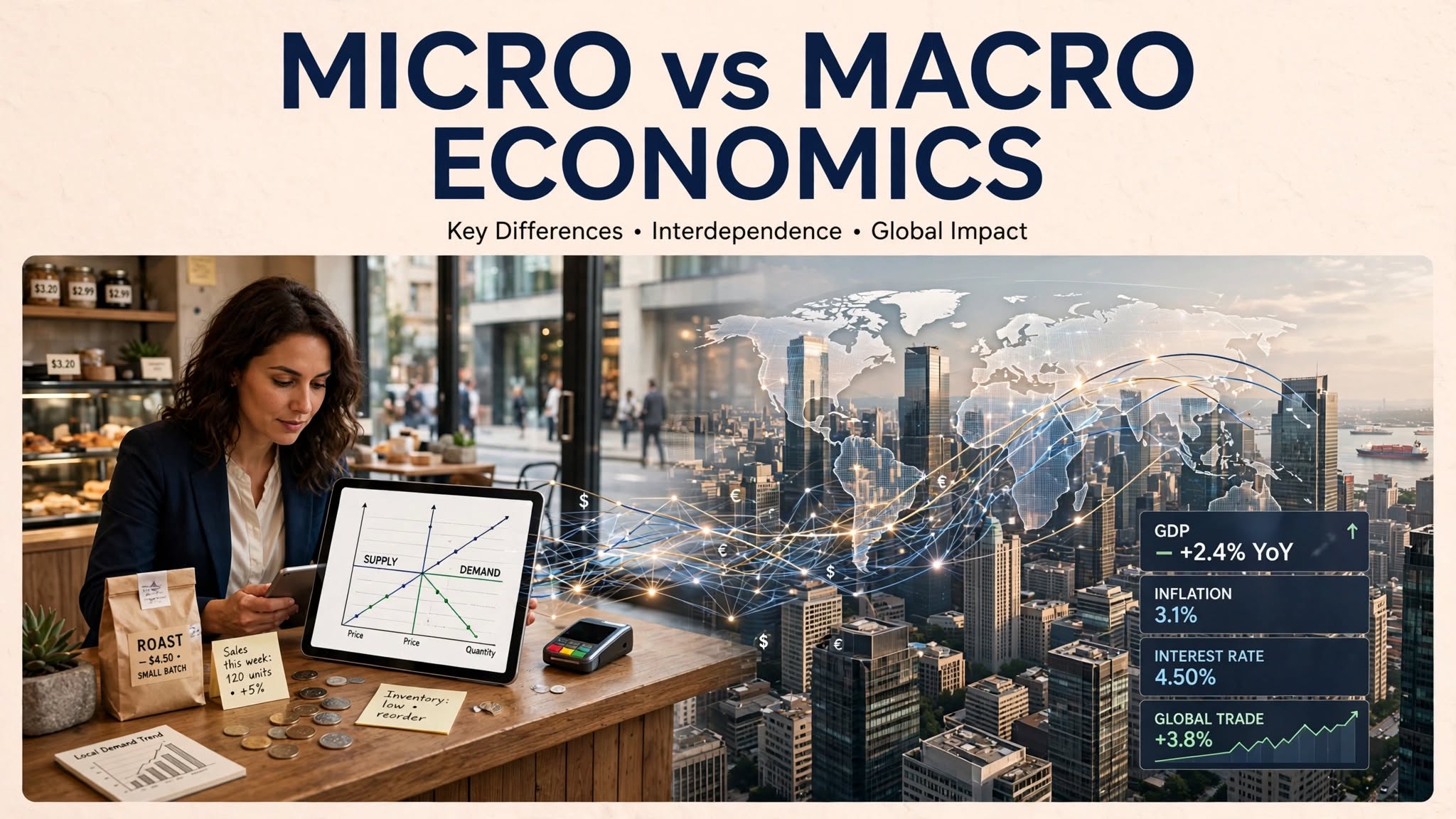
The Dual Lenses of Economic Analysis: From Individual Behavior to Global Markets
The vast and complex discipline of economics is traditionally divided into two distinct yet deeply interconnected branches: Microeconomics and Macroeconomics. To understand how financial systems operate, readers of Thefinance.pk and economist.media must master both perspectives.
While microeconomics zooms in on the microscopic decisions made by individual agents in specific markets, macroeconomics zooms out to analyze the sweeping forces governing entire national economies and global trade networks.
Microeconomics: The Science of Individual Choices
Microeconomics (from the Greek word mikros, meaning “small”) is the study of economic behavior and decision-making by individual consumers, households, and business firms. It examines how scarce resources are allocated among competing uses on a granular level.
Key pillars of microeconomic analysis include:
- Supply and Demand Theory: How the price of a specific good or service is determined in a competitive market based on consumer willingness to buy and producer willingness to sell.
- Consumer Choice Theory: How individuals maximize their personal utility (satisfaction) given limited budgets and varying preferences.
- Theory of the Firm: How businesses decide what products to manufacture, how much labor to hire, what pricing strategies to adopt, and how to minimize production costs to maximize profit margins.
- Market Structures: Analyzing how different levels of competition—ranging from perfect competition and monopolistic competition to oligopolies and monopolies—affect pricing and efficiency.
For a local business owner or corporate strategist, microeconomic principles dictate daily operational decisions, such as setting optimal retail prices or managing supply chain inventories.
Macroeconomics: The Study of the Forest
Macroeconomics (from the Greek word makros, meaning “large”) steps back to examine the economy as an integrated whole. Instead of looking at the price of a single cup of coffee or the wages paid by a single local factory, macroeconomics analyzes economy-wide aggregates and indicators.
Core focus areas of macroeconomics include:
- Gross Domestic Product (GDP): Measuring total national economic output and growth rates.
- Inflation and Price Indexes: Tracking the general price level and the erosion of purchasing power across the entire country.
- Unemployment and Labor Markets: Assessing national job creation, structural unemployment rates, and wage trends.
- Monetary and Fiscal Policy: Studying how central banks manage interest rates and how governments manage taxation and public debt to stabilize business cycles.
Macroeconomic trends create the overarching economic climate within which microeconomic actors must operate. For example, when a central bank raises the macro policy rate, it fundamentally alters the microeconomic borrowing costs for every individual household and startup business in the country.
The Interdependence of Micro and Macro
Though studied separately, micro and macroeconomics are deeply intertwined. Modern economic theory emphasizes microfoundations—the idea that macroeconomic models must be built upon a solid understanding of individual microeconomic behavior.
When consumers panic during a high-inflation environment (a macro event), they alter their individual shopping habits and demand higher wages (micro actions). Conversely, millions of individual business decisions to freeze hiring or expand factories collectively shape the national GDP growth rate.
Key Takeaways:
- Microeconomics focuses on individual consumer and corporate behavior, pricing, and market structures.
- Macroeconomics analyzes economy-wide aggregates, including GDP, inflation, unemployment, and monetary policy.
- Both disciplines are interdependent, with macroeconomic climates dictating microeconomic constraints, and micro actions driving macro trends.
Authoritative Sources & Further Reading:
- National Bureau of Economic Research (NBER): Micro and Macro Research Portals
- American Economic Association (AEA): Economic Journals and Frameworks
Discover more from The Economy
Subscribe to get the latest posts sent to your email.
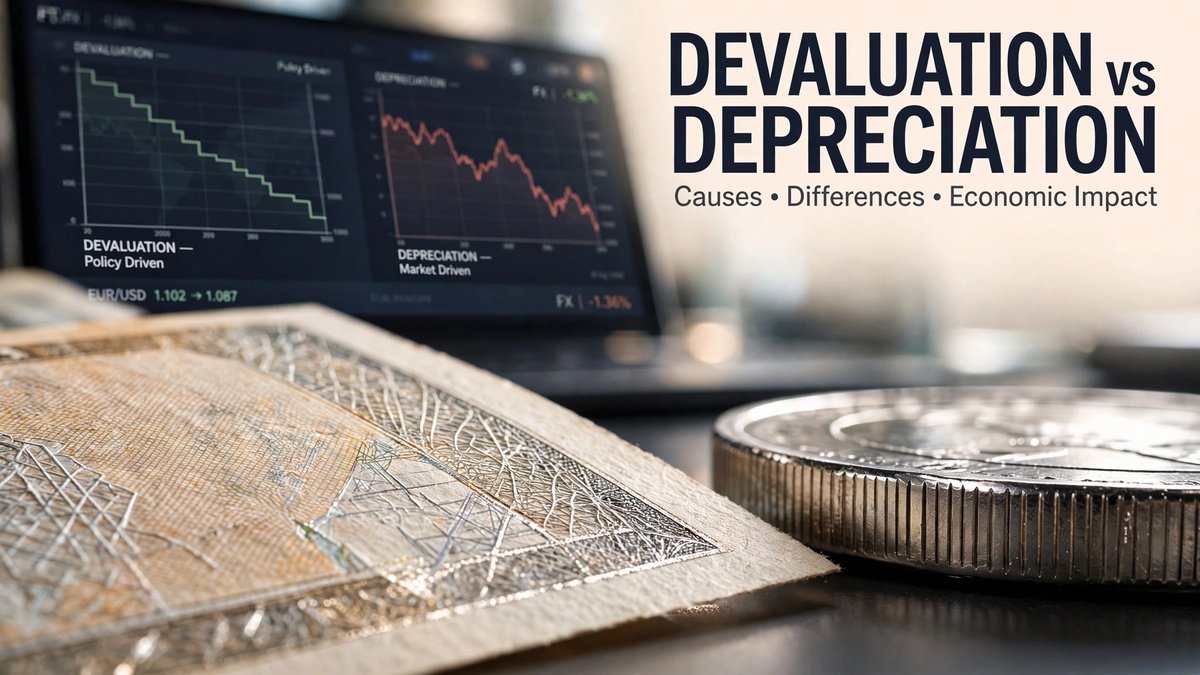
Decoding Currency Value Adjustments in Fixed vs. Floating Exchange Rate Regimes
When a national currency loses value relative to other foreign currencies, financial markets and media outlets often use the terms devaluation and depreciation interchangeably. However, in macroeconomics, they describe entirely different mechanisms dictated by the underlying exchange rate regime of a country.
For platforms like Thefinance.pk, economist.media, and Economy.com.pk, understanding the precise distinction between these two terms is vital for analyzing how central banks manage external trade pressures, handle sovereign debt obligations, and respond to foreign exchange shocks.
The Core Difference: Policy Decree vs. Market Forces
The primary dividing line between devaluation and depreciation is how the currency’s value is reduced:
- Devaluation: This is a deliberate, official policy action undertaken by a government or central bank to lower the official value of its currency relative to a foreign currency or a fixed basket of currencies. Devaluation can only occur in a fixed exchange rate regime (or pegged exchange rate system), where the government legally sets the value of its currency against another major anchor currency (such as the US Dollar). When foreign reserves run dry and the peg becomes mathematically unsustainable, authorities issue an official decree resetting the exchange rate to a lower value.
- Depreciation: This is a market-driven, voluntary decline in the value of a currency within a floating exchange rate regime. In a flexible market system, the exchange rate fluctuates constantly based on the laws of supply and demand. If foreign demand for a country’s exports drops, or if capital flees the domestic market, the local currency naturally loses value. No government decree is required; the market executes the adjustment dynamically.
Why Do Governments Devalue Currencies?
Under a fixed exchange rate system, maintaining an artificially strong currency requires the central bank to continuously burn through its foreign exchange reserves to buy up its own currency. When reserves reach dangerously low levels, a devaluation becomes necessary to achieve several strategic objectives:
- Boosting Export Competitiveness: A cheaper currency makes a country’s manufactured goods and agricultural commodities cheaper for foreign buyers, stimulating export volumes.
- Discouraging Imports: By making foreign imports artificially expensive, a devaluation forces local consumers and industries to substitute imported goods with domestic alternatives, helping to close a widening trade deficit.
- Relieving Pressure on Foreign Reserves: By resetting the peg to a realistic level, the central bank stops bleeding its hard currency reserves in futile attempts to defend an overvalued rate.
The Economic Consequences of Currency Loss
Whether a currency falls via managed devaluation or market depreciation, the ripple effects throughout the domestic economy are profound and immediate:
- Imported Inflation: For developing economies that rely heavily on imported energy (crude oil), raw industrial inputs, and pharmaceutical ingredients, a weaker currency triggers severe cost-push inflation. Every transaction requires more local currency units to buy the same volume of essential goods.
- Exploding External Debt Servicing Costs: If a government or corporate sector has borrowed heavily in US Dollars, a sharp devaluation or depreciation drastically increases the local currency cost of servicing that debt. What appeared to be a manageable debt-to-GDP ratio can explode overnight following a major currency adjustment.
- Purchasing Power Erosion: Citizens traveling abroad or buying imported technology experience an immediate loss of purchasing power, lowering domestic living standards in the short term.
The J-Curve Effect
Economists use the J-Curve concept to describe the timeline of how a currency devaluation impacts a country’s trade balance. Initially, following a devaluation, the trade deficit often worsens before it improves.
This happens because existing import contracts must still be paid at the new, higher exchange rate, while export volumes take months to ramp up. Over the medium to long term, as exports rise and expensive imports decline, the trade balance traces the upward swing of a “J” shape, eventually improving the current account balance.
Key Takeaways:
- Devaluation is a deliberate government policy action executed exclusively within fixed exchange rate regimes.
- Depreciation is a natural, market-driven decline in currency value occurring within floating exchange rate systems.
- Both mechanisms make exports cheaper and more competitive globally while making imports significantly more expensive.
- Sharp currency losses drive imported inflation and drastically increase the cost of servicing foreign-denominated sovereign debt.
Authoritative Sources & Further Reading:
- International Monetary Fund (IMF): Exchange Rate Regimes and Policies
- World Bank: Understanding Exchange Rates and Macroeconomic Stability
Discover more from The Economy
Subscribe to get the latest posts sent to your email.
Remittance
Remittances 2026: Global Trends, Household Resilience & Economic Lifeline for Developing Nations
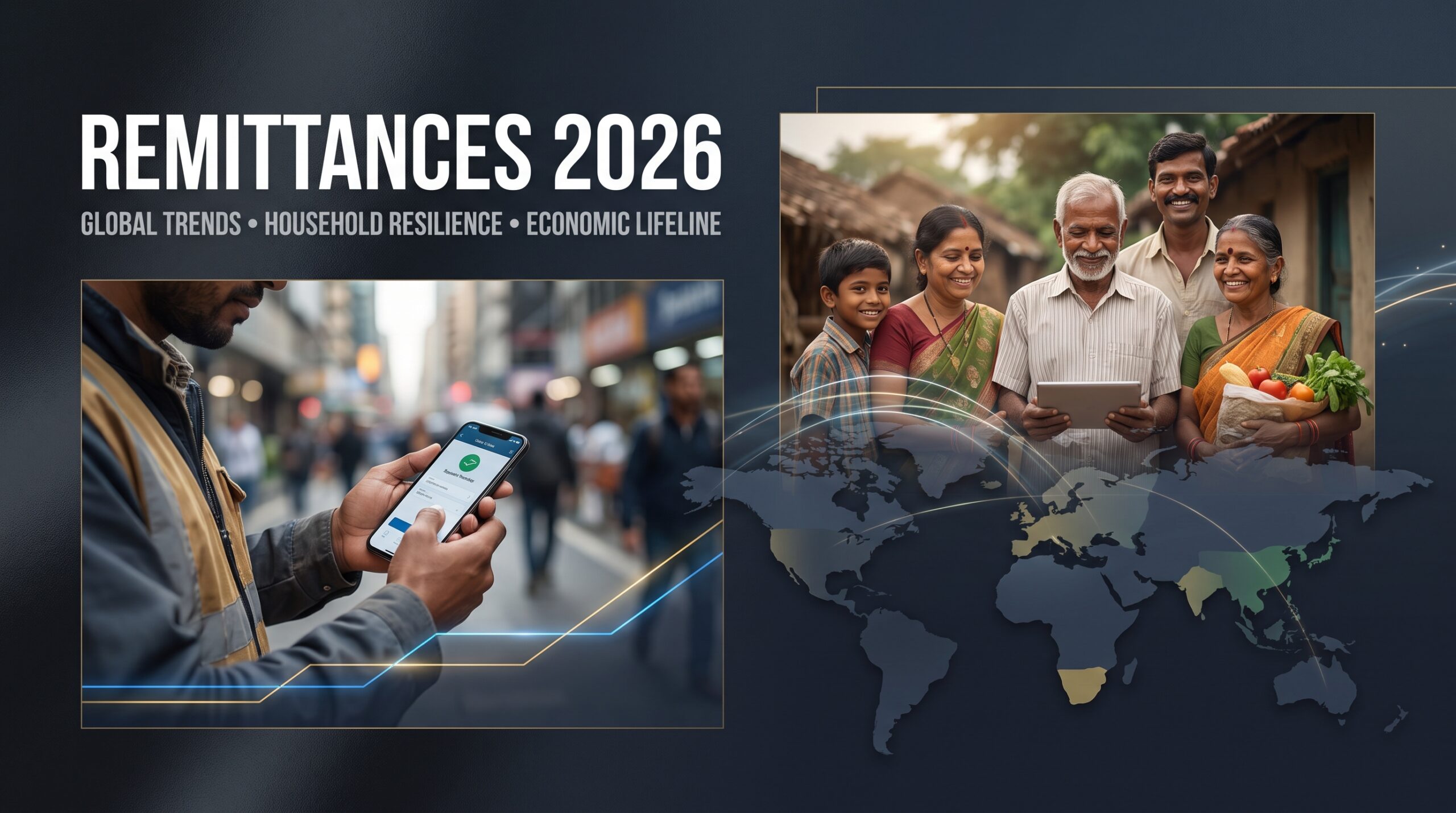
The Economic Lifeline of Developing Nations and Household Resilience
Remittances are financial transfers sent by migrant workers living and working abroad directly to individuals, families, or communities in their home countries. Unlike foreign direct investment (FDI) or sovereign loans, remittances are private, unrequited capital flows that do not create future debt liabilities or foreign ownership stakes in domestic enterprises.
For developing economies across South Asia, Africa, and Latin America—and for platforms like Thefinance.pk and Economy.com.pk—remittances are nothing short of an economic lifeline. They represent one of the largest sources of foreign exchange earnings, frequently eclipsing total merchandise export revenues and foreign aid combined.
The Macroeconomic Impact of Remittances
While remittances are initiated at the microeconomic level by individual families, their cumulative macroeconomic impact is staggering:
- Alleviating the Current Account Deficit: In countries burdened by heavy trade deficits (importing far more than they export), inward remittances act as a vital balancing mechanism. They inject hard currency into the banking system, directly strengthening the central bank’s foreign exchange reserves and providing essential import cover.
- Stabilizing the Local Currency: The constant inflow of US Dollars, Euros, and Gulf Dinars through official remittance channels helps supply the foreign exchange market, reducing downward pressure on the local currency and curbing imported inflation.
- Poverty Reduction and Social Safety Net: Remittances go directly into the hands of households. They are immediately utilized for basic necessities such as food, healthcare, school tuition, and housing construction. In many developing regions, remittances lift millions out of absolute poverty without requiring government bureaucracy or welfare programs.
- Boosting Domestic Consumption: Because remittance recipients spend their funds locally on retail goods, utilities, and construction services, these transfers stimulate domestic demand and support local small-and-medium enterprises (SMEs).
Official vs. Informal Channels (Hawala/Hundi)
A major challenge for governments and central banks tracking remittances is the prevalence of informal transfer networks, commonly known as Hawala or Hundi.
- Informal Channels: Workers often use unlicensed brokers because they offer faster delivery, better exchange rates, and require zero paperwork. However, informal channels drain hard currency from the formal banking sector, depriving the central bank of vital reserves and hiding true economic flows.
- Formal Channels: Commercial banks, licensed money transfer operators (MTOs like Western Union or MoneyGram), and digital fintech wallet apps route funds through official banking channels.
To incentivize workers to use formal channels, central banks and governments—such as the State Bank of Pakistan through its Rosette Digital Account and matching incentive programs—implement policies that eliminate transfer fees, offer superior exchange rates, and reward top-remitting households.
Remittances vs. Foreign Direct Investment (FDI)
Economists frequently compare remittances to Foreign Direct Investment, as both are major sources of foreign capital. However, their behaviors during global crises differ dramatically:
- FDI is Pro-Cyclical: When a developing nation enters an economic crisis or political instability, foreign multinational corporations immediately halt investments, freeze factory expansions, and pull their capital out. FDI dries up precisely when a country needs it most.
- Remittances are Counter-Cyclical: Interestingly, when a home country faces economic turmoil, natural disasters, or currency devaluations, migrant workers often increase the amount of money they send home. Knowing their families are suffering from inflation, expatriate workers sacrifice their own savings in destination countries to provide emergency financial support back home. This makes remittances one of the most reliable, resilient forms of external capital inflow in the world.
The Challenges and Costs of Remittances
Despite their immense benefits, the global remittance ecosystem faces structural bottlenecks:
- High Transfer Fees: Historically, sending money across borders has been plagued by extortionate transaction fees charged by traditional banks and wire services. The United Nations Sustainable Development Goals (SDGs) explicitly target reducing remittance transaction costs to under 3%.
- Macro-Dependence Risk: While remittances fund consumption, critics argue they can sometimes create “remittance dependency,” where local labor force participation drops because families rely entirely on money sent from abroad, disincentivizing domestic industrial productivity and structural reforms.
For editors and researchers at economist.media, tracking monthly remittance data published by central banks provides an immediate read on the health of diaspora communities in North America, Europe, and the Gulf, as well as a reliable gauge of domestic household purchasing power.
Key Takeaways:
- Remittances are private financial transfers sent home by migrant workers to their families.
- They serve as a vital source of foreign exchange, helping developing nations offset trade deficits and build up FX reserves.
- Unlike FDI, remittances are counter-cyclical, often increasing during times of domestic crisis to support struggling families.
- Encouraging workers to use formal banking channels over informal networks (Hawala) is a top priority for central banks.
Authoritative Sources & Further Reading:
- KNOMAD (World Bank): Migration and Development Briefs and Remittance Data
- World Bank: Personal Remittances, Received Data Portal
- State Bank of Pakistan (SBP): Workers’ Remittances Monthly Summaries
Discover more from The Economy
Subscribe to get the latest posts sent to your email.

Microeconomics vs. Macroeconomics Explained: Key Differences, Interdependence & Global Impact

Devaluation vs Depreciation: Clear Differences, Causes, and Economic Impact

Purchasing Power Parity (PPP) Explained: Global Rankings, Living Standards & Why Nominal Exchange Rates Mislead in 2026

Remittances 2026: Global Trends, Household Resilience & Economic Lifeline for Developing Nations

Stagflation Explained: Causes, Global Impact & 2026 Economic Outlook

Understanding Foreign Exchange Reserves: Key Purposes and Global Impact

The Business of Gaming and Tech: How Global Economies Are Driven by Digital Consumerism

Crypto Daily Outlook: Bitcoin, Altcoins, and the Future of Decentralized Finance

Anthony Scaramucci’s Crypto Prediction: Why MicroStrategy’s Move Is Bitcoin’s “iPhone Moment”

Best Dividend Stocks 2026: European & Asian Blue Chips

World Bank & IMF Reports 2026: Why the “3% Growth” Consensus Is Actually a Debate

Elon Musk’s Boring Company Hits $23B Valuation After UAE-Led $3 Billion Series D

Middle East War Economics 2026: Oil Prices & Energy Markets

PSX Forecast 2026: KSE-100, IMF Reviews & Geopolitics

State Farm’s $5B Dividend 2026: Who Qualifies & Payout Dates

US-China Relations in Q3 2026: Trade Tariffs and Supply Chain Risks

Gold’s Wild 2026: From a Record $5,600 Peak to a 24% Crash and Back Toward $4,500

Oil Surges as Strait of Hormuz Traffic Collapses Again

The Rocket That Won’t Quit: Inside SpaceX’s Falcon 9 Launch Machine

Bank of England Set to Hold Rates Through Year-End, Reuters Poll Shows

SpaceX Starship Flight 14: First Orbital Attempt & Starlink V3 Launch Explained

The 2026 Crypto Regulatory Shift: What It Means for Institutional Investors

AI Chip Stocks 2026: The Best Semiconductor Investments Beyond Marvell

Top 30 Stocks for Investment in PSX for Massive ROI in 2026

Retail Earnings Week: What Home Depot, Target & Walmart Reveal

AI-Powered Training: The Next Multi-Billion Dollar Ecosystem in Fitness

Russia’s Black Sea Oil Exports Fall for a Fifth Straight Week

Tween Back-to-School Trends 2026: What’s Driving the $85B Season
-

 Markets & Finance8 months ago
Top 15 Stocks for Investment in 2026 in PSX: Your Complete Guide to Pakistan’s Best Investment Opportunities
-

 Analysis7 months ago
Johor’s Investment Boom: The Hidden Costs Behind Malaysia’s Most Ambitious Economic Surge
-

 Analysis7 months ago
Top 10 Stocks for Investment in PSX for Quick Returns in 2026
-

 Analysis7 months ago
Brazil’s Rare Earth Race: US, EU, and China Compete for Critical Minerals as Tensions Rise
-

 Banks8 months ago
Best Investments in Pakistan 2026: Top 10 Low-Price Shares and Long-Term Picks for the PSX
-

 Investment8 months ago
Top 10 Mutual Fund Managers in Pakistan for Investment in 2026: A Comprehensive Guide for Optimal Returns
-

 Global Economy9 months ago
15 Most Lucrative Sectors for Investment in Pakistan: A 2025 Data-Driven Analysis
-

 Global Economy9 months ago
Pakistan’s Export Goldmine: 10 Game-Changing Markets Where Pakistani Businesses Are Winning Big in 2025