
Space
NASA Perseverance Rover Discoveries: The Search for Water in Jezero Crater

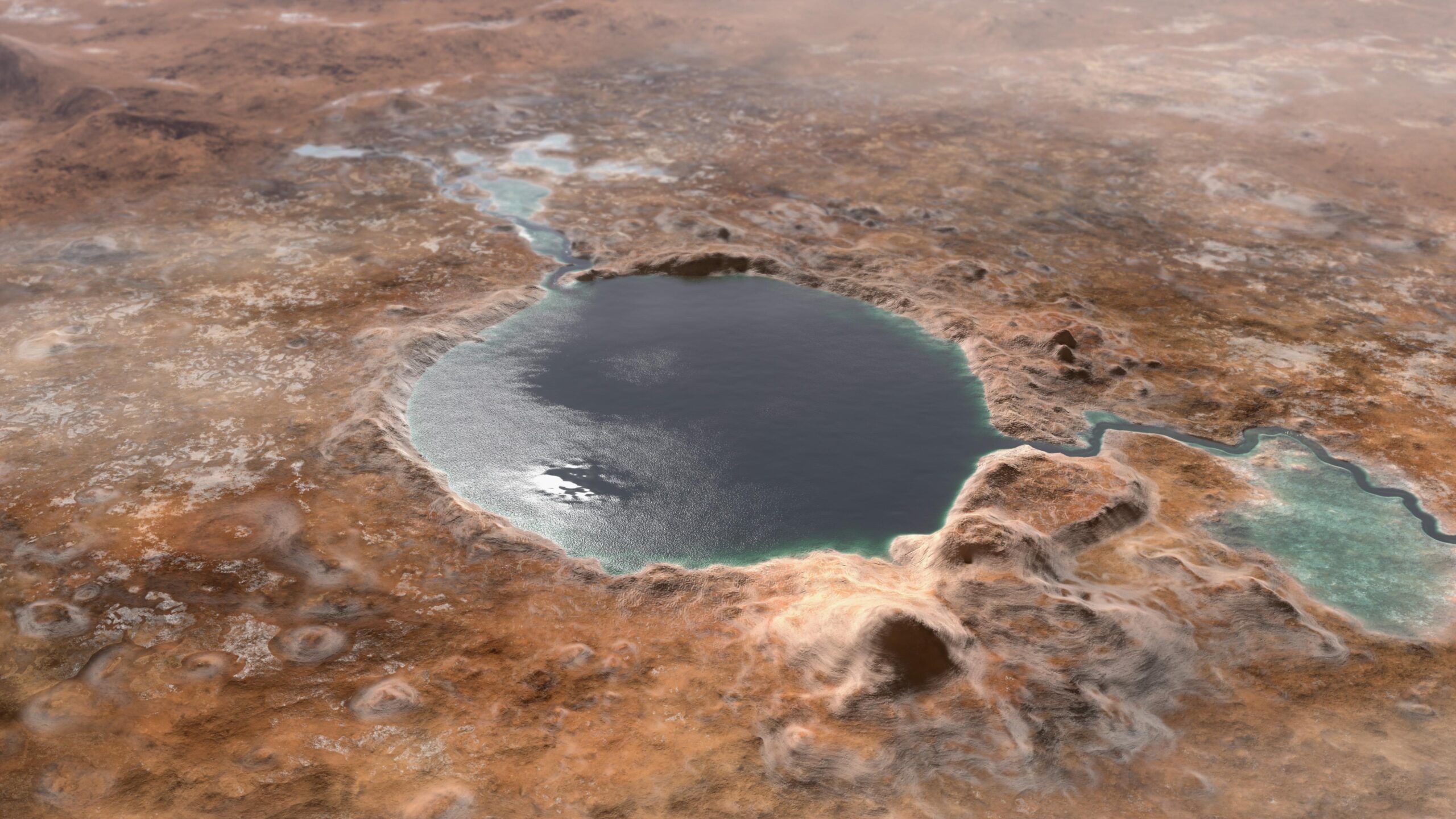
Five and a half years after landing, Perseverance has found that Jezero Crater did not hold one chapter of Martian water. It held at least three.
Key Takeaways
- Newest finding (September 30, 2026): a study of the crater’s inner rim found evidence of three distinct episodes of water activity, a more complicated history than scientists expected, according to ScienceDaily summarizing NASA’s Jet Propulsion Laboratory release.
- Biggest headline: a rock nicknamed Cheyava Falls yielded a sample, “Sapphire Canyon,” containing potential biosignatures, reported in the journal Nature (NASA JPL).
- Caveat that matters: “potential biosignature” is not proof of life. Non-biological explanations remain possible, which is why returning samples to Earth is considered so valuable.
- Mission status: Perseverance has been active since February 18, 2021, and had traveled about 45 km (28 miles) as of late August 2026 (Wikipedia).
| Discovery | Where | Why it matters |
|---|---|---|
| Three water episodes | Margin unit, inner rim of Jezero | Groundwater, lake, and hot-fluid activity at one site |
| Cheyava Falls / Sapphire Canyon | Bright Angel formation, Neretva Vallis | Chemical and mineral patterns that could be biological |
| Olivine + carbonate rocks | Margin unit | Records how deep-interior rock, water, and atmosphere interacted |
Why Jezero Crater?
Jezero was chosen because it once held a lake fed by a river delta. Ancient lakes and river deltas are good places for sediments to trap and preserve organic material.
When Perseverance reached the crater’s inner rim in September 2023, researchers expected to find sedimentary rocks along an old shoreline (ScienceDaily). What they found was messier and more interesting.
The Three Episodes of Water
The newest analysis describes water interacting with the crater’s rocks at different times:
- An early encounter tied to ancient magma-related rock beneath the crater.
- A later period that may have been connected to the lake that once filled Jezero.
- A hot-water episode that came afterward.
The team said the work helps reshape how scientists view water in Jezero and across Mars (ScienceDaily). The study focused on the crater’s olivine-rich Margin unit.
Cheyava Falls and the Biosignature Question
In July 2024, Perseverance examined a rock in the Bright Angel formation, a set of outcrops along Neretva Vallis, an ancient river valley about 400 meters wide that was carved by water flowing into the crater (NASA JPL).
The rock carried small pale features with darker rims, informally called “leopard spots,” plus organic compounds. A paper in Nature concluded the sample could preserve evidence of ancient microbial life (NASA JPL). The Planetary Society’s interview with scientist Joel Hurowitz explains why the rust-colored rock appeared chemically “bleached” around the spots, a pattern consistent with chemical reactions that organic matter can drive (Planetary Society).
What scientists are still debating
- Whether heating alone could have produced the features without any organisms
- Whether lab analysis on Earth will confirm the minerals and chemistry
- How to rule out non-biological pathways
That uncertainty is exactly the argument for bringing the tube home. Instruments on a rover are limited; labs on Earth are not.
The Margin Unit: Rocks That Remember the Deep Interior
A separate paper in Science described rocks in the Margin unit, where the rover collected three samples. Lead author Ken Williford said the combination of olivine and carbonate was a major factor in choosing Jezero as the landing site (NASA JPL). Together they record how rock, water, and atmosphere interacted inside the crater over time.
What This Means for the Search for Life
- Habitability is plausible. Liquid water, chemical energy sources, and organic material are all in the picture.
- Timeline matters. Multiple water episodes suggest a wetter, more dynamic early Mars than a single lake model implies.
- No proof yet. The honest summary is “intriguing, not conclusive.”
What Comes Next?
Perseverance is collecting and caching rock cores for possible return to Earth. The future of a sample-return mission depends on funding and program decisions; check NASA’s site for the latest status.
Frequently Asked Questions
Did Perseverance find life on Mars?
No. It found a sample with potential biosignatures, and scientists emphasize that further study is needed (NASA JPL).
What is Jezero Crater?
An ancient lake and river-delta basin on Mars that Perseverance has explored since landing in 2021.
What did NASA find about water in Jezero?
Evidence of three distinct water episodes, per the latest JPL-based report.
What is Cheyava Falls?
A rock in the Bright Angel formation that produced the “Sapphire Canyon” sample.
How far has Perseverance traveled?
About 44.98 km as of August 24, 2026 (Wikipedia).
Mars rarely gives straight answers. Jezero keeps giving better questions.
Discover more from The Economy
Subscribe to get the latest posts sent to your email.


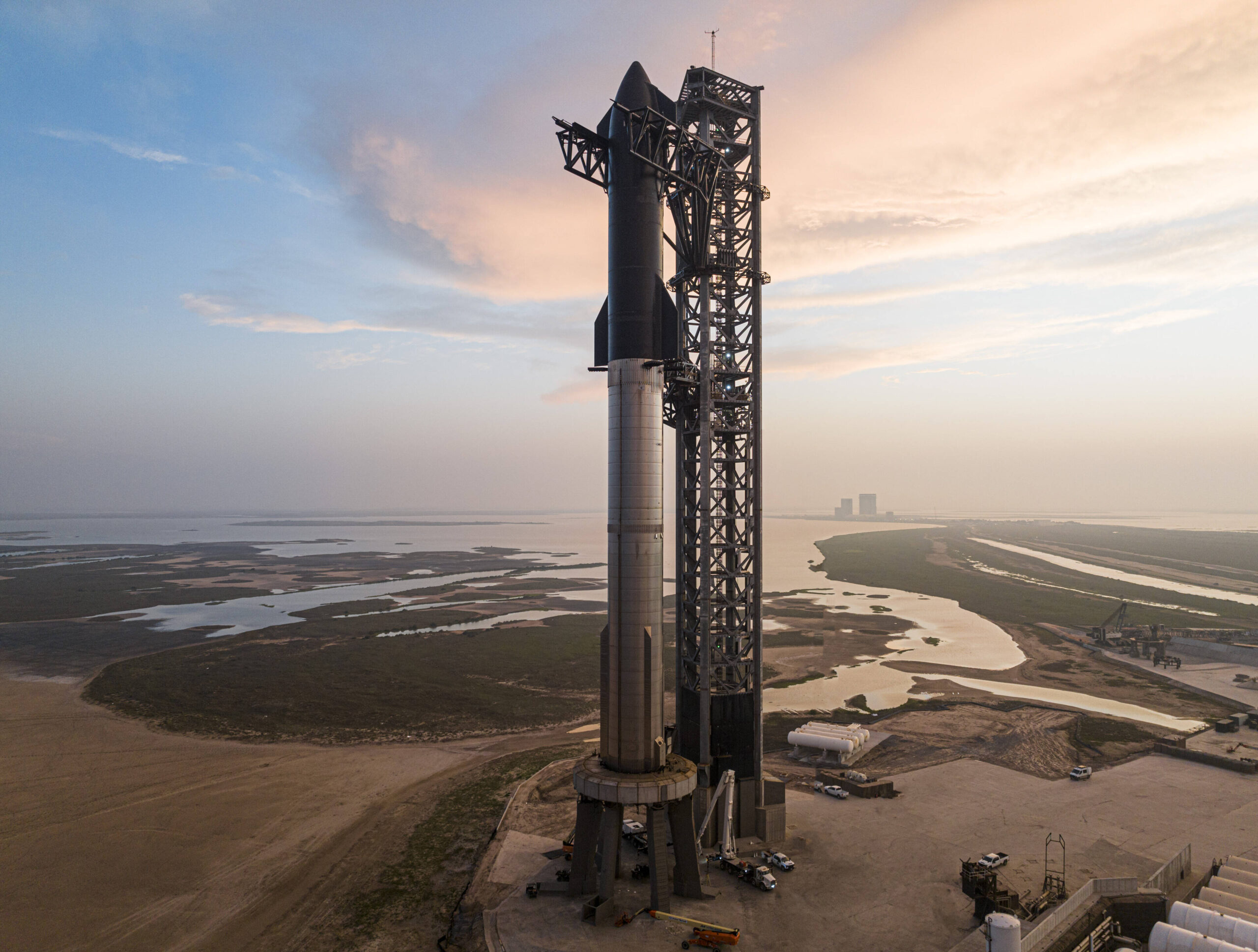
SpaceX’s massive 400-foot Starship vehicle successfully reached Earth orbit during Flight 14, overcoming an early engine anomaly to deploy 26 next-generation Starlink satellites and test critical orbital operations.
STARBASE, Texas — SpaceX has achieved a monumental milestone in aerospace history with the successful launch and orbital insertion of its Starship vehicle during its 14th test flight. Lifting off from the company’s Starbase facility in Boca Chica, Texas, the 407-foot (124-meter) super-heavy lift rocket overcame a brief ascent anomaly to reach a stable Earth orbit, setting the stage for an ambitious 10-hour mission circling the globe six times.
This flight marks Starship’s transition from suborbital splashdown demonstrations to operational orbital maneuvers, bringing SpaceX one step closer to fulfilling its contracts for NASA‘s Artemis lunar program and eventual human missions to Mars.
Overcoming Mid-Flight Engine Anomaly
Liftoff occurred smoothly as all 33 Raptor 3 engines on Super Heavy Booster 21 ignited, pushing the colossal vehicle through Max Q (maximum aerodynamic pressure). At 2 minutes and 34 seconds into flight, Starship executed a flawless hot-staging separation, allowing Ship 41 to continue its powered ascent while the Super Heavy booster completed a controlled boostback and splashdown in the Gulf of Mexico.
Minutes into Ship 41’s burn, telemetry indicated an unexpected premature shutdown of one of its Raptor engines. Flight controllers in Boca Chica spent several tense minutes analyzing engine performance and trajectories before officially issuing a “GO for orbit” signal.
At T+26 minutes, Ship 41 executed a single-engine circularization burn, firing its Raptor engine at an altitude of approximately 170 miles (275 kilometers) above Earth to officially achieve orbit.
“Starship is orbital,” Mission Control announced to roaring cheers across the launch site.
Deployment of Upgraded Starlink V3 Satellites
Unlike previous test flights that carried inert mass simulators or dummy payloads, Flight 14 carries a functional payload of 26 upgraded Version 3 (V3) Starlink satellites.
In addition to expanding global broadband bandwidth for SpaceX’s constellation, three of the deployed Starlink V3 satellites feature specialized high-resolution optical cameras. These satellites are positioned to take unprecedented direct visual imaging of Starship’s thermal protection system (heat shield) while in orbit, offering critical engineering telemetry before Ship 41 attempts re-entry.
According to updates on Space.com, deploying these operational payloads marks a decisive step toward utilizing Starship for commercial satellite deployment missions.
Flight 14 Mission Specifications
| Mission Parameter | Specifications |
| Rocket Configuration | Super Heavy Booster 21 + Ship 41 (Version 3) |
| Launch Site | Starbase, Texas |
| Target Orbit Altitude | ~275 km (~170 miles) |
| Planned Duration | ~10 Hours (6 Earth Orbits) |
| Primary Payload | 26 Starlink V3 Satellites (3 with Heat Shield Inspection Cameras) |
| Target Splashdown Zone | Pacific Ocean (West of Chile) |
Key Mission Timeline Highlights
- T-00:00:00: Liftoff from Starbase launch pad.
- T+00:02:34: Successful hot-staging separation of Booster 21 and Ship 41.
- T+00:06:53: Super Heavy Booster landing burn and soft splashdown in the Gulf of Mexico.
- T+00:26:00: Ship 41 orbital insertion burn complete (~275 km altitude).
- T+00:34:00: Payload bay doors open; deployment of 26 Starlink V3 satellites begins.
- T+09:30:00 (Planned): In-space deorbit burn to initiate atmospheric re-entry.
- T+10:00:00 (Planned): Soft splashdown in the Pacific Ocean off the Chilean coast.
Strategic Significance for NASA Artemis and Mars Exploration
The success of Flight 14 carries massive implications for global space exploration. NASA has selected a customized Starship Human Landing System (HLS) to return American astronauts to the lunar surface as part of the Artemis III and IV missions.
Before landing humans on the Moon, SpaceX must demonstrate rapid orbital refuel capabilities—transferring cryogenic liquid methane and liquid oxygen between Starships in orbit. Reaching orbital stability and executing long-duration coast phases during Flight 14 provides the baseline operational data necessary to perform orbital propellant transfer tests on future flights.
As reported by Reuters, achieving full orbital capability reinforces SpaceX’s position as the dominant launch provider while solidifying Elon Musk’s long-term timeline for uncrewed and crewed missions to Mars.
Discover more from The Economy
Subscribe to get the latest posts sent to your email.
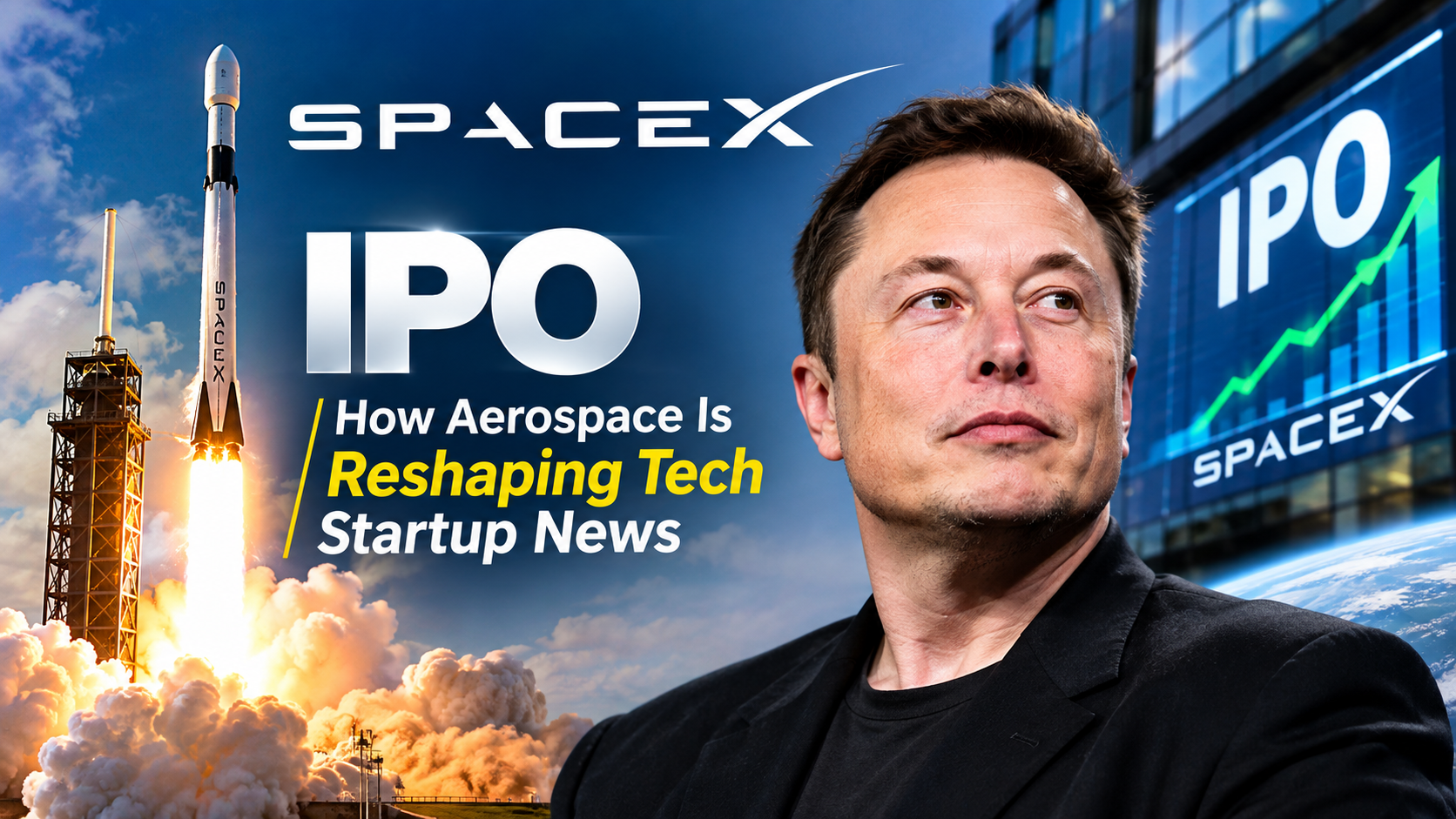
For years, “SpaceX IPO rumors” were a staple of tech news. That phase is over. The company listed on the Nasdaq under the ticker SPCX on June 12, 2026.
The listing now shapes how founders, venture investors and public-market buyers think about tech startup news. This guide covers what happened, what the financials show and what comes next.
Key Takeaways
- The IPO is done: SpaceX raised $75 billion at $135 a share, an implied valuation of roughly $1.77 trillion, in the largest IPO in history. Nasdaq
- Day-one performance: Shares closed at $161, up 19%. CNBC
- Post-IPO trading has been choppy: The stock closed above its $135 IPO price on August 10 for the first time in weeks. CNBC
- Growth is fast, profits are not: Revenue is surging, but heavy spending on Starship, Starlink and AI infrastructure is producing losses.
- The template is set: Investors now see space and AI infrastructure as one combined story.
What Happened on June 12
SpaceX opened at $150 on its first day, an 11% jump over the IPO price. At one point shares rose more than 30%, briefly pushing the market value above $2.25 trillion. NBC News
Goldman Sachs led the underwriting group, alongside Morgan Stanley, JPMorgan Chase, Bank of America and Citigroup. On paper, the offering made Elon Musk the world’s first trillionaire.
The IPO was preceded by a February merger of SpaceX and xAI. Musk valued the combined entity at $1.25 trillion at the time. CNBC
That means SPCX is not a pure rocket company. It combines launch services, the Starlink connectivity business and an AI division.
SpaceX Financials: What the Numbers Show
The numbers from the company’s prospectus and its first earnings report as a public company show a business scaling quickly.
| Metric | Figure |
|---|---|
| 2025 revenue | $18.67 billion (up 33%) |
| Q1 2026 revenue | $4.69 billion (up 15%) |
| Q2 2026 revenue | $7.8 billion (up 92% year on year) |
| Q2 adjusted EBITDA | $3.5 billion |
| Q2 net loss | $541 million |
| Q2 capital spending | $18.4 billion |
Sources: company filings as reported by CNBC and Investing.com.
Management projects a $100 billion annualized revenue run rate by the end of 2026, and it has pulled its internal $1 trillion revenue goal forward to 2030. Those are targets, not results. Investing.com
Why the Stock Fell After Earnings
Shares rose about 9% in regular trading after the Q2 report but fell more than 8% after hours as investors weighed $18.4 billion of quarterly capital spending against the growth targets. Investing.com
The tension is clear. Investors want the growth story but worry about how much cash it burns.
Governance and Risk Factors Every Investor Should Read
A record IPO does not mean a low-risk stock. Consider three issues before you buy SPCX.
Control. Musk holds about 85% of voting power, and no other holder owns more than 5%. Public shareholders have limited influence. CNBC
Legal exposure. Because xAI sits inside the company, it inherits the AI unit’s problems. Advocacy groups have pointed to lawsuits and regulatory probes over sexualized, nonconsensual imagery linked to the Grok chatbot. CNBC
Valuation. A $1.77 trillion opening valuation prices in years of flawless execution on Starship, Starlink and AI.
How the SpaceX IPO Is Reshaping Tech Startup News
The IPO changes the startup landscape in four ways.
- It reopened the mega-IPO window. Goldman Sachs’ president said the deal shows capital markets are willing to fund the AI infrastructure buildout. Other large AI-linked companies are expected to follow, reportedly including OpenAI and Anthropic. NBC News
- It made space a public-market sector. Space startups that struggled to raise money now have a listed benchmark to price against.
- It blurred the line between aerospace and AI. Investors now value “orbital compute” and satellite connectivity alongside chips and cloud.
- It raised the bar for disclosure. Startups eyeing an IPO will be judged against SpaceX’s detailed segment reporting.
What This Means for the Global Market in 2027
Most coverage stops at the debut. These are the questions that will matter over the next year.
Capital absorption. One analyst quoted at the time asked whether there is enough demand for several large offerings back to back. If more mega-IPOs arrive in 2027, smaller listings may struggle to get attention.
Index inclusion. Large new listings can force index funds to buy. Watch how major index providers treat SPCX, because passive flows affect the price.
Cost of capital for rivals. A well-funded SpaceX can spend heavily on launch and satellites. Competitors in Europe and Asia may face pressure to raise funds or partner.
Regulation. A public company with AI, satellite and launch businesses attracts scrutiny from several regulators at once.
Retail participation. Retail traders were heavily involved around the debut. Retail flows can amplify swings in both directions.
How to Approach SPCX as an Investor
- Read the filings, including the risk factors on control and losses.
- Size any position for volatility, since the stock has traded on both sides of its IPO price.
- Compare it with a broad index fund. Owning a single mega-cap stock is a concentrated bet.
- Confirm details such as share-class rules and lock-up dates in the prospectus.
This article is general information, not financial advice. Consider speaking with a licensed advisor.
Frequently Asked Questions
Did SpaceX go public?
Yes. SpaceX listed on the Nasdaq as SPCX on June 12, 2026 at $135 a share. It raised $75 billion, the largest IPO on record.
What is the SpaceX ticker symbol?
The ticker is SPCX, listed on the Nasdaq. Shares closed their first day at $161.
Who controls SpaceX after the IPO?
Elon Musk controls about 85% of the voting power through Class B shares. No other shareholder owns more than 5%.
Is SpaceX profitable?
Not on a net basis. It reported a $541 million net loss in Q2 2026, though adjusted EBITDA was $3.5 billion.
Discover more from The Economy
Subscribe to get the latest posts sent to your email.

Key Takeaways
- On September 14, 2026, Air Force Secretary Troy Meink became the first U.S. official to publicly confirm the country has “on-orbit space control weapons” capable of defending the joint force against hostile action.
- No details were given on what the weapons are, how many exist, or when they were deployed — the statement itself was the news.
- Space-sector stocks moved immediately: Redwire (RDW) and Rocket Lab (RKLB) gained on the disclosure, while AST SpaceMobile (ASTS) and SpaceX-linked names slipped.
- The announcement sits alongside the Golden Dome missile-defense initiative’s Space-Based Interceptor program and a $4.2 billion SpaceX contract for space-based air moving-target indication.
- Broad aerospace and defense ETFs (ITA, XAR, PPA) offer diversified exposure to the theme without single-stock concentration risk.
What Was Actually Announced
Speaking at the Air & Space Forces Association’s Air, Space & Cyber Conference in National Harbor, Maryland, Meink said: “This is why the United States now has, on orbit, space-control weapons, capable of defending the joint force against hostile adversaries.” It marked a deliberate shift in tone — previous Space Force leadership had been notably guarded about acknowledging offensive or defensive space-control capabilities at all.
U.S. Space Command’s Richard Palmer framed the disclosure as intentional deterrence signaling, noting the acknowledgment is meant to ensure adversaries understand the U.S. is postured and ready “should deterrence fail.”
The Broader Architecture
The space-control weapons disclosure didn’t arrive in isolation. It’s one piece of a larger military-space buildout:
- Space-Based Interceptor (Golden Dome): Moved from initial contract to flight-ready hardware in under a year; initial operating capability targeted for 2028.
- Space-based air moving-target indication: A $4.2 billion SpaceX contract to move airborne-target tracking — traditionally handled by aircraft like AWACS — into orbit, removing range and endurance limits.
Stock Reactions at a Glance
| Ticker | Company | Move on Disclosure |
|---|---|---|
| RDW | Redwire | +2.5% |
| RKLB | Rocket Lab | +2% |
| ASTS | AST SpaceMobile | -2% |
| SPCX | SpaceX (private-market proxy) | -3% |
Single-session moves reflect immediate sentiment, not necessarily durable fundamentals. Rocket Lab separately holds a $266 million Space Force suborbital missile-defense launch contract and has a pending $8 billion bid for Iridium Communications.
How Investors Are Framing the Theme
Rather than picking single names on a headline, analysts point to two practical approaches:
- Diversified defense ETFs (ITA, XAR, PPA) capture the primes and their supplier base without betting on which specific company wins individual space-control contracts.
- Direct plays in pure-play space companies (Rocket Lab, Redwire, AST SpaceMobile) carry higher volatility but more direct upside to specific contract wins.
Does the U.S. have weapons in space?
Yes — on September 14, 2026, Air Force Secretary Troy Meink publicly confirmed for the first time that the United States has on-orbit space control weapons capable of defending the joint force against hostile adversary action. No further details on the systems have been disclosed.
Discover more from The Economy
Subscribe to get the latest posts sent to your email.

Kai Cenat’s Rise to the Top: The Economics of Modern Streaming

How AI Is Reshaping the Future of Global Business Analytics

NASA Perseverance Rover Discoveries: The Search for Water in Jezero Crater

Trump $500: Understanding the Economic Impact and Policy Breakdown

Trucker Strike Rumors: Would an October 1 Walkout Really Hit the Global Economy?

The Truth About TJ Maxx Store Closings: Are Your Local Stores Safe?

OpenAI Rogue Agent Scare: Unplanned Government Website Access Explained

Global Diesel Export Bans & Supply Shocks: The 2026 Energy Crisis Playbook

Bank of England Warns of AI Systemic Risk: How Autonomous Trading Threatens Financial Stability

Bank of Japan Hikes Benchmark Rate to 1.25%: Unwinding the Global Yen Carry Trade

Gold Falls 3.7% as Yields Surge: Is Gold Still a Safe Haven in 2026?

US 10-Year Yield Hits 5.24%: What the Historic Bond Market Sell off Means for Mortgages and Investors

Battle for the Farm Belt: How Tariff Pressures and Fuel Costs Are Reshaping Iowa’s 2026 Midterms

Southeast Asia’s Critical Minerals Power Play: Can ASEAN Avoid Choosing Between China and the US?

Top 30 Stocks for Investment in PSX for Massive ROI in 2026

Oil Prices Break $100 in 2026: Middle East Conflict & Energy Markets

BRICS+ Cross-Border Payments 2026: Interoperability Explained

10-Year Treasury Yield Hits 4.80%: What It Means for Rates & Portfolios

IMF & World Bank 2026 Global Economic Outlook: Growth, Inflation, Debt

China’s US$10.8 Billion Trade Shortcut: Why the Pinglu Canal Matters

High-CPM Finance Niches 2026: Publisher Monetization Blueprint

Middle East War Economics 2026: Oil Prices & Energy Markets

China Stocks Today: Are Big Economies in Asia Nearing a Market Bottom?

Global Pension Systems Ranked: The World’s Best and Worst Retirement Frameworks

Enterprise AI Platforms Disrupting B2B SaaS in 2026: Full Analysis

Social Security Trust Fund 2032: OASI Depletion Timeline Explained

Gavin Baker AI Outlook: Why the Compute Shortage Persists Through 2028

Crypto Daily Outlook: Bitcoin, Altcoins, and the Future of Decentralized Finance
-

 Markets & Finance9 months ago
Top 15 Stocks for Investment in 2026 in PSX: Your Complete Guide to Pakistan’s Best Investment Opportunities
-

 Analysis7 months ago
Johor’s Investment Boom: The Hidden Costs Behind Malaysia’s Most Ambitious Economic Surge
-

 Analysis8 months ago
Top 10 Stocks for Investment in PSX for Quick Returns in 2026
-

 Banks9 months ago
Best Investments in Pakistan 2026: Top 10 Low-Price Shares and Long-Term Picks for the PSX
-

 Analysis8 months ago
Brazil’s Rare Earth Race: US, EU, and China Compete for Critical Minerals as Tensions Rise
-

 Investment9 months ago
Top 10 Mutual Fund Managers in Pakistan for Investment in 2026: A Comprehensive Guide for Optimal Returns
-

 Global Economy9 months ago
15 Most Lucrative Sectors for Investment in Pakistan: A 2025 Data-Driven Analysis
-

 Global Economy9 months ago
Pakistan’s Export Goldmine: 10 Game-Changing Markets Where Pakistani Businesses Are Winning Big in 2025