
Aviation
Zhuhai Airshow 2026: How China’s Stealth Jets, Drones and Missiles Are Redrawing Global Air Power

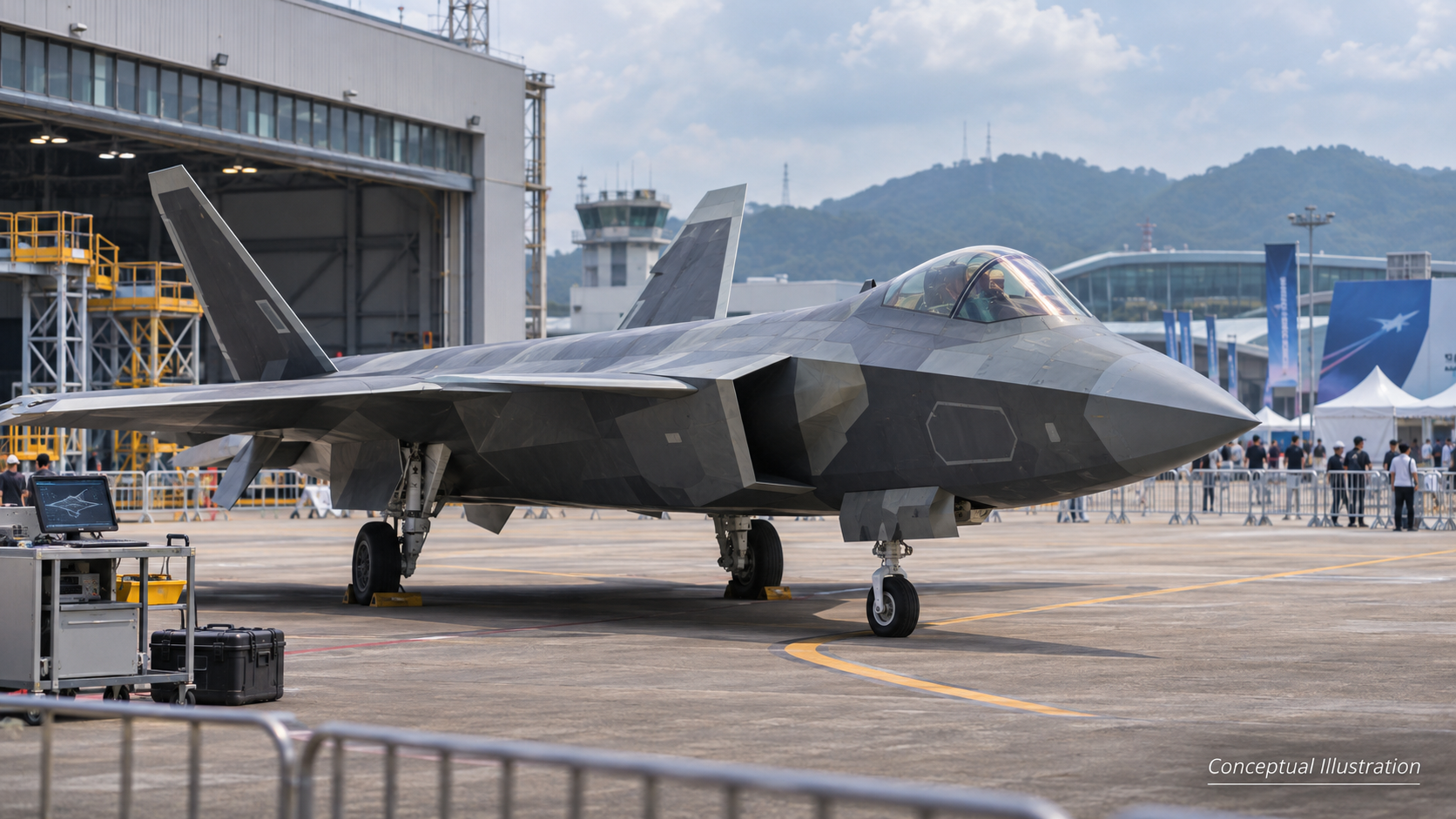
Thirty years after Russian fighters impressed crowds at China’s inaugural airshow, Zhuhai has become a window into an ambitious aerospace transformation. The deeper story is not just the aircraft Beijing can display, but whether its factories, pilots, sensors and supply chains can deliver sustained military advantage.
In brief: The 16th China International Aviation and Aerospace Exhibition is scheduled for December 7–13, 2026, in Zhuhai, Guangdong. Marking 30 years since the first show in 1996, it will highlight China’s growing capability in stealth fighters, unmanned systems, advanced missiles and naval aviation. Independent analysts nevertheless distinguish public displays from operational readiness, especially in areas such as aircraft engines, drone autonomy and large-scale combat integration. The dates and organisers’ programme were confirmed at an October 13 press conference.
The day Russian jets defined China’s ambitions
In November 1996, the first Zhuhai airshow revealed an uncomfortable fact about Chinese military aviation: the most impressive combat aircraft on view were not Chinese. Russian Su-27 fighters demonstrated the manoeuvrability and technological sophistication that Beijing still hoped to develop domestically. China presented its J-8IIM, an adaptation of an older fighter using Russian avionics and armaments, but the broader gap between aspiration and industrial capability remained striking. That contrast anchors the retrospective published by the South China Morning Post.
Thirty years later, the story has changed. China can manufacture operational stealth fighters, long-range combat aircraft, advanced radar platforms and specialised electronic-warfare aircraft. It has also become a significant exporter of military hardware. Yet the most important question is no longer whether China can build impressive aircraft. It is whether the country can integrate those aircraft, their weapons and their human operators into a durable combat system capable of challenging the United States and its partners.
That distinction—between possessing a platform and mastering a system—should shape any serious assessment of Zhuhai in 2026.
Three decades of aviation development: the milestones
| Year | Zhuhai milestone | Why it mattered |
|---|---|---|
| 1996 | Inaugural exhibition; Russian Su-27s attract attention alongside the Chinese J-8IIM | Highlighted the technology gap and dependence on imported know-how |
| 2008 | J-10 fighter makes a prominent public showing | Signalled progress in indigenous modern fighter development |
| 2014 | Y-20 heavy transport appears at Zhuhai | Demonstrated advances in large-aircraft design and military airlift |
| 2016 | J-20 stealth fighter’s first public flight demonstration | Established an indigenous low-observable combat-aircraft programme |
| 2021 | Postponed 2020 edition takes place; China displays a broader set of advanced systems | Illustrated the maturing, diversified aerospace ecosystem |
| 2024 | J-35A public debut; J-20, missiles, electronic warfare and drones featured | Demonstrated a shift from individual fighter projects toward more varied capabilities |
| 2026 | Planned 30th-anniversary exhibition, with a dedicated naval equipment area | Moves the exhibition further toward integrated cross-domain military technology |
The Chinese Ministry of National Defense’s aviation history documents the J-20’s 2016 public debut and Y-20’s 2014 appearance; Reuters reported the J-20 flypast in 2016 and the J-35A’s 2024 debut. Dates refer to public appearances, not necessarily first flights, serial production or entry into military service.
J-20: the clearest evidence that China has moved beyond imitation
China’s Chengdu J-20 is not merely an aircraft concept displayed at trade fairs. It is an operational stealth fighter being delivered in increasing numbers. The International Institute for Strategic Studies (IISS) assessed in its 2026 Military Balance commentary that more than 300 J-20s had been delivered. This is an expert estimate rather than a publicly audited production figure.
A separate January 2026 analysis by the Royal United Services Institute (RUSI) assessed approximately 300 J-20s in service by mid-2025, compared with around 50 in 2020. RUSI estimated that annual production of upgraded J-20 variants could be approaching 120 aircraft by late 2025. It projected that, if the trend continued, the force might reach roughly 1,000 J-20 variants by 2030. That 2030 number is a projection, not an existing fleet or a guaranteed outcome.
Why does scale matter? A small number of stealth aircraft may offer prestige and limited specialised capability. Hundreds can potentially sustain training, maintenance rotations and persistent air operations—provided spare parts, engines, munitions, bases and qualified crews keep pace. Fleet size alone does not prove superiority over US aircraft, but it changes how opponents must plan.
J-35A: a second stealth family, not simply another J-20
The smaller Shenyang J-35A made its public airshow debut in November 2024. Janes identified the J-35A as a land-based aircraft and examined the distinct naval variant being developed for carrier operations. Aircraft with similar designations should not be assumed to have identical operating roles.
The IISS reported that an initial batch of J-35A aircraft entered service during 2025, while RUSI described J-35 production as being in an early phase. These assessments indicate progress, not proof of large-scale operational maturity. Public information still does not permit definitive comparisons between the J-35A and America’s F-35 in stealth performance, sensor fusion or combat reliability.
What about the so-called J-36 and J-50?
Unusual Chinese tailless aircraft designs observed in 2025 have frequently been labelled the J-36 and J-50/J-XDS by outside observers. Those labels should not be treated as definitive official programme names. RUSI describes the aircraft as developmental demonstrators, not frontline fighters. Their appearance suggests experimentation with future long-range, low-observable aircraft, but it cannot establish when—or whether—either design will enter service.
The real transformation: China is building an air-combat network
Fighter aircraft attract cameras. The less photogenic equipment—radars, long-range missiles, early-warning aircraft, datalinks and electronic-warfare platforms—may be more consequential.
Modern aerial warfare depends on the ability to detect a target, distribute reliable information, launch a weapon and update targeting data while the enemy attempts to disrupt the chain. Military analysts call this a kill chain. A sophisticated stealth fighter loses much of its potential if it lacks timely intelligence, reliable communications or supporting tankers and radar aircraft.
China has invested across that system. RUSI notes expanding KJ-500 airborne early-warning capacity, specialised J-16D and naval J-15 electronic-warfare variants, and modern long-range air-to-air missiles such as the PL-15 and PL-17. Its analysis also points to increasingly demanding training and a larger pool of modern combat aircraft. These developments suggest China is not merely copying Western aircraft designs; it is developing ways to conduct complex air operations with multiple supporting platforms.
At Zhuhai in 2024, visitors saw a wider ecosystem of military technology, including the CH-7 uncrewed aircraft, HQ-19 missile defence system and the electronic-warfare J-15. Reuters’ reporting highlighted both their military potential and the limitations of public technical information.
The implication for a Taiwan contingency or wider Indo-Pacific crisis is serious: US and allied planners may face not one exceptional Chinese fighter, but a layered network of aircraft, surface-to-air missiles and surveillance assets. That still does not establish that China would win an air campaign. Geography, combat experience, logistics, base vulnerability, electronic warfare and political decisions could all change the outcome. CSIS research on Chinese military activity in 2025 provides additional context about rising operational tempo around Taiwan and elsewhere in the region.
The drone revolution: plenty of ambition, less public proof
Uncrewed systems are an important part of the Zhuhai story. Platforms on display range from reconnaissance aircraft to proposed collaborative combat drones that might operate alongside crewed fighters. The attraction is understandable: such systems could extend surveillance, complicate enemy defences or assume missions too dangerous for pilots.
But a model described as ‘AI-enabled’ is not the same thing as a fully autonomous aircraft ready for combat. The US Department of Defense’s 2025 report on Chinese military developments noted that some drone and artificial-intelligence capabilities promoted at Zhuhai were aspirational, while other real-world functions still relied heavily on human inputs and pre-programmed missions.
This is a crucial distinction for readers. The meaningful tests are not how futuristic a drone looks, but whether it can operate reliably in contested airspace, communicate under electronic attack, distinguish targets appropriately and fit into existing command structures. Most of those performance characteristics cannot be verified from a public exhibition.
Engines, manufacturing and training: where the technological race is still being decided
China’s expansion has been substantial, but several constraints remain important.
Aircraft engines. Historically, Chinese fighter programmes depended on imported Russian engines while domestic propulsion matured. US defence officials acknowledged China’s progress in transitioning the J-20 toward indigenous engines. The 2025 Pentagon report nevertheless cautioned that advanced engine development continues to encounter technological barriers. Claims about particular engines’ thrust, lifespan and fleetwide installation should therefore be treated carefully unless independently substantiated.
Industrial consistency. Prototypes demonstrate what engineers can design; serial production shows what factories can repeat to specification. Maintaining hundreds of modern fighters demands precision manufacturing, materials expertise and predictable component supply. Public estimates of output are informative, but exact fleet readiness rates remain uncertain.
Personnel and logistics. Training pilots for advanced air combat requires realistic exercises, secure communications, maintainers and spare engines. RUSI considers the complexity of Chinese air-force training to have increased, but China still has much less publicly documented recent experience of large-scale high-end air warfare than the United States. Operational experience is not identical to combat readiness, and neither side’s actual performance can be established in advance.
Why China’s commercial aviation industry belongs in the story
Military aircraft are only one side of China’s aerospace ambitions. State-owned COMAC wants to establish a serious passenger-aircraft manufacturing industry. Its C919 made its first commercial flight in May 2023, according to COMAC’s official product history. The aircraft competes for the single-aisle market dominated by the Boeing 737 and Airbus A320 families.
The 2024 Zhuhai exhibition gave COMAC a platform to promote the C919, the regional C909 and plans for the larger C929. Reuters documented orders and programme announcements, although announced orders do not necessarily mean deliveries or export certification have occurred.
Commercial aircraft also expose the limits of domestic supply-chain autonomy. The C919 uses LEAP-1C engines supplied through CFM International, a GE Aerospace–Safran venture. Reuters reported in January 2026 that European regulators had conducted validation test flights, an important step in the certification process—not certification itself. The C919’s certification and production trajectory must therefore be distinguished from China’s progress on military fighters.
Why does it matter? Aerospace leadership requires an industrial system: manufacturing workers, materials specialists, software engineers, precision suppliers, maintenance networks and regulators. Civil and military aviation can share parts of that workforce and research base, but success in one does not automatically guarantee independence or competitiveness in the other.
Military exports: China’s global reach has grown, but it is uneven
Zhuhai is an international marketplace as well as a showcase. Buyers do not merely shop for an aircraft; they may be committing to decades of training, weapons, spares and technical support. That makes aerospace exports an instrument of geopolitical influence.
The Stockholm International Peace Research Institute’s March 2026 report ranked China as the world’s fifth-largest supplier of major arms in 2021–2025, with 5.6% of global exports. The United States remained first with 42%. China is therefore a major exporter but not a peer of the US by global share. SIPRI’s figures measure the volume of major weapons transfers using its indicator system; they are not sales revenue or profit.
Pakistan is especially important. SIPRI found that 61% of China’s major-arms exports in 2021–2025 went to Pakistan. Separately, 80% of Pakistan’s major-arms imports came from China during the same period. These are different denominators, and the distinction matters.
The China–Pakistan relationship extends beyond aircraft sales to co-production and weapons integration, notably the JF-17 programme. The operational relevance of Chinese systems drew much wider international attention during the May 2025 India–Pakistan fighting. Reuters reported, citing US officials, that Pakistani J-10 fighters were involved in shooting down Indian aircraft, including a Rafale according to one official. The full sequence, respective contributions of sensors and missiles, and wider tactical conclusions are not fully publicly verifiable. A single engagement should not be treated as proof that any fighter is universally superior to another.
Pakistan’s possible acquisition of the J-35 family has also attracted attention, but an announced intention, early agreement and physical aircraft delivery are separate milestones. As of this article’s date, claims about specific delivery numbers and an operational Pakistani J-35 fleet should not be presented as established fact.
For Pakistan, the question is larger than one possible purchase. Deep reliance on Chinese weapons can improve compatibility between aircraft, munitions and air defence, but it can also concentrate financial, technical and geopolitical dependence on a single supplier. Procurement decisions must weigh training, maintenance capacity, spare-parts resilience and affordability alongside advertised performance.
Zhuhai Airshow 2026: what is confirmed, and what is still unknown?
The show’s organisers and Chinese military media have confirmed the following announced plans for the next exhibition, not post-event outcomes:
| 2026 exhibition detail | Status as of 31 October 2026 |
|---|---|
| Dates | December 7–13, 2026 |
| Venue | Zhuhai, Guangdong province, China |
| Anniversary | 30 years since the 1996 inaugural show |
| Exhibitors | More than 1,100 expected, from nearly 50 countries and regions |
| Displays | More than 3,000 announced exhibits, roughly one-tenth billed as debuts |
| Aircraft | More than 170 announced for the principal zone |
| Naval component | A dedicated display area, including a static display of in-service ships at Gaolan Port |
| Aircraft and systems to watch | New PLA Air Force equipment, uncrewed platforms, reconnaissance and support systems; final identities and performance remain subject to confirmation |
Source: Official October 13, 2026 Airshow China briefing. These numbers are organiser forecasts and should be updated after the exhibition opens.
The new naval component is particularly revealing. It suggests that the exhibition’s purpose is broadening from flight demonstrations toward a more complete presentation of China’s ability to combine air, maritime and unmanned operations.
What should observers look for in December? Not just a surprising aircraft silhouette. They should examine whether previously displayed systems have advanced into production, whether actual aircraft and weapons are shown rather than models, what can be verified about engine development, and whether overseas customers announce binding contracts instead of preliminary expressions of interest.
Has China caught the United States in military aviation?
A simple yes-or-no answer is misleading.
China has undeniably narrowed major gaps in modern fighter production, radars, electronic warfare, long-range air-to-air missiles and supporting surveillance systems. IISS and RUSI assessments show that its progress is no longer confined to experimental demonstrations. In a conflict close to China’s mainland, geography and layered missile defences could substantially complicate US operations.
Yet catching up in a particular technology is not the same thing as achieving overall military parity. The United States retains major strengths in alliance networks, combat experience, overseas basing, long-range support, established stealth-fleet operations and global power projection. Different air forces are also designed around different geographies and missions. A comparison that excludes those factors is incomplete.
The better question is whether China has become strong enough to make the outcome of a regional conflict dangerously uncertain. On that question, recent RUSI analysis offers a consequential warning: traditional assumptions of uncontested Western air superiority in parts of the Indo-Pacific are increasingly difficult to sustain.
This is not a forecast of war or a declaration of Chinese supremacy. It is an argument for evaluating operational systems rather than judging fighter aircraft by airshow performances.
What the next decade will reveal
Zhuhai began as a window through which Chinese engineers and aviation enthusiasts could see technologies already mastered elsewhere. Three decades later, it has become a platform through which Beijing shows foreign audiences what its own aerospace sector can do.
The transformation is real. China now fields stealth fighters in meaningful numbers, develops specialised electronic-warfare and carrier-aircraft capabilities, builds long-range missiles and is pushing into commercial airliners. The strategic consequences extend from the Taiwan Strait to defence markets in South Asia and beyond.
But the next stage of the story will not be decided by applause beneath the Zhuhai flight path. It will be decided by operational readiness, industrial resilience, training, credible technology assessments and the political choices of governments trying to manage the risks of an increasingly competitive aerospace world.
The airshow tells us what China wants the world to see. The harder task is determining what those machines can actually do.
Frequently asked questions
When is Zhuhai Airshow 2026?
The 16th China International Aviation and Aerospace Exhibition is scheduled for December 7–13, 2026, in Zhuhai, Guangdong province, according to the official exhibition briefing.
What is China’s most advanced operational fighter?
The J-20 is China’s established operational stealth fighter with an independently estimated fleet exceeding 300 delivered aircraft. The newer J-35A has begun entering service on a smaller scale, while aircraft commonly nicknamed J-36 and J-50 remain developmental designs. See the IISS assessment.
Is China’s J-35A better than the American F-35?
Public information is insufficient to make a definitive operational comparison. The two aircraft share some broad low-observable design objectives, but their real sensor performance, signature management, maintainability and combat effectiveness are not transparently measurable from public displays. Janes’ technical review details what could be observed at Zhuhai.
How many J-20 fighters does China have?
The IISS said in 2026 that over 300 had been delivered. Exact numbers in service, ready for immediate deployment or undergoing maintenance are not independently public.
Why is the Zhuhai airshow important to Pakistan?
Pakistan buys a large share of its major defence equipment from China, and Chinese aircraft and air-to-air missiles are central to its modern air-force development. SIPRI estimates that China supplied 80% of Pakistan’s major-arms imports in 2021–2025.
Does an airshow debut mean an aircraft is operational?
No. A public appearance may feature a concept model, prototype, test aircraft or already deployed weapon. Operational service must be established separately through corroborated evidence of military induction, training, support infrastructure and sustained use.
Discover more from The Economy
Subscribe to get the latest posts sent to your email.


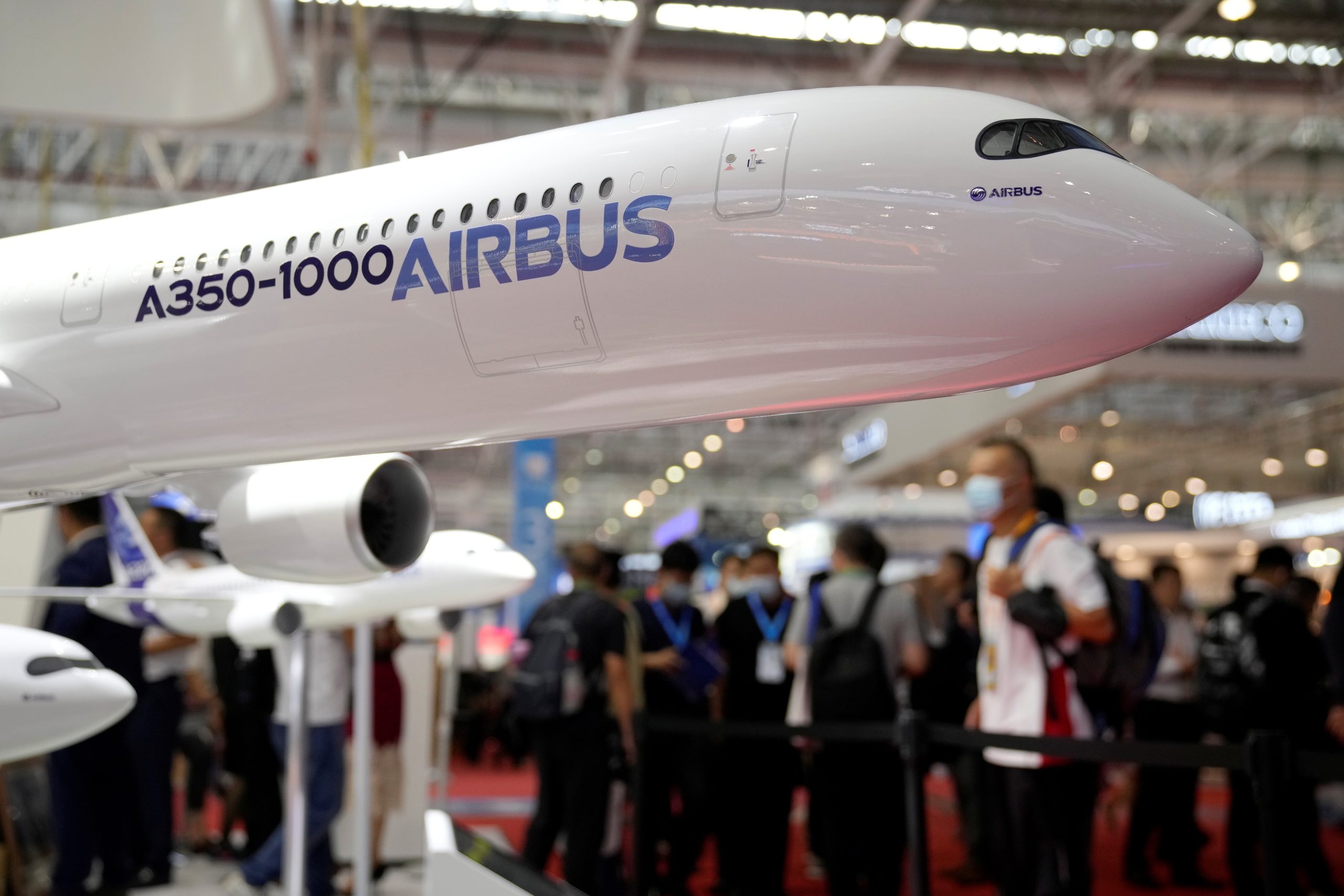
When Guangzhou Baiyun International Airport reclaimed its title as China’s busiest transit hub, handling 84 million passengers following an ambitious $8 billion expansion, the news was widely reported as a post-pandemic recovery story. But viewing this solely through the lens of passenger throughput misses a far more significant transformation.
The addition of a fifth runway and Terminal 3 does not merely expand terminal capacity; it signals a fundamental shift in how the world’s second-largest economy intends to anchor global trade networks, manage air space efficiency, and project state-directed capital into the Next Generation of infrastructure.
The Economics of High-Density Aviation Infrastructure
At a moment when Western aviation infrastructure projects remain bogged down by regulatory friction, labor shortages, and capital allocation disputes, China’s state-backed model has demonstrated its ability to deploy massive capital with swift precision.
The $8 billion investment in Guangzhou (ICAO: ZGGG / IATA: CAN) addresses a structural bottleneck that has long constrained the Pearl River Delta’s commercial engine:
- Capacity Elasticity: The five-runway layout boosts design capacity toward 140 million passengers and 6 million tonnes of cargo annually, establishing a buffer against seasonal trade surges.
- Supply Chain Anchoring: Home to FedEx’s Asia-Pacific hub, Baiyun’s dedicated freight aprons reinforce Guangdong’s position as a critical node in high-value, time-sensitive manufacturing and e-commerce exports.
- Capital Efficiency: Utilizing advanced digital twin modeling and integrated logistics zones, the expansion aims to lower long-term per-unit operational costs for carriers operating out of the hub.
Regional Rivalry in the Greater Bay Area
The Greater Bay Area (GBA)—an economic enclave encompassing Hong Kong, Shenzhen, and Guangzhou—presents one of the most densely packed air corridors in the world. For decades, Hong Kong International Airport served as the undisputed gateway to mainland China. However, shifting geopolitical dynamics, regional air-traffic constraints, and aggressive mainland investments have disrupted this traditional division of labor.
| Transit Node | Core Strategic Focus | Primary Airline Anchor | Infrastructure Capacity |
| Guangzhou (CAN) | Domestic feeder network + Global South routes | China Southern Airlines | 5 Runways / T3 Terminal |
| Hong Kong (HKG) | High-yield international business & finance | Cathay Pacific | 3 Runways / Multi-Terminal |
| Shenzhen (SZX) | Tech sector domestic/regional express | Shenzhen Airlines | 3 Runways / Satellite Hall |
Guangzhou’s competitive edge lies in its deep domestic feeder network, controlled by state-owned China Southern Airlines. By funneling domestic traffic from secondary and tertiary Chinese cities into long-haul international routes across Southeast Asia, Africa, and the Middle East, Baiyun is rapidly building a robust hub-and-spoke model reminiscent of Middle Eastern mega-hubs like Dubai or Doha.
The Global Policy and Trade Implications
From a geopolitical and macroeconomic perspective, Guangzhou’s expansion offers crucial insights into China’s broader economic posture:
- Re-Orienting Global South Connectivity: While direct flights between Western capitals and mainland China remain below pre-2020 projections, air routes connecting Guangzhou to Southeast Asia, Central Asia, and Africa have grown steadily. This aligns with China’s broader foreign policy objectives to secure trade routes across developing economies.
- Multimodal Transport Integration: Unlike standalone airport developments, Baiyun is designed as a multimodal transport node, seamlessly linking air transit with high-speed rail lines and regional expressways. This cuts intra-regional travel times across Guangdong province, effectively expanding the airport’s economic catchment zone.
- Environmental and Operational Challenges: Operating a five-runway system in an increasingly crowded airspace demands unprecedented level of Air Traffic Control (ATC) coordination. Furthermore, as global aviation faces escalating pressure to decarbonize, managing emissions from a hub aiming for 140 million annual passengers will test China’s commitment to net-zero targets.
Guangzhou’s $8 billion mega-expansion is far more than a local transportation upgrade—it is a clear manifestation of China’s long-term industrial policy. By expanding physical capacity ahead of demand curve shifts, Guangzhou is positioning itself to dominate East Asian transit and logistics for the coming decades.
Discover more from The Economy
Subscribe to get the latest posts sent to your email.
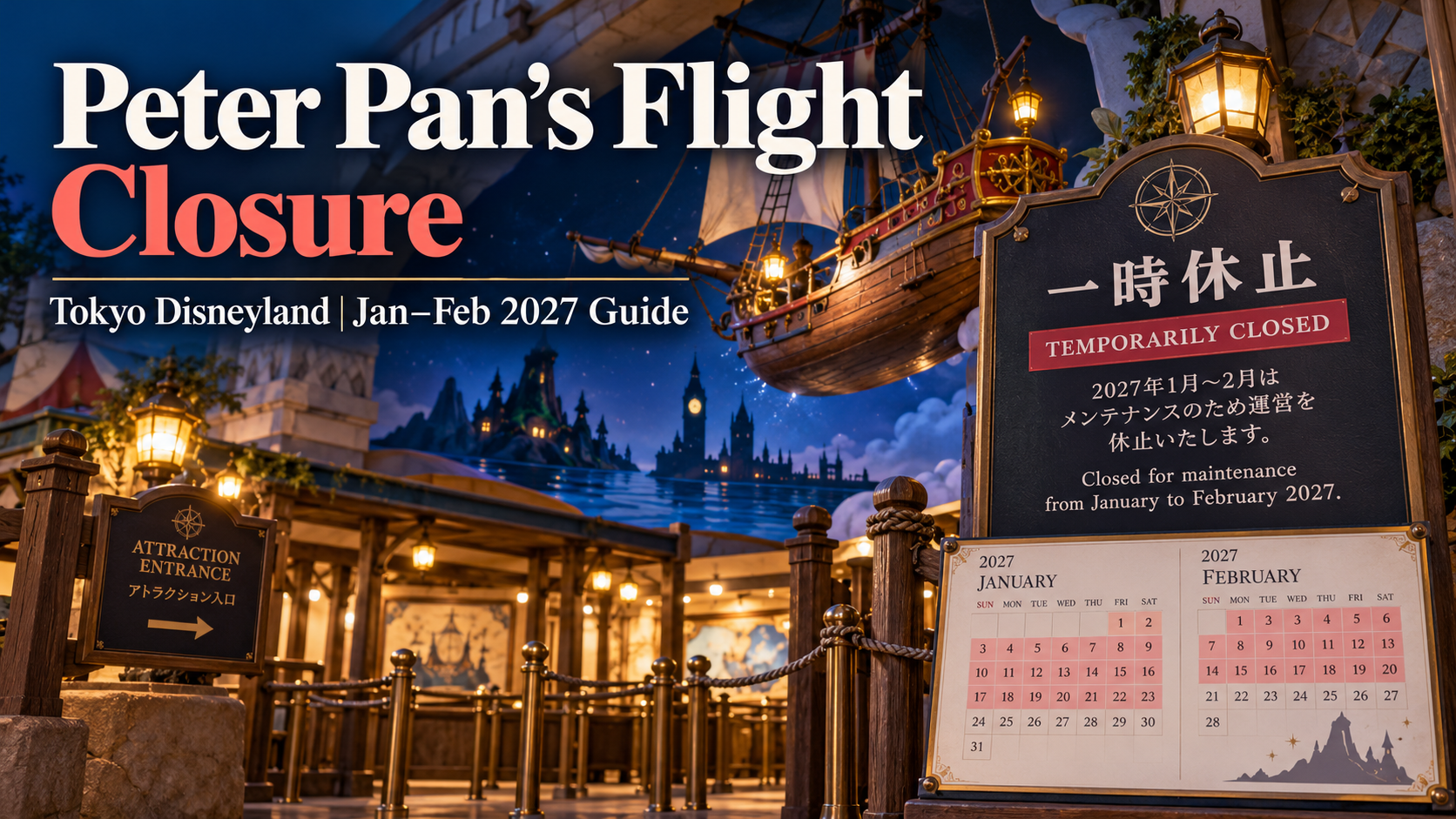
Guests planning a visit to Tokyo Disneyland in early 2027 should put one easily missed detail on their itinerary: Peter Pan’s Flight is scheduled to be temporarily closed from January 6 through February 2, 2027. The operator lists the dates both on its official attraction page and in the Tokyo Disneyland closure schedule. This is a scheduled interruption, not an announcement that the classic ride is being removed permanently. Travelers visiting on dates inside that window should assume the attraction will not be available unless Tokyo Disney Resort publishes a change.
The distinction matters because online references to “Peter Pan closing at Tokyo Disney” can confuse two different parks and two different experiences. Tokyo Disneyland’s Peter Pan’s Flight is a compact Fantasyland ride. Tokyo DisneySea has a separate, newer attraction called Peter Pan’s Never Land Adventure, with its own planned March 2027 maintenance period. The first planning step is making sure the information applies to the ticket you actually bought.
At a glance: what the operator currently says
| Planning question | Verified answer |
|---|---|
| Which attraction? | Peter Pan’s Flight |
| Which park? | Tokyo Disneyland, Fantasyland |
| Scheduled closure starts | January 6, 2027 |
| Scheduled closure ends | February 2, 2027 |
| Reopening expectation | After the listed closure window, subject to operator changes |
| Type of notice | Temporary closure; not announced as permanent |
| Where to recheck | Official attraction listing |
The dates are explicitly labeled as a temporary closure by Tokyo Disney Resort. Do not treat February 3 as an unconditional reopening guarantee: an operator may update maintenance information or temporarily suspend operations for other reasons. Check again shortly before travel and on the day you enter the park.
What is Peter Pan’s Flight?
Peter Pan’s Flight is a dark ride based on the familiar journey from London to Never Land. Guests sit in a flying pirate-ship vehicle that travels through a storybook environment. According to the operator’s ride information, it is in Fantasyland, lasts about two and a half minutes and carries two people per vehicle. It operates indoors and includes dark spaces. These details make it particularly appealing to families who want a gentle, classic Disney experience rather than a high-speed thrill ride.
There are restrictions worth noting even on operating days. The published guidance says a guest must be able to maintain a stable seated position independently and that children may not be held on an adult’s lap during the ride. If your group includes young children, anyone needing seating assistance or visitors uncomfortable with darkness, read the official description and accessibility guidance rather than assuming that the attraction suits everyone because it is short.
Short ride duration is not the same as short waiting time. Demand for well-known classics can vary with crowds, operating conditions and holiday schedules, so it is unwise to schedule a tight sequence of unrelated bookings around a predicted queue. The operator’s app and in-park staff can provide current operating information when the ride is available.
The dates around the closure are not interchangeable
A guest visiting January 5 has a fundamentally different planning position from someone arriving January 6. January 5 falls before the currently listed closure, while January 6 is its opening day. A February 2 visit falls on the final listed day of the maintenance window; February 3 is the earliest day after that window, not a contractual promise that the ride will run.
For a family staying at the resort for multiple days, the difference might be worth changing which day is assigned to Tokyo Disneyland. If one day is before January 6 and another is inside the closure, put Disneyland first if the classic Peter Pan ride is a must-do. But do not swap a park ticket or hotel reservation until you understand the applicable change and cancellation conditions. The economic cost of reshuffling an entire trip can exceed the benefit of experiencing one short ride.
A visitor traveling from overseas may be choosing between a single Disneyland day and a DisneySea day. In that case, consider the trip’s overall priorities. Someone who values vintage Fantasyland attractions may still prefer Disneyland even during the closure. Someone traveling expressly for an immersive Peter Pan adventure could be more interested in the DisneySea attraction—but must buy admission to that different park and verify its own operating schedule.
Other Tokyo Disneyland closures during the same period
The official park maintenance listing shows other attractions with early-2027 closure windows that may overlap your visit. At the time of this review, it lists Jungle Cruise: Wildlife Expeditions from January 6 through March 31, Splash Mountain from January 7 through February 4, and Haunted Mansion from January 8 through February 4. These are operator-published schedules, not independent predictions about refurbishment completion.
This makes the Peter Pan closure more significant for certain visitors than a single unavailable ride might suggest. A group that expected several classic experiences in one afternoon could find multiple priorities temporarily inaccessible. Conversely, the park contains many other attractions and entertainment offerings, and the attractions that remain open should be evaluated on their own current descriptions rather than guessed from historical schedules.
It is worth making a small “must ride / would enjoy / optional” list. Mark each attraction against the closure page. Then build flexibility around weather, performance calendars and queue variation. A plan with alternatives is more resilient than a rigid minute-by-minute schedule.
Better alternatives for different kinds of visitors
If the attraction’s appeal is gentle fantasy storytelling, explore other Fantasyland offerings listed in the official Tokyo Disneyland attraction directory. Filter for ride type and height or access restrictions, and read the current operating details. Do not assume that a neighboring attraction will be open merely because it is not listed in an older travel blog.
If the main attraction is Disney character immersion, devote time to character experiences, themed areas, shopping or scheduled entertainment that is actually available on your day. These can preserve the spirit of the trip without pretending they are substitutes for the ride itself. Some guests will prefer to spend the recovered time on a longer headliner; others may value an unhurried lunch and a park exploration that is less vulnerable to queues.
If the trip is built around Peter Pan specifically, Tokyo DisneySea’s Never Land Adventure may appear attractive. But it is not the same ride: it is a 3D boat-based experience in Fantasy Springs, with different restrictions and a different length. Tokyo Disney Resort’s DisneySea attraction page is the reliable way to compare them. Admission, access arrangements and the day’s capacity remain separate questions.
Parents should also avoid overstating the value of a replacement to children. “Another attraction has pirates” does not make it the planned Peter Pan experience. Setting expectations before entering the park is often more effective than negotiating disappointment in a crowded queue area.
Are refunds or ticket changes automatic?
The announcement of an attraction’s temporary closure does not itself demonstrate that every guest is entitled to a ticket refund or a date change. Theme-park tickets ordinarily grant admission subject to operating conditions, not a binding guarantee that every individual ride will operate. Actual ticket terms, package conditions and any operator-specific accommodation policy govern what can be changed.
Before buying or modifying a pass, review the official Tokyo Disney Resort ticket and reservations guidance and any reseller’s terms. A third-party package might combine transport, hotel rooms and tickets under separate cancellation rules. You should not rely on the statement “ride closed” as a universal reason for a penalty-free cancellation.
If your booking is complex, write down the name of the supplier, reservation reference, exact park date and type of admission. Seek a written answer before paying a change fee. This is particularly important if you plan to move only one day of a multi-day trip and keep the remainder unchanged.
Does Disney Premier Access help during the closure?
No paid queue-management product can make an attraction operate while it is closed. Disney Premier Access is a separate, paid tool for eligible operating experiences; eligibility and availability can change. The official Premier Access guide explains that places may sell out and that the price does not include park admission. It should not be marketed to families as a guaranteed workaround for a published maintenance closure.
The app can nevertheless be useful for other attractions and live operating information. If a ride is unavailable, remove it from the day’s queue-management plan and redirect attention to attractions genuinely offered that day. Check the current product terms before purchasing any additional access.
How to build a more reliable 2027 itinerary
Start with the official attraction closure list rather than the social-media version of it. Choose a date, read the list for the correct park, then check the pages for the two or three attractions most important to your group. If several favorites overlap with closures, compare another travel day, but preserve buffer time and cost limits.
Once you have a provisional itinerary, check whether your whole group can experience the alternatives. A family with a toddler and grandparents may have different needs from a group of teenagers. Ride seating rules, dark environments, height restrictions and walking distances deserve attention before buying optional upgrades.
A week before departure, look at the operator’s park calendar and attraction pages again. On the morning of your visit, follow current app information and staff instructions. Write down a backup plan that does not depend on a single ride reopening on the first conceivable day.
Quick visitor questions
Is Peter Pan’s Flight shutting permanently? The published notice says temporary closure January 6–February 2, 2027. It does not announce permanent removal.
Is it in Tokyo Disneyland or DisneySea? Peter Pan’s Flight is in Tokyo Disneyland’s Fantasyland. DisneySea has the separate Never Land Adventure.
Can I ride on February 2? The current listing includes February 2 in the closure window. Do not plan on riding that day.
Is February 3 the official reopening day? It is the first day after the presently announced closure period, assuming the dates are unchanged. Confirm the park’s live information rather than treating operation as guaranteed.
Should I change my trip? That depends on how important this specific ride is compared with hotel, flights, admission and other attractions. For most travelers, adjusting priorities within the same park is the lower-risk first option.
Final planning advice
This news is not a farewell to Peter Pan’s Flight. It is a defined, temporary gap in the operating calendar. The useful response is to check your exact visit date, compare the rides your family actually cares about and keep a realistic alternative ready. Tokyo Disneyland can still be an appealing destination during the listed closure; the difference between an enjoyable trip and a frustrating one may simply be accurate expectations.
Discover more from The Economy
Subscribe to get the latest posts sent to your email.

Holiday flight searches in late 2026 confront an uncomfortable mix of strong travel demand and expensive jet fuel. Airlines do not price tickets by adding a fixed margin to fuel costs; fares move according to capacity, booking patterns, competition and expectations about future expenses. This makes planning more useful than a universal rule about when tickets are cheapest.
AP reported that elevated airfare could persist even if jet fuel prices decline, partly because tickets are sold in advance and schedules adjust slowly. Recent Wall Street Journal reporting highlighted stronger price pressure for the Thanksgiving and Christmas travel periods. Exact fares still vary enormously by city, route and booking date.
Why fuel costs do not translate directly into ticket prices
A carrier has to cover aircraft, crews, maintenance, airport charges, financing and distribution as well as fuel. A rise in fuel cost reduces margin if the airline cannot raise the ticket price. Whether it can pass the increase to customers depends on competition and seat availability. On a route with several airlines, some operators may hold prices longer; on a capacity-constrained route, fares may react sooner.
Airline schedules are also planned months ahead. Removing a route or reducing frequency can change demand for the remaining seats. A headline fuel-price decline might not immediately restore capacity or undo earlier fare increases.
Travel dates often matter more than a “best booking day”
Flying on the most popular departure and return days usually creates more competition for a limited number of seats. Moving a trip by even one or two days can sometimes save more than choosing one specific day of the week to purchase. But flexibility is not available to everyone, especially families tied to school calendars.
A sensible comparison uses a calendar view that includes nearby airports only when ground transport is practical. Calculate the total trip cost: fare, baggage, seat selection, transfers, parking and an extra hotel night if needed. The cheapest headline ticket may not produce the cheapest journey.
Compare rules, not just prices
Basic-economy tickets may have restrictions on changes, seat selection, carry-on baggage or boarding. Some fares can be canceled for a travel credit but not refunded in cash, subject to carrier rules and applicable law. Buying an itinerary with tight connections or separate airlines can introduce significant disruption risk.
Before purchasing, read the ticket conditions and the airline’s published policies. Confirm whether a booking platform is the actual seller and who is responsible for changes. The most useful itinerary is often the one with reasonable flexibility, not the smallest number on a comparison page.
Set alerts and define a budget ceiling
Price alerts can identify changes without repeated manual searching. Start with a realistic fare band for the route and a firm budget. If a suitable nonstop flight falls within that budget and the dates are fixed, waiting for an uncertain lower price may not be worth the risk of a later increase.
For international travel, check passport validity, visa requirements, transit rules and travel advisories before buying a restrictive ticket. A low fare is no bargain if entry or transit documentation cannot be arranged in time.
What airlines are telling investors
In Financial Times coverage, industry executives raised concerns about sustained fuel costs and inflation. That affects not only individual prices but route networks and fleets. For travelers, the practical implication is to recheck an airline’s schedule and avoid building a complex trip around a single fragile connection.
No search engine, blog or agent can promise the lowest fare on every future day. Clear comparisons, flexible timing and attention to conditions provide greater value than unsupported “secret ticket trick” claims.
An example of the true trip-price comparison
Suppose flight A costs $390 but includes a paid checked bag, airport transfer and an overnight connection, while flight B costs $450 and is nonstop with baggage included. The $60 headline saving may vanish after even one additional hotel stay or missed workday. The arithmetic should be personalized to the traveler rather than expressed as a universal rule. Families may also value adjacent seats and schedule reliability differently from solo travelers. Where travel dates are fixed, selecting a less fragile itinerary can be a rational form of risk management even when it is not the lowest available fare.
Frequently asked questions
Why are flights expensive in late 2026?
Fuel volatility, travel demand, available seats and route competition are important factors; their impact differs by route.
Should I wait for jet fuel prices to fall?
Not necessarily. Ticket prices depend on inventory and advance bookings, so lower fuel costs may not promptly translate into cheaper seats.
Is a separate-ticket connection worth the saving?
It can introduce additional risk if the first flight is delayed. Compare the total savings with the cost of disruption and any rebooking restrictions.
Discover more from The Economy
Subscribe to get the latest posts sent to your email.

The AI Revolution Needs Atomic Power. Southeast Asia Is Ready to Build It.

Zhuhai Airshow 2026: How China’s Stealth Jets, Drones and Missiles Are Redrawing Global Air Power

The $8 Billion Runway: China’s Strategic Bet on Guangzhou and the Future of Aviation

The Sandbox Imperium: Why Beijing’s Digital Yuan Needs Hong Kong

Gold at the $4,000 Line: Possible December Fed Hike

Oil at $100+: Hormuz, a Qatari Peace Draft and the Iran Deadline

The Fed’s 10-2 Hold: Why Two Dissenters Wanted a Rate Hike

SBP Raises Policy Rate to 12%: What It Means for Your Loans, Savings and Business

IMF’s $1.2bn Staff-Level Deal: What Pakistan Promised on Surplus

Decoding the DBS–BCA Merger Rumour: Market Volatility, Strategic Realities

New Xbox Games October 26–30, 2026: Releases and Game Pass

Tokyo Disneyland Peter Pan’s Flight Closure: January–February 2027 Guide

Neocloud Economics in 2026: GPU Debt, Utilization and Power

What Is a Neocloud? How AI GPU Clouds Work and Compare

Crude Oil & Petroleum Market Analysis: OPEC+ Decisions and Price Forecasts

Top US Convenience Store Chains: Store Counts, EV Charging, and Sales Trends

Social Security Extra $90 Deposit: Who Qualifies for the October 2026 Medicare Rebate?

Who Is Shivon Zilis? The Neuralink Executive at the Center of the Musk–OpenAI Trial

Algorithmic Dogfights: Why the U.S. and China Must Establish Rules of Engagement for Autonomous Air Power

Gold Price Outlook 2026: The Forces Behind the Forecasts—and What Could Reverse Them

Corporate America Faces a New Debt Test as US Borrowing Costs Surge

Global Economic Outlook 2026: 7 Forces Reshaping Markets, Trade and Business

Stock Market Crash in 2026? Warning Signs, Scenarios and a Calm Investor Checklist

Geopolitics and Your Portfolio: How International Affairs Move Global Markets

Stock Market Today: Dow, S&P 500, and Nasdaq Retreat as Treasury Yields

US–Iran Conflict in October 2026: Hormuz, Oil Prices and Diplomacy

Anthropic Bans Sustained Abuse of Claude AI Under New Usage Policy Effective November 12, 2026

Why Did I Get $90 From Social Security? 8 Reasons Behind an Unexpected SSA Payment
-

 Markets & Finance10 months ago
Top 15 Stocks for Investment in 2026 in PSX: Your Complete Guide to Pakistan’s Best Investment Opportunities
-

 Analysis8 months ago
Johor’s Investment Boom: The Hidden Costs Behind Malaysia’s Most Ambitious Economic Surge
-

 Analysis9 months ago
Top 10 Stocks for Investment in PSX for Quick Returns in 2026
-

 Banks10 months ago
Best Investments in Pakistan 2026: Top 10 Low-Price Shares and Long-Term Picks for the PSX
-

 Analysis9 months ago
Brazil’s Rare Earth Race: US, EU, and China Compete for Critical Minerals as Tensions Rise
-

 Investment10 months ago
Top 10 Mutual Fund Managers in Pakistan for Investment in 2026: A Comprehensive Guide for Optimal Returns
-

 Global Economy10 months ago
15 Most Lucrative Sectors for Investment in Pakistan: A 2025 Data-Driven Analysis
-

 Global Economy10 months ago
Pakistan’s Export Goldmine: 10 Game-Changing Markets Where Pakistani Businesses Are Winning Big in 2025