
Analysis
Brazil’s Rare Earth Race: US, EU, and China Compete for Critical Minerals as Tensions Rise

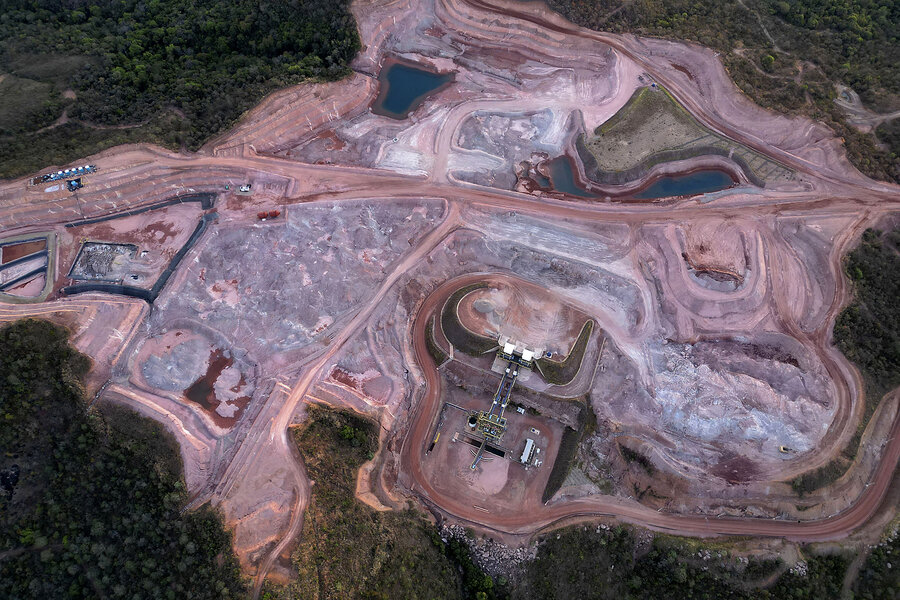
Beneath Brazil’s red earth lies a geopolitical powder keg that few Americans are paying attention to. While Washington obsesses over microchip factories and supply chain resilience, a more fundamental struggle is unfolding in South America—one that will determine whether the United States can credibly compete in the clean energy economy it claims to champion.
The prize is rare earth elements, the unglamorous but indispensable minerals that power everything from the iPhone in your pocket to the guidance systems in Patriot missiles. And in this contest for Brazil’s largely untapped reserves, America is discovering an uncomfortable truth: when it comes to securing the resources that will define the 21st century, we’re arriving late, spending reluctantly, and competing against a Chinese government that planned for this moment decades ago while we were distracted by other priorities.
The competition reached a new inflection point in recent months as diplomatic tensions, investment pledges, and competing visions for resource development collided in Brasília. What’s at stake extends far beyond mining rights: control over rare earths means control over the technologies that will define the 21st century, from wind turbines and electric vehicles to advanced weapons systems and renewable energy infrastructure.
Brazil’s Hidden Wealth: A Strategic Asset in Plain Sight
Brazil sits atop approximately 21 million tons of rare earth reserves, making it the world’s second-largest holder of these critical minerals after China’s commanding 44 million tons, according to data compiled by industry analysts. Yet despite this geological fortune, Brazil produces less than one percent of the world’s rare earths—a stark disconnect that has captured the attention of global powers seeking to reduce their dependence on Chinese supply chains.
The irony is not lost on Brazilian officials. “We have the resources beneath our feet that the world desperately needs,” remarked one mining industry executive in Minas Gerais, speaking on condition of anonymity. “The question is whether we can develop them fast enough, and with which partners.”
China currently controls approximately 70 percent of global rare earth mining and a staggering 90 percent of processing capacity, giving Beijing enormous leverage over supply chains that underpin everything from consumer electronics to military hardware. This dominance has prompted what analysts describe as the most significant rush for mineral security since the Cold War scramble for uranium.
America’s Belated Awakening
Washington’s engagement with Brazil rare earth deposits represents a dramatic strategic shift. For years, US policymakers largely ignored the vulnerabilities inherent in relying on Chinese-controlled rare earth supply chains. That complacency evaporated as tensions with Beijing escalated and the pandemic exposed the fragility of global supply networks.
The US has pledged between $465 million and $565 million to support Brazilian rare earth projects, with a particular focus on the Serra Verde operation in Goiás state—one of the largest undeveloped rare earth deposits outside China. This US investment in Brazil rare earths comes through a combination of Export-Import Bank financing, Development Finance Corporation support, and private sector partnerships facilitated by recent diplomatic engagement.
The timing is noteworthy. Relations between former President Trump and Brazilian President Luiz Inácio Lula da Silva were, to put it charitably, frosty. But as geopolitical realities shifted and both nations recognized their mutual interests in rare earth supply chain diversification, pragmatism has prevailed. Recent bilateral meetings have produced agreements on critical minerals cooperation, technology transfer, and environmental standards—though skeptics note that implementation remains uncertain.
“The Americans arrived late to the party,” observed a São Paulo-based geopolitical analyst, “but they’re trying to make up for lost time with checkbooks and promises of technological partnership.”
Europe’s Frustrations and China’s Long Game
The European Union, meanwhile, has found itself repeatedly outmaneuvered in what officials privately describe as a frustrating contest for Brazilian partnerships. Despite early interest and exploratory missions, EU China competition Brazil minerals has tilted toward Washington and Beijing, who have proven more willing to make concrete financial commitments and accept Brazil’s environmental conditions.
European representatives have complained, according to sources familiar with diplomatic exchanges, that US preemption of key deals has left the bloc scrambling for secondary opportunities. The EU’s Critical Raw Materials Act, announced with fanfare in 2023, aimed to secure diverse supply sources—but translating policy into projects has proven challenging when competitors move faster with larger financial packages.
China, for its part, has pursued what analysts call a “patient capital” strategy. Unlike the US with its recent surge of interest, Chinese companies have maintained a presence in Brazilian mining for over a decade. They’ve built relationships, navigated local politics, and positioned themselves as reliable partners unconcerned with the geopolitical lectures that sometimes accompany Western investment.
A recent report by the Center for Strategic and International Studies highlighted China’s methodical approach: securing minority stakes in multiple projects, offering processing technology that Brazil lacks, and coupling mineral investments with broader infrastructure development. “Beijing understands that influence is built through sustained engagement, not just one-off deals,” the report noted.
Brazil’s Delicate Balancing Act
Caught between competing suitors, Brazil has adopted what observers describe as a “multi-alignment strategy”—accepting investments from all sides while committing exclusively to none. President Lula’s administration has signaled openness to partnerships with the US, EU, and China, calculating that competition among external powers serves Brazilian interests by driving up investment and allowing Brasília to set terms.
This approach carries risks. Some Brazilian mining executives worry that trying to please everyone might result in regulatory gridlock or competing standards that slow development. Environmental groups, meanwhile, fear that the rush for Brazil critical minerals will override the country’s forest protection commitments and indigenous rights—concerns that have already slowed permitting for several projects.
Brazil’s Environmental Ministry has imposed stringent requirements on rare earth mining operations, including detailed impact assessments and community consultations. While these safeguards align with international best practices, they’ve frustrated investors accustomed to faster timelines. “Every month of delay is a month China extends its dominance,” warned one American executive working on rare earth supply chain diversification.
Yet Brazil’s cautious approach may prove prescient. The rare earth industry carries significant environmental risks—processing generates radioactive waste and toxic runoff. Moving too quickly could trigger the kind of ecological disasters that have plagued Chinese rare earth operations, undermining both local support and international partnerships.
The Economic and Security Stakes
The implications of this three-way competition extend well beyond quarterly earnings reports. Rare earth elements are essential for manufacturing permanent magnets used in electric vehicle motors, wind turbine generators, and a host of consumer electronics. They’re equally critical for defense applications: precision-guided missiles, jet engines, satellite communications, and radar systems all depend on rare earth components.
A comparison of global rare earth positions illustrates the challenge:
| Country/Region | Reserves (Million Tons) | Production Share | Processing Capacity |
|---|---|---|---|
| China | 44 | 70% | 90% |
| Brazil | 21 | <1% | Minimal |
| United States | 2.3 | ~15% | <10% |
| European Union | 1.2 | <1% | <5% |
This table, based on industry data compiled by Bloomberg and specialist mining analysts, reveals the enormous gap between potential and production. Brazil possesses roughly half of China’s reserves but produces a fraction of one percent of global output—a disparity that both represents opportunity and highlights the scale of investment required.
For the United States and European Union, reducing dependence on China rare earth dominance Brazil represents more than economic efficiency—it’s a national security imperative. Trade tensions between Washington and Beijing have already produced tariff wars, technology export controls, and sanctions that have rattled global markets. The prospect of China restricting rare earth exports as leverage, as it did briefly in 2010 during a territorial dispute with Japan, haunts Western defense planners.
“Imagine a scenario where conflict erupts over Taiwan,” suggested a retired Pentagon official now consulting on critical minerals strategy. “Within days, China could choke off rare earth supplies to the West. Our weapons systems would face severe component shortages within months. Brazil offers a partial solution—if we can help them develop production capacity quickly.”
Challenges on the Ground
Yet transforming Brazil’s geological potential into actual production faces formidable obstacles. Infrastructure remains inadequate in many mining regions, with poor roads and limited power supplies complicating operations. Brazil lacks the processing technology that China has refined over decades, meaning raw materials often need to be shipped abroad for refinement—defeating much of the supply chain diversification purpose.
Labor and expertise shortages present another challenge. Rare earth mining and processing require specialized skills that Brazil’s workforce currently lacks in sufficient numbers. Training programs and technology transfers are part of the US and EU investment packages, but developing expertise takes time.
Then there’s the question of market economics. China’s dominance has allowed it to control pricing, occasionally flooding markets to make competing projects financially unviable. Brazilian operations, with higher startup costs and smaller initial scales, could struggle to compete if Beijing decides to undercut prices strategically.
Environmental regulations, while crucial for sustainable development, add complexity and delay. The Serra Verde project, despite significant US backing, has faced repeated permitting challenges as regulators assess water usage impacts and community displacement concerns. Indigenous groups have filed legal challenges to several proposed mining operations, arguing that consultation processes were inadequate.
Looking Ahead: A Multipolar Mineral Future?
As trade tensions loom and the competition for Brazil’s rare earths intensifies, the ultimate outcome remains uncertain. The most likely scenario, according to geopolitical analysts at the Eurasia Group, involves all three powers maintaining some presence in Brazil’s rare earth sector, with different companies and projects aligned with different external partners.
This multipolar arrangement could serve Brazil’s interests by maximizing investment and limiting any single power’s leverage. But it could also create coordination challenges, competing standards, and political complications as global tensions ebb and flow.
What’s clear is that the quiet race for Brazil’s underground wealth has only just begun. As one Brazilian mining ministry official put it, leaning back in his Brasília office: “The world spent the last decade waking up to the rare earth problem. Now they’re all knocking on our door at once. We intend to answer carefully—but we will answer.”
For the United States, European Union, and China, Brazil represents a crucial test of their respective models for resource diplomacy. Washington offers financial muscle and security partnerships. Brussels promises regulatory alignment and technology standards. Beijing provides patient capital and no-questions-asked engagement.
Brazil, blessed with geological fortune and cursed with the attention it brings, must choose its partners wisely. The decisions made in Brasília over the coming years won’t just determine who extracts minerals from Brazilian soil—they’ll help shape the balance of power for decades to come.
Discover more from The Economy
Subscribe to get the latest posts sent to your email.



Key Takeaways
- Rolex’s secondary market rose approximately 7.9% year-over-year as of 2026 (per WatchCharts data) — trailing Patek Philippe (+16.2%) and Tudor (+11.4%) but still outperforming Audemars Piguet (+3.4%).
- Rolex raised U.S. retail prices 4–9% in January 2026 (steel models ~5.6%, gold models ~8.7%), narrowing the historical gap between retail and pre-owned pricing.
- Not every model appreciates: steel sports references (Submariner, GMT-Master II, Daytona) have held value far better than two-tone or widely available dress references like the standard Datejust.
- The Lady-Datejust posted the sharpest 2026 gain among tracked collections — up 22.73%, from roughly $9,269 to $11,376 — driven by demand for smaller, “everyday luxury” watches.
- Gold’s rise past $2,400/oz has directly lifted the investment case for Rolex’s precious-metal references (Day-Date, Sky-Dweller, Yacht-Master).
The Model-by-Model Picture
| Category | 2026 Trend |
|---|---|
| Lady-Datejust | +22.73% (strongest performer among tracked collections) |
| Steel sports models (Submariner, GMT-Master II) | Held value well; corrected from 2022 peak but stabilized above retail |
| Daytona | Corrected from highs above $50,000 to the mid-$30,000s; still among the most sought-after references |
| Two-tone/widely available Datejust | Flat to negative — “holds value” is an overstatement for this category |
| Gold references (Day-Date, Sky-Dweller) | Lifted by gold’s rise above $2,400/oz |
Why the “Rolex Always Appreciates” Myth Is Fading
The pandemic-era boom pushed some references — the Daytona above all — to speculative highs disconnected from historical norms. Since the March 2022 peak, steel sports models have compressed meaningfully, and dealers who bought inventory near the top have in some cases faced 20–40% markdowns on liquidation. The lesson for 2026 buyers: Rolex as a category is not a monolith. Value retention depends heavily on specific reference, condition, and whether the piece comes with box and papers (“full set”).
What’s Actually Driving 2026 Strength
- Retail price increases raise the floor. When a new Submariner retails at $10,050 (up from $9,500), a pre-owned example at $11,000–$12,000 suddenly represents a smaller premium — narrowing the gap without secondary prices actually moving.
- Supply discipline remains Rolex’s core lever. The brand has never confirmed production numbers, and secondary-market premiums remain entirely a function of Rolex’s own manufacturing decisions — a risk factor as much as a support.
- Certified Pre-Owned rollout. Rolex’s now fully rolled-out CPO program has changed how buyers transact in the used market, adding a layer of brand-verified legitimacy that supports pricing.
The Case for Rolex as a Portfolio Diversifier
Financial advisors increasingly frame luxury watches not as a replacement for equities or bonds, but as a tangible, historically low-correlation diversifier — one that carries its own risks (illiquidity, condition-dependent pricing, no yield) but has demonstrated multi-decade resilience for specific references.
Is Rolex a good investment in 2026?
It depends heavily on the specific reference. Steel sports models like the Submariner and Daytona have held or grown in value; two-tone and widely available dress models generally have not. Overall, Rolex’s secondary market rose about 7.9% year-over-year in 2026, trailing Patek Philippe but ahead of Audemars Piguet.
Discover more from The Economy
Subscribe to get the latest posts sent to your email.

Navigating Mortgage and Loan Refinancing in a High-Yield Environment
Global public debt crossing critical thresholds has kept central bank policies volatile, resulting in fluctuating US Treasury yields throughout 2026. For homeowners and commercial property holders burdened by previous high-interest borrowing cycles, finding optimal refinance windows has become a high-stakes financial puzzle. Stalled disinflation and stubborn employment numbers mean rate cuts are incremental, requiring borrowers to act with precision.
Timing your mortgage or commercial loan refinance in this environment requires a deep understanding of yield curve movements and lender risk appetites.
Decoding 2026 Refinance Dynamics
The 10-Year Treasury Yield Benchmark
Mortgage rates continue to track closely with the 10-year US Treasury yield. When macroeconomic anxiety spikes debt issuance, yields rise, tightening consumer borrowing capacity. Savvy borrowers monitor weekly Treasury auctions to lock in rates during brief dip windows.
Hybrid ARMs and Alternative Structures
With fixed rates remaining elevated, 7/1 and 10/1 adjustable-rate mortgages (ARMs) have surged in popularity. These products offer lower initial monthly payments, giving borrowers breathing room until central bank easing cycles fully materialize.
| Loan Product | Current Rate Range | Best For | Key Risk Factor |
| 30-Year Fixed Mortgage | 6.2% – 6.8% | Long-term predictability | Higher initial monthly outlay |
| 7/1 Hybrid ARM | 5.5% – 5.9% | Short-term ownership / flipping | Rate reset risk after year 7 |
| Commercial Refinance | 7.0% – 8.2% | Corporate asset restructuring | Strict DSCR lender covenants |
Actionable Steps for Successful Refinancing
To maximize your chances of securing favorable refinance terms in a volatile market, follow a disciplined preparation strategy.
Boost Your Credit Score Immediately: Lenders in 2026 are applying stringent credit tiering; a 20-point increase can drop your APR by a crucial quarter-point.
Shop Regional Credit Unions: Smaller financial institutions often offer portfolio loans with more flexible underwriting than major national banks.
Calculate the Break-Even Point: Ensure your total closing costs are recouped through monthly savings within 24 months of closing.
“Market Strategist View: Refinancing in 2026 is an exercise in opportunistic timing. Borrowers must maintain immaculate financial profiles ready to strike the moment Treasury yields dip.”
Mastering the complexities of today’s debt environment ensures you can successfully lower your debt service costs and protect your long-term financial stability.
Discover more from The Economy
Subscribe to get the latest posts sent to your email.

The days of pulling generic auto insurance quotes based purely on your zip code and age are officially over. In 2026, insurance comparison engines are powered entirely by generative AI and real-time telematics. These platforms digest thousands of live data points—ranging from your driving smoothness via connected vehicle sensors to real-time traffic congestion patterns—to generate hyper-personalized premiums instantly.
For consumers, this evolution represents both a massive opportunity for savings and a hidden trap for penalty pricing. Understanding how AI algorithms evaluate risk is essential for anyone looking to lower their monthly auto insurance premiums.
How AI Comparison Engines Evaluate Your Risk Profile
Behavioral Telematics and Connected Cars
Modern cars stream performance data directly to insurance aggregators. Generative AI models analyze braking sharpness, acceleration curves, cornering G-forces, and phone distraction metrics. Drivers who maintain smooth, defensive habits are rewarded with dynamic rate cuts of up to 40% compared to traditional rating tiers.
Predictive Traffic and Weather Modeling
AI tools now cross-reference your daily commute route with predictive weather and accident probability models. If your standard parking location or driving corridor has a statistically higher incidence of uninsured motorist claims, your quotes will reflect that hyper-local risk assessment.
| Comparison Factor | Traditional Rating Model | 2026 Generative AI Model | Impact on Premium |
| Mileage & Usage | Annual estimated odometer reading | GPS tracking & live trip duration | High (up to 35% savings) |
| Driving Behavior | MVR driving record & accidents | Real-time braking, speed, & G-force | Critical (determines tier) |
| Vehicle Tech | Make, model, and safety rating | ADAS calibration & repair cost data | Moderate |
Strategies to Lower Your AI-Driven Insurance Quote
To outsmart the algorithm and secure the lowest possible premium in 2026, drivers must proactively manage their digital footprint on insurance platforms.
Opt-In for Telematics Trial Periods: Many insurers offer immediate 15% discounts just for installing their driving app; let it track safe habits for 30 days to lock in permanent savings.
Scrub Unverified Public Records: Ensure your motor vehicle report is free of clerical errors that AI risk models misinterpret as reckless behavior.
Compare AI Aggregators: Use platforms that integrate multi-carrier API feeds rather than single-brand comparison sites to find the best risk-adjusted rate.
“Industry Note: AI-driven pricing rewards transparency and precision. Drivers who actively manage their telematics data consistently out-save those relying on legacy quote calculators.”
Embracing AI comparison tools allows savvy policyholders to customize coverage limits precisely to their driving habits, eliminating wasted premium spend while ensuring robust protection.
Discover more from The Economy
Subscribe to get the latest posts sent to your email.

Solar Panel Installation Cost in 2026: Why the Math Changed Overnight

Business Insurance: What Coverage You Actually Need and What It Costs in 2026

Auto Insurance Quotes: How to Get the Lowest Rate Without Losing Coverage

Huntington Online Banking: Full Features, Fees, and How It Compares in 2026

Apply for a Bank Account Online: What You Need and How Long It Actually Takes

World’s Largest Economies: Ranking the Top Global Powers

Business Loan: A Complete 2026 Guide to Rates, Types, and Qualifying

Fast Invoice Factoring: How to Turn Unpaid Invoices Into Cash Within 24 Hours

Investment Banking Services: What They Cost and How to Choose the Right Firm in 2026

Structured Settlement Loan: What “Cash Now” Offers Actually Cost You

DUI Attorney: Why Your First Call After an Arrest Should Never Be to the Court

Personal Injury Lawyer: A Complete Guide to Filing Your Claim in 2026

Commercial Vehicle Accident Lawyer: Holding Companies Accountable Beyond the Driver

Inside the White House Feud: How Trump’s Allies Are Painting Anthropic’s Dario Amodei as the Face of ‘AI Doomerism’

Top 30 Stocks for Investment in PSX for Massive ROI in 2026

SpaceX Starship Flight 14: First Orbital Attempt & Starlink V3 Launch Explained

Oil Prices Break $100 in 2026: Middle East Conflict & Energy Markets

Fidelity Investments Review 2026: SPAXX Yields & Zero-Fee Funds

AI Chip Stocks 2026: The Best Semiconductor Investments Beyond Marvell

BRICS+ Cross-Border Payments 2026: Interoperability Explained

Tween Back-to-School Trends 2026: What’s Driving the $85B Season

10-Year Treasury Yield Hits 4.80%: What It Means for Rates & Portfolios

Shein Clothes Quality & Safety in 2026: What Lab Tests Show

China’s US$10.8 Billion Trade Shortcut: Why the Pinglu Canal Matters

MRVL Earnings 2026: Why Marvell Sank Despite Beating Estimates

IMF & World Bank 2026 Global Economic Outlook: Growth, Inflation, Debt

High-CPM Finance Niches 2026: Publisher Monetization Blueprint

Middle East War Economics 2026: Oil Prices & Energy Markets
-

 Markets & Finance9 months ago
Top 15 Stocks for Investment in 2026 in PSX: Your Complete Guide to Pakistan’s Best Investment Opportunities
-

 Analysis7 months ago
Johor’s Investment Boom: The Hidden Costs Behind Malaysia’s Most Ambitious Economic Surge
-

 Analysis7 months ago
Top 10 Stocks for Investment in PSX for Quick Returns in 2026
-

 Banks8 months ago
Best Investments in Pakistan 2026: Top 10 Low-Price Shares and Long-Term Picks for the PSX
-

 Investment9 months ago
Top 10 Mutual Fund Managers in Pakistan for Investment in 2026: A Comprehensive Guide for Optimal Returns
-

 Global Economy9 months ago
15 Most Lucrative Sectors for Investment in Pakistan: A 2025 Data-Driven Analysis
-

 Global Economy9 months ago
Pakistan’s Export Goldmine: 10 Game-Changing Markets Where Pakistani Businesses Are Winning Big in 2025
-

 Asia9 months ago
China’s 50% Domestic Equipment Rule: The Semiconductor Mandate Reshaping Global Tech