
Banks
Bank of England Rate Decision Amid Energy Crisis

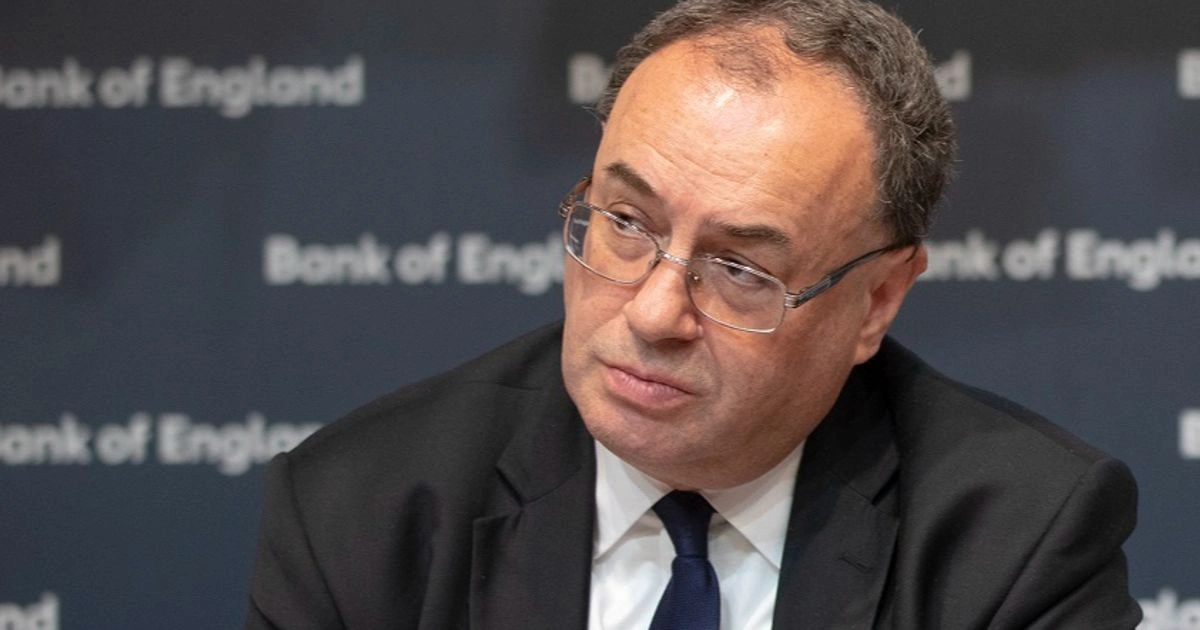
The Bank of England’s Monetary Policy Committee is widely expected to hold its benchmark rate at 3.75% at its next decision on July 30, 2026, but the collapse of the US-Iran ceasefire just weeks before the meeting has thrown fresh uncertainty into a rate path economists had only recently begun to consider settled.
The June Decision and the Split Vote
At its meeting ending June 17, 2026, the MPC voted 7–2 to hold Bank Rate at 3.75%, with two members preferring an immediate 0.25 percentage point increase to 4%, according to the Bank of England’s official minutes. The committee noted that global energy prices had fallen since its previous meeting in response to developments in the Middle East, but remained higher than pre-conflict levels and continued to be volatile — language that reads differently now that the ceasefire referenced in those minutes has since collapsed.
The Bank explicitly stated that monetary policy cannot influence energy prices directly but is being set to ensure the economy’s adjustment to them supports a sustainable return to the 2% inflation target. UK inflation has followed a genuinely difficult path in 2026: after peaking around 3.8% in July 2025, it fell to 2.8% by April 2026 — largely due to a reduction in the government’s energy price cap — before the Bank itself forecast it would rise again in the second half of the year, according to the Bank of England’s own explainer.
Forecasts Diverge Sharply Among Economists
Economists’ 2026 UK interest rate forecasts span a notably wide range of roughly 3.50% to 4.25%, reflecting genuine disagreement about how the energy shock will play out, according to the HomeOwners Alliance. Bank of America economists have argued multiple rate hikes remain on the table, potentially in July and September, while ING’s James Smith has pencilled in a “one-and-done” summer rate rise. By contrast, Oxford Economics believes the Bank will hold rates steady for the rest of 2026 and “well into 2027,” while Pantheon Macroeconomics initially removed its rate-hike forecast after the earlier US-Iran ceasefire — a call that may now be revisited given the conflict’s reignition.
Services inflation, sitting at 3.7% as of the June decision, remains the Bank’s key sticking point, since it reflects domestically generated price pressure rather than imported energy costs, according to Cambridge Currencies. Nearly 40% of economists in a recent Reuters poll priced at least one hike into their 2026 forecasts even before the latest Middle East escalation.
How the UK Compares Globally
The Bank of England’s dilemma mirrors that of central banks worldwide. The European Central Bank raised its deposit rate to 2.25% on June 11, while the U.S. Federal Reserve held its funds rate at 3.50%–3.75% under new Chair Kevin Warsh at his first meeting on June 17, according to Cambridge Currencies. All three major Western central banks are now navigating the same core tension: a fresh energy-driven inflation risk layered on top of already sluggish growth.
What to Watch on July 30
The upcoming decision will be accompanied by a new Monetary Policy Report, making it a natural moment for the Bank to signal any shift in direction. With the Strait of Hormuz blockade reinstated just weeks before the meeting, markets will be watching closely for any change in the MPC’s energy price assumptions and whether the current 7–2 split narrows toward a hike or holds firm.
Discover more from The Economy
Subscribe to get the latest posts sent to your email.



Infrastructure banks are judged most usefully not by the number of meetings they hold but by whether financed assets function, serve their intended communities and can be maintained without unsustainable obligations. That is a timely standard for assessing the Asian Infrastructure Investment Bank after its 2026 annual meeting.
The AIIB says its annual meeting took place in Doha on September 28–29 under the theme “Tomorrow’s Infrastructure: Impact and Innovation.” The agenda emphasized sustainable investment, cross-border connectivity, green finance, digital transformation and private capital. Those priorities define a development strategy; the harder work is demonstrating delivery.
What does AIIB actually do?
The Asian Infrastructure Investment Bank is a multilateral development bank that finances infrastructure and related development projects across its membership. Its business model differs from that of a conventional commercial bank: it can combine long-horizon lending, institutional safeguards and project preparation with capital mobilization. It still needs to assess repayment capacity and the environmental and social consequences of what it funds.
Projects can include electricity networks, transport, water and digital connectivity. The economic value depends on who gains access, how much service improves and whether user charges and public finances can support operations.
Green infrastructure needs a performance test
A solar project should be evaluated not only in installed megawatts but in delivered electricity, grid stability, curtailment and emissions performance. A public transport project should be examined through ridership, journey-time savings, safety and accessibility. Water infrastructure can be assessed through service reliability, water quality and reduction of leakage.
Labels such as “green” or “sustainable” are most informative when accompanied by credible baseline assumptions, public monitoring and independent evaluation. Without that, a project can appear successful on paper while leaving the underlying service problem largely untouched.
The investment gap is broader than lending
Many countries need new infrastructure but have limited fiscal space and large foreign-currency exposures. A long-term loan does not resolve the problem if the borrower has insufficient revenue or faces a sharp exchange-rate shock. AIIB and co-financiers therefore must think about project preparation, procurement quality, currency risk and maintenance funding at the outset.
Private capital may participate when risk is allocated sensibly. A toll road or grid investment should not rely on implausible demand assumptions simply to make a spreadsheet attractive. If public guarantees are provided, their potential cost should be disclosed rather than concealed outside the annual budget.
Why connectivity can produce wider benefits
An infrastructure asset has network effects. A border crossing may be far more useful when roads, customs processes and logistics providers on both sides work well. An electricity interconnector can create value when neighboring markets have complementary demand and supply. Digital infrastructure matters when affordable access leads to actual economic activity, not merely a fiber line on a map.
That means coordination among regulators and neighboring governments can be as important as concrete and cables. Project completion is a milestone; integration into a functioning network is the economic result.
What readers should demand from project announcements
Request the total financing package, implementation timeline, expected beneficiaries and the precise financing share provided by AIIB. Ask whether a sum is approved, committed or already disbursed. Look for environmental assessments, procurement records, completion reports and a plan for maintenance.
The bank’s 2026 meeting materials set out an ambitious decade-two agenda. Readers can judge the institution fairly by following projects over years rather than treating a single headline commitment as proof of impact.
Separating approval, disbursement and impact
Infrastructure financing has a sequence that is too often collapsed in news headlines. A project may be proposed, appraised, approved by a board, signed with a borrower, disbursed in installments, physically completed and later assessed for economic performance. An “approved $500 million project” is not necessarily $500 million already spent, and expenditure alone does not show improved household welfare. For an electricity investment, an evaluator might examine the number of additional reliable connections and hours of avoided outages after completion. Where performance falls short, credible institutions publish the findings and lessons rather than substituting future promises for evidence.
Frequently asked questions
What does AIIB stand for?
Asian Infrastructure Investment Bank, a multilateral institution focused on infrastructure and development finance.
Where was the 2026 AIIB annual meeting?
AIIB says it took place in Doha, Qatar, on September 28–29, 2026.
Is every AIIB project a green project?
No. Projects span sectors; environmental performance should be assessed individually using published criteria and results.
Discover more from The Economy
Subscribe to get the latest posts sent to your email.

Student-loan questions in October 2026 are about money due, deadlines and eligibility—not simply campaign promises. Federal Student Aid says a March 2026 court order ended the SAVE repayment plan, and loan servicers began sending individualized transition notices in July. Affected borrowers may have to choose among plans with different monthly payments and forgiveness conditions.
With congressional elections approaching, politicians may debate the policy, but today’s repayment obligations are governed by current rules and an individual’s servicer notice. The most useful article begins with that distinction and helps borrowers avoid an unwanted automatic placement. For primary-source background, consult Federal Student Aid SAVE transition FAQ; MOHELA SAVE Plan FAQ; Federal Student Aid repayment calculator. In a fast-moving topic, publication time and information cutoff matter: subsequent events may require updating the figures or legal status, not merely changing the date in the footer.
What changed for SAVE borrowers in 2026
Federal Student Aid states that a court order ended the SAVE Plan in March 2026 and that servicers began notifying affected borrowers on July 1. The agency instructs borrowers to work from the notice date set by their own servicer rather than relying on another person’s deadline. A borrower who has already received a 90-day notice may be close to or past the point at which an additional 30-day notice appears. Failing to choose a suitable plan can result in automatic placement into a fixed repayment option. Loan disbursement dates, employment and income influence eligibility for alternative plans.
Student-loan questions in October 2026 are about money due, deadlines and eligibility—not simply campaign promises.
Why the 2026 midterms do not suspend repayment
Elections can produce debate about loan policy but do not, by themselves, stop scheduled repayments or erase existing debt. A campaign proposal is not a final rule, and even legislation enacted later may contain effective dates or grandfathering provisions. Readers should separate five levels of evidence: a candidate’s statement, a bill introduced in Congress, a rule proposed by an agency, a measure signed into law, and an enforceable requirement communicated to borrowers. This distinction protects families from postponing necessary action based on a political headline. Our primary source for current deadlines is the official borrower FAQ, not a polling story.
Compare plans on total cost, not only the first bill
Income-based repayment may produce a lower required monthly amount than a fixed plan, but the long-run calculation depends on interest, time in repayment, expected earnings and eligibility for discharge. Federal Student Aid identifies repayment options including Income-Based Repayment, Pay As You Earn where eligible, Income-Contingent Repayment for certain borrowers and the newer Repayment Assistance Plan. Some plans are restricted by when loans were disbursed. A small monthly payment might extend repayment or allow a larger balance to remain for longer. Use the official loan simulator and record both the amount due now and the expected total repayment under plausible income paths.
Public Service Loan Forgiveness implications
For qualifying public-service employees, the number and type of qualifying payments can matter more than a superficial comparison of advertised rates. Federal Student Aid’s FAQ identifies which plans count toward PSLF and warns that certain automatic placements may not qualify. Employment certification, loan type and servicing records should be reviewed before changing the repayment arrangement. Never promise forgiveness based on a general description of someone’s occupation. Borrowers should keep dated copies of plan elections and confirmation emails, especially when switching servicers, consolidating loans or disputing payment-count errors.
What affected borrowers should do now
Sign in directly to StudentAid.gov and the assigned loan servicer. Identify the type and disbursement date of each federal loan, current repayment plan, outstanding notices and specific response deadline. Next, use the official repayment simulator to compare plans and assess any forgiveness goals. If the required payment becomes unaffordable, contact the servicer before the due date and ask about eligible options. Review autopay instructions and confirm any changed withdrawal amount. Avoid unsolicited debt-relief calls offering guaranteed forgiveness for an upfront fee. The factual priority is preventing missed deadlines, not forecasting which party will control Congress.
Worked example: how to interpret a difficult headline
Borrower A received a servicer transition notice early and has a deadline this month; Borrower B has not yet received a notice. The two borrowers should not infer that they share a deadline. A borrower pursuing PSLF should additionally verify that the intended plan generates qualifying payments. In each case, the correct comparison comes from the individual’s account, not a general headline saying every borrower must switch on the same day. This is a deliberately illustrative comparison unless explicit documented numbers are identified. It should not be mistaken for a real person’s financial circumstances, an unverified event, or a guaranteed forecast. Its purpose is to show how a reader can apply the underlying principle and identify which information still needs to be checked.
Three concepts that are often confused
| Concept | What it actually establishes |
|---|---|
| Political proposal | Expresses desired policy; does not alter current billing by itself. |
| Published federal guidance | Defines existing plan options and transition procedures. |
| Individual servicer notice | Specifies the account-specific deadline and next steps. |
These distinctions are more than technical niceties. They change the answer to the reader’s question. An estimate does not carry the same evidentiary weight as a final rule; an announcement does not have the same practical consequence as a completed transaction; and a provisional interpretation should not be presented as a confirmed event. Wherever a live source supplies a new fact, the editor should check whether the old text still describes the right stage of the process.
A reader’s verification workflow
Start by recording the precise claim and the date it was allegedly true. Open the primary announcement or filing rather than a social-media screenshot. Ask whether the source has an incentive to present only the most favorable interpretation, and corroborate material facts with reputable independent reporting where available. For numerical claims, note the denominator, timeframe and whether the number is a stock, a flow, a forecast or a realized result. For legal claims, note the court, agency, stage of proceedings and exact published document.
Next, separate information useful for immediate decisions from context that merely explains the headline. A person may need to act on a deadline even when the long-run political debate remains unresolved. Someone evaluating a security may need financing details, while a customer comparing technology products needs a tested specification and local warranty terms. The same headline can matter for different reasons; the article should therefore provide an actionable answer without implying that every reader faces the same circumstances.
Indicators and developments worth monitoring
- Official Federal Student Aid transition FAQ.
- Servicer messages and repayment-plan election deadlines.
- New enacted legislation or finalized Department of Education rules.
- Public Service Loan Forgiveness guidance and recertification changes.
Avoid treating these signals as a checklist that mechanically predicts the future. Some are leading indications and others are lagging measurements. A change becomes significant only after its magnitude, source and comparison period are understood. If two reputable sources disagree, explain the source of the difference—definitions, timing, jurisdiction, measurement or uncertainty—instead of selecting whichever number makes the strongest headline. That practice strengthens both reader trust and the article’s usefulness in search features that surface isolated paragraphs.
The specific information advantage of this article
An article about political promises cannot substitute for a borrower-specific payment decision. This coverage starts with the official SAVE termination and notice procedure, then explains why disbursement dates, forgiveness eligibility and the date on each servicer message change the practical answer for individual borrowers.
Frequently asked questions
Is SAVE still available in October 2026?
Federal Student Aid says the plan ended in March 2026; affected borrowers should choose another eligible plan. For individual decisions, consult the primary institution or product provider, and use the exact relevant date.
Is everyone facing the same deadline?
No. Deadlines depend on the servicer notice sent to each borrower. For individual decisions, consult the primary institution or product provider, and use the exact relevant date.
Will the midterm election cancel a loan bill?
No. Elections do not automatically cancel payment obligations. For individual decisions, consult the primary institution or product provider, and use the exact relevant date.
Can I compare alternative plans?
Use the Federal Student Aid loan simulator and verify eligibility, total costs and forgiveness considerations. For individual decisions, consult the primary institution or product provider, and use the exact relevant date.
Bottom line
Student-loan questions in October 2026 are about money due, deadlines and eligibility—not simply campaign promises. Federal Student Aid says a March 2026 court order ended the SAVE repayment plan, and loan servicers began sending individualized transition notices in July. Affected borrowers may have to choose among plans with different monthly payments and forgiveness conditions. With congressional elections approaching, politicians may debate the policy, but today’s repayment obligations are governed by current rules and an individual’s servicer notice. The most useful article begins with that distinction and helps borrowers avoid an unwanted automatic placement. The best next step is to identify which of the monitored developments could change this answer and use a current, authenticated record before acting. Clear distinctions between confirmed facts, estimates, proposals and contested claims are more valuable than dramatic certainty.
Discover more from The Economy
Subscribe to get the latest posts sent to your email.

The third-quarter 2026 earnings season arrives with investors asking whether corporate profits justify expensive stocks and elevated financing costs. Reuters’ October 9 market preview identified major U.S. banks and the upcoming inflation data as key near-term events. An earnings preview should be careful with dates: a company’s announced release time is verifiable; its actual result is not known until published. Sources: Reuters market week ahead and Reuters chip demand report.
The important context competitors can overlook
Bank commentary can reveal credit quality, deposit pricing, commercial borrowing and investment-banking activity. In technology, watch the gap between AI revenue growth and the cost of building data centers. Consumer-facing businesses offer different clues: pricing power, discounting, spending patterns and margin pressure from transportation or labor. Each sector may be telling a different part of the economic story. For primary-source checks and current reporting, see Reuters market week ahead and Reuters market breadth. The key distinction is preview without inventing earnings that have not happened.
Bank profits, AI spending and consumer earnings reveal different parts of the economy. Separate scheduled announcements, management forecasts and confirmed quarterly results. Research cutoff: October 12, 2026; confirm developing facts before publication.
A practical way to use this information
For every results story, separate reported revenue, adjusted earnings, guidance and free cash flow. Compare the release with consensus only if the estimate is dated and sourced. Include management’s explanation of one-off gains or impairments, and quote the most meaningful risk disclosure. A company can beat a quarterly forecast yet fall if investors expected stronger forward guidance.
An earnings scorecard readers can actually use
| Metric | What it answers | Common misreading |
|---|---|---|
| Revenue | Did customers buy more? | Revenue growth automatically means cash generation |
| Operating margin | Did each dollar of sales produce more operating profit? | Temporary charges always reflect normal operations |
| Free cash flow | Was cash generated after major investments? | Noncash earnings and cash are interchangeable |
| Forward guidance | What is management signaling next? | Guidance is a confirmed future result |
For bank earnings, add credit-loss provisions and deposit costs; for AI firms, add capital expenditure and utilization. A fuller scorecard is more useful than the headline beat/miss framing seen in many fast earnings articles.
What to verify before making a decision
The right next step is to identify the source, timestamp and applicable market or jurisdiction. Check whether a number is a historical observation, official announcement, target, forecast or scenario. If you intend to act financially, legally or commercially, use the relevant provider’s current terms and obtain professional advice where appropriate. The sources cited here establish context; they are not a substitute for live prices, individual eligibility checks or binding agreements.
Reader questions
Which earnings matter most in October 2026? Large banks, leading chip companies and consumer businesses can help explain different pressures in the economy.
Does beating estimates guarantee a rally? No. Expectations for future growth and valuation often matter as much as the reported quarter.
The bank earnings signals that extend beyond Wall Street
Large banks often report early in earnings season and can provide a window into lending, deposits and the health of consumers and businesses. Net interest income indicates what a bank earns from assets such as loans after its funding costs, but it should be read alongside deposit pricing and balance-sheet changes. A rising interest margin may support profits while simultaneously raising financing costs for borrowers. Loan-loss provisions are another important signal: management estimates expected credit losses using assumptions that can change as the economic outlook changes.
Credit-card delinquencies, consumer balances and commercial real-estate exposure can reveal pockets of stress before broader indicators show deterioration. Yet one bank’s customer mix may not represent the entire nation. A lender focused on wealthy households could report very different trends from a bank serving customers with lower disposable incomes. Earnings articles should avoid treating an executive’s anecdote as an official macroeconomic statistic, even when the comment offers valuable context.
The AI spending test: orders are not profits
Technology companies may announce record capital expenditure, new data centers or faster AI-related revenue growth. Investors should ask where in the chain a figure sits. A chip order is revenue for a supplier only under relevant accounting conditions. A cloud provider’s capital investment is an expense or asset decision rather than proof that end-user services are profitable. Enterprise customers may test AI tools for months before committing to large long-term contracts. Demand can be strong and returns uneven at the same time.
Look at management’s guidance for capital expenditure, depreciation and expected utilization. Compare recurring revenue with one-time setup fees or equipment sales. Rising sales accompanied by escalating delivery costs may produce lower margins than expected. Conversely, an initially costly rollout may yield operating leverage as capacity fills. The correct question is whether management’s stated timetable is supported by reported progress, not whether the company uses the phrase “AI transformation.”
What consumer-company results can reveal
Retailers, restaurants, airlines and payment companies see different portions of household demand. Revenue growth can come from higher prices, more transactions, acquisitions or a change in product mix. Same-store sales help isolate performance at established outlets, but their precise definition varies by company. Gross margin can fall despite rising revenue when labor, transport and input costs increase. Strong premium product sales may coexist with financial pressure on budget shoppers. A useful consumer earnings article looks for such differences.
When a company raises its full-year forecast, identify the starting forecast and the assumptions that changed. Was the increase driven by demand, pricing, exchange rates or reduced expense? An earnings beat relative to analysts’ estimates can occur even if operating performance deteriorated from a year earlier. Readers deserve both comparisons. Future guidance may be more important to the share price than the prior quarter’s reported earnings, but the response can differ according to expectations already embedded in valuation.
How to read one earnings release in ten minutes
Start with the publication timestamp and confirm the quarter ended when you think it did. Read revenue, operating income, net income and cash flow before the chief executive’s prepared quotations. Compare with the corresponding prior-year quarter, not only the immediately preceding one for a seasonal business. Identify adjusted measures and find their reconciliation with generally accepted accounting figures. Check whether share buybacks altered earnings per share. Then review guidance, debt, capital expenditure and the transcript for questions management was reluctant to answer.
Finally, compare the share-price move with the broader sector and the timing of other macroeconomic news. A company may post strong numbers and fall because investors expected even stronger results; another can rise on less disappointing guidance. Avoid writing that “investors rejected the results” unless the evidence makes the causal link clear.
Build a rolling earnings scoreboard
For each selected company, use columns for release date, quarter, revenue, year-over-year growth, operating margin, EPS, free cash flow, guidance change and key management caveat. Mark any still-unreported company as scheduled, never “reported.” Link to the actual investor-relations release and update the row after publication. A screenshot or commentary from a secondary source can help explain reaction, but should not replace the issuer’s filing.
A reliable earnings hub is useful precisely because it separates the known from the anticipated. It helps readers compare banks, technology firms and consumer businesses without turning forecasts into facts or mistaking one impressive quarter for a universal economic conclusion.
Discover more from The Economy
Subscribe to get the latest posts sent to your email.

Why Pakistan’s Inflation Is Still Near 10% Despite Economic Stabilisation

Holiday Airfare 2026: Why Flights Cost More & Fares

California Prop 40 Explained: The 2026 Billionaire Wealth Tax Ballot Measure

US–Iran Conflict in October 2026: Hormuz, Oil Prices and Diplomacy

AIIB in 2026: Can Green Infrastructure Deliver Measurable Growth?

IMF and World Bank Outlook 2026: Growth, Debt and the Missing Investment

Singapore Stocks 2026: STI Outlook After a Record High

Asian Markets in October 2026: What the AI Sell-Off Means for Investors

Supermarket News 2026: Why Grocery Prices Could Rise Again

Wind Farm Economics in 2026: What Determines Whether a Project Pays?

Boomers vs Young Adults: Why the Net Worth Gap Is More Complicated Than It Looks

Is the AI Bubble Bursting in 2026? Five Tests Investors Should Watch

Germany–France ‘Made in Europe’ Deal Could Reshape China’s EV Ambitions

Treasury Yields and Inflation 2026: What Bond Moves Mean for Borrowers

World’s Largest Economies: Ranking the Top Global Powers

Crude Oil & Petroleum Market Analysis: OPEC+ Decisions and Price Forecasts

Pakistan Economy 2026: Inside the SBP’s Balancing Act

Bitcoin Price Forecast 2026–2027: Will the 4-Year Cycle Hold?

Silver Price Today: Why the Xi-Trump AI Standoff Is Fueling a Safe-Haven Rally

Asian Stock Markets 2026: Japan, China, Pakistan & More

SpaceX IPO 2026: History’s Biggest Stock Debut?

SpaceX IPO: How Aerospace Is Reshaping Tech Startup News

Oil Prices 2026: Inside the Hormuz Crisis That Won’t End

Algorithmic Dogfights: Why the U.S. and China Must Establish Rules of Engagement for Autonomous Air Power

IMF Reports 2026: What the Latest Data Means for the Global Economy

Top US Convenience Store Chains: Store Counts, EV Charging, and Sales Trends

Business Insurance: What Coverage You Actually Need and What It Costs in 2026

Corporate America Faces a New Debt Test as US Borrowing Costs Surge
-

 Markets & Finance10 months ago
Top 15 Stocks for Investment in 2026 in PSX: Your Complete Guide to Pakistan’s Best Investment Opportunities
-

 Analysis8 months ago
Johor’s Investment Boom: The Hidden Costs Behind Malaysia’s Most Ambitious Economic Surge
-

 Analysis8 months ago
Top 10 Stocks for Investment in PSX for Quick Returns in 2026
-

 Banks9 months ago
Best Investments in Pakistan 2026: Top 10 Low-Price Shares and Long-Term Picks for the PSX
-

 Analysis8 months ago
Brazil’s Rare Earth Race: US, EU, and China Compete for Critical Minerals as Tensions Rise
-

 Investment9 months ago
Top 10 Mutual Fund Managers in Pakistan for Investment in 2026: A Comprehensive Guide for Optimal Returns
-

 Global Economy10 months ago
15 Most Lucrative Sectors for Investment in Pakistan: A 2025 Data-Driven Analysis
-

 Global Economy10 months ago
Pakistan’s Export Goldmine: 10 Game-Changing Markets Where Pakistani Businesses Are Winning Big in 2025