
Economic Reforms
Pakistan Textile Body Welcomes FY27 Budget, Seeks FTR

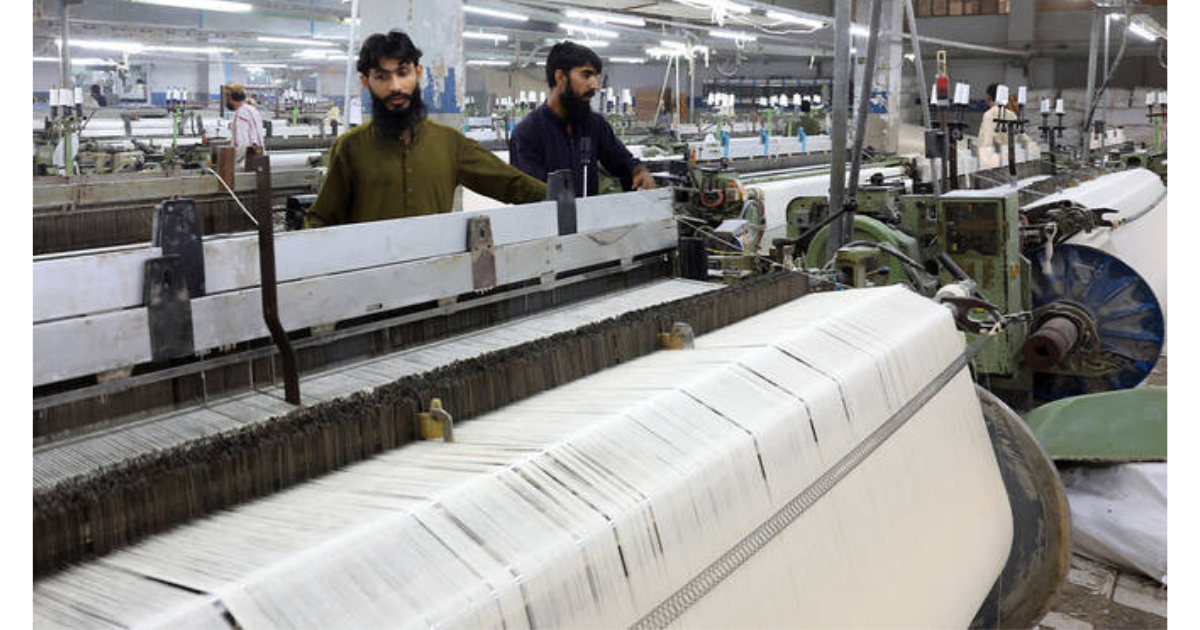
On June 12, Finance Minister Muhammad Aurangzeb stood before the National Assembly and did something Pakistan’s textile exporters had wanted for two years: he cut the advance tax on export proceeds from two percent to 1.25 percent. Forty-eight hours later, the Pakistan Textile Exporters Association called the FY27 budget “balanced and growth-oriented” — unusually warm language from a lobby that has spent the last two budget cycles describing its tax bill as existential. The applause came with a footnote, though. The industry’s oldest and loudest demand — restoration of the Final Tax Regime — still wasn’t granted.
The reaction fits a familiar pattern. Pakistan’s Rs18.77 trillion federal budget for 2026-27, presented under IMF-monitored fiscal targets and a four percent GDP growth ambition, handed exporters a mixed basket: a lower advance tax, an abolished Export Development Surcharge, and a sharply cheaper Export Facilitation Scheme financing rate. None of it touches the structural grievance that has defined textile-sector advocacy since 2024, when exporters were pulled out of the Final Tax Regime and pushed into the Normal Tax Regime — a shift business leaders in Karachi say replaced a flat, one-time levy with a system of assessments, audits and disputes. The stakes are large. Pakistan’s effective tax burden on exporters now runs to 68.27 percent, against a corporate tax rate of roughly 20 percent in Vietnam — the country Islamabad most often cites as the competitor it’s losing ground to.
The Final Tax Regime (FTR) was a system under which tax withheld on export proceeds — historically one percent — represented an exporter’s entire income tax liability for that revenue, with no further assessment, audit or year-end reconciliation required. Exporters were moved out of the FTR and into the Normal Tax Regime under the Finance Act 2024.
What the FY27 Budget Actually Gives Pakistan’s Textile Sector
For Pakistan’s textile sector, the FY27 budget reads less like a single sweeping reform than a bundle of smaller concessions, each aimed at a specific complaint exporters have raised for years. The headline measure is the cut to the advance tax on export proceeds, down from two percent to 1.25 percent. Crucially, though, it remains a minimum tax rather than a final one — exporters stay inside the Normal Tax Regime and still face year-end reconciliation, audits and the possibility of additional liability if their actual tax bill exceeds what’s withheld at source.
On the super tax, the government went further than most analysts expected. Aurangzeb told reporters at the post-budget press briefing that the levy would be abolished outright for “all exporters,” on the instructions of Prime Minister Shehbaz Sharif. Separately, businesses earning between Rs150 million and Rs500 million annually will see the super tax scrapped entirely, while firms above that threshold get a cut from 10 percent to eight percent. State Minister for Finance Bilal Azhar Kiyani later confirmed that the advance tax cut and the super tax changes were the “primary demands” of exporters and the formal industry — and that the government had heard the concerns of business chambers across the country.
The Export Facilitation Scheme, the mechanism that lets exporters bring in inputs duty-free against future shipments, also got considerably cheaper. The mark-up rate attached to EFS financing fell from 19 percent to 4.5 percent, and the government layered on an additional Rs70 billion subsidy for the Export Refinance Scheme — what Aurangzeb described as taking the scheme “to a different level.” The 0.25 percent Export Development Surcharge, a levy that PTEA Vice-Chairman Ameer Ahmad had specifically flagged as a drag on liquidity, was eliminated entirely.
The budget reached beyond exporters too, in ways that still touch firms with international receivables. The Capital Value Tax on holding foreign assets is proposed for abolition, and the withholding tax on international transactions made through debit and credit cards drops from five percent to 0.5 percent — a change aimed primarily at consumers but one that also trims costs for exporters who routinely pay for software subscriptions, trade-show travel and overseas sourcing trips on corporate cards.
Taken individually, none of these measures rewrites the sector’s economics. Taken together, PTEA Chairman Sohail Pasha argued they would strengthen investor confidence, encourage business expansion and generate employment — benefits he said would eventually filter down to lower-income households. It’s the kind of statement that would have been unthinkable from PTEA a year ago.
Final Tax Regime vs Normal Tax Regime: Why Exporters Still Want Out
What Is the Final Tax Regime for Pakistani Exporters?
The Final Tax Regime (FTR) was a system under which tax withheld on export proceeds — historically one percent — represented an exporter’s entire income tax liability for that revenue, with no further assessment, audit or year-end reconciliation required. Exporters were moved out of the FTR and into the Normal Tax Regime under the Finance Act 2024.
That single change explains most of the noise coming out of Karachi, Faisalabad and Lahore over the past month. Under the old system, an exporter who shipped $1 million of fabric paid the withholding tax on that shipment and was done. Under the new one, that same withholding tax is treated as a minimum — the exporter still files a full return, still faces FBR scrutiny on deductions and input costs, and still risks a higher final liability depending on margins, financing costs and a dozen other variables that have nothing to do with the export transaction itself.
Businessmen Group Chairman Zubair Motiwala and Karachi Chamber of Commerce President Rehan Hanif made the case bluntly ahead of the budget: the 2024 shift, they argued, was a short-term revenue measure that didn’t account for its effect on exports, investment, employment or, ultimately, the revenue collection it was meant to protect. They called for the FTR to be restored for all exporters at a flat rate of one percent.
The arithmetic behind that demand isn’t abstract. Pakistan’s textile sector carries an effective tax burden north of 68 percent, once advance taxes, withholding obligations and energy surcharges are stacked together — a figure that dwarfs the headline corporate rates exporters compete against in Vietnam, Bangladesh and India. Energy costs compound the gap: Pakistani manufacturers routinely cite per-unit electricity prices roughly double those paid by competitors across the border. None of the FY27 measures — not the advance tax cut, not the super tax abolition — change that underlying structure. They reduce the bill. They don’t change the regime.
That’s the distinction the All Pakistan Textile Mills Association has been pressing hardest in its own 20-point budget submission, which goes well beyond the FTR question alone. APTMA wants zero-rating restored across the textile value chain, refund processing compressed to 48 hours under the FASTER system, and the discretionary power to suspend or blacklist taxpayers stripped from field-level FBR officers entirely. Its own estimate is striking: clearing the refund backlog alone could unlock $3 billion to $4 billion in additional annual export capacity — a figure large enough that, if even roughly accurate, would rank among the cheapest stimulus measures available to a government chasing a four percent growth target.
What the Budget’s Silence on FTR Means for Pakistan’s Export Pipeline
The government’s choice — relief on rates and surcharges, silence on the regime itself — lands at a delicate moment. The Pakistan Textile Council told Prime Minister Shehbaz Sharif in a pre-budget letter that the country’s merchandise exports during the first 11 months of FY26 ran $1.66 billion below the same period a year earlier — a decline PTC Chairman Fawad Anwar called especially troubling given that global demand had, if anything, improved. His framing was pointed: stabilisation, he argued, isn’t the same thing as growth, and Pakistan’s next phase has to be built on exports rather than further taxation of the export sector.
Set against that backdrop, the FY27 budget’s selective generosity becomes easier to read. The government didn’t forget about the Final Tax Regime — it kept it, intact, for a different sector entirely. The 0.25 percent FTR on IT export earnings, due to expire on June 30, 2026, was extended for three years to 2029 on the prime minister’s direction, after the IT Industry Association warned that letting it lapse would threaten Pakistan’s bid to reach $15 billion in IT exports by 2030. The contrast is hard to miss: one export sector kept its predictable, one-line tax treatment, while the other got a rate cut inside a system its own representatives say generates exactly the disputes and delays the FTR was designed to avoid.
For textile exporters, the practical effect over the coming quarters will likely hinge less on the headline rates than on execution — whether the Rs70 billion EFS subsidy actually reaches mills at the 4.5 percent rate without the bureaucratic friction that has historically diluted such schemes, and whether the Rs327 billion in pending sales tax refunds start moving anywhere near the 72-hour statutory window APTMA has demanded. If refunds remain stuck at three to six months, the liquidity benefit of a lower advance tax gets absorbed almost immediately. Working capital freed up in one place simply gets retied in another.
There’s a financing-cost dimension to this too, and it compounds quickly. Industry participants describe textile mills as operating on EBITDA margins in the low single digits. At that level, the gap between paying mark-up at 19 percent versus 4.5 percent on EFS financing isn’t a marginal improvement. For mills running on tight contract margins with buyers in Europe and North America, it can be the difference between an order book that clears and one that doesn’t.
Textile’s relatively warm reception looks even more notable set against how other sectors read the same budget. The Pakistan Poultry Association said it had received no meaningful relief at all, warning that continued taxes on inputs — including a federal excise duty on every day-old chick and an 18 percent sales tax on processed chicken — would push up prices, discourage investment in modern processing and weaken food security. Plastic manufacturers voiced similar complaints about policy inconsistency. Against that backdrop, a sector that secured a super tax exemption, a cheaper EFS and an abolished surcharge came out comparatively well — even if its central ask went unanswered.
The Dissenting View: A Budget Without an Export Roadmap
Not every business body shared PTEA’s enthusiasm, and even among exporters, the welcome came qualified. FPCCI President Atif Ikram Sheikh acknowledged the macro picture had genuinely improved — GDP growth of 3.7 percent, a fiscal deficit down to 0.7 percent of GDP, and a 23 percent fall in public debt-servicing costs — but he was unambiguous about the FTR decision. He criticised the government’s choice not to restore it, arguing that converting the withholding rate into a minimum tax still leaves exporters inside the normal tax framework they’ve spent two years trying to escape.
Other voices went further, framing the entire budget as directionless on industry. Beyond textiles, business leaders across sectors offered only a cautious welcome to the budget overall, describing the relief as selective and warning that elevated energy costs would continue to constrain growth regardless of tax tweaks. The Businessmen Group’s pre-budget warning — that the 2024 shift to the Normal Tax Regime had already proven damaging to exports, investment, employment and revenue alike — reads, in hindsight, like a forecast the FY27 budget only partially answered.
Yet there’s a steel-man case for the government’s approach. Pakistan is mid-program with the IMF, revenue targets are binding, and a wholesale return to the FTR — which effectively caps tax liability regardless of an exporter’s actual profitability — is exactly the kind of revenue-narrowing measure the Fund’s conditions are designed to discourage. Cutting rates while holding the structure constant may simply be the only politically available middle ground between what the Fund wants and what the lobby is asking for.
A Budget That Splits the Difference
What the FY27 budget ultimately reveals isn’t a government turning against its export sector. It’s a government negotiating between two creditors it can’t fully satisfy at once. The IMF wants a broader, more enforceable tax base; the textile lobby wants the predictability that only a final, one-line levy can provide. Aurangzeb’s package splits the difference: real money moves toward exporters, but the architecture both the FPCCI and APTMA say is the actual problem remains untouched.
PTEA’s warm reception suggests relief, after two punishing years, is being taken wherever it can be found. APTMA’s 20-point list and the Businessmen Group’s renewed FTR demand suggest the sector isn’t done asking for the rest. Whether Pakistan gets its $3 billion to $4 billion in unlocked export capacity from faster refunds, or simply absorbs another year of 68 percent effective taxation with marginally better numbers, depends on decisions that never made it into this budget speech at all.
Discover more from The Economy
Subscribe to get the latest posts sent to your email.



Bitcoin is doing something it hasn’t done cleanly all year: holding a range. After a brutal first half of 2026 and a sharp recovery through the summer, BTC has settled into the high-$70,000s heading into a week that could reshape U.S. crypto market structure for good. Here’s the full picture across Bitcoin, the major altcoins, and the DeFi regulatory fight that’s about to come to a head.
Bitcoin: From 21-Month Low to Cautious Recovery
Bitcoin’s 2026 has been a genuine round trip. After topping out at an all-time high near $128,200 in October 2025, BTC fell to roughly $58,000 by late June 2026 — a 21-month low — before staging a real recovery, climbing about 37% to touch $80,000 by late August, according to KuCoin’s market roundup. As of mid-September 2026, Bitcoin was trading in the $77,000–$79,000 range, per CoinDesk and Fortune’s daily price tracker, still roughly 37–39% below its October 2025 peak.
Bitcoin’s 2026 price arc:
| Date | Price | Note |
|---|---|---|
| Oct 6, 2025 | ~$128,200 | All-time high |
| Late June 2026 | ~$58,000 | 21-month low |
| Late August 2026 | ~$80,000 | +37% off the bottom |
| Sept 8, 2026 | $78,346 | |
| Sept 9, 2026 | $78,737 | Lost the $80,000 level after holding it for four sessions |
| Sept 11, 2026 | ~$77,200–$77,300 | Recovering as zcash-related leverage unwinds |
The macro backdrop is the dominant driver right now, more than crypto-native news. The Federal Reserve, under Chair Kevin Warsh, has held its policy rate at 3.50%–3.75% for five consecutive meetings in 2026 without a single cut, with the median 2026 dot plot sitting at 3.8% — pointing toward continued tightness rather than the easing cycle many crypto investors were positioned for, according to KuCoin’s analysis. August’s core CPI print, released mid-September, rose a faster-than-forecast 0.3% month-on-month, though the annual pace of 2.4% was the slowest since early 2021, per CoinDesk market coverage — a mixed signal that has kept the market betting on the possibility of a rate hike rather than a cut in the near term, an unusual dynamic for crypto markets historically primed for rate-cut tailwinds.
Altcoins: Ethereum, Solana, and XRP Hold Steady Amid Regulatory Noise
The broader altcoin market has been comparatively rangebound. As of September 11, 2026, Ethereum traded around $2,539, up 2.8% over 24 hours; XRP sat near $1.36–$1.39, roughly flat to slightly down; and Solana traded around $101–$104, according to Investing News Network’s crypto recap.
Major token snapshot (Sept 8–11, 2026):
| Token | Price | 24h Move |
|---|---|---|
| Bitcoin (BTC) | ~$77,000–$79,000 | Mixed |
| Ethereum (ETH) | ~$2,460–$2,540 | +2.8% (Sept 11) |
| XRP | ~$1.36–$1.39 | Roughly flat |
| Solana (SOL) | ~$101–$104 | +1% (Sept 11) |
| BNB | Under pressure | -3.4% in one session |
| Dogecoin (DOGE) | Under pressure | -4.3% in one session |
The ETF complex has meaningfully broadened beyond Bitcoin this year. Solana and XRP-linked ETF products each entered September 2026 with assets near $1.5 billion, according to KuCoin — a sign that institutional demand for regulated altcoin exposure is no longer a Bitcoin-only phenomenon, even as individual token prices remain well below their 2025 highs.
DeFi’s “Killer Use Case”: Institutional Credit
The most consequential DeFi development this month has come from the XRP Ledger rather than Ethereum. According to CoinMarketCap’s coverage of comments from Ripple’s product head, institutional credit is emerging as DeFi’s potential “killer use case” — new XRP Ledger amendments (XLS-65 and XLS-66) enable pooled vaults and fixed-term, uncollateralized lending, with underwriting handled off-chain while the loans themselves settle on-chain. The pitch is straightforward: bring institutional-grade lending mechanics onto a public ledger without forcing institutions to accept crypto-native over-collateralization requirements that don’t match how traditional credit underwriting works.
This is part of a broader pattern of DeFi maturing toward institutional rails rather than remaining a purely retail, yield-farming-driven segment. Ripple’s own treasury business — following its $1 billion acquisition of GTreasury in October 2025 and the April 2026 launch of Digital Asset Accounts — is layering AI-driven policy interpretation and analytics on top of these on-chain lending primitives, aimed squarely at corporate finance teams rather than retail DeFi users.
The Regulatory Cliffhanger: CLARITY Act Vote on September 15
The single biggest near-term catalyst for the entire crypto market is not a price level — it’s a Senate procedural vote. Senate Republicans released a revised, 630-page version of the Digital Asset Market Clarity Act on September 10, 2026, ahead of a pivotal procedural vote scheduled for September 15, according to Investing News Network. The updated bill specifically targets “decentralized-in-name-only” (DINO) protocols — platforms that claim decentralization but remain effectively controlled by an individual or corporate entity — requiring them to register with the CFTC.
Market participants remain skeptical the bill actually becomes law in 2026. CNBC reported that SALT CEO John Darsie told the Wyoming Blockchain Symposium in August that he is “a bit pessimistic about the Clarity Act being passed,” citing the difficulty of moving major legislation heading into midterm elections. The bill already missed one legislative window when the Senate adjourned for August recess without a vote.
Corporate and Institutional Flows to Watch
Beyond regulation, institutional capital continues flowing into crypto infrastructure. Nasdaq Ventures announced a $100 million investment in Payward, the parent company of Kraken, valuing the exchange at $21 billion, according to Investing News Network’s recap — one of several signs that traditional financial infrastructure players are taking direct equity stakes in crypto exchanges rather than simply building competing products.
Final Verdict
The crypto market’s “daily outlook” for mid-September 2026 is really a story about two collisions happening at once: a Federal Reserve that refuses to deliver the rate-cut tailwind crypto bulls were counting on, and a Senate that is finally forced to vote on the market-structure legislation the industry has wanted for years, with genuine uncertainty about whether it passes. Bitcoin’s technical picture — holding above its 200-day EMA near $72,800 while losing the psychologically important $80,000 level — reflects that tension directly. Short-term, expect continued chop around the $75,000–$82,000 range pending the September 15 CLARITY Act vote and the next FOMC decision; the DeFi institutional-credit narrative and altcoin ETF expansion remain the more durable, multi-quarter stories worth tracking independent of daily price action.
Discover more from The Economy
Subscribe to get the latest posts sent to your email.
Malaysia delivered one of the standout growth surprises among Southeast Asian economies this year, with confirmed second-quarter GDP data showing the economy accelerated to 6% — comfortably ahead of consensus and its own first-quarter pace — powered by a record trade surplus and a semiconductor and AI-hardware export boom that has become the defining theme of the region’s 2026 growth story.
Growth Accelerates, Beating Consensus
Bank Negara Malaysia confirmed that the Malaysian economy grew 6% in the second quarter of 2026, up from 5.4% in the first quarter, driven by continued domestic demand and robust exports. The print beat consensus estimates of 5.8%, a margin significant enough to move currency markets on the announcement.
On the external side, exports accelerated on continued strength in electrical and electronics products and sustained expansion in services, alongside a rebound in liquefied natural gas exports and non-E&E manufacturing products. Household spending was supported by steady income growth and ongoing policy support, while investment growth was underpinned by continued spending on structures, machinery and equipment.
A Record Trade Surplus
The external numbers are, if anything, even more striking than the growth print. Malaysia’s exports surged 27.5% in the first half of 2026 while imports rose 16.9%, widening the trade surplus to RM147.1 billion from RM56.6 billion a year earlier. First-half trade rose 22.4% to a record RM1.8 trillion, according to separate commentary citing government data — a scale of expansion that puts Malaysia among the fastest-growing trade economies in Asia this year.
Kenanga Investment Bank attributed the resilience directly to the AI investment cycle, noting that Malaysia’s exposure to softer global demand is cushioned by the electrical and electronics and AI upcycle, particularly semiconductors, servers, and data-centre infrastructure. The bank added that hyperscaler capital expenditure and inventory normalisation across advanced economies should keep Malaysia’s export demand supported through the rest of 2026.
What This Means for the Ringgit
Currency strategists moved quickly to recalibrate their near-term ringgit forecasts on the data. One analyst told Bernama the ringgit is expected to trade around RM4.07 to RM4.08 with an upside bias in the immediate aftermath of the GDP release, while a separate analysis projected the ringgit trading within a 3.90-4.20 range against the US dollar through the second half of 2026, underpinned by Bank Negara Malaysia’s decision to hold its Overnight Policy Rate steady at 2.75%.
Juwai IQI global chief economist Shan Saeed argued the ringgit’s case rests less on raw momentum and more on policy credibility and external ballast — Bank Negara’s consistency in balancing price stability, domestic growth, and orderly financial conditions without defending an explicit exchange-rate target.
That said, the ringgit’s year-to-date performance has been more modest than the trade data alone might suggest: on a year-to-date basis through mid-August, the ringgit was down about 0.9% against the US dollar, with its nominal effective exchange rate down roughly 1%, reflecting the broader tug-of-war between Malaysia’s strong fundamentals and global factors including shifting US monetary policy expectations and Middle East-linked risk aversion.
Current Account Set to Stay Comfortably in Surplus
Looking further ahead, Kenanga IB projects Malaysia’s current account surplus will remain firm at 2.1% of GDP in 2026, with tourism and digital-infrastructure spending expected to lift services exports even as costlier energy and softer global demand crimp some parts of world trade. The bank cautioned that a firmer ringgit could nudge imports higher and that energy costs remain a “swing factor,” but expects the external balance to stay comfortably positive regardless.
Inflation Pervasiveness on the Rise
Not every indicator in the release was unambiguously positive. Inflation pervasiveness — the share of CPI items registering monthly price increases — rose to 45.5% in the second quarter from 38.3% in the first, close to its historical average of 45.6%, driven mainly by a sharp increase in April before moderating in May and June. That pattern suggests price pressures broadened out even as they moderated somewhat by quarter-end — a dynamic the central bank will need to watch closely alongside its currently steady policy stance.
Key Takeaways
- Malaysia’s economy grew 6% in Q2 2026, up from 5.4% in Q1 and beating the 5.8% consensus estimate.
- Exports surged 27.5% in H1 2026, pushing the trade surplus to a record RM147.1 billion and H1 trade to RM1.8 trillion.
- The AI-hardware and semiconductor export cycle, alongside a rebound in LNG shipments, is the key driver behind Malaysia’s outperformance.
- The ringgit is expected to trade in a 3.90-4.20 range against the US dollar through 2H26, supported by Bank Negara Malaysia’s steady policy stance.
- Inflation pervasiveness rose to 45.5% in Q2, a metric worth watching even as headline growth impresses.
Frequently Asked Questions
How fast did Malaysia’s economy grow in Q2 2026? Malaysia’s GDP grew 6% year-on-year in the second quarter of 2026, up from 5.4% in the first quarter and above the 5.8% consensus forecast.
What is driving Malaysia’s trade surplus to record levels? A 27.5% surge in exports in the first half of 2026 — led by electrical and electronics products, semiconductors, and a rebound in LNG shipments — pushed the trade surplus to a record RM147.1 billion.
What is the ringgit’s outlook for the rest of 2026? Analysts expect the ringgit to trade within a 3.90-4.20 range against the US dollar through the second half of 2026, supported by Malaysia’s strong export performance and Bank Negara Malaysia’s steady policy rate.
Discover more from The Economy
Subscribe to get the latest posts sent to your email.
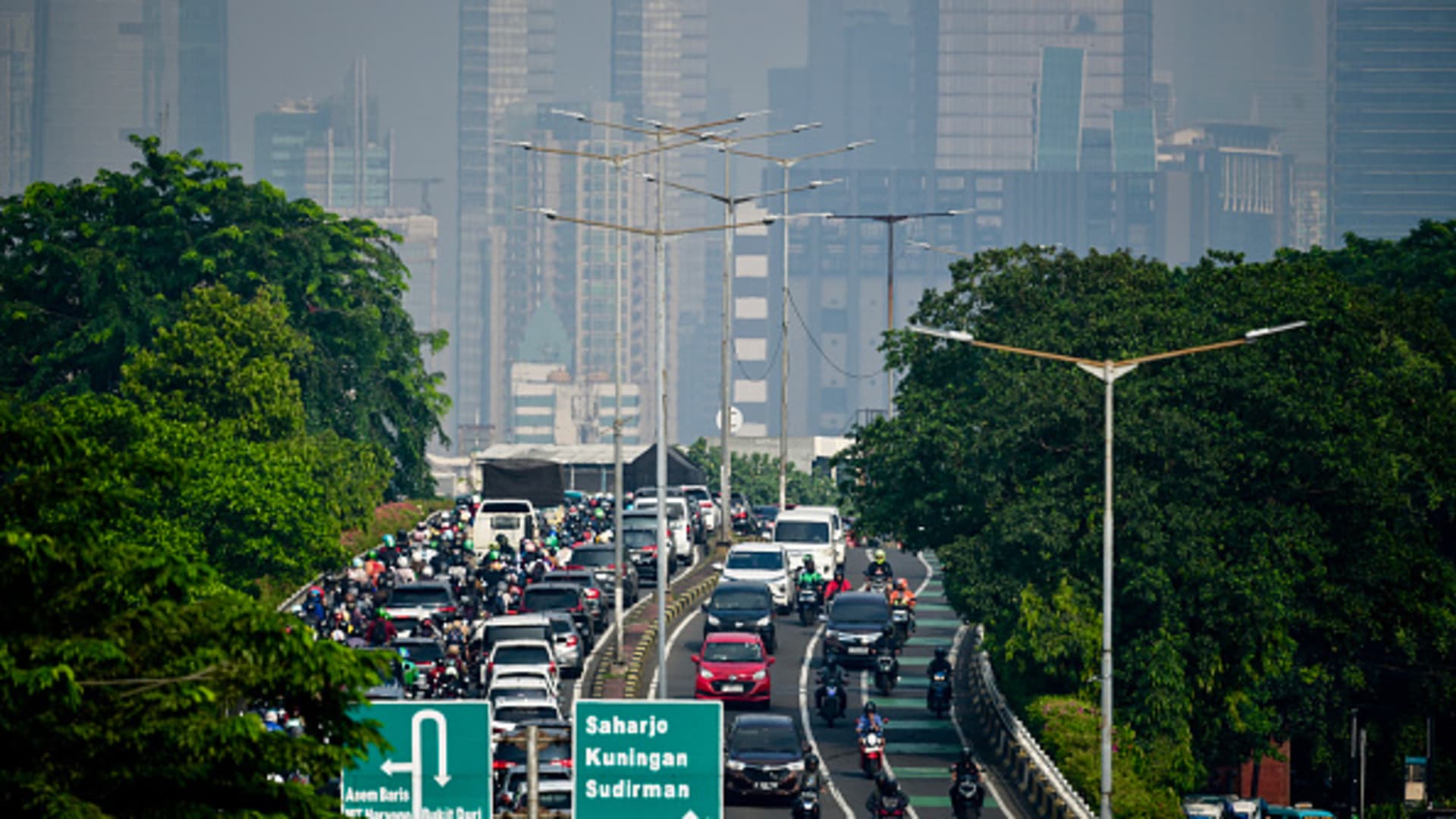
Indonesia’s economy expanded 5.29% year-on-year in the second quarter of 2026, comfortably beating forecasts and extending a run of growth that has outpaced most consensus estimates for the year (Business Indonesia). On paper, it’s a strong number for Southeast Asia’s largest economy. Underneath it, the picture is considerably more complicated.
A Growth Beat With an Asterisk
The Q2 print builds on 5.61% year-on-year growth in the first quarter — itself an acceleration from 4.87% in 2025 — driven primarily by household expenditure, which grew 6.44% year-on-year and accounted for more than half of total growth, alongside gross fixed capital formation up 6.04% (Eurasia Review). Manufacturing, mining, and construction all contributed positively.
Most international lenders, including the OECD, still expect full-year 2026 growth to land closer to 4.7%–5.0%, below Jakarta’s own targets, citing a softening labor market, weakening consumer confidence, and contracting retail sales that emerged in the second quarter despite the headline GDP beat (Indonesia Investments).
The Rupiah Problem
The disconnect between strong headline growth and investor caution centers on the rupiah, which has repeatedly hit record lows in 2026 despite active intervention by Bank Indonesia. A research note from Krungsri Bank describes a genuine “confidence crisis”: net foreign direct investment contracted 26% year-on-year in the first quarter of 2026, suggesting the currency weakness has moved beyond financial markets and into real investment decisions (Krungsri).
Bank Indonesia has responded with a mix of rate policy and direct currency-market intervention. The central bank held its benchmark rate steady at 4.75% through much of the first half of 2026, and in March introduced new rules requiring documentation for foreign-currency purchases above $50,000 per party per month, explicitly aimed at curbing speculative activity in the rupiah (Trading Economics). BI Governor Perry Warjiyo said the bank would “continue to optimize its policy mix to safeguard external resilience.”
What’s Driving Investment Flows
Despite the FDI contraction narrative, sector-level data tells a more nuanced story. Indonesia’s textile industry alone saw investment rise by double digits in the first half of 2026, reaching IDR 11.4 trillion, while imports surged 34.27% in June, driven largely by raw materials — typically a leading indicator of continued industrial activity rather than a slowdown (Business Indonesia). Special economic zones have also continued attracting capital in transport, logistics, telecommunications, and mining, according to the same outlook report.
The Structural Challenge
The deeper issue, as one Eurasia Review analysis by retired Indonesian diplomat Simon Hutagalung put it, is not whether Indonesia is in crisis — it isn’t — but whether Jakarta can convert short-term growth into durable growth. Job creation has increasingly concentrated in lower-value-added sectors, with many new positions failing to deliver middle-income wages even as real wage growth trends downward, according to the Business Indonesia outlook.
That structural weakness is precisely what worries the OECD and other lenders more than the quarterly growth print. A 5%-plus GDP number that rests on household consumption propped up by social assistance, rather than productivity-driven wage gains, is a different kind of growth story than one built on rising real incomes.
What to Watch
The rupiah’s trajectory through Q3 will be the clearest signal of whether investor confidence is stabilizing. Bank Indonesia’s next policy meetings will test whether the central bank has room to ease rates to support growth, or whether currency defense continues to take priority. A sustained rebound in FDI — rather than just portfolio inflows — would be the strongest evidence yet that Indonesia’s “stable yet fragile” 2026 story is tilting back toward stability.
How much did Indonesia’s economy grow in Q2 2026?
Indonesia’s GDP grew 5.29% year-on-year in Q2 2026, beating forecasts, even as the rupiah remained under pressure and net foreign direct investment fell 26% year-on-year in the first quarter.
Discover more from The Economy
Subscribe to get the latest posts sent to your email.

Crypto Daily Outlook: Bitcoin, Altcoins, and the Future of Decentralized Finance

Anthony Scaramucci’s Crypto Prediction: Why MicroStrategy’s Move Is Bitcoin’s “iPhone Moment”

Best Dividend Stocks 2026: European & Asian Blue Chips

World Bank & IMF Reports 2026: Why the “3% Growth” Consensus Is Actually a Debate

Elon Musk’s Boring Company Hits $23B Valuation After UAE-Led $3 Billion Series D

Middle East War Economics 2026: Oil Prices & Energy Markets

PSX Forecast 2026: KSE-100, IMF Reviews & Geopolitics

Asian Markets Outlook 2026: China, Japan & Singapore Stocks

Global Economy 2026: IMF Growth, Inflation & Private Credit

Current Account Deficit (CAD) : Causes and Impact

Balance of Payments (BOP)

The Falkland Islands Dispute: Sovereign Wealth, Offshore Drilling, and Market Impacts

Gross Domestic Product (GDP): Nominal vs. Real

What is Inflation and the Consumer Price Index (CPI)?

State Farm’s $5B Dividend 2026: Who Qualifies & Payout Dates

US-China Relations in Q3 2026: Trade Tariffs and Supply Chain Risks

Gold’s Wild 2026: From a Record $5,600 Peak to a 24% Crash and Back Toward $4,500

Oil Surges as Strait of Hormuz Traffic Collapses Again

The Rocket That Won’t Quit: Inside SpaceX’s Falcon 9 Launch Machine

Bank of England Set to Hold Rates Through Year-End, Reuters Poll Shows

SpaceX Starship Flight 14: First Orbital Attempt & Starlink V3 Launch Explained

The 2026 Crypto Regulatory Shift: What It Means for Institutional Investors

AI Chip Stocks 2026: The Best Semiconductor Investments Beyond Marvell

Retail Earnings Week: What Home Depot, Target & Walmart Reveal

AI-Powered Training: The Next Multi-Billion Dollar Ecosystem in Fitness

Top 30 Stocks for Investment in PSX for Massive ROI in 2026

Russia’s Black Sea Oil Exports Fall for a Fifth Straight Week

Tween Back-to-School Trends 2026: What’s Driving the $85B Season
-

 Markets & Finance8 months ago
Top 15 Stocks for Investment in 2026 in PSX: Your Complete Guide to Pakistan’s Best Investment Opportunities
-

 Analysis7 months ago
Johor’s Investment Boom: The Hidden Costs Behind Malaysia’s Most Ambitious Economic Surge
-

 Analysis7 months ago
Top 10 Stocks for Investment in PSX for Quick Returns in 2026
-

 Analysis7 months ago
Brazil’s Rare Earth Race: US, EU, and China Compete for Critical Minerals as Tensions Rise
-

 Banks8 months ago
Best Investments in Pakistan 2026: Top 10 Low-Price Shares and Long-Term Picks for the PSX
-

 Investment8 months ago
Top 10 Mutual Fund Managers in Pakistan for Investment in 2026: A Comprehensive Guide for Optimal Returns
-

 Global Economy9 months ago
15 Most Lucrative Sectors for Investment in Pakistan: A 2025 Data-Driven Analysis
-

 Global Economy9 months ago
Pakistan’s Export Goldmine: 10 Game-Changing Markets Where Pakistani Businesses Are Winning Big in 2025