
AI
Japan’s Nikkei Scales Record Peak as AI Shares Track US Chip Rally

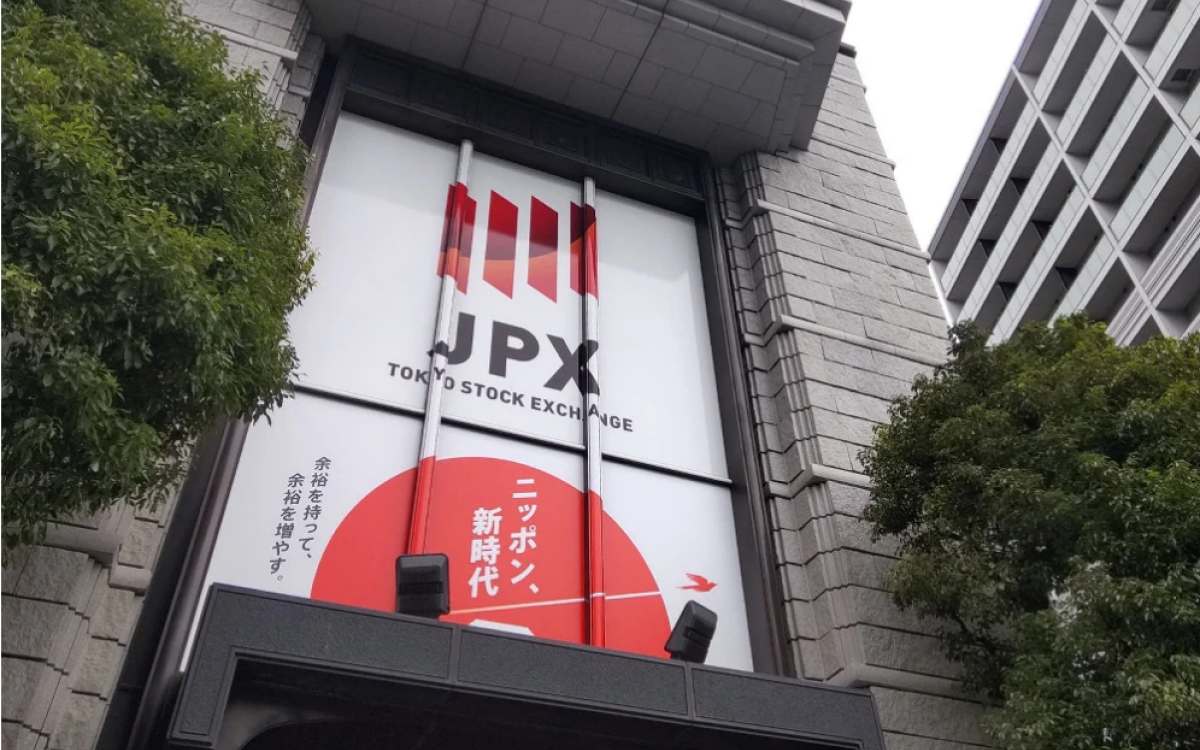
Tokyo’s trading floors closed Friday on a number nobody had typed into a terminal before: the Nikkei 225 punched through to a fresh all-time high, riding the same current that’s been lifting Tokyo Electron, Advantest, and Kioxia for weeks. The catalyst, again, was Washington and Santa Clara — a US semiconductor rally that’s turned the Philadelphia Semiconductor Index into one of 2026’s best-performing benchmarks and dragged Asian chip suppliers along for the ride. It’s the kind of session that looks routine on a chart and isn’t routine at all once you trace where the money’s actually coming from.
What’s unusual isn’t the record itself — Japan’s benchmark has set more than a dozen records since January. It’s that the rally keeps finding new legs even as the index has already climbed nearly a third this year, even as a tightening Bank of Japan should, in theory, be pulling some air out of the balloon. That tension — record highs against a backdrop of rising rates and a still-jittery Middle East — is the real story underneath Friday’s headline.
The Macro Backdrop: A Banner Year Meets a Tightening Cycle
Context matters here, because this isn’t a one-day pop. Japan’s stock market has been up nearly 33 percent in 2026, a run that Al Jazeera attributed directly to investor enthusiasm over the AI boom driving Asian equity markets higher. The Nikkei first cleared 60,000 in April, broke 67,000 and then 68,000 within 48 hours of each other in early June, and has kept grinding higher since.
That run is happening against a backdrop most strategists would have called bearish for equities a year ago. The Bank of Japan raised its policy rate by 25 basis points to 1.00 percent on June 16 — the highest level since September 1995 — in a 7-1 vote, with the bank’s statement noting it would keep tightening “in response to developments in economic activity and prices as well as financial conditions,” per the Bank of Japan’s official policy statement. Higher rates typically squeeze equity valuations and strengthen the yen, both of which should weigh on exporters. They haven’t — not yet, anyway, and not enough to dent the AI-chip narrative carrying the index.
Friday’s gain extended a pattern that’s become familiar to anyone tracking the Tokyo Stock Exchange this quarter: Wall Street’s chip names rally overnight, and Japan’s semiconductor-equipment suppliers — the companies that build the machines rather than the chips themselves — open higher the next morning. On June 18, US chip shares extended a Wednesday surge so sharply that the Philadelphia Semiconductor Index (SOX) advanced more than 6 percent to a record high, with Nvidia topping S&P 500 gainers on a points basis and Intel jumping on news of an Apple manufacturing partnership, according to Bloomberg.
That overnight strength is exactly what’s been propelling Tokyo. Earlier in June, when the Nikkei first crossed 68,000, Tokyo Electron soared as much as 14 percent in a single session and Advantest climbed more than 5 percent, with the two stocks together lifting the index by nearly 840 points, according to Business Recorder’s market report. Kioxia Holdings, the memory-chip maker, jumped past the 80,000-yen mark for the first time after announcing it would begin paying dividends from fiscal 2027 — a signal of confidence that briefly pushed it past Toyota as Japan’s second-most valuable company.
A few numbers tell the shape of this rally:
- Tokyo Electron has repeatedly posted the single largest point contribution to Nikkei gains during AI-driven sessions, surging more than 13 percent in at least two separate sessions in June alone.
- SoftBank Group, through its AI infrastructure bets, has been a recurring leader on big-gain days, at one point jumping 6.4 percent in a single session.
- AMD shares are up more than 130 percent year-to-date in the US, a rally so steep it’s pushed the stock’s forward price-to-earnings ratio to roughly 84, according to an analysis published by Intellectia.
The mechanism connecting these two markets isn’t mysterious. Japan doesn’t design the chips going into the world’s data centers, but it makes the equipment that fabricates and tests them. Tokyo Electron’s lithography and deposition tools, Advantest’s chip testers — these sit upstream of every GPU shipped by Nvidia or AMD, which means Japanese equipment stocks function almost as a derivative bet on US AI capital expenditure.
Why Japan, Specifically, Keeps Winning the AI Trade
Is Japan’s Stock Rally Just a Proxy for US AI Spending?
Largely, yes — but with a structural twist. Japan supplies the semiconductor-manufacturing equipment that builds AI chips, not the chips themselves, so its market rises on capital-expenditure announcements from US hyperscalers rather than on AI software revenue. A weak yen amplifies the effect by inflating yen-denominated profits.
That capital-expenditure wave is enormous and getting bigger. US tech giants are expected to spend roughly $800 billion on AI-related capital investment in 2026, according to Goldman Sachs estimates cited by AI Business Weekly, and Alphabet alone announced plans to sell $80 billion worth of shares to help fund expected capital expenditures of $180–190 billion this year. Money flowing at that scale has to land somewhere in the physical supply chain, and a disproportionate share of it lands on machines stamped “Made in Japan.”
There’s also a currency mechanic worth isolating. Khoon Goh, head of Asia research at ANZ, told Al Jazeera that investor enthusiasm over the AI boom is helping drive Asian equity markets higher, with the effect amplified by a weak yen that boosts the yen-value of exporters’ overseas earnings. The yen has drifted toward the 160-per-dollar zone several times this year — a level that has historically drawn intervention attention from Japanese authorities, though none has materialized through this latest leg of the rally.
That said, the rally hasn’t always been broad. Back in April, when the Nikkei first cleared 60,000, only 17 percent of roughly 1,600 TSE Prime Market stocks were advancing while 78 percent declined — a narrowness flagged at the time by Gotrade’s market analysis as a caution sign for investors chasing the index at fresh highs. The concentration has eased somewhat since, but the Nikkei’s gains remain disproportionately dependent on a handful of chip-equipment names.
The most immediate consequence sits with the Bank of Japan itself. A central bank trying to normalize policy after eight years of negative rates would generally welcome a strong stock market as a sign its tightening isn’t strangling growth. But the BOJ’s own June statement, released through its official policy communication, flagged that it’s watching Middle East-driven energy costs as closely as equity strength — a reminder that the rally is unfolding alongside, not instead of, real macro risk. Governor Ueda’s board has already cut its FY2026 growth forecast to 0.5 percent from 1 percent while raising its core inflation outlook, a combination some economists have described as edging toward stagflation.
For semiconductor-equipment suppliers themselves, the implications are concrete and near-term. Tokyo Electron and Advantest are seeing order books extend further into 2027 as hyperscalers lock in capacity for next-generation AI accelerators. That’s good news for Japan’s industrial base and for the smaller suppliers feeding into Tokyo Electron’s and Advantest’s own supply chains — material handlers, precision component makers, testing-software vendors — many of whom are seeing their first sustained capital-spending cycle in years.
The risk runs the other direction too. Concentration risk is the term institutional investors keep returning to. When two or three names — Tokyo Electron, Advantest, occasionally SoftBank — are responsible for the bulk of an index’s daily point movement, the Nikkei’s headline strength can mask weakness everywhere else. That’s precisely the pattern Gotrade flagged when the rally was at its narrowest in April, and it hasn’t fully disappeared.
There’s a third-order effect worth watching: sovereign and pension fund allocators. Japan’s Government Pension Investment Fund and similar large allocators rebalance periodically against benchmark weightings, meaning sustained Nikkei strength mechanically increases their exposure to a small cluster of AI-adjacent names — concentrating systemic risk in portfolios that are supposed to be diversified by design.
Not every analyst is convinced this rally has room left to run. The clearest warning came earlier in June, when Broadcom posted record quarterly revenue of $22.2 billion — up 48 percent year-over-year — and the market punished it anyway. Guidance disappointed investors enough that the SOXX semiconductor ETF plunged roughly 10 percent in a single session on June 6, its worst day in years, dragging the Nasdaq down 4 percent in its worst session since April 2025. Chip names rebounded within days — Intel gained over 11 percent, Micron nearly 10 percent — but the episode demonstrated how quickly sentiment can reverse when a single bellwether’s forward guidance falls short of sky-high expectations.
Valuation skeptics point to the same numbers. AMD’s run to a forward P/E above 84 “leaves little room for disappointment,” as the Intellectia analysis put it — a description that could just as easily apply to several Japanese equipment names now trading at multiples that assume the AI capital-expenditure boom continues uninterrupted through 2027 and beyond.
There’s also the unresolved geopolitical overhang. Iran’s mining of portions of the Strait of Hormuz earlier this year, confirmed publicly by US officials, remains a live risk for energy-import-dependent Japan. A sustained disruption to oil flows would hit Japanese corporate costs directly — the exact scenario the Bank of Japan cited when raising its inflation forecast in April. Bulls counter that AI infrastructure spending operates on multi-year contracts largely insulated from short-term oil shocks; skeptics note that equity markets rarely wait for contracts to actually break before repricing the risk.
What Friday’s record really confirms is how thoroughly the AI capital-expenditure cycle has rewired the relationship between Wall Street and Tokyo. The Nikkei isn’t moving on Japanese corporate earnings, Japanese consumer spending, or even Japanese trade policy in any direct sense — it’s moving on Nvidia’s order book and Alphabet’s capex guidance, transmitted through a handful of equipment makers that happen to be listed in Tokyo. That’s either a sign of a durable, multi-year industrial cycle finally rewarding patient capital, or it’s a market that’s confused a single sector’s spending spree for broad-based economic strength. Both readings can be true at once, and the index that keeps setting records doesn’t much care which one wins the argument.
Tokyo’s traders will be back at their screens Monday, watching the same overnight chip tape they’ve watched all year.
Discover more from The Economy
Subscribe to get the latest posts sent to your email.


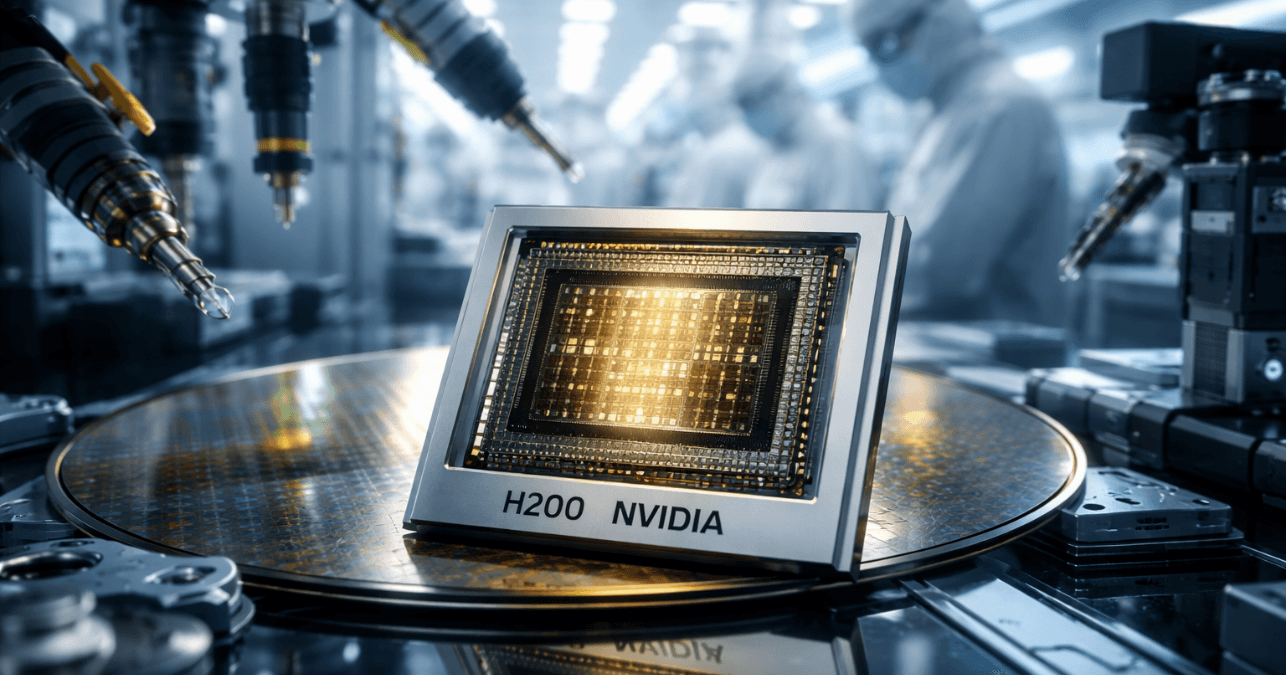
Nvidia has begun shipping its advanced H200 AI chips to China under a reversed US export policy, but the volumes moving so far are, in the words of a senior Commerce Department official, “trivial” — even as Chinese technology firms have collectively ordered more than two million units against a global Nvidia inventory of roughly 700,000.
A Policy Reversal That Remains Mostly Symbolic
Under Secretary of Commerce for Industry and Security Jeffrey Kessler told Congress on 14 July that H200 shipments to China remain minimal despite roughly $10 billion in approved licenses, according to TechTimes. Washington has approved sales to roughly ten Chinese firms — including Alibaba, Tencent, ByteDance, and JD.com — with each cleared buyer permitted to purchase up to 75,000 chips through Nvidia directly or via authorised distributors Lenovo and Foxconn.
The scale of pent-up Chinese demand dwarfs what can actually be delivered. Chinese technology companies have collectively ordered more than two million H200 chips for 2026, against Nvidia’s total global inventory of roughly 700,000 units — a supply gap severe enough to force emergency production discussions with TSMC to restart manufacturing of the older Hopper-generation chip architecture, according to the same TechTimes reporting.
Bipartisan Political Backlash in Washington
The limited shipments have nonetheless triggered a sharp political divide in Congress. Democratic Representative Gregory Meeks, the top Democrat on the House Foreign Affairs Committee, accused the administration of weakening safeguards by approving advanced AI chip licenses, describing export controls as being used as a bargaining chip in broader trade negotiations with China. Republican Representative Bill Huizenga separately criticised the Commerce Department over a reported loophole allowing Chinese subsidiaries operating outside mainland China to acquire the more advanced Blackwell-generation chips despite restrictions targeting the mainland market.
The Policy Architecture Is Genuinely Contradictory
The current framework traces back to a December 2025 announcement by President Trump permitting H200 sales to China, formally codified by the Commerce Department in January 2026 alongside conditions experts have called self-contradictory, according to detailed policy analysis from Semiconductor Insight. Those conditions include a 25% tariff on advanced AI chips meeting specific performance thresholds under Section 232 of the Trade Expansion Act, case-by-case licensing replacing a prior blanket presumption of denial, mandatory end-use certifications, and a volume cap estimated at roughly one million H200 units — about half of what Chinese buyers have already ordered.
The buyer list has continued to expand in recent weeks. Newly cleared purchasers include a unit of telecom equipment maker ZTE and a server assembly firm, alongside a cloud computing subsidiary of Kingsoft cleared to purchase competing AMD chips, according to Technetbook.
Why the Ambiguity Itself Is Costly
Perhaps the most consequential effect of the policy has been on long-term planning rather than near-term volume. Nvidia has not recovered the Chinese customer base it lost after roughly a year of regulatory uncertainty, as export controls introduced in 2022 and escalated under both the Biden and Trump administrations had already pushed the company’s China market share from roughly 95% toward zero, according to Semiconductor Insight’s analysis. Customers requiring long-term procurement certainty are reportedly reluctant to commit against a policy framework that could reverse again within months — while a bipartisan group of lawmakers has separately pushed Commerce Secretary Howard Lutnick and Secretary of State Marco Rubio toward a complete country-level ban on chipmaking equipment exports to China.
What It Means for Investors and the AI Supply Chain
For semiconductor investors, the H200 saga illustrates how thoroughly US-China technology policy has become entangled with broader trade diplomacy — a dynamic that leaves Nvidia’s China revenue outlook genuinely unpredictable regardless of near-term shipment volumes. For TSMC and its packaging partners, the emergency restart of Hopper-generation production lines signals capacity strain that may persist regardless of how the export-control debate ultimately resolves.
What to Watch
The Commerce Department’s enforcement posture on the reported Blackwell subsidiary loophole, along with any Congressional movement toward the proposed blanket equipment-export ban, will be the clearest signals of whether Washington’s China chip policy is heading toward further liberalisation or a renewed crackdown.
Discover more from The Economy
Subscribe to get the latest posts sent to your email.
AI
Anthropic Offers Up to $600,000 Salary for Critical IPO Role as AI Giant Prepares for Wall Street Debut

As anticipation builds around what could become one of the largest technology listings in recent history, artificial intelligence company Anthropic is offering an eye-catching base salary of up to $600,000 for a key investor relations position, underscoring how seriously the company is preparing for its expected initial public offering (IPO).
The San Francisco-based AI developer, best known for its Claude family of AI models, has posted a vacancy for a Director of Investor Relations with a base compensation ranging from $425,000 to $600,000, making it one of the most strategically important hires ahead of its anticipated public market debut. According to a report by Business Insider, the company is expected to pursue an IPO as early as fall 2026, following a surge in valuation and extraordinary revenue growth.
A Strategic Hire Ahead of a Landmark IPO
The investor relations director will be responsible for shaping Anthropic’s investment narrative, maintaining relationships with institutional investors, and helping Wall Street understand the company’s long-term strategy and financial outlook.
According to the job description, the successful candidate will:
- Develop Anthropic’s investment story for public markets.
- Serve as a primary liaison between executive leadership and investors.
- Analyze AI industry developments and communicate their financial implications.
- Support earnings communications, investor presentations, and regulatory disclosures.
- Work closely with the company’s newly appointed Head of Investor Relations.
The position reports into Kenneth Dorell, who joined Anthropic earlier this year after previously leading investor relations at Meta. His appointment reflects the company’s broader effort to build an experienced leadership team capable of navigating public market expectations.
Why Investor Relations Matters More Than Ever
While investor relations roles are common among public companies, they become especially significant during the transition from private to public ownership.
For Anthropic, the challenge extends beyond explaining quarterly financial results. The company must convince investors that its massive investments in AI research, computing infrastructure, and talent acquisition can translate into sustainable long-term growth.
Unlike many traditional software companies, Anthropic operates as a public benefit corporation, meaning it is legally committed to balancing shareholder returns with the responsible development of advanced artificial intelligence. The company’s official mission emphasizes building reliable, interpretable, and safe AI systems for the long-term benefit of society, according to the company’s website.
This dual mandate creates a unique communication challenge for investor relations executives, who must explain how commercial success aligns with responsible AI development.
AI Boom Drives Extraordinary Compensation
The offered salary highlights the increasingly fierce competition for executive talent across the AI industry.
Although a base salary of $600,000 is exceptional by conventional corporate standards, compensation at leading AI companies frequently includes stock awards, bonuses, and long-term incentives that can substantially increase total earnings.
Anthropic has become one of Silicon Valley’s fastest-growing companies, with demand for its enterprise AI products accelerating rapidly. The company’s coding assistant, Claude Code, has gained significant traction among software developers and businesses seeking AI-powered programming tools.
Recent reporting indicates that Anthropic’s annualized revenue has expanded dramatically as enterprise adoption of generative AI continues to accelerate, strengthening investor expectations ahead of a potential IPO.https://www.businessinsider.com/anthropic-ipo-hiring-investor-relations-director-2026-7
Preparing Wall Street for an Unconventional AI Company
Anthropic’s investor relations team faces a unique assignment.
Unlike mature technology companies with decades of operating history, frontier AI companies remain difficult to value because they invest billions of dollars annually in computing infrastructure, model training, and research talent while operating in a rapidly evolving competitive environment.
Potential investors will likely seek clarity on several key questions:
- Future profitability.
- Infrastructure spending.
- AI safety governance.
- Regulatory risks.
- Competitive positioning against OpenAI, Google, Meta, and xAI.
- Long-term monetization strategy.
The investor relations director will play a central role in translating these complex issues into a compelling investment thesis.
Strong Financial Momentum Strengthens IPO Expectations
Anthropic has emerged as one of the world’s most valuable privately held AI companies.
Backed by major investors including Amazon and Google, the company has attracted substantial funding over the past several years while rapidly expanding its enterprise customer base.
Its Claude models have become widely used for coding, research, enterprise automation, and business productivity, placing Anthropic among the strongest competitors to OpenAI.
The company’s remarkable financial momentum has fueled growing speculation that its IPO could become one of the defining public offerings of the AI era.
Competition for AI Talent Intensifies
The generous compensation package also reflects the broader battle for experienced executives across the artificial intelligence sector.
Companies developing frontier AI systems increasingly compete not only for elite researchers and engineers but also for specialists in finance, public markets, communications, and regulatory affairs.
As valuations continue climbing into the hundreds of billions of dollars, experienced executives capable of guiding companies through IPOs have become increasingly valuable.
Industry observers expect executive compensation across AI firms to remain elevated as competition intensifies.
The Bigger Picture
Anthropic’s decision to offer a base salary reaching $600,000 for an investor relations executive sends a clear signal that preparations for public markets are accelerating.
Beyond the headline salary, the recruitment reflects a broader transformation within the AI industry. As companies mature from venture-backed startups into global technology leaders, success increasingly depends not only on breakthrough research but also on convincing investors that enormous AI investments can produce sustainable long-term returns.
If Anthropic proceeds with its widely anticipated IPO, this investor relations hire could become one of the most influential behind-the-scenes roles in shaping how one of the world’s most valuable AI companies is introduced to public investors.
Sources
- Business Insider, Anthropic is offering a $600,000 salary for one of its most important IPO hires: https://www.businessinsider.com/anthropic-ipo-hiring-investor-relations-director-2026-7
- Anthropic, Official Company Website: https://www.anthropic.com/
Discover more from The Economy
Subscribe to get the latest posts sent to your email.
Anthropic is preparing for a possible October 2026 IPO with Morgan Stanley, Goldman Sachs and JPMorgan as lead underwriters, targeting a valuation close to or above $1 trillion — up from a $965 billion private valuation set in a May 2026 funding round. The listing would put Anthropic ahead of rival OpenAI, which has pushed its own IPO target from late 2026 into 2027.
Beyond the valuation headline
Most coverage of the Anthropic IPO has focused on a single number — the trillion-dollar valuation threshold. The more useful story for investors and market-watchers is the sequencing: why Anthropic is moving first, what its revenue trajectory actually looks like against that valuation, and what risks sit underneath the number that don’t show up in the headline.
Where things stand
Bankers working on Anthropic’s offering began scheduling meetings with prospective institutional investors in mid-July, according to reporting that cited people familiar with the process — a concrete signal that the company’s move toward a public listing, possible as early as October 2026, is advancing beyond speculation (CNBC via StartupHub; CNBC).
The valuation anchor is a $65 billion Series H funding round closed in May 2026, which pushed Anthropic’s post-money valuation to roughly $965 billion — surpassing OpenAI’s $852 billion valuation for the first time (CNBC; IG UK). Investment bankers and analysts widely expect the company to debut above the $1 trillion mark, assuming market conditions cooperate (IG UK).
Secondary-market pricing offers an early read on investor appetite: platforms tracking pre-IPO share transfers have shown an implied valuation range between roughly $1.05 trillion and $1.15 trillion, with one forecasting firm projecting a median first-day market capitalisation around $1.10 trillion — a 14% premium over the last private funding round (BitMEX).
The race against OpenAI
Timing is a deliberate part of the strategy. OpenAI also filed confidentially for an IPO but has since pushed its target from fall 2026 into 2027, giving Anthropic a window to list first (TheStreet). Being first matters for two structural reasons market analysts point to: the first mover sets the valuation benchmark the rest of the sector gets measured against, and it locks in institutional capital before broader AI-market sentiment has a chance to shift (TheStreet).
Prediction markets appear to be pricing that race directly: platform Kalshi has shown roughly a 72% probability of Anthropic listing before OpenAI, according to reporting (TheStreet).
The revenue math underneath the number
The valuation is aggressive relative to revenue by conventional software standards, though analysts describe it as within the range frontier AI companies have been commanding. Reported figures put Anthropic’s annualized revenue run-rate at roughly $47 billion as of May 2026, against the $965 billion private valuation — an implied multiple of around 20 times revenue (Luminix).
What stands out in the growth trajectory cited by analysts is its pace: the annualized run-rate reportedly moved from roughly $9 billion at the end of 2025 to $14 billion in February, $30 billion in April, and $47 billion by May — a rate of increase some analysts have described as effectively doubling every six weeks at points during that stretch (Luminix).
The consumer-versus-enterprise question
One structural risk analysts flag: Anthropic’s business is heavily weighted toward enterprise and API customers rather than consumer brand recognition. Estimates cited in investor analysis put ChatGPT’s share of consumer AI traffic at 53-68%, against roughly 2-6% for Claude (Luminix). That makes the IPO pitch to retail investors — who tend to reward consumer familiarity — different in kind from the enterprise-stickiness argument likely to anchor the institutional roadshow.
The SpaceX precedent looming over the deal
Anthropic’s timing follows closely behind SpaceX’s Nasdaq debut on June 12, 2026, which raised approximately $75 billion at a $1.77 trillion valuation under ticker SPCX. SpaceX shares have since fallen below their $135 IPO price — a data point IPO advisers and institutional buyers are reportedly weighing carefully as they assess how much premium markets will actually pay for a loss-making frontier technology company at IPO (StartupHub).
What’s confirmed versus speculative
It’s worth separating fact from forecast here. Confirmed: the confidential S-1 filing, the underwriter roster (Morgan Stanley, Goldman Sachs, JPMorgan), the $965 billion May funding round, and the ongoing investor meetings. Not yet confirmed: the actual offering price range, the exact IPO date, and the final valuation — none of which will be public until the S-1 is unsealed, expected in the lead-up to any autumn listing.
Anthropic has also taken an unusual defensive step ahead of the listing, warning multiple secondary-market platforms — including Forge, Hiive and Sydecar — that unauthorised transfers of its private shares are void and will not be recognised on the company’s books, a signal of how closely it is trying to control pre-IPO trading and pricing signals ahead of an official debut (IG UK).
The bottom line
For the nine markets covered in this analysis, the Anthropic listing is less a Silicon Valley story than a global capital-markets event: a trillion-dollar-plus debut would be among the largest IPOs in history, competing directly with OpenAI for the same pool of institutional capital and setting the valuation benchmark every subsequent AI listing — in the US, Singapore, the UK or elsewhere — will be measured against.
Discover more from The Economy
Subscribe to get the latest posts sent to your email.

Rachel Reeves’s £25 Billion Problem: What the Autumn Budget Gap Means for Britain

Inside the Fed’s Most Divided Vote in Years: Why Warsh Held the Line on Rates

Pakistan Passed Its Third IMF Review

The Fed Is Fractured — And a New Chair Just Made It Louder, Not Quieter

The UK Economy in 2026 Is Neither Recession Nor Recovery :Stagflaton

Indonesia’s $121 Billion Nickel Bet Is Facing a Battery Chemistry

Why Ultra-Wealthy Families Are Splitting Between Singapore and Dubai inmarkets 2026

China Chose Political Control Over Fixing Its Deflation Trap in 2026

Oil Markets Are Oversupplied and Geopolitically Explosive at the Same Time

Russia’s Budget Deficit Blew Past Its Full-Year Target in Three Months

Malaysia’s Rare Earth Bet: Six Powers Are Negotiating for Kuantan at Once

Gulf Sovereign Capital Bypasses Pakistan Despite Record 2026 Spending Spree

Pakistan’s $10bn US Facility Request: Inside the New Gulf Capital Triangle

China Criticizes US Bill Targeting Russian Oil Buyers — Why It Matters

AI Bubble Warning 2026: Why BIS, IMF and Bank of England Fear a Market Crash

Russia Bans Diesel Exports 2026: Global Fuel Market Impact Explained

Gold Price Forecast 2026: Fed’s July 29 Decision and Record Central Bank Buying Explained

Strait of Hormuz Blockade 2026: Oil Prices Surge 9% as US-Iran Conflict Reignites

Strait of Hormuz 2026: Why Markets Still Don’t Trust It’s Open

Down But Not Out: Inside the Slow Sinking of Russia’s War Economy

Gulf Capital Retreat From Pakistan 2026: UAE Loan Freeze & What It Means

China Politburo July 2026: Stimulus Signals Explained

Pakistan IMF Deal 2026: Third Review Cleared, Budget 2026-27 and Inflation Outlook

Pakistan Economy 2026: GDP Grows 3.7% as IMF Completes EFF Review Amid Middle East Risk

Apple vs OpenAI Lawsuit: The Economic Story Behind the Headline

Global Stock Market Selloff 2026: Stagflation Fears Return as Iran Conflict Reignites

The Yuan Now Settles 67% of Russian Oil Payments — Quiet De-Dollarization in Action

Indonesia Russian Oil Imports 2026: Why Jakarta Is Diversifying Crude Supply
-

 Markets & Finance7 months ago
Top 15 Stocks for Investment in 2026 in PSX: Your Complete Guide to Pakistan’s Best Investment Opportunities
-

 Analysis5 months ago
Johor’s Investment Boom: The Hidden Costs Behind Malaysia’s Most Ambitious Economic Surge
-

 Analysis6 months ago
Top 10 Stocks for Investment in PSX for Quick Returns in 2026
-

 Analysis6 months ago
Brazil’s Rare Earth Race: US, EU, and China Compete for Critical Minerals as Tensions Rise
-

 Banks7 months ago
Best Investments in Pakistan 2026: Top 10 Low-Price Shares and Long-Term Picks for the PSX
-

 Investment7 months ago
Top 10 Mutual Fund Managers in Pakistan for Investment in 2026: A Comprehensive Guide for Optimal Returns
-

 Global Economy7 months ago
15 Most Lucrative Sectors for Investment in Pakistan: A 2025 Data-Driven Analysis
-

 Global Economy7 months ago
Pakistan’s Export Goldmine: 10 Game-Changing Markets Where Pakistani Businesses Are Winning Big in 2025