
Wealth Management
UK Wealth Tax Fears Trigger Record £13.9bn Investor Exodus Ahead of October Budget

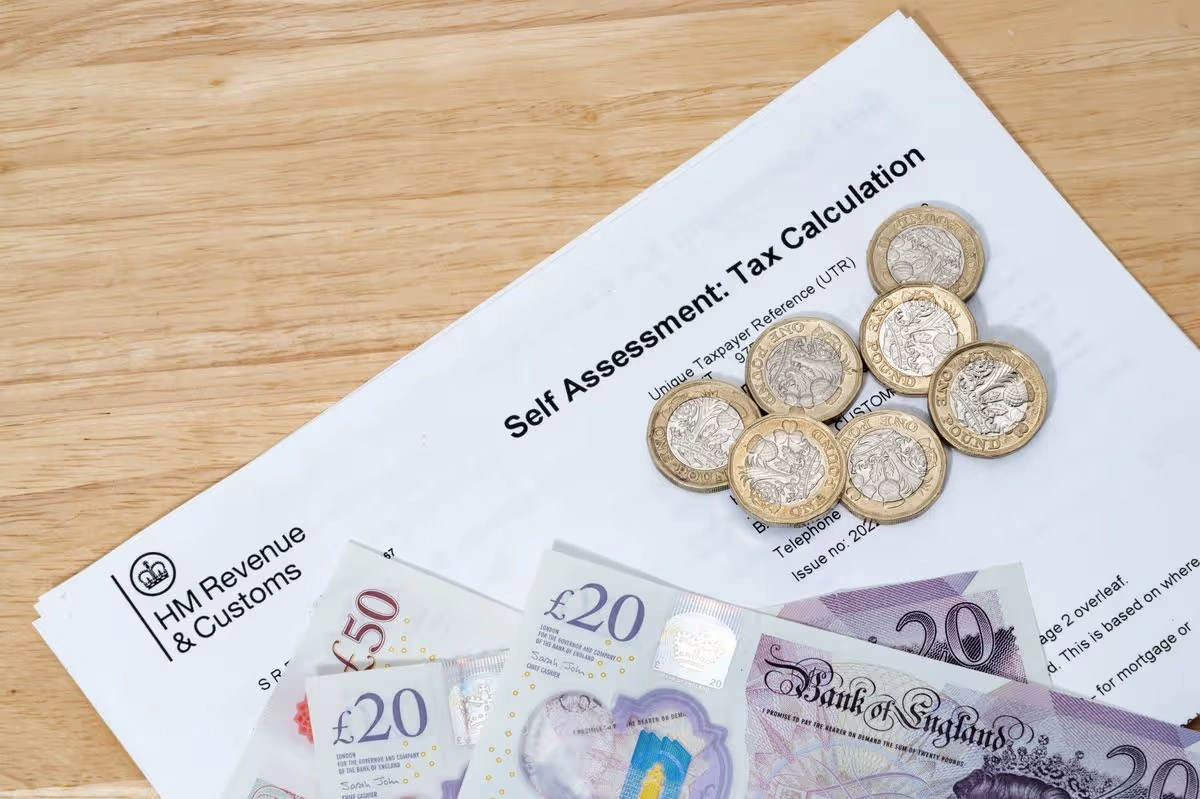
There is no bank queue, no dramatic headline photo — just a steady, monthly bleed of capital out of UK equity funds that has now become the worst sustained withdrawal pattern investment platforms have recorded in years. According to fund-flow data from Calastone, UK investors pulled £1.6 billion out of stock market funds in July alone, making it the weakest month for UK equity fund flows since late 2025. Zoom out further and the picture sharpens: withdrawals over the trailing twelve months have reached a record £13.9 billion.
This is not a market-timing story. It is a policy-anticipation story, and it is unfolding in the run-up to one of the most closely watched fiscal events of Prime Minister Andy Burnham’s government: Chancellor John Healey’s first Budget, scheduled for October 28, 2026.
What Investors Are Actually Afraid Of
A Boring Money survey cited in UK business coverage found that capital gains tax is the single biggest concern among investors, cited by 76% of respondents, followed by fears of a possible wealth tax at 64%, land and stamp duty reform at 51%, and inheritance tax changes at 50%. Strikingly, only 7% of investors surveyed believe the Burnham government’s policies will improve their personal financial position, while half expect an outright negative effect.
This sentiment is not occurring in a vacuum. It follows a period in which prior changes to inheritance-tax treatment of pensions already unsettled long-term savers, and it comes as speculation mounts — fueled in part by public commentary from figures including US President Donald Trump, who has separately described the UK’s fiscal position in blunt terms — about the scale of revenue-raising measures Healey may need to close the country’s fiscal gap.
The Broader Economic Backdrop
The capital-flight story is unfolding against a genuinely mixed UK economic picture. On one hand, the Services PMI has returned to expansion territory at 52.1, with the Composite PMI reaching 52.2, and construction’s downturn has eased. On the other, UK job postings fell 11% during the first half of 2026 and remain roughly 32% below pre-pandemic levels, according to Indeed data — with private-sector employment now in its 22nd consecutive month of decline, according to PMI figures.
Housing tells a similarly split story. Britain’s largest residential developers issued eight profit warnings in the first half of 2026 — matching the number recorded at the start of the 2008 financial crisis — with Vistry among the worst affected as its first-half home sales fell 11% to roughly 6,100 units. That makes the government’s pledge to deliver 1.5 million new homes before the 2029 general election an increasingly difficult target, with knock-on effects for the SME contractors and material suppliers that depend on housebuilding activity.
One notable bright spot: small-business growth expectations tell a bleaker story than the headline PMI figures suggest. Novuna Business Finance research found business growth confidence in England has dropped to just 24% — the lowest reading in the survey’s 12-year history, with construction, retail, and hospitality recording the sharpest declines. Only the North West bucked the trend, with growth expectations rising modestly.
Where the Money Is Going
For SEO content strategists and wealth advisors serving cross-border clients, the practical question is not whether UK capital is leaving equity funds — the data already answers that — but where it is relocating. Historical patterns during periods of UK wealth-tax anxiety point toward two primary destinations that recur consistently in advisor conversations: Dubai’s zero personal income tax regime under DIFC structuring, and Singapore’s combination of political stability, low capital gains exposure, and its role as a base for family offices serving Asian and Gulf wealth simultaneously. Both jurisdictions have spent 2025 and 2026 actively courting exactly this demographic through streamlined golden-visa and family-office licensing regimes.
What to Watch Before October 28
Three signals will matter most between now and Budget day:
- Whether Calastone’s monthly outflow figures accelerate or stabilize in August and September — a stabilization would suggest markets have already priced in the worst-case Budget scenario; continued acceleration would suggest investors expect measures more severe than currently rumored.
- Any pre-Budget signaling from Chancellor Healey or Number 10 about the scope of capital gains, wealth, or inheritance tax changes — governments frequently use August recess speeches and September party conference season to test-float measures.
- Bank of England commentary on energy price volatility, given BOE Deputy Governor Pill’s warning that energy price volatility is likely to persist into 2027, a factor that will constrain the Chancellor’s room to maneuver on the spending side of the Budget.
The Bottom Line
Britain is experiencing a slow-motion, policy-anticipation capital exodus rather than a market crash — but the effect on long-term investment, housebuilding, and small-business confidence is proving just as corrosive. With Chancellor Healey’s October 28 Budget now the single most consequential date on the UK fiscal calendar, the £13.9 billion already gone may be only the opening chapter.
Discover more from The Economy
Subscribe to get the latest posts sent to your email.


Analysis
Dubai’s Millionaire Magnet: How the UAE Turned Middle East Turmoil Into a Capital Safe-Haven Boom

Introduction
While much of the commentary on the 2026 Middle East conflict has focused on oil tankers and the Strait of Hormuz, a quieter and arguably more consequential story has been unfolding in Dubai and Abu Dhabi: capital is flowing in, not out. The UAE attracted roughly 9,800 net new millionaires in 2025 — the highest net millionaire inflow of any country globally, according to Henley & Partners — and 2026 data suggests the pattern is holding even as regional tensions have periodically spiked (Tap Fiscal). For a global content audience trying to understand why a country geographically adjacent to an active conflict zone is functioning as a safe haven rather than a risk zone, the answer lies in three decades of deliberate institutional design.
The Headline Numbers
Dubai’s economy grew 2.4% in the first quarter of 2026 alone, with GDP reaching AED 232 billion, according to figures reported via the official WAM news agency (Gateway Group UAE Weekly Business News). The UAE Central Bank’s own outlook projects national economic growth of 5.6% for 2026, outpacing the broader GCC average, with the hydrocarbon sector expected to grow 7.3% on higher oil production even as non-oil sectors — financial services, manufacturing, trade, tourism and transport — continue to carry the bulk of long-term momentum (Xinhua). Non-oil activity now accounts for roughly 75% of GDP, a diversification level that insulates the economy from oil-price shocks far more than headlines about the region typically convey (Tap Fiscal).
Why S&P and the Central Bank Both Say the UAE Can Absorb the Shock
A dedicated S&P Global Ratings assessment concluded the UAE’s banking sector has shown strong resilience and financial soundness through the recent period of regional volatility, and the agency expects solid loan growth to continue into 2027, supported by ample system liquidity amid expected monetary easing (Gulf News). S&P separately reaffirmed the UAE’s sovereign credit rating at AA/A-1+ with a stable outlook, citing strong fiscal buffers and one of the world’s largest sovereign wealth portfolios (Xinhua).
The scale of that buffer is difficult to overstate. S&P estimates the UAE’s consolidated net asset position will reach roughly 184% of GDP in 2026, with government liquid assets calculated at approximately 210% of GDP (Gulf News). That firepower sits across a small number of globally diversified institutions — the Abu Dhabi Investment Authority, Mubadala Investment Company, ADQ, the Investment Corporation of Dubai, and the Emirates Investment Authority — which generate income well beyond the oil sector and give the state fiscal flexibility that few conflict-adjacent economies possess (Gulf News).
The UAE Central Bank’s own Q1 2026 review points to the same conclusion from the market side: the Dubai Financial Market’s share price index rose 22.9% year-on-year in the fourth quarter of 2025, the Abu Dhabi Securities Market General Index gained 6.6%, and credit default swap spreads for both Abu Dhabi and Dubai narrowed further — a signal of sustained investor confidence rather than flight (Central Bank of the UAE Quarterly Economic Review).
The Short-Term Noise Was Real — But It Didn’t Stick
None of this means the conflict has been costless. In the early days of escalation, some expatriates left the UAE, private jet charter prices to exit Dubai briefly spiked to as much as $250,000, and hotel occupancy dipped alongside disrupted aviation routes (Tap Fiscal). But the institutional and long-term investor data tell a different story than the panic-driven headlines: the Dubai International Financial Centre has resumed normal operations and remains home to nearly 9,000 active firms spanning wealth management, banking and capital markets (Tap Fiscal). A UAE government minister framed the resilience explicitly, describing the economy as structurally sound and built over decades to adapt to crisis rather than be destabilized by it (Tap Fiscal).
What’s Driving the Millionaire Inflow Specifically
High-net-worth migration to the UAE is not a new phenomenon, but 2025’s record net inflow suggests the safe-haven thesis is strengthening rather than fading. The pattern is consistent with what analysts describe as a flight to stable, low-tax jurisdictions with strong rule of law during periods of global uncertainty (Tap Fiscal) — a category the UAE has spent two decades positioning itself to fit, through free zones, golden visa programs, and a deliberately diversified, sovereign-wealth-anchored economy that does not rise or fall with a single sector or a single regional headline.
Risks Worth Watching
- Banking system exposure to regional escalation: while S&P’s baseline case is resilience, further escalation involving direct disruption to Gulf shipping lanes or energy infrastructure would test the “limited and short-term” impact assumption analysts currently hold (Xinhua).
- Real estate cooling: separate reporting on new vehicle and property registrations suggests parts of the UAE’s consumer economy are cooling from exceptional prior-year growth rates, even if not contracting (Arabian Business).
- Global AI valuation correction spillover: as with other major financial centers, UAE sovereign funds carry meaningful exposure to global equity markets, including AI-related names that regulators elsewhere have flagged as a concentration risk.
Key Takeaways
- The UAE recorded the world’s highest net millionaire inflow in 2025 and Dubai’s economy grew 2.4% in Q1 2026 despite regional conflict.
- Sovereign wealth institutions (ADIA, Mubadala, ADQ, ICD) give the UAE a net asset position near 184% of GDP, its core buffer against geopolitical shocks.
- S&P has reaffirmed a stable AA/A-1+ sovereign rating, citing fiscal buffers and banking sector resilience.
- Early-conflict disruption (jet charter spikes, occupancy dips) proved short-lived; DIFC activity and equity indices have both strengthened.
- Non-oil GDP diversification, now at roughly 75%, is the structural reason the UAE decouples from pure oil-price and conflict-headline risk.
Sources: S&P/Gulf News UAE Resilience Analysis, Xinhua/UAE Central Bank, Tap Fiscal UAE Economic Outlook 2026, Central Bank of the UAE Quarterly Economic Review, March 2026, Gateway Group UAE Weekly Business News, Arabian Business
Discover more from The Economy
Subscribe to get the latest posts sent to your email.
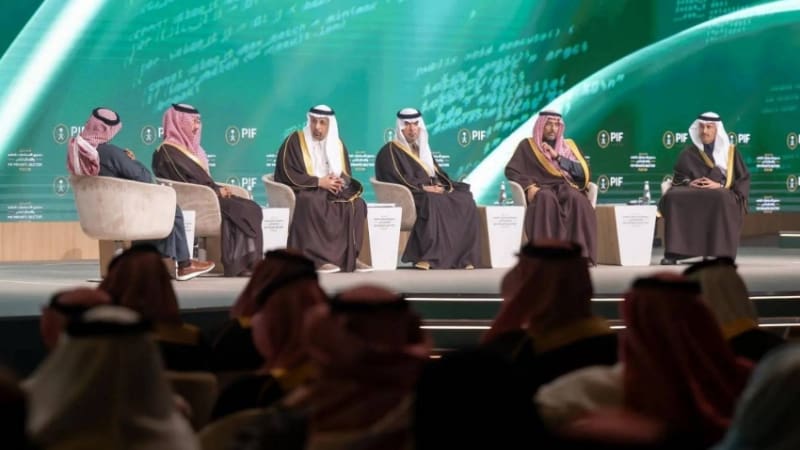
There’s a version of this story that writes itself: a shooting war breaks out between Israel, the US and Iran, oil markets seize up, the Strait of Hormuz effectively shuts for weeks, and the region’s biggest financial institutions pull back to lick their wounds. That is not what happened. Instead, Gulf sovereign wealth funds just booked their most active first half on record, and the numbers are hard to square with the headlines they were competing against.
According to data compiled by Global SWF, the region’s state-owned investors committed $53.9 billion across 108 deals between January and June 2026 — an all-time high for any six-month stretch. That’s not a modest uptick. It’s a record set in the middle of the very conflict that was supposed to freeze capital markets across the Gulf.
Where the money actually went
Roughly half of that capital crossed the Atlantic, landing in the United States. Semafor’s reporting points to a specific pattern: big-ticket funding rounds for AI companies including Anthropic and xAI (before its merger with SpaceX) absorbed a meaningful share of that flow. China came in second at 17% of allocations, with the UK rounding out the top three destinations, per Arab News.
Abu Dhabi’s Mubadala led the pack among individual institutions, deploying $15.2 billion at group level in six months — enough to make it the world’s single most active sovereign investor over that period, according to Khaleej Times. Add in Abu Dhabi Investment Authority and the newer L’Imad Holding, and the emirate alone accounted for roughly half of all Gulf-linked sovereign deals in the period.
Why the war didn’t stop the money
The obvious question is why a regional war made these funds move faster rather than slower. Part of the answer is structural: Gulf sovereign capital has spent the past decade positioning itself as a bridge between oil revenue and long-duration global assets — tech, infrastructure, credit — precisely because oil revenue itself is volatile. When crude prices spike, as they did when the Strait of Hormuz crisis unfolded, these funds simply have more petrodollars to recycle, and they’re recycling them into exactly the sectors that boomed regardless of the war: artificial intelligence infrastructure, private credit and strategic real assets.
There’s also a security dimension that Arab News flags directly: the conflict sharpened Gulf governments’ focus on resilience — supply chains, defense-adjacent technology, counterdrone systems — and sovereign capital increasingly follows that same strategic logic, not just commercial return.
Globally, the picture is even bigger. Total state-owned investor activity worldwide hit $143.6 billion across 366 transactions in the first half, with Canada’s so-called Maple 8 pension funds and Singapore’s twin funds, GIC and Temasek, also posting unusually strong numbers. Gulf funds were involved in 21 of the 42 global “mega-deals” over $1 billion — meaning nearly half of the largest transactions on the planet this year had Gulf fingerprints on them.
The bigger picture for the region
None of this means the war was costless. Global SWF’s own commentary, cited by The National, acknowledges that the conflict and the resulting oil-price volatility “affected the industry dearly” over the period — just not enough to derail the deal pipeline. The relative weight of Middle Eastern funds within the global total actually fell, from 48% in the second half of 2025 to 38% in the first half of 2026, simply because everyone else — Canada, Singapore, public pension funds broadly — was also deploying capital at a record pace.
For anyone tracking capital flows out of the Gulf, the takeaway isn’t that geopolitical risk stopped mattering. It’s that these funds have built enough scale and enough diversification that a war in their own backyard no longer functions as an automatic brake. If this pace holds through year-end, 2026 could turn into the most prolific year on record for sovereign and pension capital combined — a statement that would have sounded implausible in March, when tankers were turning back from Hormuz and oil was pushing past $100 a barrel.
Discover more from The Economy
Subscribe to get the latest posts sent to your email.
The global billionaire population grew by 13.1% over the past year to reach 3,302 individuals, with their collective wealth climbing 25% — nearly two and a half times faster than the 10.8% growth in average personal wealth recorded across the broader global population, according to the UBS Global Wealth Report 2026. The gap between those two figures, both drawn from the same 56-market dataset, has become the report’s most closely scrutinized finding, offering the clearest documented evidence yet that the artificial intelligence boom is concentrating wealth gains at a scale and speed rarely seen outside wartime economies.
The report’s seventeenth edition draws on data covering markets that together account for more than 92% of global wealth, according to UBS’s own report summary, giving it a scope few private-sector wealth surveys can match. What it found beneath the aggregate numbers is a story of two very different economies moving in opposite directions simultaneously.
The AI Wealth Machine, By the Numbers
The United States remains home to more than 1,000 billionaires — nearly double China‘s count of 562 — while India holds third place globally with 211 billionaires among a population exceeding 1.4 billion, according to reporting from Spear’s. But the most striking single data point in the report may be South Korea‘s trajectory: the country’s billionaire count nearly doubled, rising from 31 in 2025 to 52 in 2026, driven in large part by the country’s booming semiconductor and AI microchip industries. South Korea’s overall billionaire net worth doubled across the same period — evidence that existing fortunes, not just newly minted ones, expanded sharply on AI-linked equity gains.
Paul Donovan, chief economist at UBS Global Wealth Management, noted that while AI has been one factor behind rising ultra-high-net-worth fortunes, wealth creation reflects a mix of productivity, investment risk-taking, and — at moments of structural upheaval — simple positioning advantage. That framing implicitly acknowledges what critics of the AI wealth boom have argued more bluntly: that early ownership of AI-exposed equities, rather than broad-based productivity gains, explains much of the divergence documented in this year’s report.
Median Wealth Tells a Starkly Different Story
The headline growth figures obscure a more troubling pattern once the data is disaggregated by measure. UBS reported that median wealth — a statistic that better reflects the experience of a typical household than mean averages skewed by billionaire fortunes — actually declined across the majority of countries tracked in the survey, even as average wealth climbed, according to Quartz’s analysis of the report. UBS described the divergence as clear evidence of widening global wealth inequality.
The report’s wealth pyramid data reinforces this picture. The share of adults globally holding less than $10,000 in net assets has continued to shrink, now standing at just over 41% — technically progress, but one driven substantially by asset price inflation among those already holding some wealth, rather than genuine income growth among the poorest segment of the population. Meanwhile, roughly 1.5% of adults in the UBS sample now hold more than $1 million in net assets, with nearly one million new dollar-millionaires added globally over the course of 2025, at a pace of roughly 2,680 people per day.
The United States accounted for close to half of that increase on its own, adding more than 440,000 new millionaires — a rate exceeding 1,200 per day. The United Kingdom added more than 43,000, while France, Spain, Japan, and India each added more than 30,000 new millionaires over the same period.
Where the New Fortunes Are Concentrated
The sectoral breakdown of billionaire wealth growth clarifies exactly how directly the AI boom is driving these gains. Billionaires invested in technology saw their wealth increase by 23.8% in the preceding period covered by UBS’s related Billionaire Ambitions data, while consumer and retail sector wealth growth slowed to just 5.3% as European luxury brands lost ground to Chinese competitors. Industrial wealth, boosted substantially by AI-adjacent infrastructure investment, posted the fastest growth of any sector at 27.1%, reaching $1.7 trillion in aggregate value, with more than a quarter of that growth attributable to newly minted billionaires rather than appreciation of existing fortunes.
Six US technology billionaires alone saw their combined wealth grow by $171 billion, tied directly to AI-driven growth at their respective companies, according to prior UBS reporting reviewed alongside this year’s data. In China, tech billionaires connected to the country’s AI industry likewise saw outsized wealth surges even as the broader Chinese economy continued grappling with a property-sector slowdown and softer consumer spending — illustrating how narrowly concentrated AI-linked wealth creation has become, even within individual national economies.
The Generational Wealth Transfer Compounds the Divide
UBS’s data also captures an accelerating intergenerational wealth transfer that is reinforcing, rather than offsetting, the inequality trend. As the Baby Boomer generation passes on accumulated fortunes, estimates cited alongside the report suggest roughly $90 trillion will change hands globally over the next two decades. Within the current billionaire cohort specifically, newly counted heirs inherited a combined $150.8 billion in the latest reporting period — for the first time exceeding the $140.7 billion in combined fortunes created by self-made new billionaires over the same window, according to data compiled in UBS’s related Billionaire Ambitions research.
That inversion — inherited wealth outpacing newly created wealth among incoming billionaires — marks a meaningful shift in how global fortunes are being replenished, suggesting that even as AI creates genuinely new pools of capital at the top of the distribution, the mechanism reinforcing overall wealth concentration is increasingly inheritance rather than entrepreneurship.
What the Divergence Means Going Forward
The UBS findings arrive at a moment when policymakers across major economies are already grappling with how to tax, regulate, or otherwise respond to AI-driven wealth concentration without stifling the investment that is genuinely driving productivity gains in select sectors. The report does not offer policy prescriptions, but the data itself — 25% billionaire wealth growth against declining median wealth in most tracked countries — provides the clearest empirical anchor yet for a debate that has, until now, relied heavily on anecdote and individual company valuations rather than systematic, cross-country measurement.
For markets and policymakers alike, the report’s central finding functions as a warning that the AI boom’s benefits, however transformative for productivity in aggregate, are not yet reaching the median household in most of the world’s major economies — a gap that is likely to shape political and regulatory responses to artificial intelligence for years beyond the current market cycle.
Discover more from The Economy
Subscribe to get the latest posts sent to your email.

Why Ottawa Is Betting on Dubai: Inside Canada’s Gulf Trade Pivot

UK Wealth Tax Fears Trigger Record £13.9bn Investor Exodus Ahead of October Budget

July Jobs Shock: Why the Fed’s September Rate Decision Just Flipped (2026 Analysis)

Global Growth Forecast 2026: IMF, World Bank Outlooks and the “Slow-Hire, Slow-Fire” Labor Market

Pakistan Agriculture 2026: Sindh’s Cotton Surge vs. Punjab’s Monsoon Decline

Gold Price 2026: Why Bullion Has Fallen 25% From Its January Record High

Airfare Prices 2026: Why Flights Are Up 26.5% and What Could Finally Bring Fares Down

Indonesia Investment 2026: Record Q2 Realization vs. Falling FDI Confidence

Russia Oil Revenue 2026: The Iran War Windfall and What a Hormuz Deal Means for Moscow

China Economy 2026: How AI Exports and a Property Crash Are Splitting Growth in Two

Malaysia GDP 2026: Why Growth Keeps Outperforming Official Forecasts

Singapore GDP Q2 2026: 5.7% Growth Driven by AI-Linked Semiconductor Exports

Al Maktoum International Airport 2026: Dubai’s $35B Plan for the World’s Largest Airport

Pakistan Economy 2026: Why GDP Growth Isn’t Reaching Ordinary Households

Russia Bans Diesel Exports 2026: Global Fuel Market Impact Explained

Gold Price Forecast 2026: Fed’s July 29 Decision and Record Central Bank Buying Explained

Strait of Hormuz 2026: Why Markets Still Don’t Trust It’s Open

Strait of Hormuz Blockade 2026: Oil Prices Surge 9% as US-Iran Conflict Reignites

China Politburo July 2026: Stimulus Signals Explained

Pakistan Economy 2026: GDP Grows 3.7% as IMF Completes EFF Review Amid Middle East Risk

Apple vs OpenAI Lawsuit: The Economic Story Behind the Headline

Down But Not Out: Inside the Slow Sinking of Russia’s War Economy

Gulf Capital Retreat From Pakistan 2026: UAE Loan Freeze & What It Means

Indonesia Russian Oil Imports 2026: Why Jakarta Is Diversifying Crude Supply

AI Capex Bubble 2026: The Hidden $662B Debt Nobody Reports

The Yuan Now Settles 67% of Russian Oil Payments — Quiet De-Dollarization in Action

Global Stock Market Selloff 2026: Stagflation Fears Return as Iran Conflict Reignites

Gulf Sovereign Wealth Funds Hit Record $53.9B in H1 2026 Despite Iran War
-

 Markets & Finance7 months ago
Top 15 Stocks for Investment in 2026 in PSX: Your Complete Guide to Pakistan’s Best Investment Opportunities
-

 Analysis6 months ago
Johor’s Investment Boom: The Hidden Costs Behind Malaysia’s Most Ambitious Economic Surge
-

 Analysis6 months ago
Top 10 Stocks for Investment in PSX for Quick Returns in 2026
-

 Analysis6 months ago
Brazil’s Rare Earth Race: US, EU, and China Compete for Critical Minerals as Tensions Rise
-

 Banks7 months ago
Best Investments in Pakistan 2026: Top 10 Low-Price Shares and Long-Term Picks for the PSX
-

 Investment7 months ago
Top 10 Mutual Fund Managers in Pakistan for Investment in 2026: A Comprehensive Guide for Optimal Returns
-

 Global Economy7 months ago
15 Most Lucrative Sectors for Investment in Pakistan: A 2025 Data-Driven Analysis
-

 Global Economy7 months ago
Pakistan’s Export Goldmine: 10 Game-Changing Markets Where Pakistani Businesses Are Winning Big in 2025