
Investment
Indonesia Investment 2026: Record Q2 Realization vs. Falling FDI Confidence

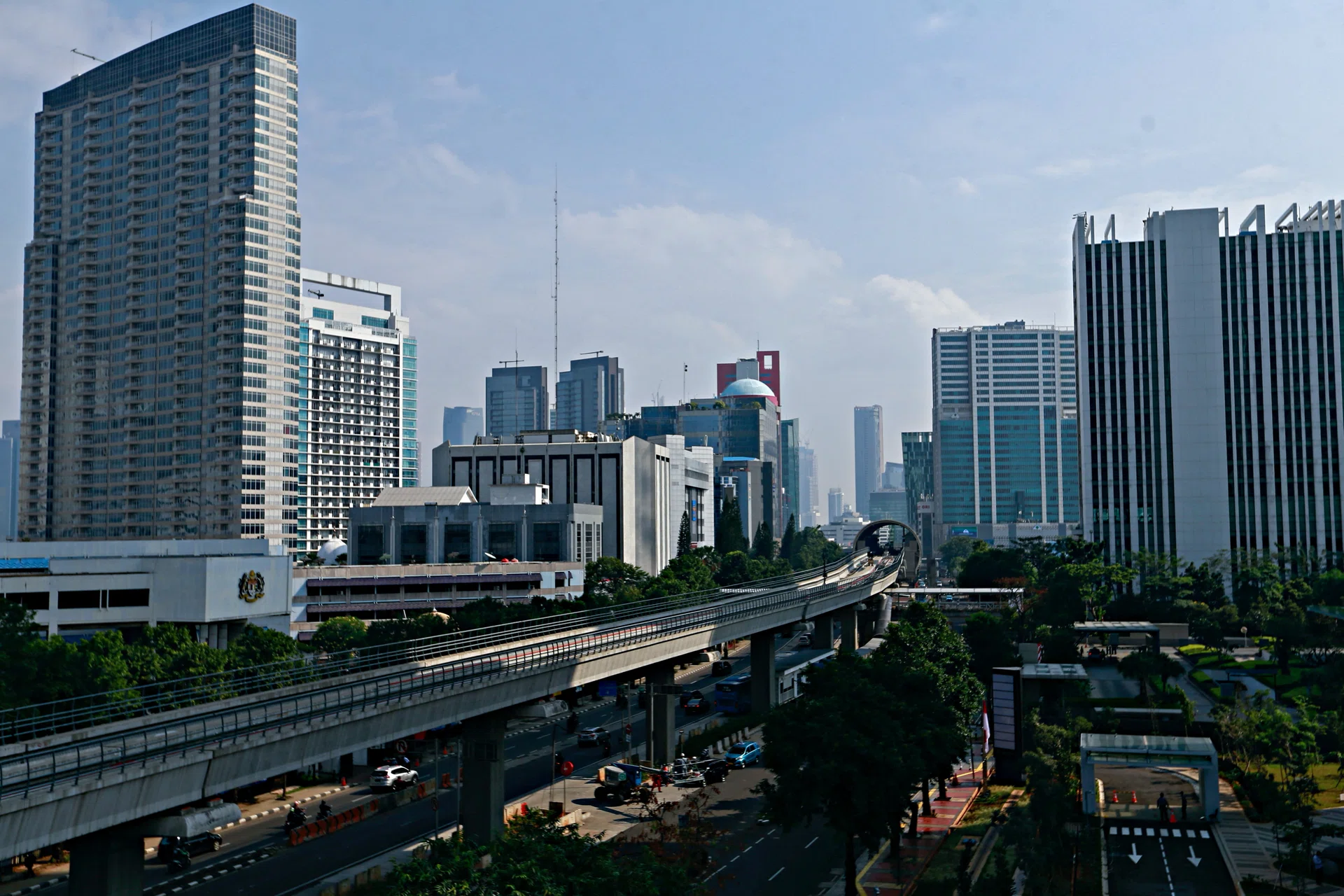
Indonesia’s economic data in 2026 tells two contradictory stories depending on which indicator you look at. On one hand, investment realization — money actually deployed into approved projects — hit a record IDR 511.8 trillion (approximately $28.4 billion) in the second quarter, up 7.1% year-on-year, putting the country on track to hit its full-year target of IDR 2,041.3 trillion, according to Indonesia Investments. Minister of Investment and Downstream Industry Rosan P. Roeslani cited the figure as evidence that investor confidence remains intact despite global uncertainty.
On the other hand, forward-looking sentiment tells a considerably less reassuring story. Net foreign direct investment contracted 26% year-on-year in the first quarter of 2026, according to a separate analysis from Krungsri Research, which frames Indonesia as having moved “from ASEAN darling to investor concern.”
Reconciling the two numbers
The apparent contradiction is less about conflicting facts than about timing. Investment realization figures reflect capital deployed against decisions made earlier — often months or years prior — while FDI flow data captures the confidence of investors making fresh allocation decisions today. Krungsri’s analysis notes that equities have fallen sharply, the rupiah has repeatedly hit record lows despite continued Bank Indonesia intervention, and government bond yields have risen as investors demand a higher risk premium for holding Indonesian assets. The report concludes that the confidence shock has “begun to affect investment decisions in the real economy” — visible in the Q1 FDI contraction — even though the effects on broader domestic economic activity remain relatively contained for now.
What’s driving the rupiah pressure
Indonesia’s currency has been under sustained strain through 2026. The rupiah weakened to around IDR 16,985 per US dollar in March amid escalating Middle East tensions triggering capital outflows from emerging markets broadly, and it later hit fresh record lows, according to Trading Economics. Annual inflation rose to 4.76% in February 2026 — its highest level since March 2023 — before Bank Indonesia introduced new measures in March to curb speculative currency activity, including a requirement for supporting documentation on foreign-currency purchases above $50,000 per party per month.
Why growth forecasts keep getting trimmed
Indonesia’s GDP growth reached 5.61% year-on-year in the first quarter of 2026, but most international lending institutions expect growth to slow toward roughly 5.0% for the full year — a loss of momentum attributed to a softening labour market, weakening consumer confidence, and contracting retail sales in the second quarter, according to Indonesia Investments. The OECD has kept its 2026 growth outlook at a more conservative 4.7%, which would mark a clear deterioration from 2025’s realized growth of 5.1%. High global oil prices are compounding the pressure on Indonesia’s fiscal position, given the government continues to subsidize a significant share of domestically sold fuel — a subsidy burden that becomes considerably more expensive when global crude prices are elevated.
Key takeaways
- Indonesia’s Q2 2026 investment realization hit a record IDR 511.8 trillion (~$28.4 billion), up 7.1% year-on-year.
- Despite the record realization figure, net FDI contracted 26% year-on-year in Q1 2026 amid a broader investor confidence shock.
- The rupiah has repeatedly hit record lows in 2026 despite continued Bank Indonesia intervention.
- GDP growth reached 5.61% in Q1 2026, but most forecasters expect full-year growth closer to 4.7-5.0%, down from 5.1% in 2025.
- Elevated global oil prices are straining Indonesia’s fuel subsidy budget, adding to imported inflation pressure.
FAQ
Is Indonesia’s investment climate improving or worsening in 2026? Both, depending on the metric — realized investment hit a record in Q2, but forward-looking FDI flows contracted sharply in Q1 amid a broader confidence shock tied to rupiah weakness and market volatility.
Why has the Indonesian rupiah been weakening? A combination of Middle East-driven safe-haven capital outflows from emerging markets, elevated imported inflation from high global oil prices, and speculative currency pressure.
What is Indonesia’s GDP growth forecast for 2026? Most international lenders project growth around 4.7-5.0%, down from 5.1% realized in 2025, despite a strong 5.61% Q1 2026 reading.
Discover more from The Economy
Subscribe to get the latest posts sent to your email.



When Washington doubles down on reshoring corporate capital, export-reliant trade partners typically prepare for impact. However, Ireland’s Prime Minister Micheál Martin is turning trade pressure into bilateral leverage—using U.S. “America First” incentives to sharpen Irish competitiveness while securing high-profile tariff rollbacks for staple Irish exports.
Following a landmark pledge from President Donald Trump to eliminate the 10% U.S. duty on Irish whiskey, Irish diplomats have locked their sights on the next major trade concession: Kerrygold butter, a commodity generating over $1 billion in annual U.S. retail sales.
The Bilateral Investment Balance Sheet
Contrary to popular belief that transatlantic trade flows primarily benefiting European exporters, the economic relationship between the U.S. and Ireland operates as a two-way investment engine. Official data from the U.S. Bureau of Economic Analysis ranks Ireland among the top five foreign direct investment (FDI) contributors to the U.S. economy.
| Economic Metric | U.S. Capital in Ireland | Irish Investment in the U.S. |
| Total Investment Position | ~$460+ Billion | ~$390+ Billion |
| Employment Footprint | ~210,000 Irish workers | ~200,000 U.S. workers |
| Key Industries | Pharmaceuticals, Tech, MedTech | Agrifood, Health Sciences, Tech Services |
| Enterprise Presence | ~950 U.S. Multinationals | ~800 Irish Companies |
Data supported by Enterprise Ireland demonstrates that Irish-owned firms expanded their U.S. payrolls significantly across regional manufacturing and tech hubs, creating a dual-dependency that insulates Dublin from hostile tariff measures.
From Doonbeg to Distilleries: The Whiskey Breakthrough
The political momentum behind recent tariff exemptions crystallized during President Trump’s visit to his Doonbeg golf resort in County Clare, Ireland. Following direct representations by Taoiseach Micheál Martin and Irish golfer Shane Lowry, the administration committed to stripping away duties on Irish spirits.
As reported by Global Banking & Finance, the announcement removed a 10% import tariff that had been applied to EU spirits, returning Irish whiskey exports toward a zero-for-zero trade parity.
“He’s certainly had success in terms of the investments that companies are making in the U.S.,” stated Micheál Martin. “In a way, it makes us more competitive. We’ve analyzed it and said, ‘OK, that’s a new challenge. How do we double down, make ourselves more competitive, and stay agile?'”
Kerrygold in the Crosshairs: The Next $1 Billion Trade Target
With spirits secured, Ireland’s diplomatic and commercial apparatus is pivoting toward agricultural exports—specifically dairy products managed by Irish dairy cooperative Ornua.
- Market Scale: Kerrygold stands as the second-largest butter brand by value in the United States, crossing the $1 billion retail sales threshold in 2025.
- Economic Stake: Food and drink exports form the backbone of Ireland’s rural economy. Agricultural tariffs directly impact primary producers across all 26 counties.
- Regulatory Leverage: As Ireland leads discussions during its presidency of the Council of the European Union, reducing regulatory friction and bureaucracy for U.S. technology imports serves as potential bargaining leverage for agricultural parity.
EU Bureaucracy vs. Transatlantic Competitiveness
A central theme in ongoing U.S.-EU discussions is European regulation. American MNEs routinely cite European red tape as a primary barrier to capital deployment.
According to official briefings from the European Commission, the EU and U.S. have been working on reciprocal tariff reductions across industrial goods, aerospace, and generic pharmaceuticals while streamlining sanitary certification processes. Ireland is using its influence within the EU Council to prioritize deregulation, aligning European business practices more closely with U.S. capital efficiency.
By framing American domestic investment pushes not as a threat, but as a benchmark for national agility, Ireland maintains its position as the premier European bridgehead for U.S. multinationals while methodically clearing tariff hurdles for its own flagship exports.
Discover more from The Economy
Subscribe to get the latest posts sent to your email.
Fidelity is one of the largest retail brokerages in the United States. It competes on low costs, broad product choice and research tools.
Volatile markets raise the stakes. Fees, diversification and behavior all affect what you keep. This review looks at where Fidelity helps and where it falls short.
Low barriers: Fidelity has $0 account minimums, $0 commissions on online US stocks and ETFs, and fractional shares from $1.
Watch the fees: A $49.95 fee applies to non-Fidelity mutual funds.
Crypto is separate: Trading requires a distinct account and carries a 1% fee.
Best for: Long-term investors, retirement savers and beginners.
Returns depend on you: Costs and diversification are controllable. Market direction is not.
| Feature | Details |
| Account minimum | $0 |
| Stock and ETF commissions | $0 online |
| Fractional shares | From $1 |
| Account types | Brokerage, Roth IRA, Traditional IRA, cash management |
| Crypto | Separate account; 1% fee |
| Non-Fidelity mutual funds | $49.95 transaction fee |
Fees can change. Confirm the current schedule on Fidelity’s website before you fund an account.
There are no maintenance fees on standard retail accounts, and trading costs are minimal for most investors. The account opening process was verified as straightforward in September 2026.
Index Funds With Very Low Fees
Fidelity is known for low-cost index funds, including its “ZERO” funds. Cutting expenses is one of the most reliable ways to protect long-term returns.
The platform provides research reports, screeners and learning content. That helps both beginners and experienced investors.
Fidelity supports IRAs and workplace plans. If you already have a 401(k) there, keeping everything in one place simplifies planning.
Learning curve. The full site can feel dense if you only want a simple app.
Crypto costs. A 1% fee is high compared with dedicated exchanges.
Mutual fund fees. Buying non-Fidelity funds can cost $49.95 per trade.
Limited coin choice. The crypto menu is small.
How to Protect Returns in a Volatile Market
Volatility is normal. Behavior during it matters more than any platform. These practices help.
Diversify. Combine stocks, bonds and cash instead of relying on one theme or stock. Recent mega-cap listings and AI-linked shares have moved sharply, so concentrated positions can swing hard.
Keep costs low. Even a 1% annual fee can consume a large share of long-term gains.
Automate contributions. Regular investing removes the urge to time the market.
Rebalance yearly. Selling some winners and buying laggards restores your target mix.
Hold cash for near-term needs. Money needed within a few years should not sit in stocks.
Use tax-advantaged accounts first. IRAs and 401(k)s shield growth from current taxes.
| Goal | Common Approach |
| Long-term growth | Broad US and international index funds |
| Stability | Bond funds and cash reserves |
| Speculation | A small, capped slice for crypto or single stocks |
This is an illustration, not a recommendation. The right mix depends on your age, goals and risk tolerance.
Good fit: Beginners, buy-and-hold investors and anyone building retirement savings.
Weaker fit: Active crypto traders and investors who want the most advanced trading tools.
What This Means for the Global Market in 2027
Reviews often stop at a feature list. Here is what to watch.
Fee pressure will continue. Competition among brokerages should keep pushing costs toward zero. Compare all-in costs, not headlines.
Digital assets will move into the mainstream. Expect more crypto products inside traditional platforms. Fees may fall as competition grows.
Personalization and AI tools. Brokerages are adding automated guidance. Judge these tools by fees and transparency.
Rates and inflation drive returns. Interest rate direction affects both bond and stock valuations.
Global diversification matters. With market leadership rotating, spreading investments across regions may reduce concentration risk.
Is Fidelity a good broker for beginners?
Yes. Fidelity has no account minimums, $0 online stock and ETF commissions and fractional shares from $1.
Does Fidelity charge account fees?
Standard retail accounts have no maintenance fee. Some transactions, such as non-Fidelity mutual funds, carry a $49.95 fee.
Can you buy crypto on Fidelity?
Yes, through a separate crypto account with a 1% trading fee. You can also hold spot crypto funds in a regular account.
How can I protect my portfolio in a volatile market?
Diversify, keep costs low and invest regularly. Avoid reacting to short-term swings.
Discover more from The Economy
Subscribe to get the latest posts sent to your email.
Key Takeaways
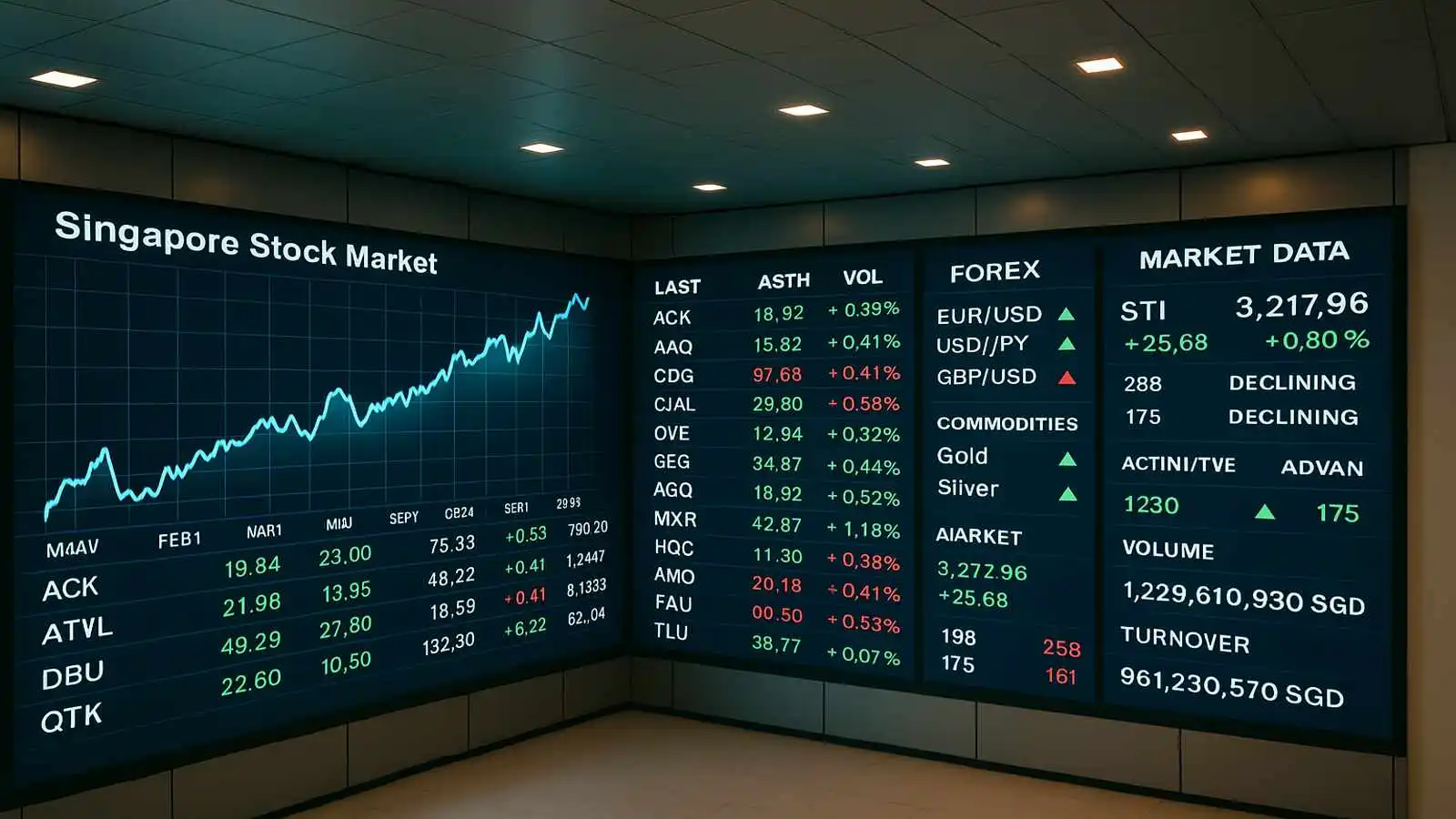
- The Straits Times Index (STI) has set repeated all-time highs through 2026 — from around 4,900 in January to a record 5,801.96 on September 4, 2026, a roughly 35% year-over-year gain.
- Banking heavyweights DBS, OCBC, and UOB have powered most of the rally, with DBS posting record Q2 2026 net profit of S$3.08 billion (up 9% year-over-year) on total income that crossed S$6 billion for the first time in a single quarter.
- SGX’s FY2026 results (July 2025–June 2026) show securities turnover up 35% year-over-year to S$455.7 billion, with retail investors net buyers of Singapore equities for five consecutive months.
- Analysts increasingly describe Singapore equities’ rally as driven by genuine “safe-haven” demand — investors rotating into the market specifically for its perceived stability amid regional and geopolitical uncertainty, not just cheap valuations.
- The risk flagged by several local commentators: a record-high market concentrated heavily in one sector (banks) raises the cost of over-allocating to what’s already led the run.
The STI’s 2026 Climb, Month by Month
| Date | STI Level | Context |
|---|---|---|
| Jan 30, 2026 | 4,934 (record) | Broad economic optimism, 4.8% 2025 GDP growth |
| Apr 9, 2026 | 5,000 (crossed) | First time above the 5,000 mark |
| May 22, 2026 | 5,068.15 | Banking and industrial stocks lead |
| Jun 25, 2026 | 5,218.96 | SGX FY2026 turnover surge |
| Jul 8, 2026 | 5,339.59 (intraday) | Institutional inflows accelerate |
| Jul 15, 2026 | 5,559.72 (record close) | Continued rally |
| Sep 4, 2026 | 5,801.96 (record close) | ~35% gain over trailing year |
Why Singapore Keeps Attracting “Safe Haven” Flows
Unlike a pure valuation story, Singapore’s 2026 rally has been repeatedly described by market commentators as safe-haven driven — investors specifically seeking Singapore’s institutional stability, currency credibility, and banking-sector strength during a year marked by Middle East conflict, tariff shocks, and volatile crypto and U.S. equity markets. The Monetary Authority of Singapore’s S$6.5 billion expansion of its Equity Development Programme (EQDP) has also directly funneled institutional capital into local equities.
The Bank Trio Driving the Rally
- DBS Group — Singapore’s largest bank, with a footprint across 19 markets. Q2 2026 total income crossed S$6 billion for the first time in a single quarter; net profit hit a record S$3.08 billion, up 9% year-over-year, even as net interest income slipped slightly.
- OCBC and UOB — Both have repeatedly led single-session STI gains alongside DBS, reinforcing the narrative that Singapore’s rally is fundamentally a banking-sector story with industrials and REITs participating at the margins.
The Case for Caution at Record Highs
Local commentary has been notably measured rather than euphoric: markets sit at all-time highs roughly a third of the time historically, and forward returns after a new high haven’t been meaningfully worse than at other times. The more practical risk flagged: a sharp rally can quietly shift a portfolio’s asset allocation (e.g., from a 70/30 equity/bond split to 80/20) without any active decision — a case for periodic rebalancing rather than either chasing or avoiding the rally outright.
Why are Singapore stocks considered a safe haven in 2026?
The Straits Times Index has hit repeated record highs in 2026 (reaching 5,801.96 by September), driven largely by record bank earnings from DBS, OCBC, and UOB. Analysts attribute much of the rally to genuine safe-haven demand from investors seeking institutional stability amid global geopolitical and market volatility, rather than valuation alone.
Discover more from The Economy
Subscribe to get the latest posts sent to your email.

Algorithmic Dogfights: Why the U.S. and China Must Establish Rules of Engagement for Autonomous Air Power

Stock Market Today: Dow, S&P 500, and Nasdaq Retreat as Treasury Yields

Global Economic Outlook 2026: 7 Forces Reshaping Markets, Trade and Business

Geopolitics and Your Portfolio: How International Affairs Move Global Markets

Conservative Party Conference 2026: What Badenoch’s Tax and Deregulation Pitch Means for the UK Economy

Planet Labs and Goldman: How Satellite Geospatial Data Is Reshaping Wall Street

Red Dye Diesel in 2026: Tax Exemptions, Regulations, and the Real Agricultural Impact

Student Loans in 2026: Forgiveness Updates, Consolidation, and Repayment Strategies

Why Did I Get $90 From Social Security? 8 Reasons Behind an Unexpected SSA Payment

Corporate America Faces a New Debt Test as US Borrowing Costs Surge

Goldman vs. Citi: Which Banking Giant Leads Modern Global Finance in 2026?

Beyond Hanoi & HCMC: How Northern Industrial Clusters Are Driving Vietnam’s 10% Growth Surge

Analytical Review of The Economist’s “What is the Right Tax System for the 21st Century?”

Southeast Asia’s LNG Dilemma: Navigating Price Volatility, Infrastructure Gaps, and Energy Security

Oil Prices Break $100 in 2026: Middle East Conflict & Energy Markets

IMF & World Bank 2026 Global Economic Outlook: Growth, Inflation, Debt

Middle East War Economics 2026: Oil Prices & Energy Markets

High-CPM Finance Niches 2026: Publisher Monetization Blueprint

China Stocks Today: Are Big Economies in Asia Nearing a Market Bottom?

Global Pension Systems Ranked: The World’s Best and Worst Retirement Frameworks

Enterprise AI Platforms Disrupting B2B SaaS in 2026: Full Analysis

Elon Musk’s Next Moves: Disrupting the 2026 Global Economy

Social Security Trust Fund 2032: OASI Depletion Timeline Explained

Crypto Daily Outlook: Bitcoin, Altcoins, and the Future of Decentralized Finance

World’s Largest Economies: Ranking the Top Global Powers

GasBuddy Market Insights: How Crude Price Shifts Impact Local Fuel Cost Averages

World Bank & IMF Reports 2026: Why the “3% Growth” Consensus Is Actually a Debate

PSX Forecast 2026: KSE-100, IMF Reviews & Geopolitics
-

 Markets & Finance9 months ago
Top 15 Stocks for Investment in 2026 in PSX: Your Complete Guide to Pakistan’s Best Investment Opportunities
-

 Analysis8 months ago
Johor’s Investment Boom: The Hidden Costs Behind Malaysia’s Most Ambitious Economic Surge
-

 Analysis8 months ago
Top 10 Stocks for Investment in PSX for Quick Returns in 2026
-

 Banks9 months ago
Best Investments in Pakistan 2026: Top 10 Low-Price Shares and Long-Term Picks for the PSX
-

 Analysis8 months ago
Brazil’s Rare Earth Race: US, EU, and China Compete for Critical Minerals as Tensions Rise
-

 Investment9 months ago
Top 10 Mutual Fund Managers in Pakistan for Investment in 2026: A Comprehensive Guide for Optimal Returns
-

 Global Economy9 months ago
15 Most Lucrative Sectors for Investment in Pakistan: A 2025 Data-Driven Analysis
-

 Global Economy9 months ago
Pakistan’s Export Goldmine: 10 Game-Changing Markets Where Pakistani Businesses Are Winning Big in 2025