
Markets & Finance
Oil Shocks and Core Inflation: Why the Two Move Differently


In brief: Headline consumer inflation usually reacts more directly to motor fuel and energy bills than measures of core inflation that exclude some volatile components. Core inflation can nevertheless move later through delivery costs, wages, rents and pricing expectations. This guide draws on World Bank October 2026 commodity outlook and identifies where an individual case needs additional checks.
Published commodity indexes describe wholesale market movements; exchange rates, transport and the contents of a national food basket determine how households feel those movements.
Information relevant to oil price shock versus core inflation can be misread when a national guideline, an industry average and a reader’s particular situation are presented as though they are identical. The starting point is the dated evidence. The FAO Food Price Index, November 2026 release provides wider context, while the specific details below explain the limits of a simple answer.
Oil prices influence refined fuel, freight, farm equipment, industrial energy and the cost of inputs. Central banks monitor whether these direct changes remain isolated or spread into persistent service and goods inflation. The size of that second-round effect depends on competition, monetary policy credibility and household incomes.
This creates a useful distinction between a headline measure and the outcome that matters. The former can be quoted publicly; the latter may depend on timing, eligibility, contract terms, geography or equipment. A careful analysis names each moving part instead of pretending the same rule produces an identical result for everyone.
Imagine petrol rises sharply this month while service prices remain flat. The headline index can move first; if companies subsequently raise restaurant, taxi and packaged-food prices, underlying measures may follow. This is a stylised transmission example, not a claim about a particular country.
The example isolates a particular assumption rather than claiming to reproduce every real-world case. Change the date, price, document category or other relevant input and the conclusion may change. Readers should use the calculation or scenario as a transparent method for asking better questions, not as a substitute for primary records.
What to check in practice
Read the precise definition of each country’s core measure; exclusions vary. Pair fuel-price histories with services inflation and expectations, and use month-on-month changes as well as year-on-year rates to separate fresh shocks from old base effects.
| Evidence | Where to look | What it establishes |
|---|---|---|
| Governing principle | World Bank October 2026 commodity outlook | The baseline rule or measured relationship |
| Broader context | FAO Food Price Index, November 2026 release | The date and wider background |
| Your individual position | Domestic prices, contracts and country-level official statistics | Whether the general explanation applies in practice |
A source can be authoritative and still be too broad to settle an individual case. When multiple documents or measurements disagree, check whether they refer to different periods, populations, definitions or activities before deciding that one must be wrong.
Where a simple answer becomes misleading
A temporary headline spike need not justify the same policy response as a persistent rise in underlying prices. Conversely, ignoring energy entirely can understate how costs spread through production. Do not label either measure intrinsically superior without explaining the policy question.
These qualifications are not minor technicalities. They are often the difference between a useful guide and a confident headline that sends the reader in the wrong direction. The safest recommendation is to describe the relevant condition precisely and then give readers a way to verify it themselves.
What the available evidence does and does not establish
Global commodity projections offer context, not a substitute for the domestic CPI components. International oil prices are a leading input, but exchange rates, regulated pricing and fuel taxes can change what consumers actually pay.
The FAO Food Price Index methodology helps corroborate the wider subject, but it cannot authenticate a reader’s private documents, bills, contractual obligations or travel plan. Where the article includes an illustrative calculation, the assumptions are labelled. Where it concerns a live rule or future schedule, the controlling institution should be consulted again immediately before use.
For an independent news report on the October 2026 commodity outlook, see Reuters: World Bank October 2026 commodity outlook. This news account adds context; it is not a substitute for the directly applicable institutional source.
A short verification checklist
- Start with the specific evidence: Read the precise definition of each country’s core measure; exclusions vary.
- Challenge the default assumption: A temporary headline spike need not justify the same policy response as a persistent rise in underlying prices.
- Check the scope of the published material: Global commodity projections offer context, not a substitute for the domestic CPI components.
- Confirm the current version: Revisit the World Bank October 2026 commodity outlook and the original dated guidance before making an irreversible decision.
Frequently asked questions
What is the key principle?
Headline consumer inflation usually reacts more directly to motor fuel and energy bills than measures of core inflation that exclude some volatile components. The relevant primary reference is World Bank October 2026 commodity outlook.
What would change the answer?
A temporary headline spike need not justify the same policy response as a persistent rise in underlying prices. Conversely, ignoring energy entirely can understate how costs spread through production. Do not label either measure intrinsically superior without explaining the policy question.
What should I verify before relying on this?
Read the precise definition of each country’s core measure; exclusions vary. Pair fuel-price histories with services inflation and expectations, and use month-on-month changes as well as year-on-year rates to separate fresh shocks from old base effects.
Headline consumer inflation usually reacts more directly to motor fuel and energy bills than measures of core inflation that exclude some volatile components. Global commodity projections offer context, not a substitute for the domestic CPI components.
Discover more from The Economy
Subscribe to get the latest posts sent to your email.


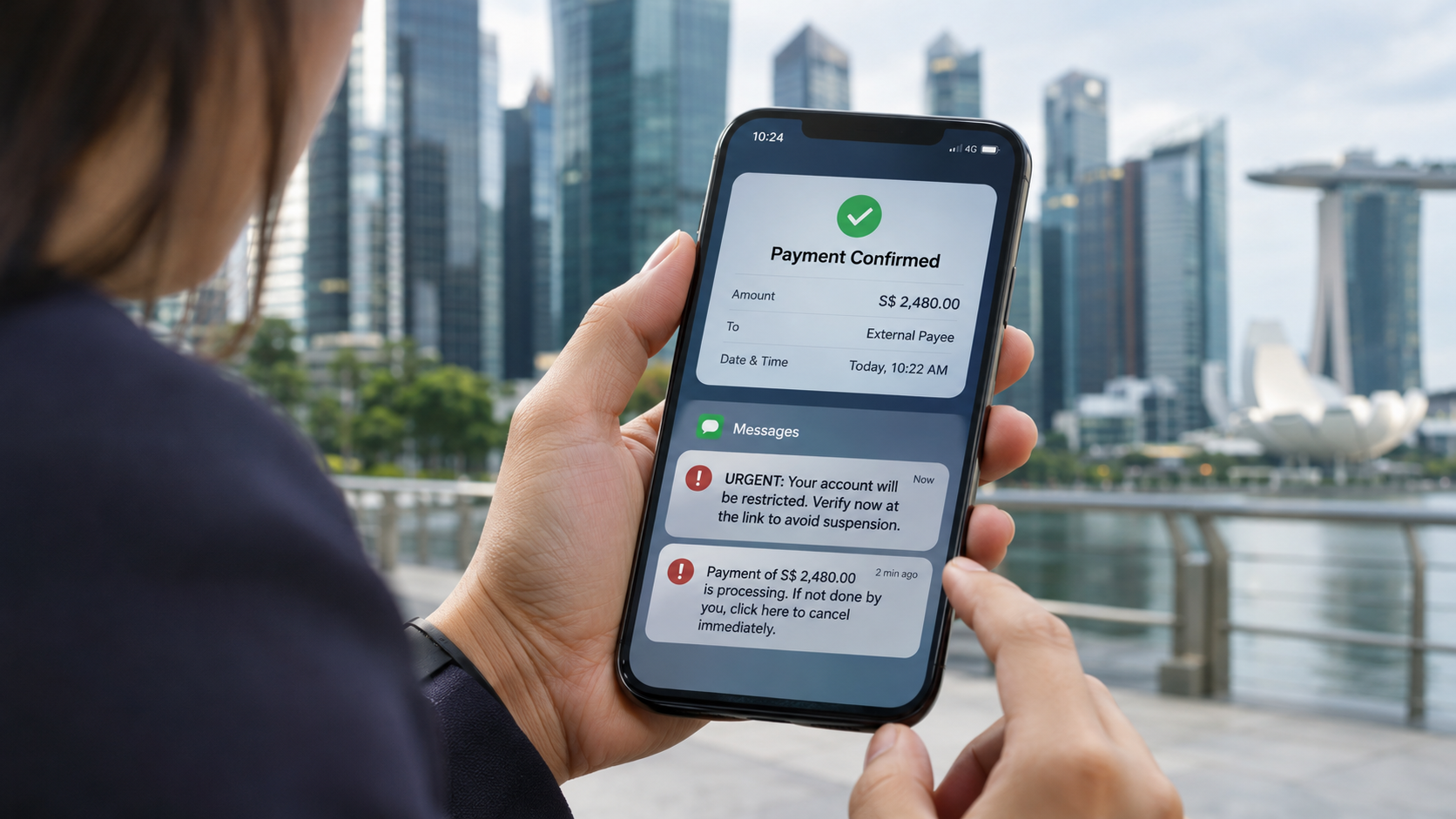
Scam losses are declining, but the economics of deception remain brutal. Singapore now needs a clearer answer to a question that digital finance has made unavoidable: when a payment is legitimate in form but fraudulent in purpose, who should bear the consequences?
A payment can be correctly authenticated, voluntarily approved and catastrophically mistaken. That is the uncomfortable reality behind a large share of modern financial fraud. Someone posing as an official convinces a frightened customer to transfer savings. A supposed investment adviser cultivates trust in a messaging group. A business receives an altered invoice from an apparently familiar supplier. In each case, the transaction may look authorized within the banking system even though the decision was engineered by a criminal.
Singapore has made measurable progress against scams, but the remaining scale is staggering. In the first half of 2026, Singapore Police Force figures reported by CNA recorded 16,821 cases and approximately S$410.6 million in losses. Reported cases were down 14.4% and losses down 17.9% year on year. This is progress, not victory.
The most revealing statistic is that about 80.8% of reported scams involved victims making transfers themselves, according to the same police account. This should change how the country frames the problem. The key vulnerability is often not a broken password but a manipulated person, persuaded to use a secure financial system in an insecure way. A defense based solely on telling customers to be more careful cannot be enough.
The answer is not an unconditional promise that banks refund every bad decision. It is a more intelligent division of responsibility that gives each participant a reason to stop fraud at the point where it has the greatest capacity to act.
The scale of the problem demands precision, not panic
Loss figures alone do not reveal the severity of individual harm or how much frozen money actually reaches victims. It matters.
The police’s half-year figures showed that investment scams caused roughly S$169.8 million in losses, making them the largest category by dollar amount. Government-official impersonation scams cost about S$90.8 million. Business email compromise losses rose to S$57.3 million, substantially higher than a year earlier, while e-commerce scams were the most common category by case count.
A serious strategy cannot treat these offences as interchangeable. An investment scam may unfold over weeks of persuasion. A compromised invoice might exploit a business’s payment workflow and supplier verification failures. A phishing attack may seek account credentials and allow an unauthorised account takeover. Prevention that works for one can miss another entirely.
The police also reported more than S$97.7 million in losses recovered or frozen through anti-scam efforts in the first half, and at least S$127.1 million in potential losses prevented. Those figures should not be added together and called money returned to victims. The recovered amount described funds secured in accounts or wallets, rather than automatically refunded, while prevention estimates refer to money that might otherwise have been transferred.
An important sign of progress appeared in a joint police-bank operation from July to August. Working with DBS, OCBC, UOB, Standard Chartered Singapore and GXS, authorities reported disrupting more than 400 ongoing scam attempts and averting over S$46 million in potential losses. The achievement shows what rapid intelligence-sharing can do. It also shows that the most useful intervention is often the one made before the transaction becomes irreversible.
The false boundary between ‘authorised’ and ‘fraudulent’
Banking law and payment systems need to determine whether a transaction was authorised. Customers need to determine whether the person asking them to pay is legitimate. Criminals exploit the gap between those two judgments. A person can authorise an instruction without understanding that the alleged identity, emergency or investment opportunity is fictitious.
From the bank’s operational perspective, the payment may have passed the required checks. From the customer’s perspective, the decision was based on deception. From a regulator’s perspective, the central challenge is to reduce the number of fraudulent transfers without imposing excessive friction on normal commerce. None of these perspectives is automatically complete.
The distinction matters because Singapore’s Shared Responsibility Framework, established by the Monetary Authority of Singapore and the Infocomm Media Development Authority, addresses a defined set of phishing scams and corresponding duties of financial institutions and telecommunications operators. It should not be represented as a universal, automatic reimbursement scheme for every investment scam, impersonation loss or unauthorised payment.
The MAS policy overview describes a duty-based approach to accountability, with expected payments when covered entities breach applicable duties. Outside its scope, other avenues of complaint, discretionary remediation and dispute resolution may still matter. A framework with boundaries can be useful, but misunderstanding those boundaries is dangerous for consumers.
Singapore therefore faces a policy question larger than the framework itself: should the treatment of authorised-but-fraudulent payments increasingly depend on whether an institution could reasonably have recognised and interrupted suspicious behaviour? If so, how can authorities define that standard without creating either limitless liability or a system so rigid that ordinary customers cannot transact?
The bank has information the consumer does not
A bank can observe transaction histories, unusual beneficiary patterns, sudden transfers, device activity and other signals that a customer usually cannot see. It may be able to identify a suspicious movement of funds across its network or cooperate with law enforcement more quickly than an individual victim. That informational advantage creates an obligation to invest seriously in monitoring and response.
In a November 4, 2026 parliamentary reply, the MAS chairman described safeguards including real-time fraud surveillance, transaction alerts and tools allowing customers to lock cards or contact emergency hotlines. These are meaningful measures, but their existence is not the same as proof that they catch every relevant pattern. The right questions are whether the alerts are timely, intelligible and effective, and whether a customer can obtain rapid assistance when something seems wrong.
Some transfers are anomalous for obvious reasons: an account suddenly sends large sums to unfamiliar recipients, or successive transactions rapidly drain savings. Other payments look routine until an external clue emerges—a fake commercial identity, a coerced beneficiary or an organised scam network. Banks should be judged against what their systems could reasonably know, not against an impossible expectation of omniscience.
There is a practical argument for narrowly designed delays on high-risk transactions. A pause can give a frightened customer time to speak with a trusted person, question the caller’s identity or contact the real institution using a verified channel. Delays can impede legitimate payments, so intervention must target demonstrable risk.
The strongest protection may be intelligently placed friction rather than universal friction. A system that quietly processes ordinary transactions while interrupting unusual, high-risk ones could protect both safety and convenience better than a blanket regime. Proving that requires measurement—false positives, prevented losses and customer outcomes—not slogans about innovation.
Platforms and communications networks are not innocent bystanders.
Many scams begin far from a bank. A fraudulent advertisement appears on a platform. A fake mentor builds credibility in a messaging group. A message impersonates a government office. An email thread is altered just before a supplier payment. By the time money reaches the banking system, crucial deception may already have happened elsewhere.
The mid-year police account highlighted investment-scam techniques involving impersonation and online chat communities. That makes digital platforms significant points of prevention. Verification of advertisers, rapid removal of impersonating accounts, better evidence preservation and effective escalation channels can affect whether the fraud is ever attempted successfully.
The challenge is to assign duties according to practical influence. Telecommunications providers can filter certain harmful communications. Platforms can moderate fraudulent ads and impersonation networks. Banks can assess money flows. Police can coordinate investigations and freeze illicit proceeds. Consumers still need reasonable opportunities to identify deception. A strategy that names only the victim at the end of the chain ignores the institutions able to intervene earlier.
Singapore’s September 2026 anti-scam legislative changes expanded tools for cooperation with service providers, including specified information-sharing and restrictions on accounts linked to scams. Such powers may reduce criminal opportunities, but they also need oversight. If a legitimate account is disabled in error, the disruption can be acute, particularly for someone who relies on it for wages or essential purchases.
It is possible to believe simultaneously that the state needs better anti-scam powers and that ordinary people need effective remedies when those powers are misapplied. A financial system worthy of trust should be able to hold both positions.
The overlooked issue of financial exclusion
Scam prevention increasingly intersects with the right to a basic bank account. Risk controls that are excellent at denying access can be poor at distinguishing malicious users from people caught in confusing or suspicious circumstances. For customers excluded from the payment system, a dispute over account access can quickly become a dispute over food, rent and employment.
In a November 3 parliamentary reply, the MAS chairman explained the availability of limited-purpose bank accounts for many Singapore citizens and permanent residents whose standard accounts are closed or denied, subject to exceptions. The principle is sound: severe restrictions should not automatically remove every avenue for essential lawful payment activity.
The implementation deserves scrutiny. Customers need understandable reasons to the extent legally possible, a realistic review process and accessible support. Regulators should study both the effectiveness of account restrictions against scams and the incidence of unjustified exclusion. If a protective system creates invisible hardship, it can erode trust even as it prevents crime.
A modern society increasingly treats digital payments as essential infrastructure. That raises the standard of fairness for institutions that control access. Banks should not be forced to take unlimited financial-crime risks, but neither should consumers be left without a credible path to resolve mistakes.
Artificial intelligence changes the economics of deception
The threat from AI is not merely a dramatic deepfake video. It is the ability to generate convincing messages at scale, tailor an impersonation to a specific victim, translate naturally across languages and maintain a persistent fictional identity. Criminals can lower the cost of experimentation while increasing the realism of some approaches.
In remarks accompanying the MAS 2025/2026 annual report, the regulator discussed more personalised AI-assisted scams and the need for banks to improve fraud-detection models. It also disclosed that roughly S$47 billion was protected under the Money Lock function as of May 2026. The function illustrates an important concept: the freedom to move money instantly is not always the same as the freedom to preserve it safely.
But there is also risk in overconfident automated decision-making. A model that labels a lawful transaction suspicious can trap customers in opaque procedures. A model that fails to recognise a new scam variant can provide false comfort. Human review, explainable escalation processes and testing against real outcomes should accompany claims of AI-driven protection.
The relevant innovation is not an impressive detection dashboard. It is a measurable reduction in losses and harm without intolerable collateral damage to legitimate financial life.
A fair counterargument: unlimited reimbursement would make matters worse
Those sceptical of expanded bank responsibility have a legitimate concern. If customers believe every authorised transfer will be reimbursed, some may take fewer precautions, while criminals devise new ways to abuse the guarantee. Banks may respond by charging more, rejecting more transactions or withdrawing services from customers they perceive as risky. A poorly designed liability regime could hurt the very households it intends to protect.
Such incentives must be taken seriously. Responsibility should be calibrated to what an institution could reasonably prevent and whether it fulfilled defined duties. Customers must retain agency, and payment systems must remain usable. A uniform compensation rule would be blunt; it could make ordinary financial activity less accessible without solving the underlying deception.
Yet the opposite extreme—treating every customer-approved transfer as solely the customer’s problem—would also produce bad incentives. A bank might invest less than socially optimal amounts in detection if most of the losses fall on households. A platform might profit from advertising while leaving expensive cleanup to police and banks. An effective framework makes prevention worthwhile for the parties best placed to prevent harm.
What a better Singapore model would measure
Singapore should report consistent statistics on preventable losses, intervention success, complaint outcomes and false-positive restrictions, alongside headline scam losses. It should distinguish money frozen from money repaid and publish clear explanations of how different scam types fit within different compensation regimes. Greater transparency would help the public understand actual protections rather than rely on vague assurances.
Banks and platforms should be encouraged to test interventions jointly, including targeted payment pauses, beneficiary warnings, suspicious-ad takedowns and rapid information-sharing. Police and regulators should assess which interventions prevent the most harm per unit of cost or inconvenience. Firms should have incentives to fix recurring weaknesses, while consumers should have practical routes to appeal and recovery.
At the same time, legal protections must respect privacy, proportionality and due process. Fighting financial crime does not justify indefinite, unexplained restrictions on innocent users. The system should protect both personal savings and access to the infrastructure of everyday life.
For policymakers, the central test is whether responsibility follows capacity. If one party controls a risky communication channel, another holds the money and a third maintains investigative powers, each should carry obligations aligned with the harm it can realistically prevent. Responsibility shared in this manner does not dissolve accountability; it makes it operational.
Trust is the ultimate financial infrastructure
Singapore’s falling scam totals are an achievement. But hundreds of millions in losses during six months remain a profound challenge for an economy built on trust, efficient transactions and sophisticated financial institutions. A victim who authorised a payment while being expertly deceived may bear part of the responsibility. That does not justify ignoring the systems that enabled the deception and the transfer.
The goal should not be to guarantee a world without financial crime, which no jurisdiction can promise. It should be to build a system in which fraud is harder to initiate, easier to interrupt, less devastating when it occurs and subject to remedies that ordinary people can understand.
Digital finance has reduced the friction of sending money. The next phase of progress must reduce the friction of keeping it safe. Singapore’s institutions have the skills and coordination capacity to do that. Whether they allocate the costs of prevention fairly will determine how much of the public’s trust they retain.
Singapore’s scam losses declined in the first half of 2026, but still reached S$410.6 million. Many victims authorised transfers themselves under deception, exposing a gap between technical payment security and real-world protection. An effective response should assign clear, proportionate duties to banks, platforms, telecommunications operators and regulators while preserving consumers’ access to essential financial services.
Singapore’s scam losses are falling, yet victims still lose hundreds of millions. The unresolved question is who should act—and who should pay—when fraud succeeds through a valid payment.
Discover more from The Economy
Subscribe to get the latest posts sent to your email.
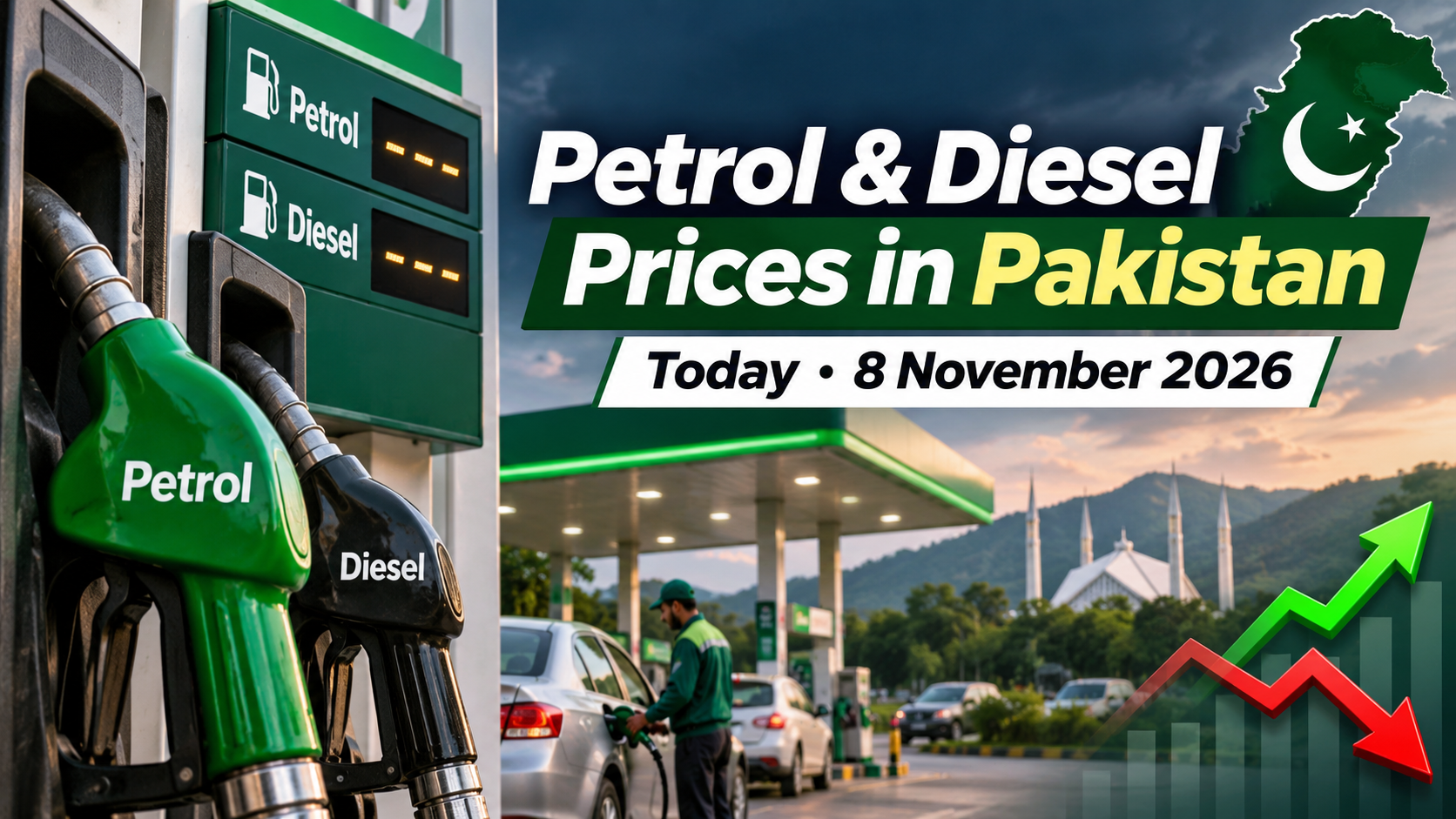
As of Sunday, 8 November 2026, the official Oil and Gas Regulatory Authority (OGRA) notified price of petrol (motor spirit) in Pakistan stands at Rs 346 per litre, while high-speed diesel (HSD) is priced at Rs 378 per litre. These rates came into effect from midnight on 7 November 2026 after a cut of Rs 6.59 in petrol and Rs 4.25 in diesel. The reductions continue a clear downward trend that began in late October and accelerated through the first week of November as international oil benchmarks softened.
This article provides the complete current price picture, explains the new daily pricing mechanism, traces 2026 price history, analyses the real-world impact on households and businesses, and outlines the outlook for the rest of the year.
Current Official Fuel Prices Effective 7–9 November 2026
The latest OGRA notification sets the following national ex-depot prices:
| Fuel Type | New Price (Rs/litre) | Change (Rs) | Previous Price | Effective Period |
|---|---|---|---|---|
| Petrol (Motor Spirit) | 346.00 | −6.59 | 352.59 | 7–9 Nov 2026 |
| High-Speed Diesel (HSD) | 378.00 | −4.25 | 382.25 | 7–9 Nov 2026 |
| Kerosene (SKO) | 308.52 | −15.15 | 323.67 | 7 Nov onwards |
| Light Diesel Oil (LDO) | 251.37 | −17.72 | 269.09 | 7 Nov onwards |
These figures have been widely reported by The News, Geo News, Business Recorder, and Dawn. Pump prices at individual stations are typically a few rupees higher because of inland freight costs that vary by location. OGRA also publishes city-wise pump prices for greater transparency.
High-octane blended component (HOBC) remains around Rs 415 per litre, set by individual oil marketing companies rather than a single OGRA rate. LPG cylinder prices are notified separately on a monthly basis and currently sit near Rs 294 per kg at the regulated maximum.
Why Prices Have Fallen in Early November 2026
Three main factors drove the recent cuts:
- Softer international oil prices. Brent crude has retreated from peaks above $100 per barrel earlier in the autumn as some geopolitical risk premium eased.
- Daily pricing mechanism. Since late October the government passes through changes in landed cost much more quickly.
- Refinery and premium differential adjustments. A portion of the benefit arising from premium differentials is being shared with consumers.
Earlier in the same week, OGRA had already announced larger cuts (Rs 9.41 for petrol and Rs 5.56 for diesel effective 6 November). The cumulative reduction from the late-October peak has been roughly Rs 28–32 for petrol within about ten days.
How the Daily Fuel Pricing Mechanism Works
On 30 October 2026 the federal cabinet approved a shift from the traditional fortnightly review to a daily fuel price revision system. The decision was taken against the backdrop of extreme volatility caused by the ongoing US-Israel-Iran tensions. Key features of the new system, as explained in official notifications and detailed by Express Tribune and Dawn, include:
- The import parity price is calculated on the actual landed cost of the relevant Pakistan State Oil (PSO) cargo rather than a fixed fortnightly average.
- A short-term premium differential adjustment (currently approximately $2.95 per barrel) is applied to smooth extreme daily swings.
- Refineries are required to surrender a portion of the differential into the petroleum levy account; the resulting benefit is passed on to consumers.
- The Petroleum Levy remains fixed at Rs 80 per litre for both petrol and diesel.
- An additional Climate Support Levy of Rs 5 per litre is still applied.
- Dealer margin is unchanged at Rs 9.98 per litre and oil marketing company margin at Rs 7.87 per litre.
- Prices are published on the OGRA website every day for public scrutiny.
The system improves transparency and allows faster relief when international prices fall. At the same time it means consumers can see price changes almost daily, which requires closer monitoring by transporters and households.
Detailed 2026 Price History and Volatility
Fuel prices in 2026 have been among the most volatile in the past decade. Compiled OGRA notification data shows:
- Petrol’s 2026 high was approximately Rs 398.96 in early October.
- The lowest point in the second half of the year was around Rs 315.80 on 21 July 2026.
- From 21 July to 7 November, petrol still rose overall by about 9.6% even after the recent cuts.
- Diesel followed a parallel path, peaking near Rs 424.92 in mid-September before declining to the present Rs 378.
Month-by-month summary (approximate closing levels):
| Month | Petrol (approx. end) | Diesel (approx. end) | Notable Events |
|---|---|---|---|
| July 2026 | 336 | 360 | Post-Eid recovery |
| August 2026 | 342 | 365 | Gradual rise |
| September 2026 | 387 | 400+ | Middle East escalation |
| October 2026 | 378–399 | 400–425 | Peak volatility |
| Early Nov 2026 | 346 | 378 | Daily mechanism + falling crude |
The sharp rises earlier in the year were directly linked to Brent crude trading above $100 per barrel for extended periods. Higher global freight rates and a relatively stable but still elevated USD/PKR rate (around 276–282) amplified the impact on local prices.
Real Economic Impact on Households, Transporters and Industry
Even modest cuts produce noticeable savings:
- A typical family car (40-litre tank filled once a week) saves approximately Rs 260–280 per week, or more than Rs 1,100 per month.
- Motorcycle users (5–8 litre tank) save Rs 30–55 per fill-up.
- Ride-hailing drivers and small transporters see improved margins.
- Goods transporters benefit most from the diesel cut; lower freight costs can gradually feed through into food and consumer goods prices, helping moderate inflation.
Despite the relief, absolute prices remain high. Petrol is still more than Rs 90 above early-2026 levels. Combined with the separate NEPRA fuel cost adjustment of Rs 2.37 per unit that will appear on November electricity bills, overall energy expenditure continues to pressure middle- and lower-income households. Analysts writing in Business Recorder and Profit by Pakistan Today note that sustained lower fuel prices could contribute to a further easing of core inflation (recently averaging 6–7%), but only if international prices remain soft for several more weeks.
Outlook for the Remainder of November and December 2026
Market participants and independent trackers expect continued volatility. Key variables:
- Brent crude trajectory. If crude stays below $95–98, further modest reductions are possible within the next 7–10 days. Any escalation in the Middle East could reverse the trend quickly.
- PSO cargo schedule and premiums. The exact landed cost of upcoming shipments will determine the next daily notifications.
- Exchange rate. The USD/PKR has been relatively stable near 276–282; any sharp depreciation would offset oil price declines.
- Government policy choices. Decisions on the petroleum levy, climate levy, or any temporary relief packages remain possible under the IMF programme.
Most observers currently lean toward a mildly positive short-term outlook for consumers, provided global supply conditions do not deteriorate.
Frequently Asked Questions
What is the petrol price in Pakistan today (8 November 2026)?
Rs 346 per litre according to the latest OGRA notification.
What is the current diesel price?
Rs 378 per litre.
Why do fuel prices change every day now?
The government adopted a daily review mechanism on 30 October 2026 to respond more quickly to global oil volatility.
Will prices rise again soon?
It depends on international oil prices, freight rates and the exchange rate. Monitor OGRA’s daily notifications.
Are there any consumer subsidies currently in place?
No broad-based consumer subsidies exist beyond the fixed levy structure. Targeted support measures remain under discussion.
How much has petrol fallen in the past ten days?
Roughly Rs 28–32 from late-October peaks, depending on the exact starting date.
Does the daily mechanism apply to LPG and kerosene?
Kerosene and light diesel oil are still adjusted less frequently; LPG follows a separate monthly notification process.
Detailed Breakdown of Price Components (November 2026)
Understanding why petrol costs Rs 346 requires looking beyond the headline number. According to the pricing formula used by OGRA and reported extensively by Business Recorder and Dawn, the final consumer price consists of several layers:
- Ex-refinery price / Import parity: This is the largest variable component and moves with international crude and product prices plus freight.
- Petroleum Levy: Fixed at Rs 80 per litre. This is a major revenue source for the federal government and is protected under the IMF programme.
- Climate Support Levy: Rs 5 per litre.
- Inland Freight Equalisation Margin (IFEM): Varies by location to equalise prices across the country.
- Dealer margin: Rs 9.98 per litre.
- OMC margin: Rs 7.87 per litre.
- Sales tax and other duties: Applied according to the prevailing regime.
Because the levy and margins are largely fixed, most of the daily movement comes from the import parity component. This is why a $5–6 drop in Brent crude can translate into a Rs 5–8 reduction at the pump once the daily mechanism is applied.
Comparison with Regional Prices
As of early November 2026, Pakistani fuel prices remain higher than several neighbouring and peer economies when adjusted for income levels:
- India (major cities): Petrol roughly equivalent to Rs 280–310 in Pakistani rupees after conversion.
- Bangladesh: Lower regulated prices with heavier subsidies.
- UAE and Saudi Arabia: Significantly lower (under Rs 200 equivalent) because of local production and subsidies.
- Sri Lanka: Has seen sharp reductions after earlier crises.
The gap is largely explained by Pakistan’s high petroleum levy, import dependence (over 80% of refined products or crude), and the exchange rate. Policymakers frequently cite the need to keep the levy high to meet fiscal targets while arguing that lower international prices should eventually provide relief.
Impact on Inflation and Monetary Policy
Fuel prices have a direct and indirect effect on inflation. Directly, they appear in the transport component of the CPI. Indirectly, they raise the cost of moving food, cement, steel, and consumer goods. The State Bank of Pakistan raised the policy rate by 50 basis points to 12% in late October 2026, citing elevated energy costs and the inflation outlook.
If the current downward trend in fuel prices persists for the next 4–6 weeks, it could ease pressure on the central bank and support a more stable inflation path into early 2027. Conversely, a rebound in oil prices would complicate the disinflation process and could force the SBP to maintain higher rates for longer. Independent analysis published by Profit and Business Recorder suggests that every sustained Rs 10 reduction in petrol contributes roughly 0.15–0.25 percentage points to lower headline inflation over a quarter, assuming no offsetting shocks.
What Consumers and Businesses Should Do Now
- Households: Consider filling tanks if further cuts are expected in the next few days, but avoid panic buying. Monitor OGRA’s website or reliable news sources daily.
- Transporters and logistics firms: Update freight rates cautiously. Many contracts allow pass-through of fuel costs; document the recent reductions.
- Businesses with high fuel intensity (manufacturing, agriculture, construction): Recalculate operating costs and review hedging or bulk-purchase options where available.
- Investors: Watch oil marketing companies and refineries for margin impacts. Lower prices can boost volume but squeeze refining margins if the differential narrows.
Frequently Asked Questions (Expanded)
Is the Rs 346 price the same in every city?
No. The OGRA rate is the ex-depot or base rate. Actual pump prices include inland freight, which is higher in northern and remote areas. Differences of Rs 3–8 per litre are common.
When will the next price announcement be made?
Under the daily mechanism, OGRA typically publishes the next day’s rate in the evening or late afternoon. Always check the official OGRA website or trusted news outlets.
Does the government still provide any fuel subsidy?
There is no general consumer subsidy. The government collects a high petroleum levy. Some targeted schemes for public transport or agriculture have been discussed but are not currently active on a large scale.
How does the current price compare with January 2026?
Petrol was near Rs 253 in January 2026. The present Rs 346 represents a substantial increase over the year despite the recent cuts.
Will electric vehicles become more attractive because of high fuel prices?
Yes. The combination of elevated petrol prices and the new Auto Policy 2026-31 incentives (1% sales tax on battery EVs and higher financing limits) is expected to accelerate EV adoption, especially among urban middle-class buyers.
Long-Term Structural Issues
Pakistan remains heavily dependent on imported petroleum products. Local refineries operate well below capacity, and new refining investments have been slow. The government has repeatedly stated that shifting toward electric vehicles, improving public transport, and eventually developing domestic energy resources are necessary to reduce vulnerability to global oil shocks. The recent Auto Policy and ongoing discussions around the National Electric Vehicle Policy are part of that longer-term strategy. Until those measures scale up, fuel price volatility will continue to affect the economy.
Conclusion
The latest OGRA cuts bring welcome and measurable relief after a prolonged period of elevated fuel prices. At Rs 346 for petrol and Rs 378 for diesel, Pakistani consumers are paying substantially less than they did in early October, though absolute levels remain high by historical standards. The new daily pricing system offers greater transparency and faster pass-through of international declines, but it also means more frequent adjustments. Households, transporters, logistics companies and policymakers will continue to watch global oil markets and OGRA notifications closely in the coming weeks. Sustained lower prices would support inflation moderation and household purchasing power, while any sharp rebound in crude would quickly reverse the gains under the current mechanism.
Discover more from The Economy
Subscribe to get the latest posts sent to your email.
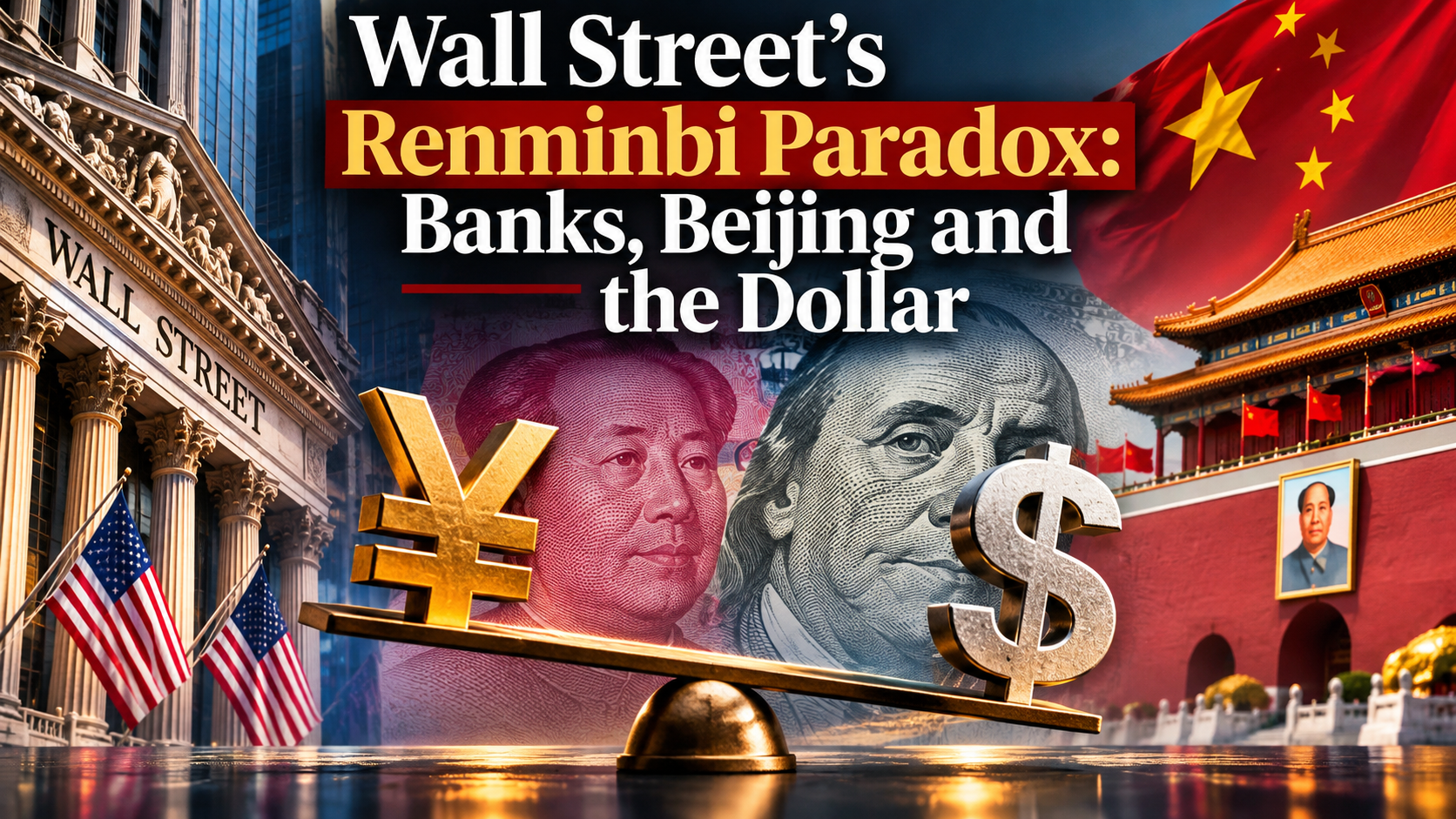
Washington preaches decoupling while its largest banks wire the renminbi into global markets. The contradiction is structural, and policymakers have not yet decided how to handle it.
Washington’s rhetoric about economic de-risking from China has rarely been sharper. Export controls, outbound investment screens and congressional hearings on supply-chain dependence are now routine. Yet the institutions most exposed to the consequences of that rhetoric, JPMorgan Chase, Goldman Sachs and Morgan Stanley among them, are steadily expanding their role in the infrastructure that would let the renminbi challenge the dollar. The gap between what the American state says about China’s currency and what its banks do with it is the central paradox of modern geo-economics.
Regional business coverage, including reporting in outlets such as The Business Times, usually treats foreign banks’ presence in mainland China as a story about corporate dealmaking: licences granted, joint-venture stakes adjusted, league tables reshuffled. That lens is accurate as far as it goes. It misses the macro picture. The question that matters for the future of the international monetary system is not how much underwriting revenue a bank earns in Shanghai. It is whether the offshore and cross-border machinery those banks are building can make the renminbi usable, hedgeable and bankable outside China’s borders.
Why the Coverage Misses the Point
Local reporting tends to measure foreign banks by visible indicators: headcount, ownership percentages and short-term underwriting positions. Those indicators matter to shareholders. They say little about reserve currency status, which is determined by something less visible: whether a currency has deep, liquid markets in which others can borrow, lend, hedge and settle without thinking about it.
Consider the difference in emphasis. Standard coverage sees opportunistic revenue capture in cross-border M&A and listings. A macro reading sees the systematic integration of offshore renminbi liquidity into global capital markets. Standard coverage treats geopolitics as a matter of navigating trade friction. The macro reading treats it as a question of who provides institutional credibility to alternative payment rails. The two readings describe the same transactions. They reach different conclusions about what those transactions add up to.
How the Plumbing Gets Built
A currency becomes international when three things exist together: deep markets in which it can be held and traded, instruments that let users manage its risk, and channels through which it can settle across borders. China has long had the first two problems partly solved onshore and has spent the past decade building the third. Capital controls have made it difficult for the People’s Bank of China to achieve those goals directly, so much of the work has migrated offshore.
Hong Kong, Singapore and London have become the principal venues. Foreign investment banks sit at the centre of several linked activities:
Bond syndication. Banks arrange renminbi-denominated debt issued outside China. Dim sum bonds, issued in Hong Kong, and panda bonds, issued onshore by foreign borrowers, create a yield curve in renminbi assets that central banks and reserve managers can reference when they decide how much to hold.
Derivatives market-making. Trading desks quote offshore deliverable and non-deliverable forwards. Every time a bank absorbs a foreign-exchange exposure for an asset manager, it deepens the market in which the renminbi can be hedged. Hedgeability is one of the least glamorous and most important prerequisites for reserve status.
Custody and market access. Major custodian banks connect global institutions to China’s onshore bond market and to cross-border payment infrastructure, including the Cross-Border Interbank Payment System (CIPS). When a payment network is backed by the custodial reliability of global Tier-1 banks, it becomes easier for investors to trust it.
None of these activities is a conspiracy, and none is illegal. Each is a rational response to client demand. Together, they form the operational scaffolding on which a parallel renminbi system depends.
The Dilemma at the Heart of Western Policy
The tension is real and it runs in both directions. The U.S. Treasury and national security agencies want to preserve the dollar’s dominance, which underpins American sanctions power and the cheap financing of federal debt. Wall Street’s mandate is to maximise risk-adjusted returns for clients and shareholders.
Those mandates collide because of where global demand is going. Chinese firms are expanding across the Global South, from energy procurement in the Middle East to infrastructure construction in Southeast Asia. Those projects require trade finance and currency hedging, and an increasing share of the relevant trade is priced and settled in renminbi. A bank that cannot serve those flows risks losing clients to non-Western intermediaries. A bank that serves them helps build the alternative.
Research on currency internationalisation, including work from the Brookings Institution on monetary policy, has long emphasised that reserve status is rarely granted by decree. It accrues from deep capital markets, reliable legal frameworks and network effects. That observation cuts both ways. It suggests the renminbi’s progress depends on financial infrastructure that Western banks happen to be well placed to supply. It also suggests the dollar’s position rests on the same foundations, which means a shift in the market share of intermediation is more consequential than any single policy announcement.
Where the Argument Has Limits
A serious analysis must also weigh what the renminbi still lacks. Its share of global payments and central bank reserves remains a fraction of the dollar’s. Capital controls, though gradually loosened, still prevent full convertibility. Investors who value independent courts, unrestricted capital movement and deep Treasury markets have few reasons to abandon the dollar for the renminbi in the near term.
Banks do not decide reserve currency status. Governments, central banks and private investors do. What banks decide is how quickly the infrastructure exists when those decisions are made. That distinction matters for policy: the question is not whether Wall Street will single-handedly elevate the renminbi, but whether Washington has a coherent view of which parts of the plumbing it is prepared to tolerate.
Strategic Outlook: A Dual-Track Architecture
The likeliest path is neither a clean break nor a seamless merger. It is a dual-track system in which onshore renminbi markets remain tightly managed by Beijing while offshore hubs grow more open and more integrated with Western finance. Within that structure, the banks that thrive will be those that can serve clients on both tracks without becoming instruments of either government.
That position is uncomfortable, and it will become more so. Regulators in Washington may eventually demand that banks ring-fence renminbi activities, disclose exposures to Chinese clearing systems or restrict participation in certain programmes. Beijing may demand reciprocal access, or withhold it. The banks will be caught between two sets of rules, and their clients will feel the cost.
The Verdict
The paradox is not that Western finance is quietly undermining the dollar. It is that the policy consensus in Washington has not caught up with the commercial reality. Officials speak of decoupling as if financial integration were a switch that could be turned off. In practice, the integration is embedded in fee models, client relationships and market structure that no single rule can dismantle.
That leaves policymakers with an honest choice. They can accept that offshore renminbi infrastructure will grow and design rules to manage its risks. Or they can attempt to restrict it and accept the consequences for American banks’ competitiveness. What they cannot do is continue to treat the dollar’s future as secure while its largest intermediaries help build the alternatives. The next decade of cross-border finance will be shaped by how well institutions navigate the friction between U.S. regulatory oversight and the onshore and offshore renminbi markets. Washington has not yet decided whether it wants that friction managed or merely denounced.
Key Takeaways
- Western investment banks are building the offshore market infrastructure, including bond syndication, forward markets and custody links, that would make the renminbi more usable internationally.
- Standard regional coverage focuses on corporate deal flow and misses the macro-monetary significance of these activities.
- Reserve currency status depends on market depth and legal trust, which the dollar still holds by a wide margin.
- The real policy question is not whether banks should participate, but which parts of the offshore renminbi system Washington is willing to accept.
Frequently Asked Questions
Are Western banks helping China undermine the dollar?
Not deliberately, and not in the sense of a coordinated strategy. They are responding to client demand for renminbi financing and hedging. The cumulative effect is to deepen renminbi markets outside China, which is relevant to the dollar’s long-term position even if no individual bank intends it.
What are dim sum and panda bonds?
Dim sum bonds are renminbi-denominated bonds issued in Hong Kong. Panda bonds are renminbi-denominated bonds issued in mainland China by foreign borrowers. Both help build a renminbi yield curve that investors and central banks can use as a reference.
What is CIPS and why does it matter?
The Cross-Border Interbank Payment System is China’s system for settling renminbi cross-border payments. Its growing use, supported by global custodian banks, gives the renminbi a settlement channel that does not depend on the U.S. dollar correspondent banking network.
Does this mean the renminbi will replace the dollar?
Not in the foreseeable future. The renminbi’s share of global reserves and payments remains small, and its use depends on capital account openness and institutional trust that China has yet to fully establish. The more realistic outcome is a multi-polar system in which several currencies share roles that the dollar currently dominates.
Discover more from The Economy
Subscribe to get the latest posts sent to your email.

Oil Shocks and Core Inflation: Why the Two Move Differently

Singapore Cannot Fight Financial Fraud by Making Victims Bear the Risk Alone

Singapore Banking’s Real Test: Beyond Profits, Who Will Safeguard Financial Trust?

Nvidia’s Share Price Is Not a Scorecard for Singapore’s AI Future

The Australian Dollar Is Not Asia’s Oracle. Singapore Should Listen Anyway

Singapore’s Bank Sell-Off Is Really a Test of What Stability Is Worth

Why a Weaker Currency Makes Imported Food More Expensive

How Oil Price Shocks Raise Food Prices in Importing Countries

Petrol and Diesel Prices in Pakistan Today: Complete Update for 9 November 2026

Wall Street’s Renminbi Paradox: Banks, Beijing and the Dollar

The Market Economy Is Winning

Bitcoin’s Dollar Trap: The Chart That Exposes the Future of Money

Dow Jones Today: Dow Slips 237 Points After the Worst Day Since April 2025

Australia’s AI-Driven Economic Strategy Is Redefining National Resilience

Social Security Extra $90 Deposit: Who Qualifies for the October 2026 Medicare Rebate?

Stock Market Crash in 2026? Warning Signs, Scenarios and a Calm Investor Checklist

US–Iran Conflict in October 2026: Hormuz, Oil Prices and Diplomacy
Dow Jones Today: Dow Slips 237 Points After the Worst Day Since April 2025

China’s AI Microdrama Boom: How Beijing Is Reshaping Global Media

SSI November 2026 Payment: Why Benefits Arrive October 30

US–China AI Export Controls in 2026: Chips, Testing Rules and Corporate Risk

Pakistan IMF Programme 2026: Why Bailouts Keep Returning

2027 Federal Tax Brackets: New IRS Rates and Standard Deductions Explained

EU-China Trade Deal 2026: How Beijing and Brussels Avoided a Trade War—and Who Wins

Q3 2026 Earnings Preview: Can Record Profit Expectations Keep Wall Street’s Rally Alive?

KSE-100 Index 2026: Is Pakistan’s Stock-Market Recovery Sustainable?

Stock Market Crash 2026? What the November Rout Actually Tells Us

Singapore Stock Market Outlook 2027: The STI’s Bank-and-Yield Test
-

 Markets & Finance10 months ago
Top 15 Stocks for Investment in 2026 in PSX: Your Complete Guide to Pakistan’s Best Investment Opportunities
-

 Analysis9 months ago
Johor’s Investment Boom: The Hidden Costs Behind Malaysia’s Most Ambitious Economic Surge
-

 Analysis9 months ago
Top 10 Stocks for Investment in PSX for Quick Returns in 2026
-

 Banks10 months ago
Best Investments in Pakistan 2026: Top 10 Low-Price Shares and Long-Term Picks for the PSX
-

 Analysis9 months ago
Brazil’s Rare Earth Race: US, EU, and China Compete for Critical Minerals as Tensions Rise
-

 Investment10 months ago
Top 10 Mutual Fund Managers in Pakistan for Investment in 2026: A Comprehensive Guide for Optimal Returns
-

 Global Economy11 months ago
15 Most Lucrative Sectors for Investment in Pakistan: A 2025 Data-Driven Analysis
-

 Global Economy11 months ago
Pakistan’s Export Goldmine: 10 Game-Changing Markets Where Pakistani Businesses Are Winning Big in 2025