
Global Trade
EU-China Trade Deal 2026: How Beijing and Brussels Avoided a Trade War—and Who Wins

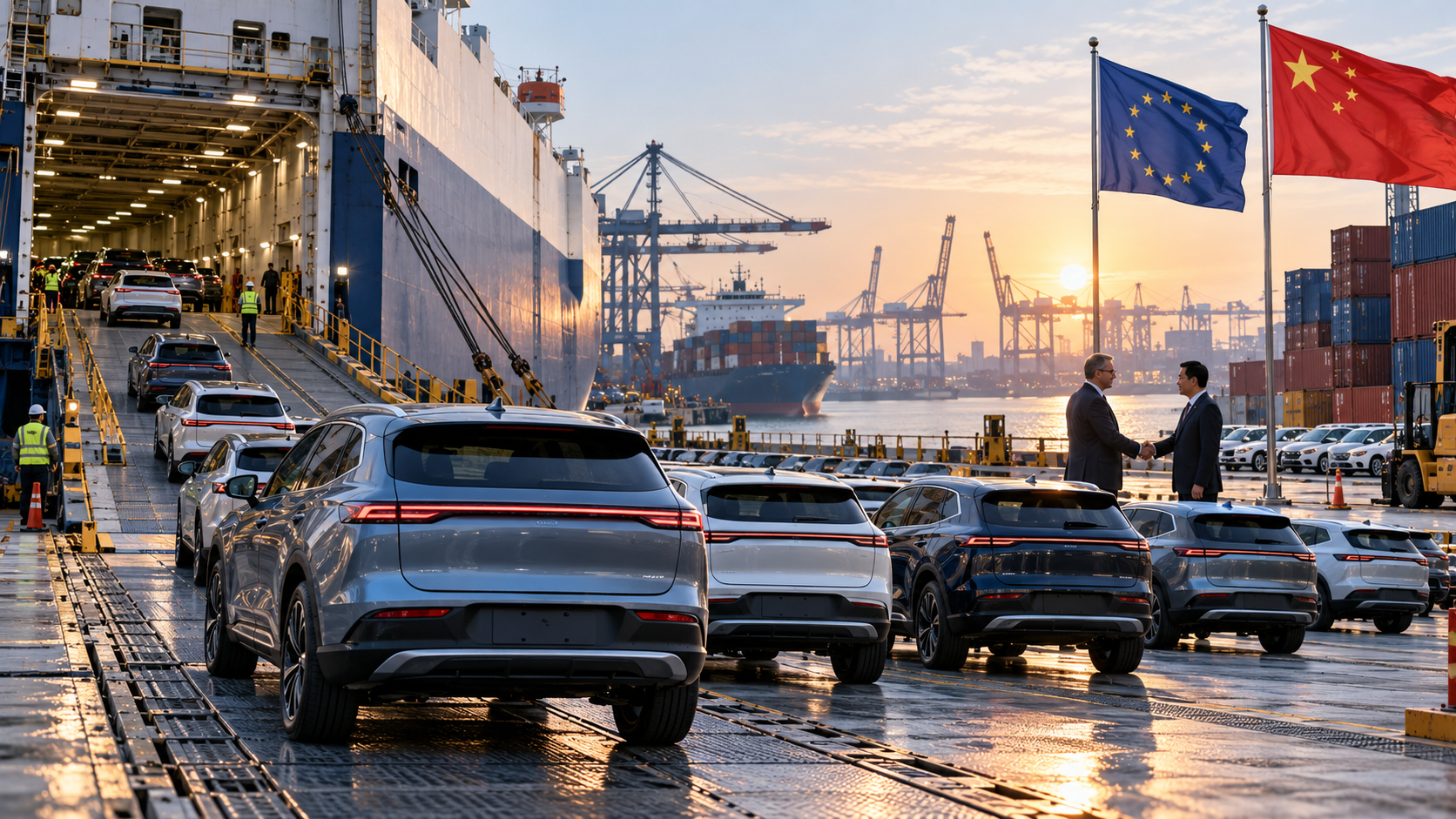
The European Union and China have reached a trade understanding that would sharply limit Chinese hybrid-car imports, reduce selected Chinese tariffs on European goods and ease critical-mineral supply disruptions. But beneath the diplomatic breakthrough lies a much larger conflict over industrial competitiveness, trade imbalances and the future of European manufacturing.
BRUSSELS/BEIJING, October 12, 2026 — China and the European Union have stepped back from a potentially damaging trade confrontation, reaching an agreement that could reshape the European automobile market while opening a new chapter in economic relations between two of the world’s largest trading powers.
The breakthrough, announced on October 9 following negotiations in Beijing, would limit China’s exports of hybrid vehicles to the European Union, improve access to the Chinese market for selected European goods and facilitate licensing for critical rare-earth materials.
The most consequential measure is a planned import quota initially set at approximately 350,000 Chinese-made hybrid vehicles annually, with the ceiling scheduled to rise by 6% each year.
The agreement offers temporary relief after months of escalating friction over Chinese industrial subsidies, European import restrictions and increasingly aggressive competition between Chinese and European manufacturers.
But calling it the end of the trade war would be premature.
The wider dispute remains unresolved, and the agreement’s long-term significance will depend on implementation, regulatory enforcement and whether China and the EU can make progress toward reducing their substantial trade imbalance.
According to Reuters’ October 12 assessment, the arrangement reduces the threat of immediate tariff escalation but replaces it with new risks surrounding import quotas, distribution rights and local manufacturing investment.
The result is not free trade in the traditional sense. It is a negotiated attempt to manage commercial competition before it becomes a broader economic crisis.
Key Takeaways: What the EU-China Trade Deal Means
- Chinese hybrid-car imports face new limits. The EU plans an initial annual ceiling of 350,000 vehicles, rising by 6% annually, compared with a projection of roughly 800,000 shipments in 2026.
- China has accepted a framework for limiting exports. Beijing emphasizes that its producers must receive nondiscriminatory treatment and retain opportunities for growth.
- European exporters receive concessions. China has agreed to lower tariffs on selected products, including automotive components, olive oil and footwear.
- Rare-earth supply chains are part of the understanding. Both sides agreed to facilitate licensing procedures for materials essential to manufacturing.
- The €359.8 billion trade deficit remains a central issue. Europe’s goods imports from China substantially exceed its exports.
- The arrangement is not a complete trade settlement. Further negotiations are scheduled, including another ministerial meeting in March 2027.
What Did China and the EU Actually Agree To?
The agreement followed negotiations on October 8 and 9 between European Trade Commissioner Maroš Šefčovič and Chinese Commerce Minister Wang Wentao, alongside discussions with other senior Chinese officials.
The European Commission’s official account of the consultations describes the talks as productive and confirms that both sides reached a series of understandings intended to stabilize their relationship within the framework of World Trade Organization rules.
The package contains three major components.
1. Restrictions on Chinese hybrid-vehicle exports
The EU has outlined a four-year safeguard arrangement initially limiting imports of Chinese-built hybrid vehicles to approximately 350,000 annually.
The quota is expected to increase by 6% each year.
The Guardian’s October 12 report says the restrictions are expected to begin in December 2026, while the first full-year arrangements cover 2027. The final legal instruments and some implementation details still require clarification.
The policy covers hybrid vehicles, including plug-in hybrids, which became an increasingly important Chinese export category after the EU imposed additional tariffs on battery-electric vehicles in 2024.
EU projections suggest Chinese hybrid shipments could reach around 800,000 vehicles in 2026 without restrictions.
An initial annual quota of 350,000 represents approximately 56% fewer vehicles than that projected baseline.
Crucially, this is a comparison with a forecast, not evidence that actual Chinese exports have already fallen by 56%.
2. Lower Chinese tariffs on selected European products
In return for the automobile arrangements, Beijing agreed to improve market access for several European exports.
According to the Associated Press, the concessions cover products with existing export values approaching €4 billion.
The affected categories include automobile parts, olive oil and footwear, while subsequent reporting also identified ice cream among the products benefiting from lower duties.
The €4 billion figure describes the approximate value of covered trade. It is not the amount of tariffs being eliminated or a guaranteed increase in future European exports.
That distinction is important when assessing the deal’s economic benefits.
Lower duties may improve the competitiveness of affected European products, but actual sales depend on Chinese demand, domestic competitors, exchange rates and other barriers to market access.
3. Greater predictability for rare-earth export licensing
The third component concerns strategically important minerals and industrial materials.
China and the EU have agreed to facilitate Chinese export licensing for rare earths and permanent magnets, according to the Associated Press’ reporting on the negotiations.
These materials support numerous industries, including electric vehicles, wind turbines, industrial equipment and advanced electronics.
The agreement does not establish that China has removed all export controls.
Instead, it represents a commitment to improving licensing processes and making supplies more predictable.
For European companies, reducing administrative delays and uncertainty could be as commercially important as changes in tariffs.
Why Did China Agree to Restrict Its Automobile Exports?
At first glance, China’s willingness to accept limits on one of its fastest-growing export categories appears surprising.
Chinese automakers have invested heavily in electric and hybrid technology, and international expansion has become increasingly important as domestic competition intensifies.
Nevertheless, Beijing faced a difficult choice.
Rejecting the EU’s demands could have encouraged Brussels to introduce more aggressive restrictions, potentially extending the confrontation beyond automobiles.
Accepting a negotiated arrangement allows China to preserve access to an important overseas market while reducing the immediate threat of additional trade retaliation.
China’s public explanation also differs from the European interpretation.
On October 12, the Chinese Commerce Ministry said its agreement with Brussels would ensure that China’s quota for hybrid vehicles would not be lower than quotas allocated to other import sources.
The ministry further emphasized the importance of nondiscriminatory treatment and continued export growth.
As Reuters reported on October 12, Beijing framed the understanding as a way to protect Chinese enterprises and create a more predictable trading environment.
This reveals the underlying compromise.
Europe wants to restrain the speed of Chinese import growth. China wants to preserve market access and prevent a broader campaign of punitive trade measures.
Both sides can therefore claim that the deal protects their core interests, even though neither obtained everything it wanted.
The €360 Billion Problem Behind Europe’s Trade Strategy
The EU-China trade dispute cannot be understood through automobiles alone.
The imbalance between European exports and Chinese imports has become one of the defining economic challenges facing Brussels.
According to Eurostat’s official April 2026 report, the EU imported €559.4 billion in goods from China during 2025 while exporting €199.6 billion.
That produced a goods trade deficit of €359.8 billion.
European exports to China declined by 6.5% compared with 2024, while imports increased by 6.4%.
The imbalance is particularly significant in manufacturing.
EU-China trade: The economic numbers
| Indicator | 2025 figure |
|---|---|
| EU imports from China | €559.4 billion |
| EU exports to China | €199.6 billion |
| EU goods trade deficit | €359.8 billion |
| Year-on-year change in EU exports | -6.5% |
| Year-on-year change in EU imports | +6.4% |
Source: Eurostat, Trade in Goods with China in 2025.
China supplied 22.3% of the EU’s imports from outside the bloc in 2025, illustrating the scale of European dependence on Chinese manufactured products.
More recent official data shows the imbalance continuing.
In the second quarter of 2026, the EU imported €153.6 billion in goods from China, according to Eurostat’s August 26 report.
The underlying problem is structural.
Chinese manufacturers have developed enormous production capacity across automobiles, batteries, machinery, electronics and other industrial sectors.
European policymakers argue that China’s industrial subsidies, scale advantages and market-access restrictions make fair competition increasingly difficult.
China disputes the suggestion that its manufacturing success should automatically be attributed to unfair trade practices.
Chinese officials also argue that European restrictions on technology exports and investment contribute to the imbalance.
The disagreement therefore concerns more than prices or market shares. It reflects competing interpretations of industrial competitiveness and the rules governing international trade.
How the EU’s 2024 Electric Vehicle Tariffs Changed China’s Strategy
The latest agreement is closely connected to the EU’s earlier decision to impose additional duties on Chinese battery-electric vehicles.
In October 2024, the European Commission concluded an anti-subsidy investigation and introduced definitive countervailing duties on imports of Chinese-made battery-electric vehicles.
The measures were designed to address what the Commission described as unfair subsidization threatening European manufacturers.
The policy targeted battery-electric vehicles rather than all electrified vehicles.
That difference created an important commercial incentive.
Chinese manufacturers could expand exports of plug-in hybrid vehicles without facing the same additional duties that applied to fully battery-electric models.
The strategy produced rapid growth.
According to Reuters’ October 12 investigation, China’s hybrid-vehicle exports to the EU reached approximately $7.5 billion in the first half of 2026.
That was three times the $2.5 billion recorded during the same period of 2025.
The surge demonstrated the adaptability of Chinese manufacturers, but it also intensified European concerns that tariffs on one vehicle category were simply shifting competition into another.
The new quota is Brussels’ response.
It changes the central risk facing exporters from the cost of paying additional duties to the possibility of being unable to ship vehicles beyond an annual volume limit.
What is the difference between an import tariff and a quota?
An import tariff raises the cost of an imported product by imposing a duty.
An import quota restricts how much of a product can enter a market.
Under the new hybrid safeguard framework, vehicles exceeding the permitted volume are expected to be prevented from clearing customs rather than simply charged a higher duty, according to the Guardian’s reporting.
For manufacturers, the distinction can be substantial.
A company facing tariffs may choose to absorb part of the cost or raise prices.
A company facing a binding quota may be unable to supply additional vehicles at all.
That can change product planning, dealership arrangements, pricing strategy and decisions about where factories should be built.
Who Wins and Loses From the EU-China Trade Agreement?
The agreement creates different incentives for European manufacturers, Chinese carmakers, consumers and exporters.
European automakers gain temporary protection
Major manufacturers such as Volkswagen, Stellantis and Renault compete in a market undergoing rapid technological and commercial change.
Chinese brands have increased pressure through competitively priced electrified vehicles, improving technology and expanding product ranges.
By slowing the growth of Chinese hybrid imports, the EU may give established manufacturers more time to improve productivity and introduce competitive models.
European industry representatives have welcomed the opportunity for a more orderly adjustment.
However, import restrictions alone cannot resolve underlying problems such as high manufacturing costs, energy prices, investment requirements and the pace of technological innovation.
Without improvements in competitiveness, the protection could offer only temporary relief.
Chinese automakers face new strategic choices
The effect on Chinese manufacturers is more complicated.
Reuters identified SAIC, BYD and Chery as major beneficiaries of the earlier growth in hybrid exports.
Together, those companies accounted for more than 90% of Chinese hybrid sales volume in the EU, according to Jefferies data cited by Reuters.
The new rules may encourage manufacturers to prioritize higher-value vehicles or expand local production in Europe.
Larger companies with established European operations and sufficient investment capital could adapt more easily.
Smaller manufacturers entering the region may face a more difficult challenge.
In a separate Reuters Breakingviews analysis, Katrina Hamlin argued that the arrangement may reflect Beijing’s confidence that its leading manufacturers can increase their European production.
Chinese-built vehicles imported into the EU would be subject to the relevant restrictions, while Chinese-owned factories manufacturing vehicles inside the bloc would generally not be importing completed vehicles from China.
This could encourage a gradual shift from exporting finished cars to investing directly in European manufacturing facilities.
European consumers face a mixed outcome
Import restrictions can support domestic industries, but they can also affect the choices available to consumers.
A smaller supply of competitively priced imported vehicles could reduce price competition in certain market segments.
That may benefit existing manufacturers while limiting affordable options for some buyers.
However, the overall effect on vehicle prices will depend on domestic production, competing imports, demand and manufacturer pricing decisions.
There is not yet sufficient evidence to conclude that the agreement has caused a measurable rise in European vehicle prices.
The consumer impact will become clearer as the quota system begins operating.
European exporters gain market-access opportunities
Companies selling automobile components, footwear, olive oil and other affected products into China could benefit from lower import duties.
These concessions matter because European businesses have repeatedly raised concerns about their ability to compete in the Chinese market.
Nevertheless, the benefits will depend on whether tariff reductions are implemented as announced and whether other barriers continue to constrain sales.
A tariff concession creates an opportunity. It does not guarantee additional demand.
Why Rare Earths Matter as Much as Cars
The automobile agreement has attracted the most attention, but rare-earth licensing is strategically significant.
Rare-earth elements and associated materials are used in permanent magnets, which are essential components in many electric motors and industrial systems.
For an automobile manufacturer, a disruption in a critical component can affect production even when most other inputs remain available.
European policymakers have therefore become increasingly concerned about concentrated global supply chains.
The European Commission’s trade policy framework for China emphasizes the importance of a level playing field, supply-chain resilience and addressing asymmetries in the bilateral economic relationship.
The October agreement offers some reassurance by seeking to make Chinese licensing procedures more predictable.
But European dependence cannot be eliminated through a licensing understanding alone.
Long-term resilience would require investment in alternative suppliers, processing capacity, recycling and strategic inventories.
The risk for Brussels is that a diplomatic disagreement over vehicles could eventually affect entirely different industries through restrictions on essential inputs.
This is why the EU-China relationship cannot easily be reduced to a conventional trade dispute.
Automobiles, critical minerals, industrial policy and advanced technology are increasingly interconnected.
Why France and Germany Are Taking a Tougher Position
European unity has historically been complicated by differences in national economic interests.
Germany has deep commercial relationships with China, particularly through its automobile industry.
France has generally supported stronger European industrial protections in sectors facing intense international competition.
The gap between the two positions has narrowed as concerns over industrial competitiveness have grown.
According to Reuters Breakingviews’ October 9 analysis, France and Germany jointly pushed for stronger EU trade-defense measures, improved supply-chain diversification and mechanisms to respond more rapidly to economic retaliation.
Their approach reflects growing concern that Europe could lose strategically important manufacturing capacity if it remains unable to compete effectively with large-scale foreign producers.
Yet protectionist measures create their own trade-offs.
European carmakers often rely on Chinese production, components and demand.
Some European governments also welcome investment from Chinese automobile and battery manufacturers because new factories can generate employment and support regional development.
Consequently, EU policymakers must balance industrial protection with the risk of discouraging investment or provoking retaliation.
That balance will influence how the new agreement is implemented.
How the Agreement Could Reshape Europe’s Automotive Market
One of the most important consequences may be the acceleration of Chinese investment inside Europe.
When exporting complete vehicles becomes more difficult, building or assembling cars near customers becomes more attractive.
Chinese manufacturers have already begun pursuing that strategy.
According to Reuters’ analysis of the agreement, companies including BYD, Chery, SAIC and Geely have explored or established manufacturing and assembly arrangements in European countries.
Such investments could create European employment and strengthen regional supply chains.
They may also increase competition for established manufacturers operating within the same market.
The economic implications are therefore more complex than a straightforward European victory over Chinese exporters.
Europe may reduce imports of finished Chinese-built vehicles while encouraging additional Chinese-owned manufacturing facilities inside the EU.
Over time, the distinction between a Chinese car company and a European-produced vehicle could become increasingly important.
The key regulatory questions will concern local value creation, investment commitments, competition standards and whether manufacturing is genuinely established within the European market.
Will the Agreement Lower Inflation or Change Global Trade?
The immediate macroeconomic effects are likely to be concentrated in industries directly affected by the concessions.
Import quotas could limit competition in certain European vehicle categories.
Lower Chinese tariffs could support selected European exporters.
More predictable rare-earth licensing could reduce some supply-chain uncertainty.
However, the agreement does not automatically imply a significant reduction in inflation across Europe or China.
Its effect on overall consumer prices will depend on numerous factors, including energy costs, exchange rates, domestic demand, monetary policy and the responses of manufacturers.
The broader international implications may be more important.
The agreement could demonstrate that large economies are capable of negotiating sector-specific solutions even when they remain divided over subsidies, technology restrictions and industrial policy.
Alternatively, it could normalize a more managed form of trade in which quotas, safeguards and negotiated market-access arrangements become increasingly common.
For economies connected to global automotive and electronics supply chains, that development could influence future investment and trade decisions.
Is the EU-China Trade War Really Over?
No. The immediate confrontation has eased, but the underlying disagreements remain.
Several important questions have not yet been fully resolved.
First, the final details of quota administration still matter. Authorities and manufacturers need clarity on how import rights will be allocated, how different vehicle categories will be treated and how compliance will be enforced.
Second, Brussels and Beijing have different priorities.
Europe wants a sustainable reduction in trade imbalances and stronger protection against allegedly unfair competition.
China wants continued access to European consumers and greater certainty that European restrictions will not discriminate against Chinese manufacturers.
Third, existing trade-defense measures on battery-electric vehicles remain distinct from the new hybrid arrangements.
Fourth, future disagreements over semiconductors, industrial subsidies, market access, critical minerals and other strategic goods could trigger renewed tensions.
Finally, domestic political pressures may make the compromise difficult to sustain.
European governments face pressure to protect manufacturing employment, while Chinese authorities are seeking to support industrial growth and exports.
These forces will not disappear because negotiators reached an understanding in Beijing.
What Happens Next? Three Scenarios for 2027
Scenario 1: Managed competition becomes the new normal
The EU implements the quota framework, China delivers the promised market-access concessions, and rare-earth licensing becomes more predictable.
Both sides continue negotiating additional sector-specific arrangements while avoiding major retaliation.
This would produce a relationship characterized by managed competition rather than unrestricted trade.
Scenario 2: The agreement generates new investment
Chinese automobile manufacturers expand manufacturing in European countries to maintain market access.
European suppliers and workers benefit from some of the resulting investment, while domestic automakers face stronger competition from locally produced vehicles owned by Chinese groups.
Under this scenario, the trade restrictions could accelerate a restructuring of Europe’s automobile industry rather than simply reduce Chinese commercial influence.
Scenario 3: Implementation disputes revive the confrontation
Disagreements emerge over the quota’s legal design, its allocation among manufacturers, market-access concessions or export licensing for critical minerals.
The EU considers stronger trade-defense measures, while China responds with restrictions affecting European commercial interests.
This would undermine the temporary stabilization and increase uncertainty for manufacturers, suppliers and investors.
These are possible outcomes, not predictions with assigned probabilities.
The durability of the October understanding will become clearer as implementation rules are finalized and further negotiations take place.
Timeline: How the EU-China Trade Dispute Reached a Breakthrough
| Date | Major development |
|---|---|
| October 2024 | EU imposes definitive countervailing duties on Chinese-made battery-electric vehicles |
| 2025 | EU goods trade deficit with China reaches €359.8 billion |
| First half of 2026 | Chinese hybrid exports to the EU triple in value to approximately $7.5 billion |
| October 8–9, 2026 | Senior EU and Chinese officials negotiate in Beijing |
| October 9, 2026 | Both sides announce an initial trade understanding |
| October 12, 2026 | China describes nondiscrimination and export-growth provisions; further quota details emerge |
| December 2026 | Expected initial introduction of the EU’s new hybrid restrictions |
| March 2027 | Next ministerial EU-China Trade and Investment Consultations planned |
Sources: European Commission, Eurostat, Reuters and The Guardian.
Frequently Asked Questions
What is the EU-China trade deal of October 2026?
It is a negotiated trade understanding involving restrictions on Chinese hybrid-car exports to the EU, reduced Chinese tariffs on selected European products and cooperation on rare-earth export licensing. It aims to stabilize economic relations and prevent further escalation.
How many Chinese hybrid cars can enter the EU under the new deal?
The announced framework envisages an initial annual quota of approximately 350,000 vehicles, increasing by 6% annually. The final implementation rules remain important.
Has China agreed to end its trade dispute with Europe?
No. The October understanding reduces immediate tensions but does not resolve the wider disputes over industrial subsidies, trade imbalances, electric-vehicle duties and technology restrictions.
Will Chinese electric vehicles become more expensive in Europe?
The new agreement primarily concerns import volumes for hybrid vehicles. Its price effects are uncertain. Separately, EU countervailing duties on Chinese-made battery-electric vehicles remain a distinct policy issue.
Which Chinese automakers could be affected?
Major companies with European hybrid sales, including BYD, SAIC and Chery, are exposed to the new import framework. Manufacturers with European production arrangements may be better positioned to adjust over time.
What did European exporters receive in return?
China agreed to lower tariffs on selected European products, including automotive components and certain consumer goods. The affected export categories have an existing trade value approaching €4 billion, according to EU officials cited by the Associated Press.
Why is the EU concerned about its trade deficit with China?
The EU imports significantly more merchandise from China than it exports to the Chinese market. Policymakers argue that the imbalance creates pressure on European manufacturing and reflects wider differences in industrial support and market access.
When will China and the EU hold their next trade talks?
The European Commission has confirmed plans for another ministerial meeting in March 2027, with additional discussions expected before then.
Final Analysis: A Trade War Paused, Not a Competition Resolved
The October 2026 EU-China agreement is significant because it shows that Beijing and Brussels remain willing to compromise when the economic consequences of confrontation become difficult to ignore.
Europe secured a framework for restraining rapidly growing Chinese hybrid-car imports.
China preserved access to a major international market and obtained commitments intended to protect its manufacturers from discriminatory treatment.
Selected European exporters gained tariff concessions, while both sides recognized the importance of more reliable critical-mineral supply chains.
But the most important problems remain largely unchanged.
Europe faces intense pressure to improve its industrial competitiveness. China continues to rely on advanced manufacturing and overseas markets as important sources of economic growth. Both sides remain deeply connected through trade, investment and production networks.
The new agreement may reduce immediate risks, but it also illustrates the emerging reality of global commerce: economic interdependence no longer guarantees unrestricted market access.
The decisive test will be whether Brussels and Beijing can turn this limited diplomatic breakthrough into a stable, transparent and commercially workable relationship.
For now, the EU-China trade war is on pause. The contest over the future of global manufacturing is not.
Discover more from The Economy
Subscribe to get the latest posts sent to your email.


Fintech & Global Finance
Global Market Outlook: Navigating Interest Rates, Inflation, and Commodity Spikes

Central banks are now raising rates, not cutting them, as oil tops $100. Here’s where the Fed, ECB, inflation, and crude stand, and what to watch next.
Key Takeaways
- The Federal Reserve raised its target range by 0.25 percentage points on September 16, 2026, to 3.75% to 4.00%. It was the first US hike in several years.
- The European Central Bank has raised rates twice this year, most recently on September 10, bringing its deposit rate to 2.50%.
- US headline inflation was 3.4% year over year in August 2026, with core inflation at 2.4%. The energy component is the main reason headline inflation is above core.
- Brent crude traded above $100 a barrel in early September and was at $100.53 on October 6, after rising more than 30% from early-August lows.
- The main driver is a supply shock tied to the conflict involving Iran, which has disrupted shipping and energy infrastructure. Monetary policy is responding to that shock, not to weak growth.
Search Intent Summary
Readers searching for a global market outlook want to know three things: where interest rates are heading, whether inflation is coming back, and what commodity prices mean for their money. This article covers the current policy settings, the inflation data behind them, and the oil shock driving both.
The Policy Shift: From Cuts to Hikes
Through much of 2025, the Fed was cutting rates. It delivered three consecutive cuts in the second half of that year and then paused. Through the first eight months of 2026, the Fed held at 3.50% to 3.75%, with at least one official dissenting in favor of a hike at the July meeting.
The Fed’s September 15 to 16 meeting changed the picture. The committee raised the target range by 25 basis points, to 3.75% to 4.00%, and the Federal Reserve’s published calendar and statements confirm the meeting schedule. The updated projections point to roughly one more quarter-point increase before year-end, according to secondary analysis of the Fed’s September summary of economic projections. Readers should check the Fed’s own projections table rather than relying on summaries.
Europe moved first. The ECB raised its deposit rate in June, its first hike since September 2023, and again on September 10, to 2.50%. Its main refinancing rate is now 2.65%, and the marginal lending rate is 2.90%. The ECB said it is not committing to a fixed path and will decide meeting by meeting.
The message from both central banks is consistent. Inflation has moved above target because of energy, and the risk is that it becomes entrenched. Cutting rates into an energy shock would be the opposite of what policymakers want to do.
The Inflation Picture
US consumer prices rose 3.4% over the year to August 2026, unchanged from July. The peak this year was 3.8% in April. Monthly headline CPI rose 0.4% in August, with energy up 2.1%.
Core inflation, which excludes food and energy, eased to 2.4% year over year, the lowest reading since March 2021. Core CPI rose 0.3% in August alone, above the 0.2% consensus, which is why markets read the report as hawkish. Real average hourly earnings fell 0.3% over the year, meaning wages are losing ground to prices.
The eurozone shows a similar pattern. Euro-area inflation reached 3.3% in August, its highest since 2023, with energy the main driver. Excluding energy, inflation was about 2.2%. The ECB’s own projections put headline inflation averaging 3.0% in 2026, falling toward 2.5% in 2027 and 2.1% in 2028.
That split matters. When energy drives inflation and core stays contained, central banks face a dilemma. Hiking rates does little to lower oil prices, but it can slow growth and tighten financial conditions.
The Oil Shock
Brent crude is the single biggest variable in this outlook. Brent rose above $100 on September 9, touched $106.60 on September 10 during a 5% one-day jump, and was trading at $100.53 on October 6. Reporting from Khaleej Times attributed the spike to the biggest wave of attacks on shipping since the conflict began, along with the failure of hopes for a lasting ceasefire.
The conflict is now around six months old. The International Energy Agency’s August forecast projected global oil supply falling by about 4.3 million barrels a day in 2026, roughly 4%. OPEC, by contrast, has cut its forecast for world oil demand growth for a fifth straight month, which shows the market is pricing supply risk more than demand strength.
The supply and demand picture is tight. Analysts quoted in September described a “prolonged new normal” in which disruption risk is persistent rather than occasional, and noted limited spare production capacity. The Strait of Hormuz is the key chokepoint in that analysis.
Bond Markets and the Dollar
Rates have moved beyond the policy decisions themselves. Ten-year US Treasury yields reached their highest level since 2023 in early September, and Germany’s ten-year Bund yield hit its highest since 2011 after the ECB decision. That means borrowing costs are rising for governments and households alike, including mortgages.
For the currency picture, the dollar’s direction depends on how the Fed and ECB diverge. The ECB’s deposit rate now sits about 1.00 to 1.25 percentage points below the US range, a gap that generally favors the dollar. If the ECB hikes further than the Fed, that gap narrows. Watch the rate differential, not just the level of rates.
Scenarios for the Next Six Months
Rather than a single forecast, consider three paths. These are analytical scenarios, not predictions.
Base case: elevated energy, gradual hikes. Oil stays above $90 with periodic spikes, inflation hovers around 3%, and the Fed and ECB make one or two more moves before pausing. Bond yields stay high, and rate-sensitive sectors such as housing remain under pressure.
Escalation: oil moves higher and sticks. A sustained disruption pushes Brent well above $100, headline inflation rises again, and central banks face a choice between tightening further and accepting above-target inflation. This is the scenario that most threatens growth.
De-escalation: a durable ceasefire. Oil falls back, headline inflation eases through the rest of the year, and markets start pricing rate cuts again. Earlier in 2026, the Fed’s own projections showed cuts were possible, and a credible ceasefire could revive that path.
The swing factor is the conflict, not the data. Monthly inflation prints matter, but energy prices can overwhelm any single report.
Practical Strategy: What to Watch
For investors, the immediate indicators are the monthly CPI release, weekly oil inventory data, and any shipping disruption news from the Strait of Hormuz. Watch the 10-year Treasury yield as a gauge of financing costs across the economy.
For households and businesses, the practical takeaways are straightforward. Fixed-rate borrowing costs have risen and may stay high. Energy budgets need a buffer. Variable-rate debt is more exposed to further hikes than fixed-rate debt.
For policy watchers, the ECB’s next scheduled decision falls on October 29, and the Fed’s next meeting date is listed on its calendar. Each decision will reflect the most recent inflation and energy data.
This article offers general market context and is not investment advice. Consider speaking with a licensed financial adviser before making decisions based on these trends.
Future Outlook
The regime has changed. Two years ago, the debate was about how fast central banks would cut. Today it is about how far they will hike, and whether energy inflation spreads into wages and services. Core inflation is currently contained, which gives policymakers room to wait. That room shrinks if oil stays above $100 for months.
Frequently Asked Questions
Why are central banks raising rates instead of cutting them?
Inflation is above target in both the US and eurozone, and energy prices are the main driver. Raising rates is intended to keep higher energy costs from spreading into wages and prices across the economy. Both central banks have said decisions will depend on incoming data.
Is inflation falling?
Headline US inflation has eased from a 3.8% peak in April to 3.4% in August, and core inflation is at its lowest level since 2021. However, headline inflation is still well above the Fed’s 2% target, and eurozone inflation rose in August. Whether the trend continues depends largely on energy prices.
How high is oil right now?
Brent traded at $100.53 on October 6, 2026. Oil prices move daily, so check a current quote before relying on any figure. Prices have been volatile since the conflict escalated in early September.
Will interest rates fall in 2026?
The Fed’s September projections point to roughly one more increase by year-end rather than cuts. Market expectations change with each data release and each development in the conflict. Check the Fed’s latest statement and projections for the current outlook.
Discover more from The Economy
Subscribe to get the latest posts sent to your email.
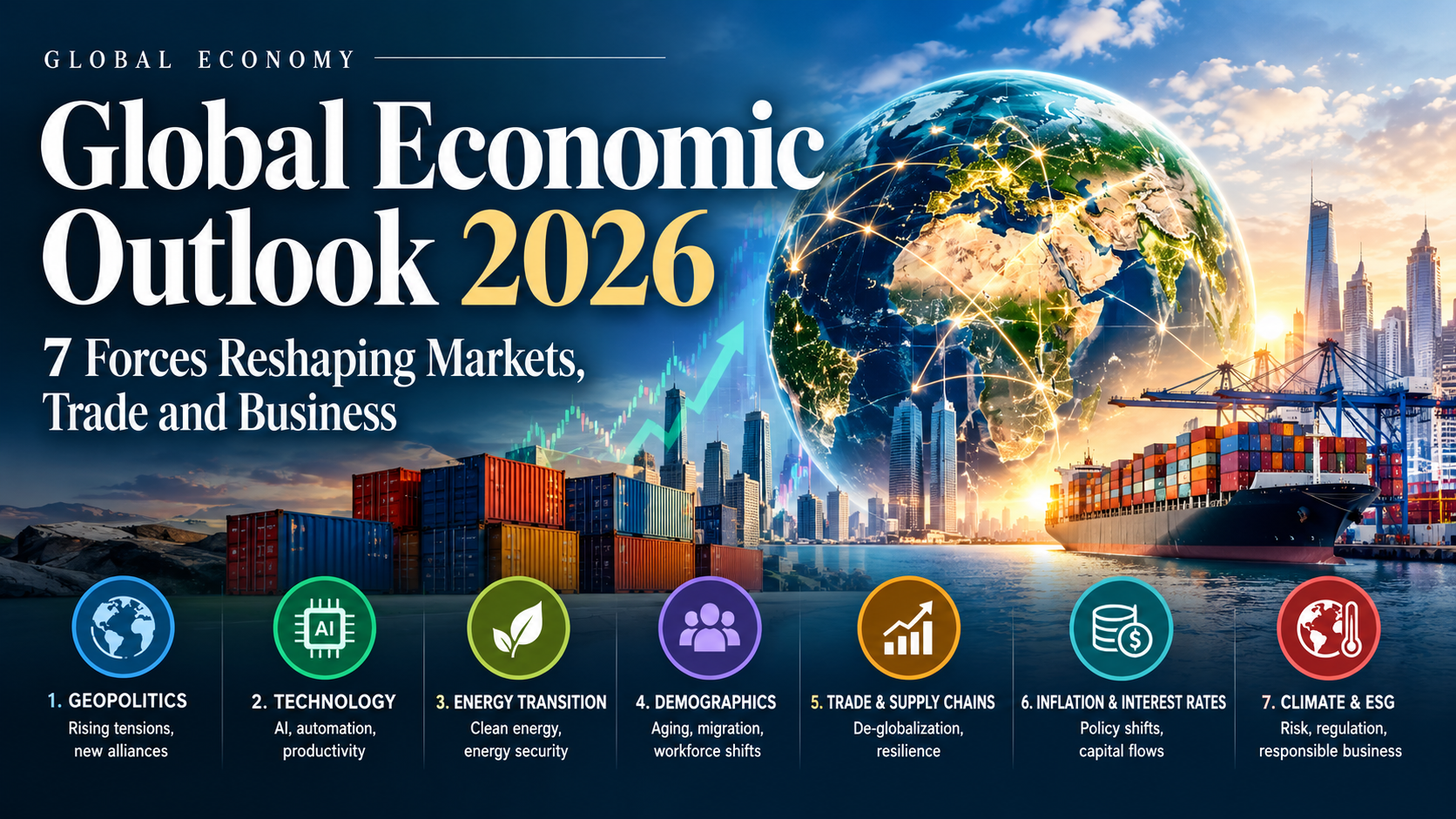
The global economy is entering a period in which geopolitical conflict, artificial intelligence, energy markets, trade policy and public debt are increasingly moving together.
That was one of the central messages emerging from the Forbes Global CEO Conference 2026 in Singapore, where business leaders gathered under the theme “Speed of Change.” The conference discussion highlighted a world in which tariffs, military conflicts, volatile energy prices and the rapid expansion of artificial intelligence are changing how companies plan for growth.
But the bigger story extends beyond the conference room.
Recent assessments from the World Bank, OECD, IMF and Bank for International Settlements point to an economy that remains surprisingly resilient while becoming more exposed to simultaneous shocks.
The result is a new operating environment for companies and investors: growth is still possible, but the sources of growth—and the risks surrounding it—are changing rapidly.
1. Geopolitics Is Becoming an Economic Variable
For years, businesses often treated geopolitics as an external risk. In 2026, that distinction is becoming increasingly difficult to maintain.
Trade restrictions, military conflicts, sanctions, shipping disruptions and energy-market volatility can now affect corporate earnings almost immediately.
The World Bank says the Middle East conflict has contributed to sharp increases in energy prices and renewed inflationary pressure, while its latest global outlook projects global growth at 2.5% in 2026 under its current assessment. It also warns that additional geopolitical escalation and commodity disruptions could push growth lower.
That means companies are increasingly being forced to consider questions that previously belonged primarily to governments and foreign-policy specialists:
- Where should critical production be located?
- Which trade routes are vulnerable?
- How dependent is the business on imported energy?
- Which markets could be affected by sanctions?
- Can suppliers be replaced quickly?
- How much inventory is necessary to protect against disruption?
For investors, geopolitical risk is therefore becoming part of fundamental analysis rather than simply a headline risk.
2. AI Is Both a Growth Engine and a Financial Risk
Artificial intelligence may be the most important structural force supporting global investment.
The OECD says strong AI-related activity helped sustain investment, production and trade during the first half of 2026. Its September interim outlook projects global GDP growth of 2.9% in 2026 and 3.0% in 2027.
The AI boom is creating demand for semiconductors, data centers, electricity, cloud infrastructure, networking equipment and advanced computing.
But there is a second side to the story.
The Bank for International Settlements has warned that AI-related investment is increasingly debt-financed and that stretched valuations could create financial vulnerabilities if expectations around AI earnings or investment weaken.
This creates an unusual economic dynamic.
AI can simultaneously:
Boost growth → increase investment → raise productivity → strengthen markets
while also potentially:
Increase valuations → encourage leverage → create concentrated exposure → amplify a market correction.
The implication for businesses is straightforward: adopting AI is no longer simply a technology decision. It is increasingly a capital-allocation and competitiveness decision.
3. The Next Phase of Globalization May Be More Regional
One of the most important developments highlighted at the Singapore conference is that globalization is not necessarily disappearing—it is changing shape.
Forbes reported that FedEx executive Richard Smith pointed to continuing global trade growth and opportunities for smaller Southeast Asian economies, while Biocon chair Kiran Mazumdar-Shaw highlighted India’s efforts to position itself as a technology partner through strategic trade and technology relationships.
That suggests the next phase of globalization could be less about one integrated production system and more about multiple interconnected regional networks.
Southeast Asia is particularly important.
Manufacturing diversification, digital infrastructure, strategic trade agreements and rising investment are creating opportunities for countries positioned between major economic powers.
The World Bank’s latest South Asia outlook similarly highlights the region’s resilience, projecting 6.9% growth in 2026, although it warns that elevated energy prices, weather shocks and a reversal in AI investment could create downside risks.
For multinational companies, this could mean a greater emphasis on:
- China+1 manufacturing strategies
- India and Southeast Asian supply chains
- Regional technology corridors
- Multiple sourcing locations
- Localized production
- Cross-border digital infrastructure
The globalization debate is therefore moving from “globalization versus deglobalization” toward “which regions will capture the next wave of globalization?”
4. Energy Prices Could Become the Inflation Wild Card
Energy remains one of the most important transmission channels between geopolitics and inflation.
A military escalation that affects oil production, refining capacity or shipping can increase costs across the economy—from transportation and manufacturing to food and consumer goods.
The OECD notes that renewed disruptions to production and exports in the Gulf have pushed energy prices higher, while elevated refining margins are adding pressure to consumer prices and business costs.
This creates a difficult policy problem.
Central banks may want to support economic growth, but persistent energy-driven inflation can limit their ability to loosen monetary policy.
For companies, higher energy prices can squeeze margins even when revenues remain stable.
For investors, the important question is no longer simply whether oil prices rise. It is whether an energy shock becomes persistent enough to change inflation expectations, interest rates and corporate investment decisions.
5. Public Debt Is Becoming a Constraint on Governments
Another structural challenge is the enormous amount of public debt accumulated across major economies.
The IMF has warned that global public debt is approaching historically elevated levels, while rising borrowing costs can make fiscal management increasingly difficult.
That creates a complicated environment for governments.
During an economic slowdown, governments may want to spend more to support households and businesses. But higher debt-servicing costs reduce the room available for fiscal stimulus.
The pressure is particularly important when an energy shock simultaneously increases inflation and weakens growth.
The IMF has also urged governments to rebuild fiscal space and maintain credible policies as economic risks accumulate.
For markets, this matters because government borrowing affects bond yields, currency markets, investment costs and ultimately equity valuations.
The era in which investors could treat fiscal policy as a secondary consideration may be ending.
6. Financial Markets Are More Vulnerable to an AI-Driven Repricing
The AI investment boom has helped support equity markets and corporate capital expenditure, but it has also created concentration risks.
The BIS has highlighted concerns surrounding stretched AI-related valuations, increased leverage and growing interconnectedness between banks and non-bank financial institutions.
That does not mean an AI crash is inevitable.
Instead, it means investors should distinguish between:
AI as a transformational technology
and
AI-related assets priced for extremely optimistic outcomes.
Those are two very different propositions.
A company can benefit enormously from AI while its stock can still be vulnerable if expectations have moved too far ahead of earnings.
The same principle applies to infrastructure.
Data centers, power generation, semiconductor facilities and cloud infrastructure may have long-term economic value. But if capacity expands faster than sustainable demand, investors could eventually face lower returns or stranded assets.
That concern was also raised during the Forbes conference, where speakers warned that excessive AI infrastructure investment could create stranded assets if the current boom fades.
7. Resilience May Become More Valuable Than Maximum Efficiency
The most important lesson for corporate leaders may be the simplest: the cheapest operating model is not necessarily the safest operating model.
For decades, globalization encouraged companies to optimize supply chains around efficiency, specialization and cost.
The new environment puts greater value on resilience.
That can mean maintaining alternative suppliers, holding strategic inventories, diversifying energy sources, developing cybersecurity capabilities and ensuring that critical technology systems can operate during disruptions.
The BIS has identified AI-related financial risks, leverage, private credit and cyber risks as important areas of financial-stability concern.
This creates a new corporate calculation:
Efficiency reduces costs. Resilience reduces catastrophic risk.
The companies that succeed in the next economic cycle may be those capable of balancing both.
What the 2026 Global Economy Means for Investors
For investors, the changing global landscape suggests that traditional macroeconomic indicators should be combined with a wider set of signals.
Five areas deserve particular attention:
Interest rates
Energy-driven inflation could keep monetary policy tighter for longer than markets expect.
Oil and energy
Sudden changes in energy prices can affect inflation, corporate margins and consumer spending simultaneously.
AI investment
AI remains a major growth opportunity, but valuation and leverage risks need to be monitored.
Geopolitical developments
Trade restrictions, wars, sanctions and shipping disruptions can rapidly alter market expectations.
Regional growth
South Asia and Southeast Asia remain important beneficiaries of supply-chain diversification and technology investment, although both regions remain exposed to energy and global financial conditions.
Why Southeast Asia and South Asia Matter More
The geographic center of global growth is also becoming more important.
Southeast Asia is attracting capital as companies diversify production and supply chains, while South Asia continues to record comparatively strong growth.
The World Bank’s latest South Asia assessment expects regional growth of 6.9% in 2026, with domestic demand and remittance inflows providing important support.
At the same time, the World Bank says Europe and Central Asia face slower growth amid higher energy prices and weaker external demand, although AI adoption could improve productivity and offset demographic pressures.
This reinforces a broader investment theme: the global economy is becoming more fragmented, but opportunities are also becoming more geographically diverse.
The New Economic Equation
The message emerging from Singapore is not that globalization is ending, AI is creating a bubble or the global economy is heading inevitably toward recession.
The more important conclusion is that the rules of economic decision-making are changing.
Companies must now think simultaneously about technology, geopolitics, energy, capital costs, supply chains and regulation.
Investors face a similar challenge.
The winning strategy may not be predicting exactly when the next crisis arrives. It may be identifying businesses, countries and sectors that can remain competitive when the assumptions behind the current economic system change.
The World Bank sees meaningful downside risks from geopolitical escalation and commodity disruptions, while the OECD expects continued but moderate global growth. The IMF has emphasized the need to rebuild fiscal resilience, and the BIS is highlighting vulnerabilities associated with AI valuations, leverage and financial interconnectedness.
Taken together, these assessments point to an economy that is resilient—but increasingly expensive to destabilize.
Bottom Line
The 2026 global economy is being shaped by seven forces: geopolitical fragmentation, AI investment, regionalized globalization, energy volatility, public debt, financial-market concentration and the growing value of resilience.
The opportunity is significant.
So is the risk.
For business leaders, the priority is adaptability. For investors, it is diversification and disciplined valuation. For governments, it is restoring fiscal and financial buffers before the next shock arrives.
The central economic question for the years ahead may therefore be less “How fast will the global economy grow?”
It may be:
“Which economies, companies and investors are best prepared for a world where the rules keep changing?”
Discover more from The Economy
Subscribe to get the latest posts sent to your email.

Key Takeaways
- SAVE is over. A court order ended the plan in March 2026, and the Department of Education told 7.5 million enrolled borrowers to move into a legal repayment plan.
- The clock is running right now. Servicers began sending 90-day notices on July 1, and the first wave of deadlines landed in late September. Miss yours and you will be placed in a Standard or Tiered Standard plan, usually with higher payments.
- A new plan exists. The Repayment Assistance Plan (RAP) launched July 1, 2026, with payments set at 1% to 10% of adjusted gross income and a $10 monthly minimum.
- New loans cost more. Undergraduate Direct Loans first disbursed this school year carry a 6.52% fixed rate, up from 6.39% a year earlier.
- Consolidation is no longer a casual move. Under the settlement that ended SAVE, consolidating restarts the clock on income-driven forgiveness, though not on Public Service Loan Forgiveness.
If you have federal student loans, 2026 is the year the rulebook got rewritten while you were still holding the pen. Plans closed, new ones opened, and deadlines started arriving by email.
This guide cuts through the noise. You’ll see what changed, how the remaining plans compare, when consolidation helps and when it hurts, and which strategy tends to fit which kind of borrower. It reflects the situation as of October 6, 2026, so confirm details with your servicer and on StudentAid.gov before you act.
What Changed in 2026, in Plain English
Congress passed sweeping changes in the 2025 reconciliation law, and 2026 is when they landed. Three events matter most.
| Date | What happened | Why it matters |
|---|---|---|
| March 2026 | A federal court order ended the SAVE plan | Roughly 7.5 million borrowers lost their plan |
| March 27, 2026 | The Department of Education announced the SAVE exit process | Borrowers get at least 90 days to choose a new plan |
| July 1, 2026 | RAP and the Tiered Standard plan launched; new loan rules began | Every borrower with new loans faces a different menu |
Meanwhile, SAVE borrowers had been sitting in a forbearance limbo. That limbo is ending, one notice at a time.
The SAVE Deadline: What to Do If You Haven’t Moved
Your 90 days start on the date of your notice, not on a universal calendar day. Notices have been going out in waves, so deadlines are staggered. The earliest hit at the end of September, and the last may stretch into early 2027.
If you do nothing, you won’t be left without a plan. The Department says non-responders are automatically enrolled in either the Standard Repayment Plan or the new Tiered Standard Plan. The catch is that those plans are not income-based, so your payment can jump.
Your move list:
- Find your notice. Check your servicer’s messaging portal and your email, including spam.
- Confirm your own deadline. Don’t rely on a date you saw online.
- Run the numbers in the Loan Simulator on StudentAid.gov.
- Apply for your chosen plan before the clock runs out.
Your Repayment Menu After SAVE
| Plan | Who can use it | How payments work | Forgiveness |
|---|---|---|---|
| Repayment Assistance Plan (RAP) | Direct Loan borrowers (Parent PLUS loans excluded) | 1% to 10% of AGI, $10 minimum; unpaid interest is waived | After 30 years of payments |
| Income-Based Repayment (IBR) | Borrowers whose loans were all made before July 1, 2026 | Typically 10% or 15% of discretionary income, capped at the 10-year standard amount | 20 or 25 years, depending on when you first borrowed |
| Standard (10-year) | Existing borrowers | Fixed monthly payment | None, because the loan is repaid in full |
| Tiered Standard | Borrowers with loans disbursed on or after July 1, 2026 | Fixed payment that scales with balance | None |
| SAVE | Nobody | Ended | Ended |
A few details deserve attention.
- RAP is stricter on pauses. Economic-hardship deferment is eliminated for new loans, so unemployed borrowers still owe at least the $10 minimum, according to Saving for College.
- IBR remains the safety valve. It stays available for older loans, which makes it a serious option if RAP produces a bigger bill.
- Parent PLUS is a special case. The only income-driven route was consolidating before July 1, 2026, a window that has now closed.
Interest Rates: What New Borrowers Pay
Federal rates reset every July 1 and stay fixed for the life of the loan. For loans first disbursed between July 1, 2026 and June 30, 2027, the Department of Education’s rate announcement sets statutory ceilings of 8.25% for undergraduate loans, 9.50% for unsubsidized graduate loans and 10.50% for PLUS loans.
| Loan type (2026-27) | Fixed rate |
|---|---|
| Undergraduate Direct (subsidized and unsubsidized) | 6.52% |
| Graduate and professional unsubsidized | 8.07% |
| PLUS loans (for the borrowers still eligible) | 9.07% |
Two practical points. First, a 6.52% rate is far above the pandemic-era lows, so prepaying high-rate debt now carries real value. Second, borrowers who sign up for autopay may qualify for a temporary interest-rate reduction, which NerdWallet reports as 1%. Borrower advocates say the sign-up window runs through the end of 2026, so ask your servicer to confirm the terms.
Consolidation: Helpful Tool or Expensive Mistake?
A Direct Consolidation Loan combines federal loans into one, with a weighted-average rate. It can simplify billing and, in some cases, unlock eligibility for a plan. But in 2026 it carries a new sting.
The settlement trap. Under the settlement that ended SAVE, consolidating restarts your progress toward income-driven forgiveness. Public Service Loan Forgiveness is treated differently, according to Massachusetts’ student loan guidance, but a restart on the IDR clock can cost years.
The RAP-only rule. For loans disbursed or consolidated after July 1, 2026, RAP is the only income-driven option. If you currently qualify for IBR on older loans, a rushed consolidation could close that door.
Consolidate when:
- You have older FFEL loans that need to become Direct Loans to qualify for a program.
- Your many servicers and due dates are causing missed payments.
Think twice when:
- You are already making progress toward IDR forgiveness or PSLF.
- Your current plan has a lower payment than the one consolidation would unlock.
Forgiveness: What Is Still Available
- Public Service Loan Forgiveness (PSLF) remains available for borrowers who work full time for qualifying government or nonprofit employers and make the required qualifying payments. Only Direct Loans qualify.
- Income-driven forgiveness arrives after 20 to 25 years under IBR and 30 years under RAP.
- Taxes are back in the picture. The temporary federal tax exclusion for income-driven forgiveness expired at the end of 2025, so forgiven balances discharged in 2026 and later may count as taxable income at the federal level. Talk to a tax professional before you plan around a discharge date.
Strategy by Borrower Type
| If you are… | A sensible starting point | Watch out for |
|---|---|---|
| A public servant pursuing PSLF | Stay on a qualifying plan and document every year of employment | Consolidating without checking how it affects your count |
| Low income with a large balance | Compare RAP and IBR payments and long-term forgiveness | Higher taxes on forgiveness |
| Higher income with a modest balance | Standard plan, or paying extra toward the highest-rate loans | Giving up federal protections by refinancing privately |
| A Parent PLUS borrower | Review options carefully, since RAP is not available | The lack of an income-driven path |
| A SAVE borrower | Pick a plan before your individual deadline | Auto-placement into a payment that jumps |
New Loan Limits Worth Knowing
The same law changed how much new borrowers can take. Grad PLUS is closed to new borrowers, and annual and aggregate caps now apply to graduate, professional and Parent PLUS borrowing. If your plan depends on borrowing federal dollars for graduate school, check the current caps on StudentAid.gov and price out the gap before you commit.
Asked & Answered
What happens if I miss my SAVE deadline?
You’re moved automatically into the Standard Repayment Plan, or into the Tiered Standard Plan if you have loans disbursed on or after July 1, 2026. You can usually still apply for a different plan afterward, but you’ll be billed under the default until your application is processed.
Does consolidation reset student loan forgiveness?
For income-driven forgiveness, yes, under the SAVE settlement terms. Public Service Loan Forgiveness is handled differently. Check your qualifying-payment count before you consolidate.
Can I still get Public Service Loan Forgiveness in 2026?
Yes. PSLF remains available to eligible Direct Loan borrowers who work for qualifying employers and make the required payments.
Is RAP better than IBR?
It depends on your income, family size and loan type. RAP can produce a larger payment for some borrowers and a smaller one for others, and its forgiveness timeline is longer. Run both through the Loan Simulator.
Is student loan forgiveness taxable in 2026?
Possibly. The federal exclusion that covered income-driven forgiveness ended after 2025, so discharged balances may be taxable at the federal level. State rules vary, so get tax advice for your situation.
Discover more from The Economy
Subscribe to get the latest posts sent to your email.

Concert Ticket Prices in 2026: Dynamic Pricing, Fees and How to Buy Safely

High-Yield Savings Accounts in 2026: How to Compare APY Without Chasing a Headline

EU-China Trade Deal 2026: How Beijing and Brussels Avoided a Trade War—and Who Wins

Social Security 2027 COLA Announcement: Date, Formula and What Retirees Should Check

China’s AI Microdrama Boom: How Beijing Is Reshaping Global Media

Q3 2026 Earnings Preview: Can Record Profit Expectations Keep Wall Street’s Rally Alive?

Russia Diesel Deal 2026: Oil Prices and Inflation Risks

Fed Rates 2026: Treasury Yields, Bonds and SGOV Explained

S&P 500 Market Breadth 2026: Weak Rally or Rotation?

The AI Capex Boom: Data Centers Reshaping Growth

Palantir Stock in 2026: Extraordinary AI Growth

Tesla Physical AI 2026: Robotaxis, Optimus and TSLA Risks

NVIDIA’s AI Grip in 2026: Record Revenue Is Only Half the Investment Story

Hormuz Diesel Shortage: Why Crude Oil Recovery Isn’t Enough

PSX Forecast 2026: KSE-100, IMF Reviews & Geopolitics

Middle East War Economics 2026: Oil Prices & Energy Markets

China Stocks Today: Are Big Economies in Asia Nearing a Market Bottom?

Crypto Daily Outlook: Bitcoin, Altcoins, and the Future of Decentralized Finance

Global Pension Systems Ranked: The World’s Best and Worst Retirement Frameworks

World’s Largest Economies: Ranking the Top Global Powers

Elon Musk’s Next Moves: Disrupting the 2026 Global Economy

Pakistan Economy 2026: Inside the SBP’s Balancing Act

GasBuddy Market Insights: How Crude Price Shifts Impact Local Fuel Cost Averages

World Bank & IMF Reports 2026: Why the “3% Growth” Consensus Is Actually a Debate

Global Equity Market Divergence: US Tech vs. European Dividend Stocks vs. Asian Growth

IMF & World Bank Global Economic Outlook: Growth Forecasts Across Europe and Asia

Silver Price Today: Why the Xi-Trump AI Standoff Is Fueling a Safe-Haven Rally

Crude Oil & Petroleum Market Analysis: OPEC+ Decisions and Price Forecasts
-

 Markets & Finance9 months ago
Top 15 Stocks for Investment in 2026 in PSX: Your Complete Guide to Pakistan’s Best Investment Opportunities
-

 Analysis8 months ago
Johor’s Investment Boom: The Hidden Costs Behind Malaysia’s Most Ambitious Economic Surge
-

 Analysis8 months ago
Top 10 Stocks for Investment in PSX for Quick Returns in 2026
-

 Banks9 months ago
Best Investments in Pakistan 2026: Top 10 Low-Price Shares and Long-Term Picks for the PSX
-

 Analysis8 months ago
Brazil’s Rare Earth Race: US, EU, and China Compete for Critical Minerals as Tensions Rise
-

 Investment9 months ago
Top 10 Mutual Fund Managers in Pakistan for Investment in 2026: A Comprehensive Guide for Optimal Returns
-

 Global Economy10 months ago
15 Most Lucrative Sectors for Investment in Pakistan: A 2025 Data-Driven Analysis
-

 Global Economy10 months ago
Pakistan’s Export Goldmine: 10 Game-Changing Markets Where Pakistani Businesses Are Winning Big in 2025