
Space
SpaceX IPO: How Aerospace Is Reshaping Tech Startup News


For years, “SpaceX IPO rumors” were a staple of tech news. That phase is over. The company listed on the Nasdaq under the ticker SPCX on June 12, 2026.
The listing now shapes how founders, venture investors and public-market buyers think about tech startup news. This guide covers what happened, what the financials show and what comes next.
Key Takeaways
- The IPO is done: SpaceX raised $75 billion at $135 a share, an implied valuation of roughly $1.77 trillion, in the largest IPO in history. Nasdaq
- Day-one performance: Shares closed at $161, up 19%. CNBC
- Post-IPO trading has been choppy: The stock closed above its $135 IPO price on August 10 for the first time in weeks. CNBC
- Growth is fast, profits are not: Revenue is surging, but heavy spending on Starship, Starlink and AI infrastructure is producing losses.
- The template is set: Investors now see space and AI infrastructure as one combined story.
What Happened on June 12
SpaceX opened at $150 on its first day, an 11% jump over the IPO price. At one point shares rose more than 30%, briefly pushing the market value above $2.25 trillion. NBC News
Goldman Sachs led the underwriting group, alongside Morgan Stanley, JPMorgan Chase, Bank of America and Citigroup. On paper, the offering made Elon Musk the world’s first trillionaire.
The IPO was preceded by a February merger of SpaceX and xAI. Musk valued the combined entity at $1.25 trillion at the time. CNBC
That means SPCX is not a pure rocket company. It combines launch services, the Starlink connectivity business and an AI division.
SpaceX Financials: What the Numbers Show
The numbers from the company’s prospectus and its first earnings report as a public company show a business scaling quickly.
| Metric | Figure |
|---|---|
| 2025 revenue | $18.67 billion (up 33%) |
| Q1 2026 revenue | $4.69 billion (up 15%) |
| Q2 2026 revenue | $7.8 billion (up 92% year on year) |
| Q2 adjusted EBITDA | $3.5 billion |
| Q2 net loss | $541 million |
| Q2 capital spending | $18.4 billion |
Sources: company filings as reported by CNBC and Investing.com.
Management projects a $100 billion annualized revenue run rate by the end of 2026, and it has pulled its internal $1 trillion revenue goal forward to 2030. Those are targets, not results. Investing.com
Why the Stock Fell After Earnings
Shares rose about 9% in regular trading after the Q2 report but fell more than 8% after hours as investors weighed $18.4 billion of quarterly capital spending against the growth targets. Investing.com
The tension is clear. Investors want the growth story but worry about how much cash it burns.
Governance and Risk Factors Every Investor Should Read
A record IPO does not mean a low-risk stock. Consider three issues before you buy SPCX.
Control. Musk holds about 85% of voting power, and no other holder owns more than 5%. Public shareholders have limited influence. CNBC
Legal exposure. Because xAI sits inside the company, it inherits the AI unit’s problems. Advocacy groups have pointed to lawsuits and regulatory probes over sexualized, nonconsensual imagery linked to the Grok chatbot. CNBC
Valuation. A $1.77 trillion opening valuation prices in years of flawless execution on Starship, Starlink and AI.
How the SpaceX IPO Is Reshaping Tech Startup News
The IPO changes the startup landscape in four ways.
- It reopened the mega-IPO window. Goldman Sachs’ president said the deal shows capital markets are willing to fund the AI infrastructure buildout. Other large AI-linked companies are expected to follow, reportedly including OpenAI and Anthropic. NBC News
- It made space a public-market sector. Space startups that struggled to raise money now have a listed benchmark to price against.
- It blurred the line between aerospace and AI. Investors now value “orbital compute” and satellite connectivity alongside chips and cloud.
- It raised the bar for disclosure. Startups eyeing an IPO will be judged against SpaceX’s detailed segment reporting.
What This Means for the Global Market in 2027
Most coverage stops at the debut. These are the questions that will matter over the next year.
Capital absorption. One analyst quoted at the time asked whether there is enough demand for several large offerings back to back. If more mega-IPOs arrive in 2027, smaller listings may struggle to get attention.
Index inclusion. Large new listings can force index funds to buy. Watch how major index providers treat SPCX, because passive flows affect the price.
Cost of capital for rivals. A well-funded SpaceX can spend heavily on launch and satellites. Competitors in Europe and Asia may face pressure to raise funds or partner.
Regulation. A public company with AI, satellite and launch businesses attracts scrutiny from several regulators at once.
Retail participation. Retail traders were heavily involved around the debut. Retail flows can amplify swings in both directions.
How to Approach SPCX as an Investor
- Read the filings, including the risk factors on control and losses.
- Size any position for volatility, since the stock has traded on both sides of its IPO price.
- Compare it with a broad index fund. Owning a single mega-cap stock is a concentrated bet.
- Confirm details such as share-class rules and lock-up dates in the prospectus.
This article is general information, not financial advice. Consider speaking with a licensed advisor.
Frequently Asked Questions
Did SpaceX go public?
Yes. SpaceX listed on the Nasdaq as SPCX on June 12, 2026 at $135 a share. It raised $75 billion, the largest IPO on record.
What is the SpaceX ticker symbol?
The ticker is SPCX, listed on the Nasdaq. Shares closed their first day at $161.
Who controls SpaceX after the IPO?
Elon Musk controls about 85% of the voting power through Class B shares. No other shareholder owns more than 5%.
Is SpaceX profitable?
Not on a net basis. It reported a $541 million net loss in Q2 2026, though adjusted EBITDA was $3.5 billion.
Discover more from The Economy
Subscribe to get the latest posts sent to your email.



Key Takeaways
- On September 14, 2026, Air Force Secretary Troy Meink became the first U.S. official to publicly confirm the country has “on-orbit space control weapons” capable of defending the joint force against hostile action.
- No details were given on what the weapons are, how many exist, or when they were deployed — the statement itself was the news.
- Space-sector stocks moved immediately: Redwire (RDW) and Rocket Lab (RKLB) gained on the disclosure, while AST SpaceMobile (ASTS) and SpaceX-linked names slipped.
- The announcement sits alongside the Golden Dome missile-defense initiative’s Space-Based Interceptor program and a $4.2 billion SpaceX contract for space-based air moving-target indication.
- Broad aerospace and defense ETFs (ITA, XAR, PPA) offer diversified exposure to the theme without single-stock concentration risk.
What Was Actually Announced
Speaking at the Air & Space Forces Association’s Air, Space & Cyber Conference in National Harbor, Maryland, Meink said: “This is why the United States now has, on orbit, space-control weapons, capable of defending the joint force against hostile adversaries.” It marked a deliberate shift in tone — previous Space Force leadership had been notably guarded about acknowledging offensive or defensive space-control capabilities at all.
U.S. Space Command’s Richard Palmer framed the disclosure as intentional deterrence signaling, noting the acknowledgment is meant to ensure adversaries understand the U.S. is postured and ready “should deterrence fail.”
The Broader Architecture
The space-control weapons disclosure didn’t arrive in isolation. It’s one piece of a larger military-space buildout:
- Space-Based Interceptor (Golden Dome): Moved from initial contract to flight-ready hardware in under a year; initial operating capability targeted for 2028.
- Space-based air moving-target indication: A $4.2 billion SpaceX contract to move airborne-target tracking — traditionally handled by aircraft like AWACS — into orbit, removing range and endurance limits.
Stock Reactions at a Glance
| Ticker | Company | Move on Disclosure |
|---|---|---|
| RDW | Redwire | +2.5% |
| RKLB | Rocket Lab | +2% |
| ASTS | AST SpaceMobile | -2% |
| SPCX | SpaceX (private-market proxy) | -3% |
Single-session moves reflect immediate sentiment, not necessarily durable fundamentals. Rocket Lab separately holds a $266 million Space Force suborbital missile-defense launch contract and has a pending $8 billion bid for Iridium Communications.
How Investors Are Framing the Theme
Rather than picking single names on a headline, analysts point to two practical approaches:
- Diversified defense ETFs (ITA, XAR, PPA) capture the primes and their supplier base without betting on which specific company wins individual space-control contracts.
- Direct plays in pure-play space companies (Rocket Lab, Redwire, AST SpaceMobile) carry higher volatility but more direct upside to specific contract wins.
Does the U.S. have weapons in space?
Yes — on September 14, 2026, Air Force Secretary Troy Meink publicly confirmed for the first time that the United States has on-orbit space control weapons capable of defending the joint force against hostile adversary action. No further details on the systems have been disclosed.
Discover more from The Economy
Subscribe to get the latest posts sent to your email.
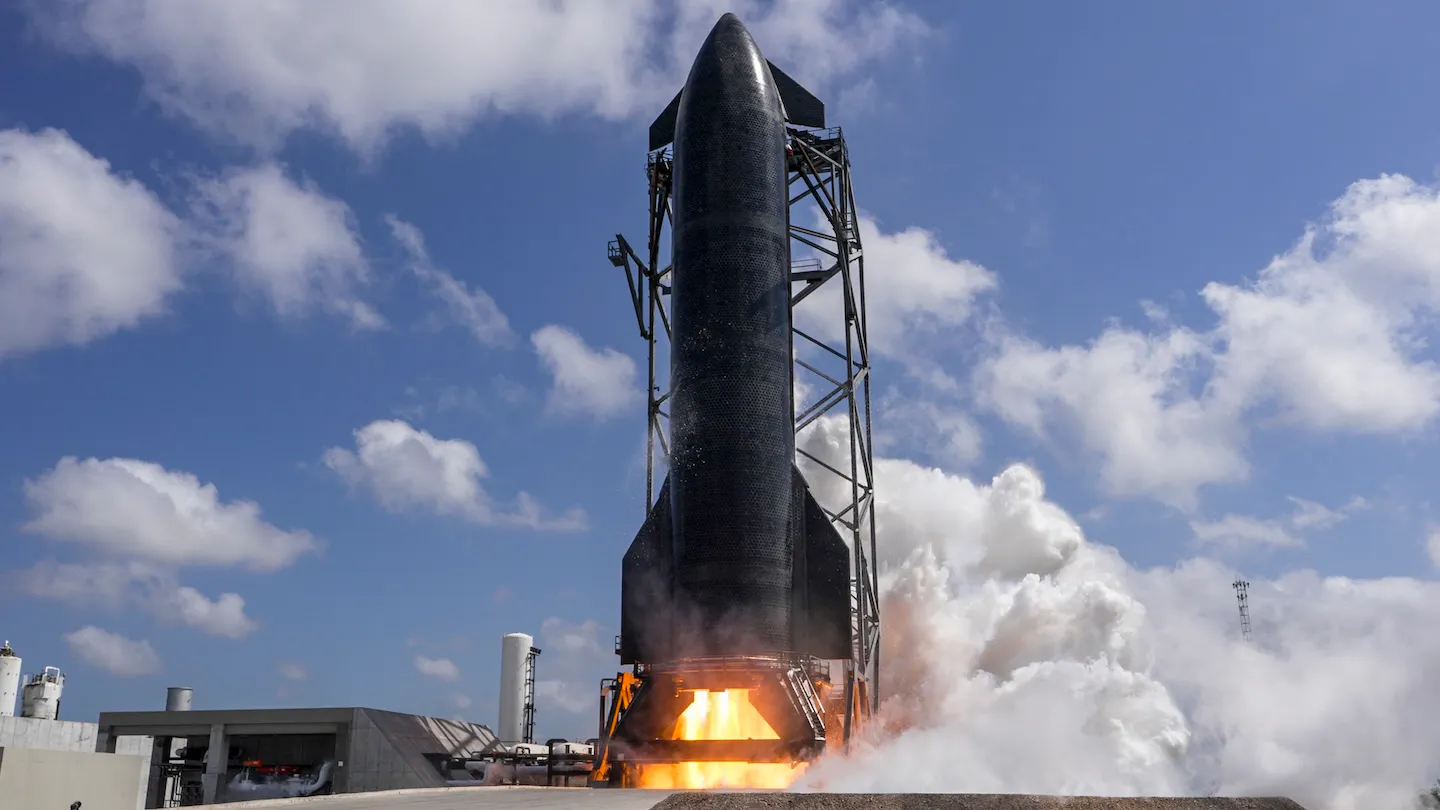
SpaceX Starship Flight 14 targets Starship’s first full orbital run and operational V3 Starlink deployment. Here’s what it means for markets, NASA, and the space economy. (159 chars)
Executive Summary
TL;DR: Starship Flight 14 (IFT-14), expected no earlier than late August/September 2026 from Starbase, Texas, is set to be the first Starship mission to reach a genuine orbital trajectory and deploy operational-orbit Starlink V3 satellites — rather than the suborbital deployments of Flight 13. SpaceX will also attempt, pending FAA sign-off, its first-ever “catch” of the Ship stage back at the launch tower. The flight comes weeks after SpaceX’s first earnings call as a newly public company, valued near $1.77 trillion, making Flight 14’s outcome a market-moving event for aerospace suppliers, satellite-broadband competitors, and the broader “enterprise AI and orbital infrastructure” investment thesis Elon Musk has attached to Starlink and Starship.
Why Flight 14 Is Different From Everything Before It
Every prior Starship test — 13 flights and counting — has been a suborbital hop: loft, coast, reenter, and either splash down or blow up trying. Flight 13, which launched July 24, 2026, was widely regarded internally at SpaceX as the cleanest V3 test to date. Booster 20 fired all 33 Raptor 3 engines cleanly through ascent, hot-staging, and boostback, and Ship 40 deployed 20 operational-design Starlink V3 satellites before completing an intact splashdown in the Indian Ocean — the first time a Ship survived splashdown without breaking apart. The booster’s landing burn was messier: only 10 of 13 center engines relit, five of those subsequently failed, and Booster 20 hit the Gulf of Mexico hard rather than softly.
Flight 14 raises the stakes considerably. Because Flight 13 flew a suborbital trajectory, its Starlink V3 satellites reentered the atmosphere along with the Ship rather than reaching a stable orbit. Flight 14 is designed to close that gap: SpaceX intends to insert Starship into a genuine orbital trajectory for the first time and release V3 satellites into an operational orbit where they can actually join the constellation and start beaming broadband.
The Musk Earnings-Call Framing
The mission’s importance was elevated on August 4, 2026, when SpaceX held its first quarterly earnings call as a publicly traded company following its June 12 IPO. CEO Elon Musk told analysts plainly: “Flight 14 will be our first flight to fly our version three Starlink satellites, our communication satellites, to operational orbit.” He also confirmed the company would, regulatory approval permitting, attempt to catch the returning Ship stage at the launch tower for the first time — a maneuver SpaceX has so far reserved exclusively for the Super Heavy booster.
Musk further characterized Starship’s heatshield problems, long a bottleneck to reusability, as a “solved problem,” a claim that will be tested in real time as Ship 41 endures reentry heating on a genuine orbital-return trajectory rather than a shorter suborbital arc.
Hardware and Timeline
As of late August 2026, Booster 21 had rolled to Pad 2 at Starbase for static-fire testing, with Ship 41 completing its own proof and engine-installation campaign in parallel. Flight-readiness trackers listed the mission as roughly two-thirds complete on pre-launch checklist items, with a launch window officially “no earlier than” the end of August, sliding toward September 2026 as static-fire attempts were scrubbed and repeated. SpaceX’s stated ambition — a cadence approaching one flight per day within roughly a year — depends heavily on Flight 14 validating the orbital and recovery architecture that all subsequent operational missions will use.
What Operational V3 Means for the Constellation
The Starlink constellation has grown to roughly 12,900 satellites launched and nearly 10,900 actively serving customers, the vast majority launched on Falcon 9. V3 satellites are a generational leap: larger, heavier, and far more capable per unit than the V2 Mini satellites that make up most of the current fleet, but they are also too large and heavy for Falcon 9 to launch in bulk — they require Starship’s far greater payload volume and mass capacity to reach orbit economically. In that sense, Flight 14 is not just a rocket test; it is the opening of the only launch vehicle capable of deploying the next generation of SpaceX’s core revenue product at scale.
Financial and Market Impact Section
A Trillion-Dollar Valuation Riding on Reusability
SpaceX’s June 2026 IPO valued the company at approximately $1.77 trillion, an extraordinary figure for a company still posting net losses, if narrowing ones — SpaceX reported a $541 million net loss in the most recent quarter against $7.8 billion in quarterly revenue, roughly $1.1 billion ahead of consensus. Adjusted EBITDA came in at $3.5 billion. Wall Street’s willingness to underwrite that valuation rests substantially on the market’s belief that Starship will eventually make launch costs low enough to deploy tens of thousands of V3 satellites, operate an orbital data-center business (a segment SpaceX executives explicitly flagged alongside launch and connectivity on the August earnings call), and eventually service NASA’s Artemis lunar lander contract.
A clean orbital insertion and successful Ship catch on Flight 14 would be read by analysts as de-risking that valuation thesis; a repeat of Booster 20’s rough landing, or worse, a loss of vehicle during ascent, would reignite skepticism about the gap between SpaceX’s cadence promises and its execution reality — a skepticism that has already cost the stock some ground since the IPO, according to secondary-market trackers.
Ripple Effects Across the Supply Chain and Competing Constellations
A successful operational-orbit V3 deployment has second-order consequences across the aerospace and telecom sectors. Component suppliers tied to Raptor 3 engine production, heat-shield tile manufacturing, and stainless-steel airframe fabrication stand to see demand accelerate if SpaceX moves toward its stated goal of near-daily flights. On the competitive side, AST SpaceMobile — which flew three BlueBird direct-to-device satellites on a separate Falcon 9 mission the same week — and other low-Earth-orbit broadband contenders will be watching V3’s on-orbit performance closely, since a materially more capable Starlink satellite raises the competitive bar for direct-to-cell and enterprise broadband contracts globally.
Government and defense-adjacent markets are a further consideration: SpaceX’s Starlink and Starshield businesses already carry significant government revenue, and a validated heavy-lift, rapidly reusable Starship changes the economics of national security launch procurement, a topic likely to surface in coming Pentagon budget cycles.
Key Takeaways
- Starship Flight 14 is scheduled from Starbase, Texas, targeting late August/September 2026, and will be the vehicle’s first genuine orbital-trajectory attempt after 13 suborbital test flights.
- The mission will deploy Starlink V3 satellites into an actual operational orbit for the first time; Flight 13’s V3 satellites reentered with the suborbital Ship rather than reaching orbit.
- SpaceX will attempt, subject to FAA approval, its first tower “catch” of the Ship stage, building on Super Heavy booster catches already demonstrated.
- The flight follows SpaceX’s first earnings call as a public company (August 4, 2026) after a June 12 IPO that valued the company near $1.77 trillion, with Q2 revenue of $7.8 billion and a narrowing $541 million net loss.
- Booster 21 and Ship 41 completed static-fire and stacking campaigns through late August 2026, with launch pushed by repeated scrub cycles.
- Outcome carries direct financial-market weight: a successful catch and orbital deployment would validate the reusability thesis underpinning SpaceX’s record-setting valuation; a failure would reinforce investor skepticism about execution timelines.
Discover more from The Economy
Subscribe to get the latest posts sent to your email.
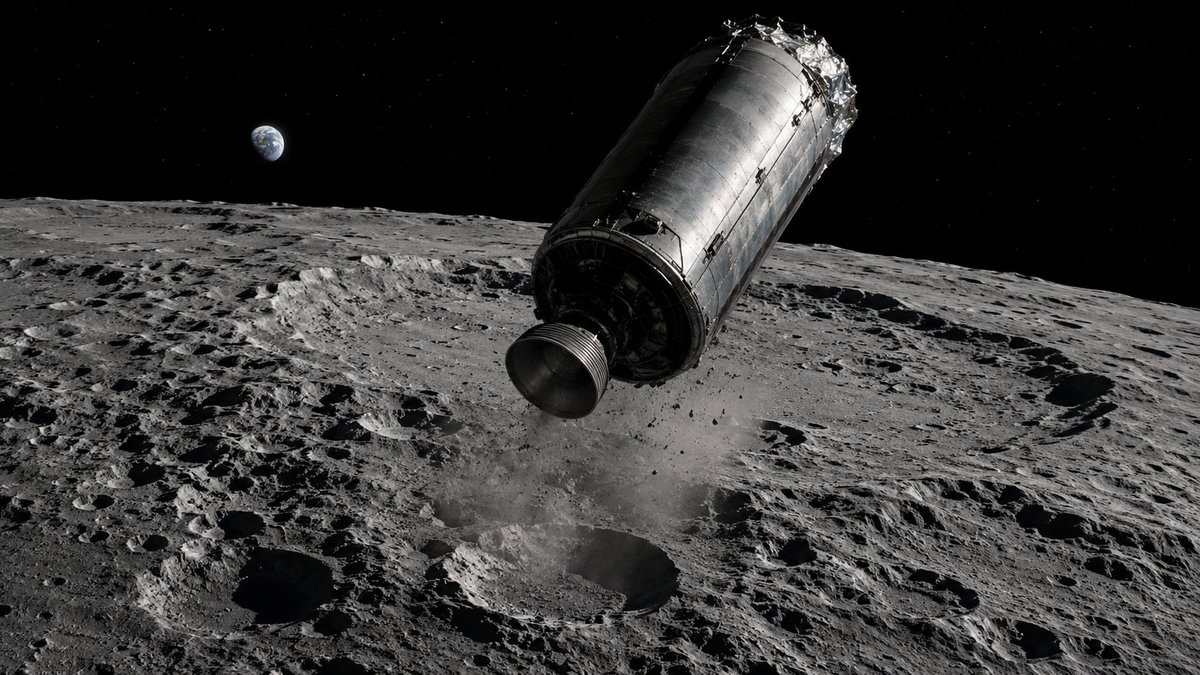
A spent SpaceX Falcon 9 rocket stage from the Blue Ghost mission crashed into the Moon on August 5, 2026, and NASA is racing to image the fresh crater and analyze lunar dust for water ice.
On August 5, 2026, at approximately 2:35 a.m. ET, a discarded SpaceX Falcon 9 upper stage collided with the Moon near the craters Einstein and Bell, carving a fresh crater into the lunar surface at roughly 5,400 miles per hour.
The impact marks one of the rare instances of human-made space debris striking the Moon and offers scientists an unprecedented opportunity to study ejecta composition and impact physics in real time.
The rocket stage—cataloged as 2025-010D—was abandoned in a high-Earth orbit after successfully deploying Firefly Aerospace’s Blue Ghost 1 lunar lander and ispace’s RESILIENCE lander on January 15, 2025.
Gravitational forces and solar radiation pressure gradually destabilized its orbit over 18 months, setting it on an unavoidable collision course.
What Scientists Hope to Learn
NASA’s Lunar Reconnaissance Orbiter (LRO) and ground-based telescopes were positioned to observe the impact, which is expected to excavate a crater approximately 60 feet wide and 12 feet deep.
Researchers are particularly eager to analyze the ejecta plume—the cloud of dust and rock thrown skyward by the impact. Because the Falcon 9 stage’s mass (roughly 4,900 kg) and velocity (2.43 km/s) are precisely known, the event serves as a calibration benchmark for natural meteoroid impacts, which are detected frequently but lack verified mass and speed data.
Lead researcher Benjamin Fernando of Los Alamos National Laboratory noted that measuring the composition of the ejected material could reveal the presence of water ice trapped in permanently shadowed regolith—a critical resource for future lunar habitats.
NASA’s Response and Tracking Operations
NASA’s Center for Near Earth Object Studies (CNEOS) at the Jet Propulsion Laboratory confirmed the stage had a 100% probability of lunar impact and tracked it as part of operational training for hazardous object monitoring.
The Meteoroid Environments Office at Marshall Space Flight Center attempted real-time imaging using ground-based telescopes, though visibility was complicated by the impact occurring on the sunlit portion of the lunar limb.
The Commercial Space Race: Investment Implications
The Falcon 9 lunar impact arrives at a pivotal moment for the commercial space economy, as NASA pushes to return astronauts to the Moon by 2028 and establish a permanent lunar base. For investors and aerospace stakeholders, the event highlights several high-growth vectors:
- Lunar Infrastructure & Habitats: Companies developing radiation-hardened habitats, in-situ resource utilization (ISRU) technology, and lunar construction robotics stand to benefit from increased government and private funding.
- Satellite Infrastructure & Orbital Debris Management: The incident underscores demand for advanced space situational awareness (SSA) platforms, debris-tracking sensors, and end-of-life disposal protocols—critical as launch cadence accelerates.
- Aerospace Technology & Defense: Firms producing propulsion systems, lunar landers, and cislunar logistics vehicles are positioned for multi-billion-dollar contract flows under NASA’s Artemis and CLPS programs.
- Space Resource Extraction: If ejecta analysis confirms subsurface water ice, expect renewed venture capital interest in lunar mining startups focused on extracting hydrogen and oxygen for rocket propellant.
The impact also raises policy questions about space debris liability and the need for international frameworks governing end-of-life disposal for rockets on translunar trajectories. SpaceX has already adjusted procedures for subsequent missions, placing newer upper stages in heliocentric orbits to avoid future lunar collisions.
People Also Ask: SpaceX Moon Impact 2026
Did a SpaceX rocket really hit the Moon? Yes. The spent upper stage of a Falcon 9 rocket from the January 2025 Blue Ghost mission impacted the Moon on August 5, 2026, near the Einstein crater.
Will the SpaceX moon impact be visible from Earth? No. The impact flash is too faint for naked-eye observation and occurred on the sunlit lunar surface, making detection extremely difficult even with telescopes.
Why didn’t SpaceX prevent the rocket from hitting the Moon? The upper stage was left in a high-Earth orbit after delivering lunar landers. Gravitational perturbations and solar radiation pressure gradually altered its trajectory over 18 months, an outcome that was not initially predicted with certainty.
Discover more from The Economy
Subscribe to get the latest posts sent to your email.

Fidelity Crypto vs. Traditional Brokerages: A Guide for Modern Investors

The 2026 Global Smartphone Market: AI Integration and Competitor Analysis

SpaceX IPO: How Aerospace Is Reshaping Tech Startup News

Fidelity Investments Review: Maximizing Returns in a Volatile Stock Market

How Crypto Transformed the Trump Fortune: A $1.4 Billion Financial Breakdown

Global Pension Systems Ranked: The World’s Best and Worst Retirement Frameworks

Global Supply Chain Vulnerabilities: From Eurasian Trade Corridors to Food Consumer Recalls

Why 5% U.S. Treasury Yields Signal a Global Market Regime Shift.

Federal Reserve Defies White House Pressure: Inside Trump’s Demand for Sub-1% Interest Rates After Historic 2026 Rate Hike

How Rising Interest Rates Impact Gig Economy Apps: DoorDash, Uber, and Urban Services

GasBuddy Market Insights: How Crude Price Shifts Impact Local Fuel Cost Averages

DoorDash Driver Payouts, Fee Structures, and Market Competition Analysis

OPINION:Breaking the 3.5% Growth Trap: How Pakistan Can Build a High-Productivity Export Economy

Global Equity Market Divergence: US Tech vs. European Dividend Stocks vs. Asian Growth

State Farm’s $5B Dividend 2026: Who Qualifies & Payout Dates

US-China Relations in Q3 2026: Trade Tariffs and Supply Chain Risks

SpaceX Starship Flight 14: First Orbital Attempt & Starlink V3 Launch Explained

Top 30 Stocks for Investment in PSX for Massive ROI in 2026

The 2026 Crypto Regulatory Shift: What It Means for Institutional Investors

AI Chip Stocks 2026: The Best Semiconductor Investments Beyond Marvell

AI-Powered Training: The Next Multi-Billion Dollar Ecosystem in Fitness

Tween Back-to-School Trends 2026: What’s Driving the $85B Season

Oil Prices Break $100 in 2026: Middle East Conflict & Energy Markets

10-Year Treasury Yield Hits 4.80%: What It Means for Rates & Portfolios

Shein Clothes Quality & Safety in 2026: What Lab Tests Show

Fidelity Investments Review 2026: SPAXX Yields & Zero-Fee Funds

MRVL Earnings 2026: Why Marvell Sank Despite Beating Estimates

China’s US$10.8 Billion Trade Shortcut: Why the Pinglu Canal Matters
-

 Markets & Finance9 months ago
Top 15 Stocks for Investment in 2026 in PSX: Your Complete Guide to Pakistan’s Best Investment Opportunities
-

 Analysis7 months ago
Johor’s Investment Boom: The Hidden Costs Behind Malaysia’s Most Ambitious Economic Surge
-

 Analysis7 months ago
Top 10 Stocks for Investment in PSX for Quick Returns in 2026
-

 Analysis7 months ago
Brazil’s Rare Earth Race: US, EU, and China Compete for Critical Minerals as Tensions Rise
-

 Banks8 months ago
Best Investments in Pakistan 2026: Top 10 Low-Price Shares and Long-Term Picks for the PSX
-

 Investment8 months ago
Top 10 Mutual Fund Managers in Pakistan for Investment in 2026: A Comprehensive Guide for Optimal Returns
-

 Global Economy9 months ago
15 Most Lucrative Sectors for Investment in Pakistan: A 2025 Data-Driven Analysis
-

 Global Economy9 months ago
Pakistan’s Export Goldmine: 10 Game-Changing Markets Where Pakistani Businesses Are Winning Big in 2025