
Remittance
Remittances 2026: Global Trends, Household Resilience & Economic Lifeline for Developing Nations

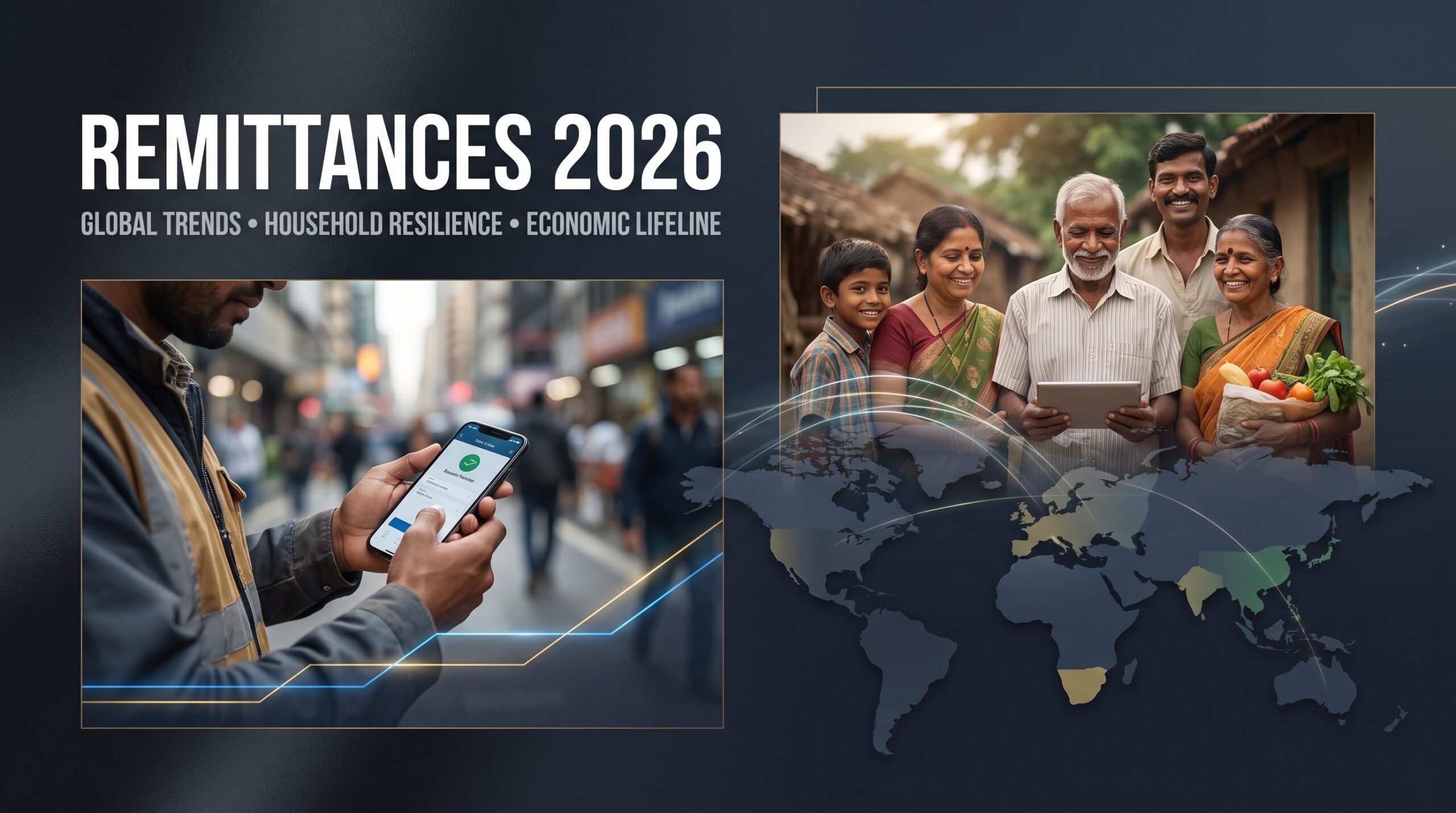
The Economic Lifeline of Developing Nations and Household Resilience
Remittances are financial transfers sent by migrant workers living and working abroad directly to individuals, families, or communities in their home countries. Unlike foreign direct investment (FDI) or sovereign loans, remittances are private, unrequited capital flows that do not create future debt liabilities or foreign ownership stakes in domestic enterprises.
For developing economies across South Asia, Africa, and Latin America—and for platforms like Thefinance.pk and Economy.com.pk—remittances are nothing short of an economic lifeline. They represent one of the largest sources of foreign exchange earnings, frequently eclipsing total merchandise export revenues and foreign aid combined.
The Macroeconomic Impact of Remittances
While remittances are initiated at the microeconomic level by individual families, their cumulative macroeconomic impact is staggering:
- Alleviating the Current Account Deficit: In countries burdened by heavy trade deficits (importing far more than they export), inward remittances act as a vital balancing mechanism. They inject hard currency into the banking system, directly strengthening the central bank’s foreign exchange reserves and providing essential import cover.
- Stabilizing the Local Currency: The constant inflow of US Dollars, Euros, and Gulf Dinars through official remittance channels helps supply the foreign exchange market, reducing downward pressure on the local currency and curbing imported inflation.
- Poverty Reduction and Social Safety Net: Remittances go directly into the hands of households. They are immediately utilized for basic necessities such as food, healthcare, school tuition, and housing construction. In many developing regions, remittances lift millions out of absolute poverty without requiring government bureaucracy or welfare programs.
- Boosting Domestic Consumption: Because remittance recipients spend their funds locally on retail goods, utilities, and construction services, these transfers stimulate domestic demand and support local small-and-medium enterprises (SMEs).
Official vs. Informal Channels (Hawala/Hundi)
A major challenge for governments and central banks tracking remittances is the prevalence of informal transfer networks, commonly known as Hawala or Hundi.
- Informal Channels: Workers often use unlicensed brokers because they offer faster delivery, better exchange rates, and require zero paperwork. However, informal channels drain hard currency from the formal banking sector, depriving the central bank of vital reserves and hiding true economic flows.
- Formal Channels: Commercial banks, licensed money transfer operators (MTOs like Western Union or MoneyGram), and digital fintech wallet apps route funds through official banking channels.
To incentivize workers to use formal channels, central banks and governments—such as the State Bank of Pakistan through its Rosette Digital Account and matching incentive programs—implement policies that eliminate transfer fees, offer superior exchange rates, and reward top-remitting households.
Remittances vs. Foreign Direct Investment (FDI)
Economists frequently compare remittances to Foreign Direct Investment, as both are major sources of foreign capital. However, their behaviors during global crises differ dramatically:
- FDI is Pro-Cyclical: When a developing nation enters an economic crisis or political instability, foreign multinational corporations immediately halt investments, freeze factory expansions, and pull their capital out. FDI dries up precisely when a country needs it most.
- Remittances are Counter-Cyclical: Interestingly, when a home country faces economic turmoil, natural disasters, or currency devaluations, migrant workers often increase the amount of money they send home. Knowing their families are suffering from inflation, expatriate workers sacrifice their own savings in destination countries to provide emergency financial support back home. This makes remittances one of the most reliable, resilient forms of external capital inflow in the world.
The Challenges and Costs of Remittances
Despite their immense benefits, the global remittance ecosystem faces structural bottlenecks:
- High Transfer Fees: Historically, sending money across borders has been plagued by extortionate transaction fees charged by traditional banks and wire services. The United Nations Sustainable Development Goals (SDGs) explicitly target reducing remittance transaction costs to under 3%.
- Macro-Dependence Risk: While remittances fund consumption, critics argue they can sometimes create “remittance dependency,” where local labor force participation drops because families rely entirely on money sent from abroad, disincentivizing domestic industrial productivity and structural reforms.
For editors and researchers at economist.media, tracking monthly remittance data published by central banks provides an immediate read on the health of diaspora communities in North America, Europe, and the Gulf, as well as a reliable gauge of domestic household purchasing power.
Key Takeaways:
- Remittances are private financial transfers sent home by migrant workers to their families.
- They serve as a vital source of foreign exchange, helping developing nations offset trade deficits and build up FX reserves.
- Unlike FDI, remittances are counter-cyclical, often increasing during times of domestic crisis to support struggling families.
- Encouraging workers to use formal banking channels over informal networks (Hawala) is a top priority for central banks.
Authoritative Sources & Further Reading:
- KNOMAD (World Bank): Migration and Development Briefs and Remittance Data
- World Bank: Personal Remittances, Received Data Portal
- State Bank of Pakistan (SBP): Workers’ Remittances Monthly Summaries
Discover more from The Economy
Subscribe to get the latest posts sent to your email.


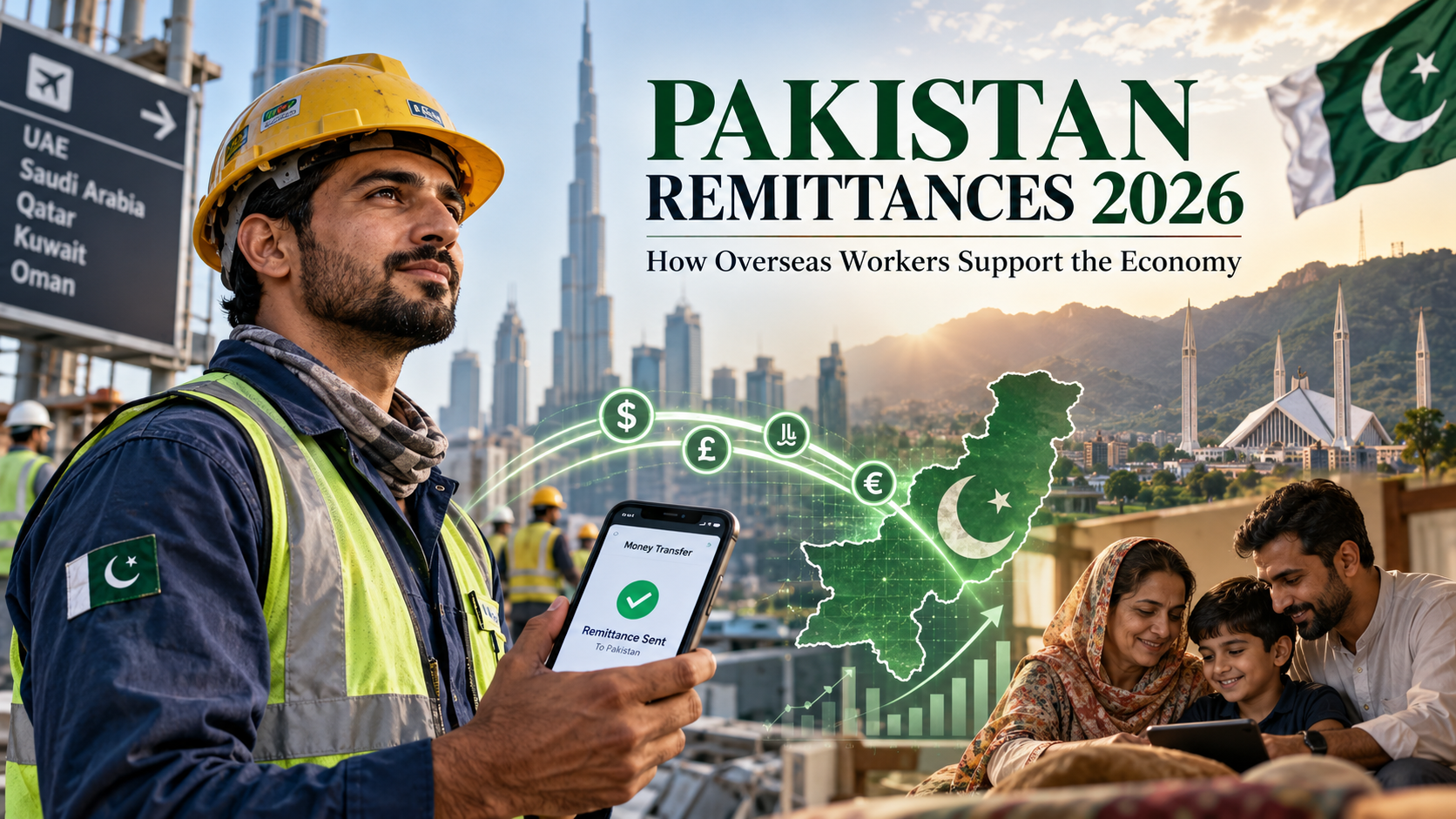
Key Takeaways
- Workers sent about $10.9 billion in July–September 2026, around 14% above a year earlier, according to the 9 October official-news report of SBP figures.
- September 2026 inflows were about $3.6 billion, up 12.7% year on year but down 1.9% from August.
- Remittances support household consumption and foreign-exchange availability without creating a new debt obligation.
- A remittance is not an export and cannot replace productivity gains, better tax collection or a sustainable import bill.
A worker in Jeddah transfers money to a family in Gujranwala. The family pays school fees, clears a medical bill and buys groceries. The transfer is personal, but millions of transactions like it have become central to Pakistan’s external finances. Pakistan remittances 2026 reached about $10.9 billion in the first quarter of FY2026–27, the latest reported State Bank data show. Associated Press of Pakistan’s 9 October 2026 coverage recorded a roughly 14% increase over the corresponding quarter.
The good news is a steadier supply of foreign currency and greater household spending power. The vulnerability is equally important: international employment, host-country growth, exchange rates and formal transfer costs remain outside any Pakistani family’s control. The goal should be to use remittance strength to buy time for productive reform, not treat it as a substitute for exports.
What is the latest Pakistan remittances 2026 picture?
The October 9 report citing State Bank figures put September remittances at about $3.6 billion, up 12.7% from September 2025 but down 1.9% from August 2026. Over the full first quarter, the inflow was around $10.9 billion, compared with roughly $9.54 billion a year earlier.
| Measure | Reported amount | Period |
|---|---|---|
| Remittances | About $3.6bn | September 2026 |
| Remittances | About $10.9bn | July–September 2026 |
| Prior-year comparison | About $9.54bn | July–September 2025 |
| Growth | About 14% | First-quarter year-on-year |
These are workers’ remittance flows as reported through formal channels. They are not a measure of every personal transfer, not a count of migrants and not an estimate of the income earned by Pakistanis abroad. Revisions and classification changes can alter subsequent tables.
Quarterly comparisons are more informative than a single month because religious holidays, working days and transfer campaigns can move payments across calendar boundaries. A decline from August to September is not, by itself, evidence that the trend has reversed.
How do the transfers help Pakistan’s foreign exchange position?
Remittances supply dollars, riyals, dirhams and other currencies that recipients generally exchange for rupees through banks or authorised payment channels. In balance-of-payments accounting, they support the current account and can offset part of the merchandise-trade gap. The PBS data put the July–September 2026 goods deficit at $10.768 billion. That does not mean remittances and the goods gap can simply be subtracted to calculate the current account: services, primary income and other transfers also matter.
The IMF’s October 2026 assessment said the current account was broadly balanced in FY26, supported by strong remittances, and reported gross reserves of about $21.5 billion at end-September 2026. This shows why policymakers value steady migrant inflows. Unlike a sovereign loan, the money arriving for households does not create a scheduled government repayment.
Yet the support has limits. If imports accelerate or global energy prices jump, even high remittance receipts may be insufficient to prevent pressure on the external account. A family transfer can strengthen the system without making an unsustainable import structure sustainable.
Which countries and families matter most?
In September 2026, the SBP figures reported by APP showed Saudi Arabia accounting for approximately $899.1 million and the United Arab Emirates $748.5 million. The United Kingdom contributed around $515.1 million and the United States $305.9 million. These are monthly corridor figures, not annual totals.
A father working in Riyadh may send money for rent and schooling. A nurse in the UAE may help a parent pay for medicine. A British-Pakistani family may transfer savings to relatives or support property maintenance. These transactions have very different household purposes. The macroeconomic total tends to hide that variation.
The highest social return may come when recipients can use transfers to keep children in school, buy productive tools, improve sanitation or escape high-cost debt. That does not mean recipients should be pressured to invest money they need for essentials. The priority is their financial security and informed choice.
Why do formal banking channels make such a difference?
A sender deciding between a licensed provider and an informal arrangement weighs the exchange rate, fee, speed and confidence that the money will arrive. Formal receipts improve the quality of the recorded balance-of-payments data and make disputes traceable. They can also provide a pathway into savings products and credit histories.
The State Bank’s external-sector data portal publishes country-wise remittance statistics, while its data-release calendar gives readers a way to check whether a recent month’s figures have arrived. Financial inclusion is more likely when a family can receive money in a low-cost account and spend it digitally without unnecessary charges.
An apparently zero-fee transfer is not always free. A poorer exchange rate can be a larger hidden cost than an upfront charge. Ask how many rupees the beneficiary will actually receive, compare that figure against another licensed channel, and keep confirmation records. Never transfer funds through an unverified agent merely because a messaging-app advertisement promises the best rate.
How much did overseas Pakistanis remit in September 2026?
Reported State Bank data put workers’ remittances at approximately $3.6 billion in September 2026, 12.7% higher than in September 2025 and 1.9% lower than in August 2026. Monthly transfers can fluctuate with holidays, exchange rates and payment timing.
Worked example: exchange-rate costs on a $500 transfer
Imagine two licensed providers accepting a $500 transfer. Provider A credits Rs275 per dollar after all fees, while Provider B credits Rs278 per dollar. The recipient gets Rs137,500 from A and Rs139,000 from B. The difference is Rs1,500, or about 1.1% of the smaller payout. These rates are invented solely for arithmetic illustration, not quoted market prices.
Families should compare the final deposit amount and delivery time, not just advertising. They should also consider refund policies and dispute channels. For a person sending money monthly, a seemingly small difference compounds over a year.
The second lesson is about currency exposure. If a family plans a large rupee-denominated payment next week, delaying the transfer to speculate on exchange rates may create a bigger problem than any hoped-for currency gain. Match the timing of remittances to household needs rather than attempt to trade currencies with living expenses.
Could the remittance boom become a policy trap?
Yes, if a government mistakes household sacrifices abroad for domestic export competitiveness. Strong inflows make it easier to finance essential imports and rebuild reserves. But they can also reduce urgency to address energy costs, slow industrial productivity and weak tax administration. The World Bank’s long-term Pakistan partnership framework stresses private investment, public resources for development and sustainable growth.
A better response is to make it easier for overseas workers to save or invest voluntarily with reliable safeguards while improving domestic opportunities. Transparent remittance products, consumer protection, lower fees and credible financial regulation matter more than publicity campaigns.
In the final analysis, the economy should be strong enough to offer attractive jobs at home. Remittances can be a lifeline now and a source of development finance later, but the ultimate economic achievement would be an economy less dependent on its citizens working abroad.
What This Means for You
Overseas worker: Compare the final rupee payout, transfer speed and complaint mechanism of licensed channels. Preserve receipts and do not share account passwords or verification codes.
Family receiving money: Make an essentials-first budget. Where possible, split money between immediate bills, emergency savings and optional investment; the mix depends on actual household needs.
Small business supported by a migrant relative: Put personal support and business capital in separate accounts, document whether the funding is a gift or a loan, and agree on expectations before investing it.
Economy watcher: Compare quarterly remittances with imports, services and current-account data. A large transfer total can coexist with fresh pressure on the rupee if the external financing need grows faster.
What to Watch Next
- 26 October 2026: The State Bank monetary-policy decision and any revision to its inflation assessment; verify any schedule change with the SBP.
- Early November 2026, exact release date to be confirmed: Pakistan Bureau of Statistics October inflation and merchandise-trade releases.
- Late October–November 2026, date not yet confirmed: Any IMF Executive Board announcement on the October staff-level agreement; staff agreement is not Board approval.
- Throughout FY2026–27: Updated SBP monthly balance-of-payments and remittance statistics; compare cumulative results rather than one month alone.
Frequently Asked Questions
How much did overseas Pakistanis remit in September 2026?
Reported State Bank data put workers’ remittances at approximately $3.6 billion in September 2026, 12.7% higher than in September 2025 and 1.9% lower than in August 2026. Monthly transfers can fluctuate with holidays, exchange rates and payment timing.
How much did Pakistan receive in remittances in the first quarter of FY27?
Pakistan received about $10.9 billion in workers’ remittances during July–September 2026, approximately 14% more than the roughly $9.54 billion received in the same quarter a year earlier, according to State Bank figures reported on 9 October 2026.
Do remittances increase Pakistan’s foreign exchange reserves?
They support the foreign-exchange market and current account by providing inward currency flows, but reserve levels also depend on imports, debt payments, central-bank market operations and other capital or financial flows. A remittance received by a bank does not automatically add the same dollar amount to the central bank’s reserves.
Which country sent the most remittances to Pakistan in September 2026?
Saudi Arabia was the largest of the reported named corridors for September 2026, at approximately $899.1 million, followed by the United Arab Emirates at about $748.5 million. Monthly ranks can change; use the State Bank’s country-wise series for historical comparison.
What is the safest way to send remittances to Pakistan?
Use a licensed bank or regulated money-transfer provider, verify the final rupee amount and fees, and keep receipts and transaction reference numbers. Avoid unlicensed agents and never provide account login credentials to someone claiming to speed up a transfer. Product suitability differs by country of residence.
The strength of overseas transfers deserves recognition, but the workers should not be asked to carry the economy indefinitely. Use the breathing space to build export capacity, reduce the cost of formal finance and create viable jobs at home.
Discover more from The Economy
Subscribe to get the latest posts sent to your email.

Pakistan closed out July 2026 with two of its strongest economic signals in years — even as the underlying trade picture tells a more cautious story. Workers’ remittances hit $3.6 billion in July, up 13% year-on-year, the State Bank of Pakistan confirmed on Monday, August 10 (The Nation). Meanwhile, the benchmark KSE-100 index has delivered one of its strongest runs in the region.
Remittances: A Record Year, Confirmed
July’s $3.6 billion inflow marked a 4.5% increase over June, continuing a pattern that has defined Pakistan’s external accounts throughout FY2026. According to the Ministry of Finance’s monthly economic outlook, cited by the Express Tribune, workers’ remittances rose to $41.6 billion for the full FY2025-26, up 8.6% from $38.3 billion the previous year (Express Tribune). Saudi Arabia and the UAE remain the dominant sources, together accounting for close to half of total inflows, according to earlier-year tracking from Pakistan & Gulf Economist, alongside notably strong growth from the UK and EU corridors.
The KSE-100’s Extraordinary Run
Pakistan’s stock market has been the standout story of FY2026. The benchmark KSE-100 index surged 27.6% year-on-year to 176,042 points by July 29, 2026, with market capitalisation rising 19.4% in rupee terms and 21.6% in dollar terms, according to the Ministry of Finance’s own reporting (Express Tribune). That kind of rally, sustained over a full fiscal year, places Pakistan’s equity market among the best performers globally for the period — a striking outcome for an economy still working through an active IMF program.
The Trade Picture Is Less Flattering
The same Ministry of Finance report is candid about where the pressure points remain. Exports declined to $30.8 billion for FY2025-26, down from $32.3 billion the prior year, while imports rose sharply to $64.5 billion from $59.1 billion. Foreign direct investment fell to $1.64 billion from $2.48 billion, and portfolio investment remained negative for the year.
Despite that widening trade gap, Pakistan’s current account deficit was contained to just $139 million for the full fiscal year — a remarkably narrow figure that the finance ministry credits directly to record remittance inflows. Foreign exchange reserves reached $22.7 billion by mid-July 2026, and the rupee actually appreciated slightly to Rs277.80 against the dollar, compared with Rs283.05 a year earlier. Inflation averaged 7.1% across FY2026, staying within the government’s target band despite elevated global oil prices.
The IMF Backdrop
Pakistan’s macroeconomic stabilization continues under the IMF’s Extended Fund Facility. The Fund’s most recent review found fiscal performance “strong,” with a primary surplus of 1.6% of GDP expected for FY26, in line with program targets, while gross reserves climbed to $16 billion by end-2025 from $14.5 billion six months earlier (IMF). A separate 28-month Resilience and Sustainability Facility arrangement, approved in May 2025, continues supporting Pakistan’s climate and disaster-resilience reforms.
The Risk the Ministry Itself Flagged
Pakistan’s own finance ministry has been unusually direct about the fragility beneath these headline numbers, warning that renewed escalation between the United States and Iran could trigger volatility in global energy prices, trade flows, and financial markets — risks that could disrupt Pakistan’s improving trajectory given the country’s continued exposure to Gulf labor markets and energy import costs (Express Tribune).
The Bottom Line
Pakistan’s FY2026 story is genuinely two-sided: a stock market and remittance base performing better than almost anyone forecast a year ago, financing a current account that has stayed remarkably close to balance — set against an export sector that continues to shrink and a foreign direct investment picture that remains stubbornly weak. Whether the KSE-100 rally and remittance strength can persist long enough for structural export reform to catch up remains the defining question for Pakistan’s economy heading into FY2027.
How much did Pakistan’s remittances grow in July 2026?
Pakistan’s remittances reached $3.6 billion in July 2026, up 13% year-on-year, while the KSE-100 stock index surged 27.6% year-on-year to 176,042 points by late July.
Discover more from The Economy
Subscribe to get the latest posts sent to your email.
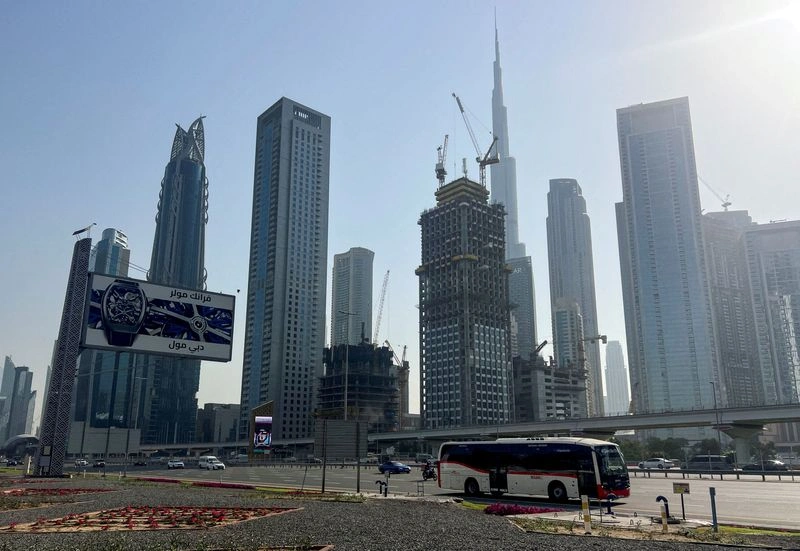
Gulf sovereign wealth funds are having their busiest year on record. In the first half of 2026 alone, funds from Abu Dhabi, Riyadh, Doha and beyond deployed $53.9 billion across 108 transactions — an all-time high, according to tracking firm Global SWF, cited by Semafor. Roughly half of that capital landed in the United States, including funding rounds tied to major AI labs, while China absorbed 17%. Abu Dhabi’s Mubadala alone deployed $15.2 billion in six months, making it the single most active sovereign investor on earth.
Pakistan is not in that story — and that absence is the story.
A Fund Built for Gulf Capital, Still Waiting
Islamabad didn’t sit idle. In 2023, Pakistan’s parliament passed the Sovereign Wealth Fund Act, creating the Pakistan Sovereign Wealth Fund (PSWF) explicitly to consolidate profitable state assets — including Oil & Gas Development Company, Pakistan Petroleum, and National Bank of Pakistan — into a single vehicle designed to court Gulf Cooperation Council capital, according to background compiled on Wikipedia. The logic was straightforward: give Gulf funds a clean, ring-fenced entity to invest through, rather than navigating Pakistan’s broader bureaucracy asset by asset.
The IMF pushed back almost immediately, objecting that folding seven profitable state enterprises into a fund with limited parliamentary oversight risked stripping away hard-won transparency commitments tied to Pakistan’s ongoing lending program. That friction — a sovereign fund built to attract Gulf money running into resistance from the same multilateral lender propping up Pakistan’s balance of payments — has never fully resolved, and it sits at the center of why Gulf capital allocators remain cautious.
Where the Money Actually Goes Instead
Research from Germany’s Stiftung Wissenschaft und Politik describes Gulf sovereign funds as instruments of foreign-policy power projection as much as return-seeking capital — vehicles that convert oil revenue into hard, soft, and sharp influence simultaneously, per SWP’s analysis. Viewed that way, the funds’ 2026 allocation pattern is legible: the US offers unmatched liquidity and access to frontier AI assets; China offers scale and manufacturing depth; both offer currency stability Pakistan cannot match.
The Middle East Institute notes the top five Gulf funds — ADIA, ADQ, Mubadala, PIF and QIA — collectively manage roughly $3.7 trillion and deployed over $73 billion in a single prior year, a scale that dwarfs anything Pakistan’s fragile rupee and thin capital markets can currently absorb without significant de-risking structures in place. Separate reporting from Alhurra shows Gulf funds accounted for about 43% of global sovereign spending in 2025 — nearly $126 billion — with AI infrastructure alone consuming 63% of sovereign AI spending since 2020. Pakistan has no comparable frontier-tech asset class to offer.
Where Gulf-Pakistan capital has flowed, it has done so through bilateral commitments rather than the PSWF itself — deals with Uzbekistan, Vietnam, Qatar, Spain, Pakistan and India involving Bahrain’s Mumtalakat fund totaled $1.74 billion, per Business Chief Middle East — a fraction of what Mubadala alone deployed in six months of 2026.
What Would Change the Calculus
Investment-diplomacy analysts note that Gulf capital increasingly follows a template: renewables and infrastructure for Mubadala, technology and entertainment for PIF, cultural and soft-power plays for smaller funds like Qatar’s, according to Diplo’s tracking. Pakistan’s most plausible entry points are energy infrastructure and agriculture — sectors where PSWF’s underlying assets (OGDCL, PPL, hydropower) already sit — rather than competing for AI or tech capital it cannot currently host.
The structural fix is narrower than headlines suggest: not more MOUs, but a resolution between the PSWF’s governance model and IMF transparency conditions. Until that’s settled, Pakistan will keep watching record Gulf capital flow past it toward Washington and Beijing.
Discover more from The Economy
Subscribe to get the latest posts sent to your email.

Gold at the $4,000 Line: Possible December Fed Hike

Oil at $100+: Hormuz, a Qatari Peace Draft and the Iran Deadline

The Fed’s 10-2 Hold: Why Two Dissenters Wanted a Rate Hike

SBP Raises Policy Rate to 12%: What It Means for Your Loans, Savings and Business

IMF’s $1.2bn Staff-Level Deal: What Pakistan Promised on Surplus

Decoding the DBS–BCA Merger Rumour: Market Volatility, Strategic Realities

New Xbox Games October 26–30, 2026: Releases and Game Pass

Tokyo Disneyland Peter Pan’s Flight Closure: January–February 2027 Guide

Neocloud Economics in 2026: GPU Debt, Utilization and Power

What Is a Neocloud? How AI GPU Clouds Work and Compare

Lula Re-elected in 2026: What Changes for the Dollar, Brazilian Stocks, and Interest Rates?

Lula Wins Brazil’s 2026 Election: Five Economic Tests for 2027

SSI November 2026 Payment: Why Benefits Arrive October 30

Russia Sanctions Waiver: What Asian Oil Buyers Gain

Crude Oil & Petroleum Market Analysis: OPEC+ Decisions and Price Forecasts

Top US Convenience Store Chains: Store Counts, EV Charging, and Sales Trends

Social Security Extra $90 Deposit: Who Qualifies for the October 2026 Medicare Rebate?

Who Is Shivon Zilis? The Neuralink Executive at the Center of the Musk–OpenAI Trial

Algorithmic Dogfights: Why the U.S. and China Must Establish Rules of Engagement for Autonomous Air Power

Gold Price Outlook 2026: The Forces Behind the Forecasts—and What Could Reverse Them

Corporate America Faces a New Debt Test as US Borrowing Costs Surge

Global Economic Outlook 2026: 7 Forces Reshaping Markets, Trade and Business

Stock Market Crash in 2026? Warning Signs, Scenarios and a Calm Investor Checklist

Stock Market Today: Dow, S&P 500, and Nasdaq Retreat as Treasury Yields

Geopolitics and Your Portfolio: How International Affairs Move Global Markets

Anthropic Bans Sustained Abuse of Claude AI Under New Usage Policy Effective November 12, 2026

US–Iran Conflict in October 2026: Hormuz, Oil Prices and Diplomacy

Why Did I Get $90 From Social Security? 8 Reasons Behind an Unexpected SSA Payment
-

 Markets & Finance10 months ago
Top 15 Stocks for Investment in 2026 in PSX: Your Complete Guide to Pakistan’s Best Investment Opportunities
-

 Analysis8 months ago
Johor’s Investment Boom: The Hidden Costs Behind Malaysia’s Most Ambitious Economic Surge
-

 Analysis8 months ago
Top 10 Stocks for Investment in PSX for Quick Returns in 2026
-

 Banks10 months ago
Best Investments in Pakistan 2026: Top 10 Low-Price Shares and Long-Term Picks for the PSX
-

 Analysis9 months ago
Brazil’s Rare Earth Race: US, EU, and China Compete for Critical Minerals as Tensions Rise
-

 Investment10 months ago
Top 10 Mutual Fund Managers in Pakistan for Investment in 2026: A Comprehensive Guide for Optimal Returns
-

 Global Economy10 months ago
15 Most Lucrative Sectors for Investment in Pakistan: A 2025 Data-Driven Analysis
-

 Global Economy10 months ago
Pakistan’s Export Goldmine: 10 Game-Changing Markets Where Pakistani Businesses Are Winning Big in 2025