
Global Economy
Venezuelan Crude: Trump’s Oil Pivot & The Prize Beneath Chaos

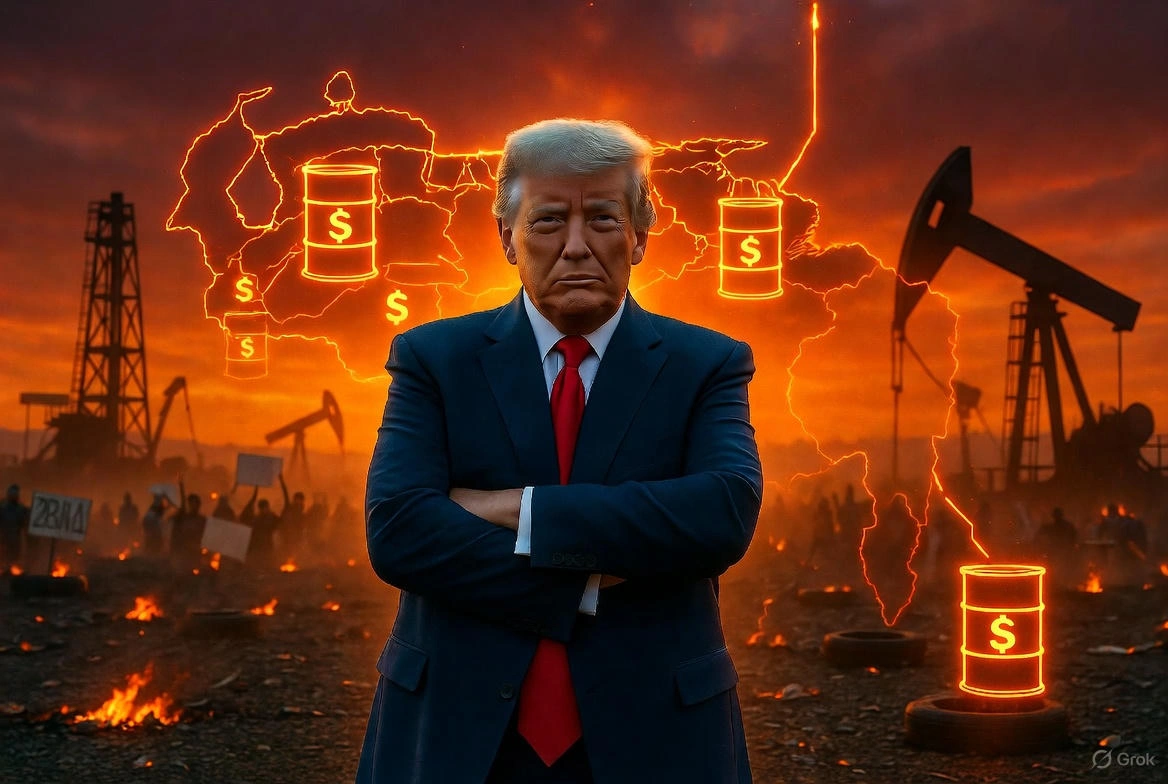
As Trump shifts from regime change to resource extraction, Venezuelan crude’s 303B barrel prize is rewriting Latin American geopolitics. Expert analysis with premium sources.
Sitting atop an estimated 303 billion barrels of proven oil reserves—roughly 17% of the world’s total and more than Saudi Arabia’s holdings—Venezuela today produces less crude than it did in 1950. This is not hyperbole but the staggering reality of a petrostate that transformed geological fortune into economic catastrophe. The country ranked just 21st in global oil production in 2024, pumping approximately 960,000 barrels per day, a fraction of its 3.5 million barrel peak in the late 1990s.
The paradox has never been starker, nor the stakes higher. In early January 2026, following unprecedented military action that resulted in the capture of Venezuelan President Nicolás Maduro, President Donald Trump announced his administration would take control of Venezuela’s oil sector. Trump declared that Venezuela would turn over between 30 million and 50 million barrels of sanctioned oil, with sales beginning immediately and continuing indefinitely. The move represents one of the most dramatic pivots in U.S. Latin American policy in generations—from regime change through maximum pressure sanctions to direct resource extraction.
For investors, policymakers, and energy analysts, Venezuela’s oil represents both immense promise and profound peril. This article examines the geological prize, chronicles the industry’s collapse, analyzes Trump’s transactional pivot, assesses the investment landscape, maps the geopolitical chess match, and most critically, asks whether oil wealth will ever benefit ordinary Venezuelans—or if the resource curse will simply acquire new management.
303 Billion Barrels: The Orinoco Advantage
Venezuela’s claim to the world’s largest proven oil reserves is not mere nationalistic boasting. According to OPEC’s Annual Statistical Bulletin 2025, Venezuela holds approximately 303 billion barrels, well ahead of Saudi Arabia’s 267 billion. The bulk of this bonanza sits in the Orinoco Belt, a 600-kilometer crescent stretching across Venezuela’s interior that may contain between 900 billion and 1.4 trillion barrels of heavy crude in proven and unproven deposits.
But geology tells only half the story. Venezuela’s crude is famously difficult. The oil is heavy and sour, requiring specialized equipment and high levels of technical prowess to produce. With API gravity ratings typically between 8 and 22 degrees—compared to the 30-40 range of lighter crudes—Venezuelan oil is thick, sulfurous, and expensive to refine. Most U.S. Gulf Coast refineries were specifically configured to process this type of heavy crude, creating a unique technical dependency that has shaped bilateral energy relations for decades.
The economic viability of Orinoco Belt production depends critically on oil prices, technology, and infrastructure. During periods when crude trades above $70-80 per barrel, extraction economics improve dramatically. Below that threshold, many deposits become marginal. Industry experts estimate that returning Venezuela to its early 2000s production highs would require approximately $180 billion in investment between now and 2040, according to energy intelligence firm Rystad Energy. Of that staggering sum, between $30-35 billion would need to be committed within the next two to three years just to stabilize and modestly increase current output.
The infrastructure decay is comprehensive. PDVSA acknowledges its pipelines haven’t been updated in 50 years, and the cost to update infrastructure to return to peak production levels would cost $58 billion. Upgrading facilities that convert extra-heavy crude into marketable products have fallen into disrepair. Power generation systems that drive extraction operations suffer chronic failures. Even basic maintenance on wellheads and pumping stations has been deferred for years.
Francisco Monaldi, director of the Latin American Energy Institute at Rice University’s Baker Institute, offers a sobering assessment of Venezuela’s reserve claims. Venezuela’s recovery rate for its oil is less than half of what the country claims, meaning a reasonable and conservative estimate of economically recoverable reserves would be closer to 100-110 billion barrels. The distinction matters enormously—not for geological surveys but for financial modeling and investment decisions.
From Boom to Bust: Anatomy of a Petrostate Failure
Venezuela’s oil story began spectacularly in 1922 when the Barrosos-2 well near Maracaibo erupted in a gusher that sprayed crude 200 feet into the air. By the 1970s, Venezuela had become Latin America’s wealthiest nation, riding OPEC-engineered price increases to prosperity. The 1976 nationalization of the oil industry under President Carlos Andrés Pérez created Petróleos de Venezuela S.A. (PDVSA), a state company that initially operated with remarkable efficiency and technical competence.
Through OPEC, which Venezuela helped found alongside Iran, Iraq, Kuwait, and Saudi Arabia, the world’s largest producers coordinated prices and gave states more control over their national industries. Venezuela’s nationalization, unlike many others, proceeded relatively smoothly. Foreign companies received compensation, technical partnerships continued, and PDVSA emerged as a world-class national oil company, retaining many of the operational practices of its multinational predecessors.
The first major shock arrived in December 2002, when a politically motivated strike against PDVSA—triggered by opposition to President Hugo Chávez—paralyzed production. The strike led to the firing of nearly 20,000 workers, or 40% of PDVSA’s total workforce, including many of its most capable engineers and skilled operators, which dropped production to less than 1 million barrels per day for a short period. This mass exodus of technical expertise created a knowledge vacuum from which PDVSA never fully recovered.
Chávez’s broader nationalization drive intensified after 2007. In 2007, he seized and nationalized the assets of foreign oil companies, including ExxonMobil and ConocoPhillips, driving them out of the country. Unlike the orderly 1976 transition, these expropriations were contentious and undercompensated. International arbitration tribunals later awarded billions in compensation—$1.6 billion to ExxonMobil and $8.5 billion to ConocoPhillips—which Venezuela has largely failed to pay. This episode fundamentally altered the risk calculus for foreign investment in the sector.
Under Chávez, PDVSA was transformed from a technical institution into a social welfare mechanism and political instrument, with the company effectively becoming an ATM machine for military spending and Bolivarian Missions. Revenue that might have been reinvested in maintenance, exploration, and upgrading facilities instead financed food subsidies, housing programs, and political patronage. The company was required to hire based on political loyalty rather than technical competence.
The 2014 oil price collapse delivered the coup de grâce. When crude plummeted from over $100 per barrel to below $30, Venezuela’s already fragile model shattered. By 2016, oil production reached the lowest it had been in 23 years, with analysts noting that the economic crisis would have occurred with or without U.S. sanctions due to chronic mismanagement. Production equipment failed without replacement parts. Electrical grid collapses shut down extraction facilities. Refineries operated at single-digit capacity utilization rates.
As unrest brewed under President Maduro, who succeeded Chávez in 2013, power was consolidated through political repression, censorship, and electoral manipulation. When the Trump administration imposed comprehensive oil sector sanctions in 2019, the industry was already in structural decline. The sanctions accelerated but did not initiate Venezuela’s production collapse.
Trump’s Pivot: From Regime Change to Resource Extraction
The transformation in U.S. policy toward Venezuela under Trump 2.0 represents one of the most dramatic tactical shifts in recent American foreign policy. During his first term (2017-2021), Trump pursued maximum pressure: comprehensive sanctions, recognition of opposition leader Juan Guaidó as interim president, and explicit calls for regime change. The Biden administration largely maintained this approach while offering selective relief, including a license for Chevron to resume limited operations.
The new calculus became clear on January 3, 2026, when U.S. military forces captured Maduro in a predawn operation. Trump officials subsequently outlined an ambitious, multi-part plan centering on seizing and selling millions of barrels of Venezuelan oil on the open market while simultaneously convincing U.S. firms to make expansive, long-term investments aimed at rebuilding the nation’s energy infrastructure. Secretary of State Marco Rubio and Energy Secretary Chris Wright have taken lead roles in articulating this strategy.
The shift from narcoterrorism rhetoric to energy pragmatism happened with remarkable speed. According to sources close to the White House, the Trump administration has set specific demands for Venezuela: the country must expel China, Russia, Iran, and Cuba and sever economic ties, and Venezuela must agree to partner exclusively with the U.S. on oil production. This represents a stark departure from previous democracy-promotion framing to a transactional, realpolitik approach focused on economic and strategic interests.
The timing reflects broader energy security considerations. The United States has light, sweet crude which is good for making gasoline but not much else, while heavy, sour crude like Venezuelan oil is crucial for diesel, asphalt, and fuels for factories and heavy equipment. Most U.S. Gulf Coast refineries were constructed to process Venezuelan heavy crude and operate significantly more efficiently when using it compared to domestic light sweet crude.
Energy Secretary Chris Wright confirmed at a Goldman Sachs conference that the U.S. will market crude coming out of Venezuela, first the backed-up stored oil and then indefinitely going forward, selling production into the marketplace. The administration plans to maintain control over initial oil sale revenues, with proceeds intended to “benefit the Venezuelan people” while funding infrastructure rebuilding.
However, significant logistical and political obstacles loom. Despite Trump’s insistence that U.S. oil companies would pour into Venezuela, officials have no ready plan for convincing firms to invest hundreds of billions of dollars in rebuilding the nation’s energy infrastructure. Major U.S. oil companies have remained largely silent on expansion plans, with Chevron—the only significant American operator currently in Venezuela—focusing on employee safety rather than announcing new investments.
The legal framework remains murky. Former Treasury sanctions policy advisor Roxanna Vigil noted that the private sector currently has nothing official to go on for any sort of assurance or confidence about how operations will be authorized based on U.S. sanctions. Without clear regulatory pathways and liability protections, even companies interested in Venezuelan opportunities face significant barriers to deployment of capital.
The political durability of this approach is questionable. Congressional Democrats have expressed concerns about the military intervention and lack of clear endgame. While some Republicans support a strong stance against Latin American drug cartels and the Maduro regime, others worry about open-ended commitments. Helima Croft, head of global commodity strategy at RBC Capital Markets, warned that accomplishing Trump’s goal will effectively require U.S. oil companies to play a “quasi-governmental role,” which could cost $10 billion a year according to oil executives.
The Investment Conundrum: Who Dares Capital in Caracas?
For international oil companies and financial institutions, Venezuela presents a uniquely challenging risk-reward calculation. The asset base is undeniably attractive—if it can be developed profitably and safely. The question is whether conditions will permit that development.
Chevron currently represents the largest Western oil presence in Venezuela, operating through joint ventures with PDVSA. Chevron pays PDVSA a percentage of output under a joint operation structure that accounts for about one-fifth of Venezuela’s official oil production. The company has approximately 3,000 employees in-country and billions in sunk assets. Walking away would likely mean forfeiting those assets entirely, as past nationalizations have demonstrated.
Chinese and Russian companies have become the dominant foreign players during the sanctions era. China National Petroleum Corporation (CNPC) holds stakes in consortiums with concessions covering 1.6 billion barrels of oil, while China Petroleum & Chemical Corporation (Sinopec) holds stakes covering 2.8 billion barrels. These ventures have continued operating despite sanctions, with Beijing treating U.S. restrictions as illegitimate unilateral measures rather than binding international law.
Chinese financial institutions, primarily the China Development Bank, loaned Venezuela approximately $60 billion through 17 different loan contracts—about half the Chinese loans committed to Latin America as of 2023. These loans were structured as oil-for-credit arrangements, with repayment in the form of crude shipments to China. Venezuela currently owes China between $17 billion and $19 billion in outstanding loans, creating substantial Beijing leverage over any future economic arrangements.
The political risk profile remains extreme. Venezuela has a documented history of asset expropriations, broken contracts, and failed arbitration payments. International Centre for Settlement of Investment Disputes tribunals awarded ExxonMobil $1.6 billion and ConocoPhillips $8.5 billion for earlier seizures, but Venezuela has not paid the money and ConocoPhillips continues attempting to collect. This track record understandably creates hesitation among institutional investors and corporate boards.
Operational risks compound the political uncertainties. Venezuela suffers from chronic electrical grid failures that interrupt extraction operations. Port infrastructure has degraded significantly. Security concerns range from equipment theft to more serious threats against personnel. The availability of diluents—lighter hydrocarbons needed to transport extra-heavy crude through pipelines—has been severely constrained. Maintaining production of heavy oil requires constant reinvestment, reliable power, and uninterrupted access to diluents, many of which historically came from the U.S. Gulf Coast.
The sovereign debt overhang presents another obstacle. Venezuela defaulted on over $150 billion in external debt obligations. A functioning government seeking international capital market access would need to negotiate comprehensive debt restructuring. PDVSA bonds, which traded as low as single-digit cents on the dollar, have surged on speculation about U.S.-backed restructuring, but recovery rates remain highly uncertain.
For potential investors, the upside scenario is compelling: privileged access to one of the world’s largest petroleum reserves, a government desperate for investment, and possible U.S. political backing. The downside risks are equally dramatic: expropriation, political instability, infrastructure failure, contract violations, and reputational damage from association with a regime that has committed documented human rights violations.
Geopolitical Chessboard: Beijing, Moscow, and the Scramble for Influence
Venezuela has become a focal point for great power competition in the Western Hemisphere, with China and Russia using economic and military engagement to expand influence in what Washington has traditionally considered its strategic backyard.
China’s relationship with Venezuela intensified dramatically under Chávez and continued under Maduro as both ideological alignment and economic pragmatism drove deepening ties. Between 2007 and 2016, China provided Venezuela with approximately $105.6 billion in loans, debt, and capital investments, according to AidData research. This made Venezuela one of China’s largest debtors globally and Beijing’s single most important financial commitment in Latin America.
Of the 900,000 barrels of oil Venezuela exported daily, approximately 800,000 barrels went to China, meaning nearly 90% of Venezuela’s oil was sold to Beijing. This created both dependency and leverage in complex ways. Venezuelan crude helped diversify China’s energy supplies and provided below-market pricing during sanctions. For Venezuela, Chinese purchases offered a critical lifeline when Western markets were closed by sanctions.
Beyond petroleum, Chinese involvement extends across critical infrastructure. Huawei Technologies secured a $250 million contract as early as 2004 to improve Venezuela’s fiber optic infrastructure, which became central to the country’s 4G network, while ZTE developed the Homeland Card national ID system key to citizens accessing state subsidies. Chinese firms also invested heavily in mining operations producing iron ore, bauxite, gold, and rare earth minerals—materials crucial for advanced weapons systems and technology supply chains.
Russia’s engagement has been more military-focused but strategically significant. Moscow has supplied weapons systems, provided military advisors, and allegedly facilitated drone manufacturing facilities on Venezuelan soil. These activities align with broader Russian objectives of contesting U.S. influence in Latin America and demonstrating global reach despite economic constraints.
Iran reportedly established drone manufacturing facilities on Venezuelan soil while Russia deployed military advisers—developments that align closely with threats outlined in Trump’s 2025 U.S. National Security Strategy, which rejects global hegemony for an America First realism. The Trump administration has cited these security concerns as partial justification for its intervention.
For Colombia and Brazil—Venezuela’s largest neighbors—the crisis creates impossible dilemmas. Colombia hosts approximately 2.8 million Venezuelan refugees and migrants, the highest concentration globally. The economic and social pressures on Colombian border regions are immense, with stretched public services, labor market tensions, and security concerns as criminal networks exploit porous borders. Brazil faces similar pressures in its northern states while trying to maintain diplomatic engagement with Caracas.
The Caribbean and Central America also feel Venezuelan dysfunction’s ripple effects. Several smaller nations had depended on Venezuela’s PetroCaribe program for subsidized oil supplies. That program’s collapse forced them to seek alternative energy sources at market prices, straining national budgets. The migration flow through Central America toward the United States has created humanitarian emergencies and diplomatic tensions.
According to Atlantic Council analysis, the U.S. capture of Maduro has paradoxically created both risks and potential opportunities for China—if Washington successfully rebuilds Venezuelan oil production and some flows to China, Beijing might recoup remaining loan balances. This creates perverse incentives where Chinese interests may partly align with U.S. success, despite the geopolitical rivalry.
For OPEC, Venezuela has become an embarrassing member. The country was a founding member alongside Iran, Iraq, Kuwait, and Saudi Arabia, but its influence has waned dramatically as production collapsed. Venezuelan representatives continue attending ministerial meetings, but the country has been unable to meet production quotas and contributes little to cartel strategy.
The Venezuelan People: Beyond the Barrels
While geopolitical players and oil companies calculate their interests, 28 million Venezuelans endure one of the world’s worst humanitarian catastrophes. The scale of suffering is staggering and directly linked to the oil sector’s collapse.
Approximately 7.9 million Venezuelans have fled the country since 2014, making this one of the largest displacement crises globally, with 6.9 million hosted by Latin American and Caribbean countries. This represents roughly 23% of the population—an exodus comparable to Syria’s refugee crisis but occurring without active warfare.
Inside Venezuela, 14.2 million people need humanitarian aid, including 5.1 million facing acute food insecurity, while the minimum wage stands at just $3.60 per month and 90% of the population experiences water shortages. These figures represent catastrophic state failure. Hospitals lack basic medications and equipment. Schools operate sporadically. Even Caracas, the capital, suffers frequent power blackouts.
The economic decline has left nearly 85% of Venezuelans in poverty while 53% live in extreme poverty, with the average monthly salary at $24 while a basic food basket for a family of five costs $500. Hyperinflation, while moderated somewhat from 2018-2019 peaks, continues eroding purchasing power. The local currency, the bolívar, has been redenominated multiple times to remove zeros that became meaningless.
The oil-producing regions tell particularly tragic stories. Zulia state, home to Lake Maracaibo where Venezuela’s petroleum industry began, has seen environmental devastation as poorly maintained infrastructure leaks crude into waterways. The Yanomami indigenous community in the Amazon spanning Venezuela and Brazil has faced dire humanitarian crisis, with over 570 children perishing in less than four years due to malnutrition and malaria on the Brazilian side, partly attributed to invasions by over 20,000 illegal miners.
The migration routes expose desperate people to terrible dangers. In 2023, a record 520,000 migrants crossed the treacherous 60-mile Darién Gap between Panama and Colombia, with Venezuelans making up almost 63% of all migrants, and over 20% of those crossing were children. The journey involves risk of death, human trafficking, sexual violence, dehydration, disease, and extortion by criminal groups controlling routes.
Despite the scale of suffering, international response has been grossly inadequate. Compared with $20.8 billion provided by the international community to address the Syrian refugee crisis in its first eight years, Venezuela received only $1.4 billion over a five-year period—one-tenth the per capita funding. Donor fatigue, the crisis’s protracted nature, and Venezuela’s diplomatic isolation have all contributed to this funding gap.
The fundamental question is whether oil wealth can finally benefit ordinary Venezuelans or if the resource curse will simply acquire new management. Historically, petroleum profits have enriched elites while bypassing most citizens. Analysts estimate that as much as $100 billion was embezzled between 1972 and 1997 alone, during earlier boom periods. Transparency International consistently ranks Venezuela among the world’s most corrupt nations.
For any future scenario to differ from this dismal pattern, robust safeguards would be essential: international revenue transparency mechanisms, independent auditing of oil sales and government expenditures, civil society oversight, opposition political participation, media freedom, and judicial independence. None of these conditions currently exist or appear likely to emerge quickly.
Future Scenarios: Three Pathways
Scenario 1: Managed Transition (Probability: 30%)
In this optimistic scenario, the U.S. brokers a negotiated political settlement that includes reformed Venezuelan governance, international revenue oversight, and coordinated sanctions relief. A multilateral trust fund manages oil proceeds, ensuring transparent allocation to reconstruction, debt service, and social spending. International financial institutions provide bridging support.
Production could gradually increase from current levels of approximately 960,000 barrels per day to 1.5 million within three years and potentially 2 million by 2035, assuming $40-50 billion in capital investment reaches critical infrastructure and operational improvements. Major international oil companies return under production-sharing agreements with clear legal protections. Chinese and Russian interests are either bought out or integrated into new arrangements.
This scenario requires sustained political will in Washington, buy-in from regional partners, acceptance by Venezuelan opposition groups and some Chavista factions, and Chinese pragmatism prioritizing loan recovery over geopolitical positioning. The barriers are formidable but not insurmountable.
Scenario 2: Muddle-Through Malaise (Probability: 50%)
This more likely scenario involves partial sanctions relief but continued political instability, corruption, and underinvestment. Production limps along between 800,000 and 1.2 million barrels per day—enough to generate revenue but insufficient for meaningful economic recovery. Chinese and Russian companies maintain dominant positions while U.S. firms participate cautiously through service contracts rather than major capital commitments.
Infrastructure continues degrading faster than repairs can address. Skilled workers remain abroad or retire without replacement. Revenue leakage through corruption persists. The humanitarian crisis moderates slightly as remittances from diaspora populations and modest economic activity provide survival income, but poverty remains widespread.
Political gridlock prevents structural reforms. The installed interim government lacks legitimacy and capacity. Elections, if held, produce disputed results. International attention wanes after initial intervention headlines fade. Venezuela stabilizes at a low equilibrium—neither recovering nor completely collapsing, but remaining broken indefinitely.
Scenario 3: Chaotic Deterioration (Probability: 20%)
In this worst-case scenario, the U.S. intervention fails to establish stable governance. Political fragmentation leads to regional power centers, potentially including armed groups controlling oil-producing areas. Production drops below 500,000 barrels per day as infrastructure fails catastrophically and security deteriorates.
Regional spillover intensifies. Colombia and Brazil face expanded migration flows and cross-border violence. Caribbean nations experience refugee waves overwhelming their limited capacities. Drug trafficking and oil smuggling networks expand into governance vacuums.
International responses fragment. China and Russia pursue separate engagements with whoever controls productive assets. The U.S. becomes entangled in stabilization efforts that prove far more costly and protracted than anticipated—an “oil quagmire” rather than the swift success initially projected.
Heavy crude markets experience significant disruption as Venezuelan barrels disappear from supply chains. Refineries configured for Venezuelan crude face either expensive reconfiguration or sustained margin compression. Oil prices experience sharp volatility as markets price conflict risk and supply uncertainty.
Conclusion: The Paradox Persists
Venezuela’s fundamental paradox—immense petroleum wealth coexisting with profound dysfunction—remains unresolved despite dramatic U.S. intervention. The nation sits atop more proven oil reserves than Saudi Arabia yet produces less crude than Ecuador. It possesses geological advantages that should fund prosperity but has instead delivered misery to millions.
Trump’s pivot from ideological regime change to transactional resource extraction represents a starkly different approach than the maximum pressure campaign of recent years. Whether this proves more effective depends critically on implementation details still being improvised. Can Washington navigate the complex politics of installing legitimate governance? Will oil companies risk billions without clear legal frameworks? Can infrastructure be rebuilt while preventing corruption from devouring investment? Will ordinary Venezuelans finally benefit from their country’s oil, or will new management extract wealth just as previous regimes did?
The historical record counsels skepticism. Petrostates face inherent governance challenges that transcend individual leaders or political systems. The resource curse has proven remarkably persistent across diverse contexts. Venezuela’s specific history—of corruption, Dutch disease economics, state capacity erosion, and polarized politics—suggests that even with American backing and industry expertise, recovery will be measured in years and decades, not months.
For investors, the risk-reward calculation depends entirely on time horizon and risk tolerance. Short-term traders may find volatility profitable. Long-term strategic players might accept elevated risk for privileged access to reserves. Most institutions will likely wait for clearer political and legal frameworks before committing substantial capital.
For policymakers, Venezuelan oil’s significance extends beyond energy supply. It represents a test case for resource-rich failed states, great power competition in developing regions, and the limits of external intervention in sovereign nations. Success or failure will influence approaches to similar challenges elsewhere.
For Venezuelans—those who remained and the nearly 8 million who fled—oil has brought far more curse than blessing. The coming months and years will determine if this generation finally sees petroleum wealth translate into healthcare, education, infrastructure, and opportunity, or if the prize beneath the chaos remains forever just beneath reach, enriching outsiders while impoverishing locals.
Key dates to watch: quarterly U.S.-Venezuela production reports, PDVSA financial disclosures, international debt restructuring negotiations, regional migration statistics, OPEC ministerial meetings addressing Venezuelan quota allocations, and most critically, any signals of transparent revenue management mechanisms taking root. Without the last element, all the technical expertise and capital investment in the world will simply fuel the same old extraction—of Venezuela’s oil and of Venezuelans’ hopes.
Discover more from The Economy
Subscribe to get the latest posts sent to your email.


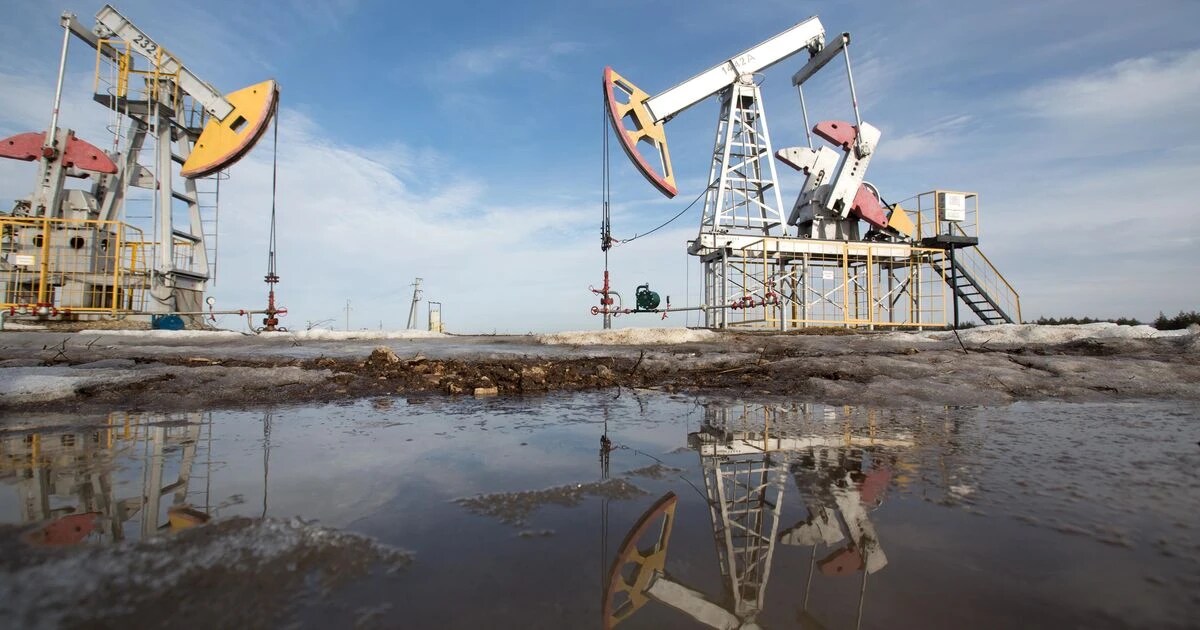
Two contradictory forces are shaping the 2026 oil market simultaneously: a structural glut large enough to keep prices depressed for years, and a live geopolitical risk premium large enough to send prices toward levels not seen in over a decade. Both are true at once, and understanding why matters for anyone pricing energy, currency, or emerging-market risk this year.
The Oversupply Case
The consensus view among major forecasters is bearish. The IEA has projected a 2026 surplus of up to 4.09 million barrels per day, later revising it slightly down to 3.84 million barrels per day as sanctions on Russian and Venezuelan supply offset some of the glut, according to Forex.com’s 2026 outlook. Goldman Sachs has forecast Brent averaging $56 per barrel and WTI $52 in 2026, driven by long-delayed pandemic-era projects coming online in clusters alongside OPEC+’s gradual unwinding of production cuts, per coverage from iTiger. The bank has flagged Brent could fall into the $40 range if non-OPEC supply proves more resilient than expected or a recession hits in 2026-2027.
EBC Financial Group’s analysis similarly expects Brent to average $58-60, with the IMF projecting global growth of 3.3% for 2026 — a supportive but not booming demand backdrop. Crucially, forecasters diverge sharply on demand growth itself: the IEA projects roughly 930,000 barrels per day of additional 2026 demand, while OPEC is far more bullish at 1.4 million barrels per day — a gap that alone could determine whether the market tightens faster than consensus expects.
The Geopolitical Premium
Layered on top of that oversupply is acute conflict risk. The 2026 U.S.-Israeli military conflict with Iran and the effective closure of the Strait of Hormuz triggered what one analysis calls a “historic geopolitical supply shock” against the oversupply backdrop, according to Just2Trade’s market review. The IMF has characterized an “adverse scenario” of 2.5% global growth and 5.4% inflation as a live operating risk, warning that prolonged conflict with oil near $125 a barrel could de-anchor global inflation expectations entirely. Notably, oil and equity markets have diverged during the crisis — Brent fell sharply during a late-May ceasefire period even as equities rallied, illustrating how regime-dependent the correlation between crude and financial markets has become.
Setting Up the Next Shortage
Perhaps the most underreported angle is the setup for what comes after 2026. Lower prices are already deferring investment, particularly in U.S. shale — the EIA forecasts flat 2026 output with potential declines if prices stay below $60, according to Fort Worth Inc.’s analysis of Saxo Bank data. Goldman Sachs projects prices could rebound toward $80/$76 (Brent/WTI) by end-2028 specifically because low 2025-2026 prices will curb non-OPEC supply growth while minimal new long-cycle projects come online post-2026, following roughly 15 years of underinvestment.
Who This Hits Hardest
The oversupply-plus-risk-premium combination lands unevenly. Producers with high fiscal breakeven prices and limited buffers — Russia chief among them, whose Q1 2026 oil and gas revenue collapsed 45% year-on-year — are exposed on the downside even as they occasionally benefit from conflict-driven price spikes. Gulf producers, by contrast, are using current elevated-but-volatile pricing to accelerate diversification of their sovereign wealth into non-oil assets, a hedge against exactly this kind of structural oversupply persisting into the 2030s.
Discover more from The Economy
Subscribe to get the latest posts sent to your email.

Indonesia has taken its first concrete legislative step toward building a financial centre intended to compete with Singapore, Hong Kong, and Dubai, as President Prabowo Subianto pushes an ambitious plan to draw foreign capital into Southeast Asia’s largest economy and lift growth toward 8% by the end of his term in 2029.
Parliament Passes Enabling Legislation
Indonesia’s parliament passed the enabling legislation for the new financial hub, laying its legal foundation, according to reporting by the South China Morning Post. The milestone marks the most tangible progress yet on a project analysts say is projected to attract billions of dollars in investment — though they caution that crucial details on tax incentives, investor eligibility requirements, and regulatory safeguards still need to be finalised before the centre can credibly compete with established regional players.
The ambition is unmistakable: a financial centre capable of pulling capital away from Singapore’s deep, established markets, Hong Kong’s China-gateway status, and Dubai’s fast-growing wealth-management ecosystem is a tall order, and observers note that persuading global institutional investors to relocate meaningful operations to a new jurisdiction is a multi-year undertaking that has only just begun in earnest.
Indonesia’s parliament passed enabling legislation in July 2026 for a new financial hub designed to rival Singapore, Hong Kong, and Dubai, as President Prabowo Subianto targets 8% GDP growth by 2029. Singapore remains Indonesia’s top foreign investor at $8.8 billion in H1 2026, ahead of Hong Kong and China.
A Broader Investment Story Already Taking Shape
The financial-hub push arrives alongside signs that Indonesia is already deepening its role as a regional investment destination. Singapore remained Indonesia’s largest foreign investor in the first half of 2026, contributing $8.8 billion, followed by Hong Kong at $7.8 billion, China at $3.9 billion, Japan at $1.9 billion, and the United States at $1.7 billion, according to investment data reported by the New Straits Times. Malaysia ranked fifth, contributing $700 million in the second quarter alone, as Indonesia’s total realised investment reached Rp511.8 trillion.
Indonesian Investment Minister Rosan Roeslani has pointed to regulatory reform — including Government Regulation No. 28, introduced last October, which he said has provided greater licensing certainty — as a key driver of investor interest, while explicitly acknowledging that neighbouring economies are reforming in parallel, requiring Indonesia to keep pace.
Growth Outlook Holds Steady Amid Regional Headwinds
The financial-hub push comes as Indonesia’s broader macroeconomic backdrop remains comparatively resilient. The Asian Development Bank’s July 2026 outlook kept Indonesia’s growth forecast unchanged at 5.2% for both 2026 and 2027, even as the bank lowered its overall developing Asia and Pacific growth projection to 4.9% amid Middle East-driven energy cost pressures. That stability stands in contrast to Malaysia, whose 2026 growth forecast was revised only marginally higher to 2%, according to the same ADB report — even as Maybank Investment Banking Group separately upgraded its own Malaysia forecast more aggressively, to 4.9%, citing strong regional investor interest at July’s Invest ASEAN conference in Singapore, which drew 200 institutional investors managing a combined $23 trillion in assets.
Rice Diplomacy as a Parallel Economic Thread
Indonesia’s regional economic engagement extends beyond high finance. State logistics agency Bulog is continuing negotiations with Malaysia and Singapore over proposed rice export deals, with pricing and commercial terms still under discussion as of mid-July, according to The Star. The talks illustrate the breadth of Indonesia’s economic diplomacy push across ASEAN even as its flagship financial-hub ambitions dominate headlines.
What It Means for Global Investors
For asset managers and multinationals weighing where to locate Southeast Asian operations, Indonesia’s financial-hub legislation is a signal of intent rather than an immediate call to relocate. The real test will come as tax-incentive structures, licensing rules, and investor-protection frameworks are finalised over the coming months — details that will determine whether Jakarta can credibly compete with Singapore’s decades-long regulatory head start, or whether the hub instead becomes a complementary gateway focused on domestic Indonesian capital markets and Belt-and-Road-adjacent regional flows.
Discover more from The Economy
Subscribe to get the latest posts sent to your email.
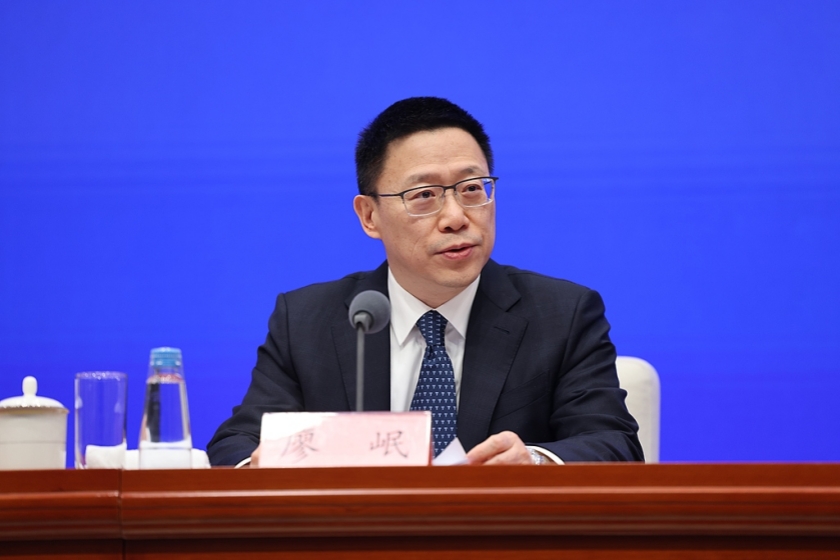
China’s leadership used its closely watched late-July Politburo meeting to strike a more supportive tone on the economy without committing to the kind of sweeping stimulus package investors had hoped might follow a sharp second-quarter slowdown, reinforcing Beijing’s preference for targeted, precision-guided policy support over broad-based easing.
Growth Slows Below Beijing’s Own Target Range
China’s economy expanded 4.3% year-on-year in the second quarter of 2026, a marked deceleration from the 5.0% pace recorded in the first quarter and a figure that sits below the lower bound of Beijing’s own 4.5–5% full-year growth target — the lowest such target range Beijing has set since the early 1990s, according to CryptoBriefing’s analysis of the data. Consumer demand has remained persistently weak, and deflationary pressure has now been a recurring theme in the Chinese economy for several consecutive quarters.
A Reuters poll of economists ahead of the meeting found growth for 2026 as a whole is expected to cool to around 4.6%, before easing further to roughly 4.4% in 2027, as weak domestic demand offsets the boost from resilient exports recorded during a global oil-price shock earlier this year.
Fiscal Firepower Exists — But Beijing Is Choosing Restraint
Perhaps the most consequential signal from analysts previewing the meeting was not about new money, but about unused capacity. China retains roughly RMB 6.8 trillion of this year’s approved government bond issuance quota still undeployed as of the end of June, alongside an RMB 800 billion quasi-policy financing instrument and an estimated RMB 1.8 trillion in unused bond quota carried over from prior years, according to analysis published on Substack’s macro research platform. The implication: Beijing does not lack tools, it is choosing to prioritise faster execution of existing plans over announcing a new headline package.
Standard Chartered economists have argued the meeting was likely to emphasise accelerating fiscal execution in the second half rather than expanding the overall scope of policy support, with monetary policy relegated to a supplementary role. That reading is consistent with the People’s Bank of China’s approach since May 2025, when it last adjusted policy rates or reserve requirements, opting instead for short-term liquidity operations.
China’s July 2026 Politburo meeting signalled stronger support language without a large new stimulus package, after Q2 GDP growth slowed to 4.3% — below Beijing’s 4.5–5% target. With RMB 6.8 trillion in unused bond quota available, policymakers are prioritising faster fiscal execution over broad-based monetary or fiscal easing.
Property Downturn and Overcapacity Remain the Structural Drag
Beneath the headline growth numbers lies a widening bifurcation. New growth drivers — high-end manufacturing, the digital economy, and modern services — accounted for more than 40% of growth in the first half, with high-tech manufacturing value-added up 13.3%. Yet retail sales grew just 1.3% year-on-year in the same period, and fixed-asset investment fell 5.7%, according to detailed policy analysis from independent China economy newsletter Fred Gao. That divergence — a resilient “new economy” propping up an ailing “old economy” — is precisely the dynamic policymakers appear determined not to paper over with indiscriminate stimulus that could derail the structural transition central to the 15th Five-Year Plan’s opening year.
Markets Should Watch Implementation, Not Rhetoric
The consistent message from economists across Citi, Standard Chartered, and independent research houses ahead of the meeting was that markets should discount policy language and instead track fiscal execution data in the coming months — the pace of local government bond issuance, infrastructure project approvals, and any loosening of housing-related restrictions in major cities. Beijing’s playbook, as one analyst close to policymaking circles put it, increasingly resembles precision-guided support rather than the credit-fuelled stimulus waves of 2008–09 or 2015–16.
What It Means for Investors
For global investors positioned in Chinese equities, the yuan, or commodities exposed to Chinese infrastructure demand, the takeaway is one of managed disappointment: meaningful policy support is coming, but gradually, and calibrated to avoid reigniting the property-sector excesses Beijing spent years trying to unwind. A weaker yuan remains the most likely near-term consequence of any incremental stimulus, while a sharper-than-expected growth slowdown in the third quarter remains the primary catalyst that could force Beijing’s hand toward broader action.
Discover more from The Economy
Subscribe to get the latest posts sent to your email.

Canada US Trade War 2026: Inside Carney’s Push to Cut Ties With Trump’s Tariffs

Rachel Reeves’s £25 Billion Problem: What the Autumn Budget Gap Means for Britain

Inside the Fed’s Most Divided Vote in Years: Why Warsh Held the Line on Rates

Pakistan Passed Its Third IMF Review

The Fed Is Fractured — And a New Chair Just Made It Louder, Not Quieter

The UK Economy in 2026 Is Neither Recession Nor Recovery :Stagflaton

Indonesia’s $121 Billion Nickel Bet Is Facing a Battery Chemistry

Why Ultra-Wealthy Families Are Splitting Between Singapore and Dubai inmarkets 2026

China Chose Political Control Over Fixing Its Deflation Trap in 2026

Oil Markets Are Oversupplied and Geopolitically Explosive at the Same Time

Russia’s Budget Deficit Blew Past Its Full-Year Target in Three Months

Malaysia’s Rare Earth Bet: Six Powers Are Negotiating for Kuantan at Once

Gulf Sovereign Capital Bypasses Pakistan Despite Record 2026 Spending Spree

Pakistan’s $10bn US Facility Request: Inside the New Gulf Capital Triangle

Russia Bans Diesel Exports 2026: Global Fuel Market Impact Explained

Gold Price Forecast 2026: Fed’s July 29 Decision and Record Central Bank Buying Explained

Strait of Hormuz Blockade 2026: Oil Prices Surge 9% as US-Iran Conflict Reignites

Strait of Hormuz 2026: Why Markets Still Don’t Trust It’s Open

Down But Not Out: Inside the Slow Sinking of Russia’s War Economy

Gulf Capital Retreat From Pakistan 2026: UAE Loan Freeze & What It Means

China Politburo July 2026: Stimulus Signals Explained

Pakistan Economy 2026: GDP Grows 3.7% as IMF Completes EFF Review Amid Middle East Risk

Apple vs OpenAI Lawsuit: The Economic Story Behind the Headline

Global Stock Market Selloff 2026: Stagflation Fears Return as Iran Conflict Reignites

Indonesia Russian Oil Imports 2026: Why Jakarta Is Diversifying Crude Supply

The Yuan Now Settles 67% of Russian Oil Payments — Quiet De-Dollarization in Action

AI Capex Bubble 2026: The Hidden $662B Debt Nobody Reports

Pakistan’s Economic Survey FY26: Inflation Spike Insights
-

 Markets & Finance7 months ago
Top 15 Stocks for Investment in 2026 in PSX: Your Complete Guide to Pakistan’s Best Investment Opportunities
-

 Analysis5 months ago
Johor’s Investment Boom: The Hidden Costs Behind Malaysia’s Most Ambitious Economic Surge
-

 Analysis6 months ago
Top 10 Stocks for Investment in PSX for Quick Returns in 2026
-

 Analysis6 months ago
Brazil’s Rare Earth Race: US, EU, and China Compete for Critical Minerals as Tensions Rise
-

 Banks7 months ago
Best Investments in Pakistan 2026: Top 10 Low-Price Shares and Long-Term Picks for the PSX
-

 Investment7 months ago
Top 10 Mutual Fund Managers in Pakistan for Investment in 2026: A Comprehensive Guide for Optimal Returns
-

 Global Economy7 months ago
15 Most Lucrative Sectors for Investment in Pakistan: A 2025 Data-Driven Analysis
-

 Global Economy7 months ago
Pakistan’s Export Goldmine: 10 Game-Changing Markets Where Pakistani Businesses Are Winning Big in 2025