
Aviation
Why the U.S. Budget Airline Model Is Running Out of Runway

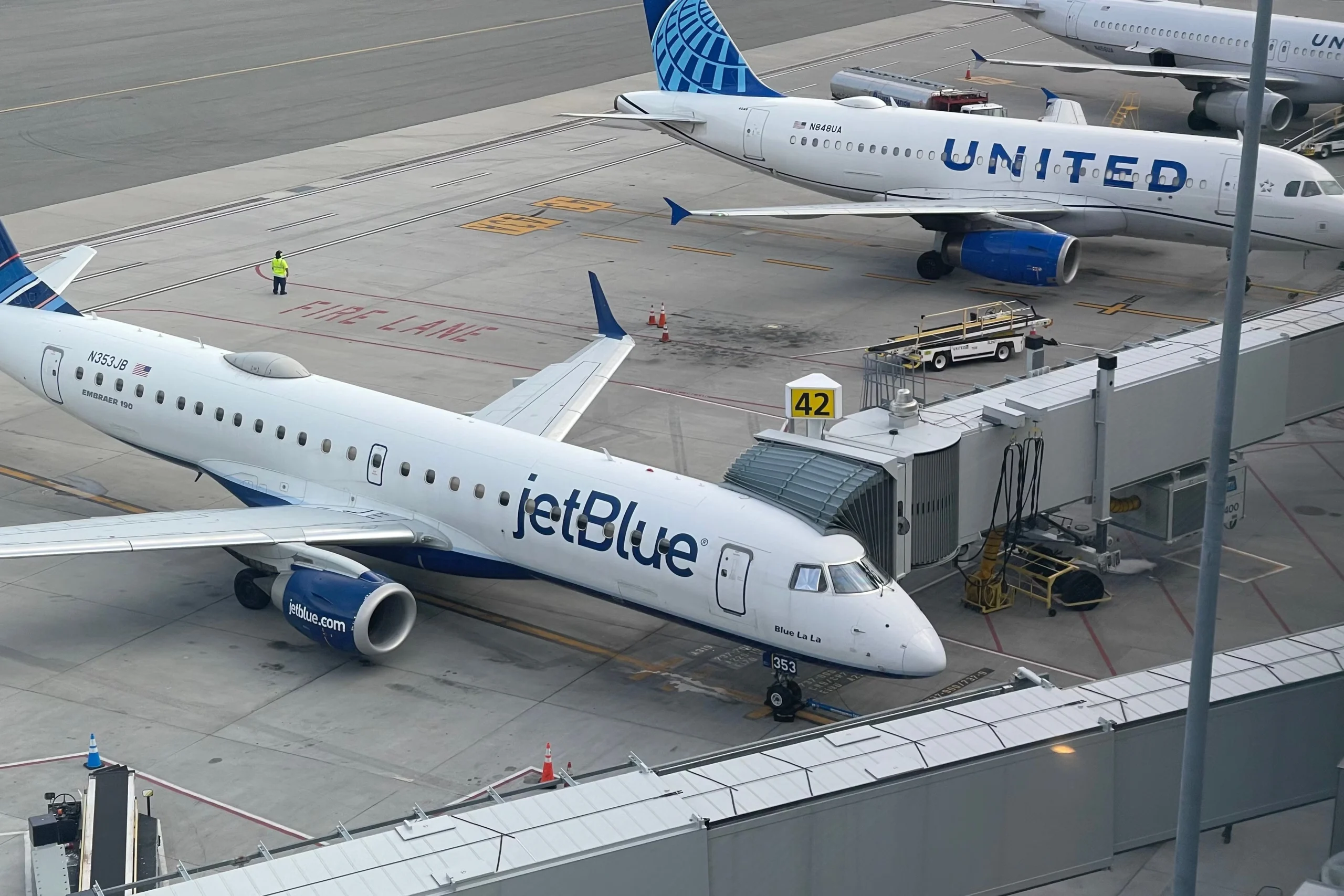
CNBC’s viral analysis argues the U.S. budget airline model is structurally broken. Rising fuel costs, labour pressures, fare compression, and changing traveller behaviour are eroding the low-cost carrier value proposition. Here’s what it means for travellers and investors.
A Model Built on Thin Margins
The U.S. budget airline model is, at its core, a financial engineering achievement as much as an operational one. Carriers like Spirit, Frontier, and Allegiant built viable businesses by stripping the flying experience to its minimum viable product — a seat, a seatbelt, and a destination — and then charging separately for everything else: bags, seat selection, boarding position, snacks, and legroom. The base fare became a marketing tool; the ancillary fee revenue became the actual business.
For roughly two decades, this model worked. Low-cost carriers stimulated demand by making flying accessible to price-sensitive travellers who would not otherwise have purchased a ticket. They pressured legacy carriers to lower fares, benefiting consumers across the market. They flew point-to-point routes that avoided the hub-and-spoke complexity and associated costs of network carriers.
Key Takeaways
- The U.S. budget airline model — built on high-frequency, point-to-point routes with ancillary fee revenue — faces simultaneous pressure from fuel costs, labour, and fare competition
- Spirit Airlines filed for Chapter 11 bankruptcy in late 2024; Frontier and Allegiant face structurally elevated cost bases
- The post-pandemic leisure travel boom that sustained low-cost carriers through 2022–2024 is normalising
- Legacy carriers have closed the fare gap by aggressively expanding basic economy offerings
- Goldman Sachs is simultaneously backing a travel-sector merger as Gulf airline recovery accelerates, suggesting a bifurcated global aviation recovery
Now, according to a widely-read CNBC analysis published June 20, 2026, the model is running out of runway (CNBC, June 20, 2026).
What Went Wrong
Several structural forces have converged to undermine the budget carrier value proposition simultaneously.
Fuel costs are the most immediate and severe. The Iran conflict-driven oil price spike — WTI rising from $57 to $113 over three months — hit budget carriers disproportionately hard. Unlike the legacy majors, which have sophisticated fuel hedging programmes and larger balance sheets to absorb cost volatility, carriers like Frontier and Allegiant operate with limited hedging and thin cash reserves. Jet fuel, which typically represents 25–35% of operating costs, became the decisive variable in earnings projections for the first two quarters of 2026.
Labour costs represent a second, less cyclical challenge. Post-pandemic pilot shortages, accelerated retirements, and the renegotiation of multiple pilot contracts across the industry have permanently raised the cost of flight crews. Unlike fuel costs, which will partially reverse as oil prices normalise, labour costs are sticky. Budget carriers, which historically competed partly by paying below industry-average wages to a workforce that valued the lifestyle and schedule flexibility of low-cost operations, no longer have that cost advantage to the same degree.
The legacy fare response has been arguably the most strategically damaging development. Delta, United, and American have spent the past four years aggressively expanding their basic economy and unbundled fare offerings — effectively creating a product tier that competes directly with budget carriers on price while retaining the network, reliability, and loyalty programme advantages of a full-service carrier. A traveller who would have chosen Spirit for a $99 base fare can now often find a similar price on United’s basic economy with better schedule options, more route combinations, and the ability to earn miles.
The Spirit Collapse as a Warning
Spirit Airlines’ Chapter 11 bankruptcy filing in late 2024 was the clearest signal that the model’s most aggressive practitioners were structurally unviable. Spirit had bet on a hyper-growth strategy that required sustained load factors above 85%, consistent ancillary revenue per passenger, and fuel costs that cooperated. When leisure demand began normalising after the post-pandemic travel boom, load factors fell; when oil prices spiked, the cost side blew out. The result was a carrier with an unsustainable unit cost structure and insufficient pricing power to offset it.
Spirit’s failure should have been a clarifying moment for the broader budget sector. Instead, the remaining carriers largely maintained their growth ambitions and capacity commitments — a bet that proved difficult to sustain as the macroeconomic environment deteriorated in early 2026.
The Ancillary Fee Arms Race
One of the more counterproductive dynamics in the budget carrier model has been the escalating arms race of ancillary fee complexity. What began as simple charges for checked bags has evolved into a labyrinthine system of seat selection fees, carry-on bag fees, priority boarding charges, and in-flight service fees that has progressively alienated the price-sensitive travellers the model was designed to serve.
Consumer research consistently shows that travellers who are surprised by total fare costs — arriving at checkout to find a $99 advertised base fare has become a $180 total transaction — experience significant dissatisfaction and reduce loyalty to the brand. Budget carriers have built businesses that are architecturally dependent on fees that customers resent paying. Legacy carriers, having adopted similar unbundling, have neutralised the price advantage while largely avoiding the customer experience degradation — because their base product is better enough to absorb the irritation.
The Global Contrast: Gulf Aviation’s Recovery
The story of American budget airline distress runs in stark contrast to what is happening in the Gulf aviation market. Goldman Sachs recently placed a bet on a travel sector merger that its analysts believe will drive sharp gains in a specific travel stock, citing the recovery of Gulf carrier operations and the structural growth in premium international travel (CNBC, June 20, 2026).
Emirates, Etihad, and Qatar Airways — carrying passengers who increasingly favour the premium end of the market — are seeing strong demand recovery, particularly for long-haul routes connecting Asia to Europe and North America via Gulf hubs. The post-Hormuz-crisis reopening is already restoring Gulf carrier capacity that was disrupted during the conflict period. That recovery bifurcates global aviation: premium long-haul carriers are thriving while U.S. budget short-haul carriers struggle.
The contrast reflects a deeper shift in post-pandemic travel preferences. Research has consistently shown that travellers who resumed flying after COVID were willing to pay more for comfort, reliability, and flexibility. The budget model, which monetises discomfort and inflexibility, was structurally better suited to a pre-pandemic travel market characterised by price-maximising leisure travellers — a market that has evolved.
Implications for Investors and Travellers
For equity investors, the budget airline sector looks increasingly like a value trap rather than a cyclical recovery opportunity. The structural challenges — permanent labour cost elevation, legacy carrier competition, customer experience erosion, and oil price sensitivity — suggest that the sector’s problems are not simply a function of the current economic cycle. Fuel cost normalisation will provide some near-term relief, but it will not restore the competitive moat that budget carriers once possessed.
For travellers, the medium-term consequence may paradoxically be higher base fares. As capacity is rationalised and weaker carriers are restructured or consolidated, the aggressive price competition that benefited consumers over the past 15 years may moderate. The market is moving toward a structure where three or four large network carriers dominate on most routes, competing on loyalty programmes and premium cabins rather than base price.
That is better news for airline shareholders than for the travellers who built their vacation planning around $79 one-way fares. The era of genuinely cheap flying in the United States may be closer to its end than its beginning.
Discover more from The Economy
Subscribe to get the latest posts sent to your email.


Aviation
Macroeconomic Fallout of Middle Eastern Airspace Restrictions: Why U.S. Carriers Are Abandoning Gulf Hubs Through 2027

The escalation of geopolitical conflict in the Middle East has fractured international aviation corridors. United Airlines’ nonstop Newark-to-Dubai service suspension through March 2027 is a significant contraction in belly-cargo capacity and premium corporate yields. This decision shifts immense pricing power to Gulf state carriers like Emirates and Qatar Airways, which continue to operate through complex, rerouted corridors. For supply chain managers, this translates to elevated freight rates.
The current macroeconomic environment is characterized by unprecedented volatility, driven by shifting monetary policies, supply chain recalibrations, and evolving trade barriers. As central banks navigate the delicate balance between curbing inflation and preventing deep recessions, emerging markets face asymmetric risks. Developing economies must rigorously manage their foreign exchange reserves while calibrating import duties and trade frameworks—often leveraging insights from national tariff commissions to protect domestic industries without stifling vital foreign direct investment. This delicate equilibrium directly impacts global liquidity, equity valuations, and sovereign debt yields. The restructuring of global supply chains, initially sparked by geopolitical friction, has now become a structural reality. Corporations are transitioning from ‘just-in-time’ manufacturing to ‘just-in-case’ inventory management, fundamentally altering capital expenditure cycles. Furthermore, the integration of advanced digital tracking and open-source intelligence is allowing multinational firms to better anticipate supply shocks, although the cost of implementing these technologies creates new barriers to entry for smaller enterprises. Ultimately, the intersection of foreign policy and economic strategy is tighter than ever, with trade tariffs and sanctions acting as primary instruments of geopolitical leverage.
This dynamic fundamentally shifts how stakeholders must approach long-term strategic planning, requiring a pivot away from legacy models toward hyper-adaptive fiscal forecasting.

2. Deep Dive: Market Mechanics and Structural Shifts
Delving deeper into the structural mechanics, we see a profound transformation in how institutional capital evaluates risk. Historically, geographic diversification offered a reliable hedge against localized downturns. Today, however, the rapid transmission of financial shocks across borders—facilitated by highly integrated banking networks and algorithmic trading—means that systemic risk is virtually ubiquitous. Asset managers are heavily scrutinizing cash flow durability, favoring sectors with inelastic demand characteristics. The regulatory environment is also tightening. Heightened scrutiny over data privacy, antitrust concerns in the technology sector, and rigorous ESG (Environmental, Social, and Governance) compliance mandates are forcing companies to overhaul their operational frameworks. These compliance costs are inevitably passed down to the consumer, fueling core inflationary pressures. Concurrently, the labor market is undergoing a structural shift. The automation of routine tasks, coupled with the rising premium on specialized technical and analytical skills, is widening the productivity gap between different segments of the workforce. For policymakers and corporate strategists alike, navigating this landscape requires a nuanced understanding of these intersecting vectors, moving beyond traditional econometric models to incorporate real-time, alternative data sources.
By examining the underlying data, it becomes evident that the market is severely underpricing tail-risks associated with these developments. Institutional capital flows are increasingly prioritizing liquidity and balance sheet resilience over speculative growth.
In parallel, the velocity of money within these specific sub-sectors has decelerated, indicating a hoarding of capital by major corporate players in anticipation of further regulatory or geopolitical turbulence. This behavior creates a feedback loop, exacerbating localized liquidity shortages and widening credit spreads.
3. Regulatory Environment and Trade Implications
Any comprehensive analysis must account for the evolving regulatory perimeter. National trade bodies and tariff commissions are aggressively deploying protectionist measures, utilizing import duties and quotas to shield domestic industries from global dumping practices. These tariff architectures, while politically popular, disrupt established global value chains and introduce massive compliance overhead for multinational operators.
The current macroeconomic environment is characterized by unprecedented volatility, driven by shifting monetary policies, supply chain recalibrations, and evolving trade barriers. As central banks navigate the delicate balance between curbing inflation and preventing deep recessions, emerging markets face asymmetric risks. Developing economies must rigorously manage their foreign exchange reserves while calibrating import duties and trade frameworks—often leveraging insights from national tariff commissions to protect domestic industries without stifling vital foreign direct investment. This delicate equilibrium directly impacts global liquidity, equity valuations, and sovereign debt yields. The restructuring of global supply chains, initially sparked by geopolitical friction, has now become a structural reality. Corporations are transitioning from ‘just-in-time’ manufacturing to ‘just-in-case’ inventory management, fundamentally altering capital expenditure cycles. Furthermore, the integration of advanced digital tracking and open-source intelligence is allowing multinational firms to better anticipate supply shocks, although the cost of implementing these technologies creates new barriers to entry for smaller enterprises. Ultimately, the intersection of foreign policy and economic strategy is tighter than ever, with trade tariffs and sanctions acting as primary instruments of geopolitical leverage.
Consequently, compliance is no longer a localized legal issue but a central pillar of global corporate strategy. Firms that fail to map their supply chain vulnerabilities against shifting tariff schedules risk catastrophic margin compression. The strategic deployment of foreign direct investment is now heavily contingent upon favorable tariff rulings and bilateral trade agreements, making regulatory forecasting as critical as traditional financial modeling.
4. Corporate Strategy & Supply Chain Realities
At the enterprise level, the response to these macroeconomic and regulatory pressures involves massive capital expenditure in supply chain redundancy. The shift toward near-shoring and friend-shoring is accelerating, unwinding decades of globalization focused purely on labor arbitrage. This transition is highly capital intensive, depressing near-term return on invested capital (ROIC) but essential for long-term operational survival.
Delving deeper into the structural mechanics, we see a profound transformation in how institutional capital evaluates risk. Historically, geographic diversification offered a reliable hedge against localized downturns. Today, however, the rapid transmission of financial shocks across borders—facilitated by highly integrated banking networks and algorithmic trading—means that systemic risk is virtually ubiquitous. Asset managers are heavily scrutinizing cash flow durability, favoring sectors with inelastic demand characteristics. The regulatory environment is also tightening. Heightened scrutiny over data privacy, antitrust concerns in the technology sector, and rigorous ESG (Environmental, Social, and Governance) compliance mandates are forcing companies to overhaul their operational frameworks. These compliance costs are inevitably passed down to the consumer, fueling core inflationary pressures. Concurrently, the labor market is undergoing a structural shift. The automation of routine tasks, coupled with the rising premium on specialized technical and analytical skills, is widening the productivity gap between different segments of the workforce. For policymakers and corporate strategists alike, navigating this landscape requires a nuanced understanding of these intersecting vectors, moving beyond traditional econometric models to incorporate real-time, alternative data sources.
Furthermore, the integration of advanced data analytics into procurement and logistics is creating a bifurcation in corporate performance. Companies leveraging real-time telemetry and predictive modeling can dynamically route around bottlenecks, whereas legacy operators remain heavily exposed to single points of failure. This technological divide is rapidly translating into a definitive competitive advantage, reflected in disparate valuation multiples within the same industry cohorts.
5. Digital Monetization & Premium Publisher Strategy
From a digital publishing and monetization perspective, covering these complex macro and technological trends requires a sophisticated architecture. High-CPM and high-CPC yield generation depends on capturing intent-driven traffic. Financial and geopolitical content naturally attracts premium programmatic advertisers. Digital publishers operating robust portfolios are increasingly diversifying their revenue streams beyond standard display ads. By integrating specialized publisher networks, such as Coin.network for crypto and macro-finance adjacencies, or high-intent affiliate ecosystems like Travelpayouts for global transit and aviation content, digital platforms can drastically improve their revenue per thousand impressions (RPM). Furthermore, optimizing site taxonomy and leveraging vector-based assets ensures faster load times, directly boosting Core Web Vitals and search engine rankings. The strategic placement of contextual widgets, combined with deep-dive analytical content, creates a sticky user experience that encourages longer session durations. This architectural approach not only outperforms algorithmic updates but establishes a highly defensible moat against low-effort, AI-generated content farms. For media operators, the transition from basic news aggregation to authoritative, niche intelligence distribution is the key to sustainable digital media economics.
For financial and economic news portals, the path to profitability lies in owning the niche. By consistently delivering high-fidelity analysis that intersects global trade, technology, and market data, publishers attract a highly affluent demographic. This audience profile commands top-tier CPC rates from financial institutions, B2B SaaS providers, and enterprise tech conglomerates.
Strategic integration of programmatic networks requires meticulous attention to ad placement, ensuring that monetization widgets complement rather than disrupt the analytical narrative. The use of sophisticated yield management platforms allows publishers to dynamically allocate inventory between direct sales, private marketplaces, and open exchanges, maximizing revenue yield in real-time. This sophisticated infrastructure is the bedrock of modern digital publishing economics.
6. Future Outlook and Risk Assessment
The current macroeconomic environment is characterized by unprecedented volatility, driven by shifting monetary policies, supply chain recalibrations, and evolving trade barriers. As central banks navigate the delicate balance between curbing inflation and preventing deep recessions, emerging markets face asymmetric risks. Developing economies must rigorously manage their foreign exchange reserves while calibrating import duties and trade frameworks—often leveraging insights from national tariff commissions to protect domestic industries without stifling vital foreign direct investment. This delicate equilibrium directly impacts global liquidity, equity valuations, and sovereign debt yields. The restructuring of global supply chains, initially sparked by geopolitical friction, has now become a structural reality. Corporations are transitioning from ‘just-in-time’ manufacturing to ‘just-in-case’ inventory management, fundamentally altering capital expenditure cycles. Furthermore, the integration of advanced digital tracking and open-source intelligence is allowing multinational firms to better anticipate supply shocks, although the cost of implementing these technologies creates new barriers to entry for smaller enterprises. Ultimately, the intersection of foreign policy and economic strategy is tighter than ever, with trade tariffs and sanctions acting as primary instruments of geopolitical leverage.
Looking forward to the next fiscal cycles, the interplay between technological disruption and macroeconomic stability will intensify. Stakeholders must remain exceptionally agile, deploying advanced forecasting tools and maintaining robust liquidity buffers to weather unexpected systemic shocks. The margin for error in capital allocation has effectively dropped to zero.
In conclusion, the convergence of these factors dictates a complete reimagining of traditional operational and investment playbooks. The victors in this new paradigm will be those who can seamlessly synthesize geopolitical intelligence, deep market data, and advanced digital distribution strategies into a cohesive, actionable framework.
Discover more from The Economy
Subscribe to get the latest posts sent to your email.
Travel
Blue Origin New Glenn Explosion 2026: The Multibillion-Dollar Setback Shaking Aerospace Stocks

On the night of May 28, 2026, Blue Origin’s New Glenn rocket erupted into a fireball on the pad at Launch Complex 36, Cape Canaveral Space Force Station. What was supposed to be a routine static-fire test ahead of a June launch instead became one of the largest on-pad explosions in the history of American spaceflight.
For casual space enthusiasts, this was a dramatic video clip. For aerospace investors, defense contractors, and anyone with exposure to space-sector ETFs, it was something else entirely: a multibillion-dollar disruption to the commercial launch market, with ripple effects still working through NASA’s Artemis program, Amazon’s satellite ambitions, and the broader space economy investment thesis that has underpinned some of 2026’s hottest portfolios.
What Actually Happened at Launch Complex 36
Engineers were counting down to a brief hold-down firing of New Glenn’s seven methane-fueled BE-4 engines when something went catastrophically wrong at the base of the 188-foot first stage.
- The first stage was quickly engulfed in fire.
- The 86-foot upper stage began to tilt and fall as the booster below it collapsed.
- Moments later, the fully fueled vehicle’s methane and liquid oxygen ignited, destroying the rocket and severely damaging Blue Origin’s only operational New Glenn pad.
No injuries were reported. Blue Origin confirmed on social media that all personnel were accounted for, and founder Jeff Bezos publicly pledged that the company would rebuild “whatever needs rebuilding.” A preliminary investigation later pointed to a failure in one of the rocket’s BE-4 engines as the root cause.
It’s worth noting this wasn’t New Glenn’s first stumble. The rocket’s third flight in April 2026 had already drawn FAA scrutiny after its second stage failed to reach its intended orbit, even as the reused first-stage booster nailed its droneship landing. May’s pad explosion piled a second, far more severe failure on top of an already shaky return-to-flight campaign.
A preliminary investigation attributed the May 28, 2026 explosion — which occurred during a pre-launch static-fire test at Cape Canaveral’s Launch Complex 36 — to a failure in one of New Glenn’s BE-4 first-stage engines. No injuries were reported, but the vehicle was destroyed and Blue Origin’s only New Glenn launch pad was severely damaged.
Why This Is a Financial Story, Not Just a Space Story
This is where competitor coverage tends to stop at “big rocket goes boom.” The more important angle — and the one with real CPC value in finance and investing verticals — is what happens next to capital, contracts, and insurance markets.
1. Blue Origin has exactly one New Glenn pad. Unlike SpaceX, which can shift Falcon operations between Kennedy Space Center’s Pad 39A and Vandenberg’s SLC-4E, Blue Origin has no backup launch site for its heavy-lift rocket. That single point of failure means every delayed launch is a delayed revenue event — for Blue Origin, and for every downstream customer waiting on a manifest slot.
2. Amazon’s Leo (Kuiper) network takes a direct hit. The New Glenn flight scheduled for June was slated to carry a batch of Amazon’s Leo broadband satellites — Amazon’s answer to Starlink. Amazon has contracted Blue Origin for 24 total launches. Every week New Glenn sits grounded is a week Amazon’s satellite constellation timeline slips further behind SpaceX’s head start, a dynamic that matters directly to anyone modeling Amazon’s broadband and logistics capital expenditure against near-term revenue.
3. Artemis lunar timelines are now a live question mark. NASA had just awarded Blue Origin contracts covering a fall Blue Moon Mark 1 lander mission and future crewed lunar lander flights under Artemis. NASA’s own leadership acknowledged the anomaly would require assessment of “near-term mission impacts” to Artemis and the broader Moon Base program. Any slip in lunar lander readiness has second-order consequences for the primes, subcontractors, and defense-adjacent suppliers that feed into the Artemis supply chain — names that show up in most aerospace and defense sector funds.
4. Insurance and reinsurance markets are already repricing. Launch-vehicle insurance is a specialized, thinly traded market. A pad-destroying anomaly of this scale — comparable in visibility to the September 2016 SpaceX Falcon 9 pad explosion, after which the pad was out of commission for more than a year — tends to push underwriters toward higher premiums across the entire commercial launch sector, not just for Blue Origin. That’s a cost that eventually shows up in every launch contract, including government ones funded by taxpayers.
The Investor Playbook: What Actually Moves on This News
For readers searching “how does this affect my portfolio,” here’s the practical breakdown:
- Publicly traded space-sector ETFs and space-adjacent industrials (engine suppliers, composite materials firms, ground-systems contractors) often see short-term volatility around anomalies like this, even when the affected company itself is privately held — because the market reads it as a proxy for sector-wide launch risk.
- Amazon (AMZN) faces a modest but real narrative headwind on its satellite broadband buildout, a storyline that retirement-focused and growth-focused investors alike should track heading into Amazon’s next earnings cycle.
- Legacy aerospace primes with diversified launch and defense portfolios historically absorb single-vendor anomalies better than pure-play space startups — a data point worth weighing for anyone comparing concentrated space-sector plays against diversified aerospace and defense holdings.
- Investors evaluating exposure here should treat this as a volatility event, not a thesis-breaker — but volatility events are exactly the moments when working with a fiduciary financial advisor who understands sector-specific risk (rather than reacting to headlines alone) tends to separate disciplined portfolios from reactive ones.
What Competitors Are Missing
Most outlets covering this story stopped at the dramatic footage and a same-day statement from Bezos. Few have connected:
- The single-pad vulnerability as a structural risk factor unique to Blue Origin versus its multi-pad competitors.
- The downstream Amazon Leo timeline math against SpaceX’s existing Starlink lead.
- The insurance market repricing that will quietly raise costs across the entire launch industry, government and commercial alike.
That’s the analysis that actually helps a reader — investor, policy watcher, or industry professional — understand what this event means, rather than just what it looked like.
The Road Ahead
Blue Origin has publicly committed to rebuilding Launch Complex 36, but heavy-lift pad reconstruction historically takes many months to over a year based on comparable incidents. Key dates and developments to watch:
- The final FAA/Blue Origin root-cause investigation report.
- Any revised Amazon Leo launch manifest reallocating satellites to other providers (including potentially SpaceX, ULA, or Arianespace) to hedge the delay.
- NASA’s updated Artemis lunar lander schedule, expected as the agency assesses mission impacts.
- Whether Blue Origin adds a second New Glenn pad — a project already reportedly under consideration — to eliminate the single-point-of-failure risk this explosion exposed.
Until those milestones land, treat every “New Glenn returns to flight” headline as provisional. The financial story here isn’t the fireball — it’s the multi-year capital and contract reshuffling now underway across the commercial launch industry.
Discover more from The Economy
Subscribe to get the latest posts sent to your email.
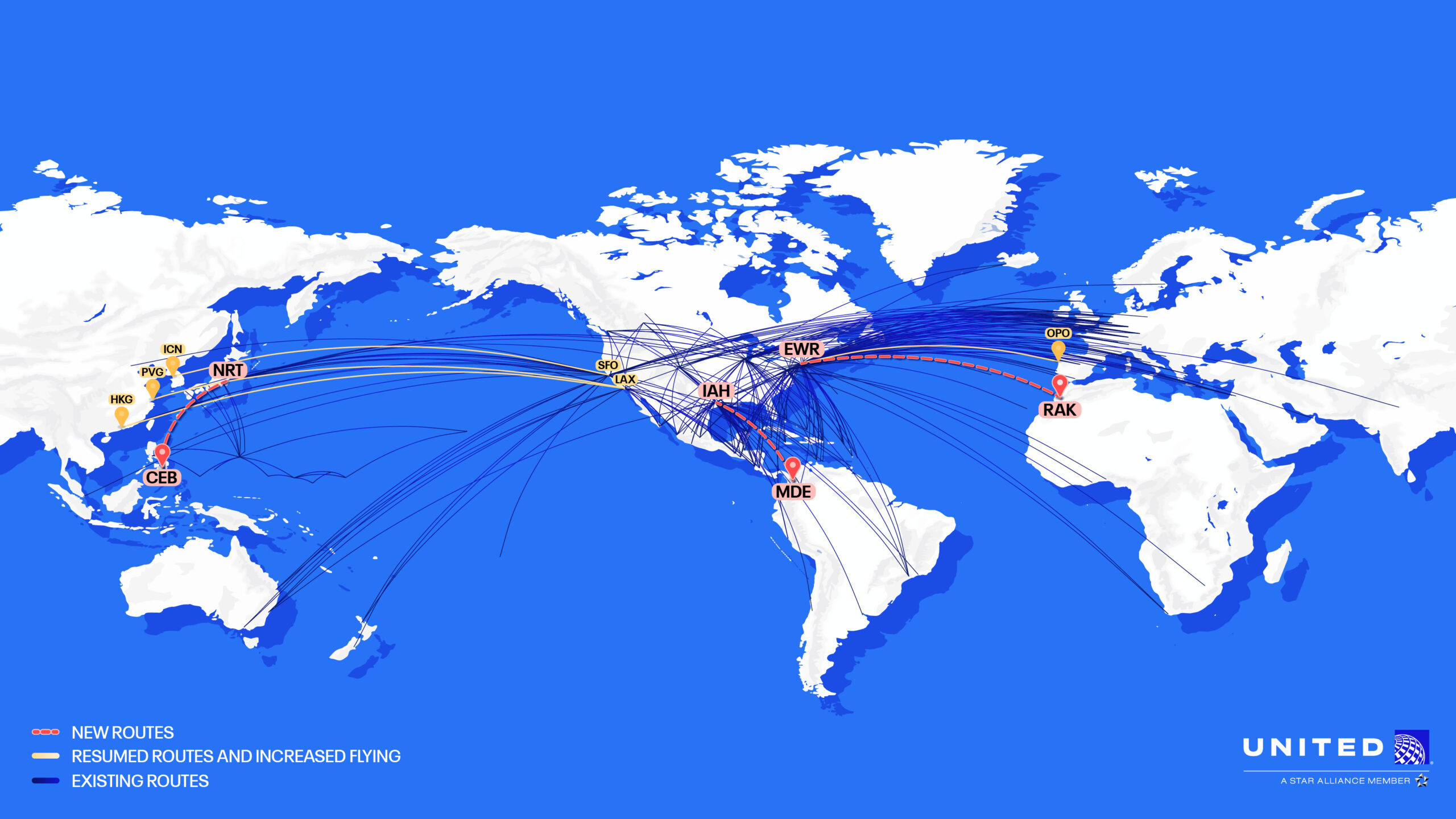
United Airlines announced the largest international network expansion in its history on August 25, 2026: 10 new international cities plus three additional routes between existing network points, launching between March and June 2027. Seven of the ten new destinations currently have no nonstop US service from any carrier, and the expansion leans heavily on United’s new Airbus A321XLR — a long-range narrowbody that lets the airline serve smaller, lower-demand markets across southern Europe and beyond that wouldn’t support a widebody aircraft.
Full Route List: New Destinations & Existing-Route Additions
| New Destination | Hub | Region | Nonstop US Exclusivity |
|---|---|---|---|
| Toulouse, France | Newark (EWR) | Europe | Only US nonstop |
| Marseille, France | Newark (EWR) | Europe | Only US nonstop |
| Luxembourg City, Luxembourg | Newark (EWR) | Europe | Only US nonstop (year-round) |
| Ibiza, Spain | Newark (EWR) | Europe | Only US nonstop |
| Valencia, Spain | Newark (EWR) | Europe | Only US nonstop |
| Ljubljana, Slovenia | Newark (EWR) | Europe | Only US nonstop |
| Terceira, Portugal (Azores) | Newark (EWR) | Europe | Only US nonstop |
| Olbia, Sardinia (Italy) | — | Europe | Shared with other carriers |
| Catania, Sicily (Italy) | — | Europe | Shared with other carriers |
| Okinawa, Japan | San Francisco (SFO) | Asia | New nonstop |
| Existing-Route Additions (Not New Cities) | Route | Launch |
|---|---|---|
| Denver – Paris | New daily nonstop | Starting May 27, 2027 |
| Washington Dulles – Milan | New nonstop | Summer 2027 |
| Los Angeles – Osaka | New nonstop (complements existing SFO–Osaka) | Summer 2027 |
| San Francisco – Tel Aviv | Restart | March 28, 2027 (3x weekly) |
| Returning 2026 Routes for Summer 2027 | Hub |
|---|---|
| Split, Croatia | Newark/New York |
| Bari, Italy | Newark/New York |
| Glasgow, Scotland | Newark/New York |
| Santiago de Compostela, Spain | Newark/New York |
Sources: United Airlines official press release (PRNewswire, Aug. 25, 2026), Fodor’s, The Points Guy, CBS News, CNBC — all Aug. 25–Sept. 2, 2026.
Deep Dive: Reading United’s Route Strategy Beyond the Headline List
The A321XLR Is the Enabling Technology Behind This Entire Expansion
The single most important detail behind this announcement isn’t any specific city — it’s the aircraft making the routes economically viable. United’s new “Born to Explore” Airbus A321XLR is a long-range, single-aisle (narrowbody) jet that can fly widebody-caliber distances with a smaller, lower-capacity cabin. That distinction matters enormously for route economics: destinations like Toulouse, Marseille, Ibiza, Valencia, and Luxembourg City generate enough point-to-point demand to fill a 150–200 seat narrowbody profitably, but likely couldn’t support a 250–300+ seat widebody aircraft on a sustainable basis. The A321XLR is what allows United to open genuinely niche European markets that were previously uneconomical for any US carrier to serve nonstop — which is also why seven of the ten new cities have zero existing nonstop US competition.
United took delivery of its first A321XLR in June 2026, out of a total order of 50 aircraft, with additional deliveries continuing over the coming months and years. The aircraft is initially flying select domestic routes before transitioning to international service — a phased rollout that gives United time to build pilot and crew familiarity before the more complex international routes launch in spring 2027.
Why Southern Europe, Specifically, and Why Now
United’s chief network planner Patrick Quayle has been explicit that this expansion doubles down on a proven regional pattern: southern Europe. The new routes to Marseille and Toulouse (France), Valencia and Ibiza (Spain), and Olbia and Catania (Italy) all reflect a deliberate bet that leisure demand to southern European coastal and cultural destinations has outperformed alternative regions the airline has tested. That’s a lesson learned the hard way: United has explicitly confirmed it will not resume routes to Bergen, Norway, or Stockholm, Sweden — both previously launched and subsequently canceled — with Quayle noting plainly that neither performed well. Similarly, United’s 2025 Dakar, Senegal route will not return in 2027, another data point in the airline’s ongoing process of testing and pruning based on real load-factor performance rather than route-map ambition alone.
The Newark Hub Is the Biggest Winner
Of the ten new destinations, eight route out of United’s Newark Liberty International Airport (EWR) hub — a concentration that reinforces Newark’s role as United’s primary transatlantic gateway, distinct from its other international hubs at Washington Dulles, Chicago, Denver, and San Francisco. This hub concentration has logistical implications for travelers: connections through Newark to reach these new niche European destinations will generally be more direct and frequent than routing through United’s other hubs, a detail worth factoring into any award-ticket or itinerary-planning strategy built around this expansion.

The Milan Route Fills a Notable Network Gap
The new Washington Dulles–Milan nonstop is worth flagging separately from the leisure-focused southern Europe additions: United executives specifically noted that Milan was the largest international market the airline did not already serve nonstop from its Dulles hub — meaning this addition closes a gap in United’s business-and-finance-market coverage (Milan being Italy’s financial capital) rather than chasing new leisure demand, a different strategic rationale from most of the other additions on this list.
The Trans-Pacific Competitive Backdrop
United’s Okinawa addition and the broader Asia-Pacific push arrive against an intensifying competitive backdrop: Delta Air Lines’ president has publicly stated the airline wants to challenge United’s dominance on trans-Pacific routes specifically, and Delta has itself added new service to Tokyo-Narita and Manila in 2026 while launching a previously announced Los Angeles–Hong Kong route. United’s Los Angeles–Osaka addition, layered on top of its existing San Francisco–Osaka service, reads as a direct response to this competitive pressure — reinforcing United’s West Coast Japan network at a moment when Delta is actively contesting the same trans-Pacific corridor.
United Airlines announced 10 new international cities for 2027 — including Ibiza, Luxembourg City, Ljubljana, and Okinawa — in its largest-ever network expansion. Seven of the ten cities have no existing nonstop US service, with most routes launching from Newark using United’s new A321XLR aircraft between March and June 2027.
What “Largest Expansion in Company History” Actually Means in Context
United frames this as its largest international network expansion ever, and the underlying numbers support that framing at face value: 10 new cities plus 3 additional routes on existing city-pairs, building on a base of 58 international destinations added since 2017 and a current international network exceeding 160 destinations. CEO Scott Kirby has attributed the scale of this particular expansion partly to aircraft manufacturer supply catching up after prior years of production constraints — a subtler point worth noting given how much of the broader travel and aerospace sector has been shaped by exactly these kinds of supply-chain bottlenecks in recent years.
Actionable Takeaways for Travelers
- Book early for the seven exclusive-nonstop markets if a specific niche European destination is on your list. Routes like Ibiza, Valencia, Luxembourg City, and Ljubljana have no competing nonstop US service, meaning United controls pricing on these specific city-pairs — award availability and fare sales are likely to be less predictable than on competitive routes.
- Note the seasonal end dates before booking travel outside the summer window. Most of the new destinations run seasonal service ending in September or October 2027; only Luxembourg City is confirmed as year-round — plan accordingly if you’re hoping to use these routes outside peak summer months.
- Route through Newark for the fastest connections to most new destinations. With eight of ten new cities based at EWR, Newark-originating or Newark-connecting itineraries will generally offer more direct scheduling than alternative United hubs.
- Watch for MileagePlus award chart availability closer to the March–June 2027 launch windows. New routes often carry more generous award availability in their first one to two seasons as United works to build initial demand and brand awareness for previously unserved markets.
- Consider the San Francisco–Tel Aviv restart’s limited frequency when planning around it. At three times weekly, this route requires more flexible trip-date planning than a daily service would, despite United’s claim of offering the most business-class seats of any carrier on the city pair.
Frequently Asked Questions
What new international routes is United Airlines adding in 2027?
United is adding 10 new international cities — Toulouse, Marseille, Luxembourg City, Ibiza, Valencia, Terceira, Ljubljana, Olbia, Catania, and Okinawa — plus new nonstop service on three existing city pairs (Denver–Paris, Washington Dulles–Milan, Los Angeles–Osaka) and a restart of San Francisco–Tel Aviv, all launching between March and June 2027.
Which United Airlines routes have no nonstop competition from other US airlines? Seven of United’s ten new destinations — Toulouse, Marseille, Luxembourg City, Ibiza, Valencia, Ljubljana, and Terceira — currently have no nonstop US service from any carrier, making United the sole nonstop option on those specific routes.
What aircraft is United using for its 2027 route expansion?
United’s new Airbus A321XLR, a long-range narrowbody aircraft that took its first delivery in June 2026 out of a total order of 50 planes, enables the airline to profitably serve smaller international markets that couldn’t support a widebody aircraft, and underpins most of the new southern European route additions.
When do United’s new 2027 international routes start?
The new routes begin rolling out as early as March 2027, with the Denver–Paris route starting May 27, 2027, and most other new seasonal European destinations launching between spring and early summer 2027, typically running through September or October.
Discover more from The Economy
Subscribe to get the latest posts sent to your email.

Bitcoin & XRP 2026: Inside Crypto’s Institutional Era

Global Economy 2026: IMF Growth, AI Stocks & Market Risk

China’s Local Debt Race Against Time: Why Economists Demand Central Action Before the Deflation Window Closes

Money News: How to Protect Your Portfolio From Global Inflation

World Bank Projections: Emerging vs. Big Economies of Asia

IMF Reports 2026: What the Latest Data Means for the Global Economy

Singapore Stocks Outlook: A Safe Haven in the Asian Market?

China Stocks vs. Japan Stocks: Where Should You Invest in Late 2026?

VIX Index Explained: How to Trade Wall Street’s Fear Gauge Today

Commercial vs Residential Real Estate: Which Wins in 2026?

Presidential Stock Market Performance: How Trump’s Second Term Compares to History

2026 Real Estate Market News: Are We Heading for a Correction?

Bitcoin Price Forecast 2026–2027: Will the 4-Year Cycle Hold?

Fidelity Crypto vs. Traditional Brokerages: A Guide for Modern Investors

US-China Relations in Q3 2026: Trade Tariffs and Supply Chain Risks

Top 30 Stocks for Investment in PSX for Massive ROI in 2026

SpaceX Starship Flight 14: First Orbital Attempt & Starlink V3 Launch Explained

The 2026 Crypto Regulatory Shift: What It Means for Institutional Investors

AI Chip Stocks 2026: The Best Semiconductor Investments Beyond Marvell

Tween Back-to-School Trends 2026: What’s Driving the $85B Season

Fidelity Investments Review 2026: SPAXX Yields & Zero-Fee Funds

Oil Prices Break $100 in 2026: Middle East Conflict & Energy Markets

AI-Powered Training: The Next Multi-Billion Dollar Ecosystem in Fitness

10-Year Treasury Yield Hits 4.80%: What It Means for Rates & Portfolios

BRICS+ Cross-Border Payments 2026: Interoperability Explained

Shein Clothes Quality & Safety in 2026: What Lab Tests Show

MRVL Earnings 2026: Why Marvell Sank Despite Beating Estimates

China’s US$10.8 Billion Trade Shortcut: Why the Pinglu Canal Matters
-

 Markets & Finance9 months ago
Top 15 Stocks for Investment in 2026 in PSX: Your Complete Guide to Pakistan’s Best Investment Opportunities
-

 Analysis7 months ago
Johor’s Investment Boom: The Hidden Costs Behind Malaysia’s Most Ambitious Economic Surge
-

 Analysis7 months ago
Top 10 Stocks for Investment in PSX for Quick Returns in 2026
-

 Analysis8 months ago
Brazil’s Rare Earth Race: US, EU, and China Compete for Critical Minerals as Tensions Rise
-

 Banks8 months ago
Best Investments in Pakistan 2026: Top 10 Low-Price Shares and Long-Term Picks for the PSX
-

 Investment8 months ago
Top 10 Mutual Fund Managers in Pakistan for Investment in 2026: A Comprehensive Guide for Optimal Returns
-

 Global Economy9 months ago
15 Most Lucrative Sectors for Investment in Pakistan: A 2025 Data-Driven Analysis
-

 Global Economy9 months ago
Pakistan’s Export Goldmine: 10 Game-Changing Markets Where Pakistani Businesses Are Winning Big in 2025