
Analysis
SpaceX IPO: Inside the $2 Trillion Market Debut

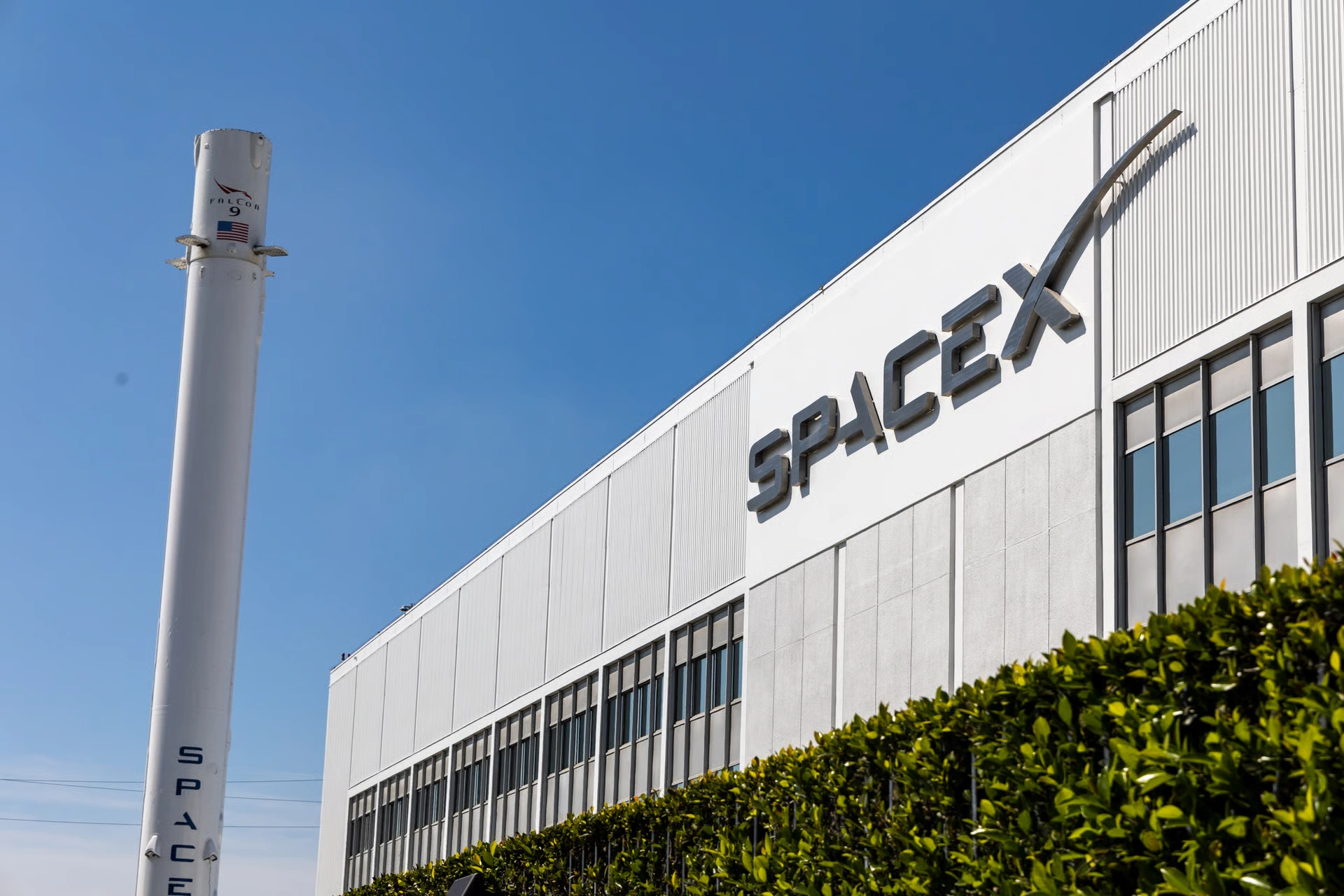
The prospectus runs 330 pages. It mentions asteroid mining. It promises passenger transport to Mars and invokes “the true nature of the universe.” Somewhere in its dense middle sections — beneath the soaring rhetoric about extending “the light of consciousness to the stars” — sits a balance sheet carrying $41.3 billion in accumulated losses and a net loss of $4.3 billion in a single quarter. On May 20, 2026, SpaceX filed its S-1 with the Securities and Exchange Commission, confirming plans to list on Nasdaq under the ticker SPCX with a debut pencilled in for June 12. The target: raise up to $80 billion at a valuation of $1.75 trillion to $2 trillion. It would be the largest IPO in history. By more than three times.
The Market That Made This Moment Possible
The SpaceX IPO arrives at a peculiar moment for capital markets. Equity benchmarks have climbed to fresh all-time highs in 2026, risk appetite has returned in force, and a cohort of long-awaited mega-listings — OpenAI and Anthropic among them — is forming in the queue behind SpaceX. The company’s debut is the centrepiece of what many on Wall Street call the most consequential IPO calendar since the dot-com era.
The scale is genuinely without precedent. Saudi Aramco, the current record holder, raised $25.6 billion in December 2019 — itself a landmark moment for the kingdom’s Vision 2030 ambitions. SpaceX isn’t trying to beat that record. It’s trying to triple it. At the top of its announced valuation range, the offering would also make SpaceX the first company in history to list publicly at a valuation exceeding $1 trillion — a threshold that took Apple, Microsoft, and Nvidia years of public trading to cross. That single fact tells you something important about the ambition — and the assumptions — embedded in this deal.
Twenty-three financial institutions are underwriting the offering, including Goldman Sachs, Morgan Stanley, Citigroup, and JPMorgan. Morgan Stanley, notably, brought back veteran dealmaker Michael Grimes as chairman of investment banking earlier this year specifically in preparation for this mandate. When Wall Street assembles a bench that deep, it signals both the size of the fee pool and the complexity of what they’re selling.
The SpaceX IPO: What the Numbers Actually Say
The SpaceX IPO, as it arrives in public markets, is not a simple rocket company story. It’s three distinct businesses priced as though all three will win simultaneously — and the S-1 makes that structure impossible to ignore.
SpaceX generated $18.67 billion in revenue for full-year 2025, up from $14 billion the prior year — a 33% year-on-year increase that, in isolation, looks compelling. The adjusted EBITDA figure of $6.58 billion for the same period is the number underwriters will put at the top of their roadshow slides. It’s real, and it matters. Yet the GAAP net loss for 2025 reached $4.94 billion, with a further loss of $4.3 billion in Q1 2026 alone against revenues of $4.69 billion. The accumulated deficit stands at $41.3 billion. This is not a company at the edge of profitability. It’s a company in active, accelerating cash consumption.
The gap between EBITDA and GAAP loss is driven by stock-based compensation, depreciation on the Starlink satellite constellation, and AI infrastructure capital expenditure — costs that are either genuinely cash-consumptive or structurally ongoing. Stripping them out doesn’t make them disappear; it makes them easier to overlook.
Break out the three segments and the picture sharpens. Connectivity — overwhelmingly Starlink — generated $11.39 billion in 2025 revenue with an operating profit of $4.42 billion, growing 49.8% year-on-year. It is the only segment making money. The Space segment (launch services, government contracts) operates at a loss. The AI segment, which now includes the merged xAI operation, lost more than $6 billion in 2025 and burned a further $2.5 billion in Q1 2026 alone.
SpaceX completed an all-stock merger with Musk’s xAI in February 2026 at a combined entity valuation of $1.25 trillion. The filing references xAI 356 times; Tesla appears 87 times. The document’s preoccupation with Musk’s broader corporate network isn’t incidental. It’s structural, and it’s a disclosure that sophisticated investors will read as a warning. SpaceX is also proposing to allocate up to 30% of IPO shares to retail investors — roughly three times the typical Wall Street norm. On an $80 billion raise, that’s approximately $24 billion in shares offered to individual buyers, a retail-accessibility play that echoes the stock split Musk executed on May 4, 2026, adjusting all per-share figures 5-for-1.
What Is SpaceX Really Worth? The Valuation Logic and Its Limits
The valuation question is where the SpaceX IPO gets genuinely hard to settle.
At $1.75 trillion, against approximately $21 billion in projected annual revenue, SpaceX is priced at roughly 83 times sales — a higher multiple than almost any major public technology company commands today. Even Nvidia, whose GPU dominance in AI training drove one of history’s most extraordinary equity runs, traded at multiples well below that figure at comparable revenue scale.
What is SpaceX’s IPO valuation and how is it justified?
SpaceX’s S-1 targets a valuation of $1.75 trillion to $2 trillion, implying roughly 83 times projected 2026 revenue. The bull case rests on Starlink’s 10.3 million subscribers across 164 countries, its 49.8% revenue growth rate, and SpaceX’s prospectus claim to have “identified the largest total addressable market in human history.” At the top of that range, the IPO would surpass every previous public listing in deal size and opening valuation.
The bull case does have structural grounding. Starlink is the fastest-growing broadband network in history. Direct-to-cell capability is still in early deployment phases. The prospectus frames orbital AI computing infrastructure — Starlink as a cloud layer competing with Amazon Web Services and Microsoft Azure — as a first-in-class opportunity. If that framing is even partially correct, the addressable market extends well beyond satellite internet subscriptions.
Still, the entire growth thesis is load-bearing on one thing: Starship. The fully reusable super-heavy launch vehicle underpins next-generation Starlink economics, orbital data centres, and Mars colonisation timelines alike. Across 11 flight tests, Starship’s upper stage experienced three consecutive “rapid unscheduled disassembly” events in early 2025 — Flights 7, 8, and 9 all exploded. The first actual payload delivery to orbit isn’t expected until H2 2026. SpaceX invested $930 million in Starship R&D in Q1 2026 alone, on top of $3 billion in 2025. Capital expenditures overall surged to $20.7 billion last year. These are extraordinary sums for a programme that hasn’t yet put commercial cargo into orbit.
Prediction markets are, for now, optimistic. Polymarket assigns a 94% probability to the IPO closing in the June 2026 window and a 72% chance of the post-IPO market cap exceeding $2 trillion. The synthetic SPCX perpetual contract on Hyperliquid implies a $2.4 trillion valuation. These are not independent forecasts — they’re reflexive price signals from investors who have already decided they want in.
The Downstream Consequences: For Markets, Rivals, and Governance
Assume the IPO prices within range and the debut is orderly. What happens next?
The most immediate effect is passive and automatic. If SpaceX enters major indices — Nasdaq fast-entry rules and potential S&P 500 eligibility are both plausible — index funds must buy the stock mechanically, regardless of analytical conviction. At a $2 trillion market cap, that creates structural buying pressure from pension funds, sovereign wealth vehicles, and passive ETFs managing trillions in tracked assets. The demand is forced, not analytical, and it creates a floor that has nothing to do with whether Starship achieves orbital payload delivery on time.
For the space industry broadly, a successful listing transforms the financing landscape. Rocket Lab, Blue Origin, and a cohort of European and Asian launch startups are watching carefully. A credible public comparator at trillion-dollar scale resets what private capital will value unproven space assets at — typically upward, and often independent of near-term profitability.
The governance structure is the more durable concern. Through Class B shares carrying ten votes each against one for Class A, Musk controls 85.1% of SpaceX’s voting power at listing. SpaceX is formally classified as a “Controlled Company” under Nasdaq rules, exempting it from standard independent director and governance committee requirements. Public shareholders will own equity but wield negligible influence over capital allocation, strategic direction, or related-party dealings.
That arrangement isn’t novel — Meta and Alphabet went public with similar structures. What’s different here is the density of the related-party ecosystem. The xAI GPU leasing arrangements disclosed in the S-1 amount to more than $20 billion in total contracted value. Gwynne Shotwell, SpaceX’s president and chief operating officer, appears as the fifth-largest individual holder of Class A shares — a continuity figure who has run the company’s day-to-day operations through its most consequential years. Around 20% of SpaceX’s 2025 revenue came from U.S. federal agencies, concentrating the company’s finances in a way that makes political exposure a genuine balance sheet variable.
The Case for Caution: What the Sceptics Have Right
There’s a version of this story that ends badly for early public investors, and it has historical weight.
Since 1999, five brand-name mega-IPOs have debuted in U.S. markets alongside Saudi Aramco’s 2019 listing. Only Visa traded higher six months after its debut. Facebook, Alibaba, GM, UPS, and Aramco all declined between 8% and 38% in the six months post-listing, before many later recovered to deliver strong long-run returns. The pattern is consistent: emotional pricing at debut, followed by a painful settling period as reality is absorbed.
With SpaceX, sceptics have three substantive objections worth taking seriously. The first is xAI. Grok, the AI assistant born from the merger, has struggled to differentiate meaningfully against OpenAI’s GPT series, Google’s Gemini, and Anthropic’s Claude. Losses exceeding $6 billion in 2025 for an AI service still searching for competitive traction represent a substantial liability that public investors — unlike patient private backers — will interrogate quarterly.
The second is the Starship timeline. The bull case for a $2 trillion valuation requires Starship to begin reliable commercial payload delivery in H2 2026 and scale to dozens of flights per year within 24 months. After three consecutive vehicle losses in 2025, that timeline carries genuine execution risk. Each month’s delay cascades: next-generation Starlink satellites can’t launch at cadence, which delays the mobile service expansion, which delays the orbital compute pitch, which undermines the premium multiple.
The third is governance opacity — not corruption, but complexity. At 85.1% voting control, Musk can theoretically redirect capital, alter internal relationships, or shift strategic priorities without meaningful shareholder check. The S-1’s 38 pages of risk factors include $530 million in legal exposure and a 2024 Brazilian court order that froze Starlink’s local assets over a dispute connected to Musk’s X Corp. The filing names Musk himself as a material risk factor. That’s a rare and pointed act of corporate candour — and a signal that the company’s own lawyers believe the association is worth insuring against in writing.
None of this is an argument that SpaceX is a bad company. It’s an argument that extraordinary companies can still make poor IPO investments, and that the distance between the two is often measured in the multiple at which you bought in.
What Comes After the Largest IPO in History
The SpaceX IPO is, at its core, a wager on whether a company with a declared mission to colonise another planet can be financially disciplined enough to generate durable returns for ordinary shareholders on this one. The tension isn’t between ambition and execution — SpaceX has proved its execution capacity more convincingly than almost any private company in history, conducting 82% of all U.S. space launches in 2025 with a reusable rocket system that redefined the economics of getting to orbit.
The tension is between the physics of capital allocation and the gravitational pull of a story so large it bends market reality.
Starlink is real, profitable, and growing fast. Starship is real, technically sophisticated, and currently unreliable at scale. The xAI bet is real, burning cash at pace, and competitively unresolved. And the man at the centre of all three is, by his own company’s admission, a material risk.
That’s not a reason to dismiss the listing. It’s a reason to read the 330 pages very carefully before signing the order ticket.
The light of consciousness, as Musk’s prospectus has it, may yet reach the stars. It’s the journey from SEC filing to first profitable quarter that tends to be the hard part.
Discover more from The Economy
Subscribe to get the latest posts sent to your email.



Navigating Mortgage and Loan Refinancing in a High-Yield Environment
Global public debt crossing critical thresholds has kept central bank policies volatile, resulting in fluctuating US Treasury yields throughout 2026. For homeowners and commercial property holders burdened by previous high-interest borrowing cycles, finding optimal refinance windows has become a high-stakes financial puzzle. Stalled disinflation and stubborn employment numbers mean rate cuts are incremental, requiring borrowers to act with precision.
Timing your mortgage or commercial loan refinance in this environment requires a deep understanding of yield curve movements and lender risk appetites.
Decoding 2026 Refinance Dynamics
The 10-Year Treasury Yield Benchmark
Mortgage rates continue to track closely with the 10-year US Treasury yield. When macroeconomic anxiety spikes debt issuance, yields rise, tightening consumer borrowing capacity. Savvy borrowers monitor weekly Treasury auctions to lock in rates during brief dip windows.
Hybrid ARMs and Alternative Structures
With fixed rates remaining elevated, 7/1 and 10/1 adjustable-rate mortgages (ARMs) have surged in popularity. These products offer lower initial monthly payments, giving borrowers breathing room until central bank easing cycles fully materialize.
| Loan Product | Current Rate Range | Best For | Key Risk Factor |
| 30-Year Fixed Mortgage | 6.2% – 6.8% | Long-term predictability | Higher initial monthly outlay |
| 7/1 Hybrid ARM | 5.5% – 5.9% | Short-term ownership / flipping | Rate reset risk after year 7 |
| Commercial Refinance | 7.0% – 8.2% | Corporate asset restructuring | Strict DSCR lender covenants |
Actionable Steps for Successful Refinancing
To maximize your chances of securing favorable refinance terms in a volatile market, follow a disciplined preparation strategy.
Boost Your Credit Score Immediately: Lenders in 2026 are applying stringent credit tiering; a 20-point increase can drop your APR by a crucial quarter-point.
Shop Regional Credit Unions: Smaller financial institutions often offer portfolio loans with more flexible underwriting than major national banks.
Calculate the Break-Even Point: Ensure your total closing costs are recouped through monthly savings within 24 months of closing.
“Market Strategist View: Refinancing in 2026 is an exercise in opportunistic timing. Borrowers must maintain immaculate financial profiles ready to strike the moment Treasury yields dip.”
Mastering the complexities of today’s debt environment ensures you can successfully lower your debt service costs and protect your long-term financial stability.
Discover more from The Economy
Subscribe to get the latest posts sent to your email.

The days of pulling generic auto insurance quotes based purely on your zip code and age are officially over. In 2026, insurance comparison engines are powered entirely by generative AI and real-time telematics. These platforms digest thousands of live data points—ranging from your driving smoothness via connected vehicle sensors to real-time traffic congestion patterns—to generate hyper-personalized premiums instantly.
For consumers, this evolution represents both a massive opportunity for savings and a hidden trap for penalty pricing. Understanding how AI algorithms evaluate risk is essential for anyone looking to lower their monthly auto insurance premiums.
How AI Comparison Engines Evaluate Your Risk Profile
Behavioral Telematics and Connected Cars
Modern cars stream performance data directly to insurance aggregators. Generative AI models analyze braking sharpness, acceleration curves, cornering G-forces, and phone distraction metrics. Drivers who maintain smooth, defensive habits are rewarded with dynamic rate cuts of up to 40% compared to traditional rating tiers.
Predictive Traffic and Weather Modeling
AI tools now cross-reference your daily commute route with predictive weather and accident probability models. If your standard parking location or driving corridor has a statistically higher incidence of uninsured motorist claims, your quotes will reflect that hyper-local risk assessment.
| Comparison Factor | Traditional Rating Model | 2026 Generative AI Model | Impact on Premium |
| Mileage & Usage | Annual estimated odometer reading | GPS tracking & live trip duration | High (up to 35% savings) |
| Driving Behavior | MVR driving record & accidents | Real-time braking, speed, & G-force | Critical (determines tier) |
| Vehicle Tech | Make, model, and safety rating | ADAS calibration & repair cost data | Moderate |
Strategies to Lower Your AI-Driven Insurance Quote
To outsmart the algorithm and secure the lowest possible premium in 2026, drivers must proactively manage their digital footprint on insurance platforms.
Opt-In for Telematics Trial Periods: Many insurers offer immediate 15% discounts just for installing their driving app; let it track safe habits for 30 days to lock in permanent savings.
Scrub Unverified Public Records: Ensure your motor vehicle report is free of clerical errors that AI risk models misinterpret as reckless behavior.
Compare AI Aggregators: Use platforms that integrate multi-carrier API feeds rather than single-brand comparison sites to find the best risk-adjusted rate.
“Industry Note: AI-driven pricing rewards transparency and precision. Drivers who actively manage their telematics data consistently out-save those relying on legacy quote calculators.”
Embracing AI comparison tools allows savvy policyholders to customize coverage limits precisely to their driving habits, eliminating wasted premium spend while ensuring robust protection.
Discover more from The Economy
Subscribe to get the latest posts sent to your email.

Despite decades of bans and strict handling mandates, asbestos remains a silent killer across legacy manufacturing plants, shipyards, and modern green-energy infrastructure retrofits. In 2026, regulatory changes by the EPA and tightened occupational health standards have triggered a fresh wave of mesothelioma litigation. Manufacturers attempting to fast-track industrial transitions are encountering catastrophic oversight, exposing workers to legacy toxins and opening corporate parent companies to unprecedented liability.
Navigating a mesothelioma claim in 2026 requires understanding how modern industrial supply chains intersect with historical exposure. Trusts established decades ago are being audited under stricter transparency laws, altering payout ratios and accelerating fast-track settlements for terminally ill plaintiffs.
Modern Industrial Exposure Hotspots
Green Retrofitting and Renewable Energy Infrastructure
A primary source of 2026 asbestos exposure occurs during the decommissioning and retrofitting of older industrial facilities for renewable energy production. Workers insulating electrical grids, modernizing HVAC systems, or upgrading manufacturing floors frequently disturb encapsulated asbestos materials that were improperly documented or ignored during facility audits.
Automotive and Aerospace Supply Chains
With advanced manufacturing booming, workers handling specialized friction materials, gaskets, and heat shields face ongoing risks. Supply chain tracing has become more sophisticated, allowing legal teams to pinpoint exact corporate entities responsible for raw material distribution across multinational borders.
| Industry Sector | Primary Exposure Risk | Legal Venue / Trust | Avg. Claim Value Range |
| Green Energy Retrofit | Disturbed insulation, pipe lagging | Federal Tort / Manufacturer Trust | $1.2M – $3.5M |
| Shipbuilding & Marine | Boiler insulation, structural seals | Asbestos Bankruptcy Trusts | $800K – $2.4M |
| Automotive Manufacturing | Brake components, high-heat gaskets | Third-Party Product Liability | $600K – $1.8M |
Securing Maximum Compensation: Steps for Plaintiffs
Time is of the essence in mesothelioma cases. Plaintiffs and their families must act decisively to secure financial recovery before statutes of limitations expire.
Retain Specialized Counsel: Work exclusively with national mesothelioma law firms possessing deep historical databases of asbestos-containing products.
Audit Employment History: Document every job site, supervisor name, and equipment brand encountered throughout your career.
Expedite Medical Filings: Secure a formal pathological diagnosis quickly to qualify for expedited trust fund distribution and priority trial settings.
“Expert Insight: Modern asbestos litigation is no longer just about historical tracking; it is about holding modern corporations accountable for failing to conduct rigorous environmental safety audits before initiating industrial retrofits.”
By combining meticulous work history reconstruction with aggressive multi-trust filings, victims can secure substantial financial relief to cover specialized immunotherapy and family support.
Discover more from The Economy
Subscribe to get the latest posts sent to your email.

Crypto Daily Outlook: Bitcoin, Altcoins, and the Future of Decentralized Finance

Anthony Scaramucci’s Crypto Prediction: Why MicroStrategy’s Move Is Bitcoin’s “iPhone Moment”

Best Dividend Stocks 2026: European & Asian Blue Chips

World Bank & IMF Reports 2026: Why the “3% Growth” Consensus Is Actually a Debate

Elon Musk’s Boring Company Hits $23B Valuation After UAE-Led $3 Billion Series D

Middle East War Economics 2026: Oil Prices & Energy Markets

PSX Forecast 2026: KSE-100, IMF Reviews & Geopolitics

Asian Markets Outlook 2026: China, Japan & Singapore Stocks

Global Economy 2026: IMF Growth, Inflation & Private Credit

Current Account Deficit (CAD) : Causes and Impact

Balance of Payments (BOP)

The Falkland Islands Dispute: Sovereign Wealth, Offshore Drilling, and Market Impacts

Gross Domestic Product (GDP): Nominal vs. Real

What is Inflation and the Consumer Price Index (CPI)?

State Farm’s $5B Dividend 2026: Who Qualifies & Payout Dates

US-China Relations in Q3 2026: Trade Tariffs and Supply Chain Risks

Gold’s Wild 2026: From a Record $5,600 Peak to a 24% Crash and Back Toward $4,500

Oil Surges as Strait of Hormuz Traffic Collapses Again

The Rocket That Won’t Quit: Inside SpaceX’s Falcon 9 Launch Machine

Bank of England Set to Hold Rates Through Year-End, Reuters Poll Shows

SpaceX Starship Flight 14: First Orbital Attempt & Starlink V3 Launch Explained

The 2026 Crypto Regulatory Shift: What It Means for Institutional Investors

AI Chip Stocks 2026: The Best Semiconductor Investments Beyond Marvell

Retail Earnings Week: What Home Depot, Target & Walmart Reveal

AI-Powered Training: The Next Multi-Billion Dollar Ecosystem in Fitness

Russia’s Black Sea Oil Exports Fall for a Fifth Straight Week

Top 30 Stocks for Investment in PSX for Massive ROI in 2026

Tween Back-to-School Trends 2026: What’s Driving the $85B Season
-

 Markets & Finance8 months ago
Top 15 Stocks for Investment in 2026 in PSX: Your Complete Guide to Pakistan’s Best Investment Opportunities
-

 Analysis7 months ago
Johor’s Investment Boom: The Hidden Costs Behind Malaysia’s Most Ambitious Economic Surge
-

 Analysis7 months ago
Top 10 Stocks for Investment in PSX for Quick Returns in 2026
-

 Analysis7 months ago
Brazil’s Rare Earth Race: US, EU, and China Compete for Critical Minerals as Tensions Rise
-

 Banks8 months ago
Best Investments in Pakistan 2026: Top 10 Low-Price Shares and Long-Term Picks for the PSX
-

 Investment8 months ago
Top 10 Mutual Fund Managers in Pakistan for Investment in 2026: A Comprehensive Guide for Optimal Returns
-

 Global Economy9 months ago
15 Most Lucrative Sectors for Investment in Pakistan: A 2025 Data-Driven Analysis
-

 Global Economy9 months ago
Pakistan’s Export Goldmine: 10 Game-Changing Markets Where Pakistani Businesses Are Winning Big in 2025