
Analysis
PSX KSE-100 Up 500+ Points: The Geopolitical Impact on Stocks


The trading floor of the Pakistan Stock Exchange (PSX) rarely prices in diplomatic breakthroughs before they are signed in ink. Yet, Monday morning brought a sharp inversion of the usual regional risk premium. The PSX KSE-100 surge of over 500 points was not driven by domestic policy shifts, fiscal adjustments, or sudden central bank easing. Instead, it was a rapid, calculated reaction to diplomatic murmurs out of Tehran.
Iran’s signaled progress in renewed diplomatic talks immediately deflated the acute anxiety surrounding Middle Eastern supply chains. This sent institutional capital rushing back into Karachi’s heavily weighted energy and banking equities. The market response was immediate, aggressive, and highly indicative of how closely frontier equities are tethered to the geopolitical temperature of the Persian Gulf.
To understand the velocity of this rally, one must look at the broader macroeconomic constraints Pakistan operates within throughout 2026. The country’s economic apparatus remains hyper-sensitive to external shocks, specifically energy price volatility and maritime security in the Strait of Hormuz.
With the International Monetary Fund (IMF) maintaining strict oversight over Islamabad’s fiscal targets, any spike in the global oil risk premium directly threatens the national current account deficit. According to baseline data from the World Bank, petroleum products and raw energy imports consistently account for a massive share of the nation’s total import bill, acting as a structural anchor on foreign exchange reserves.
When diplomatic backchannels regarding Iran’s nuclear capabilities and sanctions crack open, the immediate downstream effect is a stabilization of Brent crude futures. For a frontier market entirely reliant on imported hydrocarbons to keep its industrial base humming, a cooling of tensions translates instantly from geopolitical abstraction into measurable sovereign relief.
The Core Development: Tracing the 500-Point Capital Allocation
The mechanics of Monday’s rally reveal a highly specific pattern of institutional buying. The benchmark index did not just float higher on retail sentiment; it was driven by high-volume accumulation in sectors directly exposed to macroeconomic stability and energy import costs.
By midday trading on June 22, the KSE-100 index breached critical resistance levels, sustained by aggressive buying from mutual funds and foreign corporate portfolios. The banking sector, which traditionally dictates the index’s momentum due to its heavy weighting, saw immediate inflows. Investors priced in the assumption that lower inflation—driven by cheaper imported fuel—might give the State Bank of Pakistan (SBP) room to reconsider its tight monetary stance later in the fiscal year.
The real story, however, was in the energy and manufacturing sectors. Oil marketing companies (OMCs) and independent power producers (IPPs) recorded unusual volume spikes.
- Exploration and Production (E&P): Stocks in this sector rallied as the prospect of regional stability reduced the perceived operational risk discount applied to South Asian equities.
- Cement and Steel: Heavy manufacturing, heavily reliant on imported coal and petroleum, caught a fierce bid. Lower input costs directly expand profit margins for these cyclical giants.
- Textiles: As the backbone of Pakistan’s export economy, textile manufacturers benefit immediately from any stabilization in the national energy grid and predictable power tariffs.
Furthermore, improved relations or even a partial lifting of sanctions on Iran could theoretically revive dormant bilateral trade projects. The long-stalled Iran-Pakistan gas pipeline, a persistent thorn in regional energy diplomacy, briefly resurfaced in trading desk chatter. While actual pipeline gas flowing to Sindh remains a distant prospect, equity markets are forward-looking machines. They price in the probability of future infrastructure development, however slight, the moment the geopolitical ice thaws. As reported by the Financial Times, frontier markets historically exhibit a beta of 1.5 to sudden drops in regional conflict premiums, meaning Karachi will naturally over-index on positive news from its western border.
Geopolitical Impact on PSX: The Analytical Layer
Moving beyond the immediate tick-by-tick action, the structural implications of this rally expose the underlying nervous system of South Asian capital markets. The Pakistan stock exchange rally is less an endorsement of domestic economic fundamentals and more a collective exhale regarding global supply chain integrity.
What triggered the sudden market reversal?
Why did the PSX KSE-100 surge recently?
The PSX KSE-100 surged over 500 points primarily because Iran signaled progress in diplomatic talks. This geopolitical easing immediately lowered the risk premium on global oil prices, directly benefiting Pakistan’s energy-import-dependent economy by reducing fears of imported inflation and current account destabilization.
This dynamic illustrates the “geopolitical arbitrage” that defines frontier market investing. Portfolio managers in London and New York look at the PSX and see an economy trading at highly compressed price-to-earnings ratios. The single biggest deterrent to deploying capital into these single-digit P/E stocks is the unquantifiable tail risk of a regional conflict involving Iran, which could sever energy shipping lanes and trigger a balance-of-payments crisis in Islamabad.
When that tail risk diminishes, the fundamental cheapness of Pakistani equities suddenly outweighs the perceived danger. The re-rating of the KSE-100 is therefore a mechanical adjustment. Institutional algorithms and human traders alike are recalibrating their risk models. If the threat of a $100+ barrel of oil recedes due to diplomatic progress, the default probability of heavily indebted emerging markets naturally falls.
This creates a self-fulfilling cycle of capital inflows. As foreign investors allocate minor percentages of their emerging market funds back into Karachi, local retail and institutional players front-run the institutional wave. The result is the violent, vertical price action witnessed at the opening bell.
The downstream consequences of sustained diplomatic progress in the Middle East extend far beyond the ticker tape. For policymakers in Islamabad, a stable or declining energy import bill provides critical breathing room.
The most immediate second-order effect hits the inflation gauge. Pakistan’s consumer price index (CPI) is intrinsically linked to transport costs and power generation tariffs. If the diplomatic thaw in Tehran keeps global crude markets sedated, the structural inflation that has battered domestic consumers and small-to-medium enterprises (SMEs) begins to fracture.
For the SBP, this alters the entire trajectory of the monetary policy committee’s internal debates. High interest rates, currently maintained to crush demand-pull inflation and defend the rupee, become increasingly difficult to justify if the supply-side shock of expensive oil is removed from the equation. According to research from the Bank of England on emerging market transmission mechanisms, a 10% sustained drop in imported energy costs typically precedes a monetary easing cycle by three to four quarters in developing economies.
SMEs, which lack the pricing power of corporate behemoths, stand to gain the most from this shift. Lower borrowing costs and predictable electricity bills could restart capital expenditure cycles that have been frozen for over two years.
That said, the implications for the government’s fiscal targets are equally profound. Stabilized energy prices mean the federal government spends less on energy subsidies and circular debt accumulation within the power sector. This makes the arduous task of meeting the IMF’s quarterly review targets mathematically simpler, reducing the likelihood of sudden, punitive tax hikes on the formal corporate sector—another factor the stock market enthusiastically priced in this week.
Despite the euphoric price action, a highly disciplined contingent of the market remains deeply skeptical of the rally’s durability. The bearish counter-narrative argues that pricing in permanent geopolitical peace based on preliminary diplomatic signals is a dangerous game of financial Russian roulette.
Skeptics point out that Iran has engaged in cyclical diplomatic signaling for over a decade, often utilizing the promise of talks as a tactical delay mechanism rather than a genuine pivot toward structural integration with Western markets. If the current talks collapse—a statistically probable outcome given the historical precedent—the unwinding of this 500-point rally will be rapid and aggressive.
Furthermore, dissenting economic voices argue that masking domestic structural rot with cheap oil is a temporary fix. “A rally built on external geopolitical relief rather than internal productivity gains is inherently fragile,” notes a senior sovereign debt analyst. Even if energy prices fall, Pakistan faces severe, unaddressed bottlenecks in taxation, governance, and export competitiveness.
From this viewpoint, the surge in banking and energy equities is merely a dead-cat bounce in a broader secular bear market. Foreign direct investment (FDI) remains anemic. Until domestic reforms match the optimism generated by external geopolitical shifts, the bears argue that any KSE-100 index forecast projecting sustained all-time highs is rooted in hope, not hard economic reality. The structural debt burdens and political gridlock within Islamabad have not vanished simply because diplomats are shaking hands in Europe.
The tension between external diplomatic relief and internal economic fragility defines the current state of the Pakistan Stock Exchange. The 500-point surge is a testament to how aggressively global capital will hunt for yield the moment a systemic risk is removed from the board.
Yet, relying on the unpredictable nature of Middle Eastern geopolitics as a long-term investment thesis is an inherently unstable strategy. While the immediate threat of a regional energy shock has dissipated, allowing the market to re-rate to more rational valuations, the fundamental math of Pakistan’s economy remains unchanged. To transform a news-driven spike into a structural bull market, Islamabad must eventually generate its own domestic catalysts. Until then, Karachi will remain a highly volatile derivative of the diplomatic temperature across its western border.
Discover more from The Economy
Subscribe to get the latest posts sent to your email.



Britain’s labour market has now been shedding jobs for as long as it did during the depths of the global financial crisis — and this time, employers are explicitly naming artificial intelligence as a reason for the cuts.
The closely watched S&P Global/CIPS Purchasing Managers’ Index showed services firms and the wider private sector reducing headcount for a 22nd consecutive month in July 2026, according to data reported by Bloomberg. That run now equals the length of the downturn seen during the 2008-09 crash in the dominant services sector, and is just one month short of matching it across the wider economy.
A Downturn Two Years in the Making
Unlike the 2008 crisis, which was triggered by a sudden banking collapse, this slump has crept up gradually. The survey shows the pace of job losses easing slightly in July compared with prior months, but the cumulative duration — nearly two full years of continuous headcount reduction — is what has alarmed economists watching the data, as detailed by Staffing Industry Analysts.
Crucially, firms surveyed gave two distinct explanations for the cuts: general cost-reduction efforts, and — increasingly — a reduced need for workers after investing in AI tools to boost productivity. That second factor marks a shift from earlier phases of the downturn, when cost pressure alone dominated employer commentary.
The PMI Numbers Behind the Story
The deterioration has been building for months. Earlier readings from S&P Global’s official PMI release showed the sector losing momentum steadily through the spring, with survey respondents explicitly citing the fallout from the US-Iran conflict as a drag on client confidence, layered on top of already-elevated domestic political uncertainty.
Separate flash data tracked by FX.co showed the UK Services PMI slipping to 48.7 in June — below the 50.0 threshold that separates expansion from contraction, and short of the 50.5 markets had expected. That marked the sharpest downturn since January 2023, driven by weaker new business volumes, shrinking order backlogs and further job cuts, even as input cost inflation — from transport to IT equipment surcharges — continued to squeeze margins.
The survey’s own methodology notes are telling: data collected in June found “a sustained reduction in backlogs of work across the service economy, largely reflecting a lack of pressure on business capacity due to weak demand,” according to the official S&P Global report. In plain terms, companies have less work to do, and they are responding by not replacing staff who leave rather than launching mass redundancy rounds — a slower but more persistent form of labour market erosion.
The Political Backdrop
The prolonged downturn deepens pressure on the Labour government, which took office in the summer of 2024 promising to reinvigorate growth. Nearly two years of continuous private-sector job losses is a difficult data point for any incumbent administration to explain away, particularly as it now sits alongside separately reported gilt market volatility and scrutiny of the Bank of England’s policy path.
Why AI Is a Different Kind of Headwind
What distinguishes this downturn from previous UK labour market slumps is the structural, rather than purely cyclical, nature of some of the job losses. Employers citing AI-driven productivity gains as a reason for not replacing departing staff suggests that even a rebound in demand may not translate into a proportional rebound in hiring — a dynamic that echoes concerns raised in the US, where financial-sector employment — an industry widely seen as exposed to AI adoption — has fallen to a four-year low.
Economists warn this creates a harder policy problem than a conventional cyclical downturn. Interest rate cuts and fiscal stimulus can revive demand, but they do less to reverse a structural shift in how many workers a given level of output requires.
What to Watch Next
Three data points will determine whether Britain’s labour market stabilises or deteriorates further into autumn:
- The August PMI releases, which will show whether July’s slight easing in the pace of job cuts was a genuine inflection point or a one-month pause.
- Bank of England commentary on how much weight it assigns to labour market weakness versus persistent inflation in setting the path for interest rates.
- Sector-level AI adoption data, particularly in financial and professional services, where the productivity-driven hiring freeze appears most entrenched.
The Bottom Line
Two years of continuous UK private-sector job cuts is no longer a temporary post-pandemic adjustment — it has become the longest sustained labour market downturn since the financial crisis. With employers now openly citing AI adoption alongside cost discipline as drivers of headcount reduction, the shape of any eventual recovery may look very different from past cycles: output could recover well before payrolls do.
Discover more from The Economy
Subscribe to get the latest posts sent to your email.

Canada’s push to deepen commercial ties with the United Arab Emirates is not a peripheral diplomatic exercise — it is a core pillar of one of Ottawa’s most consequential economic strategies of the decade: a deliberate effort to double non-US exports over the next ten years. With the US-Canada trade relationship increasingly unpredictable, the Gulf has emerged as one of the most active fronts in that diversification push.
The Toronto Visit That Signaled Intent
The clearest recent marker came when the UAE’s Minister of Foreign Trade, Dr Thani bin Ahmed Al Zeyoudi, visited Toronto specifically to deepen trade and investment ties with Canada, building on momentum from Canadian Prime Minister Mark Carney’s own prior engagement in the UAE. That visit followed an earlier trip in the opposite direction: Canada’s Minister of International Trade, the Honourable Maninder Sidhu, concluded a Gulf tour in the UAE that produced a concrete slate of commercial announcements rather than mere diplomatic gestures.
Among the outcomes from Sidhu’s visit: a contract between Canadian company Alexa Translations and Al Tamimi & Company to provide AI-powered legal translation services; National Bank of Canada announcing it would open an office in the Dubai International Financial Centre (DIFC); Novisto establishing a new presence in Dubai Silicon Oasis; and Superheat registering a Middle East manufacturing entity in the UAE. Ottawa framed these deals explicitly around Canadian strengths in artificial intelligence, advanced manufacturing, aerospace, energy, financial services, infrastructure, and mining — sectors where Gulf sovereign capital has shown a consistent appetite to co-invest.
Why the UAE, and Why Now
The relationship is not one-directional courtship. Foreign ministers on both sides have kept the diplomatic channel active at a senior level: UAE Deputy Prime Minister and Foreign Minister Sheikh Abdullah bin Zayed Al Nahyan held a direct call with Canada’s Minister of Foreign Affairs, Anita Anand, to discuss bilateral relations and progress on a Comprehensive Economic Partnership Agreement (CEPA) — the same CEPA framework the UAE has used to rapidly expand trade relationships with India, Indonesia, and a growing list of partners since 2022.
For the UAE, Canada represents exactly the kind of partner its CEPA strategy targets: a resource-rich, AI-and-advanced-manufacturing economy actively seeking to reduce dependence on a single trading partner, with deep capital markets and a stable regulatory environment for the sovereign and quasi-sovereign Gulf capital increasingly seeking diversified, dollar-denominated returns outside pure oil-and-gas exposure.
For Canada, the calculation is more urgent. With roughly 150 Canadian companies already maintaining some form of UAE presence and non-oil bilateral trade having grown steadily over the past decade, the UAE offers Ottawa a low-friction entry point into broader Gulf and South Asian trade corridors — the UAE’s re-export economy means goods and services routed through Dubai frequently reach Saudi Arabia, India, and East Africa without additional negotiation.
The DIFC Factor
The choice by National Bank of Canada to establish its Gulf presence specifically within the Dubai International Financial Centre — rather than a mainland UAE license — is itself a signal worth unpacking for finance-sector readers. DIFC’s common-law framework, independent courts, and 100% foreign ownership provisions have made it the default landing zone for North American and European financial institutions seeking Gulf market access without the structuring complexity of mainland UAE entities. National Bank’s move places it alongside a growing roster of North American and European banks that have used DIFC as a bridge into both Gulf sovereign wealth relationships and the broader Middle East, North Africa, and South Asia corridor DIFC is positioning itself to serve.
What Comes Next
CEPA negotiations of this kind typically move through several stages: exploratory scoping talks, formal negotiating rounds, and final ratification — a process that has taken the UAE anywhere from 18 months to several years with other partners, depending on the complexity of the goods and services chapters involved. For Canada, the political incentive to move quickly is significant, given the non-US export doubling target sits on a decade-long clock. For businesses on both sides, the near-term opportunity lies less in waiting for a finalized CEPA text and more in the sector-specific deals — AI, financial services, mining, aerospace — that are already being signed in parallel with the broader negotiation.
The Bottom Line
Canada’s UAE pivot is a case study in how mid-sized, resource-rich economies are responding to a more transactional and unpredictable US trade posture: not by confrontation, but by systematically building alternative capital, trade, and re-export relationships in regions — like the Gulf — that are simultaneously flush with sovereign capital and actively courting exactly this kind of diversified partnership.
Discover more from The Economy
Subscribe to get the latest posts sent to your email.
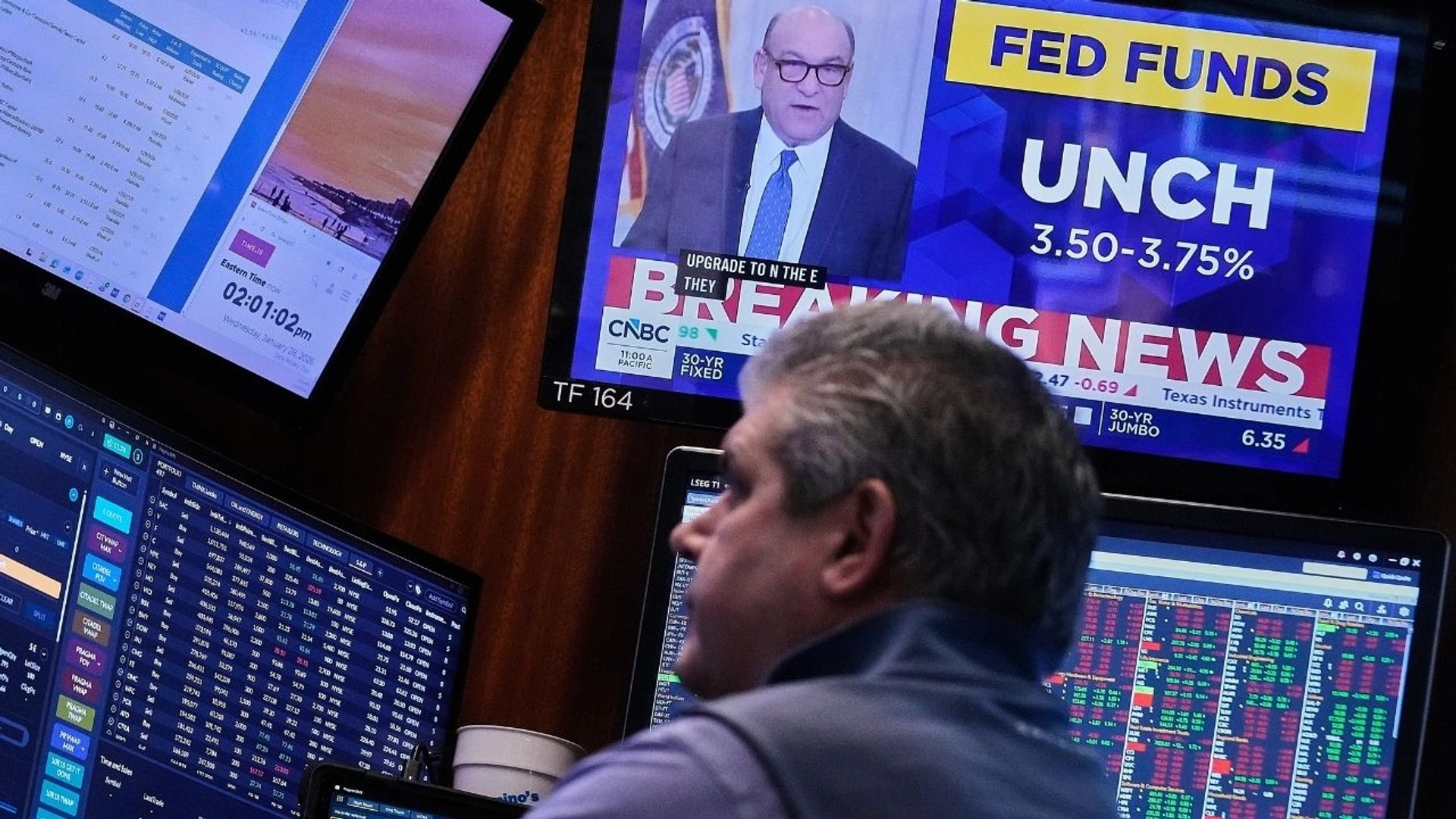
For most of the summer, Wall Street’s working assumption was simple: the US labor market was cooling gently, inflation was easing more slowly than the Fed wanted, and September’s meeting would be a coin-flip between holding steady and one final quarter-point hike. That assumption did not survive contact with the July jobs report.
The Bureau of Labor Statistics reported that US employers cut 23,000 jobs in July — a stark reversal from Wall Street forecasts that had called for a gain of roughly 80,000 positions. It was not an isolated miss. The agency simultaneously slashed its estimates for May and June by a combined 103,000 jobs, meaning the true state of hiring over the past three months is more than a quarter-million jobs weaker than markets believed as recently as Thursday.
The unemployment rate ticked down to 4.1% from 4.2%, but that headline improvement is misleading: it was driven by workers leaving the labor force rather than new hiring, a distinction economists watch closely because it signals discouragement rather than strength.
Why This Report Landed Differently
Soft jobs numbers are not new in 2026 — hiring has been decelerating for months. What makes July’s release different is the scale of the surprise combined with its timing, arriving weeks after the Federal Reserve’s July meeting, where policymakers held rates steady and some officials were still openly discussing the case for a hike given elevated energy costs tied to the ongoing Middle East conflict.
That posture is now obsolete. Within hours of the release, odds on the CME FedWatch tool for the Fed holding rates steady in September jumped sharply, while prediction market Kalshi showed traders assigning roughly a two-thirds probability to a steady-rate outcome — a complete reversal from the near coin-flip odds that prevailed just 24 hours earlier. Separately, Morgan Stanley’s economics team shifted its own call following Fed Chair Jerome Powell’s Jackson Hole remarks, now forecasting a quarter-point cut in September followed by a steady quarterly easing cycle through 2026, targeting a terminal rate near 2.75%–3.00% — down from the current 3.50%–3.75% range.
The reversal wasn’t confined to rates. The 10-year Treasury yield fell as investors priced in a materially weaker growth outlook, while the dollar index came under renewed selling pressure as traders concluded the Fed’s easing runway had just gotten longer, not shorter.
The Sectoral Story: Not All Weakness Is Equal
The composition of the July losses matters as much as the headline. Weakness concentrated in local government education, which cut roughly 50,000 positions, and retail trade, down close to 19,000 — both areas sensitive to seasonal hiring patterns and consumer-facing budget pressure. Healthcare, by contrast, continued adding jobs, extending a multi-year pattern in which medical and social-assistance employment has been the most reliable source of US job growth. Wage growth also missed expectations, with average hourly earnings rising 3.2% year-over-year against a forecast of 3.5% — a sign that whatever residual inflationary pressure exists in the labor market is easing faster than anticipated.
What August 28 and September 4 Mean for Markets
Two dates now sit on every trading desk’s calendar. On August 28, the BLS will release its preliminary annual benchmark revision, using state unemployment insurance tax records to recheck the entire prior year of payroll data — a technical exercise that in past cycles has meaningfully reshaped the market’s understanding of how strong or weak hiring actually was. On September 4, the August jobs report lands just twelve days before the Fed’s September 16 decision, effectively serving as the last major data point policymakers will have in hand.
Richmond Fed President Thomas Barkin offered a measured read following the release, describing the labor market as neither loose nor tight — language that suggests the Fed is not yet panicking, but is clearly recalibrating. Inflation Insights president Omair Sharif cautioned that officials have signaled for months that they view the “breakeven” pace of job growth — the number of jobs the economy needs to add just to keep the unemployment rate flat — as unusually low right now, meaning a soft headline number doesn’t automatically imply outright labor-market distress.
The Global Transmission Channel
For readers outside the US, the mechanics matter more than the headline. A more dovish Fed typically means:
- A softer dollar, which eases imported-inflation pressure for import-heavy economies like the UK and Pakistan but complicates export competitiveness for economies pegged or quasi-pegged to the dollar, including the UAE and much of the Gulf.
- Lower US Treasury yields, which tend to push global capital toward higher-yielding emerging-market and Gulf sovereign debt — a dynamic already visible in DIFC-based fixed-income flows.
- Cheaper dollar-denominated debt servicing for economies like Pakistan and Indonesia that carry significant external, dollar-denominated obligations.
- A complicating factor for the Bank of England and other central banks now weighing their own policy paths against a Fed that appears to be moving faster than expected toward easing, even as UK inflation remains above target.
The Bottom Line
The July jobs report did not just move a single data series — it rewired the market’s central assumption about where US monetary policy is headed into year-end. A Fed that spent mid-2026 debating whether it had room to hike is now managing expectations for a cutting cycle, with September 16 as the first test. For businesses, investors, and policymakers from London to Dubai to Jakarta, the practical question shifts from “will the Fed hike” to “how fast, and how far, will it cut” — and the answer will shape currency, capital-flow, and borrowing-cost decisions well into 2027.
Discover more from The Economy
Subscribe to get the latest posts sent to your email.

Pakistan’s Economy Grew 3.7% — So Why Doesn’t It Feel Like a Recovery?

Top 15 Financial Stocks for Investment in PSX

Pakistan Exports 2026: Record $35.6B Forecast Masks Trade Deficit Risk

UK’s Jobs Downturn Now Matches the 2008 Financial Crisis — And AI Is Accelerating It

Fed Rate Cut Bets Surge After Shock US Jobs Report Exposes Labor Market Cracks

Pakistan’s Trade Gap Widens to $3.95bn Despite Meeting FY26 Current Account Target

Why Ottawa Is Betting on Dubai: Inside Canada’s Gulf Trade Pivot

UK Wealth Tax Fears Trigger Record £13.9bn Investor Exodus Ahead of October Budget

July Jobs Shock: Why the Fed’s September Rate Decision Just Flipped (2026 Analysis)

Global Growth Forecast 2026: IMF, World Bank Outlooks and the “Slow-Hire, Slow-Fire” Labor Market

Pakistan Agriculture 2026: Sindh’s Cotton Surge vs. Punjab’s Monsoon Decline

Gold Price 2026: Why Bullion Has Fallen 25% From Its January Record High

Airfare Prices 2026: Why Flights Are Up 26.5% and What Could Finally Bring Fares Down

Indonesia Investment 2026: Record Q2 Realization vs. Falling FDI Confidence

Gold Price Forecast 2026: Fed’s July 29 Decision and Record Central Bank Buying Explained

China Politburo July 2026: Stimulus Signals Explained

Pakistan Economy 2026: GDP Grows 3.7% as IMF Completes EFF Review Amid Middle East Risk

Strait of Hormuz Blockade 2026: Oil Prices Surge 9% as US-Iran Conflict Reignites

Down But Not Out: Inside the Slow Sinking of Russia’s War Economy

Apple vs OpenAI Lawsuit: The Economic Story Behind the Headline

Gulf Capital Retreat From Pakistan 2026: UAE Loan Freeze & What It Means

The Yuan Now Settles 67% of Russian Oil Payments — Quiet De-Dollarization in Action

Global Stock Market Selloff 2026: Stagflation Fears Return as Iran Conflict Reignites

Pakistan’s Economic Survey FY26: Inflation Spike Insights

Russia’s Shadow Fleet Insurance Economy: How Sanctions Really Work in 2026

Strait of Hormuz Crisis 2026: How Trump’s Toll U-Turn Exposes Global Economic Risk

Russia Fuel Shortages 2026: Inside a Cracking War Economy

Bank of England Rate Decision Amid Energy Crisis
-

 Markets & Finance7 months ago
Top 15 Stocks for Investment in 2026 in PSX: Your Complete Guide to Pakistan’s Best Investment Opportunities
-

 Analysis6 months ago
Johor’s Investment Boom: The Hidden Costs Behind Malaysia’s Most Ambitious Economic Surge
-

 Analysis6 months ago
Top 10 Stocks for Investment in PSX for Quick Returns in 2026
-

 Analysis6 months ago
Brazil’s Rare Earth Race: US, EU, and China Compete for Critical Minerals as Tensions Rise
-

 Banks7 months ago
Best Investments in Pakistan 2026: Top 10 Low-Price Shares and Long-Term Picks for the PSX
-

 Investment7 months ago
Top 10 Mutual Fund Managers in Pakistan for Investment in 2026: A Comprehensive Guide for Optimal Returns
-

 Global Economy8 months ago
15 Most Lucrative Sectors for Investment in Pakistan: A 2025 Data-Driven Analysis
-

 Global Economy8 months ago
Pakistan’s Export Goldmine: 10 Game-Changing Markets Where Pakistani Businesses Are Winning Big in 2025