
Economic Reforms
How to Fix Pakistan’s Debt Economy: A Structural Blueprint

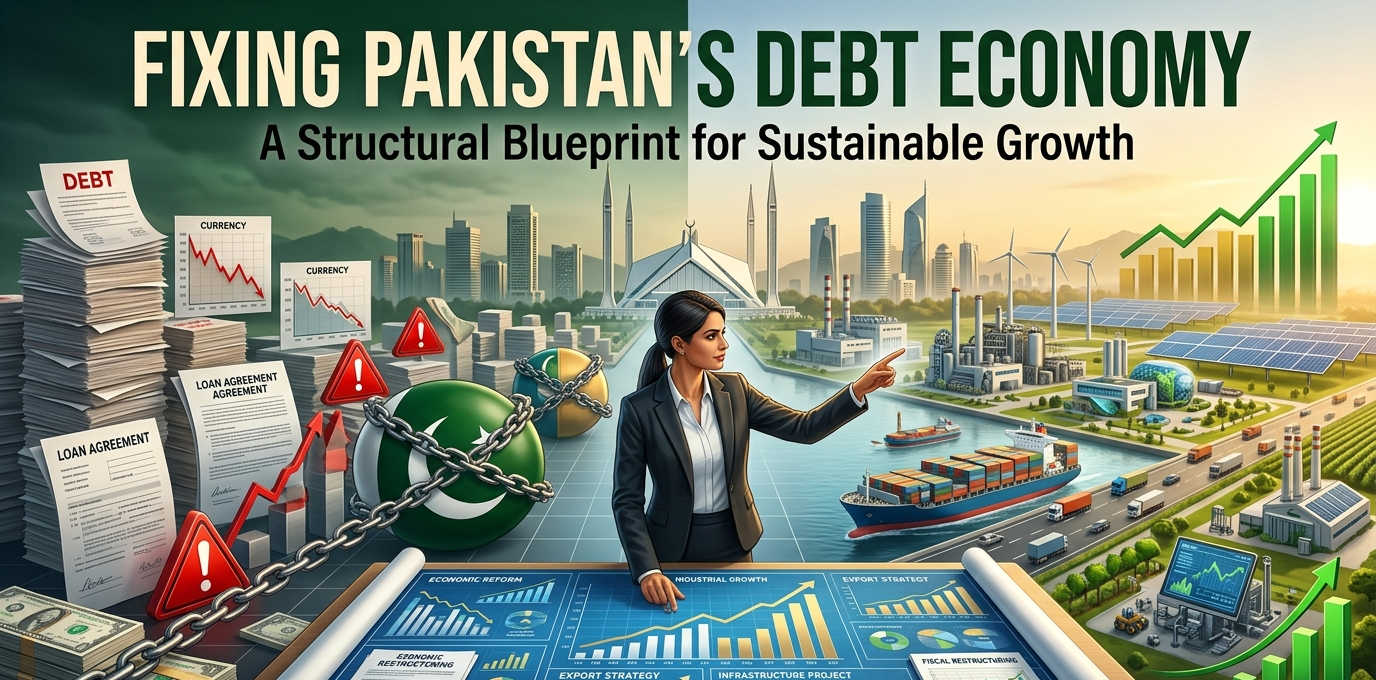
In the fluorescent-lit corridors of the Ministry of Finance in Islamabad, the arithmetic has long stopped making sense. Pakistan spends more than half its federal revenue simply paying interest on past borrowing. The sovereign debt burden now hovers near $280 billion, a millstone that chokes public spending and frightens foreign capital. Policymakers are trapped in a Sisyphean cycle: secure a desperate International Monetary Fund tranche, briefly stabilize foreign exchange reserves, avoid immediate default, and repeat.
Yet the underlying rot remains untouched. Figuring out how to fix Pakistan’s debt economy requires more than frantic diplomacy in Washington or rolling over bilateral loans from Beijing and Riyadh. It demands a violent break from decades of elite capture and fiscal cowardice.
The scale of the sovereign distress is historical. Throughout late 2023 and into 2024, inflation tore through the middle class at a staggering 30 percent, eroding purchasing power and stalling industrial output. According to the World Bank’s economic update, nearly 40 percent of the population now lives below the poverty line, pushing an additional 12.5 million people into economic despair over just three years.
This isn’t merely a liquidity crisis; it is a profound structural failure. The tax net captures only a fraction of the elite, leaving the agrarian and retail sectors largely untaxed while salaried citizens bear the brunt. Simultaneously, the state bleeds capital subsidizing inefficient state-owned enterprises. The International Monetary Fund notes that the country’s tax-to-GDP ratio stubbornly sits around 10 percent, drastically below the regional average necessary to fund a functioning state. Without a violent restructuring of domestic revenue streams and spending habits, external lifelines only delay the inevitable reckoning.
The Core Development: Pluggng the Fiscal Hemorrhage
So, where does the state begin dismantling the mechanisms that have institutionalized this insolvency? The immediate prescription centers on the energy sector’s paralyzing “circular debt.” This is the cascading shortfall of payments across the power supply chain, a figure that recently breached Rs 2.3 trillion ($8.2 billion). Generation companies can’t pay fuel suppliers because distribution companies fail to collect bills or prevent catastrophic line losses.
Fixing this requires politically toxic decisions. Tariffs must reflect the actual cost of generation, but simply hiking prices on a distressed populace is unsustainable. The state must privatize distribution networks. Selling these loss-making entities to private operators with strict regulatory oversight would instantly plug a massive fiscal bleed. Reuters reporting indicates that energy sector subsidies consume nearly a quarter of federal development spending. Cut the subsidy, and the state frees up capital for debt servicing and targeted cash transfers to the genuinely vulnerable.
Then comes the revenue side. The Federal Board of Revenue operates with antiquated technology and an institutional culture that rewards negotiation over enforcement. A complete digitization of the tax machinery is non-negotiable. By linking national identity cards, bank accounts, and property records, the state can map the undeclared wealth of the country’s real estate barons.
There is a human cost to this evasion. In Karachi, former finance minister Miftah Ismail frequently points out that the ruling elite orchestrates tax amnesties that legalize illicit wealth while the urban poor pay heavy indirect taxes on basic food staples. Reversing this means imposing heavy capital gains taxes on unproductive real estate plots and bringing agricultural income into the federal tax net—a move historically blocked by the feudal politicians who dominate the parliament. It will take an executive branch willing to risk its own survival to pass these measures.
The Asian Development Bank estimates that broadening this tax base could yield an additional three percent of GDP in revenue within two fiscal cycles. That margin alone is the difference between chronic begging and financial sovereignty. Still, structural reform is a marathon that Pakistan has historically abandoned after the first mile.
The Reality of IMF Bailout Pakistan Mandates
The global financial architecture views Islamabad with deep exhaustion. Since 1958, Pakistan has entered 23 separate arrangements with the IMF. Almost none were completed without waivers or outright suspensions.
What are the structural reforms needed in Pakistan? The core reforms require dismantling state-owned monopolies, ending untargeted subsidies, taxing agricultural and real estate wealth, and fully privatizing power distribution companies. These steps permanently reduce the fiscal deficit and end the reliance on external debt to fund government operations.
That simple arithmetic conceals a brutal political reality. The state is structurally designed to protect the very sectors it needs to tax. Consider the domestic debt profile. The government borrows heavily from local commercial banks at exorbitant policy rates—often exceeding 20 percent—to fund its deficits. This crowds out the private sector. When commercial banks can generate risk-free, double-digit returns simply by buying government paper, they’ve zero incentive to lend to small and medium enterprises. Industrial growth suffocates.
To break this, the State Bank of Pakistan must enforce a strict separation between fiscal mismanagement and monetary policy. The central bank’s hard-won autonomy is frequently under attack by politicians seeking cheap credit ahead of election cycles. Defending this autonomy is critical to taming inflation.
What follows, however, is the challenge of external debt restructuring. Bilateral debt, particularly the billions owed to Chinese state-affiliated banks for infrastructure projects, must be reprofiled. Extending the maturity of these loans reduces the immediate dollar-drain on the central bank’s reserves. The Financial Times notes that Chinese independent power producers are guaranteed capacity payments in dollars, a contractual trap that drains forex reserves even when the power isn’t used. Renegotiating these contracts isn’t just an economic necessity; it is a matter of sovereign survival. Only by securing breathing room on the external front can the state implement the painful domestic reforms without triggering a total currency collapse.
Downstream Consequences and Sovereign Repositioning
The downstream consequences of this economic overhaul will reshape the country’s social contract. If the government actually executes this fiscal tightening, the immediate future looks bleak for the urban middle class. A reduction in subsidies and an aggressive widening of the tax net will crush disposable income in the short term. Consumer spending will contract. Retail, automotive, and fast-moving consumer goods sectors will report steep earnings drops.
Yet, this pain is the price of admission to a functioning economy. As the fiscal deficit shrinks, inflation will organically cool. A stable currency, no longer propped up by borrowed dollars or administrative controls, will allow the central bank to gradually lower interest rates. This is the inflection point where the private sector can breathe again.
A stabilized macroeconomic baseline unlocks export potential. Pakistan’s IT sector has demonstrated resilience despite the chaotic regulatory environment. Freelancers and software houses export nearly $3 billion annually, but billions more remain parked in offshore accounts due to a lack of trust in the State Bank’s repatriation policies. Restoring confidence could double these inflows within 24 months.
Regionally, a financially stable Pakistan alters the geopolitical calculus in South Asia. A country not perpetually on the brink of default is a more reliable partner for foreign direct investment, particularly from Gulf Cooperation Council nations. Saudi Arabia and the UAE have shifted their foreign policy. They no longer offer blank cheques; they demand equity stakes in profitable assets. As the Economist Intelligence Unit reports, Gulf sovereign wealth funds are eyeing Pakistani mining, agriculture, and logistics sectors, but these investments hinge entirely on the enforcement of a stable macroeconomic framework.
This transition from geo-strategic rent-seeking to genuine economic partnership is the ultimate prize. If Islamabad can prove it isn’t a bottomless pit for multilateral loans, it can attract the kind of patient, long-term capital that builds manufacturing bases and funds high-tech infrastructure. But capital is cowardly. It flees at the first sign of policy reversal. The state must prove its commitment through successive budget cycles, not just during the panicked weeks before an IMF board meeting.
The Case Against Austerity
There is a credible, deeply researched counterargument that aggressive fiscal consolidation is the wrong medicine for a patient already in cardiac arrest. Proponents of heterodox economics argue that austerity merely shrinks the GDP, making the debt-to-GDP ratio mathematically worse.
In this view, the insistence on primary surpluses and massive subsidy cuts disproportionately harms the industrial base. By making energy too expensive and credit too costly, the state kills the very manufacturing sector needed to generate export dollars. Economist Atif Mian frequently highlights the dangers of austerity without growth. If the state cuts development expenditure to zero to pay bondholders, the infrastructure crumbles, and future productivity is crippled.
A briefing by the Center for Economic and Policy Research argues that rigid multilateral conditionalities historically lead to stagflation in developing nations. They contend the focus should be on debt forgiveness and aggressive industrial policy rather than mere accounting balances. You cannot tax a shrinking economy into prosperity.
This perspective holds intellectual weight. Punishing the working class for the fiscal sins of the elite is a recipe for social unrest. Still, the heterodox approach requires a level of state capacity and incorruptible bureaucracy that Pakistan currently lacks. Industrial policy only works when the state can pick winners based on merit, not political patronage. Until the governance deficit is bridged, the harsh discipline of the global market remains the only effective constraint on elite excess. Opting out of the global financial system to pursue localized economic experiments is a luxury the country simply can’t afford.
The Bill Comes Due
The autopsy of Pakistan’s financial decay reveals a state that has consistently prioritized short-term political survival over long-term national viability. The solutions aren’t shrouded in mystery; they are merely buried under decades of vested interests. Tax the untaxed. Privatize the bleeding state monopolies. Restructure the external debt. Empower the central bank.
Execution is a matter of political will, a commodity far scarcer in Islamabad than foreign exchange reserves. The elite must realize that the current trajectory ends in a sovereign default that will vaporize their own wealth just as surely as it starves the poor. The window for managed reform is closing rapidly, replaced by the looming threat of chaotic, forced restructuring.
A nation cannot borrow its way out of a debt crisis, nor can it negotiate with mathematics.
Discover more from The Economy
Subscribe to get the latest posts sent to your email.


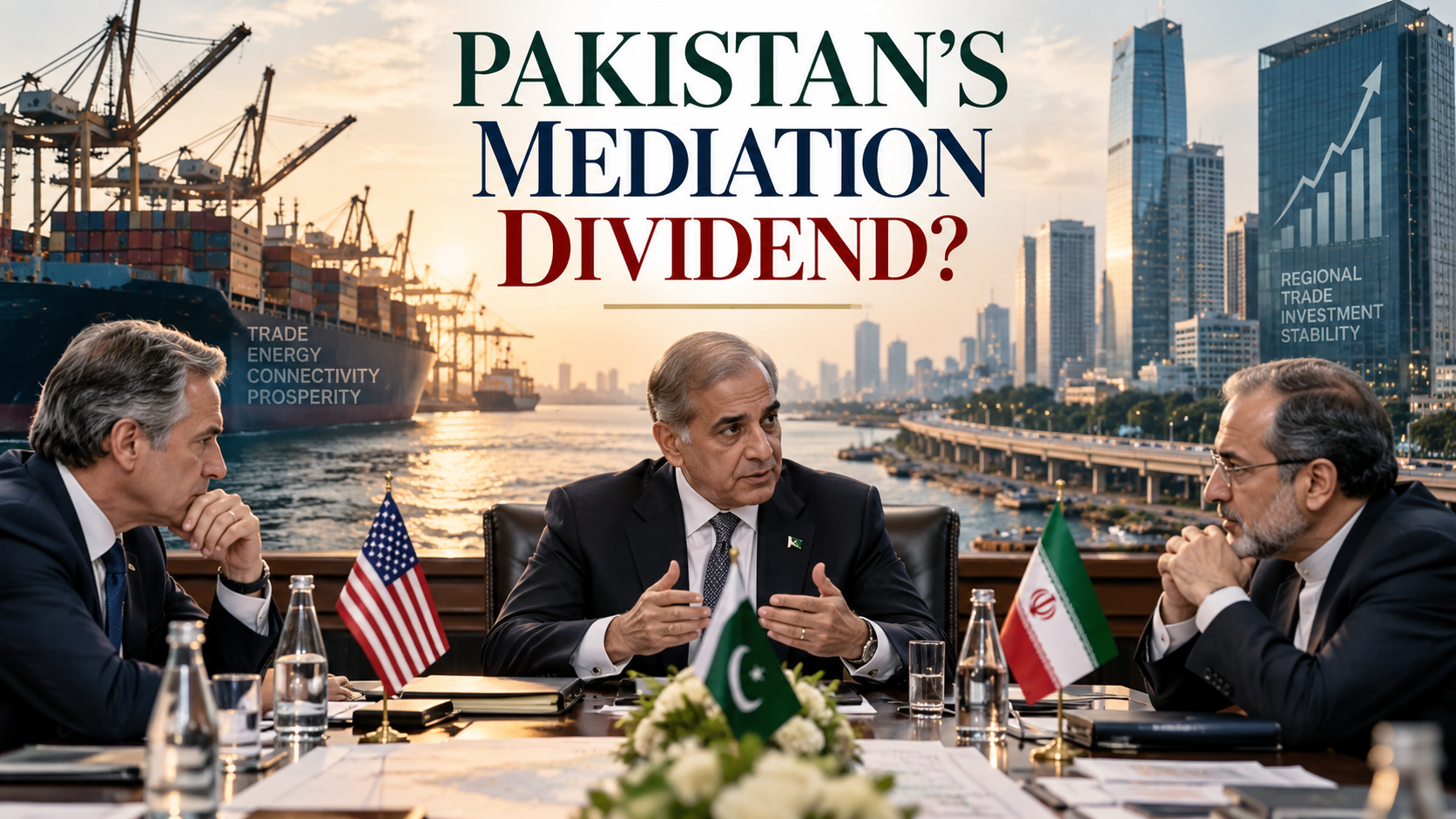
There is an economic argument for diplomacy that rarely appears in the photographs of negotiators. Each tanker delayed, shipping premium raised or energy contract disrupted can become a higher fuel bill for an importer thousands of kilometres away. For Pakistan, involvement in talks concerning the United States, Iran and the Strait of Hormuz therefore has a practical domestic dimension.
On October 24, Iran’s ambassador in Islamabad said Tehran was open to further talks under an interim agreement brokered by Pakistan in June, according to Associated Press reporting. The ambassador described disagreements over the US naval blockade and reopening the strait. Those claims reflect Iran’s account of the talks, not proof that all parties have accepted a final settlement.
What would the dividend actually be?
The first potential benefit is not a new investment pledge. It is risk reduction. More predictable shipping through a major energy corridor could reduce the uncertainty priced into fuel contracts, maritime insurance and freight. This would matter for Pakistan’s import bill even without an immediate drop in benchmark oil prices.
Second, stability could support business planning. Refiners, large industrial consumers and shipping firms struggle to price future activity when cargo timing is unpredictable. A credible security arrangement would reduce costly contingency measures. Third, calmer regional relations could improve the prospects for lawful trade and energy cooperation—subject to sanctions rules, commercial feasibility and financing constraints.
None of these benefits is automatic. A pause in fighting can be fragile. A shipping route can be nominally open yet commercially unattractive if insurers and crews judge risks too high. And a diplomatic breakthrough might not remove domestic weaknesses in Pakistan’s energy sector.
Why Islamabad’s role matters beyond prestige
Pakistan has relationships across competing regional camps and faces powerful incentives to limit escalation along the Gulf. Its geography, diaspora links and reliance on imported energy give it a stake in outcomes. Qatar has also played a role in mediation; depicting Islamabad as the only channel would be misleading. The AP account specifically describes a Pakistan-brokered agreement reached with Qatar’s help.
A successful intermediary can sometimes gain diplomatic credibility that facilitates subsequent economic engagement. But credibility is earned through confidentiality, sustained contact and practical implementation, not by announcing an imaginary peace dividend in advance.
How the effect would reach Pakistan
Consider four linked markets. Crude oil responds to threats to supply. Tanker freight responds to route length, vessel availability and security. Marine insurance reacts to exposure and perceived escalation risk. Foreign exchange reflects the dollars needed to settle import transactions. Improvements in only one of these areas could leave the total landed bill elevated.
The World Bank’s October Pakistan report credits stabilization and remittances for supporting reserves, while acknowledging the Middle East conflict’s effects. That is the relevant context for diplomacy: external relief would support reform, not replace it.
Three possible diplomatic outcomes
| Outcome | Economic implications | What to verify |
|---|---|---|
| Durable shipping arrangement | Lower disruption risk and improved cargo predictability | Insurer terms, actual tanker movement, official commitments |
| Limited temporary understanding | Short-lived relief, risk of reversal | Monitoring mechanism and duration |
| Talks stall | Continued elevated energy and freight risk | Official statements, sanctions and blockade status |
A credible article about US–Iran talks should identify whose proposal is being discussed, which conditions remain disputed and whether shipping operators can actually use the route. Diplomatic language such as close to a deal is not the same as a binding document.
The investment narrative needs realism
Suggestions that a mediation role will immediately unlock billions in foreign investment are speculative unless linked to signed contracts, financing structures and feasibility studies. Pakistan could instead prioritize incremental gains: energy-security planning, better logistics, diaspora finance channels and trade facilitation that remains consistent with international obligations.
The wider economy matters too. The IMF’s October forecast projects global growth of 3.1% for 2026 and warns about conflict-related downside risks. Lower geopolitical uncertainty is welcome, but it does not instantly erase weak export productivity or fiscal bottlenecks.
How to measure a peace dividend without inventing a number
An economic dividend needs a counterfactual: what would energy, freight and trade costs have been without an agreement? That is inherently difficult to establish during simultaneous shifts in global demand and US interest rates. An analyst could compare tanker transit counts, average freight quotations and cargo arrival delays before and after a verified arrangement, while acknowledging unrelated market influences.
The most immediate indicators would likely be operational. Did ships complete voyages that had been postponed? Did underwriters alter war-risk premiums? Did counterparties begin offering more normal delivery windows? Only after those changes can analysts reasonably discuss effects on Pakistan’s import payments and inflation. A fall in crude on the day of a diplomatic announcement is suggestive, not conclusive evidence of causation.
There is also a policy lesson for Islamabad: mediation can create room for reforms that improve shock absorption. Energy efficiency, diversified procurement, stronger reserves and more productive exports reduce the cost of the next disruption regardless of who negotiates it. A foreign-policy success becomes more economically valuable when domestic institutions can make use of it.
The appropriate headline should therefore distinguish potential from realised savings. Diplomatic momentum is valuable, but an accounting entry requires more than optimistic language.
Has a comprehensive US–Iran agreement been finalized?
Not established by the cited October 24 reporting. The parties remain divided over the blockade and passage arrangements.
Would peace immediately lower Pakistan’s petrol prices?
Not necessarily. Domestic prices depend on refined-product benchmarks, the exchange rate, freight, taxes and procurement lags.
What is the strongest measure of diplomatic success?
Implementation: safer transit, sustained dialogue and measurable reduction in disruption, rather than the number of meetings or headlines.
The real prize for Pakistan is predictability. If mediation helps turn a volatile strategic corridor into a safer commercial route, the economic benefit will be felt in quieter import invoices and more confident business decisions—long before any grand diplomatic dividend can be calculated.
Discover more from The Economy
Subscribe to get the latest posts sent to your email.
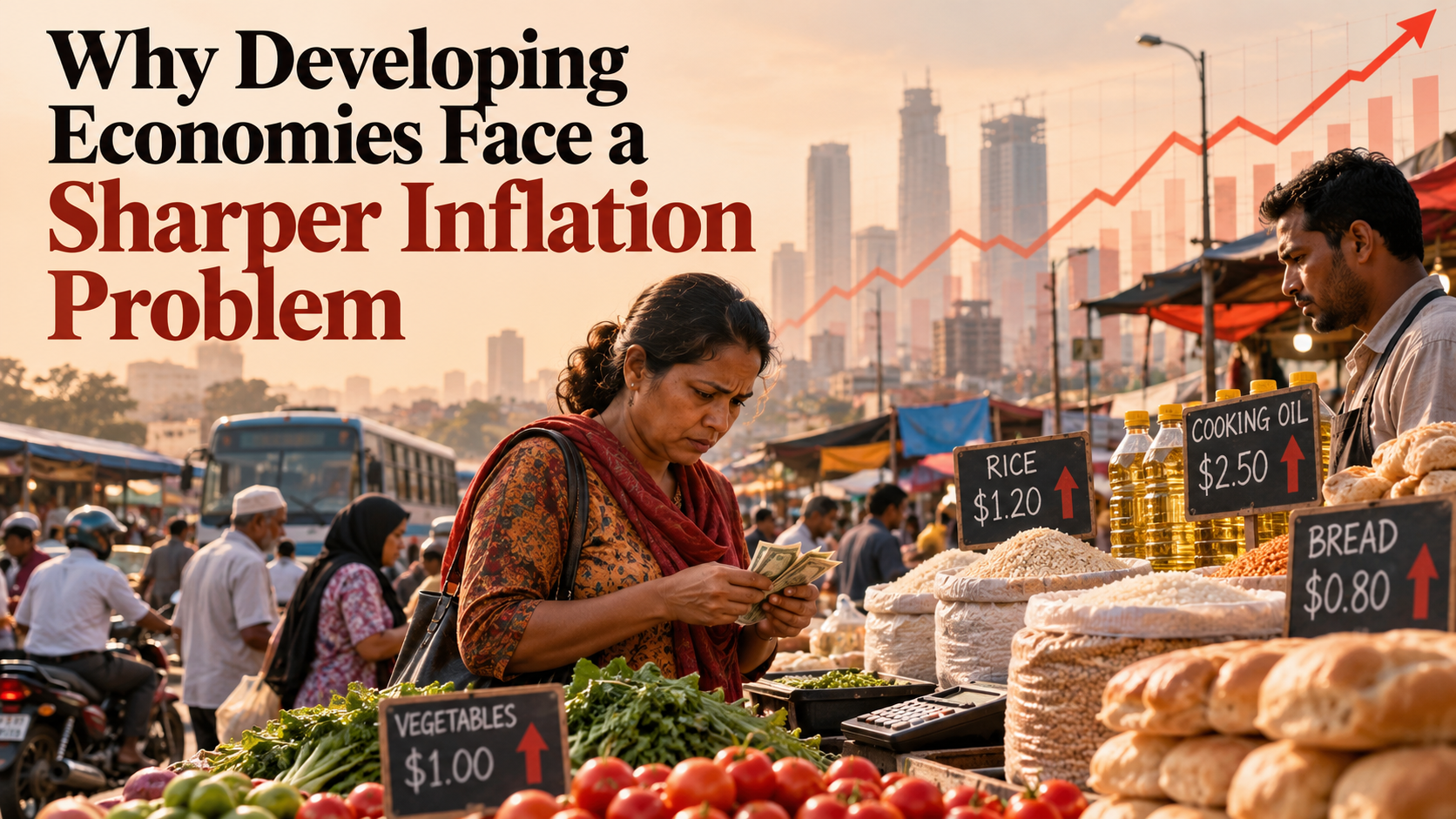
Inflation hurts developing economies more severely when basic necessities take up more of household budgets, imported energy becomes expensive and public finances leave little room for protection. The challenge in 2026 is not simply that prices are rising. It is that lower-income governments often have fewer credible tools for insulating people without creating additional inflation, debt or currency pressure.
The UN’s mid-2026 economic update projected developing-economy inflation at 5.2% in 2026, up from 4.2% in 2025. The IMF’s October World Economic Outlook forecast global inflation at 4.7% for 2026 and 4.1% in 2027. These figures cover different groups and forecast vintages; they should not be treated as competing estimates of the same statistical series.
Key takeaways
- Developing-economy inflation reflects exposure to food, fuel, exchange rates and local supply constraints.
- A drop in inflation usually means prices rise more slowly—not that the cost of living returns to old levels.
- Broad price controls can be far more expensive than time-limited support to vulnerable households.
- Monetary tightening alone cannot repair a disrupted energy corridor or an inefficient distribution network.
- Pakistan needs coherent monetary, fiscal, energy and social-protection policies rather than one isolated anti-inflation measure.
Why the same oil shock has different social costs
Suppose international diesel prices rise. Freight companies face higher fuel costs, farmers may pay more for machinery and irrigation, and producers must move goods to wholesale markets. Retail prices depend on competition, taxes, exchange rates and how much of the cost firms can absorb. The process is neither instantaneous nor identical across products.
In a country where a large share of disposable income already pays for food, transport and essential utilities, a modest increase in those categories can crowd out health, education and savings. A wealthier household has more discretionary expenditure to reduce. Inflation is therefore a distributional event, not just a movement in the consumer-price index.
The UN DESA mid-2026 assessment identifies energy disruptions as a threat to development financing and household purchasing power. High international fuel prices can raise an import bill even where domestic demand is not especially strong. A response built entirely around slowing demand may tackle some second-round price pressures while leaving the root supply shortage untouched.
The four transmission channels
Imported energy and fertilizer
Energy enters production costs, shipping rates, power generation and many food supply chains. Fertilizer prices affect agriculture, while transport costs affect food distribution. If the economy depends on imported inputs, the external price shock is multiplied by currency conditions and domestic tax arrangements.
Exchange rates and foreign-currency financing
Importers commonly need foreign currency to pay suppliers. A depreciation can increase local-currency costs even if international commodity prices are unchanged. Conversely, a stable currency can reduce the immediate pass-through of external price movements, although it cannot remove shortages in global supply.
Domestic bottlenecks
Electricity losses, inefficient storage, weather disruption, transport constraints and weak competition can keep local prices elevated after international benchmarks retreat. Inflation control therefore needs improvements in market infrastructure, not just central-bank statements.
Inflation expectations and wages
Workers negotiate pay based on past and expected living costs; firms choose prices based on anticipated inputs and consumer demand. When expectations become unanchored, a one-time supply shock may lead to more persistent inflation. Credible institutions matter because they shape expectations before every price adjustment occurs.
The cost-of-living trap
The rate of inflation and the price level are different. If a household’s essential shopping basket increases from 100 units to 110 units, prices have risen 10%. If they subsequently rise to 113.3, inflation has fallen to 3% in that second period—but the basket is still considerably more expensive than at the beginning. The example is illustrative, not a statistic about any country.
That distinction explains why people may report severe living-cost pressure while a finance ministry celebrates falling inflation. Real wages have to catch up with the accumulated price increase before purchasing power is restored. Social support may need to respond to that level effect, not just the latest monthly percentage change.
It also shapes political trust. If officials speak only of disinflation, citizens may reasonably believe their daily experience is being dismissed. Better communication would explain changes in staple prices, wage growth and household purchasing power separately.
How supply shocks get amplified by external finance
Costlier imported fuel can coincide with weaker access to international finance. A government may need more foreign exchange to pay for the same volume of energy while investors demand higher returns on its debt. The IMF’s April 2026 Fiscal Monitor explains how rising interest costs and large spending obligations have weakened fiscal resilience worldwide. The problem is particularly acute where expenditure commitments are inflexible and revenue collection is unreliable.
Energy markets can also shift by product. The IEA’s October 2026 oil assessment describes acute diesel tightness and pressure on refining economics, illustrating why inflation analysis must look beyond a single crude-oil benchmark. A shortage of transport fuel can raise food-distribution costs even when headline crude prices do not move by the same proportion.
Trade dependence matters as well. The WTO’s October trade update finds stronger goods trade alongside weaker services-trade prospects, showing that demand and supply shocks are uneven. Developing economies that import energy and export tourism services can experience an unfavorable combination while technology-equipment exporters benefit from a different global cycle.
The policy dilemma: protect prices or protect people?
When fuel prices rise, politicians face pressure to cap tariffs or subsidize consumption. This can reduce the immediately visible cost for all users, but it also makes the state responsible for a potentially large and unpredictable bill. Benefits may flow disproportionately to higher-volume users, including wealthier households and energy-intensive companies.
The IMF’s October 2026 World Economic Outlook argues for temporary, targeted income support during cost-of-living crises. Its analysis finds that price-suppressing measures can require 3 to 22 times the fiscal resources of targeted transfers. That is a finding from its policy analysis, not a promise that any one country’s programme will save a fixed amount.
A better-designed package identifies households facing serious hardship, transfers assistance through transparent channels and sets a clear duration. Where social registries are incomplete, governments should invest in them rather than treat universal subsidies as a permanent substitute for accurate targeting.
| Policy response | Immediate attraction | Principal risk | More credible safeguard |
|---|---|---|---|
| Broad fuel subsidy | Visible retail relief | High cost, leakage to large users | Time limit and published budget |
| Targeted cash transfer | Direct household purchasing power | Exclusion and delivery problems | Updated registries and appeals |
| Interest-rate tightening | Anchors expectations and demand | Slower credit and activity | Data-dependent communication |
| Exchange-rate intervention | Temporary currency stability | Reserve depletion if unsustainable | Adequate buffers and transparency |
| Energy efficiency | Lower structural import exposure | Upfront costs and long gestation | Competitive procurement and oversight |
Original policy comparison; the correct mix varies by country.
The challenge for central banks
Monetary policy affects credit conditions, demand and inflation expectations. It does not create oil or fertilizer. A central bank confronted with an energy shock must judge how much of the first-round increase will spread to other prices and wage demands. It must also consider the effect of interest rates on the exchange rate and the fiscal cost of servicing debt.
Too little action can damage credibility if inflation persists. Too much action can make already weak investment and employment conditions worse. The objective is not to eliminate every price increase, which may be impossible, but to prevent an external shock from becoming embedded in sustained domestic inflation.
The fiscal authority faces a parallel problem. Rising public borrowing costs leave less money for targeted relief. The IMF’s October assessment of sovereign yields says higher interest rates and high public debt reinforce each other. In that setting, monetary and fiscal credibility become jointly important.
Pakistan: the particular problem of overlapping shocks
Pakistan’s inflation outlook combines global energy exposure with domestic electricity costs, agriculture, logistics, exchange rates and fiscal policy. It would be a mistake to attribute every change in the consumer-price index to imported oil, or to assume that domestic monetary policy alone can fix the supply side.
In its October 7 Pakistan review statement, the IMF said headline inflation had moderated to around 10.3% in September after peaking in May. The statement also advised maintaining an appropriately tight monetary stance and making any future fuel assistance limited, time-bound and targeted. This is a specific reported observation for Pakistan—not a global figure.
The consequences for lower-income households extend beyond average inflation. Irregular income, high commuting costs and dependence on purchased food can make budget adjustment difficult. A strategy should therefore combine trusted inflation measurement with safety-net design, efficient utilities and incentives for production and employment.
What developing governments should measure
Official inflation should be complemented by food and transport subindexes, nominal and real wages, exchange-rate developments, foreign-exchange reserves, subsidy spending and progress in delivering targeted transfers. Policymakers should also monitor regional differences in prices and availability, which may reveal distribution and logistics problems concealed by national averages.
Another useful indicator is the gap between headline inflation and underlying inflation measures. Persistent core inflation after energy prices retreat can signal that expectations and domestic pricing pressures have spread. But no measure should be interpreted without understanding its construction and coverage.
What businesses and households can do
Import-dependent companies should stress-test costs under multiple currency and commodity-price scenarios, maintain realistic working capital and avoid assuming that every price increase can be passed to consumers. Exporters may experience a different combination of costs and foreign-currency revenues; their exposure should be analysed separately.
Households can benefit from clear budgeting and caution with variable-rate debt, but personal decisions depend on income stability and individual financial circumstances. Economic policy cannot transfer the full burden of a national inflation shock to family budgeting. It must address structural causes and help households that lack financial buffers.
Risks and limitations
Forecast inflation depends on future energy prices, weather, international shipping conditions and policy actions. UN estimates published in May cannot incorporate every development by October. Country-level outcomes can diverge sharply from developing-country averages; even stable inflation can coexist with a loss of purchasing power if wages lag behind prices. Targeted assistance can also miss eligible recipients when administrative systems are weak.
Frequently asked questions
Why is developing-country inflation often higher?
Greater exposure to food and fuel prices, currency movements, supply constraints and weaker policy buffers can amplify shocks. It is not a universal rule for every country.
Did the UN forecast 5.2% developing-economy inflation in 2026?
Yes, in its mid-2026 update. This is a forecast for a country group, not Pakistan’s official inflation rate.
Is 4.7% IMF inflation the figure for developing economies?
No. The IMF’s 4.7% headline forecast covers the world economy in aggregate and uses the October 2026 forecast vintage.
Do falling inflation rates mean prices are falling?
Usually not. Lower positive inflation means prices continue to rise more slowly.
Why not cap every fuel price?
Broad caps can exhaust budget resources and channel more relief to the largest users, leaving less funding for vulnerable households.
What is the most useful inflation indicator for families?
The prices of their own essential spending categories relative to household income, alongside a credible official consumer-price index.
Conclusion
The developing world’s inflation problem is more than a central-bank calculation. It is a distributional, fiscal and production challenge. Price stability remains essential, but it is strongest when accompanied by targeted household protection, dependable energy and transport systems, and policies that expand productive capacity. Suppressing the price signal without addressing those foundations can turn a temporary shock into a persistent fiscal weakness.
Discover more from The Economy
Subscribe to get the latest posts sent to your email.
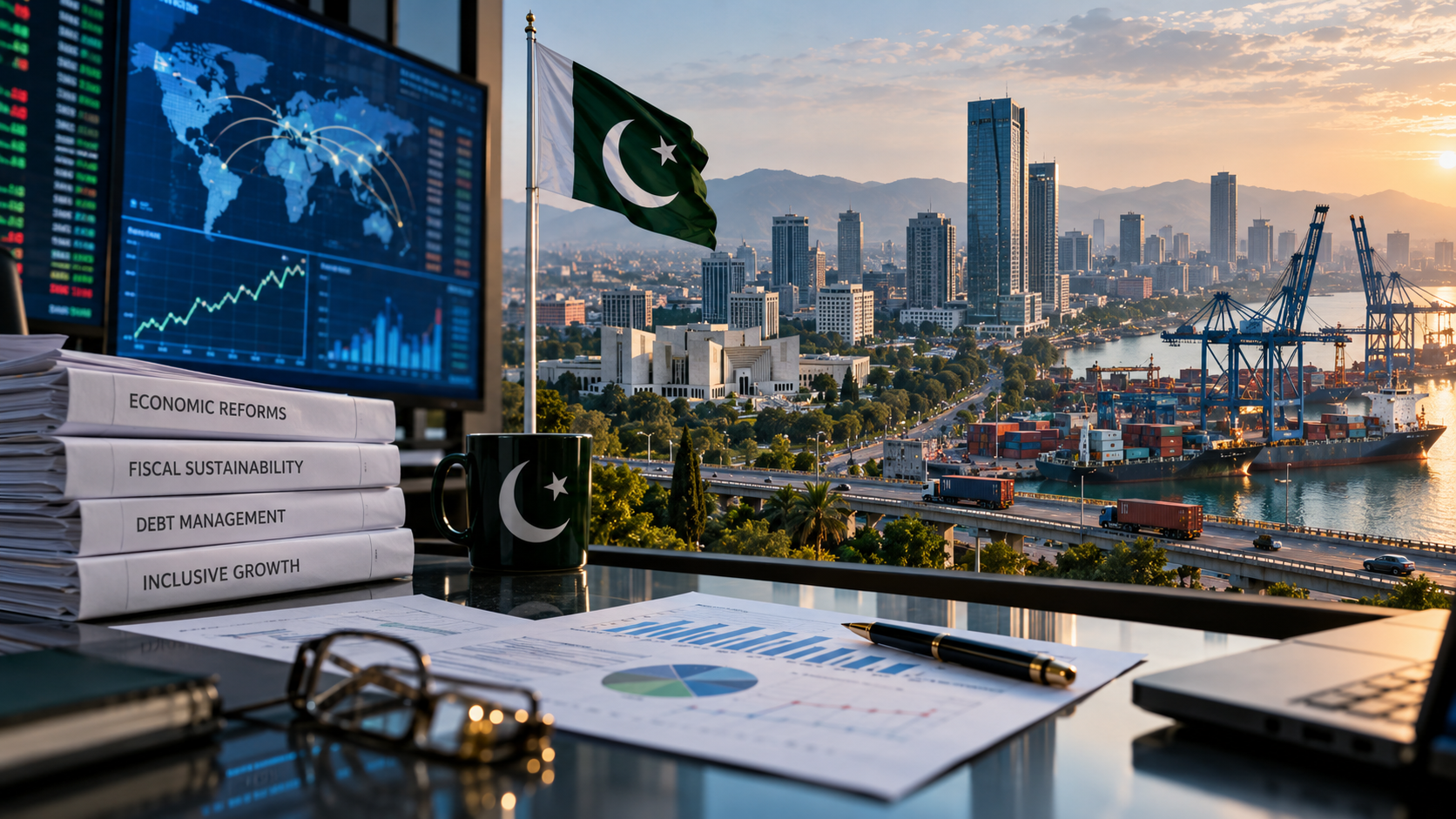
Pakistan’s recovery is meaningful but conditional. The October IMF staff agreement is evidence of program progress, not proof that every disbursement has been approved or that structural weaknesses have been solved. This feature explains the mechanisms, risks and practical decisions that matter through 2027, with particular attention to Pakistan’s different exposure to energy prices, external financing, global trade and AI investment.
At a glance
- World output is forecast to rise, but opportunities and costs are uneven across countries.
- Global inflation forecasts do not predict household prices in Pakistan.
- The AI capital expenditure cycle lifts trade in electronics but may not translate into productivity gains everywhere.
- Pakistan’s IMF staff-level agreement is a milestone, not final Board approval.
- Stronger exports, competitive energy, fiscal credibility and skills are essential to durable growth.
The verified starting point: what the numbers actually say
The IMF October 2026 World Economic Outlook projects global growth of 3.1% in calendar 2026 and 3.4% in calendar 2027, alongside global headline inflation of 4.7% and 4.1%, respectively. Its statistical cutoff is 1 October 2026. The WTO October 2026 trade outlook projects merchandise trade volume growth of 3.9% in 2026 and 4.1% in 2027, versus commercial-services trade volume growth of 3.3% and 6.4%. These are forecasts from different statistical systems, not interchangeable growth measures.
For Pakistan, the IMF Pakistan October 7 staff-level agreement estimated FY2026 growth of 3.6%, September headline inflation of approximately 10.3%, and gross reserves near $21.5 billion at end-September. The fourth EFF review and third RSF review had reached staff-level agreement only, pending IMF Executive Board approval as of the release. Pakistan’s fiscal years run July–June; IMF global growth figures refer to calendar years.
| Indicator | 2026 | 2027 | Important distinction |
|---|---|---|---|
| IMF world GDP growth | 3.1% | 3.4% | Calendar-year projection |
| IMF world headline inflation | 4.7% | 4.1% | Global estimate, not Pakistan CPI |
| WTO goods trade volume growth | 3.9% | 4.1% | Real volume, not nominal trade value |
| WTO commercial services volume growth | 3.3% | 6.4% | Conditional rebound, not guaranteed |
The World Bank June 2026 Global Economic Prospects provides an earlier comparison framework, but its publication date and methodology differ from the October IMF and WTO releases. A thoughtful analysis should compare like with like and should never treat projections as realized outcomes. For a Pakistan-focused story, the crucial question is how global conditions enter domestic economic life.
Why this story matters now
The WTO October 2026 executive summary says AI-enabling goods accounted for 47% of year-on-year growth in the value of world merchandise trade during the first half of 2026. That does not mean 47% of all merchandise trade was AI-related. It identifies a contribution to growth, and in nominal value terms. The same source notes that AI-enabling goods trade rose 67% year-on-year in that period. These figures show how a narrow technology cycle can make global trade appear stronger even as other sectors struggle.
Meanwhile the Reuters October 2026 IMF annual meetings reports persistent concern about global financial risks, geopolitical disruptions and the uneven sharing of AI gains. The Reuters October 2026 Asian growth describes a region where technology investment supports some exporters while energy costs and higher yields challenge others. Pakistan is therefore exposed simultaneously to a potential technology opportunity and to more conventional fuel, financing and trade vulnerabilities.
What the October IMF staff agreement says
For what the october imf staff agreement says, An IMF staff-level agreement and formal Executive Board approval are separate milestones. Treating them as interchangeable can overstate the certainty of disbursements. Investors should follow the documented review process and the conditions for continued progress.
This matters for economic decision-making because firms and households cannot adjust instantaneously when conditions shift. Prices, contracts, worker skills and financial obligations move on different schedules. Analysts should identify the timetable, who bears the immediate cost, and who may capture the longer-term benefit.
A credible implementation plan requires named institutions, measurable indicators and regular public reporting. The point is not to promise an effortless transition; it is to make policy options concrete enough to compare their benefits and trade-offs.
Pakistan-specific decision test. For what the october imf staff agreement says, ask four questions: (1) Which import cost, export opportunity, credit channel or productivity constraint is affected? (2) Which groups face the first-round effects? (3) What could policymakers or firms change within six months? (4) Which published indicator would demonstrate improvement rather than merely announce activity?
What to monitor: (i) official monthly or quarterly data; (ii) movements in export receipts and import bills; (iii) price changes versus changes in physical volumes; (iv) borrowing and working-capital costs; and (v) job quality and household purchasing power. A single monthly reading can be noisy. Comparing several releases helps distinguish a trend from a short-lived disturbance.
The difference between staff and Board decisions
For the difference between staff and board decisions, Fiscal adjustment is durable only if it improves the state’s capacity to collect revenue fairly and deliver services efficiently. Repeatedly increasing taxes on the narrow formal base can undermine compliance while leaving structural leakages untouched.
This matters for economic decision-making because firms and households cannot adjust instantaneously when conditions shift. Prices, contracts, worker skills and financial obligations move on different schedules. Analysts should identify the timetable, who bears the immediate cost, and who may capture the longer-term benefit.
A credible implementation plan requires named institutions, measurable indicators and regular public reporting. The point is not to promise an effortless transition; it is to make policy options concrete enough to compare their benefits and trade-offs.
Pakistan-specific decision test. For the difference between staff and board decisions, ask four questions: (1) Which import cost, export opportunity, credit channel or productivity constraint is affected? (2) Which groups face the first-round effects? (3) What could policymakers or firms change within six months? (4) Which published indicator would demonstrate improvement rather than merely announce activity?
What to monitor: (i) official monthly or quarterly data; (ii) movements in export receipts and import bills; (iii) price changes versus changes in physical volumes; (iv) borrowing and working-capital costs; and (v) job quality and household purchasing power. A single monthly reading can be noisy. Comparing several releases helps distinguish a trend from a short-lived disturbance.
Understanding fiscal-year growth correctly
For understanding fiscal-year growth correctly, Macroeconomic stabilization also needs a growth engine. Without export productivity, improved energy management and credible private-investment conditions, recovery remains vulnerable to the next external financing squeeze.
This matters for economic decision-making because firms and households cannot adjust instantaneously when conditions shift. Prices, contracts, worker skills and financial obligations move on different schedules. Analysts should identify the timetable, who bears the immediate cost, and who may capture the longer-term benefit.
A credible implementation plan requires named institutions, measurable indicators and regular public reporting. The point is not to promise an effortless transition; it is to make policy options concrete enough to compare their benefits and trade-offs.
Pakistan-specific decision test. For understanding fiscal-year growth correctly, ask four questions: (1) Which import cost, export opportunity, credit channel or productivity constraint is affected? (2) Which groups face the first-round effects? (3) What could policymakers or firms change within six months? (4) Which published indicator would demonstrate improvement rather than merely announce activity?
What to monitor: (i) official monthly or quarterly data; (ii) movements in export receipts and import bills; (iii) price changes versus changes in physical volumes; (iv) borrowing and working-capital costs; and (v) job quality and household purchasing power. A single monthly reading can be noisy. Comparing several releases helps distinguish a trend from a short-lived disturbance.
Public enterprises and energy losses
For public enterprises and energy losses, An IMF staff-level agreement and formal Executive Board approval are separate milestones. Treating them as interchangeable can overstate the certainty of disbursements. Investors should follow the documented review process and the conditions for continued progress.
This matters for economic decision-making because firms and households cannot adjust instantaneously when conditions shift. Prices, contracts, worker skills and financial obligations move on different schedules. Analysts should identify the timetable, who bears the immediate cost, and who may capture the longer-term benefit.
A credible implementation plan requires named institutions, measurable indicators and regular public reporting. The point is not to promise an effortless transition; it is to make policy options concrete enough to compare their benefits and trade-offs.
Pakistan-specific decision test. For public enterprises and energy losses, ask four questions: (1) Which import cost, export opportunity, credit channel or productivity constraint is affected? (2) Which groups face the first-round effects? (3) What could policymakers or firms change within six months? (4) Which published indicator would demonstrate improvement rather than merely announce activity?
What to monitor: (i) official monthly or quarterly data; (ii) movements in export receipts and import bills; (iii) price changes versus changes in physical volumes; (iv) borrowing and working-capital costs; and (v) job quality and household purchasing power. A single monthly reading can be noisy. Comparing several releases helps distinguish a trend from a short-lived disturbance.
A scorecard for sustainable recovery
For a scorecard for sustainable recovery, Fiscal adjustment is durable only if it improves the state’s capacity to collect revenue fairly and deliver services efficiently. Repeatedly increasing taxes on the narrow formal base can undermine compliance while leaving structural leakages untouched.
This matters for economic decision-making because firms and households cannot adjust instantaneously when conditions shift. Prices, contracts, worker skills and financial obligations move on different schedules. Analysts should identify the timetable, who bears the immediate cost, and who may capture the longer-term benefit.
A credible implementation plan requires named institutions, measurable indicators and regular public reporting. The point is not to promise an effortless transition; it is to make policy options concrete enough to compare their benefits and trade-offs.
Pakistan-specific decision test. For a scorecard for sustainable recovery, ask four questions: (1) Which import cost, export opportunity, credit channel or productivity constraint is affected? (2) Which groups face the first-round effects? (3) What could policymakers or firms change within six months? (4) Which published indicator would demonstrate improvement rather than merely announce activity?
What to monitor: (i) official monthly or quarterly data; (ii) movements in export receipts and import bills; (iii) price changes versus changes in physical volumes; (iv) borrowing and working-capital costs; and (v) job quality and household purchasing power. A single monthly reading can be noisy. Comparing several releases helps distinguish a trend from a short-lived disturbance.
Policy options: three alternative paths, not numerical forecasts
| Scenario | Assumptions | Implications for Pakistan | Early warning or confirmation |
|---|---|---|---|
| More favorable | Energy costs stabilize; export markets remain open; AI use generates measurable efficiency | Space for investment, steadier purchasing power and stronger services exports | Export orders, real income and private investment improve together |
| Central case | Global growth follows the broad institutional outlook; commodity and funding pressures fluctuate | Gradual recovery with uneven gains across sectors | Stable external balances without a broad productivity surge |
| Adverse | Energy disruptions persist; financing costs rise; AI investment is repriced | Imports become more costly, credit tighter and fiscal choices harder | Reserves, inflation expectations and financing costs weaken at once |
These are qualitative editorial scenarios, not probabilities assigned by an econometric model. Their value lies in clarifying which evidence would require an updated judgment. The IMF October 2026 World Economic Outlook explicitly emphasizes downside risks involving conflict, trade tension, debt and reassessment of AI expectations.
A practical action agenda
For policymakers, the first responsibility is to protect hard-won macroeconomic stability while removing barriers to productivity. Regulatory predictability, tax administration, targeted social protection and transparent energy decisions are more useful than shifting incentives that are impossible for businesses to plan around. The IMF Pakistan 2026 country report identifies revenue mobilization, reform of state enterprises, energy-sector viability and improvements in human capital as linked policy priorities.
For exporters, resilience means identifying where demand is growing, investing in reliable delivery and obtaining credible certifications. Export strategies should track volumes, domestic value added and customer retention; gross receipts alone do not disclose profitability. For small businesses, the practical priority is to map exposure to fuel, electricity, imports and foreign-exchange requirements and to stress-test cash flows before making expansion commitments.
For households, risk management begins with an affordable budget, attention to debt servicing and a realistic distinction between nominal wage gains and purchasing power. For workers, portable skills and credible training can expand options across changing industries. None of this makes external shocks harmless; it simply offers concrete ways to be less exposed.
How this analysis differs from generic global coverage
Major international reporting is indispensable for establishing what happened. The Reuters October 2026 WTO briefing emphasizes the boost from AI to merchandise trade and the pressure of geopolitical disruption. Institutional releases provide detailed projections. This article goes a step further by asking how those macroeconomic signals might translate into local import costs, export competitiveness, employment, household budgets and reform choices. It is an interpretation of attributed evidence, not a claim of exclusive interviews or original field reporting.
The difference is particularly relevant for Pakistan because a global technology boom may coincide with higher costs for countries that import fuel but do not manufacture the equipment in highest demand. No serious strategy should assume that a worldwide headline rate automatically delivers the same benefits locally.
Frequently asked questions
What is the IMF’s global growth forecast for 2027?
The IMF’s October 2026 World Economic Outlook projects 3.4% global GDP growth in 2027, following 3.1% in 2026. These are calendar-year forecasts and may be revised as new data becomes available. See the IMF October 2026 World Economic Outlook.
Is global inflation expected to fall in 2027?
Yes, the October IMF forecast projects global headline inflation easing from 4.7% in 2026 to 4.1% in 2027. That describes the world aggregate and does not imply that prices in Pakistan will fall in absolute terms.
Is Pakistan’s latest IMF financing already approved?
The 7 October 2026 IMF release announced staff-level agreement for the fourth EFF and third RSF reviews, subject to Executive Board approval. The release should not be described as a completed Board decision. See the IMF Pakistan October 7 staff-level agreement.
Will AI investment create jobs in Pakistan?
It could create demand for implementation, software services and specialist support, while also changing tasks in existing occupations. The result depends on skills, investment, electricity reliability and competitive access to customers. No credible source guarantees a particular employment gain.
Does the WTO predict rapid growth in all kinds of trade?
No. Its October outlook differentiates merchandise volume growth from commercial-services volume growth and notes uneven performance by sector and region. Read the WTO October 2026 executive summary.
What should Pakistani companies monitor through 2027?
Export order books, input costs, electricity reliability, financing terms, exchange-rate conditions and customer demand are more operationally useful than a single global growth figure. Businesses should compare these against their own cash flows and margins.
Conclusion: the decisive issue is transmission, not the headline
Pakistan’s recovery is meaningful but conditional. The October IMF staff agreement is evidence of program progress, not proof that every disbursement has been approved or that structural weaknesses have been solved. The balance of risks is mixed: advanced technology can expand world production and trade, but it does not neutralize an energy shock or a financing squeeze. For Pakistan, policy credibility, internationally competitive exports and productivity-enhancing investment will determine how much of a fragile global expansion becomes better living standards at home.
Discover more from The Economy
Subscribe to get the latest posts sent to your email.

Neocloud Economics in 2026: GPU Debt, Utilization and Power

What Is a Neocloud? How AI GPU Clouds Work and Compare

Lula Re-elected in 2026: What Changes for the Dollar, Brazilian Stocks, and Interest Rates?

Lula Wins Brazil’s 2026 Election: Five Economic Tests for 2027

SSI November 2026 Payment: Why Benefits Arrive October 30

Russia Sanctions Waiver: What Asian Oil Buyers Gain

Asia Markets Weekly: How Oil, US Yields and the Fed Reach Tokyo, Kuala Lumpur and Karachi

Gold Near $4,000: Buy, Hold or Wait? A Pakistan Tola Price Guide

US 10-Year Treasury Yield Near 5%: The Hidden Cost for Pakistani Investors

Fed Meeting on October 28: Hike or Hold—and Why Pakistan Investors Should Care

Can Pakistan Turn US–Iran Mediation Into an Economic Dividend?

Oil Above $100: How Higher Crude Prices Reach Pakistan’s Rupee, Petrol and Imports

SBP Interest Rate at 11.5%: What Will Decide Pakistan’s Next Policy Move?

The Global South: Debt, Climate Finance and Investment in 2026

Crude Oil & Petroleum Market Analysis: OPEC+ Decisions and Price Forecasts

Top US Convenience Store Chains: Store Counts, EV Charging, and Sales Trends

Algorithmic Dogfights: Why the U.S. and China Must Establish Rules of Engagement for Autonomous Air Power

Who Is Shivon Zilis? The Neuralink Executive at the Center of the Musk–OpenAI Trial

Social Security Extra $90 Deposit: Who Qualifies for the October 2026 Medicare Rebate?

Global Economic Outlook 2026: 7 Forces Reshaping Markets, Trade and Business

Corporate America Faces a New Debt Test as US Borrowing Costs Surge

Gold Price Outlook 2026: The Forces Behind the Forecasts—and What Could Reverse Them

Gold Falls 3.7% as Yields Surge: Is Gold Still a Safe Haven in 2026?

Stock Market Today: Dow, S&P 500, and Nasdaq Retreat as Treasury Yields

Anthropic Bans Sustained Abuse of Claude AI Under New Usage Policy Effective November 12, 2026

MAS Allocates S$1.45 Billion to Five Asset Managers in Third EQDP Batch: Total Deployment Reaches S$5.4 Billion

Geopolitics and Your Portfolio: How International Affairs Move Global Markets

US 10-Year Yield Hits 5.24%: What the Historic Bond Market Sell off Means for Mortgages and Investors
-

 Markets & Finance10 months ago
Top 15 Stocks for Investment in 2026 in PSX: Your Complete Guide to Pakistan’s Best Investment Opportunities
-

 Analysis8 months ago
Johor’s Investment Boom: The Hidden Costs Behind Malaysia’s Most Ambitious Economic Surge
-

 Analysis8 months ago
Top 10 Stocks for Investment in PSX for Quick Returns in 2026
-

 Banks9 months ago
Best Investments in Pakistan 2026: Top 10 Low-Price Shares and Long-Term Picks for the PSX
-

 Analysis9 months ago
Brazil’s Rare Earth Race: US, EU, and China Compete for Critical Minerals as Tensions Rise
-

 Investment10 months ago
Top 10 Mutual Fund Managers in Pakistan for Investment in 2026: A Comprehensive Guide for Optimal Returns
-

 Global Economy10 months ago
15 Most Lucrative Sectors for Investment in Pakistan: A 2025 Data-Driven Analysis
-

 Global Economy10 months ago
Pakistan’s Export Goldmine: 10 Game-Changing Markets Where Pakistani Businesses Are Winning Big in 2025