
Global Economy
Pakistan’s $250M Panda Bond: A Calculated Bet on Beijing—Or a Currency Time Bomb?

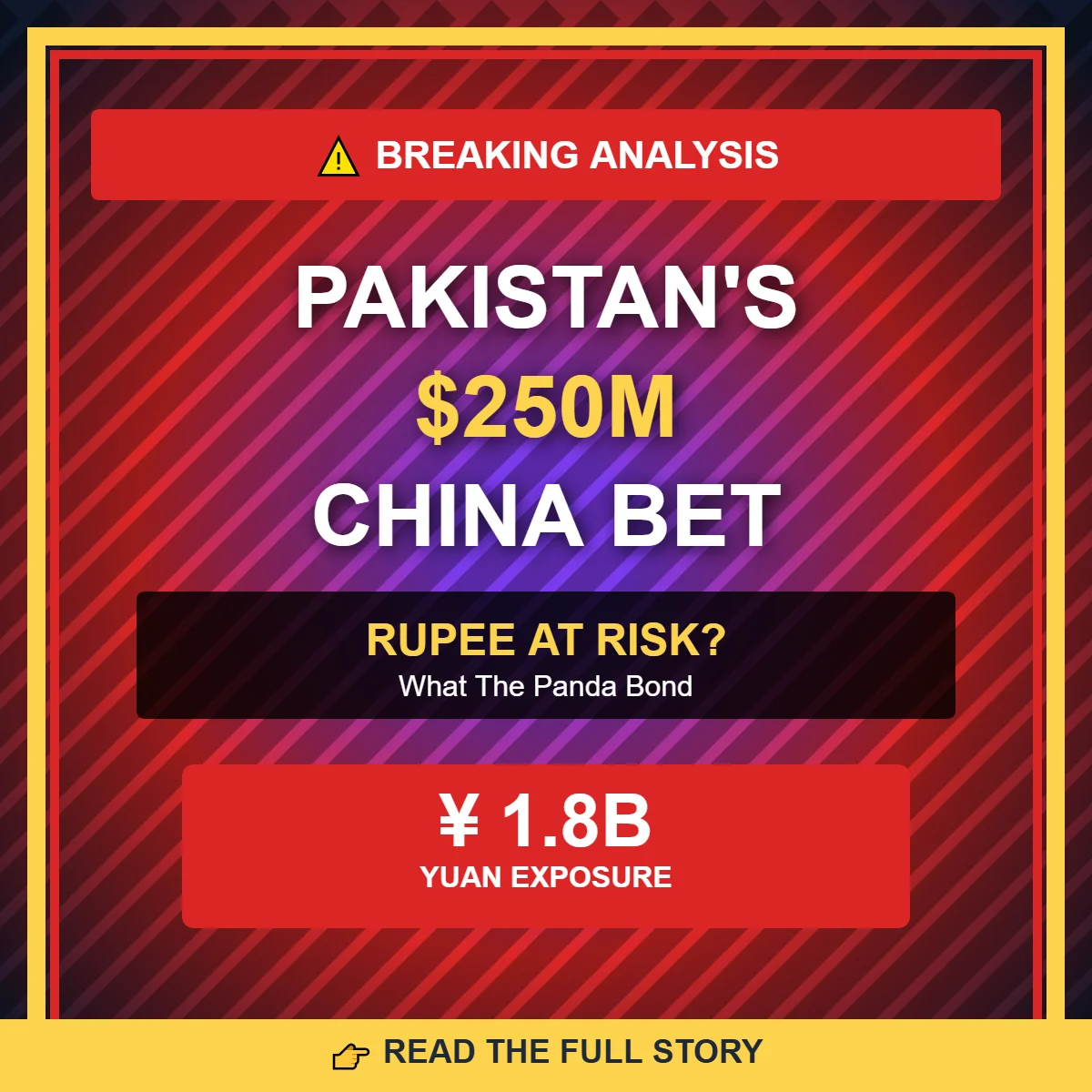
How Pakistan’s first yuan-denominated bond exposes the rupee to a new geopolitical and financial calculus
When Finance Minister Muhammad Aurangzeb announced in December that Pakistan would issue its first Panda Bond in January 2026—raising $250 million from Chinese investors—the headlines trumpeted financial diversification. But beneath the diplomatic niceties lies a far more consequential question: Is Pakistan trading one form of dollar dependency for a potentially more dangerous yuan exposure, and what does this mean for the already fragile Pakistani rupee?
The answer matters not just for Islamabad’s 240 million citizens, but for every emerging economy watching China’s expanding financial footprint across the developing world. As Western capital markets remain skeptical of Pakistan’s fiscal stability, this yuan gambit represents both opportunity and risk—a high-stakes wager that could either stabilize the rupee or accelerate its decline.
The Panda Bond Explained: More Than Just Another Loan
A Panda Bond is not your typical international debt instrument. Unlike Eurobonds denominated in dollars or euros, these are yuan-denominated bonds issued within China’s domestic market by foreign entities. Pakistan will borrow directly in Chinese currency, selling debt to Chinese institutional investors who are eager to diversify portfolios and support Beijing’s broader strategy of internationalizing the renminbi.
The mechanics are deceptively simple: Pakistan issues bonds worth approximately 1.8 billion yuan, Chinese investors buy them, and three years later Pakistan must repay both principal and interest—all in yuan. The inaugural $250 million tranche is just the opening salvo in a $1 billion program that Finance Ministry officials confirmed is already preparing a “Panda Series II” issuance.
What makes this significant is the currency risk transfer. While dollar-denominated debt exposes Pakistan to Federal Reserve policy and global liquidity conditions, yuan debt ties Pakistan’s fortunes to the People’s Bank of China’s monetary decisions and the bilateral exchange rate between the rupee and yuan—a relationship that has been anything but stable.
The Rupee’s Precarious Position: Why Currency Matters Now More Than Ever
To understand the Panda Bond’s implications, consider Pakistan’s currency dynamics heading into 2026. The rupee currently trades around 280 to the dollar, having depreciated roughly 1% over the past year despite claims of stabilization. More critically, Pakistan’s foreign exchange reserves—while improved to approximately $20 billion after recent IMF disbursements—still cover barely three months of imports, a razor-thin buffer that leaves the currency vulnerable to external shocks.
Pakistan’s forex reserves crossed $20 billion in December 2025 after receiving roughly $1.2 billion from the IMF, but this improvement masks deeper structural vulnerabilities. The country faces $1 billion in Eurobond repayments in April 2026, with total external debt servicing obligations that consume more than 100% of annual tax revenue.

Here’s where the Panda Bond calculus gets complicated. Pakistan earns most of its foreign exchange through exports priced in dollars and remittances sent home in various currencies—but predominantly converted through the dollar. Now it’s adding debt obligations in yuan, creating a triple currency exposure: earning in dollars and rupees, while owing dollars, euros, and increasingly, yuan.
The historical correlation between the Pakistani rupee and Chinese yuan offers little comfort. Over the past five years, the yuan has fluctuated between 6.2 and 7.3 to the dollar, while the rupee has steadily depreciated from roughly 160 to 280 against the greenback. If the yuan strengthens against both the dollar and rupee—as Chinese policymakers desire for international credibility—Pakistan’s debt servicing burden in rupee terms could spike dramatically.
Consider a scenario: If Pakistan borrowed 1.8 billion yuan when the exchange rate was 40 rupees per yuan, but must repay when it’s 50 rupees per yuan, the real cost in local currency terms jumps 25%. That’s not theoretical risk—it’s the lived reality of currency mismatch that has devastated emerging market borrowers from Turkey to Argentina.
The China Debt Overhang: Already $30 Billion and Growing
Pakistan’s Panda Bond doesn’t exist in isolation—it’s the latest chapter in a debt relationship with Beijing that has already reached concerning proportions. China-Pakistan Economic Corridor financing now constitutes approximately $30 billion of Pakistan’s external debt, making China the largest bilateral creditor by far.
The CPEC megaproject, launched in 2013 with promises of transformative infrastructure and energy generation, has delivered some tangible benefits: 14 power projects have added nearly 8,700 megawatts of electricity production capacity. But these gains came at steep cost. The power plants rely on imported coal from Indonesia, South Africa, and Australia, increasing Pakistan’s fuel import bill while producing expensive electricity that consumers struggle to afford. By July 2025, unpaid bills to Chinese power companies had reached $1.5 billion, violating contractual obligations and straining diplomatic relations.
Of the 90 planned CPEC projects, only 38 have been completed. The flagship Gwadar Port operates on a limited scale. Security concerns have forced delays and cancellations, with militant attacks targeting Chinese personnel feeding Beijing’s growing wariness about expanding exposure to Pakistan.
The Panda Bond, in this context, represents both a vote of confidence and a potential pressure point. Chinese officials reportedly showed “strong interest” in the bond during investor engagement, according to Finance Ministry briefings. But investor appetite doesn’t necessarily translate to favorable long-term outcomes for Pakistan’s currency stability.
The IMF Tightrope: Balancing Beijing and Washington
Pakistan’s economic policy is currently shaped by two competing gravitational forces: a $7 billion IMF Extended Fund Facility approved in September 2024, and deepening financial integration with China. The IMF program requires fiscal consolidation, revenue enhancement, privatization of state-owned enterprises, and exchange rate flexibility—measures designed to build Pakistan’s capacity to manage debt independently.
The IMF’s second review, completed in December 2025, released approximately $1 billion under the Extended Fund Facility and $200 million under the Resilience and Sustainability Facility, bringing total IMF disbursements to $3.3 billion. These funds are critical for maintaining reserve buffers and signaling creditworthiness to international markets.
But here’s the tension: IMF programs emphasize debt transparency and sustainability analysis, including scrutiny of bilateral lending terms. China’s lending practices—often characterized by opaque contracts, collateral requirements, and policy conditionalities—have raised concerns among Western creditors about Pakistan’s ability to meet all obligations simultaneously.
The Panda Bond, denominated in yuan and sold exclusively to Chinese investors, falls into a regulatory grey zone. While technically market-based financing, it deepens financial interdependence with Beijing at precisely the moment when IMF staff are pushing for broader creditor base diversification. Pakistan owes roughly 22-30% of its $135 billion external debt to China—a concentration risk that debt sustainability analyses flag as problematic.
If Pakistan were forced into debt restructuring—not an implausible scenario given its thin reserve coverage and massive rollover requirements—would Chinese bondholders accept haircuts alongside Paris Club creditors? The lack of historical precedent creates uncertainty that could, ironically, weaken the rupee by spooking other investors.
Currency Hedging: The Hidden Cost Nobody’s Discussing
One critical detail buried in the technical aspects of Panda Bond issuance: currency hedging costs. Pakistan doesn’t generate significant yuan revenues domestically, meaning it must either earn yuan through exports to China, swap currencies in financial markets, or purchase yuan using dollar reserves when debt comes due.
Each option carries costs and risks. China-Pakistan bilateral trade reached $23 billion in 2023, but Pakistan runs a massive deficit—importing far more from China than it exports. This means Pakistan can’t naturally generate sufficient yuan through trade to service Panda Bond obligations.
Currency swap markets for PKR/CNY are thin and expensive compared to PKR/USD markets. Hedging a $250 million yuan obligation over three years could cost anywhere from 2-5% annually, depending on market conditions and counterparty availability. That’s a substantial hidden expense that doesn’t appear in initial borrowing cost calculations.
Without proper hedging, Pakistan faces direct currency risk. With hedging, it faces potentially prohibitive costs that erode any interest rate advantage the Panda Bond might offer over dollar-denominated alternatives. Finance Ministry officials have not publicly disclosed the hedging strategy, leaving analysts to wonder whether this risk is being managed or simply accepted.
The rupee’s stability—or instability—becomes central to this calculation. A 10% rupee depreciation against the yuan would increase debt servicing costs by 10% in local currency terms. Given the rupee’s track record of steady devaluation, this isn’t alarmist speculation—it’s mathematical probability requiring serious policy attention.
The Geopolitical Dividend: What Beijing Really Wants
To fully understand the Panda Bond’s implications for Pakistan’s currency, we must acknowledge the geopolitical dimension. China’s encouragement of Panda Bond issuances isn’t purely altruistic—it serves Beijing’s strategic objective of yuan internationalization.
Currently, the yuan accounts for roughly 3% of global foreign exchange reserves and about 2% of international payments, far below the dollar’s 60% and 40% shares respectively. Every Panda Bond issued by a sovereign borrower like Pakistan legitimizes yuan-denominated debt, creates precedent for other emerging economies, and gradually builds the infrastructure for yuan-based international finance.
For Pakistan, tapping Chinese capital markets demonstrates political alignment with Beijing at a time of intensifying US-China rivalry. The timing is particularly notable: as Pakistan navigates relationships with both Washington and Beijing, financial choices send signals. Issuing dollar-denominated Eurobonds tilts toward Western markets; issuing Panda Bonds signals comfort with Chinese financial integration.
This political calculus has currency implications. If Pakistan is perceived as moving decisively into China’s financial orbit, Western investors may demand higher risk premiums on dollar-denominated Pakistani debt, effectively raising borrowing costs across the board. Conversely, if Chinese support is seen as a backstop against default risk, it could paradoxically stabilize the rupee by reducing overall risk perception.
The outcome depends on credibility. Does China’s willingness to buy Pakistani Panda Bonds indicate genuine confidence in economic reforms, or is it diplomatic lending that prioritizes geopolitical goals over financial returns? Market participants are watching closely, and their conclusions will influence capital flows that directly impact the rupee’s value.
Regional Precedents: Lessons From Other Emerging Markets
Pakistan isn’t the first emerging economy to issue Panda Bonds. Egypt issued Africa’s first Sustainable Panda Bond worth 3.5 billion yuan in 2023, backed by guarantees from the African Development Bank and Asian Infrastructure Investment Bank. The AAA-rated guarantees were crucial for securing favorable terms and crowding in investors.
Pakistan’s Panda Bond carries no such multilateral guarantees. While the Finance Ministry secured “approvals from multilateral partners,” these appear to be non-objection clearances rather than credit enhancements. Without guarantee backing, Pakistan must rely on its own credit profile—currently rated ‘CCC+’ by S&P and ‘Caa3’ by Moody’s, deep in junk territory indicating substantial credit risk.
The Egyptian precedent also illustrates potential benefits: diversified funding sources, access to Chinese savings pools, and demonstration effects that can improve subsequent market access. Egypt successfully used Panda Bond proceeds for sustainable development objectives under a transparent framework that helped rebuild investor confidence.
But Egypt’s macroeconomic fundamentals differ significantly from Pakistan’s. Egypt’s external debt-to-GDP ratio, while elevated, isn’t concentrated as heavily with a single creditor. Its foreign exchange reserves, though pressured, weren’t as perilously thin at the time of issuance. These baseline differences matter for how currency markets interpret similar financing decisions.
More cautionary tales come from countries like Sri Lanka, which became heavily indebted to China through infrastructure projects and faced severe balance of payments crises when dollar earnings couldn’t cover debt servicing. While Sri Lanka didn’t issue Panda Bonds specifically, its experience with concentrated Chinese debt exposure offers sobering lessons about currency vulnerability and loss of policy autonomy.
The State Bank’s Dilemma: Monetary Policy in a Yuan-Exposed World
For Pakistan’s central bank, the Panda Bond creates new complications in an already challenging mandate. The State Bank of Pakistan has cut policy rates by 1,100 basis points since June 2025, bringing rates down as inflation moderated to low single digits. This easing cycle aims to stimulate economic growth while maintaining currency stability.
But yuan-denominated debt adds a new variable to the policy equation. If the State Bank needs to defend the rupee through interest rate increases—whether to combat inflation resurgence or prevent capital flight—higher domestic rates could paradoxically worsen the yuan debt burden by widening interest rate differentials and attracting speculative flows that create volatility.
The central bank’s exchange rate flexibility, a key IMF program requirement, also becomes more constrained. With significant yuan obligations coming due in 2029, the State Bank must consider not just the rupee-dollar rate, but also the rupee-yuan cross rate. Smoothing rupee volatility against one currency might inadvertently create volatility against the other, complicating monetary policy implementation.
Foreign exchange market operations become more complex too. The State Bank typically intervenes using dollar reserves to influence the rupee-dollar rate. Managing yuan exposure may require developing yuan liquidity management tools, currency swap facilities, and deeper yuan foreign exchange markets—capabilities that Pakistan’s financial infrastructure currently lacks.
These technical challenges have real economic consequences. If the central bank is constrained in its policy choices by external debt composition, it loses degrees of freedom in responding to domestic shocks. That reduced policy flexibility can itself become a source of currency instability, as markets recognize the central bank’s limited room for maneuver.
The $1 Billion Question: What Happens After January?
The $250 million inaugural tranche is explicitly framed as the first step in a $1 billion Panda Bond program. Finance Ministry officials confirmed that “preparatory work for subsequent issuances under Panda Series II is already underway,” with Chinese regulators fully briefed on the multi-tranche structure.
This scaling ambition raises the stakes considerably. A quarter-billion dollar yuan obligation is manageable, even for Pakistan’s strained finances. But $1 billion in yuan debt—roughly 7 billion yuan at current exchange rates—represents a material shift in debt composition that could influence currency market dynamics.
Each subsequent Panda Bond issuance will face market scrutiny about how Pakistan managed the previous one. If early tranches are serviced smoothly, with stable exchange rates and no hedging issues, subsequent issuances become easier and potentially cheaper. But if problems emerge—payment difficulties, currency pressures, or policy conflicts with other creditors—the Panda Bond program could become a source of financial stress rather than relief.
The timing of future tranches also matters. Issuing during periods of rupee strength locks in better exchange rates for repayment. Issuing during currency weakness or reserve pressure could signal desperation, triggering adverse market reactions that become self-fulfilling. Pakistan’s track record of economic volatility suggests future issuances won’t all occur under favorable conditions.
There’s also the question of investor appetite beyond the inaugural issuance. Chinese institutional investors buying the first Panda Bond are making a bet not just on Pakistan’s creditworthiness, but on the bilateral relationship’s durability. Each subsequent issuance tests that confidence anew. One security incident targeting Chinese nationals, one CPEC project cancellation, one political shift in Islamabad—any could chill investor sentiment and make future issuances difficult or impossible.
The Unspoken Alternative: What If Pakistan Had Chosen Differently?
It’s worth examining the counterfactual: What if Pakistan had raised $250 million through traditional Eurobonds instead? The answer illuminates what’s truly at stake in the Panda Bond decision.
Dollar-denominated Eurobonds would maintain Pakistan’s existing currency risk profile without adding yuan exposure. The country already earns dollars through exports and remittances, creating natural revenue streams to service dollar debt. Hedging isn’t necessary—the currency match is inherent in the business model of a dollar-dependent economy.
But Eurobond yields for Pakistani sovereign debt have hovered between 8-12% in recent years, reflecting elevated credit risk. Panda Bond interest rates, while not yet disclosed publicly, are likely lower—perhaps 5-7% given Chinese government policy support for such issuances. That spread represents real savings: on $250 million over three years, a 3% interest rate difference saves roughly $22 million in interest payments.
However, this comparison ignores currency risk. A 10% rupee depreciation against the yuan (entirely plausible given historical volatility) would increase the real cost of Panda Bond servicing by $25 million—wiping out the interest savings and then some. Factor in hedging costs, and the supposed advantage of cheaper Chinese financing evaporates quickly.
The alternative comparison is actually with Chinese bilateral loans, which Pakistan has accessed extensively through CPEC and other channels. Bilateral loans typically carry concessional terms but also policy conditions—project approvals, contractor selection, strategic access agreements. Panda Bonds, being market instruments, theoretically avoid such conditionalities.
But do they really? The bonds are sold exclusively to Chinese investors, priced in yuan, governed by Chinese law, and subject to Chinese regulatory oversight. While legally distinct from bilateral loans, Panda Bonds create dependencies that policy conditions might also impose. The difference is one of form rather than substance—and currency risk remains constant across both.
Three Scenarios for the Rupee: Where We Go From Here
Looking ahead to 2026-2029, three plausible scenarios emerge for how the Panda Bond shapes rupee dynamics:
Best Case: Strategic Stabilization
Pakistan successfully uses Panda Bond proceeds to finance productive investments that generate returns. Economic reforms under the IMF program take hold, export growth accelerates, and forex reserves build to comfortable levels above $30 billion. The yuan obligation becomes one manageable component of a diversified debt portfolio. Currency markets interpret Chinese investor confidence as validation, reducing risk premiums and stabilizing the rupee between 275-285 to the dollar. Yuan-rupee rates remain relatively stable, and Pakistan successfully rolls over Panda Bonds at maturity without stress.
Probability: 25%. This requires nearly everything to go right—sustained political stability, disciplined fiscal policy, favorable global conditions, and no major external shocks. Pakistan’s recent history suggests this optimistic scenario is possible but unlikely.
Base Case: Muddling Through With Elevated Risk
The Panda Bond provides temporary liquidity relief but doesn’t fundamentally alter Pakistan’s fiscal trajectory. Structural reforms progress slowly, growth remains anemic around 2-3%, and debt sustainability concerns persist. The rupee continues gradual depreciation to 300-320 against the dollar, with periodic volatility spikes. Yuan debt servicing becomes more expensive in local currency terms but remains manageable through reserve drawdowns and additional borrowing. Each Panda Bond rollover requires careful negotiation, and Pakistan alternates between IMF programs and bilateral support packages.
Probability: 50%. This represents continuity with Pakistan’s recent economic management—avoiding disaster but never quite achieving breakthrough. Currency pressure remains chronic but controlled.
Worst Case: Currency Crisis and Debt Distress
A confluence of negative shocks—oil price spike, political instability, major security incident, or adverse global monetary tightening—triggers a balance of payments crisis. Forex reserves plummet below $10 billion, the rupee crashes toward 350-400 to the dollar, and Pakistan faces difficulty servicing all external obligations. The yuan debt, now much more expensive in rupee terms, becomes a flashpoint. Chinese bondholders demand repayment while Pakistan lacks yuan or the dollars to convert. Emergency IMF support requires debt restructuring negotiations that include Chinese creditors. The rupee destabilizes further as market confidence collapses.
Probability: 25%. Pakistan has weathered similar crises before, but each one leaves the economy more vulnerable to the next. The addition of yuan-denominated obligations adds a new dimension of complexity to crisis management.
Policy Recommendations: What Pakistan Must Do Next
For Pakistani policymakers, several imperatives follow from this analysis:
First, develop a comprehensive currency hedging strategy immediately. Whether through derivative contracts, currency swaps with the People’s Bank of China, or natural hedges through yuan-earning initiatives, Pakistan cannot afford to remain naked to yuan-rupee exchange rate risk. The cost of hedging may be high, but the cost of not hedging could be catastrophic.
Second, accelerate export diversification with specific focus on yuan-earning opportunities. Pakistan should aggressively pursue export markets in China, structure trade deals denominated in yuan, and develop business relationships that create natural currency matches for debt obligations. This requires moving beyond traditional export sectors to identify value-added goods and services that Chinese markets demand.
Third, improve debt data transparency through regular reporting on currency composition, maturity profiles, and hedging positions. Markets punish opacity—Pakistan should proactively disclose Panda Bond terms, repayment schedules, and risk management approaches to build credibility with all investor classes.
Fourth, maintain IMF program discipline while managing Chinese creditor relationships. These aren’t inherently contradictory goals, but they require deft diplomacy and consistent policy implementation. Any perception that Pakistan is prioritizing one creditor group over another will trigger adverse market reactions.
Fifth, build yuan market infrastructure including deeper foreign exchange trading platforms, yuan clearing arrangements, and regulatory frameworks for yuan financial products. Pakistan cannot manage yuan exposure effectively without developed yuan financial markets.
For the international community, Pakistan’s Panda Bond experiment offers important data points about emerging market debt dynamics in an era of rising Chinese financial influence. Multilateral institutions should monitor outcomes closely, provide technical assistance for currency risk management, and work toward debt transparency standards that encompass all creditor types.
For China, sustainable lending practices require recognizing the currency risks that yuan-denominated debt imposes on non-yuan-earning economies. Beijing’s interest in yuan internationalization shouldn’t come at the expense of borrower debt sustainability. Currency swap facilities, technical support, and flexible rollover terms could help Pakistan manage yuan obligations while advancing China’s strategic goals.
The Verdict: High-Stakes Financial Statecraft
Pakistan’s $250 million Panda Bond represents high-stakes financial statecraft—a calculated bet that Chinese capital markets offer a viable alternative to traditional Western financing, with acceptable currency risks and manageable geopolitical implications. The rupee’s fate over the next three to five years will substantially determine whether that bet succeeds.
The optimist’s case holds merit: diversifying funding sources reduces dependence on any single creditor, accessing Chinese savings pools taps enormous liquidity, and deepening ties with the world’s second-largest economy makes strategic sense. Lower nominal interest rates could deliver real fiscal savings if managed properly.
But the skeptic’s concerns deserve equal weight: yuan-denominated debt exposes Pakistan to currency mismatches it’s ill-equipped to manage, deepens financial dependence on China when concentration risk is already elevated, and constrains monetary policy flexibility at a time when the economy needs maximum policy space.
The truth, as often, lies between extremes. Pakistan’s Panda Bond isn’t inherently catastrophic or miraculous—it’s a tool whose outcomes depend entirely on how policymakers wield it. Used alongside comprehensive economic reforms, prudent debt management, and strategic currency hedging, it could contribute to fiscal stabilization. Used as a short-term liquidity fix without addressing underlying structural weaknesses, it risks becoming another debt burden that hastens rather than prevents crisis.
For the rupee, the implications are clear: more variables now influence its value, more creditors have stakes in Pakistan’s economic performance, and more complexity surrounds debt sustainability analysis. Whether that complexity proves manageable or overwhelming will define not just Pakistan’s economic trajectory, but potentially set precedents for dozens of other emerging economies watching this experiment unfold.
As Finance Minister Aurangzeb prepares for the January issuance, he should remember that successful debt management isn’t measured by funds raised, but by obligations met. The Panda Bond’s true test won’t come at issuance, when Chinese investors enthusiastically buy Pakistani debt. It will come in 2029, when those bonds mature and Pakistan must deliver yuan it may or may not have, at exchange rates it cannot predict, in a geopolitical environment it cannot control.
That’s not an argument against issuing Panda Bonds—it’s an argument for approaching them with clear-eyed recognition of the risks, comprehensive management strategies, and realistic contingency planning. Pakistan’s currency stability, its fiscal sustainability, and ultimately its economic sovereignty depend on getting these calculations right.
The world is watching. So is the rupee market.
About the Author: This analysis draws on three decades of experience covering emerging market debt crises, currency dynamics, and Sino-Pakistani economic relations. The views expressed are the author’s own and do not represent any institutional affiliation.
Discover more from The Economy
Subscribe to get the latest posts sent to your email.


In the autumn of 1956, British Prime Minister Anthony Eden received a phone call that ended an empire. The military operation in Egypt had succeeded. The Suez Canal was under Anglo-French control. And Washington told London to stop.
The United States, alarmed by Soviet threats of intervention and unwilling to see its Cold War allies destabilize the Middle East, forced Britain and France to withdraw. Within a decade, the British Empire was in managed retreat. The pound sterling—for over a century the world’s reserve currency—began its long slide. It took thirty years for the cycle to complete: George Soros finally drove the final stake through the Bank of England in 1992.
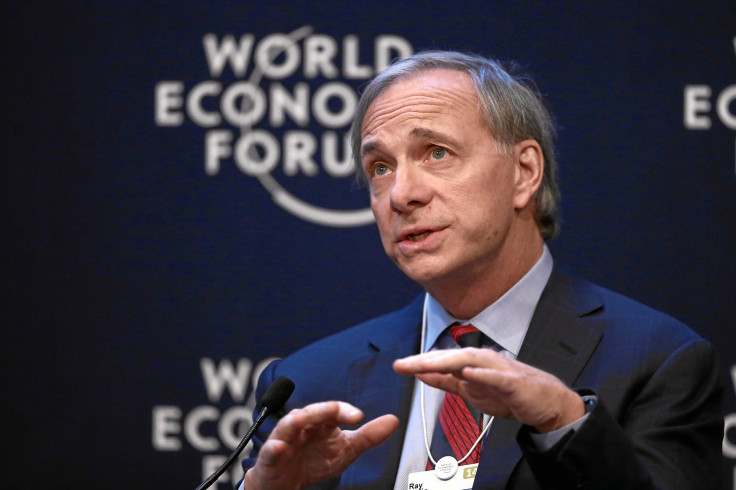
Ray Dalio did not write that history as a lesson about Britain. He wrote it as a warning about the United States in March 2026. And this week, Fortune published his most comprehensive articulation yet of why he believes America has just lived through its own version of that afternoon.
The Hormuz Parallel
The Bridgewater Associates founder has spent decades mapping what he calls the Big Debt Cycle—the rise and fall of reserve-currency empires over five centuries of financial history. The pattern, he argues, is consistent across cases: a dominant power overextends militarily over a critical trade route, suffers a loss of geopolitical face despite tactical success, and watches allies and creditors quietly recalibrate their confidence.
The 2026 U.S.-led bombing campaign against Iran fits that template, Dalio contends. The strikes degraded Iranian military capacity but did not topple the regime. The Strait of Hormuz—through which roughly a fifth of the world’s daily oil supply moves—was disrupted for weeks, sending energy prices surging and triggering a global inflation shock. Negotiations produced a stalemate rather than a decisive resolution.
“It all comes down to who controls the Strait of Hormuz,” Dalio wrote on X. The motivational asymmetry, he argued, was stark: for Iran’s leadership, the conflict was existential. For American voters, it was gas prices and midterm politics.
The Debt Foundation Is Already Cracked
What makes Dalio’s warning more than historical analogy is the fiscal backdrop against which the Hormuz crisis played out. U.S. federal debt crossed $39 trillion on March 18, 2026, with the latest trillion accumulating in record time—driven by tax reductions that eroded revenues and war expenditures that accelerated spending. All three major credit ratings agencies have now downgraded U.S. sovereign debt: S&P in 2011, Fitch in 2023, and Moody’s in May 2025.
The dollar’s share of global foreign exchange reserves has fallen to 56.9%, its lowest level since 1995 and down from a peak of 72% in 2001. Capital and technology spending by the top five U.S. mega-cap technology companies now represent roughly 30% of the entire S&P 500—a concentration of financial weight last seen half a century ago.
NVIDIA alone has surpassed a $5 trillion market capitalization, making it worth more than the entire GDP of most nations. Microsoft, Alphabet, Amazon, and Meta are projected to spend between $660 billion and $700 billion on AI infrastructure in 2026 alone. Dalio sees this as a dangerous divergence: financial markets increasingly levitating above an economy where households are under acute pressure, real wages have declined because of energy shock, and consumption—which accounts for 67% of U.S. GDP—faces structural headwinds.
The Dollar Isn’t Collapsing—Yet
Dalio is careful about what he is and is not claiming. Britain’s sterling did not collapse at Suez. It bled for three decades before the final break. The dollar today is still, as Wall Street analysts say, the “cleanest dirty shirt” in the global monetary wardrobe. No alternative reserve currency exists at anything close to the scale that would be required to replace it.
But the trajectory, Dalio argues, is what matters—not the current position. He draws a direct structural comparison: allies stopped deferring to London after Suez; creditors quietly reassessed British debt; the currency’s global role eroded steadily even as the British economy remained functional and respected. The analogy, he acknowledges, has limits. He frames this as contingent possibility, not inevitability.
Asian leaders Dalio has spoken with recently—he described spending a month in Asia, including ten days in China, in early 2026—have reached a collective conclusion that the U.S. can no longer credibly project military force across multiple theaters simultaneously. “It’s clear that the United States cannot fight a war,” he told Bloomberg Television in early June, citing public unwillingness to absorb casualties. He flagged Taiwan as the most acute potential flashpoint, noting that Beijing could trigger a global market crash by signaling a semiconductor blockade without firing a single shot.
What to Watch—and What to Hold
Dalio is not prescribing specific trades, but the historical pattern points in a consistent direction. In prior empire-transition periods, the indicators to monitor are: allies and creditors losing confidence, erosion of reserve currency status, selling of sovereign debt assets, and currency weakness—especially against gold.
Gold has already tracked that roadmap. Prices surged approximately 60% in the twelve months through March 2026. Goldman Sachs has revised its year-end 2026 gold price target to $4,900 per troy ounce—down from an earlier $5,400 forecast, reflecting the expectation that the Fed will not cut rates this year—but remains constructive on the long-term outlook.
“People don’t have, typically, an adequate amount of gold in their portfolio,” Dalio told CNBC in a February 2025 interview. “When bad times come, gold is a very effective diversifier.”
Dalio has identified the window between the 2026 U.S. midterm elections and the 2028 presidential election as a period of particular vulnerability, when debt pressures and intensifying political conflict over taxes and spending will converge. The outcome is not predetermined. Empires do extend their lives through what Dalio calls “life-extending” measures: prudent debt management, inflation control, and national unity. But with U.S. interest payments alone projected to exceed $1 trillion annually, those measures feel increasingly aspirational.
Discover more from The Economy
Subscribe to get the latest posts sent to your email.
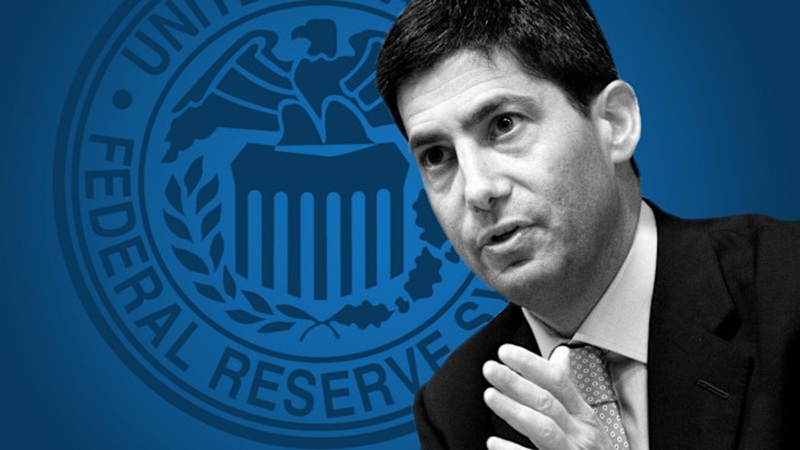
New Fed Chair Kevin Warsh surprised markets with a hawkish stance at his first FOMC press conference. Here’s how his rate-hike signals are rippling through stocks, bonds, mortgages, and gold. The Federal Reserve’s first policy meeting under new Chair Kevin Warsh sent shockwaves through global financial markets on June 17, 2026—not because policymakers moved rates, but because of what nine of them signaled they might do next.
Warsh, appointed by President Trump after months of public attacks on his predecessor Jerome Powell, arrived in Washington carrying expectations of a dovish turn. He had championed rate reductions while angling for the chairmanship, and the White House broadly supported looser monetary conditions. What markets got instead was a coldly hawkish institution that spent the better part of two hours dismantling those assumptions in real time.
The Meeting That Changed the Calculus
The Federal Open Market Committee held the federal funds rate unchanged at its existing range, but nine of 18 committee members penciled in at least one rate hike before year-end in the central bank’s updated Summary of Economic Projections—the dot plot. Six of those nine indicated support for two quarter-point increases. The shift represented a dramatic departure from the March projections, in which no policymaker had envisioned a hike, and the committee as a whole had forecast one cut.
The Dow Jones Industrial Average fell 507 points, or 0.98%, in the session. The S&P 500 lost 1.21% and the Nasdaq Composite dropped 1.34%. Two-year Treasury yields—the instrument most sensitive to near-term rate expectations—jumped 16 basis points to 4.21%, their highest reading in more than a year. Traders scrambled to reprice Fed futures, with CME FedWatch data showing the probability of a September hike jumping to 49% from 27% the previous session.
Warsh’s Statement Was Deliberately Brief—and Deliberately Alarming
The published FOMC statement was unusually short. Warsh stripped language that had previously signaled the Fed’s next move would be a cut and replaced it with a blunt acknowledgment that inflation remains “elevated”—a legacy partly of energy “supply shocks” stemming from the conflict in the Middle East.
“We’ve missed on inflation for five years and we’re going to fix that,” Warsh told reporters. “When we deliver on our price stability objectives—which we will—the American people will feel as though the hardships they’ve been living through are in the rear-view mirror.”
U.S. inflation hit 4.2%—double the Fed’s 2% target and its highest level in three years—leaving the committee little political room to stay passive. Warsh declined to submit a personal rate forecast to the dot plot, an unusual act of institutional reticence that some analysts read as an attempt to preserve maximum flexibility.
Bank of America Changes Its Forecast
Within days, Bank of America overhauled its rate outlook. Analysts at the bank predicted the Fed would raise the benchmark rate by a quarter point three times in 2026, lifting it from the current 3.5%–3.75% range to 4.25%–4.5%. The bank’s prior base case had been for rates to hold steady all year.
“The risk that they might need to raise rates has clearly risen,” said Matthew Luzzetti, chief U.S. economist at Deutsche Bank. BofA analysts acknowledged that Warsh could still be “strategically hawkish”—gaining anti-inflation credibility while actually buying time to cut later—but said the door to that interpretation was closing as incoming data showed persistent price pressure.
The hawkish turn unfolded against an unusual institutional backdrop. Warsh became the first new Fed chairman in more than 70 years to inherit an active predecessor on the governing board. Powell, whose term as chair Warsh replaced, remained as a board governor and voted at the June meeting—a fact that gives every subsequent public utterance from the former chair a level of market weight that Warsh’s team cannot easily ignore.
The Housing Market Reads a New Era
The rate signals carried immediate consequences for American homebuyers. Chen Zhao, head of economics research at Redfin, called it “a new era” and warned that mortgage rates were unlikely to retreat significantly in the near term. Bill Banfield of Rocket Mortgage noted that home sales were responding more to labor market strength than to rate movements and that determined buyers would continue entering the market—though the affordability calculus had shifted.
Vishal Garg, CEO of AI mortgage platform Better, cut to the practical point: “The Fed doesn’t set mortgage rates, but mortgage rates track long-term Treasury yields, which move based on investor expectations for inflation, growth, and the Fed’s next step.”
Warsh has separately announced five internal task forces to examine the Fed’s communication practices, data sources, and inflation-analysis frameworks—a structural reform effort that signals he intends a longer-term overhaul of the institution rather than a cosmetic change of tone.
What Comes Next
The path forward for markets hinges on three variables: whether consumer prices moderate fast enough to make hikes unnecessary, whether the labor market stays strong enough to absorb higher borrowing costs, and whether Warsh can maintain independence from a White House that publicly installed him to cut.
Kristina Hooper, chief market strategist at Man Group, summed up the market’s posture after the meeting: “Markets were holding out hope that Chair Warsh would throw them some kernels of real dovishness that they obviously felt they didn’t get.”
With BofA now projecting a rate corridor that would be the highest since 2007, and with inflation stubbornly running at twice the Fed’s target, the calculation Warsh faces is one no new Fed chair has confronted in a generation: tighten into a White House headwind or validate exactly the critics who warned his appointment was political.
Discover more from The Economy
Subscribe to get the latest posts sent to your email.

The US economy is expanding but sending mixed signals in mid-2026. Here are the four threats that could tip it into recession — and how investors and households can prepare.The US economy is, by most conventional measures, still growing. GDP expanded 1.6% in Q1 2026. The Federal Reserve Bank of Atlanta’s GDPNow model pointed to stronger second-quarter growth. The labour market has surprised three consecutive months to the upside. Goldman Sachs trimmed its recession probability estimate to just 15% following the US-Iran ceasefire agreement.
And yet something feels wrong.
Inflation sits at 4.2% year-over-year — its highest reading in three years. The Federal Reserve just delivered its most hawkish signal in years, with nine officials projecting rate hikes in 2026. Consumer spending rose just 0.1% in April, while the savings rate fell from 3.6% to 2.6%. Credit card delinquencies are rising. The AI bull market is running almost entirely on anticipation.
“The economy is literally moving at two speeds,” said David Schneider, a certified financial planner and president of Schneider Wealth Strategies. “Businesses and affluent households are stimulating growth, fuelled by AI spending and record asset prices, while the average person is increasingly anxious and financially exhausted.”
That bifurcation is not a sign of health. It is a sign of fragility.
The Four Threats That Could Tip the US Into Recession
Threat 1: Policy and Geopolitical Shocks
The Trump administration’s tariff regime — which lifted the effective tariff rate from 2.1% to an estimated 11.7% as of January 2026 — has created sustained uncertainty for businesses, consumers, and investors alike. Evidence suggests that more than 50% of these tariff costs have been passed through to consumers, adding a meaningful burden to household budgets that was not present two years ago. A 10% global baseline tariff remains in effect following the Supreme Court’s rejection of many of the more aggressive executive tariff actions.
The US-Iran war — which began on February 28 with airstrikes by the US and Israel — added an acute geopolitical shock on top of this chronic policy uncertainty. The Strait of Hormuz closure drove oil prices above $120 per barrel, fed directly into headline inflation, and complicated the Federal Reserve’s ability to normalise policy.
The 60-day ceasefire framework provides temporary relief, but a resumption of hostilities — or any new Middle East escalation — would rapidly reverse the oil price decline and reignite inflationary dynamics.
Threat 2: The Fed’s Inflation Dilemma
The Federal Reserve has tolerated inflation above its 2% target for five consecutive years. But Kevin Warsh’s debut as Fed chair in June 2026 signalled a clear shift: the Fed’s patience with above-target inflation appears to be ending.
The dilemma is acute. Raising rates aggressively to bring inflation from 4.2% to 2% risks choking off the economic growth that is sustaining employment and corporate earnings. Not raising rates risks allowing inflation expectations to become unanchored, which would ultimately require far more aggressive tightening later.
Bank of America now projects three quarter-point hikes by year-end, lifting the federal funds rate to 4.25%–4.50%. Each 25 basis point increase adds approximately $6–8 billion annually to US government debt servicing costs at current debt levels — a fiscal dynamic that compounds over time.
For households, the transmission is more direct: mortgage rates, credit card APRs, and auto loan costs all respond to the federal funds rate, directly squeezing discretionary spending.
Threat 3: Consumer Exhaustion
The American consumer has been the engine of post-pandemic growth. But that engine is increasingly sputtering.
Personal consumption expenditures rose just 0.1% in April 2026 — barely above zero. The personal savings rate fell to 2.6%, down from 3.6% the previous month — a level that implies consumers are drawing down savings to maintain spending levels. Rising delinquency rates on credit cards and auto loans suggest the pressure is not confined to lower-income households.
“Cracks beneath the surface — rising delinquencies and slowing job growth — could compound the effects on an already stressed consumer,” noted one investment strategist at a major asset manager.
High interest rates throughout 2024 and 2025 have eroded household balance sheets. Many consumers entered 2026 carrying record debt loads at elevated interest rates. Any additional shock — from higher energy costs, a job market softening, or rising borrowing costs — could trigger a spending contraction that is far harder to reverse than it was to initiate.
Threat 4: The AI Bubble
Artificial intelligence is simultaneously the most important driver of 2026 economic optimism and its most significant latent risk.
The Stanford Institute for Economic Policy Research identified AI as a central concern in its 2026 economic outlook, noting that “concerns about an artificial intelligence bubble” represent a material tail risk for the broader market. The Centre for Economic and Policy Research has gone further, launching an “AI Bubble Monitor” to track signs of speculative excess across AI-related valuations and capital deployment.
The SpaceX IPO at $2 trillion, OpenAI’s confidential S-1 filing at $1 trillion-plus, and Anthropic’s $965 billion pre-IPO valuation collectively represent approximately $3.8 trillion in market capitalisation targeting a public investor base. If AI companies prove unable to monetise their infrastructure investment at the pace their valuations require — a scenario that their current cash-flow realities make plausible — the resulting correction could cascade through technology equities, credit markets, and the broader economy in ways that are difficult to model.
The AI tail risk is not that the technology fails. It is that the business models required to justify current valuations take a decade longer to mature than current investor timelines anticipate.
What the IMF Is Saying
The International Monetary Fund revised its 2026 global growth forecast to 3.1%, down from 3.4% in 2025, in its April World Economic Outlook. The IMF framed the downgrade around three interlocking risks: the Middle East conflict, trade uncertainty, and inflationary pressure — the same factors defining the US domestic outlook.
Emerging market growth is expected to slow disproportionately, particularly in conflict-proximate economies and those with high external debt vulnerabilities. Advanced economies, including the US, are expected to see “more moderate, though still subdued” slowdowns.
Goldman Sachs, for its part, cut its US recession probability to 15% after the ceasefire agreement — a number that reflects genuine resilience in the data but leaves meaningful probability mass on the downside scenario.
Mixed Signals: Growth and Fragility Coexisting
The current US economic picture is genuinely unusual. Two opposing realities are simultaneously true:
Signs of Resilience:
- GDP grew 1.6% in Q1 2026
- Non-farm payrolls surprised to the upside for three consecutive months
- The three-month average of private payrolls reached 166,000 — its highest since June 2023
- Corporate earnings have generally remained resilient
- AI-related capital expenditure continues to support investment
Signs of Strain:
- Inflation at a three-year high of 4.2%
- Consumer spending barely above zero in April
- Savings rate falling to 2.6%
- Rising credit card and auto loan delinquencies
- A Fed now signalling tightening rather than relief
The outcome of 2026 will depend on whether the top-heavy spending — concentrated among businesses and affluent households — can continue to compensate for the exhaustion of median households. History suggests this divergence has limits.
How to Protect Your Portfolio and Finances
For Investors
Diversify away from concentrated AI exposure. The Magnificent Seven have outperformed for three consecutive years on AI enthusiasm. If AI valuations compress — whether from a bubble pop or simply from normalisation — concentrated positions in technology equities carry significant downside.
Increase fixed-income exposure cautiously. With rates potentially rising further, bond prices face near-term headwinds. But shorter-duration Treasuries and investment-grade corporate bonds offer yields that have not been available since 2007.
Consider defensive equity sectors. Healthcare, utilities, and consumer staples have historically outperformed in late-cycle environments and provide some protection against both inflation and a growth slowdown.
Maintain a gold allocation. As discussed, gold remains the most reliable hedge against the simultaneous risks of inflation, dollar weakness, and geopolitical shock.
For Households
Pay down floating-rate debt. If the Fed raises rates further, credit card APRs and home equity lines of credit will become more expensive. Every percentage point of variable-rate debt eliminated before tightening reduces exposure.
Build your emergency fund. A 2.6% savings rate implies the median American household has limited buffer for an income disruption. Three to six months of expenses in liquid savings provides the cushion that prevents a job loss or unexpected expense from becoming a financial crisis.
Lock in fixed-rate borrowing. If you are considering a mortgage or auto loan, a fixed-rate product eliminates the tightening risk that variable-rate instruments carry into an uncertain rate environment.
The Bottom Line
A US recession in 2026 is not the base case — Goldman’s 15% probability estimate captures the consensus. But the combination of elevated inflation, a hawkish Fed, exhausted consumers, geopolitical fragility, and an AI valuation premium built on unproven cash flows creates a risk profile that warrants genuine preparation rather than complacency.
The US economy is not heading off a cliff. But it is walking close enough to the edge that the positioning decisions made now — by investors, households, and policymakers — will materially determine how the second half of 2026 unfolds.
FAQs
Q: Will there be a recession in 2026?
A: As of late June 2026, a recession is not the base case. Goldman Sachs puts the probability at 15% following the US-Iran ceasefire. However, the combination of 4.2% inflation, a hawkish Fed, slowing consumer spending, and AI valuation risks creates a meaningful tail risk.
Q: What are the warning signs of a US recession in 2026?
A: Key indicators to watch include consumer spending growth slowing below zero, credit delinquency rates rising, the unemployment rate climbing, the yield curve inverting further, and any significant AI-related market correction.
Q: What is US GDP growth in 2026?
A: US GDP grew 1.6% in Q1 2026. The Federal Reserve Bank of Atlanta’s GDPNow model pointed to stronger Q2 growth, but the full-year outlook depends heavily on whether the Fed tightens further and how the consumer holds up.
Q: How do I protect my money in a potential recession?
A: Key steps include reducing floating-rate debt, building an emergency fund of 3–6 months of expenses, diversifying equity exposure away from concentrated AI positions, and maintaining a gold allocation as an inflation and safe-haven hedge.
Discover more from The Economy
Subscribe to get the latest posts sent to your email.

Trump Tariffs 2026: Economic Impact, Household Costs & Trade War Outlook

China Economy 2026: Export Boom Masks Property Crisis & Investment Slump

US Inflation 4% May 2026: Is the Worst Over? Fed, Oil Prices

AI Memory Chip Shortage 2026: Nvidia, Apple & What Comes Next

US $39 Trillion National Debt 2026: Bond Market Warning Signs Explained

Ray Dalio US Suez Moment 2026: Dollar Decline, $39 Trillion Debt & Empire’s End

Kevin Warsh Fed Rate Hike 2026: What His Hawkish Pivot Means for Markets

Gold Price 2026: Will Gold Hit $6,000? JPMorgan Forecast, Drivers & Investment Guide

US Recession 2026: Four Key Threats, Warning Signs & How to Protect Your Portfolio

AI Energy Demand 2026: Data Centres, Power Grids & the $725B Infrastructure Boom

AI Semiconductor Selloff 2026: Micron Crash, Nasdaq Pullback & What Comes Next

US Tariffs 2026: How Trump’s 11.7% Effective Rate Is Reshaping Global Trade & Inflation

Global Stock Markets 2026: S&P 500 at Record Highs Amid War, Inflation & Rate Risk

Spain Near 100M Tourists: A Structural Travel Map Shift : Booming Travel Economy

KPMG Australia CEO Resigns After Whistleblower Claims Exposed Investigation Failures

PwC China Partner Payouts Cut Amid Evergrande Audit Fraud

Broadcom Market Value Loss: Revenue Forecast Disappoints

Investors Pile Into Bullish Dollar Bets as ‘US Exceptionalism’ Trade Returns

Here’s How Much It’ll Cost You to Be Part of SpaceX’s Record-Breaking $75 Billion IPO

Nasdaq Tumbles 4% as Chip and Memory Stocks Sink: A $1.2 Trillion Wipeout

How to Fix Pakistan’s Debt Economy: A Structural Blueprint

Smash Capital Leads $200M Funding for Allen Control Systems

Democrats Draw a Red Line Around Military AI — And the Pentagon Is Already Pushing Back

New Investment Super-Cycle: AI, Green Energy & Re-Shoring

Russia Overspends on Putin’s War in Ukraine by $28bn

Xponential Fitness Franchise Lawsuit: The $3.97M Judgment

Middle East Conflict Oil Prices: The $4 Surge Explained

Musk’s SpaceX Lines Up Retail Investors for Record IPO Allocation
-

 Markets & Finance6 months ago
Top 15 Stocks for Investment in 2026 in PSX: Your Complete Guide to Pakistan’s Best Investment Opportunities
-

 Analysis4 months ago
Top 10 Stocks for Investment in PSX for Quick Returns in 2026
-

 Analysis5 months ago
Brazil’s Rare Earth Race: US, EU, and China Compete for Critical Minerals as Tensions Rise
-

 Analysis4 months ago
Johor’s Investment Boom: The Hidden Costs Behind Malaysia’s Most Ambitious Economic Surge
-

 Banks5 months ago
Best Investments in Pakistan 2026: Top 10 Low-Price Shares and Long-Term Picks for the PSX
-

 Investment6 months ago
Top 10 Mutual Fund Managers in Pakistan for Investment in 2026: A Comprehensive Guide for Optimal Returns
-

 Global Economy6 months ago
15 Most Lucrative Sectors for Investment in Pakistan: A 2025 Data-Driven Analysis
-

 Global Economy6 months ago
Pakistan’s Export Goldmine: 10 Game-Changing Markets Where Pakistani Businesses Are Winning Big in 2025