
Asia
10 Reasons Why Austerity Measures Will Help Boost Pakistan’s Economy: Practices and Prospects

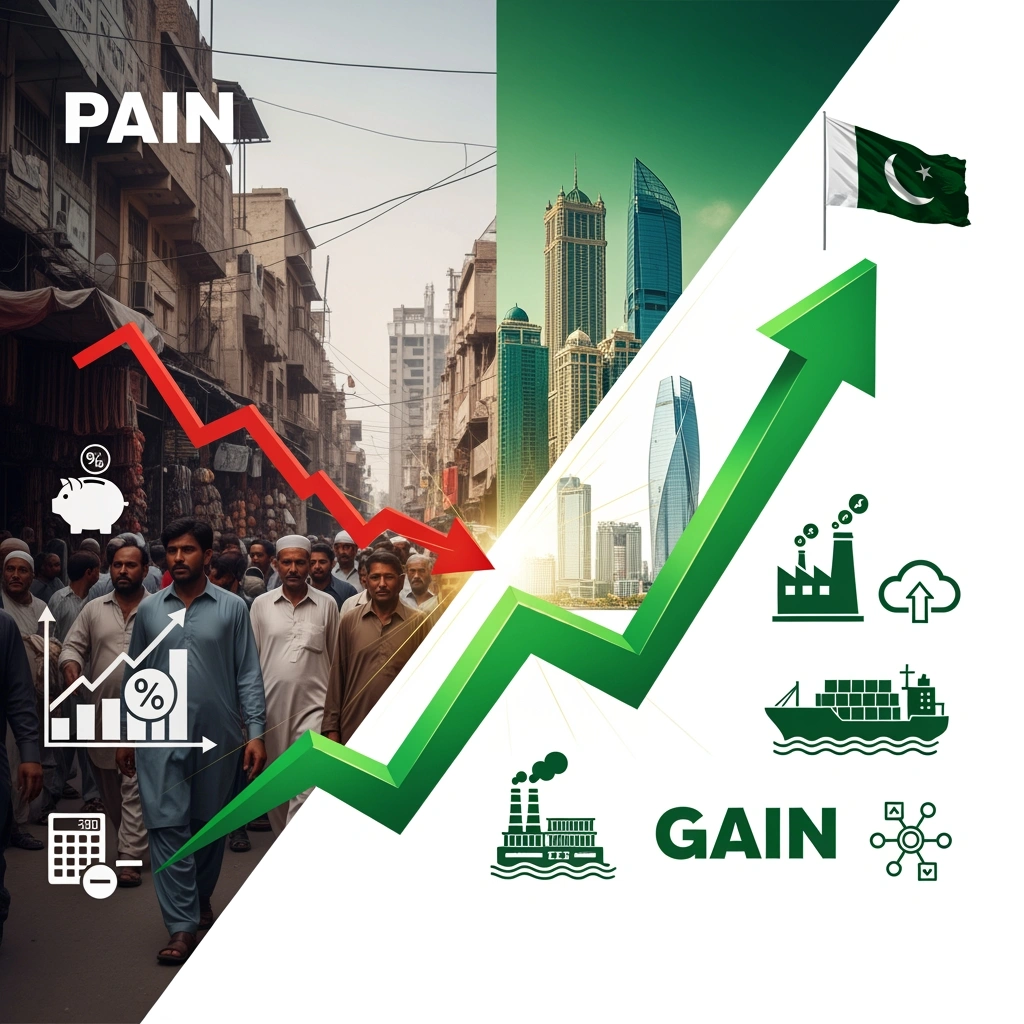
The summer of 2025 marked a quiet turning point for Pakistan’s economy. After years of lurching from one balance-of-payments crisis to another, foreign exchange reserves climbed past $21 billion—their highest level in over a decade. Inflation, which had terrorized households by peaking above 38% in mid-2023, fell to single digits. The rupee stabilized. The International Monetary Fund projected GDP growth of 3.6% for fiscal year 2026, a modest figure by global standards but a meaningful recovery for a country that had teetered on the edge of default just two years earlier.
These improvements did not arrive by accident. They emerged from a painful, politically fraught program of austerity measures Pakistan economy policymakers implemented under the IMF’s $7 billion Extended Fund Facility agreed in September 2024. The government slashed subsidies on fuel and electricity, raised tax revenues through aggressive broadening of the tax net, cut public sector development spending, and imposed discipline on loss-making state-owned enterprises. Civil servants saw hiring freezes. The poor faced higher electricity bills. The middle class watched as government services contracted.
Austerity has always been controversial. Critics argue it deepens recessions, punishes the vulnerable, and serves the interests of international creditors rather than citizens. Pakistan’s streets have echoed with protests against IMF-dictated reforms, and understandably so—when a family’s monthly electricity bill doubles, abstract arguments about fiscal sustainability offer cold comfort. Yet the alternative Pakistan faced was not between austerity and some pain-free path to prosperity. It was between controlled adjustment and uncontrolled collapse: hyperinflation, sovereign default, inability to import essential goods, and the social chaos that accompanies economic disintegration.
This article makes a data-driven case that austerity measures, despite their immediate hardships, represent necessary medicine for Pakistan’s long-term economic health. Drawing on recent evidence from Pakistan’s stabilization program, comparative examples from emerging markets that successfully reformed, and rigorous analysis from institutions like the IMF, World Bank, and leading economic research centers, we examine ten specific mechanisms through which fiscal discipline can catalyze sustainable growth. We acknowledge the real costs, particularly for vulnerable populations, while arguing that well-designed austerity—coupled with social protections and structural reforms—offers Pakistan’s best path from chronic crisis to durable prosperity.
1. Restoring Fiscal Discipline and Reducing Chronic Deficits
Pakistan’s fiscal deficits have plagued economic stability for decades. Between 2008 and 2023, the country ran an average fiscal deficit exceeding 6% of GDP annually, according to World Bank data. This persistent overspending forced the government to borrow continuously, crowding out private investment and creating dangerous debt dynamics. By fiscal year 2023, total public debt had ballooned to approximately 78% of GDP, consuming nearly 40% of federal revenues just to service interest payments.
Austerity measures directly attack this structural imbalance. Pakistan’s FY2025 budget targeted a primary surplus—revenues exceeding non-interest expenditures—for the first time in years, a key IMF program requirement. The government achieved this through spending cuts totaling roughly 1.5% of GDP and revenue mobilization efforts adding another 1% of GDP. The IMF’s October 2025 review confirmed Pakistan met these fiscal targets, marking a decisive break from decades of indiscipline.
The mechanism is straightforward but powerful: lower deficits mean reduced borrowing needs, which frees up capital for productive private-sector investment rather than financing government consumption. When the government stops competing for domestic credit, interest rates can fall, making business expansion more affordable. Pakistan’s policy rate declined from 22% in mid-2024 to 15% by November 2025, partly reflecting improved fiscal credibility.
Critics rightly note that procyclical austerity—cutting spending during recessions—can deepen downturns. Pakistan’s GDP growth did slow to 2.4% in FY2024. Yet the counterfactual matters: without fiscal correction, Pakistan faced imminent default, which would have triggered far more severe contraction, as Argentina experienced in 2001 or Sri Lanka in 2022. The pain of adjustment, while real, remains preferable to the catastrophe of uncontrolled crisis.
2. Breaking the Cycle of External Borrowing and Debt Dependency
For decades, Pakistan has operated in a doom loop: fiscal and current account deficits necessitate foreign borrowing, which creates debt service obligations requiring more borrowing, eventually triggering balance-of-payments crises requiring IMF bailouts. Since 1988, Pakistan has entered 24 IMF programs—a record of serial dependence that signals fundamental policy failure.
Austerity measures target this cycle’s root causes. By reducing fiscal deficits, the government needs less external financing. By allowing the rupee to trade at market-determined rates rather than defending overvalued pegs—another key reform accompanying austerity—imports become less artificially cheap and exports more competitive, narrowing the current account gap. Pakistan’s current account deficit shrank from $17.5 billion in FY2022 to approximately $1 billion in FY2024, according to the State Bank of Pakistan, a dramatic adjustment.
Lower external financing needs translate to reduced vulnerability. When Pakistan can cover import needs from export earnings and remittances rather than borrowed dollars, it escapes the perpetual anxiety about whether the next loan tranche will arrive. Foreign exchange reserves, which had collapsed to barely three weeks of import cover in early 2023, rebuilt to over four months by late 2025—still modest by international standards but representing genuine breathing room.
The World Bank’s October 2025 Pakistan Development Update emphasized this stabilization as prerequisite for any sustainable growth strategy. Breaking free from serial IMF dependence requires enduring fiscal discipline, not because the IMF demands it but because the laws of economics do. Countries that perpetually spend beyond their means eventually face markets’ verdict, and that verdict is invariably harsh.

3. Rebuilding Investor Confidence Through Credible Policy Commitments
Capital is cowardly. It flees uncertainty and gravitates toward predictability. Pakistan’s history of policy reversals—implementing reforms under IMF pressure, then abandoning them once the program ends—has taught investors, both domestic and foreign, to treat Pakistani assets with extreme caution. Foreign direct investment collapsed to $1.9 billion in FY2023, among the lowest in South Asia relative to GDP size.
Austerity measures, particularly when embedded in multi-year IMF programs with regular reviews, signal credible commitment to macroeconomic stability. The September 2024 Extended Fund Facility spans 37 months with quarterly reviews—a structure that makes policy backsliding costly and transparent. This institutional scaffolding helps solve the time-consistency problem that plagues developing country policymaking: governments’ temptation to promise reforms but deliver populism.
Evidence of returning confidence has emerged. The Pakistan Stock Exchange’s KSE-100 index surged over 80% between September 2024 and November 2025, making it one of the world’s best-performing equity markets. Bloomberg reported that foreign portfolio investors returned after years of net outflows. While equity gains partly reflect low starting valuations, they also indicate investors pricing in reduced macroeconomic risk.
More critically, the cost of insuring Pakistan’s sovereign debt against default—measured by credit default swap spreads—declined by over 400 basis points between mid-2023 and late 2025, according to financial data providers. This translates to lower borrowing costs when Pakistan accesses international bond markets, saving taxpayers substantial sums. Fiscal discipline doesn’t just balance budgets; it rebuilds the trust that makes economic activity possible.
4. Forcing Efficiency in Bloated State-Owned Enterprises
Pakistan’s state-owned enterprises have functioned as employment agencies, political patronage machines, and fiscal black holes rather than commercially viable businesses. Pakistan International Airlines, the national power distribution companies, Pakistan Steel Mills, and numerous other SOEs collectively generated losses exceeding $3 billion annually—roughly 1% of GDP—while delivering unreliable services.
Austerity measures force confrontation with this dysfunction. IMF program requirements included ending automatic bailouts, implementing cost-recovery pricing for utilities, and beginning privatization or restructuring of the worst performers. The government raised electricity tariffs toward cost-recovery levels, eliminating subsidies that primarily benefited industrial and commercial users while being financed by regressive taxation. Pakistan Railways began route rationalization, cutting unprofitable services that drained resources.
These reforms generate two benefits. First, direct fiscal savings: every dollar not spent covering PIA losses or subsidizing artificially cheap electricity can fund infrastructure, education, or social protection. Second, efficiency gains: when enterprises face hard budget constraints, managers have incentives to cut waste, improve service, and innovate. Private sector participation, whether through management contracts or ownership transfer, brings commercial discipline.
The political difficulty of SOE reform cannot be understated. State enterprises employ hundreds of thousands; their unions wield considerable power. Yet as the Economist Intelligence Unit noted, Pakistan cannot afford to indefinitely subsidize inefficiency. Countries that successfully reformed SOEs—India in the 1990s, Egypt more recently—demonstrated that public sector downsizing, while painful in transition, releases resources for higher-productivity uses throughout the economy.
5. Broadening the Tax Base and Reducing Distortions
Pakistan’s tax-to-GDP ratio has long ranked among the world’s lowest for countries at its income level—barely 10% in recent years. This reflects not just evasion but fundamental design flaws: a narrow tax base heavily reliant on indirect taxes, widespread exemptions benefiting powerful constituencies, and minimal documentation of economic activity. The result is inadequate revenue for public goods and highly distortionary taxation.
Austerity-linked revenue reforms address these pathologies. The government expanded the tax net, adding hundreds of thousands of retailers and professionals to the income tax rolls through improved documentation systems. Agricultural income, long politically sacrosanct, faced new taxation in Punjab and Sindh provinces. Sales tax exemptions were curtailed. The Federal Board of Revenue increased collections by approximately 30% in FY2025 compared to the previous year, according to government data, though much work remains.
Broader tax bases permit lower rates, reducing distortions. When taxes fall on all economic activity rather than narrow sectors, rates can be moderate while generating adequate revenue. This improves efficiency—resources flow to productive uses rather than tax-minimization schemes. The IMF’s fiscal analysis emphasized that Pakistan’s challenge isn’t high tax rates but narrow coverage: closing loopholes generates more revenue and more fairness than squeezing existing taxpayers harder.
Tax reform also addresses inequality. Pakistan’s current system relies heavily on indirect taxes that burden the poor disproportionately. Shifting toward broader income taxation with progressive rates, while politically difficult, would make the system more equitable. Austerity programs that condition fiscal adjustment on such reforms don’t just reduce deficits—they restructure public finance toward sustainability and fairness.
6. Creating Fiscal Space for Targeted Social Protection
This reason may seem paradoxical: how does spending less create capacity to spend on social programs? The answer lies in composition and sustainability. Pakistan’s pre-austerity budget allocated enormous sums to untargeted subsidies—cheap electricity for wealthy neighborhoods, fuel subsidies benefiting car owners, food subsidies captured by millers and wholesalers. Meanwhile, direct assistance to the poorest remained minimal.
Austerity measures that cut untargeted subsidies while expanding means-tested cash transfers improve both fiscal arithmetic and social outcomes. Pakistan’s Benazir Income Support Programme expanded coverage and benefit levels even as overall spending fell, with disbursements reaching approximately 8 million families by late 2025. Beneficiaries receive quarterly cash payments digitally, reducing leakage and ensuring resources reach intended recipients.
The World Bank has documented that well-designed social safety nets make fiscal adjustment politically sustainable and economically beneficial. When vulnerable households receive direct support, they can maintain consumption despite subsidy cuts, preserving aggregate demand and enabling human capital investment. Children stay in school rather than entering labor markets; families access healthcare; consumption smoothing prevents permanent poverty traps.
Creating durable fiscal space requires breaking the addiction to poorly targeted spending. A dollar saved from subsidizing diesel for commercial transporters can fund five dollars of targeted assistance to the ultra-poor. Austerity that redirects rather than merely cuts transforms public finance from a patronage distribution mechanism into a development tool. This composition shift matters more than aggregate spending levels.
7. Stabilizing the Currency and Controlling Inflation
Pakistan’s inflation crisis of 2022-2023, with consumer prices rising nearly 40% year-over-year at the peak, devastated household purchasing power and eroded savings. Inflation is the cruelest tax, falling hardest on those least able to protect themselves. Its root causes included fiscal deficits monetized by the central bank, energy price shocks, and import compression triggering supply shortages.
Austerity measures attack inflation’s fiscal drivers. When governments finance deficits through central bank borrowing—printing money—the result is predictably inflationary. Reducing fiscal deficits eliminates pressure on the central bank to monetize debt, allowing monetary policy to focus on price stability. Pakistan’s State Bank largely ended government financing in 2024, a key program commitment that enabled credible monetary tightening.
Tighter fiscal policy also reduces aggregate demand pressure on prices. When the government competes less for goods, services, and labor, inflationary pressure subsides. Combined with exchange rate flexibility that prevents imported inflation from accumulating in suppressed form, these policies brought inflation down to 7.2% by October 2025, according to official statistics.
Currency stability followed. The Pakistani rupee, which had depreciated over 60% against the dollar between 2021 and 2023, stabilized around 280-285 rupees per dollar through late 2024 and 2025. This stability reduces business uncertainty, makes import planning feasible, and gradually rebuilds confidence in domestic currency savings. The Financial Times reported that currency stability has been central to Pakistan’s improved economic outlook, enabling businesses to plan and invest.
Lower inflation disproportionately benefits the poor, who hold few inflation hedges and spend large income shares on necessities. Austerity’s contribution to price stability represents perhaps its most immediate pro-poor outcome, even if politically less visible than subsidy cuts.
8. Encouraging Private Sector Investment and Entrepreneurship
Pakistan’s private sector has long operated in the shadows of a bloated public sector that crowds out investment, distorts markets through subsidies and protection, and creates uncertainty through erratic policy. The country’s gross fixed capital formation—investment in productive capacity—has languished below 15% of GDP, far short of the 25-30% typical of rapidly growing Asian economies.
Austerity-driven public sector retrenchment creates space for private initiative. When government withdraws from commercial activities—power distribution, airlines, manufacturing—opportunities open for private operators who can deliver services more efficiently. When fiscal discipline reduces government borrowing from domestic banks, credit flows to businesses rather than financing deficits. When exchange rates reflect market conditions rather than arbitrary pegs, entrepreneurs can plan investments with realistic assumptions.
Early evidence suggests response. The State Bank of Pakistan reported private sector credit growth accelerating to over 10% year-over-year by mid-2025, concentrated in manufacturing, construction, and agriculture. The International Finance Corporation noted increasing interest from foreign investors in Pakistani infrastructure and manufacturing as macroeconomic stability improved.
Entrepreneurship requires predictability. When inflation is stable, currencies don’t collapse, and policies aren’t reversed after elections, the calculus of long-term investment becomes feasible. Pakistan’s tech sector, despite challenges, has demonstrated this potential—companies like Airlift (though later failed), Bykea, and Daraz built businesses predicated on Pakistan’s large, young population. Macroeconomic stability allows such enterprises to scale.
The transition from public-led to private-led growth requires patience. Austerity creates necessary conditions—fiscal space, monetary stability, market-determined prices—but sufficient conditions require complementary reforms: contract enforcement, competition policy, infrastructure investment. Still, no country has achieved sustained growth without a vibrant private sector, and no vibrant private sector emerges amid fiscal chaos.
9. Sending Positive Signals to Multilateral Lenders and Credit Rating Agencies
Pakistan’s creditworthiness, as assessed by rating agencies and international lenders, directly affects borrowing costs and access to global capital markets. Ratings downgrades in 2022-2023 pushed Pakistan to the brink of default, with credit default swap spreads implying over 90% probability of sovereign default within five years. Such assessments become self-fulfilling: when markets price in default, borrowing costs rise prohibitively, making default more likely.
Austerity measures signal serious policy intent to rating agencies and multilateral institutions. When Pakistan met IMF program benchmarks—achieving primary surpluses, raising tax revenues, implementing structural reforms—ratings agencies responded. Moody’s upgraded Pakistan’s outlook from negative to stable in early 2025. Fitch made similar adjustments. These technical changes have real consequences: they expand the investor base willing to hold Pakistani debt and reduce required yields.
Multilateral support extends beyond the IMF. The World Bank approved a $2.2 billion development policy loan in 2025, contingent on reform implementation. The Asian Development Bank increased lending. Such multilateral engagement not only provides financing at below-market rates but also catalyzes private co-financing and signals international community endorsement.
The Atlantic Council’s analysis emphasized that Pakistan’s relationship with international financial institutions, while often politically controversial domestically, provides essential external validation of policy credibility. Markets trust IMF assessments of macroeconomic programs; their approval reduces perceived risk. This isn’t about surrendering sovereignty but recognizing that countries with weak domestic institutions can borrow credibility from strong international ones.
Long-term, Pakistan must build indigenous policy credibility that makes IMF programs unnecessary. Short-term, leveraging multilateral support to reduce borrowing costs saves taxpayer resources and buys time for institutional development.
10. Demonstrating Political Capacity for Difficult Reforms
Perhaps austerity’s most important long-term benefit is intangible: demonstrating that Pakistan’s political system can make and sustain difficult choices in the national interest despite short-term costs. This capacity has been questioned repeatedly as programs begin with fanfare but end in reversal. The currency of political credibility matters as much as fiscal credibility.
Successful implementation of austerity measures signals that civilian governments can govern responsibly even when electorally costly. The political coalition that implemented subsidy cuts, tax increases, and spending restraint in 2024-2025 faced protests and declining poll numbers. Yet they persisted, meeting program benchmarks quarter after quarter. This builds institutional memory and precedent: difficult reforms are possible.
Such demonstrations create path dependence toward good policy. When one government implements painful adjustment and the economy stabilizes, reversing course becomes politically harder—the public can see the connection between discipline and improvement. Opposition parties learn they cannot simply promise free lunches; they must propose credible alternatives. Political competition gradually shifts toward competent management rather than populist outbidding.
International observers watch closely. The Economist noted that Pakistan’s 2024-2025 program implementation represented its most serious reform effort in decades, raising hopes that the country might finally break the boom-bust cycle. If sustained through electoral transitions, these reforms could fundamentally alter Pakistan’s economic trajectory.
State capacity—the government’s ability to formulate and implement policy effectively—doesn’t emerge automatically. It’s built through practice, through navigating politically fraught decisions, through developing bureaucratic competence. Austerity programs, for all their flaws, force governments to build this capacity under international supervision and market pressure.
Austerity in Practice: Lessons from Pakistan’s Recent Reforms
The theoretical case for austerity means little without successful implementation. Pakistan’s 2024-2025 experience offers lessons in both achievements and challenges. The government’s approach combined traditional fiscal consolidation with targeted structural reforms, supported by international financing that smoothed adjustment costs.
Key successes included revenue mobilization exceeding targets. The Federal Board of Revenue implemented automated systems that cross-checked income tax returns against property holdings, bank accounts, and vehicle registrations—simple digitization that dramatically reduced evasion. Tax collection from retailers increased significantly through mandatory integration of point-of-sale systems with FBR databases. These administrative improvements prove that enforcement capacity matters as much as tax rates.
Energy sector reforms made substantial progress. Circular debt—arrears throughout the power sector value chain—had reached approximately $2.5 trillion rupees (over $9 billion) by 2023, requiring continuous fiscal injections. The government imposed cost-recovery tariffs, began privatizing distribution companies, and restructured power purchase agreements with independent producers. Circular debt growth slowed markedly, though eliminating the stock remains a long-term challenge.
Social protection expansion cushioned impacts. Benazir Income Support Programme beneficiaries received increased payments indexed to inflation, while coverage expanded in the poorest districts. Health insurance coverage through Sehat Sahulat expanded to over 100 million people, providing free healthcare at empaneled hospitals. These programs demonstrate that austerity and social protection are complements, not substitutes, when properly designed.
Challenges persist. Tax evasion remains endemic despite improvements; agricultural taxation faces political resistance; provincial governments lag behind federal reforms. State-owned enterprise restructuring proceeds slowly given union opposition and political sensitivities. Implementation capacity varies across provinces and institutions. The IMF’s 2025 review noted that while Pakistan has met fiscal targets, deeper structural reforms require sustained commitment beyond program duration.
Comparative lessons from other countries inform assessment. Egypt’s 2016-2019 IMF program achieved macroeconomic stabilization through similar measures—subsidy cuts, tax increases, exchange rate liberalization—while maintaining social spending. India’s 1991 reforms, though broader than austerity per se, demonstrated that crisis can catalyze transformative change when political leadership commits. Indonesia’s 1997-1998 adjustment, despite severe short-term pain, set foundations for subsequent growth.
The critical lesson: austerity works when embedded in broader reform programs, accompanied by social protection, and sustained beyond initial stabilization. Pakistan’s challenge is ensuring reforms outlast the current IMF program and political cycle.
Future Prospects: From Stabilization to Sustainable Growth
Macroeconomic stabilization, while essential, represents only the first phase of Pakistan’s economic transformation. The country must now transition from crisis management to growth strategy, from external-debt dependence to domestic-resource mobilization, from public-sector dominance to private-sector dynamism.
Pakistan’s medium-term growth potential remains significant despite challenges. The country’s young population—median age around 22 years—offers demographic dividends if human capital investment accelerates. Geographic location between Central Asia, South Asia, and the Middle East provides trade advantages if regional connectivity improves. Agricultural productivity gains remain achievable through better inputs, irrigation management, and value chain development.
Unlocking this potential requires building on austerity’s foundations. Fiscal discipline creates space for infrastructure investment—roads, ports, electricity generation—that raises private sector productivity. Monetary stability enables long-term contracting and financial deepening. Exchange rate flexibility facilitates export competitiveness in labor-intensive manufacturing, where Pakistan has proven comparative advantages in textiles, leather, and increasingly surgical instruments and sports goods.
The digital economy offers particular promise. Pakistan’s IT services exports exceeded $3 billion in FY2024, growing over 20% annually despite macroeconomic turbulence. Companies like Systems Limited, NetSol, and TRG Pakistan demonstrate global competitiveness in software development and business process outsourcing. With improved internet penetration, skills development, and payment system integration, this sector could scale dramatically—Bangladesh’s IT sector provides a relevant model, growing from negligible to over $1.5 billion in exports over 15 years.
Energy security remains critical. Pakistan’s electricity generation relies heavily on imported fossil fuels, creating balance-of-payments vulnerability and pricing challenges. Expanding renewable capacity—particularly solar and wind, where costs have fallen dramatically—can reduce import dependence while lowering long-term energy costs. The World Bank’s energy sector assessment identified this transition as central to sustainable growth.
Human capital investment requires renewed focus. Pakistan’s literacy rate, around 60%, lags South Asian peers. Female labor force participation, below 25%, represents massive untapped potential. Health indicators—maternal mortality, child malnutrition—remain concerning. Reallocating resources from inefficient subsidies toward education and health, enabled by fiscal discipline, could generate high social and economic returns.
Governance reforms complement macroeconomic adjustment. Contract enforcement, property rights protection, regulatory predictability, and anti-corruption efforts determine whether macroeconomic stability translates into investment and growth. Pakistan’s governance indicators have long ranked poorly globally; improvement requires institutional strengthening that extends beyond any single program.
The Economist Intelligence Unit’s medium-term forecast projects Pakistan’s GDP growth averaging 3.5-4.5% through 2028 if reforms continue—modest by Asian standards but sufficient for per capita income gains given population growth slowing. Acceleration toward 6-7% growth would require substantial productivity improvements and investment increases, which depend on sustaining the policy discipline austerity has begun to establish.
Political economy considerations loom large. Pakistan’s reform history shows repeated cycles of adjustment followed by backsliding. Breaking this pattern requires building constituencies for reform—exporters benefiting from competitive exchange rates, consumers enjoying lower inflation, businesses accessing cheaper credit. As these constituencies strengthen, policy reversal becomes politically costlier.
External environment matters significantly. Global interest rate trends affect Pakistan’s borrowing costs; Chinese growth influences demand for Pakistani exports; geopolitical developments in Afghanistan and India shape security expenditures; climate change impacts agricultural productivity. Pakistan cannot control these factors but can build resilience through diversified exports, foreign exchange buffers, and adaptive policies.
The path from stabilization to prosperity remains long and uncertain. Yet austerity measures have provided something Pakistan has lacked for years: a foundation of macroeconomic stability upon which to build. Whether Pakistan capitalizes on this opportunity depends on choices made in coming years—choices to sustain fiscal discipline, deepen structural reforms, invest in people, and integrate into global economy.
Conclusion
The case for austerity measures in Pakistan’s context rests not on ideology but on arithmetic and evidence. A country cannot indefinitely spend beyond its means, accumulate debt unsustainably, run persistent current account deficits, and expect anything but recurring crises. Pakistan’s economic history validates this simple truth: every period of growth has ended in balance-of-payments crisis requiring adjustment, which then creates conditions for recovery until the next cycle of indiscipline.
The ten reasons examined—fiscal consolidation, breaking debt dependency, rebuilding investor confidence, SOE efficiency, tax base expansion, social protection, currency stability, private sector space, international credibility, and demonstrated reform capacity—collectively describe how austerity catalyzes transition from crisis to stability to growth. Each mechanism has theoretical foundation and empirical support from Pakistan’s recent experience and comparative examples.
Acknowledging austerity’s benefits does not require dismissing its costs. Subsidy cuts increase household expenses. Public sector hiring freezes limit job opportunities. Reduced development spending delays infrastructure. These impacts fall unevenly, often hitting vulnerable populations hardest. Critics who emphasize these costs make valid points that demand policy responses—targeted compensation, social safety nets, progressive taxation—not dismissal.
The relevant question is not whether austerity causes pain but whether alternatives exist that achieve stabilization with less suffering. Pakistan’s recent history suggests they do not. The country attempted growth-through-spending strategies repeatedly, most recently in 2020-2022, with predictable results: unsustainable deficits, accelerating inflation, currency collapse, near-default. The path of least resistance—populist spending, subsidies, delayed reforms—leads to catastrophic adjustment imposed by markets rather than managed adjustment guided by policy.
Pakistan’s journey from crisis to sustainable prosperity requires more than austerity. It requires regulatory reform, governance improvements, human capital investment, private sector development, regional integration, and technological upgrading. But austerity creates preconditions for these advances by establishing macroeconomic stability and fiscal credibility. A government perpetually managing currency crises and inflation cannot focus on long-term development; a government that has stabilized the economy can.
The test ahead involves sustaining discipline beyond crisis. Pakistan’s historical pattern shows commitment during IMF programs followed by backsliding after program completion. Breaking this cycle requires institutionalizing reforms—embedding tax compliance systems, locking in energy pricing mechanisms, establishing independent fiscal institutions—that make reversal difficult. It requires building political coalitions around productive investment rather than subsidy distribution.
International examples provide cautious optimism. Countries like South Korea, Indonesia, and more recently Bangladesh and Vietnam faced similar challenges and achieved transformation through sustained reform. Pakistan’s advantages—young population, strategic location, existing industrial base, entrepreneurial talent—match or exceed those of countries that succeeded. The question is political will and institutional capacity to maintain course.
For Pakistani citizens who have endured economic turbulence, austerity measures represent difficult medicine with bitter taste but potentially curative properties. The alternative is not pain-free prosperity but chronic instability and recurring crises that erode living standards, destroy savings, and block opportunity. Choosing hard adjustment today offers hope for stability tomorrow; postponing adjustment guarantees harder adjustment later.
As Pakistan moves through 2026 and beyond, the outcomes of current policies will become clear. If fiscal discipline holds, inflation stays moderate, and growth accelerates toward 4-5% annually, the case for austerity will strengthen. If reforms stall, imbalances re-emerge, and another crisis looms, skeptics will find vindication. The evidence will ultimately settle debates that ideology cannot.
What remains certain is that Pakistan stands at a crossroads. One path leads through continued discipline and structural reform toward economic stability and eventual prosperity. The other leads back to familiar cycles of boom, crisis, adjustment, and repeated dependence. The choice belongs to Pakistan’s leaders and citizens. The stakes—whether the country’s enormous potential is finally realized or remains perpetually deferred—could not be higher.
Discover more from The Economy
Subscribe to get the latest posts sent to your email.


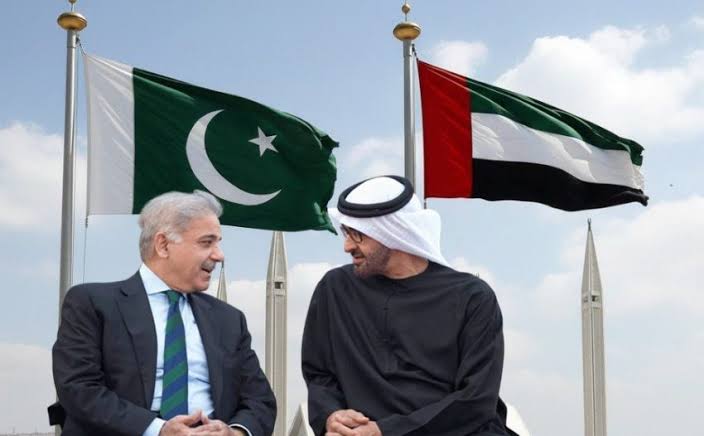
What happened: In early 2026, the United Arab Emirates declined to roll over a $3 billion loan to Pakistan — the first such refusal in seven years. The repayment equalled roughly 18% of Pakistan’s foreign currency reserves, arriving as Islamabad also faced a $1.3 billion bond payment and was waiting on the next IMF tranche.
Why it matters: It’s the clearest sign yet that Gulf sovereign patience with Pakistan’s balance-of-payments cycle is thinning, even as Gulf states simultaneously court China, Saudi Arabia, and each other for capital in a tightening regional liquidity environment.
The Story Nobody’s Connecting
Most coverage of Pakistan’s 2026 external account stress treats the UAE’s loan decision as an isolated liquidity event — a “routine financial transaction,” in the words of Pakistan’s own Ministry of Foreign Affairs. That framing misses the bigger pattern. The same weeks that Abu Dhabi called in its $3 billion, unusual delays began appearing in bank transfers from Saudi Arabia to the UAE itself — friction between the Gulf’s two largest economies, at a moment when both are also managing their own post-war oil price adjustment. (Pakistan & Gulf Economist)
Put those two data points together and a different story emerges: this isn’t just about Pakistan’s creditworthiness. It’s about Gulf capital becoming more selective, more transactional, and less willing to extend informal grace periods across the board — with Pakistan simply the most exposed borrower in the queue.
The Numbers Behind the Pressure
Pakistan’s State Bank held $16.4 billion in reserves as of late March 2026 — enough to cover roughly three months of imports, a threshold economists generally treat as a comfort floor, not a cushion. (Mettis Global News) The UAE’s declined rollover landed at the same time as a looming $1.3 billion international bond payment and dependence on the next $1.2 billion IMF disbursement — a convergence of obligations that left the State Bank with limited room to maneuver beyond import restrictions, rate hikes, or fresh commercial borrowing.
The backdrop matters too. The rupee had been trading in a comparatively narrow 278–282 band before the escalation of the Iran conflict pushed global oil prices higher, squeezing Pakistan’s import bill precisely when its Gulf safety net began to wobble. The KSE-100 benchmark, meanwhile, had already shed around 15% amid the broader pressure. (Mettis Global News)
This is not Pakistan’s first Gulf-dependency cycle. The IMF’s own record shows a now-familiar pattern: staff-level agreements reached in Dubai, UAE pledges of multibillion-dollar investment arriving alongside IMF tranches, and Gulf bridge financing used to stave off sovereign default in periods when reserves cover shrinks toward zero. (Business Standard) What’s different in 2026 is that the bridge itself is showing cracks.
Islamabad’s Official Line vs. the Structural Reality
Pakistan’s government has leaned into a “stability to sustainable growth” narrative around its FY2026–27 federal budget, with the finance minister framing the transition as export-driven rather than reserve-dependent. Business groups have broadly welcomed the budget, and the current account posted a $459 million surplus in May 2026, an improvement attributed to strong remittance inflows. (Business Recorder) The Monetary Policy Committee has held rates steady rather than reaching for emergency tightening, which is itself a signal that the central bank does not yet see the UAE episode as a systemic trigger.
But a current account surplus built substantially on remittances is different from one built on export competitiveness or durable FDI. Pakistan’s trade structure still leans heavily on a narrow set of partners: China supplies over a quarter of its imports and a meaningful share of its exports, the UAE is both a top export destination and its second-largest import source, and Gulf states collectively remain the primary channel for both remittances and emergency liquidity. (Wikipedia — Economy of Pakistan) That concentration is precisely what makes a single Gulf lender’s changed appetite so consequential.
Why the Oil Backdrop Compounds the Risk
None of this is happening in a vacuum. The IMF’s own July 2026 commentary noted that global oil markets “absorbed the war shock” from the Iran conflict, but cautioned that buffers — spare production capacity, strategic reserves, shipping insurance capacity — are running low. (IMF Blog) For an oil-importing, reserve-constrained economy like Pakistan, a second energy price shock without deeper buffers would land directly on the same reserves the UAE loan was meant to protect.
What to Watch Next
- Whether Saudi Arabia steps in as an alternative bridge lender, or whether the Riyadh–Abu Dhabi transfer friction signals a broader Gulf liquidity tightening that limits everyone’s appetite to backstop Pakistan.
- The pace and size of the next IMF tranche, and whether Fund conditionality shifts to demand deeper reserve buffers given the UAE precedent.
- Whether China increases its role as lender of last resort, deepening Pakistan’s dependency in exactly the direction Gulf financing was historically meant to offset.
Discover more from The Economy
Subscribe to get the latest posts sent to your email.
Introduction
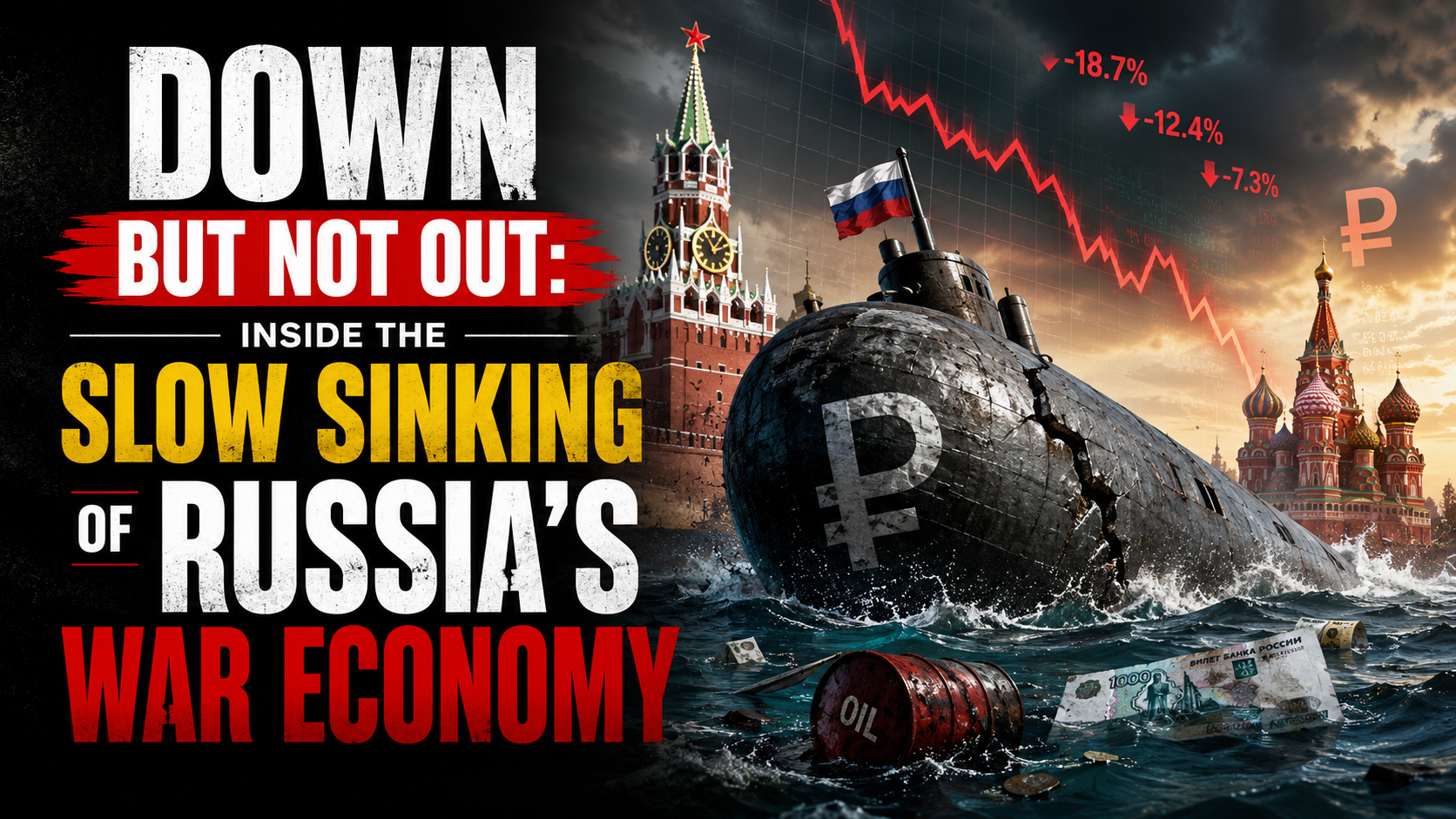
The European Council formally extended its economic sanctions against Russia for another full year on 25 June 2026, keeping restrictive measures in place until 31 July 2027 (Council of the EU). More than four years into the war, the headline story of Russia’s economy has shifted from whether sanctions would work to a more nuanced question: how much longer can the Kremlin keep financing the war before the accumulated strain becomes impossible to hide behind favorable official statistics.
The Sanctions Architecture, Renewed Again
The EU’s economic measures against Russia, first introduced in 2014 and dramatically expanded after the February 2022 full-scale invasion, now span trade, finance, energy and dual-use technology restrictions, alongside asset freezes and travel bans on a broad range of individuals and entities (Council of the EU). Since February 2022, the EU has adopted 20 separate sanctions packages, and the European Council has explicitly stated it remains determined to keep weakening Russia’s war economy by further reducing its energy revenues, curbing shadow-fleet oil shipping operations and constraining its banking system (Council of the EU). Separately, on 3 July 2026 the EU sanctioned six individuals connected to the poisoning and death of opposition figure Alexei Navalny, underscoring that the sanctions regime continues to expand on human-rights grounds as well as economic ones (Council of the EU Sanctions Timeline).
The Headline Numbers Beijing-Style Optimism Can No Longer Explain Away
Russia’s GDP is now put at roughly $2.51 trillion, the world’s eleventh-largest economy — comparable in size to South Korea despite Russia’s vastly larger landmass and resource base — with 2026 growth projected at just 1.0% and inflation running at 5.2% (Statistics of the World). More pessimistic estimates put full-year 2026 growth even lower, at around 0.4%, which would be worse than 2025’s already-weak 1% expansion and would mark a sharp deceleration from the 4.1% growth Russia posted in 2023 as it forged new trading relationships to route around initial sanctions (Forbes).
Oil and gas revenues — historically around half of Russia’s state income — have fallen to roughly a quarter, a deliberate outcome of Western sanctions strategy that targets how much Russia earns from exports rather than blocking those exports outright (Stockholm School of Economics/SITE). Russia’s oil and gas budget revenues reportedly halved in January 2026 alone, with crude prices falling below $73 a barrel before the Middle East conflict briefly reversed the trend, sending Brent surging more than 55% to near $120 a barrel at its peak (Forbes).
The Middle East War: A Temporary Lifeline With Long-Term Costs
The spike in oil prices tied to the Iran conflict, combined with a period of eased US sanctions enforcement on Russian oil under President Trump, offered Moscow unexpected fiscal breathing room in mid-2026 (Forbes). But that same conflict has undermined Russia’s longer-term energy diversification ambitions in the region: two Russian-backed power plant projects in Iran have been put on hold, along with oil and gas exploration work and plans to build new transit routes linking Russia to India via Iran (Forbes).
The Gap Between Official Statistics and Underlying Reality
Perhaps the most important analytical point from recent research is not about any single data point but about the reliability of Russian statistics themselves. Torbjörn Becker of the Stockholm Institute of Transition Economics has argued the real test of sanctions is not whether they end the war overnight, but how much they erode the Kremlin’s capacity to finance it — and by that measure, the evidence points to deeper strain than headline GDP figures suggest (Stockholm School of Economics/SITE). Becker notes that Russia’s economy grew only modestly in 2022 despite oil prices rising sharply that year — a gap between expected and actual performance that implies a considerably larger hidden economic hit than the official contraction figures showed (Stockholm School of Economics/SITE). Compounding the problem, Russian authorities have stopped publishing several key statistics since 2022, making independent assessment of inflation, consumption and real economic conditions increasingly difficult — leading Becker to conclude that “statistics have become part of the narrative” rather than a neutral measure of economic reality (Stockholm School of Economics/SITE).
The Military-Civilian Economic Split
A recurring theme across recent analysis is the growing bifurcation between Russia’s overheating military-industrial sector and a stagnating civilian economy. This imbalance has pushed interest rates higher and forced the liquidation of a striking 71% of Russia’s gold reserves to help fund continued war spending (Forbes). Russia’s total fossil fuel export revenue is estimated at roughly €734 million per day, underscoring just how central hydrocarbon income remains to the entire war financing model even as that revenue stream shrinks (Forbes).
The Counter-Narrative: Wages Still Rising
It would be inaccurate to describe Russia’s economy as in freefall. CSIS research notes that Russian salaries rose 17.8% in nominal terms and 8.7% in real terms in 2024 compared to 2023, with disposable incomes up 6.1% in 2023 and 7.3% in 2024 — growth rates not seen in Russia in almost two decades (CSIS). Government budget projections still expect real salaries to rise, albeit at a decelerating pace: 7% in 2025, 5.7% in 2026 and 4.1% in 2027 — a marked slowdown from the 2024 peak but still roughly double the pre-invasion decade average (CSIS). This wage growth, driven substantially by wartime labor shortages and military-adjacent spending, is precisely the kind of headline-stabilizing data point that has allowed Putin to argue publicly that sanctions have failed to cripple his economy (Fortune) — even as think tanks describe the broader trajectory as pushing Russia toward what one report calls an “economic, political, and military abyss” (Fortune).
What Comes Next
Renewed legislative pressure in Washington — including the Sanctioning Russia Act introduced with strong bipartisan support — signals appetite in the US for tightening the screws further, even as the loss of a key congressional champion for that effort has complicated the political path forward (TIME). Whether the EU’s renewed sanctions regime, continued oil price pressure, and constrained reserves ultimately force a shift in Kremlin calculus toward negotiation remains the central open question for 2027.
Key Takeaways
- The EU has extended Russia sanctions for a further year, through 31 July 2027, continuing a regime built from 20 separate packages since 2022.
- Russia’s 2026 GDP growth is forecast between 0.4% and 1.0%, a sharp deceleration from 2023’s 4.1% post-shock rebound.
- Oil and gas revenue’s share of Russian state income has fallen from roughly half to about a quarter as Western sanctions target export earnings specifically.
- Russia has liquidated a large share of its gold reserves to sustain war financing amid a widening split between an overheating military sector and a stagnating civilian economy.
- Official Russian statistics likely understate the true economic strain, according to independent economists who cite a widening gap between reported and expected performance.
Sources: Council of the EU, Council of the EU Sanctions Timeline, Stockholm School of Economics/SITE, Forbes, Statistics of the World, CSIS, Fortune, TIME
Discover more from The Economy
Subscribe to get the latest posts sent to your email.
Singapore’s non-oil domestic exports rose 20.7% year-on-year in June 2026, driven by a 115.4% surge in integrated circuit shipments tied to AI demand, even as a separate and less-covered trade story unfolds next door: Malaysia-Indonesia bilateral trade is projected to grow 10% to US$29.3 billion in 2026, powered by expanding halal-sector cooperation.
The story most coverage is missing
Regional business press has extensively covered Singapore’s semiconductor export boom. What’s had far less coverage is the parallel, non-tech growth engine developing in the halal trade corridor between Malaysia and Indonesia — a structural, policy-driven trade relationship that is scaling steadily even as the AI trade headlines dominate attention.
Singapore: the AI supply chain’s export barometer
Singapore’s June non-oil domestic exports climbed 20.7% year-on-year, with integrated circuit exports jumping 115.4% and disk media products and personal computers rising 170.9% and 95.8% respectively — a direct read on how deeply the AI infrastructure buildout is flowing through the city-state’s electronics trade (VietnamPlus/VNA). Non-electronic exports told a different story, falling 2.9% in June after a 17.7% rise in May, mainly on weaker shipments of non-monetary gold, petrochemicals and food preparations — evidence the export strength is narrowly concentrated in the AI-linked segment rather than broad-based.
Singapore’s economic gravitational pull on its neighbours is intensifying too: a joint study by the Singapore Business Federation, Restaurant Association of Singapore and Singapore Retailers Association found Singaporean consumers are projected to spend an additional S$1.05 billion (roughly US$810 million) annually in Johor Bahru, just across the Malaysian border — a cross-border consumption pattern that is becoming a meaningful line item in regional retail planning (VietnamPlus/VNA).
The halal corridor: a steadier, policy-built growth story
While AI exports grab headlines, Malaysia’s bilateral trade with Indonesia is forecast to grow 10% to US$29.3 billion in 2026, according to Malaysia’s Chargé d’Affaires in Jakarta, Farzamie Sarkawi — up from US$26.61 billion in 2025, itself a 5.3% increase on the year before (BusinessToday Malaysia).
The driver is structural rather than cyclical: a halal Memorandum of Cooperation signed by the two countries in 2023 established mutual recognition of halal certification, easing product movement and market access across sectors. Sarkawi described the arrangement as delivering “positive progress” through knowledge exchange, training and improved market access for businesses in both countries (BusinessToday Malaysia). The ambition extends beyond the bilateral relationship: intra-D-8 trade — spanning the eight-nation Developing 8 bloc of Muslim-majority economies — currently runs between US$150 billion and US$160 billion annually, with a stated target of US$500 billion by 2030.
The macro backdrop: a region growing, unevenly
The Asian Development Bank’s July 2026 outlook shows Indonesia’s growth forecast holding steady at 5.2% for both 2026 and 2027, while Malaysia’s outlook is unchanged at 4.6% for 2026 and 4.5% for 2027 (ADB). Regional growth leadership, per McKinsey’s Q1 2026 review, sits with Indonesia, Singapore and Vietnam, while the Philippines lagged as domestic challenges weighed on activity (McKinsey).
Indonesia’s investment story has particular momentum: foreign direct investment grew for a second consecutive quarter, rising 8.1% to 249.9 trillion rupiah (roughly US$14.5 billion) in the first quarter of 2026, with Singapore remaining Indonesia’s largest single foreign investor at US$4.6 billion, ahead of China, Japan, Hong Kong and the United States (McKinsey). Realised investment for full-year 2025 reached a record Rp1,931.2 trillion (about US$120.7 billion), exceeding the government’s own target, driven by downstream industrial projects outside Java (BERNAMA).
Indonesia’s central bank has flagged currency management as an active watch item, signalling readiness to step up both onshore and offshore FX intervention to curb rupiah weakness and keep inflation within its 2026-2027 target band (McKinsey). Foreign investment in Indonesian government bonds has nonetheless rebounded, with net inflows of 17.7 trillion rupiah following outflows in the first quarter, alongside cumulative foreign holdings of 174 trillion rupiah in Bank Indonesia Rupiah Securities (BERNAMA).
Institutional context: Singapore’s coming ASEAN chairmanship
Adding a governance dimension to the economic picture, Singapore is set to take over the ASEAN chairmanship from the Philippines in 2027, with Prime Minister Lawrence Wong pledging a smooth transition — a leadership handover that will shape how the bloc coordinates trade and investment policy, including the halal-corridor and semiconductor-trade dynamics described above, through the second half of the decade (BERNAMA).
The bottom line
Southeast Asia’s 2026 growth story is not a single narrative but two distinct, converging tracks: a high-velocity, AI-linked export boom concentrated in Singapore’s electronics trade, and a steadier, policy-engineered halal-sector trade corridor between Malaysia and Indonesia that is quietly scaling toward a $500 billion bloc-wide target by 2030. Investors and policymakers tracking only the semiconductor headlines risk missing the second, structurally more durable growth engine sitting right alongside it.
Discover more from The Economy
Subscribe to get the latest posts sent to your email.

Nvidia’s H200 Chips Are Finally Reaching China — In Numbers Too Small to Matter Yet

Oil Prices Fall as Strait of Hormuz Reopens: 2026 Update

Malaysia GDP Growth vs Stock Market: The 2026 Disconnect

Singapore MAS Tightens Policy as GDP Growth Hits 5.7%

Fed Holds Rates Under Warsh as Trump Rolls Out New Tariffs

Indonesia Financial Hub 2026: Can It Rival Singapore, Dubai?

Russia Fuel Shortages 2026: Inside a Cracking War Economy

China Politburo July 2026: Stimulus Signals Explained

Andy Burnham, UK Gilts and Mortgages: July 2026 Explainer

Pakistan’s 2026 Monsoon Floods Threaten Fragile Economic Recovery as Inflation Nears 9%

Pakistan Gulf Investment Outflows 2026: Peace Deal Stakes Explained

Canada Trade Diversification 2026: China, Indonesia, UAE Deals Explained

US Forced-Labour Tariffs on 60 Countries: The Hidden Trade Shock of 2026

Global Central Banks 2026: Fed, BoE and BoJ Decisions Could Reshape Markets

Carry Trade Unwind 2026: How the Yen’s Snapback Triggered a Global Margin Call

AI Bubble Warning 2026: Why BIS, IMF and Bank of England Fear a Market Crash

BRICS De‑Dollarization Strategy Takes Shape with $15 Billion Local‑Currency Push

The AI Super Bubble Is Ready to Burst

Russia Bans Diesel Exports 2026: Global Fuel Market Impact Explained

Strait of Hormuz Blockade 2026: Oil Prices Surge 9% as US-Iran Conflict Reignites

Private Credit Warning: Most BDCs Turn Unprofitable in 2026, Reuters Finds

Bitcoin $150k Milestone Achieved as US Sovereign Crypto Pivot Looms

IMF Cuts Pakistan Growth Forecast, Raises Inflation to 8.4%

Gold Price Forecast 2026: Fed’s July 29 Decision and Record Central Bank Buying Explained

Gulf Capital Retreat From Pakistan 2026: UAE Loan Freeze & What It Means

India Economic Rise 2026: How the Subcontinent Toppled Japan

Strait of Hormuz 2026: Why Markets Still Don’t Trust It’s Open

China Housing Market Turnaround: White‑List Model Stabilises Prices
-

 Markets & Finance7 months ago
Top 15 Stocks for Investment in 2026 in PSX: Your Complete Guide to Pakistan’s Best Investment Opportunities
-

 Analysis5 months ago
Johor’s Investment Boom: The Hidden Costs Behind Malaysia’s Most Ambitious Economic Surge
-

 Analysis5 months ago
Top 10 Stocks for Investment in PSX for Quick Returns in 2026
-

 Analysis6 months ago
Brazil’s Rare Earth Race: US, EU, and China Compete for Critical Minerals as Tensions Rise
-

 Banks6 months ago
Best Investments in Pakistan 2026: Top 10 Low-Price Shares and Long-Term Picks for the PSX
-

 Investment7 months ago
Top 10 Mutual Fund Managers in Pakistan for Investment in 2026: A Comprehensive Guide for Optimal Returns
-

 Global Economy7 months ago
15 Most Lucrative Sectors for Investment in Pakistan: A 2025 Data-Driven Analysis
-

 Global Economy7 months ago
Pakistan’s Export Goldmine: 10 Game-Changing Markets Where Pakistani Businesses Are Winning Big in 2025