
Analysis
Pakistan Seals $1.21bn IMF Deal — But Can It Break the Cycle?

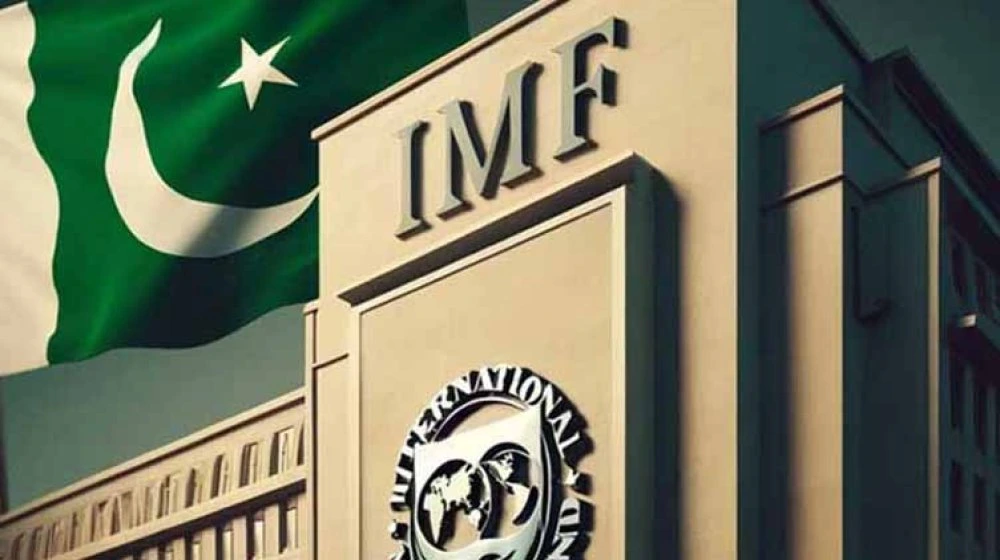
The Fund clears its third EFF review and second RSF review, unlocking a lifeline that brings total disbursements to $4.5bn. Reserves are rising, inflation is contained — yet tax shortfalls, circular debt and structural fragility remain stubbornly intact.
Key Indicators at a Glance
| Metric | Value |
|---|---|
| Tranche Unlocked | $1.21 billion |
| Total Disbursed (EFF + RSF) | ~$4.5 billion |
| Gross FX Reserves (Feb 2026) | $21.43 billion |
| SBP Policy Rate | 10.5% |
| Headline Inflation (Feb 2026) | 7.0% y/y |
| GDP Growth Target FY26 | ~4.2% |
On a humid February morning in Karachi, a team of IMF economists sat down with Pakistan’s finance officials in an air-conditioned conference room and began a conversation the country’s 240 million people could not afford to have go wrong. Six weeks, two cities, and dozens of virtual sessions later — on Saturday, March 28, 2026 — the International Monetary Fund announced it had reached a staff-level agreement with Islamabad for the third review of its 37-month Extended Fund Facility and the second review of its 28-month Resilience and Sustainability Facility. The prize: roughly $1.21 billion in fresh disbursements, $1.0 billion under the EFF and $210 million under the RSF, bringing total releases under both programmes to approximately $4.5 billion.
It is, by any measure, a milestone — and a reminder of just how far this nation has travelled from the edge of a sovereign default in 2023, and how much further it still needs to go.
What Was Agreed — and Why the Dual Architecture Matters
The deal is not simply another tranche of liquidity support. It is, structurally, two agreements layered atop one another — and understanding that architecture is essential to grasping both the ambition and the fragility of Pakistan’s stabilisation story.
The Extended Fund Facility, approved by the IMF Executive Board in September 2024, is the macroeconomic anchor: a 37-month, $7 billion programme designed to entrench fiscal discipline, rebuild foreign-exchange buffers, overhaul the energy sector and reduce the outsized footprint of state-owned enterprises. The third review of the EFF — the one concluded this week — signals that Pakistan has, broadly speaking, met its quarterly performance criteria and structural benchmarks through the first half of fiscal year 2026.
The Resilience and Sustainability Facility, a 28-month arrangement approved in May 2025, is newer and, in many respects, more interesting. The RSF is not a crisis instrument. It is a structural reform vehicle — one specifically designed for climate-vulnerable, low-income countries seeking to build institutional resilience against floods, drought and the energy transition. Pakistan, ranked among the ten countries most exposed to climate risk by the World Bank, is precisely the target demographic. The RSF’s $210 million tranche unlocked this week is linked to progress on water pricing reform, federal-provincial disaster-risk coordination, climate-risk disclosure in the banking sector, and the country’s renewable energy transition agenda.
Together, the dual structure reflects a more sophisticated IMF engagement than the blunt fiscal conditionality programmes of the 1980s and 1990s. Whether Pakistan can convert that sophistication into durable reform is the central question hanging over Saturday’s announcement.
“Supported by the EFF, ongoing policies have continued to strengthen the economy and rebuild market confidence. Inflation and the current account balance remained contained, and external buffers continued to strengthen.”
— Iva Petrova, IMF Mission Chief to Pakistan, March 28, 2026
The Numbers That Matter
Strip away the diplomatic language of an IMF press release and what you find, in Pakistan’s case, is a picture that is genuinely improving — but not yet reassuring.
Pakistan Economic Snapshot — March 2026
| Indicator | Value | Status |
|---|---|---|
| Gross FX Reserves (Feb 2026) | $21.43 billion | ✅ Recovering |
| SBP Policy Rate | 10.5% | — |
| Headline Inflation (Feb 2026) | 7.0% y/y | ⚠️ Upper bound of target |
| Core Inflation (Feb 2026) | ~7.6% | ⚠️ Sticky |
| Real GDP Growth (FY26 Proj.) | 3.75–4.75% | — |
| Current Account (Jul–Jan FY26) | –$1.1 billion deficit | ✅ Within target |
| FBR Tax Collection Growth | +10.6% (vs target) | ⚠️ Lagging |
| Primary Surplus Target FY26 | 1.6% of GDP | — |
| IMF EFF Total Approved | $7 billion (37 months) | — |
| Total Disbursed (EFF + RSF) | ~$4.5 billion | ✅ On track |
The foreign-exchange reserve trajectory is the most encouraging data point. Total gross reserves climbed to $21.4 billion in February 2026, a quantum leap from the catastrophic $3.7 billion low of early 2023 when Pakistan teetered on the brink of Sri Lanka-style default. The State Bank of Pakistan’s Monetary Policy Committee has flagged a target of $18 billion in SBP-held reserves by June 2026 — a figure that, if met, would represent roughly three months of import cover and provide meaningful insulation against external shocks.
Inflation, meanwhile, has staged a dramatic retreat from its 38% peak in May 2023, settling at 7.0% in February 2026 — within but at the upper bound of the SBP’s 5–7% target range. Core inflation, however, remains stickier at around 7.6%, a reminder that supply-side rigidities and energy price pass-throughs have not been fully resolved. The SBP kept its benchmark policy rate unchanged at 10.5% in March, citing the heightened uncertainty from Middle East energy market volatility — a prudent call, but one that signals the easing cycle, which delivered 1,100 basis points of cuts from late 2024 onward, may have found its floor for now.
GDP growth tells a more nuanced story. The IMF and SBP both project FY26 growth at 3.75–4.75% — respectable for a stabilisation year, but well below the 6–7% trajectory Pakistan needs to absorb its 2.5 million new annual labour-market entrants and arrest the slow-motion erosion of per-capita income.
Why This Matters Now — Geopolitical and Climate Lens
The timing of the staff-level agreement — reached against a backdrop of escalating Middle East tensions and volatile global energy markets — is not incidental. The IMF’s own statement flagged the conflict in the region as a cloud over Pakistan’s economic outlook, warning that volatile oil prices and tighter global financial conditions risk “putting upward pressure on inflation and weighing on growth and the current account.”
For a country that imports roughly 30% of its primary energy needs, the geopolitical risk is immediate and material. Every $10 per barrel increase in the oil price adds roughly $1.5–2 billion to Pakistan’s annual import bill — a direct pressure on the current account, the rupee and the government’s subsidy exposure. The IMF has been explicit: exchange-rate flexibility must serve as the primary shock absorber, and fuel subsidies must be avoided. The political economy of that instruction is, to put it mildly, challenging in a country where petrol prices are a direct barometer of government popularity.
The RSF dimension adds an additional layer of strategic significance. Pakistan lost roughly $30 billion to the catastrophic 2022 floods — a climate disaster that submerged a third of the country and set back development indicators by years. The RSF’s climate-conditionality is therefore not academic: it is a direct bet that Islamabad can build institutional resilience against the next inevitable deluge. Progress under the second RSF review includes early-stage reforms to water pricing — arguably the most politically sensitive resource question in a country where agriculture consumes over 90% of freshwater — and nascent steps toward a coordinated disaster-risk financing framework between Islamabad and the provinces.
“The conflict in the Middle East casts a cloud over the outlook as volatile energy prices and tighter global financial conditions risk putting upward pressure on inflation and weigh on growth and the current account.”
— IMF Statement on Pakistan, March 28, 2026
Reform Report Card: Progress vs Persistent Challenges
The IMF’s endorsement of Pakistan’s third EFF review is not a clean pass — it is more akin to a conditional promotion. Assessed honestly, the reform scorecard looks like this:
✅ Fiscal Consolidation — Broadly on Track
A primary surplus of 1.3% of GDP was achieved in FY25. The FY26 target of 1.6% remains in place, and Q1-FY26 recorded both an overall and primary fiscal surplus — aided by a sizeable SBP profit transfer and contained expenditure. Creditable, if partly mechanical.
⚠️ Tax Mobilisation — Dangerously Lagging
FBR tax collection grew only 10.6% in July–February FY26 — well below the pace required to meet the annual target. The newly created Tax Policy Office and digital invoicing drive are steps in the right direction, but the tax-to-GDP ratio, stuck below 11%, remains one of the lowest in the emerging world. “Elite capture” of exemptions — agricultural income, real-estate undervaluation, informal sector opacity — remains the elephant in the room.
⚠️ Energy Sector Viability — Partial
Timely tariff adjustments have begun to chip away at circular debt flows. But the stock of legacy circular debt — estimated by the Asian Development Bank at over Rs3 trillion — remains a fiscal contingent liability of the first order. Privatisation of inefficient generation companies has been announced multiple times; actual execution continues to slip. The IMF’s language here is pointed: “It is critical that sustainability is maintained through timely tariff adjustments that ensure cost recovery.”
⚠️ SOE Reform and Privatisation — Slow
The privatisation agenda — including PIA, Pakistan Steel and dozens of smaller entities — has been a fixture of IMF programmes for three decades. Execution remains politically fraught. The Fund acknowledges progress on the “reform framework” while noting that actual reduction of the state’s economic footprint remains limited.
✅ Social Protection (BISP) — Expanding
The Benazir Income Support Programme has been strengthened with inflation-adjusted cash transfers, expanded beneficiary coverage and improved payment digitisation. This is one area where the programme’s social equity mandate is genuinely advancing.
❌ FBR Governance and Anti-Corruption — Concerning
The IMF has explicitly flagged weaknesses in the FBR’s internal governance — a rare and pointed signal that the tax authority’s transformation plan has “yet to produce fully effective results.” This matters not just fiscally but institutionally: a revenue authority that cannot police itself cannot credibly police taxpayers.
Market and Investor Implications
The Rupee and External Buffers
The immediate market reaction to staff-level agreements has historically been muted — the real catalyst is IMF Executive Board approval, which triggers actual disbursement. But the signalling effect is significant. A confirmed third review removes a key tail risk for rupee stability, and the sustained build-up in FX reserves — from $9.4 billion at end-FY24 to over $21 billion today (total gross) — provides the SBP with meaningful intervention capacity against any renewed external shock.
The rupee has remained broadly stable since the EFF’s approval in September 2024, a marked contrast to the currency’s 40% depreciation episode of 2022–23. The IMF’s insistence on exchange-rate flexibility as the primary shock absorber means any renewed volatility will be allowed to play out in the market rather than suppressed through administrative controls — a policy discipline that has tangible credibility benefits, even if it produces short-term political discomfort.
Sovereign Bonds and Credit Spreads
Pakistan’s Eurobond spreads tightened dramatically over the course of the EFF — from crisis-era levels above 2,000 basis points in 2023 to roughly 600 basis points by March 2025, before the April 2025 tariff announcements injected fresh volatility. A successful third review should provide a further anchor for spread compression, particularly if the Executive Board approves the disbursement on schedule. Longer term, the path to an investment-grade sovereign rating — Pakistan was downgraded to CCC+ by S&P in early 2023 — runs directly through sustained programme compliance and genuine fiscal consolidation, not just stabilisation.
FDI and the Private Sector
Foreign direct investment into Pakistan has historically underperformed its economic weight — barely 0.5% of GDP in recent years. The IMF programme’s structural conditionality around SOE reform, anti-corruption measures, and improved “level playing field for businesses and investors” is theoretically FDI-positive. In practice, the regulatory environment, energy costs, and political uncertainty remain the dominant deterrents. The Special Investment Facilitation Council, established to fast-track Gulf and Chinese investment in agriculture, mining and technology, is showing early traction — but the test will be greenfield commitments, not MoU signings.
What Happens Next — The Executive Board Timeline
Saturday’s staff-level agreement is not the finishing line — it is the last checkpoint before the line. The formal disbursement of $1.21 billion requires approval from the IMF’s Executive Board, a body of 24 directors representing the Fund’s 190 member countries. For a programme that has been proceeding broadly on track, Board approval is typically a formality — but typically is not always.
Based on the precedent of previous Pakistan EFF reviews, Executive Board consideration is likely to occur within four to six weeks of the staff-level agreement, putting the formal approval — and the actual wire transfer — in May 2026. That timeline matters for FX reserve management, for budget financing, and for the confidence signals it sends to bilateral creditors in Riyadh, Abu Dhabi and Beijing who have rolled over their own debt in coordination with the IMF umbrella.
Beyond the immediate disbursement, the programme calendar stretches to the mid-2026 fourth review — which will coincide with the finalisation of the FY2026–27 budget. The IMF has already set a target of a primary surplus of 2% of GDP for FY27, a step up from FY26’s 1.6% target. Given FBR’s underperformance, achieving that without either politically toxic tax base-broadening or deep expenditure cuts will be arithmetically difficult.
The Road Ahead: Can Pakistan Finally Break the IMF Cycle?
Pakistan has now completed 24 IMF programmes since 1958 — a record matched by few countries and exceeded by almost none among comparable emerging economies. Each programme has stabilised; none has transformed. The pattern is familiar: fiscal consolidation under Fund pressure, a degree of reserve rebuilding, followed by a gradual relaxation of discipline once the IMF programme concludes and political incentives reassert themselves. The question is whether the 2024–2026 vintage is different.
There are genuine reasons for cautious optimism. Finance Minister Muhammad Aurangzeb — a former JPMorgan and Habib Bank executive with deep creditor-side experience — has articulated an export-led, private-sector-driven growth strategy that goes beyond the traditional stabilisation playbook. The creation of a Tax Policy Office, the push for digital invoicing and FBR audit reform, and the RSF’s climate-conditionality all represent institutional innovations that did not exist in previous programmes. The SBP’s enhanced independence and its commitment to positive real interest rates are genuinely new features of the monetary landscape.
And yet the structural vulnerabilities that have defeated 23 previous programmes remain largely intact. A tax base that excludes the agricultural sector — controlled by the landed elite who dominate provincial assemblies — cannot achieve the 15%+ tax-to-GDP ratio that sustainable fiscal space requires. An energy sector whose circular debt is structurally generated by the gap between politically determined tariffs and economically determined costs will continue to drain the fiscal position regardless of the tariff adjustments any single year achieves. A state that owns hundreds of enterprises it cannot manage efficiently but cannot sell politically will continue to distort credit allocation, suppress private-sector dynamism and expose the budget to contingent liabilities.
Breaking that cycle requires not merely good technocratic policy — Pakistan has that, at the federal finance ministry level, more consistently than its programme record suggests. It requires political will at the apex of a system where the most powerful economic actors have the most to lose from genuine reform. That is the challenge that no IMF programme, however well-designed, can resolve from the outside.
Analyst’s Conclusion
The $1.21 billion staff-level agreement of March 28, 2026 is a genuine milestone in Pakistan’s longest and arguably most consequential IMF engagement. The stabilisation achieved — from crisis-level reserves to a normalised current account, from 38% inflation to a contained 7%, from sovereign default risk to narrowed spreads — is real and hard-won. The dual EFF-RSF architecture is smarter than anything the Fund has previously attempted with Islamabad. But a stable platform for reform is not the same as reform itself. The next twelve months — the FY27 budget, the fourth EFF review, the inevitable test of Middle East energy-price volatility — will reveal whether this time is genuinely different. History counsels scepticism. The data, for now, counsels watchful hope.
FAQs (Frequently Asked Questions)
Q: What is the Pakistan IMF staff-level agreement for $1.21bn in March 2026?
On March 28, 2026, the IMF and Pakistan reached a staff-level agreement on the third review of the 37-month Extended Fund Facility (EFF) and the second review of the 28-month Resilience and Sustainability Facility (RSF). The deal unlocks approximately $1.0 billion under the EFF and $210 million under the RSF, bringing total disbursements under both arrangements to around $4.5 billion. The agreement is subject to final approval by the IMF Executive Board.
Q: What is the difference between Pakistan’s EFF and RSF programmes with the IMF?
The Extended Fund Facility (EFF), approved in September 2024, is a 37-month, $7 billion macroeconomic stabilisation programme focused on fiscal consolidation, reserve rebuilding, energy sector reform, and SOE privatisation. The Resilience and Sustainability Facility (RSF), approved in May 2025, is a 28-month climate-focused programme supporting water resilience, disaster-risk coordination, climate-risk disclosure and the renewable energy transition. Together, they form a dual-track engagement combining crisis stabilisation with structural climate resilience.
Q: When will the IMF Executive Board approve the $1.21bn disbursement to Pakistan?
Based on the precedent of previous Pakistan EFF reviews, IMF Executive Board consideration typically follows a staff-level agreement by four to six weeks. The formal Board vote — and actual disbursement — is therefore expected in May 2026, pending no unforeseen complications.
Q: What are Pakistan’s current FX reserves and economic indicators in March 2026?
As of February 2026, Pakistan’s total gross foreign exchange reserves stood at approximately $21.4 billion, a dramatic recovery from the $3.7 billion crisis low of early 2023. Headline inflation was 7.0% year-on-year in February 2026, within the SBP’s 5–7% target range. The SBP policy rate is held at 10.5%. GDP growth for FY26 is projected at 3.75–4.75%. The current account posted a cumulative deficit of $1.1 billion in July–January FY26, well within the 0–1% of GDP target.
Q: What are the biggest risks to Pakistan’s IMF programme in 2026?
The principal risks include: (1) Middle East energy price volatility, which could push inflation above target and widen the current account deficit; (2) persistent underperformance in FBR tax collection, which threatens the FY26 primary surplus target of 1.6% of GDP; (3) political resistance to SOE privatisation and energy tariff adjustments; (4) potential floods or climate shocks in the 2026 monsoon season; and (5) the post-programme discipline risk — the historical tendency for Pakistan to relax reform effort once IMF monitoring eases.
Q: What does the IMF’s RSF climate finance mean for Pakistan’s economic future?
The RSF represents a new model of IMF engagement for climate-vulnerable countries. For Pakistan — which lost $30 billion to the 2022 floods and faces intensifying monsoon and heat stress — the RSF’s conditionality is designed to build institutional resilience rather than simply stabilise the balance of payments. Key reform areas include water pricing reform, improved federal-provincial disaster coordination, climate-risk disclosure in the banking system, and support for renewable energy adoption. If implemented effectively, the RSF could help Pakistan reduce its long-term fiscal exposure to climate shocks and make its economy more competitive in a decarbonising global economy.
Discover more from The Economy
Subscribe to get the latest posts sent to your email.



Key Takeaways
- Rolex’s secondary market rose approximately 7.9% year-over-year as of 2026 (per WatchCharts data) — trailing Patek Philippe (+16.2%) and Tudor (+11.4%) but still outperforming Audemars Piguet (+3.4%).
- Rolex raised U.S. retail prices 4–9% in January 2026 (steel models ~5.6%, gold models ~8.7%), narrowing the historical gap between retail and pre-owned pricing.
- Not every model appreciates: steel sports references (Submariner, GMT-Master II, Daytona) have held value far better than two-tone or widely available dress references like the standard Datejust.
- The Lady-Datejust posted the sharpest 2026 gain among tracked collections — up 22.73%, from roughly $9,269 to $11,376 — driven by demand for smaller, “everyday luxury” watches.
- Gold’s rise past $2,400/oz has directly lifted the investment case for Rolex’s precious-metal references (Day-Date, Sky-Dweller, Yacht-Master).
The Model-by-Model Picture
| Category | 2026 Trend |
|---|---|
| Lady-Datejust | +22.73% (strongest performer among tracked collections) |
| Steel sports models (Submariner, GMT-Master II) | Held value well; corrected from 2022 peak but stabilized above retail |
| Daytona | Corrected from highs above $50,000 to the mid-$30,000s; still among the most sought-after references |
| Two-tone/widely available Datejust | Flat to negative — “holds value” is an overstatement for this category |
| Gold references (Day-Date, Sky-Dweller) | Lifted by gold’s rise above $2,400/oz |
Why the “Rolex Always Appreciates” Myth Is Fading
The pandemic-era boom pushed some references — the Daytona above all — to speculative highs disconnected from historical norms. Since the March 2022 peak, steel sports models have compressed meaningfully, and dealers who bought inventory near the top have in some cases faced 20–40% markdowns on liquidation. The lesson for 2026 buyers: Rolex as a category is not a monolith. Value retention depends heavily on specific reference, condition, and whether the piece comes with box and papers (“full set”).
What’s Actually Driving 2026 Strength
- Retail price increases raise the floor. When a new Submariner retails at $10,050 (up from $9,500), a pre-owned example at $11,000–$12,000 suddenly represents a smaller premium — narrowing the gap without secondary prices actually moving.
- Supply discipline remains Rolex’s core lever. The brand has never confirmed production numbers, and secondary-market premiums remain entirely a function of Rolex’s own manufacturing decisions — a risk factor as much as a support.
- Certified Pre-Owned rollout. Rolex’s now fully rolled-out CPO program has changed how buyers transact in the used market, adding a layer of brand-verified legitimacy that supports pricing.
The Case for Rolex as a Portfolio Diversifier
Financial advisors increasingly frame luxury watches not as a replacement for equities or bonds, but as a tangible, historically low-correlation diversifier — one that carries its own risks (illiquidity, condition-dependent pricing, no yield) but has demonstrated multi-decade resilience for specific references.
Is Rolex a good investment in 2026?
It depends heavily on the specific reference. Steel sports models like the Submariner and Daytona have held or grown in value; two-tone and widely available dress models generally have not. Overall, Rolex’s secondary market rose about 7.9% year-over-year in 2026, trailing Patek Philippe but ahead of Audemars Piguet.
Discover more from The Economy
Subscribe to get the latest posts sent to your email.

Navigating Mortgage and Loan Refinancing in a High-Yield Environment
Global public debt crossing critical thresholds has kept central bank policies volatile, resulting in fluctuating US Treasury yields throughout 2026. For homeowners and commercial property holders burdened by previous high-interest borrowing cycles, finding optimal refinance windows has become a high-stakes financial puzzle. Stalled disinflation and stubborn employment numbers mean rate cuts are incremental, requiring borrowers to act with precision.
Timing your mortgage or commercial loan refinance in this environment requires a deep understanding of yield curve movements and lender risk appetites.
Decoding 2026 Refinance Dynamics
The 10-Year Treasury Yield Benchmark
Mortgage rates continue to track closely with the 10-year US Treasury yield. When macroeconomic anxiety spikes debt issuance, yields rise, tightening consumer borrowing capacity. Savvy borrowers monitor weekly Treasury auctions to lock in rates during brief dip windows.
Hybrid ARMs and Alternative Structures
With fixed rates remaining elevated, 7/1 and 10/1 adjustable-rate mortgages (ARMs) have surged in popularity. These products offer lower initial monthly payments, giving borrowers breathing room until central bank easing cycles fully materialize.
| Loan Product | Current Rate Range | Best For | Key Risk Factor |
| 30-Year Fixed Mortgage | 6.2% – 6.8% | Long-term predictability | Higher initial monthly outlay |
| 7/1 Hybrid ARM | 5.5% – 5.9% | Short-term ownership / flipping | Rate reset risk after year 7 |
| Commercial Refinance | 7.0% – 8.2% | Corporate asset restructuring | Strict DSCR lender covenants |
Actionable Steps for Successful Refinancing
To maximize your chances of securing favorable refinance terms in a volatile market, follow a disciplined preparation strategy.
Boost Your Credit Score Immediately: Lenders in 2026 are applying stringent credit tiering; a 20-point increase can drop your APR by a crucial quarter-point.
Shop Regional Credit Unions: Smaller financial institutions often offer portfolio loans with more flexible underwriting than major national banks.
Calculate the Break-Even Point: Ensure your total closing costs are recouped through monthly savings within 24 months of closing.
“Market Strategist View: Refinancing in 2026 is an exercise in opportunistic timing. Borrowers must maintain immaculate financial profiles ready to strike the moment Treasury yields dip.”
Mastering the complexities of today’s debt environment ensures you can successfully lower your debt service costs and protect your long-term financial stability.
Discover more from The Economy
Subscribe to get the latest posts sent to your email.

The days of pulling generic auto insurance quotes based purely on your zip code and age are officially over. In 2026, insurance comparison engines are powered entirely by generative AI and real-time telematics. These platforms digest thousands of live data points—ranging from your driving smoothness via connected vehicle sensors to real-time traffic congestion patterns—to generate hyper-personalized premiums instantly.
For consumers, this evolution represents both a massive opportunity for savings and a hidden trap for penalty pricing. Understanding how AI algorithms evaluate risk is essential for anyone looking to lower their monthly auto insurance premiums.
How AI Comparison Engines Evaluate Your Risk Profile
Behavioral Telematics and Connected Cars
Modern cars stream performance data directly to insurance aggregators. Generative AI models analyze braking sharpness, acceleration curves, cornering G-forces, and phone distraction metrics. Drivers who maintain smooth, defensive habits are rewarded with dynamic rate cuts of up to 40% compared to traditional rating tiers.
Predictive Traffic and Weather Modeling
AI tools now cross-reference your daily commute route with predictive weather and accident probability models. If your standard parking location or driving corridor has a statistically higher incidence of uninsured motorist claims, your quotes will reflect that hyper-local risk assessment.
| Comparison Factor | Traditional Rating Model | 2026 Generative AI Model | Impact on Premium |
| Mileage & Usage | Annual estimated odometer reading | GPS tracking & live trip duration | High (up to 35% savings) |
| Driving Behavior | MVR driving record & accidents | Real-time braking, speed, & G-force | Critical (determines tier) |
| Vehicle Tech | Make, model, and safety rating | ADAS calibration & repair cost data | Moderate |
Strategies to Lower Your AI-Driven Insurance Quote
To outsmart the algorithm and secure the lowest possible premium in 2026, drivers must proactively manage their digital footprint on insurance platforms.
Opt-In for Telematics Trial Periods: Many insurers offer immediate 15% discounts just for installing their driving app; let it track safe habits for 30 days to lock in permanent savings.
Scrub Unverified Public Records: Ensure your motor vehicle report is free of clerical errors that AI risk models misinterpret as reckless behavior.
Compare AI Aggregators: Use platforms that integrate multi-carrier API feeds rather than single-brand comparison sites to find the best risk-adjusted rate.
“Industry Note: AI-driven pricing rewards transparency and precision. Drivers who actively manage their telematics data consistently out-save those relying on legacy quote calculators.”
Embracing AI comparison tools allows savvy policyholders to customize coverage limits precisely to their driving habits, eliminating wasted premium spend while ensuring robust protection.
Discover more from The Economy
Subscribe to get the latest posts sent to your email.

Silver Price Today: Why the Xi-Trump AI Standoff Is Fueling a Safe-Haven Rally

Citibank & Dólar Estadounidense: Forex Playbook After the Xi-Trump Truce

How the Trump-Xi White House Summit Is Reshaping Mortgage Rates Today for Real Estate Investors

Indonesia Navigates Mega-Project Risks as China and Russia Eye the 2,772km Trans-Kalimantan Railway

Trump-Xi 2026 Summit Takeaways: The Trade Truce, Taiwan, and the AI Divide

Solar Panel Installation Cost in 2026: Why the Math Changed Overnight

Business Insurance: What Coverage You Actually Need and What It Costs in 2026

Auto Insurance Quotes: How to Get the Lowest Rate Without Losing Coverage

Huntington Online Banking: Full Features, Fees, and How It Compares in 2026

Apply for a Bank Account Online: What You Need and How Long It Actually Takes

World’s Largest Economies: Ranking the Top Global Powers

Business Loan: A Complete 2026 Guide to Rates, Types, and Qualifying

Fast Invoice Factoring: How to Turn Unpaid Invoices Into Cash Within 24 Hours

Investment Banking Services: What They Cost and How to Choose the Right Firm in 2026

Top 30 Stocks for Investment in PSX for Massive ROI in 2026

SpaceX Starship Flight 14: First Orbital Attempt & Starlink V3 Launch Explained

Oil Prices Break $100 in 2026: Middle East Conflict & Energy Markets

BRICS+ Cross-Border Payments 2026: Interoperability Explained

AI Chip Stocks 2026: The Best Semiconductor Investments Beyond Marvell

Fidelity Investments Review 2026: SPAXX Yields & Zero-Fee Funds

Tween Back-to-School Trends 2026: What’s Driving the $85B Season

10-Year Treasury Yield Hits 4.80%: What It Means for Rates & Portfolios

Shein Clothes Quality & Safety in 2026: What Lab Tests Show

China’s US$10.8 Billion Trade Shortcut: Why the Pinglu Canal Matters

MRVL Earnings 2026: Why Marvell Sank Despite Beating Estimates

IMF & World Bank 2026 Global Economic Outlook: Growth, Inflation, Debt

High-CPM Finance Niches 2026: Publisher Monetization Blueprint

Middle East War Economics 2026: Oil Prices & Energy Markets
-

 Markets & Finance9 months ago
Top 15 Stocks for Investment in 2026 in PSX: Your Complete Guide to Pakistan’s Best Investment Opportunities
-

 Analysis7 months ago
Johor’s Investment Boom: The Hidden Costs Behind Malaysia’s Most Ambitious Economic Surge
-

 Analysis7 months ago
Top 10 Stocks for Investment in PSX for Quick Returns in 2026
-

 Banks8 months ago
Best Investments in Pakistan 2026: Top 10 Low-Price Shares and Long-Term Picks for the PSX
-

 Analysis8 months ago
Brazil’s Rare Earth Race: US, EU, and China Compete for Critical Minerals as Tensions Rise
-

 Investment9 months ago
Top 10 Mutual Fund Managers in Pakistan for Investment in 2026: A Comprehensive Guide for Optimal Returns
-

 Global Economy9 months ago
15 Most Lucrative Sectors for Investment in Pakistan: A 2025 Data-Driven Analysis
-

 Global Economy9 months ago
Pakistan’s Export Goldmine: 10 Game-Changing Markets Where Pakistani Businesses Are Winning Big in 2025