Connect with us

Analysis

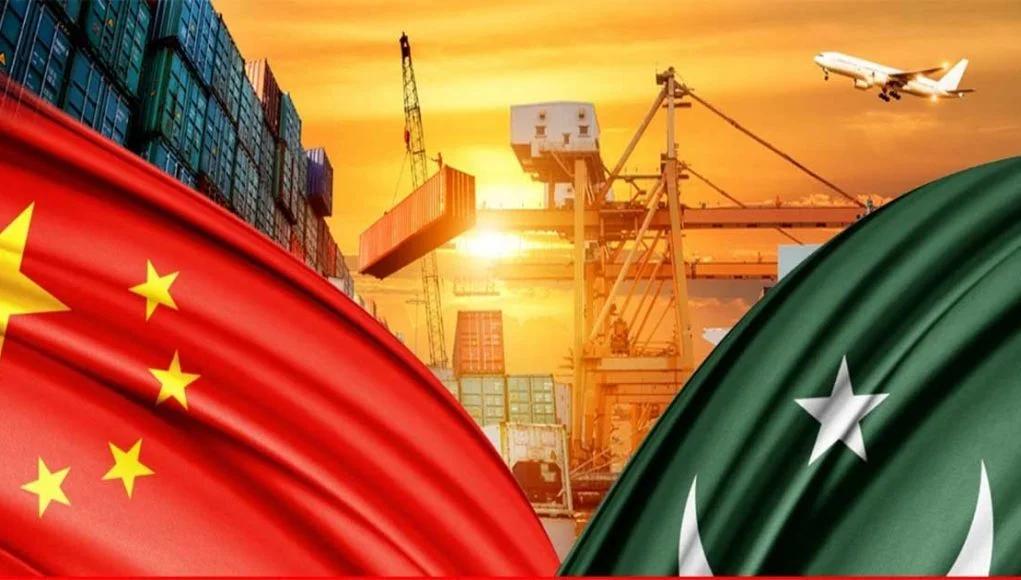
CPEC 2.0 and the Iron Alliance: China Doubles Down on Pakistan’s Economic Future

Published

on

The Meeting That Signals More Than Courtesy

When Chinese Ambassador Jiang Zaidong called on Prime Minister Muhammad Shehbaz Sharif at the Prime Minister’s House in Islamabad on Thursday, the optics were familiar — two officials exchanging pleasantries in a gilded diplomatic room. But the substance beneath the ceremony is anything but routine. It was a recalibration of the most consequential bilateral relationship in South Asia, a public doubling-down on CPEC 2.0 at a moment when Pakistan’s economy is attempting one of its most delicate pivots in a generation, and when the region around it burns with geopolitical uncertainty.

Prime Minister Shehbaz, appreciating China’s steadfast economic support, reaffirmed Pakistan’s commitment to advancing CPEC 2.0, with a focus on agriculture, industrial cooperation, and priority infrastructure projects. Associated Press of Pakistan He also felicitated the Chinese leadership on the successful conclusion of the “Two Sessions” and thanked President Xi Jinping, Premier Li Qiang, and Foreign Minister Wang Yi for their warm greetings on Pakistan Day. The Express Tribune

Deputy Prime Minister and Foreign Minister Ishaq Dar, Special Assistant Syed Tariq Fatemi, and the Foreign Secretary were also present — a seniority of delegation that underscores how seriously Islamabad is treating this moment.

From Iron Ore to Iron Friendship: The Economic Architecture

To understand why Thursday’s meeting matters, follow the money. According to figures from the General Administration of Customs of China, total bilateral trade in goods between China and Pakistan reached $23.1 billion in 2024, an increase of 11.1 percent from the previous year. China Daily And the momentum has not slackened. Bilateral goods trade soared to $16.724 billion from January to August 2025, marking a 12.5% increase year-on-year. The Daily CPEC

Those are not the numbers of a partnership in cruise control — they are the numbers of a relationship actively accelerating.

The deeper story, however, lies not in trade volumes but in structural investment. By the end of 2024, CPEC had brought in a total of $25.93 billion in direct investment, created 261,000 jobs, and helped build 510 kilometres of highways, 8,000 megawatts of electricity capacity, and 886 kilometres of national core transmission grid in Pakistan. Ministry of Foreign Affairs of the People’s Republic of China For a country that, barely two years ago, was rationing foreign exchange for fuel imports, this is a transformation of physical and economic geography.

CPEC’s first phase was fundamentally an emergency intervention — a transfusion of infrastructure into a body politic that desperately needed it. Power plants. Highways. Ports. The second phase is a different kind of ambition altogether.

CPEC 2.0: From Hard Concrete to Smart Connectivity

As He Zhenwei, president of the China Overseas Development Association, observed, CPEC has shifted from “hard connectivity” in infrastructure to “soft connectivity” in industrial cooperation, green and low-carbon growth, and livelihood improvements, making it a powerful driver of Pakistan’s socioeconomic development. China Daily

This is the strategic logic of CPEC 2.0 in a single sentence: it is no longer primarily about pouring concrete. It is about embedding China’s industrial ecosystem inside Pakistan’s economy — transferring manufacturing capacity, agricultural technology, digital infrastructure, and green energy know-how into a country of 245 million people that possesses, in abundance, what China increasingly lacks: cheap land, young labour, and untapped mineral wealth.

Prime Minister Shehbaz has said that industrial cooperation will remain the “cornerstone” of bilateral economic ties and a defining feature of CPEC’s high-quality development in its second phase, inviting Chinese companies to consider Pakistan a preferred investment destination, particularly for relocating industries into special economic zones. China Daily

The sectors at the top of the agenda — agriculture modernisation, IT parks, mineral extraction, and green industrial zones — each represent a deliberate attempt to diversify Pakistan’s economic base beyond remittances and textiles. The Rashakai Special Economic Zone in Khyber Pakhtunkhwa, already operational, serves as the template: a dedicated industrial enclave designed to attract Chinese manufacturing relocation, create local employment, and generate export earnings in hard currency.

Agriculture, listed prominently in Thursday’s reaffirmation, deserves special attention. It is anticipated that due to road infrastructure development under CPEC, the distance and time for transporting commodities between Pakistan and China will decrease considerably compared with the sea route — promising high potential for increased trade of agricultural products, especially perishable goods such as meats, dairy, and fruits and vegetables. MDPI For Pakistan’s farming sector, which employs roughly 38% of the labour force but suffers from chronic productivity deficits, Chinese agri-technology partnerships could be genuinely transformative.

Pakistan’s Unlikely Economic Resilience Story

Ambassador Jiang’s commendation of Pakistan’s “economic resilience and reform efforts” was diplomatic language, but it pointed to something real. Two years ago, Pakistan stood at the edge of a sovereign default. Today, it is back from the brink — battered, cautious, but standing.

Pakistan’s 37-month Extended Fund Facility with the IMF, approved in September 2024, aims to build resilience and enable sustainable growth, with key priorities including entrenching macroeconomic stability, advancing reforms to strengthen competition, and restoring energy sector viability. International Monetary Fund

The results, while modest, are genuine. The IMF has forecasted 3.2% GDP growth for Pakistan in FY2026, up from 3% in FY2025, and a moderation in inflation to 6.3% in the same period. Profit by Pakistan Today Gross reserves, which had collapsed to barely two weeks of import cover, stood at $14.5 billion at end-FY25, up from $9.4 billion a year earlier. International Monetary Fund

Pakistan’s “Uraan Pakistan” economic transformation plan, meanwhile, sets a more ambitious horizon: the initiative aims to achieve sustainable, export-led 6% GDP growth by 2028 through public-private partnerships, enhanced export competitiveness, and optimised public finances. World Economic Forum Foreign direct investment has grown by 20% in the first half of fiscal year 2025, reflecting renewed trust in Pakistan’s economic trajectory, and remittances have reached a record $35 billion this year. World Economic Forum

None of this is a clean success story. The IMF has been explicit that risks remain elevated, structural reforms are incomplete, and the energy sector’s circular debt remains a chronic wound. But the trajectory — for the first time in years — points upward. And China is betting on that trajectory.

The Geopolitical Chessboard: Why Beijing Is Leaning In

China’s intensified engagement with Pakistan is not purely altruistic. It is profoundly strategic.

Gwadar Port remains the crown jewel of Beijing’s calculations. As the terminus of CPEC — a 3,000-kilometre corridor running from Kashgar in Xinjiang to the Arabian Sea — it represents China’s most viable land-based alternative to the chokepoint-prone Strait of Malacca, through which roughly 80% of China’s oil imports currently pass. Following the proposal by Chinese Premier Li Keqiang in 2013, the operationalization of CPEC is expected to reduce the existing 12,000-kilometre journey for oil transportation to China to 2,395 kilometres, estimated to save China $2 billion per year. Wikipedia

In May 2025, the strategic calculus deepened further. During a trilateral meeting between the foreign ministers of China, Pakistan, and Afghanistan, Chinese Foreign Minister Wang Yi announced the extension of CPEC into Afghanistan to enhance trilateral cooperation and economic connectivity. Wikipedia This was not a minor footnote. It was a declaration that Beijing intends to use Pakistan as the anchor of a broader Central and South Asian connectivity architecture — one that could reshape trade flows across a swath of the globe currently disconnected from global value chains.

For Pakistan, this is an extraordinary opportunity and a significant responsibility. Being the fulcrum of Chinese strategic logistics means attracting investment, yes — but it also means hosting Chinese personnel in a volatile security environment, managing debt obligations carefully, and maintaining the domestic political consensus necessary to sustain multi-decade infrastructure commitments. Prime Minister Shehbaz highlighted Pakistan’s constructive role in promoting regional de-escalation and stability The Express Tribune — an implicit signal to Beijing that Islamabad remains a reliable partner even as tensions with Afghanistan simmer, and as the broader Middle East grinds through its own turbulence.

75 Years: A Partnership With Institutional Depth

Both sides looked forward to high-level exchanges to mark the 75th anniversary of diplomatic relations between the two countries. Geo News That milestone — China and Pakistan established formal ties on May 21, 1951 — is worth pausing on. Seventy-five years is a rarity in the volatile geography of South Asia. It spans the Partition, three Indo-Pakistani wars, Pakistan’s nuclear tests, 9/11, the war on terror, and multiple economic crises. Through all of it, the “iron brotherhood” held.

The 75th anniversary will not be merely ceremonial. High-level engagements planned for the occasion are expected to include renewed investment commitments, potentially new frameworks for agricultural cooperation, and possibly the formal signing of long-delayed agreements on mining and mineral exploration in Balochistan — a sector that both governments identify as transformational for Pakistan’s fiscal self-sufficiency.

The Road Ahead: Opportunities and Open Questions

The reaffirmation of CPEC 2.0 from Thursday’s meeting is a signal, not a guarantee. Three structural questions will determine whether the next decade of China-Pakistan economic cooperation delivers on its extraordinary promise.

First, can Pakistan create a genuinely investable environment? Chinese companies, increasingly sophisticated in their global operations, want rule of law, profit repatriation mechanisms, and secure personnel — not merely political assurances. The prime minister assured a secure and conducive environment for Chinese personnel and investments The Daily CPEC, but assurances must be backed by institutional reform, upgraded law enforcement, and expedited project approvals.

Second, can the trade imbalance be addressed? Of the $23.1 billion in bilateral trade in 2024, China’s exports to Pakistan surged 17% year-on-year to $20.2 billion, while Pakistan’s imports from China fell 18.2% to $2.8 billion. China Briefing A bilateral relationship where one partner runs a structural deficit of more than $17 billion is not a partnership of equals — and it is not sustainable. Agricultural exports, IT services, minerals, and textile value-addition must be fast-tracked to rebalance the ledger.

Third, can CPEC 2.0’s agricultural pillar deliver at scale? The promise is significant. Chinese precision agriculture technology, drip-irrigation systems, seed science, and cold-chain logistics could revolutionise Pakistan’s food economy. But past agricultural cooperation agreements between the two countries have struggled with implementation. The devil will be in the provincial-level execution.

What is not in question is the strategic intent on both sides. China needs Pakistan as a corridor, a consumer market, and a geopolitical anchor in a region where its influence is otherwise contested. Pakistan needs China as an investor, a market for its exports, and — frankly — a financier of last resort when the IMF’s medicine grows too bitter.

Conclusion: The Partnership’s Next Chapter

Thursday’s meeting between Prime Minister Shehbaz and Ambassador Jiang was a paragraph in an ongoing novel — not the first chapter, and certainly not the last. Both sides reaffirmed the enduring Pakistan-China All-Weather Strategic Cooperative Partnership, emphasising the importance of continued close coordination on issues of mutual interest. Associated Press of Pakistan

What makes this moment distinctive is the convergence of timing. Pakistan is mid-reform, mid-stabilisation, and mid-pivot. China is mid-BRI, mid-reshaping of its global industrial footprint, and actively seeking to lock in reliable partners before the geopolitical weather of the 2030s becomes even more unpredictable. The 75th anniversary of diplomatic relations provides not just an occasion but an impetus.

CPEC 2.0, with its agriculture, IT, minerals, and green industrial agenda, represents the most sophisticated iteration yet of what Beijing and Islamabad have been building together since the 1950s — a partnership that transcends any single government, any single economic cycle, and increasingly, any single geopolitical era.

Whether Pakistan can convert this ironclad political commitment into tangible economic transformation for its 245 million citizens remains the defining question. The answer will not be written in diplomatic press releases. It will be written in crop yields, factory floors, export invoices, and the balance sheets of a nation that has been, for too long, more corridor than economy.

That is the chapter both sides are now trying to write.


Discover more from The Economy

Subscribe to get the latest posts sent to your email.

Continue Reading
Click to comment

Leave a Reply

Analysis

US Hotels Slash Summer Room Rates as World Cup Demand Falls Short

Published

on

A $30 billion economic dream collides with the sobering arithmetic of inflation, geopolitics, and over-optimism.

In the final weeks of March, Ed Grose, the president of the Greater Philadelphia Hotel Association, delivered a piece of news that should have landed as a footnote but instead became a canary in the coal mine. FIFA, the global football governing body, had cancelled approximately 2,000 of its 10,000 reserved hotel rooms in Philadelphia—a 20% haircut with no explanation offered. “While we were not excited about that, it’s not the end of the world either,” Grose told ABC 6, in the kind of measured understatement that hotel executives deploy when they are privately recalibrating their summer budgets.

But Philadelphia was not an isolated data point. It was a signal.

By mid-April, the hospitality industry’s quiet unease had become impossible to ignore. Hotels across US host cities began slashing summer room rates. Match-day prices in Atlanta, Dallas, Miami, Philadelphia and San Francisco dropped roughly one-third from their peaks earlier this year, according to data from Lighthouse Intelligence. In Vancouver, FIFA released approximately 15,000 nightly room bookings—a volume that local hoteliers described as “higher than typically expected”. In Toronto, the cancellations reached 80%.

The message is unmistakable: the much-hyped 2026 FIFA World Cup is not going to deliver the economic bonanza that FIFA, the Trump administration, and countless hotel owners had promised themselves. And the reasons—ticket prices, inflation fears, a Trump-driven slump in international arrivals, and the geopolitical fallout from the Iran war—point to something deeper than a temporary demand shortfall. They point to the structural limits of the mega-event economic model itself.

The numbers tell a story of sharp reversal

Let us begin with the arithmetic, because the arithmetic is unforgiving. In February, CoStar and Tourism Economics projected that the World Cup would lift US hotel revenue per available room (RevPAR) by 1.7% during June and July—already a modest figure, roughly one-quarter of the 6.9% RevPAR lift the United States enjoyed during the 1994 World Cup. By April, even that muted forecast had been downgraded: CoStar now expects RevPAR to rise just 1.2% in June and 1.5% in July.

Isaac Collazo, STR’s senior director of analytics, put it bluntly in February: the overall impact to the United States would be “negligible due to the underlying weakness expected elsewhere”. That underlying weakness has only deepened since. For the full year 2026, the World Cup is now expected to contribute just 0.4 percentage points to US RevPAR growth, down from 0.6%.

The correction in pricing has been swift. Hoteliers who had locked in eye-watering rate increases—some exceeding 300% during match weeks—are now in full retreat. Scott Yesner, founder of Philadelphia-based short-term rental and boutique hotel management company Bespoke Stay, told the Financial Times: “I’m seeing a lot of people start to panic and lower their rates”.

This is not merely a story of greedy hoteliers getting their comeuppance. It is a story of structural miscalculation—one in which every stakeholder, from FIFA to city tourism bureaus to individual property owners, built their projections on a foundation of wishful thinking.

Why the fans aren’t coming

The collapse in demand is overdetermined, which makes it all the more revealing. Four factors are converging, each sufficient on its own to chill international travel, and together they form a perfect storm.

First, ticket prices. A Guardian analysis found that tickets for the 2026 final shot up in price by up to nine times compared with the 2022 edition, adjusted for inflation. For the average European fan—already facing a transatlantic flight, a weak euro, and domestic cost-of-living pressures—the math simply does not work. Many fans are instead choosing to watch from home.

Second, inflation fears. While US inflation has moderated from its 2022 peaks, the memory of double-digit price increases lingers, and hotel rates that briefly soared into four-figure territory for match nights became an instant deterrent.

Third, anti-American sentiment and the “Trump slump.” This factor is the most politically charged and perhaps the most consequential. Travel bookings to the United States for summer 2026 have decreased by up to 14% compared to the previous year, according to Forbes. Cirium data shows Europe-to-US bookings down 14.22% year-over-year, with particularly steep drops from Frankfurt (−36%), Barcelona (−26%), and Amsterdam (−23%). Lior Sekler, chief commercial officer at HRI Hospitality, blamed dissatisfaction with the Trump administration’s visa and immigration policies, as well as the instability triggered by the war in Iran, for cooling international demand. “Obviously, people’s desire to come to the United States right now is down,” he told the Financial Times.

Fourth, safety concerns. Recent shootings—including one in Minneapolis—have heightened anxiety among European fans considering a trip to the 2026 World Cup. Travel advisories issued by European governments urging caution when visiting the United States have not helped.

The cumulative effect is stark. Where FIFA had advised host cities to expect a 50/50 split between domestic and international visitors, the actual international share appears to be falling well short. Tourism Economics now expects international visitor numbers to the US to rise just 3.4%—a figure that, in a normal year, might be respectable, but against the backdrop of World Cup expectations feels like a failure.

The mega-event economic model under pressure

For anyone who has studied the economics of mega-events—the Olympics, the World Cup, the Super Bowl—the current hotel demand shortfall is not an anomaly. It is a predictable outcome of a broken forecasting model.

The core problem is simple: the organisations that run these events have every incentive to over-promise. FIFA’s 2025 analysis projected that the 2026 World Cup would drive $30.5 billion in economic output and create 185,000 jobs in the United States. Those figures were predicated on the assumption that international tourists would flock to the tournament. But as the Forbes analysis from early March made clear, that assumption was always fragile.

The gap between FIFA’s rhetoric and operational reality has become impossible to ignore. In Boston, Meet Boston—the city’s tourism bureau—acknowledged that “original estimates from 2–3 years ago were inflated” and that the reduction in FIFA’s room blocks had been anticipated for months. That is a polite way of saying: everyone knew the numbers were too high, but no one wanted to say so publicly until the cancellations forced the issue.

Jan Freitag, CoStar’s national director of hospitality analytics, described the release of rooms—known in the industry as “the wash”—as “just a little bit more than people had anticipated”. The key word there is “little.” The surprise was not that FIFA overbooked; it is that the organisation overbooked to this extent.

Perhaps the most telling data point comes from hoteliers themselves. Harry Carr, senior vice president of commercial optimisation at Pivot Hotels & Resorts, told CoStar that FIFA had returned some of the room blocks held by his company “without a single reservation having been made”. At HRI Lodging in the Bay Area, Fifa reserved blocks had seen only 15% of rooms actually taken up. When the organiser itself cannot fill its own blocks, the industry has a problem.

A tale of two World Cups: 1994 vs 2026

The contrast with 1994 is instructive. When the United States last hosted the World Cup, RevPAR for June and July rose 6.9%, driven largely by a 5% increase in average daily rate. That was a genuine boom. The 2026 forecast, by contrast, projects a lift that is “almost entirely on a 1.6% lift in ADR”—a much more fragile and rate-dependent gain.

What changed? In 1994, the United States was riding a post-Cold War wave of global goodwill. International travel was expanding rapidly, the dollar was relatively weak, and the geopolitical landscape was stable. In 2026, the United States is perceived by many foreign travellers as hostile, expensive, and unsafe. The difference in sentiment is not marginal; it is existential.

Vijay Dandapani, president of the Hotel Association of New York City, captured the mood with characteristic bluntness. He told the Financial Times he could “categorically say we haven’t seen much of a meaningful boost yet… It’s possible we will get some more demand, but at this point it certainly will not be the cornucopia that FIFA was promising”.

What this means for hoteliers and policymakers

For hotel owners, the lesson is uncomfortable but clear: betting on mega-events is a high-risk strategy. The properties that will survive this summer’s disappointment are those that built their business models on a diversified base of corporate, leisure, and group demand—not those that staked everything on World Cup premiums.

For US tourism policymakers, the message is even more sobering. The World Cup was supposed to be a showcase—a chance to remind the world that the United States remains an open, welcoming destination. Instead, the tournament is revealing the opposite. The combination of restrictive visa policies, a belligerent trade posture, and a perception of social instability is actively repelling the very visitors the industry needs.

Aran Ryan, director of industry studies at Tourism Economics, told the Financial Times that his firm still expects an “incremental boost… but there’s concern about ticket prices, there’s concern about border crossings, and there’s concern about anti-U.S. sentiment—and that’s been made worse by the Iran war”. That is a remarkable admission: even with the world’s largest sporting event on its soil, the United States cannot reverse its inbound tourism decline.

The one bright spot (and why it’s not enough)

To be fair, not all the data is uniformly negative. A RateGain analysis released on April 15, using Sojern’s travel intent data, found double-digit year-over-year flight booking growth into several US host cities: Dallas (+42%), Houston (+38%), Boston (+17%), Philadelphia (+16%), and Miami (+15%). The United Kingdom is the leading international source market for flights into US host cities, accounting for 19.5% of international bookings.

But these figures require careful interpretation. First, they represent bookings made after the rate cuts—that is, demand that is being stimulated by lower prices, not organic enthusiasm. Second, even with these increases, the absolute volume of international travel remains below pre-pandemic trend lines. Third, the airline data is not uniformly positive: Seattle is down 16% year-over-year, and transatlantic bookings from key European hubs remain deeply depressed.

The most worrying signal in the RateGain data is the search-to-booking gap from Argentina—the defending World Cup champions. Argentina accounts for just 1.3% of confirmed flight bookings but 8.2% of flight searches, “pointing to substantial latent demand” that is not converting into actual travel. That gap represents fans who want to come but are ultimately deciding not to. The reasons are the same as everywhere: cost, fear, and the perception that the United States does not want them.

Conclusion: A reckoning, not a disaster

Let me be clear: the World Cup will not be a disaster for US hotels. CoStar still expects positive RevPAR growth in June and July. Millions of tickets have been sold. The tournament will generate real economic activity.

But the gap between expectation and reality is vast. Hotels are slashing rates. FIFA is quietly cancelling room blocks. International fans are staying home. And the structural lessons—about the limits of event-driven economics, about the fragility of tourism demand in a hostile political environment, about the dangers of believing one’s own hype—are ones that policymakers and industry executives would do well to absorb before the next mega-event comes calling.

The 2026 World Cup was supposed to be the summer the United States welcomed the world. Instead, it may be remembered as the summer the world decided the price of admission was simply too high.


FAQ

Q: Why are US hotels slashing World Cup room rates?
A: Hotels in host cities including Atlanta, Dallas, Miami, Philadelphia and San Francisco have cut match-day rates by roughly one-third due to weaker-than-expected demand, driven by high ticket prices, inflation fears, anti-American sentiment, and FIFA’s own cancellation of thousands of room blocks.

Q: How much are hotel rates dropping for the 2026 World Cup?
A: According to Lighthouse Intelligence data, match-day room rates have fallen about 33% from their peaks earlier this year.

Q: What is the expected RevPAR impact of the 2026 World Cup?
A: CoStar forecasts a 1.2% RevPAR increase in June and 1.5% in July—down from 1.7% projected in February.

Q: Did FIFA cancel hotel room reservations?
A: Yes. FIFA cancelled approximately 2,000 of 10,000 reserved rooms in Philadelphia, 80% of reservations in Toronto and Vancouver, and 800 of 2,000 rooms in Mexico City.

Q: What is causing weak World Cup hotel demand?
A: Four main factors: high ticket prices, inflation concerns, anti-American sentiment and the “Trump slump,” and safety fears following recent shootings.


Discover more from The Economy

Subscribe to get the latest posts sent to your email.

Continue Reading

Analysis

US Banks Make Record Buybacks on Trump’s Looser Rules and Choppy Markets

Published

on

There is a peculiar kind of irony in Wall Street’s first quarter of 2026. American equity markets endured their worst opening three months since the mini-banking crisis of 2023—rattled by a shooting war with Iran, an oil price spike that briefly pushed Brent crude past $120 a barrel, and a Federal Reserve that refused to blink. Yet inside the fortress balance sheets of America’s six largest lenders, a very different story was unfolding: a record-shattering cascade of cash flowing back to shareholders.

When the earnings releases landed this week, the numbers were extraordinary. JPMorgan Chase, Bank of America, Citigroup, Wells Fargo, Goldman Sachs, and Morgan Stanley together spent approximately $32 billion on share repurchases in a single quarter—a figure that comfortably eclipsed analyst consensus expectations and, more importantly, signals that the Trump administration’s quiet dismantling of post-crisis capital rules is already reshaping the financial landscape in ways both celebrated and quietly alarming.

The record is not accidental. It is the logical, almost inevitable, consequence of a regulatory pivot that accelerated on March 19, 2026, when the Federal Reserve officially re-proposed a dramatically softened version of the Basel III Endgame framework—a moment that Wall Street lobbyists had spent three years and tens of millions of dollars engineering.

A Brief History of the Capital Arms Race

To understand why $32 billion in a single quarter is so remarkable, you need to remember what banks were doing with that money until very recently: hoarding it. The original 2023 Basel III Endgame proposal, drafted under Biden-era regulators, would have forced the eight largest US lenders to increase their common equity tier 1 (CET1) capital ratios by as much as 19%. The logic was defensible—the 2008 financial crisis exposed catastrophic capital inadequacy, and regulators globally wanted thicker shock absorbers. Banks pushed back furiously, running advertisements warning of reduced mortgage lending and constrained small-business credit. Quietly, they also began accumulating capital buffers in anticipation of stricter rules.

By the time Donald Trump won a second term and installed Michelle Bowman as Federal Reserve Vice Chair for Supervision—replacing the architect of the original proposal, Michael Barr—the largest US banks were sitting on an estimated $650 to $750 billion in projected cumulative excess capital over Trump’s presidency, according to Oliver Wyman analysis. That capital had to go somewhere. The March 2026 re-proposal gave it somewhere to go.

The new framework, per Conference Board analysis of the regulatory proposals, would reduce overall capital requirements at the largest banks by nearly 6%—a near-perfect inversion of what Biden regulators had sought. Critically, the GSIB surcharge, the extra capital buffer levied on globally systemically important banks, was also re-proposed for recalibration. JPMorgan CFO Jeremy Barnum captured the mood on this week’s earnings call, noting the bank currently measures some $40 billion in excess capital relative to today’s required levels—even before any final easing of the rules.

The $32 Billion Surge: Who Spent What

The precision of the data, pulled directly from SEC 8-K filings released this week, is striking. Here is where the capital went:

BankQ1 2026 BuybacksTotal Capital Returned to Shareholders
JPMorgan Chase$8.1 billion~$12.2bn (incl. $4.1bn dividends)
Bank of America$7.2 billion~$9.3bn (incl. $2.0bn dividends)
Citigroup$6.3 billion~$7.4bn (incl. ~$1.1bn dividends)
Goldman Sachs$5.0 billion~$6.4bn (incl. $1.38bn dividends)
Wells Fargo$4.0 billion~$5.4bn (incl. ~$1.4bn dividends)
Morgan Stanley$1.75 billion~$2.5bn (incl. dividends)
Combined~$32.35 billion~$43bn

Sources: JPMorgan 8-K, Bank of America 8-K, Citigroup 8-K, Goldman Sachs 8-K, Wells Fargo 8-K, Morgan Stanley 8-K

For context, the Big Six averaged roughly $14 billion per quarter in buybacks across 2021–2024, before accelerating to $21 billion in Q2 2025, according to J.P. Morgan Private Bank research. The Q1 2026 figure is more than double that historical average. Citigroup’s $6.3 billion was, as CEO Jane Fraser noted on the earnings call, the highest quarterly buyback in the bank’s history—a milestone at an institution that was technically insolvent in 2008 and reliant on a $45 billion government bailout.

The Regulatory Machinery: Basel III’s “Mulligan”

What regulatory observers are calling the “Basel III Mulligan” deserves careful unpacking for non-specialist readers. In simple terms: for three years, large US banks were required to hold more capital than rules formally demanded—essentially self-imposing buffers to prepare for what everyone assumed would be much stricter requirements. Those requirements never arrived in their original form. The March 2026 re-proposal, issued simultaneously by the Fed, FDIC, and Office of the Comptroller of the Currency, replaced the proposed 19% capital increase with a framework that, in many cases, delivers net capital relief rather than additional requirements, according to Financial Content analysis of the new rules.

The result is structurally elegant from a shareholder’s perspective: banks spent years building fortress balance sheets for a regulatory winter that has now been declared a false alarm. That excess capital—tens of billions of dollars per institution—represents a dammed river suddenly unblocked. The public comment period for the new proposals runs through June 18, 2026, meaning final rules remain months away. But banks are not waiting. The market signal from regulators is unambiguous, and buyback programs respond to signals, not final texts.

Bloomberg’s analysis had anticipated precisely this moment, noting that Trump-era regulators were moving toward a “capital-neutral” Basel III outcome that would unlock shareholder distributions at a scale not seen since before the financial crisis. What was predicted has duly arrived.

Chaos as Catalyst: How Market Volatility Amplified the Story

Here is where the narrative turns counterintuitive—and, for a certain class of investor, deeply satisfying. Conventional wisdom holds that banks struggle in choppy markets. In reality, the definition of “struggle” depends entirely on which side of the bank’s business you are examining.

The Nasdaq KBW Bank Index endured its worst first-quarter performance since the 2023 mini-banking crisis, dragged lower by fears about private credit contagion, the US-Iran conflict that erupted on February 28, and the so-called “March Oil Shock” that briefly paralyzed capital markets activity. Lending-sensitive banks faced NII compression worries. Credit quality concerns loomed.

And yet Goldman Sachs posted record equities trading revenue in Q1 2026. Goldman CEO David Solomon acknowledged rising volatility “amid the broader uncertainty” of the period, while noting that the bank’s results confirmed “very strong performance for our shareholders this quarter.” Citigroup’s markets and services divisions delivered double-digit growth precisely because volatility generates transaction volume—every hedge fund repositioning, every corporate treasury scrambling to cover commodity exposure, every sovereign wealth manager rebalancing away from dollar assets represents a fee opportunity for a well-capitalised trading desk.

The paradox is structural: volatile markets that suppress bank stock prices also generate the trading revenues that finance the buybacks that prop up those same stock prices. It is capitalism’s own form of recursion.

The Risks That Risk Managers Are Quietly Managing

Premium financial journalism demands more than celebration, and there are real risks embedded in this capital bonanza that deserve scrutiny.

Moral hazard and the memory hole. The explicit purpose of higher post-crisis capital requirements was to ensure that taxpayers would never again be asked to rescue financial institutions that had been permitted to lever up their balance sheets in pursuit of short-term shareholder returns. Reducing those requirements—even modestly—reverses that logic. As the Atlantic Council has noted in its analysis of global regulatory fragmentation, the Trump administration’s deregulatory stance is already prompting delays and dilutions elsewhere: the UK Prudential Regulation Authority has pushed implementation to January 2027, and the EU is debating further postponements. When every major jurisdiction softens simultaneously, the global backstop weakens simultaneously.

The buyback signal as inequality amplifier. Share repurchases concentrate wealth among existing shareholders—disproportionately institutional investors and high-net-worth individuals. A $32 billion quarterly return program at the six largest banks is, in distributional terms, largely a transfer to the top quintile of the wealth spectrum. That the same quarter saw Bank of America’s consumer banking division report loan charge-offs of $1.4 billion underscores the bifurcation: capital is being efficiently returned to shareholders while credit stress among retail borrowers persists.

Geopolitical tail risk remains unpriced. Jamie Dimon’s shareholder letter this spring referenced “stagflation” risks explicitly. The KBW Bank Index’s Q1 underperformance was a rational market signal that investors see non-trivial probability of scenarios—broader Middle East escalation, sustained elevated oil prices, a Federal Reserve forced to choose between inflation and growth—where these fortified balance sheets are tested in ways that would make the current buyback pace look imprudent in retrospect.

The Global Dimension: Europe, Asia, and the Regulatory Arbitrage Question

The implications extend well beyond American shores. European banks, which operate under stricter ongoing capital frameworks and face their own Basel III implementation challenges, are watching the US deregulatory sprint with a mixture of envy and alarm. EU lenders’ aggregate CET1 ratio sits at approximately 15.73%—comfortable on paper, but increasingly constrained relative to US peers now liberated to return capital more aggressively. European banks are lobbying Brussels for comparable relief, creating competitive pressure that risks a race to the bottom on global capital standards.

Asian regulators, particularly in Japan and Australia, have been broadly more faithful to Basel III implementation timelines. This creates a genuine regulatory arbitrage dynamic: US banks, freed from the capital drag of the original Endgame framework, can price risk more aggressively and pursue returns that more conservatively capitalised international peers cannot match. In the medium term, this may advantage Wall Street in global capital markets mandates—but it also means the US financial system absorbs more of the global tail risk.

What This Means for Investors in 2026 and Beyond

For retail and institutional investors parsing these numbers, a few practical observations:

The buyback surge mechanically reduces share counts, improving earnings per share metrics. Bank of America’s common shares outstanding fell 6% year-over-year; Citigroup’s EPS of $3.06 was materially aided by a smaller denominator. This is genuine value creation for patient long-term holders who have endured years of regulatory uncertainty weighing on bank valuations.

The deregulatory tailwind, however, is not infinite. JPMorgan’s Barnum was notably measured on the Q1 earnings call: “We prefer to deploy the capital serving clients,” he noted, flagging that buybacks at current market prices represent a second-best use of the bank’s firepower relative to organic growth or strategic acquisitions. Morgan Stanley’s relatively modest $1.75 billion repurchase—against peers spending multiples more—suggests not every institution is deploying excess capital at the same pace or conviction.

The next inflection points to watch: the Federal Reserve’s June 2026 stress test results, which will set new Stress Capital Buffers for each institution; the final form of the Basel III and GSIB surcharge rules expected by Q4 2026; and Citigroup’s Investor Day in May, where CFO Gonzalo Luchetti has signaled fresh guidance on the pace of repurchases following the nearly completed $20 billion program.

The Question That Lingers

There is a version of this story that reads simply as good news: well-capitalised banks returning excess capital to shareholders, generating trading revenues from market volatility, and demonstrating the resilience of a financial system that—unlike 2008—does not require emergency intervention. JPMorgan’s CET1 ratio sits at 15.4%. Bank of America’s at 11.2%. Even after the buyback blitz, these are not reckless institutions.

But there is another version of the story, less comfortable and ultimately more important. The capital that US banks are returning to shareholders this quarter was accumulated partly because regulators told them they needed it as a buffer against catastrophic, low-probability events. The decision to declare that buffer unnecessary was made not by markets, not by stress models, but by a political administration with a stated ideological commitment to deregulation. The question is not whether the system is resilient today. It is whether the memory of why the buffers existed in the first place will survive long enough to matter when it next becomes relevant.

Wall Street has a notoriously short institutional memory. History, unfortunately, does not.


Sources & Further Reading:


Discover more from The Economy

Subscribe to get the latest posts sent to your email.

Continue Reading

Analysis

Singapore’s Construction & Defence Supercycle: The $100B Case

Published

on

The Quiet Outperformer in a Noisy World

While markets gyrate on every Federal Reserve whisper and geopolitical tremor from Taipei to Tehran, a quieter, more durable story has been compounding beneath the surface of Southeast Asian finance. Singapore’s Straits Times Index has demonstrated a resilience that confounds the casual observer—not because Singapore has somehow insulated itself from global volatility, but because its domestic capex cycle is so deep, so structural, and so government-anchored that it functions almost like a sovereign bond with equity-like upside.

The thesis is not complicated, but its implications are profound: Singapore is simultaneously running two of the most compelling domestic investment supercycles in Asia. The first is a construction and infrastructure boom of historic proportions, projected to sustain demand of between S$47 billion and S$53 billion in 2026 alone, according to the Building and Construction Authority. The second is a defence upcycle driven not by ideology but by cold strategic arithmetic—Singapore’s FY2026 defence budget has risen 6.4% to S$24.9 billion, the largest single allocation in the city-state’s history. Together, these twin engines are forging what may be the most underappreciated domestic growth story in global markets today.

For the sophisticated investor, the question is not whether to pay attention. It is how quickly to act.

The Architecture of a S$100 Billion Construction Boom

To understand why Singapore’s construction sector 2026 outlook is so structurally compelling, you must first appreciate the government’s almost Victorian confidence in long-range planning. Unlike the speculative infrastructure cycles that have periodically ravaged emerging markets from Jakarta to Ankara, Singapore’s construction pipeline is anchored by sovereign balance sheet commitments that span decades.

The headline project is, of course, Changi Airport Terminal 5—a S$15 billion-plus undertaking that, when complete, will make Changi one of the largest airport complexes on the planet, capable of handling an additional 50 million passengers annually. Construction mobilisation is accelerating, with land reclamation and enabling works already underway at Changi East. The ripple effects on contractors, materials suppliers, and specialist engineers are only beginning to register in earnings.

Alongside Changi, the Cross Island Line Phase 2—linking Turf City to Bright Hill and eventually to the eastern corridor—adds another multi-billion-dollar spine to an already formidable rail network. The Land Transport Authority has positioned this as foundational infrastructure for Singapore’s next-generation urban mobility. Construction timelines extend through the early 2030s, providing a long runway for sector earnings visibility.

Then there is the HDB public housing programme—perhaps the least glamorous but most structurally certain component of the boom. Singapore’s Housing and Development Board has committed to building 100,000 new flats between 2021 and 2025, with demand for subsequent tranches remaining elevated as the city’s population and household formation dynamics continue to evolve. These are not speculative builds awaiting buyers. These are politically mandated, fully financed housing units for which demand is structurally guaranteed.

The cumulative effect? Approximately S$100 billion in construction demand projected through 2030 and beyond, according to sector analysts—a figure that represents not a single boom-bust cycle but a sustained, multi-phase expansion with government backstop at every stage.

What the Analysts Are Saying—and Why It Matters

The analyst community has been unusually aligned on this theme. Thilan Wickramasinghe of Maybank Securities has argued forcefully that Singapore’s construction sector is enjoying a “structural demand floor” that is unlikely to recede before 2029 at the earliest. This is not standard sell-side optimism. It is a data-driven observation grounded in the project pipeline’s physical characteristics: these are not ribbon-cuttings awaiting funding approval. They are cranes in the ground, contracts signed, and milestone payments flowing.

Shekhar Jaiswal of RHB has echoed similar conviction, pointing to the tight interplay between public-sector infrastructure commitments and private-sector demand—particularly from the data centre construction wave now rolling across Singapore’s industrial landmass. Hyperscaler demand for purpose-built facilities from the likes of Google, Microsoft, and ByteDance subsidiaries has added an entirely new stratum of construction activity to an already saturated order book.

OCBC and UOB Kay Hian analysts have focused their attention on specific SGX-listed beneficiaries: Seatrium (offshore and marine engineering), Wee Hur Holdings (construction and workers’ accommodation), Tiong Seng Holdings, and the larger integrated players like Sembcorp Industries, whose energy infrastructure pivot dovetails neatly with the broader construction narrative. The common thread is margin recovery—after years of pandemic-era cost disruption, Singapore’s leading contractors are now embedded in projects with cost-escalation clauses and more sophisticated risk-sharing frameworks, which means that even if materials costs rise, earnings visibility is meaningfully improved.

The Defence Upcycle: Not a Trend, a Structural Shift

If the construction boom is the known unknown of Singapore’s equity story, the defence sector is the unknown unknown—underappreciated, underanalysed, and consequentially under-owned.

Singapore’s FY2026 defence budget of S$24.9 billion—up 6.4% year-on-year—needs to be contextualised properly. This is not a government responding to domestic political pressure or an election cycle. Singapore has no serious opposition defence constituency to satisfy. This is a city-state of 5.9 million people, sitting at the confluence of the South China Sea, the Malacca Strait, and the Indian Ocean, that has made a sober-eyed strategic calculation that the post-Cold War peace dividend is over.

The geopolitical calculus is not subtle. US-China strategic competition has moved from trade tariffs to semiconductor export controls to naval posturing in the Taiwan Strait, with no credible de-escalation pathway in view. The Middle East conflict, far from remaining regionally contained, has introduced new fragility into global shipping lanes, energy supply chains, and rare materials pricing—all of which matter acutely to Singapore’s import-dependent economy. And the South China Sea, where Singapore maintains scrupulous diplomatic neutrality while quietly acknowledging the risks, remains a theatre of escalating jurisdictional assertion.

Against this backdrop, Singapore’s defence spending is not an anomaly. It is part of a broader Asia-Pacific rearmament that includes Australia’s AUKUS submarine programme, Japan’s historic doubling of its defence budget to 2% of GDP, and South Korea’s accelerated weapons modernisation. The difference is that Singapore, as a city-state, cannot afford strategic ambiguity. Every dollar of defence spending is a genuine operational commitment.

For investors, the opportunity lies in the domestic supply chain. ST Engineering—Singapore’s defence and engineering conglomerate—remains the most direct beneficiary, with its defence systems, aerospace, and smart city divisions all feeding into either the domestic programme or allied nation contracts. ST Engineering’s order book has expanded materially, and its defence electronics segment is particularly positioned for multi-year contract extensions as the Singapore Armed Forces modernise their digital battlefield capabilities.

Beyond ST Engineering, the defence ecosystem extends into Sembcorp Marine (now Seatrium) for naval vessel sustainment, specialised SMEs in precision engineering and electronics, and the broader aerospace MRO cluster at Seletar and Changi that services both military and commercial aviation demand.

Singapore as Asia’s Geopolitical Hedge: The “Switzerland of Asia” Premium

There is a deeper, more structural argument that sophisticated international investors have begun to price—though not yet fully. Singapore’s unique positioning as Asia’s neutral financial hub, legal jurisdiction, and logistics nerve centre means that its domestic capex cycle functions as a partial hedge against the very geopolitical risks that threaten broader Asian exposure.

When US-China tensions spike, capital does not simply evaporate. It relocates—and Singapore is the most natural beneficiary in Southeast Asia. Family offices, private equity vehicles, and corporate treasury functions have been migrating to Singapore at an accelerating pace, bringing with them demand for premium office space, data infrastructure, financial services, and—critically—the physical construction that houses all of it.

This creates a feedback loop that is underappreciated in most macro models: geopolitical tension, rather than being a pure negative for Singapore, actually reinforces the investment case by accelerating the city-state’s role as a regional sanctuary. BlackRock’s 2024 Asia Outlook and similar institutional frameworks have acknowledged this dynamic, even if mainstream commentary has been slow to internalise it.

The BCA construction demand forecast of S$47–53 billion for 2026 needs to be read through this lens. This is not just an infrastructure pipeline number. It is a measure of Singapore’s strategic confidence in its own future as the undisputed hub of a fractured Asia.

The Risk Register: What Could Go Wrong

A platinum-standard analysis demands honest accounting of the downside. Three risks deserve genuine investor attention.

First, cost and labour pressures. Singapore’s construction industry remains heavily dependent on foreign labour, and any tightening of the foreign worker levy regime or supply-side disruption—whether from regional competition for migrant labour or policy shifts in source countries—could compress contractor margins. The more sophisticated players have hedged through escalation clauses and project phasing, but smaller subcontractors remain exposed.

Second, prolonged Middle East conflict and materials pricing. Steel, cement, and specialised construction inputs remain vulnerable to supply-chain disruption originating far from Singapore. A broadening of the Middle East conflict that affects Suez Canal traffic or Gulf petrochemical output could translate into meaningful materials cost inflation. Analysts at DBS have flagged this as a key variable in their sector models for 2026.

Third, the REIT overhang. Singapore’s once-celebrated S-REIT sector remains under pressure from an extended higher-rate environment. While the construction boom benefits developers and contractors, the REIT vehicles that typically hold completed assets face a more challenging refinancing environment and yield compression dynamic. Investors should distinguish sharply between the construction/engineering beneficiaries—where the opportunity is structural and near-term—and the REIT space, where patience and selectivity remain the watchwords. Mixed views from analysts across OCBC, UOB Kay Hian, and Maybank reflect this nuance.

Actionable Investor Takeaways

For the sophisticated investor seeking to position for this supercycle, the following framework applies:

  • Overweight Singapore construction and engineering equities with direct exposure to the Changi T5, Cross Island Line, and HDB pipeline—specifically contractors with government-dominated order books and embedded escalation protections.
  • ST Engineering remains the single most compelling defence play on the SGX, combining domestic budget tailwinds with a growing international defence electronics export business. Its diversification across defence, aerospace, and smart infrastructure makes it uniquely resilient.
  • Data centre construction plays deserve attention as a secular growth overlay—the hyperscaler buildout in Singapore is additive to, not substitutive for, the public infrastructure cycle.
  • Be selective on S-REITs. Industrial and logistics REITs with long-lease, institutional-grade tenants are better positioned than retail or office-heavy vehicles in the current rate environment.
  • Monitor the BCA’s mid-year construction demand update (typically released mid-2026) as a key catalyst for sentiment re-rating in the sector.

The Fortress That Keeps Building

There is a phrase that circulates quietly among Singapore’s policymakers: “We build, therefore we are.” It captures something essential about a city-state that has never had the luxury of assuming its own survival—and has converted that existential urgency into one of the most disciplined, forward-planned construction and defence investment programmes in the world.

In a global environment defined by fragmentation, supply-chain anxiety, and strategic hedging, Singapore’s domestic capex story is not merely a local equity theme. It is a window into how a small, brilliant state is building its way into relevance for the next quarter-century—crane by crane, frigate by frigate, terminal by terminal.

The investors who recognise this earliest will own the supercycle. The rest will read about it when it is already priced.


Discover more from The Economy

Subscribe to get the latest posts sent to your email.

Continue Reading

Trending

Copyright © 2025 The Economy, Inc . All rights reserved .

Discover more from The Economy

Subscribe now to keep reading and get access to the full archive.

Continue reading