
Analysis
CPEC 2.0 and the Iron Alliance: China Doubles Down on Pakistan’s Economic Future

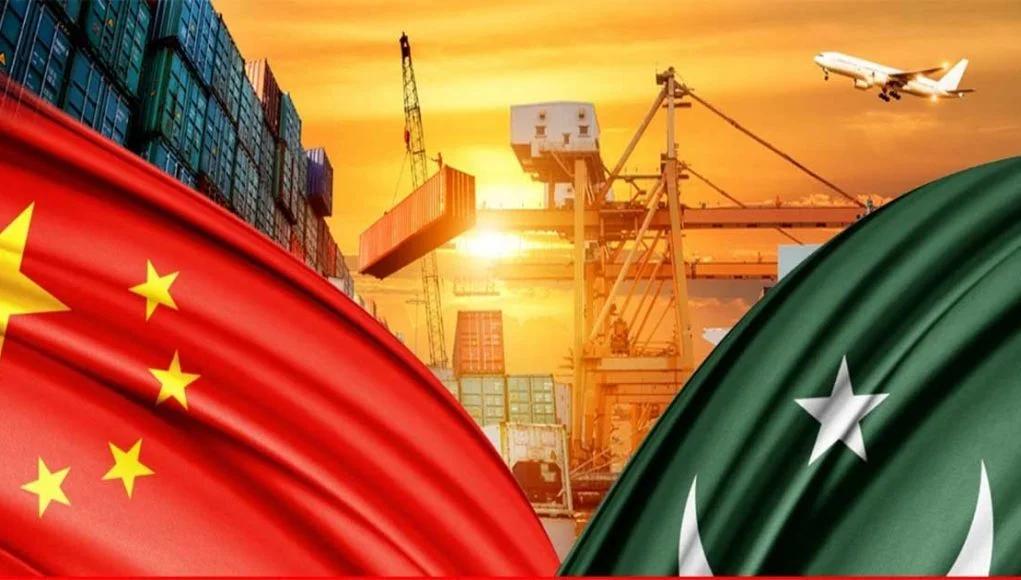
The Meeting That Signals More Than Courtesy
When Chinese Ambassador Jiang Zaidong called on Prime Minister Muhammad Shehbaz Sharif at the Prime Minister’s House in Islamabad on Thursday, the optics were familiar — two officials exchanging pleasantries in a gilded diplomatic room. But the substance beneath the ceremony is anything but routine. It was a recalibration of the most consequential bilateral relationship in South Asia, a public doubling-down on CPEC 2.0 at a moment when Pakistan’s economy is attempting one of its most delicate pivots in a generation, and when the region around it burns with geopolitical uncertainty.
Prime Minister Shehbaz, appreciating China’s steadfast economic support, reaffirmed Pakistan’s commitment to advancing CPEC 2.0, with a focus on agriculture, industrial cooperation, and priority infrastructure projects. Associated Press of Pakistan He also felicitated the Chinese leadership on the successful conclusion of the “Two Sessions” and thanked President Xi Jinping, Premier Li Qiang, and Foreign Minister Wang Yi for their warm greetings on Pakistan Day. The Express Tribune
Deputy Prime Minister and Foreign Minister Ishaq Dar, Special Assistant Syed Tariq Fatemi, and the Foreign Secretary were also present — a seniority of delegation that underscores how seriously Islamabad is treating this moment.
From Iron Ore to Iron Friendship: The Economic Architecture
To understand why Thursday’s meeting matters, follow the money. According to figures from the General Administration of Customs of China, total bilateral trade in goods between China and Pakistan reached $23.1 billion in 2024, an increase of 11.1 percent from the previous year. China Daily And the momentum has not slackened. Bilateral goods trade soared to $16.724 billion from January to August 2025, marking a 12.5% increase year-on-year. The Daily CPEC
Those are not the numbers of a partnership in cruise control — they are the numbers of a relationship actively accelerating.
The deeper story, however, lies not in trade volumes but in structural investment. By the end of 2024, CPEC had brought in a total of $25.93 billion in direct investment, created 261,000 jobs, and helped build 510 kilometres of highways, 8,000 megawatts of electricity capacity, and 886 kilometres of national core transmission grid in Pakistan. Ministry of Foreign Affairs of the People’s Republic of China For a country that, barely two years ago, was rationing foreign exchange for fuel imports, this is a transformation of physical and economic geography.
CPEC’s first phase was fundamentally an emergency intervention — a transfusion of infrastructure into a body politic that desperately needed it. Power plants. Highways. Ports. The second phase is a different kind of ambition altogether.
CPEC 2.0: From Hard Concrete to Smart Connectivity
As He Zhenwei, president of the China Overseas Development Association, observed, CPEC has shifted from “hard connectivity” in infrastructure to “soft connectivity” in industrial cooperation, green and low-carbon growth, and livelihood improvements, making it a powerful driver of Pakistan’s socioeconomic development. China Daily
This is the strategic logic of CPEC 2.0 in a single sentence: it is no longer primarily about pouring concrete. It is about embedding China’s industrial ecosystem inside Pakistan’s economy — transferring manufacturing capacity, agricultural technology, digital infrastructure, and green energy know-how into a country of 245 million people that possesses, in abundance, what China increasingly lacks: cheap land, young labour, and untapped mineral wealth.
Prime Minister Shehbaz has said that industrial cooperation will remain the “cornerstone” of bilateral economic ties and a defining feature of CPEC’s high-quality development in its second phase, inviting Chinese companies to consider Pakistan a preferred investment destination, particularly for relocating industries into special economic zones. China Daily
The sectors at the top of the agenda — agriculture modernisation, IT parks, mineral extraction, and green industrial zones — each represent a deliberate attempt to diversify Pakistan’s economic base beyond remittances and textiles. The Rashakai Special Economic Zone in Khyber Pakhtunkhwa, already operational, serves as the template: a dedicated industrial enclave designed to attract Chinese manufacturing relocation, create local employment, and generate export earnings in hard currency.
Agriculture, listed prominently in Thursday’s reaffirmation, deserves special attention. It is anticipated that due to road infrastructure development under CPEC, the distance and time for transporting commodities between Pakistan and China will decrease considerably compared with the sea route — promising high potential for increased trade of agricultural products, especially perishable goods such as meats, dairy, and fruits and vegetables. MDPI For Pakistan’s farming sector, which employs roughly 38% of the labour force but suffers from chronic productivity deficits, Chinese agri-technology partnerships could be genuinely transformative.
Pakistan’s Unlikely Economic Resilience Story
Ambassador Jiang’s commendation of Pakistan’s “economic resilience and reform efforts” was diplomatic language, but it pointed to something real. Two years ago, Pakistan stood at the edge of a sovereign default. Today, it is back from the brink — battered, cautious, but standing.
Pakistan’s 37-month Extended Fund Facility with the IMF, approved in September 2024, aims to build resilience and enable sustainable growth, with key priorities including entrenching macroeconomic stability, advancing reforms to strengthen competition, and restoring energy sector viability. International Monetary Fund
The results, while modest, are genuine. The IMF has forecasted 3.2% GDP growth for Pakistan in FY2026, up from 3% in FY2025, and a moderation in inflation to 6.3% in the same period. Profit by Pakistan Today Gross reserves, which had collapsed to barely two weeks of import cover, stood at $14.5 billion at end-FY25, up from $9.4 billion a year earlier. International Monetary Fund
Pakistan’s “Uraan Pakistan” economic transformation plan, meanwhile, sets a more ambitious horizon: the initiative aims to achieve sustainable, export-led 6% GDP growth by 2028 through public-private partnerships, enhanced export competitiveness, and optimised public finances. World Economic Forum Foreign direct investment has grown by 20% in the first half of fiscal year 2025, reflecting renewed trust in Pakistan’s economic trajectory, and remittances have reached a record $35 billion this year. World Economic Forum
None of this is a clean success story. The IMF has been explicit that risks remain elevated, structural reforms are incomplete, and the energy sector’s circular debt remains a chronic wound. But the trajectory — for the first time in years — points upward. And China is betting on that trajectory.
The Geopolitical Chessboard: Why Beijing Is Leaning In
China’s intensified engagement with Pakistan is not purely altruistic. It is profoundly strategic.
Gwadar Port remains the crown jewel of Beijing’s calculations. As the terminus of CPEC — a 3,000-kilometre corridor running from Kashgar in Xinjiang to the Arabian Sea — it represents China’s most viable land-based alternative to the chokepoint-prone Strait of Malacca, through which roughly 80% of China’s oil imports currently pass. Following the proposal by Chinese Premier Li Keqiang in 2013, the operationalization of CPEC is expected to reduce the existing 12,000-kilometre journey for oil transportation to China to 2,395 kilometres, estimated to save China $2 billion per year. Wikipedia
In May 2025, the strategic calculus deepened further. During a trilateral meeting between the foreign ministers of China, Pakistan, and Afghanistan, Chinese Foreign Minister Wang Yi announced the extension of CPEC into Afghanistan to enhance trilateral cooperation and economic connectivity. Wikipedia This was not a minor footnote. It was a declaration that Beijing intends to use Pakistan as the anchor of a broader Central and South Asian connectivity architecture — one that could reshape trade flows across a swath of the globe currently disconnected from global value chains.
For Pakistan, this is an extraordinary opportunity and a significant responsibility. Being the fulcrum of Chinese strategic logistics means attracting investment, yes — but it also means hosting Chinese personnel in a volatile security environment, managing debt obligations carefully, and maintaining the domestic political consensus necessary to sustain multi-decade infrastructure commitments. Prime Minister Shehbaz highlighted Pakistan’s constructive role in promoting regional de-escalation and stability The Express Tribune — an implicit signal to Beijing that Islamabad remains a reliable partner even as tensions with Afghanistan simmer, and as the broader Middle East grinds through its own turbulence.
75 Years: A Partnership With Institutional Depth
Both sides looked forward to high-level exchanges to mark the 75th anniversary of diplomatic relations between the two countries. Geo News That milestone — China and Pakistan established formal ties on May 21, 1951 — is worth pausing on. Seventy-five years is a rarity in the volatile geography of South Asia. It spans the Partition, three Indo-Pakistani wars, Pakistan’s nuclear tests, 9/11, the war on terror, and multiple economic crises. Through all of it, the “iron brotherhood” held.
The 75th anniversary will not be merely ceremonial. High-level engagements planned for the occasion are expected to include renewed investment commitments, potentially new frameworks for agricultural cooperation, and possibly the formal signing of long-delayed agreements on mining and mineral exploration in Balochistan — a sector that both governments identify as transformational for Pakistan’s fiscal self-sufficiency.
The Road Ahead: Opportunities and Open Questions
The reaffirmation of CPEC 2.0 from Thursday’s meeting is a signal, not a guarantee. Three structural questions will determine whether the next decade of China-Pakistan economic cooperation delivers on its extraordinary promise.
First, can Pakistan create a genuinely investable environment? Chinese companies, increasingly sophisticated in their global operations, want rule of law, profit repatriation mechanisms, and secure personnel — not merely political assurances. The prime minister assured a secure and conducive environment for Chinese personnel and investments The Daily CPEC, but assurances must be backed by institutional reform, upgraded law enforcement, and expedited project approvals.
Second, can the trade imbalance be addressed? Of the $23.1 billion in bilateral trade in 2024, China’s exports to Pakistan surged 17% year-on-year to $20.2 billion, while Pakistan’s imports from China fell 18.2% to $2.8 billion. China Briefing A bilateral relationship where one partner runs a structural deficit of more than $17 billion is not a partnership of equals — and it is not sustainable. Agricultural exports, IT services, minerals, and textile value-addition must be fast-tracked to rebalance the ledger.
Third, can CPEC 2.0’s agricultural pillar deliver at scale? The promise is significant. Chinese precision agriculture technology, drip-irrigation systems, seed science, and cold-chain logistics could revolutionise Pakistan’s food economy. But past agricultural cooperation agreements between the two countries have struggled with implementation. The devil will be in the provincial-level execution.
What is not in question is the strategic intent on both sides. China needs Pakistan as a corridor, a consumer market, and a geopolitical anchor in a region where its influence is otherwise contested. Pakistan needs China as an investor, a market for its exports, and — frankly — a financier of last resort when the IMF’s medicine grows too bitter.
Conclusion: The Partnership’s Next Chapter
Thursday’s meeting between Prime Minister Shehbaz and Ambassador Jiang was a paragraph in an ongoing novel — not the first chapter, and certainly not the last. Both sides reaffirmed the enduring Pakistan-China All-Weather Strategic Cooperative Partnership, emphasising the importance of continued close coordination on issues of mutual interest. Associated Press of Pakistan
What makes this moment distinctive is the convergence of timing. Pakistan is mid-reform, mid-stabilisation, and mid-pivot. China is mid-BRI, mid-reshaping of its global industrial footprint, and actively seeking to lock in reliable partners before the geopolitical weather of the 2030s becomes even more unpredictable. The 75th anniversary of diplomatic relations provides not just an occasion but an impetus.
CPEC 2.0, with its agriculture, IT, minerals, and green industrial agenda, represents the most sophisticated iteration yet of what Beijing and Islamabad have been building together since the 1950s — a partnership that transcends any single government, any single economic cycle, and increasingly, any single geopolitical era.
Whether Pakistan can convert this ironclad political commitment into tangible economic transformation for its 245 million citizens remains the defining question. The answer will not be written in diplomatic press releases. It will be written in crop yields, factory floors, export invoices, and the balance sheets of a nation that has been, for too long, more corridor than economy.
That is the chapter both sides are now trying to write.
Discover more from The Economy
Subscribe to get the latest posts sent to your email.



Key Takeaways
- Rolex’s secondary market rose approximately 7.9% year-over-year as of 2026 (per WatchCharts data) — trailing Patek Philippe (+16.2%) and Tudor (+11.4%) but still outperforming Audemars Piguet (+3.4%).
- Rolex raised U.S. retail prices 4–9% in January 2026 (steel models ~5.6%, gold models ~8.7%), narrowing the historical gap between retail and pre-owned pricing.
- Not every model appreciates: steel sports references (Submariner, GMT-Master II, Daytona) have held value far better than two-tone or widely available dress references like the standard Datejust.
- The Lady-Datejust posted the sharpest 2026 gain among tracked collections — up 22.73%, from roughly $9,269 to $11,376 — driven by demand for smaller, “everyday luxury” watches.
- Gold’s rise past $2,400/oz has directly lifted the investment case for Rolex’s precious-metal references (Day-Date, Sky-Dweller, Yacht-Master).
The Model-by-Model Picture
| Category | 2026 Trend |
|---|---|
| Lady-Datejust | +22.73% (strongest performer among tracked collections) |
| Steel sports models (Submariner, GMT-Master II) | Held value well; corrected from 2022 peak but stabilized above retail |
| Daytona | Corrected from highs above $50,000 to the mid-$30,000s; still among the most sought-after references |
| Two-tone/widely available Datejust | Flat to negative — “holds value” is an overstatement for this category |
| Gold references (Day-Date, Sky-Dweller) | Lifted by gold’s rise above $2,400/oz |
Why the “Rolex Always Appreciates” Myth Is Fading
The pandemic-era boom pushed some references — the Daytona above all — to speculative highs disconnected from historical norms. Since the March 2022 peak, steel sports models have compressed meaningfully, and dealers who bought inventory near the top have in some cases faced 20–40% markdowns on liquidation. The lesson for 2026 buyers: Rolex as a category is not a monolith. Value retention depends heavily on specific reference, condition, and whether the piece comes with box and papers (“full set”).
What’s Actually Driving 2026 Strength
- Retail price increases raise the floor. When a new Submariner retails at $10,050 (up from $9,500), a pre-owned example at $11,000–$12,000 suddenly represents a smaller premium — narrowing the gap without secondary prices actually moving.
- Supply discipline remains Rolex’s core lever. The brand has never confirmed production numbers, and secondary-market premiums remain entirely a function of Rolex’s own manufacturing decisions — a risk factor as much as a support.
- Certified Pre-Owned rollout. Rolex’s now fully rolled-out CPO program has changed how buyers transact in the used market, adding a layer of brand-verified legitimacy that supports pricing.
The Case for Rolex as a Portfolio Diversifier
Financial advisors increasingly frame luxury watches not as a replacement for equities or bonds, but as a tangible, historically low-correlation diversifier — one that carries its own risks (illiquidity, condition-dependent pricing, no yield) but has demonstrated multi-decade resilience for specific references.
Is Rolex a good investment in 2026?
It depends heavily on the specific reference. Steel sports models like the Submariner and Daytona have held or grown in value; two-tone and widely available dress models generally have not. Overall, Rolex’s secondary market rose about 7.9% year-over-year in 2026, trailing Patek Philippe but ahead of Audemars Piguet.
Discover more from The Economy
Subscribe to get the latest posts sent to your email.

Navigating Mortgage and Loan Refinancing in a High-Yield Environment
Global public debt crossing critical thresholds has kept central bank policies volatile, resulting in fluctuating US Treasury yields throughout 2026. For homeowners and commercial property holders burdened by previous high-interest borrowing cycles, finding optimal refinance windows has become a high-stakes financial puzzle. Stalled disinflation and stubborn employment numbers mean rate cuts are incremental, requiring borrowers to act with precision.
Timing your mortgage or commercial loan refinance in this environment requires a deep understanding of yield curve movements and lender risk appetites.
Decoding 2026 Refinance Dynamics
The 10-Year Treasury Yield Benchmark
Mortgage rates continue to track closely with the 10-year US Treasury yield. When macroeconomic anxiety spikes debt issuance, yields rise, tightening consumer borrowing capacity. Savvy borrowers monitor weekly Treasury auctions to lock in rates during brief dip windows.
Hybrid ARMs and Alternative Structures
With fixed rates remaining elevated, 7/1 and 10/1 adjustable-rate mortgages (ARMs) have surged in popularity. These products offer lower initial monthly payments, giving borrowers breathing room until central bank easing cycles fully materialize.
| Loan Product | Current Rate Range | Best For | Key Risk Factor |
| 30-Year Fixed Mortgage | 6.2% – 6.8% | Long-term predictability | Higher initial monthly outlay |
| 7/1 Hybrid ARM | 5.5% – 5.9% | Short-term ownership / flipping | Rate reset risk after year 7 |
| Commercial Refinance | 7.0% – 8.2% | Corporate asset restructuring | Strict DSCR lender covenants |
Actionable Steps for Successful Refinancing
To maximize your chances of securing favorable refinance terms in a volatile market, follow a disciplined preparation strategy.
Boost Your Credit Score Immediately: Lenders in 2026 are applying stringent credit tiering; a 20-point increase can drop your APR by a crucial quarter-point.
Shop Regional Credit Unions: Smaller financial institutions often offer portfolio loans with more flexible underwriting than major national banks.
Calculate the Break-Even Point: Ensure your total closing costs are recouped through monthly savings within 24 months of closing.
“Market Strategist View: Refinancing in 2026 is an exercise in opportunistic timing. Borrowers must maintain immaculate financial profiles ready to strike the moment Treasury yields dip.”
Mastering the complexities of today’s debt environment ensures you can successfully lower your debt service costs and protect your long-term financial stability.
Discover more from The Economy
Subscribe to get the latest posts sent to your email.

The days of pulling generic auto insurance quotes based purely on your zip code and age are officially over. In 2026, insurance comparison engines are powered entirely by generative AI and real-time telematics. These platforms digest thousands of live data points—ranging from your driving smoothness via connected vehicle sensors to real-time traffic congestion patterns—to generate hyper-personalized premiums instantly.
For consumers, this evolution represents both a massive opportunity for savings and a hidden trap for penalty pricing. Understanding how AI algorithms evaluate risk is essential for anyone looking to lower their monthly auto insurance premiums.
How AI Comparison Engines Evaluate Your Risk Profile
Behavioral Telematics and Connected Cars
Modern cars stream performance data directly to insurance aggregators. Generative AI models analyze braking sharpness, acceleration curves, cornering G-forces, and phone distraction metrics. Drivers who maintain smooth, defensive habits are rewarded with dynamic rate cuts of up to 40% compared to traditional rating tiers.
Predictive Traffic and Weather Modeling
AI tools now cross-reference your daily commute route with predictive weather and accident probability models. If your standard parking location or driving corridor has a statistically higher incidence of uninsured motorist claims, your quotes will reflect that hyper-local risk assessment.
| Comparison Factor | Traditional Rating Model | 2026 Generative AI Model | Impact on Premium |
| Mileage & Usage | Annual estimated odometer reading | GPS tracking & live trip duration | High (up to 35% savings) |
| Driving Behavior | MVR driving record & accidents | Real-time braking, speed, & G-force | Critical (determines tier) |
| Vehicle Tech | Make, model, and safety rating | ADAS calibration & repair cost data | Moderate |
Strategies to Lower Your AI-Driven Insurance Quote
To outsmart the algorithm and secure the lowest possible premium in 2026, drivers must proactively manage their digital footprint on insurance platforms.
Opt-In for Telematics Trial Periods: Many insurers offer immediate 15% discounts just for installing their driving app; let it track safe habits for 30 days to lock in permanent savings.
Scrub Unverified Public Records: Ensure your motor vehicle report is free of clerical errors that AI risk models misinterpret as reckless behavior.
Compare AI Aggregators: Use platforms that integrate multi-carrier API feeds rather than single-brand comparison sites to find the best risk-adjusted rate.
“Industry Note: AI-driven pricing rewards transparency and precision. Drivers who actively manage their telematics data consistently out-save those relying on legacy quote calculators.”
Embracing AI comparison tools allows savvy policyholders to customize coverage limits precisely to their driving habits, eliminating wasted premium spend while ensuring robust protection.
Discover more from The Economy
Subscribe to get the latest posts sent to your email.

VIX Index Explained: How to Trade Wall Street’s Fear Gauge Today

Commercial vs Residential Real Estate: Which Wins in 2026?

Presidential Stock Market Performance: How Trump’s Second Term Compares to History

2026 Real Estate Market News: Are We Heading for a Correction?

Bitcoin Price Forecast 2026–2027: Will the 4-Year Cycle Hold?

Fidelity Crypto vs. Traditional Brokerages: A Guide for Modern Investors

The 2026 Global Smartphone Market: AI Integration and Competitor Analysis

SpaceX IPO: How Aerospace Is Reshaping Tech Startup News

Fidelity Investments Review: Maximizing Returns in a Volatile Stock Market

How Crypto Transformed the Trump Fortune: A $1.4 Billion Financial Breakdown

Global Pension Systems Ranked: The World’s Best and Worst Retirement Frameworks

Global Supply Chain Vulnerabilities: From Eurasian Trade Corridors to Food Consumer Recalls

Why 5% U.S. Treasury Yields Signal a Global Market Regime Shift.

Federal Reserve Defies White House Pressure: Inside Trump’s Demand for Sub-1% Interest Rates After Historic 2026 Rate Hike

US-China Relations in Q3 2026: Trade Tariffs and Supply Chain Risks

Top 30 Stocks for Investment in PSX for Massive ROI in 2026

SpaceX Starship Flight 14: First Orbital Attempt & Starlink V3 Launch Explained

The 2026 Crypto Regulatory Shift: What It Means for Institutional Investors

AI Chip Stocks 2026: The Best Semiconductor Investments Beyond Marvell

Tween Back-to-School Trends 2026: What’s Driving the $85B Season

AI-Powered Training: The Next Multi-Billion Dollar Ecosystem in Fitness

Oil Prices Break $100 in 2026: Middle East Conflict & Energy Markets

10-Year Treasury Yield Hits 4.80%: What It Means for Rates & Portfolios

Fidelity Investments Review 2026: SPAXX Yields & Zero-Fee Funds

BRICS+ Cross-Border Payments 2026: Interoperability Explained

Shein Clothes Quality & Safety in 2026: What Lab Tests Show

MRVL Earnings 2026: Why Marvell Sank Despite Beating Estimates

China’s US$10.8 Billion Trade Shortcut: Why the Pinglu Canal Matters
-

 Markets & Finance9 months ago
Top 15 Stocks for Investment in 2026 in PSX: Your Complete Guide to Pakistan’s Best Investment Opportunities
-

 Analysis7 months ago
Johor’s Investment Boom: The Hidden Costs Behind Malaysia’s Most Ambitious Economic Surge
-

 Analysis7 months ago
Top 10 Stocks for Investment in PSX for Quick Returns in 2026
-

 Analysis8 months ago
Brazil’s Rare Earth Race: US, EU, and China Compete for Critical Minerals as Tensions Rise
-

 Banks8 months ago
Best Investments in Pakistan 2026: Top 10 Low-Price Shares and Long-Term Picks for the PSX
-

 Investment8 months ago
Top 10 Mutual Fund Managers in Pakistan for Investment in 2026: A Comprehensive Guide for Optimal Returns
-

 Global Economy9 months ago
15 Most Lucrative Sectors for Investment in Pakistan: A 2025 Data-Driven Analysis
-

 Global Economy9 months ago
Pakistan’s Export Goldmine: 10 Game-Changing Markets Where Pakistani Businesses Are Winning Big in 2025