
Analysis
PSX Sheds Nearly 3,500 Points as Iran Rejects US-Backed Ceasefire: Geopolitical Shockwaves Hit Pakistan’s Markets

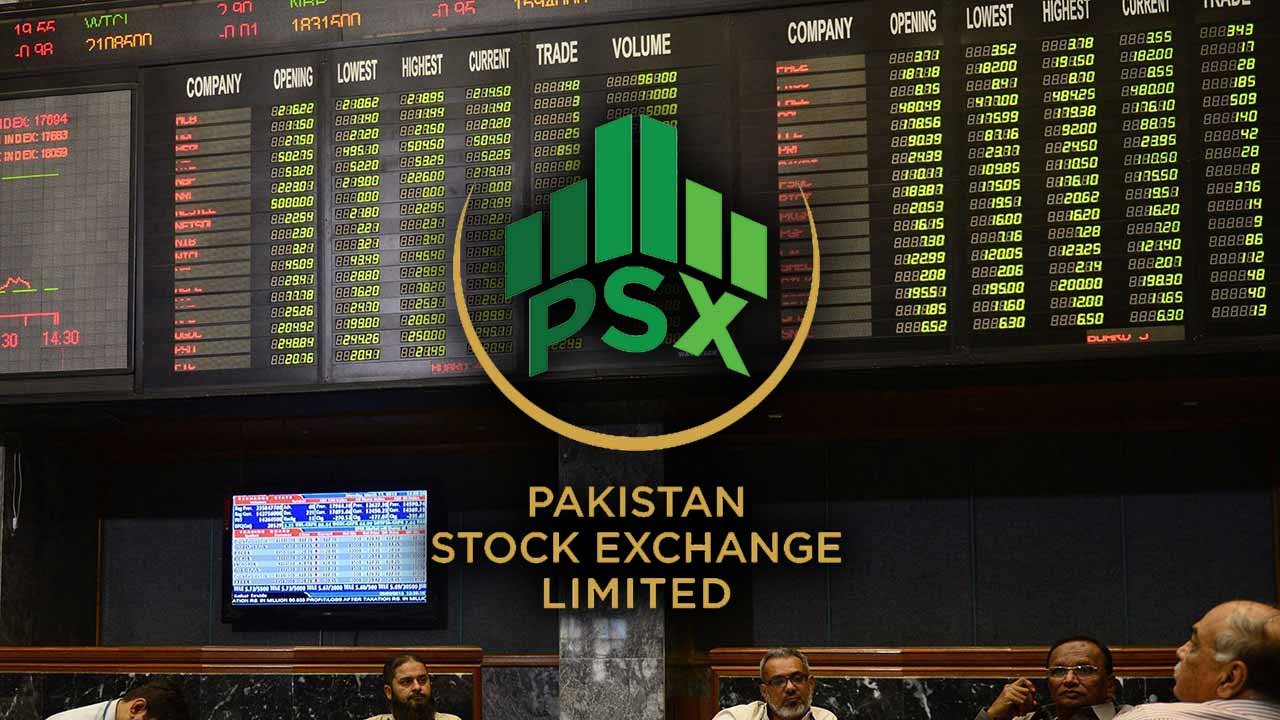
A Market in the Crossfire of Diplomacy’s Failure
At precisely 12:35 pm on Thursday, the Pakistan Stock Exchange told a story in a single number. The KSE-100 Index sat at 154,851.35 — down 3,462.09 points, or 2.19% from the previous close — as trading floors in Karachi absorbed the shockwave of a diplomatic rupture twelve hundred kilometres to the west. Iran had, in words almost contemptuous in their finality, dismissed Washington’s 15-point peace framework, delivered by Islamabad’s own envoys. “We do not plan on any negotiations,” Iranian Foreign Minister Abbas Araghchi told state television Wednesday evening. That sentence reached the Pakistan stock exchange before the opening bell.
The sell-off was not panic in the classical sense. It was something more calculated and, in some ways, more troubling: the rational response of investors recalibrating their probability trees when the single most important variable — ceasefire — has been removed. The KSE-100 has now shed roughly 18% from its all-time high of 191,032 points reached on January 23, 2026, a cumulative erosion that has quietly eviscerated the equity wealth of millions of Pakistani retail investors who piled into the market during last year’s bull run. Thursday’s session reaffirmed what the State Bank of Pakistan and institutional brokers have quietly acknowledged for weeks: the Middle East is no longer a distant variable in Pakistan’s macro story. It is the story.
Market Mechanics: A Broad-Based Rout
The damage on Thursday was, if anything, orderly — which is itself a signal of how far sentiment has fallen since the exchange’s historic circuit-breaker halt on March 2, when the KSE-100 plunged 16,089 points in a single session. Markets have re-priced geopolitical risk into baseline expectations; Thursday’s drop was a recalibration, not a meltdown.
Sector-level selling was pervasive:
- Oil & Gas Exploration Companies (OGECs): Among the heaviest casualties. MARI, OGDC, and PPL — three pillars of the energy sub-index — fell sharply as elevated Brent crude prices above $100 per barrel paradoxically squeeze downstream margins while threatening energy import costs. The disconnect between the commodity’s sticker price and the actual flow of oil through a near-blockaded Strait of Hormuz makes valuation models temporarily unreliable.
- Oil Marketing Companies (OMCs): PSO and POL extended losses as the combination of supply disruption risk and potential currency depreciation raised the spectre of working capital strain. OMCs in Pakistan operate on government-set pricing structures, and any lag in regulatory adjustment transfers losses directly to their balance sheets.
- Commercial Banks: MCB, MEBL, and NBP traded deep in the red. Elevated interest rate risk and the prospect of foreign portfolio outflows weigh on sector liquidity. Pakistan’s banking system has seen significant foreign institutional activity thin out since late February; Thursday’s selling confirmed the trend.
- Automobile Assemblers: Already suffering from a 26% month-on-month sales collapse in February, auto stocks saw additional pressure as consumer confidence — always the most sentiment-sensitive sector — receded further.
- Cement and Power Generation: HUBCO, a bellwether for the power sector, declined alongside cement majors. Both sectors are acutely exposed to energy input cost volatility. A sustained spike in furnace oil and LNG prices — now a structural reality while Hormuz flows remain restricted — compresses margins with mathematical precision.
The broader market context is stark. The KSE-100 has declined 7.84% over the past month, even as it remains elevated on a year-over-year basis — a statistical comfort that offers cold consolation to anyone who bought equities in January.
Geopolitical Context: When a Mediator’s Message Gets Rejected
Pakistan occupies an unusual seat in this crisis: simultaneously a potential beneficiary of diplomatic relevance and an economic casualty of the very conflict it is trying to mediate. The United States delivered its 15-point peace plan to Iranian officials through Pakistan, the sources said — a gesture that Prime Minister Shehbaz Sharif had publicly embraced, announcing on social media that his government “stands ready and honoured to be the host to facilitate meaningful and conclusive talks.”
Tehran’s response was unambiguous. Iran’s Foreign Minister Araghchi noted that the US is sending messages through different mediators, which “does not mean negotiations”. Iranian state broadcaster Press TV, citing a senior political-security source, laid out a five-point Iranian counteroffer that would in effect be a nonstarter in Washington: Iran’s five-point counteroffer would give Tehran control over the Strait of Hormuz, alongside demands for war reparations, a comprehensive halt to Israeli-American airstrikes, and legally binding guarantees against any future military action.
The Strait of Hormuz remains the fulcrum of the global energy crisis. The IEA assesses that the current episode is the largest supply disruption in the history of the global oil market, with flows through Hormuz collapsing from 20 million barrels per day to a trickle and Gulf production cuts of at least 10 million barrels per day. For context: on a yearly basis, 112 billion cubic metres of LNG, or 20% of global LNG trade, normally passes through the Strait of Hormuz.
Why does Pakistan feel this so acutely? The country sits at the intersection of three distinct vulnerabilities. First, as a net energy importer that covers roughly 80% of its oil needs through purchases priced in US dollars, any sustained elevation in Brent — which has traded above $100 per barrel since mid-March — mechanically expands the import bill and widens the current account deficit. Second, Pakistan’s worker remittances — its most important source of foreign exchange, recording a robust $3.3 billion in February 2026 — flow overwhelmingly from Gulf countries now engulfed in an active war zone. Workers’ remittances climbed 5% year-on-year to $3.3 billion in February 2026, although they declined 5% month-on-month. Analysts at Topline Securities have warned of a potential structural decline in Gulf-sourced remittances if Pakistani workers are evacuated or if Gulf economies contract under the weight of the crisis. Third, the China-Pakistan Economic Corridor (CPEC), which runs arterially through Pakistan’s western borderlands, depends on Gulf-linked energy commodity stability for both its operational economics and its Chinese financing logic.
The macroeconomic trap is elegant in its cruelty: the crisis that Pakistan hoped to mediate its way into diplomatic relevance on is simultaneously the crisis most likely to derail its IMF-supported stabilisation programme.
Deeper Analysis: A Fragile Macro Architecture Under Stress
Pakistan’s economy entered 2026 on a genuine upswing. The State Bank of Pakistan maintained its policy rate at 10.5%, signaling a cautious approach as policymakers monitor the impact of geopolitical developments and volatility in global commodity markets. Foreign exchange reserves had climbed to a relatively comfortable $16.3 billion at the SBP, with commercial banks adding a further $5.2 billion. After years of IMF conditionality, fiscal consolidation, and a painful devaluation cycle, the rupee had stabilised and inflation was finally trending downward from its 2023–2024 peaks.
The Iran war has introduced a new stress vector into every one of those achievements.
The table below contextualises Thursday’s drop within Pakistan’s recent history of geopolitically-driven market shocks:
| Event | Date | KSE-100 Drop (Points) | Drop (%) | Recovery Period |
|---|---|---|---|---|
| US-Israel Attack on Iran (Opening Shock) | 2 March 2026 | 16,089 | -9.57% | Ongoing |
| Iran-Pakistan-India Tensions (May 2025) | 7 May 2025 | ~3,560 | -3.13% | ~3 weeks |
| Covid-19 Global Shock | March 2020 | ~7,500 | -14.2% | ~5 months |
| India-Pakistan Military Standoff | Feb 2019 | ~2,300 | -4.8% | ~6 weeks |
| Iran Ceasefire Rejection (Today) | 26 March 2026 | 3,462 | -2.19% | TBD |
Thursday’s drop is not the largest Pakistan has endured in this crisis. But it arrives at a psychologically critical juncture: markets had spent the better part of the prior week pricing in the possibility of a US-brokered deal. Reports indicated that Washington is seeking a month-long ceasefire to facilitate negotiations on the proposed settlement plan. S&P 500 futures increased 0.9% during Asian trading hours, while European futures rose 1.2%. Brent crude declined around 6% to approximately $98.30 per barrel — numbers that had sent the KSE-100 racing upward by over 2,600 points in Wednesday’s session. Thursday’s reversal represents the full unwind of that hope trade.
The current account picture is deteriorating. Pakistan’s trade deficit stood at $3.0 billion in February 2026, with exports recorded at $2.3 billion and imports at $5.3 billion. Cumulative trade deficit for 8MFY26 widened 25.3% year-on-year to $25.1 billion. Sustained oil prices above $100 per barrel add approximately $1.5–2 billion annually to the import bill for every $10 per barrel increment above pre-crisis baseline. With Brent having averaged well above that threshold since late February, the pressure is both real and compounding.
Foreign portfolio investors, already cautious, have an additional reason to step back. Pakistan’s equity market had attracted significant foreign interest through 2024–2025 on the back of the IMF deal and stabilisation narrative. That narrative is intact — but it competes, now, with a geopolitical risk premium that no earnings growth story can easily offset.
Investor and Policy Lens: Caution Without Paralysis
For institutional investors navigating the Pakistan stock exchange today, the risk calculus has shifted but not inverted. The market’s price-to-earnings ratio — estimated at approximately 7x by leading brokerages — remains among the lowest of any major emerging market. That is not an invitation to complacency; it is, rather, the signal that the market has already priced in considerable stress and that entry levels for patient capital with a 12–18 month horizon are intellectually defensible.
What this week has clarified is that the resolution timeline for the Iran conflict is non-linear. Leavitt warned that if talks with Iran don’t pan out, President Donald Trump “will ensure they are hit harder than they have ever been hit before” — language that introduces a binary tail risk scenario that no valuation model can responsibly discount.
For policymakers in Islamabad, the immediate priority is rupee stability. The currency has shown unexpected resilience through the crisis — a reflection of the IMF programme’s credibility and the SBP’s reserve position — but a sustained period of elevated oil prices combined with declining remittances would test that resilience severely. The SBP’s decision to hold the policy rate at 10.5% reflects a careful balance: cutting rates prematurely risks inflation re-acceleration; raising them would strangle a recovery the government cannot afford to lose.
The Pakistan government’s diplomatic pivot — positioning itself as indispensable interlocutor — is strategically sound. The risk is that success in that role requires the conflict to end, and an end that benefits Pakistan’s macro position requires a ceasefire that Tehran has now explicitly rejected.
Global Ripple: Emerging Markets on the Defensive
Pakistan’s Thursday session did not occur in isolation. Goldman Sachs said crude prices were trading on geopolitical risk as Middle East supply fears remain elevated, noting that near-term price movements are being driven less by changes in the base case outlook and more by shifts in the perceived probability of worst-case scenarios. That observation applies with full force to frontier and emerging equity markets whose fundamentals are hostage to commodity prices they do not control.
From Istanbul to Jakarta, from Nairobi to Karachi, the message from Tehran on Wednesday night landed with the same cold clarity: the ceasefire that equity markets needed to stabilise has been deferred. Wall Street forecasters are raising their expectations of recession, driven in part by the Iran war and inflation risks — a recessionary shadow that, if it materialises in the United States, would compound Pakistan’s external account pressures through reduced export demand and tighter global financial conditions.
The emerging-market risk premium has widened measurably. Capital that would ordinarily rotate into high-yield frontier positions is staying home.
Conclusion
Markets, at their most honest, are simply the aggregated judgment of thousands of minds simultaneously estimating the future. On Thursday, those minds looked at Tehran’s rejection, calculated the diplomatic distance still to be covered, and moved the KSE-100 down by 3,462 points. It was not hysteria. It was arithmetic.
Pakistan is at once too geopolitically exposed to be insulated from this crisis and too strategically valuable to be abandoned by it. The country that carried Washington’s peace proposal to Tehran now awaits Tehran’s final answer — and so, with every tick of the index, does its stock market.
The gap between where oil trades and where it should, between where the rupee holds and where it could break, between diplomatic ambition and market reality — that gap is the story of Pakistan’s 2026. And it will not close until a ceasefire does.
Sources
- Bloomberg — Iran Rejects US Peace Plan
- Associated Press / Boston Globe — Iran Rejects Ceasefire, Issues Own Demands
- Al Jazeera — Iran Calls US Proposal ‘Maximalist, Unreasonable’
- NPR — Iran Rejects Trump’s Proposal, Sets 5 Conditions
- CNBC — Oil Prices Fall as Iran Signals Safe Passage
- CNBC — Oil Prices: Analysts Raise Alarm as Crude Soars
- Al Jazeera — Why the Oil Price Shock Won’t Fade Away
- The Express Tribune — PSX Crashes 9% in High-Volt Session
- Profit by Pakistan Today — PSX Gains Over 2,600 Points on Ceasefire Hope
- Dawn — PSX Rallies 1,200 Points After Eid Break
- State Bank of Pakistan
- Pakistan Stock Exchange — Data Portal
- Trading Economics — KSE-100 Index
- NBC News Live Updates — Iran War Talks
Discover more from The Economy
Subscribe to get the latest posts sent to your email.



Key Takeaways
- Rolex’s secondary market rose approximately 7.9% year-over-year as of 2026 (per WatchCharts data) — trailing Patek Philippe (+16.2%) and Tudor (+11.4%) but still outperforming Audemars Piguet (+3.4%).
- Rolex raised U.S. retail prices 4–9% in January 2026 (steel models ~5.6%, gold models ~8.7%), narrowing the historical gap between retail and pre-owned pricing.
- Not every model appreciates: steel sports references (Submariner, GMT-Master II, Daytona) have held value far better than two-tone or widely available dress references like the standard Datejust.
- The Lady-Datejust posted the sharpest 2026 gain among tracked collections — up 22.73%, from roughly $9,269 to $11,376 — driven by demand for smaller, “everyday luxury” watches.
- Gold’s rise past $2,400/oz has directly lifted the investment case for Rolex’s precious-metal references (Day-Date, Sky-Dweller, Yacht-Master).
The Model-by-Model Picture
| Category | 2026 Trend |
|---|---|
| Lady-Datejust | +22.73% (strongest performer among tracked collections) |
| Steel sports models (Submariner, GMT-Master II) | Held value well; corrected from 2022 peak but stabilized above retail |
| Daytona | Corrected from highs above $50,000 to the mid-$30,000s; still among the most sought-after references |
| Two-tone/widely available Datejust | Flat to negative — “holds value” is an overstatement for this category |
| Gold references (Day-Date, Sky-Dweller) | Lifted by gold’s rise above $2,400/oz |
Why the “Rolex Always Appreciates” Myth Is Fading
The pandemic-era boom pushed some references — the Daytona above all — to speculative highs disconnected from historical norms. Since the March 2022 peak, steel sports models have compressed meaningfully, and dealers who bought inventory near the top have in some cases faced 20–40% markdowns on liquidation. The lesson for 2026 buyers: Rolex as a category is not a monolith. Value retention depends heavily on specific reference, condition, and whether the piece comes with box and papers (“full set”).
What’s Actually Driving 2026 Strength
- Retail price increases raise the floor. When a new Submariner retails at $10,050 (up from $9,500), a pre-owned example at $11,000–$12,000 suddenly represents a smaller premium — narrowing the gap without secondary prices actually moving.
- Supply discipline remains Rolex’s core lever. The brand has never confirmed production numbers, and secondary-market premiums remain entirely a function of Rolex’s own manufacturing decisions — a risk factor as much as a support.
- Certified Pre-Owned rollout. Rolex’s now fully rolled-out CPO program has changed how buyers transact in the used market, adding a layer of brand-verified legitimacy that supports pricing.
The Case for Rolex as a Portfolio Diversifier
Financial advisors increasingly frame luxury watches not as a replacement for equities or bonds, but as a tangible, historically low-correlation diversifier — one that carries its own risks (illiquidity, condition-dependent pricing, no yield) but has demonstrated multi-decade resilience for specific references.
Is Rolex a good investment in 2026?
It depends heavily on the specific reference. Steel sports models like the Submariner and Daytona have held or grown in value; two-tone and widely available dress models generally have not. Overall, Rolex’s secondary market rose about 7.9% year-over-year in 2026, trailing Patek Philippe but ahead of Audemars Piguet.
Discover more from The Economy
Subscribe to get the latest posts sent to your email.

Navigating Mortgage and Loan Refinancing in a High-Yield Environment
Global public debt crossing critical thresholds has kept central bank policies volatile, resulting in fluctuating US Treasury yields throughout 2026. For homeowners and commercial property holders burdened by previous high-interest borrowing cycles, finding optimal refinance windows has become a high-stakes financial puzzle. Stalled disinflation and stubborn employment numbers mean rate cuts are incremental, requiring borrowers to act with precision.
Timing your mortgage or commercial loan refinance in this environment requires a deep understanding of yield curve movements and lender risk appetites.
Decoding 2026 Refinance Dynamics
The 10-Year Treasury Yield Benchmark
Mortgage rates continue to track closely with the 10-year US Treasury yield. When macroeconomic anxiety spikes debt issuance, yields rise, tightening consumer borrowing capacity. Savvy borrowers monitor weekly Treasury auctions to lock in rates during brief dip windows.
Hybrid ARMs and Alternative Structures
With fixed rates remaining elevated, 7/1 and 10/1 adjustable-rate mortgages (ARMs) have surged in popularity. These products offer lower initial monthly payments, giving borrowers breathing room until central bank easing cycles fully materialize.
| Loan Product | Current Rate Range | Best For | Key Risk Factor |
| 30-Year Fixed Mortgage | 6.2% – 6.8% | Long-term predictability | Higher initial monthly outlay |
| 7/1 Hybrid ARM | 5.5% – 5.9% | Short-term ownership / flipping | Rate reset risk after year 7 |
| Commercial Refinance | 7.0% – 8.2% | Corporate asset restructuring | Strict DSCR lender covenants |
Actionable Steps for Successful Refinancing
To maximize your chances of securing favorable refinance terms in a volatile market, follow a disciplined preparation strategy.
Boost Your Credit Score Immediately: Lenders in 2026 are applying stringent credit tiering; a 20-point increase can drop your APR by a crucial quarter-point.
Shop Regional Credit Unions: Smaller financial institutions often offer portfolio loans with more flexible underwriting than major national banks.
Calculate the Break-Even Point: Ensure your total closing costs are recouped through monthly savings within 24 months of closing.
“Market Strategist View: Refinancing in 2026 is an exercise in opportunistic timing. Borrowers must maintain immaculate financial profiles ready to strike the moment Treasury yields dip.”
Mastering the complexities of today’s debt environment ensures you can successfully lower your debt service costs and protect your long-term financial stability.
Discover more from The Economy
Subscribe to get the latest posts sent to your email.

The days of pulling generic auto insurance quotes based purely on your zip code and age are officially over. In 2026, insurance comparison engines are powered entirely by generative AI and real-time telematics. These platforms digest thousands of live data points—ranging from your driving smoothness via connected vehicle sensors to real-time traffic congestion patterns—to generate hyper-personalized premiums instantly.
For consumers, this evolution represents both a massive opportunity for savings and a hidden trap for penalty pricing. Understanding how AI algorithms evaluate risk is essential for anyone looking to lower their monthly auto insurance premiums.
How AI Comparison Engines Evaluate Your Risk Profile
Behavioral Telematics and Connected Cars
Modern cars stream performance data directly to insurance aggregators. Generative AI models analyze braking sharpness, acceleration curves, cornering G-forces, and phone distraction metrics. Drivers who maintain smooth, defensive habits are rewarded with dynamic rate cuts of up to 40% compared to traditional rating tiers.
Predictive Traffic and Weather Modeling
AI tools now cross-reference your daily commute route with predictive weather and accident probability models. If your standard parking location or driving corridor has a statistically higher incidence of uninsured motorist claims, your quotes will reflect that hyper-local risk assessment.
| Comparison Factor | Traditional Rating Model | 2026 Generative AI Model | Impact on Premium |
| Mileage & Usage | Annual estimated odometer reading | GPS tracking & live trip duration | High (up to 35% savings) |
| Driving Behavior | MVR driving record & accidents | Real-time braking, speed, & G-force | Critical (determines tier) |
| Vehicle Tech | Make, model, and safety rating | ADAS calibration & repair cost data | Moderate |
Strategies to Lower Your AI-Driven Insurance Quote
To outsmart the algorithm and secure the lowest possible premium in 2026, drivers must proactively manage their digital footprint on insurance platforms.
Opt-In for Telematics Trial Periods: Many insurers offer immediate 15% discounts just for installing their driving app; let it track safe habits for 30 days to lock in permanent savings.
Scrub Unverified Public Records: Ensure your motor vehicle report is free of clerical errors that AI risk models misinterpret as reckless behavior.
Compare AI Aggregators: Use platforms that integrate multi-carrier API feeds rather than single-brand comparison sites to find the best risk-adjusted rate.
“Industry Note: AI-driven pricing rewards transparency and precision. Drivers who actively manage their telematics data consistently out-save those relying on legacy quote calculators.”
Embracing AI comparison tools allows savvy policyholders to customize coverage limits precisely to their driving habits, eliminating wasted premium spend while ensuring robust protection.
Discover more from The Economy
Subscribe to get the latest posts sent to your email.

Silver Price Today: Why the Xi-Trump AI Standoff Is Fueling a Safe-Haven Rally

Citibank & Dólar Estadounidense: Forex Playbook After the Xi-Trump Truce

How the Trump-Xi White House Summit Is Reshaping Mortgage Rates Today for Real Estate Investors

Indonesia Navigates Mega-Project Risks as China and Russia Eye the 2,772km Trans-Kalimantan Railway

Trump-Xi 2026 Summit Takeaways: The Trade Truce, Taiwan, and the AI Divide

Solar Panel Installation Cost in 2026: Why the Math Changed Overnight

Business Insurance: What Coverage You Actually Need and What It Costs in 2026

Auto Insurance Quotes: How to Get the Lowest Rate Without Losing Coverage

Huntington Online Banking: Full Features, Fees, and How It Compares in 2026

Apply for a Bank Account Online: What You Need and How Long It Actually Takes

World’s Largest Economies: Ranking the Top Global Powers

Business Loan: A Complete 2026 Guide to Rates, Types, and Qualifying

Fast Invoice Factoring: How to Turn Unpaid Invoices Into Cash Within 24 Hours

Investment Banking Services: What They Cost and How to Choose the Right Firm in 2026

Top 30 Stocks for Investment in PSX for Massive ROI in 2026

SpaceX Starship Flight 14: First Orbital Attempt & Starlink V3 Launch Explained

Oil Prices Break $100 in 2026: Middle East Conflict & Energy Markets

BRICS+ Cross-Border Payments 2026: Interoperability Explained

AI Chip Stocks 2026: The Best Semiconductor Investments Beyond Marvell

Fidelity Investments Review 2026: SPAXX Yields & Zero-Fee Funds

Tween Back-to-School Trends 2026: What’s Driving the $85B Season

10-Year Treasury Yield Hits 4.80%: What It Means for Rates & Portfolios

Shein Clothes Quality & Safety in 2026: What Lab Tests Show

China’s US$10.8 Billion Trade Shortcut: Why the Pinglu Canal Matters

MRVL Earnings 2026: Why Marvell Sank Despite Beating Estimates

IMF & World Bank 2026 Global Economic Outlook: Growth, Inflation, Debt

High-CPM Finance Niches 2026: Publisher Monetization Blueprint

Middle East War Economics 2026: Oil Prices & Energy Markets
-

 Markets & Finance9 months ago
Top 15 Stocks for Investment in 2026 in PSX: Your Complete Guide to Pakistan’s Best Investment Opportunities
-

 Analysis7 months ago
Johor’s Investment Boom: The Hidden Costs Behind Malaysia’s Most Ambitious Economic Surge
-

 Analysis7 months ago
Top 10 Stocks for Investment in PSX for Quick Returns in 2026
-

 Banks8 months ago
Best Investments in Pakistan 2026: Top 10 Low-Price Shares and Long-Term Picks for the PSX
-

 Analysis8 months ago
Brazil’s Rare Earth Race: US, EU, and China Compete for Critical Minerals as Tensions Rise
-

 Investment9 months ago
Top 10 Mutual Fund Managers in Pakistan for Investment in 2026: A Comprehensive Guide for Optimal Returns
-

 Global Economy9 months ago
15 Most Lucrative Sectors for Investment in Pakistan: A 2025 Data-Driven Analysis
-

 Global Economy9 months ago
Pakistan’s Export Goldmine: 10 Game-Changing Markets Where Pakistani Businesses Are Winning Big in 2025