
Business
US Inflation 4% May 2026: Is the Worst Over? Fed, Oil Prices

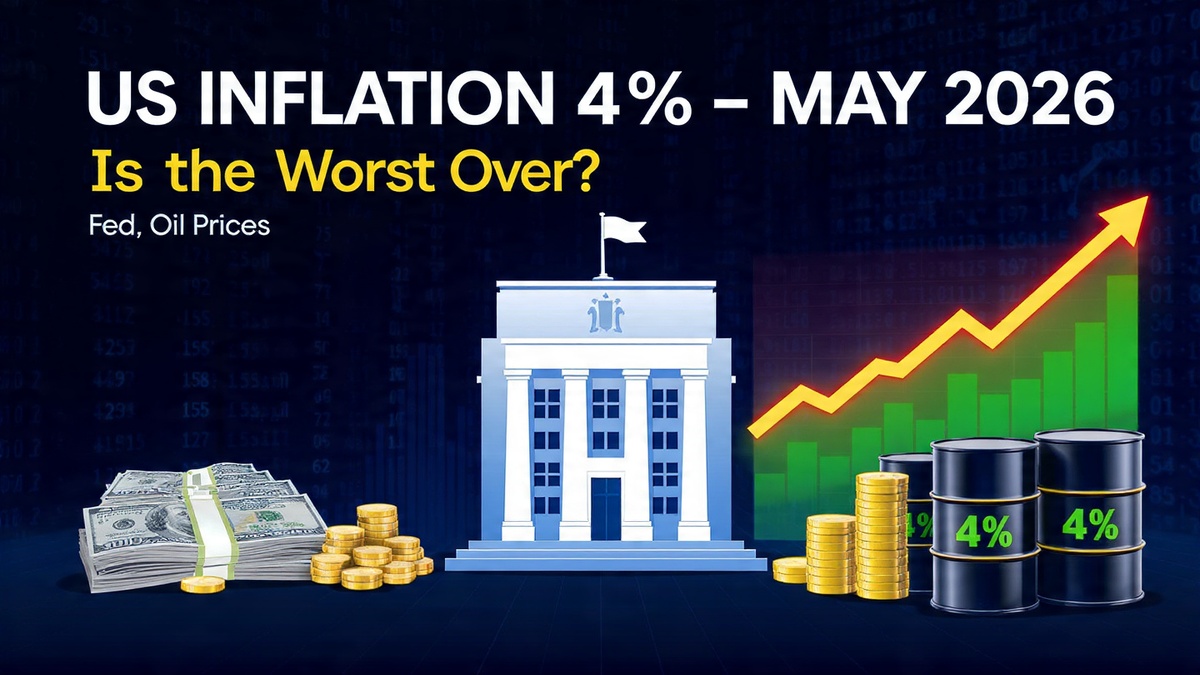
US inflation crossed 4% in May 2026, its highest in three years. But analysts see signs the peak may be in. Here’s what’s driving prices, what cools them, and what it means for your finances.
U.S. inflation topped 4% in May 2026—doubling the Federal Reserve’s target and hitting its highest level in three years—but a growing cohort of economists and market analysts believes the worst of the current price surge may be ending. The reasons for both the spike and the projected deceleration trace back to a single disruptive event: the military conflict in the Middle East and its consequences for global energy markets.
Annual inflation accelerated sharply from 2.4% at the start of the year to 3.8% in April and then crossed 4% in the May report, according to data cited across analysis from institutions including Deloitte and the Federal Reserve. Fuel oil prices alone increased 5.8% in April compared to March. The immediate cause was not hard to identify: the U.S.-led bombing campaign against Iran disrupted flows through the Strait of Hormuz, the 21-mile waterway through which roughly 20% of the world’s daily oil and gas supply transits.
A Supply Shock Layered on Structural Weakness
What made the energy shock particularly damaging was the macroeconomic surface it landed on. After five years of inflation running above the Fed’s 2% target—through pandemic-era supply chain disruption, the 2022 commodity shock following Russia’s invasion of Ukraine, and the persistent pricing power of service sector industries—the U.S. economy had limited cushion to absorb another commodity surge.
The Hormuz disruption took oil prices sharply higher almost overnight. But the price pressure extended well beyond crude. Over 20% of oil and gas, about 33% of global fertilizer shipments, and numerous other commodity inputs pass through the strait. Transportation costs surged. Agricultural commodity prices followed. Real wages—adjusted for inflation—declined across much of the developed world, squeezing household purchasing power at a moment when credit card debt was already at record levels.
Global headline inflation is projected to reach roughly 4.4% to 5.2% in developing economies and approximately 2.9% in developed ones for 2026, according to projections cited by Fair Observer. The divergence reflects the higher energy import dependence of poorer nations, which have fewer domestic energy resources and less fiscal capacity to subsidize consumer prices.
Why the Peak May Be In
The cautious optimism among some analysts rests on a set of connected assumptions. The ceasefire agreement that ended the immediate U.S.-Iran military confrontation should, over time, allow Hormuz traffic flows to recover. A UAE oil executive warned that even with swift resolution, returning to 80% of pre-conflict flows would take at least four months—with full normalization potentially not arriving until the first or second quarter of 2027. But the direction of travel, absent renewed hostilities, points toward gradual energy price relief.
Commodity futures markets had, by late June, already begun pricing a modest Brent crude decline on the assumption that the ceasefire holds. Base effects will also help: the May and June 2026 comparisons for year-on-year CPI will face the spike itself as a prior-period reference point, mechanically pulling the year-over-year number lower even if month-on-month price increases level out.
German wholesale prices, which serve as a leading indicator for broader European and global goods inflation, rose 5.9% year-over-year in May—down from 6.3% in April, suggesting the pace of industrial goods inflation in Europe is already moderating. The sharpest declines came from food items including coffee, tea, and milk. These tend to lead consumer goods prices by several months.
The Fed’s Dilemma Remains Acute
None of this resolves the Federal Reserve’s core problem: inflation is structurally above target, the labor market remains strong enough to sustain wage-driven price pressure, and Kevin Warsh’s first press conference made clear that the new Fed chair intends to prioritize price stability over growth support. Nine FOMC members signaled rate hikes by year-end in their June projections.
The question of whether the CPI peak has arrived—or whether inflation merely pauses before re-accelerating if oil prices rise again—is precisely the uncertainty that makes the September FOMC meeting the most consequential in years. Traders are pricing roughly a coin-flip chance of a September hike, and BofA now forecasts three quarter-point increases before year-end.
The household experience of the current inflation episode has been particularly concentrated at the bottom of the income distribution. Consumer sentiment fell to 48.9% in the final University of Michigan survey of June—near historic lows—reflecting the gap between the financial markets’ resilience and the lived reality of households where food, fuel, and shelter costs have risen significantly faster than wages.
What Cools Inflation From Here
The most plausible path to deceleration runs through four channels. First, energy price relief if Hormuz normalization proceeds. Second, base effects that mechanically reduce year-on-year comparisons. Third, a softening of consumer demand if the Fed tightens and borrowing costs rise. Fourth, a continued easing of goods price inflation as global supply chains—which have been rebuilding capacity since the pandemic—absorb excess demand.
The structural wildcard is AI-driven productivity. Kevin Warsh has publicly argued that the AI investment boom is “structurally disinflationary”—that productivity gains from automation will eventually hold down labor costs and goods prices at a pace that allows the Fed to maintain lower rates than the historical rule of thumb would suggest. That argument, which informs his broader monetary framework, is the contested terrain on which the inflation debate of 2026 and 2027 will ultimately be fought.
Discover more from The Economy
Subscribe to get the latest posts sent to your email.


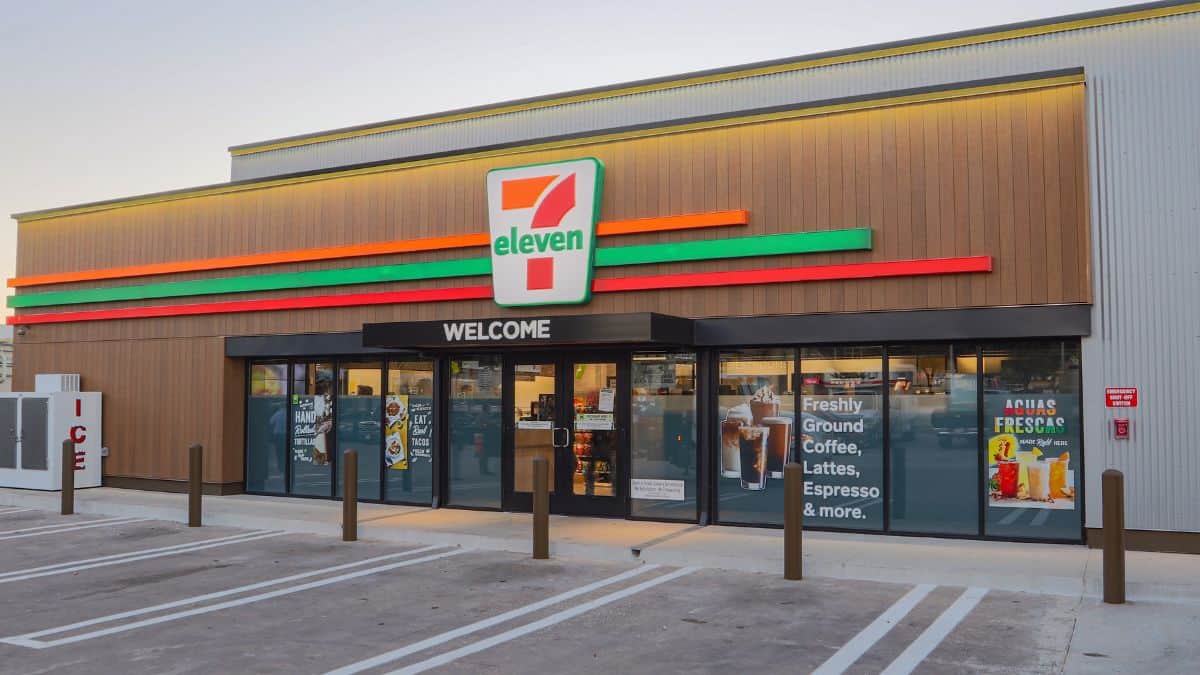
Major U.S. retailers are closing over 1,100 stores in 2026, with 7-Eleven, GameStop, and Grocery Outlet leading the restructuring charge—here’s what it means for commercial real estate investors.
The U.S. retail landscape is undergoing a dramatic contraction in 2026 as major chains shutter underperforming locations to stabilize balance sheets and improve cash flow. 7-Eleven plans to close 645 convenience stores across North America during fiscal year 2026, while GameStop has confirmed 470 store closures, and Grocery Outlet is shutting approximately 36 locations as part of a broader “Optimization Plan.”
Combined with closures from Advance Auto Parts, Foot Locker, Dollar Tree, and Denny’s, the total number of confirmed U.S. retail shutdowns in 2026 now exceeds 2,000 locations, signaling a profound shift in brick-and-mortar strategy.
Why Are These Retailers Closing Stores?
Each chain faces distinct operational pressures, but the underlying theme is identical: cutting losses to protect enterprise value.
- 7-Eleven is pruning underperforming company-owned sites ahead of a delayed 2027 IPO, converting some locations to wholesale fuel operations to reduce overhead while retaining fuel revenue.
- GameStop continues its years-long digital pivot, shedding physical retail footprint as it reallocates capital toward e-commerce and collectibles logistics.
- Grocery Outlet CEO Jason Potter acknowledged the chain “expanded too quickly,” particularly in Eastern states where 24 of the 36 closures are concentrated. The move follows a nearly $235 million operating loss in Q4.
The Business Logic Behind Retail Consolidation
Mass store closures are not merely a reaction to weak consumer demand—they represent strategic portfolio optimization. By exiting low-margin markets and reinvesting in high-performing locations or digital infrastructure, retailers aim to:
- Improve same-store sales metrics by eliminating drag from underperforming units
- Reduce lease liabilities and renegotiate favorable terms with commercial landlords
- Unlock working capital for technology upgrades, supply chain automation, and AI-driven inventory management
- Streamline operational complexity across smaller, more profitable geographic footprints
Impact on Commercial Real Estate and Retail Investing
The 2026 closure wave carries significant implications for commercial real estate investment trusts (REITs), private equity firms, and institutional investors holding retail property debt.
- Vacancy rates in secondary markets are expected to rise, particularly for Class B and C strip mall anchors, putting downward pressure on net operating income (NOI).
- Tenant mix diversification is becoming critical. Landlords dependent on single-tenant convenience or discount grocery concepts face heightened rollover risk.
- Opportunistic acquisitions may emerge. Distressed retail assets in prime locations could trade at cap rate premiums, attracting value-add investors willing to execute repositioning strategies—converting vacant big-box spaces into last-mile distribution hubs, medical offices, or mixed-use developments.
- Credit risk in commercial mortgage-backed securities (CMBS) pools with high retail exposure warrants renewed scrutiny as cash flow coverage ratios tighten.
For retail sector investors, the contraction validates a barbell strategy: overweight exposure to dominant omnichannel players with fortress balance sheets, while selectively targeting experiential retail and essential service tenants (healthcare, grocery, logistics) that are insulated from e-commerce displacement.
People Also Ask: 2026 Retail Store Closures
How many 7-Eleven stores are closing in 2026? 7-Eleven plans to close approximately 645 stores in North America during fiscal year 2026, which runs from March 1, 2026, to February 28, 2027.
Is GameStop going out of business? No. While GameStop is closing 470 stores in 2026, the company is restructuring to focus on digital sales and profitability, not liquidating entirely.
Why is Grocery Outlet closing stores? Grocery Outlet is closing approximately 36 underperforming locations—about 30% of its Eastern U.S. footprint—after acknowledging overly rapid expansion in markets that failed to achieve sustained profitability.
Discover more from The Economy
Subscribe to get the latest posts sent to your email.
State Farm is distributing a historic $5 billion auto insurance dividend to 2025 policyholders, averaging $100 per vehicle—here’s who qualifies and how to maximize your savings.
State Farm Mutual Automobile Insurance Company has begun issuing the largest dividend payout in its 100-plus-year history, mailing $5 billion in cash-back checks to qualifying auto insurance customers across more than 49 million vehicles.
The one-time distribution, announced in February 2026 and now rolling out in waves, returns an average of $100 per vehicle to policyholders who maintained active coverage throughout 2025.
Payments vary by state—ranging from 4% to 10% of the premium paid in 2025—and are being delivered via paper check or direct deposit based on customer preference.
Qualifying policyholders will receive notification by email or postal mail, and funds can also be tracked through the State Farm mobile app or online account portal.
Who Qualifies for the State Farm Dividend?
Eligibility is straightforward but strictly defined:
- Auto policies must have been active between January 1, 2025, and December 31, 2025
- Only personal auto insurance policies underwritten by State Farm Mutual are included
- The dividend is retrospective and does not affect future premium calculations or auto rates
- Commercial auto policies, renters, and homeowners policies are excluded from this specific dividend
The distribution timeline spans several months due to the sheer volume of vehicles covered. Customers with questions can contact the dedicated Dividend Customer Contact Center at 1-888-808-9532 or visit sfdividend.com.
Why State Farm Is Returning $5 Billion Now
State Farm’s unprecedented dividend stems from stronger-than-expected underwriting performance in 2025, driven by lower auto repair costs and a reduced frequency of collisions industry-wide. As a mutual insurance company—owned by policyholders rather than shareholders—State Farm is uniquely positioned to return surplus capital directly to customers.
The dividend comes on top of recent auto insurance rate reductions in 40 states, which are already saving customers an estimated $4.6 billion annually.
How to Maximize Your Auto Insurance Savings in 2026
Receiving a dividend check is an ideal moment to audit your entire auto insurance portfolio. Here’s how to stretch those savings further:
- Compare car insurance rates from multiple carriers. Even if State Farm reduced your rates, market competition may offer lower premiums for the same coverage limits.
- Bundle your policies. Combining auto, home, and life insurance under one carrier often unlocks multi-policy discounts exceeding 20%.
- Ask about safe driver discounts. Telematics programs that monitor braking, acceleration, and mileage can reduce premiums by up to 30% for low-risk drivers.
- Raise your deductible cautiously. Increasing your collision deductible from $500 to $1,000 can lower monthly premiums, but ensure you have sufficient emergency savings to cover the gap.
- Review coverage annually. Dropping unnecessary add-ons like rental reimbursement or roadside assistance—if already covered elsewhere—can trim costs without exposing you to liability risks.
People Also Ask: State Farm Dividend 2026
How much is the State Farm dividend per vehicle? The average payout is approximately $100 per vehicle, though actual amounts range from 4% to 10% of 2025 premiums paid, varying by state.
When will I receive my State Farm dividend check? Distribution began in summer 2026 and will continue for several months due to the volume of 49 million vehicles. Check your State Farm app or mail for notification.
Does the State Farm dividend affect my future premiums? No. The dividend is retrospective and will not impact future auto insurance rates, which are based on expected future costs and individual risk profiles.
Discover more from The Economy
Subscribe to get the latest posts sent to your email.

- A Utah ice cream maker and a crypto-adjacent prediction market have almost nothing in common commercially — yet both landed in August 2026 headlines for the same underlying reason: unresolved legal and regulatory exposure eventually forces a reckoning.
- Rebel Creamery’s $23.785 million trade dress judgment pushed it into Chapter 11 bankruptcy; Polymarket’s unresolved regulatory status cost it a direct banking relationship with JPMorgan Chase.
- Together, the two cases offer a timely governance lesson: legal and regulatory risk needs to be tracked and priced at the board level long before it becomes a balance-sheet or banking-access crisis.
Two Very Different Companies, One Shared Failure Mode
Rebel Creamery sells keto ice cream at Walmart and Kroger. Polymarket runs a prediction-market platform for event contracts. There’s no commercial overlap between them, and nothing links the two stories except timing — both broke into major business coverage within days of each other in mid-August 2026. But set side by side, they illustrate the same structural failure mode with unusual clarity: a legal or regulatory question that a company treats as a background risk for years can, without warning, convert into an existential capital or operational event.
For Rebel Creamery, that conversion took five years — from a 2021 trade dress lawsuit to a 2026 judgment that exceeded the company’s total asset base, forcing a Chapter 11 filing just weeks after the ruling. For Polymarket, the exposure has been more chronic: years of operating in a contested regulatory category culminated not in a single court judgment, but in a major institutional bank quietly declining to keep providing core banking services — a slower-motion, but no less consequential, form of the same risk materializing.
The Common Thread: Risk That Sits Outside the P&L
What makes both cases instructive for corporate governance is that neither risk showed up as an operating cost until it was too late to manage cheaply. Rebel’s packaging decisions in 2018 didn’t register as a balance-sheet risk at the time; by 2026, the resulting judgment was larger than the company’s entire asset base. Polymarket’s regulatory ambiguity didn’t show up in its transaction volume or user growth — by several measures, including a combined $1.6 billion in investment from Intercontinental Exchange, the business has been thriving — but it was enough to cost the company a marquee banking relationship regardless.
That’s the pattern worth internalizing: trademark litigation and regulatory scrutiny exposure often don’t correlate with a company’s day-to-day commercial performance. A fast-growing, profitable business can still be carrying dormant legal or regulatory risk large enough to force a restructuring or sever a critical institutional relationship, with little warning until the event itself arrives.
A Practical Framework for Boards and Founders
Drawing directly from both cases, four governance practices stand out as the difference between risk that gets managed proactively and risk that becomes a crisis:
1. Price legal and regulatory exposure like a contingent liability, not a legal-department line item. Rebel Creamery’s board-level financial planning, based on the public record, does not appear to have treated the Van Leeuwen litigation as a balance-sheet-scale risk until the judgment landed. Contingent liabilities from pending litigation belong in the same governance conversation as debt covenants and capital planning, particularly once a case reaches active trial.
2. Build in independent verification before scaling a design, brand, or business model that sits near a competitor’s established territory. Whether it’s packaging trade dress or operating in a category with unsettled federal classification, proximity to an established competitor or a contested regulatory category raises the stakes of any dispute that follows.
3. Diversify institutional relationships before you’re forced to. Polymarket’s exposure to a single major banking relationship meant that one bank’s risk-tolerance decision could materially affect its operations. Companies in regulatorily contested categories should treat banking-relationship concentration as a specific risk to manage, not an afterthought.
4. Treat early warning signals as governance inputs, not just customer service or PR noise. In the Rebel Creamery case, evidence of real-world consumer confusion reportedly existed years before litigation intensified. Escalating those signals to legal and governance functions early — rather than treating them as isolated complaints — is a low-cost way to surface risk before it compounds.
The Cost of Getting This Wrong Is Rising, Not Falling
Both stories are unfolding against a backdrop that makes this framework more urgent, not less. Corporate bankruptcy driven by IP litigation is not a new phenomenon, but the scale of trade dress and trademark judgments — disgorgement remedies tied to a defendant’s full profit stream from an infringing product line — means the downside case has gotten larger. And on the regulatory side, 2026’s active debate over banking access and “debanking” practices means that regulatory ambiguity is translating into institutional-relationship risk faster and more visibly than it has in prior cycles.
For general counsel, CFOs, and boards, the actionable takeaway from this week’s headlines isn’t about ice cream or prediction markets specifically — it’s a reminder to run a systematic audit of where legal and regulatory exposure sits dormant in the business today, and to price it before a court, or a bank, prices it for you.
Discover more from The Economy
Subscribe to get the latest posts sent to your email.

BRICS Summit 2026: Economic Implications of the India-China Diplomatic Thaw

Emerging Market Debt: The Ripple Effect of China’s Sovereign Refinancing Role

Dropping Oil & Surging Gold: Navigating Safe-Haven Investments in Q3

2026 AI Stock Frenzy: How to Position Your Portfolio

The AI Disruption in Financial Risk Management: Moving Beyond Record Banking Profits

The Rise of Green Aviation: Balancing High Fuel Prices with Sustainable Infrastructure

US-China Relations in Q3 2026: Trade Tariffs and Supply Chain Risks

Emerging Markets Rebound: Top Stock Strategies for the Gulf and South Asia

Tackling the 2026 Global Food Crisis: Policy Shifts and Market Speculation

Post-Quantum Encryption in Banking: The Next Frontier in Cybersecurity Investments

The Financial Cost of Sanctions: Afghanistan’s Economy 5 Years Under the Taliban

Supply Chain Fragmentation: 10 Trends Reshaping Global Trade This Year

The 2026 Aviation Boom: Investing in Airline Stocks as Passenger Traffic Surges

China’s 2026 Corporate Laws: Western Compliance Guide

China Politburo July 2026: Stimulus Signals Explained

Russia Fuel Shortages 2026: Inside a Cracking War Economy

Top 15 Financial Stocks for Investment in PSX

Pakistan Passed Its Third IMF Review

State Farm’s $5B Dividend 2026: Who Qualifies & Payout Dates

SpaceX Stock Lockup Expiration Explained: Why $123B in Shares Could Hit the Market

Pakistan IMF Program 2026: Inside the Push Toward an Interest-Free Economy

Andy Burnham, UK Gilts and Mortgages: July 2026 Explainer

Russia Oil Revenue 2026: How Sanctions on Rosneft and Lukoil Are Draining the War Chest

Pakistan’s 2026 Monsoon Floods Threaten Fragile Economic Recovery as Inflation Nears 9%

Gold Price 2026: Why Bullion Has Fallen 25% From Its January Record High

Russia Oil Revenue 2026: The Iran War Windfall and What a Hormuz Deal Means for Moscow

Canada US Trade War 2026: Inside Carney’s Push to Cut Ties With Trump’s Tariffs

Russia’s Budget Deficit Blew Past Its Full-Year Target in Three Months
-

 Markets & Finance8 months ago
Top 15 Stocks for Investment in 2026 in PSX: Your Complete Guide to Pakistan’s Best Investment Opportunities
-

 Analysis6 months ago
Johor’s Investment Boom: The Hidden Costs Behind Malaysia’s Most Ambitious Economic Surge
-

 Analysis6 months ago
Top 10 Stocks for Investment in PSX for Quick Returns in 2026
-

 Analysis7 months ago
Brazil’s Rare Earth Race: US, EU, and China Compete for Critical Minerals as Tensions Rise
-

 Banks7 months ago
Best Investments in Pakistan 2026: Top 10 Low-Price Shares and Long-Term Picks for the PSX
-

 Investment8 months ago
Top 10 Mutual Fund Managers in Pakistan for Investment in 2026: A Comprehensive Guide for Optimal Returns
-

 Global Economy8 months ago
15 Most Lucrative Sectors for Investment in Pakistan: A 2025 Data-Driven Analysis
-

 Global Economy8 months ago
Pakistan’s Export Goldmine: 10 Game-Changing Markets Where Pakistani Businesses Are Winning Big in 2025