
AI
2026 AI Stock Frenzy: How to Position Your Portfolio


Since ChatGPT’s late-2022 launch, AI-linked equities have driven roughly three-quarters of total S&P 500 returns, according to JPMorgan Asset Management research cited by Yahoo Finance. By August 2026, that concentration has only intensified — and it has split the investment community into two camps: those who see a durable capital-expenditure supercycle, and those who see the early innings of a correction. For portfolio managers and high-net-worth individuals, the question is no longer whether to hold AI exposure, but how much, where, and for how long.
This piece cuts through the noise with a structured allocation framework, a historical benchmark against the dot-com era, and a clear-eyed look at the warning signs serious investors are watching heading into Q4 2026.
The State of Play: Where the Money Is Flowing
The AI infrastructure buildout remains the dominant story of 2026. Nvidia has reportedly built a confirmed order pipeline extending through 2027, while AMD’s earnings trajectory has accelerated sharply on the back of data-center demand, per Intellectia AI’s August 2026 market analysis. Hyperscalers — Microsoft, Amazon, Alphabet, and Meta — continue to pour hundreds of billions of dollars into chips and data-center capacity, a spending pattern that has become self-reinforcing: higher capex commitments support chipmaker revenue, which in turn justifies further capex.
Sector performance reflects this. AI-linked names have outpaced broader indices by more than 45 percentage points year-to-date, according to Intellectia AI’s market impact report, with data-center hardware spending growing at an annualized rate above 80%.
Where High-CPC Capital Is Concentrating
- Compute infrastructure: GPU and custom-silicon manufacturers capturing hyperscaler capex
- Cloud/AI software integration: Enterprise B2B platforms embedding generative AI into existing SaaS stacks
- Power and grid capacity: Utilities and energy infrastructure serving data-center demand
- AI-native applications: Vertical software companies building proprietary models on top of foundation models
The Bear Case: Why Serious Investors Are Hedging
Skepticism is no longer a fringe position. In January 2026, Bridgewater founder Ray Dalio warned that the AI boom had entered “the early stages of a bubble,” a comment made in a year-end retrospective covered by Fortune. That warning gained teeth after an MIT study found that 95% of enterprise generative-AI pilot projects failed to produce a measurable return on investment, a finding Yahoo Finance flagged as a genuine warning sign for equity valuations built on future monetization rather than current cash flow.
The distinction that matters for allocators, per Intellectia AI’s bubble analysis, is between companies with confirmed order backlogs and expanding margins (structurally sound) and companies whose valuations rest on unrealized future monetization (bubble-exposed). Sorting portfolio holdings into these two buckets is the single highest-leverage exercise an investor can do this quarter.
2026 AI Cycle vs. the Dot-Com Era: A Structural Comparison
| Metric | Dot-Com Era (1999–2000) | 2026 AI Cycle |
|---|---|---|
| Primary capex driver | Speculative internet buildout, thin revenue | Hyperscaler capex backed by existing cloud/enterprise revenue |
| Revenue-to-valuation link | Often absent (pre-revenue IPOs) | Present for leaders (Nvidia order backlog through 2027); absent for some infrastructure plays |
| Concentration of gains | Broad-based internet basket | Narrow — chips, hyperscalers, select software |
| Documented failure rate | High (dot-com bust wiped out most listings) | 95% of enterprise GenAI pilots fail to show ROI, per MIT/Yahoo Finance |
| Institutional warning signals | Present late-cycle | Present now (Dalio, Altman self-caution) |
Sources: Yahoo Finance, Fortune, Intellectia AI — see citations above.
A Risk-Based Allocation Framework
Rather than a single “buy AI stocks” recommendation, high-CPM advisory content should give investors a framework calibrated to their risk tolerance:
- Conservative allocators (capital preservation priority): Cap direct AI-thematic exposure at 5–8% of equity allocation, concentrated in cash-flow-positive infrastructure leaders rather than pre-revenue application-layer names.
- Balanced/growth allocators: 10–15% thematic exposure, split between compute infrastructure and diversified AI-focused ETFs to reduce single-stock concentration risk.
- Aggressive/tactical allocators: Up to 20–25%, with explicit position-sizing rules and a pre-committed exit discipline tied to order-backlog deterioration or margin compression — not price alone.
Due-Diligence Checklist Before Adding Exposure
- Does the company have a contracted, not merely projected, revenue backlog?
- Is capex growth matched by margin expansion, or is it diluting returns on invested capital?
- What percentage of reported “AI revenue” is genuinely incremental versus reclassified existing cloud spend?
- How concentrated is the position relative to total portfolio beta?
Geographic and Currency Considerations
International diversification adds a layer of complexity high-net-worth investors can’t ignore. Currency exposure can offset local-market AI gains, and emerging-market AI plays carry additional governance and accounting-standard risk that requires separate due diligence, as Intellectia AI’s analysis notes. Investors targeting UAE, Singapore, or broader Asia-Pacific AI exposure should treat regulatory environment and corporate governance standards as a distinct risk factor, not an afterthought bolted onto a US-centric thesis.
The Bottom Line for Q4 2026
The AI stock frenzy is not a binary bubble-or-boom proposition — it is a bifurcated market where infrastructure leaders with contracted revenue are behaving structurally soundly, while a meaningful subset of application-layer and pre-revenue names carry genuine bubble characteristics. The disciplined approach for 2026 is position sizing by conviction tier, not blanket thematic exposure. Investors who treat “AI stocks” as a single monolithic trade — rather than a spectrum from contracted-backlog infrastructure to speculative application software — are the ones most exposed if sentiment turns.
Discover more from The Economy
Subscribe to get the latest posts sent to your email.



Key Takeaways
- Major US banks generated $47 billion in profits in early 2026 while cutting roughly 15,000 positions tied to AI-driven restructuring — a genuine profit-and-disruption paradox playing out simultaneously.
- Academic research finds AI-adopting banks experience measurably lower default risk, credit risk, and systematic risk versus non-adopters — a causal, not merely correlational, risk-reduction effect.
- Generative AI could contribute $200-340 billion annually to global bank profits through productivity gains and automation, with Morgan Stanley citing a $740 billion 2026 AI capex wave as a direct tailwind for bank financing revenue.
- AI incidents carry a measurable market cost: a study of five US banks found an average short-term cumulative abnormal stock return loss of -21% following AI incidents, with negative spillover to the broader financial sector.
- Real-time credit exposure monitoring is emerging as AI’s most consequential risk-management application — recalculating counterparty exposure continuously as transactions execute, rather than discovering limit breaches the next morning.
A Genuine Paradox: Record Profits, Real Disruption
The defining tension in banking’s 2026 AI story is that efficiency gains and workforce disruption are happening at the same institutions, in the same reporting period, without contradiction. The 21,490 AI-related layoffs recorded in April 2026 and the $47 billion in profits generated by major banks while cutting 15,000 positions represent just the opening chapter of a restructuring that will reshape the industry over the coming decade — a transformation creating both risks and opportunities for investors simultaneously. JPMorgan Chase has emerged as the clearest example of how major financial institutions are restructuring entire organisations around AI capabilities rather than simply layering AI tools onto existing operations.
That reskilling gap is real and measurable at the industry level. The World Economic Forum reports that 77% of employers plan to reskill workers in response to AI disruption, yet only 57% report having created genuine reskilling pathways in practice — a gap between stated intention and operational execution that creates both human and financial-stability risk.
The Evidence: AI Adoption Causally Reduces Bank Risk
Beyond the headline profit and disruption figures sits a more academically rigorous finding that deserves more attention than it typically receives: AI adoption appears to make banks genuinely safer, not just more efficient. Research strongly supports this: AI-adopting banks experience lower default risk, measured by lower probability of default; lower credit risk, with smaller non-performing loan ratios and loan-loss provisions; and lower systematic risk, indicating that AI-adopting banks’ equity values are less exposed to economy-wide shocks and cyclical downturns. These effects remain robust after controlling for bank size, profitability, leverage, governance, and ESG performance, with consistent evidence that AI adoption causally reduces risk rather than simply reflecting already-safer institutions.
Two mechanisms explain this effect: enhanced risk management, where AI enables real-time credit monitoring, early detection of loan deterioration, and automated compliance screening, improving portfolio quality and lowering default probabilities. This is the strongest empirical grounding available for the “AI as risk-management upgrade” thesis, as distinct from the more commonly cited “AI as cost-cutting tool” narrative.
Real-Time Risk: The Practical Application
The operational shift this enables is significant. AI enables risk assessment at the speed of the business: as transactions execute, credit exposure to counterparties is recalculated continuously, and limit breaches are detected in real time rather than discovered the next morning. For risk managers, that shift from batch-processed, next-day exposure reporting to continuous real-time monitoring represents a genuine structural upgrade in how counterparty risk is managed — not merely a faster version of the same process.
The Capital and Profit Case
The scale of capital flowing into this transition is substantial, and banks sit at the centre of financing it. With an expected $740 billion in AI capex in 2026, banks stand to benefit from rising financing demand, resilient M&A activity, and long-term efficiency gains — AI is poised to be a net positive for banks, with disruption risks considered manageable even as investors worry about job losses and macro impacts. AI is driving major efficiency gains for banks, potentially boosting productivity by 20% to 50% over the next five to ten years.
The productivity dividend estimate at the global level is similarly large: generative AI could contribute between $200 billion and $340 billion a year to global bank profits through productivity advances and automation, with banks introducing knowledge agents powered by large language models in 2026 that can extract rich insights from loan applications, financial statements, and customer communications at scale.
Comparative Table: AI’s Dual Effect on Bank Risk Profile
| Dimension | Risk-Reducing Effect | Risk-Increasing Effect |
|---|---|---|
| Credit risk | Lower non-performing loan ratios, better early detection | New model/hallucination risk in credit decisioning |
| Operational risk | Real-time exposure monitoring, automated compliance | Cascading agentic-AI errors across chained workflows |
| Market/systematic risk | Lower exposure to economy-wide shocks (per LSE research) | AI-incident-driven stock price shocks (-21% average CAR) |
| Fraud risk | AI-powered fraud detection catches anomalies faster | AI-enabled deepfake fraud up over 2,000% in three years |
| Capital allocation | $740bn AI capex driving bank financing revenue | Chicago Fed-flagged tail risk from AI-adjacent loan exposure |
Why It Matters: The New Tail Risks Nobody Priced In
The efficiency and risk-reduction case is genuine, but it is only half the picture — AI introduces categorically new failure modes that traditional bank risk frameworks were not built to handle. Because AI agents chain tools and call other agents, a single error can propagate quickly through banking workflows, with resulting failures cascading into transaction and payment errors, data privacy breaches, and technical failures that become operational disruptions — a mispriced trade, a duplicated payment, or a misrouted customer instruction can multiply across systems before a human reviewer sees the first alert. Generative models still produce confident but incorrect outputs, and in agentic systems, those outputs become instructions: a model that hallucinates a policy, a customer entitlement, or a calculation rule can trigger actions the bank never approved.
The market has already begun pricing this risk directly. Analysis of five US banks and financial services firms found the average short-term cumulative abnormal stock return loss following an AI incident was -21.04%, with the negative impact spreading to the broader financial industry within a three-day window — a measurable, quantified market penalty for AI-related operational failures.
A Systemic-Level Concern
Regulators are increasingly framing this as a financial-stability issue, not just an institution-level risk. IMF analysis suggests that extreme cyber-incident losses could trigger funding strains, raise solvency concerns, and disrupt broader markets, with advanced AI models dramatically reducing the time and cost needed to identify and exploit vulnerabilities — raising the likelihood of simultaneously discovering and targeting weaknesses in widely used systems, meaning cyber risk is increasingly about correlated failures that could disrupt financial intermediation, payments, and confidence at the systemic level.
Separately, the Federal Reserve Bank of Chicago has explicitly flagged banks’ exposure to the AI investment boom itself as a distinct tail risk: commercial loans underwritten by banking institutions have been one of the mechanisms fuelling the capital expenditure increase across the AI value chain, creating a possible AI-bubble tail risk — the risk of losses due to extremely rare events — through banks’ direct lending exposure to AI-adjacent borrowers.
The Governance Gap: Adoption Outpacing Control Frameworks
Nearly 80% of large financial institutions now use some form of AI in core decision-making processes, according to the Bank for International Settlements, yet deploying AI at scale using control frameworks designed for a pre-AI world introduces structural vulnerabilities that can translate into earnings volatility, regulatory exposure, and reputational damage, at times within a single business cycle. For financial analysts, the maturity of a bank’s AI control environment — revealed through disclosures, regulatory interactions, and operational outcomes — is becoming as telling a signal as capital discipline or risk culture.
Profitability outcomes from AI adoption also remain more mixed than the headline productivity estimates suggest: only 40% of respondents report increased profitability from AI, while 43% report no change — a reminder that the $200-340 billion global profit-uplift estimate represents a potential ceiling, not a guaranteed outcome, and depends heavily on execution quality.
What to Do Next
- Distinguish AI-driven risk reduction from AI-driven risk creation when assessing a bank’s AI strategy — both are simultaneously real, and the net effect depends on control-framework maturity, not adoption speed alone.
- Treat a bank’s AI governance disclosures as a genuine credit-quality signal, following the CFA Institute’s framing that AI control-environment maturity is becoming as informative as traditional capital and risk-culture metrics.
- Watch for AI-incident-driven equity volatility as a distinct, quantifiable risk category — the documented -21% average abnormal return following AI incidents is a material, not theoretical, market risk.
- Monitor bank lending exposure to AI-value-chain borrowers as a systemic tail-risk indicator, per the Chicago Fed’s direct warning about commercial loan exposure to AI capital expenditure.
- Prioritise real-time exposure monitoring adoption as the highest-value, most empirically supported AI risk-management application, given its direct link to measurably lower default and credit risk in academic research.
FAQ
Does AI actually make banks safer, or does it just make them more efficient?
Rigorous academic research finds both are true simultaneously: AI-adopting banks experience causally lower default risk, credit risk, and systematic risk, driven primarily by enhanced real-time risk management and early deterioration detection — this is a genuine risk-reduction effect, not just an efficiency gain.
What is the biggest new risk that AI introduces to bank risk management?
Agentic AI systems that chain tools and call other agents can propagate a single error rapidly through banking workflows, with hallucinated policies or entitlements becoming executed instructions — and the market has already priced this risk, with AI incidents at banks associated with an average -21% short-term stock return loss.
How much could AI add to global bank profits?
Generative AI could contribute between $200 billion and $340 billion a year to global bank profits through productivity advances and automation, though only about 40% of institutions currently report actually realising increased profitability from their AI investments.
Discover more from The Economy
Subscribe to get the latest posts sent to your email.

For multinational corporations and Western investors, operating in the People’s Republic of China has always required a delicate balance between massive market potential and stringent regulatory oversight. However, 2026 marks a watershed moment in corporate governance and geopolitical risk assessment. The Chinese government has systematically rolled out a series of aggressive, sweeping legislative updates targeting data security, cross-border information transfers, and supply chain sovereignty.
The era of regulatory leniency—often referred to by analysts as the “education phase” for foreign enterprises—is officially over. With the Cyberspace Administration of China (CAC) levying multi-million RMB fines on major corporations, Western boards and legal compliance teams must rapidly adjust to a legal landscape where data governance is inextricably linked to national security.
Here is the comprehensive, high-level analysis of China’s 2026 corporate law revisions, why they matter, and the investment strategies required to mitigate emerging regulatory risks.
The 2026 Regulatory Paradigm Shift
China’s regulatory strategy in 2026 is built upon closing loopholes in existing frameworks while introducing powerful new tools to counteract Western economic pressures (such as ESG due diligence and export controls).
1. The Amended Cybersecurity Law (Effective January 1, 2026)
The most substantial update to China’s digital infrastructure since 2017 occurred on January 1, 2026, when the amended Cybersecurity Law (CSL) took effect. This amendment tightly aligns network security obligations with the Personal Information Protection Law (PIPL) and the Data Security Law (DSL).
Crucially, the 2026 amendment overhauls the penalty structure. Regulators are no longer required to issue an “initial warning” or order a correction before imposing heavy fines. For critical information infrastructure operators (CIIOs) and standard network operators, violations regarding data minimization, purpose limitation, and consent now trigger immediate, tiered financial penalties.
2. Supply Chain Security and Counter-Extraterritoriality (Spring 2026)
In response to Western “de-risking” strategies and sanctions, the State Council enacted two highly consequential decrees:
- The Supply Chain Security Provisions (Decree No. 834): Effective March 31, 2026, this decree establishes an encompassing administrative structure to safeguard domestic industrial supply chains against foreign interference. It mandates strict scrutiny of foreign capital entering sectors deemed critical to China’s self-reliance.
- The Counter-Extraterritoriality Regulation (Decree No. 835): Effective April 13, 2026, this framework expands China’s legal toolkit to penalize companies that comply with “inappropriate” foreign sanctions or extraterritorial jurisdictions. This places Western companies in a precarious legal paradox: complying with US or EU sanctions could actively violate Chinese law, risking placement on the Unreliable Entity List (UEL).
Enforcement is Real: The End of the “Education Phase”
The assumption that China’s data enforcement apparatus primarily targets domestic tech giants has been shattered. The CAC is now actively auditing cross-border data transfers conducted by multinational corporations (MNCs).
The Ctrip Precedent
In June 2026, the Shanghai CAC fined Ctrip—a massive multinational travel agency—RMB 10 million. The penalty was issued for illegally transferring personal data overseas and failing to implement mandated security assessments. This enforcement action followed similar penalties levied in 2025 against the Shanghai affiliate of a Western luxury brand for transmitting user data to its global headquarters without completing cross-border compliance mechanisms.
The message to Western C-suites is clear: routine internal data sharing between a Chinese subsidiary and a Western headquarters is now a high-risk operational vulnerability.
Economic Impact Before vs. After 2026 Amendments
The financial and operational consequences of non-compliance have escalated dramatically. The table below illustrates the shift in the regulatory environment for foreign entities.
| Regulatory Area | Pre-2026 Landscape | Post-2026 Reality | Corporate Impact |
| Cybersecurity Fines (CSL) | Warnings issued prior to financial penalties. Max fines capped lower. | Immediate tiered penalties without warning. Explicit link to PIPL violations. | Compliance budgets must scale; zero-tolerance for data breaches. |
| Cross-Border Data Transfers | Ambiguous enforcement; companies granted a “grace period” to adjust. | Active CAC auditing; multi-million RMB fines (e.g., Ctrip case). | Requires localized data centers (data localization) and localized IT stacks. |
| Foreign Sanctions Compliance | Companies could quietly align with US/EU ESG or export controls. | Decree No. 835 makes complying with foreign sanctions a liability in China. | Companies face a “dual-compliance trap”; potential restructuring of Chinese entities. |
| M&A Due Diligence | Financial and commercial viability were the primary hurdles. | Data compliance posture dictates deal timelines and transaction structures. | Extended M&A timelines; mandatory pre-deal data audits. |
Why It Matters for Western Companies
This legislative overhaul fundamentally alters the cost-benefit analysis of foreign direct investment (FDI) in China.
- The Dual-Compliance Trap: Western companies are caught between conflicting legal obligations. Obeying a US Department of Commerce export restriction could trigger penalties under China’s Counter-Extraterritoriality Regulation.
- M&A Market Friction: For foreign acquirers, target companies must now undergo exhaustive cybersecurity and data handling audits. A target company’s failure to adhere to the PIPL can seamlessly transfer liability to the Western acquiring firm, freezing potential M&A activity.
- Bifurcation of Tech Stacks: To survive, Western companies can no longer rely on global, centralized IT infrastructure. Operating in China now requires a fully localized, ring-fenced tech stack to ensure Chinese citizen data never crosses borders without explicit, government-approved security assessments.
What to Do Next: Compliance and Investment Strategies
For wealth managers, enterprise leaders, and corporate counsel, immediate action is required to protect shareholder value and prevent catastrophic regulatory fines.
- Conduct Immediate Cross-Border Data Audits: Map every single data flow between your Chinese subsidiaries and your global headquarters. If employee HR data, customer profiles, or financial metrics are being transmitted outside of China without a CAC-approved Standard Contract, halt the transfer immediately.
- Restructure Joint Ventures: Consider insulating your global brand by restructuring Chinese operations into legally distinct, localized entities. This “In China, For China” strategy limits the parent company’s liability under the new Supply Chain Security Provisions.
- Invest in Chinese Data Compliance Tech: From an investment strategy perspective, B2B software companies specializing in data localization, Chinese server hosting, and automated PIPL compliance are positioned for massive enterprise growth. Capital should be allocated toward localized tech infrastructure providers.
Frequently Asked Questions (FAQ)
1. Does the amended Cybersecurity Law apply to B2B companies, or just consumer tech?
It applies to all network operators and data processors in China, including B2B manufacturing, logistics, and professional services. If your company processes employee data or supplier information on a network, you are subject to the CSL and PIPL.
2. What happens if a Western company complies with a US government subpoena for Chinese data?
Under the Data Security Law (DSL) and the new 2026 Counter-Extraterritoriality Regulation, transferring domestic data to a foreign judicial or law enforcement body without prior approval from Beijing is strictly illegal and will trigger severe corporate penalties.
3. Is it still profitable for Western companies to operate in China?
Yes, but the margin profile has changed. The overhead costs required to maintain a localized, compliant IT infrastructure and navigate the complex legal environment mean that only companies with substantial, committed market share in China will find the risk-reward ratio favorable in 2026.
Discover more from The Economy
Subscribe to get the latest posts sent to your email.
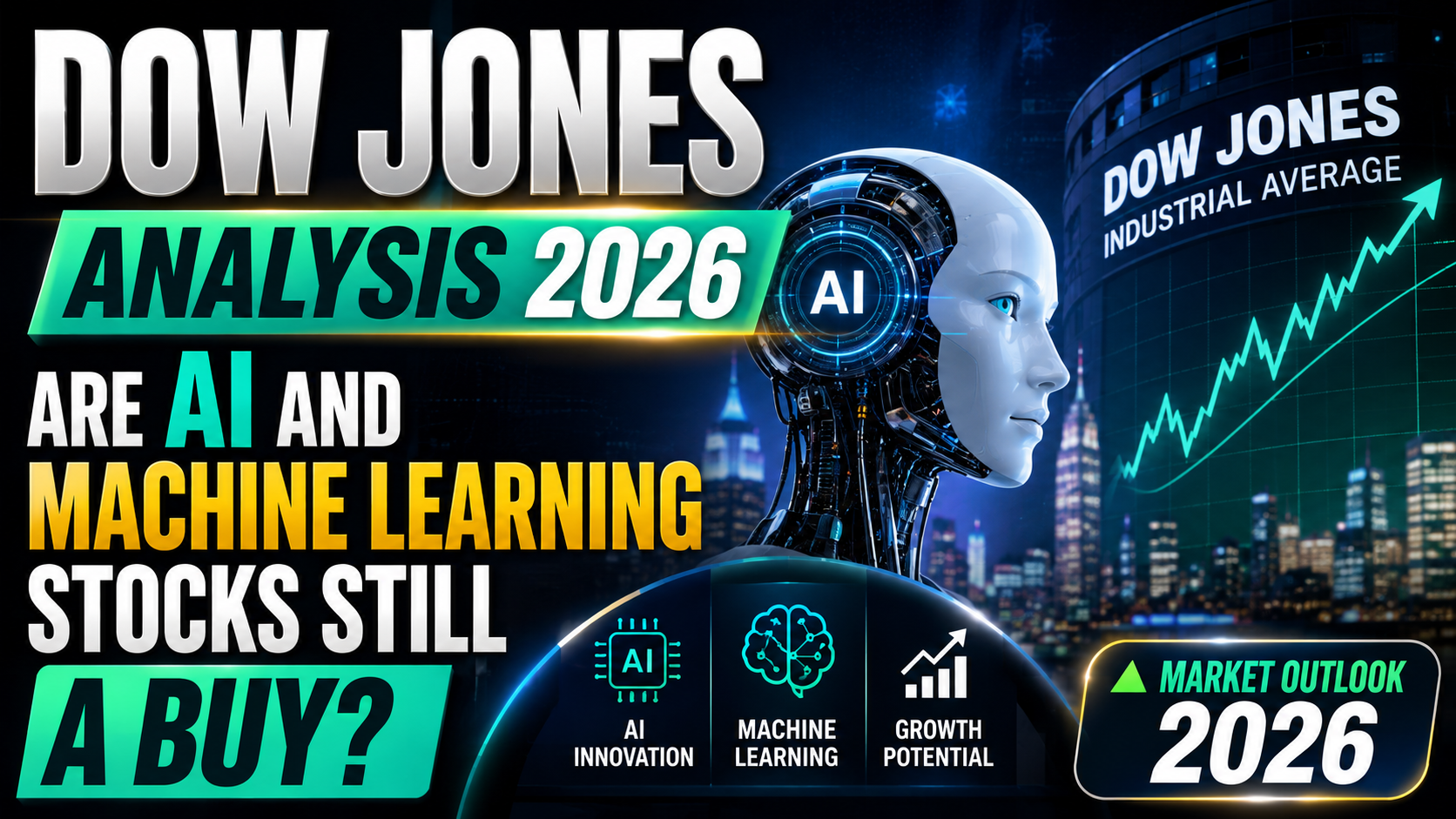
After years of explosive gains, AI and machine learning stocks have entered a more complicated phase — still central to the Dow Jones Industrial Average’s overall performance, but facing sharper questions about valuation, earnings durability, and whether the easy gains have already been captured. For investors trying to decide whether to keep adding to AI positions, trim exposure, or rotate into other sectors, 2026 requires a more nuanced read than the straightforward “buy the dip” narrative that worked reliably in prior years.
This analysis breaks down where AI and machine learning stocks currently stand within the broader Dow Jones and market context, what’s driving continued institutional investment despite valuation concerns, and how to think about position sizing if you’re building or maintaining exposure to this sector in your portfolio. Whether you’re a long-term investor or actively trading around AI-sector volatility, understanding the current landscape matters more than chasing last year’s returns.
Where AI Stocks Stand in the Dow Jones Right Now
AI-adjacent companies — spanning semiconductor manufacturers, cloud infrastructure providers, and enterprise software firms embedding AI capabilities — continue to represent an outsized share of overall market cap growth relative to their weighting in the index. This concentration has been a persistent feature of the market for several years now, and it means Dow Jones performance remains more tied to AI-sector sentiment than the historical diversification of the index would suggest.
What’s changed in 2026 is the market’s patience with growth-at-any-valuation stories. Earnings calls that once got a pass on questions about AI monetization timelines are now facing sharper analyst scrutiny, and companies unable to demonstrate a clear path from AI investment to revenue growth have seen more punishing reactions to earnings misses than in prior years.
The Bull Case for AI and ML Stocks in 2026
Despite valuation concerns, several structural tailwinds continue supporting the bull case for AI-sector investment. Enterprise AI adoption is still in relatively early innings for many industries — healthcare, logistics, and financial services in particular are still ramping infrastructure spending rather than winding it down. Capital expenditure guidance from major cloud and semiconductor companies has largely remained robust, suggesting the largest players still see multi-year runway for AI infrastructure investment rather than a near-term plateau.
Key Bullish Factors
- Continued enterprise adoption – Many industries remain in early-to-mid stages of AI integration, suggesting sustained demand
- Infrastructure capex guidance – Major cloud providers have maintained or increased AI infrastructure spending forecasts
- Margin expansion in software – AI-embedded enterprise software companies are showing improved margins as adoption scales
- International expansion – AI infrastructure investment is accelerating outside the US, broadening the addressable market
- Ongoing chip demand – Semiconductor demand tied to AI training and inference workloads remains structurally elevated
The Bear Case: Why Some Investors Are Cautious
The counterargument centers on valuation multiples that, even after some 2025-2026 volatility, remain elevated relative to historical norms for the broader market. Concerns persist about circular investment relationships between major AI infrastructure players, where the same handful of companies are simultaneously customers and investors in one another’s growth — a dynamic some analysts argue inflates reported demand signals. There’s also a legitimate question about how quickly AI capital expenditure will translate into durable free cash flow versus remaining a perpetually reinvested growth story.
Key Bearish Factors
- Elevated valuations – Price-to-earnings and price-to-sales multiples remain historically high for many AI-adjacent names
- Circular investment concerns – Interlocking investment relationships among major AI infrastructure players raise demand-durability questions
- Interest rate sensitivity – Growth stock valuations remain more sensitive to rate policy shifts than value-oriented sectors
- Monetization timeline uncertainty – Gap between AI infrastructure spend and proven enterprise ROI remains a persistent analyst concern
- Increased regulatory scrutiny – Antitrust and AI-specific regulatory attention has increased globally, adding a layer of policy risk
Sector Comparison: AI/ML Stocks vs. Broader Dow Jones Composition
| Factor | AI/ML Sector Stocks | Broader Dow Jones Average |
|---|---|---|
| Average valuation multiple | Elevated relative to historical norms | Closer to long-term historical average |
| Earnings growth expectations | High, but under increasing scrutiny | Moderate, more stable |
| Volatility | Higher | Lower |
| Capital expenditure trend | Aggressive, ongoing | Mixed by sector |
| Regulatory exposure | Increasing | Sector-dependent |
| Institutional sentiment | Cautiously bullish with rotation risk | Stable |
How to Think About Position Sizing in 2026
Given the more nuanced risk/reward picture, a disciplined approach matters more than it has in prior AI-sector bull runs. Consider these principles when managing exposure:
- Avoid overconcentration in a small handful of mega-cap AI names, even if they’ve driven most of your recent returns
- Diversify across the AI value chain — infrastructure, chips, and application-layer software carry different risk profiles
- Pay closer attention to free cash flow trends, not just revenue growth, as monetization scrutiny increases
- Consider dollar-cost averaging into positions rather than making large single entries given elevated volatility
- Reassess position sizing relative to your overall portfolio risk tolerance, not just recent sector momentum
Watching for Rotation Signals
Beyond the bull and bear fundamentals, it’s worth paying attention to sector rotation signals that often precede broader market sentiment shifts around AI valuations. Institutional fund flow data, options market positioning, and relative performance between AI-heavy growth indices and value-oriented sectors can all offer early signals of shifting sentiment before it fully shows up in individual stock prices. Historically, sharp AI-sector pullbacks have often been triggered less by fundamental deterioration and more by a specific catalyst — a disappointing earnings guidance from a bellwether company, a macro rate shock, or a high-profile regulatory action — that causes previously patient investors to reassess valuation assumptions all at once. Staying attentive to these catalysts, rather than assuming steady-state conditions will persist indefinitely, is part of maintaining a disciplined approach to sector exposure in a still-evolving investment theme.
Frequently Asked Questions
Should I sell my AI stocks if I think the sector is overvalued?
That depends entirely on your investment horizon and risk tolerance rather than a one-size-fits-all answer. Long-term investors with a diversified portfolio may choose to simply trim overconcentrated positions rather than exit entirely, while investors more sensitive to near-term volatility might reduce exposure more aggressively. This isn’t personalized financial advice, and consulting a financial advisor about your specific situation is worth considering before making significant portfolio changes.
How can I tell if an AI company’s revenue growth is sustainable versus inflated by circular investment deals?
Look closely at the customer concentration disclosed in earnings reports and investor filings — if a large share of a company’s reported revenue comes from a small number of other AI infrastructure companies rather than a broad, diversified customer base, that’s worth factoring into your assessment of demand durability.
Are AI stocks more volatile than the broader Dow Jones average?
Generally yes, particularly for higher-growth, less-established names within the sector. More established, cash-flow-positive AI-adjacent companies within the Dow Jones tend to show somewhat lower volatility than smaller, growth-stage AI-focused companies outside the index.
Is it too late to start investing in AI stocks in 2026?
Many analysts view the sector as being in a more mature, selective phase rather than an early-stage opportunity, which changes the risk/reward calculus compared to earlier years but doesn’t necessarily mean the opportunity has fully passed. Position sizing, diversification, and a longer time horizon matter more now than simply timing an entry point.
Final Thoughts
AI and machine learning stocks remain a legitimate long-term investment theme in 2026, but the easy, broad-based gains of previous years have given way to a market that’s demanding more evidence of durable monetization before rewarding further multiple expansion. This doesn’t necessarily mean it’s time to exit the sector — but it does mean position sizing, diversification within the AI value chain, and closer attention to fundamentals matter more now than they did in the earlier stages of the AI investment cycle.
Are you still adding to your AI stock positions in 2026, or have you started rotating into other sectors given the valuation concerns? Share your investment approach in the comments.
Discover more from The Economy
Subscribe to get the latest posts sent to your email.

BRICS Summit 2026: Economic Implications of the India-China Diplomatic Thaw

Emerging Market Debt: The Ripple Effect of China’s Sovereign Refinancing Role

Dropping Oil & Surging Gold: Navigating Safe-Haven Investments in Q3

2026 AI Stock Frenzy: How to Position Your Portfolio

The AI Disruption in Financial Risk Management: Moving Beyond Record Banking Profits

The Rise of Green Aviation: Balancing High Fuel Prices with Sustainable Infrastructure

US-China Relations in Q3 2026: Trade Tariffs and Supply Chain Risks

Emerging Markets Rebound: Top Stock Strategies for the Gulf and South Asia

Tackling the 2026 Global Food Crisis: Policy Shifts and Market Speculation

Post-Quantum Encryption in Banking: The Next Frontier in Cybersecurity Investments

The Financial Cost of Sanctions: Afghanistan’s Economy 5 Years Under the Taliban

Supply Chain Fragmentation: 10 Trends Reshaping Global Trade This Year

The 2026 Aviation Boom: Investing in Airline Stocks as Passenger Traffic Surges

China’s 2026 Corporate Laws: Western Compliance Guide

China Politburo July 2026: Stimulus Signals Explained

Russia Fuel Shortages 2026: Inside a Cracking War Economy

Top 15 Financial Stocks for Investment in PSX

Pakistan Passed Its Third IMF Review

SpaceX Stock Lockup Expiration Explained: Why $123B in Shares Could Hit the Market

Pakistan IMF Program 2026: Inside the Push Toward an Interest-Free Economy

Andy Burnham, UK Gilts and Mortgages: July 2026 Explainer

Russia Oil Revenue 2026: How Sanctions on Rosneft and Lukoil Are Draining the War Chest

Pakistan’s 2026 Monsoon Floods Threaten Fragile Economic Recovery as Inflation Nears 9%

Russia Oil Revenue 2026: The Iran War Windfall and What a Hormuz Deal Means for Moscow

Gold Price 2026: Why Bullion Has Fallen 25% From Its January Record High

State Farm’s $5B Dividend 2026: Who Qualifies & Payout Dates

Russia’s Budget Deficit Blew Past Its Full-Year Target in Three Months

Canada US Trade War 2026: Inside Carney’s Push to Cut Ties With Trump’s Tariffs
-

 Markets & Finance8 months ago
Top 15 Stocks for Investment in 2026 in PSX: Your Complete Guide to Pakistan’s Best Investment Opportunities
-

 Analysis6 months ago
Johor’s Investment Boom: The Hidden Costs Behind Malaysia’s Most Ambitious Economic Surge
-

 Analysis6 months ago
Top 10 Stocks for Investment in PSX for Quick Returns in 2026
-

 Analysis7 months ago
Brazil’s Rare Earth Race: US, EU, and China Compete for Critical Minerals as Tensions Rise
-

 Banks7 months ago
Best Investments in Pakistan 2026: Top 10 Low-Price Shares and Long-Term Picks for the PSX
-

 Investment7 months ago
Top 10 Mutual Fund Managers in Pakistan for Investment in 2026: A Comprehensive Guide for Optimal Returns
-

 Global Economy8 months ago
15 Most Lucrative Sectors for Investment in Pakistan: A 2025 Data-Driven Analysis
-

 Global Economy8 months ago
Pakistan’s Export Goldmine: 10 Game-Changing Markets Where Pakistani Businesses Are Winning Big in 2025