
ASEAN
Middle East Conflict Oil Prices: The $4 Surge Explained


Oil markets price in probability, not morality. When Israeli munitions struck military and infrastructure targets across Iran and Lebanon, the algorithmic response on trading floors from London to Singapore was brutal and instantaneous. Brent crude contracts violently repriced, adding more than $4 a barrel in a matter of minutes.
This was not a measured reassessment of fundamentals. It was a panic bid. For months, energy traders had systematically ignored the escalating proxy wars, betting instead that the gravity of sluggish Chinese manufacturing data would keep a lid on crude. They were wrong. The sudden shock of Middle East conflict oil prices jumping forces a harsh reckoning for energy importers and central bankers alike, stripping away the illusion that the physical market is immune to regional warfare.
The End of Complacency
Traders spent the previous quarter lulled into a dangerous sense of security. The prevailing narrative was dictated by weak factory orders out of Shenzhen and mounting electric vehicle adoption across Europe. The geopolitical risk premium—a permanent fixture of energy trading during the 20th century—had effectively been priced down to zero.
That complacency evaporated overnight.
Before the strikes, the global oil market was functioning under the assumption of perfect logistical execution. Yet, according to the International Energy Agency, the world’s supply buffers remain structurally fragile, deeply reliant on unhindered transit through regional choke points. The sudden $4 surge is a blunt reminder that paper barrels traded on screens are ultimately tied to physical liquids moving through highly contested waters.
The Core Development: Infrastructure in the Crosshairs
The specific targets matter just as much as the explosions themselves. By striking Hezbollah strongholds in Lebanon and probing Iranian air defences, Israel has signalled a willingness to climb the escalatory ladder.
This matters intensely to energy markets because Iran currently exports roughly 1.5 million barrels of crude per day, the vast majority of it flowing through the Kharg Island terminal. If Kharg Island is compromised, either physically or via intensified secondary sanctions, the global balance sheet tightens immediately. Reuters analysis of vessel tracking data confirms that a significant portion of this crude is bought by independent refiners in Asia, meaning any disruption forces those buyers back into the open market, driving up the price of benchmark crude.
The $4 jump is the market pricing in the probability of infrastructure damage, not the reality of it. It is a risk premium returning to the tape. Still, it alters the financial math for every major industrial economy on earth.
The Analytical Layer: Choke Points and Paper Markets
To understand why a regional strike triggered a global margin call, one must look past the immediate headlines and examine the market structure. Much of the initial $4 spike was exacerbated by Commodity Trading Advisors (CTAs)—trend-following algorithms that were caught heavily short. When the headlines hit, these funds were forced to violently cover their positions, buying back contracts regardless of the underlying price.
But the physical fear driving the algorithms is rooted in geography.
What happens if the Strait of Hormuz is blocked? If the Strait of Hormuz is blocked, roughly 20% of global oil consumption—nearly 21 million barrels per day—is immediately stranded. Prices would likely spike above $100 a barrel within 48 hours, triggering severe supply chain disruptions and forcing emergency stock releases from Western governments.
The Strait is the world’s most critical petroleum artery. While Iran has frequently threatened to close it, execution remains highly improbable. Blocking the strait would cripple Tehran’s own export revenue and draw immediate, devastating naval retaliation from a coalition of global powers. Yet, in commodity markets, a 5% chance of a catastrophic outcome commands a significant premium.
Implications: The Macroeconomic Gravity
The downstream consequences of sustained $80+ oil extend far beyond the energy sector. Central bankers in Washington and Frankfurt are watching the crude tape with mounting anxiety.
For the past year, the structural decline in energy prices was the primary engine driving headline inflation back toward the 2% target. It allowed policymakers to begin their easing cycles. If energy prices establish a new, higher floor due to Middle Eastern instability, that narrative breaks. Higher crude bleeds into diesel, which bleeds into freight, which bleeds into the price of food on supermarket shelves.
The Financial Times recently highlighted that every sustained $10 increase in the price of crude strips roughly 0.15% from global GDP growth while adding 0.2% to headline inflation. If this $4 surge becomes a $10 sustained rally, it forces the Federal Reserve into a corner. They cannot cut interest rates to support a slowing labour market if geopolitical supply shocks are simultaneously reigniting inflation.
It is a policy nightmare.
The Counterargument: A Sea of Spare Capacity
The picture is more complicated than the bullish headlines suggest. While the geopolitical risk is undeniable, the physical oil market is currently drowning in spare capacity.
The $4 spike may prove fleeting because the Organization of the Petroleum Exporting Countries and its allies (OPEC+) are sitting on an enormous buffer. Saudi Arabia and the United Arab Emirates alone hold millions of barrels of unused daily production capacity. According to Bloomberg commodity data, OPEC+ is currently withholding roughly 5.8 million barrels per day from the market to artificially support prices.
This is the bearish reality keeping prices from genuinely exploding. If Iranian barrels are knocked offline, Riyadh has the physical capacity to replace them within weeks. The Saudi leadership has little appetite for triple-digit oil, knowing it accelerates the global transition away from fossil fuels and destroys long-term demand.
Furthermore, global demand is softening. Refiners in China are cutting run rates due to poor industrial margins. The world simply does not need as much oil today as it did twelve months ago. This structural weakness in demand acts as a heavy anchor, preventing the geopolitical risk premium from driving prices to historical highs.
The True Cost of Conflict
Ultimately, the oil market is trapped in a tug-of-war between two immense forces: the terrifying potential of Middle Eastern escalation and the crushing gravity of a slowing global economy.
The $4 surge is a warning shot. It proves the market can no longer ignore the geopolitical reality of the region. Yet, until physical infrastructure is destroyed or transit routes are verifiably blocked, the immense spare capacity held by Gulf producers will likely cap the panic. The world is heavily supplied, but the margin for error has vanished.
The price of crude is no longer just a measure of supply and demand; it is a live, ticking barometer of regional stability.
Discover more from The Economy
Subscribe to get the latest posts sent to your email.


Markets & Finance
Beyond Singapore’s Borders: How Squeezed SMEs Can Unlock High-Yield Growth Across ASEAN

Faced with escalating domestic overhead, acute labor bottlenecks, and an ultra-saturated local market, Singapore’s small and medium-sized enterprises (SMEs) are approaching an operational inflection point. While the city-state remains an unrivaled global financial hub, domestic cost structures are increasingly compressing profit margins for mid-market businesses. Expanding across Southeast Asia is no longer merely a growth option—it has become a necessity for enterprise resilience and long-term value creation.
The Singapore Pressure Cooker: Why Domestic Growth Has Hit a Ceiling
Singapore SMEs contend with a uniquely challenging operating environment. According to economic assessments from the Monetary Authority of Singapore, structural cost pressures—spanning commercial real estate rents, utility hikes, and rising labor expenses—continue to outpace revenue growth across several non-oil domestic sectors.
Key factors squeezing Singapore SMEs include:
- Manpower Bottlenecks: Tightening foreign worker quotas and elevated salary thresholds under the Strategic Skills Framework have made local talent recruitment highly competitive and expensive.
- Property and Rental Overhead: Commercial and industrial space costs in prime logistics and office hubs remain among the highest in Asia, squeezing operational margins for retail, manufacturing, and services alike.
- Market Saturation: With a population of roughly 6 million, the domestic addressable market limits scale, making revenue compounding difficult without international customer acquisition.
To achieve sustainable multi-year growth, forward-looking business leaders are restructuring their footprint—using Singapore as an intellectual property (IP), treasury, and management headquarters while scaling operations into neighbor economies.
The ASEAN Dividend: Demographics, Digitalization, and Supply Chain Realignment
Southeast Asia represents a vibrant economic bloc of over 680 million consumers, characterized by rapid urbanization, an expanding middle class, and high mobile technology penetration. Research published by the Asian Development Bank highlights that regional GDP growth across ASEAN continues to outpace global averages, fueled by strong domestic demand and cross-border trade integration.
                  +-------------------------------------------------------+
                  |            Singapore Corporate Head Office            |
                  |     (IP, Treasury, Governance, R&D, Tech Core)        |
                  +-------------------------------------------------------+
                                              |
      +-----------------------+---------------+---------------+-----------------------+
      |                       |                               |                       |
      v                       v                               v                       v
+-----------+           +-----------+                   +-----------+           +-----------+
|  Vietnam  |           | Indonesia |                   | Malaysia  |           | Thailand  |
| (Mfg/Tech)|           | (Consumer)|                   | (Logistics|           | (Industrial|
|           |           |           |                   | & Services|           | & Auto Ops|
+-----------+           +-----------+                   +-----------+           +-----------+
Three macro drivers make ASEAN the primary expansion target for Singaporean firms:
- Supply Chain Diversification (“China+1”): Global multinationals and regional enterprises are diversifying manufacturing hubs toward Southeast Asia to enhance supply chain resilience, boosting local business ecosystems.
- Accelerated Digital Transformation: Digital economy report insights from McKinsey & Company reveal that regional cross-border e-commerce, fintech adoption, and digital services are projected to triple in market value by 2030.
- Regional Trade Integration: Agreements such as the Regional Comprehensive Economic Partnership (RCEP) and ASEAN Free Trade Area (AFTA) reduce trade barriers, lower tariffs, and simplify cross-border logistics.
Comparative Expansion Matrix for Target ASEAN Markets
Selecting the right expansion destination depends on sector alignment, talent requirements, and cost structures. The following framework maps core opportunities for Singapore SMEs across major ASEAN growth markets:
| Expansion Market | Primary Growth Drivers | Strategic Cost Advantage | High-Potential Sectors | Market Entry Complexity |
| Vietnam | Rapid industrialization, tech talent pool, strong export orientation | Low manufacturing and engineering labor costs | Precision engineering, electronics, software development | Moderate (Requires navigating local regulatory channels) |
| Indonesia | Massive domestic market (275M+ population), rising consumer class | High consumer volume potential, lower operational costs | B2C e-commerce, consumer tech, logistics, agritech | Moderate to High (Complex licensing & local partner rules) |
| Malaysia | Proximity to Singapore, shared talent language, integrated supply chains | Lower land and talent costs with minimal cultural friction | Cross-border logistics, professional services, food manufacturing | Low (High synergy with SG business models) |
| Thailand | Strong industrial base, advanced infrastructure, EV ecosystem | Cost-effective industrial facilities and skilled labor | Advanced manufacturing, automotive supply, healthcare, tourism tech | Moderate (Language barriers require local executive talent) |
A 4-Step Actionable Roadmap for Overseas Regionalization
Expanding across borders requires structured execution to avoid capital misallocation. Enterprise leaders can adopt this four-phase framework to mitigate market entry risks:
- Leverage Institutional Support and Co-FundingBefore committing capital, utilize government-backed regionalization initiatives. Programs administered by Enterprise Singapore—such as the Market Readiness Assistance (MRA) grant and the Enterprise Development Grant (EDG)—provide co-funding for market studies, legal set-up, and overseas business matching.
- Adopt a “Hub-and-Spoke” Operational ModelMaintain high-value activities (financing, IP management, advanced R&D, regional leadership) in Singapore to preserve institutional trust and regulatory clarity. Establish operational “spokes” in target ASEAN countries to handle high-volume manufacturing, customer support, and local marketing.
- Form Local Joint Ventures and Strategic AlliancesDirect market entry can carry regulatory hurdles and cultural blind spots. Partnering with established in-market distributors or joint-venture partners accelerates distribution access and ensures regulatory compliance.
- Capitalize on Cross-Border Digital InteroperabilityWith initiatives backed by the ASEAN Secretariat to build unified cross-border payment rails (such as real-time QR payment linkages between Singapore, Malaysia, Thailand, and Indonesia), businesses can handle cross-border payments with reduced friction and lower FX transaction costs.
Mitigating Risk: Structural Protocols for Cross-Border Success
While the growth prospects are significant, cross-border expansion presents operational challenges. SME leadership must address key risk categories:
- Regulatory and Foreign Ownership Restrictions: Certain jurisdictions enforce foreign ownership caps in specific sectors. Engaging qualified legal counsel early ensures proper corporate structuring and compliance with local equity mandates.
- Foreign Exchange Exposure: Currency volatility across emerging ASEAN markets can erode operating profits. Implementing formal hedging policies through treasury banking partners mitigates FX exposure.
- Taxation Structuring: Companies must optimize transfer pricing and leverage bilateral Avoidance of Double Taxation Agreements (DTAs) signed between Singapore and ASEAN member states to avoid overlapping tax obligations.
SMEs that treat regional expansion as a strategic imperative rather than a reactive survival tactic can leverage Singapore’s regional anchor status to capture long-term market share across Southeast Asia.
Discover more from The Economy
Subscribe to get the latest posts sent to your email.

Singapore’s non-oil domestic exports rose 20.7% year-on-year in June 2026, driven by a 115.4% surge in integrated circuit shipments tied to AI demand, even as a separate and less-covered trade story unfolds next door: Malaysia-Indonesia bilateral trade is projected to grow 10% to US$29.3 billion in 2026, powered by expanding halal-sector cooperation.
The story most coverage is missing
Regional business press has extensively covered Singapore’s semiconductor export boom. What’s had far less coverage is the parallel, non-tech growth engine developing in the halal trade corridor between Malaysia and Indonesia — a structural, policy-driven trade relationship that is scaling steadily even as the AI trade headlines dominate attention.
Singapore: the AI supply chain’s export barometer
Singapore’s June non-oil domestic exports climbed 20.7% year-on-year, with integrated circuit exports jumping 115.4% and disk media products and personal computers rising 170.9% and 95.8% respectively — a direct read on how deeply the AI infrastructure buildout is flowing through the city-state’s electronics trade (VietnamPlus/VNA). Non-electronic exports told a different story, falling 2.9% in June after a 17.7% rise in May, mainly on weaker shipments of non-monetary gold, petrochemicals and food preparations — evidence the export strength is narrowly concentrated in the AI-linked segment rather than broad-based.
Singapore’s economic gravitational pull on its neighbours is intensifying too: a joint study by the Singapore Business Federation, Restaurant Association of Singapore and Singapore Retailers Association found Singaporean consumers are projected to spend an additional S$1.05 billion (roughly US$810 million) annually in Johor Bahru, just across the Malaysian border — a cross-border consumption pattern that is becoming a meaningful line item in regional retail planning (VietnamPlus/VNA).
The halal corridor: a steadier, policy-built growth story
While AI exports grab headlines, Malaysia’s bilateral trade with Indonesia is forecast to grow 10% to US$29.3 billion in 2026, according to Malaysia’s Chargé d’Affaires in Jakarta, Farzamie Sarkawi — up from US$26.61 billion in 2025, itself a 5.3% increase on the year before (BusinessToday Malaysia).
The driver is structural rather than cyclical: a halal Memorandum of Cooperation signed by the two countries in 2023 established mutual recognition of halal certification, easing product movement and market access across sectors. Sarkawi described the arrangement as delivering “positive progress” through knowledge exchange, training and improved market access for businesses in both countries (BusinessToday Malaysia). The ambition extends beyond the bilateral relationship: intra-D-8 trade — spanning the eight-nation Developing 8 bloc of Muslim-majority economies — currently runs between US$150 billion and US$160 billion annually, with a stated target of US$500 billion by 2030.
The macro backdrop: a region growing, unevenly
The Asian Development Bank’s July 2026 outlook shows Indonesia’s growth forecast holding steady at 5.2% for both 2026 and 2027, while Malaysia’s outlook is unchanged at 4.6% for 2026 and 4.5% for 2027 (ADB). Regional growth leadership, per McKinsey’s Q1 2026 review, sits with Indonesia, Singapore and Vietnam, while the Philippines lagged as domestic challenges weighed on activity (McKinsey).
Indonesia’s investment story has particular momentum: foreign direct investment grew for a second consecutive quarter, rising 8.1% to 249.9 trillion rupiah (roughly US$14.5 billion) in the first quarter of 2026, with Singapore remaining Indonesia’s largest single foreign investor at US$4.6 billion, ahead of China, Japan, Hong Kong and the United States (McKinsey). Realised investment for full-year 2025 reached a record Rp1,931.2 trillion (about US$120.7 billion), exceeding the government’s own target, driven by downstream industrial projects outside Java (BERNAMA).
Indonesia’s central bank has flagged currency management as an active watch item, signalling readiness to step up both onshore and offshore FX intervention to curb rupiah weakness and keep inflation within its 2026-2027 target band (McKinsey). Foreign investment in Indonesian government bonds has nonetheless rebounded, with net inflows of 17.7 trillion rupiah following outflows in the first quarter, alongside cumulative foreign holdings of 174 trillion rupiah in Bank Indonesia Rupiah Securities (BERNAMA).
Institutional context: Singapore’s coming ASEAN chairmanship
Adding a governance dimension to the economic picture, Singapore is set to take over the ASEAN chairmanship from the Philippines in 2027, with Prime Minister Lawrence Wong pledging a smooth transition — a leadership handover that will shape how the bloc coordinates trade and investment policy, including the halal-corridor and semiconductor-trade dynamics described above, through the second half of the decade (BERNAMA).
The bottom line
Southeast Asia’s 2026 growth story is not a single narrative but two distinct, converging tracks: a high-velocity, AI-linked export boom concentrated in Singapore’s electronics trade, and a steadier, policy-engineered halal-sector trade corridor between Malaysia and Indonesia that is quietly scaling toward a $500 billion bloc-wide target by 2030. Investors and policymakers tracking only the semiconductor headlines risk missing the second, structurally more durable growth engine sitting right alongside it.
Discover more from The Economy
Subscribe to get the latest posts sent to your email.
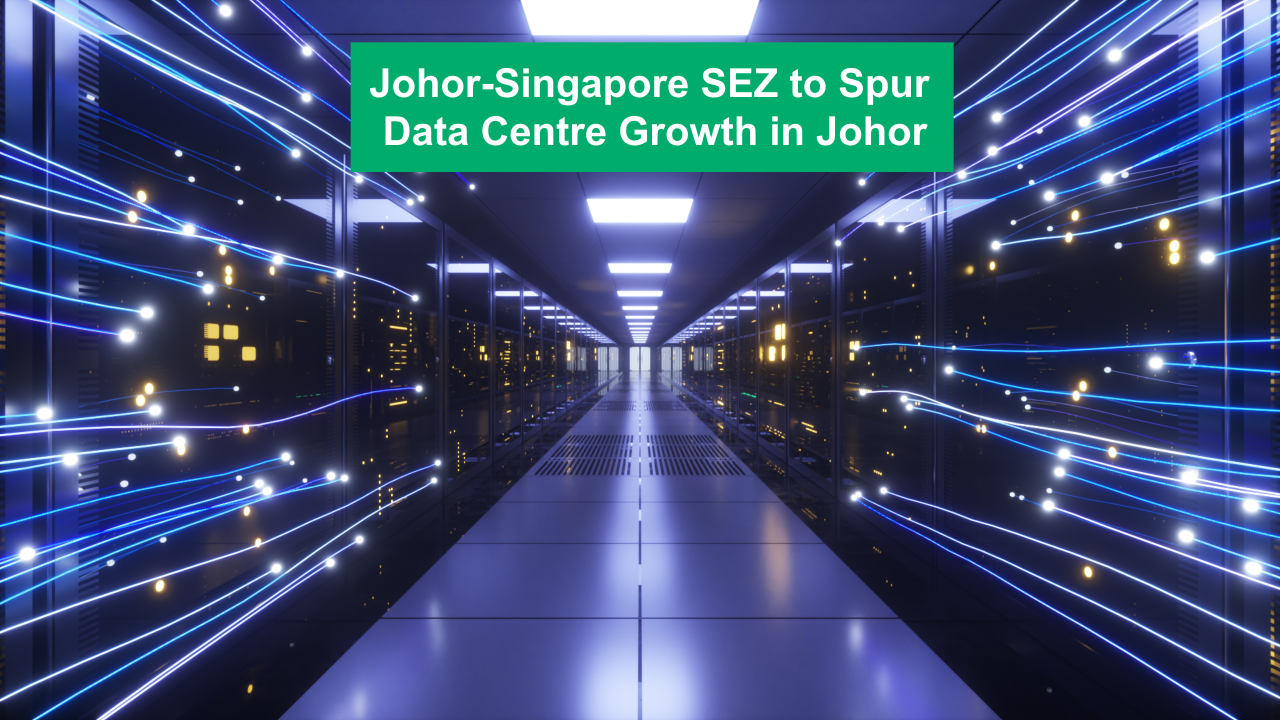
While global headlines chase the AI infrastructure story in the US and China, one of the most interesting AI capital-deployment stories on the planet is unfolding almost unnoticed across a 4-kilometre stretch of water between Singapore and Malaysia — and it’s worth understanding for anyone tracking where the next wave of Southeast Asian growth is actually landing.
What the JS-SEZ Actually Is
The Johor-Singapore Special Economic Zone, formally established on January 7, 2025, covers roughly 3,588 square kilometres across southern Johor state. It spans nine flagship areas and targets investment across eleven sectors, including manufacturing, logistics, financial services, the digital economy, tourism, education, healthcare, and the green economy (Forest City SFZ / Manila Times).
The core idea is simple, even if the execution is complex: Singapore contributes financial infrastructure, regulatory credibility, and capital markets access; Johor contributes roughly four times Singapore’s land area and a median monthly wage around one-seventh of Singapore’s, creating room for industrial-scale development that Singapore’s tiny footprint simply can’t accommodate (Trowers & Hamlins).
The Numbers That Show This Isn’t Just Another SEZ Announcement
Skeptics have plenty of reason to be cautious about grand cross-border economic zone announcements — Southeast Asia has seen plenty of ambitious blueprints fizzle. But the JS-SEZ’s investment figures suggest real capital is already moving, not just political goodwill.
The zone attracted $19 billion in approved investments in 2025, with more than 57% of cumulative approved projects already entering the implementation stage — not just paper commitments (VietnamPlus). That momentum continued into 2026, with $1.3 billion in new approved investments in the first quarter alone, and the Invest Malaysia Facilitation Centre Johor (IMFC-J) fielding 285 investment enquiries worth a combined $18.5 billion in just the first five months of the year.
Separately, Singapore’s Ministry of Trade and Industry confirmed Singapore-based companies have committed more than S$5.5 billion into Johor since the memorandum of understanding was signed (Forest City SFZ). On the Malaysian side, domestic and foreign investment into the region more than doubled from MYR 48.5 billion (roughly US$11.9 billion) in 2024 to MYR 110 billion (about US$27 billion) in 2025, with 70% of that total year’s investment specifically tied to JS-SEZ projects (Lundgreen’s Investor Insights).
The Real Story: Johor Is Becoming Singapore’s Data Centre Overflow Valve
Here’s the angle competitors are missing entirely: this isn’t primarily a manufacturing or logistics story. It’s a data centre story, and it’s happening precisely because Singapore has run out of room and water to support the AI infrastructure boom domestically.
Roughly 60% of Southeast Asia’s data centres are already concentrated in Johor (Lundgreen’s Investor Insights). That’s not a coincidence — Singapore enforces strict limits on new data centre expansion domestically, largely due to power and water constraints, pushing hyperscale demand across the border. Global players including Microsoft, ByteDance, and AirTrunk have already invested in Johor’s data centre buildout, and Johor also benefits from proximity to Singapore’s extensive submarine cable network — around 30 international cables carrying a combined 44.8 terabits per second of capacity (Trowers & Hamlins).
The economics are striking at a granular level: based on Johor State Data Centre Development planning guidelines, every MYR 1 billion (roughly US$250 million) invested in a data centre creates 400 to 600 jobs and adds MYR 500 million (about US$126 million) to Malaysia’s GDP (Lundgreen’s Investor Insights). With data centres, manufacturing, and energy topping the list of investor enquiries by sector, and China, Singapore, and South Korea ranking as the top three source countries for investment interest (Invest Johor), the zone is quietly positioning itself as a geopolitically neutral alternative for AI infrastructure at a moment when US-China tensions make data centre siting decisions increasingly political.
The Infrastructure Piece Everyone’s Watching: The RTS Link
The physical backbone tying this all together is the Johor Bahru-Singapore Rapid Transit System Link, a four-kilometre rail connection between Bukit Chagar and Woodlands North designed to carry up to 10,000 passengers per hour in each direction, cutting a commute that currently involves congested causeway traffic down to roughly five minutes (Forest City SFZ). It’s targeted to begin passenger service by the end of 2026 — a deadline that, if hit, would materially improve the shared-labour-market model underpinning the entire economic zone concept, where thousands of Malaysians already commute daily into Singapore.
What’s Genuinely Uncertain — and Why That Matters for Investors
This is where most boosterish coverage of the JS-SEZ falls short: it’s not risk-free, and the risks are structural rather than cosmetic.
No unified regulatory framework yet exists. The JS-SEZ falls under Malaysian jurisdiction, and substantive regimes — tax, labour law, compliance — remain entirely separate between the two countries. Current cross-border coordination focuses on facilitation rather than genuine legal integration, and the formal master plan and investment blueprint, originally targeted for the first quarter of 2026, has already been delayed (Trowers & Hamlins).
Implementation friction is real, not theoretical. Existing Singaporean businesses operating in Johor are reportedly receiving contrasting guidance from Malaysia’s federal and state governments on tax treatment — exactly the kind of bureaucratic inconsistency that can quietly erode investor confidence even as headline investment figures climb.
The minimum investment threshold favors large players over SMEs. Malaysia’s tax incentive package, administered through MIDA, requires a minimum capital investment of RM500 million (roughly US$126 million) to qualify — a bar high enough to exclude most small and mid-sized businesses from the zone’s most attractive incentives, concentrating benefits among multinationals and large regional players.
Water is the long-term constraint to watch. Data centres consume enormous volumes of water for cooling, and shifting that burden onto Johor — precisely because Singapore’s own water resources are limited — creates an environmental sustainability question that current green initiatives (stormwater reuse, greywater recycling, solar-powered facilities) are only beginning to address at scale.
What This Means for Businesses Weighing Entry
For companies evaluating the JS-SEZ as an expansion target, the practical playbook emerging from early movers suggests: treat Johor as a genuinely separate operating environment rather than “Singapore with cheaper rent,” budget for parallel legal review in both jurisdictions rather than assuming harmonized compliance, and prioritize sectors — data centres, advanced manufacturing, logistics — where the zone’s infrastructure investment is most mature, rather than betting on sectors still waiting on the delayed master plan for clarity.
The Bottom Line
The JS-SEZ has moved past the announcement-and-optimism phase that sinks most cross-border economic zones and into measurable capital deployment — $19 billion in approved 2025 investment with the majority already under implementation is a meaningful signal, not just a talking point. But the zone’s success now depends on execution details that don’t make for exciting headlines: harmonizing tax treatment, delivering the RTS Link on schedule, finalizing the long-delayed master plan, and managing the environmental trade-offs of becoming Southeast Asia’s default data centre overflow zone. Investors who track those unglamorous milestones will understand the JS-SEZ’s real trajectory long before the next round of splashy investment-forum press releases does.
Discover more from The Economy
Subscribe to get the latest posts sent to your email.

Neocloud Economics in 2026: GPU Debt, Utilization and Power

What Is a Neocloud? How AI GPU Clouds Work and Compare

Lula Re-elected in 2026: What Changes for the Dollar, Brazilian Stocks, and Interest Rates?

Lula Wins Brazil’s 2026 Election: Five Economic Tests for 2027

SSI November 2026 Payment: Why Benefits Arrive October 30

Russia Sanctions Waiver: What Asian Oil Buyers Gain

Asia Markets Weekly: How Oil, US Yields and the Fed Reach Tokyo, Kuala Lumpur and Karachi

Gold Near $4,000: Buy, Hold or Wait? A Pakistan Tola Price Guide

US 10-Year Treasury Yield Near 5%: The Hidden Cost for Pakistani Investors

Fed Meeting on October 28: Hike or Hold—and Why Pakistan Investors Should Care

Can Pakistan Turn US–Iran Mediation Into an Economic Dividend?

Oil Above $100: How Higher Crude Prices Reach Pakistan’s Rupee, Petrol and Imports

SBP Interest Rate at 11.5%: What Will Decide Pakistan’s Next Policy Move?

The Global South: Debt, Climate Finance and Investment in 2026

Crude Oil & Petroleum Market Analysis: OPEC+ Decisions and Price Forecasts

Top US Convenience Store Chains: Store Counts, EV Charging, and Sales Trends

Algorithmic Dogfights: Why the U.S. and China Must Establish Rules of Engagement for Autonomous Air Power

Who Is Shivon Zilis? The Neuralink Executive at the Center of the Musk–OpenAI Trial

Social Security Extra $90 Deposit: Who Qualifies for the October 2026 Medicare Rebate?

Corporate America Faces a New Debt Test as US Borrowing Costs Surge

Global Economic Outlook 2026: 7 Forces Reshaping Markets, Trade and Business

Gold Price Outlook 2026: The Forces Behind the Forecasts—and What Could Reverse Them

Gold Falls 3.7% as Yields Surge: Is Gold Still a Safe Haven in 2026?

MAS Allocates S$1.45 Billion to Five Asset Managers in Third EQDP Batch: Total Deployment Reaches S$5.4 Billion

Stock Market Today: Dow, S&P 500, and Nasdaq Retreat as Treasury Yields

Anthropic Bans Sustained Abuse of Claude AI Under New Usage Policy Effective November 12, 2026

Stock Market Crash in 2026? Warning Signs, Scenarios and a Calm Investor Checklist

Geopolitics and Your Portfolio: How International Affairs Move Global Markets
-

 Markets & Finance10 months ago
Top 15 Stocks for Investment in 2026 in PSX: Your Complete Guide to Pakistan’s Best Investment Opportunities
-

 Analysis8 months ago
Johor’s Investment Boom: The Hidden Costs Behind Malaysia’s Most Ambitious Economic Surge
-

 Analysis8 months ago
Top 10 Stocks for Investment in PSX for Quick Returns in 2026
-

 Banks9 months ago
Best Investments in Pakistan 2026: Top 10 Low-Price Shares and Long-Term Picks for the PSX
-

 Analysis9 months ago
Brazil’s Rare Earth Race: US, EU, and China Compete for Critical Minerals as Tensions Rise
-

 Investment10 months ago
Top 10 Mutual Fund Managers in Pakistan for Investment in 2026: A Comprehensive Guide for Optimal Returns
-

 Global Economy10 months ago
15 Most Lucrative Sectors for Investment in Pakistan: A 2025 Data-Driven Analysis
-

 Global Economy10 months ago
Pakistan’s Export Goldmine: 10 Game-Changing Markets Where Pakistani Businesses Are Winning Big in 2025