
Cryptocurrency
Crypto vs. Safe Haven Assets 2026: Where Institutions Are Hedging


For most of the past decade, the “digital gold” thesis held that Bitcoin would eventually absorb gold’s role as the world’s preferred crisis hedge. In 2026, the data tells a more complicated story — and for now, a less flattering one for Bitcoin. Gold is trading near $4,400/oz, up roughly 32% over the trailing year, supported by record central bank accumulation. Bitcoin, trading near $77,000–$79,000, is down nearly 40% from its October 2025 all-time high of $126,073. JPMorgan’s own institutional-positioning data — derived from CME futures open interest — shows hedge funds actively reducing direct Bitcoin exposure while rotating into gold for defensive purposes through much of this year.
This is the central question for any financial advisor or institutional allocator heading into Q4: is 2026 a temporary setback for crypto’s safe-haven ambitions, or a more durable repricing of what Bitcoin actually is?
Key Takeaways
- Gold has clearly outperformed Bitcoin as a defensive asset in 2026, with stronger one-year returns, lower drawdowns, and continued central bank accumulation.
- Institutional flow data (JPMorgan, Bloomberg) shows a rotation away from direct Bitcoin exposure and toward gold for hedge fund defensive positioning.
- Gold ETF outflows (nearly $15 billion since March, per some tracking) have actually been larger in absolute terms than Bitcoin ETF outflows, complicating a simple “money is fleeing gold for crypto” narrative — the picture is one of broad de-risking, not a clean rotation.
- Even crypto-native institutions are diversifying into gold: Tether’s own treasury held roughly 146 metric tons of gold alongside ~98,933 BTC as of Q2 2026, adding 14 tons of gold in the quarter.
- The most credible institutional framework for 2026 is not “gold or Bitcoin” but a blended allocation — gold for systemic, slow-burning risk; Bitcoin for long-duration, higher-conviction asymmetric upside.
The 2026 Scorecard: Gold vs. Bitcoin by the Numbers
| Metric | Gold | Bitcoin |
|---|---|---|
| Approx. price (Sept 2026) | $4,400–$4,450/oz | $77,000–$79,000 |
| Change from 2026 all-time high | Down from $5,597 (Jan 2026) | Down ~38–40% from $126,073 (Oct 2025) |
| Trailing 1-year performance | +~32% | Down roughly 46% at Aug 2026 lows before partial recovery |
| Trailing 3-year performance | +~132% | +~117% |
| Institutional flow trend (2026) | Central bank buying remains structural; ETF outflows reflect profit-taking | Hedge funds reducing direct exposure per JPMorgan |
| Volatility character | Lower drawdowns, more stable in crisis | High-beta, correlated with broader risk-asset liquidity |
The three-year comparison is instructive: Bitcoin’s long-run annualized outperformance versus gold — historically a factor of 10x or more over a full decade — has compressed dramatically when measured over the most recent three-year window. That compression is the core evidence for the “safe haven” debate: an asset behaving as true portfolio insurance should not be down nearly 40% from a 12-month-old high while gold sits near record territory.
Why Institutions Are Choosing Gold Over Bitcoin for Defensive Positioning in 2026
1. Central Bank Demand Has No Bitcoin Analog
Gold’s structural bid comes from an actor class that simply does not exist for Bitcoin at comparable scale: sovereign central banks, which have been net buyers of gold for reserve diversification since 2022–2023 and have continued accumulating through 2026’s volatility. No G20 central bank is running a comparable Bitcoin reserve-accumulation program, meaning gold retains a buyer of last resort that is largely insulated from retail sentiment swings — a critical distinction when advising institutional clients on crypto trading platforms allocation sizing.
2. Liquidity Has Deteriorated Differently
Earlier in 2026, JPMorgan flagged that gold’s liquidity (measured via CME futures market depth) had actually deteriorated below Bitcoin’s during a period of heavy ETF outflows and position unwinds — a genuinely counterintuitive finding that briefly supported the “Bitcoin as the more resilient hedge” narrative in Q1. That dynamic has since reversed: by mid-2026, hedge funds were once again favoring gold for defensive positioning as macro conditions (renewed Middle East escalation, Fed policy uncertainty) intensified — suggesting gold’s liquidity advantage reasserts itself specifically during genuine crisis conditions, which is exactly when a hedge needs to work.
3. Bitcoin ETF Flows Tell a More Nuanced Story Than the Headlines Suggest
It would be a mistake to read 2026 purely as “money leaving crypto for gold.” Bitcoin ETFs (led by products like IBIT) have continued to absorb net inflows through multiple stretches of the year — at one point logging six consecutive weeks of positive flows, the longest streak since mid-2025. The more accurate read is that both asset classes have experienced volatility and periods of outflow, but gold’s structural, non-discretionary buyer (central banks) has provided a floor that Bitcoin — dependent entirely on discretionary institutional and retail demand — does not yet have.
Where Institutional Investors Are Actually Positioning Capital
| Investor Type | 2026 Behavior | Implication |
|---|---|---|
| Central banks | Continued net gold accumulation | Structural gold demand floor |
| Hedge funds (per JPMorgan) | Reducing direct BTC exposure; favoring gold | Defensive positioning rotation |
| Bitcoin ETF investors (IBIT, FBTC) | Mixed — periods of strong inflows offset by outflow stretches | Bitcoin remains a discretionary, sentiment-driven allocation |
| Crypto-native institutions (e.g., Tether) | Diversifying treasury into physical gold alongside BTC holdings | Even “crypto-first” balance sheets see value in bullion |
| Sovereign wealth funds | Selective silver/gold accumulation; limited public BTC allocation | Traditional havens remain the default sovereign posture |
A Practical Hedging Framework for 2026–2027
For a financial advisor building institutional or high-net-worth portfolios into year-end, the evidence supports a barbell rather than a binary choice:
- Gold as the core systemic hedge (5–10% of portfolio). Use for protection against dollar debasement, fiscal deficit risk, and geopolitical escalation — the slow-burning, structural risks gold has always been purpose-built to absorb.
- Bitcoin as a smaller, conviction-sized growth allocation (2–5%). Size it to what the portfolio can absorb if it corrects another 30% before resuming any longer-term adoption-driven climb — treat it as a call option on continued institutional adoption, not as portfolio insurance.
- Physical silver or silver ETFs as a tactical overlay (0–3%). Useful for investors wanting additional torque to the broader precious-metals thesis without full crypto-market volatility exposure.
- Monitor institutional flow data, not just price. CME futures open interest and ETF flow reports (JPMorgan, Bloomberg’s Eric Balchunas commentary, and issuer-level fund flow data) are more reliable leading indicators of where “smart money” is actually positioned than headline price action alone.
FAQ
Is gold or Bitcoin the better hedge in 2026?
Based on 2026 data, gold has been the more reliable defensive asset — supported by structural central bank buying, lower drawdowns, and renewed institutional preference during periods of genuine macro stress. Bitcoin continues to behave more like a high-volatility growth asset than a stable hedge this year.
Are institutions abandoning Bitcoin entirely?
No. Bitcoin ETFs have continued to see meaningful inflow periods throughout 2026, and crypto-native institutions like Tether continue to hold and grow substantial BTC treasuries. What’s changed is that hedge funds specifically reducing defensive exposure are rotating toward gold, not that institutional interest in Bitcoin overall has collapsed.
Why do central banks buy gold but not Bitcoin?
Central banks’ mandate around reserve assets prioritizes deep liquidity, multi-century price history, and political/regulatory neutrality — characteristics gold has accumulated over millennia that Bitcoin, still under two decades old and subject to evolving regulatory treatment, has not yet established at sovereign-reserve scale.
What percentage of a portfolio should be allocated to crypto in 2026?
Most institutional frameworks in 2026 suggest a conviction-sized allocation of roughly 2–5% for investors comfortable with high volatility, treating Bitcoin as an asymmetric-upside growth position rather than a core defensive holding.
Discover more from The Economy
Subscribe to get the latest posts sent to your email.



DBS PayLah! users can now make QR-code payments at more than 100 million Alipay and Weixin Pay partner merchants across mainland China without additional transaction fees charged by the bank. When combined with DBS’s existing UnionPay QR connectivity, the Singapore lender becomes the first bank in the country to support both “scan” and “present” methods across all three major Chinese QR ecosystems. Channel NewsAsia
More than three million PayLah! users gain the capability. Before confirming a payment the app displays the amount in Chinese yuan, the applicable foreign-exchange rate, and the Singapore-dollar equivalent. The expansion was announced on 12 November 2026 and arrives against a backdrop of recovering inbound travel: Chinese authorities recorded 11.6 million foreign trips between July and September 2026, up 15.6 percent year-on-year. The Straits Times
For travelers the practical result is the ability to pay at the large majority of Chinese shops, restaurants, and attractions using a familiar Singapore app rather than downloading local wallets or carrying substantial cash.
Table of Contents
- How Does the New DBS PayLah China Feature Work?
- Which Payment Networks Are Now Supported?
- Are There Extra Fees, Limits, or Cashback Offers?
- Why Does This Matter for Singapore and Regional Travelers?
- How Does DBS Compare with Other Banks?
- Practical Tips for Using PayLah in China
- Key Takeaways
- Frequently Asked Questions
How Does the New DBS PayLah China Feature Work?
Users must update the PayLah! app to the latest version. They can then either scan a merchant’s QR code or generate their own PayLah QR code for the merchant to scan. The transaction flow remains inside the DBS app; no separate Chinese wallet is required for merchant payments. Partnerships with Ant International (Alipay+) and TenPay Global (Weixin Pay) enable the connectivity. Channel NewsAsia and DBS statements
Which Payment Networks Are Now Supported?
- Alipay (via Alipay+ / Ant International)
- Weixin Pay (via TenPay Global)
- UnionPay (already live for overseas QR since 2022)
DBS has stated it is currently the only Singapore bank offering both directional methods across the three ecosystems. Merchants range from major retailers to neighborhood shops and restaurants. The Straits Times
Are There Extra Fees, Limits, or Cashback Offers?
DBS does not impose additional transaction fees on these QR payments. Standard foreign-exchange margins still apply and are shown before confirmation. Daily and other PayLah limits continue to govern usage. From 16 November 2026 to 31 January 2027 the bank is running cashback promotions for first-time overseas QR users and certain first Alipay+ transactions, with amounts up to a few Singapore dollars per qualifying payment. The Straits Times
Why Does This Matter for Singapore and Regional Travelers?
China’s retail economy is overwhelmingly QR-based. The ability to pay at over 100 million acceptance points without maintaining a local bank account or multiple apps removes a long-standing friction point. Singapore was among the top source markets for the recent rise in foreign arrivals. The same PayLah app already supports QR payments in Malaysia, Thailand, Indonesia, Taiwan, and other Alipay+ markets, creating a broader regional network. Channel NewsAsia
How Does DBS Compare with Other Banks?
DBS is first to market with full three-network coverage. UOB has publicly indicated it plans to launch China QR payment functionality through its TMRW app by the end of 2026, also targeting more than 100 million acceptance points. Competitive responses from other Singapore and regional banks are widely expected. Zaobao and related reporting
Practical Tips for Using PayLah in China
- Update the app and test a small transaction early in the trip.
- Confirm the FX rate and SGD equivalent on screen before authorizing.
- For payments to individuals or very small vendors using personal QR codes, DBS Remit into an Alipay or Weixin wallet remains available.
- Keep a backup payment method (card or modest cash) for the minority of locations that may not accept the networks.
- Monitor cashback eligibility if traveling during the promotional window.
Feature Comparison
| Feature | DBS PayLah (Nov 2026) | Typical Local Chinese Wallet | Traditional Card |
|---|---|---|---|
| Merchant coverage (China) | 100 m+ | Very high | Lower |
| Extra app required | No | Yes | No |
| FX transparency | Shown in-app | Varies | Varies |
| Best for | SG/regional travelers | Residents / long stays | Backup |
Key Takeaways
- More than 100 million Alipay and Weixin Pay merchants are now accessible via DBS PayLah.
- DBS is the first Singapore bank with full three-ecosystem (Alipay, Weixin, UnionPay) QR support.
- No additional DBS transaction fees; exchange rate displayed before payment.
- Cashback promotions run through 31 January 2027.
- Aligns with a measurable recovery in foreign travel to China.
Frequently Asked Questions
Do I need a Chinese bank account or to download Alipay/WeChat?
No. Merchant payments are completed entirely inside the updated DBS PayLah! app.
Can I pay individuals or small vendors who only have personal QR codes?
For personal codes the recommended route remains DBS Remit into your own Alipay or Weixin wallet, then paying from there.
Is there a special spending limit for China?
Standard PayLah daily and transaction limits apply; check the app for your current caps.
Will the cashback be automatic?
Promotional cashback is credited according to the campaign terms for qualifying first-time or specified transactions.
Are other Singapore banks offering the same service yet?
DBS is first; UOB has announced plans for a comparable launch by the end of 2026.
Conclusion
DBS PayLah!’s expansion to more than 100 million Chinese merchants removes one of the most common payment frictions for Singapore and regional visitors. For travel-focused publishers, the story combines timely product news with clear practical value: millions of users can now transact seamlessly across China’s dominant QR networks. As inbound travel continues to recover and competing banks roll out similar capabilities, cross-border QR interoperability is likely to become a standard expectation rather than a differentiator. Travellers who update the app before departure will find everyday spending in China materially simpler.
Discover more from The Economy
Subscribe to get the latest posts sent to your email.
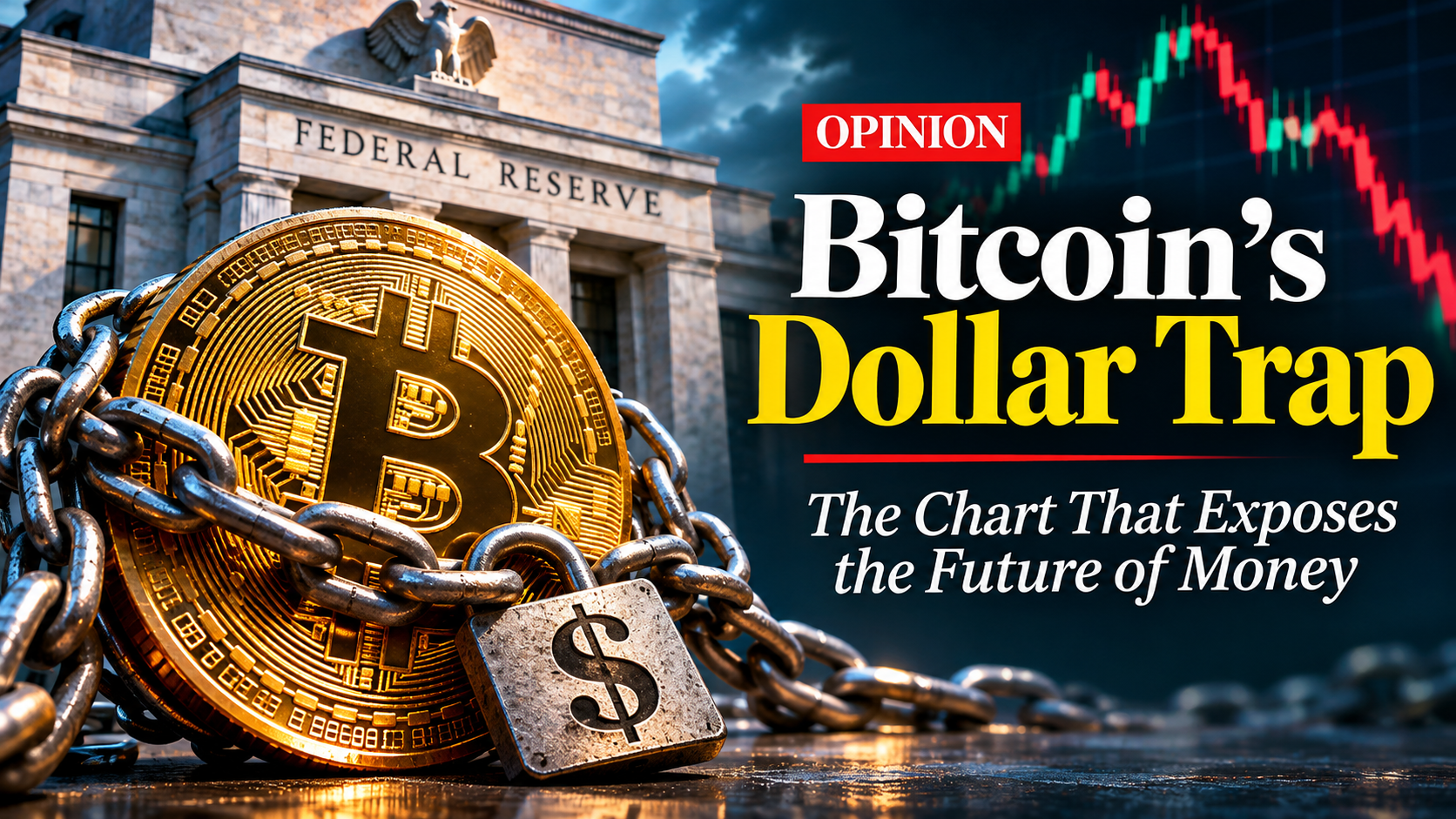
Bitcoin was supposed to challenge the financial establishment. Its increasingly institutionalised market may be revealing just how difficult it is to escape the dollar’s gravitational pull.
On November 5, Bitcoin slipped below $76,000 as a selloff in American technology stocks spilled into cryptocurrency markets. By November 8, the digital asset traded around $75,700—about 40 per cent below its October 2025 record. The decline was unsettling not merely because of its scale, but because of what it suggested about an asset frequently presented as an alternative to conventional finance.
According to Bloomberg’s November 5 market reporting, the cryptocurrency’s latest retreat coincided with a broader flight from risk, including a sharp decline in technology shares. The Bitcoin price chart maintained by CoinGecko showed how far the market had retreated from its previous enthusiasm.
The deeper contradiction lies elsewhere.
Bitcoin was conceived as a system capable of transferring value without dependence on banks. Yet nearly two decades after its introduction, the cryptocurrency’s price is dominated by arguments about Federal Reserve policy, institutional fund flows, dollar liquidity and investors’ willingness to speculate.
The bitcoin dollar chart—the familiar BTC/USD line followed by traders around the world—has become an unintended portrait of this transformation.
Its most revealing feature may not be whether the line moves upward or downward. It is how thoroughly the market’s interpretation of that movement depends on the institutions Bitcoin was supposed to make less important.

The Chart That Measures Everything Except Monetary Independence
At its simplest, a Bitcoin dollar chart measures how many US dollars buyers are willing to exchange for one Bitcoin.
A rising BTC/USD price means Bitcoin has appreciated against the dollar. A falling price means the opposite. This elementary relationship, however, is frequently burdened with conclusions it cannot support.
When Bitcoin rises, enthusiasts often interpret the movement as evidence that confidence in government-issued money is deteriorating. When it falls, critics declare that the cryptocurrency’s monetary ambitions have failed.
Neither conclusion necessarily follows.
Bitcoin can appreciate while the dollar strengthens against other currencies. It can decline during periods of dollar weakness. Its price also responds to investment demand, liquidity, leverage and expectations about future adoption.
An increase from $70,000 to $80,000 would establish that Bitcoin had gained value against the dollar. It would not establish whether the dollar had weakened against the euro, whether inflation expectations had changed, or whether new investors had entered cryptocurrency markets.
That distinction matters because the BTC/USD chart is an exchange-rate record, not a comprehensive measure of monetary confidence.
Financial platforms such as TradingView and Investing.com offer elaborate technical indicators, moving averages and price histories. These can help describe trading behaviour, but they cannot independently explain why a particular movement occurred.
The strongest interpretation requires additional evidence: whether institutional funds are accumulating Bitcoin, whether leveraged traders are being liquidated, how real interest rates are changing and whether investors are using Bitcoin for purposes beyond financial speculation.
There is another limitation to the popular narrative. Pricing an asset in dollars does not, by itself, make that asset economically subordinate to the United States. Gold, oil and numerous internationally traded commodities are conventionally quoted in dollars without losing their independent economic characteristics.
Bitcoin’s dependence is therefore not simply a matter of quotation.
It is a question of market infrastructure, capital allocation and the financial incentives of the institutions increasingly determining who buys and sells it.
Wall Street Has Embraced Bitcoin. But At What Price?
The cryptocurrency’s founding proposition was remarkably ambitious.
In his 2008 white paper, Bitcoin: A Peer-to-Peer Electronic Cash System, the pseudonymous Satoshi Nakamoto proposed a method of transferring digital payments without relying on a trusted financial intermediary.
The design addressed a technological problem: how strangers could establish a shared record of transactions without surrendering control of that record to a central institution.
It did not promise that Bitcoin’s future market price would be immune to financial cycles.
That distinction has become increasingly important.
In January 2024, the US Securities and Exchange Commission approved the listing and trading of spot Bitcoin exchange-traded products. The decision expanded access to Bitcoin through conventional brokerage accounts and regulated securities exchanges.
It also created a powerful new channel through which traditional investment behavior could influence cryptocurrency markets.
The consequences were visible in 2026.
According to research published by 21Shares on November 2, US spot Bitcoin ETFs attracted approximately $6.2 billion in net inflows during the third quarter, following roughly $4.8 billion in outflows during the second.
The same research estimated that longer-term Bitcoin holders reduced their balances by 248,000 coins during the third quarter.
These figures, drawn from industry and market-data providers, suggest something more complex than a simple story of expanding adoption. Institutional demand was rising during that quarter even as substantial amounts of Bitcoin moved away from longer-term holders.
But institutional participation can reverse direction.
On November 3, Bloomberg reported that US-listed Bitcoin funds had experienced approximately $1.04 billion in net withdrawals over two trading sessions.
The contrast is revealing.
Institutional investment can expand the market’s depth, provide access to new investors and potentially reduce some forms of trading friction. It can also bring Bitcoin into the same portfolio-management decisions that govern equities, bonds and other assets.
A fund manager facing redemptions or mounting losses elsewhere may sell Bitcoin because it is liquid—not because the underlying network has deteriorated.
That is the price of financial legitimacy.
As The Atlantic argued in its February 2026 examination of cryptocurrency’s downturn, wider acceptance by traditional finance can increase the industry’s exposure to familiar market vulnerabilities.
The central paradox is that Bitcoin can become easier to own without becoming more independent.
The Federal Reserve Remains an Uninvited Participant
If Bitcoin were already functioning as a widely accepted alternative monetary system, decisions made by the Federal Reserve would presumably exert less influence over its market narrative.
Instead, monetary policy remains a major consideration for cryptocurrency investors.
On October 28, 2026, the Federal Open Market Committee maintained its benchmark interest-rate range at 3.75 to 4 percent. The decision passed by a 10–2 vote, with two policymakers preferring a quarter-point increase.
The significance for Bitcoin lies in the opportunity cost of holding an asset that pays no contractual interest.
When short-term Treasury securities offer attractive yields, investors can receive income while taking substantially less price risk than they would by holding Bitcoin.
Higher real interest rates can therefore make speculative assets less attractive. Lower yields may improve their relative appeal, especially when abundant liquidity encourages investors to seek returns beyond conventional fixed-income markets.
Yet this relationship is not mechanical.
Bitcoin’s history contains periods when it moved alongside risky equities and others when its performance diverged. Regulatory developments, changes in market structure and cryptocurrency-specific shocks can outweigh broad monetary conditions.
Nevertheless, the dependence is increasingly difficult to dismiss.
A Bloomberg analysis of Bitcoin’s integration into institutional finance examined the relationship between cryptocurrency markets, futures pricing, volatility and technology equities. Its analysis found that Bitcoin’s correlation with technology shares had become substantial over some recent measurement periods.
The November market decline offered another illustration, although one episode cannot establish a permanent relationship.
This complicates Bitcoin’s reputation as an inflation hedge.
Inflation can weaken the purchasing power of conventional money, supporting demand for scarce alternatives. But persistent inflation can also produce tighter monetary policy, higher bond yields and reduced appetite for risky investments.
An asset designed to resist monetary expansion can still suffer when central banks fight inflation.
Bitcoin’s fixed supply rules do not shield its market price from changes in the cost of money.
Digital Gold—or an Asset That Behaves Like Technology Stocks?
Bitcoin’s supporters have long emphasized the contrast between its programmed scarcity and the discretionary issuance of government currencies.
The network’s supply is designed to approach a maximum of 21 million coins, creating a predictable issuance schedule that distinguishes it from conventional money.
That scarcity is economically meaningful.
But scarcity alone does not guarantee price stability, purchasing power or enduring demand.
Gold has centuries of historical use as jewelry, a store of wealth and a reserve asset. Bitcoin’s economic history is much shorter, its ownership infrastructure is different, and its price continues to reflect pronounced speculative cycles.
The comparison becomes especially revealing during periods of financial stress.
If an asset is consistently treated as a safe haven, investors would expect it to retain value—or at least provide meaningful diversification—during some episodes of turmoil elsewhere.
Bitcoin has not consistently met that standard.
The Financial Times examined the cryptocurrency market’s structural vulnerabilities during the severe market correction of late 2025, including leveraged trading, declining liquidity and the growing connections between cryptocurrency and traditional financial institutions.
These vulnerabilities help explain why the digital-gold analogy can be misleading when applied indiscriminately.
Bitcoin may serve as a long-term speculative store of value for some investors. It may provide an alternative to unstable national currencies in particular circumstances. Its independence from centralized issuance remains an important technical characteristic.
But the ability to survive over many years is different from the ability to preserve value during a particular financial emergency.
Gold and Bitcoin may occasionally benefit from the same fears about inflation or fiscal credibility. They need not behave alike when investors urgently seek cash.
For policymakers and investors, that difference is more consequential than the familiar argument over which asset deserves the title of digital gold.
The Dollar’s Quiet Victory Inside the Cryptocurrency Economy
Bitcoin’s relationship with the dollar becomes more intriguing when the broader cryptocurrency ecosystem is considered.
The digital-asset industry has produced instruments that sometimes compete with traditional banking services while simultaneously extending the international reach of the American currency.
Stablecoins illustrate this contradiction.
Unlike Bitcoin, most major fiat-backed stablecoins are designed to maintain a stable value relative to an established currency—usually the US dollar.
The International Monetary Fund reported in August 2026 that nearly 99 percent of stablecoins were denominated in dollars.
That is an extraordinary measure of the dollar’s continued influence within a financial ecosystem frequently associated with monetary disruption.
Stablecoins and Bitcoin are fundamentally different instruments. One generally seeks price stability against an existing currency; the other has a market-determined price. Their growth should not be treated as interchangeable evidence of the same economic development.
Nevertheless, their trading and financial infrastructure overlap.
Dollar-backed stablecoins facilitate cryptocurrency-market liquidity and transfers while creating demand for the dollar-denominated assets held in reserve.
Research by the Bank for International Settlements examined how stablecoin demand affects short-term US Treasury markets, identifying an increasingly significant connection between digital finance and government securities.
The implication is striking: a financial system celebrated for challenging traditional intermediaries can generate additional demand for instruments issued by the world’s leading sovereign borrower.
Meanwhile, the dollar’s wider international position remains formidable.
According to the IMF’s September 30, 2026 reserve-currency data, the dollar accounted for 56.70 percent of reported global foreign-exchange reserves in the second quarter of 2026.
That share has declined from historical levels, but the dollar remains the dominant reserve currency.
Bitcoin’s market capitalization does not by itself overturn this structure. Nor does the growth of digital-asset trading demonstrate that businesses are abandoning dollars as the unit in which they price goods, settle obligations or evaluate investment returns.
The distinction is between creating an alternative asset and replacing a monetary system.
Bitcoin has achieved the former. The evidence for the latter remains far less persuasive.
The Emerging-Market Test
The monetary implications become particularly important outside advanced economies.
In countries experiencing high inflation, currency depreciation, restrictions on foreign exchange or weak confidence in financial institutions, digital assets can offer an alternative channel for storing or transferring wealth.
But alternatives differ substantially.
A household seeking protection against local-currency depreciation might prefer a dollar-backed stablecoin over Bitcoin because the stablecoin avoids much of Bitcoin’s immediate price volatility against the dollar.
That choice would not necessarily constitute rejection of the dollar.
It could represent digital dollarization: the adoption of dollar-linked claims through a new technological infrastructure.
An IMF policy paper published in October 2026 warned that foreign-currency stablecoins could accelerate currency substitution and complicate monetary management, particularly where local financial systems are fragile.
The same innovation can produce genuine benefits through improved payments, wider access and greater competition.
But those advantages do not eliminate risks involving reserve quality, redemption rights, market integrity and national monetary sovereignty.
A developing economy that adopts dollar-linked digital tokens more extensively may become technologically innovative while growing more dependent on foreign monetary conditions.
Bitcoin presents a different set of trade-offs. It does not promise stable redemption at one dollar, but its value can fluctuate dramatically.
For households living close to financial insecurity, monetary independence has limited practical value if the asset intended to protect savings suffers a sudden, severe decline.
The question is therefore not whether digital finance can help people escape inefficient institutions. It can, under the right conditions.
The question is whether that escape creates genuine monetary autonomy—or merely changes the technology through which existing monetary power is exercised.
What the Bitcoin Dollar Chart Cannot Tell Us
The greatest weakness of conventional Bitcoin analysis is its tendency to confuse market performance with monetary transformation.
A higher BTC/USD price may indicate rising investor demand. It cannot tell us whether businesses increasingly use Bitcoin to settle ordinary transactions, whether households trust it for recurring expenses, or whether financial systems are becoming less dependent on conventional intermediaries.
Four questions deserve more attention than the next technical resistance level.
First, is Bitcoin becoming more useful beyond investment? Adoption should be evaluated through credible evidence of payments, settlement, savings behavior and financial access—not price appreciation alone.
Second, does Bitcoin provide reliable diversification under stress? Its performance should be examined across different inflation regimes, interest-rate environments, liquidity shocks and geopolitical crises.
Third, who increasingly determines market prices? If institutional funds, leveraged derivatives and large intermediaries account for a growing share of investment activity, the concentration of financial influence matters even when the underlying network remains decentralized.
Fourth, is cryptocurrency adoption reducing dependence on the dollar? The expansion of digital payments may be substantial without producing a corresponding shift away from dollar-denominated financial claims.
These questions expose the limits of technical prediction.
Moving averages, momentum indicators and support levels may help traders interpret recent price behavior. They do not establish why prices moved or guarantee what comes next.
In a November 4 technical assessment, Reuters examined Bitcoin’s repeated declines following periods of consolidation and identified possible downside and recovery scenarios.
Such analysis can describe market probabilities and potential trading levels. It cannot settle Bitcoin’s longer-term economic identity.
A cryptocurrency may be technically innovative without becoming monetary infrastructure. It may appreciate dramatically without becoming a reliable store of purchasing power. And it may gain institutional acceptance without delivering the independence its earliest supporters imagined.
Those are not arguments for dismissing Bitcoin.
They are arguments for judging it by more demanding standards.
The Next Monetary Revolution May Look Surprisingly Familiar
The future of Bitcoin is not reducible to a contest between believers forecasting unlimited appreciation and skeptics predicting collapse.
Several outcomes remain plausible.
Bitcoin may mature into a widely held, high-volatility investment asset with a durable place in institutional portfolios. It may gain broader utility in international payments or as an alternative savings instrument. Its price may remain highly sensitive to global liquidity even as its technological infrastructure continues to develop.
These possibilities are not mutually exclusive.
But the most important transformation could occur elsewhere in digital finance.
Stablecoins, tokenized deposits and other electronic financial instruments may modernize how existing currencies move without fundamentally replacing those currencies.
The BIS analysis of stablecoins and the international monetary system identifies the possibility that dollar-denominated tokens could reinforce existing currency hierarchies rather than overturn them.
That possibility deserves more attention than another speculative Bitcoin price target.
The global financial system may become more digital, more accessible and more technologically decentralized in certain functions while remaining substantially dollar-centered in its pricing, funding and reserve arrangements.
This would represent meaningful innovation.
It would not necessarily represent a monetary revolution.
The Verdict: Bitcoin Has Challenged Money, Not Yet Replaced Its Power Structure
The Bitcoin dollar chart tells a story of extraordinary technological ambition, financial speculation, institutional adaptation and unresolved monetary questions.
It also offers a warning against confusing the market value of an innovation with the political and economic consequences of that innovation.
Bitcoin has survived repeated crashes, regulatory confrontations and predictions of its disappearance. It has attracted investors, inspired new financial products and established a functioning network that no single central bank directly controls.
Those achievements should not be trivialized.
Yet its growing entanglement with conventional finance suggests that the most successful challenge to an institution is not always its replacement.
Sometimes, the institution absorbs the challenge.
Wall Street has learned to package Bitcoin. Investors have learned to trade it alongside other risky assets. Governments have learned to regulate or accommodate parts of its ecosystem. Dollar-backed tokens have demonstrated how digital innovation can extend the influence of established currencies.
The cryptocurrency’s market price may rise again. It may also fall further. Neither outcome would independently determine whether Bitcoin has fulfilled its original economic promise.
The more consequential question is whether Bitcoin can achieve greater practical monetary usefulness without requiring the financial system it challenges to determine its relevance.
Bitcoin has proved that money-like value can exist without a central issuer. Its unfinished revolution is proving that such value can matter without depending so heavily on the institutions it sought to bypass.
Until that changes, the most revealing feature of the Bitcoin dollar chart may be the currency printed beside the price.
Discover more from The Economy
Subscribe to get the latest posts sent to your email.
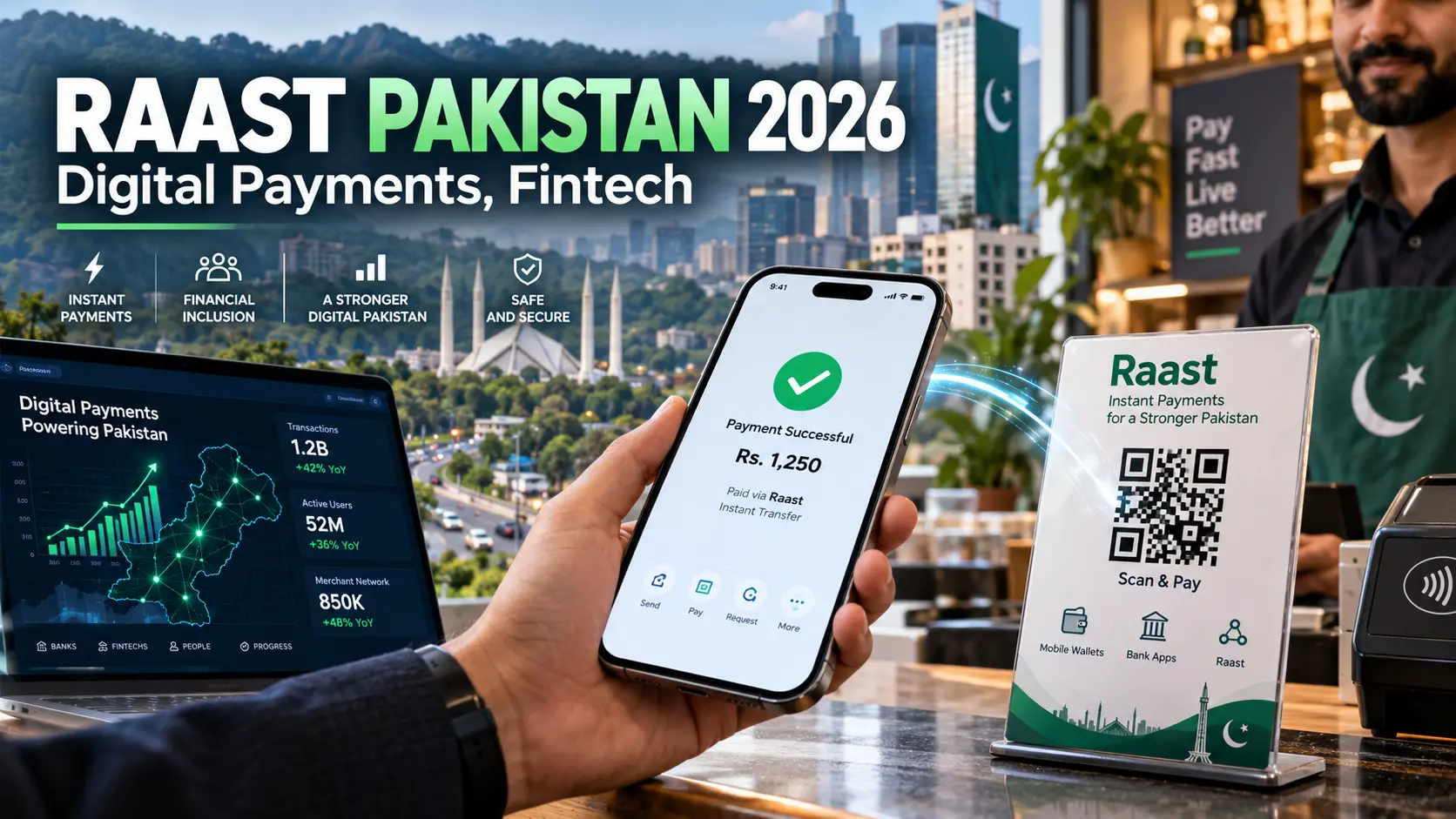
Understand Raast, QR payments and Pakistan’s digital-rupee debate. See what works now, what remains unverified and how merchants can reduce cash costs.
Key Takeaways
- The SBP’s payment-system publications include an FY2025–26 annual review announced on 6 October 2026, providing a formal basis for tracking digital adoption.
- Raast supports instant-payment use cases and domestic merchant collection; that does not mean a universally available Pakistani retail central-bank digital currency has launched.
- The SBP announced financial-inclusion index results on 7 October 2026; access and actual usage should be treated as different measures.
- For shops and households, transparent fees, fraud protection, reliable acceptance and dispute resolution matter more than the label cashless.
A shopkeeper in Rawalpindi may receive dozens of electronic transfers in one day and still prefer cash because he cannot reconcile the payments quickly at closing time. That tension explains the promise and the limits of Raast Pakistan 2026. A modern payment network can move money rapidly, but it does not automatically fix weak accounting, cybercrime or trust between merchants and customers.
Pakistan’s digital ecosystem now includes bank applications, e-money wallets, card terminals and Raast payment services. Meanwhile, the idea of a digital rupee attracts attention that sometimes confuses an existing transfer system with a hypothetical new form of central-bank money. The distinction matters. Here is how the technologies work, what the current evidence shows and what would make digital adoption useful for ordinary businesses rather than another regulatory slogan.
What is Raast Pakistan 2026, and how does it work?
Raast is a payment infrastructure system designed to allow eligible financial institutions and users to move money quickly. It supports different services, including person-to-person transfers and merchant payments as supported by participating institutions. It is not itself a bank account or a digital token that users can hold independently of their payment provider.
A customer typically interacts through a banking or participating payments application. The service connects to the regulated payment system; the money moves between accounts under the rules of the participating financial institutions. Merchant QR acceptance can simplify collection when the payer and receiver have compatible services and usable connectivity.
The State Bank’s payments-review reports are the source to consult for payment volumes, value and user adoption. The regulator announced its FY2025–26 Annual Payment Systems Review on 6 October 2026, and the report period should not be confused with the current FY2026–27 first quarter.
The difference between a payment rail and an account
A rail is the infrastructure that transmits and settles a payment instruction. An account stores a customer’s legally recognised balance. A QR code typically provides the recipient information that the application uses to initiate a payment; it is not proof by itself that the merchant has been paid. Sellers should confirm the transaction inside their own provider’s authenticated interface.
How far has digital adoption actually gone?
Digital retail transactions have grown significantly within Pakistan’s regulated banking and payment ecosystem. The SBP quarterly and annual publications document that growth across mobile applications, electronic-money institutions, internet banking and merchant payments. But a crucial statistical caveat often disappears from headlines: transactions outside the formal banking system are not necessarily counted in those reported digital-versus-cash shares.
That means a statement such as ‘most bank-channel retail payments are digital’ cannot be rewritten as ‘most spending in Pakistan is digital’. A vegetable purchase made with physical cash, an undocumented informal loan or a family payment outside participating institutions may not appear in the denominator.
| Measure | What it indicates | What it cannot prove |
|---|---|---|
| Digital retail transaction count | Formal electronic payments processed | Total cash spending nationwide |
| Digital transaction value | Rupee amount passing through recorded channels | Number of unique households |
| Registered users | Access or enrolment at an institution | Regular active use |
| Merchant QR registrations | Potential acceptance points | Payments successfully completed |
| Complaints or fraud losses | Some consumer-protection risks | All incidents, including unreported fraud |
The SBP financial-inclusion announcement of 7 October 2026 reinforces the importance of distinguishing having access to financial services from using them reliably. The stronger policy question is whether more people can pay and be paid at a lower real cost with fewer unresolved disputes.
Why do small businesses still rely on cash?
Cash has no app login, does not require battery power and can be accepted by a customer who lacks a smartphone. Those are genuine advantages for a rural vendor or a small urban business. Cash also carries risks: theft, miscounting, travel time, expensive physical handling and a limited audit trail.
Digital acceptance introduces a different cost set. A merchant needs an account or wallet, working connectivity, a trained employee and a reliable way to verify transactions. Some payments involve provider fees or settlement issues. A shopkeeper may also fear customer chargebacks or scams that impersonate an approved payment notification.
The correct question is therefore not ‘How can cash be abolished?’ but ‘Which payments are safer and cheaper when digitised?’ A business with repetitive supplier payments may benefit from electronic records even if small over-the-counter sales remain mixed.
The World Bank framework for Pakistan links stronger private-sector conditions to inclusion and productivity. For merchant payments, adoption should be judged by practical saved time, lower cash-handling loss and better access to formal finance, rather than installation targets alone.
Is Pakistan launching a digital rupee, and is it the same as Raast?
A central-bank digital currency (CBDC) would be a form of digital central-bank money governed by a defined legal and technical design. A wallet balance held with a commercial provider and a payment transfer using Raast are different things. Neither becomes a retail CBDC simply because a phone screen shows rupees.
Policy debate and exploration are not equivalent to a public rollout. The SBP press-release record and official economic-data and operations portal are appropriate sources for verified details of any pilot, eligibility, licensing or public launch. In this research, a generally available retail digital rupee as of 19 October 2026 was not independently verified; this article therefore does not present one as operating.
A digital rupee would raise policy questions beyond payment speed: privacy, offline access, fraud liability, bank funding, transaction limits and compatibility with existing accounts. The eventual design could matter more than its name. For example, a system without practical safeguards for stolen phones might exclude users who need easy redress.
Raast already solves a different problem: getting authorised payment instructions between participating institutions. Its performance can be evaluated now without assuming the future architecture of central-bank digital money.
What are the risks of a more digital financial system?
Payment fraud can move as quickly as legitimate money. Criminals may impersonate banks, send false payment screenshots or persuade a user to reveal a PIN. Shop employees sometimes release goods before the actual credit appears in the authenticated merchant interface.
Consumer protection requires clear transaction confirmations, liability rules and accessible complaints. A fraud victim should be able to report an incident promptly and receive a tracking number. Data protection is equally important: a payment history should not become an unrestricted record available to unrelated businesses or agencies without lawful safeguards.
Operational resilience is another issue. During a network outage, a small merchant needs a practical fallback. Dependence on a single payment app or provider can create concentration risk. Merchants may benefit from more than one lawful acceptance option, while regulators should define common standards for security and interoperability.
The SBP regulatory announcements and payment-system reviews should be monitored for changing operating rules and fraud trends. A large transaction count is not a measure of trustworthiness unless the system can also show how failures are handled.
How can digital payments improve access to credit and tax compliance?
A business with consistent customer payments can create evidence of turnover. That evidence may help a responsible lender assess seasonality and repayment prospects. A new shop can begin with a simple daily record: opening cash, digital sales, refunds, supplier purchases and closing balance. When records match bank activity, the owner has a more credible business profile.
The SBP’s July 2026 SME definitions classify micro, small and medium firms by turnover for banking-regulatory purposes. Digital receipts could help corroborate turnover, but they do not automatically qualify the business for financing. The lender still has to examine profit margin, debt and expected cash flows.
A broader formal record can also make tax filings easier. Yet coercion without convenience can push small merchants toward avoidance. Start with inexpensive acceptance, understandable reporting and a fair correction process for mistaken records. The World Bank-supported FBR revenue reforms are relevant to the wider goal of increasing voluntary formal compliance.
For a household, digital transfers can help document rent or school fees. For a freelancer, domestic instant payments may make it easier to pay local subcontractors. Cross-border customer receipts, however, still require appropriate international settlement mechanisms and compliance.
What This Means for You
Merchant: Confirm a payment on your own banking or wallet application, not a customer screenshot. Reconcile digital receipts with sales daily and keep access credentials separate from ordinary employees’ devices where possible.
Household: Use strong account protection, never share one-time codes and record transaction references for payments that might later be disputed. Verify the recipient carefully before confirming a large transfer.
Freelancer: Use regulated cross-border receipt channels for foreign invoices and local digital rails for compliant domestic payments. Do not confuse a domestic Raast identifier with an international bank account.
Policymaker: Publish consistent measures of active use, merchant success rates, fraud complaints and outages. Include offline and low-connectivity consumers rather than treating app downloads as universal financial inclusion.
Raast is Pakistan’s instant-payment infrastructure connecting participating financial institutions and payment services for authorised transfers, including supported person-to-person and merchant-payment use cases. Customers access it through eligible banking or payment interfaces. It is not itself a separate bank account or a central-bank digital currency.
What to Watch Next
- 26 October 2026: The State Bank monetary-policy decision and any revision to its inflation assessment; verify any schedule change with the SBP.
- Early November 2026, exact release date to be confirmed: Pakistan Bureau of Statistics October inflation and merchandise-trade releases.
- Late October–November 2026, date not yet confirmed: Any IMF Executive Board announcement on the October staff-level agreement; staff agreement is not Board approval.
- Throughout FY2026–27: Updated SBP monthly balance-of-payments and remittance statistics; compare cumulative results rather than one month alone.
Frequently Asked Questions
What is Raast in Pakistan?
Raast is Pakistan’s instant-payment infrastructure connecting participating financial institutions and payment services for authorised transfers, including supported person-to-person and merchant-payment use cases. Customers access it through eligible banking or payment interfaces. It is not itself a separate bank account or a central-bank digital currency.
Is a digital rupee available to everyone in Pakistan in October 2026?
A generally available retail central-bank digital rupee was not independently verified from the official sources consulted as of 19 October 2026. Policy exploration and pilots should not be mistaken for a public launch. Use official SBP announcements for changes to legal status or availability.
Can a small shop receive money through Raast QR payments?
A shop can use supported merchant-payment services through a participating provider, subject to onboarding, eligibility and the provider’s current operating rules. Merchants should verify settlement in their authenticated app or account rather than accepting a screenshot as proof.
Will digital payments eliminate cash in Pakistan?
Not automatically. Cash remains useful where smartphone access, connectivity and digital literacy are limited. Digital channels can reduce some cash-handling costs, but consumers and businesses need choice, reliable fallback options and clear fraud protections. Bank-channel transaction statistics do not measure all cash spending nationwide.
Can Raast transaction history help a business get a loan?
A documented payment history may help demonstrate turnover when it is reconciled with genuine invoices and business expenses. It is not an automatic loan qualification. Banks still examine cash flow, profitability, debt obligations and applicable SBP rules.
Pakistan will become more digitally capable when a street vendor can accept a payment, verify it and resolve a mistake without specialist help. Raast is useful infrastructure. A future digital rupee may add something different. Neither deserves to be judged by the logo alone
Discover more from The Economy
Subscribe to get the latest posts sent to your email.

Open Banking Trends 2026: What Consumers Should Know

Nvidia After the Selloff: What to Watch Before Earnings

Black Friday 2026 Early Deals: A Data-Driven Shopping Guide

Fed Policy Path 2027: Rate Expectations After the Hold

Asia’s Economic Resilience in 2026: The Strategic Blueprint for Sustaining the Global Growth Engine

Credit Scoring Changes 2026: What Mortgage Buyers Need to Know

10-Year Treasury Yield Outlook for 2027 After the Democratic Sweep

Is the AI Infrastructure Boom Sustainable? A Reality Check

Disability Insurance Demand in 2026: Who’s Buying and Why

What the 2026 Midterms Mean for Treasury Yields and Bond Markets

Payroll Outlook After the Midterms: 2027 Tax Changes, Compliance Risks and AI Trends

Lisa Su: AMD Is Now a “Data Center First Company” – 2027 Outlook

Reasons for Falling US Gas Prices in November 2026: A Seasonal Shift

SoftBank’s $3.7 Billion Turbine Loss: What the AI Power Bet Reveals

Dow Jones Today: Dow Slips 237 Points After the Worst Day Since April 2025

US–Iran Conflict in October 2026: Hormuz, Oil Prices and Diplomacy

Pakistan IMF Programme 2026: Why Bailouts Keep Returning

SSI November 2026 Payment: Why Benefits Arrive October 30

Singapore Stock Market Outlook 2027: The STI’s Bank-and-Yield Test

2027 Federal Tax Brackets: New IRS Rates and Standard Deductions Explained

IMF Global Outlook 2027: The Recovery Is Real, but the Divide Is Growing

World Bank Debt Report 2026: The $9.4 Trillion Burden Behind the Recovery

Stock Market Crash 2026? What the November Rout Actually Tells Us

KSE-100 Index 2026: Is Pakistan’s Stock-Market Recovery Sustainable?

Germany–France ‘Made in Europe’ Deal Could Reshape China’s EV Ambitions

Global Markets Today: The AI Sell-Off Has Become a Test of Liquidity

Zhuhai Airshow 2026: How China’s Stealth Jets, Drones and Missiles Are Redrawing Global Air Power

Singapore’s Bank Sell-Off Is Really a Test of What Stability Is Worth
-

 Markets & Finance10 months ago
Top 15 Stocks for Investment in 2026 in PSX: Your Complete Guide to Pakistan’s Best Investment Opportunities
-

 Analysis9 months ago
Johor’s Investment Boom: The Hidden Costs Behind Malaysia’s Most Ambitious Economic Surge
-

 Analysis9 months ago
Top 10 Stocks for Investment in PSX for Quick Returns in 2026
-

 Banks10 months ago
Best Investments in Pakistan 2026: Top 10 Low-Price Shares and Long-Term Picks for the PSX
-

 Analysis9 months ago
Brazil’s Rare Earth Race: US, EU, and China Compete for Critical Minerals as Tensions Rise
-

 Investment10 months ago
Top 10 Mutual Fund Managers in Pakistan for Investment in 2026: A Comprehensive Guide for Optimal Returns
-

 Global Economy11 months ago
15 Most Lucrative Sectors for Investment in Pakistan: A 2025 Data-Driven Analysis
-

 Global Economy11 months ago
Pakistan’s Export Goldmine: 10 Game-Changing Markets Where Pakistani Businesses Are Winning Big in 2025