
Markets & Finance
Singapore Stocks vs. China Equities: Smart Money Hedging Strategies


Institutional capital is migrating from high-volatility emerging markets toward stable, dividend-yielding safe havens. Chinese equities face headwinds from domestic real estate deleveraging, while the Straits Times Index offers a robust defensive posture, anchored by banking giants benefiting from higher interest rate environments. The latest IMF and World Bank data further emphasize the divergence in regional growth trajectories.
The current macroeconomic environment is characterized by unprecedented volatility, driven by shifting monetary policies, supply chain recalibrations, and evolving trade barriers. As central banks navigate the delicate balance between curbing inflation and preventing deep recessions, emerging markets face asymmetric risks. Developing economies must rigorously manage their foreign exchange reserves while calibrating import duties and trade frameworks—often leveraging insights from national tariff commissions to protect domestic industries without stifling vital foreign direct investment. This delicate equilibrium directly impacts global liquidity, equity valuations, and sovereign debt yields. The restructuring of global supply chains, initially sparked by geopolitical friction, has now become a structural reality. Corporations are transitioning from ‘just-in-time’ manufacturing to ‘just-in-case’ inventory management, fundamentally altering capital expenditure cycles. Furthermore, the integration of advanced digital tracking and open-source intelligence is allowing multinational firms to better anticipate supply shocks, although the cost of implementing these technologies creates new barriers to entry for smaller enterprises. Ultimately, the intersection of foreign policy and economic strategy is tighter than ever, with trade tariffs and sanctions acting as primary instruments of geopolitical leverage.
This dynamic fundamentally shifts how stakeholders must approach long-term strategic planning, requiring a pivot away from legacy models toward hyper-adaptive fiscal forecasting.
2. Deep Dive: Market Mechanics and Structural Shifts
Delving deeper into the structural mechanics, we see a profound transformation in how institutional capital evaluates risk. Historically, geographic diversification offered a reliable hedge against localized downturns. Today, however, the rapid transmission of financial shocks across borders—facilitated by highly integrated banking networks and algorithmic trading—means that systemic risk is virtually ubiquitous. Asset managers are heavily scrutinizing cash flow durability, favoring sectors with inelastic demand characteristics. The regulatory environment is also tightening. Heightened scrutiny over data privacy, antitrust concerns in the technology sector, and rigorous ESG (Environmental, Social, and Governance) compliance mandates are forcing companies to overhaul their operational frameworks. These compliance costs are inevitably passed down to the consumer, fueling core inflationary pressures. Concurrently, the labor market is undergoing a structural shift. The automation of routine tasks, coupled with the rising premium on specialized technical and analytical skills, is widening the productivity gap between different segments of the workforce. For policymakers and corporate strategists alike, navigating this landscape requires a nuanced understanding of these intersecting vectors, moving beyond traditional econometric models to incorporate real-time, alternative data sources.
By examining the underlying data, it becomes evident that the market is severely underpricing tail-risks associated with these developments. Institutional capital flows are increasingly prioritizing liquidity and balance sheet resilience over speculative growth.
In parallel, the velocity of money within these specific sub-sectors has decelerated, indicating a hoarding of capital by major corporate players in anticipation of further regulatory or geopolitical turbulence. This behavior creates a feedback loop, exacerbating localized liquidity shortages and widening credit spreads.
3. Regulatory Environment and Trade Implications
Any comprehensive analysis must account for the evolving regulatory perimeter. National trade bodies and tariff commissions are aggressively deploying protectionist measures, utilizing import duties and quotas to shield domestic industries from global dumping practices. These tariff architectures, while politically popular, disrupt established global value chains and introduce massive compliance overhead for multinational operators.
The current macroeconomic environment is characterized by unprecedented volatility, driven by shifting monetary policies, supply chain recalibrations, and evolving trade barriers. As central banks navigate the delicate balance between curbing inflation and preventing deep recessions, emerging markets face asymmetric risks. Developing economies must rigorously manage their foreign exchange reserves while calibrating import duties and trade frameworks—often leveraging insights from national tariff commissions to protect domestic industries without stifling vital foreign direct investment. This delicate equilibrium directly impacts global liquidity, equity valuations, and sovereign debt yields. The restructuring of global supply chains, initially sparked by geopolitical friction, has now become a structural reality. Corporations are transitioning from ‘just-in-time’ manufacturing to ‘just-in-case’ inventory management, fundamentally altering capital expenditure cycles. Furthermore, the integration of advanced digital tracking and open-source intelligence is allowing multinational firms to better anticipate supply shocks, although the cost of implementing these technologies creates new barriers to entry for smaller enterprises. Ultimately, the intersection of foreign policy and economic strategy is tighter than ever, with trade tariffs and sanctions acting as primary instruments of geopolitical leverage.
Consequently, compliance is no longer a localized legal issue but a central pillar of global corporate strategy. Firms that fail to map their supply chain vulnerabilities against shifting tariff schedules risk catastrophic margin compression. The strategic deployment of foreign direct investment is now heavily contingent upon favorable tariff rulings and bilateral trade agreements, making regulatory forecasting as critical as traditional financial modeling.
4. Corporate Strategy & Supply Chain Realities
At the enterprise level, the response to these macroeconomic and regulatory pressures involves massive capital expenditure in supply chain redundancy. The shift toward near-shoring and friend-shoring is accelerating, unwinding decades of globalization focused purely on labor arbitrage. This transition is highly capital intensive, depressing near-term return on invested capital (ROIC) but essential for long-term operational survival.
Delving deeper into the structural mechanics, we see a profound transformation in how institutional capital evaluates risk. Historically, geographic diversification offered a reliable hedge against localized downturns. Today, however, the rapid transmission of financial shocks across borders—facilitated by highly integrated banking networks and algorithmic trading—means that systemic risk is virtually ubiquitous. Asset managers are heavily scrutinizing cash flow durability, favoring sectors with inelastic demand characteristics. The regulatory environment is also tightening. Heightened scrutiny over data privacy, antitrust concerns in the technology sector, and rigorous ESG (Environmental, Social, and Governance) compliance mandates are forcing companies to overhaul their operational frameworks. These compliance costs are inevitably passed down to the consumer, fueling core inflationary pressures. Concurrently, the labor market is undergoing a structural shift. The automation of routine tasks, coupled with the rising premium on specialized technical and analytical skills, is widening the productivity gap between different segments of the workforce. For policymakers and corporate strategists alike, navigating this landscape requires a nuanced understanding of these intersecting vectors, moving beyond traditional econometric models to incorporate real-time, alternative data sources.
Furthermore, the integration of advanced data analytics into procurement and logistics is creating a bifurcation in corporate performance. Companies leveraging real-time telemetry and predictive modeling can dynamically route around bottlenecks, whereas legacy operators remain heavily exposed to single points of failure. This technological divide is rapidly translating into a definitive competitive advantage, reflected in disparate valuation multiples within the same industry cohorts.
5. Digital Monetization & Premium Publisher Strategy
From a digital publishing and monetization perspective, covering these complex macro and technological trends requires a sophisticated architecture. High-CPM and high-CPC yield generation depends on capturing intent-driven traffic. Financial and geopolitical content naturally attracts premium programmatic advertisers. Digital publishers operating robust portfolios are increasingly diversifying their revenue streams beyond standard display ads. By integrating specialized publisher networks, such as Coin.network for crypto and macro-finance adjacencies, or high-intent affiliate ecosystems like Travelpayouts for global transit and aviation content, digital platforms can drastically improve their revenue per thousand impressions (RPM). Furthermore, optimizing site taxonomy and leveraging vector-based assets ensures faster load times, directly boosting Core Web Vitals and search engine rankings. The strategic placement of contextual widgets, combined with deep-dive analytical content, creates a sticky user experience that encourages longer session durations. This architectural approach not only outperforms algorithmic updates but establishes a highly defensible moat against low-effort, AI-generated content farms. For media operators, the transition from basic news aggregation to authoritative, niche intelligence distribution is the key to sustainable digital media economics.
For financial and economic news portals, the path to profitability lies in owning the niche. By consistently delivering high-fidelity analysis that intersects global trade, technology, and market data, publishers attract a highly affluent demographic. This audience profile commands top-tier CPC rates from financial institutions, B2B SaaS providers, and enterprise tech conglomerates.
Strategic integration of programmatic networks requires meticulous attention to ad placement, ensuring that monetization widgets complement rather than disrupt the analytical narrative. The use of sophisticated yield management platforms allows publishers to dynamically allocate inventory between direct sales, private marketplaces, and open exchanges, maximizing revenue yield in real-time. This sophisticated infrastructure is the bedrock of modern digital publishing economics.
6. Future Outlook and Risk Assessment
The current macroeconomic environment is characterized by unprecedented volatility, driven by shifting monetary policies, supply chain recalibrations, and evolving trade barriers. As central banks navigate the delicate balance between curbing inflation and preventing deep recessions, emerging markets face asymmetric risks. Developing economies must rigorously manage their foreign exchange reserves while calibrating import duties and trade frameworks—often leveraging insights from national tariff commissions to protect domestic industries without stifling vital foreign direct investment. This delicate equilibrium directly impacts global liquidity, equity valuations, and sovereign debt yields. The restructuring of global supply chains, initially sparked by geopolitical friction, has now become a structural reality. Corporations are transitioning from ‘just-in-time’ manufacturing to ‘just-in-case’ inventory management, fundamentally altering capital expenditure cycles. Furthermore, the integration of advanced digital tracking and open-source intelligence is allowing multinational firms to better anticipate supply shocks, although the cost of implementing these technologies creates new barriers to entry for smaller enterprises. Ultimately, the intersection of foreign policy and economic strategy is tighter than ever, with trade tariffs and sanctions acting as primary instruments of geopolitical leverage.
Looking forward to the next fiscal cycles, the interplay between technological disruption and macroeconomic stability will intensify. Stakeholders must remain exceptionally agile, deploying advanced forecasting tools and maintaining robust liquidity buffers to weather unexpected systemic shocks. The margin for error in capital allocation has effectively dropped to zero.
In conclusion, the convergence of these factors dictates a complete reimagining of traditional operational and investment playbooks. The victors in this new paradigm will be those who can seamlessly synthesize geopolitical intelligence, deep market data, and advanced digital distribution strategies into a cohesive, actionable framework.
Discover more from The Economy
Subscribe to get the latest posts sent to your email.


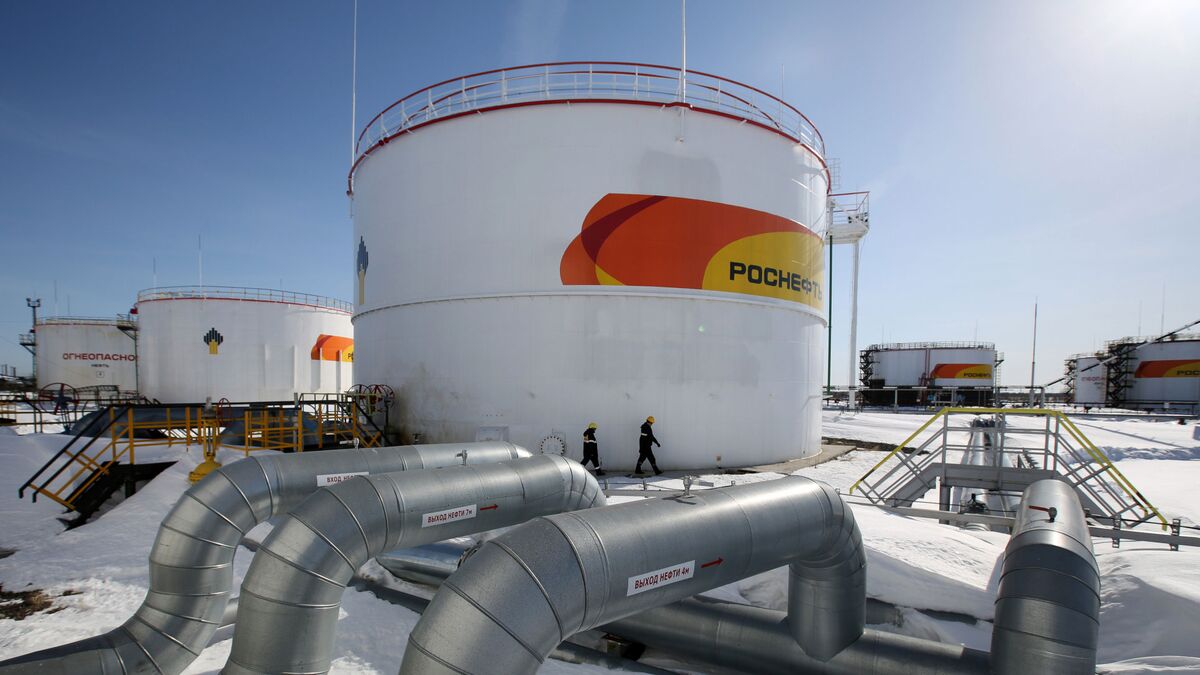
An unexpected shift in US sanctions policy has given Asian energy buyers a potentially important reprieve. It has also opened fresh questions about how importers should balance cheap fuel, diplomatic relationships and the risk that trading rules may change again.
On October 17, Reuters reported that President Donald Trump had issued an order waiving important Russia-related sanctions and tariffs before planned measures took effect. A subsequent Reuters account identified India as a significant beneficiary, given its role as a major Russian oil customer. The move reduces one category of immediate concern; it does not guarantee unlimited imports free of every restriction.
Why buyers in Asia care
Asia’s refineries compete for crude on price, quality, transport economics and availability. A sanction or tariff threat adds uncertainty to contracts even before it is implemented. Trading banks, insurers and shipowners may become more cautious; buyers may diversify supply or ask for discounts to compensate for risks.
A waiver can therefore matter before a single new tanker sails. It may improve the feasibility of existing contracts and ease pressure for rapid, expensive substitution. Still, the benefit depends on the precise terms of the waiver, the identity of the buyer and seller, the bank handling payment and the practical shipping route.
India is the immediate test case
India’s refining industry has cultivated access to discounted Russian crude, but its policymakers also value the trading relationship with Washington. The reported waiver potentially reduces friction between energy security and trade negotiations. Reuters’ October 19 analysis connected the decision to hopes for progress on a broader US–India trade deal.
Yet it would be a mistake to treat the waiver as permanent diplomatic alignment. Policy decisions may be reviewed, challenged or narrowed. India’s future purchases will still depend on relative crude prices and refinery requirements, not diplomatic headlines alone.
Why oil did not simply collapse
Market reports described some easing after the policy decision, but Middle East disruption and threats to physical energy infrastructure remained important. A Reuters oil-market report cautioned that implementation uncertainty limited confidence in sustained additional supply.
More Russian barrels accessible on paper may fail to solve problems caused by damaged refining equipment, disrupted shipping lanes or unusually tight diesel stocks elsewhere. Crude oil is also not a homogeneous product. Refineries are configured for specific blends; changing the input can increase costs or reduce efficiency.
Winners and losers are not obvious
| Stakeholder | Potential benefit | Important caveat |
|---|---|---|
| Indian refiners | Access to competitive crude | Compliance and financing |
| Other Asian importers | Some relief from global supply pressure | Eligibility differs by transaction |
| Tanker operators | More potential freight business | Insurance and security costs |
| Oil exporters competing with Russia | Demand can shift away | Overall prices and volumes still uncertain |
| Asian consumers | Possible easing in fuels | Taxes, FX and local distribution affect pump prices |
Smaller importers should not assume a waiver affecting one set of transactions automatically provides legal cover for every Russian energy purchase. Compliance teams must examine operative legal documents, not rely on a news summary as advice.
The geopolitical trade-off
Critics argue that relaxing pressure on Russia can weaken coercive leverage relating to the war in Ukraine. Supporters of relief emphasise the cost of energy scarcity and the need to stabilise prices. These perspectives reflect a genuine policy trade-off: reducing immediate energy stress may conflict with broader sanctions objectives.
A rigorous regional article should distinguish the economic effects of the waiver from an endorsement of its foreign-policy rationale. It should also avoid forecasting specific oil-price declines from a change whose practical effects are still being assessed.
What to watch in November
Importers and analysts should monitor official US rules, commercial purchase announcements, actual tanker arrivals, refinery throughput and the spread between competing crude grades. Other developments—including renewed conflict around Hormuz—could easily overwhelm the marginal supply effect of the waiver.
The paperwork behind a cheap barrel
A tanker purchase is not simply a quoted price multiplied by volume. The buyer must consider contract origin, payment route, shipping ownership, insurance, discharge location, refinery compatibility and applicable legal restrictions. Even when particular sanctions measures are waived, businesses should confirm whether related banking or export controls remain relevant to the proposed transaction.
The economic gain from a discounted crude grade also depends on refining yields. A barrel that produces a lower share of the products a refinery needs may be less valuable than a seemingly more expensive alternative. Freight routes, demurrage and quality specifications can erase an advertised discount. That is why refinery-level economics matter more than a headline claim that Russian oil is ‘cheap’.
Asian policymakers also need to distinguish short-term energy security from strategic dependence. Diversification across suppliers, fuels and transport routes generally provides resilience when a major trading partner or shipping corridor is disrupted. An importer that shifts too much procurement to one politically sensitive source may exchange today’s cheaper invoices for tomorrow’s concentrated risk.
A practical follow-up story should compare actual arrival data and refinery purchases after the waiver. Only then can readers distinguish a change in legal permission from a change in physical supply.
Are all Russian sanctions now removed?
No. Reporting describes waivers of specified measures. The exact surviving restrictions and compliance obligations must be checked against current official documents.
Will Indian petrol immediately become cheaper?
Not necessarily. Crude prices, refining margins, taxes and distribution costs intervene.
Does the waiver solve Asia’s energy security problem?
No. It can ease one bottleneck while leaving transport, geopolitical and market vulnerabilities intact.
For Asian buyers, the opportunity is flexibility—not certainty. The sensible response is to diversify procurement and understand the legal terms before betting a fuel strategy on a political announcement.
Discover more from The Economy
Subscribe to get the latest posts sent to your email.
Markets & Finance
Asia Markets Weekly: How Oil, US Yields and the Fed Reach Tokyo, Kuala Lumpur and Karachi
The global market’s biggest stories can look deceptively American: a Federal Reserve decision, a Treasury yield and a Wall Street earnings call. Yet the cost of these events is often felt most sharply across Asia, where energy import dependence, divergent monetary policies and unequal access to technology investment create different winners and losers.
The next scheduled Federal Reserve policy decision is October 28, according to its official calendar. The US 10-year Treasury yield was around 5.00% by October 23, down from higher levels earlier in the month. Oil was still elevated, while the IMF’s latest global outlook sees world growth slowing to 3.1% in 2026. These common shocks will not produce uniform Asian market returns.
Tokyo: currency moves complicate the equity story
Japan’s multinational exporters can be sensitive to yen movements because overseas revenue must be translated back into local currency, while domestic consumers and importers face different pressures when the yen weakens. The effect is not one-directional: a weaker currency may support export competitiveness but raise fuel and food import costs.
Investors should distinguish a broad index rally driven by a few large manufacturers or technology names from improving profits across the economy. Japanese government-bond yields and domestic monetary policy also matter. A US rate move may change yen-dollar incentives, but it does not dictate Japanese policy.
Kuala Lumpur: energy exposure is mixed
Malaysia’s place in the global energy system is different from that of a pure importer. Some businesses benefit from upstream prices, while manufacturers, transport operators and households can face higher costs. Currency and fiscal effects depend on domestic subsidy design, trade receipts and the balance between oil and gas revenues and imported refined products.
For equity investors, oil up should not be treated as a universal buy signal. Airlines, logistics companies, industrial users and energy-related firms can have opposing sensitivities. Malaysia’s electrical and electronics export exposure also links the country to the AI hardware cycle, but final demand and margins deserve scrutiny.
Karachi: the import bill dominates
Pakistan’s external vulnerability is sharper because energy prices can quickly affect dollar demand, local prices and business borrowing costs. The World Bank reported on October 22 that reforms and macro stabilisation had supported growth, but conflict-related pressures remained. Higher energy costs can erode these improvements even when the US equity market rises on technology earnings.
For the Pakistan Stock Exchange, sector analysis matters more than a generic Asian risk-on or risk-off label. Banks, energy firms, exporters, consumer businesses and highly leveraged industrial companies have distinct exposures to rates and exchange rates.
The regional transmission map
| Shock | Japan | Malaysia | Pakistan |
|---|---|---|---|
| US yields rise | Yen and valuation sensitivity | Funding costs, foreign flows | Dollar pressure and external borrowing context |
| Brent crude rises | Import cost pressure | Mixed effects across producers and users | Import bill, petrol and inflation pressure |
| AI investment accelerates | Capital goods and semiconductor ecosystem | Electronics supply chain opportunities | Selective digital services potential, energy constraints |
| Global demand softens | Exporters affected | Trade and tourism affected | Export and remittance channels |
These are transmission mechanisms, not guaranteed daily market movements. Political measures, domestic policies and company-specific developments can overwhelm them.
What to watch next week
The Fed’s statement and press conference will indicate how officials weigh inflation against growth. US technology earnings will test whether expensive AI infrastructure is translating into profitable demand. Oil-market shipping and security developments remain a separate source of risk that can upset even the strongest company results.
Investors should also check Asian market holidays, local economic releases and currency fixing times. Comparisons made across different trading-session cutoffs can create false narratives about which exchange responded first.
A sharper method than daily prediction
A regional investor can create a four-factor watchlist: oil, US yields, the dollar and domestic policy. For each market, identify companies with pricing power, foreign-currency debt, export income and energy-cost exposure. That framework is more durable than confident predictions about Monday’s opening index point.
How to read a cross-market comparison properly
A strong weekly comparison should fix each market’s closing date and reporting currency. If one exchange is closed for a holiday while another has traded through a major US event, their percentage changes cover different information sets. A reader can misinterpret this as one market being more resilient when the difference is mostly timing.
Currency conversion adds another complication. A stock index may gain in local currency but deliver a smaller return to an investor measuring wealth in dollars. This does not mean one series is incorrect; it means the investor’s benchmark is different. Analysts should label both local and dollar-adjusted comparisons and resist mixing them within a single ranking.
The regional supply-chain connection deserves the same precision. AI demand can benefit semiconductor and electrical-equipment producers, but the benefit is not evenly distributed across Tokyo and Kuala Lumpur, and it may have little immediate impact on a Pakistani small business facing higher power bills. A regional theme should identify channels rather than assume countries move together.
At the end of each weekly roundup, list the coming policy announcements and company results with local times. A reliable calendar may be more valuable to investors than an index-level prediction.
Will a Fed hike automatically trigger an Asian sell-off?
No. Expectations, positioning and the Fed’s message matter, alongside domestic fundamentals.
Which Asian markets benefit when oil rises?
The answer depends on the mix of producers, refiners, importers, subsidy arrangements and market valuations.
What is the most useful common comparison?
Compare earnings and cash-flow sensitivity to oil, currency and rates rather than comparing headline index changes alone.
The regional lesson: Asia is not one trade. From Tokyo to Kuala Lumpur to Karachi, the same global shock is filtered through a different currency, industrial structure and policy response.
Discover more from The Economy
Subscribe to get the latest posts sent to your email.

Gold’s biggest trap is its reputation. Investors often describe the metal as a haven that should rise whenever markets become nervous. Yet gold can fall during a risk-off episode when investors need cash, bond yields rise or expectations about inflation and the dollar change.
That contradiction was on display in late October. Reuters reported that spot gold slipped below $4,000 per troy ounce intraday on October 23, after trading above $4,100 earlier in the week. The widely circulated gold at $4,100+ framing is therefore outdated as a timeless present-tense headline.
How global gold turns into a Pakistan tola price
The basic translation is straightforward. One troy ounce is approximately 31.1035 grams, while one traditional tola is about 11.664 grams. For a benchmark theoretical price:
PKR per tola ≈ (international USD price per troy ounce × USD/PKR × 11.664) ÷ 31.1035.
For illustration only, at $4,000/oz and Rs280 per dollar, the raw 24-karat equivalent is approximately Rs420,000 per tola before local premiums, taxes, fabrication, dealer margins and price differences. This is not an assertion of today’s actual Pakistan bullion-market quotation. Buyers must confirm a live local quote with a reputable dealer and specify purity.
The formula also explains why a falling international gold price does not guarantee a lower Pakistan rate. If the rupee weakens sufficiently, the local-currency price may stay flat or rise. A jeweller’s making charges can further separate the price of a finished ornament from bullion value.
Why the metal is under pressure
Gold pays no interest. When US Treasury yields rise, some investors find interest-bearing assets more attractive relative to metal. A stronger dollar can also pressure dollar-priced bullion. But this is not an iron law: reserve diversification, central-bank purchases, geopolitical concern and inflation fear can support gold even when real yields are high.
The World Gold Council’s data hub is useful for historical gold-price reference, while the Federal Reserve’s September rate decision provides context for the interest-rate side of the equation. Investors should not rely on a single screenshot or quote that fails to specify time zone, spot versus futures and unit.
Buy, hold or wait: choose the question first
A wedding buyer with a near-term obligation does not face the same decision as a long-term investor. If the metal must be purchased for a known event, price risk can be managed by spreading purchases over scheduled intervals rather than hoping to identify the exact bottom. Such a schedule reduces timing concentration but does not eliminate loss risk.
An investor using gold for diversification should determine what share of overall assets it occupies, how easily it can be sold, whether storage and authenticity are manageable, and what would cause a rebalancing. A speculative trader needs a different discipline: clear position sizing, loss limits and an understanding that highly volatile intraday moves can defeat confident price targets.
Physical jewellery versus investment bullion
| Feature | Jewellery | Certified bars or coins |
|---|---|---|
| Purpose | Wearable and cultural | Primarily investment exposure |
| Extra charges | Often significant making costs | Premiums and dealer spreads |
| Purity | Varies; verify hallmark | Verify assay and certification |
| Resale | Making charges usually not recovered | Buy/sell spreads still apply |
| Security | Storage and theft concerns | Storage and theft concerns |
Ask for a written invoice showing metal weight, purity, current per-gram or per-tola pricing, making charges and buyback terms. The bid–ask spread matters. A dealer may advertise one number for selling to customers and quote a materially lower number when repurchasing.
Three drivers of the next move
US real interest rates: if inflation expectations and Treasury yields shift, gold’s opportunity cost changes. Central-bank and private demand: persistent accumulation can support the market, but it should be documented rather than assumed. Pakistan’s exchange rate: the domestic outcome may differ sharply from global dollar returns.
The IMF’s October world outlook warns of geopolitical and inflation risks. Those risks can make gold valuable as a diversifier without making it a guaranteed hedge at any entry price.
The difference between a gold quote and an investment return
An investor can buy a physical gold item at one price and discover that its instant resale value is lower because of the dealer’s spread and making charges. The spread may be particularly important during volatile trading or for small pieces of jewellery. Measuring performance from the purchase invoice to the international spot quote exaggerates gains if the actual available buyback price is lower.
Purity is equally important. A 22-karat item contains less pure gold by weight than a 24-karat bar, while gemstones and decorative components make gross jewellery weight a misleading basis for a bullion valuation. A reliable invoice should record the relevant metal weight, fineness and separate charges. For inherited jewellery, an independent assay may be necessary before using a headline market rate to estimate value.
Gold also has portfolio opportunity costs. Cash and bonds may pay income; gold does not. That does not make either universally superior. It means a buyer should specify whether the objective is a cultural purchase, a short-term trade, inflation diversification or a long-term store of value. Each calls for a different view of transaction costs and holding period.
A disciplined buyer can document the dealer’s selling rate and repurchase policy on the same day. That small step often provides more useful information than another bold forecast of where the metal will trade next month.
Is the gold rate in Pakistan the international dollar price multiplied by USD/PKR?
Not exactly. You must convert the unit into tolas or grams and account for local premiums, taxes and trading spreads.
Is 22-karat jewellery worth the 24-karat rate?
No. Gold content differs. Check actual purity and weight, plus any stones or charges that complicate resale.
Could gold revisit its earlier highs?
Yes, but it could also fall further. An investment plan should consider both possibilities without assigning a fabricated probability.
Bottom line: a better decision begins with the purpose of the purchase, the correct unit conversion and a known exit cost. A price target is less useful than understanding what you actually own.
Discover more from The Economy
Subscribe to get the latest posts sent to your email.

Lula Re-elected in 2026: What Changes for the Dollar, Brazilian Stocks, and Interest Rates?

Lula Wins Brazil’s 2026 Election: Five Economic Tests for 2027

SSI November 2026 Payment: Why Benefits Arrive October 30

Russia Sanctions Waiver: What Asian Oil Buyers Gain

Asia Markets Weekly: How Oil, US Yields and the Fed Reach Tokyo, Kuala Lumpur and Karachi

Gold Near $4,000: Buy, Hold or Wait? A Pakistan Tola Price Guide

US 10-Year Treasury Yield Near 5%: The Hidden Cost for Pakistani Investors

Fed Meeting on October 28: Hike or Hold—and Why Pakistan Investors Should Care

Can Pakistan Turn US–Iran Mediation Into an Economic Dividend?

Oil Above $100: How Higher Crude Prices Reach Pakistan’s Rupee, Petrol and Imports

SBP Interest Rate at 11.5%: What Will Decide Pakistan’s Next Policy Move?

The Global South: Debt, Climate Finance and Investment in 2026

Energy Security Is the New Economic Security

Can Global Tourism Survive Geopolitical Shocks?

Crude Oil & Petroleum Market Analysis: OPEC+ Decisions and Price Forecasts

Silver Price Today: Why the Xi-Trump AI Standoff Is Fueling a Safe-Haven Rally

Algorithmic Dogfights: Why the U.S. and China Must Establish Rules of Engagement for Autonomous Air Power

Top US Convenience Store Chains: Store Counts, EV Charging, and Sales Trends

Who Is Shivon Zilis? The Neuralink Executive at the Center of the Musk–OpenAI Trial

Social Security Extra $90 Deposit: Who Qualifies for the October 2026 Medicare Rebate?

Corporate America Faces a New Debt Test as US Borrowing Costs Surge

Global Economic Outlook 2026: 7 Forces Reshaping Markets, Trade and Business

Gold Price Outlook 2026: The Forces Behind the Forecasts—and What Could Reverse Them

Gold Falls 3.7% as Yields Surge: Is Gold Still a Safe Haven in 2026?

Stock Market Today: Dow, S&P 500, and Nasdaq Retreat as Treasury Yields

Anthropic Bans Sustained Abuse of Claude AI Under New Usage Policy Effective November 12, 2026

MAS Allocates S$1.45 Billion to Five Asset Managers in Third EQDP Batch: Total Deployment Reaches S$5.4 Billion

US 10-Year Yield Hits 5.24%: What the Historic Bond Market Sell off Means for Mortgages and Investors
-

 Markets & Finance10 months ago
Top 15 Stocks for Investment in 2026 in PSX: Your Complete Guide to Pakistan’s Best Investment Opportunities
-

 Analysis8 months ago
Johor’s Investment Boom: The Hidden Costs Behind Malaysia’s Most Ambitious Economic Surge
-

 Analysis8 months ago
Top 10 Stocks for Investment in PSX for Quick Returns in 2026
-

 Banks9 months ago
Best Investments in Pakistan 2026: Top 10 Low-Price Shares and Long-Term Picks for the PSX
-

 Analysis9 months ago
Brazil’s Rare Earth Race: US, EU, and China Compete for Critical Minerals as Tensions Rise
-

 Investment10 months ago
Top 10 Mutual Fund Managers in Pakistan for Investment in 2026: A Comprehensive Guide for Optimal Returns
-

 Global Economy10 months ago
15 Most Lucrative Sectors for Investment in Pakistan: A 2025 Data-Driven Analysis
-

 Global Economy10 months ago
Pakistan’s Export Goldmine: 10 Game-Changing Markets Where Pakistani Businesses Are Winning Big in 2025