
Analysis
Moscow’s Quiet Squeeze: Why Russia’s Halt of Kazakh Oil to Germany Signals a New Era of Energy Weaponisation

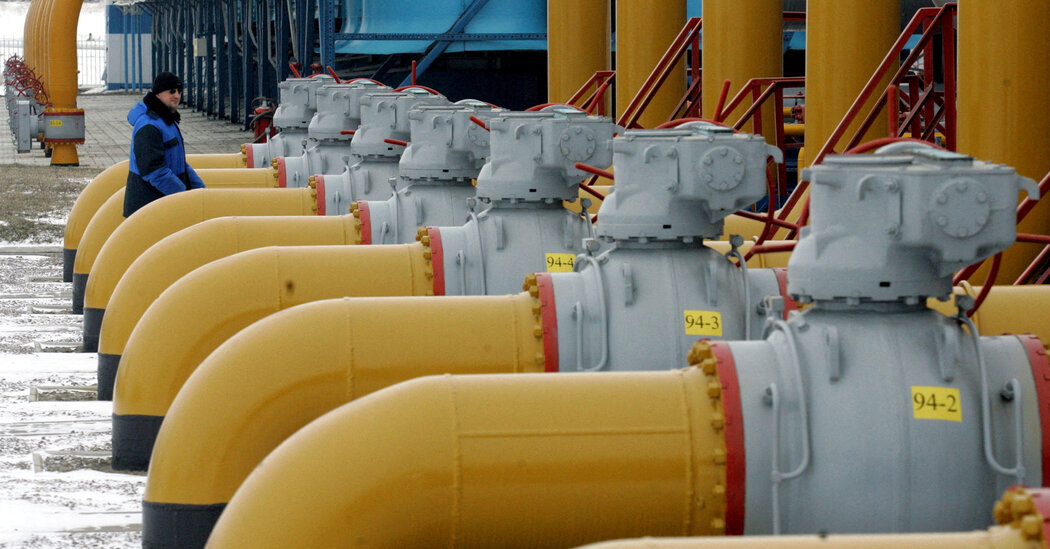
Russia is set to suspend transit of Kazakh crude via the Druzhba pipeline from May 1, threatening Berlin’s fuel supply at a moment of compounding global disruption. The move is small in volume — and devastating in message.
On most mornings, the drivers of Berlin’s Brandenburg hinterland do not think much about the Druzhba pipeline. They fill their tanks, they commute, they carry on. The crude that powered their fuel was drawn from the steppes of Kazakhstan, piped westward through 5,000 kilometres of Soviet-era steel traversing Russia and Poland, refined at the PCK facility in the small river town of Schwedt, and quietly distributed to nine in ten cars in the greater Berlin region. It is, in the lexicon of energy policy, “critical infrastructure” — and it is infrastructure that Russia is now preparing to switch off.
According to three industry sources cited by Reuters on April 21, 2026, Moscow has sent an adjusted oil export schedule to both Kazakhstan and Germany, signalling its intent to halt transit of Kazakh crude through the northern branch of the Druzhba pipeline effective May 1. The Kremlin’s spokesman, Dmitry Peskov, offered the kind of denial that functions as its own confirmation: “We will try to check it,” he told reporters. Reuters has independently verified the schedule with multiple sources. The Russian energy ministry did not reply to a request for comment. Neither Kazakhstan’s energy ministry nor the German government had responded at time of writing.
The volumes involved are not enormous in a global context — approximately 43,000 barrels per day. But the implications are considerably larger than the numbers suggest. This is not a commercial dispute. It is a carefully calibrated act of geopolitical signalling, dressed in the administrative language of an export schedule.
Key Numbers at a Glance — Druzhba Kazakh Transit, 2026
| Metric | Figure |
|---|---|
| Kazakh crude to Germany via Druzhba (2025) | ~43,000 barrels per day |
| Volume increase, 2024 to 2025 | +44% (1.49 → 2.146 million metric tons) |
| Delivered in Q1 2026 | 730,000 metric tons |
| PCK Schwedt feedstock potentially lost (full halt) | ~17% of 12 mt/year capacity |
The Anatomy of a Squeeze
Understanding why this matters requires a brief tour of post-2022 European energy architecture. When Russia launched its full-scale invasion of Ukraine in February of that year, it set off a chain of European decisions that fundamentally restructured the continent’s relationship with Russian hydrocarbons. Germany, Europe’s largest economy and historically its most enthusiastic consumer of Russian gas and oil, moved with unusual speed. Berlin placed the German subsidiaries of Rosneft — Russia’s state oil giant and PCK Schwedt’s controlling shareholder — under state trusteeship. Direct imports of Russian crude were halted. The country’s entire energy supply chain was forced into an emergency pivot.
PCK Schwedt — a Soviet-era refinery built specifically to process Urals crude and positioned at the terminus of the Druzhba pipeline’s northern branch — presented a particular engineering and geopolitical headache. It cannot easily process light sweet crude from the North Sea. Its configuration is matched to heavier, higher-sulphur grades. After considerable effort, Germany settled on a workaround: Kazakh crude, chemically similar to Urals, would be shipped from Kazakhstan through the very same Russian pipeline infrastructure that Germany had ostensibly sought to escape.
The irony was not lost on analysts at the time. Kazakhstan had never been subject to Western sanctions. Its oil is sovereign — distinct in law, if not always in pipeline, from Russian crude. The arrangement was legally defensible, commercially viable, and geopolitically fragile. Russia, as the transit state, retained physical control over every barrel shipped westward. That control has now been exercised.
“Kazakh crude travels through Russian steel. Its ownership may be Kazakhstani, its sanctions status clean — but its passage has always been a favour Moscow can revoke.”
— Geopolitical Energy Review Analysis, April 2026
Why Now? The Kremlin’s Strategic Calculus
The timing is not accidental. Russia-Germany relations have reached their most acrimonious point in the post-war era. Berlin has been among the most consistent suppliers of military and financial support to Ukraine. Germany remains in active legal dispute over the Rosneft trusteeship, which Russian officials have repeatedly condemned as an unlawful expropriation. Diplomatically, the two countries have little left to lose with each other — which, paradoxically, gives Moscow more freedom to act.
Equally significant is the broader global disruption context. Tensions in West Asia — specifically the conflict involving Iran — have already injected fresh uncertainty into global oil supply chains. The Iran-related disruption has pushed European energy buyers into a defensive crouch, assessing exposure across multiple corridors simultaneously. Russia, with characteristic precision, has chosen this moment of compounded anxiety to introduce another variable into Europe’s supply calculus. The message is layered: we remain indispensable; your diversification is incomplete; we can still find levers.
There is also a message being sent to Astana. Kazakhstan’s multi-vector foreign policy — carefully balanced between Russia, China, the West, and Turkey — has been under pressure since 2022. Nur-Sultan (now Astana) has refused to align publicly with Moscow’s war, has refrained from joining Russian sanctions evasion schemes, and has quietly expanded its connections with Western energy majors. By using transit control to curtail Kazakhstani exports, Moscow serves notice that the geographic reality of Kazakhstan’s landlocked position remains a constraint on Astana’s strategic autonomy, whatever its diplomatic ambitions.
Ground Zero: The Schwedt Refinery and Berlin’s Fuel Supply
For the residents of Brandenburg and Berlin, the immediate concern is practical. A complete halt of Kazakh flows would remove approximately 17% of the feedstock processed by PCK Schwedt — a facility that handles up to 12 million metric tons of crude per year and produces the diesel, petrol, kerosene, and heating oils that supply roughly nine in ten cars in the Berlin-Brandenburg corridor. That is not, by itself, a catastrophe. Germany has other refineries and has been building emergency supply flexibility since 2022. But it is a serious tightening of already-stretched margins.
The refinery’s shareholder structure adds a further complication. PCK is co-owned by Rosneft (under German state trusteeship), Shell, and Eni. Non-Russian shareholders have been working with German authorities on alternative supply arrangements, and there is an established alternative route: oil can be shipped through the Baltic port of Gdańsk in Poland and piped southward to Schwedt via the infrastructure of PERN, Poland’s state pipeline operator. PERN’s spokesman confirmed to Reuters that the company stands ready to supply non-Russian shareholders of PCK through Gdańsk “if asked to.” That caveat — if asked — is doing considerable work. Logistics would need rapid scaling; the route exists but has limited throughput history at volumes sufficient to replace Druzhba supply fully.
Meanwhile, Germany’s other supply diversification efforts — including crude deliveries via the Baltic port of Rostock — have also faced intermittent disruptions, partly due to Ukrainian drone strikes on Russian pipeline infrastructure that have periodically interrupted the northern Druzhba branch even when Russia was not actively intervening. The cumulative effect is a supply posture that is more resilient than 2022 but still less robust than Berlin’s official communications acknowledge.
Kazakhstan’s Impossible Geometry
For Kazakhstan, the squeeze is existential in a way that transcends the immediate export disruption. President Kassym-Jomart Tokayev’s government has spent four years articulating a vision of sovereign economic development: a Central Asian nation that is modern, outward-facing, and able to monetise its vast hydrocarbon reserves on its own terms. The Druzhba suspension cuts directly across that narrative.
Kazakhstan’s primary western export route is the Caspian Pipeline Consortium (CPC) system, which runs from the Tengiz oilfield westward to the Russian Black Sea port of Novorossiysk. That route, handling the bulk of Kazakhstan’s crude exports, has experienced its own turbulence — including multiple technically-explained outages that industry observers have attributed to Russian leverage rather than engineering misfortune. Druzhba, by contrast, had been a secondary but growing channel: exports through it rose 44% year-on-year in 2025, suggesting Kazakhstan was deliberately building capacity there as a partial CPC hedge. That hedge has now been called in.
The alternative — moving more oil through the Trans-Caspian system toward the Baku-Tbilisi-Ceyhan pipeline — is attractive in theory and constrained in practice. BTC throughput is limited; Caspian shipping capacity is finite; infrastructure investment timelines are measured in years, not months. Kazakhstan can and should accelerate these diversification routes, but they do not solve the problem of May 2026. In the near term, Astana faces both a revenue shortfall and a diplomatic humiliation: being seen as unable to defend its own export channels.
“The geography of landlocked oil states is not merely inconvenient — it is a permanent structural vulnerability that geopolitical rivals know how to exploit.”
— Geopolitical Energy Review Analysis, April 2026
Energy as Weapon: The Structural Shift
What is happening here is not, strictly speaking, new. Russia cut gas supplies to Ukraine in 2006, 2009, and again after 2014. It used the transit of gas through Ukrainian pipelines as leverage in price disputes that were, in truth, political disputes wearing commercial clothing. The weaponisation of energy flows has been part of Moscow’s toolkit for two decades. What has changed since 2022 is the transparency of the tactic and the sophistication of European responses — and the gap between the two remains dangerous.
The Druzhba suspension illustrates a structural vulnerability in Europe’s post-2022 energy architecture: the assumption that routing non-Russian oil through Russian infrastructure is a durable solution to Russian energy dependency. It was always a transitional arrangement, dependent on Moscow’s forbearance. That forbearance has a price — and Russia has now begun naming it.
For European energy security planners, the lesson is uncomfortable. Diversification of supply origin is insufficient if the physical infrastructure remains under an adversarial state’s control. The policy conversation in Brussels must shift toward infrastructure sovereignty: not merely where the oil comes from, but who controls every kilometre of the route through which it travels.
The Broader Market Context
The suspension occurs against a backdrop of unusual global oil market stress. Disruptions linked to tensions in West Asia — including shipping route uncertainty through the Persian Gulf — have already added a geopolitical risk premium to benchmark crude prices. The simultaneous compression of Kazakhstan-to-Germany flows adds further upward pressure, particularly on the grades and logistics chains serving continental European refiners who cannot easily pivot to spot market alternatives in days. PCK Schwedt’s engineering constraints — its configuration for heavier grades — mean that not every available barrel on global markets is a viable substitute on short notice.
For oil traders, this creates a micro-market in Urals-grade substitutes: Azerbaijani, Iraqi, and potentially some African grades may find new demand. The arbitrage opportunity is real, if logistically complex. For European consumers, any pass-through of refinery margin compression to pump prices arrives at a politically sensitive moment — one in which German voters are already navigating elevated energy costs and political uncertainty.
Scenarios for May and Beyond
📌 Base Case — Managed Disruption
Russia proceeds with suspension; Germany and PERN activate the Gdańsk alternative route at partial capacity. Schwedt operates at reduced throughput (roughly 83% of normal) for several weeks. A diplomatic channel opens quietly between Berlin and Moscow, with Kazakhstan as an intermediary. The halt lasts 4–8 weeks before a face-saving technical resolution is announced.
⚠️ Adverse Case — Prolonged Squeeze
Russia extends the halt indefinitely; PERN’s Gdańsk route cannot scale fast enough to fully compensate; Germany declares a temporary energy emergency for the Berlin-Brandenburg region and activates strategic petroleum reserve releases. The EU accelerates regulatory action on remaining Russian transit dependencies. Kazakhstan’s revenues decline materially; Astana begins emergency diplomatic outreach to both Moscow and Brussels.
✅ Optimistic Case — Political Resolution
The halt proves short-lived — days rather than weeks — as back-channel pressure from China (which has significant economic interest in Central Asian stability) and Turkey (which has cultivated a mediator role) persuades Moscow to resume flows pending a bilateral technical agreement. The episode becomes a catalyst for accelerated Trans-Caspian route investment.
What Europe Must Now Do
The Druzhba episode should function as a policy forcing event. Several responses are both urgent and achievable. First, the European Commission should formally assess the residual risk posed by remaining Russian-controlled transit infrastructure for non-Russian hydrocarbons, and map the investment required to physically decouple those routes. Second, the EU-Kazakhstan energy partnership — already strengthened since 2022 — should be deepened into concrete infrastructure commitments: increased funding for Trans-Caspian capacity expansion, port infrastructure at Aktau, and regulatory alignment to facilitate easier westward routing of Kazakhstani oil. Third, Germany should accelerate the legal and operational restructuring of PCK Schwedt to reduce its dependence on any single pipeline corridor — Russian, Polish, or otherwise.
More broadly, the energy transition conversation in Europe must absorb this lesson: the faster the continent moves toward electricity-based transport and heating, the narrower Moscow’s leverage corridor becomes. Every electric vehicle sold in Brandenburg is, in a very small but real sense, a pipeline bypass.
Kazakhstan’s Necessary Pivot
For Astana, the imperative is investment — and urgency. The Trans-Caspian International Transport Route, the BTC expansion, and diversified shipping infrastructure in the Caspian are not merely economic projects. They are sovereign infrastructure in the most literal sense: the physical capacity to move one’s own resources without permission from a neighbour. Kazakhstan’s energy ministry has long understood this; the political will and capital to execute has sometimes lagged. The Druzhba suspension may be the catalyst needed to close that gap.
Kazakhstan should also leverage its close relationship with China — its largest single trading partner — to explore westward shipping expansions through Chinese-financed corridors, including the Trans-Caspian Middle Corridor through the Caucasus. The irony of using Chinese infrastructure to escape Russian leverage is not lost on analysts, but geopolitics has rarely rewarded ideological consistency over practical necessity.
Conclusion: The Return of Geography
There is a temptation, in the comfortable decade before 2022, to believe that energy had been fully commercialised — that pipelines were just pipes, and that the physics of supply and demand had displaced the politics of control. That temptation looks naive in retrospect. Energy infrastructure has always been political. The question was merely whether the politics were visible.
Russia’s decision to halt transit of Kazakh crude to Germany makes the politics visible again, starkly and deliberately. It is a reminder that in a world of fragmenting multilateralism, physical geography still governs power — that a landlocked nation’s oil moves only with its neighbours’ consent, and that a continental energy system is only as sovereign as its most vulnerable transit corridor.
For Germany and Europe, the lesson is one of incomplete work: the energy divorce from Russia has been largely achieved in legal and commercial terms, but the physical infrastructure of dependency has not been fully unwound. For Kazakhstan, it is a reminder that multi-vector foreign policy requires multi-vector export infrastructure — and that the time to build such infrastructure is not when the pipeline has already been shut. And for the world at large, it is a portrait of energy in the age of geopolitical fracture: a tool, a weapon, and a mirror — reflecting back at us the costs of the strategic complacencies we thought we had already paid.
In Brandenburg, the drivers will still fill their tanks in May. But the price of that normalcy — measured not in euros but in strategic exposure — has quietly risen.
Discover more from The Economy
Subscribe to get the latest posts sent to your email.



Key Takeaways
- Rolex’s secondary market rose approximately 7.9% year-over-year as of 2026 (per WatchCharts data) — trailing Patek Philippe (+16.2%) and Tudor (+11.4%) but still outperforming Audemars Piguet (+3.4%).
- Rolex raised U.S. retail prices 4–9% in January 2026 (steel models ~5.6%, gold models ~8.7%), narrowing the historical gap between retail and pre-owned pricing.
- Not every model appreciates: steel sports references (Submariner, GMT-Master II, Daytona) have held value far better than two-tone or widely available dress references like the standard Datejust.
- The Lady-Datejust posted the sharpest 2026 gain among tracked collections — up 22.73%, from roughly $9,269 to $11,376 — driven by demand for smaller, “everyday luxury” watches.
- Gold’s rise past $2,400/oz has directly lifted the investment case for Rolex’s precious-metal references (Day-Date, Sky-Dweller, Yacht-Master).
The Model-by-Model Picture
| Category | 2026 Trend |
|---|---|
| Lady-Datejust | +22.73% (strongest performer among tracked collections) |
| Steel sports models (Submariner, GMT-Master II) | Held value well; corrected from 2022 peak but stabilized above retail |
| Daytona | Corrected from highs above $50,000 to the mid-$30,000s; still among the most sought-after references |
| Two-tone/widely available Datejust | Flat to negative — “holds value” is an overstatement for this category |
| Gold references (Day-Date, Sky-Dweller) | Lifted by gold’s rise above $2,400/oz |
Why the “Rolex Always Appreciates” Myth Is Fading
The pandemic-era boom pushed some references — the Daytona above all — to speculative highs disconnected from historical norms. Since the March 2022 peak, steel sports models have compressed meaningfully, and dealers who bought inventory near the top have in some cases faced 20–40% markdowns on liquidation. The lesson for 2026 buyers: Rolex as a category is not a monolith. Value retention depends heavily on specific reference, condition, and whether the piece comes with box and papers (“full set”).
What’s Actually Driving 2026 Strength
- Retail price increases raise the floor. When a new Submariner retails at $10,050 (up from $9,500), a pre-owned example at $11,000–$12,000 suddenly represents a smaller premium — narrowing the gap without secondary prices actually moving.
- Supply discipline remains Rolex’s core lever. The brand has never confirmed production numbers, and secondary-market premiums remain entirely a function of Rolex’s own manufacturing decisions — a risk factor as much as a support.
- Certified Pre-Owned rollout. Rolex’s now fully rolled-out CPO program has changed how buyers transact in the used market, adding a layer of brand-verified legitimacy that supports pricing.
The Case for Rolex as a Portfolio Diversifier
Financial advisors increasingly frame luxury watches not as a replacement for equities or bonds, but as a tangible, historically low-correlation diversifier — one that carries its own risks (illiquidity, condition-dependent pricing, no yield) but has demonstrated multi-decade resilience for specific references.
Is Rolex a good investment in 2026?
It depends heavily on the specific reference. Steel sports models like the Submariner and Daytona have held or grown in value; two-tone and widely available dress models generally have not. Overall, Rolex’s secondary market rose about 7.9% year-over-year in 2026, trailing Patek Philippe but ahead of Audemars Piguet.
Discover more from The Economy
Subscribe to get the latest posts sent to your email.

Navigating Mortgage and Loan Refinancing in a High-Yield Environment
Global public debt crossing critical thresholds has kept central bank policies volatile, resulting in fluctuating US Treasury yields throughout 2026. For homeowners and commercial property holders burdened by previous high-interest borrowing cycles, finding optimal refinance windows has become a high-stakes financial puzzle. Stalled disinflation and stubborn employment numbers mean rate cuts are incremental, requiring borrowers to act with precision.
Timing your mortgage or commercial loan refinance in this environment requires a deep understanding of yield curve movements and lender risk appetites.
Decoding 2026 Refinance Dynamics
The 10-Year Treasury Yield Benchmark
Mortgage rates continue to track closely with the 10-year US Treasury yield. When macroeconomic anxiety spikes debt issuance, yields rise, tightening consumer borrowing capacity. Savvy borrowers monitor weekly Treasury auctions to lock in rates during brief dip windows.
Hybrid ARMs and Alternative Structures
With fixed rates remaining elevated, 7/1 and 10/1 adjustable-rate mortgages (ARMs) have surged in popularity. These products offer lower initial monthly payments, giving borrowers breathing room until central bank easing cycles fully materialize.
| Loan Product | Current Rate Range | Best For | Key Risk Factor |
| 30-Year Fixed Mortgage | 6.2% – 6.8% | Long-term predictability | Higher initial monthly outlay |
| 7/1 Hybrid ARM | 5.5% – 5.9% | Short-term ownership / flipping | Rate reset risk after year 7 |
| Commercial Refinance | 7.0% – 8.2% | Corporate asset restructuring | Strict DSCR lender covenants |
Actionable Steps for Successful Refinancing
To maximize your chances of securing favorable refinance terms in a volatile market, follow a disciplined preparation strategy.
Boost Your Credit Score Immediately: Lenders in 2026 are applying stringent credit tiering; a 20-point increase can drop your APR by a crucial quarter-point.
Shop Regional Credit Unions: Smaller financial institutions often offer portfolio loans with more flexible underwriting than major national banks.
Calculate the Break-Even Point: Ensure your total closing costs are recouped through monthly savings within 24 months of closing.
“Market Strategist View: Refinancing in 2026 is an exercise in opportunistic timing. Borrowers must maintain immaculate financial profiles ready to strike the moment Treasury yields dip.”
Mastering the complexities of today’s debt environment ensures you can successfully lower your debt service costs and protect your long-term financial stability.
Discover more from The Economy
Subscribe to get the latest posts sent to your email.

The days of pulling generic auto insurance quotes based purely on your zip code and age are officially over. In 2026, insurance comparison engines are powered entirely by generative AI and real-time telematics. These platforms digest thousands of live data points—ranging from your driving smoothness via connected vehicle sensors to real-time traffic congestion patterns—to generate hyper-personalized premiums instantly.
For consumers, this evolution represents both a massive opportunity for savings and a hidden trap for penalty pricing. Understanding how AI algorithms evaluate risk is essential for anyone looking to lower their monthly auto insurance premiums.
How AI Comparison Engines Evaluate Your Risk Profile
Behavioral Telematics and Connected Cars
Modern cars stream performance data directly to insurance aggregators. Generative AI models analyze braking sharpness, acceleration curves, cornering G-forces, and phone distraction metrics. Drivers who maintain smooth, defensive habits are rewarded with dynamic rate cuts of up to 40% compared to traditional rating tiers.
Predictive Traffic and Weather Modeling
AI tools now cross-reference your daily commute route with predictive weather and accident probability models. If your standard parking location or driving corridor has a statistically higher incidence of uninsured motorist claims, your quotes will reflect that hyper-local risk assessment.
| Comparison Factor | Traditional Rating Model | 2026 Generative AI Model | Impact on Premium |
| Mileage & Usage | Annual estimated odometer reading | GPS tracking & live trip duration | High (up to 35% savings) |
| Driving Behavior | MVR driving record & accidents | Real-time braking, speed, & G-force | Critical (determines tier) |
| Vehicle Tech | Make, model, and safety rating | ADAS calibration & repair cost data | Moderate |
Strategies to Lower Your AI-Driven Insurance Quote
To outsmart the algorithm and secure the lowest possible premium in 2026, drivers must proactively manage their digital footprint on insurance platforms.
Opt-In for Telematics Trial Periods: Many insurers offer immediate 15% discounts just for installing their driving app; let it track safe habits for 30 days to lock in permanent savings.
Scrub Unverified Public Records: Ensure your motor vehicle report is free of clerical errors that AI risk models misinterpret as reckless behavior.
Compare AI Aggregators: Use platforms that integrate multi-carrier API feeds rather than single-brand comparison sites to find the best risk-adjusted rate.
“Industry Note: AI-driven pricing rewards transparency and precision. Drivers who actively manage their telematics data consistently out-save those relying on legacy quote calculators.”
Embracing AI comparison tools allows savvy policyholders to customize coverage limits precisely to their driving habits, eliminating wasted premium spend while ensuring robust protection.
Discover more from The Economy
Subscribe to get the latest posts sent to your email.

2026 Real Estate Market News: Are We Heading for a Correction?

Bitcoin Price Forecast 2026–2027: Will the 4-Year Cycle Hold?

Fidelity Crypto vs. Traditional Brokerages: A Guide for Modern Investors

The 2026 Global Smartphone Market: AI Integration and Competitor Analysis

SpaceX IPO: How Aerospace Is Reshaping Tech Startup News

Fidelity Investments Review: Maximizing Returns in a Volatile Stock Market

How Crypto Transformed the Trump Fortune: A $1.4 Billion Financial Breakdown

Global Pension Systems Ranked: The World’s Best and Worst Retirement Frameworks

Global Supply Chain Vulnerabilities: From Eurasian Trade Corridors to Food Consumer Recalls

Why 5% U.S. Treasury Yields Signal a Global Market Regime Shift.

Federal Reserve Defies White House Pressure: Inside Trump’s Demand for Sub-1% Interest Rates After Historic 2026 Rate Hike

How Rising Interest Rates Impact Gig Economy Apps: DoorDash, Uber, and Urban Services

GasBuddy Market Insights: How Crude Price Shifts Impact Local Fuel Cost Averages

DoorDash Driver Payouts, Fee Structures, and Market Competition Analysis

State Farm’s $5B Dividend 2026: Who Qualifies & Payout Dates

US-China Relations in Q3 2026: Trade Tariffs and Supply Chain Risks

SpaceX Starship Flight 14: First Orbital Attempt & Starlink V3 Launch Explained

Top 30 Stocks for Investment in PSX for Massive ROI in 2026

The 2026 Crypto Regulatory Shift: What It Means for Institutional Investors

AI Chip Stocks 2026: The Best Semiconductor Investments Beyond Marvell

AI-Powered Training: The Next Multi-Billion Dollar Ecosystem in Fitness

Tween Back-to-School Trends 2026: What’s Driving the $85B Season

Oil Prices Break $100 in 2026: Middle East Conflict & Energy Markets

10-Year Treasury Yield Hits 4.80%: What It Means for Rates & Portfolios

Fidelity Investments Review 2026: SPAXX Yields & Zero-Fee Funds

Shein Clothes Quality & Safety in 2026: What Lab Tests Show

MRVL Earnings 2026: Why Marvell Sank Despite Beating Estimates

China’s US$10.8 Billion Trade Shortcut: Why the Pinglu Canal Matters
-

 Markets & Finance9 months ago
Top 15 Stocks for Investment in 2026 in PSX: Your Complete Guide to Pakistan’s Best Investment Opportunities
-

 Analysis7 months ago
Johor’s Investment Boom: The Hidden Costs Behind Malaysia’s Most Ambitious Economic Surge
-

 Analysis7 months ago
Top 10 Stocks for Investment in PSX for Quick Returns in 2026
-

 Analysis8 months ago
Brazil’s Rare Earth Race: US, EU, and China Compete for Critical Minerals as Tensions Rise
-

 Banks8 months ago
Best Investments in Pakistan 2026: Top 10 Low-Price Shares and Long-Term Picks for the PSX
-

 Investment8 months ago
Top 10 Mutual Fund Managers in Pakistan for Investment in 2026: A Comprehensive Guide for Optimal Returns
-

 Global Economy9 months ago
15 Most Lucrative Sectors for Investment in Pakistan: A 2025 Data-Driven Analysis
-

 Global Economy9 months ago
Pakistan’s Export Goldmine: 10 Game-Changing Markets Where Pakistani Businesses Are Winning Big in 2025