
Analysis
Moscow’s Quiet Squeeze: Why Russia’s Halt of Kazakh Oil to Germany Signals a New Era of Energy Weaponisation

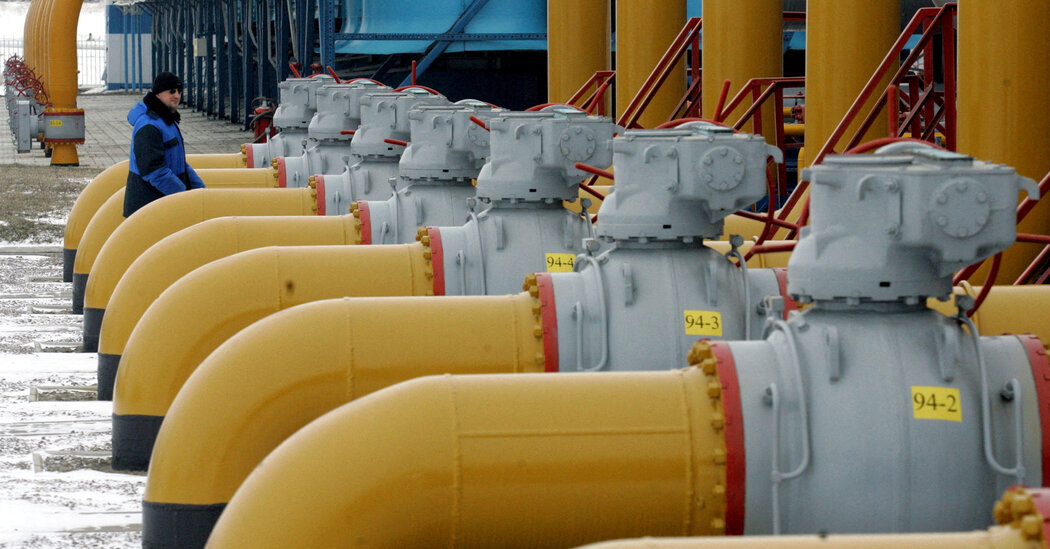
Russia is set to suspend transit of Kazakh crude via the Druzhba pipeline from May 1, threatening Berlin’s fuel supply at a moment of compounding global disruption. The move is small in volume — and devastating in message.
On most mornings, the drivers of Berlin’s Brandenburg hinterland do not think much about the Druzhba pipeline. They fill their tanks, they commute, they carry on. The crude that powered their fuel was drawn from the steppes of Kazakhstan, piped westward through 5,000 kilometres of Soviet-era steel traversing Russia and Poland, refined at the PCK facility in the small river town of Schwedt, and quietly distributed to nine in ten cars in the greater Berlin region. It is, in the lexicon of energy policy, “critical infrastructure” — and it is infrastructure that Russia is now preparing to switch off.
According to three industry sources cited by Reuters on April 21, 2026, Moscow has sent an adjusted oil export schedule to both Kazakhstan and Germany, signalling its intent to halt transit of Kazakh crude through the northern branch of the Druzhba pipeline effective May 1. The Kremlin’s spokesman, Dmitry Peskov, offered the kind of denial that functions as its own confirmation: “We will try to check it,” he told reporters. Reuters has independently verified the schedule with multiple sources. The Russian energy ministry did not reply to a request for comment. Neither Kazakhstan’s energy ministry nor the German government had responded at time of writing.
The volumes involved are not enormous in a global context — approximately 43,000 barrels per day. But the implications are considerably larger than the numbers suggest. This is not a commercial dispute. It is a carefully calibrated act of geopolitical signalling, dressed in the administrative language of an export schedule.
Key Numbers at a Glance — Druzhba Kazakh Transit, 2026
| Metric | Figure |
|---|---|
| Kazakh crude to Germany via Druzhba (2025) | ~43,000 barrels per day |
| Volume increase, 2024 to 2025 | +44% (1.49 → 2.146 million metric tons) |
| Delivered in Q1 2026 | 730,000 metric tons |
| PCK Schwedt feedstock potentially lost (full halt) | ~17% of 12 mt/year capacity |
The Anatomy of a Squeeze
Understanding why this matters requires a brief tour of post-2022 European energy architecture. When Russia launched its full-scale invasion of Ukraine in February of that year, it set off a chain of European decisions that fundamentally restructured the continent’s relationship with Russian hydrocarbons. Germany, Europe’s largest economy and historically its most enthusiastic consumer of Russian gas and oil, moved with unusual speed. Berlin placed the German subsidiaries of Rosneft — Russia’s state oil giant and PCK Schwedt’s controlling shareholder — under state trusteeship. Direct imports of Russian crude were halted. The country’s entire energy supply chain was forced into an emergency pivot.
PCK Schwedt — a Soviet-era refinery built specifically to process Urals crude and positioned at the terminus of the Druzhba pipeline’s northern branch — presented a particular engineering and geopolitical headache. It cannot easily process light sweet crude from the North Sea. Its configuration is matched to heavier, higher-sulphur grades. After considerable effort, Germany settled on a workaround: Kazakh crude, chemically similar to Urals, would be shipped from Kazakhstan through the very same Russian pipeline infrastructure that Germany had ostensibly sought to escape.
The irony was not lost on analysts at the time. Kazakhstan had never been subject to Western sanctions. Its oil is sovereign — distinct in law, if not always in pipeline, from Russian crude. The arrangement was legally defensible, commercially viable, and geopolitically fragile. Russia, as the transit state, retained physical control over every barrel shipped westward. That control has now been exercised.
“Kazakh crude travels through Russian steel. Its ownership may be Kazakhstani, its sanctions status clean — but its passage has always been a favour Moscow can revoke.”
— Geopolitical Energy Review Analysis, April 2026
Why Now? The Kremlin’s Strategic Calculus
The timing is not accidental. Russia-Germany relations have reached their most acrimonious point in the post-war era. Berlin has been among the most consistent suppliers of military and financial support to Ukraine. Germany remains in active legal dispute over the Rosneft trusteeship, which Russian officials have repeatedly condemned as an unlawful expropriation. Diplomatically, the two countries have little left to lose with each other — which, paradoxically, gives Moscow more freedom to act.
Equally significant is the broader global disruption context. Tensions in West Asia — specifically the conflict involving Iran — have already injected fresh uncertainty into global oil supply chains. The Iran-related disruption has pushed European energy buyers into a defensive crouch, assessing exposure across multiple corridors simultaneously. Russia, with characteristic precision, has chosen this moment of compounded anxiety to introduce another variable into Europe’s supply calculus. The message is layered: we remain indispensable; your diversification is incomplete; we can still find levers.
There is also a message being sent to Astana. Kazakhstan’s multi-vector foreign policy — carefully balanced between Russia, China, the West, and Turkey — has been under pressure since 2022. Nur-Sultan (now Astana) has refused to align publicly with Moscow’s war, has refrained from joining Russian sanctions evasion schemes, and has quietly expanded its connections with Western energy majors. By using transit control to curtail Kazakhstani exports, Moscow serves notice that the geographic reality of Kazakhstan’s landlocked position remains a constraint on Astana’s strategic autonomy, whatever its diplomatic ambitions.
Ground Zero: The Schwedt Refinery and Berlin’s Fuel Supply
For the residents of Brandenburg and Berlin, the immediate concern is practical. A complete halt of Kazakh flows would remove approximately 17% of the feedstock processed by PCK Schwedt — a facility that handles up to 12 million metric tons of crude per year and produces the diesel, petrol, kerosene, and heating oils that supply roughly nine in ten cars in the Berlin-Brandenburg corridor. That is not, by itself, a catastrophe. Germany has other refineries and has been building emergency supply flexibility since 2022. But it is a serious tightening of already-stretched margins.
The refinery’s shareholder structure adds a further complication. PCK is co-owned by Rosneft (under German state trusteeship), Shell, and Eni. Non-Russian shareholders have been working with German authorities on alternative supply arrangements, and there is an established alternative route: oil can be shipped through the Baltic port of Gdańsk in Poland and piped southward to Schwedt via the infrastructure of PERN, Poland’s state pipeline operator. PERN’s spokesman confirmed to Reuters that the company stands ready to supply non-Russian shareholders of PCK through Gdańsk “if asked to.” That caveat — if asked — is doing considerable work. Logistics would need rapid scaling; the route exists but has limited throughput history at volumes sufficient to replace Druzhba supply fully.
Meanwhile, Germany’s other supply diversification efforts — including crude deliveries via the Baltic port of Rostock — have also faced intermittent disruptions, partly due to Ukrainian drone strikes on Russian pipeline infrastructure that have periodically interrupted the northern Druzhba branch even when Russia was not actively intervening. The cumulative effect is a supply posture that is more resilient than 2022 but still less robust than Berlin’s official communications acknowledge.
Kazakhstan’s Impossible Geometry
For Kazakhstan, the squeeze is existential in a way that transcends the immediate export disruption. President Kassym-Jomart Tokayev’s government has spent four years articulating a vision of sovereign economic development: a Central Asian nation that is modern, outward-facing, and able to monetise its vast hydrocarbon reserves on its own terms. The Druzhba suspension cuts directly across that narrative.
Kazakhstan’s primary western export route is the Caspian Pipeline Consortium (CPC) system, which runs from the Tengiz oilfield westward to the Russian Black Sea port of Novorossiysk. That route, handling the bulk of Kazakhstan’s crude exports, has experienced its own turbulence — including multiple technically-explained outages that industry observers have attributed to Russian leverage rather than engineering misfortune. Druzhba, by contrast, had been a secondary but growing channel: exports through it rose 44% year-on-year in 2025, suggesting Kazakhstan was deliberately building capacity there as a partial CPC hedge. That hedge has now been called in.
The alternative — moving more oil through the Trans-Caspian system toward the Baku-Tbilisi-Ceyhan pipeline — is attractive in theory and constrained in practice. BTC throughput is limited; Caspian shipping capacity is finite; infrastructure investment timelines are measured in years, not months. Kazakhstan can and should accelerate these diversification routes, but they do not solve the problem of May 2026. In the near term, Astana faces both a revenue shortfall and a diplomatic humiliation: being seen as unable to defend its own export channels.
“The geography of landlocked oil states is not merely inconvenient — it is a permanent structural vulnerability that geopolitical rivals know how to exploit.”
— Geopolitical Energy Review Analysis, April 2026
Energy as Weapon: The Structural Shift
What is happening here is not, strictly speaking, new. Russia cut gas supplies to Ukraine in 2006, 2009, and again after 2014. It used the transit of gas through Ukrainian pipelines as leverage in price disputes that were, in truth, political disputes wearing commercial clothing. The weaponisation of energy flows has been part of Moscow’s toolkit for two decades. What has changed since 2022 is the transparency of the tactic and the sophistication of European responses — and the gap between the two remains dangerous.
The Druzhba suspension illustrates a structural vulnerability in Europe’s post-2022 energy architecture: the assumption that routing non-Russian oil through Russian infrastructure is a durable solution to Russian energy dependency. It was always a transitional arrangement, dependent on Moscow’s forbearance. That forbearance has a price — and Russia has now begun naming it.
For European energy security planners, the lesson is uncomfortable. Diversification of supply origin is insufficient if the physical infrastructure remains under an adversarial state’s control. The policy conversation in Brussels must shift toward infrastructure sovereignty: not merely where the oil comes from, but who controls every kilometre of the route through which it travels.
The Broader Market Context
The suspension occurs against a backdrop of unusual global oil market stress. Disruptions linked to tensions in West Asia — including shipping route uncertainty through the Persian Gulf — have already added a geopolitical risk premium to benchmark crude prices. The simultaneous compression of Kazakhstan-to-Germany flows adds further upward pressure, particularly on the grades and logistics chains serving continental European refiners who cannot easily pivot to spot market alternatives in days. PCK Schwedt’s engineering constraints — its configuration for heavier grades — mean that not every available barrel on global markets is a viable substitute on short notice.
For oil traders, this creates a micro-market in Urals-grade substitutes: Azerbaijani, Iraqi, and potentially some African grades may find new demand. The arbitrage opportunity is real, if logistically complex. For European consumers, any pass-through of refinery margin compression to pump prices arrives at a politically sensitive moment — one in which German voters are already navigating elevated energy costs and political uncertainty.
Scenarios for May and Beyond
📌 Base Case — Managed Disruption
Russia proceeds with suspension; Germany and PERN activate the Gdańsk alternative route at partial capacity. Schwedt operates at reduced throughput (roughly 83% of normal) for several weeks. A diplomatic channel opens quietly between Berlin and Moscow, with Kazakhstan as an intermediary. The halt lasts 4–8 weeks before a face-saving technical resolution is announced.
⚠️ Adverse Case — Prolonged Squeeze
Russia extends the halt indefinitely; PERN’s Gdańsk route cannot scale fast enough to fully compensate; Germany declares a temporary energy emergency for the Berlin-Brandenburg region and activates strategic petroleum reserve releases. The EU accelerates regulatory action on remaining Russian transit dependencies. Kazakhstan’s revenues decline materially; Astana begins emergency diplomatic outreach to both Moscow and Brussels.
✅ Optimistic Case — Political Resolution
The halt proves short-lived — days rather than weeks — as back-channel pressure from China (which has significant economic interest in Central Asian stability) and Turkey (which has cultivated a mediator role) persuades Moscow to resume flows pending a bilateral technical agreement. The episode becomes a catalyst for accelerated Trans-Caspian route investment.
What Europe Must Now Do
The Druzhba episode should function as a policy forcing event. Several responses are both urgent and achievable. First, the European Commission should formally assess the residual risk posed by remaining Russian-controlled transit infrastructure for non-Russian hydrocarbons, and map the investment required to physically decouple those routes. Second, the EU-Kazakhstan energy partnership — already strengthened since 2022 — should be deepened into concrete infrastructure commitments: increased funding for Trans-Caspian capacity expansion, port infrastructure at Aktau, and regulatory alignment to facilitate easier westward routing of Kazakhstani oil. Third, Germany should accelerate the legal and operational restructuring of PCK Schwedt to reduce its dependence on any single pipeline corridor — Russian, Polish, or otherwise.
More broadly, the energy transition conversation in Europe must absorb this lesson: the faster the continent moves toward electricity-based transport and heating, the narrower Moscow’s leverage corridor becomes. Every electric vehicle sold in Brandenburg is, in a very small but real sense, a pipeline bypass.
Kazakhstan’s Necessary Pivot
For Astana, the imperative is investment — and urgency. The Trans-Caspian International Transport Route, the BTC expansion, and diversified shipping infrastructure in the Caspian are not merely economic projects. They are sovereign infrastructure in the most literal sense: the physical capacity to move one’s own resources without permission from a neighbour. Kazakhstan’s energy ministry has long understood this; the political will and capital to execute has sometimes lagged. The Druzhba suspension may be the catalyst needed to close that gap.
Kazakhstan should also leverage its close relationship with China — its largest single trading partner — to explore westward shipping expansions through Chinese-financed corridors, including the Trans-Caspian Middle Corridor through the Caucasus. The irony of using Chinese infrastructure to escape Russian leverage is not lost on analysts, but geopolitics has rarely rewarded ideological consistency over practical necessity.
Conclusion: The Return of Geography
There is a temptation, in the comfortable decade before 2022, to believe that energy had been fully commercialised — that pipelines were just pipes, and that the physics of supply and demand had displaced the politics of control. That temptation looks naive in retrospect. Energy infrastructure has always been political. The question was merely whether the politics were visible.
Russia’s decision to halt transit of Kazakh crude to Germany makes the politics visible again, starkly and deliberately. It is a reminder that in a world of fragmenting multilateralism, physical geography still governs power — that a landlocked nation’s oil moves only with its neighbours’ consent, and that a continental energy system is only as sovereign as its most vulnerable transit corridor.
For Germany and Europe, the lesson is one of incomplete work: the energy divorce from Russia has been largely achieved in legal and commercial terms, but the physical infrastructure of dependency has not been fully unwound. For Kazakhstan, it is a reminder that multi-vector foreign policy requires multi-vector export infrastructure — and that the time to build such infrastructure is not when the pipeline has already been shut. And for the world at large, it is a portrait of energy in the age of geopolitical fracture: a tool, a weapon, and a mirror — reflecting back at us the costs of the strategic complacencies we thought we had already paid.
In Brandenburg, the drivers will still fill their tanks in May. But the price of that normalcy — measured not in euros but in strategic exposure — has quietly risen.
Discover more from The Economy
Subscribe to get the latest posts sent to your email.



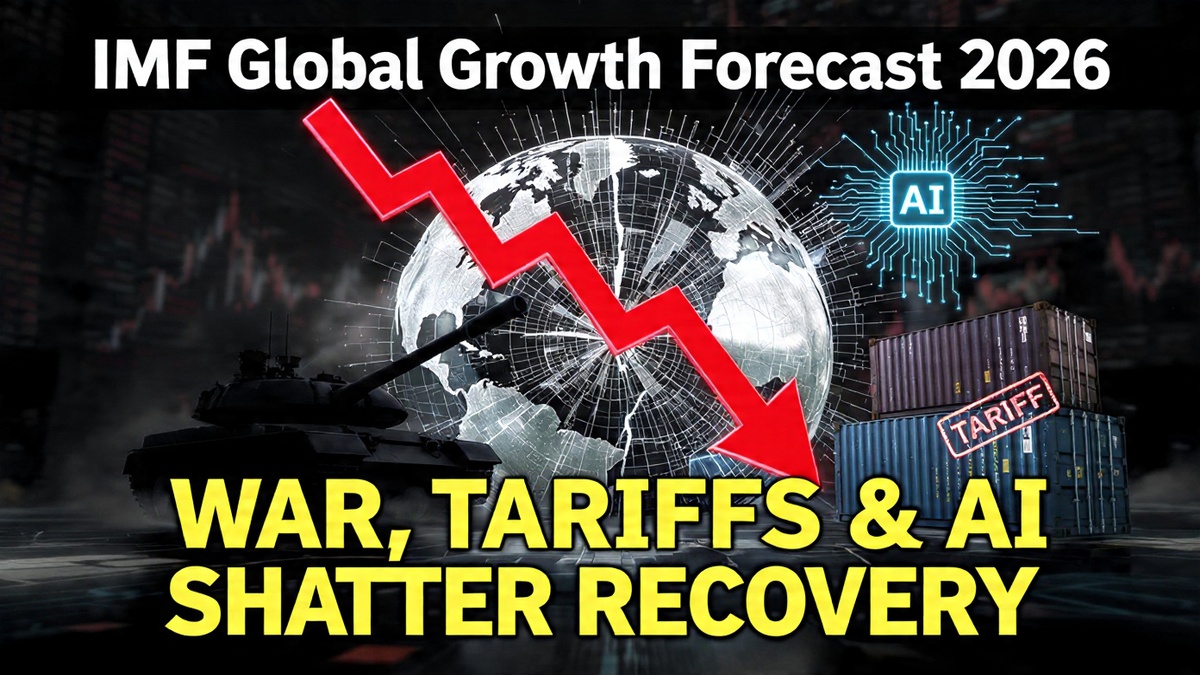
The IMF cut its 2026 global growth forecast to 3.1% as the Iran war, renewed US tariff threats, and AI investment uncertainty converge. Inside the most fragile global economic outlook since COVID.
The International Monetary Fund’s April 2026 World Economic Outlook carried an unusually sober subtitle: Global Economy in the Shadow of War. It was not rhetorical flourish. The Fund revised its global growth forecast to 3.1%, down from 3.4% in 2025, describing the path ahead as “fragile and highly sensitive to further disruption.” For a global economy already navigating post-pandemic fiscal consolidation, residual supply chain reorganisation, and the early strains of AI-driven labour displacement, the additional weight of a major Middle East war proved decisive in shifting the risk calculus.
Three Shocks Arriving Simultaneously
The IMF identified three overlapping risks that distinguish 2026’s fragility from prior cycles. First, the geopolitical shock: the US-Israeli war on Iran, which disrupted Strait of Hormuz oil flows, triggered inflation across energy-dependent economies, and introduced military escalation scenarios that financial markets struggled to price. Second, trade policy uncertainty: the Trump administration’s inauguration of an investigation into 60 countries for alleged facilitation of forced-labour imports — including the European Union — with tariffs of 10-12.5% threatened on their exports to the United States. Third, AI investment uncertainty: the possibility that the large AI productivity gains priced into equity markets may arrive more slowly, or be more concentrated, than consensus assumes.
The Financial Stability Board’s Warning on War Risk
The Financial Stability Board — comprising central bankers, regulators, and finance ministers from G20 countries — warned that the Middle East conflict was creating significant global financial instability, with rising market volatility, tighter financial conditions, and risks from stretched asset valuations, high leverage in non-bank finance, and liquidity mismatches. The FSB explicitly flagged that these vulnerabilities could amplify shocks in sovereign bond markets, private credit, and broader financial stability if conditions deteriorated.
Against this backdrop, Goldman Sachs documented hedge funds buying a record $86 billion in stocks over five sessions — a surge driven mainly by systematic, trend-following strategies responding to easing geopolitical tensions. The bank estimated funds could add another $70 billion if momentum continued. The divergence between systematic strategy positioning and the IMF’s fundamental outlook captured the market’s central tension: short-term momentum traders on one side, long-term structural risk assessors on the other.
Regional Divergence: Banks Profit, Emerging Markets Struggle
Major US banks delivered first-quarter earnings that reflected institutional resilience rather than broader economic health. Goldman Sachs posted its best quarter in years. Morgan Stanley’s stock traders benefited from volatility-driven volume surges. Bank of America reported earnings growth driven by higher trading revenue. The “big six” US banks collectively posted profits above consensus estimates — a pattern that reflects how institutional financial businesses often benefit from the very volatility that damages real-economy participants.
South Korea’s financial markets, after a sharp March selloff, attracted returning foreign investors on easing Middle East tensions, AI-driven tech demand, and reform momentum. But the won remained near multi-decade lows, and the economy retained significant exposure to energy price shocks. UK lenders began cutting fixed mortgage rates as swap rates fell following the stabilisation of Middle East tensions — offering relief to borrowers, though rates remained elevated relative to pre-crisis levels.
The divergence between institutional financial performance and household economic wellbeing is one of 2026’s defining features. Financial markets can absorb, price, and even profit from uncertainty. Households and small businesses, lacking the hedging tools and balance sheet depth of institutions, bear the uncertainty without corresponding offset.
Discover more from The Economy
Subscribe to get the latest posts sent to your email.
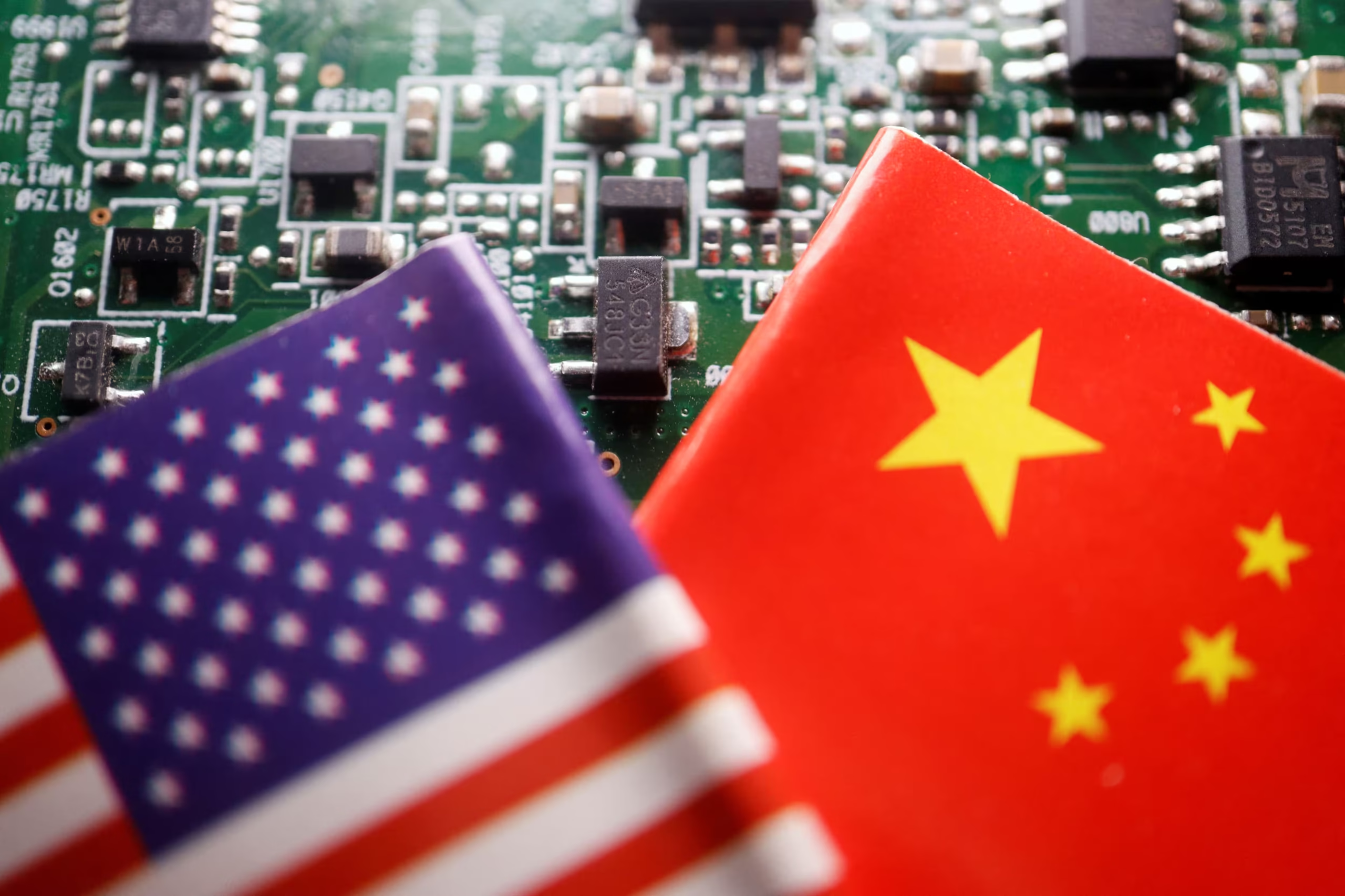
China’s domestic chip ecosystem is accelerating even as US export controls tighten. With tungsten up 557% and Nvidia’s China share halving, we map the permanent splitting of the global semiconductor supply chain.The global semiconductor supply chain is bifurcating. This statement was contested in 2023, hedged in 2024, and is now — as of 2026 — treated as a structural baseline by supply chain strategists, chipmakers, and government planners on both sides of the Pacific. The question has shifted from whether the split will happen to how deep and permanent it will become.
The evidence is visible in multiple datasets simultaneously. Nvidia, which once commanded over 90% of the Chinese AI chip market, had seen that share decline to approximately 50% by early 2026 — not because US export controls had successfully denied China access to capable chips, but because the combination of tariffs, “buy local” mandates, and regulatory uncertainty had accelerated Chinese enterprises’ migration to domestic alternatives. Meanwhile, China’s semiconductor output surged 87% year-on-year in May 2026, underscoring that domestic production capacity was advancing at a pace that few had forecast five years ago.
The Tungsten Shock: A Materials Leverage Beijing Chose to Use
In February 2026, China added tungsten to its export control list as trade tensions with the United States escalated. The consequence was rapid and severe. Tungsten prices rose 557% in just over a year — outperforming gains in gold, copper, and oil by a wide margin. Chinese exports of restricted tungsten products fell approximately 40% in 2025. The strategic logic was precise: China controls roughly 79% of global tungsten mine production, and tungsten’s exceptionally high melting point and density make it an essential input for chipmaking — both in chips themselves and in multiple fabrication processes at advanced nodes.
The move demonstrated that materials leverage extends far beyond rare earths. For semiconductor supply chains already under AI-driven demand stress, the tungsten shock added a new category of critical bottleneck that western efforts to build alternative supply chains cannot resolve in the near term.
Nvidia’s Paradox: Export Controls and the H200 Restart
The Nvidia-China relationship in 2026 illustrates the inherent contradiction of export controls applied to commercially motivated technology companies. After a roughly ten-month freeze on advanced chip exports to China — during which Nvidia absorbed a $5.5 billion charge tied to stranded inventory — a December arrangement allowed H200 sales to approved Chinese customers, with the US government taking a 25% cut of revenues. The arrangement normalised commerce while creating a fiscal mechanism for the US government.
Chinese tech firms collectively placed orders for more than two million H200 units for 2026 delivery — a volume that simultaneously demonstrates unmet demand and the limits of export control effectiveness. Where legal channels are closed, demand finds other pathways: a DOJ indictment unsealed in 2026 detailed a scheme involving approximately $2.5 billion in Supermicro servers containing restricted Nvidia GPUs being smuggled to Chinese buyers.
China’s Domestic Progress: Real but Incomplete
China’s semiconductor self-sufficiency ambitions are advancing, but the trajectory is uneven across subsectors. SMIC and Hua Hong have made genuine progress at mature nodes. Equipment vendors Naura and AMEC are gaining market share globally. The country’s AI chip domestic alternatives — while not yet matching Nvidia’s leading-edge capability — are advancing at an accelerating pace under the pressure of necessity.
The critical constraint remains high-bandwidth memory. CXMT, China’s domestic HBM producer, is targeting viable HBM3 yields in 2026 and HBM3E by 2027. If those milestones are achieved on schedule, Nvidia’s current China advantage — which exists precisely because China’s domestic HBM production remains constrained — will narrow materially. The competitive window is real but finite.
The Strategic Implication: Permanent Bifurcation as Business Baseline
For supply chain strategists, the most consequential shift is not any individual export control or price spike — it is the recognition that the global semiconductor supply chain’s bifurcation is permanent. Semiconductor leaders navigating this environment most effectively are treating the US-China bifurcation as a structural feature of the landscape, not a temporary disruption awaiting resolution.
This means conducting detailed audits of supplier dependencies, stress-testing revenue models against scenarios where China access is restricted or structurally changed, and tracking China’s domestic chip progress as a competitive variable rather than a geopolitical curiosity. Revenue projections that assume stable China market access now carry geopolitical risk that most financial models have not historically priced.
The age of a single, integrated global semiconductor supply chain is over. The question is how many chains will replace it, and at what cost.
Discover more from The Economy
Subscribe to get the latest posts sent to your email.
AI
AI Infrastructure Debt Bubble 2026: $570 Billion in Global Debt Issuance Raises Systemic Risk Alarm

Morgan Stanley estimates AI-related global debt issuance will hit $570 billion in 2026, with hyperscaler spending exceeding $1 trillion by 2027. Oracle’s crisis may be the first systemic warning sign.
The question Wall Street was reluctant to ask openly throughout 2024 and most of 2025 is now unavoidable: is the AI infrastructure buildout generating a debt burden that markets have not yet properly priced?
The numbers have become too large to dismiss as routine capital expenditure cycles. Morgan Stanley estimates that AI-related global debt issuance will more than double to nearly $570 billion in 2026, with aggregate hyperscaler capital expenditure projected to exceed $1 trillion by 2027. That figure encompasses spending by Amazon, Microsoft, Alphabet, Meta, Oracle, and a growing constellation of second-tier infrastructure providers building the physical layer of the AI economy.
How the Debt Stack Has Built
The trajectory of Oracle’s balance sheet is instructive as a case study in the speed at which leverage can accumulate. In fiscal 2025, Oracle carried a net cash deficit of approximately $394 million after free cash flow. By the end of fiscal 2026, that had deteriorated to negative $23.7 billion in free cash flow, with long-term debt reaching approximately $124.7 billion. Capital expenditures of $55.7 billion in a single fiscal year represent a 162% increase from the prior year.
Oracle is not alone, though its position is the most stretched. The structural dynamic across the hyperscaler complex is that the companies investing most aggressively in AI data centre capacity are simultaneously facing competitive pressure on their existing software and cloud businesses from AI-native tools — creating a margin squeeze that occurs precisely when cash demands are highest.
Credit Default Swaps as an Early Warning System
One underappreciated signal in this cycle is the behaviour of credit default swaps. Fortune reported that Morgan Stanley’s Lisa Shalett flagged Oracle’s CDS widening as a potential early indicator of broader AI trade stress. CDS spreads — which function as insurance premiums against corporate default — had reached record levels for Oracle by early 2026, even before the most recent earnings-related stock decline.
The concern Shalett articulated was systemic rather than company-specific: “If people start getting worried about Oracle’s ability to pay, that’s gonna be an early indication to us that people are getting nervous.” For a company whose debt is included in major corporate bond indices, the widening of Oracle’s CDS spreads has implications not just for Oracle investors but for anyone holding investment-grade credit exposure broadly.
Bank of America Research described “the lack of clarity on hyperscaler borrowing” as “the key risk going into 2026” — a view validated by subsequent events as Oracle’s stock collapsed and CDS widened even further.
The OpenAI Nexus
A critical vulnerability embedded in the current AI infrastructure cycle is concentration around OpenAI as both the defining customer and the primary justification for hyperscaler spending. Oracle‘s remaining performance obligations are concentrated at least $300 billion in the OpenAI relationship. OpenAI itself is burning cash at what one analyst described as “an insane rate” and has committed to more than $1.4 trillion in total AI buildouts — a commitment that depends on the company’s own ability to sustain fundraising and ultimately generate revenue at scale.
The logical chain from that dependency is a concern articulated plainly by Melius Research: “It is hard to know if Oracle can stick to this capex plan if incremental business arises from the likes of OpenAI and Anthropic. Also, its competitors are unlikely to slow spending and could use Oracle’s spending moderation as the means to gain share.” The competitive dynamic creates a collective action problem: no single hyperscaler can slow down without ceding ground, yet the collective pace of spending is generating balance sheet stress across the sector.
Second-Order Vulnerabilities: Data Centre REITs and Chip Suppliers
The debt accumulation in hyperscaler balance sheets has second-order effects that are not captured in the headline AI capex numbers. Data centre real estate investment trusts — which provide the physical infrastructure that hyperscalers increasingly lease rather than own — have their own exposure to counterparty concentration and lease extension risk. Reports that Blue Owl, Oracle‘s primary data centre financing partner, declined to back the Michigan facility highlighted the fragility of the supporting ecosystem even when the primary tenant appears solvent.
Nvidia, whose chips underpin the entire AI buildout, has been insulated from these concerns by persistent demand that exceeds supply. But if even two or three hyperscalers simultaneously scaled back data centre spending in response to balance sheet pressures, the chip demand outlook would shift rapidly.
The Memory Shortage as Collateral Signal
CNBC reported in late June 2026 that “the memory shortage shaking Apple and Microsoft is an ‘existential crisis’ for smaller players” — a reminder that supply chain bottlenecks are not yet resolved, adding cost and execution risk to projects whose timelines are already being stretched. The combination of persistent demand exceeding supply, expensive debt financing, and uncertain monetisation schedules creates a financial engineering challenge that may prove harder to solve than the engineering challenges of building the data centres themselves.
The AI infrastructure cycle is not necessarily a bubble in the sense of zero underlying demand — the use cases are real and adoption is accelerating. But the debt structure being used to finance it, and the concentration of risk around a small number of foundational relationships, has introduced systemic vulnerabilities that markets are only beginning to price.
Discover more from The Economy
Subscribe to get the latest posts sent to your email.

IMF Global Growth Forecast 2026: War, Tariffs, and AI Uncertainty Shatter the Recovery

US-China Semiconductor War 2026: Bifurcation, Tungsten Shock, and the Race for AI Chips

Salt Is the New Oil: Critical Minerals, the 2026 Investment Playbook

AI Infrastructure Debt Bubble 2026: $570 Billion in Global Debt Issuance Raises Systemic Risk Alarm

Argentina Economy 2026: Milei’s Fiscal Surplus, Inflation Drop to 29%, and What Comes Next

Global Economic Growth 2026: World Bank Cuts Forecast to 2.5%

Gold Price 2026: J.P. Morgan Forecasts $6,000/oz as Inflation, Iran War

US Section 301 Tariffs 2026: 60 Countries Face 12.5% Duties on Forced Labour Goods

China Economy 2026: 87% Semiconductor Surge, Property Crisis

Kevin Warsh Fed 2026: Rate Hold, Hawkish Dot Plot, and the End of Forward Guidance

SpaceX IPO 2026: $2 Trillion Valuation, Retail Frenzy, and the Risks

Oracle AI Debt Crisis 2026: $130 Billion Gamble Triggers Worst Stock Crash Since Dot-Com Bust

Male Labor Force Participation Rate 2026: Why Men Are Leaving & Economic Impact

Trump Tariffs 2026: Economic Impact, Household Costs & Trade War Outlook

PwC China Partner Payouts Cut Amid Evergrande Audit Fraud

Broadcom Market Value Loss: Revenue Forecast Disappoints

Investors Pile Into Bullish Dollar Bets as ‘US Exceptionalism’ Trade Returns

Here’s How Much It’ll Cost You to Be Part of SpaceX’s Record-Breaking $75 Billion IPO

Nasdaq Tumbles 4% as Chip and Memory Stocks Sink: A $1.2 Trillion Wipeout

How to Fix Pakistan’s Debt Economy: A Structural Blueprint

Smash Capital Leads $200M Funding for Allen Control Systems

Democrats Draw a Red Line Around Military AI — And the Pentagon Is Already Pushing Back

New Investment Super-Cycle: AI, Green Energy & Re-Shoring

Grinding the Already Ground: Pakistan’s Inflation Crisis

Xponential Fitness Franchise Lawsuit: The $3.97M Judgment

Middle East Conflict Oil Prices: The $4 Surge Explained

The End of the Chatbot: Why OpenAI is Tearing Up Its Most Successful Product

Musk’s SpaceX Lines Up Retail Investors for Record IPO Allocation
-

 Markets & Finance6 months ago
Top 15 Stocks for Investment in 2026 in PSX: Your Complete Guide to Pakistan’s Best Investment Opportunities
-

 Analysis4 months ago
Top 10 Stocks for Investment in PSX for Quick Returns in 2026
-

 Analysis5 months ago
Brazil’s Rare Earth Race: US, EU, and China Compete for Critical Minerals as Tensions Rise
-

 Analysis4 months ago
Johor’s Investment Boom: The Hidden Costs Behind Malaysia’s Most Ambitious Economic Surge
-

 Banks5 months ago
Best Investments in Pakistan 2026: Top 10 Low-Price Shares and Long-Term Picks for the PSX
-

 Investment6 months ago
Top 10 Mutual Fund Managers in Pakistan for Investment in 2026: A Comprehensive Guide for Optimal Returns
-

 Global Economy6 months ago
15 Most Lucrative Sectors for Investment in Pakistan: A 2025 Data-Driven Analysis
-

 Global Economy6 months ago
Pakistan’s Export Goldmine: 10 Game-Changing Markets Where Pakistani Businesses Are Winning Big in 2025