
Analysis
The $60 Billion Option: SpaceX’s Cursor Gambit and the Limits of Ambition

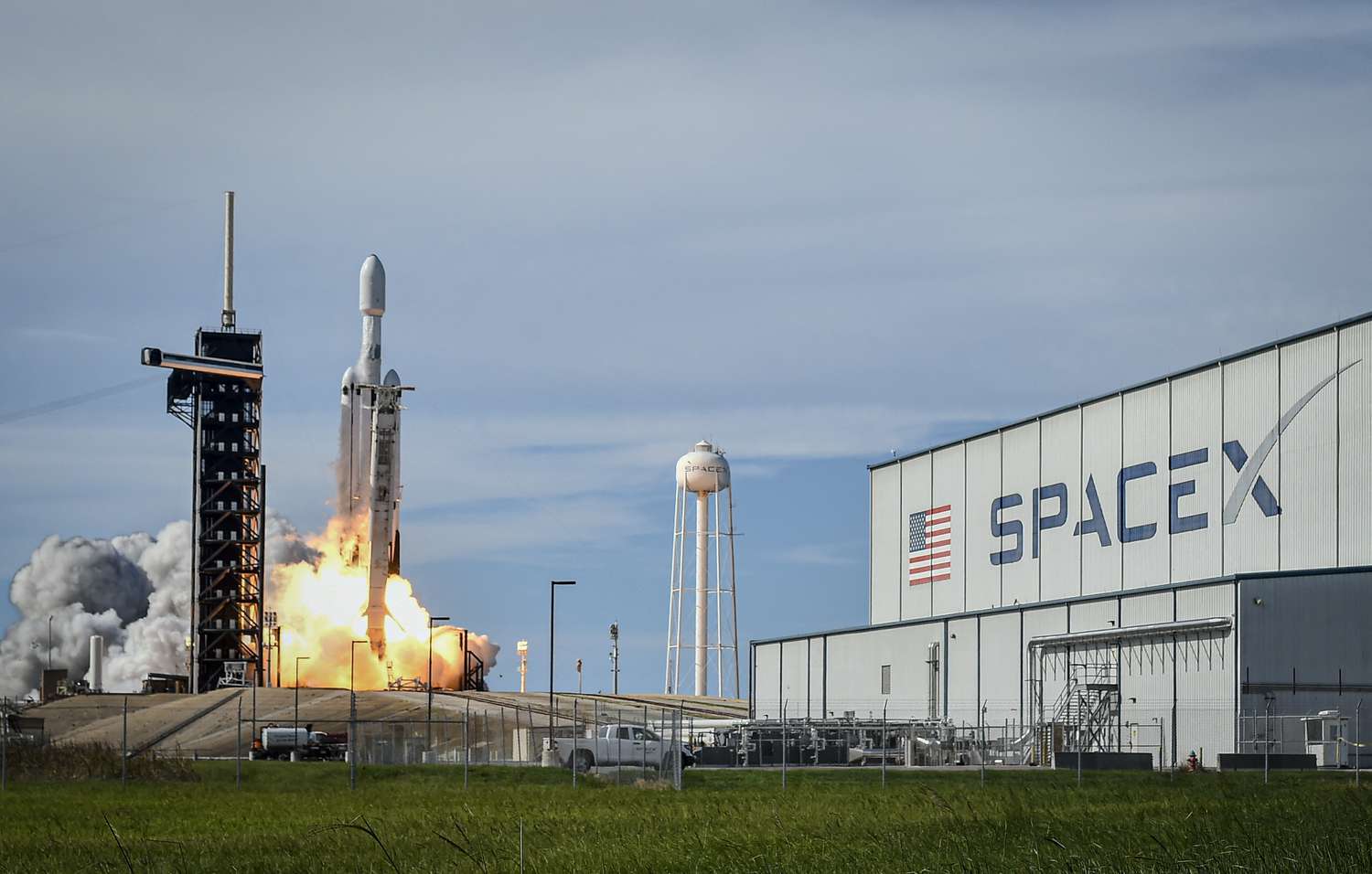
Elon Musk has obtained the right to acquire AI coding startup Cursor for $60 billion — a deal that is part strategy, part spectacle, and entirely a reflection of how much ground his AI empire still has to cover.
When SpaceX announced on April 21, 2026 that it had secured the right to acquire AI coding startup Cursor for $60 billion later this year — or alternatively pay $10 billion for the fruits of a joint collaboration — the headline looked, at first glance, like another act of Elon Musk’s well-rehearsed theatre of technological inevitability. Look again, and the deal reads very differently: as a candid admission that the AI empire he is assembling ahead of what may be the largest IPO in history still has a gaping hole at its centre.
The SpaceX Cursor acquisition option is, in the most precise sense, a confession. A confession that xAI — folded into SpaceX in February 2026 in a transaction Musk valued at $1.25 trillion — cannot yet produce a coding model that competes with the best from OpenAI or Anthropic. A confession that Cursor’s founders built something in four years that Musk’s engineers, for all their resources, have not. And a confession that in the race for the developer market, raw compute is no substitute for the accumulated behavioural data of millions of programmers actively debugging, refactoring, and shipping code.
What the Deal Actually Is — and Why the Structure Matters
The mechanics of this arrangement deserve careful attention, because they are unusual even by the elastic standards of Silicon Valley dealmaking. As Bloomberg reported, SpaceX holds an option to acquire Cursor rather than having announced a binding merger. The company may instead elect to pay Cursor $10 billion for their collaborative work — a figure that exceeds the entire venture valuation of most mature unicorns. The deal was announced in a post on X, SpaceX’s social network subsidiary, moments before The New York Times published a report citing the acquisition figure as a done deal at $50 billion. SpaceX’s own X post subsequently corrected the record.
The dual-path structure — buy or pay for collaboration — tells its own story. It gives SpaceX flexibility ahead of an IPO where every line item will face institutional scrutiny. It preserves optionality in an antitrust environment that, while currently permissive, could harden. And it gives Cursor’s investors — who include Andreessen Horowitz, Nvidia, and Thrive Capital — a cleaner path to liquidity without committing to a full sale before a $2 billion fundraising round at a $50 billion-plus valuation has closed. That round, as CNBC confirmed, was already in motion before Tuesday’s announcement.
Data Callout — Cursor’s Valuation Trajectory
Milestone Valuation / Figure Context January 2025 $2.5 billion Early-stage valuation before the “vibe coding” category exploded May 2025 $9 billion Rapid re-rating on accelerating developer adoption November 2025 $29.3 billion Post-money valuation after $2.3bn Series D 2026 (projected) $6bn+ annualised revenue Fivefold increase from late-2025 estimates, per TradingKey analysis
Cursor’s Technology — and Why SpaceX Needs It
Cursor is not, at its core, a model company. It is a behavioural-data company dressed in the clothes of a developer tool. Since its launch in 2023, the platform has captured something that every frontier AI lab covets and few possess: a high-fidelity record of how the world’s best programmers actually think — how they decompose problems, navigate codebases, catch their own mistakes, and iterate under pressure. The platform logs developer actions via videos, screenshots, and structured logs, generating a proprietary dataset of cognitive process at industrial scale.
This matters to xAI for a reason that goes beyond the obvious. xAI’s Grok model was trained heavily on data from X, the social network. That is useful for conversational fluency and cultural awareness. It is far less useful for building a model that can reason about multi-file software architectures, optimise runtime performance, or catch security vulnerabilities before they reach production. As TechCrunch noted, xAI’s models still lack the proprietary coding capability to match OpenAI’s Codex or Anthropic’s Claude — the very models Cursor currently resells to its own users, in an arrangement that grows more awkward by the quarter.
There is also a talent dimension that should not be understated. Two of Cursor’s most senior engineering leaders — Andrew Milich and Jason Ginsberg — departed to join xAI in recent weeks, where both report directly to Musk. Simultaneously, xAI began renting tens of thousands of its chips to Cursor for model training. The outlines of a deeper integration were already visible. Tuesday’s announcement formalised an embrace that had been in progress for months. What SpaceX is acquiring, should it exercise the option, is not merely a product but a pipeline: of data, of talent, and of enterprise relationships — Cursor is used by more than half of the Fortune 500, including Uber and Adobe.
“What SpaceX is acquiring is not merely a product but a pipeline — of data, of talent, and of enterprise credibility that xAI, for all its compute, has yet to earn.”
— The Capital Desk, Analysis, April 2026
Valuation Breakdown and Market Logic
Sixty billion dollars for a four-year-old company founded by individuals born after the millennium requires justification that goes beyond revenue multiples. At a projected $6 billion in annualised revenue by end-2026, the $60 billion acquisition price implies a forward revenue multiple of roughly 10x — aggressive, but not extraordinary for the highest-growth tier of AI infrastructure. For context, Snowflake’s peak valuation touched 100x forward revenue. Palantir has traded above 50x for extended periods. In a category — developer AI tooling — where network effects compound with every commit pushed through the platform, premium multiples carry real economic logic.
The harder question is whether SpaceX can afford it. TechCrunch has reported that SpaceX is widely considered to be running at a loss following the absorptions of xAI and X. Its upcoming IPO, targeted at a $1.75 trillion valuation, is designed in part to generate the public-market currency — stock — that can fund precisely this kind of acquisition without touching cash. The statement announcing the Cursor deal did not specify whether payment would be in SpaceX equity, which is itself a meaningful silence. If the deal is funded in stock, it transforms from a capital allocation question into an IPO narrative question: does Cursor make the SpaceX story bigger, or more complicated?
Regulatory and Geopolitical Considerations
Any assessment of the SpaceX Cursor deal that omits the regulatory dimension is incomplete. The combined SpaceX-xAI entity — already subject to scrutiny over its control of orbital infrastructure, global data flows via Starlink, and classified U.S. defence contracts — is being watched carefully by antitrust authorities on both sides of the Atlantic. Analysts have noted that the complexity of the SpaceX-xAI merger was one reason the anticipated S-1 filing slipped by several weeks. Adding a $60 billion acquisition of the dominant AI coding tool used by Fortune 500 companies would substantially raise the profile of regulatory review.
There is a geopolitical overlay that institutional investors would be unwise to dismiss. Cursor’s technology, deployed at scale across corporate software infrastructure globally, touches systems that regulators in Brussels, London, and Beijing will regard as strategically sensitive. Musk’s simultaneous roles in U.S. government advisory structures and at the helm of a company with classified defence contracts introduces an unprecedented information-asymmetry risk for any public shareholder. SpaceX operates under ITAR restrictions and holds contracts whose details will never appear in an S-1. The Cursor acquisition deepens an already labyrinthine governance structure that institutional fiduciaries will need to price carefully.
Strategic Implications for AI Competition
The deal, if consummated, would accelerate a consolidation dynamic already reshaping the developer tools market. Cursor’s principal competitors in the agentic coding space — GitHub Copilot (Microsoft), Amazon Q Developer, and Google’s Gemini Code Assist — are all backed by hyperscalers with balance sheets that dwarf SpaceX’s. Bringing Cursor inside Musk’s orbit would force a choice on every enterprise customer currently running the platform: remain with a tool now explicitly aligned with xAI and SpaceX’s commercial interests, or migrate to a hyperscaler alternative. That migration calculus is non-trivial given Cursor’s deep integration into developer workflows, but the reputational and governance dimensions of a Musk-owned coding infrastructure layer will give enterprise compliance and procurement teams genuine pause.
For OpenAI, the deal carries a particular irony. The company was an early investor in Cursor. The approaching trial in Musk v. Altman begins less than a week after Tuesday’s announcement — a legal confrontation over the soul and governance of AI development. Musk is now, in effect, seeking to acquire one of the few AI developer platforms that still distributes access to OpenAI models. Should the acquisition proceed, that arrangement would almost certainly end.
The Counterarguments — and Why They Deserve Hearing
There is a cogent sceptical case to be made, and it is not served by dismissing it. Cursor, for all its valuation momentum, still lacks a proprietary frontier model. Its current competitive advantage rests in part on its willingness to offer users the best available model regardless of origin — Claude, GPT-4o, Gemini — a flexibility that disappears the moment it becomes an xAI subsidiary. The platform’s enterprise growth story could soften meaningfully if customers begin to perceive it as a pipeline into Musk’s data infrastructure rather than an independent tool. Talent retention, always precarious in AI, becomes more uncertain still when a company transitions from founder-led startup to conglomerate business unit.
There is also the question of whether the $10 billion collaboration fee — the cheaper of the two options SpaceX retains — might prove the more rational choice. If xAI can train a competitive coding model on Cursor’s data and infrastructure over the next twelve months, the rationale for paying the full $60 billion acquisition premium weakens considerably. The option structure may be as much a negotiating instrument as a statement of intent.
What Policymakers and Investors Should Do Now
For regulators, the moment demands pre-emptive engagement rather than retrospective review. The standard antitrust framework — market share thresholds, horizontal overlap analysis — is poorly suited to a deal whose competitive significance lies not in current market share but in data accumulation and model training leverage. The FTC, the DOJ, and their European counterparts should be developing frameworks now for evaluating the competitive consequences of AI training data monopolies, before the consolidation is too advanced to unwind.
For investors considering exposure to the SpaceX IPO, the Cursor deal adds valuation optionality but also execution complexity. A company that is simultaneously absorbing xAI, integrating X, pursuing a Cursor acquisition, managing classified defence contracts, and attempting the first orbital heavy-lift launch of the V3 Starship is carrying an operational load without precedent in public-market history. The SpaceX Cursor acquisition option is not, in itself, a reason to be cautious about the IPO. But it is a reminder that the story being sold is not merely about rockets. It is about whether a single conglomerate intelligence — human and artificial — can hold all of this together without fracturing.
The $60 billion option is a statement of intent. Whether it becomes a statement of capability is a question that the next twelve months — and the first earnings calls after what will be an extraordinary public offering — will begin to answer. The markets will price it. The regulators will scrutinise it. And the engineers at Cursor, not all of whom chose this outcome, will have their own verdict.
Discover more from The Economy
Subscribe to get the latest posts sent to your email.


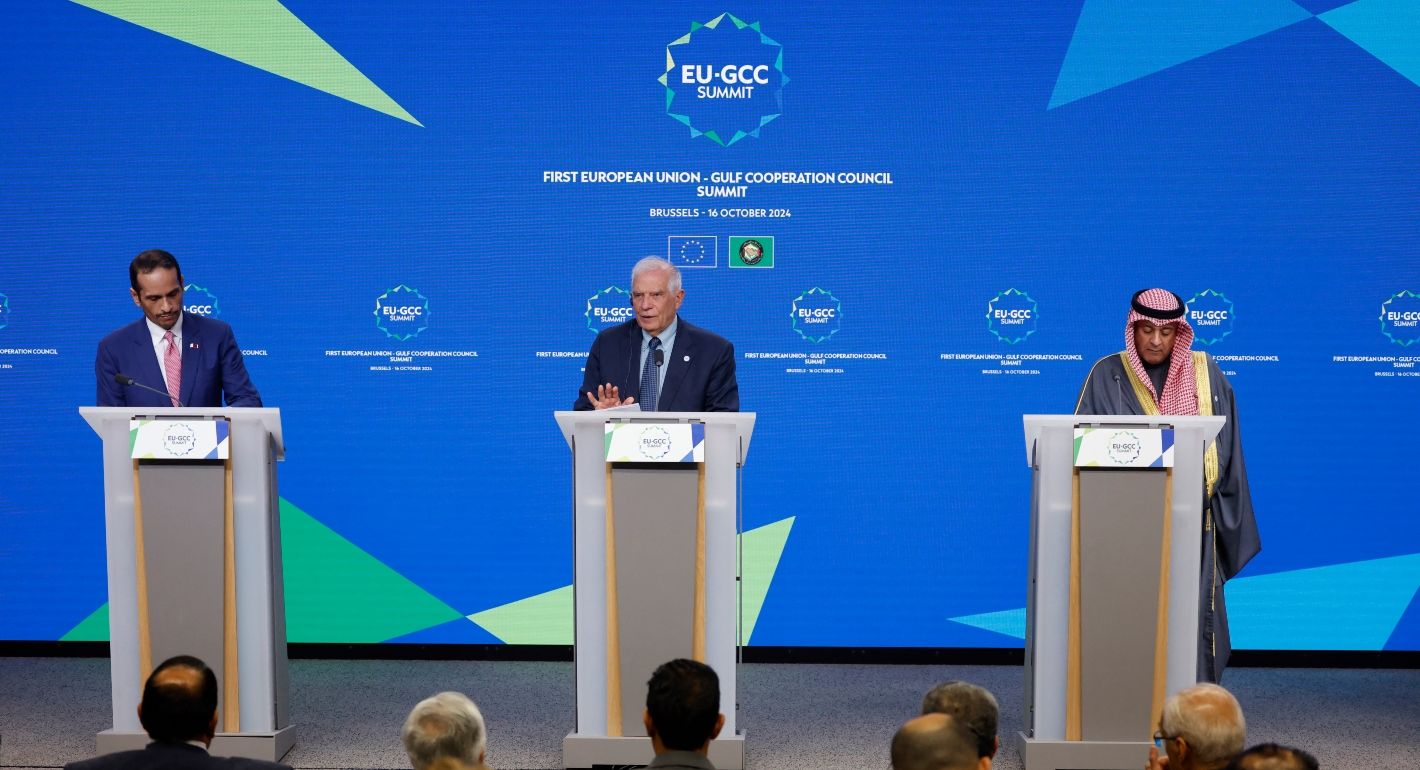
Gulf investors pulled over $1 billion from Pakistan’s bonds and equities in FY26. Here’s why the Gulf peace deal matters more than headlines suggest.
Pakistan’s economic commentary this year has largely stayed domestic — inflation, IMF reviews, remittances. The more revealing story sits in the balance-of-payments data: Gulf capital, historically one of Pakistan’s most reliable sources of portfolio investment, has gone into reverse at precisely the moment Islamabad is leaning on its Gulf relationships diplomatically.
The numbers
State Bank of Pakistan data show that from July 1, 2025 to June 19, 2026, equity market inflows totalled just $308 million while outflows exceeded $1 billion. Foreign direct investment declined by 28% over the first 11 months of FY26, domestic bonds saw a net outflow of $550 million, and total bond outflows for the year topped $2 billion. Pakistan’s external financing needs are steep: the country must pay over $26 billion in 2026–27, against an $35 billion trade deficit in the first 11 months of FY26.
Between July 2025 and June 2026, foreign outflows from Pakistan’s domestic bonds exceeded $2 billion, while equity market outflows topped $1 billion against just $308 million in inflows. Gulf states have been net sellers, with Bahrain withdrawing $30 million from Pakistani bonds in early FY27 alone, as the US-Israeli war with Iran raised regional risk premiums.
The pattern has continued into the new fiscal year. In the first ten days of FY27, Bahrain withdrew $30 million from Pakistan’s domestic bonds — $21 million from treasury bills and $9 million from Pakistan Investment Bonds — with no Gulf country recording any inflow during the period. Luxembourg was the only recorded foreign buyer, investing $4 million.
Why the peace deal matters disproportionately to Pakistan
Analysts quoted in Pakistani financial press note that Pakistan is not a party to the Gulf war but is now part of the peace framework, which raises the stakes for Islamabad if the deal collapses. Remittances from Gulf countries have so far held up, but bankers warn a prolonged conflict could eventually disrupt what remains the country’s largest source of foreign exchange, alongside stagnant exports and growth capped below 4%.
This sits against a wider regional backdrop: a new UNCTAD World Investment Report finds Gulf outbound investment grew through 2025, but warns that a prolonged conflict could redirect Gulf capital toward domestic reconstruction and strategic infrastructure, reducing the pool available for developing economies in Asia and Africa that increasingly depend on GCC financing — a dynamic that directly implicates Pakistan’s financing model.
The underserved angle
Most Pakistani business coverage frames this as an IMF-and-remittances story. The more precise framing is a capital-substitution risk: Pakistan has structurally relied on Gulf sovereign and institutional capital to plug its external financing gap, and that capital source is now competing for the same money regional reconstruction and Gulf domestic strategic infrastructure would need in a prolonged-conflict scenario. There is a live, underreported counter-current too — SBP data show net FDI actually rose from $54.46 million in April 2026 to $214.29 million in May, suggesting the bond-market flight and the FDI picture are not moving in lockstep.
Discover more from The Economy
Subscribe to get the latest posts sent to your email.
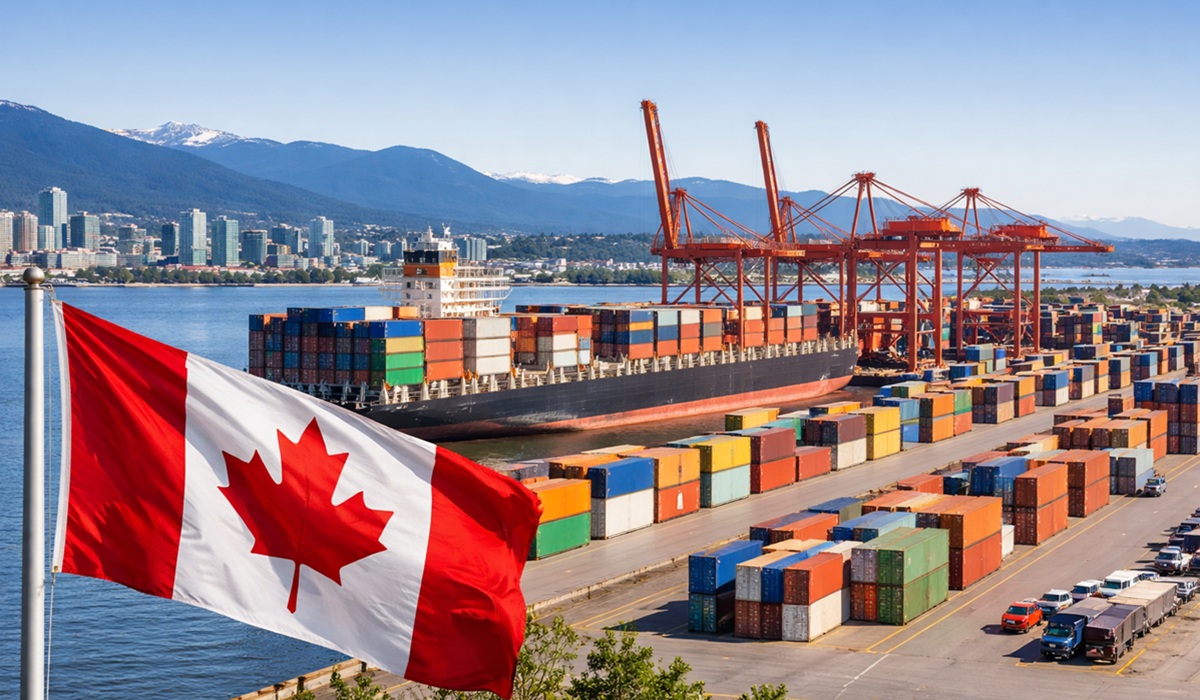
As US tariffs strain CUSMA, Canada is striking deals with China, Indonesia and the UAE. Here’s how Ottawa’s pivot away from the US is actually unfolding.
Every Canadian trade story in 2026 tends to lead with the same character: Washington. But the more consequential story may be what Ottawa is doing everywhere else. Facing sustained US tariff pressure and uncertainty over the CUSMA review, the Carney government has initiated a strategy to diversify Canada’s international trade, with a specific target of doubling exports to non-US markets by 2035.
Canada’s trade diversification strategy aims to double exports to non-US markets by 2035. In 2025–26 it produced a stabilisation deal with China on EVs and canola, a new trade agreement with Indonesia, a Foreign Investment Promotion and Protection Agreement with the UAE, and consultations with India, Thailand and Mercosur.
The deals nobody outside trade-law circles is tracking
Three moves stand out as substantively new rather than aspirational:
- China: during a visit to Beijing, Canada’s prime minister struck a deal establishing a tariff-rate quota for a set number of Chinese EVs — reverting to pre-2024 tariff levels — in exchange for reduced Chinese tariffs on Canadian canola, lobster and peas. This is a live trade-off between EV protectionism and agricultural market access.
- Indonesia: Canada signed a new trade agreement with Indonesia in 2025, opening a Southeast Asian market largely absent from Canadian export strategy until now.
- UAE: Ottawa launched trade-agreement negotiations and signed a new Foreign Investment Promotion and Protection Agreement with the United Arab Emirates, positioning the Gulf as a capital and market-access partner rather than just an energy counterpart.
Meanwhile, exporter confidence has ticked up but remains below its historical average, and diversification remains concentrated in a narrow set of commodities rather than being broad-based.
Why the gravity model is the real obstacle
Trade economists point to the Gravity Model of trade to explain why diversification is structurally hard: the US economy’s size, physical proximity, regulatory similarity and deeply integrated supply chains with Canada make full substitution unrealistic in the near term, even as China and India are flagged as the two most promising long-term markets given they will account for roughly 45% of global economic growth.
The underserved angle
Most coverage treats “Canada diversifying away from the US” as a single narrative. It is actually three distinct, sometimes contradictory tracks: a commodity-for-EV-tariff trade with China, a market-opening play in Southeast Asia via Indonesia, and a capital-and-investment play with the Gulf via the UAE. Each carries different risk profiles — geopolitical risk with China, execution risk with a new Indonesian relationship, and Gulf capital that is itself increasingly redirected toward domestic reconstruction needs amid regional conflict.
Discover more from The Economy
Subscribe to get the latest posts sent to your email.
Analysis of how the Federal Reserve, Bank of England and Bank of Japan could reshape global markets, inflation, currencies and economic growth in 2026.
Executive Summary
The world’s most influential central banks are entering one of the most consequential policy weeks of 2026. Investors are watching closely as the U.S. Federal Reserve, the Bank of England, and the Bank of Japan weigh the competing pressures of easing inflation, geopolitical uncertainty, elevated energy prices, and slowing global growth. Financial markets are also preparing for major corporate earnings and fresh GDP data from several advanced economies. �
Financial Times +1
Unlike the synchronized tightening cycle that dominated recent years, policymakers are increasingly responding to country-specific economic conditions. This divergence is expected to influence capital flows, exchange rates, bond yields, and investment decisions across both developed and emerging markets. �
McKinsey & Company +1
A New Monetary Landscape
Global inflation has moderated from its post-pandemic peaks, yet central banks remain cautious. Recent movements in energy markets and ongoing geopolitical tensions continue to threaten price stability, even as labor markets show signs of cooling. �
McKinsey & Company +1
For investors, the question is no longer whether interest rates have peaked, but how long they will remain elevated.
United States: The Federal Reserve Faces a Delicate Balance
Attention is centered on the Federal Reserve, where policymakers are expected to keep rates steady while evaluating the effects of inflation, consumer demand, and accelerating investment in artificial intelligence infrastructure. Markets are also monitoring whether AI-driven capital spending could contribute to future inflationary pressures. �
Investopedia +1
Bond investors remain sensitive to any shift in the Fed’s language, as Treasury yields continue to reflect expectations about future policy and inflation risks. �
MarketWatch
United Kingdom: Stability Before Growth
The Bank of England is expected to maintain a cautious stance amid moderating wage growth and relatively stable unemployment. However, policymakers continue to weigh external risks, including energy market volatility and global geopolitical developments. �
Financial Times
Businesses remain particularly attentive to borrowing costs, which continue to influence investment decisions across the UK economy.
Japan Ends an Era of Ultra-Loose Money
Japan is undergoing one of its most significant monetary transitions in decades. Rising wages and gradually strengthening inflation have encouraged the Bank of Japan to continue moving away from the ultra-accommodative policies that defined much of the past generation. �
Financial Times
This normalization has implications far beyond Japan, affecting global capital markets and currency dynamics.
Why Emerging Markets Are Watching Closely
Emerging economies including Pakistan, Indonesia, Malaysia, and others remain particularly exposed to decisions made by advanced economy central banks.
Higher U.S. interest rates typically strengthen the dollar, increase external financing costs, and place pressure on countries with significant foreign currency debt.
Conversely, a more stable interest rate environment could improve capital flows into emerging markets while easing exchange rate volatility.
AI Is Becoming a Monetary Policy Variable
One of the most important structural developments in 2026 is the rapid expansion of artificial intelligence infrastructure.
Major technology companies continue investing heavily in data centers, semiconductors, cloud computing, and digital infrastructure. These investments are supporting economic growth but are also creating new questions about inflation, productivity, and long-term financing needs. �
Investopedia +1
Investment Implications
Several themes are emerging:
Higher-for-longer interest rates remain possible.
Government bond markets are likely to remain volatile.
The U.S. dollar could remain relatively strong.
AI-related investment continues attracting capital.
Emerging markets may benefit if inflation continues to moderate.
Competitor Keyword Gap Analysis
Leading publications such as the Financial Times, Reuters, Bloomberg, and CNBC primarily emphasize immediate policy decisions. An opportunity exists to capture additional search traffic by targeting broader intent-based queries.
Key Takeaways
Central bank decisions this week are expected to shape global financial markets.
AI investment is becoming an increasingly important economic driver.
Bond markets remain sensitive to inflation expectations.
Emerging economies face both risks and opportunities from policy divergence.
Investors should monitor GDP releases, corporate earnings, and inflation indicators alongside interest rate announcements.
Frequently Asked Questions
Why are central bank meetings so important?
They influence borrowing costs, inflation expectations, currency values, and investment decisions worldwide.
How do interest rates affect stock markets?
Higher rates generally increase financing costs and can reduce company valuations, while lower rates often support economic activity and equity markets.
Why is AI influencing monetary policy discussions?
Large-scale investment in AI infrastructure is reshaping productivity, corporate spending, and long-term inflation expectations.
Discover more from The Economy
Subscribe to get the latest posts sent to your email.

Pakistan Gulf Investment Outflows 2026: Peace Deal Stakes Explained

Canada Trade Diversification 2026: China, Indonesia, UAE Deals Explained

US Forced-Labour Tariffs on 60 Countries: The Hidden Trade Shock of 2026

Global Central Banks 2026: Fed, BoE and BoJ Decisions Could Reshape Markets

Gulf Capital Retreat From Pakistan 2026: UAE Loan Freeze & What It Means

Pakistan’s Most Reliable Export Is Its People: Remittances Hit $41.6 Billion, Overtaking Total Exports

Indonesia’s Confidence Problem: Record Investment, a Sinking Rupiah, and a Widening Credibility Gap

Down But Not Out: Inside the Slow Sinking of Russia’s War Economy

China’s Growth Slips to a Four-Year Low: Why Beijing Still Won’t Pull the Stimulus Trigger

The Johor-Singapore Corridor: How Malaysia Became Southeast Asia’s AI Infrastructure Powerhouse

Canada’s Economy ‘On Pause’: Inside the CUSMA Deadline That Passed Without a Deal

Dubai’s Millionaire Magnet: How the UAE Turned Middle East Turmoil Into a Capital Safe-Haven Boom

Britain’s Sixth Prime Minister in a Decade: What Starmer’s Exit Means for Gilts, Sterling and Your Portfolio

Anthropic Offers Up to $600,000 Salary for Critical IPO Role as AI Giant Prepares for Wall Street Debut

Carry Trade Unwind 2026: How the Yen’s Snapback Triggered a Global Margin Call

AI Bubble Warning 2026: Why BIS, IMF and Bank of England Fear a Market Crash

BRICS De‑Dollarization Strategy Takes Shape with $15 Billion Local‑Currency Push

The AI Super Bubble Is Ready to Burst

Russia Bans Diesel Exports 2026: Global Fuel Market Impact Explained

Strait of Hormuz Blockade 2026: Oil Prices Surge 9% as US-Iran Conflict Reignites

Private Credit Warning: Most BDCs Turn Unprofitable in 2026, Reuters Finds

Bitcoin $150k Milestone Achieved as US Sovereign Crypto Pivot Looms

IMF Cuts Pakistan Growth Forecast, Raises Inflation to 8.4%
Gulf Capital Retreat From Pakistan 2026: UAE Loan Freeze & What It Means

India Economic Rise 2026: How the Subcontinent Toppled Japan

Strait of Hormuz 2026: Why Markets Still Don’t Trust It’s Open

China Housing Market Turnaround: White‑List Model Stabilises Prices

Chipmakers Just Lost 6.7% in Two Days: Inside the Great AI Trade Rotation
-

 Markets & Finance7 months ago
Top 15 Stocks for Investment in 2026 in PSX: Your Complete Guide to Pakistan’s Best Investment Opportunities
-

 Analysis5 months ago
Johor’s Investment Boom: The Hidden Costs Behind Malaysia’s Most Ambitious Economic Surge
-

 Analysis5 months ago
Top 10 Stocks for Investment in PSX for Quick Returns in 2026
-

 Analysis6 months ago
Brazil’s Rare Earth Race: US, EU, and China Compete for Critical Minerals as Tensions Rise
-

 Banks6 months ago
Best Investments in Pakistan 2026: Top 10 Low-Price Shares and Long-Term Picks for the PSX
-

 Investment7 months ago
Top 10 Mutual Fund Managers in Pakistan for Investment in 2026: A Comprehensive Guide for Optimal Returns
-

 Global Economy7 months ago
15 Most Lucrative Sectors for Investment in Pakistan: A 2025 Data-Driven Analysis
-

 Global Economy7 months ago
Pakistan’s Export Goldmine: 10 Game-Changing Markets Where Pakistani Businesses Are Winning Big in 2025