
Analysis
Wall Street Is Betting Against Private Credit — and That Should Worry Everyone

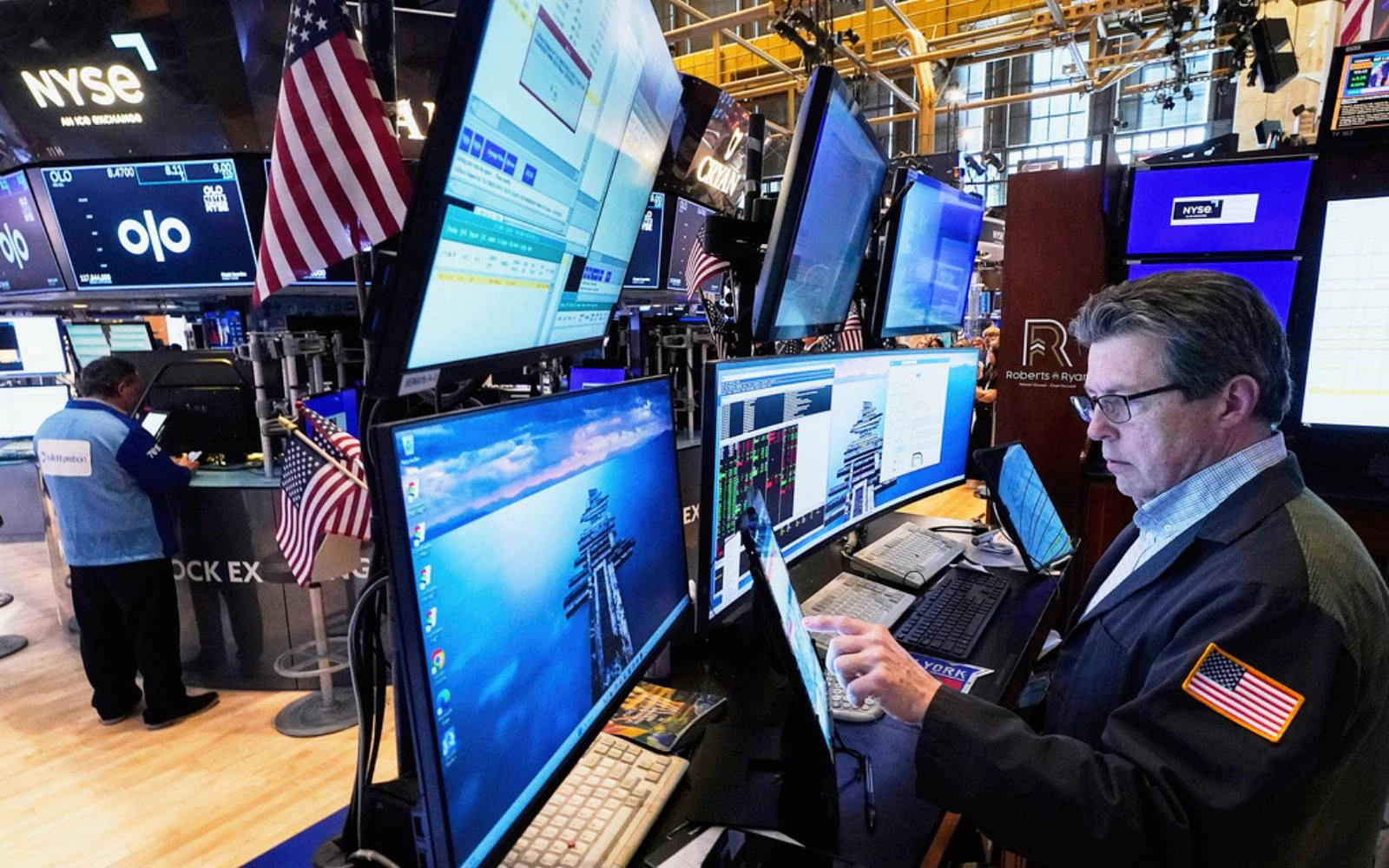
When the architects of the private credit boom begin selling instruments that profit from its distress, the market has entered a new and more dangerous phase.
There is an old rule of thumb in credit markets: the moment the banks that helped build a structure start quietly pricing in its failure, it is time to pay very close attention. That moment arrived on April 13, 2026, when the S&P CDX Financials Index — ticker FINDX — began trading, giving Wall Street its first standardised credit-default swap benchmark explicitly linked to the private credit market. JPMorgan Chase, Bank of America, Barclays, Deutsche Bank, Goldman Sachs, and Morgan Stanley are all distributing the product. These are not peripheral players hedging tail risks. These are the same institutions that have spent a decade co-investing in, lending to, and marketing the very asset class they now offer clients a streamlined mechanism to short.
That is the headline. The deeper story is more unsettling.
The Product Nobody Was Supposed to Need
Credit-default swaps are, at their most basic, financial insurance contracts — the buyer pays a premium; the seller compensates the buyer if a specified borrower defaults. They became infamous in 2008, when an entire shadow banking system imploded partly because CDS had been written so liberally, by parties with no direct exposure to the underlying risk, that protection was illusory rather than real. What is remarkable about the CDX Financials launch is not the instrument itself but what its very existence confesses: private credit has grown so large, so interconnected, and now so stressed that the market has concluded it needs — finally — a public, liquid, standardised mechanism to hedge against its unravelling.
According to S&P Dow Jones Indices, the new FINDX comprises 25 North American financial entities, including banks, insurers, real estate investment trusts, and business development companies (BDCs). Approximately 12% of the equally weighted index is tied to private credit fund managers — specifically Apollo Global Management, Ares Management, and Blackstone. The index rises in value as credit sentiment toward its constituent entities deteriorates. In practical terms: buy protection on FINDX, and you profit when the private credit ecosystem comes under pressure.
Nicholas Godec, head of fixed income tradables and commodities at S&P Dow Jones Indices, described the launch as “the first instance of CDS linked to BDCs, thereby providing CDS linked to the private credit market.” That phrasing — careful, bureaucratic, almost bloodless — belies the signal embedded in the timing.
The Numbers Behind the Anxiety
To understand why this product exists, you need to understand the scale and velocity of the stress currently moving through private credit. The numbers, as of Q1 2026, are striking.
The Financial Times reported that U.S. private credit fund investors submitted a total of $20.8 billion in redemption requests in the first quarter alone — roughly 7% of the approximately $300 billion in assets held by the relevant non-traded BDC vehicles. This is not a trickle. Carlyle’s flagship Tactical Private Credit Fund (CTAC) received redemption requests equivalent to 15.7% of its assets in Q1, more than three times its 5% quarterly limit. Carlyle, like many of its peers, honoured only the cap and deferred the rest. Blue Owl’s Credit Income Corp saw shareholders request withdrawals equivalent to 21.9% of its shares in the three months to March 31 — an extraordinary figure that prompted Moody’s to revise its outlook on the fund from stable to negative. Blue Owl, Blackstone, KKR, Apollo, and Ares have all faced redemption queues this cycle.
Moody’s has since downgraded its outlook on the entire U.S. BDC sector from “stable” to “negative” — a formal acknowledgement that what was once a bull-market darling is now contending with structural liquidity stresses that its semi-liquid product architecture was never fully designed to survive.
Meanwhile, the credit quality of the underlying loans is deteriorating in ways that the sector’s historical marketing materials simply did not anticipate. UBS strategists have projected that private credit default rates could rise by as much as 3 percentage points in 2026, far outpacing the expected 1-percentage-point rise in leveraged loans and high-yield bonds. Morgan Stanley has warned that direct lending default rates could surge as high as 8%, compared with a historical average of 2–2.5%. Payment-in-kind loans — where borrowers pay interest in additional debt rather than cash — are rising, a classic signal of borrowers under duress who are conserving liquidity at the expense of lender economics.
Perhaps most damning: in late 2025, BlackRock’s TCP Capital Corp reported that writedowns on certain portfolio loans reduced its net asset value by 19% in a single quarter.
The AI Dislocation: A Crisis Within the Crisis
No serious analysis of this stress cycle can ignore the role of artificial intelligence in accelerating it. Roughly 20% of BDC portfolio exposure, according to Jefferies research, is concentrated in software businesses — predominantly SaaS companies that private credit firms financed at generous valuations during the zero-interest-rate boom years. The rapid advance of AI tools capable of automating software workflows has sparked a brutal re-evaluation of those companies’ competitive moats, revenue durability, and, ultimately, their debt-service capacity.
Blue Owl, one of the largest direct lenders to the tech-software sector, has faced redemption requests that are — in the words of its own investor communications — reflective of “heightened negative sentiment towards direct lending” driven in part by AI-sector uncertainty. The irony is profound: private credit funds that rushed to finance the digital economy are now discovering that the same technological disruption they helped capitalise is undermining the creditworthiness of their borrowers.
This is not a transient sentiment shock. According to Man Group’s private credit team, private credit loans are originated with the “express purpose of being held to maturity.” That structural illiquidity — the attribute that was once marketed as a yield premium — is now the attribute that makes the sector’s stress harder to contain. When your borrowers are software companies facing existential competitive threats and your investors are retail wealth clients who were sold on liquidity promises, the collision produces exactly what we are now observing: gating, deferred redemptions, and a derivatives market emerging to price what the underlying funds cannot.
What Wall Street Is Really Saying
The CDX Financials launch is not merely a new product. It is a confession.
When the Wall Street Journal first reported the index’s development, analysts initially framed it as a neutral hedging tool — a risk management mechanism that sophisticated market participants had long wanted access to. And in the narrow technical sense, that framing is accurate. Hedge funds with concentrated exposure to BDC equity positions, pension funds with indirect private credit allocations, and banks with syndicated loan books have legitimate demand for an instrument that allows them to offset their exposure.
But consider the posture this represents. JPMorgan, Goldman Sachs, Morgan Stanley, and Barclays built, distributed, and marketed private credit products to institutional and retail clients throughout the 2015–2024 expansion. They collected billions in fees doing so. They celebrated the asset class’s growth — the private credit market has expanded to more than $3 trillion in AUM — as evidence of financial innovation serving real-economy borrowers who couldn’t access public markets. Those same institutions have now co-created a benchmark instrument whose primary utility is to profit, or hedge risk, when that market contracts.
This is not cynicism — it is rational risk management. But it is also a market signal of extraordinary clarity: the largest, best-informed participants in global credit markets have concluded that the probability-weighted downside in private credit is now large enough to justify the cost and complexity of derivative infrastructure. You do not build a CDX index for a market in good health.
Regulatory Fault Lines and the Retail Investor Problem
Perhaps the most underappreciated dimension of this crisis is distributional. Private credit’s expansion over the last decade was partly funded by a deliberate push by asset managers into the wealth management channel — retail and high-net-worth investors who were attracted by the yield premium over public credit and the low apparent volatility of funds that mark their assets infrequently and to model rather than to market.
That low apparent volatility, as analysts at Robert A. Stanger & Co. have pointed out, was partly a function of the valuation methodology rather than the underlying risk. BDCs in the non-listed space can appear stable in their net asset values right up until the moment they are not — and the quarterly redemption gates now being enforced create a first-mover advantage for those who recognise the stress earliest. Institutional investors — the “small but wealthy group” who have been demanding exits — have done exactly that. Retail investors, who typically receive quarterly statements and rely on fund managers’ own assessments of value, are disproportionately likely to be last out.
The Securities and Exchange Commission has been examining BDC valuation practices and the structural question of whether semi-liquid products are appropriately matched to the liquidity expectations of retail investors. The CDX Financials launch materially increases the regulatory pressure surface. It is considerably harder to argue that private credit is a stable, low-volatility asset class suitable for retail distribution when the major banks are simultaneously selling derivatives that facilitate bearish bets on its constitutent managers.
The regulatory trajectory points toward tighter disclosure requirements on BDC valuation methodologies, stricter rules on redemption queue transparency, and potentially new suitability standards for the sale of semi-liquid alternatives to retail investors. None of these changes will arrive in time to protect those already queuing to exit.
The European and EM Dimension
The stress in U.S. private credit has a global undertow that commentary focused on Wall Street mechanics tends to underweight. European direct lenders — many of them subsidiaries or affiliates of the same U.S. managers now under pressure — have similarly expanded into software, healthcare services, and leveraged buyout financing across France, Germany, the Nordics, and the UK. The Bank for International Settlements has flagged the opacity and rapid growth of private credit in advanced economies as a potential systemic risk vector, precisely because the infrequent and model-dependent valuation of these assets makes cross-border contagion difficult to detect in real time.
Emerging market economies face a different but related challenge. Domestic sovereign and corporate borrowers who were priced out of traditional bank lending and public bond markets during periods of dollar strength and risk-off sentiment found private credit as an alternative source of capital. As U.S. private credit funds come under redemption pressure and face potential portfolio de-risking, the marginal withdrawal of credit availability to EM borrowers represents a secondary shock that will not appear in U.S. financial statistics but will very much appear in the economic data of the borrowing countries.
The CDX Financials, for now, is a North American product focused on North American entities. But if the private credit stress deepens, the transmission mechanism to European and EM markets will operate through the same channel it always does: abrupt, disorderly credit withdrawal by institutions that had presented themselves to borrowers as patient, relationship-oriented capital.
The 2026–2027 Outlook: Three Scenarios
Scenario one: Controlled decompression. The redemption pressure peaks in mid-2026 as Q1 earnings are digested, valuations are reset modestly, and AI sector concerns stabilise. The CDX Financials remains a niche hedging tool with modest trading volumes. Default rates rise but remain below 5%. Fund managers gradually improve their liquidity management frameworks, and the episode is remembered as a stress test that the sector passed — awkwardly, but passed.
Scenario two: Structural repricing. Default rates reach the 6–8% range forecast by Morgan Stanley. Fund managers are forced to sell assets to meet redemptions, creating mark-to-market pressure that triggers further investor withdrawals — a slow-motion version of the bank run dynamic. The CDX Financials becomes a liquid, actively traded instrument as hedge funds build short theses against specific managers. The SEC intervenes with new rules. The retail wealth channel for private credit permanently contracts, and the asset class re-professionalises toward institutional-only distribution.
Scenario three: Systemic cascade. A rapid confluence of AI-driven borrower defaults, leveraged BDC balance sheets, and sudden insurance company mark-to-market requirements — recall that insurers have become significant private credit allocators — creates a feedback loop that overwhelms the quarterly gate mechanisms. This scenario remains tail-risk rather than base case, but it is materially more probable today than it was eighteen months ago, and the CDX Financials market, whatever its current illiquidity, provides the mechanism through which this scenario’s probability will be priced in real time.
The Signal in the Noise
There is a temptation, in moments like this, to reach for the 2008 parallel — the credit-default swaps written on mortgage-backed securities, the opacity, the interconnection, the eventual reckoning. That parallel is not fully appropriate. Private credit, for all its stress, is not leveraged to the degree that pre-crisis structured finance was, and the counterparties on the other side of these loans are corporate borrowers rather than millions of individual homeowners facing income shocks. The system is not on the edge of a cliff.
But the more honest framing is this: private credit grew from approximately $500 billion to more than $3 trillion in a decade, fuelled by zero interest rates, a regulatory environment that pushed lending off bank balance sheets, and an institutional appetite for yield that sometimes outpaced rigour. It attracted retail investors on the promise of bond-like returns with equity-like stability. It financed technology businesses at valuations that assumed a competitive landscape that artificial intelligence is now radically disrupting. And it did all of this in a structure — the non-traded BDC, the evergreen fund — that made liquidity appear more plentiful than it was.
The CDX Financials is what happens when the market runs the numbers on all of that and concludes it wants an exit option. For investors still inside these funds, that signal deserves very careful attention.
Conclusion: What Sophisticated Investors Should Do Now
The launch of private credit derivatives is not, by itself, a crisis. It is a maturation — the belated arrival of price discovery infrastructure into a corner of credit markets that had, until now, avoided the bracing discipline of public market scrutiny. In that sense, the CDX Financials is a healthy development. Transparency, even painful transparency, is preferable to opacity.
But for investors with allocations to non-traded BDCs, evergreen private credit funds, or insurance products with significant private credit exposure, several questions now demand answers that fund managers may be reluctant to provide. What is the true liquidity profile of the underlying loan portfolio? What percentage of the portfolio is in payment-in-kind status? How much of the nominal NAV reflects model-based valuations that have not been stress-tested against the current AI-driven sector disruption? And — most importantly — what is the fund’s plan if redemption requests in Q2 and Q3 2026 do not moderate?
The banks selling CDX Financials protection have already decided how to answer those questions for their own books. Investors would do well to ask the same questions of their own.
Discover more from The Economy
Subscribe to get the latest posts sent to your email.



Gulf investors pulled over $1 billion from Pakistan’s bonds and equities in FY26. Here’s why the Gulf peace deal matters more than headlines suggest.
Pakistan’s economic commentary this year has largely stayed domestic — inflation, IMF reviews, remittances. The more revealing story sits in the balance-of-payments data: Gulf capital, historically one of Pakistan’s most reliable sources of portfolio investment, has gone into reverse at precisely the moment Islamabad is leaning on its Gulf relationships diplomatically.
The numbers
State Bank of Pakistan data show that from July 1, 2025 to June 19, 2026, equity market inflows totalled just $308 million while outflows exceeded $1 billion. Foreign direct investment declined by 28% over the first 11 months of FY26, domestic bonds saw a net outflow of $550 million, and total bond outflows for the year topped $2 billion. Pakistan’s external financing needs are steep: the country must pay over $26 billion in 2026–27, against an $35 billion trade deficit in the first 11 months of FY26.
Between July 2025 and June 2026, foreign outflows from Pakistan’s domestic bonds exceeded $2 billion, while equity market outflows topped $1 billion against just $308 million in inflows. Gulf states have been net sellers, with Bahrain withdrawing $30 million from Pakistani bonds in early FY27 alone, as the US-Israeli war with Iran raised regional risk premiums.
The pattern has continued into the new fiscal year. In the first ten days of FY27, Bahrain withdrew $30 million from Pakistan’s domestic bonds — $21 million from treasury bills and $9 million from Pakistan Investment Bonds — with no Gulf country recording any inflow during the period. Luxembourg was the only recorded foreign buyer, investing $4 million.
Why the peace deal matters disproportionately to Pakistan
Analysts quoted in Pakistani financial press note that Pakistan is not a party to the Gulf war but is now part of the peace framework, which raises the stakes for Islamabad if the deal collapses. Remittances from Gulf countries have so far held up, but bankers warn a prolonged conflict could eventually disrupt what remains the country’s largest source of foreign exchange, alongside stagnant exports and growth capped below 4%.
This sits against a wider regional backdrop: a new UNCTAD World Investment Report finds Gulf outbound investment grew through 2025, but warns that a prolonged conflict could redirect Gulf capital toward domestic reconstruction and strategic infrastructure, reducing the pool available for developing economies in Asia and Africa that increasingly depend on GCC financing — a dynamic that directly implicates Pakistan’s financing model.
The underserved angle
Most Pakistani business coverage frames this as an IMF-and-remittances story. The more precise framing is a capital-substitution risk: Pakistan has structurally relied on Gulf sovereign and institutional capital to plug its external financing gap, and that capital source is now competing for the same money regional reconstruction and Gulf domestic strategic infrastructure would need in a prolonged-conflict scenario. There is a live, underreported counter-current too — SBP data show net FDI actually rose from $54.46 million in April 2026 to $214.29 million in May, suggesting the bond-market flight and the FDI picture are not moving in lockstep.
Discover more from The Economy
Subscribe to get the latest posts sent to your email.
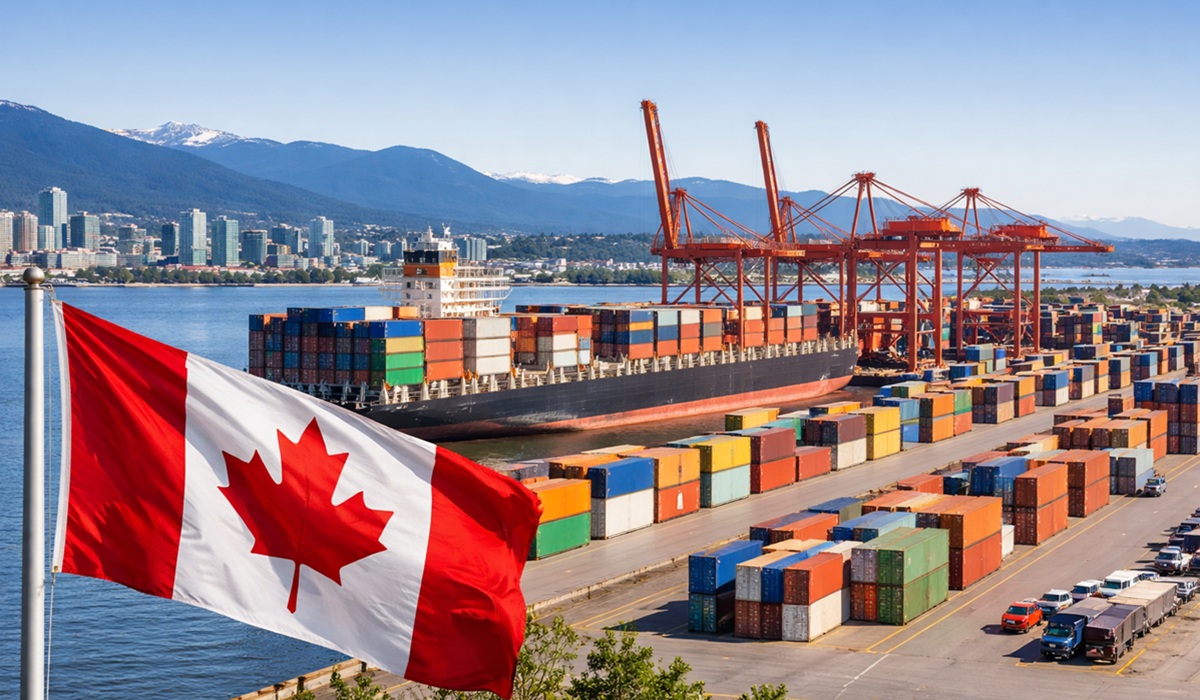
As US tariffs strain CUSMA, Canada is striking deals with China, Indonesia and the UAE. Here’s how Ottawa’s pivot away from the US is actually unfolding.
Every Canadian trade story in 2026 tends to lead with the same character: Washington. But the more consequential story may be what Ottawa is doing everywhere else. Facing sustained US tariff pressure and uncertainty over the CUSMA review, the Carney government has initiated a strategy to diversify Canada’s international trade, with a specific target of doubling exports to non-US markets by 2035.
Canada’s trade diversification strategy aims to double exports to non-US markets by 2035. In 2025–26 it produced a stabilisation deal with China on EVs and canola, a new trade agreement with Indonesia, a Foreign Investment Promotion and Protection Agreement with the UAE, and consultations with India, Thailand and Mercosur.
The deals nobody outside trade-law circles is tracking
Three moves stand out as substantively new rather than aspirational:
- China: during a visit to Beijing, Canada’s prime minister struck a deal establishing a tariff-rate quota for a set number of Chinese EVs — reverting to pre-2024 tariff levels — in exchange for reduced Chinese tariffs on Canadian canola, lobster and peas. This is a live trade-off between EV protectionism and agricultural market access.
- Indonesia: Canada signed a new trade agreement with Indonesia in 2025, opening a Southeast Asian market largely absent from Canadian export strategy until now.
- UAE: Ottawa launched trade-agreement negotiations and signed a new Foreign Investment Promotion and Protection Agreement with the United Arab Emirates, positioning the Gulf as a capital and market-access partner rather than just an energy counterpart.
Meanwhile, exporter confidence has ticked up but remains below its historical average, and diversification remains concentrated in a narrow set of commodities rather than being broad-based.
Why the gravity model is the real obstacle
Trade economists point to the Gravity Model of trade to explain why diversification is structurally hard: the US economy’s size, physical proximity, regulatory similarity and deeply integrated supply chains with Canada make full substitution unrealistic in the near term, even as China and India are flagged as the two most promising long-term markets given they will account for roughly 45% of global economic growth.
The underserved angle
Most coverage treats “Canada diversifying away from the US” as a single narrative. It is actually three distinct, sometimes contradictory tracks: a commodity-for-EV-tariff trade with China, a market-opening play in Southeast Asia via Indonesia, and a capital-and-investment play with the Gulf via the UAE. Each carries different risk profiles — geopolitical risk with China, execution risk with a new Indonesian relationship, and Gulf capital that is itself increasingly redirected toward domestic reconstruction needs amid regional conflict.
Discover more from The Economy
Subscribe to get the latest posts sent to your email.
Analysis of how the Federal Reserve, Bank of England and Bank of Japan could reshape global markets, inflation, currencies and economic growth in 2026.
Executive Summary
The world’s most influential central banks are entering one of the most consequential policy weeks of 2026. Investors are watching closely as the U.S. Federal Reserve, the Bank of England, and the Bank of Japan weigh the competing pressures of easing inflation, geopolitical uncertainty, elevated energy prices, and slowing global growth. Financial markets are also preparing for major corporate earnings and fresh GDP data from several advanced economies. �
Financial Times +1
Unlike the synchronized tightening cycle that dominated recent years, policymakers are increasingly responding to country-specific economic conditions. This divergence is expected to influence capital flows, exchange rates, bond yields, and investment decisions across both developed and emerging markets. �
McKinsey & Company +1
A New Monetary Landscape
Global inflation has moderated from its post-pandemic peaks, yet central banks remain cautious. Recent movements in energy markets and ongoing geopolitical tensions continue to threaten price stability, even as labor markets show signs of cooling. �
McKinsey & Company +1
For investors, the question is no longer whether interest rates have peaked, but how long they will remain elevated.
United States: The Federal Reserve Faces a Delicate Balance
Attention is centered on the Federal Reserve, where policymakers are expected to keep rates steady while evaluating the effects of inflation, consumer demand, and accelerating investment in artificial intelligence infrastructure. Markets are also monitoring whether AI-driven capital spending could contribute to future inflationary pressures. �
Investopedia +1
Bond investors remain sensitive to any shift in the Fed’s language, as Treasury yields continue to reflect expectations about future policy and inflation risks. �
MarketWatch
United Kingdom: Stability Before Growth
The Bank of England is expected to maintain a cautious stance amid moderating wage growth and relatively stable unemployment. However, policymakers continue to weigh external risks, including energy market volatility and global geopolitical developments. �
Financial Times
Businesses remain particularly attentive to borrowing costs, which continue to influence investment decisions across the UK economy.
Japan Ends an Era of Ultra-Loose Money
Japan is undergoing one of its most significant monetary transitions in decades. Rising wages and gradually strengthening inflation have encouraged the Bank of Japan to continue moving away from the ultra-accommodative policies that defined much of the past generation. �
Financial Times
This normalization has implications far beyond Japan, affecting global capital markets and currency dynamics.
Why Emerging Markets Are Watching Closely
Emerging economies including Pakistan, Indonesia, Malaysia, and others remain particularly exposed to decisions made by advanced economy central banks.
Higher U.S. interest rates typically strengthen the dollar, increase external financing costs, and place pressure on countries with significant foreign currency debt.
Conversely, a more stable interest rate environment could improve capital flows into emerging markets while easing exchange rate volatility.
AI Is Becoming a Monetary Policy Variable
One of the most important structural developments in 2026 is the rapid expansion of artificial intelligence infrastructure.
Major technology companies continue investing heavily in data centers, semiconductors, cloud computing, and digital infrastructure. These investments are supporting economic growth but are also creating new questions about inflation, productivity, and long-term financing needs. �
Investopedia +1
Investment Implications
Several themes are emerging:
Higher-for-longer interest rates remain possible.
Government bond markets are likely to remain volatile.
The U.S. dollar could remain relatively strong.
AI-related investment continues attracting capital.
Emerging markets may benefit if inflation continues to moderate.
Competitor Keyword Gap Analysis
Leading publications such as the Financial Times, Reuters, Bloomberg, and CNBC primarily emphasize immediate policy decisions. An opportunity exists to capture additional search traffic by targeting broader intent-based queries.
Key Takeaways
Central bank decisions this week are expected to shape global financial markets.
AI investment is becoming an increasingly important economic driver.
Bond markets remain sensitive to inflation expectations.
Emerging economies face both risks and opportunities from policy divergence.
Investors should monitor GDP releases, corporate earnings, and inflation indicators alongside interest rate announcements.
Frequently Asked Questions
Why are central bank meetings so important?
They influence borrowing costs, inflation expectations, currency values, and investment decisions worldwide.
How do interest rates affect stock markets?
Higher rates generally increase financing costs and can reduce company valuations, while lower rates often support economic activity and equity markets.
Why is AI influencing monetary policy discussions?
Large-scale investment in AI infrastructure is reshaping productivity, corporate spending, and long-term inflation expectations.
Discover more from The Economy
Subscribe to get the latest posts sent to your email.

Pakistan Gulf Investment Outflows 2026: Peace Deal Stakes Explained

Canada Trade Diversification 2026: China, Indonesia, UAE Deals Explained

US Forced-Labour Tariffs on 60 Countries: The Hidden Trade Shock of 2026

Global Central Banks 2026: Fed, BoE and BoJ Decisions Could Reshape Markets

Gulf Capital Retreat From Pakistan 2026: UAE Loan Freeze & What It Means

Pakistan’s Most Reliable Export Is Its People: Remittances Hit $41.6 Billion, Overtaking Total Exports

Indonesia’s Confidence Problem: Record Investment, a Sinking Rupiah, and a Widening Credibility Gap

Down But Not Out: Inside the Slow Sinking of Russia’s War Economy

China’s Growth Slips to a Four-Year Low: Why Beijing Still Won’t Pull the Stimulus Trigger

The Johor-Singapore Corridor: How Malaysia Became Southeast Asia’s AI Infrastructure Powerhouse

Canada’s Economy ‘On Pause’: Inside the CUSMA Deadline That Passed Without a Deal

Dubai’s Millionaire Magnet: How the UAE Turned Middle East Turmoil Into a Capital Safe-Haven Boom

Britain’s Sixth Prime Minister in a Decade: What Starmer’s Exit Means for Gilts, Sterling and Your Portfolio

Anthropic Offers Up to $600,000 Salary for Critical IPO Role as AI Giant Prepares for Wall Street Debut

Carry Trade Unwind 2026: How the Yen’s Snapback Triggered a Global Margin Call

AI Bubble Warning 2026: Why BIS, IMF and Bank of England Fear a Market Crash

BRICS De‑Dollarization Strategy Takes Shape with $15 Billion Local‑Currency Push

The AI Super Bubble Is Ready to Burst

Russia Bans Diesel Exports 2026: Global Fuel Market Impact Explained

Strait of Hormuz Blockade 2026: Oil Prices Surge 9% as US-Iran Conflict Reignites

Private Credit Warning: Most BDCs Turn Unprofitable in 2026, Reuters Finds

IMF Cuts Pakistan Growth Forecast, Raises Inflation to 8.4%

Bitcoin $150k Milestone Achieved as US Sovereign Crypto Pivot Looms
Gulf Capital Retreat From Pakistan 2026: UAE Loan Freeze & What It Means

India Economic Rise 2026: How the Subcontinent Toppled Japan

Strait of Hormuz 2026: Why Markets Still Don’t Trust It’s Open

China Housing Market Turnaround: White‑List Model Stabilises Prices

Chipmakers Just Lost 6.7% in Two Days: Inside the Great AI Trade Rotation
-

 Markets & Finance7 months ago
Top 15 Stocks for Investment in 2026 in PSX: Your Complete Guide to Pakistan’s Best Investment Opportunities
-

 Analysis5 months ago
Johor’s Investment Boom: The Hidden Costs Behind Malaysia’s Most Ambitious Economic Surge
-

 Analysis5 months ago
Top 10 Stocks for Investment in PSX for Quick Returns in 2026
-

 Analysis6 months ago
Brazil’s Rare Earth Race: US, EU, and China Compete for Critical Minerals as Tensions Rise
-

 Banks6 months ago
Best Investments in Pakistan 2026: Top 10 Low-Price Shares and Long-Term Picks for the PSX
-

 Investment7 months ago
Top 10 Mutual Fund Managers in Pakistan for Investment in 2026: A Comprehensive Guide for Optimal Returns
-

 Global Economy7 months ago
15 Most Lucrative Sectors for Investment in Pakistan: A 2025 Data-Driven Analysis
-

 Global Economy7 months ago
Pakistan’s Export Goldmine: 10 Game-Changing Markets Where Pakistani Businesses Are Winning Big in 2025