
Asia
10 Reasons Why Austerity Measures Will Help Boost Pakistan’s Economy: Practices and Prospects

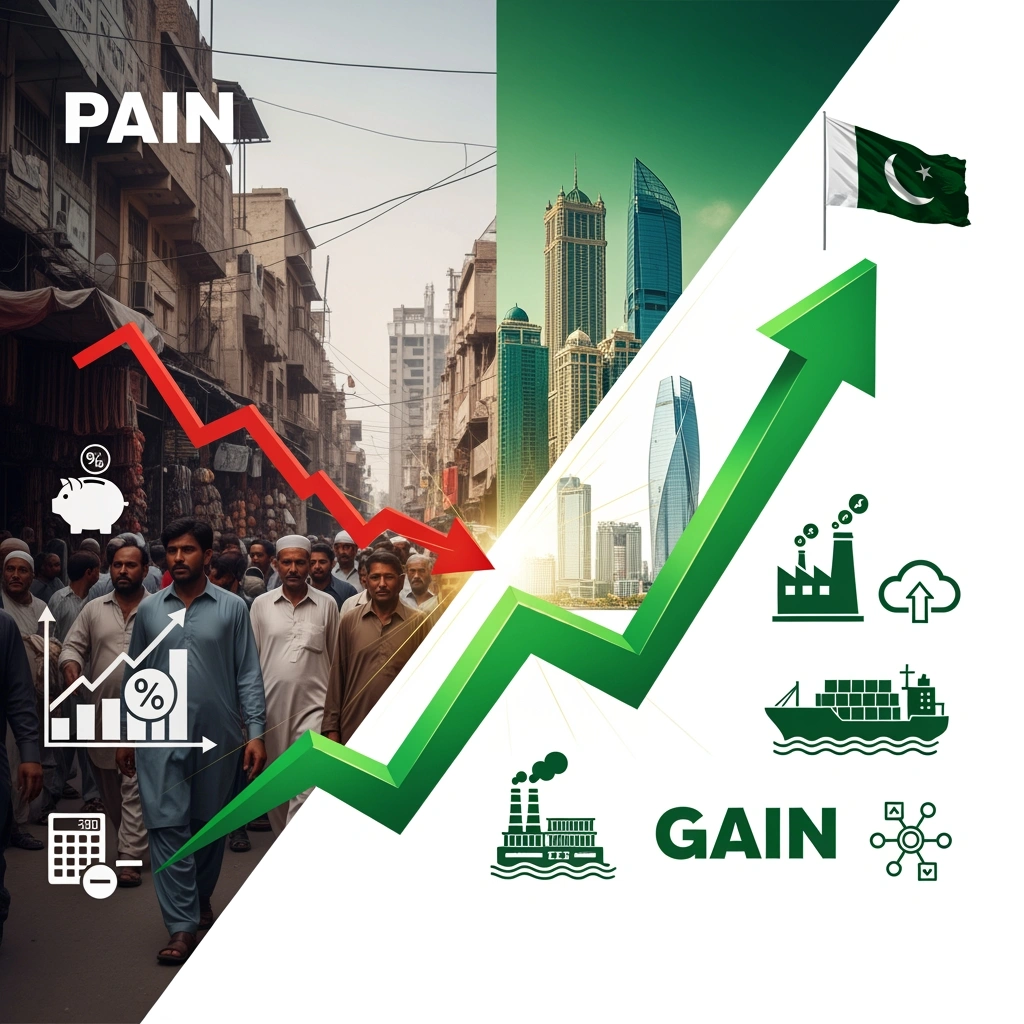
The summer of 2025 marked a quiet turning point for Pakistan’s economy. After years of lurching from one balance-of-payments crisis to another, foreign exchange reserves climbed past $21 billion—their highest level in over a decade. Inflation, which had terrorized households by peaking above 38% in mid-2023, fell to single digits. The rupee stabilized. The International Monetary Fund projected GDP growth of 3.6% for fiscal year 2026, a modest figure by global standards but a meaningful recovery for a country that had teetered on the edge of default just two years earlier.
These improvements did not arrive by accident. They emerged from a painful, politically fraught program of austerity measures Pakistan economy policymakers implemented under the IMF’s $7 billion Extended Fund Facility agreed in September 2024. The government slashed subsidies on fuel and electricity, raised tax revenues through aggressive broadening of the tax net, cut public sector development spending, and imposed discipline on loss-making state-owned enterprises. Civil servants saw hiring freezes. The poor faced higher electricity bills. The middle class watched as government services contracted.
Austerity has always been controversial. Critics argue it deepens recessions, punishes the vulnerable, and serves the interests of international creditors rather than citizens. Pakistan’s streets have echoed with protests against IMF-dictated reforms, and understandably so—when a family’s monthly electricity bill doubles, abstract arguments about fiscal sustainability offer cold comfort. Yet the alternative Pakistan faced was not between austerity and some pain-free path to prosperity. It was between controlled adjustment and uncontrolled collapse: hyperinflation, sovereign default, inability to import essential goods, and the social chaos that accompanies economic disintegration.
This article makes a data-driven case that austerity measures, despite their immediate hardships, represent necessary medicine for Pakistan’s long-term economic health. Drawing on recent evidence from Pakistan’s stabilization program, comparative examples from emerging markets that successfully reformed, and rigorous analysis from institutions like the IMF, World Bank, and leading economic research centers, we examine ten specific mechanisms through which fiscal discipline can catalyze sustainable growth. We acknowledge the real costs, particularly for vulnerable populations, while arguing that well-designed austerity—coupled with social protections and structural reforms—offers Pakistan’s best path from chronic crisis to durable prosperity.
1. Restoring Fiscal Discipline and Reducing Chronic Deficits
Pakistan’s fiscal deficits have plagued economic stability for decades. Between 2008 and 2023, the country ran an average fiscal deficit exceeding 6% of GDP annually, according to World Bank data. This persistent overspending forced the government to borrow continuously, crowding out private investment and creating dangerous debt dynamics. By fiscal year 2023, total public debt had ballooned to approximately 78% of GDP, consuming nearly 40% of federal revenues just to service interest payments.
Austerity measures directly attack this structural imbalance. Pakistan’s FY2025 budget targeted a primary surplus—revenues exceeding non-interest expenditures—for the first time in years, a key IMF program requirement. The government achieved this through spending cuts totaling roughly 1.5% of GDP and revenue mobilization efforts adding another 1% of GDP. The IMF’s October 2025 review confirmed Pakistan met these fiscal targets, marking a decisive break from decades of indiscipline.
The mechanism is straightforward but powerful: lower deficits mean reduced borrowing needs, which frees up capital for productive private-sector investment rather than financing government consumption. When the government stops competing for domestic credit, interest rates can fall, making business expansion more affordable. Pakistan’s policy rate declined from 22% in mid-2024 to 15% by November 2025, partly reflecting improved fiscal credibility.
Critics rightly note that procyclical austerity—cutting spending during recessions—can deepen downturns. Pakistan’s GDP growth did slow to 2.4% in FY2024. Yet the counterfactual matters: without fiscal correction, Pakistan faced imminent default, which would have triggered far more severe contraction, as Argentina experienced in 2001 or Sri Lanka in 2022. The pain of adjustment, while real, remains preferable to the catastrophe of uncontrolled crisis.
2. Breaking the Cycle of External Borrowing and Debt Dependency
For decades, Pakistan has operated in a doom loop: fiscal and current account deficits necessitate foreign borrowing, which creates debt service obligations requiring more borrowing, eventually triggering balance-of-payments crises requiring IMF bailouts. Since 1988, Pakistan has entered 24 IMF programs—a record of serial dependence that signals fundamental policy failure.
Austerity measures target this cycle’s root causes. By reducing fiscal deficits, the government needs less external financing. By allowing the rupee to trade at market-determined rates rather than defending overvalued pegs—another key reform accompanying austerity—imports become less artificially cheap and exports more competitive, narrowing the current account gap. Pakistan’s current account deficit shrank from $17.5 billion in FY2022 to approximately $1 billion in FY2024, according to the State Bank of Pakistan, a dramatic adjustment.
Lower external financing needs translate to reduced vulnerability. When Pakistan can cover import needs from export earnings and remittances rather than borrowed dollars, it escapes the perpetual anxiety about whether the next loan tranche will arrive. Foreign exchange reserves, which had collapsed to barely three weeks of import cover in early 2023, rebuilt to over four months by late 2025—still modest by international standards but representing genuine breathing room.
The World Bank’s October 2025 Pakistan Development Update emphasized this stabilization as prerequisite for any sustainable growth strategy. Breaking free from serial IMF dependence requires enduring fiscal discipline, not because the IMF demands it but because the laws of economics do. Countries that perpetually spend beyond their means eventually face markets’ verdict, and that verdict is invariably harsh.

3. Rebuilding Investor Confidence Through Credible Policy Commitments
Capital is cowardly. It flees uncertainty and gravitates toward predictability. Pakistan’s history of policy reversals—implementing reforms under IMF pressure, then abandoning them once the program ends—has taught investors, both domestic and foreign, to treat Pakistani assets with extreme caution. Foreign direct investment collapsed to $1.9 billion in FY2023, among the lowest in South Asia relative to GDP size.
Austerity measures, particularly when embedded in multi-year IMF programs with regular reviews, signal credible commitment to macroeconomic stability. The September 2024 Extended Fund Facility spans 37 months with quarterly reviews—a structure that makes policy backsliding costly and transparent. This institutional scaffolding helps solve the time-consistency problem that plagues developing country policymaking: governments’ temptation to promise reforms but deliver populism.
Evidence of returning confidence has emerged. The Pakistan Stock Exchange’s KSE-100 index surged over 80% between September 2024 and November 2025, making it one of the world’s best-performing equity markets. Bloomberg reported that foreign portfolio investors returned after years of net outflows. While equity gains partly reflect low starting valuations, they also indicate investors pricing in reduced macroeconomic risk.
More critically, the cost of insuring Pakistan’s sovereign debt against default—measured by credit default swap spreads—declined by over 400 basis points between mid-2023 and late 2025, according to financial data providers. This translates to lower borrowing costs when Pakistan accesses international bond markets, saving taxpayers substantial sums. Fiscal discipline doesn’t just balance budgets; it rebuilds the trust that makes economic activity possible.
4. Forcing Efficiency in Bloated State-Owned Enterprises
Pakistan’s state-owned enterprises have functioned as employment agencies, political patronage machines, and fiscal black holes rather than commercially viable businesses. Pakistan International Airlines, the national power distribution companies, Pakistan Steel Mills, and numerous other SOEs collectively generated losses exceeding $3 billion annually—roughly 1% of GDP—while delivering unreliable services.
Austerity measures force confrontation with this dysfunction. IMF program requirements included ending automatic bailouts, implementing cost-recovery pricing for utilities, and beginning privatization or restructuring of the worst performers. The government raised electricity tariffs toward cost-recovery levels, eliminating subsidies that primarily benefited industrial and commercial users while being financed by regressive taxation. Pakistan Railways began route rationalization, cutting unprofitable services that drained resources.
These reforms generate two benefits. First, direct fiscal savings: every dollar not spent covering PIA losses or subsidizing artificially cheap electricity can fund infrastructure, education, or social protection. Second, efficiency gains: when enterprises face hard budget constraints, managers have incentives to cut waste, improve service, and innovate. Private sector participation, whether through management contracts or ownership transfer, brings commercial discipline.
The political difficulty of SOE reform cannot be understated. State enterprises employ hundreds of thousands; their unions wield considerable power. Yet as the Economist Intelligence Unit noted, Pakistan cannot afford to indefinitely subsidize inefficiency. Countries that successfully reformed SOEs—India in the 1990s, Egypt more recently—demonstrated that public sector downsizing, while painful in transition, releases resources for higher-productivity uses throughout the economy.
5. Broadening the Tax Base and Reducing Distortions
Pakistan’s tax-to-GDP ratio has long ranked among the world’s lowest for countries at its income level—barely 10% in recent years. This reflects not just evasion but fundamental design flaws: a narrow tax base heavily reliant on indirect taxes, widespread exemptions benefiting powerful constituencies, and minimal documentation of economic activity. The result is inadequate revenue for public goods and highly distortionary taxation.
Austerity-linked revenue reforms address these pathologies. The government expanded the tax net, adding hundreds of thousands of retailers and professionals to the income tax rolls through improved documentation systems. Agricultural income, long politically sacrosanct, faced new taxation in Punjab and Sindh provinces. Sales tax exemptions were curtailed. The Federal Board of Revenue increased collections by approximately 30% in FY2025 compared to the previous year, according to government data, though much work remains.
Broader tax bases permit lower rates, reducing distortions. When taxes fall on all economic activity rather than narrow sectors, rates can be moderate while generating adequate revenue. This improves efficiency—resources flow to productive uses rather than tax-minimization schemes. The IMF’s fiscal analysis emphasized that Pakistan’s challenge isn’t high tax rates but narrow coverage: closing loopholes generates more revenue and more fairness than squeezing existing taxpayers harder.
Tax reform also addresses inequality. Pakistan’s current system relies heavily on indirect taxes that burden the poor disproportionately. Shifting toward broader income taxation with progressive rates, while politically difficult, would make the system more equitable. Austerity programs that condition fiscal adjustment on such reforms don’t just reduce deficits—they restructure public finance toward sustainability and fairness.
6. Creating Fiscal Space for Targeted Social Protection
This reason may seem paradoxical: how does spending less create capacity to spend on social programs? The answer lies in composition and sustainability. Pakistan’s pre-austerity budget allocated enormous sums to untargeted subsidies—cheap electricity for wealthy neighborhoods, fuel subsidies benefiting car owners, food subsidies captured by millers and wholesalers. Meanwhile, direct assistance to the poorest remained minimal.
Austerity measures that cut untargeted subsidies while expanding means-tested cash transfers improve both fiscal arithmetic and social outcomes. Pakistan’s Benazir Income Support Programme expanded coverage and benefit levels even as overall spending fell, with disbursements reaching approximately 8 million families by late 2025. Beneficiaries receive quarterly cash payments digitally, reducing leakage and ensuring resources reach intended recipients.
The World Bank has documented that well-designed social safety nets make fiscal adjustment politically sustainable and economically beneficial. When vulnerable households receive direct support, they can maintain consumption despite subsidy cuts, preserving aggregate demand and enabling human capital investment. Children stay in school rather than entering labor markets; families access healthcare; consumption smoothing prevents permanent poverty traps.
Creating durable fiscal space requires breaking the addiction to poorly targeted spending. A dollar saved from subsidizing diesel for commercial transporters can fund five dollars of targeted assistance to the ultra-poor. Austerity that redirects rather than merely cuts transforms public finance from a patronage distribution mechanism into a development tool. This composition shift matters more than aggregate spending levels.
7. Stabilizing the Currency and Controlling Inflation
Pakistan’s inflation crisis of 2022-2023, with consumer prices rising nearly 40% year-over-year at the peak, devastated household purchasing power and eroded savings. Inflation is the cruelest tax, falling hardest on those least able to protect themselves. Its root causes included fiscal deficits monetized by the central bank, energy price shocks, and import compression triggering supply shortages.
Austerity measures attack inflation’s fiscal drivers. When governments finance deficits through central bank borrowing—printing money—the result is predictably inflationary. Reducing fiscal deficits eliminates pressure on the central bank to monetize debt, allowing monetary policy to focus on price stability. Pakistan’s State Bank largely ended government financing in 2024, a key program commitment that enabled credible monetary tightening.
Tighter fiscal policy also reduces aggregate demand pressure on prices. When the government competes less for goods, services, and labor, inflationary pressure subsides. Combined with exchange rate flexibility that prevents imported inflation from accumulating in suppressed form, these policies brought inflation down to 7.2% by October 2025, according to official statistics.
Currency stability followed. The Pakistani rupee, which had depreciated over 60% against the dollar between 2021 and 2023, stabilized around 280-285 rupees per dollar through late 2024 and 2025. This stability reduces business uncertainty, makes import planning feasible, and gradually rebuilds confidence in domestic currency savings. The Financial Times reported that currency stability has been central to Pakistan’s improved economic outlook, enabling businesses to plan and invest.
Lower inflation disproportionately benefits the poor, who hold few inflation hedges and spend large income shares on necessities. Austerity’s contribution to price stability represents perhaps its most immediate pro-poor outcome, even if politically less visible than subsidy cuts.
8. Encouraging Private Sector Investment and Entrepreneurship
Pakistan’s private sector has long operated in the shadows of a bloated public sector that crowds out investment, distorts markets through subsidies and protection, and creates uncertainty through erratic policy. The country’s gross fixed capital formation—investment in productive capacity—has languished below 15% of GDP, far short of the 25-30% typical of rapidly growing Asian economies.
Austerity-driven public sector retrenchment creates space for private initiative. When government withdraws from commercial activities—power distribution, airlines, manufacturing—opportunities open for private operators who can deliver services more efficiently. When fiscal discipline reduces government borrowing from domestic banks, credit flows to businesses rather than financing deficits. When exchange rates reflect market conditions rather than arbitrary pegs, entrepreneurs can plan investments with realistic assumptions.
Early evidence suggests response. The State Bank of Pakistan reported private sector credit growth accelerating to over 10% year-over-year by mid-2025, concentrated in manufacturing, construction, and agriculture. The International Finance Corporation noted increasing interest from foreign investors in Pakistani infrastructure and manufacturing as macroeconomic stability improved.
Entrepreneurship requires predictability. When inflation is stable, currencies don’t collapse, and policies aren’t reversed after elections, the calculus of long-term investment becomes feasible. Pakistan’s tech sector, despite challenges, has demonstrated this potential—companies like Airlift (though later failed), Bykea, and Daraz built businesses predicated on Pakistan’s large, young population. Macroeconomic stability allows such enterprises to scale.
The transition from public-led to private-led growth requires patience. Austerity creates necessary conditions—fiscal space, monetary stability, market-determined prices—but sufficient conditions require complementary reforms: contract enforcement, competition policy, infrastructure investment. Still, no country has achieved sustained growth without a vibrant private sector, and no vibrant private sector emerges amid fiscal chaos.
9. Sending Positive Signals to Multilateral Lenders and Credit Rating Agencies
Pakistan’s creditworthiness, as assessed by rating agencies and international lenders, directly affects borrowing costs and access to global capital markets. Ratings downgrades in 2022-2023 pushed Pakistan to the brink of default, with credit default swap spreads implying over 90% probability of sovereign default within five years. Such assessments become self-fulfilling: when markets price in default, borrowing costs rise prohibitively, making default more likely.
Austerity measures signal serious policy intent to rating agencies and multilateral institutions. When Pakistan met IMF program benchmarks—achieving primary surpluses, raising tax revenues, implementing structural reforms—ratings agencies responded. Moody’s upgraded Pakistan’s outlook from negative to stable in early 2025. Fitch made similar adjustments. These technical changes have real consequences: they expand the investor base willing to hold Pakistani debt and reduce required yields.
Multilateral support extends beyond the IMF. The World Bank approved a $2.2 billion development policy loan in 2025, contingent on reform implementation. The Asian Development Bank increased lending. Such multilateral engagement not only provides financing at below-market rates but also catalyzes private co-financing and signals international community endorsement.
The Atlantic Council’s analysis emphasized that Pakistan’s relationship with international financial institutions, while often politically controversial domestically, provides essential external validation of policy credibility. Markets trust IMF assessments of macroeconomic programs; their approval reduces perceived risk. This isn’t about surrendering sovereignty but recognizing that countries with weak domestic institutions can borrow credibility from strong international ones.
Long-term, Pakistan must build indigenous policy credibility that makes IMF programs unnecessary. Short-term, leveraging multilateral support to reduce borrowing costs saves taxpayer resources and buys time for institutional development.
10. Demonstrating Political Capacity for Difficult Reforms
Perhaps austerity’s most important long-term benefit is intangible: demonstrating that Pakistan’s political system can make and sustain difficult choices in the national interest despite short-term costs. This capacity has been questioned repeatedly as programs begin with fanfare but end in reversal. The currency of political credibility matters as much as fiscal credibility.
Successful implementation of austerity measures signals that civilian governments can govern responsibly even when electorally costly. The political coalition that implemented subsidy cuts, tax increases, and spending restraint in 2024-2025 faced protests and declining poll numbers. Yet they persisted, meeting program benchmarks quarter after quarter. This builds institutional memory and precedent: difficult reforms are possible.
Such demonstrations create path dependence toward good policy. When one government implements painful adjustment and the economy stabilizes, reversing course becomes politically harder—the public can see the connection between discipline and improvement. Opposition parties learn they cannot simply promise free lunches; they must propose credible alternatives. Political competition gradually shifts toward competent management rather than populist outbidding.
International observers watch closely. The Economist noted that Pakistan’s 2024-2025 program implementation represented its most serious reform effort in decades, raising hopes that the country might finally break the boom-bust cycle. If sustained through electoral transitions, these reforms could fundamentally alter Pakistan’s economic trajectory.
State capacity—the government’s ability to formulate and implement policy effectively—doesn’t emerge automatically. It’s built through practice, through navigating politically fraught decisions, through developing bureaucratic competence. Austerity programs, for all their flaws, force governments to build this capacity under international supervision and market pressure.
Austerity in Practice: Lessons from Pakistan’s Recent Reforms
The theoretical case for austerity means little without successful implementation. Pakistan’s 2024-2025 experience offers lessons in both achievements and challenges. The government’s approach combined traditional fiscal consolidation with targeted structural reforms, supported by international financing that smoothed adjustment costs.
Key successes included revenue mobilization exceeding targets. The Federal Board of Revenue implemented automated systems that cross-checked income tax returns against property holdings, bank accounts, and vehicle registrations—simple digitization that dramatically reduced evasion. Tax collection from retailers increased significantly through mandatory integration of point-of-sale systems with FBR databases. These administrative improvements prove that enforcement capacity matters as much as tax rates.
Energy sector reforms made substantial progress. Circular debt—arrears throughout the power sector value chain—had reached approximately $2.5 trillion rupees (over $9 billion) by 2023, requiring continuous fiscal injections. The government imposed cost-recovery tariffs, began privatizing distribution companies, and restructured power purchase agreements with independent producers. Circular debt growth slowed markedly, though eliminating the stock remains a long-term challenge.
Social protection expansion cushioned impacts. Benazir Income Support Programme beneficiaries received increased payments indexed to inflation, while coverage expanded in the poorest districts. Health insurance coverage through Sehat Sahulat expanded to over 100 million people, providing free healthcare at empaneled hospitals. These programs demonstrate that austerity and social protection are complements, not substitutes, when properly designed.
Challenges persist. Tax evasion remains endemic despite improvements; agricultural taxation faces political resistance; provincial governments lag behind federal reforms. State-owned enterprise restructuring proceeds slowly given union opposition and political sensitivities. Implementation capacity varies across provinces and institutions. The IMF’s 2025 review noted that while Pakistan has met fiscal targets, deeper structural reforms require sustained commitment beyond program duration.
Comparative lessons from other countries inform assessment. Egypt’s 2016-2019 IMF program achieved macroeconomic stabilization through similar measures—subsidy cuts, tax increases, exchange rate liberalization—while maintaining social spending. India’s 1991 reforms, though broader than austerity per se, demonstrated that crisis can catalyze transformative change when political leadership commits. Indonesia’s 1997-1998 adjustment, despite severe short-term pain, set foundations for subsequent growth.
The critical lesson: austerity works when embedded in broader reform programs, accompanied by social protection, and sustained beyond initial stabilization. Pakistan’s challenge is ensuring reforms outlast the current IMF program and political cycle.
Future Prospects: From Stabilization to Sustainable Growth
Macroeconomic stabilization, while essential, represents only the first phase of Pakistan’s economic transformation. The country must now transition from crisis management to growth strategy, from external-debt dependence to domestic-resource mobilization, from public-sector dominance to private-sector dynamism.
Pakistan’s medium-term growth potential remains significant despite challenges. The country’s young population—median age around 22 years—offers demographic dividends if human capital investment accelerates. Geographic location between Central Asia, South Asia, and the Middle East provides trade advantages if regional connectivity improves. Agricultural productivity gains remain achievable through better inputs, irrigation management, and value chain development.
Unlocking this potential requires building on austerity’s foundations. Fiscal discipline creates space for infrastructure investment—roads, ports, electricity generation—that raises private sector productivity. Monetary stability enables long-term contracting and financial deepening. Exchange rate flexibility facilitates export competitiveness in labor-intensive manufacturing, where Pakistan has proven comparative advantages in textiles, leather, and increasingly surgical instruments and sports goods.
The digital economy offers particular promise. Pakistan’s IT services exports exceeded $3 billion in FY2024, growing over 20% annually despite macroeconomic turbulence. Companies like Systems Limited, NetSol, and TRG Pakistan demonstrate global competitiveness in software development and business process outsourcing. With improved internet penetration, skills development, and payment system integration, this sector could scale dramatically—Bangladesh’s IT sector provides a relevant model, growing from negligible to over $1.5 billion in exports over 15 years.
Energy security remains critical. Pakistan’s electricity generation relies heavily on imported fossil fuels, creating balance-of-payments vulnerability and pricing challenges. Expanding renewable capacity—particularly solar and wind, where costs have fallen dramatically—can reduce import dependence while lowering long-term energy costs. The World Bank’s energy sector assessment identified this transition as central to sustainable growth.
Human capital investment requires renewed focus. Pakistan’s literacy rate, around 60%, lags South Asian peers. Female labor force participation, below 25%, represents massive untapped potential. Health indicators—maternal mortality, child malnutrition—remain concerning. Reallocating resources from inefficient subsidies toward education and health, enabled by fiscal discipline, could generate high social and economic returns.
Governance reforms complement macroeconomic adjustment. Contract enforcement, property rights protection, regulatory predictability, and anti-corruption efforts determine whether macroeconomic stability translates into investment and growth. Pakistan’s governance indicators have long ranked poorly globally; improvement requires institutional strengthening that extends beyond any single program.
The Economist Intelligence Unit’s medium-term forecast projects Pakistan’s GDP growth averaging 3.5-4.5% through 2028 if reforms continue—modest by Asian standards but sufficient for per capita income gains given population growth slowing. Acceleration toward 6-7% growth would require substantial productivity improvements and investment increases, which depend on sustaining the policy discipline austerity has begun to establish.
Political economy considerations loom large. Pakistan’s reform history shows repeated cycles of adjustment followed by backsliding. Breaking this pattern requires building constituencies for reform—exporters benefiting from competitive exchange rates, consumers enjoying lower inflation, businesses accessing cheaper credit. As these constituencies strengthen, policy reversal becomes politically costlier.
External environment matters significantly. Global interest rate trends affect Pakistan’s borrowing costs; Chinese growth influences demand for Pakistani exports; geopolitical developments in Afghanistan and India shape security expenditures; climate change impacts agricultural productivity. Pakistan cannot control these factors but can build resilience through diversified exports, foreign exchange buffers, and adaptive policies.
The path from stabilization to prosperity remains long and uncertain. Yet austerity measures have provided something Pakistan has lacked for years: a foundation of macroeconomic stability upon which to build. Whether Pakistan capitalizes on this opportunity depends on choices made in coming years—choices to sustain fiscal discipline, deepen structural reforms, invest in people, and integrate into global economy.
Conclusion
The case for austerity measures in Pakistan’s context rests not on ideology but on arithmetic and evidence. A country cannot indefinitely spend beyond its means, accumulate debt unsustainably, run persistent current account deficits, and expect anything but recurring crises. Pakistan’s economic history validates this simple truth: every period of growth has ended in balance-of-payments crisis requiring adjustment, which then creates conditions for recovery until the next cycle of indiscipline.
The ten reasons examined—fiscal consolidation, breaking debt dependency, rebuilding investor confidence, SOE efficiency, tax base expansion, social protection, currency stability, private sector space, international credibility, and demonstrated reform capacity—collectively describe how austerity catalyzes transition from crisis to stability to growth. Each mechanism has theoretical foundation and empirical support from Pakistan’s recent experience and comparative examples.
Acknowledging austerity’s benefits does not require dismissing its costs. Subsidy cuts increase household expenses. Public sector hiring freezes limit job opportunities. Reduced development spending delays infrastructure. These impacts fall unevenly, often hitting vulnerable populations hardest. Critics who emphasize these costs make valid points that demand policy responses—targeted compensation, social safety nets, progressive taxation—not dismissal.
The relevant question is not whether austerity causes pain but whether alternatives exist that achieve stabilization with less suffering. Pakistan’s recent history suggests they do not. The country attempted growth-through-spending strategies repeatedly, most recently in 2020-2022, with predictable results: unsustainable deficits, accelerating inflation, currency collapse, near-default. The path of least resistance—populist spending, subsidies, delayed reforms—leads to catastrophic adjustment imposed by markets rather than managed adjustment guided by policy.
Pakistan’s journey from crisis to sustainable prosperity requires more than austerity. It requires regulatory reform, governance improvements, human capital investment, private sector development, regional integration, and technological upgrading. But austerity creates preconditions for these advances by establishing macroeconomic stability and fiscal credibility. A government perpetually managing currency crises and inflation cannot focus on long-term development; a government that has stabilized the economy can.
The test ahead involves sustaining discipline beyond crisis. Pakistan’s historical pattern shows commitment during IMF programs followed by backsliding after program completion. Breaking this cycle requires institutionalizing reforms—embedding tax compliance systems, locking in energy pricing mechanisms, establishing independent fiscal institutions—that make reversal difficult. It requires building political coalitions around productive investment rather than subsidy distribution.
International examples provide cautious optimism. Countries like South Korea, Indonesia, and more recently Bangladesh and Vietnam faced similar challenges and achieved transformation through sustained reform. Pakistan’s advantages—young population, strategic location, existing industrial base, entrepreneurial talent—match or exceed those of countries that succeeded. The question is political will and institutional capacity to maintain course.
For Pakistani citizens who have endured economic turbulence, austerity measures represent difficult medicine with bitter taste but potentially curative properties. The alternative is not pain-free prosperity but chronic instability and recurring crises that erode living standards, destroy savings, and block opportunity. Choosing hard adjustment today offers hope for stability tomorrow; postponing adjustment guarantees harder adjustment later.
As Pakistan moves through 2026 and beyond, the outcomes of current policies will become clear. If fiscal discipline holds, inflation stays moderate, and growth accelerates toward 4-5% annually, the case for austerity will strengthen. If reforms stall, imbalances re-emerge, and another crisis looms, skeptics will find vindication. The evidence will ultimately settle debates that ideology cannot.
What remains certain is that Pakistan stands at a crossroads. One path leads through continued discipline and structural reform toward economic stability and eventual prosperity. The other leads back to familiar cycles of boom, crisis, adjustment, and repeated dependence. The choice belongs to Pakistan’s leaders and citizens. The stakes—whether the country’s enormous potential is finally realized or remains perpetually deferred—could not be higher.
Discover more from The Economy
Subscribe to get the latest posts sent to your email.



On a muggy Tuesday in March, Taro Yamamoto — operations director of a mid-sized Osaka precision-parts maker — stepped off a flight into Ho Chi Minh City for the third time in six months. He wasn’t scouting for components. He was scouting for customers. His domestic order book had contracted for the fourth consecutive year. His shop floor was greying, and two machine operators had retired with no replacements in sight. Back in Tokyo, the Tokyo Stock Exchange’s new capital-efficiency requirements had made inaction financially untenable. Across Japan, thousands of mid-sized executives are making exactly this calculation. The destination is almost always the same. The logic, once you see the numbers, is difficult to argue with.
The Arithmetic of Decline: Japan’s Domestic Squeeze
Japan has been living with a slow-motion structural crisis for the better part of three decades. The country’s population has fallen from its 2008 peak of 128 million and, by government projections, is set to slide toward 88 million by 2065. More than 29% of Japanese citizens are already aged 65 or older, making Japan the most demographically aged major economy on earth, as the IMF’s Finance & Development journal has documented. The working-age share of the population — those between 15 and 64 — has already fallen below 60%, the lowest among G7 nations. An aging society, as the IMF bluntly put it, “consumes less than a young one.”
For large multinationals — Toyota, Sony, SoftBank — the pivot overseas happened long ago. Their international revenue insulated them. It’s the mid-tier, the thousands of companies with 50 to 500 employees that form the backbone of Japanese manufacturing, services, and distribution, where the pressure is now acute. These firms were built to serve domestic demand. And domestic demand is structurally, irreversibly shrinking.
Set against this backdrop, Southeast Asia’s growth rates read like an alternate universe. The Asian Development Bank, in its December 2025 Outlook, revised the region’s GDP forecasts upward: growth of 4.5% for 2025, with Vietnam projected to expand by 6.6%, the Philippines at around 6%, and Indonesia at 5%. The IMF, speaking at the ASEAN Summit in October 2025, put it plainly: ASEAN is the world’s fourth-largest economy, with a collective GDP exceeding $4 trillion, growing 25% faster than the global average. For a Japanese mid-sized firm watching its addressable market contract at home, those numbers are not an abstraction. They are a survival map.
Why are Japanese companies expanding into Southeast Asia?
Japanese mid-sized companies are expanding into Southeast Asia because of converging structural pressures: a shrinking domestic consumer base driven by demographic decline, Tokyo Stock Exchange governance reforms compelling capital efficiency, the China-plus-one supply-chain imperative, and Southeast Asia’s sustained GDP growth of 4.5–6.6% across key markets — offering volume that Japan’s home market can no longer supply.
1 — The Core Development: A New Wave of Japanese Mid-Sized Companies Heading to Southeast Asia
The outbound push among Japanese mid-sized companies into Southeast Asia is not a new phenomenon. What’s changed is its scale, its urgency, and critically, the profile of the businesses involved.
For decades, it was Japan’s manufacturing giants — Hitachi, Panasonic, Bridgestone — that staked early positions across Vietnam, Thailand, and Indonesia. Their supply chains came first; their back-office operations followed. The mid-tier watched from the sidelines, constrained by capital, language barriers, and a domestic comfort zone propped up by decades of steady, if modest, home-market demand. That comfort zone has now dissolved.
JETRO’s FY2025 global survey of Japanese companies operating overseas — covering 7,485 valid responses across 82 countries — found that 66.5% of Japanese-affiliated overseas companies expect to be profitable in 2025, rising for the second consecutive year. The direction of expansion intentions tells a clearer story: survey respondents signalled growing appetite for Southwest Asia and ASEAN, while China — once the region’s default destination — continues to lose ground. In China, the proportion of companies anticipating business expansion hit an all-time low. The appetite is shifting, and it’s shifting south.
The structural driver is the “China plus one” strategy, which, by 2026, has stopped being a strategy and started being an operating assumption. Sino-American trade tensions, periodic supply-chain shocks, and rising Chinese labour costs have pushed Japanese manufacturers to seek parallel production bases. Vietnam has emerged as the primary beneficiary, attracting Japanese automakers, electronics suppliers, and — increasingly — second-tier parts makers who once fed larger Japanese manufacturers. Thailand, with its mature automotive industrial base and 60-year-old Japanese manufacturing presence, continues to draw mid-sized component makers. Indonesia, with its population of 280 million and a PMI that hit a multi-month high of 53.6 in early 2025 according to S&P Global data, is drawing fresh interest from consumer-goods manufacturers seeking volume markets.
UNCTAD’s 2025 FDI Explorer data shows ASEAN inflows hit a record $225 billion in 2024, up 10%, even as Europe’s FDI collapsed and China’s fell 29%. The region absorbed capital when almost nowhere else did.
What’s different now is who is moving. It’s no longer primarily the large enterprise with a dedicated global-expansion team and a Singapore holding company. It’s the Osaka die-caster, the Nagoya food-equipment manufacturer, the Fukuoka logistics-software firm — businesses that, until recently, had neither the appetite nor the architecture for foreign operations.
2 — The Structural Logic: Why Southeast Asia, Why Now?
The question most analysts ask is why the timing. The answer is a convergence of four pressures that have, in 2025 and 2026, reached simultaneous critical mass.
What is driving Japanese mid-sized companies to expand into Southeast Asia?
Japanese mid-sized companies are expanding into Southeast Asia because of converging structural pressures: a shrinking domestic consumer base driven by demographic decline, Tokyo Stock Exchange governance reforms compelling capital efficiency, the China-plus-one supply-chain imperative, and Southeast Asia’s sustained GDP growth of 4.5–6.6% across key markets — offering volume that Japan’s home market can no longer supply.
First, the demographic arithmetic, already described, is irreversible on any business-relevant time horizon. Companies can adapt temporarily — through automation, productivity gains, pricing — but they cannot manufacture new Japanese consumers. The medium-term demand trajectory at home is fixed. Growth, if it comes, must come from somewhere else.
Second, the TSE’s corporate governance overhaul — which since 2023 has placed intense scrutiny on companies trading below book value — has created a new accountability mechanism. Japanese mid-sized firms, traditionally patient with low returns, are now under pressure from institutional investors to demonstrate capital efficiency. Overseas expansion, with its attendant revenue diversification, has become a credible answer to that pressure. As documented by analysts writing for Insignia Business Review, the TSE’s push on price-to-book ratios is “forcing Japanese companies to think differently about partnerships, including those with international firms.”
Third, U.S. tariff policy has injected a new and urgent variable. Japanese manufacturers heavily embedded in Chinese supply chains face cost exposure that’s now structural, not cyclical. The premium on supply-chain geographic diversification has risen sharply since the Trump administration’s tariff expansions, and ASEAN — with its favourable trade agreements, including RCEP and CPTPP — offers a route around the worst of the exposure.
Fourth, and perhaps least discussed, is the sheer scale of Southeast Asia’s consumer base. The region’s middle class is expanding at a rate that has no parallel in Japan’s recent history. J.P. Morgan research has projected the internet economy across six key ASEAN markets approaching $360 billion in gross merchandising value. For a mid-sized Japanese food manufacturer, a health-care-products company, or a retail-concept operator, that is not a distant opportunity. It’s a currently accessible, rapidly deepening market — and Japanese brands, given the cultural cachet they carry across the region, start with a significant standing advantage.
3 — Implications and Second-Order Effects
The shift carries consequences that extend well beyond the balance sheets of individual companies.
For Japan itself, the most immediate concern is what economists sometimes call the “hollowing out” risk. When large Japanese manufacturers moved production offshore in the 1990s, domestic suppliers suffered. If the current wave of mid-sized firms follows not just with production but with their management, R&D, and commercial operations, the domestic economic base could erode further. Japan’s Ministry of Economy, Trade and Industry has acknowledged this tension in its 2025 White Paper on International Economy and Trade, which frames overseas expansion as necessary for value creation while simultaneously signalling concern about domestic industrial capacity.
For Southeast Asian host economies, the implications are broadly positive but uneven. Vietnam and Thailand, which have the most established Japanese industrial infrastructure, are best positioned to absorb further waves of investment quickly. Indonesia faces more complex challenges: its logistics infrastructure, while improving, still lags Vietnam’s in efficiency for export-oriented manufacturing. Malaysia, meanwhile, is seeing a particular surge — S&P Global’s 2025 Reshoring Special Report found that 28% of Malaysian manufacturers reported increased demand tied to reshoring, up sharply from 20% in 2024, with medium-sized firms particularly optimistic.
For the broader regional trade architecture, the Japanese mid-sized firm’s arrival accelerates something that was already underway: the transformation of ASEAN from a primarily large-enterprise investment zone to a genuine habitat for mid-market global capital. That shift has compounding effects. Japanese SMEs bring with them supplier relationships, technology transfer, and operational know-how that seed local industrial ecosystems. In Vietnam’s industrial provinces, the downstream effect of Japanese mid-tier manufacturers has been the emergence of local sub-suppliers and component fabricators that did not exist a decade ago.
There’s a currency dimension, too, that shouldn’t be underplayed. The yen’s extended period of weakness — a consequence of the Bank of Japan’s historically accommodative stance and the slow pace of normalisation — has paradoxically made overseas investment cheaper in yen terms, even as it erodes repatriated profits. Companies with significant local-currency revenue in baht, dong, or rupiah are, in effect, hedging against further yen weakness. The financial calculus has shifted in ways that favour commitment over caution.
4 — The Counterarguments: Not Every Mid-Sized Firm Should Go
The enthusiasm carries real risks, and anyone advising Japanese mid-sized firms on Southeast Asian expansion would be negligent to paper over them.
The first is operational. Large corporations move to ASEAN with teams of experts, legal counsel, and institutional knowledge accumulated over decades. Mid-sized firms typically don’t. The complexities of establishing a subsidiary in, say, Indonesia — navigating local-ownership rules, labour regulations, tax treaties, and sometimes opaque licensing processes — can overwhelm companies that lack dedicated international capacity. Research published in the journal Asia Pacific Business Review documented that some Japanese firms that expanded into Thailand and Indonesia in the mid-2010s subsequently withdrew, citing rising labour costs, talent shortages, and intensifying competition from Western companies. Those conditions have not uniformly improved.
The second risk is the competitive environment itself. Japanese mid-sized firms arriving in Vietnam or Indonesia in 2026 are not entering empty markets. Chinese manufacturers — displaced by tariffs or simply pursuing their own internationalisation — are competing aggressively for the same factory sites, the same skilled workers, and the same distribution channels. The JETRO survey noted that concerns about “intensifying competition with Chinese companies” ranked among the top worries for Japanese manufacturers in Asia.
Third, the World Bank’s April 2026 East Asia and Pacific update flagged that Southeast Asian growth itself faces a slower trajectory — projecting a regional moderation to 4.2% in 2026, down from 5%, partly because of the conflict in the Middle East and its effect on energy prices. Thailand, in particular, is struggling, with forecast growth of just 1.3% in 2026, dragged by high household debt and political uncertainty. A company that entered Thailand’s market betting on strong consumer growth may find the reality more complicated than the prospectus suggested.
The picture is more complicated still for firms without a clear competitive differentiation. Japanese brand cachet travels far in Southeast Asia, but it is not infinite. It doesn’t automatically compensate for a product that’s 30% more expensive than a local equivalent, or a distribution model that was built for Japanese retail formats and doesn’t translate.
Closing: The Point of No Return
There is something close to inevitability in what is happening. Japan’s mid-sized companies are not choosing to internationalise so much as accepting that the alternative — remaining anchored to a structurally contracting domestic base — is its own form of decline. The question isn’t whether to move, but whether to move with enough preparation and self-awareness to avoid the mistakes of those who moved before.
Southeast Asia will absorb this capital. The region has the demographic momentum, the infrastructure investment trajectory, and the trade architecture to sustain Japanese mid-tier ambitions for at least the next decade. What the region cannot guarantee is that every company that arrives will thrive. The mid-sized firms that succeed will be those that treat the region as a set of distinct, demanding markets — not as a single, grateful alternative to the one they left behind.
Japan’s corporate middle is heading south. The question that will define the next chapter is not whether, but how well.
Discover more from The Economy
Subscribe to get the latest posts sent to your email.

On 28 February 2026, the first US-Israeli strikes on Iran effectively closed the Strait of Hormuz to normal shipping. Within six weeks, Brent crude had recorded its largest single-month price rise in recorded history, surging roughly 65 percent to above $106 a barrel. For most of the world, that was a severe financial shock. For South-east Asia — a region of 700 million people that depends on the Middle East for 56 percent of its total crude oil imports — it was something closer to a structural emergency. Governments reached for the familiar toolkit: subsidies, price caps, rationing. It isn’t working.
The timing is particularly brutal. South-east Asia had entered 2026 on what looked like solid ground. The region had weathered US tariffs better than feared; export front-loading and resilient private consumption kept growth humming at roughly 4.7 percent across developing ASEAN in 2025. Inflation was subdued. Central banks had room to manoeuvre.
That cushion is now gone.
The World Bank’s April 2026 East Asia and Pacific Economic Update projects regional growth slowing to 4.2 percent this year, down from 5.0 percent in 2025, with the energy shock explicitly cited alongside trade barriers as a primary drag. The IMF, for its part, forecasts that inflation across emerging Asia will climb from 1.1 percent in 2025 to 2.6 percent in 2026 — a projection that assumes the most acute phase of supply disruption ends by May. Few analysts believe it will.
The Southeast Asian Energy Shock: What Hit, and Why It Hurts So Much
The mechanism is straightforward, even if the scale is not. The Strait of Hormuz — a 33-kilometre passage between Iran and Oman — serves as the transit point for roughly 20 percent of the world’s daily seaborne oil and up to 30 percent of global LNG shipments. When that artery seizes, South-east Asia feels it fastest. The region imports nearly all of its crude; it holds strategic reserves measured in weeks, not months. Most ASEAN economies sit on fewer than 30 days of emergency oil stocks. The Philippines and Thailand are exceptions, with roughly 45 and 106 days respectively — still a narrow buffer against a conflict that US officials privately suggest could persist through year-end.
The impact of the Southeast Asian energy shock has been immediate and sharp. According to an analysis by JP Morgan cited widely across regional media, the Philippines declared a national energy emergency after gasoline prices more than doubled. Indonesia and Vietnam introduced fuel rationing. Thailand’s fisheries sector — an industry that generates billions in export revenue and employs hundreds of thousands — began shutting down as marine diesel costs became unviable.
The fiscal arithmetic compounds the pain. Fossil fuel subsidies across five major ASEAN economies — Indonesia, Malaysia, Thailand, Vietnam, and the Philippines — reached $55.9 billion, or 1.3 percent of combined GDP, in 2024, before the current crisis. Indonesia alone spent the equivalent of 2.3 percent of GDP on explicit fuel price support. Now, with Brent crude above $100 and the World Bank’s commodity team forecasting an average of $86 a barrel across 2026 even in a best-case recovery scenario, those subsidy bills are rising faster than governments budgeted for.
The ASEAN Economic Community Council convened an emergency session on 30 April 2026, held by videoconference, in which ministers cited “growing instability along key maritime routes” as driving volatility in energy prices and sharply increasing freight, insurance, and logistics costs. The communiqué warned of spillover effects on food security and business confidence, particularly for small and medium enterprises — the backbone of most ASEAN economies.
Why Policy Options Are Narrowing — and Who Is Most Exposed
The question South-east Asian governments face isn’t whether the energy shock hurts. It’s whether they have enough fiscal and monetary space to absorb it.
The answer varies sharply by country, and understanding those differences matters for anyone assessing the ASEAN investment landscape.
Which Southeast Asian countries are most vulnerable to oil price spikes? Thailand and the Philippines face the gravest pressure. Both import nearly all their fuel, lack meaningful commodity export revenue to offset higher import bills, and carry domestic vulnerabilities — elevated household debt in Thailand, structural current-account exposure in the Philippines — that amplify the macro damage. Indonesia and Malaysia are better insulated: coal exports and palm-oil revenues provide a partial natural hedge, and their domestic energy production reduces import dependency. Vietnam sits somewhere in between, with growing industrial exposure but a more activist state ready to deploy price stabilisation funds.
Thailand’s predicament illustrates the bind. The country’s National Economic and Social Development Council reported GDP growth of 1.9 percent year-on-year in the first quarter of 2026, well below the government’s own 2.6 percent projection, even as tourist arrivals held firm. The Oil Fuel Fund empowers Bangkok to subsidise pump prices during international oil spikes — but that mechanism has a fiscal cost, and with the budget already stretched, sustaining it without cutting other expenditure is a genuine political and economic dilemma. The World Bank forecast that Thailand’s full-year growth will slow to just 1.3 percent in 2026, down from 2.4 percent last year — the weakest major economy in the region by a significant margin.
Central banks are caught in a similar bind. The IMF’s Andrea Pescatori put it plainly in April: the energy shock is “raising inflation, weakening external balances, and narrowing policy options.” Cutting rates to support growth risks stoking inflation and pressuring currencies already weakened by the dollar’s safe-haven surge. Raising rates to defend currencies risks tipping fragile economies into contraction. The Philippine peso and Thai baht have both depreciated this year, which means the energy shock arrives at an exchange rate that makes every dollar-denominated barrel of oil cost even more in local terms.
That is not a problem easily subsidised away.
Implications: Fiscal Strain, Food Prices, and the Coal Comeback
The second-order effects of the ASEAN oil crisis are where the real long-term damage accumulates.
The most immediate downstream risk is food inflation. Higher marine fuel costs don’t just shut down Thailand’s fisheries; they push up the price of fish for 70 million Thais and complicate the region’s food-export economics. Fertiliser prices — heavily tied to natural gas — are rising in parallel. Vietnam, a major rice and agricultural exporter, is watching input costs erode margins across its farm sector. Thailand, according to reports cited in regional media, is even exploring fertiliser purchases from Russia to manage costs — a geopolitical trade-off that puts ASEAN countries in an awkward position as the EU and US press them to limit economic lifelines to Moscow.
Then there’s the energy mix reversal. Vietnam and Indonesia are re-optimising towards coal to reduce LNG import dependence — a rational short-term response that directly undermines both countries’ climate commitments and their eligibility for concessional green finance. The IEA’s 2026 Energy Crisis Policy Response Tracker documents this shift across multiple Asian economies, noting a wave of emergency fuel-switching from gas to coal-powered electricity generation.
For businesses, the pressure is both direct and indirect. Singapore Airlines reported a 24 percent increase in fuel costs year-on-year in recent filings, a squeeze that hits one of the region’s most profitable and strategically important carriers. Logistics firms across the region are repricing contracts, with knock-on effects for the export-oriented manufacturers in Vietnam, Malaysia, and Thailand who depend on predictable freight rates to compete in global supply chains.
The Asian Development Bank’s April 2026 Outlook projects inflation across developing Asia rising to 3.6 percent this year, as higher energy prices feed through to consumer prices. For the urban poor across Manila, Bangkok, and Jakarta, who spend a disproportionate share of income on transport and food, that number translates into a genuine fall in real living standards.
The Case for Optimism — and Why It’s Incomplete
It would be unfair to write off ASEAN’s resilience entirely. The region has navigated severe external shocks before — the Asian financial crisis of 1997, the global financial crisis of 2008, the Covid-19 supply chain fractures of 2020–21 — and each time it emerged with stronger institutional frameworks and deeper reserve buffers.
The OMFIF notes that ASEAN+3 entered 2026 from a position of relative strength, with growth of 4.3 percent in 2025 and inflation at just 0.9 percent — conditions that gave central banks some room to absorb a supply shock without immediately tightening. Several governments are using the crisis to accelerate structural shifts that were already overdue: Indonesia is pushing its B50 biodiesel programme, blending palm-oil biodiesel with conventional diesel to reduce petroleum imports. Vietnam is expanding petroleum reserves and evaluating renewable energy deployment. Malaysia is prioritising industrial upgrading.
Some economists argue, too, that the region’s AI-related export boom — identified by the World Bank as a “bright spot” in 2025, particularly in Malaysia, Thailand, and Vietnam — provides a partial growth offset that didn’t exist in previous energy shock episodes. Semiconductor and electronics exports are less fuel-intensive than traditional manufacturing, offering a degree of natural hedge.
Yet this optimism has limits. Most of the structural diversification being contemplated operates on timescales of years, not months. Biodiesel programmes and renewable energy buildouts don’t lower this quarter’s fuel bill. And the fiscal space being consumed by subsidy programmes today is space that won’t be available for infrastructure investment, healthcare, or education tomorrow. Analysts at Fulcrum SGP, reviewing the region’s policy responses, concluded that “the reactive nature of most policy responses risks locking the region into structural fragility” — a diagnosis that captures the fundamental tension between managing the immediate crisis and building long-term resilience.
The Reckoning That Keeps Getting Deferred
South-east Asia’s energy vulnerability didn’t begin on 28 February 2026. For decades, the region’s economies grew rapidly on a diet of cheap imported oil, building infrastructure and industrial capacity calibrated to abundant fossil fuels and open sea lanes. The Hormuz closure has made visible what was always structurally true: that a region of 700 million people, with combined GDP approaching $4 trillion, had built its prosperity on a supply chain that runs through a 33-kilometre passage controlled by a third party.
Governments are responding, as governments do, with the instruments closest to hand — subsidies, rationing, emergency reserves. Those measures will blunt some of the pain. They won’t resolve the underlying architecture.
The World Bank’s Aaditya Mattoo put the challenge with unusual directness in launching the April update: “Measured support for people and firms could preserve jobs today, and reviving stalled structural reforms could unleash growth tomorrow.” The operative word is “stalled.” The reforms — energy diversification, grid integration, renewable deployment — were the right answer before the crisis. They remain the right answer during it. The distance between knowing that and doing it, at pace and at scale, is where South-east Asia’s next decade will be decided.
The Strait of Hormuz may reopen. The structural exposure won’t close itself.
Discover more from The Economy
Subscribe to get the latest posts sent to your email.

On 27 January 2026, a filing to the Hong Kong Stock Exchange confirmed what many in the global sportswear industry had long suspected. Anta Sports Products — a company founded in a Fujian shoe factory by a man who once sold trainers off a bicycle — would become the single largest shareholder in Puma, the 75-year-old German sportswear institution. The price: €1.5 billion in cash, a premium of more than 60% over Puma’s then-depressed share price. It was the clearest signal yet that Chinese companies buying western brands isn’t a passing trend. It’s a structural shift with consequences that run well beyond fashion and sport.
The Macro Backdrop: A Decade of Declinism Meets a Wave of Opportunity
The timing of Anta’s move is not accidental. Western consumer brands are, in many cases, cheaper than they’ve been in a generation. Puma’s shares had fallen more than 70% over the five years preceding the deal, leaving it with a market capitalisation of roughly $3.5 billion — against Anta’s own $27 billion. Puma had an “abysmal 2025,” as Morningstar retail analyst David Swartz put it, with sales declining more than 15% in the third quarter alone. Across European luxury and lifestyle, property market collapses in China, rising domestic brands, and post-pandemic demand hangovers have left storied Western names trading at multiples that would have seemed fanciful a decade ago. Front Office Sports
That context matters for understanding the deal flow. Chinese enterprises announced a total of $43.6 billion in overseas mergers and acquisitions in 2025, an increase of nearly 40% year-on-year, with the number of large deals valued above $1 billion rising from seven to 13 compared to the prior year. Europe, in particular, emerged as the hottest destination in the second half of the year. Deal value in Europe reached $13.8 billion in 2025, surpassing Asia as the leading destination in the third and fourth quarters. EYEY
The world has not seen Chinese outbound investment at quite this angle before. Earlier waves — Geely buying Volvo for $1.8 billion in 2010, Fosun acquiring Club Med after a two-year bidding war — were characterised by ambition that sometimes outran execution. This one has a different texture: more selective, more financially disciplined, and quietly more consequential.
1: The New Acquisitions — What’s Being Bought and Why
The Puma deal is the flagship, but it’s far from the only transaction defining this moment. In 2025, Youngor, a Chinese apparel group, announced its acquisition of Bonpoint, a high-end French children’s apparel brand, marking a significant step in Youngor’s internationalisation strategy. HongShan Capital — the investment firm formerly known as Sequoia Capital China — acquired a majority stake in Golden Goose, the Italian sneaker brand beloved by a generation of street-style devotees. Fosun’s fashion arm continues to hold positions across Lanvin, St. John Knits, Caruso, and Wolford. In 2021, Hillhouse Capital, a Chinese investment firm, purchased the household appliances arm of Philips for €3.7 billion. ARC GroupOrigineu
What these deals share is more revealing than what distinguishes them. In almost every case, the target is a brand with genuine heritage — decades or centuries of craft, cultural cachet, and name recognition — but whose valuation has been crushed by a combination of mismanagement, overextension, or weak demand in its core Western markets. “Anta is essentially buying a brand with deep heritage and historically strong products at a distressed valuation,” said Melinda Hu, China consumer analyst at Bernstein, adding that the deal’s pricing appeared “reasonable” compared to peer multiples in sportswear given Puma’s current loss-making status. CNBC
That calculation — buy the heritage, fix the operations — runs through the entire wave. Bain & Company partner Priscilla Dell’Orto describes the main driver as “a continued emphasis on accessing heritage and craftsmanship.” Chinese companies aren’t merely acquiring customer bases in the West. They’re buying centuries of brand equity that would take decades to build organically — and they’re doing so, at least in the current market, at prices that carry a meaningful margin of safety. cbinsights
Anta’s track record gives credence to the strategy. As of 2025, Anta commanded 23% of China’s sportswear market, surpassing both Nike and Adidas — and its market valuation stood at approximately $28 billion, ranking third globally. Its chairman, Ding Shizhong, has made no secret of his ambitions. “Mr Ding wants Anta to be the biggest sportswear conglomerate in the world,” Morningstar analyst Ivan Su told Reuters. A person familiar with the company’s strategy added: “If opportunities arise, they won’t hesitate.” Investing.com
2: The Structural Logic — Why Chinese Brands Need Western Names
Why are Chinese companies buying Western brands?
Chinese outbound acquisitions of Western consumer names are driven by three overlapping forces: the need to build credibility in global markets without decades of organic brand-building; the desire to access distribution networks, retail infrastructure, and consumer data in Western markets; and the strategic value of heritage labels for selling to China’s own increasingly discerning consumers, who have grown sceptical of mass-market domestic alternatives but still prize authenticity.
That last point is underappreciated. China’s domestic consumer market has changed profoundly. Chinese domestic brands now hold 76% of the FMCG market, outperforming foreign competitors across categories including beverages, personal care, and food — a phenomenon driven in part by guochao, or “national trend,” a deep and structural consumer pride in domestic innovation. Yet premium international brands — those with genuine provenance rather than manufactured prestige — still carry outsized clout, particularly among older affluent buyers and in categories like sportswear, childrenswear, and lifestyle goods. Hub of China
The picture is more complicated still when you consider what Chinese acquirers bring to the table. Geely’s management of Volvo is widely studied as a template: the Swedish brand was given operational autonomy while benefiting from Geely’s capital and China market expertise, and it grew meaningfully under Chinese ownership. Geely’s acquisition of Volvo marked the first time a Chinese carmaker acquired 100% of a foreign rival, and the company expanded Volvo’s global market share without compromising characteristics such as its focus on safety. Interesjournals
The lesson Chinese companies took from earlier, messier deals — the debt-laden Fosun shopping spree of the 2010s, the collapse of Ruyi Group’s European fashion bets — was one of discipline. Chinese investors have traditionally seen Western brands as trophy assets, at times overestimating their brand equity and expecting to leverage them across markets without much difficulty. This time around, investors are treading more carefully. Anta has explicitly committed to supporting Puma’s management autonomy and its existing turnaround strategy under CEO Arthur Hoeld. That deference to incumbents — unusual for any acquirer — signals a maturity that earlier Chinese deal waves conspicuously lacked. cbinsights
3: Implications — For Markets, Regulators, and Western Boardrooms
The consequences of this trend reach well beyond the deal pages of the financial press.
For Western brands in structural distress, Chinese capital now represents one of the few credible sources of patient, long-horizon investment. Private equity exits via IPO remain difficult in volatile markets. Strategic acquirers from the United States or Europe are themselves under earnings pressure. A Chinese conglomerate with a fortress balance sheet and a long investment horizon has become, for certain categories of asset, the buyer of last resort. That dynamic shifts negotiating power in ways that Western boards are only beginning to grapple with.
For regulators, the pressure is different. The Trump administration’s “America First Investment Policy” memorandum, issued on 21 February 2025, directed CFIUS and other agencies to use all available legal instruments to curb Chinese investments in strategic sectors — including technology, critical infrastructure, healthcare, agriculture, and energy. Consumer brands, sportswear, and luxury fashion sit awkwardly outside those explicit categories, which means deals like Anta-Puma are unlikely to face the same regulatory challenge as, say, a semiconductor acquisition. Yet policymakers in Brussels and Berlin are growing uneasy. Many European governments have continued to strengthen their FDI screening frameworks, with a greater emphasis on remedies planning and what lawyers describe as “regulatory flex” in deal negotiations. LexologyHerbert Smith Freehills Kramer
The Puma transaction is pending regulatory approval expected by the end of 2026. That timeline alone reflects how much the approval environment has changed. Five years ago, a sportswear stake of this kind would have cleared without drama.
For incumbent Western brands not yet in play, the more immediate challenge is competitive. Anta’s global portfolio — Arc’teryx, Salomon, Wilson, Fila, Descente, and now Puma — gives it a range of consumer touchpoints from premium outdoor to mass-market sport that neither Nike nor Adidas can match with owned brands alone. As of early 2025, Arc’teryx alone operated 176 stores worldwide, including 75 stores and 20 outlets in Greater China. That dual-market model — using Chinese manufacturing scale and retail reach to revive Western brands while simultaneously using Western brand equity to sell in China — is potentially the most powerful playbook in global consumer goods right now. Investing.com
4: The Case Against — Why This Wave May Break
Not everyone reads this moment as the dawn of Chinese consumer dominance.
The sceptics start with the numbers. While Chinese overseas M&A jumped in 2025, the long-run trend is less bullish. In 2024, Chinese outbound M&A declined by 31% year-on-year to $30.7 billion — and China’s overall M&A market hit its lowest transaction value in nearly a decade, dropping 16% to $277 billion. The 2025 recovery was real but partial, and it arrived against a backdrop of tariff escalation and geopolitical tension that hasn’t resolved. InterFinancial
There is also the cultural integration problem, which Chinese acquirers have historically struggled with. Western luxury consumers are exquisitely attuned to any dilution of brand authenticity. The perception that a heritage house has become a vehicle for Chinese market penetration — however unfair in commercial terms — can be lethal to the intangible brand equity that justified the acquisition price in the first place. Fosun’s management of Lanvin has been a mixed exercise: operationally improved, but perpetually shadowed by questions about the house’s creative identity. Several smaller Chinese-owned European fashion labels have quietly lost relevance in their home markets while failing to gain meaningful traction in China.
Then there is macroeconomic uncertainty within China itself. The collapse of China’s real estate market — where middle-class property values have lost roughly 20% — alongside youth unemployment running at 16.5% and rising savings rates, has created a more cautious consumer environment at home. Chinese firms betting on domestic premium demand to justify Western acquisitions may find that their home-market thesis requires more patience than their models assumed. IMD
The regulatory threat, moreover, has not peaked. If consumer brands begin to be perceived as vectors for Chinese economic influence — even without any plausible national security dimension — political pressure to screen them may mount faster than the legal frameworks can accommodate.
Closing: The Long Game, Played Quietly
What makes this moment genuinely significant is not any single deal. It’s the accumulation: a generation of Chinese companies, flush with domestic cash flows and impatient with the pace of organic brand-building, systematically buying the brand equity that Western economies have spent decades creating. They are doing so at a moment when Western capital is retreating from risk, Western consumers are cautious, and Western brands are cheaper than they’ve been in years.
Whether that proves wisdom or hubris will depend on execution, on the patience of Chinese corporate governance, and on whether regulators in Brussels, London, and Washington find the political appetite to treat sportswear the way they already treat semiconductors.
Ding Shizhong wants Anta to be the biggest sportswear conglomerate on earth. He now owns a stake in Puma. He already owns Arc’teryx, Salomon, and Fila’s Chinese rights. The ambition is legible. The obstacles are real.
What’s no longer in doubt is that China Inc has opened a new kind of store — and it’s stocking the shelves with some of the West’s oldest names.
Discover more from The Economy
Subscribe to get the latest posts sent to your email.

Kevin Warsh Wants the Fed to Stop Explaining Everything

UK Japan Investment Agreement: Inside the £18bn Deal

AI Fundraising Trends: Wall Street’s Record Capital Influx

China Tungsten Export Curbs: Is Japan’s AI Chip Supply at Risk?

Pakistan Textile Body Welcomes FY27 Budget, Seeks FTR

US Economic Resilience: Why the Economy Keeps Defying the Odds

Global Strategic Oil Reserves Depletion: The Empty Vaults

Dubai Consumer Protection: 155,000+ Inspections Secure Price Stability

18% Shipping Sales Tax Abolition Sparks Maritime Economy Growth

Bank Indonesia Rate Hike 2026: New Mandate’s First Market Test

The Silicon Silk Road: How Memory Chips Rewrote the Retail Map

France opposes ‘anglicisation’ of EU trade talks

Anthropic Suspends Latest AI Models After US Blocks Foreign Access

Goldman and JPMorgan Ease Office Working Rules to Counter World Cup Disruption

China Overhauls the World’s Biggest Surveillance Network with Advanced AI

Kevin Warsh Takes the Fed’s Helm — and Walks Straight Into a Rate-Hike Storm

S&P 500 Slips Back to 7,408 as Oil Storms Past $109, Bond Yields Clock 19-Year Highs

SpaceX IPO: Inside the $2 Trillion Market Debut

SpaceX, OpenAI & Anthropic IPOs: Wall Street’s $200B AI Test

How AI Is Forcing McKinsey and Its Peers to Rethink Pricing

KPMG Australia CEO Resigns After Whistleblower Claims Exposed Investigation Failures

Pakistan Budget FY 2026-27: Relief, Prospects, and the Tightrope Walk

Broadcom Market Value Loss: Revenue Forecast Disappoints

The Guardrails Are Down: How Meta and Google’s AI Models Fold Under Pressure

Is AI Already Putting Graduates Out of Work? The Grim Reality Facing the Class of 2026

Stock Market Correction Risk Mounts as Bond Yields Defy the Bull Case

Five PSX Stocks Worth Owning Before the Second Quarter Ends

Benefitbay Raises $18M to Build the Plumbing for America’s ICHRA Shift
-

 Markets & Finance5 months ago
Top 15 Stocks for Investment in 2026 in PSX: Your Complete Guide to Pakistan’s Best Investment Opportunities
-

 Analysis4 months ago
Top 10 Stocks for Investment in PSX for Quick Returns in 2026
-

 Analysis4 months ago
Brazil’s Rare Earth Race: US, EU, and China Compete for Critical Minerals as Tensions Rise
-

 Banks5 months ago
Best Investments in Pakistan 2026: Top 10 Low-Price Shares and Long-Term Picks for the PSX
-

 Investment5 months ago
Top 10 Mutual Fund Managers in Pakistan for Investment in 2026: A Comprehensive Guide for Optimal Returns
-

 Analysis4 months ago
Johor’s Investment Boom: The Hidden Costs Behind Malaysia’s Most Ambitious Economic Surge
-

 Global Economy6 months ago
15 Most Lucrative Sectors for Investment in Pakistan: A 2025 Data-Driven Analysis
-

 Global Economy6 months ago
Pakistan’s Export Goldmine: 10 Game-Changing Markets Where Pakistani Businesses Are Winning Big in 2025