Analysis
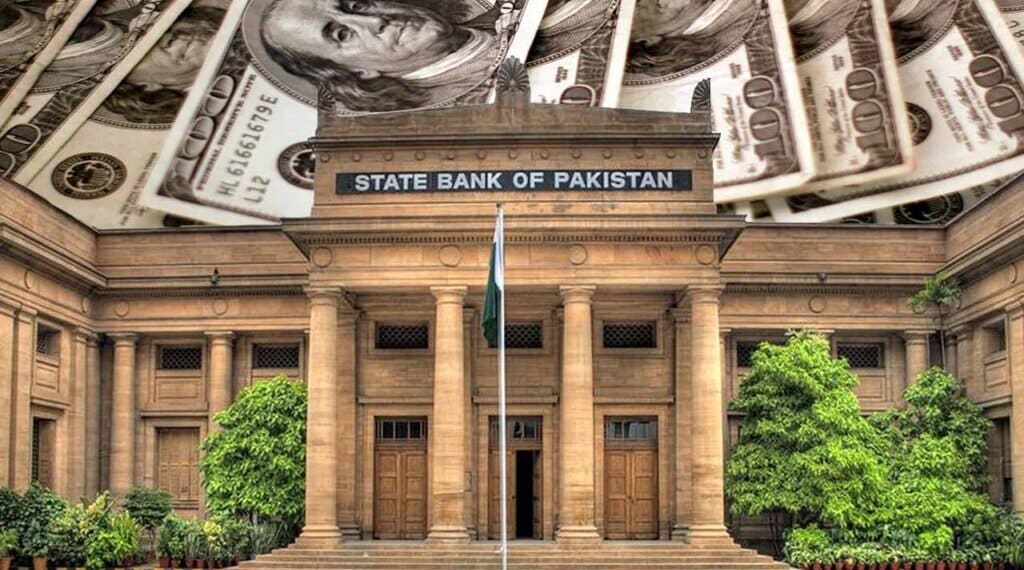
Pakistan’s SBP Reserves Climb to $16.2 Billion: Analyzing the Latest Forex Update and Its Economic Implications
Pakistan’s foreign exchange reserves held by the State Bank of Pakistan edged up to $16.20 billion in the week ended February 13, 2026 — a number that, while modest in isolation, tells a larger story of structural stabilization, IMF discipline, and a country carefully rebuilding its financial credibility after one of the most severe balance-of-payments crises in its modern history.
A Week-on-Week Gain That Signals Quiet Confidence
The State Bank of Pakistan (SBP) reported on Thursday that its foreign exchange reserves increased by $19 million during the week ended February 13, 2026, reaching $16,196.9 million ($16.20 billion). Pakistan’s total liquid foreign exchange reserves — which include SBP holdings and net reserves held by commercial banks — stood at $21,301.5 million ($21.30 billion). Of that combined figure, commercial banks held $5,104.6 million ($5.10 billion), a decline of approximately $92.3 million week-on-week, partially offsetting the central bank’s gain.
The weekly increase is unremarkable in size but remarkable in what it represents: the ninth consecutive week of positive movement in SBP-held reserves. Strip away the noise, and a clear trend emerges — Pakistan is steadily, if cautiously, replenishing the reserve buffers it nearly exhausted during the 2022–23 crisis.
The Weekly Data in Context: A Reserve Trajectory Table
The latest SBP reserves update gains considerably more meaning when viewed against the recent weekly trajectory:
| Week Ending | SBP Reserves (USD mn) | Weekly Change (USD mn) |
|---|---|---|
| February 13, 2026 | 16,196.9 | +19.1 |
| February 6, 2026 | 16,177.8 | +21.0 |
| January 30, 2026 | 16,157.2 | +56.0 |
| January 23, 2026 | 16,101.1 | +13.0 |
| January 16, 2026 | 16,087.7 | +16.0 |
| January 9, 2026 | 16,071.8 | +16.0 |
| Week of Dec. 19, 2025* | 16,055.7 | +141.0 |
| Week of Dec. 12, 2025* | 15,915.1 | +13.0 |
| Week of Dec. 5, 2025* | 15,902.5 | +16.0 |
| Late November 2025 | 15,886.8 | +1,300.0 (IMF tranche) |
Dates approximate based on SBP release sequence. Source: State Bank of Pakistan
The late-November spike — a $1.3 billion jump — represents the single most consequential data point in this series. The SBP confirmed that the weekly increase was mainly due to the receipt of SDR 914 million, equivalent to about $1.2 billion, from the IMF under the Extended Fund Facility (EFF) and the Resilience and Sustainability Facility (RSF). Everything since then has been organic accumulation: modest but persistent gains averaging roughly $20–25 million per week, a cadence that speaks to improved external inflows rather than one-off injections.
The IMF Scaffolding: What’s Holding the Recovery Up
No serious analysis of Pakistan’s latest SBP reserves update can ignore the role of the International Monetary Fund in engineering the turnaround. Pakistan’s 37-month EFF was approved on September 25, 2024, and aims to build resilience and enable sustainable growth, with key priorities including rebuilding international reserve buffers and broadening the tax base. Gross reserves stood at $14.5 billion at end-FY25, up from $9.4 billion a year earlier, and are projected to continue to be rebuilt in FY26 and over the medium term.
That $9.4 billion-to-$16.2 billion trajectory over roughly eighteen months is striking. But it would be naive to frame it purely as success. Much of the gain reflects the $7 billion IMF program’s front-loaded disbursements — the IMF’s total commitment to Pakistan comprises $5.2 billion under the Extended Fund Facility and $1.4 billion through the Resilience and Sustainability Facility, aimed at strengthening the country’s foreign exchange reserves. A third review is scheduled for March 2026, which, if cleared, would entitle Pakistan to an additional ~$1.04 billion under the EFF and ~$211 million through the RSF. The market is watching.
The IMF has not been ungenerous with its praise, but it has also not been vague about its expectations. IMF officials noted that Pakistan’s reform implementation under the EFF has helped preserve macroeconomic stability, with real GDP growth accelerating, inflation expectations remaining anchored, and fiscal and external imbalances continuing to moderate. The subtext is clear: continued disbursements are contingent on continued discipline.
Remittances: The Underrated Engine
Beneath the IMF headline, a quieter but arguably more sustainable driver has been building momentum: overseas remittances. Pakistan’s remittances are projected to exceed $41 billion in 2026, marking a notable increase from $38 billion last year. Remittances currently account for roughly 7–8% of Pakistan’s GDP — a lifeline that, unlike IMF tranches, does not add to the country’s external debt stock.
January 2026 reinforced this picture dramatically. Pakistan received $3.5 billion in foreign remittances in January 2026, and the country recorded a current account surplus of $121 million in January, compared to a current account deficit of $393 million in the same month last year. That is not merely a number — it is a reversal. A year ago, Pakistan was hemorrhaging foreign exchange; today, it is generating a current account surplus. The improvement was attributed to stronger remittance inflows and a rebound in exports, which crossed the $3 billion mark for the first time in January to reach $3.061 billion, compared to $2.27 billion in December 2025.
With Ramazan beginning in late February and Eid ul-Fitr approaching in late March, seasonal remittance spikes — historically the largest of any year — could provide another meaningful uplift to reserves in the coming weeks. Overseas Pakistanis tend to send significantly more money home ahead of major religious observances, and given the scale of the diaspora across the Gulf, the UK, and North America, this annual inflow is no trivial variable.
Pakistan Economy Recovery: The Macro Backdrop
Understanding the latest Pakistan total liquid reserves 2026 data requires contextualizing it within a broader macroeconomic stabilization story that, just two years ago, looked anything but inevitable.
In 2022–23, Pakistan’s foreign exchange reserves fell to dangerously low levels — at one point covering less than one month of imports. The rupee collapsed. Inflation surged above 38%. The IMF had to be called in under emergency conditions. Pakistan’s import cover — a key indicator of external sector strength — stood at less than one month during the 2022–23 crisis period; it has since climbed to approximately 2.5 months. At the current trajectory, the SBP’s own upgraded forecast of reaching $17.8 billion by June 2026 would push import cover comfortably above three months — the IMF’s benchmark for adequate reserve buffers.
The IMF projects Pakistan’s current account deficit for FY25 at about $0.2 billion, or 0.1 percent of GDP, helped by resilient exports and a stronger remittance outlook, as improved macro and FX stability has supported a rebound in remittance inflows through formal channels. These projections, calibrated conservatively, now look increasingly optimistic given January’s current account surplus.
However, analysts caution that the road ahead is not without hazard. External debt repayments remain elevated. Import demand — deliberately suppressed during the crisis — is beginning to recover as the economy grows, which will widen the current account deficit over the medium term. Over the medium term, the current account deficit is expected to widen modestly to around 1 percent of GDP as imports rebound. Sustaining the reserve build-up will require export growth and continued structural reforms, not just remittance windfalls and IMF tranches.
The Commercial Bank Divergence: A Nuance Worth Noting
One detail in Thursday’s release deserves closer scrutiny. While SBP-held reserves rose by $19.1 million, net foreign reserves held by commercial banks fell by $92.3 million to $5,104.6 million. Total liquid reserves consequently declined week-on-week from $21.374 billion to $21.301 billion — a net reduction of $73.2 million.
This divergence matters. Commercial bank reserves are typically more volatile, influenced by import payments, letter of credit settlements, and short-term capital movements. Their decline in the same week that the central bank gained suggests that private sector foreign currency demand — for trade financing and external payments — is picking up. This is broadly consistent with an economy that is beginning to return to a more normal import cycle. It is not a red flag. But it is a reminder that the $16.2 billion SBP headline and the $21.3 billion total liquid figure tell somewhat different stories about where Pakistan’s foreign exchange reserves impact on economy is most acutely felt.
Bond Market Sentiment and Foreign Inflows
Pakistan’s bond market has undergone a dramatic repricing over the past twelve months. After years of yields in double digits — partly reflecting credit risk premiums that placed Pakistani sovereign debt in near-junk territory — foreign inflows into Pakistan bonds have been recovering as investor confidence improves. The IMF program’s credibility, declining inflation, and a more stable rupee have all contributed.
Pakistan’s economy grew an estimated 2.4 percent in FY25, up from 0.3 percent in the previous fiscal year, as inflation cooled and the rupee stabilized after a steep depreciation cycle in 2022–23. The improvement in external buffers is likely to boost investor sentiment at a time when the government is stepping up efforts to attract foreign direct investment and privatize state-owned enterprises.
For global investors scanning South Asian sovereign debt, Pakistan presents a complicated but increasingly interesting risk-reward proposition. The EFF program provides a backstop. The reserve trajectory is improving. But political risk, energy sector liabilities, and the scale of pending structural reforms — particularly on taxation and state-owned enterprise privatization — remain substantive concerns that no amount of weekly reserve data can fully paper over.
What This Means for Everyday Pakistanis
The relevance of the latest SBP foreign exchange reserves weekly data extends far beyond financial markets. For ordinary Pakistanis, reserve levels are a proxy for economic stability in the most direct sense.
When reserves are low, the rupee weakens, import costs rise, and inflation — particularly in food and energy — accelerates. The 2022–23 crisis saw petrol shortages and cooking oil price spikes that hit the country’s most economically vulnerable citizens hardest. Conversely, as reserves strengthen, the SBP has greater capacity to manage exchange rate volatility, facilitating the import of raw materials for industry, medicines, and consumer goods at more stable prices.
With remittances hitting $3.5 billion in January alone, families receiving overseas transfers are also seeing more purchasing power — dollars converted at a more stable exchange rate translate into more rupees, more household spending, and more local economic activity. This virtuous cycle, fragile as it remains, is more visible now than at any point in the past three years.
Forward Outlook: The $17.8 Billion Target and the Risks
The SBP’s own forecast — foreign exchange reserves reaching $17.8 billion by June 2026, up from a previous estimate of $17.5 billion — follows a controlled current account deficit and the realisation of planned official inflows. Achieving that target from the current $16.2 billion would require an additional $1.6 billion over roughly four months, or approximately $400 million per month. Given recent monthly inflow dynamics — remittances, IMF disbursements pending the March review, and bilateral inflows — the target appears achievable, but not guaranteed.
Key Data Summary (Week Ended February 13, 2026)
| Metric | Value |
|---|---|
| SBP-held FX reserves | $16,196.9 million ($16.20 billion) |
| Net reserves — commercial banks | $5,104.6 million ($5.10 billion) |
| Total liquid foreign reserves | $21,301.5 million ($21.30 billion) |
| Week-on-week SBP change | +$19.1 million (+0.12%) |
| Week-on-week commercial bank change | -$92.3 million |
| Week-on-week total liquid change | -$73.2 million |
| SBP FX reserves forecast (June 2026) | $17.8 billion |
Source: State Bank of Pakistan official weekly release, February 19, 2026
Key risks to the upside scenario include: a deterioration in the IMF relationship that delays the March 2026 review; an oil price spike that widens the import bill; or a global risk-off episode that triggers capital outflows from emerging markets. On the upside, a successful Eurobond issuance or Panda bond placement — discussed in IMF program documents — could provide a step-change in the reserve buffer.
Conclusion: Rebuilding Credibility, One Week at a Time
Pakistan’s $16.2 billion in SBP-held reserves and $21.3 billion in total liquid foreign exchange reserves are, in the grand sweep of emerging-market economics, modest numbers. They pale against India’s $640+ billion reserve war chest, or even Bangladesh’s more insulated external position. But for a country that was, less than three years ago, teetering on the edge of a sovereign default scenario, they represent something more important than a number: they represent the painstaking reconstruction of credibility.
That credibility — with the IMF, with international bond investors, with the Pakistani diaspora deciding whether to remit through formal channels — is what ultimately underpins the reserve trajectory. The weekly $19 million gain is a data point. The story it belongs to is a long-term stabilization project with no guarantees, but with more reason for cautious optimism today than at any point since the crisis began.
The question for policymakers, investors, and analysts alike is not whether Pakistan has turned a corner — the evidence suggests it has. The real question is whether it can hold that corner while accelerating the structural reforms that transform a reserve recovery into durable, private-sector-led growth.
The answer to that question will not arrive in a weekly reserve bulletin. But every Thursday, as the SBP releases its latest figures, it offers a small, incremental clue.
Discover more from The Economy
Subscribe to get the latest posts sent to your email.
Analysis
France opposes ‘anglicisation’ of EU trade talks
BRUSSELS — When the European Commission’s trade negotiators sat down last week to map out the next phase of talks with Mercosur, a familiar diplomatic tremor rippled through the room. It had nothing to do with tariff schedules or agricultural quotas. On the table was a procedural proposal to streamline the bloc’s negotiation practice by adopting English as the single working language for all trade talks. France’s deputy permanent representative, Anne-Marie Descôtes, scanned the document, then rose to speak. “This is not a technical adjustment,” she said, according to two officials present. “It is a cultural surrender.”
The proposal was shelved before the coffee arrived. By the end of the day, Paris had made clear it would veto any formal move toward what it calls the “anglicisation” of EU trade diplomacy. The episode, which might look like Brussels arcana, cuts to the marrow of a struggle that has intensified since Brexit removed the bloc’s largest native-English-speaking member: the contest over whose language shapes the terms of European power.
The dispute is not new. What has changed is the context. The departure of the United Kingdom in 2020 left English without a major state patron inside the Union, yet its institutional dominance only grew. English remains the lingua franca of the Commission’s trade directorate, the default language of legal drafting, and the working tongue of most technical committees. Ireland and Malta, the two remaining members with English as an official language, together account for less than 1% of the EU population. The irony is stark: a language that no longer belongs to any large member state now governs the bloc’s most sensitive external negotiations. For France, this is both a strategic wound and an ideological rallying cry.
A recent report by the French Senate’s European affairs committee estimates that French-language usage in EU institutions has fallen by 30% since 2004, with the steepest declines in the Commission’s trade and competition arms. Meanwhile, the EU spends roughly €1.1 billion annually on translation and interpretation services across all institutions, according to the European Court of Auditors’ 2025 language audit. The figure is often cited by proponents of linguistic streamlining, who argue that adopting a single working language for trade talks could save up to €180 million a year. French officials counter that the calculation is not merely financial.
The core development: a veto that signals a doctrine
French opposition to the English-only proposal crystallised on 9 June, when trade ministers gathered in Luxembourg for a Council meeting ostensibly focused on market access tools and WTO reform. What few expected was that Paris would use the session to lay down a red line that had been quietly hardening for months. According to a Reuters report on the closed-door exchange, French Trade Minister Sophie Primas told her counterparts that “linguistic diversity is not a barrier to be removed but a constitutional principle of the Union,” and that “any move to make English the sole procedural language would be challenged before the European Court of Justice.”
The statement was no rhetorical flourish. France has been building a legal and political architecture to defend multilingualism as a fundamental right of member states. Article 55 of the Treaty on European Union already guarantees equal linguistic status for all official languages, but its application to internal working practices has been murky. Primas’s intervention signalled that Paris is ready to test that ambiguity in court, a move that could drag trade negotiations into procedural paralysis for years.
The immediate trigger was a 45-page Commission discussion paper, seen by the Financial Times, that argued monolingual trade talks would cut negotiation timelines by up to 20%, reduce the risk of interpretative errors in legal texts, and align the EU with the practice of trade partners like the United States, Japan, and Australia — all of whom negotiate exclusively in English. The paper was careful to note that final treaty texts would still be translated into all 24 official languages before signature, but the working phase — often lasting four to six years — would function in a single language.
French officials were not mollified. “The distinction between ‘working language’ and ‘official language’ is a semantic trap,” one senior French diplomat told the Economist on condition of anonymity. “What happens in the working phase determines what is possible in the final phase. Excluding a language from the room is excluding the people who think in that language.”
The French position has gathered tacit support from Spain, Italy, and Germany — though Berlin’s enthusiasm is tempered by its business community’s preference for English as a neutral, efficient tool. A Bloomberg report noted that German Chancellor Friedrich Merz privately sympathises with the French cultural argument but will not jeopardise the Mercosur ratification timeline, which is already years behind schedule.
Why language is not merely a tool
The French resistance is often caricatured as nostalgic pique, but the strategic logic runs deeper. Language is a carrier of legal concepts, negotiating frames, and power asymmetries. A trade negotiation conducted entirely in English favours those who have mastered not just the vocabulary but the rhetorical conventions of Anglo-American legal and economic thought. A negotiator from a civil-law tradition, trained in French or German legal categories, can find herself forced to argue inside a conceptual grid that does not fully accommodate her own juridical instincts.
Why does France want French to remain a working language in EU trade talks? France argues that using English as the sole procedural language disadvantages non-native speakers, undermines linguistic diversity, and grants an unearned advantage to negotiators from Anglophone legal cultures. The French view holds that language shapes thought; when a trade rule is conceptualised in English, it tends to import common-law assumptions into a predominantly civil-law union. The linguistic choice, from this perspective, is never neutral.
That view is not fringe. A 2024 OECD trade policy paper found that language barriers can add the equivalent of a 9% to 15% tariff to trade in services, and that the effect is most pronounced in legal and financial services — precisely the sectors most sensitive to regulatory nuance. The study notes that when negotiators work in a non-native language, the risk of “conceptual misalignment” in final treaties rises measurably. The paper stops short of recommending any specific linguistic policy but makes clear that the costs of monolingualism are not zero.
Beyond economics, the French case draws on a broader European unease about cultural erosion. In a 2025 Eurobarometer survey, 62% of EU citizens said that “maintaining linguistic diversity is essential to European identity,” while only 31% agreed that “English should be the single working language of EU institutions.” The sentiment runs strongest in southern and eastern member states, where English proficiency remains lower than in the Nordic and Benelux countries. France has been quietly building a coalition of the linguistically disenfranchised, framing its position not as French exceptionalism but as a defence of pluralism.
Yet the picture is more complicated than a straightforward culture-versus-efficiency binary. The Commission’s internal surveys show that younger diplomats across the EU increasingly prefer English as a common working medium, not out of cultural submission but out of pragmatism. A 2026 internal staff poll, leaked to Politico Europe, indicated that 74% of trade-unit officials under 40 believe switching to a single working language would improve their professional effectiveness. For many Eastern European and Nordic capitals, the French position looks like an attempt to impose a linguistic hierarchy that benefits Paris and Brussels insiders who were educated in French-language grandes écoles.
Second-order effects: what a multilingual mandate would cost
If France succeeds in blocking the anglicisation of trade talks, the practical consequences will ripple across the EU’s negotiating machinery. The most immediate effect would be the retention — and likely expansion — of interpretation and translation services during the working phase of trade negotiations. Currently, the Commission uses a “pivot language” system for many internal meetings: interpretation is provided into French, German, and English, but smaller languages are covered only upon request. A French victory would probably force the Commission to provide full interpretation in at least the three procedural languages for all trade-related working groups, adding an estimated €240 million to the EU budget over the next seven-year cycle, according to an IMF working paper on institutional language costs.
The timeline implications are harder to quantify but potentially far larger. Trade negotiations are already glacial. The EU’s deal with Mercosur took more than two decades from initial talks to political agreement, and ratification is still pending in several member states. If every drafting session must accommodate simultaneous interpretation and cross-checking of legal terms in multiple languages, the median negotiation timeline could stretch by 18 to 24 months, according to a World Bank policy research note published in March. For agreements like the ongoing EU-India talks, where speed is seen as a geopolitical imperative to counter Chinese influence, that delay could have strategic costs that dwarf the financial ones.
Business groups are already signalling alarm. BusinessEurope, the continent’s largest employer federation, warned in a position paper this month that “any measure that prolongs trade negotiations weakens the EU’s ability to secure market access at a time when protectionist pressures are mounting globally.” The federation’s director-general, Markus Beyrer, cited the example of the EU’s stalled free trade agreement with Australia, where linguistic friction — particularly over the French translation of agricultural origin rules — contributed to a 14-month delay in 2024–25. “We cannot afford to make language another non-tariff barrier,” Beyrer said.
The legal dimension adds another layer of risk. Primas’s threat of a Court of Justice challenge is not empty. The Court has ruled before on linguistic rights in the EU — notably in Kik v OHIM (2003) — but has rarely been asked to adjudicate the internal working practices of the Commission in trade matters. A ruling that enshrines a broad right to multilingual working procedures could constrain the EU’s institutional flexibility for decades, creating a precedent that extends beyond trade to competition policy, financial regulation, and even the European Central Bank’s operational language. Legal scholars at the Max Planck Institute for Comparative Public Law have argued that such a case would force the Court to weigh the principle of linguistic equality against the treaty-recognised objective of an efficient common commercial policy — a balancing act with no clear doctrinal solution.
The pragmatic case for English: a counterargument worth steel-manning
The argument for adopting English as a single working language in trade negotiations is neither philistine nor intellectually unserious. It rests on three empirical pillars: efficiency, legal certainty, and global interoperability.
Efficiency is the most straightforward. The EU negotiates trade agreements with over 70 countries and blocs, and in virtually all of them the counterpart prefers English as the negotiating medium. Even China, which has invested heavily in French-language diplomacy in Africa, conducts its EU trade dialogue in English. Maintaining a multilingual negotiation framework means that every document must be translated, every oral intervention interpreted, and every legal term cross-checked against multiple linguistic versions — not just at the end but throughout the process. The Commission’s own impact assessment from January 2026 estimated that a shift to English-only working would reduce the average trade negotiation duration from 7.3 to 5.8 years.
Legal certainty is the second pillar. Trade agreements are technically bilingual or trilingual in their authentic versions, but when the working language is English, the English text tends to become the de facto master version, reducing the risk that courts or arbitration panels will later find irreconcilable differences between languages. The EU-Singapore Free Trade Agreement, for example, faced a three-month delay in 2022 when the French and English versions of the intellectual property chapter were found to contain a discrepancy that would have altered the scope of copyright protection. “One language from drafting to signature is not linguistic imperialism,” said Anu Bradford, a trade law professor at Columbia Law School, in a recent interview with the Peterson Institute. “It is a risk-management tool. Multilingualism in legal drafting has produced more arbitral disputes than any other single procedural factor.”
The third pillar is global interoperability. The multilateral trading system is an English-language system. WTO dispute panels, UNCITRAL arbitration, and ISDS tribunals operate overwhelmingly in English. A European trade negotiator who cannot think and argue fluently in English is professionally handicapped not because of Anglo-American hegemony but because of path dependency. The EU’s own trade defence instruments — anti-dumping investigations, safeguard proceedings — already function almost entirely in English. Singling out the negotiation phase for special linguistic treatment is, from this perspective, an inconsistency that serves no one’s interest except that of a small cadre of French-language diplomats who, as one unnamed Commission official told the Wall Street Journal, “are defending their own relevance more than any cultural principle.”
This pragmatic case does not dismiss cultural identity, but it draws a sharp distinction between areas where identity should govern and areas where function should govern. A trade negotiation is not a parliamentary debate or a citizen-facing regulatory process; it is a technical exercise in maximising joint welfare under constraint. To burden it with symbolic politics, proponents argue, is to make the EU slower, less coherent, and less competitive at a moment when it can afford none of those things.
The synthesis, and what comes next
The French veto, for now, holds. The Commission has no appetite for a fight it would likely lose in the Council, where the linguistic coalition Paris has assembled — even if soft — makes a qualified majority improbable. The proposal for a single working language is effectively dead, though officials say it may resurface in a diluted form, perhaps as a pilot programme for minor trade dialogues with English-speaking partners. That would allow Paris to save face while letting the Commission claim a modest efficiency gain.
The episode, however, is about more than procedure. It exposes a fault line that runs through the European project at a moment of profound external pressure. The Union is trying to position itself as a geopolitical actor capable of striking strategic trade deals at speed, yet it remains constitutionally committed to a vision of linguistic equality that makes speed structurally difficult. Both commitments are genuine. Neither can be casually discarded.
What follows, however, is not a simple trade-off. Linguistic diversity is not merely ornamental; it is a mechanism that distributes power among member states, shapes the cognitive frames of policy, and connects the technocratic work of Brussels to the domestic publics that must ultimately ratify its results. To strip it away in the name of efficiency would be to centralise influence among those who are already linguistically privileged — a move that would almost certainly deepen the legitimacy deficit the EU suffers in precisely those regions where Euroscepticism is most virulent.
On a rain-slicked afternoon in the European quarter, a young French trade attaché, who had spent the morning arguing the case for multilingualism with his German and Danish counterparts, offered a thought that cut through the institutional noise. “We are not asking everyone to speak French,” he said. “We are asking that the room be large enough for more than one way of thinking.” The sentence lingers because it captures the true stakes of the dispute, which are not about languages at all but about whether a union of 27 distinct nations can negotiate as one without losing the distinctiveness that makes the union worth preserving.
Discover more from The Economy
Subscribe to get the latest posts sent to your email.
Analysis
Goldman and JPMorgan Ease Office Working Rules to Counter World Cup Disruption
Eight World Cup matches will be played at MetLife Stadium in East Rutherford, New Jersey — including the final on July 19. Nearly a million people commute into New York City every day, many of them crossing the Hudson from New Jersey. Goldman Sachs and JPMorgan Chase, whose towers anchor Lower Manhattan and Midtown respectively, have spent four years enforcing some of the strictest return-to-office mandates on Wall Street. Now, with gridlock, security perimeters, and match-day crowds threatening to turn the commute into an endurance event, both banks are making a pragmatic concession they once seemed constitutionally incapable of: temporary flexibility.
It’s a small retreat. But on Wall Street, small retreats tend to mean something.
The Stage Is Set for Disruption
The 2026 FIFA World Cup, co-hosted by the United States, Canada, and Mexico, is the largest in the tournament’s history — 48 nations, 104 matches, running from June 11 to July 19. The US is absorbing 78 of those games across 11 host metros: New York/New Jersey, Los Angeles, Dallas, Houston, Miami, Atlanta, Seattle, Philadelphia, Boston, Kansas City, and San Francisco. Together, those cities account for roughly one-third of US GDP and one quarter of national employment, according to Goldman Sachs’s own economists.
The disruption isn’t theoretical. A Boston Consulting Group projection estimates the tournament could generate more than $5 billion in short-term economic activity across North America, with individual host cities seeing between $160 million and $620 million in incremental activity. Five to seven million international visitors are expected to pass through those same cities over six weeks. The transportation networks they’ll strain are the same ones that Wall Street’s workforce depends on every morning.
1: The Core Development — Wall Street’s RTO Emperors Blink
Goldman Sachs and JPMorgan have been the two loudest champions of the five-day office mandate in global finance. Goldman Sachs CEO David Solomon called remote work an “aberration” as early as 2021 and began recalling staff before most of America had even accepted the pandemic was winding down. JPMorgan CEO Jamie Dimon pushed further: in January 2025, he issued an internal memo instructing all 316,000 of the bank’s global employees to return to the office full-time from March of that year, shutting down the comments section after hundreds of employees responded within the hour. As of mid-2026, both banks maintain official five-day-a-week office policies — among the strictest of any employer in the US.
That context makes the World Cup accommodation notable. Both banks have signalled to employees in host city offices that temporary flexibility around match days will be permitted for the duration of the tournament. The move is framed internally as a logistics response rather than a policy shift — an acknowledgement that the commute into Midtown or Lower Manhattan on a day when a match is being played at MetLife, with security perimeters rippling out across the New Jersey Transit network, is materially different from a normal Tuesday.
The numbers back that framing. NJ Transit has imposed a $150 special round-trip fare on match days — applicable only to match ticket holders — while regular commuters face altered routes and delays across the eight match days hosted at MetLife Stadium. In Boston, comparable transport costs have run to $95 for a round trip on match days, four times the standard price. Challenger, Gray & Christmas, the outplacement firm, has calculated that a single missed workday in the 11 host metros could cost US employers $8.2 billion in lost productivity, with the New York/New Jersey metro alone carrying a $2.14 billion exposure.
Against that backdrop, telling bankers they can work from home on a handful of match days isn’t generosity. It’s operational risk management.
2: Why This Matters Beyond the Scoreline — The Return-to-Office Ratchet
The World Cup accommodation is a data point in a larger argument that Wall Street’s RTO ideologues have long refused to make: that blanket mandates, however sincerely held, will always encounter events that mandate flexibility.
What does the Goldman and JPMorgan World Cup policy actually mean for return-to-office norms?
It means that even the most rigidly enforced attendance mandates contain implicit carve-outs for force majeure — and that those carve-outs, once granted, create precedent. For now, the banks are characterising the adjustment as time-limited and event-specific. The policy won’t survive the July 19 final. But employees who spent six weeks working productively from home during the tournament will have experienced, firsthand, that the sky did not fall.
The US federal government moved first, and faster. In early June, the Office of Personnel Management issued guidance permitting federal agencies in all 11 World Cup host cities to allow employees to work remotely for the duration of the tournament — a notable move from an administration that had spent the previous 18 months aggressively clawing back remote work from the federal workforce. Across the private sector, the picture has been similar: human resources consultancy Brightmine’s employer guide for the World Cup explicitly advises companies to permit temporary changes to working patterns and allow holiday requests at short notice where operationally feasible.
What distinguishes Goldman and JPMorgan from the majority of employers making similar adjustments is their symbolic weight. These are the institutions that set the cultural tone for professional-services return-to-office globally. Their accommodation, even temporary, tells the rest of Wall Street — and the firms that watch Wall Street’s every HR move — that the five-day doctrine isn’t absolute.
3: The Second-Order Effects — Productivity, Culture, and the Precedent Problem
The immediate market implications of a few weeks of flexible banking are minimal. Trading desks will still trade. Investment bankers will still pitch. Risk managers will still run their models. The technological infrastructure that made remote work viable in 2020 hasn’t degraded; if anything, it’s better. AI-assisted workflows mean that a junior analyst at home during a match day is arguably more productive than they were in the office in 2019.
That’s the uncomfortable truth the RTO orthodoxy has always struggled to absorb. A 2025 CBRE study found that 37% of companies were enforcing strict office attendance requirements, up from 17% the previous year — a surge driven largely by finance and professional services. Yet the correlation between office presence and measurable output has never been cleanly established for knowledge workers. What RTO mandates clearly do achieve is cultural signalling: the message that seniority, presence, and visibility are linked, and that the old hierarchies of face time and floor proximity still operate.
The World Cup accommodation, temporary as it is, chips at that signal.
There are downstream consequences for talent, too. Goldman Sachs estimates the tournament will add 40,000 nonfarm payroll jobs in June alone — predominantly in hospitality, retail, and transportation — with modest upward pressure on GDP and retail sales through July. What the bank hasn’t publicly calculated is how much of that temporary economic energy will translate into employee expectations about flexibility once the tournament ends. Workers who’ve spent six weeks watching their employers accommodate commute disruption will not forget that accommodation simply because the final whistle has blown.
The cities themselves are recalibrating. Everbridge’s host-city risk analysis notes that every host city will face significant transportation disruption, with road closures around stadiums rippling outward to affect commute times and delivery routes — and recommends that employers pre-establish remote-work triggers tied to specific disruption thresholds. That language — normalised trigger-based flexibility — is precisely what the five-day mandate camp has resisted for four years.
4: The Counterargument — Presence Has a Price That Absence Can’t Pay
The case for in-office work at Goldman and JPMorgan isn’t merely cultural vanity. It’s a serious argument that deserves to be made seriously.
Solomon’s position — and Dimon’s, articulated more bluntly — rests on the view that investment banking, like surgery or litigation, is an apprenticeship craft. Junior analysts learn by proximity: by sitting next to a managing director during a live deal, by absorbing the texture of a negotiation, by being in the room when a client calls with a problem at eight in the evening. That transmission of institutional knowledge doesn’t happen reliably over Zoom. It requires physical co-presence, serendipitous corridor conversations, and the accumulated small moments that eventually produce someone who can run a deal on their own.
The Raconteur’s 2026 survey of companies enforcing five-day mandates found that finance sector firms overwhelmingly cited mentorship quality and junior development as primary rationales — not monitoring or distrust. Dimon put it plainly in his January 2025 memo: the benefits of in-person work are “substantial and irreplaceable.”
There’s also a client-service dimension. Hedge funds and corporate treasurers don’t typically appreciate discovering that the banker managing their portfolio was watching the Brazil match from a home office in Hoboken when a margin call came through. Perception, in financial services, is often indistinguishable from reality.
The counterargument to the World Cup accommodation, then, is straightforward: this is exactly the kind of precedent that erodes culture incrementally. One exception becomes a template. A template becomes a norm. A norm becomes a negotiating chip. The firmness of the five-day rule has always derived precisely from its lack of exceptions. Once you start carving out events — a World Cup today, a child’s school play tomorrow — you have a hybrid policy. You’ve just chosen not to call it that.
Goldman and JPMorgan’s World Cup accommodation is, in isolation, a minor operational footnote. In the longer arc of the return-to-office story, it’s something more revealing: evidence that even the most doctrinaire workplace mandates are ultimately subject to the same force that disrupts everything else in financial markets — events that no internal policy can anticipate, and no memo can override.
The tournament runs until July 19. On July 20, both banks’ five-day mandates will reassert themselves, and the trading floors will fill again. The commuters will file back through the turnstiles. MetLife will fall quiet.
But the employees who spent six weeks working from home — productively, demonstrably, without the sky falling — will remember. And in the long game of office politics, memory is the asset that compounds.
Discover more from The Economy
Subscribe to get the latest posts sent to your email.
AI
AI Is Revolutionising the Stock Market — But the Risks Are Scaling Too
The machines are winning. That much is settled. What isn’t settled is what happens when they start losing together.
On the morning of August 5, 2024, Japanese and American equity markets shed trillions of dollars in a matter of hours. It wasn’t a corporate scandal. It wasn’t a central bank error. Tobias Adrian, the IMF’s Financial Counsellor and Director of Monetary and Capital Markets, suggested the rout may have been shaped in part by AI-driven trading strategies — automated systems reacting to the same signals, at the same moment, in the same direction. It was a preview, not an anomaly.
The Acceleration Nobody Planned For
For most of the twentieth century, stock markets moved at human speed. Traders on exchange floors, analysts with Bloomberg terminals, fund managers reading earnings releases over morning coffee — the rhythm was set by biological limits. That era didn’t end gradually. It collapsed.
Financial markets are no longer the exclusive domain of human intuition or simple, static algorithms. The decisions to allocate billions of dollars are now made in fractions of a second, supported by multimodal neural networks, reinforcement learning, and advanced semantic analysis. The transition from rules-based automation to genuinely adaptive AI systems has happened across a single decade — faster than any regulatory framework has been able to absorb. Barchart
The algorithmic trading market grew from $21.89 billion in 2025 to an estimated $25.04 billion in 2026, a compound annual growth rate of 14.4%. That figure, drawn from Research and Markets data, likely understates the actual deployment footprint — it captures licensed platforms, not the proprietary systems built in-house at Citadel, Renaissance Technologies, or Two Sigma. Algorithmic strategies now execute between 60% and 70% of equity volume, and the market is growing at 13% annually. Research And MarketsMedium
The question isn’t whether AI is reshaping markets. It is.
How AI Trading Actually Works in 2026
The phrase “AI trading” gets used loosely, covering everything from a retail investor’s sentiment-scanning app to Renaissance Technologies’ Medallion Fund. The reality is a spectrum, and where an institution sits on that spectrum determines its competitive position in ways that weren’t true five years ago.
At the institutional end, AI in stock markets today means something quite specific. Pre-trade analysis that once required teams of analysts — parsing earnings transcripts, mapping sentiment across news sources, reading regulatory filings — is increasingly handled by NLP systems that deliver synthesised insights, compressing hours of analyst time into minutes. Buy-side desks are shifting from isolated AI pilots to embedding these tools across the full investment lifecycle: research, portfolio construction, order execution, risk management, and compliance. Medium
The performance data supports the investment. Academic research on generative AI in asset management found that hedge funds with higher reliance on generative AI showed a statistically significant improvement in quarterly portfolio returns — with a one-standard-deviation increase in AI reliance associated with a 2.2% annualised performance gain, equivalent to roughly 21% of the average quarterly return. Cafr
That’s not a marginal edge. In a world where institutional funds compete for basis points, 2.2% annually is transformational — provided it persists, and provided everyone isn’t running the same model.
Retail adoption has accelerated in parallel. By February 2026, over 76% of Coinrule’s users were integrating AI-driven execution into their strategies, a figure that signals how quickly sophisticated tools — once the preserve of quant desks — have diffused downmarket. The analytical gap between a high-net-worth individual with access to AI-powered portfolio tools and a mid-tier fund manager has narrowed considerably. Kavout
What Does AI-Driven Trading Actually Mean for Markets?
The short answer is that it means faster price discovery, tighter spreads, and deeper liquidity — but also compressed time horizons for human oversight and a growing tendency for correlated systems to amplify rather than dampen volatility.
AI trading accelerates the incorporation of information into prices, which in theory benefits all participants. When AI reads an earnings release at 5:30am and repositions a portfolio before human traders have finished their coffee, the market becomes marginally more efficient. That’s the case for it.
The case against it is structural. The AI-driven repricing of global equities collided with geopolitical shocks and shifting interest-rate expectations in early 2026, making the first quarter “particularly disruptive for global markets and multi-asset portfolios,” according to MSCI’s global head of index regional research solutions. When all systems respond to the same inputs — the same training data, the same macro signals, the same risk thresholds — the diversity that stabilises markets disappears. CNBC
Spring 2026 survey data from the Federal Reserve’s Financial Stability Report showed that 50% of market contacts identified AI as a possible shock to financial stability — compared with just 9% a year earlier. That’s a fivefold jump in perceived systemic risk in twelve months. Aicerts News
Regulators responded. On April 17, 2026, the interagency SR 26-2 letter updated model risk management guidance for large banks — but the carve-out for generative and agentic models left a policy gap that many observers questioned. Aicerts News
The Geography of the AI Trading Revolution
The competitive map of AI in stock markets doesn’t follow the old financial geography.
A global reshuffling in stock-market hierarchy is underway, with AI propelling Taiwan and South Korea past several long-established Western financial centres. The reason is hardware: Taiwan’s TSMC manufactures the chips that power the models; South Korea’s Samsung and SK Hynix supply the memory. The supply chain advantage is translating into equity advantage, as investors bid up the enablers of AI infrastructure. CNBC
HSBC’s Asia-Pacific head of equity strategy, Herald van der Linde, warned that many Asian portfolios are now facing concentration risk — too much exposure to a small number of stocks in the region. That’s the paradox of an AI-driven rally: the very systems optimising for returns are collectively creating the fragility that will eventually unwind them. CNBC
In the United States, the top ten companies now comprise over 35% of S&P 500 weight, and mega-cap tech companies poured nearly $300 billion into AI capital expenditures in 2025, with spending projected to reach $1.6 trillion through 2029. The concentration is unprecedented. So is the potential for correlated drawdown. Financer
The Dissenting Case: AI as a Stabiliser
The systemic risk argument is compelling. It’s also contested.
Tyler Cowen of the Mercatus Center at George Mason University takes a different view. Cowen argues that increased AI use by traders may actually diminish the likelihood of a crash, because the number and diversity of models will increase over time, reducing rather than amplifying herding effects. In his framing, the proliferation of different AI approaches creates a more resilient market, not a more fragile one. Medium
The argument has historical support. Markets have absorbed successive waves of automation — electronic order routing, direct market access, high-frequency trading — without the systemic collapse that critics predicted at each stage. The flash crash of May 6, 2010, when the Dow Jones Industrial Average briefly fell 998 points in minutes due to algorithmic cascade effects, is routinely cited as evidence of AI fragility. Yet markets recovered within the same session. The plumbing held.
What’s changed since 2010, Cowen’s critics would say, is scale. In the short term, model diversity is limited — most production trading systems rely on a small number of foundation models and similar training data. Architectural diversity may increase in the long term, but the practical reality depends on timescale. Medium
The IMF’s position sits somewhere in the middle. The Fund warns of opacity in AI strategies, susceptibility to social media disinformation, and uncertain stress-test performance. AI-driven portfolios using social media sentiment achieved 13.4% annualised returns in one study — but also amplified risks of market destabilisation, as seen in the GameStop episode of 2021. arxiv
What Follows When the Models Agree
The deepest risk isn’t that AI trading systems fail. It’s that they succeed — all at once, in the same direction.
The IMF’s most recent assessment, published in May 2026, concluded that as AI reshapes the cyber landscape, the central question for authorities is whether the financial system can continue to function under severe stress. That’s a careful formulation. What the IMF is describing is not the possibility of a rogue algorithm or a single bad actor. It’s the possibility of a globally synchronised response to a common shock — millions of AI systems, trained on overlapping data, reaching the same conclusion at the same moment. International Monetary Fund
The policy response remains fragmented. Europe’s MiFID II framework requires firms to distinguish between AI decision-making and execution algorithms, but does not address real-time monitoring of autonomous systems. The SEC mandates developer registration. The Fed’s SR 26-2 letter took a step toward standardised model risk management but left generative AI largely unaddressed. There is no Geneva Convention for algorithmic trading.
The crucial difference from the dot-com era, analysts argue, is that current valuations rest on actual earnings rather than pure speculation: S&P 500 companies project 15% earnings growth in 2026, with 75% of companies showing growth that’s broadening beyond tech. The fundamentals are real. Still, the structural fragility is real too. Financer
Markets have always run on the collective behaviour of participants who tend, in extremis, to act alike. AI has made that tendency faster, deeper, and harder to interrupt.
The machines aren’t going anywhere. The question for the next decade isn’t whether to allow them — that debate is over. It’s whether the humans nominally overseeing them can build the circuit breakers before the next cascade runs faster than they can respond.
Discover more from The Economy
Subscribe to get the latest posts sent to your email.
-
Markets & Finance5 months agoTop 15 Stocks for Investment in 2026 in PSX: Your Complete Guide to Pakistan’s Best Investment Opportunities
-
Analysis4 months agoTop 10 Stocks for Investment in PSX for Quick Returns in 2026
-
Analysis4 months agoBrazil’s Rare Earth Race: US, EU, and China Compete for Critical Minerals as Tensions Rise
-
Banks5 months agoBest Investments in Pakistan 2026: Top 10 Low-Price Shares and Long-Term Picks for the PSX
-
Investment5 months agoTop 10 Mutual Fund Managers in Pakistan for Investment in 2026: A Comprehensive Guide for Optimal Returns
-
Analysis4 months agoJohor’s Investment Boom: The Hidden Costs Behind Malaysia’s Most Ambitious Economic Surge
-
Global Economy6 months ago15 Most Lucrative Sectors for Investment in Pakistan: A 2025 Data-Driven Analysis
-
Global Economy6 months agoPakistan’s Export Goldmine: 10 Game-Changing Markets Where Pakistani Businesses Are Winning Big in 2025