
Analysis
IMF Lauds Pakistan’s Reforms, Eyes Feb 25 Visit for EFF & RSF Review

Pakistan has spent much of the past decade lurching from one balance-of-payments crisis to the next, its economy a recurring cautionary tale of structural fragility and stop-go policymaking. But something is shifting. On Thursday, the International Monetary Fund offered a rare and carefully worded endorsement of Islamabad’s economic direction — and confirmed a high-stakes review mission to Pakistan beginning February 25, 2026. For a country that has entered IMF programmes more than two dozen times in its history, this moment feels different. The question is whether it will last.
A Turning Point — or Another False Dawn?
Speaking at a press briefing in Washington, IMF Director of Communications Julie Kozack announced that an IMF delegation will visit Pakistan starting February 25 to conduct important review discussions. The mission — led by veteran IMF economist Iva Petrova — will engage Pakistani authorities on two parallel tracks: the Third Review under the Extended Fund Facility (EFF) and the Second Review under the Resilience and Sustainability Facility (RSF).
The IMF says the program aims to restore macroeconomic stability, rebuild external buffers and make Pakistan more resilient to climate shocks following devastating floods in recent years. At stake are approximately $1 billion in further disbursements — funds that matter not just as a liquidity cushion, but as a signal to international investors and bilateral creditors watching Pakistan’s reform trajectory with cautious optimism.
Fiscal Triumphs Amid Challenges
The headline numbers, by Pakistan’s own turbulent standards, are striking. Fiscal performance has been strong, with a primary surplus of 1.3 percent of GDP achieved in FY25, in line with targets. Gross reserves stood at $14.5 billion at end-FY25, up from $9.4 billion a year earlier, and are projected to continue to be rebuilt in FY26 and over the medium term.
Think of it as a ship that spent years taking on water finally getting its pumps working in earnest. Pakistan’s primary fiscal surplus — the first meaningful one in years — reflects a combination of revenue mobilisation efforts and expenditure restraint that the Fund has long demanded but rarely seen fully delivered. Meanwhile, headline inflation, though elevated by the damage wrought by the 2025 floods on food supply chains, has been described by Kozack as “relatively contained” — a judgment that would have seemed fanciful just two years ago when Pakistan’s CPI was flirting with 38 percent.
Perhaps the most symbolically resonant achievement is this: Pakistan recorded its first current account surplus in 14 years in FY2025. That milestone, after over a decade of chronic deficits that drained reserves and periodically pushed the country to the brink of default, signals a structural rebalancing of the external account — driven partly by surging remittances, a compression of import demand, and an improving export performance in textiles and services.
Governance Reforms on the Horizon
Beyond the macroeconomic stabilisation story, the IMF’s attention has sharpened around a harder challenge: fixing the institutional scaffolding that props up — or undermines — Pakistan’s long-term economic health.
“The governance and corruption diagnostic assessment report was recently published,” Kozack said. “It includes proposals for reforms, including simplifying tax policy design, levelling the playing field for public procurement, and improving the asset declaration transparency.”
This Governance and Corruption Diagnostic Report is more than bureaucratic box-ticking. It represents an IMF-backed acknowledgment that Pakistan’s recurring economic crises are not simply a function of bad luck or global headwinds — they are substantially home-grown, rooted in a tax system riddled with exemptions that favour the politically connected, a public procurement regime that creates fertile ground for rent-seeking, and an asset declaration framework weak enough to render elite accountability largely theoretical.
For Pakistan’s reform-watchers, the three pillars of the governance agenda are worth examining closely:
- Tax Policy Simplification: Pakistan’s Federal Board of Revenue has long struggled with a statutory tax-to-GDP ratio that looks reasonable on paper but collapses in practice due to exemptions, SROs (Statutory Regulatory Orders), and sector-specific carve-outs. Simplifying the design — not just the administration — is a structural shift that would require taking on powerful vested interests.
- Public Procurement Reform: Levelling the playing field in government contracting is code for dismantling the preferential access that state-linked enterprises and politically connected firms enjoy. The World Bank has flagged Pakistan’s procurement framework as a governance risk for years; IMF backing for reform adds weight to that demand.
- Asset Declaration Transparency: Pakistan’s elected officials and civil servants are required to file annual asset declarations, but enforcement and public accessibility remain patchy. Genuine transparency here would be a meaningful accountability shift.
Unfinished Business: The Revenue Gap and the Tariff Question
For all the positive optics, the IMF mission arriving on February 25 will not be walking into a celebration. While overall program performance has largely remained on track, revenue collection has fallen short of expectations. Specifically, analysts say the review is likely to pass but may involve difficult negotiations on fiscal discipline and energy policy. “This is expected to be a smooth sailing, however questions might arise,” Shankar Talreja, head of research at Karachi-based Topline Securities Limited, told Arab News. Experts say the IMF could question whether Islamabad consulted the lender before reducing electricity tariffs by about Rs4 per unit for export-oriented industries, a move designed to support manufacturing but with fiscal implications.
“Pakistan has missed” the IMF’s revenue target by Rs336 billion ($1.2 billion), he said. “Tax revenue shortfall which is one of the indicative targets which Pakistan has missed.”
This tension — between the government’s instinct to provide industrial relief and the Fund’s insistence on fiscal discipline — is the central fault line of Pakistani economic policymaking. The electricity tariff reduction, while defensible from a competitiveness standpoint, risks creating a precedent that the IMF will scrutinise carefully. How Islamabad navigates this negotiation will reveal much about the depth of its reform commitment.
Climate Resilience: The RSF Dimension
The second strand of the February 25 review — the RSF — is less discussed but increasingly consequential. The 28-month RSF was approved on May 9, 2025, and is supporting the authorities’ efforts to reduce vulnerabilities to natural disasters and to build economic and climate resilience.
Pakistan is among the world’s ten most climate-vulnerable nations, a grim distinction earned through geography and compounded by inadequate adaptation infrastructure. The RSF ties approximately $1.1 billion in concessional financing to specific climate-related benchmarks — improvements in water resource management, climate-conscious budgeting, and disaster financing coordination. Progress on these benchmarks will be central to the second RSF review.
Regional Context: How Pakistan Compares
Situating Pakistan’s IMF relationship within the South Asian context sharpens the picture. Bangladesh, until recently a celebrated development success story, is itself navigating post-political transition economic uncertainty. Sri Lanka, having passed through a catastrophic default in 2022, is further along in its IMF-supported recovery but contending with its own revenue and debt restructuring complexities. Pakistan, by comparison, has avoided outright default — narrowly and with considerable international support — and is now attempting to institutionalise stability rather than simply purchase time.
The critical difference this cycle, analysts argue, is structural rather than cyclical. Previous IMF programmes with Pakistan produced stabilisation followed by rapid policy reversal the moment external conditions eased or political pressures mounted. The EFF’s design — with its 37-month horizon and tightly sequenced structural benchmarks — is deliberately structured to make backsliding costly.
The Road Ahead
The February 25 mission carries implications that extend well beyond the immediate disbursement decision. Discussions are centered on Pakistan’s economic performance, revenue collection, spending discipline, and progress on structural reforms, including the National Fiscal Pact, capital market reforms, and transparency in development spending. The IMF team has also requested updates on the Governance and Corruption Risk Assessment Report, anti-money laundering enforcement, and transparency measures.
For international investors — many of whom stepped back from Pakistani debt markets during the 2022–23 crisis — a successful third review would send a confidence signal: that Pakistan’s stabilisation is durable enough to warrant renewed engagement. For ordinary Pakistanis, the stakes are more direct. Continued programme compliance is the foundation for the external financing that keeps import costs from spiralling and the rupee from collapsing.
The IMF has been careful not to oversell Pakistan’s progress — its language is measured, conditional, and forward-looking rather than celebratory. That caution is appropriate. Pakistan’s reform history is littered with promising beginnings that ran aground on political economy realities: a powerful landed elite resistant to agricultural taxation, an industrial sector addicted to protection, and a civil-military complex that has historically subordinated economic rationality to security imperatives.
But the combination of a 1.3% primary surplus, a 14-year current account surplus milestone, $14.5 billion in reserves, and a governance reform agenda backed by independent diagnostic rigour represents, at minimum, a more credible foundation than Pakistan has had in years.
Sources:
IMF.org | Arab News Pakistan | Dawn.com | Dunya News | Topline Securities via Arab News | World Bank Pakistan
Discover more from The Economy
Subscribe to get the latest posts sent to your email.


China’s global hunt for billions in unpaid taxes is rewriting the rules for its wealthy citizens.
Just after the Lunar New Year in 2026, a Shenzhen-based family office manager began fielding a new, unwelcome kind of call from his clients. Chinese tax authorities were asking them to settle liabilities on overseas capital gains—some dating back to 2017, others as far as 2000. He had no explanation for the arbitrary five-year window, only the stark reality of a new era: the era of Beijing’s global tax hunt.
Within weeks, the picture became clearer and more alarming for the country’s ultra-wealthy. Banks in mainland China had received instructions to freeze the accounts of wealthy depositors until they could prove taxes on foreign assets, trusts, and investments had been paid. As one banker put it, speaking to the Financial Times under the condition of anonymity: “These wealthy individuals now immediately need to pay penalties and taxes in cash to reactivate their accounts.” The policy response is unambiguous: the People’s Republic has launched a campaign to recover what it believes to be hundreds of billions of dollars in unpaid taxes.
It is, by any measure, a foundational shift in China’s fiscal policy, prompted by a grinding budget deficit and a genuine overhaul of its tax system to align more closely with the United States’ model of global taxation.
The Crunch and the Crackdown
The reason for the campaign’s urgency is a stark one: Beijing is running out of money. The traditional engines of state revenue have seized. Total government land sales, once a core source of funding for local governments, have collapsed from a peak of 8.7 trillion yuan ($1.3 trillion) in 2021 to just 4.15 trillion yuan after the spectacular unwinding of the property market .
This is not a short-term liquidity crisis. It is a structural fiscal realignment. Since the pandemic, overall budget revenue in China has largely stagnated, falling by 1.7% to 21.6 trillion yuan ($3.2 trillion) in 2025 . With the property sector no longer the reliable cash cow it once was, the state has been forced to look elsewhere, and it has set its sights on the billions of dollars in wealth held offshore by its citizens. The State Taxation Administration and the Ministry of Finance confirmed the new measures, formalising a pursuit that was already well underway .
This is the hard data behind the crackdown: a fiscal imperative. It signals that the government is willing to reach decades back into the past—some accounts are being scrutinised as far back as the year 2000—to plug the hole in the present.
The Core Development: A Data-Driven Manhunt
What makes this campaign different from previous sporadic efforts is its technological sophistication and its sheer scope. The hunt is not merely targeted; it is systematic and data-driven.
Chinese authorities are leveraging the full force of modern financial surveillance, utilising data obtained through the OECD’s Common Reporting Standard (CRS), which China has been an active participant in since 2018. As tax lawyer Ye Yongqing of Anli Partners noted, regulators are steadily strengthening the supervision of cross-border capital flows and foreign exchange transactions, narrowing the scope for wealthy Chinese to transfer assets offshore .
Private bankers and wealth managers are already seeing the impact. Singapore-based bankers who manage assets for Chinese families have confirmed that new rules on foreign trusts have “shocked” their clients . Last month, China introduced comprehensive tax rules on assets transferred to foreign trusts, closing a long-standing loophole. Under the new regime, income generated by overseas trusts will be taxed at 20% across multiple stages.
The specific assets under scrutiny are varied, including real estate, stocks, precious metals, and even cryptocurrencies . Financial institutions are being asked to verify whether income from these assets has been declared to Beijing. The retroactive nature of the campaign—in some cases extending more than 25 years—has been confirmed by multiple officials, bankers, and advisors .
Why are banks freezing accounts?
Chinese banks have been instructed to cooperate with tax authorities by freezing the accounts of wealthy depositors until they settle tax liabilities on their overseas assets. This includes gains from foreign stocks, real estate, trusts, and insurance policies. The freeze is only lifted when the individual pays the outstanding tax and penalties in cash, creating powerful leverage for the state to enforce compliance quickly.
An American Model, A Chinese Reality
The structural ambition of this campaign reaches well beyond a one-off tax grab. It represents a deliberate strategy to move China’s tax system closer to the US model.
Just as the US Internal Revenue Service taxes American citizens on their worldwide income regardless of where they reside, China is beginning to adopt a similar territorial approach. This is a significant escalation. For years, wealthy Chinese individuals have used offshore trusts and other complex structures to defer or eliminate tax liabilities on foreign earnings. These structures were often established during the heyday of Hong Kong IPOs, providing a “perfect income tax shield,” according to a Singapore-based banker . The new rules aim to dismantle those shields.
The implications are profound. When the taxman begins to treat offshore gains the same as domestic profits, the calculus of wealth management for high-net-worth individuals changes entirely. As Ye Yongqing noted, this “reduces the scope for wealthy Chinese to transfer their assets abroad or structure their tax affairs through offshore vehicles” .
Victor Shih, a professor of political economy at the University of California, San Diego, summed up the driving force simply: “The motive behind the new campaign is clearly fiscal” . That fiscal necessity is now reshaping the legal architecture of Chinese wealth.
The Second-Order Effects: Compliance and Capital Flight
Downstream consequences of this policy are already rippling through the economy and across borders.
For those in the cross-border trade business, the squeeze is tangible. Zhejiang-based exporter Henry Huang told the South China Morning Post that the heightened scrutiny of unreported overseas income is “taking a real bite out of profits,” forcing him to rethink cross-border operations with little room to pass on costs to price-sensitive US and European customers .
Chinese authorities are also ramping up the legal and psychological pressure. The public security ministry’s “Fox Hunt” campaign, which focuses on extraditing economic fugitives, has already captured over 880 overseas suspects, demonstrating a hardened stance on economic crime .
Yet the most significant risk might be a self-inflicted wound. There is a growing concern that such an aggressive enforcement posture, while potentially lucrative, could accelerate the very capital flight it is designed to reverse. If the wealthy feel they are being pursued relentlessly and facing punitive fines, they may seek to move not just their cash but their entire operations to jurisdictions they perceive as safer.
A Dissenting View: The Cost of Compliance
Of course, the narrative is not without its critics. Some experts warn that the crackdown could have unintended consequences that outweigh the potential revenue gains. The shift in policy, while designed to boost state coffers, might create an exodus of talent and capital.
Furthermore, the operational challenges for tax authorities are immense. While big data and the CRS give them a new level of visibility, they are still largely in the dark about the total quantum of overseas assets. A Bloomberg report from January noted that “even in Beijing’s tightly controlled society, the crackdown is proving spotty,” with local authorities largely unaware of the amount of wealth stashed abroad .
The risk is that a “one-size-fits-all” approach could drive the most mobile taxpayers away. A banker in Singapore managing Chinese wealth observed that many trust owners now face “one-off tax liabilities” and may be forced to sell assets to cover the bills . The campaign may ultimately shrink the tax base it is trying to capture, a classic Laffer Curve dilemma applied to capital.
The “global tax hunt” is, at its heart, a story of transformation. It illustrates a China trying to build a modern welfare state without the traditional safety net of property speculation. The era of the tax-free offshore account for Chinese citizens is ending, not with a whimper but with a series of account freezes and data-driven audits. The policy represents a historic pivot, a move to international norms that at once strengthens Beijing’s fiscal position and challenges the global mobility of its wealthiest citizens. The state’s appetite for its own citizens’ foreign wealth has only just begun, and it is ravenous.
Discover more from The Economy
Subscribe to get the latest posts sent to your email.
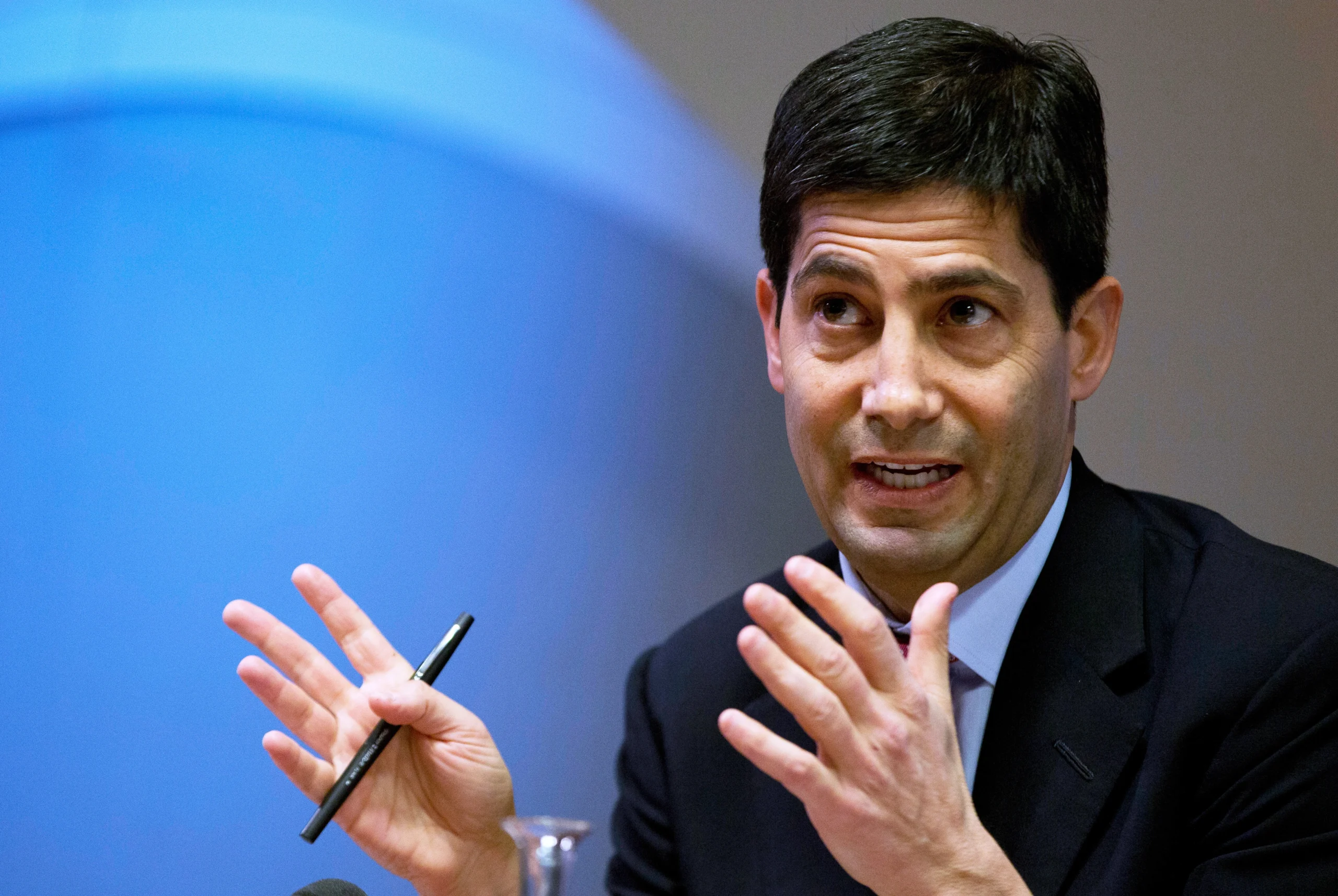
The Federal Reserve’s rate-setting committee held its benchmark borrowing rate steady on July 29, keeping it in a range of 3.5% to 3.75% — but the calm on the surface masked one of the most contested votes of the post-pandemic era. The Federal Open Market Committee split 9 to 3, with three members pushing to raise rates rather than hold, according to NPR’s coverage of the decision.
Chair Kevin Warsh, who took over the Eccles Building earlier this year after a nomination process that rattled bond markets, used his post-meeting press conference to make a point of not making a point. Rather than signal where rates are headed next, Warsh told reporters the Fed would judge market reaction “direct and unfiltered” instead of offering the rolling forecasts investors have come to expect, a stance detailed in CNBC’s meeting recap.
A rate hike was genuinely on the table
What made this meeting unusual wasn’t just the dissent — it was how close markets came to pricing in a hike rather than a cut. Fed funds futures tracked by CME Group put the odds of a rate increase at roughly 35% heading into the decision, up sharply from 26% a week earlier, according to CNBC’s markets analysis. That is a striking reversal from the rate-cutting cycle many investors had expected when Warsh’s nomination was first floated as a “productivity-led growth” pivot away from his predecessor’s caution.
The market reaction told its own story. The S&P 500 slid roughly 0.6% during Warsh’s press conference, the Dow shed more than 840 points intraday, and the 10-year Treasury yield rose to 4.657%, even as the Fed opted for a hold rather than a hike.
Why Warsh is playing it differently
Warsh’s approach reflects both economic and political calculus. Treasury yields have climbed since the Fed’s prior meeting despite the hold, a dynamic Warsh acknowledged directly. And unlike his predecessor, Warsh has been explicit that he intends to set policy independent of the White House’s preferences — even as he awaits a possible additional ally on the Board once a pending internal review concludes, according to CNBC’s analysis of the political backdrop.
Why this matters beyond Washington
A genuinely undecided Fed has knock-on effects well past US borrowers. Higher-for-longer Treasury yields pull global capital toward dollar assets, complicating rate paths in London, Ottawa, and emerging markets alike — a dynamic playing out in parallel with the UK’s own fiscal squeeze (see our companion report on the Autumn Budget) and China’s deflationary drag on global demand. For businesses and investors across the Gulf, Southeast Asia, and South Asia weighing dollar-denominated debt or dollar-pegged currencies, an unpredictable Fed chair is arguably a bigger variable than the rate level itself.
Discover more from The Economy
Subscribe to get the latest posts sent to your email.
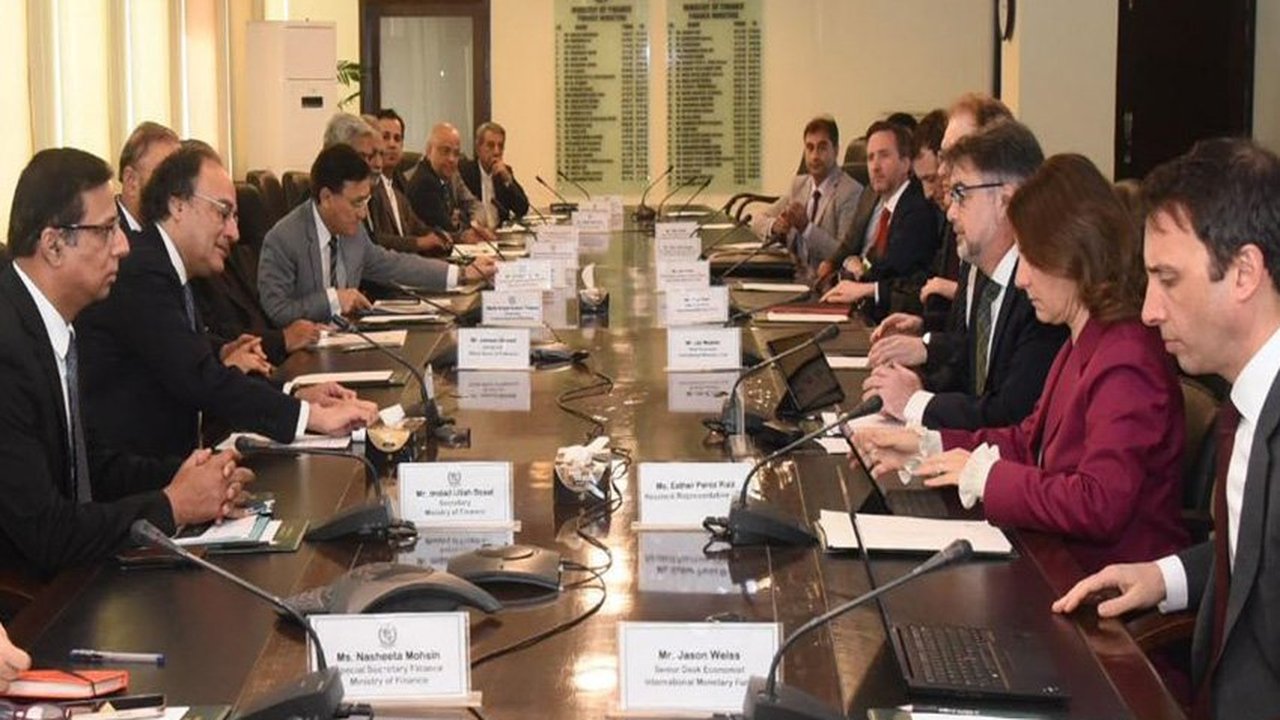
The IMF’s Executive Board completed Pakistan’s third review of its 37-month Extended Fund Facility (EFF) and second review of its Resilience and Sustainability Facility (RSF) on May 8, 2026, unlocking roughly $1.1 billion under the EFF and $220 million under the RSF, according to the IMF’s official statement. Total disbursements under both arrangements now stand at roughly $4.8 billion. Acting Chair Nigel Clarke credited Pakistan’s “strong program implementation” for supporting macroeconomic recovery and building resilience to shocks.
The Genuinely Good Numbers
By the IMF’s own account, the underlying data supports the assessment. GDP growth accelerated to an average of 3.8% year-on-year in the first half of FY26, driven by the auto, construction and garment industries, even accounting for flood disruption in July-August, according to the IMF’s staff report. Inflation, while ticking up to 7.3% year-on-year in March as commodity price pass-through hit domestic energy prices, remained within a broadly contained range, with core inflation at 7.6%. The current account was described as broadly balanced, and reserve rebuilding exceeded earlier projections — the State Bank of Pakistan projects reserves continuing to climb to roughly $18 billion by June 2026, according to analysis from the Islamabad Policy Research Institute.
The State Bank confirmed receipt of $1.3 billion from the IMF on May 12, 2026, according to CSS Prep’s policy analysis, which notes reserves had fallen to dangerously low levels in 2022-2023 before this recovery.
The External Risk the IMF Flagged Explicitly
The Fund’s own report is notably candid about downside exposure: under its April 2026 World Economic Outlook adverse scenario, the cumulative hit to Pakistan’s GDP from continued Middle East conflict could rise to around 1.5 percentage points by FY27, with inflation and the current account deficit each worsening by roughly 1.5-2.5 percentage points of GDP, according to the IMF’s staff country report. Given Pakistan’s reliance on imported energy, oil price volatility discussed in the IMF’s global outlook feeds directly into this specific country risk.
The Reform Question That Keeps Recurring
The structural policy conditions attached to this review read as familiar territory: sustaining fiscal consolidation, broadening the tax base, maintaining tight monetary policy to keep inflation within the State Bank’s target range, and advancing energy-sector reform — commitments the IMF’s own end-of-mission statement described as still “ongoing” rather than complete, per the IMF’s March 2026 mission statement.
A sharper framing comes from Pakistani policy analysts themselves: reforms that would genuinely break the IMF-program cycle — broadening the tax base to include agriculture and retail, ending energy subsidies, privatizing loss-making state-owned enterprises — impose concentrated, visible costs on politically organized interest groups, while the benefits of reversing those costs are diffuse and delayed, according to CSS Prep’s analysis. That political-economy imbalance, the analysis argues, consistently favors populist continuation of stabilization support over the structural reform that would end the need for it — a pattern this third review’s genuine macroeconomic progress doesn’t yet break.
Social Cost of the Adjustment
Pakistan’s poverty headcount rate rose to 25.3% in FY24, up sharply from 18.3% in FY22, driven by overlapping shocks from COVID, floods and inflation, according to the IMF’s staff report. The Benazir Income Support Programme (BISP) remains the primary social protection mechanism absorbing the distributional cost of IMF-mandated energy price increases and fiscal tightening — whether its scale is adequate remains, in the IMF’s own words, a live policy question rather than a settled one.
Discover more from The Economy
Subscribe to get the latest posts sent to your email.

The Taxman Cometh from Beijing

Pakistan IMF Program 2026: Inside the Push Toward an Interest-Free Economy

Russia Oil Revenue 2026: How Sanctions on Rosneft and Lukoil Are Draining the War Chest

Canada US Trade War 2026: Inside Carney’s Push to Cut Ties With Trump’s Tariffs

Rachel Reeves’s £25 Billion Problem: What the Autumn Budget Gap Means for Britain

Inside the Fed’s Most Divided Vote in Years: Why Warsh Held the Line on Rates

Pakistan Passed Its Third IMF Review

The Fed Is Fractured — And a New Chair Just Made It Louder, Not Quieter

The UK Economy in 2026 Is Neither Recession Nor Recovery :Stagflaton

Indonesia’s $121 Billion Nickel Bet Is Facing a Battery Chemistry

Why Ultra-Wealthy Families Are Splitting Between Singapore and Dubai inmarkets 2026

China Chose Political Control Over Fixing Its Deflation Trap in 2026

Oil Markets Are Oversupplied and Geopolitically Explosive at the Same Time

Russia’s Budget Deficit Blew Past Its Full-Year Target in Three Months

Russia Bans Diesel Exports 2026: Global Fuel Market Impact Explained

Gold Price Forecast 2026: Fed’s July 29 Decision and Record Central Bank Buying Explained

Strait of Hormuz Blockade 2026: Oil Prices Surge 9% as US-Iran Conflict Reignites

Strait of Hormuz 2026: Why Markets Still Don’t Trust It’s Open

China Politburo July 2026: Stimulus Signals Explained

Pakistan Economy 2026: GDP Grows 3.7% as IMF Completes EFF Review Amid Middle East Risk

Down But Not Out: Inside the Slow Sinking of Russia’s War Economy

Gulf Capital Retreat From Pakistan 2026: UAE Loan Freeze & What It Means

Apple vs OpenAI Lawsuit: The Economic Story Behind the Headline

Indonesia Russian Oil Imports 2026: Why Jakarta Is Diversifying Crude Supply

Global Stock Market Selloff 2026: Stagflation Fears Return as Iran Conflict Reignites

The Yuan Now Settles 67% of Russian Oil Payments — Quiet De-Dollarization in Action

AI Capex Bubble 2026: The Hidden $662B Debt Nobody Reports

Pakistan’s Economic Survey FY26: Inflation Spike Insights
-

 Markets & Finance7 months ago
Top 15 Stocks for Investment in 2026 in PSX: Your Complete Guide to Pakistan’s Best Investment Opportunities
-

 Analysis5 months ago
Johor’s Investment Boom: The Hidden Costs Behind Malaysia’s Most Ambitious Economic Surge
-

 Analysis6 months ago
Top 10 Stocks for Investment in PSX for Quick Returns in 2026
-

 Analysis6 months ago
Brazil’s Rare Earth Race: US, EU, and China Compete for Critical Minerals as Tensions Rise
-

 Banks7 months ago
Best Investments in Pakistan 2026: Top 10 Low-Price Shares and Long-Term Picks for the PSX
-

 Investment7 months ago
Top 10 Mutual Fund Managers in Pakistan for Investment in 2026: A Comprehensive Guide for Optimal Returns
-

 Global Economy7 months ago
15 Most Lucrative Sectors for Investment in Pakistan: A 2025 Data-Driven Analysis
-

 Global Economy7 months ago
Pakistan’s Export Goldmine: 10 Game-Changing Markets Where Pakistani Businesses Are Winning Big in 2025