
Analysis
Pakistan’s SBP Reserves Climb to $16.2 Billion: Analyzing the Latest Forex Update and Its Economic Implications

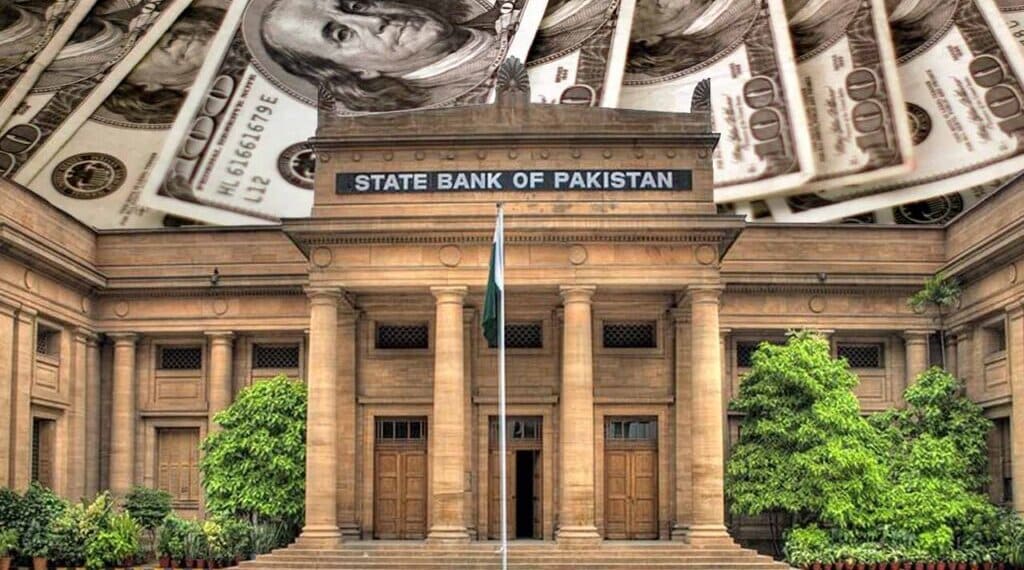
Pakistan’s foreign exchange reserves held by the State Bank of Pakistan edged up to $16.20 billion in the week ended February 13, 2026 — a number that, while modest in isolation, tells a larger story of structural stabilization, IMF discipline, and a country carefully rebuilding its financial credibility after one of the most severe balance-of-payments crises in its modern history.
A Week-on-Week Gain That Signals Quiet Confidence
The State Bank of Pakistan (SBP) reported on Thursday that its foreign exchange reserves increased by $19 million during the week ended February 13, 2026, reaching $16,196.9 million ($16.20 billion). Pakistan’s total liquid foreign exchange reserves — which include SBP holdings and net reserves held by commercial banks — stood at $21,301.5 million ($21.30 billion). Of that combined figure, commercial banks held $5,104.6 million ($5.10 billion), a decline of approximately $92.3 million week-on-week, partially offsetting the central bank’s gain.
The weekly increase is unremarkable in size but remarkable in what it represents: the ninth consecutive week of positive movement in SBP-held reserves. Strip away the noise, and a clear trend emerges — Pakistan is steadily, if cautiously, replenishing the reserve buffers it nearly exhausted during the 2022–23 crisis.
The Weekly Data in Context: A Reserve Trajectory Table
The latest SBP reserves update gains considerably more meaning when viewed against the recent weekly trajectory:
| Week Ending | SBP Reserves (USD mn) | Weekly Change (USD mn) |
|---|---|---|
| February 13, 2026 | 16,196.9 | +19.1 |
| February 6, 2026 | 16,177.8 | +21.0 |
| January 30, 2026 | 16,157.2 | +56.0 |
| January 23, 2026 | 16,101.1 | +13.0 |
| January 16, 2026 | 16,087.7 | +16.0 |
| January 9, 2026 | 16,071.8 | +16.0 |
| Week of Dec. 19, 2025* | 16,055.7 | +141.0 |
| Week of Dec. 12, 2025* | 15,915.1 | +13.0 |
| Week of Dec. 5, 2025* | 15,902.5 | +16.0 |
| Late November 2025 | 15,886.8 | +1,300.0 (IMF tranche) |
Dates approximate based on SBP release sequence. Source: State Bank of Pakistan
The late-November spike — a $1.3 billion jump — represents the single most consequential data point in this series. The SBP confirmed that the weekly increase was mainly due to the receipt of SDR 914 million, equivalent to about $1.2 billion, from the IMF under the Extended Fund Facility (EFF) and the Resilience and Sustainability Facility (RSF). Everything since then has been organic accumulation: modest but persistent gains averaging roughly $20–25 million per week, a cadence that speaks to improved external inflows rather than one-off injections.
The IMF Scaffolding: What’s Holding the Recovery Up
No serious analysis of Pakistan’s latest SBP reserves update can ignore the role of the International Monetary Fund in engineering the turnaround. Pakistan’s 37-month EFF was approved on September 25, 2024, and aims to build resilience and enable sustainable growth, with key priorities including rebuilding international reserve buffers and broadening the tax base. Gross reserves stood at $14.5 billion at end-FY25, up from $9.4 billion a year earlier, and are projected to continue to be rebuilt in FY26 and over the medium term.
That $9.4 billion-to-$16.2 billion trajectory over roughly eighteen months is striking. But it would be naive to frame it purely as success. Much of the gain reflects the $7 billion IMF program’s front-loaded disbursements — the IMF’s total commitment to Pakistan comprises $5.2 billion under the Extended Fund Facility and $1.4 billion through the Resilience and Sustainability Facility, aimed at strengthening the country’s foreign exchange reserves. A third review is scheduled for March 2026, which, if cleared, would entitle Pakistan to an additional ~$1.04 billion under the EFF and ~$211 million through the RSF. The market is watching.
The IMF has not been ungenerous with its praise, but it has also not been vague about its expectations. IMF officials noted that Pakistan’s reform implementation under the EFF has helped preserve macroeconomic stability, with real GDP growth accelerating, inflation expectations remaining anchored, and fiscal and external imbalances continuing to moderate. The subtext is clear: continued disbursements are contingent on continued discipline.
Remittances: The Underrated Engine
Beneath the IMF headline, a quieter but arguably more sustainable driver has been building momentum: overseas remittances. Pakistan’s remittances are projected to exceed $41 billion in 2026, marking a notable increase from $38 billion last year. Remittances currently account for roughly 7–8% of Pakistan’s GDP — a lifeline that, unlike IMF tranches, does not add to the country’s external debt stock.
January 2026 reinforced this picture dramatically. Pakistan received $3.5 billion in foreign remittances in January 2026, and the country recorded a current account surplus of $121 million in January, compared to a current account deficit of $393 million in the same month last year. That is not merely a number — it is a reversal. A year ago, Pakistan was hemorrhaging foreign exchange; today, it is generating a current account surplus. The improvement was attributed to stronger remittance inflows and a rebound in exports, which crossed the $3 billion mark for the first time in January to reach $3.061 billion, compared to $2.27 billion in December 2025.
With Ramazan beginning in late February and Eid ul-Fitr approaching in late March, seasonal remittance spikes — historically the largest of any year — could provide another meaningful uplift to reserves in the coming weeks. Overseas Pakistanis tend to send significantly more money home ahead of major religious observances, and given the scale of the diaspora across the Gulf, the UK, and North America, this annual inflow is no trivial variable.
Pakistan Economy Recovery: The Macro Backdrop
Understanding the latest Pakistan total liquid reserves 2026 data requires contextualizing it within a broader macroeconomic stabilization story that, just two years ago, looked anything but inevitable.
In 2022–23, Pakistan’s foreign exchange reserves fell to dangerously low levels — at one point covering less than one month of imports. The rupee collapsed. Inflation surged above 38%. The IMF had to be called in under emergency conditions. Pakistan’s import cover — a key indicator of external sector strength — stood at less than one month during the 2022–23 crisis period; it has since climbed to approximately 2.5 months. At the current trajectory, the SBP’s own upgraded forecast of reaching $17.8 billion by June 2026 would push import cover comfortably above three months — the IMF’s benchmark for adequate reserve buffers.
The IMF projects Pakistan’s current account deficit for FY25 at about $0.2 billion, or 0.1 percent of GDP, helped by resilient exports and a stronger remittance outlook, as improved macro and FX stability has supported a rebound in remittance inflows through formal channels. These projections, calibrated conservatively, now look increasingly optimistic given January’s current account surplus.
However, analysts caution that the road ahead is not without hazard. External debt repayments remain elevated. Import demand — deliberately suppressed during the crisis — is beginning to recover as the economy grows, which will widen the current account deficit over the medium term. Over the medium term, the current account deficit is expected to widen modestly to around 1 percent of GDP as imports rebound. Sustaining the reserve build-up will require export growth and continued structural reforms, not just remittance windfalls and IMF tranches.
The Commercial Bank Divergence: A Nuance Worth Noting
One detail in Thursday’s release deserves closer scrutiny. While SBP-held reserves rose by $19.1 million, net foreign reserves held by commercial banks fell by $92.3 million to $5,104.6 million. Total liquid reserves consequently declined week-on-week from $21.374 billion to $21.301 billion — a net reduction of $73.2 million.
This divergence matters. Commercial bank reserves are typically more volatile, influenced by import payments, letter of credit settlements, and short-term capital movements. Their decline in the same week that the central bank gained suggests that private sector foreign currency demand — for trade financing and external payments — is picking up. This is broadly consistent with an economy that is beginning to return to a more normal import cycle. It is not a red flag. But it is a reminder that the $16.2 billion SBP headline and the $21.3 billion total liquid figure tell somewhat different stories about where Pakistan’s foreign exchange reserves impact on economy is most acutely felt.
Bond Market Sentiment and Foreign Inflows
Pakistan’s bond market has undergone a dramatic repricing over the past twelve months. After years of yields in double digits — partly reflecting credit risk premiums that placed Pakistani sovereign debt in near-junk territory — foreign inflows into Pakistan bonds have been recovering as investor confidence improves. The IMF program’s credibility, declining inflation, and a more stable rupee have all contributed.
Pakistan’s economy grew an estimated 2.4 percent in FY25, up from 0.3 percent in the previous fiscal year, as inflation cooled and the rupee stabilized after a steep depreciation cycle in 2022–23. The improvement in external buffers is likely to boost investor sentiment at a time when the government is stepping up efforts to attract foreign direct investment and privatize state-owned enterprises.
For global investors scanning South Asian sovereign debt, Pakistan presents a complicated but increasingly interesting risk-reward proposition. The EFF program provides a backstop. The reserve trajectory is improving. But political risk, energy sector liabilities, and the scale of pending structural reforms — particularly on taxation and state-owned enterprise privatization — remain substantive concerns that no amount of weekly reserve data can fully paper over.
What This Means for Everyday Pakistanis
The relevance of the latest SBP foreign exchange reserves weekly data extends far beyond financial markets. For ordinary Pakistanis, reserve levels are a proxy for economic stability in the most direct sense.
When reserves are low, the rupee weakens, import costs rise, and inflation — particularly in food and energy — accelerates. The 2022–23 crisis saw petrol shortages and cooking oil price spikes that hit the country’s most economically vulnerable citizens hardest. Conversely, as reserves strengthen, the SBP has greater capacity to manage exchange rate volatility, facilitating the import of raw materials for industry, medicines, and consumer goods at more stable prices.
With remittances hitting $3.5 billion in January alone, families receiving overseas transfers are also seeing more purchasing power — dollars converted at a more stable exchange rate translate into more rupees, more household spending, and more local economic activity. This virtuous cycle, fragile as it remains, is more visible now than at any point in the past three years.
Forward Outlook: The $17.8 Billion Target and the Risks
The SBP’s own forecast — foreign exchange reserves reaching $17.8 billion by June 2026, up from a previous estimate of $17.5 billion — follows a controlled current account deficit and the realisation of planned official inflows. Achieving that target from the current $16.2 billion would require an additional $1.6 billion over roughly four months, or approximately $400 million per month. Given recent monthly inflow dynamics — remittances, IMF disbursements pending the March review, and bilateral inflows — the target appears achievable, but not guaranteed.
Key Data Summary (Week Ended February 13, 2026)
| Metric | Value |
|---|---|
| SBP-held FX reserves | $16,196.9 million ($16.20 billion) |
| Net reserves — commercial banks | $5,104.6 million ($5.10 billion) |
| Total liquid foreign reserves | $21,301.5 million ($21.30 billion) |
| Week-on-week SBP change | +$19.1 million (+0.12%) |
| Week-on-week commercial bank change | -$92.3 million |
| Week-on-week total liquid change | -$73.2 million |
| SBP FX reserves forecast (June 2026) | $17.8 billion |
Source: State Bank of Pakistan official weekly release, February 19, 2026
Key risks to the upside scenario include: a deterioration in the IMF relationship that delays the March 2026 review; an oil price spike that widens the import bill; or a global risk-off episode that triggers capital outflows from emerging markets. On the upside, a successful Eurobond issuance or Panda bond placement — discussed in IMF program documents — could provide a step-change in the reserve buffer.
Conclusion: Rebuilding Credibility, One Week at a Time
Pakistan’s $16.2 billion in SBP-held reserves and $21.3 billion in total liquid foreign exchange reserves are, in the grand sweep of emerging-market economics, modest numbers. They pale against India’s $640+ billion reserve war chest, or even Bangladesh’s more insulated external position. But for a country that was, less than three years ago, teetering on the edge of a sovereign default scenario, they represent something more important than a number: they represent the painstaking reconstruction of credibility.
That credibility — with the IMF, with international bond investors, with the Pakistani diaspora deciding whether to remit through formal channels — is what ultimately underpins the reserve trajectory. The weekly $19 million gain is a data point. The story it belongs to is a long-term stabilization project with no guarantees, but with more reason for cautious optimism today than at any point since the crisis began.
The question for policymakers, investors, and analysts alike is not whether Pakistan has turned a corner — the evidence suggests it has. The real question is whether it can hold that corner while accelerating the structural reforms that transform a reserve recovery into durable, private-sector-led growth.
The answer to that question will not arrive in a weekly reserve bulletin. But every Thursday, as the SBP releases its latest figures, it offers a small, incremental clue.
Discover more from The Economy
Subscribe to get the latest posts sent to your email.



In an era defined by global economic volatility, supply chain fracturing, and the relentless search for post-pandemic growth drivers, middle powers face a stark choice: passively import technological paradigms dictated by foreign tech superpowers or aggressively architect a sovereign framework that harnesses next-generation efficiencies. Under Prime Minister Anthony Albanese, Australia has chosen the latter.
Navigating the delicate equilibrium between accelerating productivity gains and enforcing robust governance, the Albanese administration’s strategic pivot toward artificial intelligence (AI) has emerged as a compelling blueprint for modern statecraft. Far from a mere policy footnote, Australia’s calculated embrace of AI integration is positioning the nation’s economy for an unprecedented transformation—one projected to inject billions into the domestic ledger while safeguarding social cohesion.
The Productivity Imperative: Bridging the Gap
For years, advanced economies have grappled with sluggish productivity growth—a trend that has severely tested traditional fiscal and monetary levers. Australia has been no exception, confronting multi-decade lows in labour productivity growth that have squeezed profit margins, constrained real wage progression, and fueled cost-of-living anxieties.
Enter artificial intelligence. Economic modelling highlights that large-scale AI adoption could unlock up to AUD $142 billion annually for the Australian economy by 2030, serving as a multi-factor productivity catalyst. Rather than viewing technological automation as a displacement threat, Canberra’s policy machinery has reframed AI as an essential force multiplier across key national sectors—from mining optimisation and agricultural tech to precision manufacturing under the Future Made in Australia agenda.
Small and medium-sized enterprises (SMEs)—the lifeblood of the domestic economy—stand to gain immensely. By automating administrative burdens, streamlining compliance, and optimising supply chain logistics, AI integration allows local businesses to redirect capital toward innovation and high-value creation.
Pioneering a World-First Regulatory Framework
What separates Australia’s approach from the fragmented regulatory environments of the United States or the heavy-handed compliance models of the European Union is its proactive, harmonised architecture.
In July 2026, the Albanese government unveiled a world-leading national AI framework designed to provide certainty for investors while establishing strict guardrails for ethical deployment. Key pillars of this strategy include:
- Sovereign Standards and Intellectual Property Protection: Australia became a global pioneer by enacting clear protections ensuring that local creative works, literature, music, and journalistic output cannot be scraped for AI training models without explicit artist consent and compensation.
- Streamlined Compliance for Frontier Investments: By establishing unified national standards, the framework cuts through bureaucratic red tape, offering international investors expedited approval pathways conditional on adherence to safety and security benchmarks.
- A Binding Social Licence: The framework emphasises that technology must serve human agency. Ensuring public trust remains paramount; algorithms cannot operate as black boxes when critical public services, employment markets, and national security are involved.
Navigating the Geopolitical and Economic Crosswinds
Australia’s economic strategy does not exist in a vacuum. As great power competition reshapes global trade and globalisation pivots toward regional resilience, Canberra is leveraging its vast reserves of critical minerals, rare earths, and clean energy assets.
AI acts as the computational glue binding these traditional resource strengths with future-facing capabilities. For instance, optimising the extraction and processing of critical minerals required for global energy transitions relies heavily on advanced machine learning models and automated logistics. By coupling its natural resource abundance with top-tier university research and skilled graduate pipelines, Australia is making a compelling pitch to global venture capital: come build here, on Australian terms.
Comparative Strategic Advantages
| Strategic Pillar | Traditional Model | Australia’s AI-Integrated Approach |
| Productivity Driver | Capital investment & raw volume expansion | Multi-factor efficiency via sovereign AI deployment |
| Regulatory Stance | Reactive policy or unbridled laissez-faire | Proactive, world-first unified national standards |
| Workforce Strategy | Reliance on lagging skills adaptation | Empowering workers through institutional AI literacy and secure transitions |
| IP & Innovation | Lax protections for digital creators | Enforceable ownership rights over AI training inputs |
The Road Ahead: Can Australia Stick the Landing?
While the macroeconomic projections are dazzling, translating policy ambition into structural reality carries inherent risks. The success of Albanese’s vision will ultimately be judged by execution metrics over the remainder of the decade:
- Skills Alignment: Ensuring that the national education and vocational training sectors can rapidly upskill workers to meet the demands of an AI-augmented labour market.
- Cybersecurity Resilience: As critical infrastructure becomes increasingly digitised and reliant on automated machine-learning networks, national security frameworks must scale defensively to prevent state-sponsored cyber exploitation.
- Equitable Distribution: Ensuring that productivity dividends do not concentrate solely within major metropolitan tech hubs, but actively flow to regional communities and working-class Australians.
Conclusion
Australia’s economic narrative under the Albanese administration is shedding the old tropes of the “lucky country” relying purely on cyclical commodity booms. Instead, it is writing a new chapter of purposeful economic design. By harmonising technological disruption with rigorous ethical standards and worker-centric policies, Australia is proving that middle powers do not have to be passive spectators in the digital revolution—they can help write the rules of the game.
Discover more from The Economy
Subscribe to get the latest posts sent to your email.

For decades, the global dominance of the U.S. dollar has rested on two primary pillars: deep, unencumbered liquid capital markets and an indispensable global financial messaging protocol known as SWIFT. When Beijing launched its e-CNY initiative, Western observers initially framed it as a central bank digital currency (CBDC) designed primarily for domestic surveillance, retail convenience, and financial inclusion.
However, recent strategic moves highlight a far more ambitious objective. As documented by the South China Morning Post, Beijing is actively leveraging Hong Kong as its central offshore laboratory to establish the infrastructure required for international cross-border digital yuan adoption.
The crucial strategic question is no longer whether China can engineer robust distributed ledger architecture, but whether an offshore financial hub operating under “One Country, Two Systems” can bridge the gap between rigid domestic capital controls and global institutional acceptance. To succeed, China must resolve the fundamental tension between absolute monetary sovereignty and the open networks required for international currency adoption.
1. The Paradox of the Offshore Laboratory
China’s monetary expansion faces a well-documented structural paradox. According to macroeconomic research from the Carnegie Endowment for International Peace, no currency can achieve true international reserve status without offering open capital accounts and deep, freely convertible liquidity. Yet, completely relaxing capital controls would expose China’s domestic banking system to volatile international capital flows and speculative pressures.
Hong Kong serves as the pressure valve and testing ground for this paradox:
- Legal & Regulatory Buffer: Hong Kong maintains a trusted common law judicial system and an independent monetary authority (Hong Kong Monetary Authority).
- Convertibility Bridge: It allows mainland authorities to test e-CNY settlement, cross-border retail links, and digital asset integration without opening mainland financial markets directly to global speculative shocks.
- Institutional Liquidity: As the world’s premier offshore renminbi hub, Hong Kong provides the institutional counterparties necessary to build real-world transaction volume.
“The digital yuan’s true test lies not in domestic retail adoption, but in whether foreign counterparties can settle cross-border trade without taking on unacceptable regulatory or capital risks.”
2. Wholesale Settlement and Project mBridge
While retail consumer wallets attract considerable media attention, the real geopolitical shift is occurring at the wholesale institutional level. Strategic initiatives like Project mBridge—developed in partnership with the Bank for International Settlements (BIS), the People’s Bank of China, and regional central banks—demonstrate how multi-CBDC platforms can streamline international trade.
As reported in market analyses by Bloomberg and trade finance studies covered by Reuters, multi-lateral CBDC platforms offer significant operational advantages:
- Elimination of Intermediaries: Direct ledger-to-ledger transactions bypass traditional correspondent banking networks.
- Speed and Efficiency: Cross-border settlement times are reduced from days to seconds.
- Cost Reduction: Transaction costs and foreign exchange spreads across regional trade corridors in Asia and the Middle East are dramatically lowered.
If commercial enterprises operating in Hong Kong can settle trade directly in e-CNY with instant finality, Beijing creates a compelling economic incentive for trade partners that operates independently of Western clearing networks.
3. Geopolitical Implications & The Road Ahead
Western policymakers and central bankers are monitoring these developments closely. Recent congressional testimony and Treasury reviews highlighted by Reuters reflect growing concern in Washington that alternative settlement rails could gradually erode the reach and enforcement of Western financial sanctions.
However, technological capability alone does not guarantee global currency dominance. Until foreign corporate treasuries and central banks have full confidence in converted currency liquidity, property rights, and transparent legal protections, the digital yuan will serve primarily as an efficient alternative mechanism for bilateral trade rather than an immediate replacement for the U.S. dollar.
Institutional Summary & Comparison
| Dimension | Conventional Retail Focus | Wholesale / Strategic Reality |
| Primary Mechanism | Retail e-CNY wallets for tourists & merchants | Multi-CBDC corridors (Project mBridge) & Project Ensemble |
| Core Objective | Domestic payments & payment app competition | Disintermediation of correspondent banking and SWIFT rails |
| Primary Barrier | Consumer habituation & merchant readiness | Capital controls, currency convertibility, and institutional trust |
Sources & Citations
- South China Morning Post: Beijing wants Hong Kong to sow the seeds for the digital yuan
- Bank for International Settlements (BIS): Central Bank Digital Currency (CBDC) & Cross-Border Payments Research
- Carnegie Endowment for International Peace: China’s Financial System and Capital Account Dynamics
- Bloomberg Financial Analysis: Global Macro & Digital Currency Integration
- Reuters News & Analysis: Cross-Border Settlement and Global Trade Finance
Discover more from The Economy
Subscribe to get the latest posts sent to your email.

Guests planning a visit to Tokyo Disneyland in early 2027 should put one easily missed detail on their itinerary: Peter Pan’s Flight is scheduled to be temporarily closed from January 6 through February 2, 2027. The operator lists the dates both on its official attraction page and in the Tokyo Disneyland closure schedule. This is a scheduled interruption, not an announcement that the classic ride is being removed permanently. Travelers visiting on dates inside that window should assume the attraction will not be available unless Tokyo Disney Resort publishes a change.
The distinction matters because online references to “Peter Pan closing at Tokyo Disney” can confuse two different parks and two different experiences. Tokyo Disneyland’s Peter Pan’s Flight is a compact Fantasyland ride. Tokyo DisneySea has a separate, newer attraction called Peter Pan’s Never Land Adventure, with its own planned March 2027 maintenance period. The first planning step is making sure the information applies to the ticket you actually bought.
At a glance: what the operator currently says
| Planning question | Verified answer |
|---|---|
| Which attraction? | Peter Pan’s Flight |
| Which park? | Tokyo Disneyland, Fantasyland |
| Scheduled closure starts | January 6, 2027 |
| Scheduled closure ends | February 2, 2027 |
| Reopening expectation | After the listed closure window, subject to operator changes |
| Type of notice | Temporary closure; not announced as permanent |
| Where to recheck | Official attraction listing |
The dates are explicitly labeled as a temporary closure by Tokyo Disney Resort. Do not treat February 3 as an unconditional reopening guarantee: an operator may update maintenance information or temporarily suspend operations for other reasons. Check again shortly before travel and on the day you enter the park.
What is Peter Pan’s Flight?
Peter Pan’s Flight is a dark ride based on the familiar journey from London to Never Land. Guests sit in a flying pirate-ship vehicle that travels through a storybook environment. According to the operator’s ride information, it is in Fantasyland, lasts about two and a half minutes and carries two people per vehicle. It operates indoors and includes dark spaces. These details make it particularly appealing to families who want a gentle, classic Disney experience rather than a high-speed thrill ride.
There are restrictions worth noting even on operating days. The published guidance says a guest must be able to maintain a stable seated position independently and that children may not be held on an adult’s lap during the ride. If your group includes young children, anyone needing seating assistance or visitors uncomfortable with darkness, read the official description and accessibility guidance rather than assuming that the attraction suits everyone because it is short.
Short ride duration is not the same as short waiting time. Demand for well-known classics can vary with crowds, operating conditions and holiday schedules, so it is unwise to schedule a tight sequence of unrelated bookings around a predicted queue. The operator’s app and in-park staff can provide current operating information when the ride is available.
The dates around the closure are not interchangeable
A guest visiting January 5 has a fundamentally different planning position from someone arriving January 6. January 5 falls before the currently listed closure, while January 6 is its opening day. A February 2 visit falls on the final listed day of the maintenance window; February 3 is the earliest day after that window, not a contractual promise that the ride will run.
For a family staying at the resort for multiple days, the difference might be worth changing which day is assigned to Tokyo Disneyland. If one day is before January 6 and another is inside the closure, put Disneyland first if the classic Peter Pan ride is a must-do. But do not swap a park ticket or hotel reservation until you understand the applicable change and cancellation conditions. The economic cost of reshuffling an entire trip can exceed the benefit of experiencing one short ride.
A visitor traveling from overseas may be choosing between a single Disneyland day and a DisneySea day. In that case, consider the trip’s overall priorities. Someone who values vintage Fantasyland attractions may still prefer Disneyland even during the closure. Someone traveling expressly for an immersive Peter Pan adventure could be more interested in the DisneySea attraction—but must buy admission to that different park and verify its own operating schedule.
Other Tokyo Disneyland closures during the same period
The official park maintenance listing shows other attractions with early-2027 closure windows that may overlap your visit. At the time of this review, it lists Jungle Cruise: Wildlife Expeditions from January 6 through March 31, Splash Mountain from January 7 through February 4, and Haunted Mansion from January 8 through February 4. These are operator-published schedules, not independent predictions about refurbishment completion.
This makes the Peter Pan closure more significant for certain visitors than a single unavailable ride might suggest. A group that expected several classic experiences in one afternoon could find multiple priorities temporarily inaccessible. Conversely, the park contains many other attractions and entertainment offerings, and the attractions that remain open should be evaluated on their own current descriptions rather than guessed from historical schedules.
It is worth making a small “must ride / would enjoy / optional” list. Mark each attraction against the closure page. Then build flexibility around weather, performance calendars and queue variation. A plan with alternatives is more resilient than a rigid minute-by-minute schedule.
Better alternatives for different kinds of visitors
If the attraction’s appeal is gentle fantasy storytelling, explore other Fantasyland offerings listed in the official Tokyo Disneyland attraction directory. Filter for ride type and height or access restrictions, and read the current operating details. Do not assume that a neighboring attraction will be open merely because it is not listed in an older travel blog.
If the main attraction is Disney character immersion, devote time to character experiences, themed areas, shopping or scheduled entertainment that is actually available on your day. These can preserve the spirit of the trip without pretending they are substitutes for the ride itself. Some guests will prefer to spend the recovered time on a longer headliner; others may value an unhurried lunch and a park exploration that is less vulnerable to queues.
If the trip is built around Peter Pan specifically, Tokyo DisneySea’s Never Land Adventure may appear attractive. But it is not the same ride: it is a 3D boat-based experience in Fantasy Springs, with different restrictions and a different length. Tokyo Disney Resort’s DisneySea attraction page is the reliable way to compare them. Admission, access arrangements and the day’s capacity remain separate questions.
Parents should also avoid overstating the value of a replacement to children. “Another attraction has pirates” does not make it the planned Peter Pan experience. Setting expectations before entering the park is often more effective than negotiating disappointment in a crowded queue area.
Are refunds or ticket changes automatic?
The announcement of an attraction’s temporary closure does not itself demonstrate that every guest is entitled to a ticket refund or a date change. Theme-park tickets ordinarily grant admission subject to operating conditions, not a binding guarantee that every individual ride will operate. Actual ticket terms, package conditions and any operator-specific accommodation policy govern what can be changed.
Before buying or modifying a pass, review the official Tokyo Disney Resort ticket and reservations guidance and any reseller’s terms. A third-party package might combine transport, hotel rooms and tickets under separate cancellation rules. You should not rely on the statement “ride closed” as a universal reason for a penalty-free cancellation.
If your booking is complex, write down the name of the supplier, reservation reference, exact park date and type of admission. Seek a written answer before paying a change fee. This is particularly important if you plan to move only one day of a multi-day trip and keep the remainder unchanged.
Does Disney Premier Access help during the closure?
No paid queue-management product can make an attraction operate while it is closed. Disney Premier Access is a separate, paid tool for eligible operating experiences; eligibility and availability can change. The official Premier Access guide explains that places may sell out and that the price does not include park admission. It should not be marketed to families as a guaranteed workaround for a published maintenance closure.
The app can nevertheless be useful for other attractions and live operating information. If a ride is unavailable, remove it from the day’s queue-management plan and redirect attention to attractions genuinely offered that day. Check the current product terms before purchasing any additional access.
How to build a more reliable 2027 itinerary
Start with the official attraction closure list rather than the social-media version of it. Choose a date, read the list for the correct park, then check the pages for the two or three attractions most important to your group. If several favorites overlap with closures, compare another travel day, but preserve buffer time and cost limits.
Once you have a provisional itinerary, check whether your whole group can experience the alternatives. A family with a toddler and grandparents may have different needs from a group of teenagers. Ride seating rules, dark environments, height restrictions and walking distances deserve attention before buying optional upgrades.
A week before departure, look at the operator’s park calendar and attraction pages again. On the morning of your visit, follow current app information and staff instructions. Write down a backup plan that does not depend on a single ride reopening on the first conceivable day.
Quick visitor questions
Is Peter Pan’s Flight shutting permanently? The published notice says temporary closure January 6–February 2, 2027. It does not announce permanent removal.
Is it in Tokyo Disneyland or DisneySea? Peter Pan’s Flight is in Tokyo Disneyland’s Fantasyland. DisneySea has the separate Never Land Adventure.
Can I ride on February 2? The current listing includes February 2 in the closure window. Do not plan on riding that day.
Is February 3 the official reopening day? It is the first day after the presently announced closure period, assuming the dates are unchanged. Confirm the park’s live information rather than treating operation as guaranteed.
Should I change my trip? That depends on how important this specific ride is compared with hotel, flights, admission and other attractions. For most travelers, adjusting priorities within the same park is the lower-risk first option.
Final planning advice
This news is not a farewell to Peter Pan’s Flight. It is a defined, temporary gap in the operating calendar. The useful response is to check your exact visit date, compare the rides your family actually cares about and keep a realistic alternative ready. Tokyo Disneyland can still be an appealing destination during the listed closure; the difference between an enjoyable trip and a frustrating one may simply be accurate expectations.
Discover more from The Economy
Subscribe to get the latest posts sent to your email.

Personal Injury Lawyer Near Me in NYC: How to Find the Right Attorney After an Accident

Why Falling World Food Prices Do Not Always Lower Grocery Bills

Oil Shocks and Core Inflation: Why the Two Move Differently

Singapore Cannot Fight Financial Fraud by Making Victims Bear the Risk Alone

Singapore Banking’s Real Test: Beyond Profits, Who Will Safeguard Financial Trust?

Nvidia’s Share Price Is Not a Scorecard for Singapore’s AI Future

The Australian Dollar Is Not Asia’s Oracle. Singapore Should Listen Anyway

Singapore’s Bank Sell-Off Is Really a Test of What Stability Is Worth

Why a Weaker Currency Makes Imported Food More Expensive

How Oil Price Shocks Raise Food Prices in Importing Countries

Petrol and Diesel Prices in Pakistan Today: Complete Update for 9 November 2026

Wall Street’s Renminbi Paradox: Banks, Beijing and the Dollar

The Market Economy Is Winning

Bitcoin’s Dollar Trap: The Chart That Exposes the Future of Money

Stock Market Crash in 2026? Warning Signs, Scenarios and a Calm Investor Checklist

US–Iran Conflict in October 2026: Hormuz, Oil Prices and Diplomacy

Dow Jones Today: Dow Slips 237 Points After the Worst Day Since April 2025

China’s AI Microdrama Boom: How Beijing Is Reshaping Global Media

Pakistan IMF Programme 2026: Why Bailouts Keep Returning

SSI November 2026 Payment: Why Benefits Arrive October 30

US–China AI Export Controls in 2026: Chips, Testing Rules and Corporate Risk

2027 Federal Tax Brackets: New IRS Rates and Standard Deductions Explained

EU-China Trade Deal 2026: How Beijing and Brussels Avoided a Trade War—and Who Wins

Singapore Stock Market Outlook 2027: The STI’s Bank-and-Yield Test

Stock Market Crash 2026? What the November Rout Actually Tells Us

IMF Global Outlook 2027: The Recovery Is Real, but the Divide Is Growing

World Bank Debt Report 2026: The $9.4 Trillion Burden Behind the Recovery

KSE-100 Index 2026: Is Pakistan’s Stock-Market Recovery Sustainable?
-

 Markets & Finance10 months ago
Top 15 Stocks for Investment in 2026 in PSX: Your Complete Guide to Pakistan’s Best Investment Opportunities
-

 Analysis9 months ago
Johor’s Investment Boom: The Hidden Costs Behind Malaysia’s Most Ambitious Economic Surge
-

 Analysis9 months ago
Top 10 Stocks for Investment in PSX for Quick Returns in 2026
-

 Banks10 months ago
Best Investments in Pakistan 2026: Top 10 Low-Price Shares and Long-Term Picks for the PSX
-

 Analysis9 months ago
Brazil’s Rare Earth Race: US, EU, and China Compete for Critical Minerals as Tensions Rise
-

 Investment10 months ago
Top 10 Mutual Fund Managers in Pakistan for Investment in 2026: A Comprehensive Guide for Optimal Returns
-

 Global Economy11 months ago
15 Most Lucrative Sectors for Investment in Pakistan: A 2025 Data-Driven Analysis
-

 Global Economy11 months ago
Pakistan’s Export Goldmine: 10 Game-Changing Markets Where Pakistani Businesses Are Winning Big in 2025