
Analysis
Asia Oil Buyers Have Exhausted Their Hormuz Alternatives

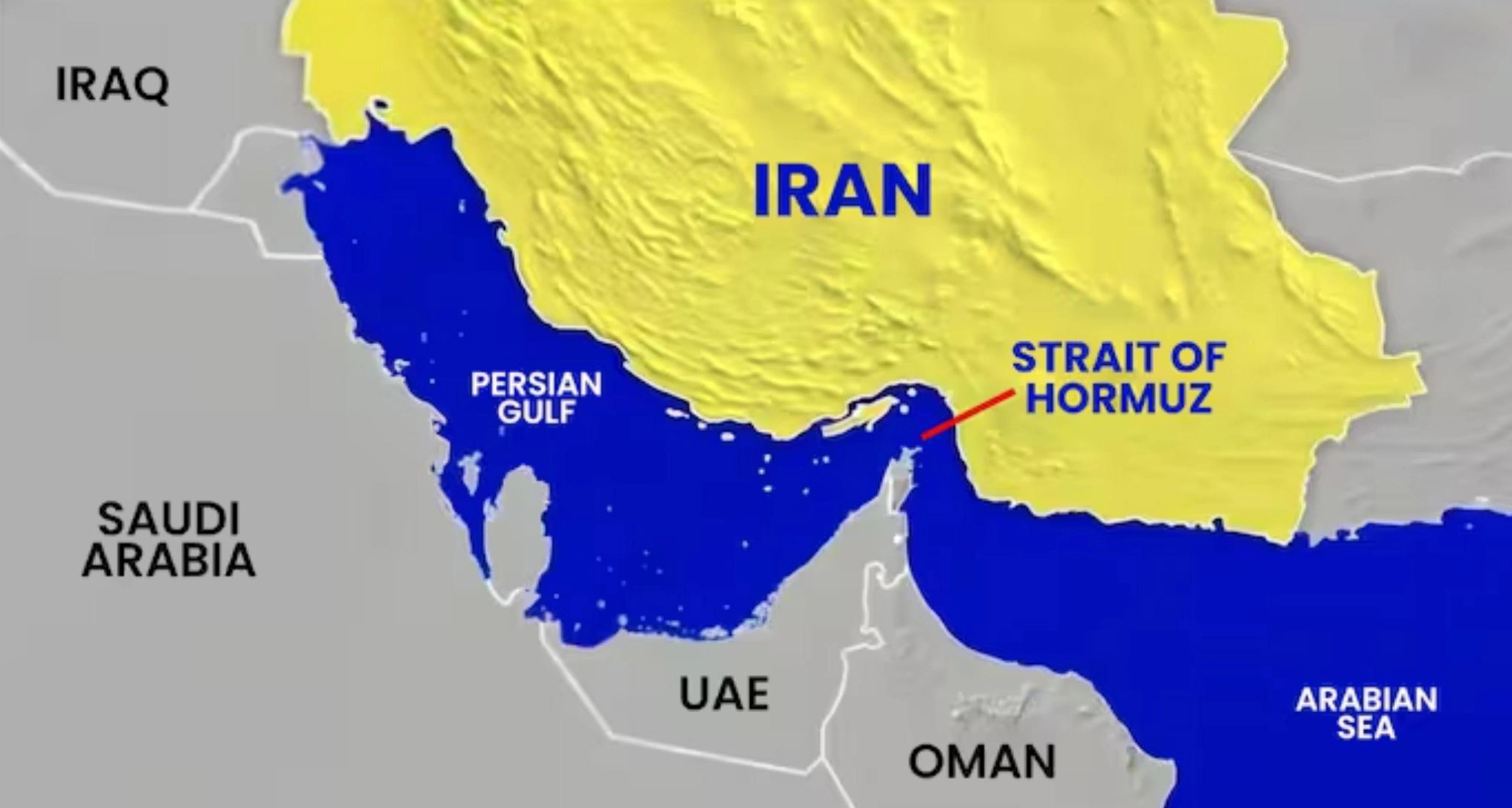
Supply shocks, collapsing buffers, and the geopolitical reckoning Asia can no longer defer
Picture a tanker called the MV Rich Starry — flying a Malawian flag, which is an intriguing choice for a landlocked country — spoofing its AIS position for eleven days, loaded with methanol officially declared as originating from a UAE port. When the US naval blockade of Iranian waters took effect in April 2026, the vessel turned back once, then slipped through the Strait of Hormuz on a second attempt. That single ship, as investigated by the Jerusalem Post, tells the story of Asia’s energy crisis more honestly than any ministerial communiqué: the workarounds still exist, but they are getting thinner, costlier, and more dangerous by the day.
For the past four years, China and India ran a sophisticated arbitrage against Western sanctions and Middle Eastern volatility. They bought Russian crude at steep discounts, warehoused Iranian barrels through opaque intermediaries, and leaned on floating storage to buffer supply disruptions. That system is now under terminal stress. Since the US-Israeli strikes on Iran on February 28, 2026 triggered the effective closure of the Strait of Hormuz, Asian buyers have discovered that their carefully assembled safety net has very few knots left to hold.
The IEA’s April 2026 Oil Market Report describes this as ‘the largest disruption in the history of the global oil market.’
The consequences are no longer theoretical. The International Energy Agency’s April 2026 Oil Market Report describes this as the largest disruption in the history of the global oil market — a designation that should concentrate minds in every capital from New Delhi to Beijing to Washington.
What Asia Did to Avoid a Supply Shock
The story of Asia’s Hormuz workarounds begins, predictably, with Russia’s invasion of Ukraine in February 2022. When Western sanctions stranded Russian crude, China and India positioned themselves as buyers of last resort. By late January 2026, China was receiving nearly 1.7 million barrels per day of Russian crude at Chinese ports — a record — while India had overtaken Europe as Moscow’s top client. The discounts were generous enough that Beijing’s state and private refiners alike suspended their usual commercial caution.
China’s strategy was more elaborate than simple opportunism. A House Select Committee report published in early 2026 documented how Beijing assembled a strategic petroleum reserve of approximately 1.2 billion barrels by early 2026 — equivalent to 109 days of seaborne import cover — built largely from sanctioned crude purchased through a shadow fleet of roughly 138 tankers. Iran, Russia, and Venezuela supplied roughly one-fifth of China’s total oil imports through this system, each barrel arriving at a discount of $8–$12 below Brent.
India took a more pragmatic, less organised approach. New Delhi redirected refinery procurement toward discounted Urals, expanded its bilateral energy dialogue with Moscow, and quietly tolerated shadow-fleet vessels on its import routes. It also struck long-term LPG supply agreements with the United States, securing around 2–2.2 million tonnes annually from 2026. Diversification was underway — but it was partial, slow, and critically dependent on Hormuz remaining open for the bulk of its imports.
Why Those Buffers Are Shrinking Now
China’s Teapot Refineries: A Clever Hedge That Is Running Hot
The architecture of China’s hedge is holding — barely. Beijing’s roughly 1.2 billion barrel reserve did what it was designed to do: buy time. But the country has already responded by banning refined fuel exports, cutting Sinopec refinery runs, and imposing its largest domestic retail price hike since 2022. These are not the actions of a country with comfortable headroom. They are triage.
The shadow fleet itself is under pressure. Between December 2025 and February 2026, US authorities interdicted nine shadow fleet tankers across the Caribbean, Atlantic, and Indian Ocean in Operation Southern Spear. Meanwhile, Kpler data shows that China’s Iranian crude discharges fell to 1.138 million barrels per day in February 2026, down from 1.4 million bpd the previous month, as buyers grew wary ahead of military escalation. Russia rapidly filled part of that gap — Chinese customs records showed Russian crude shipments rising 40.9 percent in the first two months of 2026 — but at rising cost and logistical complexity.
Most critically, the IEA’s April report reveals that global observed oil inventories fell by 85 million barrels in March 2026, with stocks outside the Middle East Gulf drawn down by a devastating 205 million barrels — 6.6 million barrels per day — as Hormuz flows were choked off. The Middle East’s landlocked floating storage swelled by 100 million barrels of crude that cannot move. The buffer is not being replenished; it is being consumed at an accelerating rate.
India’s LPG Crisis: The Political Bomb Beneath the Gas Cylinder
India’s vulnerability is more acute and more politically dangerous. Data from the Petroleum Planning and Analysis Cell shows that LPG production in January 2026 stood at 1.158 million tonnes while imports reached 2.192 million tonnes. More than 90 percent of those imports transited the Strait of Hormuz. India’s total LPG storage capacity is approximately 1.9 million tonnes, or roughly 22 days of supply according to S&P Global Commodity Insights — dangerously thin for a nation whose clean-cooking programme spans 300 million households.
The results have been immediate: restaurants limiting operations, panic buying of cylinders, and queues at gas agencies in Jharkhand and other states. Bloomberg reported in mid-March that two state-owned LPG tankers required diplomatic clearance for safe passage — a measure of how desperate the situation had become when individual cargo movements needed ministerial-level intervention.
Market and Price Implications: When the Discounts Disappear
The market mathematics of Asia’s predicament are brutal. In early April 2026, loadings through the Strait averaged just 3.8 million barrels per day, compared to more than 20 million bpd in February. Alternative export routes — Saudi Arabia’s Red Sea terminals, the UAE’s Fujairah port, Iraq’s Ceyhan pipeline — had scaled to 7.2 million bpd from under 4 million bpd, but that still leaves a gap of nearly 10 million bpd the global market cannot fill.
Brent crude, which traded around $71 a barrel before the conflict, surged above $100 by early March and reached approximately $130 per barrel by the time of the IEA’s April report — some $60 above pre-conflict levels. Physical crude reached near $150/bbl at points, with the physical-futures disconnect becoming increasingly acute as refiners scrambled for spot cargoes.
The era of discounted Russian and Iranian crude — which underpinned Asia’s refining economics for three years — is effectively over for the duration of this crisis.
China’s independent Shandong refineries, which processed 90 percent of Iranian crude, now face replacement barrel costs of $10–12 more per barrel. Asian refiners have cut runs by around 6 million barrels per day — a contraction now feeding through into jet fuel and diesel shortages from Thailand to Pakistan.
The Federal Reserve Bank of Dallas estimates that a full closure removing 20 percent of global oil supplies for one quarter could raise WTI prices to $98/bbl and reduce global real GDP growth by 2.9 percentage points annualised. These were conservative assumptions relative to what has unfolded.
Geopolitical and Policy Fallout: India’s Vulnerability, China’s Calculated Gamble
The divergence between India and China’s positions is instructive. China entered this crisis with a 109-day reserve and a shadow fleet purpose-built for sanctions evasion. It has responded by restricting domestic fuel exports — prioritising its own economy — and calibrating its Iran relationship to maximise leverage. Beijing’s calculation is whether to pressure Tehran toward a deal using its status as Iran’s sole meaningful customer, or to continue running the shadow fleet and absorb US secondary sanctions risk.
India had no such cushion. With around 2.5–2.7 million barrels per day arriving through Hormuz — nearly half its import requirement — New Delhi faces a structural vulnerability it cannot resolve through diplomacy alone. In April 2026, the Modi government signed a deal to import sanctioned Russian LNG, a move that risks straining relations with Washington even as India courts US energy partnerships.
Regional contagion is accelerating. Malaysia ordered civil servants to work from home to conserve fuel. Japan and South Korea, sourcing roughly 95 percent and 70 percent of their crude from the Middle East respectively, are measuring remaining supply in weeks. The World Economic Forum’s April 2026 analysis warns the disruption extends beyond oil: a third of global seaborne methanol trade, nearly half of global sulfur exports, and 46 percent of global urea trade all pass through the strait — compounding food security and industrial supply risks across Asia’s agricultural economies.
The IEA has coordinated the largest emergency reserve draw in history — 400 million barrels — but that covers roughly four days of what the market has lost.
What Comes Next: Policy Prescriptions Before the Next Shock
The immediate priority is diplomacy, not logistics. Resuming flows through the Strait of Hormuz remains, as the IEA bluntly states, “the single most important variable in easing the pressure.” The April 2026 ceasefire provided temporary respite, but Iran’s initial statement that the strait was “completely open” was almost immediately contradicted by Revolutionary Guard conditions for transit.
For the medium term, three structural reforms should be non-negotiable for any Asian government serious about energy security.
First, strategic stockpile expansion. India’s 22-day LPG reserve is dangerously inadequate for a 1.4 billion-person democracy. New Delhi should target 60 days of LPG cover — financed through a transparent cess on cylinder sales — comparable to its strategic crude oil reserve.
Second, genuine route diversification. The Eastern Maritime Corridor from Vladivostok to Chennai is operational for crude, but requires stress-testing for LPG and refined products. India and Japan should jointly finance infrastructure at Oman’s deep-water ports at Duqm and Salalah — both of which sustained drone damage in March 2026, underscoring that even bypass routes require protection frameworks.
Third, accelerated energy transition investment — not as idealism but as hard security infrastructure. Every gigawatt of renewables installed in South and East Asia reduces the volume of crude that must transit a waterway controlled by an adversarial power. The IEA has noted that this crisis may accelerate the clean energy shift — but only if Asian governments treat it as such, rather than racing to replace barrels with barrels.
The lesson of the past eight weeks is not that Asia’s energy planners were naive — they were rational. The error was in believing the workarounds would last indefinitely.
The error was in believing they would last indefinitely. The arithmetic of dependency has now been written in crude oil prices above $130 a barrel, queues at gas agencies in Jharkhand, and a single Malawian-flagged tanker deciding whether to run a naval blockade.
Asia’s energy policymakers have one useful gift from this crisis: clarity. The alternatives to Hormuz are not gone, but they are exhausted as a primary strategy. What comes next must be built on sturdier foundations — and built now, before the next closure.
BIBLIOGRAPHY
1. IEA (April 2026). Oil Market Report — April 2026
4. Bloomberg (March 14, 2026). Two LPG Ships Sail Through Hormuz to Shortage-Hit India
10. Bloomberg (2026). Iran War: How High Could Oil Prices Get with Strait of Hormuz Closure?
Discover more from The Economy
Subscribe to get the latest posts sent to your email.



Key Takeaways
- Rolex’s secondary market rose approximately 7.9% year-over-year as of 2026 (per WatchCharts data) — trailing Patek Philippe (+16.2%) and Tudor (+11.4%) but still outperforming Audemars Piguet (+3.4%).
- Rolex raised U.S. retail prices 4–9% in January 2026 (steel models ~5.6%, gold models ~8.7%), narrowing the historical gap between retail and pre-owned pricing.
- Not every model appreciates: steel sports references (Submariner, GMT-Master II, Daytona) have held value far better than two-tone or widely available dress references like the standard Datejust.
- The Lady-Datejust posted the sharpest 2026 gain among tracked collections — up 22.73%, from roughly $9,269 to $11,376 — driven by demand for smaller, “everyday luxury” watches.
- Gold’s rise past $2,400/oz has directly lifted the investment case for Rolex’s precious-metal references (Day-Date, Sky-Dweller, Yacht-Master).
The Model-by-Model Picture
| Category | 2026 Trend |
|---|---|
| Lady-Datejust | +22.73% (strongest performer among tracked collections) |
| Steel sports models (Submariner, GMT-Master II) | Held value well; corrected from 2022 peak but stabilized above retail |
| Daytona | Corrected from highs above $50,000 to the mid-$30,000s; still among the most sought-after references |
| Two-tone/widely available Datejust | Flat to negative — “holds value” is an overstatement for this category |
| Gold references (Day-Date, Sky-Dweller) | Lifted by gold’s rise above $2,400/oz |
Why the “Rolex Always Appreciates” Myth Is Fading
The pandemic-era boom pushed some references — the Daytona above all — to speculative highs disconnected from historical norms. Since the March 2022 peak, steel sports models have compressed meaningfully, and dealers who bought inventory near the top have in some cases faced 20–40% markdowns on liquidation. The lesson for 2026 buyers: Rolex as a category is not a monolith. Value retention depends heavily on specific reference, condition, and whether the piece comes with box and papers (“full set”).
What’s Actually Driving 2026 Strength
- Retail price increases raise the floor. When a new Submariner retails at $10,050 (up from $9,500), a pre-owned example at $11,000–$12,000 suddenly represents a smaller premium — narrowing the gap without secondary prices actually moving.
- Supply discipline remains Rolex’s core lever. The brand has never confirmed production numbers, and secondary-market premiums remain entirely a function of Rolex’s own manufacturing decisions — a risk factor as much as a support.
- Certified Pre-Owned rollout. Rolex’s now fully rolled-out CPO program has changed how buyers transact in the used market, adding a layer of brand-verified legitimacy that supports pricing.
The Case for Rolex as a Portfolio Diversifier
Financial advisors increasingly frame luxury watches not as a replacement for equities or bonds, but as a tangible, historically low-correlation diversifier — one that carries its own risks (illiquidity, condition-dependent pricing, no yield) but has demonstrated multi-decade resilience for specific references.
Is Rolex a good investment in 2026?
It depends heavily on the specific reference. Steel sports models like the Submariner and Daytona have held or grown in value; two-tone and widely available dress models generally have not. Overall, Rolex’s secondary market rose about 7.9% year-over-year in 2026, trailing Patek Philippe but ahead of Audemars Piguet.
Discover more from The Economy
Subscribe to get the latest posts sent to your email.

Navigating Mortgage and Loan Refinancing in a High-Yield Environment
Global public debt crossing critical thresholds has kept central bank policies volatile, resulting in fluctuating US Treasury yields throughout 2026. For homeowners and commercial property holders burdened by previous high-interest borrowing cycles, finding optimal refinance windows has become a high-stakes financial puzzle. Stalled disinflation and stubborn employment numbers mean rate cuts are incremental, requiring borrowers to act with precision.
Timing your mortgage or commercial loan refinance in this environment requires a deep understanding of yield curve movements and lender risk appetites.
Decoding 2026 Refinance Dynamics
The 10-Year Treasury Yield Benchmark
Mortgage rates continue to track closely with the 10-year US Treasury yield. When macroeconomic anxiety spikes debt issuance, yields rise, tightening consumer borrowing capacity. Savvy borrowers monitor weekly Treasury auctions to lock in rates during brief dip windows.
Hybrid ARMs and Alternative Structures
With fixed rates remaining elevated, 7/1 and 10/1 adjustable-rate mortgages (ARMs) have surged in popularity. These products offer lower initial monthly payments, giving borrowers breathing room until central bank easing cycles fully materialize.
| Loan Product | Current Rate Range | Best For | Key Risk Factor |
| 30-Year Fixed Mortgage | 6.2% – 6.8% | Long-term predictability | Higher initial monthly outlay |
| 7/1 Hybrid ARM | 5.5% – 5.9% | Short-term ownership / flipping | Rate reset risk after year 7 |
| Commercial Refinance | 7.0% – 8.2% | Corporate asset restructuring | Strict DSCR lender covenants |
Actionable Steps for Successful Refinancing
To maximize your chances of securing favorable refinance terms in a volatile market, follow a disciplined preparation strategy.
Boost Your Credit Score Immediately: Lenders in 2026 are applying stringent credit tiering; a 20-point increase can drop your APR by a crucial quarter-point.
Shop Regional Credit Unions: Smaller financial institutions often offer portfolio loans with more flexible underwriting than major national banks.
Calculate the Break-Even Point: Ensure your total closing costs are recouped through monthly savings within 24 months of closing.
“Market Strategist View: Refinancing in 2026 is an exercise in opportunistic timing. Borrowers must maintain immaculate financial profiles ready to strike the moment Treasury yields dip.”
Mastering the complexities of today’s debt environment ensures you can successfully lower your debt service costs and protect your long-term financial stability.
Discover more from The Economy
Subscribe to get the latest posts sent to your email.

The days of pulling generic auto insurance quotes based purely on your zip code and age are officially over. In 2026, insurance comparison engines are powered entirely by generative AI and real-time telematics. These platforms digest thousands of live data points—ranging from your driving smoothness via connected vehicle sensors to real-time traffic congestion patterns—to generate hyper-personalized premiums instantly.
For consumers, this evolution represents both a massive opportunity for savings and a hidden trap for penalty pricing. Understanding how AI algorithms evaluate risk is essential for anyone looking to lower their monthly auto insurance premiums.
How AI Comparison Engines Evaluate Your Risk Profile
Behavioral Telematics and Connected Cars
Modern cars stream performance data directly to insurance aggregators. Generative AI models analyze braking sharpness, acceleration curves, cornering G-forces, and phone distraction metrics. Drivers who maintain smooth, defensive habits are rewarded with dynamic rate cuts of up to 40% compared to traditional rating tiers.
Predictive Traffic and Weather Modeling
AI tools now cross-reference your daily commute route with predictive weather and accident probability models. If your standard parking location or driving corridor has a statistically higher incidence of uninsured motorist claims, your quotes will reflect that hyper-local risk assessment.
| Comparison Factor | Traditional Rating Model | 2026 Generative AI Model | Impact on Premium |
| Mileage & Usage | Annual estimated odometer reading | GPS tracking & live trip duration | High (up to 35% savings) |
| Driving Behavior | MVR driving record & accidents | Real-time braking, speed, & G-force | Critical (determines tier) |
| Vehicle Tech | Make, model, and safety rating | ADAS calibration & repair cost data | Moderate |
Strategies to Lower Your AI-Driven Insurance Quote
To outsmart the algorithm and secure the lowest possible premium in 2026, drivers must proactively manage their digital footprint on insurance platforms.
Opt-In for Telematics Trial Periods: Many insurers offer immediate 15% discounts just for installing their driving app; let it track safe habits for 30 days to lock in permanent savings.
Scrub Unverified Public Records: Ensure your motor vehicle report is free of clerical errors that AI risk models misinterpret as reckless behavior.
Compare AI Aggregators: Use platforms that integrate multi-carrier API feeds rather than single-brand comparison sites to find the best risk-adjusted rate.
“Industry Note: AI-driven pricing rewards transparency and precision. Drivers who actively manage their telematics data consistently out-save those relying on legacy quote calculators.”
Embracing AI comparison tools allows savvy policyholders to customize coverage limits precisely to their driving habits, eliminating wasted premium spend while ensuring robust protection.
Discover more from The Economy
Subscribe to get the latest posts sent to your email.

2026 Real Estate Market News: Are We Heading for a Correction?

Bitcoin Price Forecast 2026–2027: Will the 4-Year Cycle Hold?

Fidelity Crypto vs. Traditional Brokerages: A Guide for Modern Investors

The 2026 Global Smartphone Market: AI Integration and Competitor Analysis

SpaceX IPO: How Aerospace Is Reshaping Tech Startup News

Fidelity Investments Review: Maximizing Returns in a Volatile Stock Market

How Crypto Transformed the Trump Fortune: A $1.4 Billion Financial Breakdown

Global Pension Systems Ranked: The World’s Best and Worst Retirement Frameworks

Global Supply Chain Vulnerabilities: From Eurasian Trade Corridors to Food Consumer Recalls

Why 5% U.S. Treasury Yields Signal a Global Market Regime Shift.

Federal Reserve Defies White House Pressure: Inside Trump’s Demand for Sub-1% Interest Rates After Historic 2026 Rate Hike

How Rising Interest Rates Impact Gig Economy Apps: DoorDash, Uber, and Urban Services

GasBuddy Market Insights: How Crude Price Shifts Impact Local Fuel Cost Averages

DoorDash Driver Payouts, Fee Structures, and Market Competition Analysis

State Farm’s $5B Dividend 2026: Who Qualifies & Payout Dates

US-China Relations in Q3 2026: Trade Tariffs and Supply Chain Risks

SpaceX Starship Flight 14: First Orbital Attempt & Starlink V3 Launch Explained

Top 30 Stocks for Investment in PSX for Massive ROI in 2026

The 2026 Crypto Regulatory Shift: What It Means for Institutional Investors

AI Chip Stocks 2026: The Best Semiconductor Investments Beyond Marvell

AI-Powered Training: The Next Multi-Billion Dollar Ecosystem in Fitness

Tween Back-to-School Trends 2026: What’s Driving the $85B Season

Oil Prices Break $100 in 2026: Middle East Conflict & Energy Markets

10-Year Treasury Yield Hits 4.80%: What It Means for Rates & Portfolios

Fidelity Investments Review 2026: SPAXX Yields & Zero-Fee Funds

Shein Clothes Quality & Safety in 2026: What Lab Tests Show

MRVL Earnings 2026: Why Marvell Sank Despite Beating Estimates

China’s US$10.8 Billion Trade Shortcut: Why the Pinglu Canal Matters
-

 Markets & Finance9 months ago
Top 15 Stocks for Investment in 2026 in PSX: Your Complete Guide to Pakistan’s Best Investment Opportunities
-

 Analysis7 months ago
Johor’s Investment Boom: The Hidden Costs Behind Malaysia’s Most Ambitious Economic Surge
-

 Analysis7 months ago
Top 10 Stocks for Investment in PSX for Quick Returns in 2026
-

 Analysis8 months ago
Brazil’s Rare Earth Race: US, EU, and China Compete for Critical Minerals as Tensions Rise
-

 Banks8 months ago
Best Investments in Pakistan 2026: Top 10 Low-Price Shares and Long-Term Picks for the PSX
-

 Investment8 months ago
Top 10 Mutual Fund Managers in Pakistan for Investment in 2026: A Comprehensive Guide for Optimal Returns
-

 Global Economy9 months ago
15 Most Lucrative Sectors for Investment in Pakistan: A 2025 Data-Driven Analysis
-

 Global Economy9 months ago
Pakistan’s Export Goldmine: 10 Game-Changing Markets Where Pakistani Businesses Are Winning Big in 2025