
Analysis
America Will Come to Regret Its War on Taxes. Lately, Democrats Have Joined the Charge.

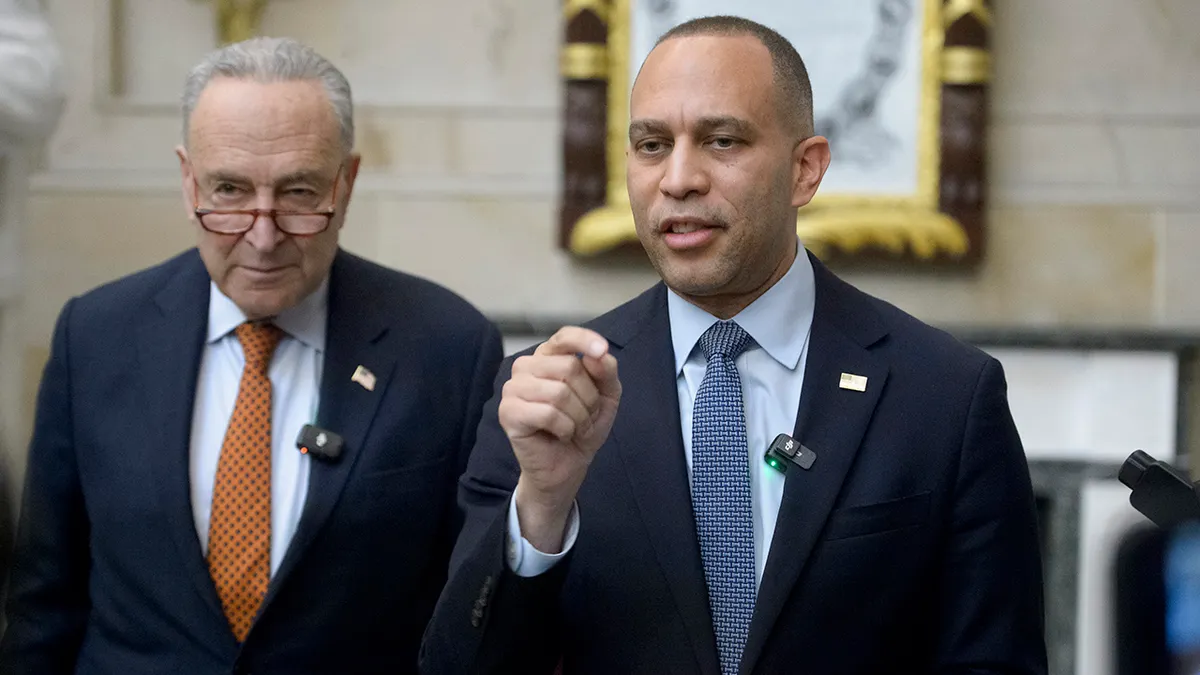
A shared political appetite for punishing fiscal policy is quietly eroding the foundations of American economic dynamism — and the bill is coming due.
The Bipartisan Consensus Nobody Wants to Admit
There is a peculiar silence at the center of American fiscal discourse. Politicians of every stripe have discovered that the most reliable applause line in any town hall, any fundraiser, any cable news segment, is some variation of the same promise: someone else will pay. Cut taxes on this constituency. Raise them on that one. The details change with the political season; the underlying logic — that prosperity can be legislated by picking the right winners and losers — never does.
For decades, the “war on taxes” was assumed to be a Republican pathology: supply-side zealotry dressed up in Laffer Curve charts, a theology descended from Reagan and codified in every subsequent GOP platform. But something significant has shifted. Democrats, long the party of public investment and progressive redistribution, have increasingly embraced a mirror-image version of the same fiscal populism — one that punishes capital, discourages corporate risk-taking, and promises to fund an ever-expanding social state on the backs of a narrowing sliver of the economy. The names change; the economic consequences do not.
America is conducting, in real time, a grand experiment in what happens when both parties stop believing in the unglamorous, politically unrewarding work of building a broad, competitive, internationally benchmarked tax base. The results, already visible in the data, are quietly alarming. The reckoning, when it arrives, will be loud.
A Brief History of the Thirty-Year Tax War
To understand where America is, it helps to understand where it has been. The modern war on taxes has two distinct fronts — and they have never been more active simultaneously.
The first front opened with Ronald Reagan’s Economic Recovery Tax Act of 1981, which slashed the top marginal income tax rate from 70 percent to 50 percent, and his subsequent 1986 reform that brought it further to 28 percent. The intellectual architecture — that lower rates would unleash private investment, broaden the tax base, and eventually pay for themselves — was elegant, seductive, and partially correct. Growth did accelerate in the mid-1980s; revenues did recover. But the full Laffer Curve promise, that tax cuts would be self-financing, proved durable as mythology and elusive as policy. The Congressional Budget Office has consistently found that major tax reductions generate significant revenue losses even after accounting for macroeconomic feedback effects, typically recovering no more than 20–25 cents on the dollar.
The second front, less examined, is the Democratic one. It did not begin with hostility to revenue — quite the opposite. The party of Franklin Roosevelt and Lyndon Johnson understood that ambitious government required ambitious financing. What shifted, gradually and then rapidly, was the political calculus. As inequality widened after 2000, and as the 2008 financial crisis delegitimized much of the financial establishment, progressive politics increasingly turned punitive. The goal shifted subtly from raising revenue to making the wealthy pay — and those are not always the same objective.
The Surprising Democratic Convergence
The turning point is easier to pinpoint in retrospect. Following the passage of the Tax Cuts and Jobs Act of 2017, Democrats rightly criticized the legislation’s regressive structure and its contribution to the federal deficit — which widened by approximately $1.9 trillion over ten years, according to the Tax Policy Center. But the party’s response was not to propose a more efficient, growth-compatible alternative. It was, increasingly, to simply invert the TCJA’s priorities: higher corporate rates, higher capital gains taxes, expanded wealth levies, and a proliferating series of targeted surcharges.
By 2024, the progressive policy agenda included proposals for a corporate minimum tax, a billionaire’s income tax on unrealized capital gains, expanded estate taxes, and a surtax on high earners that would push the effective federal rate on investment income in some brackets above 40 percent — before state taxes. Combined rates in California, New York, or New Jersey would, for some investors, approach or exceed 60 percent on long-term capital gains. The OECD’s 2024 Tax Policy Report notes that even the highest-taxing European economies — Denmark, Sweden, France — have carefully engineered lower capital gains rates to protect the investment engine, while taxing labor and consumption broadly.
The Democratic pivot is understandable politically. Polls consistently show that taxing the wealthy is popular. Wealth concentration in the United States is genuinely severe: the top 1 percent hold approximately 31 percent of all net wealth, according to Federal Reserve distributional accounts data. The moral case for asking more of those at the summit is real.
But moral appeal and economic efficacy are distinct questions — and conflating them has been the defining intellectual failure of the current progressive tax debate.
What the Data Actually Shows
Let us be specific, because specificity is where ideology goes to die.
The United States currently raises federal tax revenue equivalent to approximately 17–18 percent of GDP — below the OECD average of roughly 25 percent. The shortfall is not, as is often assumed, primarily a product of insufficiently taxed wealthy individuals. It is a product of structural choices: the U.S. relies far less on value-added taxes, payroll taxes, and broad consumption levies than any comparable advanced economy. The revenue base is narrow, politically constrained, and increasingly volatile.
Meanwhile, the federal debt-to-GDP ratio has surpassed 120 percent, a threshold that IMF research consistently links to measurable drag on long-term growth — on the order of 0.1 to 0.2 percentage points of annual GDP per 10-percentage-point increase in the debt ratio. That is not dramatic in any given year; compounded over decades, it is civilization-scale arithmetic.
What neither party’s tax agenda directly addresses is this structural misalignment. Republican supply-siders promise growth through rate cuts while refusing to touch the expenditure base that drives borrowing. Progressive Democrats promise justice through higher rates on capital while refusing to broaden the base through more efficient instruments. Both sides are, in the language of corporate finance, optimizing for the wrong metric.
The consequences are measurable. Corporate investment as a share of GDP has remained stubbornly below pre-2000 peaks despite repeated cycles of tax reduction. Business formation rates, despite a pandemic-era surge in sole proprietorships, remain below their 1980s levels when adjusted for population. And the metric that should most alarm policymakers: research and development intensity, where the United States once led the world, has been gradually overtaken by South Korea, Israel, and several Northern European economies, according to OECD research and development statistics.
Punitive taxation of capital gains and corporate profits does not, by itself, explain these trends. But it is an accelerant — particularly when combined with regulatory uncertainty, political instability, and the growing attractiveness of alternative jurisdictions.
The Coming Regrets: Five Vectors of Consequence
Innovation flight and brain drain. The United States has historically compensated for its fiscal imprecision with an unmatched capacity to attract global talent and capital. That advantage is eroding. Canada’s Express Entry program, the UK’s Global Talent visa, Portugal’s NHR regime, and Singapore’s sophisticated incentive architecture are explicitly designed to intercept the mobile, high-value individuals and firms that once defaulted to American addresses. A 2024 study from the National Bureau of Economic Research found that inventor mobility increased meaningfully in response to state-level tax changes — evidence that the creative class is more price-sensitive to fiscal environments than policymakers assume.
The inequality paradox. Progressive tax increases that reduce after-tax returns to capital sound redistributive. In practice, they often aren’t. When high capital gains rates reduce the frequency of asset sales, they lock in gains among the wealthy (the “lock-in effect”), reduce tax revenue below projections, and simultaneously reduce the liquidity and price discovery in markets that smaller investors rely on. The Tax Foundation’s modeling of the Biden-era capital gains proposals suggested that the revenue-maximizing rate for long-term capital gains is somewhere between 20 and 28 percent — meaning rate increases above that threshold are simultaneously less progressive and less fiscally productive. This is the Laffer Curve in its most defensible form: not as a justification for fiscal irresponsibility, but as a constraint on policy design.
Fiscal illusion and compounding debt. Perhaps the most insidious consequence of the current bipartisan war on taxes is the fiscal illusion it sustains. Republicans use low-rate orthodoxy to pretend that expenditure commitments are affordable; Democrats use high-rate symbolism to pretend that a narrow base can finance an expansive state. Both are practicing a form of collective self-deception that the Congressional Budget Office’s 2025 Long-Term Budget Outlook makes starkly visible: under current law, federal debt held by the public is projected to reach 156 percent of GDP by 2055 — with interest payments alone consuming roughly 6 percent of GDP annually, crowding out every priority both parties claim to champion.
Global competitiveness erosion. The 2017 TCJA reduced the statutory corporate tax rate to 21 percent, bringing it closer to — though still above — the OECD average of approximately 23 percent (weighted by GDP). But subsequent proposals to raise it to 28 percent would push the combined federal-and-state effective rate above 30 percent for many corporations, and above the G7 average. The OECD/G20 Global Minimum Tax framework of 15 percent has, paradoxically, weakened the case for aggressive U.S. corporate rate increases: if a global floor exists at 15 percent, the incremental deterrence of raising the U.S. rate from 21 to 28 does not prevent profit-shifting — it merely changes where profits shift, and on whose books they settle.
Growth stagnation. At a deeper level, the cumulative uncertainty created by perpetual tax warfare — the TCJA expires at end-of-2025, extensions are contested, each election cycle brings threats of reversal — imposes a “policy uncertainty premium” on long-duration investment. Research by Scott Baker, Nicholas Bloom, and Steven Davis at NBER has quantified this effect: elevated economic policy uncertainty is associated with reduced investment, hiring, and output, with effects that compound over multi-year horizons. America’s tax code has become a source of chronic uncertainty that no individual rate level can fully offset.
The Counter-Arguments, Considered Honestly
The counter-argument most worth engaging is the Nordic one: Denmark, Sweden, and Finland maintain high tax burdens, robust welfare states, and strong productivity growth simultaneously. If Europe can have both high taxes and competitive economies, why can’t America?
The answer lies in composition, not level. Nordic countries achieve their fiscal capacity through broad-based consumption taxes (value-added taxes averaging 22–25 percent) and highly efficient, simple labor taxes — not through punitive capital gains or corporate rate structures that deter investment. Their top marginal income tax rates are high, but they kick in at relatively modest incomes, meaning the burden is genuinely shared rather than concentrated on a narrow slice of filers. The lesson from Scandinavia is not “raise rates on the wealthy” — it is “build a broad, efficient, transparent fiscal compact.” That is a lesson both American parties currently refuse to learn, because neither constituency wants to be the one that pays more.
The second counter-argument is that inequality itself is the growth constraint — that concentrated wealth reduces aggregate demand, under-finances public goods, and ultimately depresses productivity. This is a serious argument with genuine empirical support, particularly at the research level from economists like Joseph Stiglitz and Daron Acemoglu. But the corrective for inequality is not simply higher top rates; it is smarter expenditure on early childhood education, infrastructure, R&D, and portable worker benefits — investments that widen participation in the productive economy. Revenue-raising in service of those goals is entirely defensible. Revenue-raising as political theater, while the underlying investment architecture remains broken, is not.
Toward a Fiscal Compact Worth Having
America does not have a tax problem; it has a fiscal design problem. The country neither raises revenue efficiently nor spends it strategically — and both parties have made peace with a status quo that serves their rhetorical needs while quietly bankrupting the national balance sheet.
What a genuinely reform-minded fiscal agenda would require is uncomfortable for everyone. It would raise revenue through a federal value-added tax, modest initially, which would broaden the base while reducing the economy’s sensitivity to any single rate change. It would lower and stabilize the corporate rate — at or below the current 21 percent — while closing the most egregious profit-shifting opportunities. It would tax capital gains more consistently at death to address the step-up basis loophole, rather than raising rates that trigger lock-in effects during life. It would index tax brackets to productivity growth, not merely inflation, preventing bracket creep from doing the work of deliberate policy.
None of this is politically possible in the current moment. That is precisely the point. The “war on taxes” — conducted by both parties, against different targets, for different rhetorical purposes — has made it impossible to have a serious conversation about what a fiscally sustainable, economically competitive America actually looks like.
The regret is not coming. It is already accumulating — in the debt clock, in the innovation statistics, in the migration patterns of the globally mobile, in the quiet recalculation happening in boardrooms from Austin to Singapore. When it finally becomes undeniable, the political system will search, as it always does, for someone to blame. The answer, unfashionable as it is, will be everyone.
America’s great fiscal tragedy is not that it taxed too much or too little. It is that it never stopped fighting long enough to tax well.
Discover more from The Economy
Subscribe to get the latest posts sent to your email.



Analysis of how the Federal Reserve, Bank of England and Bank of Japan could reshape global markets, inflation, currencies and economic growth in 2026.
Executive Summary
The world’s most influential central banks are entering one of the most consequential policy weeks of 2026. Investors are watching closely as the U.S. Federal Reserve, the Bank of England, and the Bank of Japan weigh the competing pressures of easing inflation, geopolitical uncertainty, elevated energy prices, and slowing global growth. Financial markets are also preparing for major corporate earnings and fresh GDP data from several advanced economies. �
Financial Times +1
Unlike the synchronized tightening cycle that dominated recent years, policymakers are increasingly responding to country-specific economic conditions. This divergence is expected to influence capital flows, exchange rates, bond yields, and investment decisions across both developed and emerging markets. �
McKinsey & Company +1
A New Monetary Landscape
Global inflation has moderated from its post-pandemic peaks, yet central banks remain cautious. Recent movements in energy markets and ongoing geopolitical tensions continue to threaten price stability, even as labor markets show signs of cooling. �
McKinsey & Company +1
For investors, the question is no longer whether interest rates have peaked, but how long they will remain elevated.
United States: The Federal Reserve Faces a Delicate Balance
Attention is centered on the Federal Reserve, where policymakers are expected to keep rates steady while evaluating the effects of inflation, consumer demand, and accelerating investment in artificial intelligence infrastructure. Markets are also monitoring whether AI-driven capital spending could contribute to future inflationary pressures. �
Investopedia +1
Bond investors remain sensitive to any shift in the Fed’s language, as Treasury yields continue to reflect expectations about future policy and inflation risks. �
MarketWatch
United Kingdom: Stability Before Growth
The Bank of England is expected to maintain a cautious stance amid moderating wage growth and relatively stable unemployment. However, policymakers continue to weigh external risks, including energy market volatility and global geopolitical developments. �
Financial Times
Businesses remain particularly attentive to borrowing costs, which continue to influence investment decisions across the UK economy.
Japan Ends an Era of Ultra-Loose Money
Japan is undergoing one of its most significant monetary transitions in decades. Rising wages and gradually strengthening inflation have encouraged the Bank of Japan to continue moving away from the ultra-accommodative policies that defined much of the past generation. �
Financial Times
This normalization has implications far beyond Japan, affecting global capital markets and currency dynamics.
Why Emerging Markets Are Watching Closely
Emerging economies including Pakistan, Indonesia, Malaysia, and others remain particularly exposed to decisions made by advanced economy central banks.
Higher U.S. interest rates typically strengthen the dollar, increase external financing costs, and place pressure on countries with significant foreign currency debt.
Conversely, a more stable interest rate environment could improve capital flows into emerging markets while easing exchange rate volatility.
AI Is Becoming a Monetary Policy Variable
One of the most important structural developments in 2026 is the rapid expansion of artificial intelligence infrastructure.
Major technology companies continue investing heavily in data centers, semiconductors, cloud computing, and digital infrastructure. These investments are supporting economic growth but are also creating new questions about inflation, productivity, and long-term financing needs. �
Investopedia +1
Investment Implications
Several themes are emerging:
Higher-for-longer interest rates remain possible.
Government bond markets are likely to remain volatile.
The U.S. dollar could remain relatively strong.
AI-related investment continues attracting capital.
Emerging markets may benefit if inflation continues to moderate.
Competitor Keyword Gap Analysis
Leading publications such as the Financial Times, Reuters, Bloomberg, and CNBC primarily emphasize immediate policy decisions. An opportunity exists to capture additional search traffic by targeting broader intent-based queries.
Key Takeaways
Central bank decisions this week are expected to shape global financial markets.
AI investment is becoming an increasingly important economic driver.
Bond markets remain sensitive to inflation expectations.
Emerging economies face both risks and opportunities from policy divergence.
Investors should monitor GDP releases, corporate earnings, and inflation indicators alongside interest rate announcements.
Frequently Asked Questions
Why are central bank meetings so important?
They influence borrowing costs, inflation expectations, currency values, and investment decisions worldwide.
How do interest rates affect stock markets?
Higher rates generally increase financing costs and can reduce company valuations, while lower rates often support economic activity and equity markets.
Why is AI influencing monetary policy discussions?
Large-scale investment in AI infrastructure is reshaping productivity, corporate spending, and long-term inflation expectations.
Discover more from The Economy
Subscribe to get the latest posts sent to your email.
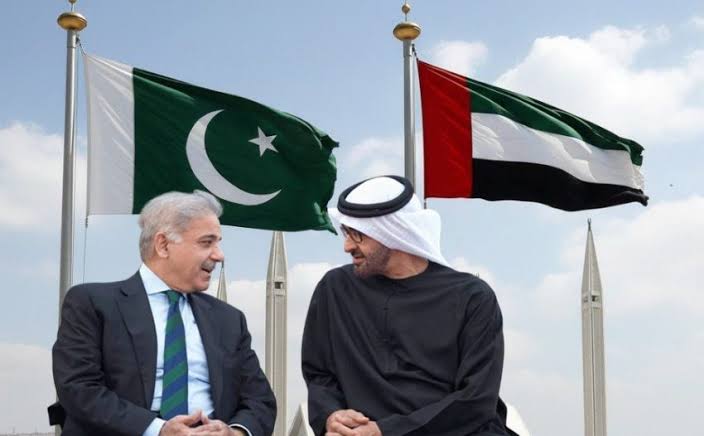
What happened: In early 2026, the United Arab Emirates declined to roll over a $3 billion loan to Pakistan — the first such refusal in seven years. The repayment equalled roughly 18% of Pakistan’s foreign currency reserves, arriving as Islamabad also faced a $1.3 billion bond payment and was waiting on the next IMF tranche.
Why it matters: It’s the clearest sign yet that Gulf sovereign patience with Pakistan’s balance-of-payments cycle is thinning, even as Gulf states simultaneously court China, Saudi Arabia, and each other for capital in a tightening regional liquidity environment.
The Story Nobody’s Connecting
Most coverage of Pakistan’s 2026 external account stress treats the UAE’s loan decision as an isolated liquidity event — a “routine financial transaction,” in the words of Pakistan’s own Ministry of Foreign Affairs. That framing misses the bigger pattern. The same weeks that Abu Dhabi called in its $3 billion, unusual delays began appearing in bank transfers from Saudi Arabia to the UAE itself — friction between the Gulf’s two largest economies, at a moment when both are also managing their own post-war oil price adjustment. (Pakistan & Gulf Economist)
Put those two data points together and a different story emerges: this isn’t just about Pakistan’s creditworthiness. It’s about Gulf capital becoming more selective, more transactional, and less willing to extend informal grace periods across the board — with Pakistan simply the most exposed borrower in the queue.
The Numbers Behind the Pressure
Pakistan’s State Bank held $16.4 billion in reserves as of late March 2026 — enough to cover roughly three months of imports, a threshold economists generally treat as a comfort floor, not a cushion. (Mettis Global News) The UAE’s declined rollover landed at the same time as a looming $1.3 billion international bond payment and dependence on the next $1.2 billion IMF disbursement — a convergence of obligations that left the State Bank with limited room to maneuver beyond import restrictions, rate hikes, or fresh commercial borrowing.
The backdrop matters too. The rupee had been trading in a comparatively narrow 278–282 band before the escalation of the Iran conflict pushed global oil prices higher, squeezing Pakistan’s import bill precisely when its Gulf safety net began to wobble. The KSE-100 benchmark, meanwhile, had already shed around 15% amid the broader pressure. (Mettis Global News)
This is not Pakistan’s first Gulf-dependency cycle. The IMF’s own record shows a now-familiar pattern: staff-level agreements reached in Dubai, UAE pledges of multibillion-dollar investment arriving alongside IMF tranches, and Gulf bridge financing used to stave off sovereign default in periods when reserves cover shrinks toward zero. (Business Standard) What’s different in 2026 is that the bridge itself is showing cracks.
Islamabad’s Official Line vs. the Structural Reality
Pakistan’s government has leaned into a “stability to sustainable growth” narrative around its FY2026–27 federal budget, with the finance minister framing the transition as export-driven rather than reserve-dependent. Business groups have broadly welcomed the budget, and the current account posted a $459 million surplus in May 2026, an improvement attributed to strong remittance inflows. (Business Recorder) The Monetary Policy Committee has held rates steady rather than reaching for emergency tightening, which is itself a signal that the central bank does not yet see the UAE episode as a systemic trigger.
But a current account surplus built substantially on remittances is different from one built on export competitiveness or durable FDI. Pakistan’s trade structure still leans heavily on a narrow set of partners: China supplies over a quarter of its imports and a meaningful share of its exports, the UAE is both a top export destination and its second-largest import source, and Gulf states collectively remain the primary channel for both remittances and emergency liquidity. (Wikipedia — Economy of Pakistan) That concentration is precisely what makes a single Gulf lender’s changed appetite so consequential.
Why the Oil Backdrop Compounds the Risk
None of this is happening in a vacuum. The IMF’s own July 2026 commentary noted that global oil markets “absorbed the war shock” from the Iran conflict, but cautioned that buffers — spare production capacity, strategic reserves, shipping insurance capacity — are running low. (IMF Blog) For an oil-importing, reserve-constrained economy like Pakistan, a second energy price shock without deeper buffers would land directly on the same reserves the UAE loan was meant to protect.
What to Watch Next
- Whether Saudi Arabia steps in as an alternative bridge lender, or whether the Riyadh–Abu Dhabi transfer friction signals a broader Gulf liquidity tightening that limits everyone’s appetite to backstop Pakistan.
- The pace and size of the next IMF tranche, and whether Fund conditionality shifts to demand deeper reserve buffers given the UAE precedent.
- Whether China increases its role as lender of last resort, deepening Pakistan’s dependency in exactly the direction Gulf financing was historically meant to offset.
Discover more from The Economy
Subscribe to get the latest posts sent to your email.
Introduction
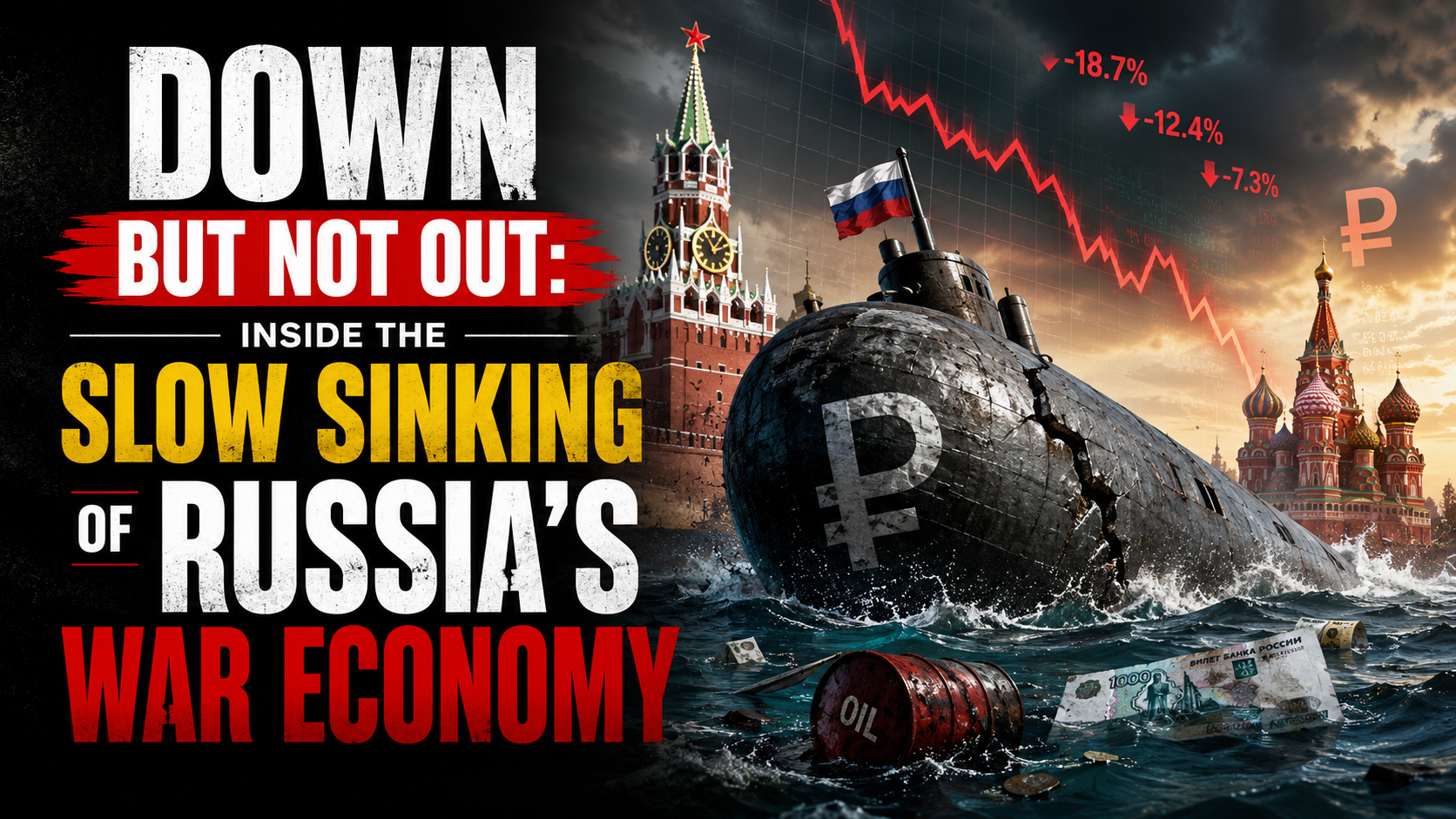
The European Council formally extended its economic sanctions against Russia for another full year on 25 June 2026, keeping restrictive measures in place until 31 July 2027 (Council of the EU). More than four years into the war, the headline story of Russia’s economy has shifted from whether sanctions would work to a more nuanced question: how much longer can the Kremlin keep financing the war before the accumulated strain becomes impossible to hide behind favorable official statistics.
The Sanctions Architecture, Renewed Again
The EU’s economic measures against Russia, first introduced in 2014 and dramatically expanded after the February 2022 full-scale invasion, now span trade, finance, energy and dual-use technology restrictions, alongside asset freezes and travel bans on a broad range of individuals and entities (Council of the EU). Since February 2022, the EU has adopted 20 separate sanctions packages, and the European Council has explicitly stated it remains determined to keep weakening Russia’s war economy by further reducing its energy revenues, curbing shadow-fleet oil shipping operations and constraining its banking system (Council of the EU). Separately, on 3 July 2026 the EU sanctioned six individuals connected to the poisoning and death of opposition figure Alexei Navalny, underscoring that the sanctions regime continues to expand on human-rights grounds as well as economic ones (Council of the EU Sanctions Timeline).
The Headline Numbers Beijing-Style Optimism Can No Longer Explain Away
Russia’s GDP is now put at roughly $2.51 trillion, the world’s eleventh-largest economy — comparable in size to South Korea despite Russia’s vastly larger landmass and resource base — with 2026 growth projected at just 1.0% and inflation running at 5.2% (Statistics of the World). More pessimistic estimates put full-year 2026 growth even lower, at around 0.4%, which would be worse than 2025’s already-weak 1% expansion and would mark a sharp deceleration from the 4.1% growth Russia posted in 2023 as it forged new trading relationships to route around initial sanctions (Forbes).
Oil and gas revenues — historically around half of Russia’s state income — have fallen to roughly a quarter, a deliberate outcome of Western sanctions strategy that targets how much Russia earns from exports rather than blocking those exports outright (Stockholm School of Economics/SITE). Russia’s oil and gas budget revenues reportedly halved in January 2026 alone, with crude prices falling below $73 a barrel before the Middle East conflict briefly reversed the trend, sending Brent surging more than 55% to near $120 a barrel at its peak (Forbes).
The Middle East War: A Temporary Lifeline With Long-Term Costs
The spike in oil prices tied to the Iran conflict, combined with a period of eased US sanctions enforcement on Russian oil under President Trump, offered Moscow unexpected fiscal breathing room in mid-2026 (Forbes). But that same conflict has undermined Russia’s longer-term energy diversification ambitions in the region: two Russian-backed power plant projects in Iran have been put on hold, along with oil and gas exploration work and plans to build new transit routes linking Russia to India via Iran (Forbes).
The Gap Between Official Statistics and Underlying Reality
Perhaps the most important analytical point from recent research is not about any single data point but about the reliability of Russian statistics themselves. Torbjörn Becker of the Stockholm Institute of Transition Economics has argued the real test of sanctions is not whether they end the war overnight, but how much they erode the Kremlin’s capacity to finance it — and by that measure, the evidence points to deeper strain than headline GDP figures suggest (Stockholm School of Economics/SITE). Becker notes that Russia’s economy grew only modestly in 2022 despite oil prices rising sharply that year — a gap between expected and actual performance that implies a considerably larger hidden economic hit than the official contraction figures showed (Stockholm School of Economics/SITE). Compounding the problem, Russian authorities have stopped publishing several key statistics since 2022, making independent assessment of inflation, consumption and real economic conditions increasingly difficult — leading Becker to conclude that “statistics have become part of the narrative” rather than a neutral measure of economic reality (Stockholm School of Economics/SITE).
The Military-Civilian Economic Split
A recurring theme across recent analysis is the growing bifurcation between Russia’s overheating military-industrial sector and a stagnating civilian economy. This imbalance has pushed interest rates higher and forced the liquidation of a striking 71% of Russia’s gold reserves to help fund continued war spending (Forbes). Russia’s total fossil fuel export revenue is estimated at roughly €734 million per day, underscoring just how central hydrocarbon income remains to the entire war financing model even as that revenue stream shrinks (Forbes).
The Counter-Narrative: Wages Still Rising
It would be inaccurate to describe Russia’s economy as in freefall. CSIS research notes that Russian salaries rose 17.8% in nominal terms and 8.7% in real terms in 2024 compared to 2023, with disposable incomes up 6.1% in 2023 and 7.3% in 2024 — growth rates not seen in Russia in almost two decades (CSIS). Government budget projections still expect real salaries to rise, albeit at a decelerating pace: 7% in 2025, 5.7% in 2026 and 4.1% in 2027 — a marked slowdown from the 2024 peak but still roughly double the pre-invasion decade average (CSIS). This wage growth, driven substantially by wartime labor shortages and military-adjacent spending, is precisely the kind of headline-stabilizing data point that has allowed Putin to argue publicly that sanctions have failed to cripple his economy (Fortune) — even as think tanks describe the broader trajectory as pushing Russia toward what one report calls an “economic, political, and military abyss” (Fortune).
What Comes Next
Renewed legislative pressure in Washington — including the Sanctioning Russia Act introduced with strong bipartisan support — signals appetite in the US for tightening the screws further, even as the loss of a key congressional champion for that effort has complicated the political path forward (TIME). Whether the EU’s renewed sanctions regime, continued oil price pressure, and constrained reserves ultimately force a shift in Kremlin calculus toward negotiation remains the central open question for 2027.
Key Takeaways
- The EU has extended Russia sanctions for a further year, through 31 July 2027, continuing a regime built from 20 separate packages since 2022.
- Russia’s 2026 GDP growth is forecast between 0.4% and 1.0%, a sharp deceleration from 2023’s 4.1% post-shock rebound.
- Oil and gas revenue’s share of Russian state income has fallen from roughly half to about a quarter as Western sanctions target export earnings specifically.
- Russia has liquidated a large share of its gold reserves to sustain war financing amid a widening split between an overheating military sector and a stagnating civilian economy.
- Official Russian statistics likely understate the true economic strain, according to independent economists who cite a widening gap between reported and expected performance.
Sources: Council of the EU, Council of the EU Sanctions Timeline, Stockholm School of Economics/SITE, Forbes, Statistics of the World, CSIS, Fortune, TIME
Discover more from The Economy
Subscribe to get the latest posts sent to your email.

Global Central Banks 2026: Fed, BoE and BoJ Decisions Could Reshape Markets

Gulf Capital Retreat From Pakistan 2026: UAE Loan Freeze & What It Means

Pakistan’s Most Reliable Export Is Its People: Remittances Hit $41.6 Billion, Overtaking Total Exports

Indonesia’s Confidence Problem: Record Investment, a Sinking Rupiah, and a Widening Credibility Gap

Down But Not Out: Inside the Slow Sinking of Russia’s War Economy

China’s Growth Slips to a Four-Year Low: Why Beijing Still Won’t Pull the Stimulus Trigger

The Johor-Singapore Corridor: How Malaysia Became Southeast Asia’s AI Infrastructure Powerhouse

Canada’s Economy ‘On Pause’: Inside the CUSMA Deadline That Passed Without a Deal

Dubai’s Millionaire Magnet: How the UAE Turned Middle East Turmoil Into a Capital Safe-Haven Boom

Britain’s Sixth Prime Minister in a Decade: What Starmer’s Exit Means for Gilts, Sterling and Your Portfolio

Anthropic Offers Up to $600,000 Salary for Critical IPO Role as AI Giant Prepares for Wall Street Debut

EU Readies Crisis Team for Potential China Rare Earths Stand-Off as Supply Chain Risks Mount

Singapore Weighs Hedge Fund Tax Cuts to Counter Hong Kong’s Growing Financial Challenge

Facebook and Instagram Experience Global Outage

Carry Trade Unwind 2026: How the Yen’s Snapback Triggered a Global Margin Call

AI Bubble Warning 2026: Why BIS, IMF and Bank of England Fear a Market Crash

BRICS De‑Dollarization Strategy Takes Shape with $15 Billion Local‑Currency Push

Male Labor Force Participation Rate 2026: Why Men Are Leaving & Economic Impact

The AI Super Bubble Is Ready to Burst

Russia Bans Diesel Exports 2026: Global Fuel Market Impact Explained

Strait of Hormuz Blockade 2026: Oil Prices Surge 9% as US-Iran Conflict Reignites

Private Credit Warning: Most BDCs Turn Unprofitable in 2026, Reuters Finds

IMF Cuts Pakistan Growth Forecast, Raises Inflation to 8.4%

Bitcoin $150k Milestone Achieved as US Sovereign Crypto Pivot Looms
Gulf Capital Retreat From Pakistan 2026: UAE Loan Freeze & What It Means

India Economic Rise 2026: How the Subcontinent Toppled Japan

Strait of Hormuz 2026: Why Markets Still Don’t Trust It’s Open

China Housing Market Turnaround: White‑List Model Stabilises Prices
-

 Markets & Finance7 months ago
Top 15 Stocks for Investment in 2026 in PSX: Your Complete Guide to Pakistan’s Best Investment Opportunities
-

 Analysis5 months ago
Johor’s Investment Boom: The Hidden Costs Behind Malaysia’s Most Ambitious Economic Surge
-

 Analysis5 months ago
Top 10 Stocks for Investment in PSX for Quick Returns in 2026
-

 Analysis6 months ago
Brazil’s Rare Earth Race: US, EU, and China Compete for Critical Minerals as Tensions Rise
-

 Banks6 months ago
Best Investments in Pakistan 2026: Top 10 Low-Price Shares and Long-Term Picks for the PSX
-

 Investment7 months ago
Top 10 Mutual Fund Managers in Pakistan for Investment in 2026: A Comprehensive Guide for Optimal Returns
-

 Global Economy7 months ago
15 Most Lucrative Sectors for Investment in Pakistan: A 2025 Data-Driven Analysis
-

 Global Economy7 months ago
Pakistan’s Export Goldmine: 10 Game-Changing Markets Where Pakistani Businesses Are Winning Big in 2025