
International Trade
Canada’s Economy ‘On Pause’: Inside the CUSMA Deadline That Passed Without a Deal

Introduction
July 1, 2026 was supposed to be a milestone for North American trade certainty. Instead, the mandatory review deadline for the Canada-United States-Mexico Agreement (CUSMA) passed with U.S. tariffs still firmly in place and no new framework agreed, leaving Canada’s trade-exposed sectors in what Deloitte has bluntly called an economy “on pause” (Global News/Deloitte). For a G7 economy where trade with the United States touches nearly every major industry, that pause carries a real and measurable cost.
What Actually Happened at the Deadline
CUSMA’s built-in review mechanism gave the three signatories three broad paths: renew for another 16 years under current terms, extend for 10 years with annual reviews, or negotiate an entirely new framework (Global News/Deloitte). Canada and Mexico both pushed for the longer 16-year extension to lock in certainty for investors, while reporting around the deadline indicated the U.S. side was, at best, ambivalent about the agreement’s future — with commentary suggesting an openness to seeing it terminated rather than renewed (Global News/Deloitte). No resolution was reached, meaning the review process could now stretch out for years, and existing U.S. tariffs on Canadian steel, aluminum and automobiles remain in effect even as Canada removed most of its own counter-tariffs on U.S. goods back in September 2025 in a goodwill gesture (Canada.ca).
The Economic Cost, in Numbers
The damage is already visible in the trade data. Canada’s exports to the United States fell roughly 10% over the past year, and the Bank of Canada projects national GDP will finish 2026 approximately 1.5% below its pre-tariff trajectory, with roughly half of that shortfall attributable to reduced potential output rather than a temporary demand shock (The Hub). Statistics Canada’s own spring 2026 review found nominal exports to the U.S. were 11.1% lower than March 2025 levels and 16.7% lower than December 2024 levels by year-end 2025, with imports from the U.S. also down roughly 9.8% over the same window (Statistics Canada).
Forecasts for the year diverge depending on how quickly the trade relationship stabilizes. Deloitte projects just 0.7% GDP growth for 2026, down from 1.7% in 2025, citing low business confidence tied directly to CUSMA uncertainty (Global News/Deloitte). Signal49 Research is somewhat more optimistic at 0.5%, but explicitly frames 2026 as “the storm before the calm,” projecting a rebound to 2.1% growth in 2027 if tariff relief materializes as expected (Newswire.ca/Signal49 Research).
Not All Bad News: Diversification and a Recovering Export Sector
The picture is not uniformly negative. Export volumes have shown signs of recovery, moving back above pre-tariff levels in March and April 2026, supported by rising energy production and higher commodity prices (Business Council of Canada). More structurally significant, Canada’s exports to non-U.S. markets have surged, pushing the non-U.S. share of Canadian exports to its highest level in more than four decades, driven largely by gold and energy shipments (Global Affairs Canada, State of Trade 2026). That diversification push has been assisted by an unlikely source: an October 2024–January 2026 Canada-China trade dispute, sparked by Canadian pushback on Chinese EV and steel subsidies, was resolved via a preliminary agreement in January 2026 under Prime Minister Mark Carney, reopening a market Canadian exporters had leaned into as U.S. access tightened (Wikipedia/Canada–China trade war).
Public Opinion Points Toward a Deal — On Both Sides of the Border
Perhaps the most underreported data point in this story is the polling. A spring 2026 University of Calgary survey conducted by Ipsos Public Affairs and Nanos Research found 73% of Canadians and 58% of Americans support deeper bilateral economic cooperation, while support for a trilateral free trade deal reaches 88% in Canada and 56% in the U.S. (The Hub). Just 8% of Americans surveyed describe Canada as a major economic challenge — the lowest of any country tested, far below the 49% who named China, suggesting the political appetite for a renewed deal exists even if the negotiating timeline has stalled (The Hub).
The Bank of Canada’s Response
With growth soft and inflationary pressure contained, the Bank of Canada is expected to hold its policy rate steady at 2.25% throughout the forecast period, as sluggish domestic growth and an elevated unemployment rate keep broader price pressures in check — a marked contrast to the U.S. Federal Reserve, which faces stickier inflation closer to 3.6% and correspondingly less room to cut (Newswire.ca/Signal49 Research).
Labour Market: Steady on the Surface, Strained Underneath
Headline employment indicators have held up reasonably well through mid-2026, with full-time job creation surging in April and wages remaining firm. But the Business Council of Canada cautions that youth unemployment remains elevated, tariff-exposed sectors continue to struggle, and hiring overall stays subdued as firms wait for clarity on the trade file before committing to expansion (Business Council of Canada).
Key Takeaways
- The CUSMA review deadline passed July 1, 2026 without a new agreement, leaving U.S. tariffs on steel, aluminum and autos in place indefinitely.
- Canadian GDP is projected to land between 0.5% and 0.7% growth for 2026 — well below 2025’s 1.7% — with the Bank of Canada estimating a 1.5-point permanent hit to output.
- Non-U.S. export diversification, aided by a resolved Canada-China trade dispute, has pushed non-U.S. export share to a four-decade high.
- Cross-border polling shows strong majority support for renewed cooperation on both sides, suggesting political space for a deal despite the stalled timeline.
- The Bank of Canada is expected to hold rates at 2.25%, diverging from a more inflation-constrained U.S. Federal Reserve.
Sources: The Hub, Global News/Deloitte, Statistics Canada, Global Affairs Canada, State of Trade 2026, Business Council of Canada, Newswire.ca/Signal49 Research, Canada.ca, Wikipedia/Canada–China trade war
Discover more from The Economy
Subscribe to get the latest posts sent to your email.



Trump extended the deadline for 50% tariffs on Canadian goods hours before they were set to hit. Here’s what’s covered, what’s exempt, and what it means for CUSMA.
Key Takeaways
- President Trump extended the deadline for 50% Section 338 tariffs on roughly US$20 billion of Canadian goods just hours before they were due to take effect at 12:01 a.m. ET on August 19.
- The tariffs, grouped under three executive orders themed around dairy, alcohol and “motor vehicles” — a list that actually covers electronics, furniture, building materials and more — apply regardless of CUSMA-origin status.
- Prime Minister Mark Carney and Trump spoke twice in 48 hours before the extension; Trade Minister Dominic LeBlanc and chief negotiator Janice Charette spent the weekend in Washington.
- CUSMA itself does not expire on August 19 — the 2026 joint review simply did not produce a three-country extension, pushing the pact into an annual-review track that can run until 2036.
- The core unresolved issues are Section 232 tariffs on steel, aluminum and autos, which negotiators say only Trump can ultimately decide.
Hours before a new round of 50% US tariffs on Canadian goods was due to take effect, President Donald Trump extended the deadline, pulling Ottawa and Washington back from a trade cliff that had been building for weeks. According to CP24’s live coverage, Trump announced the extension on Truth Social after Prime Minister Mark Carney and he spoke Tuesday afternoon, hours ahead of the deadline — the second such call in two days, per BNN Bloomberg.
The stakes were real: Trump had threatened 50% tariffs on roughly US$20 billion of Canadian goods, including cement and hockey sticks, that were set to take effect just after midnight Wednesday, according to CTV News
The tariffs fall under Section 338 of the Tariff Act of 1930 — a mechanism distinct from the IEEPA-based duties that dominated the tariff conversation through 2025. Per a Section 338 explainer from GHY International, the 50% duty applies even to goods that qualify as CUSMA-originating, and unlike the temporary Section 122 duty that expired in July, it has no built-in expiration date.
What’s covered has confused even close observers, partly due to labeling. Trade compliance tracker Avalara and Canadian trade coverage from CFIB note that the list titled “Motor Vehicles” contains no cars at all — it covers electronics, telecom equipment, furniture, building materials such as lumber and cement, plastics, clothing, footwear, toys, machinery and cosmetics, spanning well over a dozen industries. Two other lists target dairy ingredients and alcoholic beverages. Energy, potash, goods already under Section 232, fish and critical minerals are excluded, per the same Avalara summary — an exemption that lets Carney keep energy off the table as leverage without weakening Canada’s negotiating position.
Timing matters more than shippers expect. As GHY’s compliance guidance explains, the tariff applies based on the date goods enter the US for consumption, not the date they shipped from Canada — a detail that has caught exporters off guard, since Canada typically calculates relief based on ship dates.
Behind the mechanics sits a bigger question: what happens to CUSMA itself. A detailed review published by Hashtag Investing explains that CUSMA entered force in 2020 with a 16-year term and a built-in review mechanism; at the 2026 joint review the US declined to extend the pact in its current form, though USTR maintains it remains in force. Without a three-country extension, the parties move into an annual-review structure that can run until 2036 absent early termination.
Negotiators describe the remaining gap as substantial. Per Hashtag Investing’s reporting, LeBlanc and Charette spent the weekend in Washington trying to close a gap that stayed wide through Friday, with Section 232 tariffs on steel, aluminum and autos — the issues requiring a presidential-level decision — still unresolved. On the political framing, Iowa Senator Chuck Grassley told reporters (via CP24) that tough negotiations are fine but “cannot be used as a way of destroying” CUSMA.
Why It Matters
For Canadian exporters, the extension buys time, not certainty. A Section 338 tracker from tariffcalculator2026.com notes Carney has pushed for a “comprehensive,” “win-win” deal covering steel, aluminum, forestry, autos and “all strategic sectors,” while ruling out using energy as leverage — a combination that suggests Ottawa is negotiating for a durable outcome rather than a short-term reprieve. On the US side, GHY’s client guidance notes affected industry associations have warned Washington the tariffs pose real job-loss risk and have pushed for a CUSMA-compliant exemption or delay.
Data and Evidence
- Threatened tariff scope: 50% on roughly US$20 billion of Canadian goods
- Tariff mechanism: Section 338 of the Tariff Act of 1930, no CUSMA carve-out
- Prior action: Canada removed most 2025 counter-tariffs on September 1, 2025, except on steel, aluminum and autos
- CUSMA term: entered force July 1, 2020, runs to 2036 absent early termination or extension
Global Impact
A prolonged standoff reinforces a pattern watched globally all year: bilateral trade relationships being renegotiated outside multilateral frameworks. It adds uncertainty to cross-border supply chains for building materials, electronics and processed food — sectors that also touch Pakistani textile exporters and Southeast Asian electronics assemblers competing for the same US shelf space and watching how “rules of origin” disputes get resolved.
What Happens Next
No new deadline has been publicly specified. Expect continued shuttle diplomacy between LeBlanc/Charette and their US counterparts, with Section 232 steel-aluminum-auto issues as the likely last item to close. Businesses should confirm entry-date exposure with customs brokers rather than relying on shipment-date assumptions.
Frequently Asked Questions
Is CUSMA cancelled?
No — it remains in force; the 2026 review simply didn’t produce a three-country extension.
Do CUSMA-compliant goods avoid the new tariffs?
No — Section 338 applies even to CUSMA-originating goods.
What’s exempt?
Energy, potash, Section 232-covered goods, fish and critical minerals.
When does the tariff clock start?
On the US entry date, not the Canadian ship date.
What’s still unresolved?
Steel, aluminum and automotive tariffs under Section 232.
Discover more from The Economy
Subscribe to get the latest posts sent to your email.
Canada is racing against a hard deadline. On August 19, 2026, a fresh round of 50% US tariffs on nearly $20 billion of Canadian goods is scheduled to take effect — and unlike almost every other tariff Washington has imposed this year, this one carries no exemption for goods that comply with the Canada-US-Mexico Agreement, the trade pact that has underpinned North American commerce for years.
What’s About to Change
The new tariffs apply across three separate lists of Canadian imports: dairy products including milk, cream and whey; a broad “Motor Vehicles” category that despite its name covers electronics, furniture, building materials, plastics, clothing, footwear, machinery, cosmetics and agricultural goods; and other targeted sectors. In total, the list touches well over a dozen distinct Canadian industries, from honey and plywood to hyacinth bulbs — products that collectively make up about five percent of Canada’s exports to the United States.
Canada’s Trade Minister Dominic LeBlanc and chief negotiator Janice Charette have been working through the weekend in Washington, meeting repeatedly with US Trade Representative Jamieson Greer as officials on both sides try to close a gap that reportedly remained substantial as of late last week. Canadian negotiators have so far rejected Washington’s latest offer, judging the proposed tariff reductions insufficient to meet Ottawa’s demands.
The Stakes for CUSMA Itself
This deadline is not just another tariff skirmish — it cuts to the credibility of CUSMA as an institution. At the pact’s mandated 2026 joint review, the United States declined to extend the agreement in its current form, though USTR has stated the pact remains formally in force while the three governments continue negotiating. Under CUSMA’s review structure, the absence of a three-country extension pushes the parties into a cycle of annual reviews, with the agreement technically able to continue until 2036 unless terminated earlier.
The economic stakes of a genuine breakdown are significant. A recent analysis modelled three scenarios — status quo, CUSMA breakdown, and successful renegotiation — and found that a full breakdown would cost roughly 214,000 American jobs and 102,000 Canadian jobs relative to the status quo. Conversely, a successful renegotiation could add 137,000 US jobs and 98,000 Canadian jobs. That asymmetry — bigger job losses in the US under a breakdown scenario than gains for Canada under renegotiation — illustrates just how intertwined the two economies remain more than three decades after the original NAFTA was signed.
Businesses Are Betting on a Deal
Despite the looming deadline, Canadian firms have largely avoided the kind of front-loaded shipping rush that typically precedes a tariff implementation date. Industry groups report that companies are opting to wait and see rather than rushing shipments across the border to beat the deadline, a sign that many exporters are betting Washington will ultimately soften its position, as it has at several points earlier in the year.
That confidence is not universal. Analysts at the Atlantic Council have characterised the broader pattern differently, describing Washington’s approach as rebuilding tariffs “brick by strong brick” through more durable, court-tested legal authorities after the US Supreme Court struck down the earlier “Liberation Day” tariff regime in February. One industry source went further, suggesting the country is “at the end of the beginning” of the Trump tariff agenda, with large portions of the policy expected to be fully entrenched by the end of summer.
Carney’s Position
Prime Minister Mark Carney has kept Canada’s response deliberately ambiguous, declining to rule out retaliation after a four-hour meeting with provincial premiers in Charlottetown in late July, stating that “everything is on the table” while adding that responding pre-emptively would be counterproductive. Provincial leaders themselves remain split on how forcefully to push back, reflecting the uneven exposure different provinces face to the specific goods targeted by the new tariff lists.
Separately, a business-confidence survey found that 73% of member firms expect a failure to renew CUSMA to weaken their overall confidence and outlook, regardless of whether the August 19 tariffs specifically hit their sector — a sign that the uncertainty itself, not just the tariffs, is already dampening investment decisions.
Key Takeaways
- A new 50% US tariff on nearly $20 billion of Canadian goods takes effect August 19, 2026, with no CUSMA exemption.
- Canadian and US negotiators worked through the weekend in Washington but had not closed the gap as of Friday.
- A modelled CUSMA breakdown scenario would cost roughly 214,000 US and 102,000 Canadian jobs versus the status quo.
- Canadian businesses have largely avoided pre-deadline shipping surges, betting Washington will soften its stance.
- PM Mark Carney has kept retaliation “on the table” without committing to a specific response.
Frequently Asked Questions
What happens on August 19, 2026 for Canada-US trade? A new 50% US tariff takes effect on nearly $20 billion of Canadian goods across dairy, electronics, furniture, building materials and other sectors, with no exemption for CUSMA-compliant products.
Is CUSMA ending? No. CUSMA remains formally in force. The US declined to extend it in its current form at the 2026 review, which triggers a cycle of annual reviews rather than an automatic termination.
How many jobs are at risk if CUSMA breaks down? One modelled scenario projects roughly 214,000 US job losses and 102,000 Canadian job losses if CUSMA were to fully break down, compared with the status quo.
Discover more from The Economy
Subscribe to get the latest posts sent to your email.
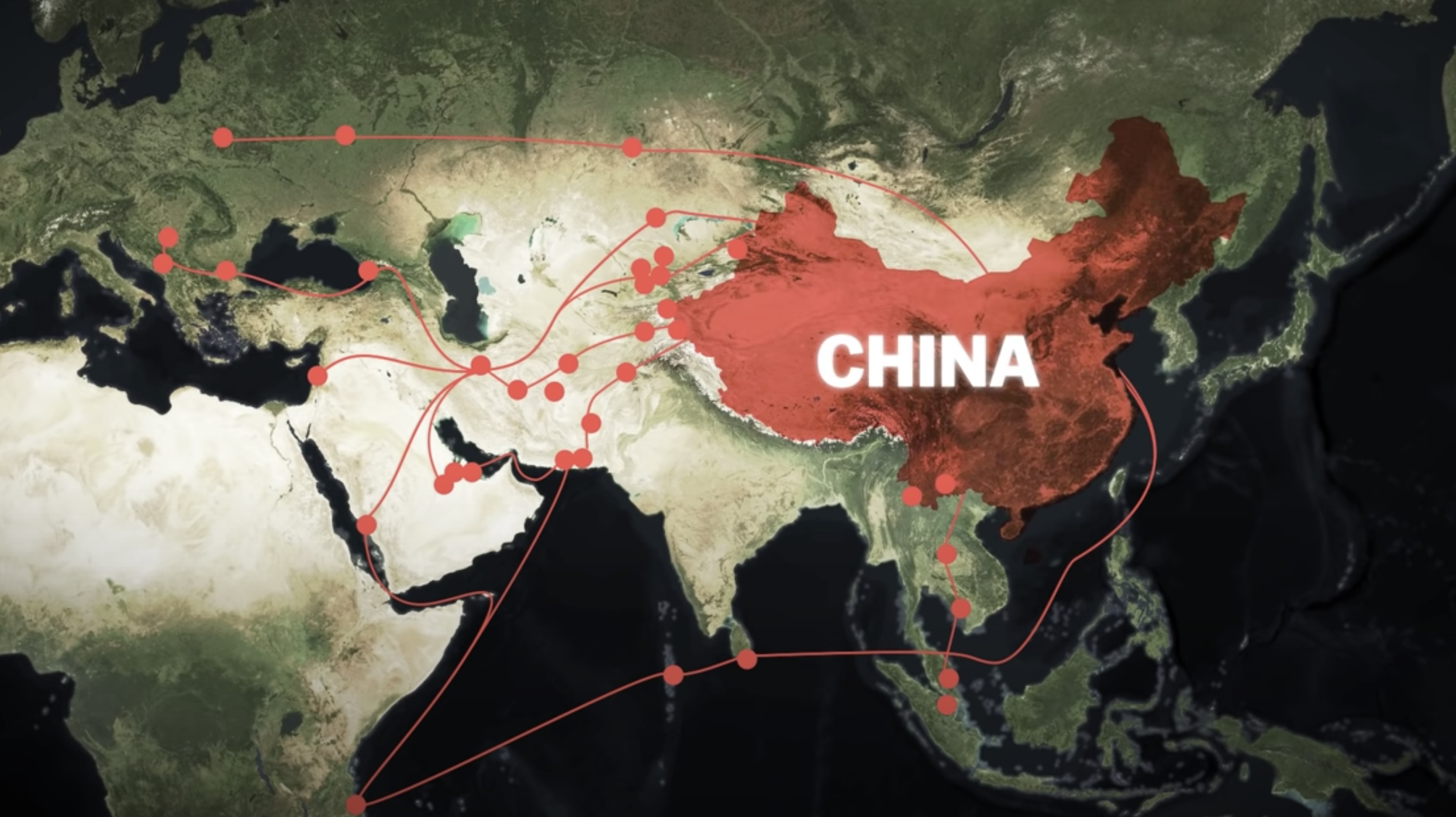
China’s foreign goods trade maintained strong momentum through the first seven months of 2026, with total import-export value reaching 30.13 trillion yuan ($4.46 trillion), up 17.3% year-on-year, according to General Administration of Customs data released Friday, August 7 (CGTN).
Imports Are Outgrowing Exports — A Notable Reversal
The headline figure obscures a more interesting shift beneath it. Exports rose 14% to 17.44 trillion yuan, while imports climbed a faster 22% to 12.69 trillion yuan — meaning import growth has been outpacing export growth, according to the same customs data. That’s a meaningful departure from the pattern that dominated Chinese trade data through much of the mid-2020s, when policymakers leaned heavily on export-led growth while domestic demand lagged.
Mechanical and electrical products remain China’s dominant export category, totaling 11.12 trillion yuan and growing 21.2% — now accounting for 63.8% of China’s total exports, underscoring how central advanced manufacturing and electronics remain to the country’s trade profile.
Where the Growth Is Coming From
China’s trade diversification strategy continues to show measurable results. Trade with ASEAN grew 20% in the first seven months of the year, trade with the EU rose 9.5%, Latin America climbed 15.4%, and Africa grew 18.9%. Trade with Belt and Road Initiative partner countries reached 15.36 trillion yuan, up 15.5%, while trade with other APEC economies hit 18.03 trillion yuan, up 21% (CGTN).
This diversification has been years in the making, accelerated by tariff pressure from Washington. Trading Economics data from earlier in 2026 showed Chinese exports to the U.S. declining even as overall export volumes hit record highs, as manufacturers redirected shipments toward Southeast Asia, Africa, and Latin America to offset the impact of U.S. tariffs (Trading Economics).
A Growth Target Built on Trade Strength
The strong trade numbers are consistent with the trajectory Premier Li Qiang set out earlier in the year, when Beijing targeted 4.5%–5% GDP growth for 2026, down modestly from the prior year’s target, which itself was met largely through a roughly one-fifth surge in China’s trade surplus. Economists have been skeptical that Beijing will pivot away from export dependence any time soon, noting that recent policy documents pledged a “notable” increase in household consumption without offering many concrete mechanisms to deliver it (Investing.com/Reuters).
The US-China Undercurrent
Trade tensions with Washington remain an active backdrop rather than a resolved issue. The South China Morning Post’s ongoing coverage notes Beijing has launched an investigation into imported printers and photocopiers that use foreign-developed software, a direct response to the latest round of U.S. sanctions — illustrating how the trade relationship continues to generate tit-for-tat regulatory measures even as overall Chinese trade volumes with the rest of the world climb (SCMP).
Why the Import Surge Matters
A 22% jump in imports against 14% export growth is a data point worth watching closely for anyone tracking global demand signals. Stronger Chinese imports typically translate into higher demand for commodities, industrial inputs, and consumer goods from trading partners — a potentially supportive signal for economies like Indonesia, Malaysia, and Australia that count China as a top trading partner. Whether this reflects a genuine, durable shift toward domestic consumption-led growth, or simply reflects higher commodity prices flowing through import values, will become clearer as full-year 2026 data consolidates.
How much did China’s trade grow in 2026?
China’s total goods trade reached 30.13 trillion yuan ($4.46 trillion) in the first seven months of 2026, up 17.3% year-on-year, with imports (+22%) growing faster than exports (+14%) for the period.
Discover more from The Economy
Subscribe to get the latest posts sent to your email.

PANW Stock Post-Earnings: Record RPO, FY27 Guidance & Dip Buy Strategy

Dell Stock Surges on $95B AI Backlog: Q2 FY27 Earnings Analysis & Price Target

Latest iPhone Rumors 2026: iPhone 18 Pro & Foldable Specs

ATF Data Breach Details: What the Qilin Ransomware Leak Exposed

GoPro Stock Analysis (GPRO): Why It Surged 46% in One Day

Buddy Stephens Football Coach: Why He Left EMCC in 2026

High School Football National Rankings 2026: Full Guide

Tesla Stock Buy or Sell 2026: TSLA Q2 Earnings Breakdown

Shein Clothes Quality & Safety in 2026: What Lab Tests Show

Fidelity Investments Review 2026: SPAXX Yields & Zero-Fee Funds

Motley Fool Stock Advisor Review 2026: Worth $99/Year?

American Airlines Trump Accounts Matching: $2,000 Kids Benefit

British Man Recovers £3.3M Lost Bitcoin After 12 Years

The Global AI Export War: How the Fable 5 Shutdown Is Reshaping Startup Strategy

State Farm’s $5B Dividend 2026: Who Qualifies & Payout Dates

Top 15 Financial Stocks for Investment in PSX

US-China Relations in Q3 2026: Trade Tariffs and Supply Chain Risks

Gold’s Wild 2026: From a Record $5,600 Peak to a 24% Crash and Back Toward $4,500

Oil Surges as Strait of Hormuz Traffic Collapses Again

Gold Price 2026: Why Bullion Has Fallen 25% From Its January Record High

SpaceX Stock Lockup Expiration Explained: Why $123B in Shares Could Hit the Market

The Rocket That Won’t Quit: Inside SpaceX’s Falcon 9 Launch Machine

Russia Oil Revenue 2026: The Iran War Windfall and What a Hormuz Deal Means for Moscow

China Economy 2026: How AI Exports and a Property Crash Are Splitting Growth in Two

Pakistan Economy 2026: Why GDP Growth Isn’t Reaching Ordinary Households

Bank of England Set to Hold Rates Through Year-End, Reuters Poll Shows

July Jobs Shock: Why the Fed’s September Rate Decision Just Flipped (2026 Analysis)

Retail Earnings Week: What Home Depot, Target & Walmart Reveal
-

 Markets & Finance8 months ago
Top 15 Stocks for Investment in 2026 in PSX: Your Complete Guide to Pakistan’s Best Investment Opportunities
-

 Analysis6 months ago
Johor’s Investment Boom: The Hidden Costs Behind Malaysia’s Most Ambitious Economic Surge
-

 Analysis7 months ago
Top 10 Stocks for Investment in PSX for Quick Returns in 2026
-

 Analysis7 months ago
Brazil’s Rare Earth Race: US, EU, and China Compete for Critical Minerals as Tensions Rise
-

 Banks8 months ago
Best Investments in Pakistan 2026: Top 10 Low-Price Shares and Long-Term Picks for the PSX
-

 Investment8 months ago
Top 10 Mutual Fund Managers in Pakistan for Investment in 2026: A Comprehensive Guide for Optimal Returns
-

 Global Economy8 months ago
15 Most Lucrative Sectors for Investment in Pakistan: A 2025 Data-Driven Analysis
-

 Global Economy8 months ago
Pakistan’s Export Goldmine: 10 Game-Changing Markets Where Pakistani Businesses Are Winning Big in 2025