
Analysis
DBS Surges to Two-Month High After Q1 2026 Earnings Beat: Why Singapore’s Wealth Powerhouse Is Rewriting the Rate-Headwind Playbook

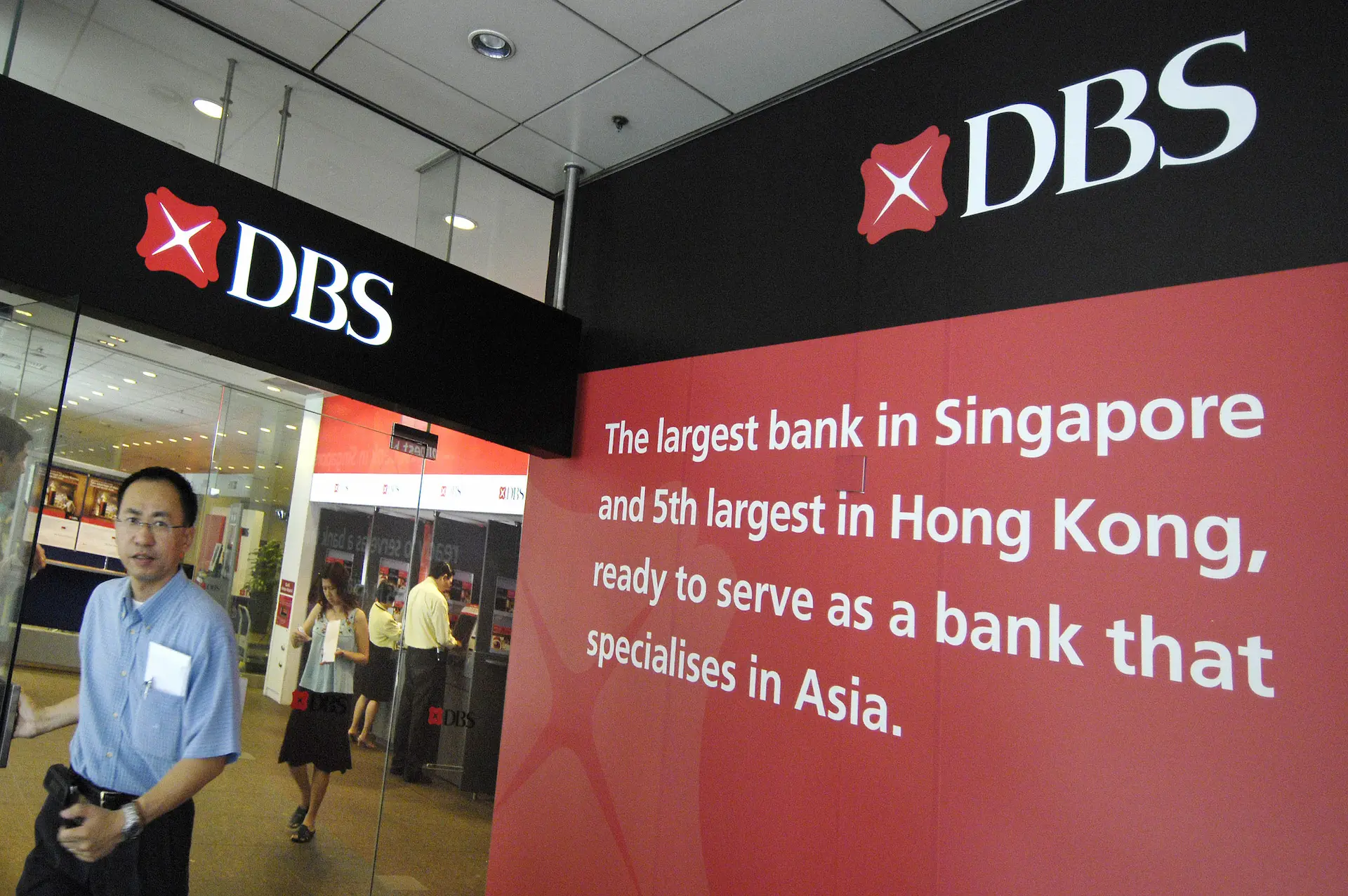
Singapore’s largest bank just delivered a quiet masterclass in strategic reinvention — and the market noticed.
The trading floor at Marina Bay Financial Centre opened on April 30 with a familiar tension: earnings season for Singapore’s big three banks, geopolitical noise from the Middle East, and a rate environment that refuses to cooperate. By mid-morning, DBS Group Holdings (SGX: D05) had answered the most pressing question. Its shares surged as much as 4.3% toward S$59, touching their highest level since early February 2026, after the bank reported first-quarter net profit of S$2.93 billion — a figure that exceeded the Bloomberg consensus estimate of S$2.88 billion and signaled something more significant than a routine beat: a structural pivot, years in the making, finally delivering at scale.
For those tracking the evolution of Asian banking, DBS’s Q1 2026 results are less a quarterly report than a proof of concept. When interest rates began their long descent from peak levels, the conventional wisdom held that Singapore’s lenders — deeply dependent on net interest income — would bleed margin. DBS has spent the better part of three years engineering a different outcome.
What the Numbers Actually Say: Anatomy of a Record Quarter
DBS’s Q1 2026 net profit reached S$2.93 billion, up 1% year-on-year and a robust 24% quarter-on-quarter, as strong wealth management and treasury performance offset lower interest margins. Total income achieved a record S$5.95 billion, up 1% year-on-year and 12% quarter-on-quarter, driven by robust fee income and treasury sales.
Flat year-on-year headline growth might tempt a casual reader to shrug. That would be a misreading. Strip away the rate-drag math, and the underlying quality of the quarter is striking:
- Net interest income declined 7% to S$3.48 billion during the period, weighed by heightened economic uncertainty and tighter monetary conditions.
- Net interest margin fell to 1.89%, narrowing 23 basis points year-on-year as SORA and HIBOR rates declined and the Singapore dollar strengthened. On a quarter-on-quarter basis, NIM compressed only four basis points, and group net interest income was little changed on a day-adjusted basis, as rate pressures were offset by hedging and balance sheet growth.
- Commercial book net fee and commission income increased 16% to S$1.48 billion. Wealth management fees hit a record S$907 million, driven by higher investment product sales and bancassurance.
- Profit before tax rose 2% year-on-year to S$3.51 billion, while return on equity held at a healthy 17%.
In blunter terms: DBS lost roughly S$240 million in annualized net interest income to rate compression, then proceeded to replace that and more through fee-based businesses. That is not a coincidence. It is a deliberate strategic architecture producing measurable results.
Why DBS Outperformed Expectations Despite NIM Pressure
The headline question for anyone following Singapore banking in 2026 is simple: how does a bank grow total income in a falling-rate environment? DBS’s answer involves three interlocking engines.
First, the wealth management machine is now genuinely world-class. Record fees of S$907 million in a single quarter represent a trajectory that would have seemed improbable five years ago. DBS’s wealth AUM reached S$488 billion at the end of 2025, and fee capture rates have risen as the bank has deepened its investment product suite and expanded its private banking capabilities. The bank has benefited from a structural tailwind that transcends quarterly noise: the accelerating concentration of private wealth in Asia, particularly among Chinese entrepreneurial families diversifying assets out of Hong Kong, Indian ultra-high-net-worth clients seeking Singapore domicile, and Indonesian conglomerates repatriating capital in a less predictable regional environment.
Second, treasury customer sales have emerged as a genuine earnings buffer. Volatile markets — driven by the Iran war, erratic U.S. tariff policy, and currency dislocations — have paradoxically been good for DBS’s treasury franchise. Corporate and institutional clients hedging currency and rate exposures have generated elevated transaction volumes, and DBS’s market-making infrastructure has translated that activity into fee and trading income. This is a business that benefits from complexity, not calm.
Third, deposit growth and hedging are doing surprisingly effective work on the NIM line. Management now assumes interest rates will remain at current levels — versus its earlier assumption of two Fed rate cuts — with the impact of greater rate headwinds on group net interest income largely mitigated by deposit growth, now expected to be in the high single-digit range, and ongoing hedging activities. That is a materially more conservative rate assumption than most peers are running, and DBS is still guiding for stable total income. The implication: the downside scenario is already baked into management’s thinking.
The Dividend Story: S$0.81 Per Quarter, and Why It Matters
For the income investor, the dividend announcement is the centerpiece of this earnings release. The board declared an interim dividend of S$0.66 per share and a capital return dividend of S$0.15 per share for Q1 2026, in line with the previous quarter. This brings the annualized total dividend to S$3.24 per share. Management has previously reaffirmed that the capital return dividend of S$0.15 per quarter will be maintained through 2026 and 2027.
Based on the closing price of S$56.56 as of April 29, 2026, this implies a dividend yield of approximately 5.7%. Post-earnings, with the stock trading closer to S$59, that yield moderates toward 5.5% — still among the most generous in the developed Asian banking universe.
The sustainability of this payout is underpinned by genuine capital strength. DBS’s CET1 ratio remains well above regulatory minimums, and the bank’s return on equity of 17% is generating capital faster than it can be deployed at equivalent returns. The capital return dividend — a structure DBS introduced to systematically distribute surplus capital — is, in effect, a managed excess-capital release mechanism. It signals that management sees no transformational acquisition on the near horizon that would absorb this capital, which is itself information.
DBS vs. OCBC and UOB: Comparative Edge in Wealth and Scale
Singapore’s banking sector operates as an oligopoly of three exceptionally well-run institutions. Comparing them illuminates where DBS’s competitive advantage is genuinely differentiated and where the narrative may be overstated.
| Metric (Latest Available) | DBS | OCBC | UOB |
|---|---|---|---|
| FY2025 Net Profit | S$11.03B | Record | S$4.68B |
| Wealth AUM | S$488B | S$343B | S$201B |
| Q1 2026 NIM | 1.89% | ~1.92% | ~1.75–1.80% (guided) |
| Annualized Dividend Yield | ~5.5–5.7% | ~4.3% | ~mid-4s% |
| ROE | 17.0% | 12.6% | ~12% |
OCBC has quietly become the standout among Singapore’s three local banks in terms of 2026 share price performance, hitting an all-time high in April 2026 and touching a record of S$22.83 on April 2, 2026, taking its market capitalisation above S$100 billion for the first time. OCBC’s advantage lies in its insurance engine through Great Eastern and a wealth platform — Bank of Singapore — that has delivered the strongest percentage AUM growth among the three. OCBC’s broader wealth management income reached a record S$5.6 billion and made up 38% of total income, up from 34% a year earlier.
UOB, meanwhile, remains the most rate-sensitive of the three. Its NIM guidance of 1.75–1.80% reflects greater exposure to conventional lending spreads, and its fee business — while growing — has yet to achieve the scale needed to offset margin compression at DBS or OCBC levels.
Where does DBS’s edge lie, then? Scale, franchise quality, and the self-reinforcing flywheel of AUM growth. At S$488 billion in managed assets, DBS is generating wealth management fees that dwarf its peers. Its digital banking infrastructure — recognized repeatedly by Euromoney and Global Finance as world-class — allows it to serve mass affluent and private banking clients at a cost efficiency that smaller platforms cannot replicate. The bank’s credit ratings of AA- (S&P) and Aa1 (Moody’s) are among the highest of any bank globally outside the Swiss franchise, which matters enormously for institutional counterparty relationships and wholesale funding costs.
DBS leads with FY2025 net profit of S$11.03 billion and ROE of 16.2%, far ahead of ASEAN peers.
What Lower Rates Mean for Singapore Banks in 2026
Can fee income permanently replace the lost NIM income? This is the foundational question for Singapore banking equity investors in 2026.
The short answer is: partially yes, structurally, and more so for DBS than for its peers. But the math is not frictionless.
Every 10 basis point decline in NIM costs DBS roughly S$130–150 million in annual net interest income, based on its approximate loan book scale. Offsetting that requires sustained double-digit fee income growth — achievable, but not guaranteed in every quarter. Market-dependent fee streams (wealth management, investment banking, treasury) can disappoint badly in risk-off environments. The first quarter of 2026 was not risk-off; geopolitical anxiety about the Iran war appears to have driven client hedging activity and safe-haven AUM inflows into Singapore — a perverse benefit for DBS’s franchise.
DBS maintained its FY2026 guidance of total income to be around 2025 levels despite continued rate headwinds and heightened geopolitical uncertainty. Commercial book non-interest income is still expected to grow at high single-digit rates, with management flagging potential upside if market sentiment improves.
That is a deliberately conservative stance — and it is the right one. Management teams that over-promise on fee income trajectory in rate-transition environments tend to disappoint badly when markets turn. DBS’s guidance framing effectively sets a floor with a visible upside scenario, which is exactly how credible institutional investor relations communication should work.
Geopolitics as Both Risk and Catalyst: The Iran Variable
One of the more nuanced aspects of this earnings story is the Iran war’s dual role in DBS’s operating environment. The conflict — which has disrupted shipping lanes, elevated energy prices (crude oil trading near $105 per barrel as of April 30, 2026), and driven a flight-to-quality in global capital flows — has simultaneously increased credit risk in certain sectors and driven wealth inflows into Singapore’s perceived safe-haven financial ecosystem.
DBS management noted in its earnings statement that “while the Iran war and its potential second-order effects have added uncertainty to the outlook, our stress tests indicate that our credit portfolio remains sound.”
Asset quality remains reassuringly stable. The NPL ratio was stable at 1%, unchanged quarter-on-quarter. Specific provisions (ECL3) were 31% higher year-on-year but significantly lower quarter-on-quarter, and at 14 basis points of total loans — an entirely manageable level.
The geographic concentration of DBS’s loan book — predominantly Singapore, Hong Kong, and ASEAN — provides less direct exposure to Middle Eastern commodity credits or European leveraged finance, where stress is more visible. That said, a prolonged conflict-driven energy price shock would feed into inflation dynamics globally, complicate the Fed’s rate path, and potentially reverse some of the rate-cut assumptions embedded in DBS’s hedging strategy.
The ASEAN Wealth Boom: Why DBS Is Structurally Positioned for the Next Decade
Singapore’s emergence as the undisputed wealth management hub of Asia is not an accident, nor is it a temporary phenomenon. It reflects deliberate government policy, legal system reliability, tax competitiveness, and geographic centrality in a region generating unprecedented private wealth. The numbers are staggering: Asia-Pacific is projected to account for the largest share of global HNWI wealth growth through the end of the decade.
DBS sits at the intersection of three critical wealth migration corridors: Chinese entrepreneurial capital seeking offshore diversification post-2020, Indian ultra-HNW families consolidating multi-generational wealth in Singapore family offices, and Indonesian and Malaysian conglomerates professionalizing their balance sheets through Singapore-domiciled holding structures. For each of these client categories, DBS’s regional franchise — with operations across 18 markets — provides the cross-border infrastructure that standalone private banks cannot replicate.
The bank’s investment in digital onboarding, AI-driven investment advisory tools, and its digibank platform for mass affluent clients in India and Indonesia positions it to capture the next wave of wealth accumulation at margins that traditional relationship-banking models cannot achieve at scale.
This is what the S$907 million wealth management fee quarter represents: not just strong performance in one period, but the maturation of a decade-long franchise-building exercise.
Counterpoints: Why the Stock Reaction May Moderate
A rigorous analysis demands engagement with the bear case.
Valuation is not cheap. At approximately S$59 post-earnings, DBS trades at roughly 2.4x book value and 14–15x forward earnings — a meaningful premium to ASEAN banking peers and broadly in line with OCBC’s current premium multiple. DBS’s price-to-book ratio is higher than its peers’, so its valuation could be hurt if it disappoints in continuing to deliver ROE above its peers. At 17% ROE, the premium is justifiable — but it leaves little room for earnings misses.
NIM compression is not finished. The move from 2.12% to 1.89% year-on-year is significant, and the hedging strategy that has buffered further decline is not infinitely scalable. If SORA rates decline more sharply than current assumptions, or if deposit pricing proves stickier than expected, NIM could surprise to the downside.
Wealth fee volatility is real. The record S$907 million quarter was partly a function of elevated market activity. In genuinely risk-off quarters — sharp equity drawdowns, credit spread widening — investment product sales contract. DBS’s fee income is structurally higher than five years ago, but it is not immune to cyclical pressure.
The Iran war tail risk remains unquantified. A broader regional escalation, disruption to Asian shipping lanes, or a spike in energy prices that triggers a global growth slowdown would stress all of these fee income assumptions simultaneously.
Strategic Investor Takeaways
For long-term dividend income investors, DBS at a 5.5–5.7% yield — with a capital return dividend explicitly committed through 2027 — remains one of the most attractive risk-adjusted income positions in the Singapore equity universe. The payout is backed by 17% ROE and capital ratios that are comfortably above regulatory requirements. The dividend is not under threat in any plausible base-case scenario.
For total return investors, the path to meaningful share price upside requires either a re-rating of the wealth franchise (plausible if AUM growth continues to accelerate), a recovery in NIM to the 1.95–2.00% range (which would require rate stabilization or reversal), or a sustained re-rating of Singapore financial equities by global asset allocators as ASEAN becomes a larger weight in emerging market and Asia-Pacific mandates.
For institutional investors benchmarking against regional peers, DBS’s ROE advantage over ASEAN banking peers of 400–500 basis points is durable and reflects genuine franchise quality rather than leverage. The bank’s AA- rating and conservative provisioning culture make it a core holding in any Asia-Pacific financial sector allocation.
The consensus 12-month price target for DBS sits near S$61–68, implying meaningful upside from current levels even after today’s surge — though the wide range reflects genuine uncertainty about the NIM trajectory and geopolitical tail risks.
Conclusion: Resilience Is Not a Quarterly Accident
DBS’s Q1 2026 earnings beat is best understood not as a positive surprise relative to a consensus model, but as validation of a strategic thesis that has been building for years. Singapore’s largest bank has successfully navigated the most challenging interest rate transition in a decade by investing, methodically and at considerable cost, in fee-based businesses that are now large enough to matter at the group level.
The record wealth management fees, the resilient asset quality, the disciplined capital management, and the maintained dividend all tell the same story: this is an institution that has internalized the lesson that rate cycles are temporary and franchise quality is permanent.
As a long-time observer of Asian banking, I have watched DBS transform from a predominantly Singapore-centric retail lender into a genuinely regional wealth and institutional banking franchise. What the Q1 2026 numbers confirm is that the transformation has reached the point where it is visible in the income statement, not just the strategy slides.
Whether the stock sustains its two-month high depends on the variables DBS cannot control: the rate path, the Iran conflict’s evolution, and the global appetite for risk assets. What it can control — credit discipline, wealth franchise growth, capital allocation, and digital infrastructure investment — it is managing about as well as any bank in Asia.
For investors wondering whether this earnings beat changes the DBS thesis: it doesn’t change it. It confirms it.
Key Data Summary
| Metric | Q1 2026 | Year-on-Year Change |
|---|---|---|
| Net Profit | S$2.93 billion | +1% YoY, +24% QoQ |
| Total Income | S$5.95 billion (record) | +1% YoY, +12% QoQ |
| Profit Before Tax | S$3.51 billion | +2% YoY |
| Net Interest Income | S$3.48 billion | -7% YoY |
| Net Interest Margin | 1.89% | -23bps YoY |
| Wealth Management Fees | S$907 million (record) | — |
| Fee & Commission Income | S$1.48 billion | +16% YoY |
| Return on Equity | 17.0% | — |
| NPL Ratio | 1.0% | Stable |
| Dividend Per Share | S$0.81 | — |
| Annualized Dividend | S$3.24 | ~5.5–5.7% yield |
Discover more from The Economy
Subscribe to get the latest posts sent to your email.



Key Takeaways
- Rolex’s secondary market rose approximately 7.9% year-over-year as of 2026 (per WatchCharts data) — trailing Patek Philippe (+16.2%) and Tudor (+11.4%) but still outperforming Audemars Piguet (+3.4%).
- Rolex raised U.S. retail prices 4–9% in January 2026 (steel models ~5.6%, gold models ~8.7%), narrowing the historical gap between retail and pre-owned pricing.
- Not every model appreciates: steel sports references (Submariner, GMT-Master II, Daytona) have held value far better than two-tone or widely available dress references like the standard Datejust.
- The Lady-Datejust posted the sharpest 2026 gain among tracked collections — up 22.73%, from roughly $9,269 to $11,376 — driven by demand for smaller, “everyday luxury” watches.
- Gold’s rise past $2,400/oz has directly lifted the investment case for Rolex’s precious-metal references (Day-Date, Sky-Dweller, Yacht-Master).
The Model-by-Model Picture
| Category | 2026 Trend |
|---|---|
| Lady-Datejust | +22.73% (strongest performer among tracked collections) |
| Steel sports models (Submariner, GMT-Master II) | Held value well; corrected from 2022 peak but stabilized above retail |
| Daytona | Corrected from highs above $50,000 to the mid-$30,000s; still among the most sought-after references |
| Two-tone/widely available Datejust | Flat to negative — “holds value” is an overstatement for this category |
| Gold references (Day-Date, Sky-Dweller) | Lifted by gold’s rise above $2,400/oz |
Why the “Rolex Always Appreciates” Myth Is Fading
The pandemic-era boom pushed some references — the Daytona above all — to speculative highs disconnected from historical norms. Since the March 2022 peak, steel sports models have compressed meaningfully, and dealers who bought inventory near the top have in some cases faced 20–40% markdowns on liquidation. The lesson for 2026 buyers: Rolex as a category is not a monolith. Value retention depends heavily on specific reference, condition, and whether the piece comes with box and papers (“full set”).
What’s Actually Driving 2026 Strength
- Retail price increases raise the floor. When a new Submariner retails at $10,050 (up from $9,500), a pre-owned example at $11,000–$12,000 suddenly represents a smaller premium — narrowing the gap without secondary prices actually moving.
- Supply discipline remains Rolex’s core lever. The brand has never confirmed production numbers, and secondary-market premiums remain entirely a function of Rolex’s own manufacturing decisions — a risk factor as much as a support.
- Certified Pre-Owned rollout. Rolex’s now fully rolled-out CPO program has changed how buyers transact in the used market, adding a layer of brand-verified legitimacy that supports pricing.
The Case for Rolex as a Portfolio Diversifier
Financial advisors increasingly frame luxury watches not as a replacement for equities or bonds, but as a tangible, historically low-correlation diversifier — one that carries its own risks (illiquidity, condition-dependent pricing, no yield) but has demonstrated multi-decade resilience for specific references.
Is Rolex a good investment in 2026?
It depends heavily on the specific reference. Steel sports models like the Submariner and Daytona have held or grown in value; two-tone and widely available dress models generally have not. Overall, Rolex’s secondary market rose about 7.9% year-over-year in 2026, trailing Patek Philippe but ahead of Audemars Piguet.
Discover more from The Economy
Subscribe to get the latest posts sent to your email.

Navigating Mortgage and Loan Refinancing in a High-Yield Environment
Global public debt crossing critical thresholds has kept central bank policies volatile, resulting in fluctuating US Treasury yields throughout 2026. For homeowners and commercial property holders burdened by previous high-interest borrowing cycles, finding optimal refinance windows has become a high-stakes financial puzzle. Stalled disinflation and stubborn employment numbers mean rate cuts are incremental, requiring borrowers to act with precision.
Timing your mortgage or commercial loan refinance in this environment requires a deep understanding of yield curve movements and lender risk appetites.
Decoding 2026 Refinance Dynamics
The 10-Year Treasury Yield Benchmark
Mortgage rates continue to track closely with the 10-year US Treasury yield. When macroeconomic anxiety spikes debt issuance, yields rise, tightening consumer borrowing capacity. Savvy borrowers monitor weekly Treasury auctions to lock in rates during brief dip windows.
Hybrid ARMs and Alternative Structures
With fixed rates remaining elevated, 7/1 and 10/1 adjustable-rate mortgages (ARMs) have surged in popularity. These products offer lower initial monthly payments, giving borrowers breathing room until central bank easing cycles fully materialize.
| Loan Product | Current Rate Range | Best For | Key Risk Factor |
| 30-Year Fixed Mortgage | 6.2% – 6.8% | Long-term predictability | Higher initial monthly outlay |
| 7/1 Hybrid ARM | 5.5% – 5.9% | Short-term ownership / flipping | Rate reset risk after year 7 |
| Commercial Refinance | 7.0% – 8.2% | Corporate asset restructuring | Strict DSCR lender covenants |
Actionable Steps for Successful Refinancing
To maximize your chances of securing favorable refinance terms in a volatile market, follow a disciplined preparation strategy.
Boost Your Credit Score Immediately: Lenders in 2026 are applying stringent credit tiering; a 20-point increase can drop your APR by a crucial quarter-point.
Shop Regional Credit Unions: Smaller financial institutions often offer portfolio loans with more flexible underwriting than major national banks.
Calculate the Break-Even Point: Ensure your total closing costs are recouped through monthly savings within 24 months of closing.
“Market Strategist View: Refinancing in 2026 is an exercise in opportunistic timing. Borrowers must maintain immaculate financial profiles ready to strike the moment Treasury yields dip.”
Mastering the complexities of today’s debt environment ensures you can successfully lower your debt service costs and protect your long-term financial stability.
Discover more from The Economy
Subscribe to get the latest posts sent to your email.

The days of pulling generic auto insurance quotes based purely on your zip code and age are officially over. In 2026, insurance comparison engines are powered entirely by generative AI and real-time telematics. These platforms digest thousands of live data points—ranging from your driving smoothness via connected vehicle sensors to real-time traffic congestion patterns—to generate hyper-personalized premiums instantly.
For consumers, this evolution represents both a massive opportunity for savings and a hidden trap for penalty pricing. Understanding how AI algorithms evaluate risk is essential for anyone looking to lower their monthly auto insurance premiums.
How AI Comparison Engines Evaluate Your Risk Profile
Behavioral Telematics and Connected Cars
Modern cars stream performance data directly to insurance aggregators. Generative AI models analyze braking sharpness, acceleration curves, cornering G-forces, and phone distraction metrics. Drivers who maintain smooth, defensive habits are rewarded with dynamic rate cuts of up to 40% compared to traditional rating tiers.
Predictive Traffic and Weather Modeling
AI tools now cross-reference your daily commute route with predictive weather and accident probability models. If your standard parking location or driving corridor has a statistically higher incidence of uninsured motorist claims, your quotes will reflect that hyper-local risk assessment.
| Comparison Factor | Traditional Rating Model | 2026 Generative AI Model | Impact on Premium |
| Mileage & Usage | Annual estimated odometer reading | GPS tracking & live trip duration | High (up to 35% savings) |
| Driving Behavior | MVR driving record & accidents | Real-time braking, speed, & G-force | Critical (determines tier) |
| Vehicle Tech | Make, model, and safety rating | ADAS calibration & repair cost data | Moderate |
Strategies to Lower Your AI-Driven Insurance Quote
To outsmart the algorithm and secure the lowest possible premium in 2026, drivers must proactively manage their digital footprint on insurance platforms.
Opt-In for Telematics Trial Periods: Many insurers offer immediate 15% discounts just for installing their driving app; let it track safe habits for 30 days to lock in permanent savings.
Scrub Unverified Public Records: Ensure your motor vehicle report is free of clerical errors that AI risk models misinterpret as reckless behavior.
Compare AI Aggregators: Use platforms that integrate multi-carrier API feeds rather than single-brand comparison sites to find the best risk-adjusted rate.
“Industry Note: AI-driven pricing rewards transparency and precision. Drivers who actively manage their telematics data consistently out-save those relying on legacy quote calculators.”
Embracing AI comparison tools allows savvy policyholders to customize coverage limits precisely to their driving habits, eliminating wasted premium spend while ensuring robust protection.
Discover more from The Economy
Subscribe to get the latest posts sent to your email.

Bitcoin & XRP 2026: Inside Crypto’s Institutional Era

Global Economy 2026: IMF Growth, AI Stocks & Market Risk

China’s Local Debt Race Against Time: Why Economists Demand Central Action Before the Deflation Window Closes

Money News: How to Protect Your Portfolio From Global Inflation

World Bank Projections: Emerging vs. Big Economies of Asia

IMF Reports 2026: What the Latest Data Means for the Global Economy

Singapore Stocks Outlook: A Safe Haven in the Asian Market?

China Stocks vs. Japan Stocks: Where Should You Invest in Late 2026?

VIX Index Explained: How to Trade Wall Street’s Fear Gauge Today

Commercial vs Residential Real Estate: Which Wins in 2026?

Presidential Stock Market Performance: How Trump’s Second Term Compares to History

2026 Real Estate Market News: Are We Heading for a Correction?

Bitcoin Price Forecast 2026–2027: Will the 4-Year Cycle Hold?

Fidelity Crypto vs. Traditional Brokerages: A Guide for Modern Investors

US-China Relations in Q3 2026: Trade Tariffs and Supply Chain Risks

Top 30 Stocks for Investment in PSX for Massive ROI in 2026

SpaceX Starship Flight 14: First Orbital Attempt & Starlink V3 Launch Explained

AI Chip Stocks 2026: The Best Semiconductor Investments Beyond Marvell

The 2026 Crypto Regulatory Shift: What It Means for Institutional Investors

Tween Back-to-School Trends 2026: What’s Driving the $85B Season

AI-Powered Training: The Next Multi-Billion Dollar Ecosystem in Fitness

Oil Prices Break $100 in 2026: Middle East Conflict & Energy Markets

10-Year Treasury Yield Hits 4.80%: What It Means for Rates & Portfolios

Fidelity Investments Review 2026: SPAXX Yields & Zero-Fee Funds

BRICS+ Cross-Border Payments 2026: Interoperability Explained

Shein Clothes Quality & Safety in 2026: What Lab Tests Show

MRVL Earnings 2026: Why Marvell Sank Despite Beating Estimates

China’s US$10.8 Billion Trade Shortcut: Why the Pinglu Canal Matters
-

 Markets & Finance9 months ago
Top 15 Stocks for Investment in 2026 in PSX: Your Complete Guide to Pakistan’s Best Investment Opportunities
-

 Analysis7 months ago
Johor’s Investment Boom: The Hidden Costs Behind Malaysia’s Most Ambitious Economic Surge
-

 Analysis7 months ago
Top 10 Stocks for Investment in PSX for Quick Returns in 2026
-

 Analysis8 months ago
Brazil’s Rare Earth Race: US, EU, and China Compete for Critical Minerals as Tensions Rise
-

 Banks8 months ago
Best Investments in Pakistan 2026: Top 10 Low-Price Shares and Long-Term Picks for the PSX
-

 Investment8 months ago
Top 10 Mutual Fund Managers in Pakistan for Investment in 2026: A Comprehensive Guide for Optimal Returns
-

 Global Economy9 months ago
15 Most Lucrative Sectors for Investment in Pakistan: A 2025 Data-Driven Analysis
-

 Global Economy9 months ago
Pakistan’s Export Goldmine: 10 Game-Changing Markets Where Pakistani Businesses Are Winning Big in 2025