
Oil Markets
Pakistan and India Most Vulnerable from Oil Shock as Strait of Hormuz Tensions Escalate

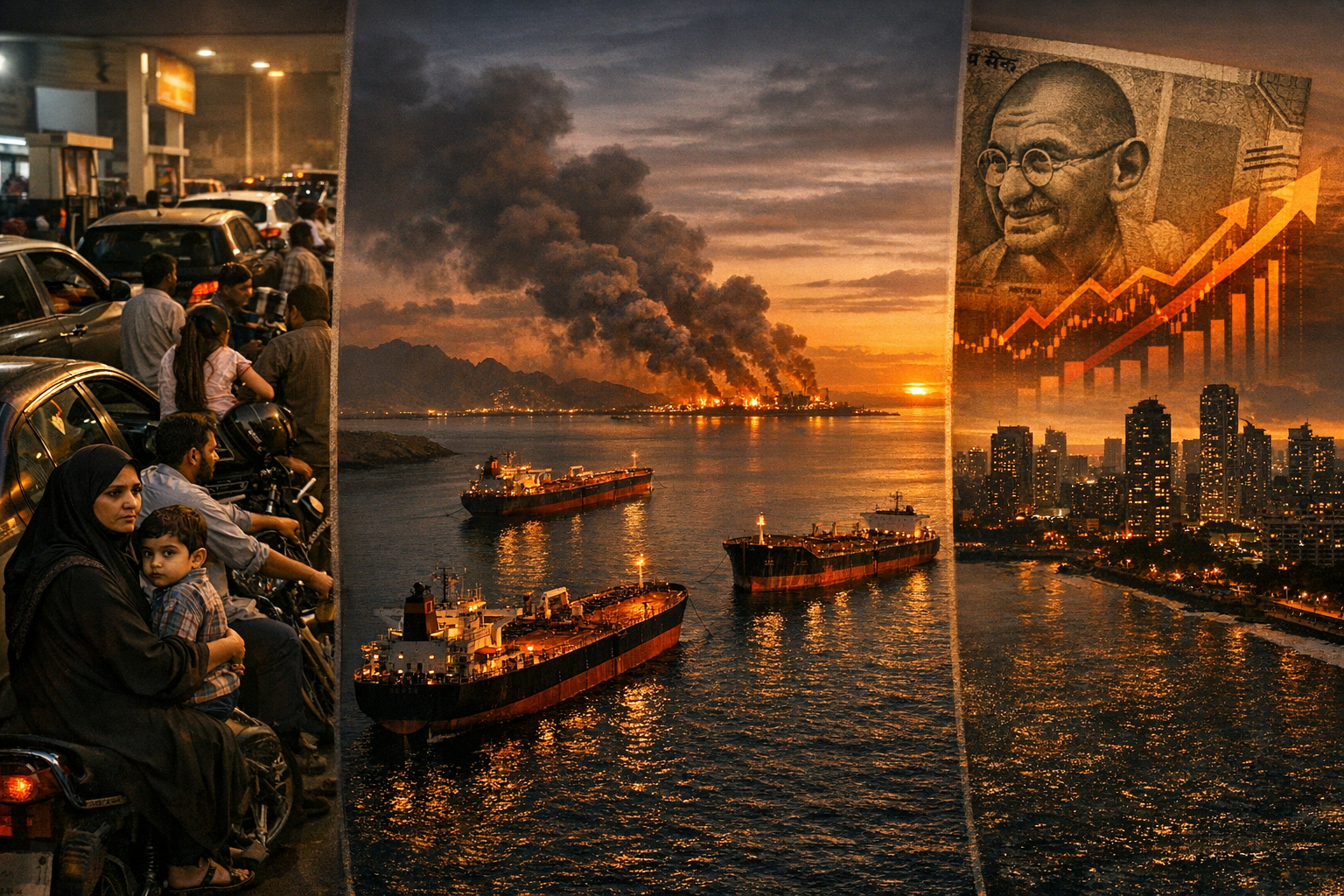
In a cramped flat in Karachi’s Lyari district, Fatima Siddiqui runs the calculations she hoped she would never have to make again. The LPG cylinder that kept her family’s stove burning through winter now costs 40 percent more than it did a fortnight ago. Across the border in Mumbai, autorickshaw driver Rajan Patil stares at a fuel pump showing prices he last saw in 2022. Neither of them has ever heard of Operation Epic Fury. Both of them are paying for it.
Oil prices surged past $100 a barrel on Sunday, March 9 — the first time crude has traded in triple digits since Russia’s invasion of Ukraine — after Brent jumped more than 30 percent, at one point topping $119, as the US and Israeli war on Iran entered its second week. Al Jazeera International benchmark Brent crude futures traded 11.6 percent higher at $103.47 per barrel on Monday morning, while US West Texas Intermediate futures were last seen 12.2 percent higher at $101.97, putting oil on track for one of its biggest single-day jumps on record. CNBC
The trigger is as structural as it is sudden. On February 28, 2026, the United States and Israel initiated coordinated airstrikes on Iran under Operation Epic Fury, targeting military facilities, nuclear sites, and leadership, resulting in the death of Supreme Leader Ali Khamenei. Wikipedia Iran’s retaliation was immediate and surgical: tanker traffic through the Strait of Hormuz dropped to four vessels on Sunday, March 1, compared with an average of 24 per day since January. Euronews For the world’s most critical energy chokepoint — the narrow passage connecting the Persian Gulf to the Arabian Sea — that is the equivalent of cardiac arrest.
For Pakistan and India, it is something closer to a pre-existing condition suddenly, violently exposed.
Why the Strait of Hormuz Is the Aorta of South Asian Energy
The geography of South Asia’s energy dependency is stark. Almost half of India’s crude oil imports and about 60 percent of its natural gas supplies move through the Strait of Hormuz. Seatrade Maritime Qatar and the United Arab Emirates account for 99 percent of Pakistan’s LNG imports and 53 percent of India’s, according to Kpler data. CNBC No other major economy outside the Gulf itself carries that kind of concentrated exposure to a single 21-mile-wide chokepoint.
The majority of the crude oil shipped through the Strait of Hormuz goes to Asia, with China, India, Japan, and South Korea accounting for nearly 70 percent of shipments, according to the US Energy Information Administration. NPR But the strategic buffer that separates China — with its substantial onshore storage — from India and Pakistan is decisive. India’s limited crude oil reserves of about 100 million barrels are sufficient for only 40 to 45 days of consumption, leaving the country particularly vulnerable to supply disruptions through the Strait of Hormuz, the Asian Development Bank warned on Friday. Business Standard Pakistan has no meaningful strategic petroleum reserve at all.
The prognosis from analysts is blunt. BMI (Fitch Solutions) identifies Pakistan and India as the most vulnerable among emerging markets, as energy importers with relatively high exposure to the Strait of Hormuz, while Egypt and Turkey are singled out for secondary exposure due to high energy import bills, fragile external positions, large energy subsidies, and unanchored inflation. Business Recorder
The Supply Shock: Unprecedented, and Worsening
Energy market veterans are reaching for superlatives they rarely deploy. Claudio Galimberti, chief economist at Rystad Energy, compares the effective halt of oil flows through the Strait of Hormuz to blocking the aorta in a circulatory system, adding that “we have not seen anything like this in pretty much the history of the Strait of Hormuz.” NPR
The anatomy of the disruption has several compounding layers. QatarEnergy halted activity at the world’s largest liquefied natural gas export facility after it was targeted in an Iranian drone attack, while tanker traffic through the Strait of Hormuz — which handles around a quarter of global seaborne oil trade and a fifth of LNG supply — has come to a near standstill. Bloomberg Iraq and Kuwait have already begun to shut in production, with analysts warning that the UAE and Saudi Arabia may also be vulnerable if the Strait of Hormuz remains closed for a sustained period. CNBC
Goldman Sachs, which had forecast a second-quarter Brent average of $76 per barrel as recently as Wednesday, now warns of a far darker scenario. The bank estimates that traders demand about $14 more per barrel than before the conflict to compensate for increased risks, roughly corresponding to the effect of a full four-week halt in flows through the Strait of Hormuz with spare pipeline capacity used as a partial offset. If flows are halted for five weeks, prices could reach $100 per barrel — a threshold already breached. Goldman Sachs
Saul Kavonic, a senior energy analyst, captures the systemic danger with particular clarity: cutting off 15 to 20 percent of the world’s oil supply not only slows down every economy globally but also introduces an inflation impulse — and inflation plus slowing growth is stagflation, which constitutes an economic disaster. Business Recorder
Pakistan: Structurally Fragile, Acutely Exposed
Pakistan enters this crisis with no margin. An IMF bailout program, a current account that was only just stabilizing, and energy subsidies already consuming a destabilizing share of the federal budget — the Hormuz shock arrives at the worst possible moment.
Petrol prices in Pakistan rose by Rs55 per litre in March 2026, triggering long queues at filling stations, increased transport costs, and widespread public frustration. Modern Diplomacy The government’s official line — that the increase is an inevitable consequence of global oil volatility — is accurate as far as it goes. What it understates is the structural dimension: Pakistan’s near-total LNG dependence on Qatar and the UAE, combined with the absence of meaningful storage infrastructure, leaves the country exposed not just to price spikes but to physical shortfalls.
Pakistan has limited storage and procurement flexibility, meaning disruption would likely trigger fast power-sector demand destruction rather than aggressive spot bidding, according to Go Katayama, principal insight analyst at Kpler. CNBC In practical terms, that means rolling blackouts in a country where electricity shortfalls are already politically explosive.
On March 4, Pakistan officially requested that Saudi Arabia reroute oil supplies through Yanbu’s Red Sea port, with Riyadh providing assurances and arranging at least one crude shipment to bypass the closed strait. Wikipedia The arrangement provides temporary relief. It cannot substitute for the volume, reliability, or price levels to which Pakistan’s energy system is calibrated.
The Pakistani rupee, already among the most depreciated major currencies of the past three years, faces renewed downward pressure. Every $10 increase in oil prices widens Pakistan’s current account deficit by an estimated 0.4 to 0.6 percent of GDP — an economy that cannot absorb that hit without either rationing foreign exchange or accelerating monetary loosening that further stokes inflation already running above 20 percent in food categories.
India: Scale Amplifies Vulnerability
India’s exposure is structural rather than acute — but at Indian scale, structural vulnerability produces acute consequences.
With nearly 90 percent of India’s crude oil requirement met through imports, any disruption in global energy supply — particularly through the Strait of Hormuz — poses a direct risk to macroeconomic stability, according to SBI Research. Business Today Moody’s warned that costly energy imports would weaken the rupee, raise inflation, worsen the current account balance, and complicate monetary policy as well as fiscal management if they lead to expanded subsidies to offset the economic shock. Business Standard
The fiscal arithmetic is unforgiving. India’s Union Budget for 2026–27 was constructed on oil averaging $68 to $70 per barrel. At $103, every rupee of subsidy relief the government extends to consumers — and political pressure to do so is intense, with state elections pending — translates directly into fiscal slippage. Every rupee of subsidy withheld translates into retail fuel price increases of ₹5 to ₹15 per litre on current trajectory estimates.
India has already ordered refiners to maximise production of cooking fuel as imports from the Middle East decline, while gas-intensive industries, particularly fertiliser manufacturers, may face pressure if LNG supplies remain tight. Business Standard The fertiliser link is particularly consequential: disrupted LNG supply constrains domestic fertiliser production just as Rabi crop planting cycles approach, threatening both agricultural output and rural inflation.
The Indian rupee’s recent relative stability — it had appreciated marginally against the dollar in early 2026 — faces a sharp test. India’s oil imports are priced in dollars, so a weaker rupee means the same barrel of oil costs more in local currency, driving inflation through the transport, manufacturing, and agriculture chains simultaneously. Wordzz
The Comparison Table: Pakistan vs India vs GCC
| Indicator | Pakistan | India | GCC Average |
|---|---|---|---|
| Oil import dependency | ~85% imported | ~90% imported | Net exporter |
| LNG sourced from Gulf | ~99% | ~53% | Exporter |
| Strategic petroleum reserve | Effectively none | 40–45 days | Substantial |
| Current account position | Fragile surplus | ~1.5% deficit | Surplus |
| Fiscal space for subsidies | Very limited | Constrained | Ample |
| Currency resilience | Low | Moderate | High |
| Exposure rating (BMI/Fitch) | Most vulnerable | Most vulnerable | Adverse but manageable |
Tourism, Logistics, and the Invisible Multiplier
The economic damage radiating from the Strait of Hormuz crisis extends well beyond oil prices. The waterway is not merely an energy corridor — it is a central artery of the global logistics system, and its disruption is reshaping aviation, hospitality, and freight networks with consequences that will outlast any ceasefire.
Cruise ships reduced activity in the Persian Gulf and stopped using the strait, stranding 15,000 passengers on six major cruise ships. Wikipedia The Gulf aviation hub model — built on Dubai and Abu Dhabi serving as transfer points between Asia and Europe — is under immediate pressure as war-risk insurance surcharges inflate operating costs and itinerary rerouting adds hours and fuel burns to long-haul routes.
For Pakistan and India, the tourism dimension cuts both ways. The Gulf diaspora — some 7 million Pakistanis and 8 million Indians working in the Gulf Cooperation Council states — represents a critical source of remittances. Any sustained economic disruption to Gulf economies, whether through reduced oil revenues or conflict-related instability, threatens remittance flows that collectively account for 7 to 8 percent of Pakistan’s GDP and a meaningful share of India’s foreign exchange receipts. BMI’s baseline scenario is that the conflict in Iran will be large but short-lived, though there is a clear risk of a prolonged war. Among emerging markets, the economic impact will be most pronounced in the GCC, reflecting the shock’s adverse effects on trade, logistics, tourism, and investment. Business Recorder The knock-on to South Asian remittance economies would be severe.
The Forward Scenarios: Baseline and Downside
Baseline (BMI/Goldman Sachs): The conflict remains intense but contained, with the Strait of Hormuz beginning to partially reopen within three to four weeks as US naval escorts provide a corridor. Goldman Sachs estimates that a four-week full halt in Hormuz flows would push Brent to around $85 to $90 per barrel, with prices moderating as Strategic Petroleum Reserve releases from the G7 — which finance ministers discussed on Monday — provide partial offset. Goldman Sachs Under this scenario, Pakistan faces six to eight months of elevated inflation and currency pressure but avoids balance-of-payments crisis. India absorbs a current account widening of approximately 0.8 to 1.2 percent of GDP.
Downside (Prolonged Disruption): If the disruption in the Strait of Hormuz persists for another one to two weeks beyond current levels, prices could move toward $130 to $150 per barrel, according to senior market analysts. Business Recorder Under this scenario, Pakistan would almost certainly require an emergency IMF facility enhancement; India would face stagflationary pressure combining slowing growth with food and fuel inflation above 8 percent. The rupee and Pakistani rupee would both face disorderly adjustment risk.
The tail risk is darker still. If infrastructure is seriously damaged in oil-rich countries along the Gulf, it could take much longer for production to normalize even after missile strikes stop, and a full closure of the Strait of Hormuz would leave OPEC barrels in the region as effectively stranded assets in an extended war scenario. NPR
Policy Responses: What Islamabad and New Delhi Are Doing
Pakistan’s immediate moves:
- Emergency request to Saudi Arabia to reroute crude shipments via the Red Sea corridor through Yanbu port
- Engagement with the State Bank of Pakistan to manage rupee liquidity and cap speculative dollar demand
- Preliminary discussions with the IMF on contingency facility options if the crisis extends beyond six weeks
India’s immediate moves:
- Directive to state refiners to maximize domestic fuel production capacity
- Reopening of discussions on Russian crude procurement from floating storage in Asian waters
- Review of strategic petroleum reserve release protocols in coordination with the IEA
Both governments face the same fundamental dilemma: subsidise to protect consumers and blow up fiscal balances, or pass through prices and risk political instability. There is no clean answer when the originating shock is geopolitical and beyond domestic control.
Investor and Traveller Takeaways
For investors with exposure to South Asian equities and credit: the Pakistani rupee and Indian rupee face asymmetric downside risk in a prolonged disruption scenario. Pakistani sovereign spreads, already elevated, will widen further on any indication of IMF program slippage. Indian equities’ energy-sector composition and the fiscal arithmetic of subsidy policy make consumer staples and financial sector names most vulnerable to earnings revisions.
For travellers and the travel industry: Gulf aviation hubs face operational disruption and insurance cost inflation that will flow through to ticket prices across Asia-Europe routes within days. Bangladesh is experiencing severe strain, with the government bringing forward Eid holidays, ordering universities to close temporarily to reduce electricity demand, and imposing limits on fuel sales amid panic buying. Business Standard Regional tourism recovery, which had only just returned to pre-pandemic levels across South and Southeast Asia, faces a significant setback.
The Strait of Hormuz has been threatened before. It has never actually closed — until now. What the markets are pricing, and what Fatima Siddiqui and Rajan Patil are already living, is the realisation that 50 years of energy-security wargaming has finally become a news headline. The models suggested Pakistan and India would be most vulnerable. The models were right.
Discover more from The Economy
Subscribe to get the latest posts sent to your email.


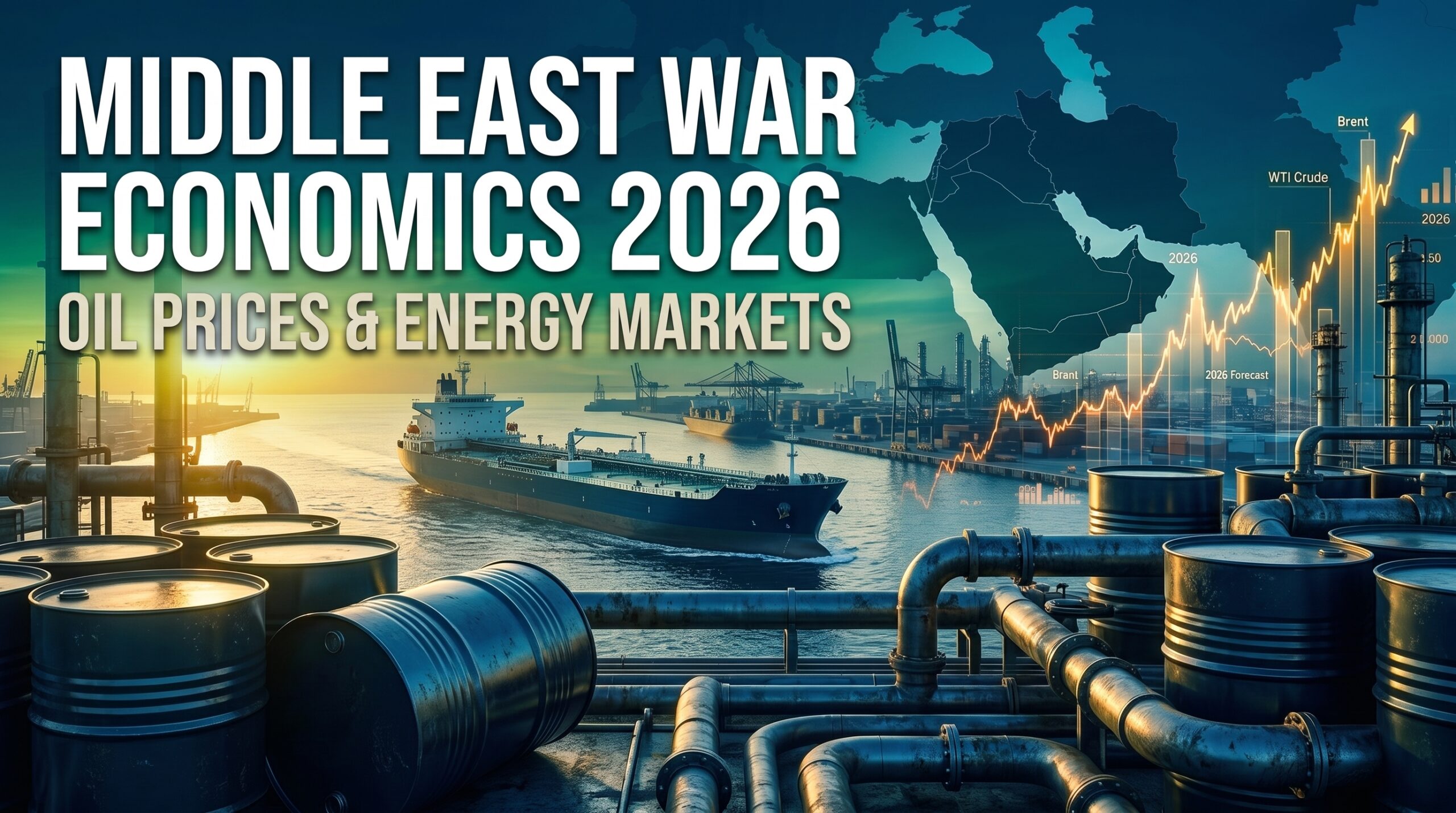
Six months into the war between the United States, Israel, and Iran, one pattern has become unmistakable to energy traders: every reported ceasefire has been followed, sooner or later, by a fresh escalation. What started as a limited conflict on February 28, 2026, has evolved into the most disruptive geopolitical shock to global oil supply since Russia’s invasion of Ukraine — and as of September 2026, it is still actively reshaping energy markets, shipping routes, and inflation forecasts worldwide.
The Ceasefire-and-Relapse Cycle
The conflict has produced at least three distinct ceasefire announcements since February, and none has held for more than a few weeks. In April 2026, a US-Iran arrangement briefly reopened the Strait of Hormuz and sent oil plunging below $100 a barrel, as reported by Euronews. Gold, which had surged as a safe haven, still traded near $4,750 an ounce that same week as investors openly doubted the truce would last, according to Trading Economics — key disputes remained unresolved and the Strait stayed effectively closed even after the announcement.
That skepticism proved warranted. By September 2026, oil had round-tripped decisively higher. Brent crude surpassed $100 a barrel for the first time in nearly six weeks after fresh attacks on oil facilities and tankers, settling at $97.89 before jumping 2.4% to $100.29, with WTI gaining to $94.77, according to reporting carried by the Washington Times. The proximate trigger: the U.S. military struck five Iranian tankers in response to attempted missile attacks on a Navy warship, while Iranian-backed Houthi forces ignited fires at Saudi Arabian oil facilities.
Oil price trajectory during the conflict:
| Date | Brent Crude | Context |
|---|---|---|
| Mar 21, 2026 | ~$106.77 | Fifth straight weekly gain amid escalation |
| Mar 20, 2026 | Forecast warning of $180+ | Saudi Aramco officials warned WSJ of extreme scenario |
| Apr 8, 2026 | Below $100 | Ceasefire announcement, Strait reopening pledge |
| Sept 7, 2026 | $97.31 | Six-week high; Iran vows to strike energy infrastructure |
| Sept 9, 2026 | $100.29 | Attacks on tankers and Saudi refineries |
| Sept 11, 2026 | ~$100, +9% week | Diplomatic talks announced on Hormuz shipping |
Why the Strait of Hormuz Is the Real Story
The Strait of Hormuz is the fulcrum of this entire crisis. Roughly 20% of the world’s oil supply passes through this chokepoint, including about half of Asia’s oil imports and a quarter of its LNG imports, according to TD Economics. Since the war began, fighting has halted most shipping through the strait, and — critically — markets have stopped believing repeated U.S. government proclamations that reopening is imminent. As one energy analyst told Marketplace, “The Strait of Hormuz won’t be what it was before. Now, we understand that Iran can and will block it.”
The physical impact on trade flows has been severe. Oil shipments out of the Middle East are running roughly 65% below year-ago levels, and the cost of shipping crude to Asia on the largest tankers has hit a record high, per the same Marketplace reporting. The United Arab Emirates has responded by actively building alternative export routes and trade corridors to avoid having its energy exports “held hostage” by the conflict, a senior UAE presidential adviser confirmed to Reuters in early September.
Demand Destruction Is Now the Dominant Theme
While supply disruption drove the initial price spike, the market’s focus by September 2026 has shifted decisively toward demand destruction. The International Energy Agency sharply lowered its 2026 global oil demand outlook, forecasting a contraction of 2.5 million barrels per day — the largest annual decline since the COVID-19 pandemic — as higher prices and tighter supply weigh on consumption, according to Trading Economics. OPEC has cut its own demand-growth forecast for a fifth consecutive month. Both organizations now agree that sustained triple-digit oil is actively destroying the demand it was created by.
OPEC+ itself has opted for caution rather than aggressive supply response, keeping its October output policy unchanged at its early-September meeting, pending agreement on new quotas before any further steps, Reuters reported.
The Inflation and Consumer Pass-Through
The war’s inflationary impact has already shown up in hard data. U.S. gasoline prices surged in March 2026 to an EIA-reported average of $3.638 per gallon, the highest since September 2023, with AAA data showing the national average briefly topping $4.02 per gallon — a monthly jump described by Trading Economics as exceeding even the spikes following Hurricane Katrina and Russia’s 2022 invasion of Ukraine. Euro-area inflation jumped to 2.5% in the same window, well above the European Central Bank’s 2% target, driven almost entirely by the energy component.
Who is most exposed:
| Category | Exposure | Why |
|---|---|---|
| Asian oil importers (Japan, India, Pakistan, China) | Very high | ~50% of Asia’s oil, 25% of LNG via Hormuz |
| European energy consumers | High | Already strained post-Russia diversification |
| Gulf oil exporters (Saudi, UAE, Qatar) | Mixed | Higher prices offset by direct attack risk on infrastructure |
| U.S. consumers | Moderate-high | Domestic production buffers some but not all of the shock |
| Global shipping/logistics | High | Record tanker rates, rerouting costs |
Diplomatic Off-Ramps Being Tested
The most significant near-term catalyst for de-escalation is the diplomatic track around Strait of Hormuz shipping management. Top diplomats from the six-member Gulf Cooperation Council were scheduled to meet their Iranian counterpart to negotiate a possible temporary arrangement for managing transit through the strait, according to Trading Economics. Iranian state media separately indicated Tehran would meet Gulf states in Oman for related talks. Markets have priced in modest optimism around these talks — crude paused its rally and settled near $100 on the news — but given the track record of failed ceasefires since February, traders are treating any de-escalation as tactical rather than durable until physical shipping data confirms a sustained reopening.
Final Verdict
The “ceasefire economics” of the 2026 Middle East war have proven to be a recurring, not a resolving, phenomenon: each truce has produced a short-lived relief rally in oil and a corresponding dip in inflation expectations, followed by renewed escalation that erases the gains. As of September 2026, Brent and WTI sit near six-week highs above $90–100, the Strait of Hormuz remains functionally impaired, and both the IEA and OPEC now forecast the sharpest demand contraction since the pandemic. For investors and policymakers, the actionable conclusion is that oil-price volatility itself — not a stable higher or lower price level — is the defining condition of this market, and near-term direction hinges almost entirely on whether the current Gulf-Iran diplomatic track produces a verifiable, physically confirmed reopening of shipping lanes rather than another rhetorical ceasefire.
Discover more from The Economy
Subscribe to get the latest posts sent to your email.
Markets & Finance
The Falkland Islands Dispute: Sovereign Wealth, Offshore Drilling, and Market Impacts
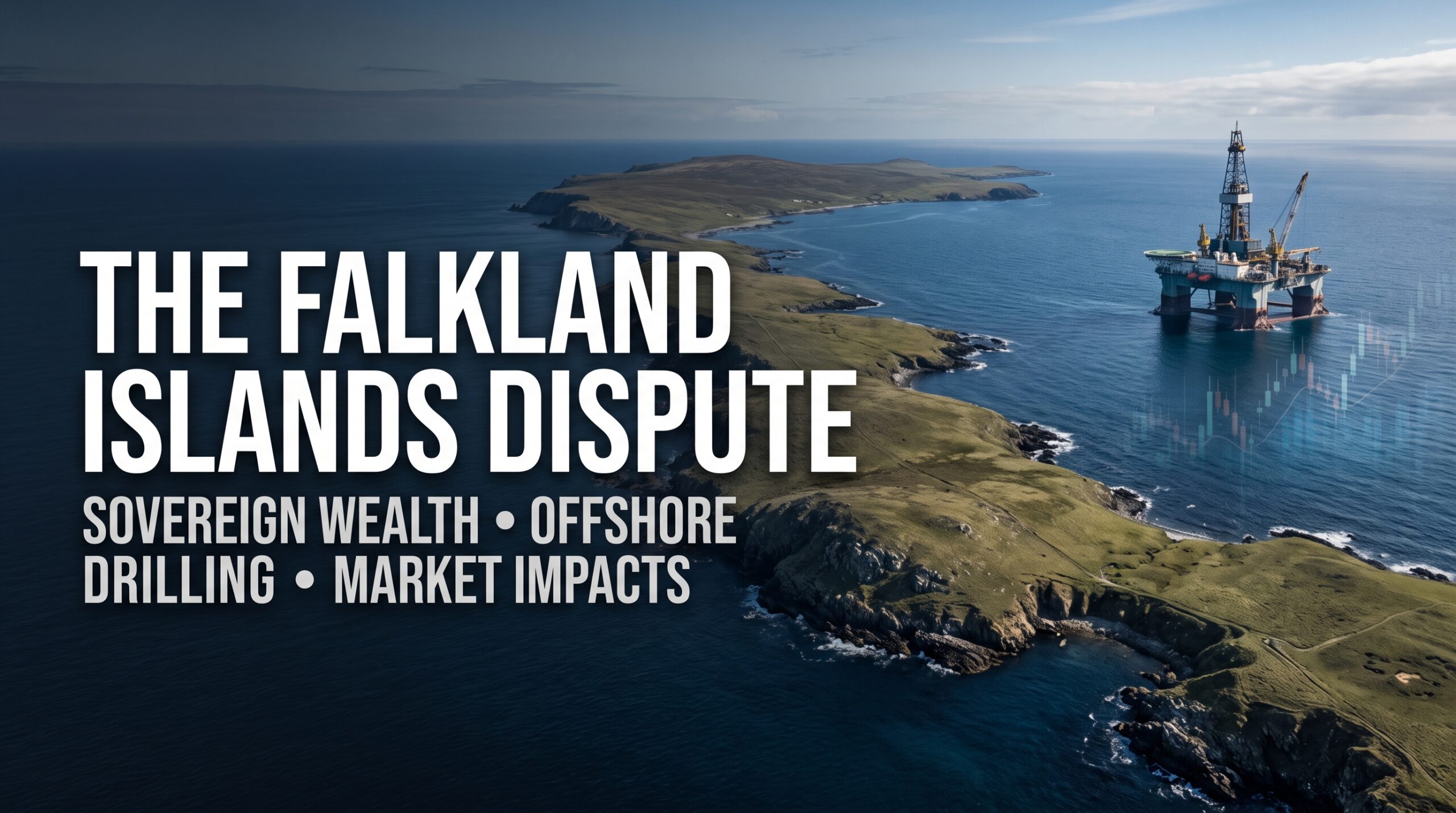
A sovereignty dispute that has simmered largely unresolved since the 1982 Falklands War has erupted into its sharpest confrontation in decades this September, driven not by military posturing but by offshore oil drilling economics. Argentine President Javier Milei announced sweeping new sanctions on September 3, 2026, targeting companies, directors, shareholders, and suppliers involved in the Sea Lion oil project near the Falkland Islands (Islas Malvinas) — escalating dramatically after U.S. President Trump publicly stated Washington’s decades-long neutral stance on the islands’ sovereignty was “under review.” With first oil from Sea Lion targeted for 2028 and Navitas Petroleum and Rockhopper Exploration having already taken final investment decisions in December 2025, this dispute has moved from historical grievance to live geopolitical risk assessment territory for any investor with exposure to South Atlantic energy or shipping.
Key Takeaways
- Argentina announced new sanctions on September 3, 2026 against foreign firms, directors, and suppliers connected to offshore oil and gas extraction near the Falklands without Argentine authorization — with penalties potentially extending to companies’ ability to operate or sign contracts within Argentina itself.
- The escalation was directly triggered by President Trump’s September 2026 comment that the U.S. position on Falklands sovereignty was “under review” — a break from decades of formal U.S. neutrality on the issue.
- Sea Lion, operated by U.K.-based Rockhopper Exploration and Israel’s Navitas Petroleum, took final investment decisions in December 2025, with first oil currently planned for 2028, located roughly 136 miles north of the Falklands on the Argentine continental shelf.
- A lawsuit filed September 1, 2026 by Argentine environmental groups and Falklands War veterans seeks a federal court injunction to halt the Sea Lion development entirely, citing both environmental and sovereignty concerns.
- Milei has simultaneously pledged increased military spending for a new naval base in Tierra del Fuego and telecommunications upgrades in the South Atlantic — even while pursuing an otherwise aggressive austerity program — signaling the dispute’s rising domestic political salience in Argentina.
From Historical Grievance to Live Resource Conflict
The Falkland Islands sovereignty dispute has a well-documented, largely static legal history: Argentina bases its claim on inheritance from Spain, geographic proximity, and its 19th-century position on the islands, while the United Kingdom relies on continuous administration since 1833 and the principle that the roughly 3,000 Falkland Islanders should determine their own political future. The 1982 war ended with restored British administration but never resolved the underlying sovereignty question — and UN General Assembly Resolutions from 1965 and 1976 explicitly declined to determine territorial title, endorse either state’s claim, or establish any binding resolution mechanism.
What has fundamentally changed in 2026 is the economic stakes. As one legal analysis put it: petroleum activity around the islands has brought “a long-running sovereignty dispute into direct conflict with the planned extraction of a finite offshore resource” — converting an abstract historical argument into an immediate, quantifiable commercial conflict.
| Sea Lion Project Milestone | Date/Status |
|---|---|
| Final investment decision (Navitas Petroleum, Rockhopper) | December 2025 |
| Planned first oil | 2028 |
| Location | ~136 miles north of Falklands, on Argentine continental shelf |
| Argentine legal challenge filed | September 1, 2026 |
| Argentine sanctions announced | September 3, 2026 |
| UK government response | September 4, 2026 (reaffirmed sovereignty position) |
The Trump Factor: A Genuine Break From Decades of U.S. Neutrality
The single most consequential development in this dispute’s 2026 escalation is not Argentine domestic politics — it’s President Trump’s public statement that the U.S. position on Falklands sovereignty was “under review.” For a dispute where Washington has maintained formal neutrality for over four decades (even during the 1982 war, when the U.S. ultimately provided intelligence and material support to Britain while officially neutral), any signal of reconsidering that posture carries outsized diplomatic weight. Milei explicitly credited Trump’s comments as the catalyst for his own escalation, using the moment to reassert Argentina’s claim publicly and frame the dispute in explicitly nationalist terms: “The Falkland Islands are Argentinian, historically and legally.”
Argentina’s Sanctions Mechanism: How Far Does It Reach?
Milei’s September 3 measures are notable for their extraterritorial ambition. Rather than simply barring Argentine entities from involvement, the proposed sanctions target:
- Companies directly involved in offshore extraction without Argentine approval
- Directors and executives of those companies personally
- Suppliers providing goods or services to the projects
- Shareholders with financial stakes in involved companies
- Potential exclusion from operating or signing contracts within Argentina for any tied entity
Argentina’s government has already begun actively enforcing this scrutiny — Bloomberg reported on September 7 that Milei’s press office circulated statements from major oilfield service firms Halliburton, SLB, and Baker Hughes explicitly confirming they have no involvement in Falklands-area oil activities, an unusual public disclosure pattern suggesting real commercial pressure is already being applied to the broader oilfield services industry, not just the direct project operators.
Legal Challenge: Domestic Litigation Adds a Second Front
Beyond executive-branch sanctions, the dispute now has a parallel domestic legal track. On September 1, 2026, Falklands War veterans and environmental lawyers filed suit in Argentine federal court, seeking an injunction to halt the Sea Lion development on both environmental (marine ecosystem protection) and sovereignty grounds. This dual-track approach — executive sanctions plus judicial injunction — gives Argentina multiple simultaneous pressure points against the project, even though Argentine courts have no jurisdiction to actually halt British-licensed extraction occurring under Falkland Islands Government authority.
The Local Investment Angle: Elsztain’s Complicated Position
An underappreciated wrinkle in the dispute involves Argentine businessman Eduardo Elsztain, CEO of real estate firm IRSA, who has previously sought to acquire a majority interest in the Falkland Islands Company (though British authorities declined to allow an Argentine investor to take control). Elsztain has publicly defended continued economic engagement with the islands, invoking his grandfather’s view that deeper Argentine economic involvement throughout the 20th century might have prevented the 1982 war entirely — a notably dissenting voice within Argentina’s business community against Milei’s confrontational approach, illustrating that Argentine opinion on strategy (if not on the underlying sovereignty claim) is not monolithic.
What This Means for Sovereign Wealth Funds and Geopolitical Risk Assessment
For sovereign wealth funds and institutional investors managing exposure to South Atlantic energy assets, shipping routes, or UK/Argentine sovereign risk, several structural factors are worth tracking as part of ongoing geopolitical risk assessment frameworks:
| Risk Factor | Assessment |
|---|---|
| Direct expropriation risk to Sea Lion | Low — project operates under UK/Falklands jurisdiction, outside direct Argentine legal reach |
| Reputational/compliance risk to project suppliers | Rising — Argentina’s sanctions threaten to extend to any entity with commercial ties, creating real due-diligence burden |
| Broader UK-Argentina bilateral relationship risk | Elevated — diplomatic relations likely to cool further regardless of project outcome |
| U.S. policy shift risk | Genuinely uncertain — Trump’s comments represent the first real crack in 40+ years of formal neutrality |
| Regional diplomatic alignment risk | Moderate — Latin American nations have historically backed Argentina’s sovereignty claim at forums like the Rio Group, and could do so again |
Broadly, 2026 sovereign wealth fund research (from IFSWF’s Annual Review and related industry analysis) confirms that funds are increasingly applying multidisciplinary risk assessment frameworks that explicitly weight geopolitics, alongside ESG, climate, and technology, when evaluating portfolio company and direct investment risk — the Falklands dispute is a clean, contained case study of exactly this kind of geopolitically-entangled resource risk that such frameworks are now designed to catch.
A Practical Framework for Investors and Corporate Risk Teams
- Distinguish legal jurisdiction from commercial pressure risk. Argentina cannot legally halt Sea Lion, but its sanctions regime can meaningfully complicate supplier relationships, financing, and insurance for any company with Argentine commercial exposure elsewhere.
- Monitor U.S. policy statements closely as the primary escalation variable. Trump’s “under review” comment is the single development most likely to shape whether this dispute remains a contained bilateral irritant or escalates toward a genuine diplomatic crisis.
- Watch for supplier/oilfield-services company disclosure patterns. The Halliburton/SLB/Baker Hughes public disclaimers suggest a template other companies with any Argentina exposure may need to follow proactively.
- Track the domestic Argentine legal case as a secondary signal. While unlikely to succeed in halting the UK-licensed project, its outcome will be a useful gauge of how much domestic legal and political pressure Milei can sustain around the issue.
- Factor regional diplomatic alignment into broader Latin America risk models. Historical precedent (Rio Group, UNASUR) shows Latin American nations readily back Argentina’s sovereignty claim at multilateral forums, which could complicate unrelated UK commercial interests across the region if the dispute escalates further.
FAQ
Why has the Falklands dispute escalated so sharply in September 2026?
The immediate trigger was President Trump’s public comment that the U.S. position on Falklands sovereignty was “under review” — breaking decades of formal U.S. neutrality — which Argentine President Milei used as justification to announce sweeping new sanctions against companies involved in offshore oil extraction near the islands.
Can Argentina legally stop the Sea Lion oil project?
No — Sea Lion operates under UK and Falkland Islands Government jurisdiction, outside direct Argentine legal authority. Argentina’s sanctions instead target the commercial relationships of involved companies, their directors, shareholders, and suppliers, creating compliance and reputational pressure rather than direct legal authority to halt the project.
When is Sea Lion expected to begin producing oil?
First oil from the Sea Lion project, operated by Rockhopper Exploration and Navitas Petroleum, is currently planned for 2028, following a final investment decision taken in December 2025.
What is the biggest risk this dispute poses to companies with unrelated Argentina exposure? Argentina’s proposed sanctions could extend to barring any company connected to Falklands oil extraction — including their suppliers and shareholders — from operating or signing contracts within Argentina, creating due-diligence and compliance risk well beyond the direct project participants.
Discover more from The Economy
Subscribe to get the latest posts sent to your email.
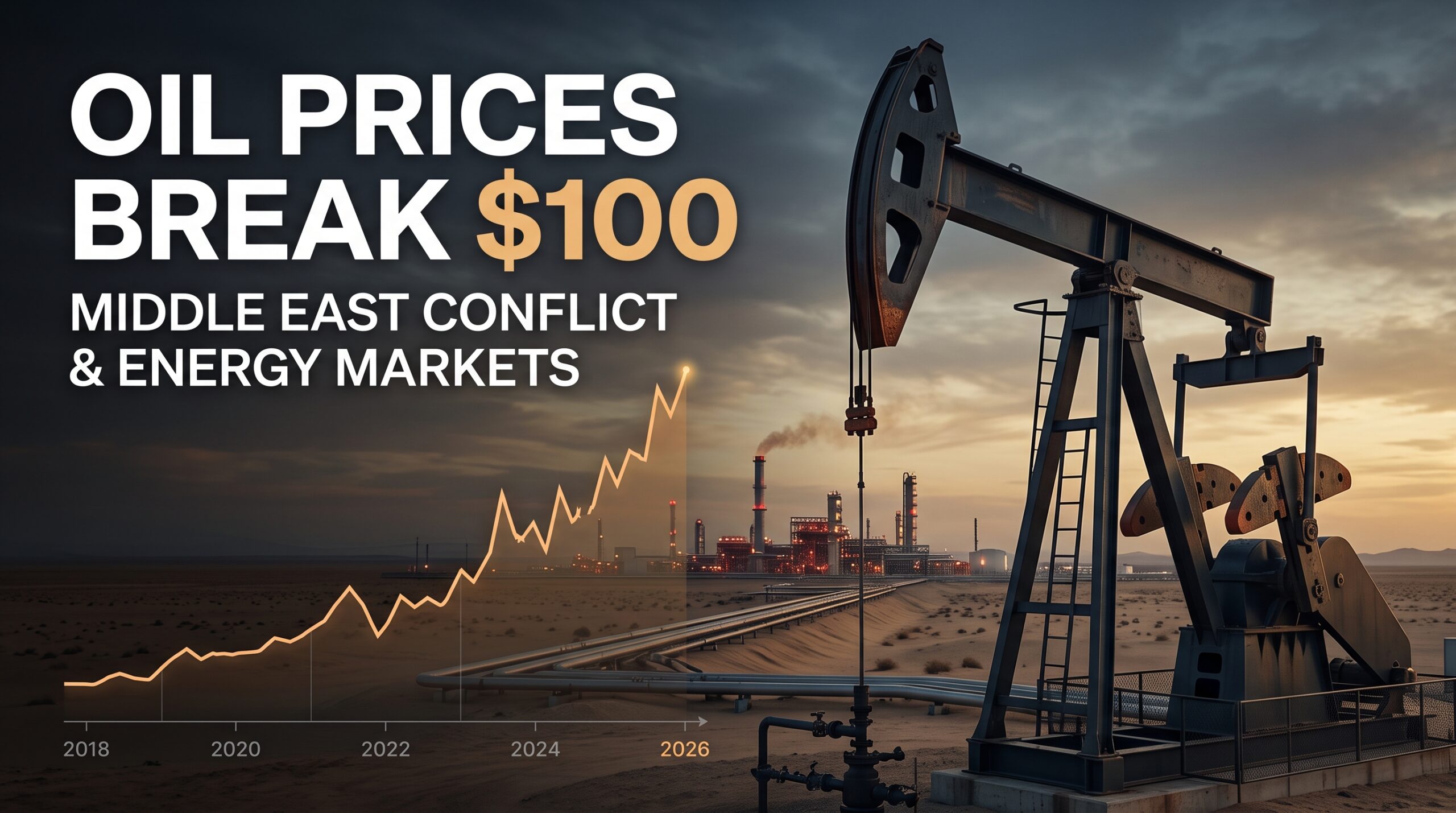
Brent crude oil price action in September 2026 tells the story of a global energy market that has been living through sustained crisis conditions for the better part of a year. Brent hit $108 a barrel on September 10 — its highest level since May 19 — as fighting between the U.S., Israel, and Iran intensified over the preceding two weeks, with Iranian missile strikes on U.S. warships and tankers in the Persian Gulf and Houthi attacks on Saudi energy facilities broadening the conflict’s footprint. This is not an isolated spike: Brent has traded above $100 a barrel repeatedly throughout 2026, touching $110 in March and $91 in early March during earlier escalation phases, in what has become the most sustained oil-supply crisis since the 2022 Russia-Ukraine shock.
Key Takeaways
- Brent crude reached $108/barrel on September 10, 2026, its highest close since May, driven by U.S. strikes on Iranian oil tankers and Houthi attacks on Saudi Arabia.
- Saudi Arabia’s crude oil production fell by approximately 1.9 million barrels per day in August 2026 as conflict-related disruptions intensified.
- The EIA’s September 2026 Short-Term Energy Outlook forecasts Brent averaging around $90/barrel in the second half of 2026 — $8/barrel higher than the previous month’s forecast — before easing to approximately $77/barrel by Q2 2027 as Middle East exports normalize.
- Global oil inventories have fallen by roughly 400 million barrels in 2026, with continued drawdowns of 3.0 million barrels/day forecast for Q3 and 1.7 million barrels/day for Q4.
- U.S. gasoline prices hit $4.22/gallon in early September, the highest since June, with the single-day increase on September 9 (+7.3 cents) the largest since May.
- Renewable energy stocks have outperformed oil and gas equities on a risk-adjusted basis during multiple 2026 volatility spikes, as investors treat the energy transition as a genuine hedge against Middle East supply-shock risk rather than a purely long-term thematic bet.
The 2026 Oil Price Timeline: A Year of Escalation and Partial De-Escalation
Unlike a single geopolitical shock, 2026’s oil market has moved through multiple distinct phases tied directly to the trajectory of the Iran conflict, which began with U.S. and Israeli strikes on February 28, 2026.
| Date | Brent Price | Context |
|---|---|---|
| Late Feb 2026 | Pre-conflict baseline | Conflict begins Feb 28 |
| March 6, 2026 | ~$91–94/barrel | Strait of Hormuz shipping nearly halted; 7–11 million bpd estimated missing from market |
| March 20, 2026 | $110+/barrel | Iraq declares force majeure on oilfields; drone strikes hit Kuwaiti refineries |
| Late June 2026 | ~$72.68/barrel | Initial accord reduces tensions; Strait of Hormuz traffic resumes |
| August 2026 | $91/barrel average | Renewed escalation; Middle East export constraints intensify again |
| September 9, 2026 | $101.21/barrel | US strikes Iranian tankers; Houthi attack on Saudi Arabia |
| September 10, 2026 | $108/barrel | Highest close since May 19; fighting broadens to US warships |
This whipsaw pattern — from crisis to relief and back to crisis within a single year — is itself the central lesson for energy sector investing in 2026: point-in-time price levels are far less informative than the trajectory of the underlying conflict, and investors who treated the June de-escalation as a durable resolution were caught flat-footed by September’s renewed spike.
The Strait of Hormuz Remains the Single Most Important Chokepoint in Global Energy
The Strait of Hormuz normally carries roughly 20 million barrels of oil and petroleum products per day — nearly a third of global seaborne oil trade. Every major price movement in 2026 has been directly tied to the strait’s operational status: the March spike coincided with shipping through the strait “nearly stopping” due to security threats, insurance complications, and mine-clearing operations, while the June price relief followed U.S. Energy Secretary Chris Wright’s confirmation that flows through the strait had returned close to pre-war levels, with at least 20 million barrels having exited in a single 24-hour period.
September 2026: Why This Escalation Is Different
Several elements distinguish the current September escalation from earlier 2026 flare-ups:
- Direct U.S.-Iran military exchanges, including U.S. strikes on 10 Iranian tankers and Iranian missile strikes on U.S. warships and tankers — a direct combatant engagement rather than proxy conflict alone.
- Geographic broadening: Houthi strikes on Saudi Arabian energy facilities mark an expansion beyond the core Iran-Israel-U.S. triangle into wider Gulf infrastructure.
- Duration concerns at the highest levels: top U.S. officials have reportedly warned President Trump that the conflict could continue through the remainder of his term (ending January 2029), while Iranian leadership is reportedly determined to continue fighting despite mounting economic costs, viewing the conflict as existential.
- Tanker rate spikes to record highs, reflecting insurance and shipping-risk premiums that persist independent of the spot price of crude itself.
The EIA’s Official Forecast: Elevated But Not Indefinite
The U.S. Energy Information Administration’s September 2026 Short-Term Energy Outlook (released September 9, forecast completed September 3) provides the most authoritative near-term price framework available:
| EIA Forecast Metric | Figure |
|---|---|
| August 2026 Brent average | $91/barrel (+$7 from July) |
| 2H26 Brent forecast | ~$90/barrel (+$8 vs. prior month’s forecast) |
| Q2 2027 Brent forecast | ~$77/barrel |
| 2026 global inventory drawdown (estimated) | ~400 million barrels |
| Q3 2026 inventory drawdown forecast | 3.0 million bpd average |
| Q4 2026 inventory drawdown forecast | 1.7 million bpd average |
| Middle East production recovery timeline | Below pre-conflict averages until 2Q27 |
The EIA’s own framing is instructive: prices are expected to remain elevated until global oil flows return to normal and inventories can be replenished — not because of a structural supply shortage, but because of a persistent drawdown pattern that has already removed roughly 400 million barrels from global inventories this year alone. Critically, the EIA assumes some Gulf producers will not return to pre-conflict production averages even within the forecast period, implying a degree of permanent capacity impairment from the conflict rather than a simple pause-and-resume dynamic.
Renewable Energy Stocks: The Structural Beneficiary of Sustained Oil Volatility
Renewable energy stocks have benefited from a dynamic distinct from simple oil-price correlation: investors are increasingly treating clean energy allocations as a genuine volatility hedge against Middle East supply-shock risk, not merely a long-term decarbonization bet. The TSX Composite index, for example, has shown renewable energy stocks outperforming traditional oil and gas equities in risk-adjusted terms during multiple 2026 volatility spikes tied to US-Iran-Israel tensions.
| Investment Category | 2026 Dynamic |
|---|---|
| Integrated oil majors (Exxon, Chevron) | Benefiting from elevated prices; Chevron increased dividend for 39th consecutive year, planning $10-20B annual buybacks |
| Pure-play E&P companies | Higher beta to oil price moves than integrated majors |
| Renewable/utility hybrids (NextEra, Brookfield Renewable) | Positioned at intersection of AI-driven electricity demand and clean energy dividend growth |
| Clean energy ETFs | Acting as stabilizing force during oil volatility per NerdWallet’s September 2026 analysis |
Morningstar’s assessment captures the core investment tension well: energy stocks broadly outperformed the larger market through the first half of 2026 on Iran-war-driven price increases, but returns have been volatile since, with no clear end to the conflict in sight — meaning continued high exposure to energy-sector volatility, in either direction, remains the base case rather than a tail risk.
A Risk Framework for Energy-Exposed Portfolios and Operations
- Model conflict duration scenarios explicitly, not just price levels. Given reported internal U.S. government assessments that the conflict could persist through January 2029, treating current elevated prices as a temporary aberration likely understates genuine multi-year risk.
- Track Strait of Hormuz flow data as the highest-frequency leading indicator. Every major 2026 price inflection has been directly tied to strait throughput — more informative in real time than headline conflict news itself.
- Balance integrated-major exposure with renewable/utility positions. The demonstrated risk-adjusted outperformance of clean energy equities during 2026’s volatility spikes suggests a barbell approach captures both elevated-price upside and volatility-hedge benefits.
- Watch inventory drawdown data, not just spot prices. The EIA’s estimated 400 million barrel 2026 drawdown is arguably a more reliable signal of underlying supply-demand tightness than day-to-day price swings driven by headline conflict news.
FAQ
Why did Brent crude oil prices break $100 again in September 2026?
Prices surged past $100, reaching $108/barrel, after the U.S. struck Iranian oil tankers and Houthi forces attacked Saudi Arabian energy facilities, broadening a conflict that had already caused Saudi crude production to fall by roughly 1.9 million barrels per day in August.
How long are oil prices expected to remain elevated?
The EIA’s September 2026 forecast projects Brent averaging around $90/barrel through the second half of 2026, gradually easing to approximately $77/barrel by the second quarter of 2027 as Middle East exports and shut-in production gradually normalize.
Are renewable energy stocks a good hedge against oil price volatility in 2026? Multiple 2026 analyses show renewable energy and utility-focused equities outperforming traditional oil and gas stocks on a risk-adjusted basis during volatility spikes, suggesting they function as a genuine diversification tool rather than simply a long-term thematic bet.
What is the Strait of Hormuz’s role in the 2026 oil price story?
The Strait of Hormuz normally carries about 20 million barrels of oil per day, roughly a third of global seaborne trade, and nearly every major 2026 price movement has been directly tied to whether shipping through the strait was flowing normally or severely disrupted by the conflict.
Discover more from The Economy
Subscribe to get the latest posts sent to your email.

Crypto Daily Outlook: Bitcoin, Altcoins, and the Future of Decentralized Finance

Anthony Scaramucci’s Crypto Prediction: Why MicroStrategy’s Move Is Bitcoin’s “iPhone Moment”

Best Dividend Stocks 2026: European & Asian Blue Chips

World Bank & IMF Reports 2026: Why the “3% Growth” Consensus Is Actually a Debate

Elon Musk’s Boring Company Hits $23B Valuation After UAE-Led $3 Billion Series D

Middle East War Economics 2026: Oil Prices & Energy Markets

PSX Forecast 2026: KSE-100, IMF Reviews & Geopolitics

Asian Markets Outlook 2026: China, Japan & Singapore Stocks

Global Economy 2026: IMF Growth, Inflation & Private Credit

Current Account Deficit (CAD) : Causes and Impact

Balance of Payments (BOP)

The Falkland Islands Dispute: Sovereign Wealth, Offshore Drilling, and Market Impacts

Gross Domestic Product (GDP): Nominal vs. Real

What is Inflation and the Consumer Price Index (CPI)?

State Farm’s $5B Dividend 2026: Who Qualifies & Payout Dates

US-China Relations in Q3 2026: Trade Tariffs and Supply Chain Risks

Gold’s Wild 2026: From a Record $5,600 Peak to a 24% Crash and Back Toward $4,500

Oil Surges as Strait of Hormuz Traffic Collapses Again

The Rocket That Won’t Quit: Inside SpaceX’s Falcon 9 Launch Machine

Bank of England Set to Hold Rates Through Year-End, Reuters Poll Shows

SpaceX Starship Flight 14: First Orbital Attempt & Starlink V3 Launch Explained

The 2026 Crypto Regulatory Shift: What It Means for Institutional Investors

AI Chip Stocks 2026: The Best Semiconductor Investments Beyond Marvell

Retail Earnings Week: What Home Depot, Target & Walmart Reveal

Top 30 Stocks for Investment in PSX for Massive ROI in 2026

AI-Powered Training: The Next Multi-Billion Dollar Ecosystem in Fitness

Russia’s Black Sea Oil Exports Fall for a Fifth Straight Week

Tween Back-to-School Trends 2026: What’s Driving the $85B Season
-

 Markets & Finance8 months ago
Top 15 Stocks for Investment in 2026 in PSX: Your Complete Guide to Pakistan’s Best Investment Opportunities
-

 Analysis7 months ago
Johor’s Investment Boom: The Hidden Costs Behind Malaysia’s Most Ambitious Economic Surge
-

 Analysis7 months ago
Top 10 Stocks for Investment in PSX for Quick Returns in 2026
-

 Analysis7 months ago
Brazil’s Rare Earth Race: US, EU, and China Compete for Critical Minerals as Tensions Rise
-

 Banks8 months ago
Best Investments in Pakistan 2026: Top 10 Low-Price Shares and Long-Term Picks for the PSX
-

 Investment8 months ago
Top 10 Mutual Fund Managers in Pakistan for Investment in 2026: A Comprehensive Guide for Optimal Returns
-

 Global Economy9 months ago
15 Most Lucrative Sectors for Investment in Pakistan: A 2025 Data-Driven Analysis
-

 Global Economy9 months ago
Pakistan’s Export Goldmine: 10 Game-Changing Markets Where Pakistani Businesses Are Winning Big in 2025