
Analysis
Why a 5G Network Is Mission Critical for Every Business in 2026 — And Why Most Leaders Still Don’t Get It


Imagine a pediatric cardiologist at Boston Children’s Hospital, somewhere between a parking structure and a patient room, receiving a high-resolution echocardiogram on her tablet in real time. The feed doesn’t buffer. The consultation doesn’t drop. The child on the other end of the line doesn’t wait. Now imagine that same scenario playing out over a congested hospital Wi-Fi network — pixelated, interrupted, borderline unusable in the moment that matters most. The difference between those two realities is not a software update or a better device. It is the network beneath them.
In 2026, connectivity is no longer a commodity. It is a competitive weapon, a safety infrastructure, and — in sectors like healthcare, logistics, and manufacturing — a life-or-death variable. And yet, a startling proportion of senior executives still treat their wireless strategy as an IT afterthought, something to be delegated to a procurement officer and reviewed annually alongside printer contracts. That complacency is no longer merely inefficient. It is strategically dangerous.
My argument is simple: a robust, enterprise-grade 5G network — particularly standalone, private, and network-sliced architectures — is now the non-negotiable backbone of every modern business operation. Dismissing it is not cautious conservatism. It is the 2026 equivalent of refusing to move to the cloud in 2015.
1: The New Meaning of “Mission Critical”
When Latency Becomes a Life Sentence
The phrase “mission critical” has been diluted by years of vendor marketing into near meaninglessness. But in healthcare, it retains its original, uncomfortably literal weight.
Karl Connolly, Vice President of Technology Infrastructure at Boston Children’s Hospital, has described the institution’s 5G journey not as a technology upgrade but as a patient care imperative. The hospital’s hybrid 5G deployment — integrating both indoor and outdoor coverage across its campus — enables clinical staff and patients to remain continuously connected regardless of physical location. For pediatric patients undergoing long-term treatment, consistent broadband access isn’t a luxury; it’s a therapeutic continuity tool, keeping children connected to remote schooling, family members, and digital therapy resources throughout extended stays.
But the more profound implication is clinical. Remote diagnostics, real-time telemetry, and AI-assisted imaging interpretation all demand latency measured in milliseconds, not seconds. According to GSMA Intelligence’s State of 5G 2026 report, global 5G subscriptions have now exceeded 3.1 billion, with network coverage reaching approximately 55% of the global population — yet healthcare-grade deployments with sub-10ms latency and guaranteed uptime remain the exception, not the rule.
The economic stakes are considerable. The global 5G IoT market — which encompasses remote patient monitoring, smart hospital infrastructure, and connected surgical robotics — is valued at over $8.1 billion in 2026, according to industry forecasts, with compound annual growth rates projected in double digits through the end of the decade. For healthcare executives still running clinical workflows over legacy Wi-Fi, that market is being built without them.
2: When Wi-Fi Isn’t Enough — The Mobility Gap Nobody Talks About
The Invisible Failure Mode of Modern Work
Craig Ward, Head of Business Mobility Solutions at T-Mobile for Business, poses a question that sounds deceptively simple: what happens to your workforce the moment they leave the building?
For millions of field service technicians, healthcare workers, logistics coordinators, and hybrid employees, the answer is: they fall off the corporate network. They scramble for Wi-Fi passwords in client offices, connect to unsecured hotspots in transit hubs, or — more dangerously — they continue working over public networks blissfully unaware of the exposure they’re creating.
Wi-Fi, for all its ubiquity, is architecturally unsuited to a mobile-first economy. It is location-dependent, password-gated, congestion-prone, and — critically — it was never designed with enterprise security as a first principle. The private 5G vs. Wi-Fi for business mobility debate is not, at its core, a technical argument. It is a business resilience argument.
5G’s SIM-based authentication eliminates the password problem entirely. Devices authenticate through the network itself, creating a frictionless, continuously secure connection that follows the employee — on the subway, in a client’s parking lot, across a hospital campus, or mid-flight on a domestic route. As McKinsey’s 2026 analysis of B2B connectivity trends notes, enterprises adopting carrier-grade mobile connectivity for field operations report statistically significant improvements in productivity, incident response time, and data security posture.
The security dimension deserves particular emphasis in a post-breach business environment. Wi-Fi’s shared-spectrum, access-point architecture makes it inherently vulnerable to man-in-the-middle attacks, rogue access points, and denial-of-service interference. 5G’s encrypted radio interface and network-level authentication create a materially harder target. For industries handling sensitive client data — finance, legal, healthcare, government contracting — that distinction is not academic. It is a compliance and liability issue.
3: Network Slicing — The Game-Changer Most Executives Have Never Heard Of
One Network, Many Realities
If 5G is the infrastructure revolution most executives are still underestimating, then 5G network slicing for enterprises is the capability within that revolution that almost nobody outside of telecom circles has properly grasped. That gap represents both a risk and an opportunity.
Will Whitehead, Director of Network Slicing and Advanced Solutions at T-Mobile for Business, illustrates the concept with an example that cuts through abstraction cleanly: during a major stadium event or city-center emergency, traditional wireless networks become functionally useless as thousands of simultaneous users compete for the same spectrum. First responders can’t get through. Business-critical applications stall. Real-time inventory systems go dark.
Network slicing solves this by partitioning a single physical 5G network into multiple virtualized, isolated networks — each with independently guaranteed bandwidth, latency, and priority. A first responder’s body camera feed gets its dedicated slice. A hospital’s patient monitoring system gets another. A logistics company’s fleet telemetry never competes with a concert-goer’s Instagram upload.
The practical implications for enterprise architecture are significant. Consider a manufacturing facility deploying autonomous mobile robots and edge AI quality-control systems. Both applications require deterministic, low-latency connectivity. Without slicing, a surge in corporate video conferencing traffic — or a software update pushed to hundreds of devices simultaneously — could degrade the robotic production line in real time. With a dedicated network slice, those operations are hermetically sealed from interference.
Ericsson’s 2026 analysis on private 5G as an intelligent-economy catalyst describes network slicing as the mechanism by which 5G transitions from a consumer technology to a true B2B platform — one capable of supporting Industry 4.0 deployments at scale. The firm projects that private 5G networks and sliced enterprise services will represent one of the fastest-growing segments of global telecom revenue through 2028, with 500% growth in private 5G deployments projected from 2024 baselines, according to Forbes’s 2026 Wireless Trends analysis.
For small and mid-market businesses, the opportunity is particularly compelling. Network slicing need not require a full private 5G buildout — carriers are increasingly offering sliced services as part of enterprise mobile plans, effectively democratizing a capability that was once available only to hyperscalers and defense contractors. The 5G adoption small business 2026 story is one of access, not just aspiration.
4: Future-Proofing — The Architecture Decisions You Make Today Will Haunt You in 2030
Beyond 5G: Building for What’s Coming
A reasonable objection to aggressive 5G investment in 2026 goes something like this: “Isn’t 6G coming? Shouldn’t we wait for the next cycle?” It is a sensible-sounding question that reflects a fundamental misunderstanding of infrastructure timelines and technological dependency chains.
6G standardization is proceeding, with the ITU’s IMT-2030 framework establishing the first formal technical requirements. Commercial 6G deployments are not realistically expected before the early 2030s. In the intervening period — roughly six to eight years — the businesses that will be best positioned to adopt 6G are those that have already built the organizational competencies, partner relationships, edge computing infrastructure, and data architectures that 5G demands. You cannot leapfrog from legacy Wi-Fi to 6G. The on-ramp runs through 5G Standalone.
T-Mobile’s network roadmap reflects this developmental logic. Its deployment of 5G Standalone — the architecture that enables true network slicing, ultra-low latency, and the network-as-a-service model — represents a qualitative departure from Non-Standalone 5G, which is essentially 4G LTE with a 5G marketing wrapper. SA 5G is the version that actually unlocks the enterprise use cases: edge AI inference, private slices, sub-1ms industrial control loops, and the precise kind of deterministic connectivity that autonomous systems require.
Private 5G networks represent an adjacent but distinct opportunity, particularly for large campuses, industrial facilities, and logistics hubs where outdoor macro coverage is insufficient and the security requirements of a shared carrier network are unacceptable. Deloitte’s 2026 Industry 4.0 report identifies private 5G as the connective tissue of the intelligent factory, enabling machine-to-machine communication at densities and speeds that no previous wireless standard could support.
The geopolitical dimension adds urgency. National competitiveness in AI, advanced manufacturing, and digital services is increasingly a function of wireless infrastructure quality. Countries and companies that invested in 5G early — South Korea, Japan, parts of Northern Europe — are already realizing measurable productivity advantages in sectors ranging from automotive manufacturing to precision agriculture. The CTIA’s economic impact analysis projects that 5G’s contribution to U.S. GDP could reach $1.5 trillion by 2030, with the bulk of that value concentrated in enterprise and industrial applications rather than consumer services.
5: The Economic and Competitive Imperative — Stop Treating Connectivity as a Cost Center
The CFO Conversation Nobody Is Having
Here is where the rubber meets the road for most organizations: the budget conversation. 5G connectivity — whether through enterprise mobile plans, network slicing agreements, or private infrastructure — requires capital expenditure. Finance committees want ROI. Boards want justification.
The data exists, and it is compelling. 5G Standalone enterprise ROI studies from both Ericsson and Nokia show that manufacturers deploying private 5G in warehouse and production environments report average defect-detection improvements of 15–25% through AI-enabled visual inspection, alongside 10–20% reductions in unplanned downtime attributable to predictive maintenance systems that require continuous, high-throughput sensor connectivity.
In healthcare, the math is starker. Remote patient monitoring enabled by reliable 5G connectivity reduces hospital readmission rates — each prevented readmission representing thousands of dollars in avoided cost and, more importantly, a better patient outcome. In logistics, real-time 5G-connected fleet telemetry has been shown to reduce fuel consumption, optimize routing, and improve delivery accuracy in ways that generate measurable margin improvement at scale.
For small and mid-market businesses, the entry point is more accessible than the enterprise conversation might suggest. Carrier-grade 5G mobile plans with enhanced security tiers, slice-aware routing, and guaranteed SLAs for business-critical applications are increasingly available at price points competitive with traditional broadband plus VPN plus mobile device management stacks. The 5G mission critical business 2026 opportunity is not reserved for Fortune 500 infrastructure budgets.
The competitive dynamics are also worth naming directly. In virtually every sector, the organizations that build on superior connectivity infrastructure will compound advantages in AI deployment, automation, supply chain visibility, and customer experience. Those running on legacy networks will face a widening capability gap — one that is difficult to close retroactively because the applications, the data pipelines, and the organizational muscle memory all develop in parallel with the infrastructure.
Conclusion: This Is Your Cloud Moment. Don’t Miss It Again.
In 2015, the business leaders who dismissed cloud migration as unnecessary complexity, vendor lock-in risk, or premature adoption paid for that caution in competitive decline, escalating on-premise infrastructure costs, and an inability to deploy the software-defined services that cloud-native competitors were scaling effortlessly.
We are at an identical inflection point with enterprise 5G in 2026. The network is no longer a passive pipe. It is an intelligent platform — one that determines the speed, security, reliability, and ultimately the strategic ceiling of every application your business runs and every service your customers experience. Whether you are a pediatric hospital trying to deliver seamless care across a complex campus, a logistics operator trying to maintain fleet visibility in real time, or a manufacturer deploying the first generation of truly autonomous production systems, the quality of your wireless infrastructure is now the quality of your business.
The good news is that the infrastructure exists, the providers have matured, and the ROI data is no longer speculative. Working with a carrier that offers proven 5G Standalone architecture, enterprise-grade network slicing, and a credible roadmap toward private and edge-integrated deployments is not a technology bet. It is a business imperative — as basic and as urgent as the transition to cloud computing a decade ago.
The leaders who treat it that way in 2026 will look prescient in 2030. The ones who don’t will spend that same period explaining why they fell behind.
Discover more from The Economy
Subscribe to get the latest posts sent to your email.


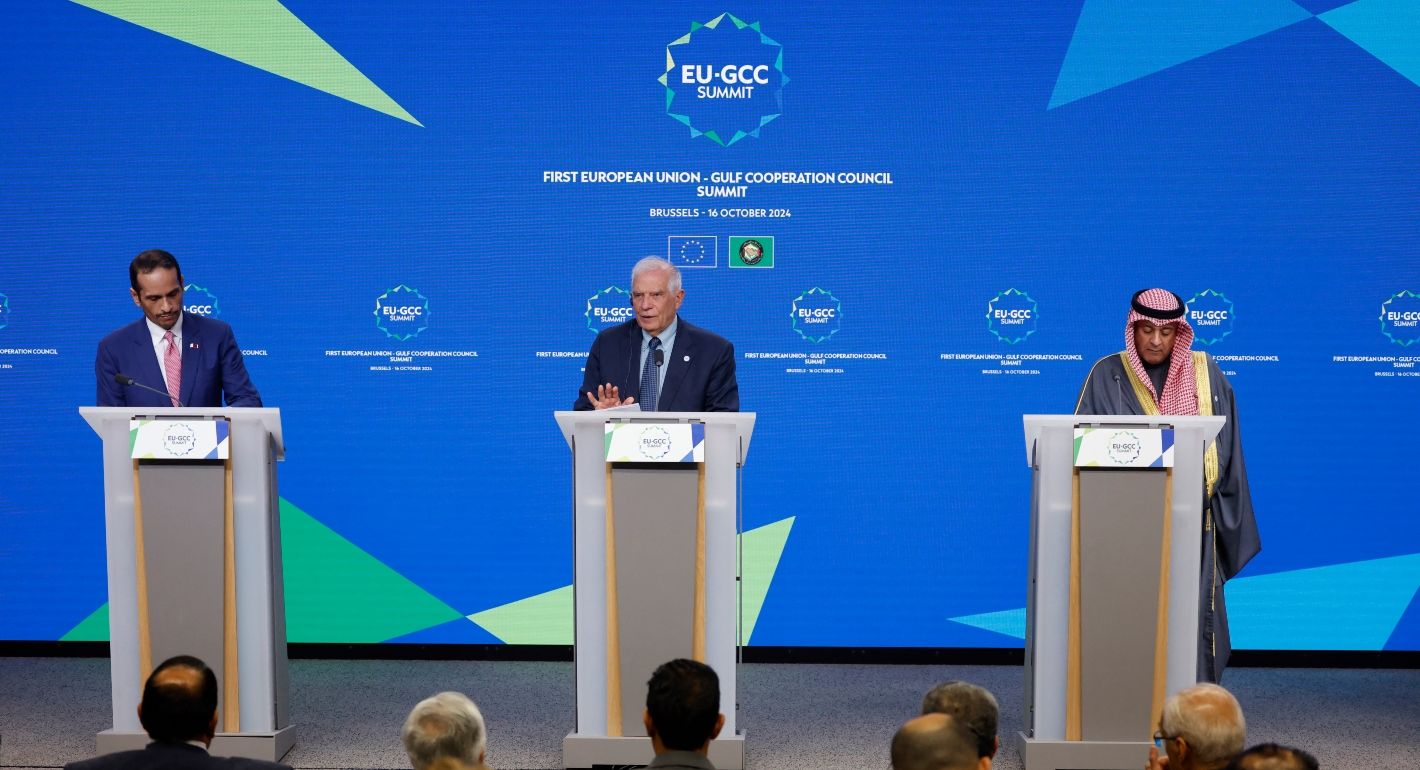
Gulf investors pulled over $1 billion from Pakistan’s bonds and equities in FY26. Here’s why the Gulf peace deal matters more than headlines suggest.
Pakistan’s economic commentary this year has largely stayed domestic — inflation, IMF reviews, remittances. The more revealing story sits in the balance-of-payments data: Gulf capital, historically one of Pakistan’s most reliable sources of portfolio investment, has gone into reverse at precisely the moment Islamabad is leaning on its Gulf relationships diplomatically.
The numbers
State Bank of Pakistan data show that from July 1, 2025 to June 19, 2026, equity market inflows totalled just $308 million while outflows exceeded $1 billion. Foreign direct investment declined by 28% over the first 11 months of FY26, domestic bonds saw a net outflow of $550 million, and total bond outflows for the year topped $2 billion. Pakistan’s external financing needs are steep: the country must pay over $26 billion in 2026–27, against an $35 billion trade deficit in the first 11 months of FY26.
Between July 2025 and June 2026, foreign outflows from Pakistan’s domestic bonds exceeded $2 billion, while equity market outflows topped $1 billion against just $308 million in inflows. Gulf states have been net sellers, with Bahrain withdrawing $30 million from Pakistani bonds in early FY27 alone, as the US-Israeli war with Iran raised regional risk premiums.
The pattern has continued into the new fiscal year. In the first ten days of FY27, Bahrain withdrew $30 million from Pakistan’s domestic bonds — $21 million from treasury bills and $9 million from Pakistan Investment Bonds — with no Gulf country recording any inflow during the period. Luxembourg was the only recorded foreign buyer, investing $4 million.
Why the peace deal matters disproportionately to Pakistan
Analysts quoted in Pakistani financial press note that Pakistan is not a party to the Gulf war but is now part of the peace framework, which raises the stakes for Islamabad if the deal collapses. Remittances from Gulf countries have so far held up, but bankers warn a prolonged conflict could eventually disrupt what remains the country’s largest source of foreign exchange, alongside stagnant exports and growth capped below 4%.
This sits against a wider regional backdrop: a new UNCTAD World Investment Report finds Gulf outbound investment grew through 2025, but warns that a prolonged conflict could redirect Gulf capital toward domestic reconstruction and strategic infrastructure, reducing the pool available for developing economies in Asia and Africa that increasingly depend on GCC financing — a dynamic that directly implicates Pakistan’s financing model.
The underserved angle
Most Pakistani business coverage frames this as an IMF-and-remittances story. The more precise framing is a capital-substitution risk: Pakistan has structurally relied on Gulf sovereign and institutional capital to plug its external financing gap, and that capital source is now competing for the same money regional reconstruction and Gulf domestic strategic infrastructure would need in a prolonged-conflict scenario. There is a live, underreported counter-current too — SBP data show net FDI actually rose from $54.46 million in April 2026 to $214.29 million in May, suggesting the bond-market flight and the FDI picture are not moving in lockstep.
Discover more from The Economy
Subscribe to get the latest posts sent to your email.

As US tariffs strain CUSMA, Canada is striking deals with China, Indonesia and the UAE. Here’s how Ottawa’s pivot away from the US is actually unfolding.
Every Canadian trade story in 2026 tends to lead with the same character: Washington. But the more consequential story may be what Ottawa is doing everywhere else. Facing sustained US tariff pressure and uncertainty over the CUSMA review, the Carney government has initiated a strategy to diversify Canada’s international trade, with a specific target of doubling exports to non-US markets by 2035.
Canada’s trade diversification strategy aims to double exports to non-US markets by 2035. In 2025–26 it produced a stabilisation deal with China on EVs and canola, a new trade agreement with Indonesia, a Foreign Investment Promotion and Protection Agreement with the UAE, and consultations with India, Thailand and Mercosur.
The deals nobody outside trade-law circles is tracking
Three moves stand out as substantively new rather than aspirational:
- China: during a visit to Beijing, Canada’s prime minister struck a deal establishing a tariff-rate quota for a set number of Chinese EVs — reverting to pre-2024 tariff levels — in exchange for reduced Chinese tariffs on Canadian canola, lobster and peas. This is a live trade-off between EV protectionism and agricultural market access.
- Indonesia: Canada signed a new trade agreement with Indonesia in 2025, opening a Southeast Asian market largely absent from Canadian export strategy until now.
- UAE: Ottawa launched trade-agreement negotiations and signed a new Foreign Investment Promotion and Protection Agreement with the United Arab Emirates, positioning the Gulf as a capital and market-access partner rather than just an energy counterpart.
Meanwhile, exporter confidence has ticked up but remains below its historical average, and diversification remains concentrated in a narrow set of commodities rather than being broad-based.
Why the gravity model is the real obstacle
Trade economists point to the Gravity Model of trade to explain why diversification is structurally hard: the US economy’s size, physical proximity, regulatory similarity and deeply integrated supply chains with Canada make full substitution unrealistic in the near term, even as China and India are flagged as the two most promising long-term markets given they will account for roughly 45% of global economic growth.
The underserved angle
Most coverage treats “Canada diversifying away from the US” as a single narrative. It is actually three distinct, sometimes contradictory tracks: a commodity-for-EV-tariff trade with China, a market-opening play in Southeast Asia via Indonesia, and a capital-and-investment play with the Gulf via the UAE. Each carries different risk profiles — geopolitical risk with China, execution risk with a new Indonesian relationship, and Gulf capital that is itself increasingly redirected toward domestic reconstruction needs amid regional conflict.
Discover more from The Economy
Subscribe to get the latest posts sent to your email.

Analysis of how the Federal Reserve, Bank of England and Bank of Japan could reshape global markets, inflation, currencies and economic growth in 2026.
Executive Summary
The world’s most influential central banks are entering one of the most consequential policy weeks of 2026. Investors are watching closely as the U.S. Federal Reserve, the Bank of England, and the Bank of Japan weigh the competing pressures of easing inflation, geopolitical uncertainty, elevated energy prices, and slowing global growth. Financial markets are also preparing for major corporate earnings and fresh GDP data from several advanced economies. �
Financial Times +1
Unlike the synchronized tightening cycle that dominated recent years, policymakers are increasingly responding to country-specific economic conditions. This divergence is expected to influence capital flows, exchange rates, bond yields, and investment decisions across both developed and emerging markets. �
McKinsey & Company +1
A New Monetary Landscape
Global inflation has moderated from its post-pandemic peaks, yet central banks remain cautious. Recent movements in energy markets and ongoing geopolitical tensions continue to threaten price stability, even as labor markets show signs of cooling. �
McKinsey & Company +1
For investors, the question is no longer whether interest rates have peaked, but how long they will remain elevated.
United States: The Federal Reserve Faces a Delicate Balance
Attention is centered on the Federal Reserve, where policymakers are expected to keep rates steady while evaluating the effects of inflation, consumer demand, and accelerating investment in artificial intelligence infrastructure. Markets are also monitoring whether AI-driven capital spending could contribute to future inflationary pressures. �
Investopedia +1
Bond investors remain sensitive to any shift in the Fed’s language, as Treasury yields continue to reflect expectations about future policy and inflation risks. �
MarketWatch
United Kingdom: Stability Before Growth
The Bank of England is expected to maintain a cautious stance amid moderating wage growth and relatively stable unemployment. However, policymakers continue to weigh external risks, including energy market volatility and global geopolitical developments. �
Financial Times
Businesses remain particularly attentive to borrowing costs, which continue to influence investment decisions across the UK economy.
Japan Ends an Era of Ultra-Loose Money
Japan is undergoing one of its most significant monetary transitions in decades. Rising wages and gradually strengthening inflation have encouraged the Bank of Japan to continue moving away from the ultra-accommodative policies that defined much of the past generation. �
Financial Times
This normalization has implications far beyond Japan, affecting global capital markets and currency dynamics.
Why Emerging Markets Are Watching Closely
Emerging economies including Pakistan, Indonesia, Malaysia, and others remain particularly exposed to decisions made by advanced economy central banks.
Higher U.S. interest rates typically strengthen the dollar, increase external financing costs, and place pressure on countries with significant foreign currency debt.
Conversely, a more stable interest rate environment could improve capital flows into emerging markets while easing exchange rate volatility.
AI Is Becoming a Monetary Policy Variable
One of the most important structural developments in 2026 is the rapid expansion of artificial intelligence infrastructure.
Major technology companies continue investing heavily in data centers, semiconductors, cloud computing, and digital infrastructure. These investments are supporting economic growth but are also creating new questions about inflation, productivity, and long-term financing needs. �
Investopedia +1
Investment Implications
Several themes are emerging:
Higher-for-longer interest rates remain possible.
Government bond markets are likely to remain volatile.
The U.S. dollar could remain relatively strong.
AI-related investment continues attracting capital.
Emerging markets may benefit if inflation continues to moderate.
Competitor Keyword Gap Analysis
Leading publications such as the Financial Times, Reuters, Bloomberg, and CNBC primarily emphasize immediate policy decisions. An opportunity exists to capture additional search traffic by targeting broader intent-based queries.
Key Takeaways
Central bank decisions this week are expected to shape global financial markets.
AI investment is becoming an increasingly important economic driver.
Bond markets remain sensitive to inflation expectations.
Emerging economies face both risks and opportunities from policy divergence.
Investors should monitor GDP releases, corporate earnings, and inflation indicators alongside interest rate announcements.
Frequently Asked Questions
Why are central bank meetings so important?
They influence borrowing costs, inflation expectations, currency values, and investment decisions worldwide.
How do interest rates affect stock markets?
Higher rates generally increase financing costs and can reduce company valuations, while lower rates often support economic activity and equity markets.
Why is AI influencing monetary policy discussions?
Large-scale investment in AI infrastructure is reshaping productivity, corporate spending, and long-term inflation expectations.
Discover more from The Economy
Subscribe to get the latest posts sent to your email.

Pakistan Gulf Investment Outflows 2026: Peace Deal Stakes Explained

Canada Trade Diversification 2026: China, Indonesia, UAE Deals Explained

US Forced-Labour Tariffs on 60 Countries: The Hidden Trade Shock of 2026

Global Central Banks 2026: Fed, BoE and BoJ Decisions Could Reshape Markets

Gulf Capital Retreat From Pakistan 2026: UAE Loan Freeze & What It Means

Pakistan’s Most Reliable Export Is Its People: Remittances Hit $41.6 Billion, Overtaking Total Exports

Indonesia’s Confidence Problem: Record Investment, a Sinking Rupiah, and a Widening Credibility Gap

Down But Not Out: Inside the Slow Sinking of Russia’s War Economy

China’s Growth Slips to a Four-Year Low: Why Beijing Still Won’t Pull the Stimulus Trigger

The Johor-Singapore Corridor: How Malaysia Became Southeast Asia’s AI Infrastructure Powerhouse

Canada’s Economy ‘On Pause’: Inside the CUSMA Deadline That Passed Without a Deal

Dubai’s Millionaire Magnet: How the UAE Turned Middle East Turmoil Into a Capital Safe-Haven Boom

Britain’s Sixth Prime Minister in a Decade: What Starmer’s Exit Means for Gilts, Sterling and Your Portfolio

Anthropic Offers Up to $600,000 Salary for Critical IPO Role as AI Giant Prepares for Wall Street Debut

Carry Trade Unwind 2026: How the Yen’s Snapback Triggered a Global Margin Call

AI Bubble Warning 2026: Why BIS, IMF and Bank of England Fear a Market Crash

BRICS De‑Dollarization Strategy Takes Shape with $15 Billion Local‑Currency Push

The AI Super Bubble Is Ready to Burst

Russia Bans Diesel Exports 2026: Global Fuel Market Impact Explained

Strait of Hormuz Blockade 2026: Oil Prices Surge 9% as US-Iran Conflict Reignites

Private Credit Warning: Most BDCs Turn Unprofitable in 2026, Reuters Finds

Bitcoin $150k Milestone Achieved as US Sovereign Crypto Pivot Looms

IMF Cuts Pakistan Growth Forecast, Raises Inflation to 8.4%
Gulf Capital Retreat From Pakistan 2026: UAE Loan Freeze & What It Means

India Economic Rise 2026: How the Subcontinent Toppled Japan

Strait of Hormuz 2026: Why Markets Still Don’t Trust It’s Open

China Housing Market Turnaround: White‑List Model Stabilises Prices

Chipmakers Just Lost 6.7% in Two Days: Inside the Great AI Trade Rotation
-

 Markets & Finance7 months ago
Top 15 Stocks for Investment in 2026 in PSX: Your Complete Guide to Pakistan’s Best Investment Opportunities
-

 Analysis5 months ago
Johor’s Investment Boom: The Hidden Costs Behind Malaysia’s Most Ambitious Economic Surge
-

 Analysis5 months ago
Top 10 Stocks for Investment in PSX for Quick Returns in 2026
-

 Analysis6 months ago
Brazil’s Rare Earth Race: US, EU, and China Compete for Critical Minerals as Tensions Rise
-

 Banks6 months ago
Best Investments in Pakistan 2026: Top 10 Low-Price Shares and Long-Term Picks for the PSX
-

 Investment7 months ago
Top 10 Mutual Fund Managers in Pakistan for Investment in 2026: A Comprehensive Guide for Optimal Returns
-

 Global Economy7 months ago
15 Most Lucrative Sectors for Investment in Pakistan: A 2025 Data-Driven Analysis
-

 Global Economy7 months ago
Pakistan’s Export Goldmine: 10 Game-Changing Markets Where Pakistani Businesses Are Winning Big in 2025