
Analysis
Southeast Asia’s Tariff Breather: Trump’s Duty Reset Offers Relief, But Uncertainty Looms Large

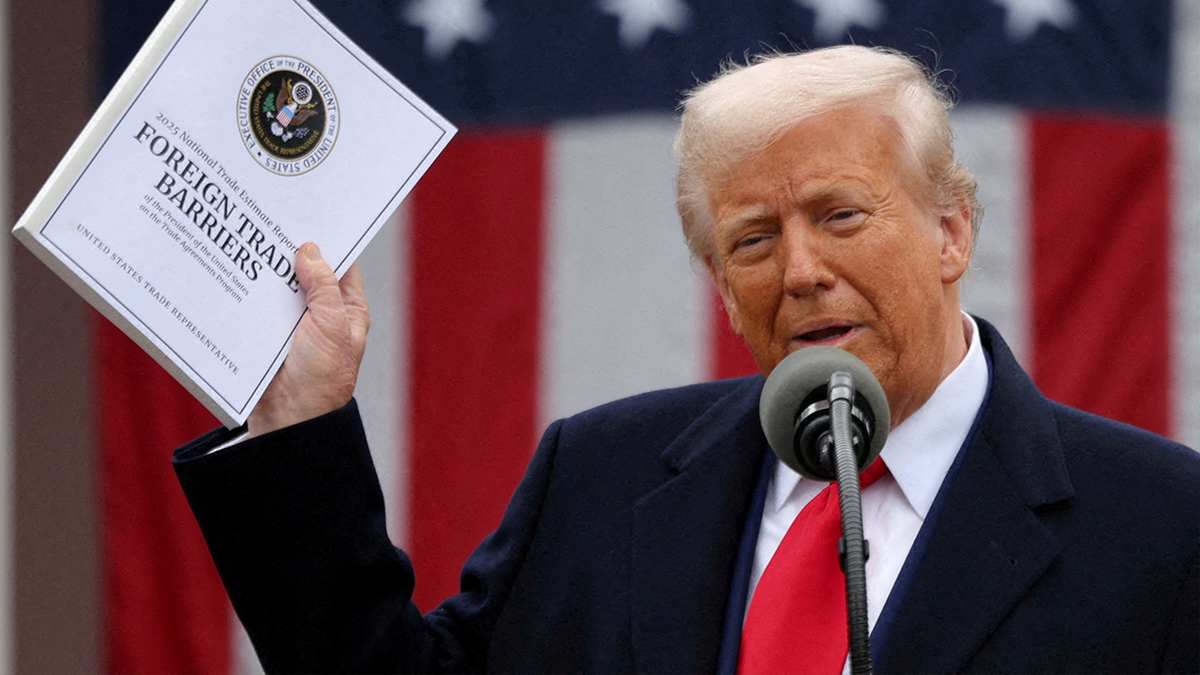
The U.S. Supreme Court’s February 2026 ruling striking down Trump’s IEEPA tariffs has triggered a 15% Section 122 duty reset — offering ASEAN economies a meaningful, if fragile, reprieve. Here’s what it means for Vietnam, Thailand, Indonesia, and the region’s future trade outlook.
It took a landmark Supreme Court ruling, a furious presidential response, and one very late Friday night to reset the global trade architecture that had reshaped Southeast Asia’s economy over the past year. On February 20, 2026, the U.S. Supreme Court ruled 6-3 in Learning Resources, Inc. v. Trump that the International Emergency Economic Powers Act (IEEPA) — the legal scaffolding for President Trump’s sweeping “Liberation Day” reciprocal tariffs — does not authorize the president to impose tariffs. By midnight on February 24, those duties were gone, replaced by a fresh 15% global import levy under the narrower authority of Section 122 of the 1974 Trade Act.
For Southeast Asia, the shift is consequential. Countries like Vietnam, Malaysia, Thailand, and Indonesia had spent nearly a year negotiating under the shadow of reciprocal tariff rates ranging from 19% to 46%. Now, with a uniform 15% Section 122 duty in place, several of those nations suddenly find themselves paying less to access the world’s largest consumer market than they agreed to in bilateral deals. That is a remarkable turn of events — and one that raises as many questions as it answers.
The Reset Explained
The Supreme Court’s majority opinion was sharp and categorical. As SCOTUSblog summarized, IEEPA’s language — permitting the president to “regulate importation” during emergencies — does not plainly authorize the imposition of tariffs, which are a distinct form of taxation historically reserved for Congress. Applying its “major questions” doctrine, the court held that such a consequential delegation of the taxing power requires explicit congressional authorization.
Trump’s response was immediate and combative. Hours after the ruling, he invoked Section 122 to impose a 10% global duty. By the following day, he announced via Truth Social that the rate would rise to 15%, effective February 24, 2026 at 12:01 a.m. EST — one minute after the IEEPA duties legally ceased. The White House framed the move as correcting a “fundamental international payment problem,” the statutory trigger required under Section 122.
The critical difference from IEEPA: Section 122 comes with a hard ceiling of 150 days. Unless Congress votes to extend it — a fraught prospect with midterm elections looming in November — the duties expire automatically around mid-July 2026. As the Tax Foundation notes, should the Section 122 tariffs expire without replacement, the effective U.S. tariff rate would fall to approximately 5.6%, the highest level since 1972 but far below the pre-ruling average of nearly 17%.
Section 232 tariffs on steel, aluminum, and automobiles remain fully intact. And the administration has signaled it will launch multiple Section 301 investigations, meaning sector-specific tariff actions on semiconductors, pharmaceuticals, and drones could follow.
Economic Wins for the Region
For the export-driven economies of ASEAN, the math of the new regime is, at least in the immediate term, encouraging.
DBS Group Research economists Radhika Rao and Chua Han Teng published analysis showing that under the MFN-plus-15% Section 122 framework, Malaysia, Thailand, Vietnam, and Indonesia all see meaningful reductions in their effective U.S. tariff rates. Citing Global Trade Alert data, DBS estimates reductions of approximately 1.7 to 3.2 percentage points for these four economies compared to their previous rates under negotiated IEEPA-era deals.
Effective Tariff Rate Comparison: Key ASEAN Economies
| Country | Pre-Ruling Effective Rate | Post-Reset Rate (MFN + 15%) | Change |
|---|---|---|---|
| Vietnam | ~22–25% | ~19–21% | ▼ ~3–4 pp |
| Thailand | ~19% | ~16–17% | ▼ ~2–3 pp |
| Indonesia | ~19% | ~16–17% | ▼ ~2–3 pp |
| Malaysia | ~18–20% | ~16–18% | ▼ ~1.7–2 pp |
| Singapore | ~10% | ~11.1% | ▲ ~1.1 pp |
Sources: DBS Group Research, Global Trade Alert, Tax Foundation (February 2026)
Singapore is the notable outlier: its previously favorable 10% baseline has been replaced by the uniform 15% rate, technically raising its effective burden by roughly 1.1 percentage points. That said, DBS notes Singapore retains the lowest effective tariff rate within ASEAN-6 because its MFN duties on most goods are already near zero.
For Thailand, the impact is tangible and immediate. Thailand Business News reports that Finance Minister Ekniti Nitithanprapas called the reset a “more level playing field” that strengthens Thailand’s appeal as a manufacturing and investment hub. Thailand’s exports to the U.S. exceeded $50 billion in 2025, and the Thai baht has already strengthened — moving from 35.2 to 34.8 against the dollar in the days following the ruling.
Consider the position of a furniture manufacturer in the outskirts of Ho Chi Minh City. Through 2025, her company faced the prospect of 25–46% tariffs on sofas and rattan sets shipped to American retailers. After months of uncertainty, she was exporting at a negotiated 20% rate — still punishing by historical standards. Today, she ships under a 15% blanket rate. Margins remain thin, but the difference between 20% and 15% on a container worth $80,000 in goods is real money. And she is not alone: the Vietnamese furniture sector, already a major beneficiary of the “China+1” supply chain diversification trend, now has new breathing room.
Vietnam’s broader tariff burden has fallen sharply, according to Seeking Alpha’s Asia trade analysis, which notes the reduction “widens Vietnam’s competitive edge in low-value-added exports and further embeds it as a key U.S.-bound production base.” Electronics assembly in Malaysia and non-exempt manufacturing in Indonesia face similarly improved conditions.
Lingering Risks
If the new tariff environment feels like relief, it also feels precarious — and deliberately so.
The 150-Day Clock. The most fundamental constraint on Section 122 is statutory. The clock started ticking on February 24, and it runs until approximately July 22, 2026. After that, the Trump administration needs congressional approval to extend the duties, pursue new bilateral agreements, or invoke yet another statutory authority. As Brookings scholars emphasized, this timeline is not incidental: it forces a tariff vote squarely into pre-midterm election season, adding genuine political complexity.
Legal Fragility. Section 122 is designed for balance-of-payments emergencies and has rarely been used. Asia Times notes that this authority is “considerably narrower than IEEPA provided,” and legal challenges to its application are already being anticipated by trade lawyers. A second Supreme Court rebuke — while not certain — cannot be dismissed.
The Deals That No Longer Make Sense. Perhaps most awkwardly, several ASEAN countries signed bilateral trade agreements under the coercive pressure of IEEPA tariffs that no longer exist. Indonesia is the starkest case: Jakarta signed a reciprocal trade agreement with Washington on February 19, 2026 — one day before the ruling — committing to a 19% tariff rate and a series of investment concessions. Under Section 122, Indonesia effectively faces a 15–17% effective rate without the deal’s obligations. As Asia Times observed, “for ASEAN countries, the ruling is neither a full reprieve nor a return to the pre-2025 trading environment. What it offers is breathing room.”
Trump appears acutely aware of this dynamic. He warned on Truth Social that countries “playing games” with the ruling “will be met with a much higher Tariff, and worse.” That threat carries weight: Section 301 investigations can produce targeted duties, and Section 232 national security probes remain in progress for semiconductors and pharmaceuticals — sectors vital to Malaysia, Singapore, and Vietnam.
Transshipment Risks Persist. For Vietnam in particular, a separate concern predates the ruling and remains unresolved. The Trump administration has long accused Vietnam of serving as a conduit for Chinese goods seeking to avoid U.S. duties. A 40% transshipment tariff was floated in mid-2025 trade negotiations. That proposal has not been formally rescinded, and stricter rules of origin enforcement could return as a policy lever.
Section 232 Remains. Steel, aluminum, and automobile tariffs are unaffected by the ruling. For Southeast Asian manufacturers that use these inputs — Thai automakers, Indonesian steelmakers — the underlying cost pressures from upstream tariffs have not disappeared. As the Tax Foundation calculates, Section 232 tariffs alone are expected to raise $635 billion over the next decade, costing U.S. households an estimated $400 on average in 2026.
Geopolitical Fault Lines
The ruling and its aftermath cannot be understood in isolation from the broader U.S.-China strategic competition that has made Southeast Asia a contested terrain for economic alignment.
China’s response to the IEEPA era was to accelerate its own trade courtship of ASEAN. As Al Jazeera reported, Beijing has “sought to offset losses in the U.S. market by strengthening trade ties with Southeast Asian nations and pursuing agreements with the European Union.” The Supreme Court ruling may temporarily reduce Beijing’s leverage — if U.S. tariffs on ASEAN are lower, the pressure to pivot further toward China eases — but it does not fundamentally alter the structural dynamic.
For ASEAN governments, the lesson of the past year is that dependence on any single superpower carries existential risk. Malaysia, as the 2025 ASEAN chair, pushed for deeper intra-ASEAN economic integration. The EU-Indonesia Free Trade Agreement is advancing. ASEAN members are quietly diversifying their trade portfolios in ways that will outlast any individual tariff ruling.
Meanwhile, the Brookings Institution’s tariff analysis notes that the administration remains likely to pursue “established trade measures permitting more narrowly levied tariffs” — including multiple Section 301 investigations — suggesting the era of unpredictable U.S. trade policy is not over. It has simply entered a new legal phase.
Looking Ahead
For policymakers, exporters, and supply chain strategists across Southeast Asia, the February 2026 tariff reset suggests a set of priorities for the months ahead.
Front-load where you can. Thai and Vietnamese exporters are already accelerating shipments to take advantage of the lower 15% window before July. This is rational — and may produce a brief burst in U.S.-ASEAN trade volumes in Q1–Q2 2026 that flatters the headline numbers.
Renegotiate carefully. Countries that signed deals at above-15% rates — including Indonesia and the Philippines — face a delicate diplomatic calculation. Walking away from agreements could trigger retaliation. But the legal basis for those deals has evaporated. Governments should pursue quiet renegotiation through technical channels while avoiding public confrontation.
Diversify trade partners. The structural argument for reducing dependence on the U.S. market has not weakened. The EU remains a high-priority destination. The Regional Comprehensive Economic Partnership (RCEP) framework offers deeper intra-Asian trade pathways. Malaysia’s push for bold ASEAN integration deserves support.
Watch Congress. The most underappreciated variable in Southeast Asia’s trade outlook is the U.S. congressional calendar. A vote to extend Section 122 tariffs would provide continuity; a failure to do so would create a different form of uncertainty. With the 2026 midterms shaping Republican priorities, a bipartisan bill on trade authority — flagged by Brookings as potentially “more consequential” than the Section 122 debate itself — could reshape the landscape entirely.
Monitor Section 301. The administration’s announced Section 301 investigations are likely to produce country-specific or sector-specific tariff proposals within months. Exporters in semiconductors, solar panels, electric vehicles, and pharmaceuticals should treat those investigations as active threats, not background noise.
The Supreme Court has delivered Southeast Asia a reprieve, but not a resolution. A 15% tariff where 20–25% once loomed is genuine progress. But a tariff architecture that expires in 150 days, faces legal scrutiny, and sits alongside an administration with multiple remaining tools for trade coercion is not the stable foundation that ASEAN’s export economies need to plan long-term investment decisions.
For the furniture exporter in Ho Chi Minh City, the Thai automotive supplier, or the Malaysian semiconductor packager, the message from this week’s dramatic Washington events is the same one they’ve been receiving for a year: stay nimble, hedge your exposure, and don’t mistake a pause for a peace treaty.
Readers and trade policy watchers should continue monitoring U.S. USTR announcements, Section 301 investigation timelines, and the congressional debate on Section 122 extension — all of which will define Southeast Asia’s trade environment through the remainder of 2026. The next inflection point arrives in July.
Key Data Points at a Glance
- Supreme Court Ruling: February 20, 2026 — IEEPA does not authorize presidential tariffs (6-3 decision)
- New Tariff Mechanism: Section 122, Trade Act of 1974 — 15% global duty, effective February 24, 2026
- Duration: 150 days (~July 22, 2026), requires congressional extension
- ASEAN Relief: Malaysia, Thailand, Vietnam, Indonesia see effective rate reductions of 1.7–3.2 percentage points (DBS/Global Trade Alert)
- Singapore: Effective rate rises ~1.1 pp but remains lowest in ASEAN-6
- Unchanged Tariffs: Section 232 duties on steel, aluminum, autos remain in force
- IEEPA Duties Collected Before Ruling: Estimated $160+ billion — subject to litigation over refunds
- Section 122 Revenue Forecast: $668 billion over 2026–2035 (Tax Foundation, combined with Section 232)
- U.S. Average Effective Tariff Rate: ~5.6% if Section 122 expires; highest since 1972
Discover more from The Economy
Subscribe to get the latest posts sent to your email.



Navigating Mortgage and Loan Refinancing in a High-Yield Environment
Global public debt crossing critical thresholds has kept central bank policies volatile, resulting in fluctuating US Treasury yields throughout 2026. For homeowners and commercial property holders burdened by previous high-interest borrowing cycles, finding optimal refinance windows has become a high-stakes financial puzzle. Stalled disinflation and stubborn employment numbers mean rate cuts are incremental, requiring borrowers to act with precision.
Timing your mortgage or commercial loan refinance in this environment requires a deep understanding of yield curve movements and lender risk appetites.
Decoding 2026 Refinance Dynamics
The 10-Year Treasury Yield Benchmark
Mortgage rates continue to track closely with the 10-year US Treasury yield. When macroeconomic anxiety spikes debt issuance, yields rise, tightening consumer borrowing capacity. Savvy borrowers monitor weekly Treasury auctions to lock in rates during brief dip windows.
Hybrid ARMs and Alternative Structures
With fixed rates remaining elevated, 7/1 and 10/1 adjustable-rate mortgages (ARMs) have surged in popularity. These products offer lower initial monthly payments, giving borrowers breathing room until central bank easing cycles fully materialize.
| Loan Product | Current Rate Range | Best For | Key Risk Factor |
| 30-Year Fixed Mortgage | 6.2% – 6.8% | Long-term predictability | Higher initial monthly outlay |
| 7/1 Hybrid ARM | 5.5% – 5.9% | Short-term ownership / flipping | Rate reset risk after year 7 |
| Commercial Refinance | 7.0% – 8.2% | Corporate asset restructuring | Strict DSCR lender covenants |
Actionable Steps for Successful Refinancing
To maximize your chances of securing favorable refinance terms in a volatile market, follow a disciplined preparation strategy.
Boost Your Credit Score Immediately: Lenders in 2026 are applying stringent credit tiering; a 20-point increase can drop your APR by a crucial quarter-point.
Shop Regional Credit Unions: Smaller financial institutions often offer portfolio loans with more flexible underwriting than major national banks.
Calculate the Break-Even Point: Ensure your total closing costs are recouped through monthly savings within 24 months of closing.
“Market Strategist View: Refinancing in 2026 is an exercise in opportunistic timing. Borrowers must maintain immaculate financial profiles ready to strike the moment Treasury yields dip.”
Mastering the complexities of today’s debt environment ensures you can successfully lower your debt service costs and protect your long-term financial stability.
Discover more from The Economy
Subscribe to get the latest posts sent to your email.

The days of pulling generic auto insurance quotes based purely on your zip code and age are officially over. In 2026, insurance comparison engines are powered entirely by generative AI and real-time telematics. These platforms digest thousands of live data points—ranging from your driving smoothness via connected vehicle sensors to real-time traffic congestion patterns—to generate hyper-personalized premiums instantly.
For consumers, this evolution represents both a massive opportunity for savings and a hidden trap for penalty pricing. Understanding how AI algorithms evaluate risk is essential for anyone looking to lower their monthly auto insurance premiums.
How AI Comparison Engines Evaluate Your Risk Profile
Behavioral Telematics and Connected Cars
Modern cars stream performance data directly to insurance aggregators. Generative AI models analyze braking sharpness, acceleration curves, cornering G-forces, and phone distraction metrics. Drivers who maintain smooth, defensive habits are rewarded with dynamic rate cuts of up to 40% compared to traditional rating tiers.
Predictive Traffic and Weather Modeling
AI tools now cross-reference your daily commute route with predictive weather and accident probability models. If your standard parking location or driving corridor has a statistically higher incidence of uninsured motorist claims, your quotes will reflect that hyper-local risk assessment.
| Comparison Factor | Traditional Rating Model | 2026 Generative AI Model | Impact on Premium |
| Mileage & Usage | Annual estimated odometer reading | GPS tracking & live trip duration | High (up to 35% savings) |
| Driving Behavior | MVR driving record & accidents | Real-time braking, speed, & G-force | Critical (determines tier) |
| Vehicle Tech | Make, model, and safety rating | ADAS calibration & repair cost data | Moderate |
Strategies to Lower Your AI-Driven Insurance Quote
To outsmart the algorithm and secure the lowest possible premium in 2026, drivers must proactively manage their digital footprint on insurance platforms.
Opt-In for Telematics Trial Periods: Many insurers offer immediate 15% discounts just for installing their driving app; let it track safe habits for 30 days to lock in permanent savings.
Scrub Unverified Public Records: Ensure your motor vehicle report is free of clerical errors that AI risk models misinterpret as reckless behavior.
Compare AI Aggregators: Use platforms that integrate multi-carrier API feeds rather than single-brand comparison sites to find the best risk-adjusted rate.
“Industry Note: AI-driven pricing rewards transparency and precision. Drivers who actively manage their telematics data consistently out-save those relying on legacy quote calculators.”
Embracing AI comparison tools allows savvy policyholders to customize coverage limits precisely to their driving habits, eliminating wasted premium spend while ensuring robust protection.
Discover more from The Economy
Subscribe to get the latest posts sent to your email.

Despite decades of bans and strict handling mandates, asbestos remains a silent killer across legacy manufacturing plants, shipyards, and modern green-energy infrastructure retrofits. In 2026, regulatory changes by the EPA and tightened occupational health standards have triggered a fresh wave of mesothelioma litigation. Manufacturers attempting to fast-track industrial transitions are encountering catastrophic oversight, exposing workers to legacy toxins and opening corporate parent companies to unprecedented liability.
Navigating a mesothelioma claim in 2026 requires understanding how modern industrial supply chains intersect with historical exposure. Trusts established decades ago are being audited under stricter transparency laws, altering payout ratios and accelerating fast-track settlements for terminally ill plaintiffs.
Modern Industrial Exposure Hotspots
Green Retrofitting and Renewable Energy Infrastructure
A primary source of 2026 asbestos exposure occurs during the decommissioning and retrofitting of older industrial facilities for renewable energy production. Workers insulating electrical grids, modernizing HVAC systems, or upgrading manufacturing floors frequently disturb encapsulated asbestos materials that were improperly documented or ignored during facility audits.
Automotive and Aerospace Supply Chains
With advanced manufacturing booming, workers handling specialized friction materials, gaskets, and heat shields face ongoing risks. Supply chain tracing has become more sophisticated, allowing legal teams to pinpoint exact corporate entities responsible for raw material distribution across multinational borders.
| Industry Sector | Primary Exposure Risk | Legal Venue / Trust | Avg. Claim Value Range |
| Green Energy Retrofit | Disturbed insulation, pipe lagging | Federal Tort / Manufacturer Trust | $1.2M – $3.5M |
| Shipbuilding & Marine | Boiler insulation, structural seals | Asbestos Bankruptcy Trusts | $800K – $2.4M |
| Automotive Manufacturing | Brake components, high-heat gaskets | Third-Party Product Liability | $600K – $1.8M |
Securing Maximum Compensation: Steps for Plaintiffs
Time is of the essence in mesothelioma cases. Plaintiffs and their families must act decisively to secure financial recovery before statutes of limitations expire.
Retain Specialized Counsel: Work exclusively with national mesothelioma law firms possessing deep historical databases of asbestos-containing products.
Audit Employment History: Document every job site, supervisor name, and equipment brand encountered throughout your career.
Expedite Medical Filings: Secure a formal pathological diagnosis quickly to qualify for expedited trust fund distribution and priority trial settings.
“Expert Insight: Modern asbestos litigation is no longer just about historical tracking; it is about holding modern corporations accountable for failing to conduct rigorous environmental safety audits before initiating industrial retrofits.”
By combining meticulous work history reconstruction with aggressive multi-trust filings, victims can secure substantial financial relief to cover specialized immunotherapy and family support.
Discover more from The Economy
Subscribe to get the latest posts sent to your email.

Crypto Daily Outlook: Bitcoin, Altcoins, and the Future of Decentralized Finance

Anthony Scaramucci’s Crypto Prediction: Why MicroStrategy’s Move Is Bitcoin’s “iPhone Moment”

Best Dividend Stocks 2026: European & Asian Blue Chips

World Bank & IMF Reports 2026: Why the “3% Growth” Consensus Is Actually a Debate

Elon Musk’s Boring Company Hits $23B Valuation After UAE-Led $3 Billion Series D

Middle East War Economics 2026: Oil Prices & Energy Markets

PSX Forecast 2026: KSE-100, IMF Reviews & Geopolitics

Asian Markets Outlook 2026: China, Japan & Singapore Stocks

Global Economy 2026: IMF Growth, Inflation & Private Credit

Current Account Deficit (CAD) : Causes and Impact

Balance of Payments (BOP)

The Falkland Islands Dispute: Sovereign Wealth, Offshore Drilling, and Market Impacts

Gross Domestic Product (GDP): Nominal vs. Real

What is Inflation and the Consumer Price Index (CPI)?

State Farm’s $5B Dividend 2026: Who Qualifies & Payout Dates

US-China Relations in Q3 2026: Trade Tariffs and Supply Chain Risks

Gold’s Wild 2026: From a Record $5,600 Peak to a 24% Crash and Back Toward $4,500

Oil Surges as Strait of Hormuz Traffic Collapses Again

The Rocket That Won’t Quit: Inside SpaceX’s Falcon 9 Launch Machine

Bank of England Set to Hold Rates Through Year-End, Reuters Poll Shows

SpaceX Starship Flight 14: First Orbital Attempt & Starlink V3 Launch Explained

The 2026 Crypto Regulatory Shift: What It Means for Institutional Investors

AI Chip Stocks 2026: The Best Semiconductor Investments Beyond Marvell

Retail Earnings Week: What Home Depot, Target & Walmart Reveal

AI-Powered Training: The Next Multi-Billion Dollar Ecosystem in Fitness

Top 30 Stocks for Investment in PSX for Massive ROI in 2026

Tween Back-to-School Trends 2026: What’s Driving the $85B Season

Russia’s Black Sea Oil Exports Fall for a Fifth Straight Week
-

 Markets & Finance8 months ago
Top 15 Stocks for Investment in 2026 in PSX: Your Complete Guide to Pakistan’s Best Investment Opportunities
-

 Analysis7 months ago
Johor’s Investment Boom: The Hidden Costs Behind Malaysia’s Most Ambitious Economic Surge
-

 Analysis7 months ago
Top 10 Stocks for Investment in PSX for Quick Returns in 2026
-

 Analysis7 months ago
Brazil’s Rare Earth Race: US, EU, and China Compete for Critical Minerals as Tensions Rise
-

 Banks8 months ago
Best Investments in Pakistan 2026: Top 10 Low-Price Shares and Long-Term Picks for the PSX
-

 Investment8 months ago
Top 10 Mutual Fund Managers in Pakistan for Investment in 2026: A Comprehensive Guide for Optimal Returns
-

 Global Economy9 months ago
15 Most Lucrative Sectors for Investment in Pakistan: A 2025 Data-Driven Analysis
-

 Global Economy9 months ago
Pakistan’s Export Goldmine: 10 Game-Changing Markets Where Pakistani Businesses Are Winning Big in 2025