
Analysis
KKR’s $10 Billion Exit Gamble: What the Potential Sale of Its Ex-Unilever Spreads Empire Reveals

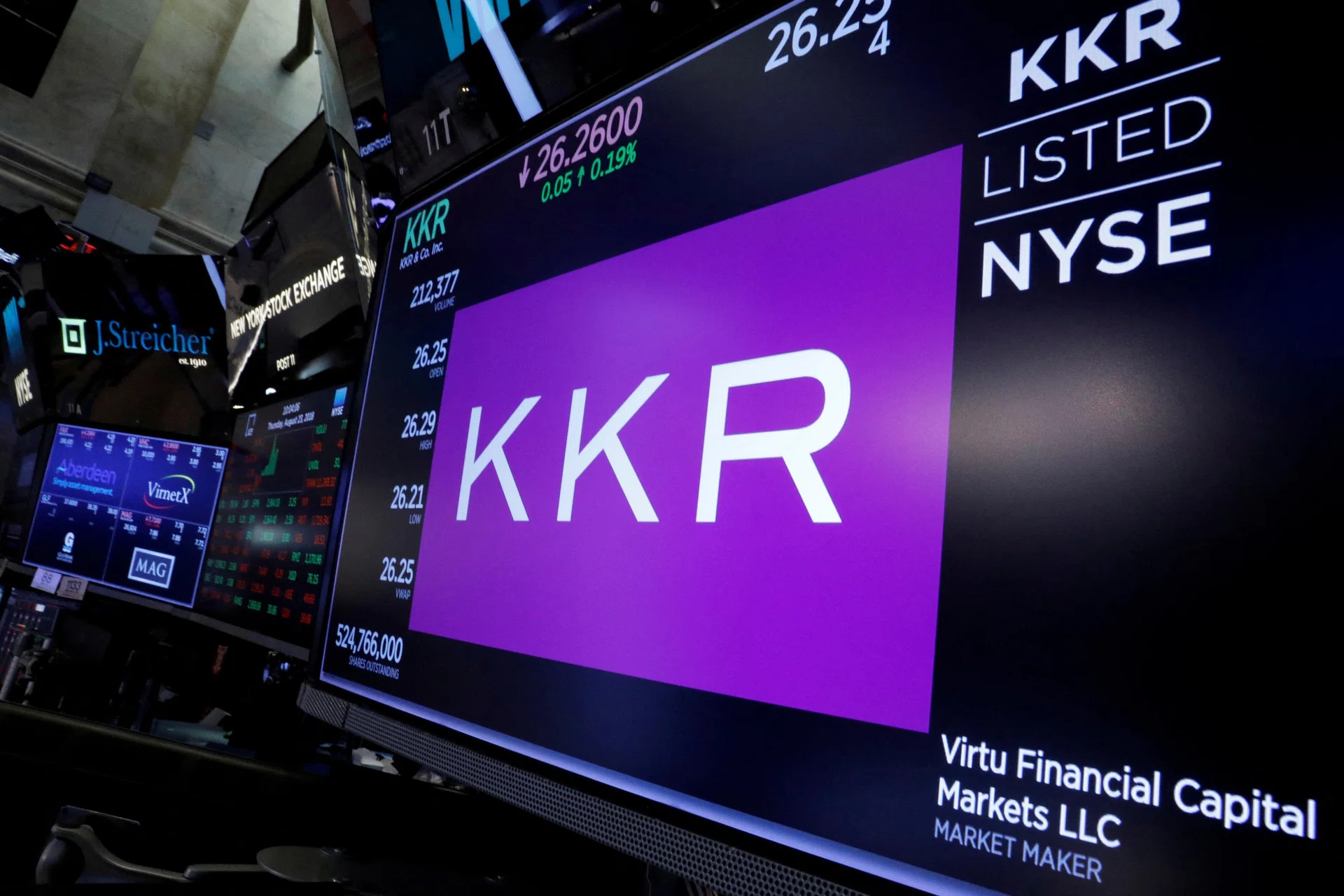
Eight years after the largest European leveraged buyout of 2017, KKR is back at the table — this time on the sell side. The question is whether the market is ready to pay up for a business straddling one of consumer goods’ most contested fault lines.
Walk into any well-stocked supermarket in Amsterdam, Lagos, or São Paulo and you will find it — a cheerful yellow tub, modest in size but outsized in ambition. Flora, the plant-based spread that has graced European breakfast tables for six decades, is today the flagship of Flora Food Group, a Dutch food conglomerate that also owns Blue Band, Becel, Country Crock, I Can’t Believe It’s Not Butter!, and Violife — and, critically, the entire strategic wager that Kohlberg Kravis Roberts placed on the long-term viability of plant-based fats when it carved out Unilever’s spreads division in 2018.
That wager is now approaching its verdict. Bloomberg reported on 30 April 2026 that KKR is actively exploring a sale of Flora Food Group for as much as $10 billion, with sell-side advisers working through potential buyer meetings. It is a figure that sounds impressive until you trace the deal’s full arc — and then it begins to look rather more complicated.
The story of how a margarine portfolio became a $10 billion negotiation is, at its core, a story about private equity’s enduring faith in categories that the wider market has given up on, the fickle nature of consumer health trends, and what happens when a highly leveraged buyout runs headlong into an era of rising dairy butter, retreating plant-based enthusiasm, and stubbornly high borrowing costs. It is also, frankly, a stress test of whether KKR — one of the world’s most sophisticated dealmakers — can deliver a return that justifies the wait.
Sprexit: How KKR Came to Own the World’s Largest Margarine Empire
To understand where Flora Food Group stands today, it is necessary to revisit the catalysing crisis that brought it into existence as a standalone entity. In February 2017, Kraft Heinz launched an unsolicited $143 billion takeover bid for Unilever — a brazen move that shocked the consumer goods establishment and sent Unilever’s chief executive, Paul Polman, scrambling for a defensive narrative. The bid was rebuffed within days, but its lasting effect was to commit Unilever to a more ruthless posture on portfolio rationalisation.
The spreads business — margarine, plant-based blends, cooking fats — was an obvious candidate for disposal. In the five years leading to 2014, global margarine sales had fallen roughly 6% while butter sales climbed 7%. The category carried robust margins but declining volumes, an awkward combination in an age when activist investors demanded growth, not mere profitability. In April 2017, Unilever formally put the division up for sale, sparking a bidding war that drew Apollo, CVC, Bain Capital, and Clayton, Dubilier & Rice before KKR prevailed at €6.825 billion ($8.04 billion) — the biggest leveraged buyout in Europe that year.
The business was renamed Upfield, and KKR’s thesis was clear: strip out corporate overhead from a business that had been slowly suffocating inside Unilever’s vast machine, pivot aggressively toward plant-based positioning, leverage the portfolio’s extraordinary global reach — present in roughly 100 countries — and exit within five to seven years at a healthy premium. It was a template that private equity had successfully applied to other Unilever orphans: HUL’s flavours unit, Coty’s beauty brands, Alberto-Culver. Why not margarine?
“Private equity’s love affair with declining categories is built on a simple insight: mature businesses can generate tremendous cash, if only you are willing to manage them without corporate sentimentality.”
KKR’s Stewardship: The Good, the Complicated, and the Debt Pile
KKR did deliver genuine operational discipline. Upfield shed excess manufacturing capacity, consolidated back-office functions, and pushed aggressively into plant-based innovation — purchasing Violife, the Greek plant-based cheese brand, in 2020 and investing €50 million in a new research and development campus. The rebranding to Flora Food Group in September 2024 was itself a signal: an effort to align the portfolio’s identity with its plant-based ambitions and shed the Upfield name, which had never quite achieved commercial resonance beyond the trade press.
The financial results tell a story of resilience, if not quite triumph. Flora Food Group’s 2024 Annual Report disclosed €3.1 billion in net sales, with 96% of product volumes meeting core nutrition benchmarks. By 2025, the company’s investor page cited approximately €3.0 billion in net sales — a slight decline year on year, and a figure that, while not catastrophic, suggests the business is managing volumes rather than growing them. For a leveraged buyout carrying the kind of debt load Upfield accumulated, that distinction matters enormously.
And here lies the central complication. According to Reorg Research, Flora Food Group’s reported leverage ratio stood at 6.9x net debt to EBITDA as of September 2023 — elevated even by leveraged buyout standards, and a direct consequence of the structure that financed the original €6.8 billion acquisition. In July 2023, the company was compelled to extend the maturity of term loan tranches totalling over €3 billion across three currencies to January 2028, buying time but also advertising to the market that the original exit runway had narrowed.
This debt burden is why Bloomberg reported in February 2025 that KKR was likely to hold the business until at least 2026 — not out of lingering affection for margarine, but because a sale at the time would not have cleared the debt cleanly enough to return meaningful equity to KKR’s funds. The ADQ talks of 2024, which collapsed over price disagreements with the Abu Dhabi sovereign wealth fund, were a missed opportunity that has since complicated the exit narrative.
Flora Food Group — Key Financials at a Glance (April 2026)
| Metric | Value |
|---|---|
| Net Sales 2024 | €3.1 billion |
| Net Sales 2025 | ~€3.0 billion |
| Target Valuation | ~$10 billion |
| EBITDA (marketed) | €800M–€900M |
| Leverage (Sept 2023) | 6.9x net debt/EBITDA |
| Countries of Operation | ~100 |
| Employees | ~4,600 |
| M&A Advisers | Citi, Goldman Sachs |
The Butter Counter-Revolution: Market Dynamics That Complicate the Story
KKR bought into spreads at precisely the moment when the broader culture appeared to be pivoting against them — and then doubled down on plant-based at precisely the moment when that pivot showed signs of plateauing. Both moves were defensible at the time; both are now being tested.
Dairy’s Quiet Comeback
The rehabilitation of butter — once demonised as a cardiovascular villain — has been one of consumer goods’ most striking reversals of the past decade. Driven by the rise of full-fat, clean-label, ketogenic, and ancestral dietary philosophies, butter has recovered not just cultural cachet but commercial mass. The global butter market was valued at $43.83 billion in 2025 and is projected to grow at a compound annual rate of 4.34% to reach $63.49 billion by 2034 — a rate that comfortably outpaces most plant-based spread forecasts. In the United States, the shift toward grass-fed, organic, and artisanal butter has eroded the margarine aisle in a way that no marketing campaign has convincingly reversed.
This is not merely a fashionable food trend. It reflects a genuine paradigm shift in nutritional thinking: saturated fats, once the enemy, have been partly rehabilitated by a body of research questioning the oversimplified fat-heart disease hypothesis. Consumers who once reached for “I Can’t Believe It’s Not Butter!” because they believed it was healthier are now, with similar conviction, reaching for Kerrygold or Président. The irony — and strategic challenge — for Flora Food Group is that several of its most storied brands built their identity on exactly this anti-dairy, pro-margarine messaging that has now fallen out of favour.
The Plant-Based Plateau
The plant-based food category, which experienced its evangelical peak around 2019–2021, has since entered a more sobering phase. Data from SPINS compiled by the Good Food Institute shows that in 2025, total US retail plant-based food dollar sales declined 2% and unit volumes also fell 2%. While the overall retail market still totalled $7.9 billion — double its 2017 size — the trajectory has clearly flattened, and the declines in premium categories have been steeper than the headlines suggest. Taste gaps, price premiums versus conventional equivalents, and a broader consumer pullback on discretionary spending have all compounded.
Flora Food Group’s flagship product range spans this contested territory. Its plant-based butters and spreads remain category leaders, and it has invested genuinely in reformulation and sustainability packaging — Mintel noted in late 2025 that Flora Food Group launched what it described as the world’s first plastic-free recyclable tub for plant butters. But innovation in packaging does not address the more fundamental tension: the consumer who most fervently wants plant-based butter is also the consumer most likely to make her own nut butter or seek out artisan alternatives. The mass-market grocery shopper, who is Flora’s bread and butter (so to speak), remains stubbornly ambivalent.
Volume Compression and Pricing Power
The post-pandemic inflation cycle placed heavy input cost pressure on fat-based products — vegetable oils, palm oil, sunflower oil — before the commodity cycle partially reversed. Flora Food Group navigated this environment through pricing actions, but pricing in a commodity-adjacent category has limits. When a business reports approximately €3.0 billion in net sales in 2025 versus €3.1 billion in 2024, the question of whether the modest decline reflects volume pressure, price normalisation, or deliberate strategic SKU rationalisation becomes critical to valuation. For prospective buyers underwriting a $10 billion enterprise value, the answer to that question matters enormously.
Can KKR Double Its Money on Margarine? The Valuation Puzzle
At $10 billion, KKR would be booking a nominal gain of approximately $2 billion, or roughly 25%, over its original $8 billion acquisition cost — before accounting for the costs of eight years of debt service on a heavily leveraged structure. In real terms, adjusting for the time value of money, this would represent a distinctly mediocre return on one of the largest consumer staples buyouts in history.
The mathematics depend critically on how one frames the EBITDA multiple. According to Reorg Research, the business is being marketed off EBITDA of between €800 million and €900 million depending on adjustments — a range that implies an enterprise value multiple of roughly 10 to 11 times EBITDA at the $10 billion headline price (accounting for current EUR/USD exchange dynamics). That is not an unreasonable multiple for a branded consumer staples business with genuine global distribution depth and category leadership in plant-based fats. Comparable acquisitions in the European consumer staples universe have traded at 9 to 13 times EBITDA in recent years, depending on growth profile and leverage.
Bull case for $10bn: A strategic buyer — a sovereign wealth fund, a major Asian food conglomerate, or a CPG giant seeking instant scale in plant-based — could justify paying a 10–11x EBITDA multiple for a business with genuinely irreplaceable global distribution across 100 countries, a portfolio of household-name brands, and what remains the world’s largest plant-based consumer packaged goods platform.
Bear case: The leverage overhang, the declining revenue trajectory, and the structural headwinds in core geographies could compress the achievable multiple to 8–9x — implying a significantly lower clearing price, and one that would require much more creative structuring to make the numbers work for KKR’s fund economics.
The ADQ precedent: The failed 2024 sale to Abu Dhabi’s ADQ at roughly the same $10 billion headline suggests that the price gap between seller expectations and buyer willingness has not materially closed. KKR’s decision to hold for another year to tackle the debt pile may have improved the credit story, but it has not transformed the strategic narrative.
The question — can KKR double its money on margarine? — turns out to have a sobering answer: almost certainly not, at least not on an equity-return basis. What KKR can hope for is a clean exit that returns capital to its 2018-vintage funds, clears the debt, and allows it to characterise the investment as a value-preservation story in a difficult macro environment. For a firm of KKR’s stature and track record, that framing is available. It simply is not the triumph the original thesis promised.
“The deal that was once the largest leveraged buyout in Europe may ultimately be remembered less for its returns than for the market education it provided about the limits of plant-based premiumisation in a mainstream grocery context.”
The PE Exit Environment: Why 2026 Is Both Better and More Complicated
Private equity’s exit machine, which seized up dramatically when interest rates rose sharply in 2022–2023, has been slowly unjamming. Sponsor-to-sponsor deals have picked up, strategic acquirers are returning to the table, and several large IPO windows opened in late 2025. But the consumer staples segment remains challenging: growth profiles are thin, commodity exposure creates earnings volatility, and public market investors — burned by the de-ratings of 2022 — remain sceptical of high-multiple consumer deals.
For KKR, the 2028 debt maturity creates a structural deadline that is not fully negotiable. A sale in 2026 would provide a comfortable runway; a failed sale in 2026 reopens the IPO and minority-stake options that KKR had previously considered. The appointment of Citi and Goldman Sachs as sell-side advisers signals that this process is real, not exploratory — the bankers’ fireplace chats with potential buyers are underway, and the buyer universe will likely include Middle Eastern sovereign funds, Asian strategic players (Japan’s Kewpie, India’s Tata Consumer, or similar), and potentially a consortium structure that lets multiple buyers share the risk of a $10 billion bet on fats.
What This Tells Us About Private Equity in Slow-Growth Consumer Categories
The Flora Food Group saga is instructive well beyond the specifics of margarine and plant-based spreads. It illustrates the particular tensions that arise when private equity buys a structurally challenged category and attempts to re-narrative it as a growth story through brand reorientation and sustainability positioning.
The strategy is not inherently flawed. KKR’s Unilever carve-out created genuine operational value: a leaner cost structure, focused management attention, innovation investment, and geographic portfolio pruning that would never have occurred inside the parent. These are real contributions. The problem arises when the macro environment — in this case, the dairy rehabilitation trend, the plant-based plateau, and the interest rate shock — moves against the investment thesis faster than operational improvements can compensate.
There is also a broader lesson here about sustainability positioning as a valuation driver. Flora Food Group has leaned heavily into its sustainability narrative — carbon footprint comparisons to dairy, plastic-free packaging, science-based targets. These are genuine commitments and they carry real market value in certain buyer segments. But sustainability positioning has not proven sufficient to reverse category volume declines, and it has not — at least in consumer staples — translated reliably into premium multiples at the point of sale. The investor who buys Flora Food Group in 2026 will be buying a sustainability story alongside a business reality, and disentangling the two is among the most complex tasks in contemporary CPG valuation.
Unilever’s “Sprexit” Revisited: Lessons for CPG Portfolio Management
It is worth pausing to note what Unilever itself has done since its 2017 “Sprexit.” The Anglo-Dutch giant, under successive management teams, has continued its own portfolio pruning — divesting ice cream (including Ben & Jerry’s and Wall’s) and sharpening its focus on personal care and premium beauty. In retrospect, the spreads disposal looks prescient: Unilever extracted a full-price exit at the peak of PE appetite, offloaded a structurally challenged category, and redeployed capital into higher-growth areas. The buyer absorbed the subsequent turbulence.
This dynamic — incumbent CPG companies extracting value by selling declining-trajectory businesses to PE at cycle-peak prices — is not unique to Unilever. It is a recurring pattern in consumer goods dealmaking, and one that ought to give pause to private equity firms underwriting growth stories in commodity-adjacent food categories. The spreads business was never truly a growth business; it was a cash-generative, brand-rich, distribution-dense business that required a different kind of stewardship than a buyout structure, with its accompanying debt burden and return expectations, naturally provides.
Who Buys the Butter Empire — and Why It Matters
If a deal does materialise in 2026, the identity of the buyer will be as revealing as the price. A sovereign wealth fund — the category that ADQ represented in 2024 — would be making a long-duration bet on the durability of plant-based fats as a food staple in emerging markets, where Blue Band and Becel hold particularly strong positions in Africa and Asia. A strategic acquirer from the food industry would be buying distribution, brand equity, and manufacturing scale. A financial buyer — another PE firm — would effectively be making the same leveraged bet KKR made in 2017, only with eight years less runway and a somewhat thinner growth story.
Each buyer type carries different implications for employees, innovation investment, sustainability commitments, and ultimately for the brands themselves. Flora, Blue Band, and Becel are not merely assets on a balance sheet — they are products consumed daily by hundreds of millions of people across income brackets and geographies. The stewardship question is not merely financial; it is social and strategic.
Verdict: A Long Bet Reaching Its Reckoning
KKR’s potential sale of Flora Food Group at $10 billion is neither a triumph nor a failure in the conventional sense. It is something more nuanced and, in many ways, more interesting: a reckoning with the limits of private equity’s ability to transform structurally challenged consumer categories through leverage and rebranding alone.
The business KKR built out of Unilever’s spreads division is a genuine global enterprise — €3 billion in revenue, 4,600 people, operations across 100 countries, a market-leading position in plant-based fats, and a sustainability platform that is ahead of most CPG peers. These are real achievements. The question that the $10 billion price tag cannot fully obscure is whether they are sufficient to generate the return that eight years, €6.8 billion in acquisition cost, and a mountain of leveraged debt demand.
The winner in this story, so far, is Unilever. Paul Polman’s “Sprexit” extracted maximum value at peak pricing from a business that was, in truth, in long-term structural decline. The loser — if there is one — is the thesis that plant-based positioning alone could convert a secular decline into a secular growth story.
The most fascinating question is what happens next. If Flora Food Group finds a buyer at or near $10 billion, it will confirm that global distribution depth and brand heritage retain premium value even in slow-growth categories — an encouraging signal for CPG deal-making in 2026 and beyond. If the process stalls again, as it did in 2024, it will raise harder questions about the true clearing price for large, highly leveraged consumer staples carve-outs in an era when both PE returns and plant-based enthusiasm have moderated.
Either way, the next chapter in the great margarine saga deserves close reading. Somewhere between the butter aisle and the private equity conference room, the future of food — slow, steady, leveraged, and stubbornly complex — is still being written.
Discover more from The Economy
Subscribe to get the latest posts sent to your email.



Key Takeaways
- Rolex’s secondary market rose approximately 7.9% year-over-year as of 2026 (per WatchCharts data) — trailing Patek Philippe (+16.2%) and Tudor (+11.4%) but still outperforming Audemars Piguet (+3.4%).
- Rolex raised U.S. retail prices 4–9% in January 2026 (steel models ~5.6%, gold models ~8.7%), narrowing the historical gap between retail and pre-owned pricing.
- Not every model appreciates: steel sports references (Submariner, GMT-Master II, Daytona) have held value far better than two-tone or widely available dress references like the standard Datejust.
- The Lady-Datejust posted the sharpest 2026 gain among tracked collections — up 22.73%, from roughly $9,269 to $11,376 — driven by demand for smaller, “everyday luxury” watches.
- Gold’s rise past $2,400/oz has directly lifted the investment case for Rolex’s precious-metal references (Day-Date, Sky-Dweller, Yacht-Master).
The Model-by-Model Picture
| Category | 2026 Trend |
|---|---|
| Lady-Datejust | +22.73% (strongest performer among tracked collections) |
| Steel sports models (Submariner, GMT-Master II) | Held value well; corrected from 2022 peak but stabilized above retail |
| Daytona | Corrected from highs above $50,000 to the mid-$30,000s; still among the most sought-after references |
| Two-tone/widely available Datejust | Flat to negative — “holds value” is an overstatement for this category |
| Gold references (Day-Date, Sky-Dweller) | Lifted by gold’s rise above $2,400/oz |
Why the “Rolex Always Appreciates” Myth Is Fading
The pandemic-era boom pushed some references — the Daytona above all — to speculative highs disconnected from historical norms. Since the March 2022 peak, steel sports models have compressed meaningfully, and dealers who bought inventory near the top have in some cases faced 20–40% markdowns on liquidation. The lesson for 2026 buyers: Rolex as a category is not a monolith. Value retention depends heavily on specific reference, condition, and whether the piece comes with box and papers (“full set”).
What’s Actually Driving 2026 Strength
- Retail price increases raise the floor. When a new Submariner retails at $10,050 (up from $9,500), a pre-owned example at $11,000–$12,000 suddenly represents a smaller premium — narrowing the gap without secondary prices actually moving.
- Supply discipline remains Rolex’s core lever. The brand has never confirmed production numbers, and secondary-market premiums remain entirely a function of Rolex’s own manufacturing decisions — a risk factor as much as a support.
- Certified Pre-Owned rollout. Rolex’s now fully rolled-out CPO program has changed how buyers transact in the used market, adding a layer of brand-verified legitimacy that supports pricing.
The Case for Rolex as a Portfolio Diversifier
Financial advisors increasingly frame luxury watches not as a replacement for equities or bonds, but as a tangible, historically low-correlation diversifier — one that carries its own risks (illiquidity, condition-dependent pricing, no yield) but has demonstrated multi-decade resilience for specific references.
Is Rolex a good investment in 2026?
It depends heavily on the specific reference. Steel sports models like the Submariner and Daytona have held or grown in value; two-tone and widely available dress models generally have not. Overall, Rolex’s secondary market rose about 7.9% year-over-year in 2026, trailing Patek Philippe but ahead of Audemars Piguet.
Discover more from The Economy
Subscribe to get the latest posts sent to your email.

Navigating Mortgage and Loan Refinancing in a High-Yield Environment
Global public debt crossing critical thresholds has kept central bank policies volatile, resulting in fluctuating US Treasury yields throughout 2026. For homeowners and commercial property holders burdened by previous high-interest borrowing cycles, finding optimal refinance windows has become a high-stakes financial puzzle. Stalled disinflation and stubborn employment numbers mean rate cuts are incremental, requiring borrowers to act with precision.
Timing your mortgage or commercial loan refinance in this environment requires a deep understanding of yield curve movements and lender risk appetites.
Decoding 2026 Refinance Dynamics
The 10-Year Treasury Yield Benchmark
Mortgage rates continue to track closely with the 10-year US Treasury yield. When macroeconomic anxiety spikes debt issuance, yields rise, tightening consumer borrowing capacity. Savvy borrowers monitor weekly Treasury auctions to lock in rates during brief dip windows.
Hybrid ARMs and Alternative Structures
With fixed rates remaining elevated, 7/1 and 10/1 adjustable-rate mortgages (ARMs) have surged in popularity. These products offer lower initial monthly payments, giving borrowers breathing room until central bank easing cycles fully materialize.
| Loan Product | Current Rate Range | Best For | Key Risk Factor |
| 30-Year Fixed Mortgage | 6.2% – 6.8% | Long-term predictability | Higher initial monthly outlay |
| 7/1 Hybrid ARM | 5.5% – 5.9% | Short-term ownership / flipping | Rate reset risk after year 7 |
| Commercial Refinance | 7.0% – 8.2% | Corporate asset restructuring | Strict DSCR lender covenants |
Actionable Steps for Successful Refinancing
To maximize your chances of securing favorable refinance terms in a volatile market, follow a disciplined preparation strategy.
Boost Your Credit Score Immediately: Lenders in 2026 are applying stringent credit tiering; a 20-point increase can drop your APR by a crucial quarter-point.
Shop Regional Credit Unions: Smaller financial institutions often offer portfolio loans with more flexible underwriting than major national banks.
Calculate the Break-Even Point: Ensure your total closing costs are recouped through monthly savings within 24 months of closing.
“Market Strategist View: Refinancing in 2026 is an exercise in opportunistic timing. Borrowers must maintain immaculate financial profiles ready to strike the moment Treasury yields dip.”
Mastering the complexities of today’s debt environment ensures you can successfully lower your debt service costs and protect your long-term financial stability.
Discover more from The Economy
Subscribe to get the latest posts sent to your email.

The days of pulling generic auto insurance quotes based purely on your zip code and age are officially over. In 2026, insurance comparison engines are powered entirely by generative AI and real-time telematics. These platforms digest thousands of live data points—ranging from your driving smoothness via connected vehicle sensors to real-time traffic congestion patterns—to generate hyper-personalized premiums instantly.
For consumers, this evolution represents both a massive opportunity for savings and a hidden trap for penalty pricing. Understanding how AI algorithms evaluate risk is essential for anyone looking to lower their monthly auto insurance premiums.
How AI Comparison Engines Evaluate Your Risk Profile
Behavioral Telematics and Connected Cars
Modern cars stream performance data directly to insurance aggregators. Generative AI models analyze braking sharpness, acceleration curves, cornering G-forces, and phone distraction metrics. Drivers who maintain smooth, defensive habits are rewarded with dynamic rate cuts of up to 40% compared to traditional rating tiers.
Predictive Traffic and Weather Modeling
AI tools now cross-reference your daily commute route with predictive weather and accident probability models. If your standard parking location or driving corridor has a statistically higher incidence of uninsured motorist claims, your quotes will reflect that hyper-local risk assessment.
| Comparison Factor | Traditional Rating Model | 2026 Generative AI Model | Impact on Premium |
| Mileage & Usage | Annual estimated odometer reading | GPS tracking & live trip duration | High (up to 35% savings) |
| Driving Behavior | MVR driving record & accidents | Real-time braking, speed, & G-force | Critical (determines tier) |
| Vehicle Tech | Make, model, and safety rating | ADAS calibration & repair cost data | Moderate |
Strategies to Lower Your AI-Driven Insurance Quote
To outsmart the algorithm and secure the lowest possible premium in 2026, drivers must proactively manage their digital footprint on insurance platforms.
Opt-In for Telematics Trial Periods: Many insurers offer immediate 15% discounts just for installing their driving app; let it track safe habits for 30 days to lock in permanent savings.
Scrub Unverified Public Records: Ensure your motor vehicle report is free of clerical errors that AI risk models misinterpret as reckless behavior.
Compare AI Aggregators: Use platforms that integrate multi-carrier API feeds rather than single-brand comparison sites to find the best risk-adjusted rate.
“Industry Note: AI-driven pricing rewards transparency and precision. Drivers who actively manage their telematics data consistently out-save those relying on legacy quote calculators.”
Embracing AI comparison tools allows savvy policyholders to customize coverage limits precisely to their driving habits, eliminating wasted premium spend while ensuring robust protection.
Discover more from The Economy
Subscribe to get the latest posts sent to your email.

Bitcoin & XRP 2026: Inside Crypto’s Institutional Era

Global Economy 2026: IMF Growth, AI Stocks & Market Risk

China’s Local Debt Race Against Time: Why Economists Demand Central Action Before the Deflation Window Closes

Money News: How to Protect Your Portfolio From Global Inflation

World Bank Projections: Emerging vs. Big Economies of Asia

IMF Reports 2026: What the Latest Data Means for the Global Economy

Singapore Stocks Outlook: A Safe Haven in the Asian Market?

China Stocks vs. Japan Stocks: Where Should You Invest in Late 2026?

VIX Index Explained: How to Trade Wall Street’s Fear Gauge Today

Commercial vs Residential Real Estate: Which Wins in 2026?

Presidential Stock Market Performance: How Trump’s Second Term Compares to History

2026 Real Estate Market News: Are We Heading for a Correction?

Bitcoin Price Forecast 2026–2027: Will the 4-Year Cycle Hold?

Fidelity Crypto vs. Traditional Brokerages: A Guide for Modern Investors

US-China Relations in Q3 2026: Trade Tariffs and Supply Chain Risks

Top 30 Stocks for Investment in PSX for Massive ROI in 2026

SpaceX Starship Flight 14: First Orbital Attempt & Starlink V3 Launch Explained

AI Chip Stocks 2026: The Best Semiconductor Investments Beyond Marvell

The 2026 Crypto Regulatory Shift: What It Means for Institutional Investors

Tween Back-to-School Trends 2026: What’s Driving the $85B Season

AI-Powered Training: The Next Multi-Billion Dollar Ecosystem in Fitness

Oil Prices Break $100 in 2026: Middle East Conflict & Energy Markets

10-Year Treasury Yield Hits 4.80%: What It Means for Rates & Portfolios

Fidelity Investments Review 2026: SPAXX Yields & Zero-Fee Funds

BRICS+ Cross-Border Payments 2026: Interoperability Explained

Shein Clothes Quality & Safety in 2026: What Lab Tests Show

MRVL Earnings 2026: Why Marvell Sank Despite Beating Estimates

China’s US$10.8 Billion Trade Shortcut: Why the Pinglu Canal Matters
-

 Markets & Finance9 months ago
Top 15 Stocks for Investment in 2026 in PSX: Your Complete Guide to Pakistan’s Best Investment Opportunities
-

 Analysis7 months ago
Johor’s Investment Boom: The Hidden Costs Behind Malaysia’s Most Ambitious Economic Surge
-

 Analysis7 months ago
Top 10 Stocks for Investment in PSX for Quick Returns in 2026
-

 Analysis8 months ago
Brazil’s Rare Earth Race: US, EU, and China Compete for Critical Minerals as Tensions Rise
-

 Banks8 months ago
Best Investments in Pakistan 2026: Top 10 Low-Price Shares and Long-Term Picks for the PSX
-

 Investment8 months ago
Top 10 Mutual Fund Managers in Pakistan for Investment in 2026: A Comprehensive Guide for Optimal Returns
-

 Global Economy9 months ago
15 Most Lucrative Sectors for Investment in Pakistan: A 2025 Data-Driven Analysis
-

 Global Economy9 months ago
Pakistan’s Export Goldmine: 10 Game-Changing Markets Where Pakistani Businesses Are Winning Big in 2025