Connect with us

Analysis

Southeast Asia’s Tariff Breather: Trump’s Duty Reset Offers Relief, But Uncertainty Looms Large

Published

on

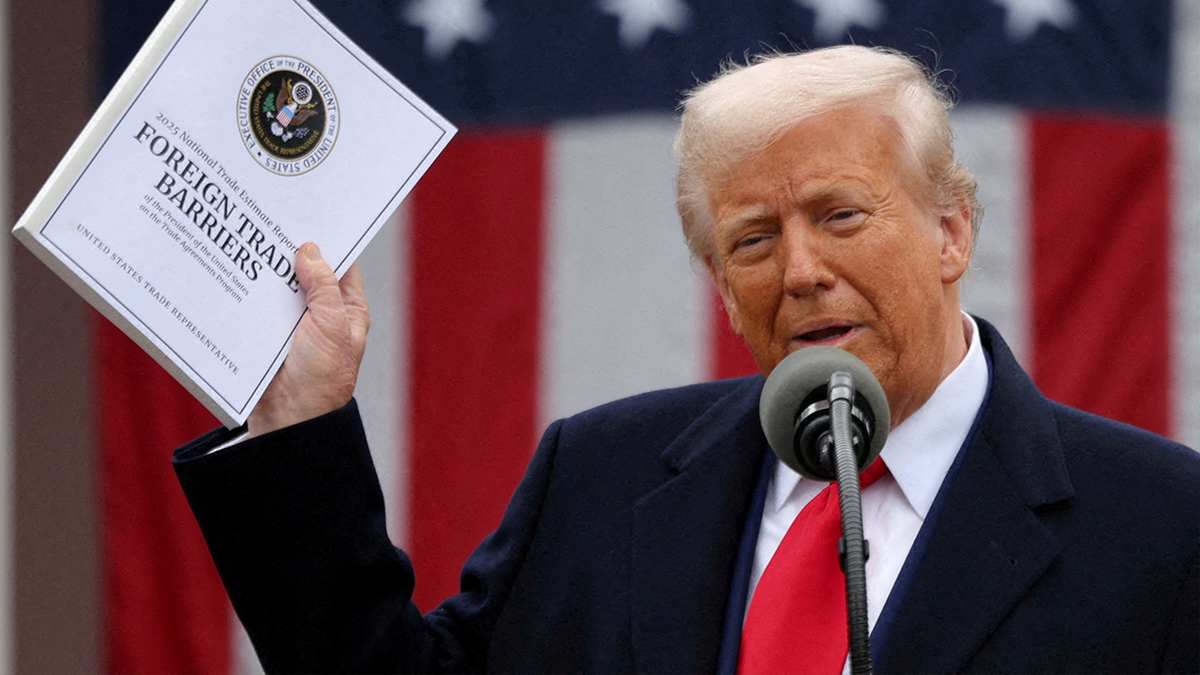
The U.S. Supreme Court’s February 2026 ruling striking down Trump’s IEEPA tariffs has triggered a 15% Section 122 duty reset — offering ASEAN economies a meaningful, if fragile, reprieve. Here’s what it means for Vietnam, Thailand, Indonesia, and the region’s future trade outlook.

It took a landmark Supreme Court ruling, a furious presidential response, and one very late Friday night to reset the global trade architecture that had reshaped Southeast Asia’s economy over the past year. On February 20, 2026, the U.S. Supreme Court ruled 6-3 in Learning Resources, Inc. v. Trump that the International Emergency Economic Powers Act (IEEPA) — the legal scaffolding for President Trump’s sweeping “Liberation Day” reciprocal tariffs — does not authorize the president to impose tariffs. By midnight on February 24, those duties were gone, replaced by a fresh 15% global import levy under the narrower authority of Section 122 of the 1974 Trade Act.

For Southeast Asia, the shift is consequential. Countries like Vietnam, Malaysia, Thailand, and Indonesia had spent nearly a year negotiating under the shadow of reciprocal tariff rates ranging from 19% to 46%. Now, with a uniform 15% Section 122 duty in place, several of those nations suddenly find themselves paying less to access the world’s largest consumer market than they agreed to in bilateral deals. That is a remarkable turn of events — and one that raises as many questions as it answers.

The Reset Explained

The Supreme Court’s majority opinion was sharp and categorical. As SCOTUSblog summarized, IEEPA’s language — permitting the president to “regulate importation” during emergencies — does not plainly authorize the imposition of tariffs, which are a distinct form of taxation historically reserved for Congress. Applying its “major questions” doctrine, the court held that such a consequential delegation of the taxing power requires explicit congressional authorization.

Trump’s response was immediate and combative. Hours after the ruling, he invoked Section 122 to impose a 10% global duty. By the following day, he announced via Truth Social that the rate would rise to 15%, effective February 24, 2026 at 12:01 a.m. EST — one minute after the IEEPA duties legally ceased. The White House framed the move as correcting a “fundamental international payment problem,” the statutory trigger required under Section 122.

The critical difference from IEEPA: Section 122 comes with a hard ceiling of 150 days. Unless Congress votes to extend it — a fraught prospect with midterm elections looming in November — the duties expire automatically around mid-July 2026. As the Tax Foundation notes, should the Section 122 tariffs expire without replacement, the effective U.S. tariff rate would fall to approximately 5.6%, the highest level since 1972 but far below the pre-ruling average of nearly 17%.

Section 232 tariffs on steel, aluminum, and automobiles remain fully intact. And the administration has signaled it will launch multiple Section 301 investigations, meaning sector-specific tariff actions on semiconductors, pharmaceuticals, and drones could follow.

Economic Wins for the Region

For the export-driven economies of ASEAN, the math of the new regime is, at least in the immediate term, encouraging.

DBS Group Research economists Radhika Rao and Chua Han Teng published analysis showing that under the MFN-plus-15% Section 122 framework, Malaysia, Thailand, Vietnam, and Indonesia all see meaningful reductions in their effective U.S. tariff rates. Citing Global Trade Alert data, DBS estimates reductions of approximately 1.7 to 3.2 percentage points for these four economies compared to their previous rates under negotiated IEEPA-era deals.

Effective Tariff Rate Comparison: Key ASEAN Economies

CountryPre-Ruling Effective RatePost-Reset Rate (MFN + 15%)Change
Vietnam~22–25%~19–21%▼ ~3–4 pp
Thailand~19%~16–17%▼ ~2–3 pp
Indonesia~19%~16–17%▼ ~2–3 pp
Malaysia~18–20%~16–18%▼ ~1.7–2 pp
Singapore~10%~11.1%▲ ~1.1 pp

Sources: DBS Group Research, Global Trade Alert, Tax Foundation (February 2026)

Singapore is the notable outlier: its previously favorable 10% baseline has been replaced by the uniform 15% rate, technically raising its effective burden by roughly 1.1 percentage points. That said, DBS notes Singapore retains the lowest effective tariff rate within ASEAN-6 because its MFN duties on most goods are already near zero.

For Thailand, the impact is tangible and immediate. Thailand Business News reports that Finance Minister Ekniti Nitithanprapas called the reset a “more level playing field” that strengthens Thailand’s appeal as a manufacturing and investment hub. Thailand’s exports to the U.S. exceeded $50 billion in 2025, and the Thai baht has already strengthened — moving from 35.2 to 34.8 against the dollar in the days following the ruling.

Consider the position of a furniture manufacturer in the outskirts of Ho Chi Minh City. Through 2025, her company faced the prospect of 25–46% tariffs on sofas and rattan sets shipped to American retailers. After months of uncertainty, she was exporting at a negotiated 20% rate — still punishing by historical standards. Today, she ships under a 15% blanket rate. Margins remain thin, but the difference between 20% and 15% on a container worth $80,000 in goods is real money. And she is not alone: the Vietnamese furniture sector, already a major beneficiary of the “China+1” supply chain diversification trend, now has new breathing room.

Vietnam’s broader tariff burden has fallen sharply, according to Seeking Alpha’s Asia trade analysis, which notes the reduction “widens Vietnam’s competitive edge in low-value-added exports and further embeds it as a key U.S.-bound production base.” Electronics assembly in Malaysia and non-exempt manufacturing in Indonesia face similarly improved conditions.

Lingering Risks

If the new tariff environment feels like relief, it also feels precarious — and deliberately so.

The 150-Day Clock. The most fundamental constraint on Section 122 is statutory. The clock started ticking on February 24, and it runs until approximately July 22, 2026. After that, the Trump administration needs congressional approval to extend the duties, pursue new bilateral agreements, or invoke yet another statutory authority. As Brookings scholars emphasized, this timeline is not incidental: it forces a tariff vote squarely into pre-midterm election season, adding genuine political complexity.

Legal Fragility. Section 122 is designed for balance-of-payments emergencies and has rarely been used. Asia Times notes that this authority is “considerably narrower than IEEPA provided,” and legal challenges to its application are already being anticipated by trade lawyers. A second Supreme Court rebuke — while not certain — cannot be dismissed.

The Deals That No Longer Make Sense. Perhaps most awkwardly, several ASEAN countries signed bilateral trade agreements under the coercive pressure of IEEPA tariffs that no longer exist. Indonesia is the starkest case: Jakarta signed a reciprocal trade agreement with Washington on February 19, 2026 — one day before the ruling — committing to a 19% tariff rate and a series of investment concessions. Under Section 122, Indonesia effectively faces a 15–17% effective rate without the deal’s obligations. As Asia Times observed, “for ASEAN countries, the ruling is neither a full reprieve nor a return to the pre-2025 trading environment. What it offers is breathing room.”

Trump appears acutely aware of this dynamic. He warned on Truth Social that countries “playing games” with the ruling “will be met with a much higher Tariff, and worse.” That threat carries weight: Section 301 investigations can produce targeted duties, and Section 232 national security probes remain in progress for semiconductors and pharmaceuticals — sectors vital to Malaysia, Singapore, and Vietnam.

Transshipment Risks Persist. For Vietnam in particular, a separate concern predates the ruling and remains unresolved. The Trump administration has long accused Vietnam of serving as a conduit for Chinese goods seeking to avoid U.S. duties. A 40% transshipment tariff was floated in mid-2025 trade negotiations. That proposal has not been formally rescinded, and stricter rules of origin enforcement could return as a policy lever.

Section 232 Remains. Steel, aluminum, and automobile tariffs are unaffected by the ruling. For Southeast Asian manufacturers that use these inputs — Thai automakers, Indonesian steelmakers — the underlying cost pressures from upstream tariffs have not disappeared. As the Tax Foundation calculates, Section 232 tariffs alone are expected to raise $635 billion over the next decade, costing U.S. households an estimated $400 on average in 2026.

Geopolitical Fault Lines

The ruling and its aftermath cannot be understood in isolation from the broader U.S.-China strategic competition that has made Southeast Asia a contested terrain for economic alignment.

China’s response to the IEEPA era was to accelerate its own trade courtship of ASEAN. As Al Jazeera reported, Beijing has “sought to offset losses in the U.S. market by strengthening trade ties with Southeast Asian nations and pursuing agreements with the European Union.” The Supreme Court ruling may temporarily reduce Beijing’s leverage — if U.S. tariffs on ASEAN are lower, the pressure to pivot further toward China eases — but it does not fundamentally alter the structural dynamic.

For ASEAN governments, the lesson of the past year is that dependence on any single superpower carries existential risk. Malaysia, as the 2025 ASEAN chair, pushed for deeper intra-ASEAN economic integration. The EU-Indonesia Free Trade Agreement is advancing. ASEAN members are quietly diversifying their trade portfolios in ways that will outlast any individual tariff ruling.

Meanwhile, the Brookings Institution’s tariff analysis notes that the administration remains likely to pursue “established trade measures permitting more narrowly levied tariffs” — including multiple Section 301 investigations — suggesting the era of unpredictable U.S. trade policy is not over. It has simply entered a new legal phase.

Looking Ahead

For policymakers, exporters, and supply chain strategists across Southeast Asia, the February 2026 tariff reset suggests a set of priorities for the months ahead.

Front-load where you can. Thai and Vietnamese exporters are already accelerating shipments to take advantage of the lower 15% window before July. This is rational — and may produce a brief burst in U.S.-ASEAN trade volumes in Q1–Q2 2026 that flatters the headline numbers.

Renegotiate carefully. Countries that signed deals at above-15% rates — including Indonesia and the Philippines — face a delicate diplomatic calculation. Walking away from agreements could trigger retaliation. But the legal basis for those deals has evaporated. Governments should pursue quiet renegotiation through technical channels while avoiding public confrontation.

Diversify trade partners. The structural argument for reducing dependence on the U.S. market has not weakened. The EU remains a high-priority destination. The Regional Comprehensive Economic Partnership (RCEP) framework offers deeper intra-Asian trade pathways. Malaysia’s push for bold ASEAN integration deserves support.

Watch Congress. The most underappreciated variable in Southeast Asia’s trade outlook is the U.S. congressional calendar. A vote to extend Section 122 tariffs would provide continuity; a failure to do so would create a different form of uncertainty. With the 2026 midterms shaping Republican priorities, a bipartisan bill on trade authority — flagged by Brookings as potentially “more consequential” than the Section 122 debate itself — could reshape the landscape entirely.

Monitor Section 301. The administration’s announced Section 301 investigations are likely to produce country-specific or sector-specific tariff proposals within months. Exporters in semiconductors, solar panels, electric vehicles, and pharmaceuticals should treat those investigations as active threats, not background noise.

The Supreme Court has delivered Southeast Asia a reprieve, but not a resolution. A 15% tariff where 20–25% once loomed is genuine progress. But a tariff architecture that expires in 150 days, faces legal scrutiny, and sits alongside an administration with multiple remaining tools for trade coercion is not the stable foundation that ASEAN’s export economies need to plan long-term investment decisions.

For the furniture exporter in Ho Chi Minh City, the Thai automotive supplier, or the Malaysian semiconductor packager, the message from this week’s dramatic Washington events is the same one they’ve been receiving for a year: stay nimble, hedge your exposure, and don’t mistake a pause for a peace treaty.

Readers and trade policy watchers should continue monitoring U.S. USTR announcements, Section 301 investigation timelines, and the congressional debate on Section 122 extension — all of which will define Southeast Asia’s trade environment through the remainder of 2026. The next inflection point arrives in July.


Key Data Points at a Glance

  • Supreme Court Ruling: February 20, 2026 — IEEPA does not authorize presidential tariffs (6-3 decision)
  • New Tariff Mechanism: Section 122, Trade Act of 1974 — 15% global duty, effective February 24, 2026
  • Duration: 150 days (~July 22, 2026), requires congressional extension
  • ASEAN Relief: Malaysia, Thailand, Vietnam, Indonesia see effective rate reductions of 1.7–3.2 percentage points (DBS/Global Trade Alert)
  • Singapore: Effective rate rises ~1.1 pp but remains lowest in ASEAN-6
  • Unchanged Tariffs: Section 232 duties on steel, aluminum, autos remain in force
  • IEEPA Duties Collected Before Ruling: Estimated $160+ billion — subject to litigation over refunds
  • Section 122 Revenue Forecast: $668 billion over 2026–2035 (Tax Foundation, combined with Section 232)
  • U.S. Average Effective Tariff Rate: ~5.6% if Section 122 expires; highest since 1972


Discover more from The Economy

Subscribe to get the latest posts sent to your email.

Continue Reading
Click to comment

Leave a Reply

Analysis

Global AI Regulation UN 2026: Why the World Needs an Oversight Body Now

Published

on

The machines are already choosing who dies. The question is whether humanity will choose to stop them.

In the early weeks of Israel’s military campaign in Gaza, a targeting system called Lavender quietly changed the nature of modern warfare. The Israeli army marked tens of thousands of Gazans as suspects for assassination using an AI targeting system with limited human oversight and a permissive policy for civilian casualties. +972 Magazine Israeli intelligence officials acknowledged an error rate of around 10 percent — but simply priced it in, deeming 15 to 20 civilian deaths acceptable for every junior militant the algorithm identified, and over 100 for commanders. CIVICUS LENS The machine, according to one Israeli intelligence officer cited in the original +972 Magazine investigation, “did it coldly.”

This is not a hypothetical future threat. This is 2026. And this is why global AI regulation under the United Nations — a binding, enforceable, internationally backed governance platform — is no longer a matter of philosophical debate. It is the defining policy emergency of our era.

Why the Global AI Regulation UN Framework Is the Most Urgent Issue of 2026

When historians eventually write the account of humanity’s encounter with artificial intelligence, they will mark 2026 as the year the world stood at the threshold and hesitated. UN Secretary-General António Guterres affirmed in early February 2026: “AI is moving at the speed of light. No country can see the full picture alone. We need shared understandings to build effective guardrails, unlock innovation for the common good, and foster cooperation.” United Nations Foundation

That statement, measured and diplomatic in tone, barely captures the urgency on the ground. From the rubble of Gaza to the drone corridors above eastern Ukraine, algorithmic warfare has become normalized with terrifying speed. The Future of Life Institute now tracks approximately 200 autonomous weapons systems deployed across Ukraine, the Middle East, and Africa Globaleducationnews — the majority operating in legal and regulatory voids that no international treaty has yet filled.

Meanwhile, the governance architecture intended to respond to this moment remains fragile and fragmented. Just seven countries — all from the developed world — are parties to all current significant global AI governance initiatives, according to the UN. World Economic Forum A full 118 member states have no meaningful seat at the table where the rules of AI are being written. This is not merely inequitable; it is dangerous. The technologies being deployed against human populations are outrunning the institutions designed to constrain them.

The Lethal Reality: AI Warfare and Human Safety in the Middle East

The Gaza conflict has provided the world its most documented and disturbing window into what AI warfare looks like when accountability is stripped away. Israel’s AI tools include the Gospel, which automatically reviews surveillance data to recommend bombing targets, and Lavender, an AI-powered database that listed tens of thousands of Palestinian men linked by algorithm to Hamas or Palestinian Islamic Jihad. Wikipedia Critics across the spectrum of international law have argued that the use of these systems blurs accountability and results in disproportionate violence in violation of international humanitarian law.

Evidence recorded in the classified Israeli military database in May 2025 revealed that only 17% of the 53,000 Palestinians killed in Gaza were combatants — implying that 83% were civilians. Action on Armed Violence That figure, if accurate, represents one of the highest civilian death rates in modern recorded warfare, and it emerges directly from the logic of algorithmic targeting: speed over deliberation, efficiency over ethics, statistical probability over the irreducible humanity of each individual life.

Many operators trusted Lavender so much that they approved its targets without checking them SETA — a collapse of human oversight so complete that it renders the phrase “human-in-the-loop” meaningless in practice. UN Secretary-General Guterres stated that he was “deeply troubled” by reports of AI use in Gaza, warning that the practice puts civilians at risk and fundamentally blurs accountability.

This is not an isolated case study. Contemporary conflicts — from Gaza, Sudan and Ukraine — have become “testing grounds” for the military use of new technologies. United Nations Slovenia’s President Nataša Pirc Musar, addressing the UN Security Council, put it with stark clarity: “Algorithms, armed drones and robots created by humans have no conscience. We cannot appeal to their mercy.”

The Accountability Void: Who Is Responsible When an Algorithm Kills?

The legal and moral vacuum at the center of AI warfare is not accidental — it is structural. Although autonomous weapons systems are making life-or-death decisions in conflicts without human intervention, no specific treaty regulates these new weapons. TRENDS Research & Advisory The foundational principles of international humanitarian law — distinction between combatants and civilians, proportionality, and precaution — were designed for human actors capable of judgment, hesitation, and moral reckoning. They were not designed for systems that process kill decisions in milliseconds.

Both international humanitarian law and international criminal law emphasize that serious violations must be punished to fulfil their purpose of deterrence. A “criminal responsibility gap” caused by AI would mean impunity for war crimes committed with the aid of advanced technology. Action on Armed Violence This is the nightmare scenario that legal scholars from Human Rights Watch to the International Committee of the Red Cross now warn about openly: not only that AI enables atrocities, but that it systematically destroys the chain of accountability that makes justice possible after them.

A 2019 Turkish Bayraktar drone strike in Libya created precisely this precedent: UN investigators could not determine whether the operator, manufacturer, or foreign advisors bore ultimate responsibility. TRENDS Research & Advisory That ambiguity, multiplied by the speed and scale of contemporary AI systems, represents an existential challenge to the international legal order.

The question “who is responsible when an algorithm kills?” cannot be answered under the current framework. And that is precisely why the current framework must be replaced.

The UN’s New Architecture: Promising, But Dangerously Insufficient

There are genuine signs that the international community understands what is at stake. The Global Dialogue on AI Governance will provide an inclusive platform within the United Nations for states and stakeholders to discuss the critical issues concerning AI facing humanity, with the Scientific Panel on AI serving as a bridge between cutting-edge AI research and policymaking — presenting annual reports at sessions in Geneva in July 2026 and New York in 2027. United Nations

The CCW Group of Experts’ rolling text from November 2024 outlines potential regulatory measures for lethal autonomous weapons systems, including ensuring they are predictable, reliable, and explainable; maintaining human oversight in morally significant decisions; restricting target types and operational scope; and enabling human operators to deactivate systems after activation. ASIL

Yet the gulf between these principles and enforceable reality remains vast. In November 2025, the UN General Assembly’s First Committee passed a historic resolution calling to negotiate a legally enforceable LAWS agreement by 2026 — 156 nations supported it overwhelmingly. Only five nations strictly rejected the resolution, notably the United States and Russia. Usanas Foundation Their resistance sends a signal that is impossible to misread: the two largest military AI developers on earth are actively resisting the international constraints that the rest of the world is demanding.

By the end of 2026, the Global Dialogue will likely have made AI governance global in form but geopolitical in substance — a first test of whether international cooperation can meaningfully shape the future of AI or merely coexist alongside competing national strategies. Atlantic Council That assessment, from the Atlantic Council’s January 2026 analysis, should be understood as a warning, not a prediction to be accepted passively.

The Case for an IAEA-Style UN AI Governance Body

The most compelling model for meaningful global AI regulation under the UN has been circulating in serious policy circles for several years, and in February 2026 it gained its most prominent corporate advocate. At the international AI Impact Summit 2026 in New Delhi, OpenAI CEO Sam Altman called for a radical new format for global regulation of artificial intelligence — modeled after the International Atomic Energy Agency — arguing that “democratizing AI is the only fair and safe way forward, because centralizing technology in one company or country can have disastrous consequences.” Logos-pres

The IAEA analogy is instructive precisely because it addresses the core failure of current approaches: the absence of verification, inspection, and enforcement. An IAEA-like agency for AI could develop industry-wide safety standards and monitor stakeholders to assess whether those standards are being met — similar to how the IAEA monitors the distribution and use of uranium, conducting inspections to help ensure that non-nuclear weapon states don’t develop nuclear weapons. Lawfare

This proposal has been echoed and refined by researchers published in Nature, who draw a direct parallel: the IAEA’s standardized safety standards-setting approach and emergency response system offer valuable lessons for establishing AI safety regulations, with standardized safety standards providing a fundamental framework to ensure the stability and transparency of AI systems. Nature

Skeptics argue, with some justification, that achieving this level of cooperation in the current geopolitical climate is extraordinarily difficult. But consider the alternative. The 2026 deadline is increasingly seen as the “finish line” for global diplomacy; if a treaty is not reached, the speed of innovation in military AI driven by the very powers currently blocking the UN’s progress will likely make any future regulation obsolete before the ink is even dry. Usanas Foundation We are, in the language of arms control analysts, in the “pre-proliferation window” — the last viable moment before these systems become as ubiquitous and ungovernable as small arms.

EU AI Act Enforcement and the Patchwork Problem

The European Union has moved further than any other jurisdiction toward binding regulation. By 2026, the EU AI Act is partially in force, with obligations for general-purpose AI and prohibited AI practices already applying, and high-risk AI systems facing requirements for pre-deployment assessments, extensive documentation, post-market monitoring, and incident reporting. OneTrust This is meaningful progress. It is also deeply insufficient as a global solution.

According to Gartner, by 2030, fragmented AI regulation will quadruple and extend to 75% of the world’s economies — but organizations that have deployed AI governance platforms are currently 3.4 times more likely to achieve high effectiveness in AI governance than those that do not. Gartner That statistic reveals both the potential of structured governance and the cost of its absence.

The EU’s rules, however rigorous, apply within EU member states and to companies seeking EU market access. They do not reach the drone manufacturers of Turkey, the autonomous targeting systems of Israel, the Replicator program of the United States Pentagon, or the algorithmic weapons being developed at pace in Beijing. The International AI Safety Report 2026 notes that reliable pre-deployment safety testing has become harder to conduct, and it has become more common for models to distinguish between test settings and real-world deployment — meaning dangerous capabilities could go undetected before deployment. Internationalaisafetyreport In a military context, undetected dangerous capabilities do not result in regulatory fines. They result in mass civilian casualties.

Comprehensive global AI regulation under the United Nations must transcend this patchwork. The model cannot be voluntary principles and national strategies stitched together by hope. It must be treaty-based, inspection-backed, and enforceable — with particular urgency around military applications.

The Policy Architecture the World Needs

The outline of what a viable global AI regulation UN platform would require is not, in fact, mysterious. The intellectual groundwork has been laid. What is missing is political will, specifically from the three states — the United States, Russia, and China — whose cooperation is structurally indispensable.

A credible architecture would include, at minimum:

  • A binding treaty on lethal autonomous weapons systems, prohibiting systems that cannot be used in compliance with international humanitarian law and mandating meaningful human oversight for all others. The UN Secretary-General has maintained since 2018 that lethal autonomous weapons systems are politically unacceptable and morally repugnant, reiterating in his New Agenda for Peace the call to conclude a legally binding instrument by 2026. UNODA
  • An Independent International AI Agency modeled on the IAEA, with authority to develop safety standards, conduct inspections of frontier AI systems, and verify compliance — particularly for dual-use applications with military potential.
  • Universal inclusion of the Global South, whose populations bear a disproportionate share of the consequences of algorithmic warfare and AI-enabled surveillance, yet remain largely absent from the forums where the rules are being written. Many countries of the Global South are notably absent from the UN’s experts group on autonomous weapons, despite the inevitable future global impact of these systems once they become cheap and accessible. Arms Control Association
  • A standing accountability mechanism for AI-related violations of international humanitarian law, closing the “responsibility gap” that currently allows commanders to deflect culpability onto algorithms.
  • Real-time AI risk monitoring and reporting, with annual assessments presented to the UN General Assembly — building on the model of the Independent International Scientific Panel on AI already authorized for its first report in Geneva in July 2026.

None of this is technically impossible. The scientific consensus exists. The legal frameworks are available. The moral case is overwhelming.

Conclusion: Global AI Regulation UN 2026 — The Last Clear Moment

The Greek Prime Minister, speaking at the UN Security Council’s open debate on AI, made a comparison that deserves to reverberate through every foreign ministry and defense establishment on earth: the world must rise to govern AI “as it once did for nuclear weapons and peacekeeping.” He warned that “malign actors are racing ahead in developing military AI capabilities” and urged the Council to rise to the occasion. United Nations

Humanity’s fate, as the UN Secretary-General has said plainly, cannot be left to an algorithm. But neither can it be left to voluntary declarations, aspirational principles, and annual dialogues that produce no binding obligation. The deadly deployment of AI in active conflicts has already raised existential concerns for human safety that cannot be wished away by appeals to innovation or national security prerogative.

The architecture for a genuine global AI regulation UN platform exists in skeletal form. The Geneva Dialogue, the Scientific Panel, the LAWS treaty negotiations — these are the bones of something that could actually work. What they require now is not more deliberation. They require the political courage of the world’s most powerful states to subordinate short-term strategic advantage to the longer-term survival of the rules-based international order — and, more fundamentally, to the survival of human dignity in the age of the algorithm.

The pre-proliferation window is closing. 2026 is not a deadline to be managed. It is a moral threshold to be met.


Discover more from The Economy

Subscribe to get the latest posts sent to your email.

Continue Reading

AI

The Price of Algorithmic War: How AI Became the New Dynamite in the Middle East

Published

on

The Iran conflict has turned frontier AI models into contested weapons of state — and the financial and human fallout is only beginning to register.

In the first eleven days of the U.S.-Israeli offensive against Iran, which began on February 28, 2026, American and Israeli forces executed roughly 5,500 strikes on Iranian targets. That is an operational tempo that would have required months in any previous conflict — made possible, in significant part, by artificial intelligence. In the first eleven days of the conflict, America achieved an astonishing 5,500 strikes, using AI on a large-scale battlefield for the first time at this scale. The National The same week those bombs fell, a legal and commercial crisis erupted in Silicon Valley with consequences that will define the AI industry for years. Both events are part of the same story.

We are living through the moment when AI ceased being a future-war thought experiment and became an operational reality — embedded in targeting pipelines, shaping intelligence assessments, and now at the center of a constitutional showdown between a frontier AI company and the United States government. Alfred Nobel, who invented dynamite and then spent the remainder of his life in tortured ambivalence about it, would have recognized the pattern immediately.

The Kill Chain, Accelerated

The joint U.S. and Israeli offensive on Iran revealed how algorithm-based targeting and data-driven intelligence are reforming the mechanics of warfare. In the first twelve hours alone, U.S. and Israeli forces reportedly carried out nearly 900 strikes on Iranian targets — an operational tempo that would have taken days or even weeks in earlier conflicts. Interesting Engineering

At the technological center of this acceleration sits a system most Americans have never heard of: Project Maven. Anthropic’s Claude has become a crucial component of Palantir’s Maven intelligence analysis program, which was also used in the U.S. operation to capture Venezuelan President Nicolás Maduro. Claude is used to help military analysts sort through intelligence and does not directly provide targeting advice, according to a person with knowledge of Anthropic’s work with the Defense Department. NBC News This is a distinction with genuine moral weight — between decision-support and decision-making — but one that is becoming harder to sustain at the speed at which modern targeting now operates.

Critics warn that this trend could compress decision timelines to levels where human judgment is marginalized, ushering in an era of warfare conducted at what has been described as “faster than the speed of thought.” This shortening interval raises fears that human experts may end up merely approving recommendations generated by algorithms. In an environment dictated by speed and automation, the space for hesitation, dissent, or moral restraint may be shrinking just as quickly. Interesting Engineering

The U.S. military’s posture has been notably sanguine about these concerns. Admiral Brad Cooper, head of U.S. Central Command, confirmed that AI is helping soldiers process troves of data, stressing that humans make final targeting decisions — but critics note the gap between that principle and verifiable practice remains wide. Al Jazeera

The Financial Architecture of AI Warfare

The economic dimensions of this transformation are substantial and largely unreported in their full complexity. Understanding them requires holding three separate financial narratives simultaneously.

The direct contract market is the most visible layer. Over the past year, the U.S. Department of Defense signed agreements worth up to $200 million each with several major AI companies, including Anthropic, OpenAI, and Google. CNBC These are not trivial sums in isolation, but they represent the seed capital of a much larger transformation. The military AI market is projected to reach $28.67 billion by 2030, as the speed of military decision-making begins to surpass human cognitive capacity. Emirates 24|7

The collateral economic disruption is less discussed but potentially far larger. On March 1, Iranian drone strikes took out three Amazon Web Services facilities in the Middle East — two in the UAE and one in Bahrain — in what appear to be the first publicly confirmed military attacks on a hyperscale cloud provider. The strikes devastated cloud availability across the region, affecting banks, online payment platforms, and ride-hailing services, with some effects felt by AWS users worldwide. The Motley Fool The IRGC cited the data centers’ support for U.S. military and intelligence networks as justification. This represents a strategic escalation that no risk-management framework in the technology sector adequately anticipated: cloud infrastructure as a legitimate military target.

The reputational and legal costs of AI’s battlefield role may ultimately dwarf both. Anthropic’s court filings stated that the Pentagon’s supply-chain designation could cut the company’s 2026 revenue by several billion dollars and harm its reputation with enterprise clients. A single partner with a multi-million-dollar contract has already switched from Claude to a competing system, eliminating a potential revenue pipeline worth more than $100 million. Negotiations with financial institutions worth approximately $180 million combined have also been disrupted. Itp

The Anthropic-Pentagon Fracture: A Defining Test

The dispute between Anthropic and the U.S. Department of Defense is not merely a contract negotiation gone wrong. It is the first high-profile case in which a frontier AI company drew a public ethical line — and then watched the government attempt to destroy it for doing so.

The sequence of events is now well-documented. The administration’s decisions capped an acrimonious dispute over whether Anthropic could prohibit its tools from being used in mass surveillance of American citizens or to power autonomous weapon systems, as part of a military contract worth up to $200 million. Anthropic said it had tried in good faith to reach an agreement, making clear it supported all lawful uses of AI for national security aside from two narrow exceptions. NPR

When Anthropic held its position, the response was unprecedented in the annals of U.S. technology policy. Defense Secretary Pete Hegseth declared Anthropic a supply chain risk in a statement so broad that it can only be seen as a power play aimed at destroying the company. Shortly thereafter, OpenAI announced it had reached its own deal with the Pentagon, claiming it had secured all the safety terms that Anthropic sought, plus additional guardrails. Council on Foreign Relations

In an extraordinary move, the Pentagon designated Anthropic a supply chain risk — a label historically only applied to foreign adversaries. The designation would require defense vendors and contractors to certify that they don’t use the company’s models in their work with the Pentagon. CNBC That this was applied to a U.S.-headquartered company, founded by former employees of a U.S. nonprofit, and valued at $380 billion, represents a remarkable inversion of the logic the designation was designed to serve.

Meanwhile, Washington was attacking an American frontier AI leader while Chinese labs were on a tear. In the past month alone, five major Chinese models dropped: Alibaba’s Qwen 3.5, Zhipu AI’s GLM-5, MiniMax’s M2.5, ByteDance’s Doubao 2.0, and Moonshot’s Kimi K2.5. Council on Foreign Relations The geopolitical irony is not subtle: in punishing a safety-focused American AI company, the administration may have handed Beijing its most useful competitive gift of the year.

The Human Cost: Social Ramifications No Algorithm Can Compute

Against the financial ledger, the humanitarian accounting is staggering and still incomplete.

The Iranian Red Crescent Society reported that the U.S.-Israeli bombardment campaign damaged nearly 20,000 civilian buildings and 77 healthcare facilities. Strikes also hit oil depots, several street markets, sports venues, schools, and a water desalination plant, according to Iranian officials. Al Jazeera

The case that has attracted the most scrutiny is the bombing of the Shajareh Tayyebeh elementary school in Minab, southern Iran. A strike on the school in the early hours of February 28 killed more than 170 people, most of them children. More than 120 Democratic members of Congress wrote to Defense Secretary Hegseth demanding answers, citing preliminary findings that outdated intelligence may have been to blame for selecting the target. NBC News

The potential connection to AI decision-support systems is explored with forensic precision by experts at the Bulletin of the Atomic Scientists. One analysis notes that the mistargeting could have stemmed from an AI system with access to old intelligence — satellite data that predated the conversion of an IRGC compound into an active school — and that such temporal reasoning failures are a known weakness of large language models. Even with humans nominally “in the loop,” people frequently defer to algorithmic outputs without careful independent examination. Bulletin of the Atomic Scientists

The social fallout extends well beyond individual atrocities. Israel’s Lavender AI-powered database, used to analyze surveillance data and identify potential targets in Gaza, was wrong at least 10 percent of the time, resulting in thousands of civilian casualties. A recent study found that AI models from OpenAI, Anthropic, and Google opted to use nuclear weapons in simulated war games in 95 percent of cases. Rest of World The simulation result does not predict real-world behavior, but it reveals how strategic reasoning models can default toward extreme outcomes under pressure — a finding that ought to unsettle anyone who imagines that algorithmic warfare is inherently more precise than the human kind.

The corrosion of accountability is perhaps the most insidious long-term social effect. “There is no evidence that AI lowers civilian deaths or wrongful targeting decisions — and it may be that the opposite is true,” says Craig Jones, a political geographer at Newcastle University who researches military targeting. Nature Yet the speed and opacity of AI-assisted operations makes it exponentially harder to assign responsibility when things go wrong. Algorithms do not face courts-martial.

Governance: The International Gap

Rapid technological development is outpacing slow international discussions. Academics and legal experts meeting in Geneva in March 2026 to discuss lethal autonomous weapons systems found themselves studying a technology already being used at scale in active conflicts. Nature The gap between the pace of deployment and the pace of governance has never been wider.

The Middle East and North Africa are arguably the most conflict-ridden and militarized regions in the world, with four out of eleven “extreme conflicts” identified in 2024 by the Armed Conflict Location and Event Data organization occurring there. The region has become a testing ground for AI warfare whose lessons — and whose errors — will shape every future conflict. War on the Rocks

The legal framework governing AI in warfare remains, generously described, aspirational. The U.S. military’s stated commitment to keeping “humans in the loop” is a principle that has no internationally binding enforcement mechanism, no agreed definition of what meaningful human control actually entails, and no independent auditing process. One expert observed that the biggest danger with AI is when humans treat it as an all-purpose solution rather than something that can speed up specific processes — and that this habit of over-reliance is particularly lethal in a military context. The National

AI as the New Dynamite: Nobel’s Unresolved Legacy

When Alfred Nobel invented dynamite in 1867, he believed — genuinely — that a weapon so devastatingly efficient would make war unthinkably costly and therefore rare. He was catastrophically wrong. The Franco-Prussian War, the First World War, and the entire industrial-era atrocity that followed proved that more powerful weapons do not deter wars; they escalate them, and they increase civilian mortality relative to combatant casualties.

The parallel to AI is not decorative. The argument for AI in warfare — that algorithmic precision reduces collateral damage, that faster targeting shortens conflicts, that autonomous systems absorb military risk that would otherwise fall on human soldiers — is structurally identical to Nobel’s argument for dynamite. It is the rationalization of a dual-use technology by those with an interest in its proliferation.

Drone technology in the Middle East has already shifted from manual control toward full autonomy, with “kamikaze” drones utilizing computer vision to strike targets independently if communications are severed. As AI becomes more integrated into militaries, the advancements will become even more pronounced with “unpredictable, risky, and lethal consequences,” according to Steve Feldstein, a senior fellow at the Carnegie Endowment for International Peace. Rest of World

The Anthropic dispute, whatever its ultimate legal resolution, has surfaced a question that Silicon Valley has been able to defer until now: can a technology company that builds frontier AI models — systems capable of synthesizing intelligence, generating targeting assessments, and running strategic simulations — genuinely control how those systems are used once deployed by a state? As OpenAI’s own FAQ acknowledged when asked what would happen if the government violated its contract terms: “As with any contract, we could terminate it.” The entire edifice of AI safety in warfare, for now, rests on the contractual leverage of companies that have already agreed to participate. Council on Foreign Relations

Nobel at least had the decency to endow prizes. The AI industry is still working out what it owes.

Policy Recommendations

A minimally adequate governance framework for AI in warfare would need to accomplish several things. Independent verification of “human in the loop” claims — not merely the assertion of it — is the essential starting point. Mandatory after-action reporting on AI involvement in any strike that results in civilian casualties would create accountability where none currently exists. International agreement on a baseline error-rate threshold — above which AI targeting systems may not be used without additional human review — would translate abstract humanitarian law into operational reality.

The technology companies themselves bear responsibility that no contract clause can fully discharge. Researchers from OpenAI, Google DeepMind, and other labs submitted a court filing supporting Anthropic’s position, arguing that restrictions on domestic surveillance and autonomous weapons are reasonable until stronger legal safeguards are established. ColombiaOne That the most capable AI builders in the world believe their own technology is not yet reliable enough for autonomous lethal use is information that should be at the center of every policy debate — not buried in court filings.


Discover more from The Economy

Subscribe to get the latest posts sent to your email.

Continue Reading

Analysis

Iran War Brings Fuel Risk to Indonesia Ahead of Eid Travel Surge

Published

on

As Brent crude climbs above $85 a barrel and the Strait of Hormuz trembles under the weight of geopolitical crisis, Southeast Asia’s largest economy is walking a tightrope — and 100 million travellers are about to test it.

The Road Home, and the Price of Getting There

Every year, in the days before Eid Al-Fitr, Indonesia undergoes a transformation that has no real parallel anywhere on earth. Highways seize up from Surabaya to Semarang. Ferries groan under the weight of motorbikes strapped three-deep to their decks. Buses depart Jakarta at midnight, headlights cutting through diesel haze, carrying families back to villages they left for the city a generation ago. The mudik — the great homeward migration — is less a logistical event than a national act of faith: the moment when modern, urbanised Indonesia briefly remembers where it came from.

This year, that journey carries an unfamiliar undercurrent of anxiety. As Eid Al-Fitr falls on 20–21 March 2026, the Iran war and the attendant turbulence in global energy markets have transformed what is normally a question of traffic management into a test of macroeconomic resilience. The question hanging over Jakarta’s ministries is no longer simply whether the roads can handle the load — it is whether the fuel can.

Iran War Fuel Risk Indonesia: The Supply Chain Under Siege

The arithmetic of Indonesia’s exposure to the Iran-Israel-US conflict is stark. Historically, roughly a quarter of the country’s crude oil imports and approximately 30 percent of its liquefied petroleum gas have transited the Strait of Hormuz — the narrow, strategically irreplaceable chokepoint between Oman and Iran through which some 20 percent of global crude and gas supply ordinarily flows. With hostilities now disrupting that corridor, Brent crude has breached $85 per barrel for the first time since July 2024, and analysts at Goldman Sachs and elsewhere are openly modelling scenarios in which sustained Hormuz disruptions push prices above $100.

For a country that imports more petroleum products than any of its Southeast Asian neighbours — and that subsidises those products for a population of 280 million — this is not an abstract commodity-market fluctuation. It is a direct fiscal threat arriving at the worst conceivable moment on the domestic calendar.

State energy company Pertamina has moved quickly to diversify supply routes, accelerating a shift toward US crude purchases under the framework of a newly announced $15 billion bilateral energy agreement with Washington. The company has also offered discounts on aviation turbine fuel (avtur) to keep airline ticket prices from spiking ahead of the holiday. But industry insiders acknowledge that reserve buffers are tighter than public communications suggest, and that the pivot to American supply — while strategically sensible in the medium term — cannot be executed instantaneously at the volumes required.

Fuel Prices Indonesia Eid Al-Fitr 2026: The Demand Spike That Cannot Be Deferred

Indonesia’s fuel demand typically surges 30 percent or more in the regions through which mudik traffic flows — Java’s north coast road, the Trans-Sumatran Highway, the arteries feeding Bali’s ferry terminals — in the week surrounding Eid. LPG demand climbs sharply in parallel, as tens of millions of families prepare festive meals in villages where cooking-gas cylinders are the primary heat source and where informal supply chains are already stressed.

This cyclical demand surge has historically been manageable. Pertamina pre-positions stocks. The government calibrates subsidised fuel distribution. The system creaks, but it holds. What changes the calculus in 2026 is the compounding of domestic demand pressure with a global supply shock of unusual severity. The prolonged energy market impact of the Iran conflict — unlike previous Gulf crises, which were resolved or contained within weeks — shows no imminent sign of resolution. Shipping insurers have raised war-risk premiums on tanker routes through the Gulf of Oman. Several major trading houses have quietly rerouted cargoes. The market is pricing in duration, not a spike.

For Indonesia, the timing could scarcely be worse. The mudik demand surge is not deferrable. It arrives on a fixed schedule, indifferent to geopolitics.

Prabowo Fuel Subsidies: A Budget Under Existential Pressure

The government’s formal fiscal response has been to expand the subsidy envelope. Finance Minister Sri Mulyani Indrawati and Energy and Mineral Resources Minister Bahlil Lahadalia have sanctioned a fuel and energy subsidy allocation of approximately Rp381 trillion — equivalent to roughly $22.6 billion at current exchange rates — a figure that was already politically contentious before Brent moved above $85. If crude sustains current levels or rises further, the actual cost of honouring that commitment at current pump prices will balloon beyond the budgeted envelope, forcing either a mid-year supplementary budget, a drawdown of fiscal reserves, or — the option the Prabowo administration has categorically ruled out ahead of Eid — a price increase passed to consumers.

President Prabowo Subianto, who took office in October 2024 inheriting an economy navigating a complex post-pandemic fiscal consolidation, has staked considerable political capital on stability messaging. His administration has publicly committed to no retail fuel price increases through the holiday period and has launched public reassurance campaigns emphasising supply security. Prabowo himself has called on citizens to practise fuel-saving behaviours — a request with limited practical resonance for the family loading a motorbike with luggage at 3am for a 12-hour journey to Central Java.

The concern among analysts is not that the government’s immediate commitment is insincere. It is that the structural mismatch between subsidy arithmetic and crude-price reality is being papered over rather than addressed.

“Calm Without Concrete Solutions”: The Analyst Warning

Few observers have articulated this concern more precisely than Bhima Yudhistira Adhinegara, Executive Director of the Center of Economic and Law Studies (CELIOS) in Jakarta. “The government is asking the public to remain calm without presenting concrete solutions,” Bhima said in recent days. “This is highly risky, especially ahead of Eid Al-Fitr, when consumption typically rises.”

The critique cuts to a structural tension in Indonesian energy policy that predates Prabowo. Subsidised fuel prices are politically sacrosanct — any government that raises them ahead of a major holiday, or in the immediate aftermath of one, risks the kind of street-level anger that has complicated Indonesian politics since the reformasi era. But the fiscal cost of suppressing prices in a sustained high-crude environment is equally unsustainable. The IMF has repeatedly flagged Indonesia’s subsidy burden as a drag on the productive investment its growth ambitions require.

Across Southeast Asia, governments have responded to the oil-price surge with a patchwork of demand-management and price-cap measures — Malaysia has introduced targeted consumption limits for commercial users, Thailand has reinstated a temporary fuel price cap, and the Philippines has signalled a review of its automatic price-adjustment mechanism. Indonesia’s approach — absorb costs, reassure the public, defer difficult decisions — is not unique in the region, but it carries heightened risk given the scale of the subsidy commitment and the breadth of the domestic demand event it must now bridge.

Indonesia Oil Imports Strait of Hormuz: Shifting the Supply Map

There is a longer strategic story embedded in the immediate crisis. Indonesia’s accelerated pivot toward US crude purchases — partly driven by Washington’s own interest in cementing the $15 billion energy framework as a geopolitical counterweight to Chinese influence in the archipelago — represents a meaningful, if painful, diversification of import geography. Pertamina’s procurement teams are reportedly in active discussions with US Gulf Coast exporters and West African producers to expand non-Hormuz supply lines.

This is the right direction. But energy supply chain reconfiguration is measured in quarters and years, not days. For the purposes of the Eid surge beginning this week, Indonesia’s import exposure to Hormuz-adjacent disruption remains materially significant. The shipping lead times involved in rerouting US cargoes — longer voyages, higher freight costs, different refinery configurations — mean that the buffer between current physical inventory levels and a genuine shortage scenario is narrower than official statements imply.

The fiscal squeeze is compounded by currency pressure. The rupiah has been under persistent downward pressure throughout early 2026 — a function of global risk-off sentiment, capital outflows from emerging markets, and Indonesia-specific concerns about fiscal discipline. A weaker rupiah directly inflates the local-currency cost of dollar-denominated crude imports, creating a negative feedback loop between currency depreciation and the subsidy bill: as the rupiah falls, the cost of maintaining fixed domestic fuel prices rises, which widens the fiscal deficit, which pressures the rupiah further.

Prabowo’s Growth Gamble and the Subsidy Math

The deepest tension in Indonesia’s current predicament is not the Eid surge itself — it is the collision between the subsidy commitment and Prabowo’s signature economic ambition. The president has set a target of 8 percent annual GDP growth, a level Indonesia has not sustained since the Suharto era and one that presupposes a dramatic acceleration of productive investment, infrastructure spending, and industrial policy. The fiscal arithmetic of that ambition requires a leaner, better-targeted subsidy regime, not an expanded one.

Every additional trillion rupiah committed to fuel subsidies under crisis conditions is a trillion rupiah not available for the downstream industrial diversification, port infrastructure, or education investment that Prabowo’s growth model nominally requires. Sri Mulyani — widely regarded as the anchor of fiscal credibility in the cabinet — has worked hard to maintain Indonesia’s 3 percent deficit cap, a constraint that is now visibly strained by the combination of falling commodity revenues (nickel and palm oil export prices have softened) and rising import costs.

The political economy is equally fraught. Prabowo entered office with strong popular approval but has since navigated significant turbulence: student-led protests over democratic backsliding concerns, anxiety in markets about the coherence of his economic team, and now an external shock that strikes directly at the daily cost of living for ordinary Indonesians. The mudik is not merely a logistical event — it is a moment of national emotional and political temperature-taking. Fuel queues or price spikes during the homeward journey would land with particular symbolic force.

Beyond the Holiday: Energy Transition as the Only Durable Hedge

There is, ultimately, an irony in Indonesia’s predicament that its policymakers are not unaware of. The country sits on extraordinary renewable energy potential — geothermal reserves second only to the United States, solar irradiance across the equatorial archipelago, hydropower capacity in Kalimantan and Papua that remains largely untapped. A serious long-term hedge against Hormuz-style supply shocks is not a cleverer procurement strategy for crude oil; it is the accelerated electrification of transport and cooking — precisely the transition that $22.6 billion in annual fossil fuel subsidies structurally delays.

Every year that the subsidy regime absorbs a crisis of this kind and survives — narrowly, expensively, through improvisation rather than structural reform — is a year in which the case for energy transition grows stronger in the technocratic ministries and weaker in the political calculus. Eid will pass. The mudik will happen, probably without a catastrophic fuel crisis, because Indonesian governments have long experience of managing this event and because the commitment to price stability ahead of the holiday is politically non-negotiable. The crude price may ease. The immediate danger will subside.

But the structural exposure will remain. And the next Hormuz crisis — or the next rupiah slide, or the next commodity downturn that squeezes fiscal space precisely when a demand shock requires its expansion — will find Indonesia in the same position: a large, subsidy-dependent importer with ambitious growth targets, navigating an energy system whose architecture was designed for a different era.

For the family loading the motorbike in the predawn darkness of South Jakarta this week, none of that is the immediate concern. The pump is open; the price, for now, holds; the road awaits. But for the economists watching the budget spreadsheets, and for a president who has staked his legacy on 1990s-style growth in a 2020s world, the Iran war has illuminated something that neither reassuring press conferences nor expanded subsidy lines can fully obscure: Indonesia’s energy vulnerability is not a crisis to be managed. It is a structural condition to be transformed.

FAQ: Iran War Fuel Risk and Indonesia’s Eid 2026

How does the Iran war affect Indonesia’s Eid travel fuel prices? The conflict has disrupted Hormuz transit routes for roughly a quarter of Indonesia’s crude and 30 percent of its LPG imports, pushing Brent crude above $85/bbl. The government has committed to holding pump prices stable through Eid, absorbing the difference via expanded subsidies — but the fiscal cost is significant and growing.

Will there be a fuel shortage in Indonesia during Eid Al-Fitr 2026? The government and Pertamina say no, citing pre-positioned stocks and new US supply agreements. Independent analysts are less categorical, noting that reserve buffers are tighter than official messaging suggests and that the supply-chain pivot to non-Hormuz sources cannot be completed at the required scale before the holiday.

What is Indonesia’s total fuel subsidy budget for 2026? The government has allocated approximately Rp381 trillion (around $22.6 billion) for fuel and energy subsidies. At current crude prices, sustaining domestic price controls through a prolonged high-oil environment would likely require supplementary budget measures.

How is Prabowo Subianto’s government responding to the oil price surge? The administration has ruled out pre-Eid price increases, expanded the subsidy envelope, initiated a supply diversification toward US crude, and launched public messaging campaigns emphasising stability. Critics argue the approach manages optics without addressing structural exposure.

Could the Iran war derail Indonesia’s 8 percent growth target? Sustained high oil prices would widen the current account deficit, pressure the rupiah, inflate the subsidy bill, and crowd out the productive investment spending the growth target requires. Most analysts regard 8 percent growth as aspirational under current conditions; an extended energy crisis would make it arithmetically improbable.


Discover more from The Economy

Subscribe to get the latest posts sent to your email.

Continue Reading

Trending

Copyright © 2025 The Economy, Inc . All rights reserved .

Discover more from The Economy

Subscribe now to keep reading and get access to the full archive.

Continue reading