
Acquisitions
Anwar’s High-Stakes Gamble: The RM11 Billion Sunway-IJM Takeover Testing Malaysia’s Economic Divide

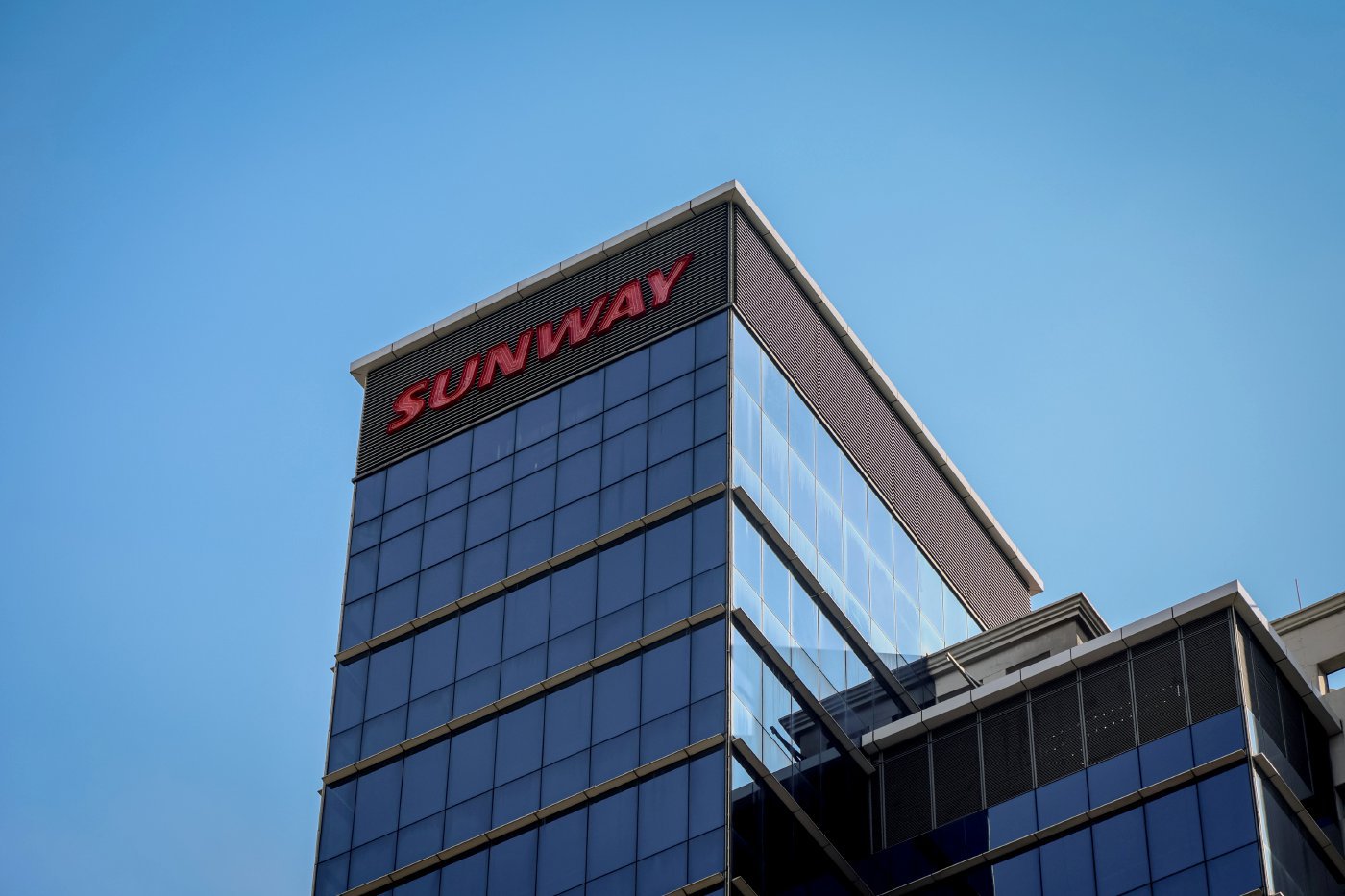
A blockbuster bid by billionaire Jeffrey Cheah’s Sunway Group to absorb construction giant IJM has ignited a ferocious debate about race, capital, and who really controls Malaysia’s economic future—just as the country edges toward a pivotal election cycle.
There are corporate deals, and then there are deals that hold up a mirror to an entire nation. The RM11 billion bid by Sunway Berhad for IJM Corporation is emphatically the latter. On the surface, it is a straightforward consolidation play in a sector long overdue for rationalisation. Dig a little deeper, and you find a collision of race politics, institutional shareholder power, and the ambitions of a prime minister still navigating the treacherous waters of multiracial governance.
When Sunway launched its takeover offer on January 12, 2026, valuing IJM at approximately RM11 billion—or around US$2.71 billion—the financial logic seemed sound. A combined entity would command a market capitalisation approaching RM50 billion, vaulting into the top ten on Bursa Malaysia and creating what proponents call a genuine national construction and property champion capable of competing regionally. But the weeks since have been anything but smooth, as bumiputera advocacy groups, opposition politicians, and state investment funds have raised uncomfortable questions about what this merger means for Malay economic ownership in a sector long considered strategically sensitive.
The Deal: What Is Actually on the Table
Sunway’s offer values each IJM share at roughly RM2.60, a premium of approximately 17 percent over IJM’s three-month volume-weighted average price prior to the announcement. IJM shareholders, many of whom have watched the stock languish for years amid rising input costs and a sluggish domestic construction pipeline, initially responded with cautious optimism. IJM’s share price surged past RM2.50 in the days following the announcement before settling into a holding pattern as political controversy deepened.
Sunway itself entered the year trading at a market capitalisation of roughly RM38 billion, buoyed by strong recurring income from its integrated townships and healthcare assets. The combined group would hold property, construction, infrastructure, and quarrying operations across Malaysia, India, the Middle East, and Australia—a conglomerate of genuine regional heft.
IJM also brings a balance sheet that makes the deal attractive beyond pure scale. With cash reserves exceeding RM2 billion and a healthy order book underpinned by ongoing infrastructure projects, it is not a distressed asset. That, paradoxically, has sharpened the controversy: critics ask why a profitable, bumiputera-linked institution should be absorbed into a group whose founder and controlling shareholder, Tan Sri Jeffrey Cheah, is an ethnic Chinese tycoon.
Jeffrey Cheah, Anwar Ibrahim, and the Racial Arithmetic
Few figures in Malaysian business carry the symbolic weight of Jeffrey Cheah. The founder of Sunway Group built his fortune from tin-mining wastelands in Selangor into one of the country’s most admired integrated townships, and has channelled hundreds of millions into education philanthropy through the Jeffrey Cheah Foundation. He is, by any measure, a Malaysian success story.
But success in Malaysia has always been read through a racial lens, and Cheah’s Chinese identity sits awkwardly against the backdrop of a deal that many bumiputera groups see as a dilution of Malay corporate ownership. IJM, while not a state-linked enterprise in the strictest sense, counts the Employees Provident Fund (EPF) and Permodalan Nasional Berhad (PNB)—two of the country’s largest state-backed institutional investors—among its most significant shareholders. Both funds carry an implicit mandate to protect and grow bumiputera wealth.
As reported by Bloomberg, the deal has drawn scrutiny precisely because it tests the limits of how far market logic can override the country’s affirmative ownership framework. PNB, which manages assets on behalf of bumiputera Malaysians, has not publicly declared its position. Its silence has been deafening.
For Prime Minister Anwar Ibrahim, the deal presents a political calculation of extraordinary delicacy. Anwar has staked much of his Madani economic agenda on attracting foreign investment, liberalising ownership rules, and projecting Malaysia as a modern, meritocratic economy. Approving a merger that creates a stronger, more competitive national champion aligns neatly with that narrative. But his political survival rests on a coalition that includes UMNO, whose grassroots remain deeply invested in the premise that bumiputera economic gains must be protected—sometimes at the expense of market efficiency.
UMNO Youth has been among the most vocal critics, with its leadership publicly questioning whether the government should allow what they characterise as a transfer of strategic assets from the bumiputera sphere to non-bumiputera control. The language has been incendiary in places, tapping into anxieties that predate the merger by decades but have found fresh urgency in an environment where Malay voter sentiment ahead of the 2026-2028 election cycle is increasingly volatile.
The Institutional Shareholders: EPF’s Quiet Power Play
Perhaps the most intriguing subplot involves the EPF. In the weeks following Sunway’s January announcement, market observers noted that the pension fund—which is the single largest institutional investor on Bursa Malaysia—had been quietly accumulating Sunway shares. As reported by The Edge Malaysia, EPF’s purchases were interpreted by some analysts as a signal that the fund was positioning itself to benefit from a deal it quietly endorses, while others read it as a hedge against the uncertainty a prolonged takeover battle creates.
The EPF’s dual role as a Sunway shareholder and an IJM shareholder creates an inherent tension. A higher offer price benefits its IJM position; a successful merger and subsequent re-rating of the combined entity would benefit its Sunway position. The fund’s leadership has maintained strict public silence, consistent with its fiduciary mandate, but the market is watching its every filing.
PNB presents a different profile. As the custodian of Amanah Saham Bumiputera (ASB) and related funds, it carries an explicitly race-conscious mandate that makes a straightforward commercial calculation more politically fraught. If PNB tenders its IJM shares to Sunway, it will face intense criticism from bumiputera advocacy groups regardless of the financial merit. If it withholds, it may be accused of undermining shareholder value for political reasons.
Regulatory Overhang: MACC and the Graft Question
Adding further turbulence, the Malaysian Anti-Corruption Commission (MACC) has been conducting investigations related to procurement irregularities in the construction sector—investigations that, while not directly targeted at either Sunway or IJM, have cast a shadow over the broader industry. Opposition politicians have not been slow to connect these investigations to the merger narrative, suggesting that a mega-consolidation could create opacity rather than accountability in public project awards.
These allegations remain unproven, and both Sunway and IJM have categorically denied any wrongdoing. But in the court of public opinion—particularly among Malay-majority voter blocs who are already sceptical of large Chinese-controlled conglomerates—the suggestion of graft, however tenuous, is politically potent.
The Financial Case: Why the Numbers Still Argue for Consolidation
Strip away the politics, and the economic logic for consolidation remains compelling.
Pre- and Post-Merger Snapshot (estimated, 2026):
| Metric | Sunway (standalone) | IJM (standalone) | Combined Entity (projected) |
|---|---|---|---|
| Market Cap | ~RM38 billion | ~RM11 billion | ~RM50 billion |
| Order Book | ~RM8 billion | ~RM12 billion | ~RM20 billion |
| Cash Reserves | ~RM3 billion | >RM2 billion | ~RM5+ billion |
| Bursa Ranking | Top 20 | Outside Top 20 | Top 10 |
| Regional Presence | MY, India, ME | MY, India, Australia | Significantly expanded |
Malaysia’s construction sector has been fragmented for too long. Dozens of mid-tier contractors compete for the same government contracts, undercutting margins and limiting investment in technology and sustainability. A combined Sunway-IJM entity would have the balance sheet to pursue large-scale infrastructure projects—including potential MRT extensions, Johor-Singapore Rapid Transit System works, and data centre construction—at a scale that smaller competitors cannot match.
As Reuters reported when the bid was announced, the merger is explicitly intended to create a “Malaysian building champion” capable of competing with regional giants from South Korea, Japan, and China that have long dominated Southeast Asian infrastructure. The argument is not merely financial; it is strategic.
Stakeholder Perspectives: A Divided Chorus
Institutional investors broadly favour the deal, citing synergy potential and the premium on offer. Foreign portfolio investors, in particular, have welcomed any signal that Malaysia is willing to allow market-driven consolidation over politically motivated intervention.
Bumiputera advocacy groups remain opposed, framing the merger as a symbolic retreat from the New Economic Policy’s goals of redistributive ownership. Their concern is less about Sunway’s competence than about the precedent: if EPF and PNB are seen to facilitate a transfer of a bumiputera-associated asset to a Chinese-controlled group, it emboldens similar deals in other sectors.
Industry executives, speaking privately, tend to regard the political opposition as short-sighted. One senior figure in the construction supply chain, speaking on condition of anonymity, described the fragmentation of the sector as “a luxury we can no longer afford” given the scale of infrastructure investment required to sustain Malaysia’s economic development targets.
Opposition politicians, from both the right and left flanks, have found unlikely common cause in scrutinising the deal—though for very different reasons. Perikatan Nasional has leaned into the bumiputera ownership argument; Parti Sosialis Malaysia has questioned the concentration of market power.
The Political Clock: 2026 and Beyond
The offer closes on April 6, 2026. That date matters enormously. Malaysia’s next general election is constitutionally due by 2028, but the political calendar is fluid; state elections and the underlying fragility of Anwar’s coalition mean that every major policy decision carries electoral freight.
A government that approves or tacitly facilitates this merger risks alienating a segment of the Malay electorate that sees bumiputera corporate ownership as non-negotiable. A government that blocks or delays it risks signalling to international capital that Malaysia remains a prisoner of ethnic economic politics—precisely the image Anwar has worked to overcome since taking office.
As Channel News Asia noted in its coverage, the controversy has exposed a fault line in Malaysia’s economic governance that no amount of Madani branding fully papers over: the tension between a market-oriented economic vision and the redistributive commitments baked into the country’s political DNA.
Three Scenarios for What Comes Next
Scenario One: The Deal Proceeds, Largely Intact. EPF and PNB tender their shares, the offer closes on schedule in April, and the combined entity lists as one of Bursa’s largest companies. Politically, Anwar absorbs short-term criticism from UMNO backbenchers but points to the resulting national champion as evidence of his economic competence. Markets respond positively.
Scenario Two: A Revised Offer with Bumiputera Conditions. Under pressure from state funds and the government, Sunway sweetens the deal—either by raising the offer price or by committing to structural conditions such as a minimum bumiputera board representation, a ring-fenced bumiputera vendor programme, or a stake reserved for PNB in the combined entity. This is the most politically elegant outcome, though it sets a precedent for race-conditioned M&A that will unsettle foreign investors.
Scenario Three: The Deal Collapses. State funds decline to tender, Sunway fails to achieve the thresholds required for compulsory acquisition, and IJM remains independent. The immediate market reaction would be negative for both stocks. More significantly, it would signal to the region that Malaysia’s affirmative ownership framework remains a structural constraint on market-driven consolidation—a message with long-term consequences for capital allocation.
The Bigger Picture
What makes the Sunway-IJM saga so revealing is not the deal itself but the anxieties it has brought to the surface. Malaysia’s economy has long operated on an implicit bargain: Chinese capital provides commercial dynamism; bumiputera institutions provide political legitimacy; and the government manages the intersection between the two. That bargain is under strain, not because any one actor has behaved badly, but because the world has changed around it.
Regional competition is intensifying. Infrastructure capital is flowing to markets with clearer rules. And a generation of Malaysian investors—bumiputera and otherwise—is increasingly asking whether the inherited framework serves their financial interests or merely their symbolic ones.
The answer Anwar and his government provide in the coming weeks, whether through action or studied inaction, will echo well beyond the construction sector. It will say something fundamental about whether Malaysia is prepared to let economic logic lead—and whether, in the year 2026, it can afford the luxury of letting politics decide.
The offer period for Sunway’s takeover bid for IJM Corporation closes April 6, 2026. Regulatory and shareholder decisions in the intervening weeks will determine whether Malaysia’s most politically charged corporate deal in years reshapes the country’s economic landscape—or exposes the limits of its reform ambitions.
Discover more from The Economy
Subscribe to get the latest posts sent to your email.


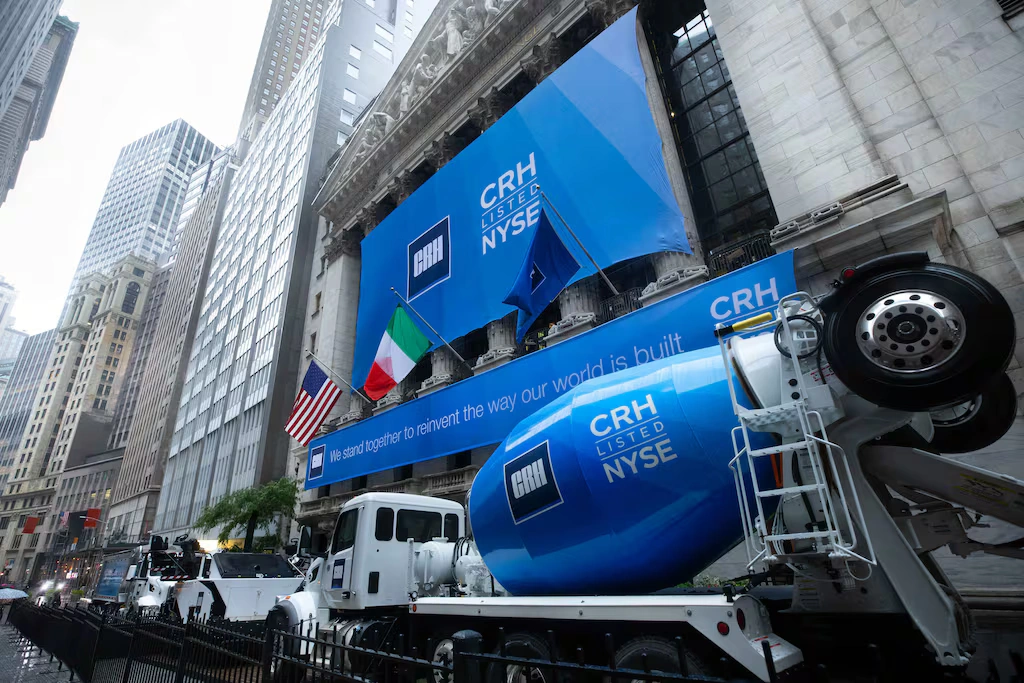
Irish-American building materials giant CRH is nearing its largest-ever acquisition with a deal to buy U.S. infrastructure products company Arcosa. We examine the strategic logic, market dynamics, and what this means for the global construction sector.
Key Takeaways
- CRH is nearing a deal to acquire Arcosa, which would be the company’s largest acquisition ever
- The deal signals continued consolidation in the global building materials and infrastructure products sector
- CRH’s U.S.-centric strategy, accelerated since its Nasdaq relisting in 2023, positions it to capture America’s multi-decade infrastructure investment cycle
- Arcosa operates across construction products, engineered structures, and transportation products — complementing CRH’s aggregates, cement, and building solutions businesses
- The transaction would further entrench CRH’s position as the dominant materials supplier for the U.S. infrastructure buildout
The Deal Taking Shape
According to reports in the Financial Times, first surfaced in Reuters’ June 22 press digest, CRH is nearing a deal to acquire Arcosa in what would be the Irish-American building materials conglomerate’s largest-ever acquisition (FT / Reuters Press Digest, June 22, 2026).
The deal represents the convergence of two significant industrial themes: the ongoing consolidation of the global building materials industry and the long-run investment thesis around American infrastructure renewal. CRH has been among the most aggressive acquirers in the construction materials space for two decades, assembling a portfolio that spans aggregates, cement, asphalt, readymixed concrete, and building products across North America and Europe. Arcosa, spun off from Trinity Industries in 2018, operates across three segments — construction products, engineered structures, and transportation products — with a particularly strong position in infrastructure materials including aggregates, lightweight aggregates, and utility structures for the power and telecommunications sectors.
CRH’s American Pivot
To understand why this deal makes strategic sense for CRH, it is necessary to understand how dramatically the company has reoriented itself since its 2023 primary listing move from London to New York. CRH’s decision to redomicile its primary listing on the Nasdaq — an unusual move for a European industrial company — was an explicit bet on the United States as the world’s most attractive market for construction materials over the next decade.
The rationale centred on a set of structural investment drivers with unusually long time horizons. The Infrastructure Investment and Jobs Act, the Chips and Science Act, and the Inflation Reduction Act collectively committed hundreds of billions of dollars to roads, bridges, semiconductor fabrication plants, data centres, clean energy installations, and grid modernisation. Every dollar of that spending has a significant materials content — aggregates, cement, reinforced concrete, steel structures, and engineered building products.
CRH’s existing U.S. platform gives it meaningful exposure to this pipeline through its Americas Materials segment. An Arcosa acquisition would extend that exposure into infrastructure-specific product lines — utility poles and transmission structures for the energy grid buildout, storage tanks and pressure vessels for industrial customers, and aggregates for the transportation infrastructure market — that are directly in the path of the most durable U.S. government spending commitments.
Why Arcosa Makes Sense as a Target
Arcosa is not a glamorous business. It does not produce cutting-edge technology or generate the kind of narrative that attracts retail investor enthusiasm. What it produces — lightweight aggregates, natural aggregates, construction site support equipment, engineered utility structures, marine transportation equipment — are the unglamorous physical inputs without which large-scale infrastructure projects cannot proceed.
This is precisely what makes it attractive to CRH. Building materials is a scale business where geographic density, distribution network efficiency, and purchasing power over raw material inputs determine margins as much as any technological advantage. An Arcosa acquisition would add significant scale in the U.S. Southeast and Southwest — geographies where population growth, housing construction, and data centre development are driving above-average infrastructure spending.
Arcosa’s construction products segment — which includes aggregates, specialty materials, and trench shields for utility and pipeline projects — fits particularly well with CRH’s existing aggregates portfolio. Aggregates (crushed stone, sand, and gravel) are the highest-volume, most geographically local construction material: they cannot economically be transported more than approximately 50 miles, which means market position is almost entirely a function of quarry ownership and proximity to demand centres. Every quarry acquisition is a permanent, non-replicable competitive advantage.
The Consolidation Logic
The global building materials industry has been consolidating for 25 years, driven by the economics of scale and the logic of quarry aggregation. CRH, LafargeHolcim (now Holcim), HeidelbergCement, and Buzzi Unicem have systematically assembled regional and national scale across North America and Europe. The U.S. market — historically more fragmented than European counterparts — is now at an inflection point where the remaining independent mid-size players represent the last wave of scale-building acquisition opportunities.
Arcosa, with a market capitalisation that was in the $3–4 billion range prior to any deal announcement, represents the kind of bolt-on acquisition that is large enough to be transformative for CRH’s market position but not so large as to create balance sheet distress. CRH’s strong investment-grade credit rating and cash generation capability give it the financial flexibility to execute a transaction of this scale without compromising the rest of its capital return programme.
Ryanair’s Michael O’Leary Also in the FT Headlines
The Financial Times’ June 22 edition carried CRH’s Arcosa deal alongside another significant European business story: Michael O’Leary is reportedly in line for a 150 million euro payout in his latest Ryanair contract (FT / Reuters Press Digest, June 22, 2026). The compensation package — one of the largest in European aviation history — reflects Ryanair’s extraordinary financial performance under O’Leary’s leadership and the board’s determination to retain a chief executive who has delivered shareholders returns that are, by any measure, exceptional.
The juxtaposition of CRH’s infrastructure consolidation story with O’Leary’s compensation headlines captures a broader theme in European business: the premium that global capital markets are placing on executive track records of capital allocation and value creation at a time when European corporate performance has lagged American peers.
What to Watch
The deal has not yet been formally announced, and the terms remain to be disclosed. Key variables to watch include the acquisition price relative to Arcosa’s recent trading levels — the premium will signal how competitive the bidding process was and how strongly CRH’s management believes in the infrastructure spending thesis. Regulatory review in the United States, particularly under the current administration’s scrutiny of industrial consolidation, will also be a consideration, though building materials transactions have historically attracted less antitrust attention than technology or media deals.
If completed, the acquisition would mark CRH’s definitive transition from a broadly diversified European building materials conglomerate into the world’s leading pure-play American infrastructure materials company — a repositioning with profound long-term implications for how the stock is valued, how it is compared to peers, and how much of global infrastructure capital allocates to its shares.
Discover more from The Economy
Subscribe to get the latest posts sent to your email.
Acquisitions
Paramount’s $111 Billion Warner Bros. Discovery Merger Clears DOJ, But Faces New Hurdles
Paramount Skydance’s blockbuster $111 billion acquisition of Warner Bros. Discovery cleared its biggest regulatory hurdle earlier this month when the US Department of Justice’s Antitrust Division approved the deal without requiring concessions — but the transaction is still far from finalized, facing continued legal challenges, foreign-investment scrutiny, and a tight closing timeline.
DOJ Gives the Green Light
The Hollywood Reporter reported that the DOJ found the merger would not harm competition in the markets for streaming, linear TV, or film production and distribution, clearing the way for Paramount to become the largest theatrical distributor in the country and own a top-five streaming service. According to Variety, the approval came without any required concessions from the companies.
Under the terms of the original agreement, Paramount agreed to pay $31.00 per share in cash for all outstanding shares of Warner Bros. Discovery, a transaction valued at roughly $110-111 billion depending on the methodology used, according to SEC filings. The deal would bring together Warner Bros. Pictures, HBO, CNN, TNT, TBS, and HGTV under Paramount’s ownership, per a report from World of Reel.
Industry Backlash
The merger has drawn significant opposition from Hollywood’s creative community. World of Reel reported that more than 5,500 industry professionals — including actors Mark Ruffalo, Javier Bardem, and Joaquin Phoenix, along with high-profile directors such as David Fincher and Denis Villeneuve — signed an open letter from the Writers Guild of America warning the deal could eliminate jobs and raise consumer prices. Separately, consumer groups have filed an antitrust lawsuit seeking to block the deal, which Paramount has asked a judge to dismiss, according to The Digital Weekly.
Foreign Investment Concerns
A more recent complication centers on foreign ownership of the combined company. Variety reported that three Democratic senators — Cory Booker, Elizabeth Warren, and Adam Schiff — sent a letter to FCC Chairman Brendan Carr urging the agency to block the deal from closing until a national security review of foreign investors is complete. According to the senators’ letter, the merged Paramount-WBD entity would be roughly 49.5% owned by foreign investors, with about 38.5% of the equity held by sovereign wealth funds from Saudi Arabia, Qatar, and Abu Dhabi.
The European Commission is separately investigating the deal under the EU’s Foreign Subsidies Regulation, examining approximately $24 billion in financing tied to those same sovereign wealth funds, with a provisional deadline of July 14 for its review, Variety reported.
Closing Timeline Under Pressure
Paramount CEO David Ellison and his team have pledged to close the deal by September 30, 2026, according to Deadline, and have promised to pay shareholders a daily “ticking fee” if the deadline is missed. Combined with potential delays from the EU review and the FCC foreign-investment scrutiny, analysts say the process could realistically stretch into September even under a best-case scenario.
If completed, the deal would leave the US film industry with just four major studios — Paramount, Disney, Universal, and Sony — according to legal news outlet JURIST, intensifying scrutiny over its long-term effects on competition and consumer choice in media and entertainment.
Discover more from The Economy
Subscribe to get the latest posts sent to your email.
Lachlan Murdoch is not waiting for the total collapse of linear television. In a preemptive strike that fundamentally rewrites the economics of digital broadcasting, the Fox Roku acquisition has materialized overnight as a $22bn paradigm shift. This is not merely a media merger. It is a calculated infrastructure play. By absorbing the dominant operating system of the living room, Fox bypasses the crowded content wars entirely. They have stopped trying to sell the best programming and instead bought the digital pipes through which all programming must flow. The transaction signals a permanent pivot away from legacy cable bundles, positioning a traditional broadcasting heavyweight as a formidable gatekeeper in the global ad-tech ecosystem.
To grasp the sheer scale of this pivot, one must look at the decaying foundations of traditional broadcast revenue. Linear television advertising continues its relentless, multi-year contraction. US broadcast television ad spend fell by 8.4% last year, a structural bleed that executives privately admit is irreversible. Audiences have migrated, but more importantly, advertiser budgets have followed the granular targeting capabilities of Connected TV (CTV).
Roku sits at the absolute apex of this new distribution hierarchy. While competitors burned billions chasing subscriber growth with prestige television, Roku quietly built a toll road. The hardware is cheap, but the platform’s real value lies in its Average Revenue Per User (ARPU), driven heavily by its Free Ad-Supported Streaming TV (FAST) channel ecosystem. The OECD notes that digital platform ad revenues outpaced traditional media by a ratio of three to one in 2025. Fox recognized that owning a singular streaming service like Tubi was insufficient. To truly capture the shifting billions in global ad spend, they needed the underlying operating system. This acquisition bridges the gap between content creation and algorithmic ad delivery.
The Mechanics of a $22bn Buyout
The numbers surrounding the buyout are staggering, reflecting both the premium required to secure a market leader and the strategic urgency inside Fox headquarters. At $22bn, Fox is paying a significant premium over Roku’s trailing 90-day average share price. The all-cash and stock transaction immediately dilutes some existing Fox shareholders but provides the sheer capitalization necessary to finalize the transaction without entering a protracted bidding war. Anthony Wood, Roku’s notoriously independent founder and CEO, is expected to step down from daily operations by December 14, transitioning into an advisory role while his executive team integrates with Fox’s Los Angeles operations.
For Fox, the immediate prize is Roku’s sprawling user base. The platform boasts over 75 million active accounts globally. These are not merely passive viewers; they are highly measurable, addressable data nodes. By integrating this audience with Tubi—Fox’s existing, highly successful AVOD (Advertising-Based Video on Demand) asset—the combined entity instantly commands a plurality of the free streaming market. According to the UK’s Office for National Statistics, consumer engagement with ad-supported digital television grew by 42% over the last fiscal year. Fox now holds the keys to monetizing that precise demographic shift.
This integration goes beyond simple audience aggregation. The core synergy lies in advertising technology. Roku’s proprietary ad-bidding framework, the OneView platform, allows brands to execute highly targeted campaigns across both linear and streaming environments. Fox brings deep relationships with Fortune 500 advertisers and massive live sports inventory to the table. Merging Fox’s premium live inventory with Roku’s programmatic execution creates a closed-loop ecosystem.
Brands can now purchase a Super Bowl commercial and immediately retarget those same viewers on Roku’s home screen. The data loop is entirely self-contained. Financial Times analysis indicates that closed-loop digital ad ecosystems generate profit margins roughly 300 basis points higher than fragmented networks. This structural advantage justifies the massive valuation. Fox is not buying a tech company; they are purchasing a permanent, defensible moat against the encroaching advertising dominance of Amazon and Google.
Why the Fox Ad-Tech Strategy Requires Hardware
The streaming industry has spent a decade obsessing over content. Billions were incinerated producing dragons, superheroes, and prestige dramas, all to acquire fickle subscribers who churn the moment a season ends. Fox fundamentally rejected this model. The analytical brilliance of this merger lies in its total disinterest in the subscription wars. By acquiring Roku, Fox shifts its operational focus from the costly business of renting attention to the highly lucrative business of taxing it.
Why is Fox buying Roku?
Fox is buying Roku to secure dominance in the connected television advertising market. By merging Roku’s seventy-five million active hardware accounts with Fox’s existing Tubi streaming platform, the broadcaster acquires a massive, proprietary data ecosystem entirely immune to traditional cable television subscriber declines.
This strategy relies heavily on owning the physical gateway to the living room. Roku’s operating system is the default interface for millions of televisions manufactured by third-party brands like TCL and Hisense. When a consumer turns on their screen, the first thing they see is Roku’s interface. That interface is prime real estate. Every click, pause, and channel launch is tracked, quantified, and sold. By controlling the hardware layer, Fox guarantees its own content—live news, sports, and Tubi’s library—receives preferential placement.
Wall Street analysts have historically undervalued Roku’s hardware division, often criticizing its razor-thin or negative profit margins. Yet, this completely misreads the business model. Roku sells dongles at a loss to acquire lifetime data streams. Brian Wieser, a leading independent media analyst, recently noted that the modern television interface is the most valuable unmonopolized territory left in consumer technology. Fox’s balance sheet can easily absorb the hardware losses.
Furthermore, this acquisition positions Fox to capitalize on the explosive growth of retail media networks. Consumer brands increasingly demand direct attribution for their television ad spend. Roku’s sophisticated tracking allows a viewer to see a commercial for dog food and directly purchase it via a remote click. Fox is acquiring the transactional infrastructure of the future living room. They have bypassed the brutal economics of Hollywood content production to own the digital shelf where all content is eventually sold.
Antitrust Scrutiny and the Future of Streaming Consolidation 2026
A transaction of this magnitude will immediately trigger intense regulatory scrutiny. In Washington, the Federal Trade Commission (FTC) under Chair Lina Khan has consistently demonstrated hostility toward vertical integration that threatens to lock competitors out of essential digital infrastructure. The primary regulatory concern centers on platform neutrality. Will Fox prioritize its own channels on the Roku home screen, artificially burying applications from competitors like Disney, NBCUniversal, or Netflix?
The legal arguments will be complex. Fox will likely argue that they are a clear underdog in the broader technology landscape, fighting a necessary defensive battle against the trillion-dollar market caps of Apple, Amazon, and Alphabet. Google already owns YouTube and the Android TV operating system. Amazon possesses Prime Video and the Fire TV ecosystem. Fox executives will frame this buyout as a required equalization of the competitive playing field. The Bank of England’s recent macro-financial stability report highlights that concentrated digital ad markets pose systemic risks to smaller commercial enterprises. By creating a viable third alternative to the Google-Amazon duopoly in connected television, Fox may successfully appease regulators.
- Data Hegemony: The merger creates a localized data monopoly. Roku knows exactly what Americans watch, when they watch it, and how they interact with advertisements.
- Political Spending: As the 2028 election cycle approaches, Fox and Roku will offer political campaigns unprecedented hyper-local targeting capabilities on television screens.
- Market Access: Small and medium-sized enterprises, previously priced out of national television campaigns, will increasingly utilize Roku’s self-serve ad platform to target exact postal codes.
The downstream effects for legacy media competitors are severe. Companies without proprietary distribution hardware are now entirely at the mercy of platform owners. They will be forced to hand over an increasing percentage of their advertising inventory just for the privilege of remaining on the Roku interface. A recent policy brief from the UK’s Competition and Markets Authority concluded that platform gatekeepers routinely extract up to 30% of third-party ad revenues. Fox is now the gatekeeper.
The Bearish View on Roku’s $22bn Buyout
Not all market observers view this integration as a guaranteed triumph. A vocal contingent of institutional investors views the $22bn price tag as a massive overreach, driven more by executive hubris than sound financial modeling. The bearish perspective argues that Roku’s underlying hardware business is fundamentally broken, trapped in a deflationary spiral driven by cheap Asian manufacturing.
The picture is more complicated than the press releases suggest. Rich Greenfield, a prominent technology and media analyst, has consistently pointed out that Roku’s operating system dominance is heavily concentrated in North America. Expanding that footprint globally requires billions in hardware subsidies. Competitors like Samsung and LG firmly control their own proprietary television operating systems, locking Roku out of the premium global TV market. Critics rightly question the logic of paying $22bn for a North American hardware distributor when the future of media growth is undeniably global.
That said, the cultural integration poses equally severe risks. Fox is a legacy media conglomerate rooted in traditional broadcast mentalities. Roku is a Silicon Valley engineering firm. The graveyard of corporate acquisitions is littered with media companies fundamentally misunderstanding the technology firms they purchase. If Fox attempts to aggressively monetize the user experience—flooding the interface with intrusive advertising or polarizing content—they risk driving consumers directly into the arms of Apple TV or Amazon Fire. The platform’s value relies entirely on consumer trust, an incredibly fragile asset that a heavy-handed corporate culture could inadvertently shatter.
Closing The Deal
The Fox Roku acquisition is an aggressive, definitive bet on the future of media consumption. Lachlan Murdoch has correctly identified that the era of the neutral television interface is over. In the modern digital economy, if you do not own the distribution platform, you are merely a tenant paying ever-increasing rent to technology conglomerates.
This $22bn gamble reframes the structural reality of the entertainment industry. It forces competitors to either secure their own hardware distribution pipelines or accept diminished margins as purely wholesale content providers. The transaction proves that the ultimate prize in the streaming wars was never the content itself; it was the precise behavioral data generated by the remote control. Fox has secured the living room.
Discover more from The Economy
Subscribe to get the latest posts sent to your email.

Bitcoin & XRP 2026: Inside Crypto’s Institutional Era

Global Economy 2026: IMF Growth, AI Stocks & Market Risk

China’s Local Debt Race Against Time: Why Economists Demand Central Action Before the Deflation Window Closes

Money News: How to Protect Your Portfolio From Global Inflation

World Bank Projections: Emerging vs. Big Economies of Asia

IMF Reports 2026: What the Latest Data Means for the Global Economy

Singapore Stocks Outlook: A Safe Haven in the Asian Market?

China Stocks vs. Japan Stocks: Where Should You Invest in Late 2026?

VIX Index Explained: How to Trade Wall Street’s Fear Gauge Today

Commercial vs Residential Real Estate: Which Wins in 2026?

Presidential Stock Market Performance: How Trump’s Second Term Compares to History

2026 Real Estate Market News: Are We Heading for a Correction?

Bitcoin Price Forecast 2026–2027: Will the 4-Year Cycle Hold?

Fidelity Crypto vs. Traditional Brokerages: A Guide for Modern Investors

US-China Relations in Q3 2026: Trade Tariffs and Supply Chain Risks

Top 30 Stocks for Investment in PSX for Massive ROI in 2026

SpaceX Starship Flight 14: First Orbital Attempt & Starlink V3 Launch Explained

AI Chip Stocks 2026: The Best Semiconductor Investments Beyond Marvell

The 2026 Crypto Regulatory Shift: What It Means for Institutional Investors

Tween Back-to-School Trends 2026: What’s Driving the $85B Season

Oil Prices Break $100 in 2026: Middle East Conflict & Energy Markets

AI-Powered Training: The Next Multi-Billion Dollar Ecosystem in Fitness

Fidelity Investments Review 2026: SPAXX Yields & Zero-Fee Funds

10-Year Treasury Yield Hits 4.80%: What It Means for Rates & Portfolios

BRICS+ Cross-Border Payments 2026: Interoperability Explained

Shein Clothes Quality & Safety in 2026: What Lab Tests Show

MRVL Earnings 2026: Why Marvell Sank Despite Beating Estimates

China’s US$10.8 Billion Trade Shortcut: Why the Pinglu Canal Matters
-

 Markets & Finance9 months ago
Top 15 Stocks for Investment in 2026 in PSX: Your Complete Guide to Pakistan’s Best Investment Opportunities
-

 Analysis7 months ago
Johor’s Investment Boom: The Hidden Costs Behind Malaysia’s Most Ambitious Economic Surge
-

 Analysis7 months ago
Top 10 Stocks for Investment in PSX for Quick Returns in 2026
-

 Analysis8 months ago
Brazil’s Rare Earth Race: US, EU, and China Compete for Critical Minerals as Tensions Rise
-

 Banks8 months ago
Best Investments in Pakistan 2026: Top 10 Low-Price Shares and Long-Term Picks for the PSX
-

 Investment8 months ago
Top 10 Mutual Fund Managers in Pakistan for Investment in 2026: A Comprehensive Guide for Optimal Returns
-

 Global Economy9 months ago
15 Most Lucrative Sectors for Investment in Pakistan: A 2025 Data-Driven Analysis
-

 Global Economy9 months ago
Pakistan’s Export Goldmine: 10 Game-Changing Markets Where Pakistani Businesses Are Winning Big in 2025