
Economic Reforms
Moving Thailand Forward: Between Stability and Reform

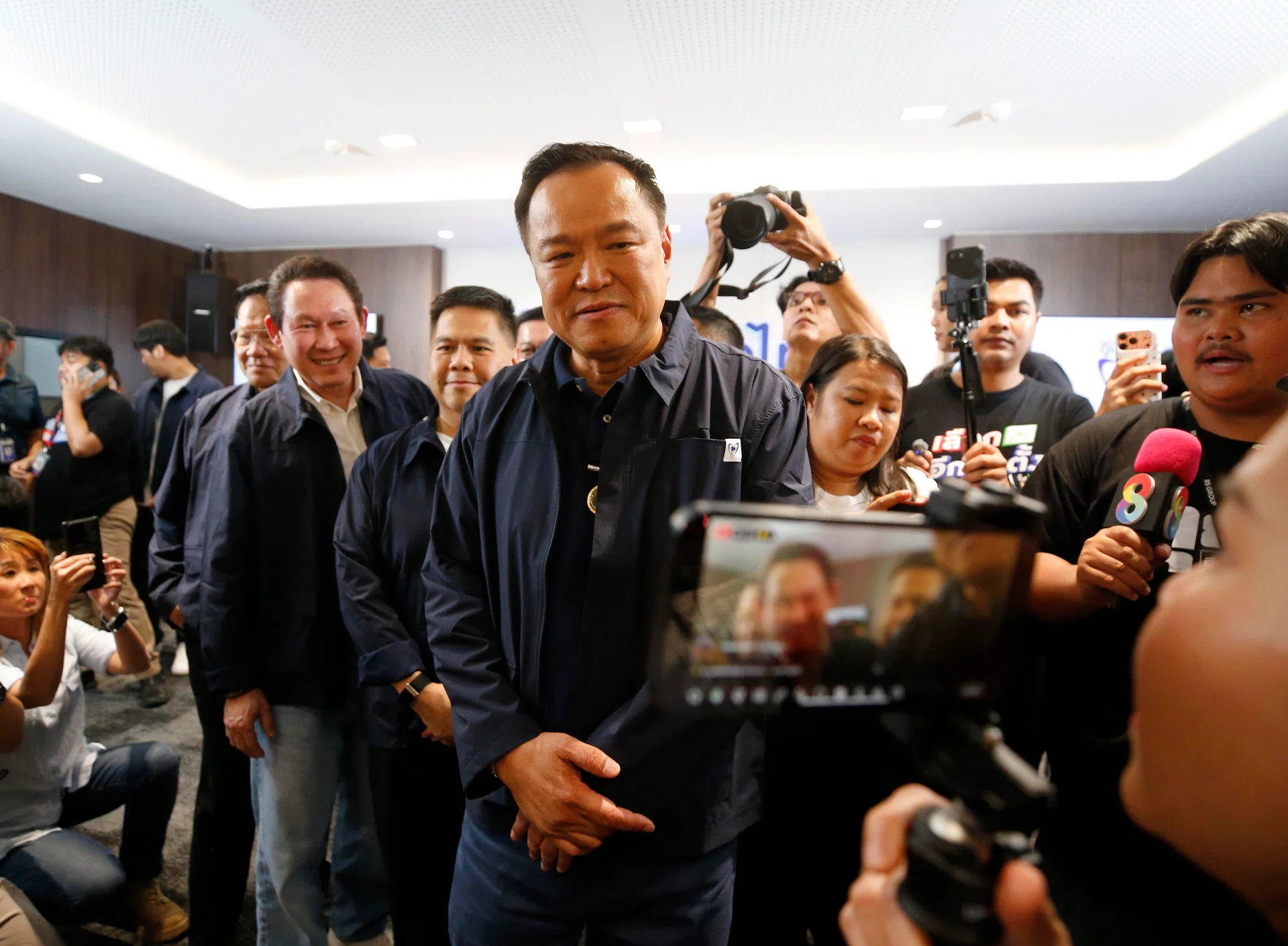
Thailand’s February 8 general election delivered something the kingdom has not seen in years: a decisive, unambiguous result. Whether it delivers something more valuable — genuine progress on Thailand political stability and reform — is a question that will define the next half-decade.
On a warm Sunday in Bangkok, millions of Thais cast ballots in what polling firms and diplomatic observers alike described as a three-way race with an unusual degree of suspense. By Monday morning, the outcome had clarified into a commanding plurality for the Bhumjaithai Party (BJT), led by former Deputy Prime Minister Anutin Charnvirakul. Preliminary seat counts placed BJT between 193 and 194 seats in the 500-seat parliament — enough to anchor a coalition government without resorting to the tortured political bartering that has historically destabilized Thai governments before they could take a single meaningful step.
Markets exhaled. The baht strengthened against the dollar in early-week trading. Foreign investors, long wary of the revolving door at the Government House, expressed cautious optimism. But experienced Thailand watchers warned that relief is not reform — and that the country’s structural challenges will outlast any single election victory.
How They Won: Thailand Election 2026 Results and the Coalition Math
The Thailand election 2026 results crystallised a new political hierarchy. According to Reuters, Bhumjaithai’s near-200-seat haul positions Anutin Charnvirakul to form what could be the country’s most stable coalition in a decade. The People’s Party, a progressive formation that had surged in earlier polling, secured between 116 and 118 seats — significant but insufficient to challenge for the prime ministership outright. Pheu Thai, the party that has historically drawn its strength from rural northern and northeastern Thailand, claimed 74 to 76 seats, while the newly prominent Kla Tham party secured 58 seats.
| Party | Seats Won | Key Policy Focus | Coalition Role |
|---|---|---|---|
| Bhumjaithai (BJT) | 193–194 | Rural development, cannabis policy, healthcare | Lead party |
| People’s Party | 116–118 | Constitutional reform, youth rights | Opposition |
| Pheu Thai | 74–76 | Populist economics, northern/northeastern base | Potential junior partner |
| Kla Tham | 58 | Security, conservative nationalism | Potential junior partner |
A coalition anchored by BJT with Pheu Thai as a junior partner would command a workable majority. More complicated is the prospect of Kla Tham joining that coalition. The party’s leader, Thammanat Prompow, carries the burden of a prior conviction in Australia for heroin smuggling — a fact that has drawn pointed criticism from civil society groups and Western diplomatic missions. His inclusion in any cabinet configuration will test Anutin’s stated commitment to clean governance, and it will be scrutinised by international creditors and investors calibrating Thai coalition government prospects.
According to BBC News, election officials acknowledged scattered reports of voting irregularities, though no systematic tampering was alleged. Opposition voices, particularly within the People’s Party, called for scrutiny of certain constituency results. A credible resolution of these concerns will be essential to cementing the legitimacy of whichever government emerges — legitimacy being a currency Thailand has spent recklessly in recent years.
The Ghosts of Instability Past
To understand why even a modest degree of stability feels like a breakthrough, it is necessary to account for what preceded it. Thailand has cycled through three prime ministers in recent years under circumstances that ranged from judicial intervention to constitutional manoeuvring. Srettha Thavisin was dismissed in 2024 following a Constitutional Court ruling. Anutin himself served as caretaker prime minister in that interregnum. Before Srettha, the country endured years of post-coup governance that left democratic institutions hollowed and public trust depleted.
Street protests — some peaceful, others marred by violence — periodically paralysed central Bangkok, throttling tourism revenues and frightening away foreign direct investment. Images of water cannons on Ratchadamnoen Avenue circulated globally, attaching to Thailand the unflattering label of the “sick man of Asia” — a characterisation that economists at Bloomberg have applied to its economic trajectory as much as its political dysfunction.
That label stings precisely because it is not entirely unfair. A nation that once aspired to upper-middle-income status by 2030 has found itself mired in a growth corridor of one to two percent annually — competent enough to avoid crisis, insufficient to generate the prosperity its population deserves.
The Economic Rebound: From “Sick Man” to Stability?
The numbers tell a story of modest improvement punctuated by persistent structural drag. Thailand economy growth 2026 is projected at between 1.5 and 2.5 percent, with a median estimate of around 2 percent — a slight uptick from the 2.4 percent recorded in 2025, but hardly the breakout performance that regional peers like Vietnam or Indonesia have managed to sustain. The proximate causes of underperformance are well-documented: household debt elevated above 85 percent of GDP, export volumes still recovering from global supply-chain reconfigurations, and tourism arrivals that remain below pre-pandemic peaks despite a meaningful recovery in Chinese visitor numbers.
Economic Snapshot: Thailand 2026
- GDP Growth Forecast: 1.5–2.5% (median 2%)
- Household Debt: ~85% of GDP
- Tourism Recovery: Ongoing but below pre-2020 peaks
- Baht: Strengthened post-election on stability signals
- Inflation: Moderate; central bank maintaining accommodative stance
The World Bank’s Thailand Economic Monitor for February 2026 identifies advanced green manufacturing as the most credible near-term pathway toward higher-value economic activity. Thailand’s existing automotive manufacturing base — particularly its dominant position in internal combustion engine vehicles — creates both an opportunity and a vulnerability as global demand pivots to electric vehicles. The Monitor notes that without deliberate industrial policy to facilitate this transition, Thailand risks watching its manufacturing comparative advantage erode within a decade.
Post-election, equity markets extended modest gains, and the baht’s strengthening reflected investor sentiment that a stable government could at least create the preconditions for reform. But analysts at regional banks were quick to contextualise the optimism: political stability is a necessary condition for economic progress, not a sufficient one. Markets can price in a stable government; they cannot price in political will that has not yet been demonstrated.
Potential Coalition Partners and Controversies
The architecture of any BJT-led government will speak volumes about Anutin’s intentions. The most consequential decisions are less about which parties join the coalition and more about which reform commitments survive the coalition negotiations intact.
A partnership with Pheu Thai carries the advantage of geographic and demographic breadth — the party commands deep loyalty in Thailand’s populous northern and northeastern regions, constituencies that will be essential to any government seeking to address rural inequality. The disadvantage is Pheu Thai’s complex relationship with the Shinawatra political network, which continues to carry both substantial popular support and a divisive legacy in Thai politics.
The Kla Tham controversy is the coalition’s most visible wild card. Thammanat Prompow’s heroin smuggling conviction in Australia in the 1990s has never faded from public consciousness, despite his subsequent reinvention as a conservative nationalist politician. His party’s 58 seats are arithmetically useful to the coalition, but his ministerial ambitions — if accommodated — would invite sustained scrutiny from international partners and domestic civil society alike. The decision Anutin makes here will be read as an early indicator of how seriously his government takes its own anti-corruption commitments.
The Democrats and other smaller formations remain unlikely coalition partners. Abhisit Vejjajiva’s political trajectory, for instance, has been defined by positions that do not easily align with BJT’s pragmatic centrism. Coalition negotiations are expected to conclude within weeks, with investors and diplomats watching each appointment announcement closely.
Beyond Stability: The Case for Deeper Structural Reform
The most searching question raised by the Thailand election 2026 results is not who won, but what winning now obligates the victors to attempt. A partial list of the structural reforms that analysts across the political spectrum identify as necessary — and that previous governments have repeatedly deferred — would include:
- Constitutional revision: The current constitution, drafted under post-coup conditions, retains provisions that constrain democratic accountability. A referendum-led rewrite has been debated for years but never reached implementation.
- Monopoly reform: Concentration in key sectors — energy, telecommunications, retail — constrains competition, suppresses productivity growth, and widens inequality. Meaningful liberalisation would require confronting business conglomerates with deep political connections.
- Education and skills investment: Thailand’s workforce is being asked to pivot toward higher-value manufacturing and services at a moment when the education system has not kept pace with the demands of that pivot.
- Agricultural modernisation: Rural incomes remain vulnerable to commodity price cycles and climate shocks. Long-promised support for smallholder transition to higher-value crops has been fitful at best.
As Bloomberg observed in a pre-election analysis, Thai voters have repeatedly demonstrated a willingness to vote for change — and have repeatedly received something that more closely resembles continuity. The risk with a strong Bhumjaithai mandate is that the stability it promises becomes an end in itself, insulating incumbents from the pressure to reform rather than enabling it.
The Reuters dispatch from Bangkok on election night captured a telling ambivalence in voter interviews: pride that the country had produced a clear result, tempered by a kind of experienced scepticism about whether the result would translate into the tangible improvements — better jobs, lower living costs, cleaner air, accountable governance — that had brought voters to polling stations in the first place.
Will Stability Enable Reform? A Forward Reckoning
The answer depends almost entirely on whether Anutin Charnvirakul and the government he assembles possess two qualities that have been conspicuously absent from recent Thai administrations: policy credibility and institutional courage.
Policy credibility means setting a reform agenda that is specific enough to be measured, costed, and evaluated — not the broad rhetorical commitments that dissolve on contact with coalition arithmetic. It means, concretely, that the World Bank’s green manufacturing recommendations find legislative expression, that the constitutional reform debate is advanced with genuine intent rather than used as a bargaining chip, and that macroeconomic policy targets are framed in terms that independent economists can audit.
Institutional courage means being willing to make decisions that antagonise the entrenched interests — economic conglomerates, bureaucratic fiefdoms, politically connected networks — whose cooperation helped put BJT in power. Historically, this is where Thai governments have faltered. The mathematics of coalition politics create incentives for appeasement rather than confrontation, and the reform agenda is always the first casualty of the negotiating table.
Thailand is not without assets. Its infrastructure is relatively well-developed for a middle-income country. Its geographic position in Southeast Asia makes it a natural logistics hub. Its tourism brand, despite the damage of recent years, retains genuine global appeal. Its people — as those same protest movements demonstrated — are politically engaged, economically aspirational, and quite capable of holding governments accountable when institutions allow it.
The February 8 election has given Thailand something rare and valuable: a government with a clear mandate, a degree of political breathing room, and an international community that is, for once, broadly willing to extend cautious goodwill. What it does with those gifts will determine whether the “sick man of Asia” narrative is finally retired — or simply deferred to the next electoral cycle.
The baht has strengthened. The markets have exhaled. Now Thailand must answer the harder question: does Thailand political stability and reform mean stability for reform, or stability instead of reform?
Discover more from The Economy
Subscribe to get the latest posts sent to your email.



Bitcoin is doing something it hasn’t done cleanly all year: holding a range. After a brutal first half of 2026 and a sharp recovery through the summer, BTC has settled into the high-$70,000s heading into a week that could reshape U.S. crypto market structure for good. Here’s the full picture across Bitcoin, the major altcoins, and the DeFi regulatory fight that’s about to come to a head.
Bitcoin: From 21-Month Low to Cautious Recovery
Bitcoin’s 2026 has been a genuine round trip. After topping out at an all-time high near $128,200 in October 2025, BTC fell to roughly $58,000 by late June 2026 — a 21-month low — before staging a real recovery, climbing about 37% to touch $80,000 by late August, according to KuCoin’s market roundup. As of mid-September 2026, Bitcoin was trading in the $77,000–$79,000 range, per CoinDesk and Fortune’s daily price tracker, still roughly 37–39% below its October 2025 peak.
Bitcoin’s 2026 price arc:
| Date | Price | Note |
|---|---|---|
| Oct 6, 2025 | ~$128,200 | All-time high |
| Late June 2026 | ~$58,000 | 21-month low |
| Late August 2026 | ~$80,000 | +37% off the bottom |
| Sept 8, 2026 | $78,346 | |
| Sept 9, 2026 | $78,737 | Lost the $80,000 level after holding it for four sessions |
| Sept 11, 2026 | ~$77,200–$77,300 | Recovering as zcash-related leverage unwinds |
The macro backdrop is the dominant driver right now, more than crypto-native news. The Federal Reserve, under Chair Kevin Warsh, has held its policy rate at 3.50%–3.75% for five consecutive meetings in 2026 without a single cut, with the median 2026 dot plot sitting at 3.8% — pointing toward continued tightness rather than the easing cycle many crypto investors were positioned for, according to KuCoin’s analysis. August’s core CPI print, released mid-September, rose a faster-than-forecast 0.3% month-on-month, though the annual pace of 2.4% was the slowest since early 2021, per CoinDesk market coverage — a mixed signal that has kept the market betting on the possibility of a rate hike rather than a cut in the near term, an unusual dynamic for crypto markets historically primed for rate-cut tailwinds.
Altcoins: Ethereum, Solana, and XRP Hold Steady Amid Regulatory Noise
The broader altcoin market has been comparatively rangebound. As of September 11, 2026, Ethereum traded around $2,539, up 2.8% over 24 hours; XRP sat near $1.36–$1.39, roughly flat to slightly down; and Solana traded around $101–$104, according to Investing News Network’s crypto recap.
Major token snapshot (Sept 8–11, 2026):
| Token | Price | 24h Move |
|---|---|---|
| Bitcoin (BTC) | ~$77,000–$79,000 | Mixed |
| Ethereum (ETH) | ~$2,460–$2,540 | +2.8% (Sept 11) |
| XRP | ~$1.36–$1.39 | Roughly flat |
| Solana (SOL) | ~$101–$104 | +1% (Sept 11) |
| BNB | Under pressure | -3.4% in one session |
| Dogecoin (DOGE) | Under pressure | -4.3% in one session |
The ETF complex has meaningfully broadened beyond Bitcoin this year. Solana and XRP-linked ETF products each entered September 2026 with assets near $1.5 billion, according to KuCoin — a sign that institutional demand for regulated altcoin exposure is no longer a Bitcoin-only phenomenon, even as individual token prices remain well below their 2025 highs.
DeFi’s “Killer Use Case”: Institutional Credit
The most consequential DeFi development this month has come from the XRP Ledger rather than Ethereum. According to CoinMarketCap’s coverage of comments from Ripple’s product head, institutional credit is emerging as DeFi’s potential “killer use case” — new XRP Ledger amendments (XLS-65 and XLS-66) enable pooled vaults and fixed-term, uncollateralized lending, with underwriting handled off-chain while the loans themselves settle on-chain. The pitch is straightforward: bring institutional-grade lending mechanics onto a public ledger without forcing institutions to accept crypto-native over-collateralization requirements that don’t match how traditional credit underwriting works.
This is part of a broader pattern of DeFi maturing toward institutional rails rather than remaining a purely retail, yield-farming-driven segment. Ripple’s own treasury business — following its $1 billion acquisition of GTreasury in October 2025 and the April 2026 launch of Digital Asset Accounts — is layering AI-driven policy interpretation and analytics on top of these on-chain lending primitives, aimed squarely at corporate finance teams rather than retail DeFi users.
The Regulatory Cliffhanger: CLARITY Act Vote on September 15
The single biggest near-term catalyst for the entire crypto market is not a price level — it’s a Senate procedural vote. Senate Republicans released a revised, 630-page version of the Digital Asset Market Clarity Act on September 10, 2026, ahead of a pivotal procedural vote scheduled for September 15, according to Investing News Network. The updated bill specifically targets “decentralized-in-name-only” (DINO) protocols — platforms that claim decentralization but remain effectively controlled by an individual or corporate entity — requiring them to register with the CFTC.
Market participants remain skeptical the bill actually becomes law in 2026. CNBC reported that SALT CEO John Darsie told the Wyoming Blockchain Symposium in August that he is “a bit pessimistic about the Clarity Act being passed,” citing the difficulty of moving major legislation heading into midterm elections. The bill already missed one legislative window when the Senate adjourned for August recess without a vote.
Corporate and Institutional Flows to Watch
Beyond regulation, institutional capital continues flowing into crypto infrastructure. Nasdaq Ventures announced a $100 million investment in Payward, the parent company of Kraken, valuing the exchange at $21 billion, according to Investing News Network’s recap — one of several signs that traditional financial infrastructure players are taking direct equity stakes in crypto exchanges rather than simply building competing products.
Final Verdict
The crypto market’s “daily outlook” for mid-September 2026 is really a story about two collisions happening at once: a Federal Reserve that refuses to deliver the rate-cut tailwind crypto bulls were counting on, and a Senate that is finally forced to vote on the market-structure legislation the industry has wanted for years, with genuine uncertainty about whether it passes. Bitcoin’s technical picture — holding above its 200-day EMA near $72,800 while losing the psychologically important $80,000 level — reflects that tension directly. Short-term, expect continued chop around the $75,000–$82,000 range pending the September 15 CLARITY Act vote and the next FOMC decision; the DeFi institutional-credit narrative and altcoin ETF expansion remain the more durable, multi-quarter stories worth tracking independent of daily price action.
Discover more from The Economy
Subscribe to get the latest posts sent to your email.
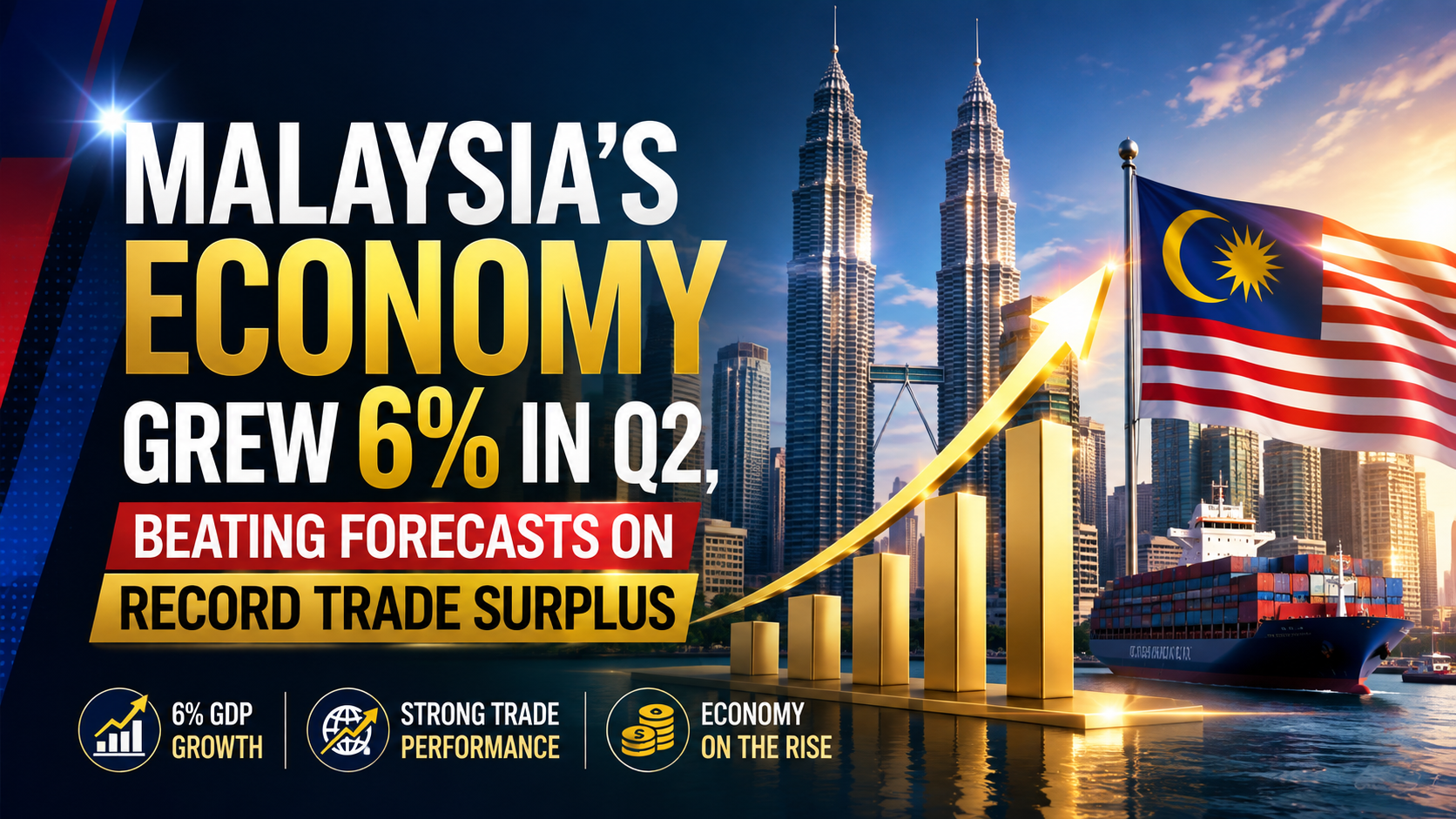
Malaysia delivered one of the standout growth surprises among Southeast Asian economies this year, with confirmed second-quarter GDP data showing the economy accelerated to 6% — comfortably ahead of consensus and its own first-quarter pace — powered by a record trade surplus and a semiconductor and AI-hardware export boom that has become the defining theme of the region’s 2026 growth story.
Growth Accelerates, Beating Consensus
Bank Negara Malaysia confirmed that the Malaysian economy grew 6% in the second quarter of 2026, up from 5.4% in the first quarter, driven by continued domestic demand and robust exports. The print beat consensus estimates of 5.8%, a margin significant enough to move currency markets on the announcement.
On the external side, exports accelerated on continued strength in electrical and electronics products and sustained expansion in services, alongside a rebound in liquefied natural gas exports and non-E&E manufacturing products. Household spending was supported by steady income growth and ongoing policy support, while investment growth was underpinned by continued spending on structures, machinery and equipment.
A Record Trade Surplus
The external numbers are, if anything, even more striking than the growth print. Malaysia’s exports surged 27.5% in the first half of 2026 while imports rose 16.9%, widening the trade surplus to RM147.1 billion from RM56.6 billion a year earlier. First-half trade rose 22.4% to a record RM1.8 trillion, according to separate commentary citing government data — a scale of expansion that puts Malaysia among the fastest-growing trade economies in Asia this year.
Kenanga Investment Bank attributed the resilience directly to the AI investment cycle, noting that Malaysia’s exposure to softer global demand is cushioned by the electrical and electronics and AI upcycle, particularly semiconductors, servers, and data-centre infrastructure. The bank added that hyperscaler capital expenditure and inventory normalisation across advanced economies should keep Malaysia’s export demand supported through the rest of 2026.
What This Means for the Ringgit
Currency strategists moved quickly to recalibrate their near-term ringgit forecasts on the data. One analyst told Bernama the ringgit is expected to trade around RM4.07 to RM4.08 with an upside bias in the immediate aftermath of the GDP release, while a separate analysis projected the ringgit trading within a 3.90-4.20 range against the US dollar through the second half of 2026, underpinned by Bank Negara Malaysia’s decision to hold its Overnight Policy Rate steady at 2.75%.
Juwai IQI global chief economist Shan Saeed argued the ringgit’s case rests less on raw momentum and more on policy credibility and external ballast — Bank Negara’s consistency in balancing price stability, domestic growth, and orderly financial conditions without defending an explicit exchange-rate target.
That said, the ringgit’s year-to-date performance has been more modest than the trade data alone might suggest: on a year-to-date basis through mid-August, the ringgit was down about 0.9% against the US dollar, with its nominal effective exchange rate down roughly 1%, reflecting the broader tug-of-war between Malaysia’s strong fundamentals and global factors including shifting US monetary policy expectations and Middle East-linked risk aversion.
Current Account Set to Stay Comfortably in Surplus
Looking further ahead, Kenanga IB projects Malaysia’s current account surplus will remain firm at 2.1% of GDP in 2026, with tourism and digital-infrastructure spending expected to lift services exports even as costlier energy and softer global demand crimp some parts of world trade. The bank cautioned that a firmer ringgit could nudge imports higher and that energy costs remain a “swing factor,” but expects the external balance to stay comfortably positive regardless.
Inflation Pervasiveness on the Rise
Not every indicator in the release was unambiguously positive. Inflation pervasiveness — the share of CPI items registering monthly price increases — rose to 45.5% in the second quarter from 38.3% in the first, close to its historical average of 45.6%, driven mainly by a sharp increase in April before moderating in May and June. That pattern suggests price pressures broadened out even as they moderated somewhat by quarter-end — a dynamic the central bank will need to watch closely alongside its currently steady policy stance.
Key Takeaways
- Malaysia’s economy grew 6% in Q2 2026, up from 5.4% in Q1 and beating the 5.8% consensus estimate.
- Exports surged 27.5% in H1 2026, pushing the trade surplus to a record RM147.1 billion and H1 trade to RM1.8 trillion.
- The AI-hardware and semiconductor export cycle, alongside a rebound in LNG shipments, is the key driver behind Malaysia’s outperformance.
- The ringgit is expected to trade in a 3.90-4.20 range against the US dollar through 2H26, supported by Bank Negara Malaysia’s steady policy stance.
- Inflation pervasiveness rose to 45.5% in Q2, a metric worth watching even as headline growth impresses.
Frequently Asked Questions
How fast did Malaysia’s economy grow in Q2 2026? Malaysia’s GDP grew 6% year-on-year in the second quarter of 2026, up from 5.4% in the first quarter and above the 5.8% consensus forecast.
What is driving Malaysia’s trade surplus to record levels? A 27.5% surge in exports in the first half of 2026 — led by electrical and electronics products, semiconductors, and a rebound in LNG shipments — pushed the trade surplus to a record RM147.1 billion.
What is the ringgit’s outlook for the rest of 2026? Analysts expect the ringgit to trade within a 3.90-4.20 range against the US dollar through the second half of 2026, supported by Malaysia’s strong export performance and Bank Negara Malaysia’s steady policy rate.
Discover more from The Economy
Subscribe to get the latest posts sent to your email.
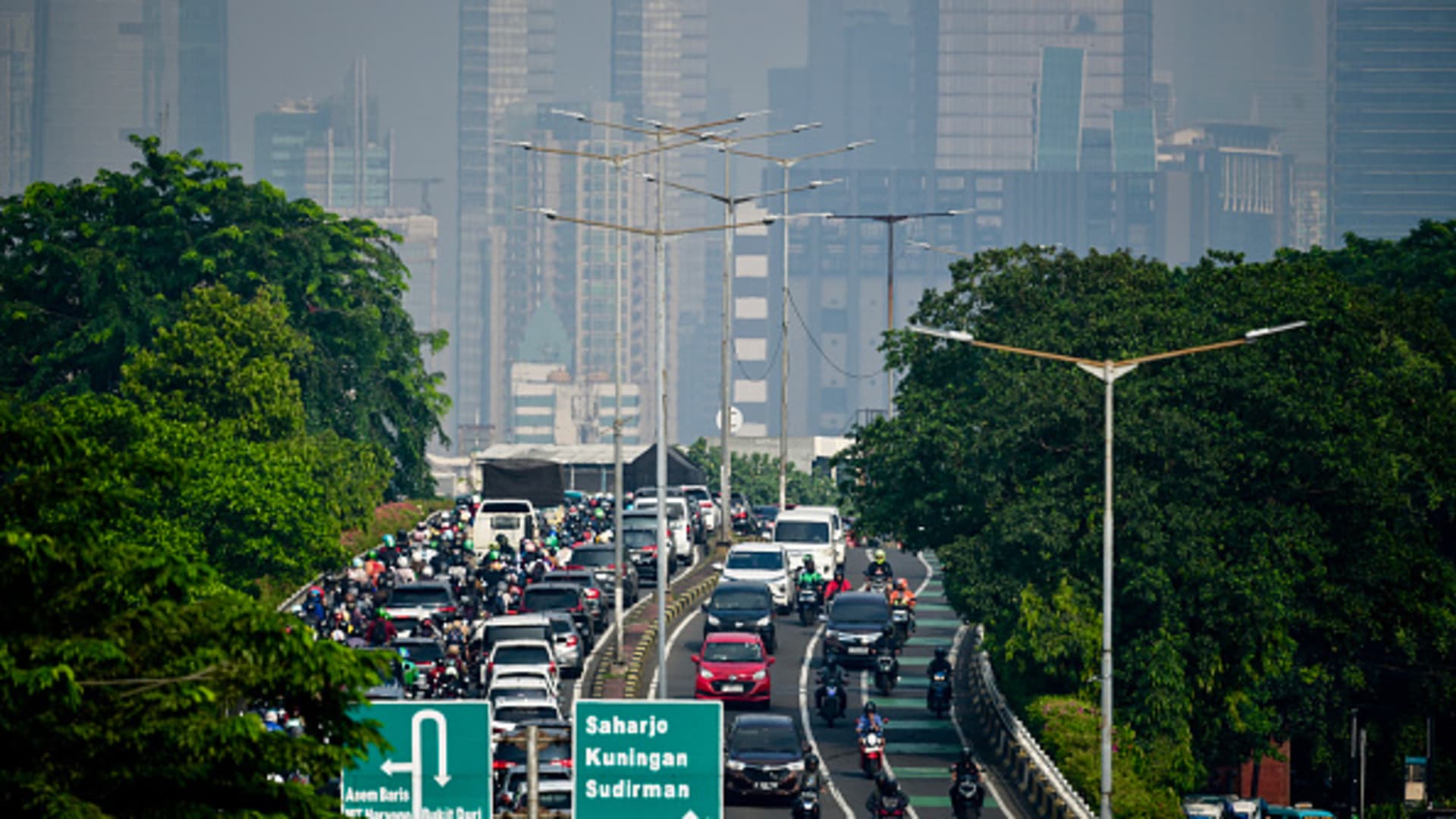
Indonesia’s economy expanded 5.29% year-on-year in the second quarter of 2026, comfortably beating forecasts and extending a run of growth that has outpaced most consensus estimates for the year (Business Indonesia). On paper, it’s a strong number for Southeast Asia’s largest economy. Underneath it, the picture is considerably more complicated.
A Growth Beat With an Asterisk
The Q2 print builds on 5.61% year-on-year growth in the first quarter — itself an acceleration from 4.87% in 2025 — driven primarily by household expenditure, which grew 6.44% year-on-year and accounted for more than half of total growth, alongside gross fixed capital formation up 6.04% (Eurasia Review). Manufacturing, mining, and construction all contributed positively.
Most international lenders, including the OECD, still expect full-year 2026 growth to land closer to 4.7%–5.0%, below Jakarta’s own targets, citing a softening labor market, weakening consumer confidence, and contracting retail sales that emerged in the second quarter despite the headline GDP beat (Indonesia Investments).
The Rupiah Problem
The disconnect between strong headline growth and investor caution centers on the rupiah, which has repeatedly hit record lows in 2026 despite active intervention by Bank Indonesia. A research note from Krungsri Bank describes a genuine “confidence crisis”: net foreign direct investment contracted 26% year-on-year in the first quarter of 2026, suggesting the currency weakness has moved beyond financial markets and into real investment decisions (Krungsri).
Bank Indonesia has responded with a mix of rate policy and direct currency-market intervention. The central bank held its benchmark rate steady at 4.75% through much of the first half of 2026, and in March introduced new rules requiring documentation for foreign-currency purchases above $50,000 per party per month, explicitly aimed at curbing speculative activity in the rupiah (Trading Economics). BI Governor Perry Warjiyo said the bank would “continue to optimize its policy mix to safeguard external resilience.”
What’s Driving Investment Flows
Despite the FDI contraction narrative, sector-level data tells a more nuanced story. Indonesia’s textile industry alone saw investment rise by double digits in the first half of 2026, reaching IDR 11.4 trillion, while imports surged 34.27% in June, driven largely by raw materials — typically a leading indicator of continued industrial activity rather than a slowdown (Business Indonesia). Special economic zones have also continued attracting capital in transport, logistics, telecommunications, and mining, according to the same outlook report.
The Structural Challenge
The deeper issue, as one Eurasia Review analysis by retired Indonesian diplomat Simon Hutagalung put it, is not whether Indonesia is in crisis — it isn’t — but whether Jakarta can convert short-term growth into durable growth. Job creation has increasingly concentrated in lower-value-added sectors, with many new positions failing to deliver middle-income wages even as real wage growth trends downward, according to the Business Indonesia outlook.
That structural weakness is precisely what worries the OECD and other lenders more than the quarterly growth print. A 5%-plus GDP number that rests on household consumption propped up by social assistance, rather than productivity-driven wage gains, is a different kind of growth story than one built on rising real incomes.
What to Watch
The rupiah’s trajectory through Q3 will be the clearest signal of whether investor confidence is stabilizing. Bank Indonesia’s next policy meetings will test whether the central bank has room to ease rates to support growth, or whether currency defense continues to take priority. A sustained rebound in FDI — rather than just portfolio inflows — would be the strongest evidence yet that Indonesia’s “stable yet fragile” 2026 story is tilting back toward stability.
How much did Indonesia’s economy grow in Q2 2026?
Indonesia’s GDP grew 5.29% year-on-year in Q2 2026, beating forecasts, even as the rupiah remained under pressure and net foreign direct investment fell 26% year-on-year in the first quarter.
Discover more from The Economy
Subscribe to get the latest posts sent to your email.

Crypto Daily Outlook: Bitcoin, Altcoins, and the Future of Decentralized Finance

Anthony Scaramucci’s Crypto Prediction: Why MicroStrategy’s Move Is Bitcoin’s “iPhone Moment”

Best Dividend Stocks 2026: European & Asian Blue Chips

World Bank & IMF Reports 2026: Why the “3% Growth” Consensus Is Actually a Debate

Elon Musk’s Boring Company Hits $23B Valuation After UAE-Led $3 Billion Series D

Middle East War Economics 2026: Oil Prices & Energy Markets

PSX Forecast 2026: KSE-100, IMF Reviews & Geopolitics

Asian Markets Outlook 2026: China, Japan & Singapore Stocks

Global Economy 2026: IMF Growth, Inflation & Private Credit

Current Account Deficit (CAD) : Causes and Impact

Balance of Payments (BOP)

The Falkland Islands Dispute: Sovereign Wealth, Offshore Drilling, and Market Impacts

Gross Domestic Product (GDP): Nominal vs. Real

What is Inflation and the Consumer Price Index (CPI)?

State Farm’s $5B Dividend 2026: Who Qualifies & Payout Dates

US-China Relations in Q3 2026: Trade Tariffs and Supply Chain Risks

Gold’s Wild 2026: From a Record $5,600 Peak to a 24% Crash and Back Toward $4,500

Oil Surges as Strait of Hormuz Traffic Collapses Again

The Rocket That Won’t Quit: Inside SpaceX’s Falcon 9 Launch Machine

Bank of England Set to Hold Rates Through Year-End, Reuters Poll Shows

SpaceX Starship Flight 14: First Orbital Attempt & Starlink V3 Launch Explained

The 2026 Crypto Regulatory Shift: What It Means for Institutional Investors

AI Chip Stocks 2026: The Best Semiconductor Investments Beyond Marvell

Retail Earnings Week: What Home Depot, Target & Walmart Reveal

AI-Powered Training: The Next Multi-Billion Dollar Ecosystem in Fitness

Top 30 Stocks for Investment in PSX for Massive ROI in 2026

Tween Back-to-School Trends 2026: What’s Driving the $85B Season

Russia’s Black Sea Oil Exports Fall for a Fifth Straight Week
-

 Markets & Finance8 months ago
Top 15 Stocks for Investment in 2026 in PSX: Your Complete Guide to Pakistan’s Best Investment Opportunities
-

 Analysis7 months ago
Johor’s Investment Boom: The Hidden Costs Behind Malaysia’s Most Ambitious Economic Surge
-

 Analysis7 months ago
Top 10 Stocks for Investment in PSX for Quick Returns in 2026
-

 Analysis7 months ago
Brazil’s Rare Earth Race: US, EU, and China Compete for Critical Minerals as Tensions Rise
-

 Banks8 months ago
Best Investments in Pakistan 2026: Top 10 Low-Price Shares and Long-Term Picks for the PSX
-

 Investment8 months ago
Top 10 Mutual Fund Managers in Pakistan for Investment in 2026: A Comprehensive Guide for Optimal Returns
-

 Global Economy9 months ago
15 Most Lucrative Sectors for Investment in Pakistan: A 2025 Data-Driven Analysis
-

 Global Economy9 months ago
Pakistan’s Export Goldmine: 10 Game-Changing Markets Where Pakistani Businesses Are Winning Big in 2025